

Book of the Week: Shark Week Celebrates its 25th year!
This week, throngs of people who are amping up for Discovery Channel’s 25th annual Shark Week. This week long commemoration of all things sharks is aired in 72 countries watched by ~ 30 million viewers and is the longest running program event on cable. Every year schools of shark fans around the world countdown the days in anticipation for this late summer shark line-up and when it arrives they organize home-screening parties, play games, trivia, award prizes, shave their hair, get manicures and generally remain glued to their televisions marveling in the jawsome mystery and power of sharks.
What we here at the BHL love about this week of shark finaticism, is the remarkable thing that the Discovery Channel has done for shark conservation efforts. Over the course of 25 years, Discovery has significantly raised public awareness about declining shark populations by partnering with conservation organizations such as Oceana, Ocean Conservancy and The Pew Charitable Trust whose public service announcements are aired during prime-time commercial breaks, informing viewers about plummeting shark populations. Shark inspired mohawks and manicures aside, what the Discovery Network has really done is move public sentiment about sharks from a place of fear to a place of compassion. Moreover, they have successfully built a conservation army of shark lovers and enthusiasts. If every animal and organism on the planet had the same following that sharks have it would be a wonderful thing. We would all be a lot more knowledgeable about the earth’s biodiversity and the steep challenges that we face. Most importantly, we would know that there is still much work to be done.
Book of the Week: BHL’s selected homage to cartilaginous fishes aka Sharks
One hundred and fifty years ago, before twitter, television, and home-screening parties attended by folks in full shark regalia, there was a famous comparative anatomist cum ichythyologist named Johannes Müller who was also really into sharks. He may have expressed his fascination with sharks in a more traditional way by today’s standards, opting instead to publish one of the first comprehensive anatomical studies of sharks but, we think he would be tweeting it up if he was around today.
In his tome, Systematische Beschreibung der Plagiostomenor Systematic Description of Cartilaginous Fishes, Müller and his co-author Jakob Henle, provide anatomical descriptions of 214 Chondrichthyes (sharks, rays and skates). Their medical background in comparative anatomy helped to settle some taxonomic disputes about how certain species should be classified. For taxonomists, Müller asks that special attention be paid to the supplements and the detailed index of his book which guides you through his classificatory scheme. And naturally, one of the best parts of this week’s book of the week are the lovely plates provided in the text of some seriously jawsome sharks!
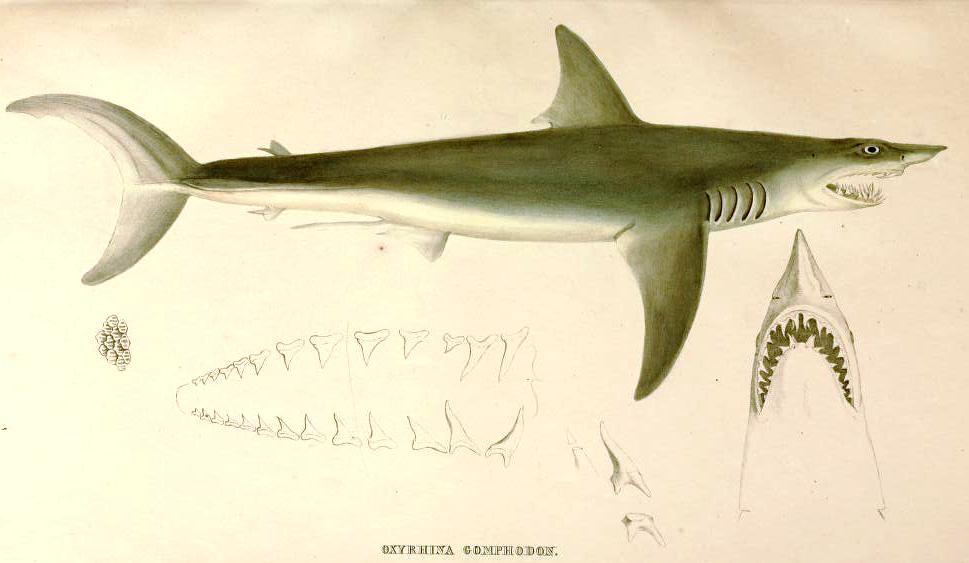
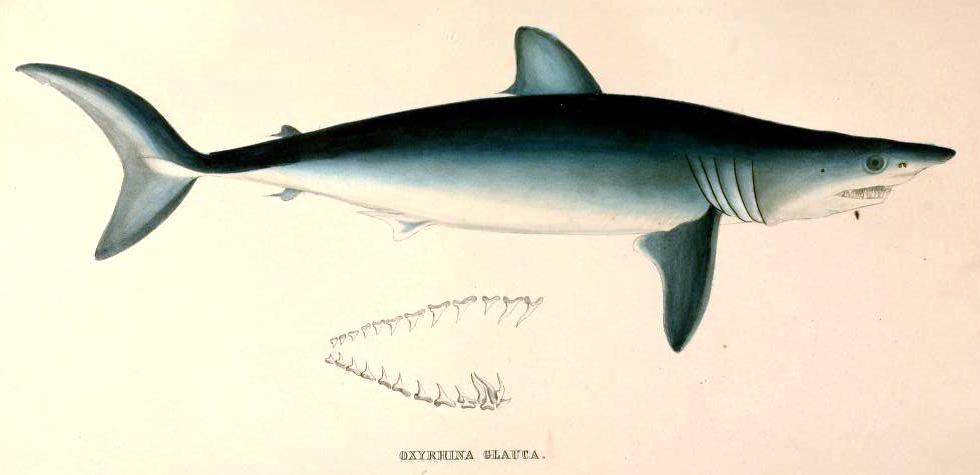
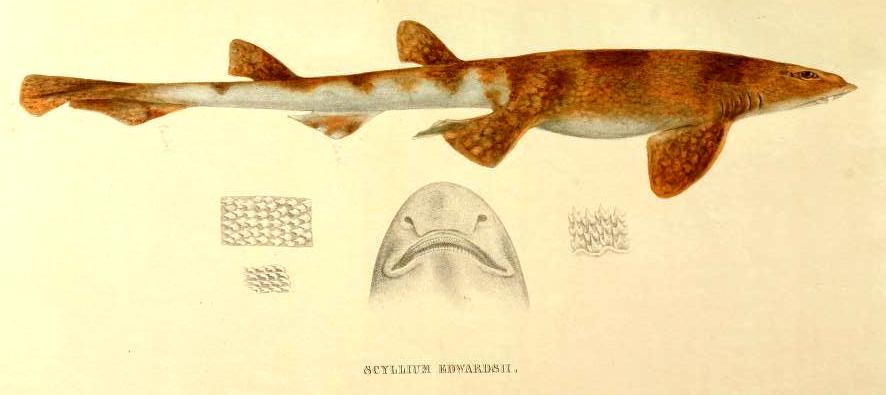
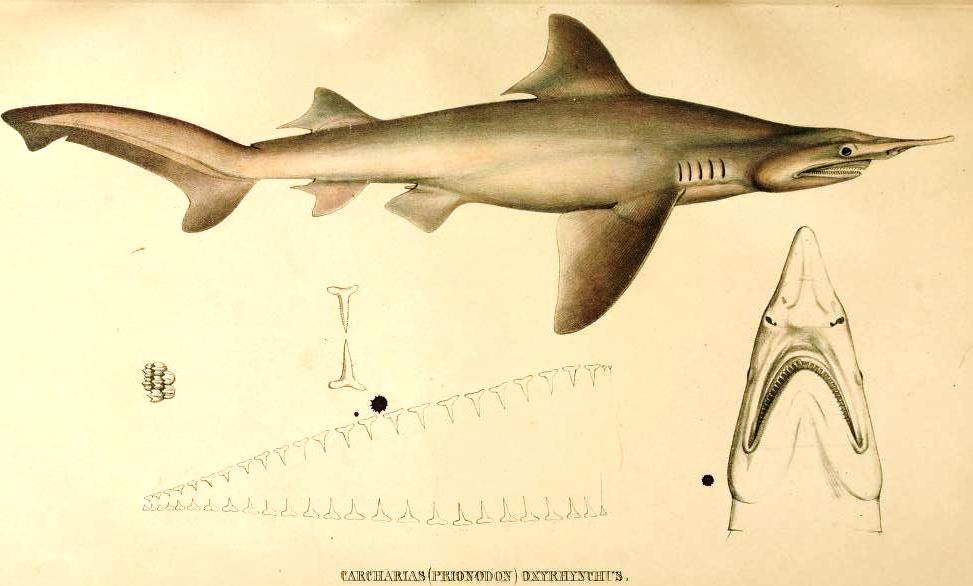
Want more sweet shark images? Check out the Biodivlibrary’s Flickr Stream and Pinterest Board!
We are unsure what the public perception of sharks was like in Müller’s day. Were people afraid of sharks? Did these creatures evoke blood-curdling fright and haunt them in their worst nightmares? Probably not. It was more likely that the average person never even saw a shark nor gave them much of a thought at all.Unfortunately for us, we have been subliminally programmed to be veryafraid of sharks. Movies like Jawsand over-sensationalized news stories about shark attacks have had the effect of damaging shark conservation efforts.The proof? According to a survey conducted in 2003 by the National Aquarium in Baltimore, Maryland “seventy percent of Americans surveyed […] believe that sharks are dangerous. 72 percent also believe that shark populations are just adequate or too high.”
Basically, more than half of the population seems to think that we don’t need to do anything to save sharks.This is a very dangerous sentiment indeed because the populations of these apex predators are on an alarming decline. Without sharks who will regulate the health of the ocean, chiefly coral reefs? Sharks eat sick and diseased organisms, opening-up ocean habitats for healthy fish – in particular algae-grazing fish which act like coral vacuum cleaners.This video simulation created by the Nereus Program explains in detail how vital sharks are to reef eco-systems.
Seven Swell Facts about Sharks!
You are 15 times more likely to be struck by lightning than to be bit by a shark, and 89 times more likely to die of being struck by lightning than dying from a shark bite. 2/3 of a shark’s brain is dedicated to its sense of smell.In the 10 years between 1999 and 2009, there were 51 fatal shark attacks throughout the world. Annually, humans kill 79 million sharks. Now multiply that number by 10 years. And who’s afraid of whom again?
Sharks have seven senses compared to mammals that have five. What are the two extra that we don’t have: An electrical senseand pressure sensitive cells beneath the skin.
Of the millions of sharks killed annually, most of these deaths are a result of the high price for their fins to make shark fin soup. Fins go for $300 dollars a pound. The good news? States like California are banning the soup.
Some species of shark must keep swimming forward in order to breathe and therefore, are never stationary; they even swim while sleeping.
Some mother sharks can have parthenogenic births meaning that they can produce asexually. They are the Virgin Maries of the ocean.
Become a Shark Advocate
Convinced that sharks need your help? Here are some tangible things you can do to help shark conservation efforts:
- Sign the “Save Sharks to Protect the Ocean” petition sponsored by the Pew Group
- Stop eating Shark Fin soup with Yao Ming.
- Adopt a shark
- Eat sustainable seafood. Save sharks? Yeah, there’s an app for that. Download the Sustainable Seafood Guide on itunes.
- Write in Scholarly Journals about declining shark populations. Get out there and collect that data!
Lastly, please educate yourself. Check out the iTunesU Shark collection that we put together that honors the power and mystery of these amazing creatures.
Discover more from Biodiversity Heritage Library
Subscribe to get the latest posts sent to your email.



Leave a Comment