Biodiversity Heritage Library - Program news and collection highlights from BHL
  • Home
  • News
  • Featured Books
    • All Featured Books
    • Book of the Month Series
    • BHL at 20
  • User Stories
  • Campaigns
    • Fossil Stories
    • Garden Stories
    • Monsters Are Real
    • Page Frights
    • Her Natural History
    • Earth Optimism 2020
  • Tech Blog
  • Visit BHL
Home
News
Featured Books
    All Featured Books
    Book of the Month Series
    BHL at 20
User Stories
Campaigns
    Fossil Stories
    Garden Stories
    Monsters Are Real
    Page Frights
    Her Natural History
    Earth Optimism 2020
Tech Blog
Visit BHL
  • Home
  • News
  • Featured Books
    • All Featured Books
    • Book of the Month Series
    • BHL at 20
  • User Stories
  • Campaigns
    • Fossil Stories
    • Garden Stories
    • Monsters Are Real
    • Page Frights
    • Her Natural History
    • Earth Optimism 2020
  • Tech Blog
  • Visit BHL
Biodiversity Heritage Library - Program news and collection highlights from BHL
BHL News, Blog Reel, User Stories

Rod Page Talks Bioinformatics, Linked Data, and Primary Literature at the Smithsonian

Portrait version of the Biodiversity Heritage Library logo.

On 22 September, Dr. Rod Page, Professor at the University of Glasgow and creator of BioStor, gave a presentation at the Smithsonian’s National Museum of Natural History Library about ideas for extracting and linking data across biodiversity repositories and primary literature.

The talk, entitled “The Sam Adams Talk,” covered topics including phylogenetics, geophylogeny visualizations, linking article and specimen data across repositories, annotations, the biodiversity knowledge graph, and data as source code. A lively Q&A; session between Rod and the audience followed the presentation.

You can view a recording of the presentation on YouTube.

Rod’s talk at the Smithsonian followed the Scientific Collections International Food Security Symposium at the National Agricultural Library, 19-21 September. At the invitation of BHL, Rod gave a presentation at the symposium about using publication data to support food security research. You can view Rod’s Food Security Symposium presentation, entitled “Unknown Knowns, Long Tails, and Long Data“, on his Slideshare.

Visit Rod’s blog iPhylo and follow him on Twitter at @rdmpage to see more of his thoughts on bioinformatics, linked data, and primary literature.

September 29, 2016by ulib-libraryjobs
BHL News, Blog Reel

Stressors and Drivers of Food Security: Evidence from Scientific Collections

View Full Size Image

Stressors and Drivers of Food Security: Evidence from Scientific Collections
19-21 September 2016
National Agricultural Library, Beltsville, MD
Hosted by: U.S. Department of Agriculture

The Stressors and Drivers of Food Security: Evidence from Scientific Collections workshop was organized by Scientific Collections International (SciColl) at the National Agricultural Library in Beltsville, Maryland, 19-21 September 2016. The SciColl mission is “Increase the use and impact of scientific collections for interdisciplinary research and societal benefits” and “Expand the access, awareness and appreciation of scientific collections.” The “Stressors and Drivers of Food Security” workshop was designed to help show the importance of scientific collections to the topic of food security.

View Full Size Image
Wester

The first day opened with welcomes from Paul Wester, Director of the National Agricultural Library and Catherine Woteki, Under Secretary for Research, Education, and Economics at the US Department of Agriculture. David Schindel (Chairman, SciColl Executive Board) then gave an overview of SciColl to the approximately 40 attendees from around the world.

Two keynote talks followed. The first, from David Inouye (Professor Emeritus at the University of Maryland and Principal Investigator at the Rocky Mountain Biological Laboratory) covered the importance of collections and field studies of pollinators in fostering food security. Kristen Gremillion (Professor at the Ohio State University) followed with a talk on the fascinating topic of ancient crops, archaeological collections, and food security.
The keynotes were followed by a series of short talks from:

  • Marcia Maues, Embrap
  • Maxine Levin, USDA/NRCS
  • Kālewa Correa, Smithsonian Asian Pacific American Center
  • John Dickie, Kew Millennium Seed Bank
  • Patricia Mergen, Botanic Garden Meise
  • Kevin McCluskey, US Culture Collection Network
  • Peter Bretting, USDA/ARS National Plant Germplasm System
  • David Chitwood, USDA Nematode Collection
  • Jill Demers, USDA National Fungus Collection
View Full Size Image

Grace Costantino from the Biodiversity Heritage Library gave a talk entitled “Literature Resources to Support Food Security Research: An Introduction to the BHL“.

View Full Size Image
Kalfatovic

The second day of the meeting was focused on four sessions devoted to presentations about different research challenges, followed by commentaries and discussion by panelists representing different collection domains. The focus was on how different collection types could contribute to research.

Martin Kalfatovic, BHL Program Director, chaired the first session, “Varieties of Food,” that featured talks from Rod Page (University of Glasgow), “Unknown Knowns, Long Tails, and Long Data“, and Ari Novy (Director, US Botanic Garden). The session was followed by comments from a reactor panel and discussion from the audience. The remaining sessions followed a similar format with reactor panels and audience discussion.

View Full Size Image
Biological Stressors and Aides

Biological Stressors and Aides

  • Kevin McCluskey, Kansas State University
  • Marcia Maués, Embrapa

Environmental Stressors and Benefits

  • Maxine Levin, USDA/NRCS
  • Edna Makule, Nelson Mandela African Institute for Science and Technology

Feeding the 10 Billion

  • Cyndy Parr, USDA/NAL
  • Akwasi Asamoah, University of Exeter
  • Daniel Debouk, International Center for Tropical Agriculture
  • Megan Davis, Harbor Branch Oceanographic Institute
View Full Size Image
Feeding the 10 Billion

The closing day of the workshop was devoted to developing new strategies and discussing next steps. Breakout groups were organized to discuss the following topics:

  • New strategies for increasing the use and impact of collections and associated databases for food security research
  • Case studies that exemplify cross-cutting and forward-thinking uses of collections and associated databases for food security research
  • Major recommendations for the research and collections communities, funding agencies, and/or networks (such as SciColl)

The results of the workshop will be published later this year in a white paper. The video recordings of the workshop are available on the SciColl YouTube channel.

More information:

  • Scientific Collections International
  • Blog Scientific Collections International
  • SciColl YouTube channel
  • Twitter stream from the workshop
  • Storify coverage of SciColl Workshop


View Full Size Image
September 27, 2016by joelrichard
Blog Reel, Featured Books

Jesús Sánchez’s Mexican Medical Zoology

Sánchez, Jesús. Datos para la zoología médica mexicana: arácnidos é insectos. México: Oficina Tipográfica de la Secretaría de Fomento, 1893. viii, 189, iv pages, 9 leaves of plates : illustrations ; 23 cm.

View Full Size Image
Parra, Alfonso. Atlas histórico de la Escuela Nacional Preparatoria: desde su fundación hasta los momentos de celebrarse el centenario de la proclamación de la Independencia, septiembre 15 de 1910 / México : [Escuela Nacional Preparatoria], 1910. 1 vol.

With the single purpose of serving the country and with the belief that scientific study should be used with practical ends, Doctor Jesús Sánchez elaborated his essay on Mexican Medical Zoology (Datos para la zoología médica mexicana), where he acknowledges “the value of studying the animal kingdom, within which exists a vast variety that can offer both benefits and diseases”.

Equally, he states that it “is not only important to study the organisms living inside our own bodies, it is also necessary to know those whose venoms, when inoculated in the human body, can cause, from very light inconveniences, to very serious symptoms and even death”. That is why the author developed an essay about this topic, identifying, describing and studying arachnids and insects from several parts of Mexico that cause damage to the human health.

Doctor Jesús Sánchez was a physician by profession, a member of the Academy of Medicine, and responsible of the professorships in Zoology and Biology at the National High School and the National School of Agriculture, where he has dedicated several years to the compilation of insects; these where included in his work of Mexican Medical Zoology, published in 1893. A second edition or reprint of this work has never been published.

View Full Size Image
Thelyphonus giganteus. Vinagrillo. (Seg. Lucas). http://biodiversitylibrary.org/page/51139808.

During the development of this work, Doctor Sánchez exchanged knowledge, talks and experiences with the doctors and brothers Alfredo and Eugenio Dugés. Alfredo Dugés was a great illustrator who made a perfect descriptive work of the Aquatic Spider, or hydroarachnid, native of Guanajuato. Dugés directed Sánchez and recommended the research of other zoology scholars, like Fernando Altamirano, Lauro Jimenez, Antonio Peñafiel, Alfonso Herrera and Gumersindo Mendoza, among others, as well as other prominent publications from the naturalists Francisco J. Clavijero and Jose Alzate Ramirez.

Datos para la zoología médica mexicana describes, in a detailed manner, nine orders of arachnids and scorpions, as well as five orders of insects, ants and bees, using a mixture of a colloquial and technical language, explaining symptoms, cures and medicines that can be used to fight against symptoms caused by the bites or contact with insects. Within his work we can find a remarkably detailed index of every order and term, as well as illustrations for context.

View Full Size Image
7. Horia maculata. 9. Treiodous barranci (macho). 10. Treiodous barranci (hembra). http://biodiversitylibrary.org/page/51139812.

One can appreciate nine pages that contain the illustrations of arachnids, scorpions, several insects, ants and bees, elaborated by hand with colours identical to those of the studied animals.

Being a professor of the National High School, Sánchez’s published works supported the students with knowledge and practical applications; he offered his expertise during his lectures and turned new students towards the development of science and knowledge.

View Full Size Image
Sarcoptes scabiei (hembra). Visto por el dorso. (seg. Gudden). http://biodiversitylibrary.org/page/51139802.

Doctor Jesús Sánchez is also the author of other works related to the Mexican Medical Zoology of arachnids and insects, such as: Elementos de historia natural en forma de lecciones de cosas: Obra escrita expresamente para uso de las escuelas primarias de la nación, published in the year 1895 and available in BHL thanks to the Joint Library of Earth Sciences (Biblioteca Conjunta de Ciencias de la Tierra, Instituto de Ciencias del Mar y Limnología, UNAM), and the introduction of the work: Breve noticia de los establecimientos de instrucción dependientes de la Secretaría de Estado y del Despacho de Justicia e Instrucción Pública, edited in the year 1900.

View Full Size Image
Ladilla o piojo del pubis. http://biodiversitylibrary.org/page/51139818.


September 22, 2016by ulib-libraryjobs
BHL News, Blog Reel

BHL Welcomes Adriana Marroquin, Field Notes Project Manager

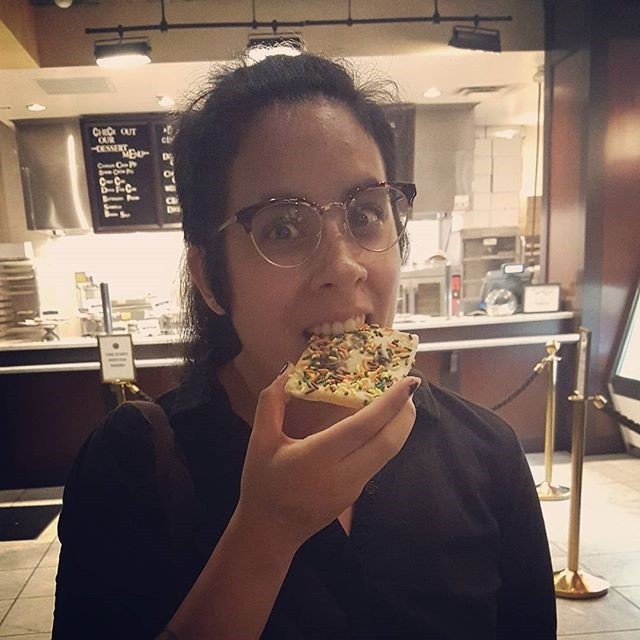
View Full Size ImageAdriana Marroquin recently joined the BHL as the Field Notes Project Manager. This isn’t Adriana’s first time with the BHL or Smithsonian Libraries. She interned for the BHL and the Smithsonian Botany & Horticulture library after graduate school, and later worked as a library technician at the Anthropology, and American Art/Portrait Gallery libraries. In 2014, she compiled and wrote BHL’s Latino Natural History exhibition. Earlier this year she worked on the AA/PG’s Art & Artist Corporate Files Database.

As the Field Notes Project Manager, Adriana will coordinate the activities of the BHL Field Notes project across the participating institutions. Related to the Smithsonian Field Book Project, the BHL Field Notes Project will digitize approximately 50 complete collections of primary natural history field research material, resulting in hundreds of thousands of digitized pages. This material will offer researchers access to a rich source of field notes, including diaries, journals, correspondence, and photographs. It’s an exciting project, and Adriana is looking forward to being a part of it.

She completed a BFA in writing, literature and publishing at Emerson College, during which she was a paleoecology lab intern at Harvard Forest with Dr. W. Wyatt Oswald. She went on to complete her MLS at the University of Maryland. In addition to her time at BHL and Smithsonian, Adriana’s library career has taken her to a variety of libraries, including a public law library, and BHL Members Harvard Botany Libraries and Library of Congress. Her interests include Halloween, Dungeons & Dragons, knitting, and comics. In the past few years, her interest in comics has leaked into her professional life. She volunteered at the Library of Congress processing the Small Press Expo mini-comics collection, and periodically writes for No Flying No Tights, a comics resource for librarians.


The BHL Field Notes Project is generously funded by the Council on Library and Information Resources (CLIR). More information on the CLIR Hidden Collections competition is available here.


September 20, 2016by lmyrick
BHL News, Blog Reel, Campaigns, Page Frights

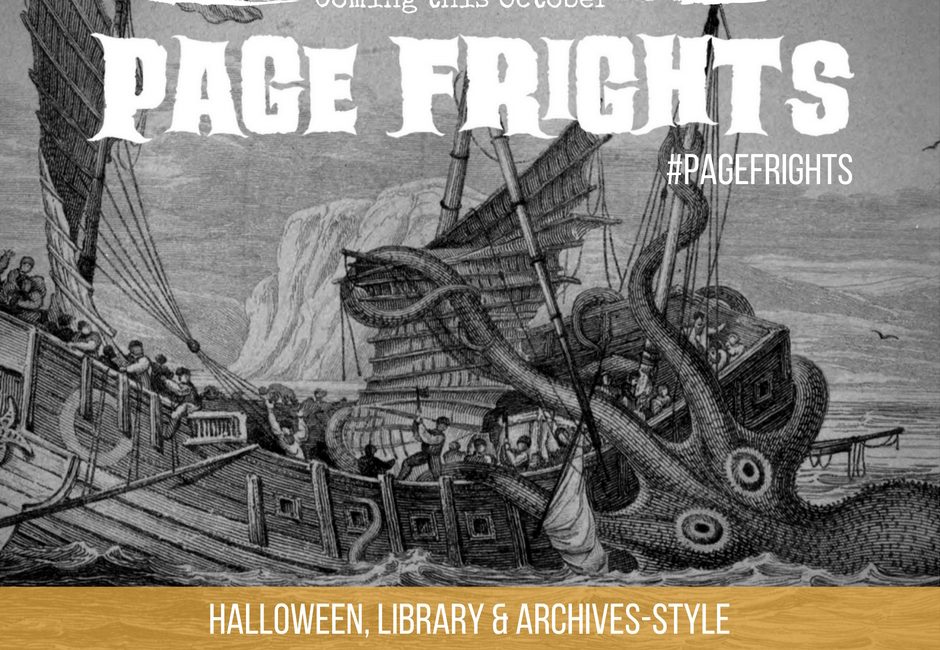
Page Frights Is Coming This October!

View Full Size Image

Get ready for a ghoulishly good time this October…Page Frights is coming!

From 1-31 October, libraries, archives, and other cultural institutions around the world will be gearing up for Halloween by sharing spooky, creepy, or otherwise frightening books and images from their collections on social media using the hashtag #PageFrights. Follow along and join the conversation on Twitter, Instagram, Facebook, Tumblr, and other social media sites. Visit pagefrights.org to learn more.

We’ll also be inviting you to carve pumpkins using patterns inspired by #PageFrights content. Participating institutions will create pumpkin carving patterns based on images from their collections, and these patterns will be freely available to download from the Page Frights website starting in October. We encourage you to share your carved pumpkins on social media using the #PageFrights hashtag.

View Full Size Image
Image from: Denys de Montfort, Pierre. Histoire naturelle, générale et particulière des mollusques. t. 2 (1801). http://biodiversitylibrary.org/page/35755564. GIF created by Richard Naples of Smithsonian Libraries.

Finally, we’re joining the Digital Public Library of America (DPLA) GIF IT UP fun and encouraging you to create GIFs based on #PageFrights images. GIF IT UP is a challenge to find the best GIFs created from copyright-free heritage materials found in DPLA, DigitalNZ, Trove, or Europeana. BHL serves as a digital content hub for DPLA. Learn more on the Page Frights website.

Page Frights was inspired by the 2015 #creepyarchives campaign launched by the Medical Historical Library at Yale University. #PageFrights is spearheaded by the Biodiversity Heritage Library, The New York Academy of Medicine, the Medical Historical Library at Yale University, and Smithsonian Libraries. Visit the website to see a full list of participating institutions to date.

If you’re an institution interested in participating in Page Frights, we’d love for you to join us! Find out how you can join the Page Frights fun.

So be sure to follow #PageFrights on social media starting this October and visit the website for more great content…if you dare!!

September 19, 2016by ulib-libraryjobs
Blog Reel, Featured Books

The New York Entomological Society

View Full Size Image
The New York Entomological Society (NYES), founded in 1892, is one of the oldest, continually active entomological societies in the U.S. The Brooklyn Entomological Society, which predates the NYES by 20 years, merged with it in 1968.
Through the Expanding Access to Biodiversity Literature project, the NYES recently gave BHL permission to digitize its journals—Entomologica Americana (v.1-49, 1885-1975) and the Journal of the New York Entomological Society (v.1-107, 1893-1999)—as well as the Bulletin of the Brooklyn Entomological Society (v.1-60, 1878-1965). Most of the issues have been digitized and are now available in BHL.

History of the NYES

View Full Size Image
Zethus slossonae, named after Annie Trumbull Slosson
(photo by Bob Peterson, Flickr)
On June 29th, 1892, five men gathered in the home of entomologist Charles Palm (not to be confused with the other Charles Palm, also a New York entomologist) for the first meeting of the NYES. Their first order of business was to elect three members, including Annie Trumbull Slosson (Leng, 130). Years later, she described her first meeting:
I shall never forget the sensation produced by my unexpected entrance into that scientific meeting. Through the smoke of pipes and over mugs of some beverage which foamed in the gas-light in a sudsy sort of way, I saw startled, embarrassed faces … The host himself, good Mr. Palm, seemed somewhat embarrassed. After seating me in the most comfortable chair unoccupied, he hastened away to order coffee for me as more appropriate and fitting drink for a feminine throat (Klots, 139).
Despite taking up entomology in middle age (she was previously a fiction writer) and having no formal education in it, Slosson would become one of the Society’s most accomplished members. She amassed a large specimen collection, now housed at the American Museum of Natural History (AMNH) and has a genus and over 100 species (slossonae) named after her. She also authored numerous articles in the journals of the NYES and other entomological organizations and was instrumental in moving NYES meetings to the AMNH (Seltmann).
View Full Size Image
Photo of Annie Trumbull Slosson from
Journal of the New York Entomological Society, v.34 no.4 (1926)
Though NYES membership hovered around ten individuals in the first decade of its existence, the Society began publishing the Journal of the New York Entomological Society in 1893. Slosson was its chief contributor, and the sale of her collected specimens at auction funded the journal and ensured regular publication. Another member who contributed to the journal’s early success was Louis H. Joutel, who, in addition to serving as the Society’s treasurer and secretary, was an accomplished illustrator; his drawings appear throughout early volumes of the journal (Leng, 130).
View Full Size Image
“Dominican Sphingidae”
by Louis Joutel, from
Journal of the New York Entomological Society, v.15 (1907)
Within a few years, the Society had begun to broaden its reach. In 1895 it joined the Scientific Alliance of New York, which included distinguished organizations like the New York Academy of Sciences and the Torrey Botanical Society, and strengthened its relationship with the AMNH, where it enjoyed access to the library and collections in the position of “a non-paying tenant with a generous landlord” (Klots, 146).
By all accounts, Society meetings were an occasion for the sharing of exciting specimen finds as well as good food and drink. Above all, they were informal. Elsie Klots wrote that “During the nineteen thirties and early forties speakers were so often startled by the steady click of knitting needles and the ominous waving of an ear trumpet that it became customary to explain to them, before the meeting, that the occupants of the front row were the faithful wives of some of our elder members and that they were an accepted and beloved part of our meetings” (Klots, 143-144).
In 1942, the NYES celebrated its 50th anniversary, with nearly half of its 26 former presidents in attendance. In 1949, the Society put on a public exhibit of insect photography in Roosevelt Hall, at the AMNH. It proved so popular that a second exhibit the following year was moved to the museum’s foyer. It featured photographs, paintings, drawings, publications by Society members, equipment, and insect origami. In 1964, the NYES convened for a third special meeting to honor four individuals who had been members for over 50 years. Dr. E.R.P. Janvrin, who joined in 1902, held the distinction of longest membership (Klots, 140).
From the beginning, the NYES maintained a close relationship with the Brooklyn Entomological Society, its elder neighbor. Members of each society were invited to the other’s meetings and field trips, and in 1903 the NYES began devoting two pages of its journal to publish the proceedings of the Brooklyn Society (Klots, 145). The incorporation of the Brooklyn Entomological Society into the NYES, celebrated on October 29, 1968 (the 75th anniversary of the NYES) was thus a natural union for two organizations whose activities had converged for a long time.
View Full Size Image
Drawing for a NY Eats Bugs dinner hosted
by the NYES and others in 2015 (unknown artist)
The NYES celebrated its centennial on May 20th, 1992, with a banquet at the Explorers Club in New York City. The major draw of the evening was its theme: insects as food. Guests enjoyed a variety of appetizers and desserts with insects as ingredients, as well as a talk by keynote speaker Dr. Gene DeFoliart of the University of Wisconsin, an expert on the subject (Society History). The NYES has since participated in similar “bug banquets” at the Explorers Club.
Today, the NYES continues to meet at the AMNH on the third Tuesday of every month, September through May (excluding December). Professional and amateur entomologists alike hear talks by invited speakers on topics of entomological and biological significance. The Society also continues to publish its journal, which in 2009 was renamed Entomologica Americana (also the title of the Brooklyn Entomological Society’s journal, which ceased publication in 1975.

We are grateful to the NYES for sharing its rich legacy of entomological scholarship with BHL and with researchers around the world!

Note: this post has been edited to remove the incorrect statement that the NYES is the third or fourth oldest entomological society in the U.S.

Reference

Klots, Elsie B. “The History of the New York Entomological Society.” Journal of the New York Entomological Society 76, no. 3 (1968): 138-155.
Leng, Charles W. “History of the New York Entomological Society, 1893-1918.” Journal of the New York Entomological Society 26, no. 3/4 (1918): 129-133.
Seltmann, Katja. “Collector Spotlight: Annie Trumbull Slosson.” Tri-Trophic Thematic Collection Network. Last modified September 12, 2013. http://tcn.amnh.org/updates/collectorspotlightannietrumbullslosson.
“Society History.” The New York Entomological Society, Inc. Accessed September 14, 2016. http://www.nyentsoc.org/history.
September 15, 2016by [email protected]
Blog Reel, User Stories

Beyond Tunnels & Bigamy: The Scientific Contributions of the Infamous Harrison Dyar

View Full Size Image
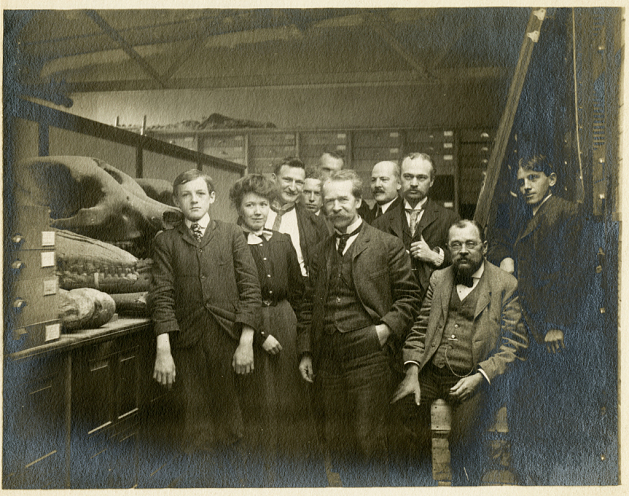
Harrison G. Dyar, Jr., third from right, with Entomology staff of the U.S. National Museum in 1905. Courtesy of Smithsonian Institution Archives.

If you have ever heard of entomologist Harrison Dyar, there’s a good chance that it was in relation to a series of tunnels that he dug beneath Washington, D.C. Or it may have been in relation to his bigamy. But if that’s all you know about Dyar, then you only know the tabloid tales.

Harrison Dyar was Honorary Custodian of Lepidoptera at the United States National Museum for over 30 years. He studied sawflies, moths, butterflies and mosquitos and described hundreds of species and genera. He also contributed significantly to the study of insect development by formulating Dyar’s Law of Geometric Growth. By observing that the width of caterpillar heads was fixed within each stage of development, Dyar realized that he could use a ratio to predict the width of the head at various stages of development, and that this ratio could in turn be used to differentiate insect instars. By using this law, entomologists can identify the developmental stage of an immature insect.

Dyar’s field notebooks, including his “blue books” and “catalogue” as they’re called, contain valuable information both on Dyar’s scientific research and aspects of his personal life. For instance, they include his scientific observations made while rearing specimens, head width data used to formulate Dyar’s Law, and, on a more personal note, the identity of relatives who helped Dyar collect and rear insects.

View Full Size Image
Image Source: Smithsonian Libraries.

Dyar’s field notebooks, which are held by the Smithsonian Institution Archives, have been digitized as part of The Field Book Project and are available in BHL, making it much easier for researchers around the world to access and study Dyar’s work.

View Full Size Image
Drawing from a Dyar blue book. H. G. Dyar bluebook 575 – 625. 1896-1898. Digitized by Smithsonian Institution Archives. http://biodiversitylibrary.org/page/46194051.

One such researcher that has benefited from online access to this materials is Dr. Marc Epstein, Research Associate at the National Museum of Natural History and Senior Insect Biosystematist (Lepidoptera) at the Plant Pest Diagnostics Center of the California Department of Food and Agriculture. Dr. Epstein has studied Dyar’s work and legacy extensively and has authored a biography on this remarkable entomologist entitled Moths, Myths and Mosquitos:The Eccentric Life of Harrison G. Dyar, Jr.. Marc discovered BHL, thanks to recommendations from his colleagues, around the time that our online library launched. Since then, BHL’s collections have had an immense impact on Marc’s research.

View Full Size Image
Dr. Marc Epstein. Image Source: California Department of Food and Agriculture.

“Even though I’m fortunate to have a good entomology library at the Plant Pest Diagnostics Center in Sacramento, CA, BHL has provided me access to so many journals that I haven’t had easy access to in California since with my move here in 2003,” asserts Marc. “In fact BHL has often provided me with the very copies I used to refer to in the Smithsonian National Museum of Natural History (NMNH) libraries!”

BHL has greatly facilitated Marc’s research on Lepidoptera and more specifically on Harrison Dyar.

“Day to day BHL has helped me do my job to identify Lepidoptera that threaten California agriculture, while providing a tremendous boost to my research projects,” explains Marc. “These have included the completion of Moths, Myths, and Mosquitoes: the Eccentric Life of Harrison G. Dyar, Jr. as well as studies on Costa Rican moths and the evolution of Lepidoptera and their caterpillars.

“Related to the Moths, Myths, and Mosquitoes, it enabled me to much more efficiently transcribe portions of Dyar’s hand-written notebooks, once in my office at NMNH. Prior to the availability of these notebooks on BHL, The Field Book Project at the Smithsonian provided me with electronic files of all of the notebooks, which are now becoming available along with transcriptions made by a corps of volunteers. Having both BHL and the notebooks on my [computer] desktop in Sacramento has enabled me to transcribe portions needed for my research while in Sacramento and saved me valuable time to focus on specimens during my visits to the NMNH entomology collections.”

The volunteer transcriptions that Marc refers to were the result of the May 2016 #DigIntoDyar campaign, which challenged volunteers to help transcribe five of Dyar’s blue books within the Smithsonian Transcription Center. The five blue books constituted a total of 169 pages, 60% of which were fully transcribed by over 60 volunteers by the end of May. Today, all 169 pages have been fully transcribed (thank you, citizen science volunteers!). You can browse the transcriptions in the Smithsonian Transcription Center at the links below:

H. G. Dyar – Bluebook 401- 414, 1893-1894 | https://transcription.si.edu/project/8144
H. G. Dyar – Bluebook 415-435, 1893-1894 | https://transcription.si.edu/project/8145
H. G. Dyar – Bluebook 436-450, 1893-1894 | https://transcription.si.edu/project/8146
H. G. Dyar – Bluebook 451-473, 1894 | https://transcription.si.edu/project/8147
H. G. Dyar, Bluebook 474-491, 1894-1897 | https://transcription.si.edu/project/8148

View Full Size Image
A page from H. G. Dyar bluebook 401 – 414 (1893-94), transcribed in the Smithsonian Transcription Center.

Interested in learning more about Harrison Dyar’s work and contributions? Then check out this Google Hangout from Smithsonian Libraries with Dr. Epstein. You can also learn more in this series of blog posts that Dr. Epstein wrote for Smithsonian Libraries as part of #DigIntoDyar.

Harrison Dyar’s contributions to science may often be overshadowed by his intriguing personal life, but hopefully the efforts of Dr. Epstein and others will ensure that his entire legacy is appreciated and remembered. We’re proud to be able to provide free, online access to materials, like the “blue books” and “catalogue,” that make it easier for researchers to study Dyar’s work.

______________________________________

This post may contain the personal opinions of BHL users or affiliated staff and does not necessarily represent the official Biodiversity Heritage Library (BHL) position on these matters.

September 8, 2016by michelle.underhill
Page 1 of 212»

Help Support BHL

BHL's existence depends on the financial support of its patrons. Help us keep this free resource alive!

search

About BHL

The Biodiversity Heritage Library (BHL) is the world’s largest open access digital library for biodiversity literature and archives. BHL operates as a worldwide consortium of natural history, botanical, research, and national libraries working together to digitize the natural history literature held in their collections and make it freely available for open access as part of a global “biodiversity community.”

Join Our Mailing List

Sign up to receive the latest news, content highlights, and promotions.

Subscribe Now

Subscribe to Blog via Email

Enter your email address to subscribe to this blog and receive notifications of new posts by email.

Join 319 other subscribers

Subscribe to Blog Via RSS

Subscribe to the blog RSS feed to stay up-to-date on all the latest BHL posts.

Access RSS Feed

Inspiring Discovery through Free Access to Biodiversity Knowledge.

The Biodiversity Heritage Library makes it easier than ever for you to access the information you need to study and explore life on Earth…for free, anytime, anywhere.


64+ Million Pages of
Biodiversity Literature Online.

EXPLORE

Tools and Services
to Transform Research.

EXPLORE

300,000+
Illustrations on Flickr.

EXPLORE

ABOUT | HARMFUL CONTENT | PRIVACY | SITE MAP | TERMS OF USE