Biodiversity Heritage Library - Program news and collection highlights from BHL
  • Home
  • News
  • Featured Books
    • All Featured Books
    • Book of the Month Series
    • BHL at 20
  • User Stories
  • Campaigns
    • Fossil Stories
    • Garden Stories
    • Monsters Are Real
    • Page Frights
    • Her Natural History
    • Earth Optimism 2020
  • Tech Blog
  • Visit BHL
Home
News
Featured Books
    All Featured Books
    Book of the Month Series
    BHL at 20
User Stories
Campaigns
    Fossil Stories
    Garden Stories
    Monsters Are Real
    Page Frights
    Her Natural History
    Earth Optimism 2020
Tech Blog
Visit BHL
  • Home
  • News
  • Featured Books
    • All Featured Books
    • Book of the Month Series
    • BHL at 20
  • User Stories
  • Campaigns
    • Fossil Stories
    • Garden Stories
    • Monsters Are Real
    • Page Frights
    • Her Natural History
    • Earth Optimism 2020
  • Tech Blog
  • Visit BHL
Biodiversity Heritage Library - Program news and collection highlights from BHL
Blog Reel, Campaigns, Featured Books, Her Natural History

Lydia Moore (Hart) Green, Illustrator for The Fishes of Illinois

Illustration of a fish.

The first edition of The Fishes of Illinois was published in 1908 by the Illinois State Laboratory of Natural History, representing several decades’ work to document species, distributions, and ecology. The work features detailed, color paintings of fishes attributed to Lydia M. (Hart) Green and Charlotte M. Pinkerton. The first edition included 55 images representing 53 species, with 20 images representing 18 additional species added for the 1920 second edition. Images were not credited to specific artists in either edition.
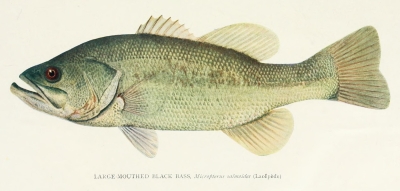
Illustration of a fish.

Large Mouthed black Bass. Forbes, S.A. and R.E. Richardson. Fishes of Illinois. 1908. Illustration by Lydia Moore (Hart) Green. Digitized in BHL by University Library, University of Illinois Urbana Champaign.

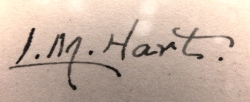
Most of the originals were kept by State Laboratory (now Illinois Natural History Survey) and are being reviewed in preparation for accession into the University Library, University of Illinois at Urbana-Champaign. Artists have been identified for most color plates in the 2 editions: 33 by Green, 24 by Pinkerton. Three paintings bearing the name of Max Bihn (one published) were also found among the paintings long assumed to be the work of Green and Pinkerton alone. Green routinely applied a distinctive signature in ink to the front of her work.
Lydia Hart signature

Signature from Lydia Hart’s Fundulus notatus (INHS image 2181).

Lydia Moore (Hart) Green, was born in Quincy, IL in December 1864. She and Charles Arthur Hart, employed by the State Laboratory 1895-1918, were siblings. Lydia studied Art and Design at the University of Illinois during the 1887-1888 school year. Warrants listed in the Report of the Board of Trustees beginning in 1888 show Lydia was paid for tasks including “work in cabinets,” “work in museum,” “labelling specimens,” “making chart,” and “botanical drawings.” When artist A.M. Westergren left the State Laboratory in 1892, Lydia replaced him. Her illustrations appear in the Bulletin of the State Laboratory of Natural History, Reports of the State Entomologist, and elsewhere. Her 101 detailed illustrations of insects were a noted feature of the State Laboratory’s exhibit at the 1893 Columbian Exposition. She was frequently mentioned as an asset to the State Laboratory in Stephen A. Forbes’ reports to the Trustees. In 1898, Forbes secured for her a salary of $20.00 per month, or 35 cents per hour with additional pay possible if hours exceeded what the base salary would cover.

Work on illustrations for The Fishes of Illinois began in the summer of 1900.[1] Lydia worked at the Biological Station at Meredosia, where there was an aquarium set up to house her live models. Her work was supervised by the State Laboratory’s ichthyologist, Thomas Large.

In a letter to Forbes dated 30 June 1900, Lydia negotiated her pay, based on comparisons with the pay of her mentor, Westergren, and a Mr. Baldwin.

“But you know how inaccurate his drawings are—practically useless so far… It must be admitted that he was a fast worker, but his rapidity seems to have been largely the result of carelessness and was small gain in the end. In conclusion it would seem that $100 or 70c per hr. would be as low as fairness would permit and 60c the very lowest to be considered. From: Chief’s Correspondence, 1871-1909. University Archives. Series Number: 43/1/1

She was referring to A. H. Baldwin, who had received payment for fish drawings and specimens around this time. Baldwin was the illustrator of The Fishes of North and Middle America (Jordan & Evermann, 1900), which Forbes cited as a key reference for the Fishes of Illinois. Subsequent correspondence indicates Forbes was not swayed, and may have been offended.

In December 1900, Lydia traveled to Stanford University to work on illustrations for a work by Jordan on Japanese fishes, and Lydia’s illustrations are acknowledged in papers published by Jordan after this visit. Lydia wrote Forbes on 5 April 1901 from Palo Alto, sharing Jordan’s approval of her eel drawings and her observations on the speed of fellow illustrators there (Mrs. Sparks, and A. H. Baldwin). She also asked Forbes to send examples of her best work “the red fin, the garmani, and the plate of young bass for the purpose of getting criticisms from Hudson, who is expected soon.” In the same letter, she asked about resuming work on the Illinois fish, and the pay.
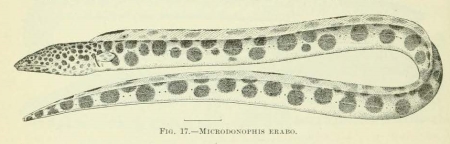
Illustration of an eel

The blotched snake-eel (Ophichthus erabo), synonym microdonophis erabo. Jordan, D. S. A review of the apodal fishes or eels of Japan, with descriptions of nineteen new species (1901). Illustration by Lydia Moore (Hart) Green. Digitized in BHL by Smithsonian Libraries.
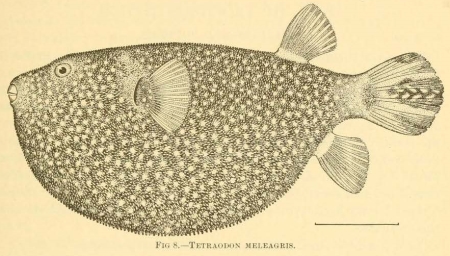
Illustration of a puffer fish

The guineafowl puffer or golden puffer (Arothron meleagris), synonym Tetraodon meleagris. Jordan, D. S. A review of the gymnodont fishes of Japan (1902). Illustration by Lydia Moore (Hart) Green. Digitized in BHL by Smithsonian Libraries.

On 17 June 1901 in Urbana, Lydia married entomologist E. C. Green. In August, she was at the Illinois Biological Station in Ottawa working on fish illustrations, and reported to Forbes that, at his request to reduce expenses, she has given up her room in Ottawa for a much smaller one. Forbes had apparently offered 50 cents per hour plus expenses, but by September, the agreement was adjusted to $10 per finished painting, and Lydia was asking to have her expenses covered when there were no fish available to draw. Work on the fish illustrations continued through 1907, but Lydia left in 1902 for Texas when her husband took a position at Texas A&M. By January 1902, Forbes was seeking a replacement illustrator, and had contacted Charlotte M. Pinkerton through Seth E. Meeks at the Field Museum. The Chicago Tribune published a feature on Lydia and her work on 1 June 1902 that told the story of her discovery by the artist at the State Laboratory (presumably Westergren) and gave Lydia’s endorsement of scientific illustration as “admirable for feminine students”.
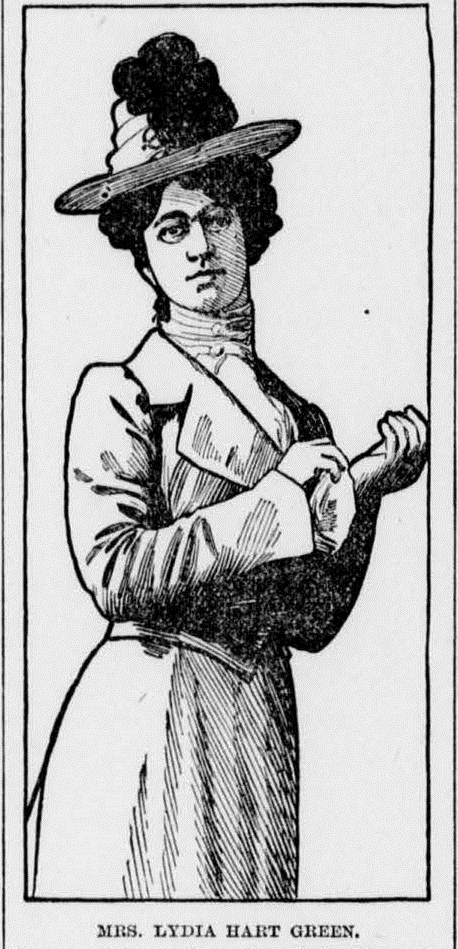
Illustration of an early 20th century woman

Lydia Moore (Hart) Green. Freeland Tribune. (Freeland, Pa.), 11 July 1902. Chronicling America: Historic American Newspapers. Lib. of Congress. Source: https://chroniclingamerica.loc.gov/lccn/sn87080287/1902-07-11/ed-1/seq-4/. Image originally appeared in a feature in the Chicago Tribune, “An Illinois woman who paints insects”.

After leaving her position at the State Laboratory and Illinois, Lydia visited Urbana regularly according to reports in the Daily Illini. She returned to Urbana to live in 1917, but I did not find evidence of further work for the Illinois State Laboratory of Natural History. Her husband was at this time working in Brazil on cotton insect control, and she made several extended visits there, applying for her first passport in 1918 for this purpose.
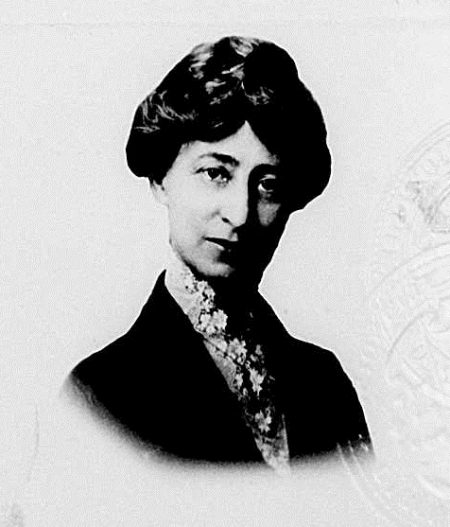
Photograph of an early 20th century woman

1918 passport photo of Lydia Moore Hart Green, United States Passport Applications, 1795-1925. Source: https://www.familysearch.org/ark:/61903/1:1:QV5B-X87G.

In 1930, Green produced fish illustrations for the Ohio Division of Wildlife. Nine years after Lydia’s death (in 1948), these images were published in Trautman, M. B. Fishes of Ohio with illustrated keys. Ohio State University Press, 1957.

[1] Stephen Alfred Forbes, report dated September 20, 1900 published in the 21st Report of the Board of Trustees of the University of Illinois.
July 25, 2019by Joel Richard
BHL News, Blog Reel

BHL at the 2019 Society for the Preservation of Natural History Collections (SPNHC) and Digital Data in Biodiversity Meetings

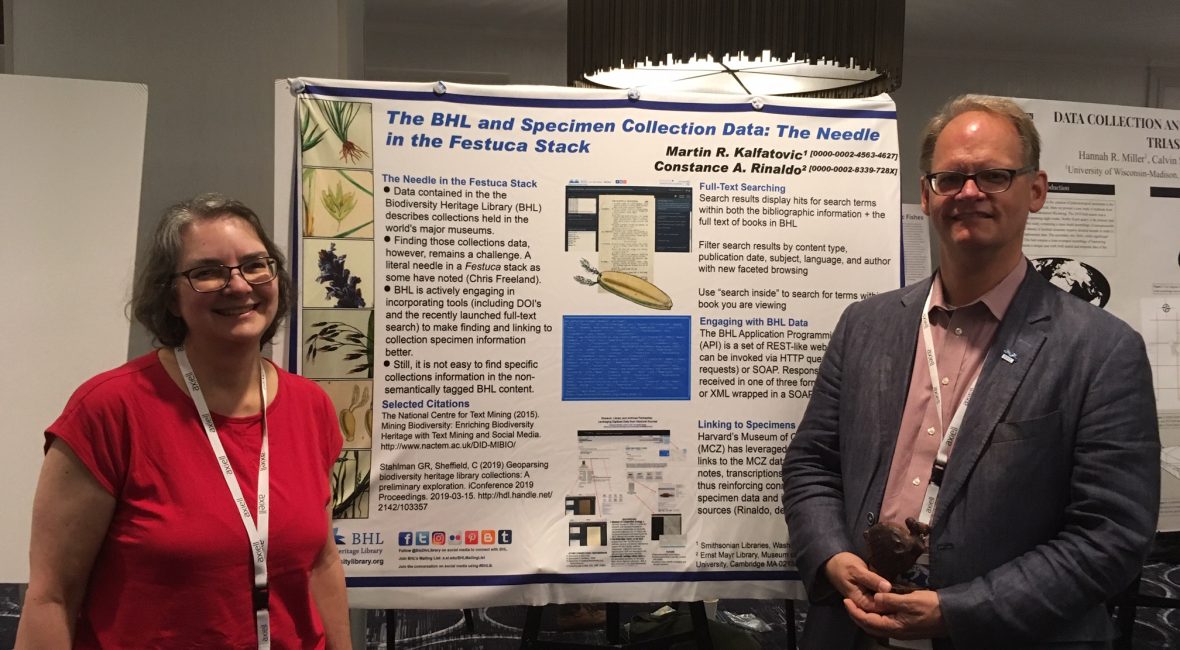
man and woman standing in front of a poster

Martin Kalfatovic (BHL Program Director) and Connie Rinaldo (Chair of the BHL Members’ Council) attended the recent Society for the Preservation of Natural History Collections (SPNHC) meeting held 25-31 May 2019 and hosted by the Field Museum of Natural History in Chicago, Illinois. The theme of the meeting was “Making the Case for Natural History Collections”.

There were opportunities for tours of the Field Museum of Natural History and workshops in addition to the strong array of presentations. One session focused on metrics for measuring impact, time working in the collection and increasing visibility of the behind-the-scenes work with museum specimens. If you are interested, there is a survey to gather data about metrics in collections. There were several talks related to library involvement in museum work such as copyright and metadata contributions and some talks mentioned BHL as a data source..

man and woman standing in front of a poster

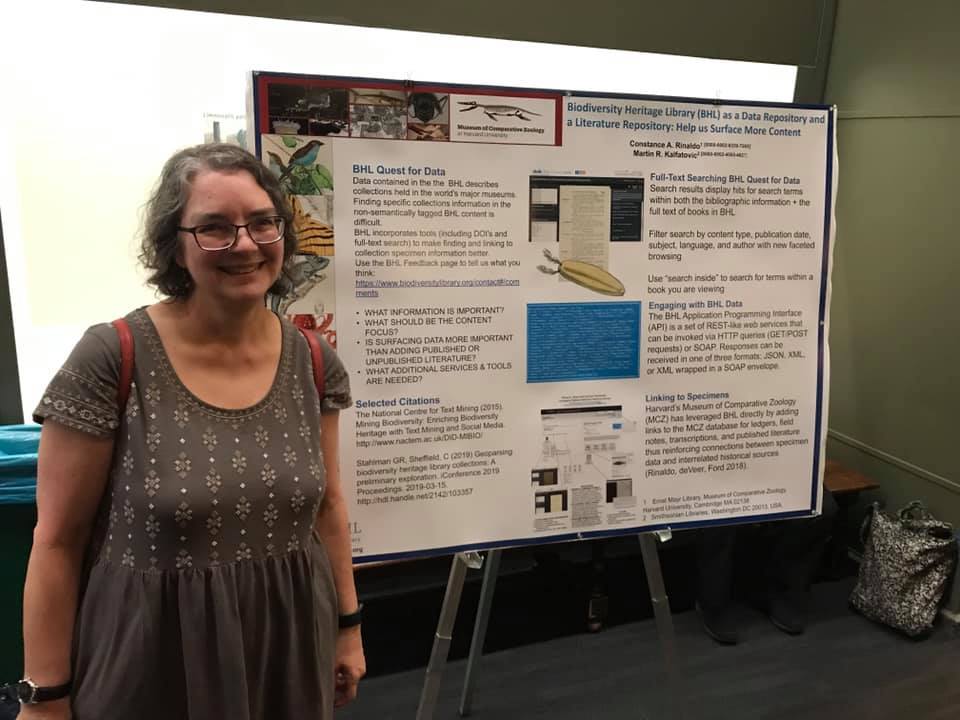
Martin Kalfatovic and Connie Rinaldo with their poster at the 2019 Society for the Preservation of Natural History Collections (SPNHC) meeting.

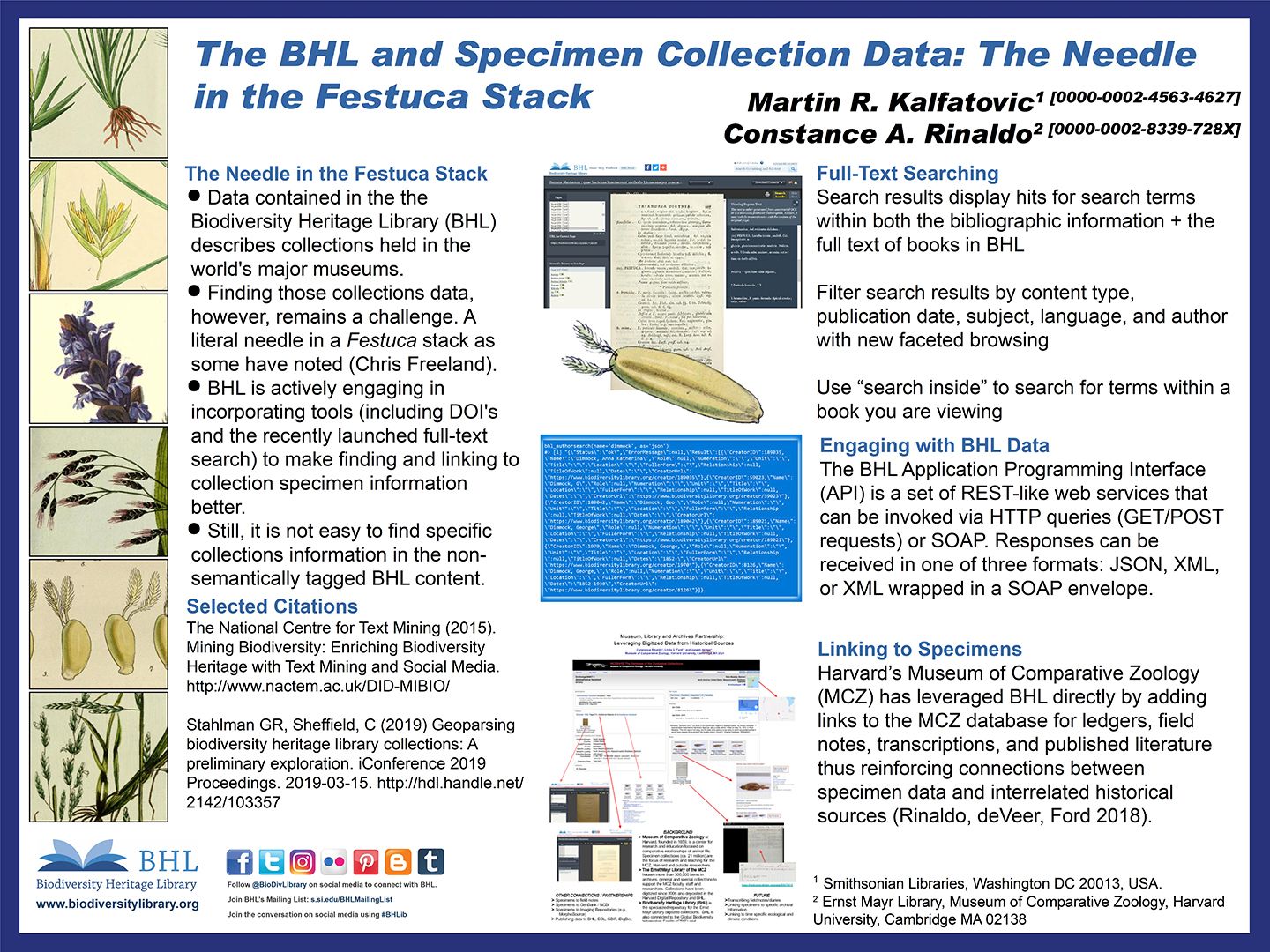
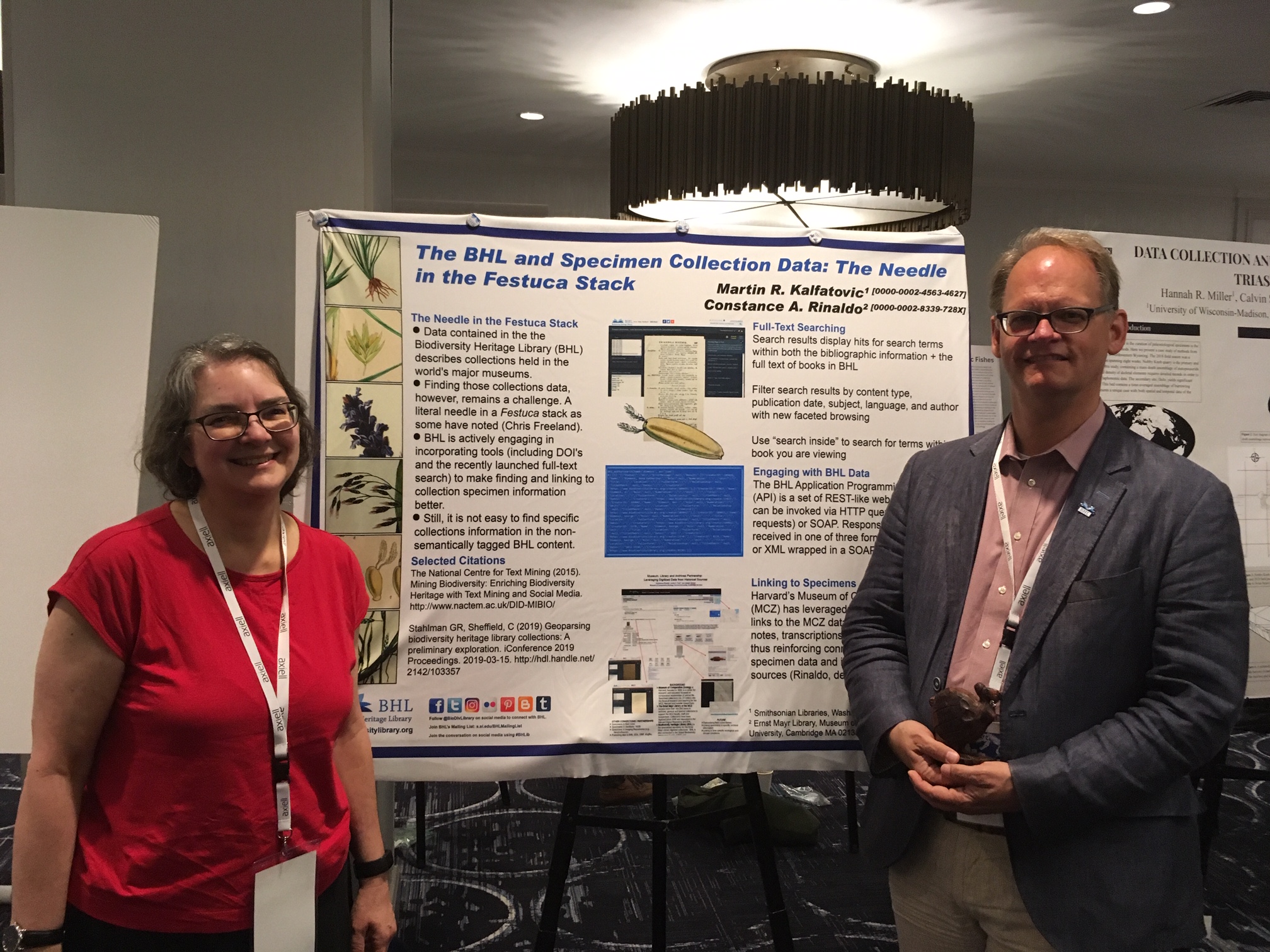
We spoke with people who use the BHL frequently (to great praise) and to representatives of organizations with connections to the BHL such as Biodiversity Information Standards group (TDWG), Global Biodiversity Information Facility (GBIF), New York Botanical Garden, Consortium of European Taxonomic Facilities (CETAF), Field Museum of Natural History and Yale Peabody Museum. Martin and Connie presented a poster: “BHL and Specimen Collection Data: The Needle in the Festuca Stack”. There were a few visitors who did not know about the BHL and were excited to learn more.

Poster: “BHL and Specimen Collection Data: The Needle in the Festuca Stack”

Poster presented by Martin Kalfatovic and Connie Rinaldo 2019 Society for the Preservation of Natural History Collections (SPNHC) meeting.

Connie Rinaldo also attended the Digital Data in Biodiversity Research meeting hosted by the Yale Peabody Museum, 10-12 June 2019. The theme was….data! More specifically, there were 5 themes:

  • Methods and protocols for enhancing discovery with digitized specimen data;
  • Ongoing research projects that utilize digital data;
  • Gaps and deficiencies in currently available digital data that hinder effective use;
  • Pipelines that integrate digitization, data use, and research;
  • Use of digitized biodiversity specimen data within ecological research and practice.
woman standing in front of a poster

Connie Rinaldo with the poster at the Digital Data in Biodiversity Research meeting. Photo by George Lauder.

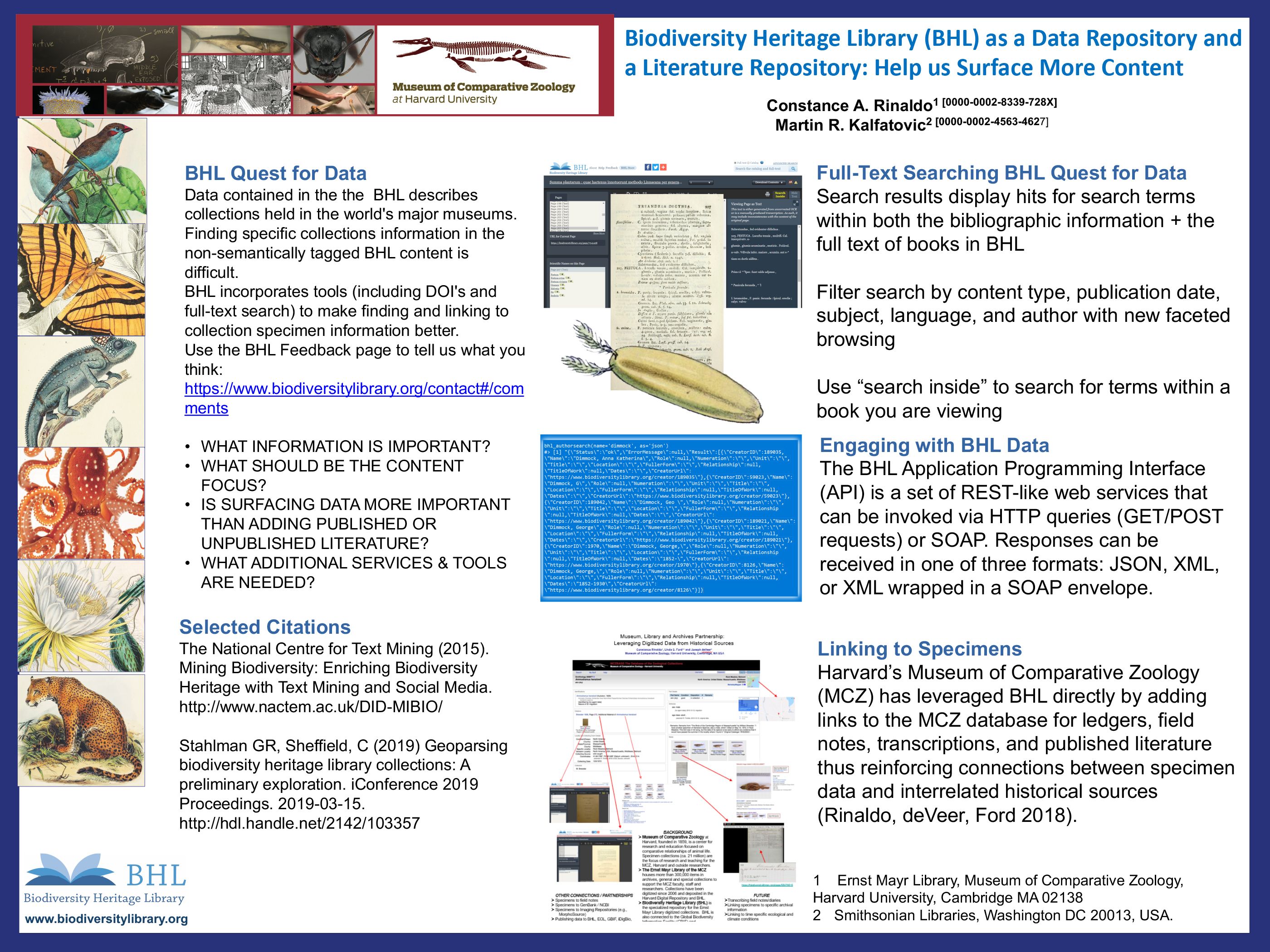
Connie and Martin presented a poster “Biodiversity Heritage Library (BHL) as a Data Repository and a Literature Repository: Help us Surface More Content”. As we have done at other meetings in the past, our primary interest was to solicit ideas and comments to ensure that BHL meets the needs of biodiversity communities. There was interest expressed in better names and image extraction, annotation, georeferencing and linking to specimens from BHL content (and vice versa) — all further supporting BHL’s plans for BHL 2.0. I had conversations with organizational representatives from TDWG, GBIF, CETAF and Distributed Systems of Scientific Collections (DiSSco). Some of the talks mentioned BHL as a data source.

Poster: “Biodiversity Heritage Library (BHL) as a Data Repository and a Literature Repository: Help us Surface More Content”

Poster presented by Martin Kalfatovic and Connie Rinaldo at the Digital Data in Biodiversity meeting.

I also attended the GBIF North American Node meeting where there was discussion about how to increase funding for all the representative organizations, increasing participation, the Living Atlases community, and mobilizing new data types.

July 18, 2019by michelle.underhill
BHL News, Blog Reel, Tech Updates

BHL Adds Functionality Allowing Partners to Upload Crowdsourced Transcriptions of Digitized Archival Materials

Screenshot of a digital library book viewer with readable OCR.

The Biodiversity Heritage Library (BHL) has added functionality to allow BHL Partners to upload transcriptions in place of the automatically-generated OCR (Optical Character Recognition) for archival materials digitized in BHL. This functionality supports transcriptions generated as part of Partner crowdsourcing projects on Smithsonian Transcription Center, DigiVol, and From the Page.

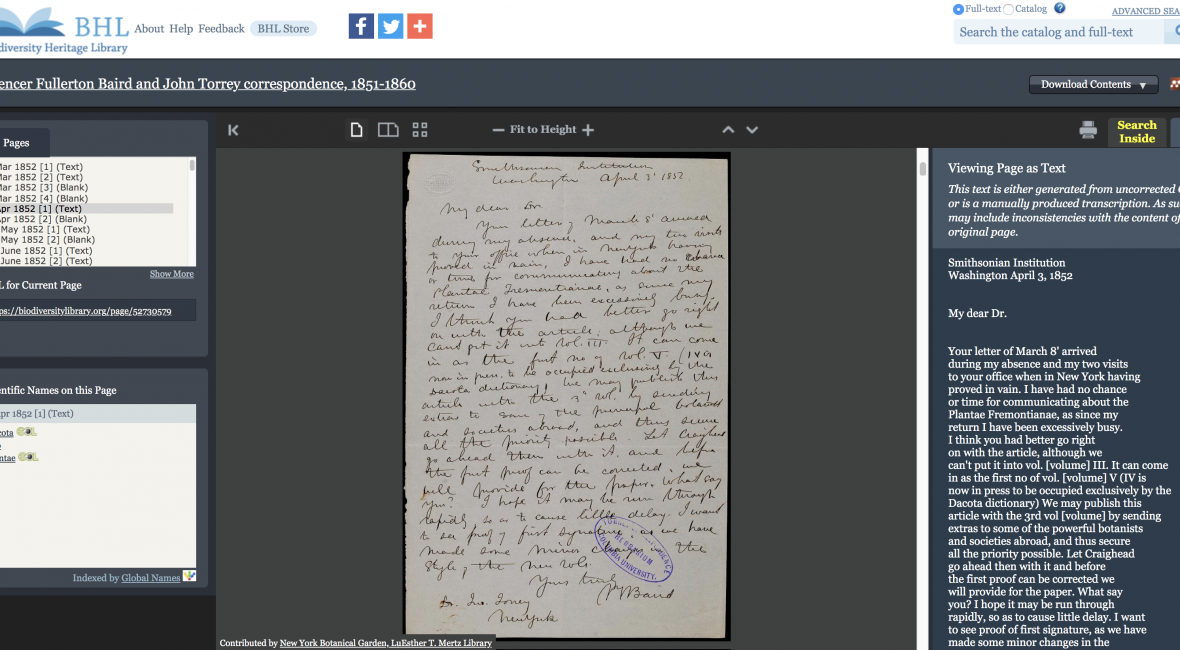
Optical Character Recognition (OCR), also called text recognition, translates text characters in scanned documents into code that can be used for data processing and enables searching of document text. Handwritten archival materials like correspondence and field notes are notoriously problematic for OCR software. Full-text searching of these materials is significantly hampered by poor OCR output.

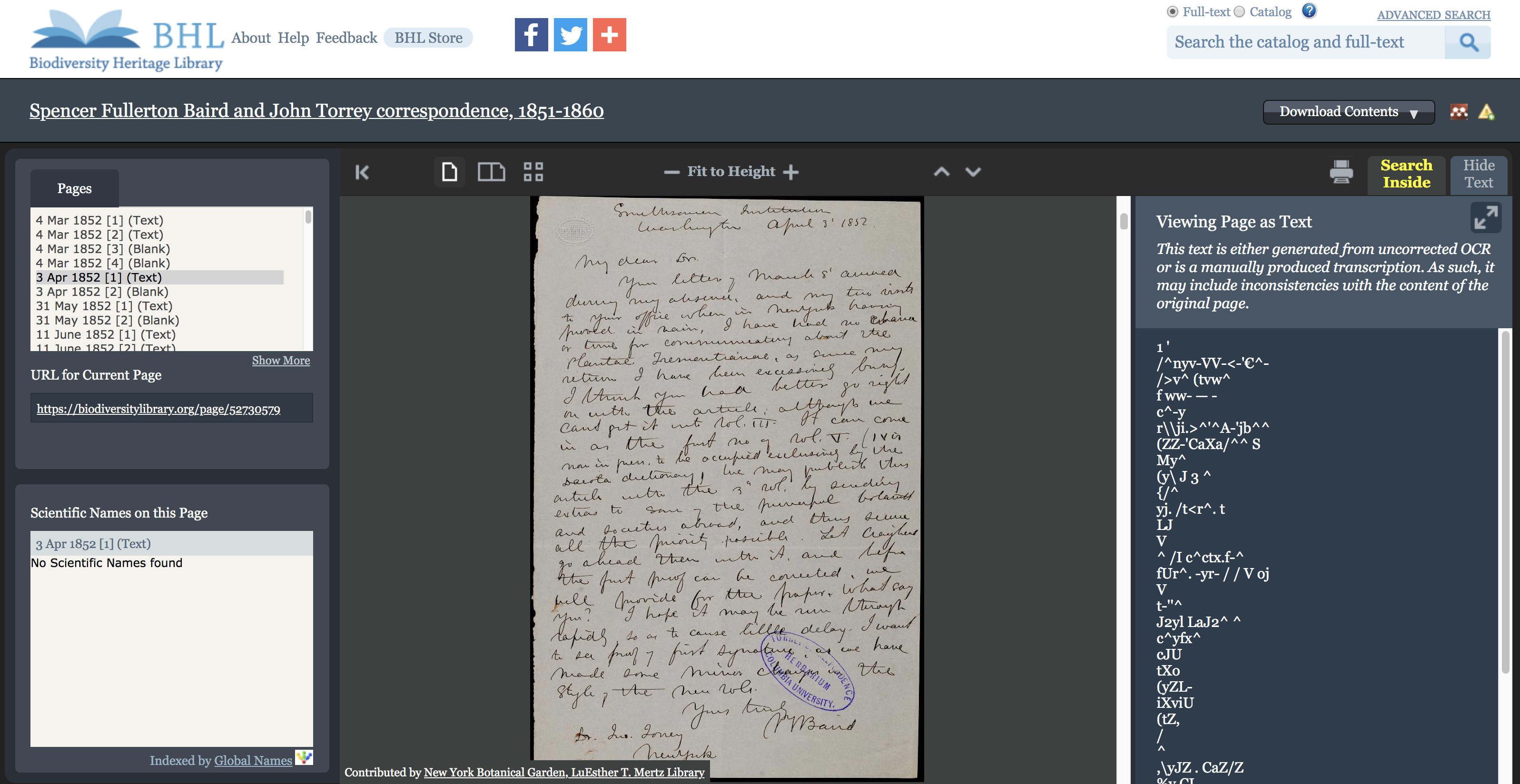
Screenshot of a digital library book viewer with gibberish for OCR.

Example of the poor automatically-generated OCR output for handwritten correspondence. Spencer Fullerton Baird and John Torrey correspondence, 1851-1860. Contributed in BHL from the LuEsther T. Mertz Library of The New York Botanical Garden.

Crowdsourcing the transcription of archival materials has become a popular way to generate machine-readable text that enables searching and discoverability. Several BHL Partners are using crowdsourcing platforms (e.g. Smithsonian Transcription Center, DigiVol, and From the Page) to transcribe field notes, correspondence, and other archival materials that they have digitized in BHL.

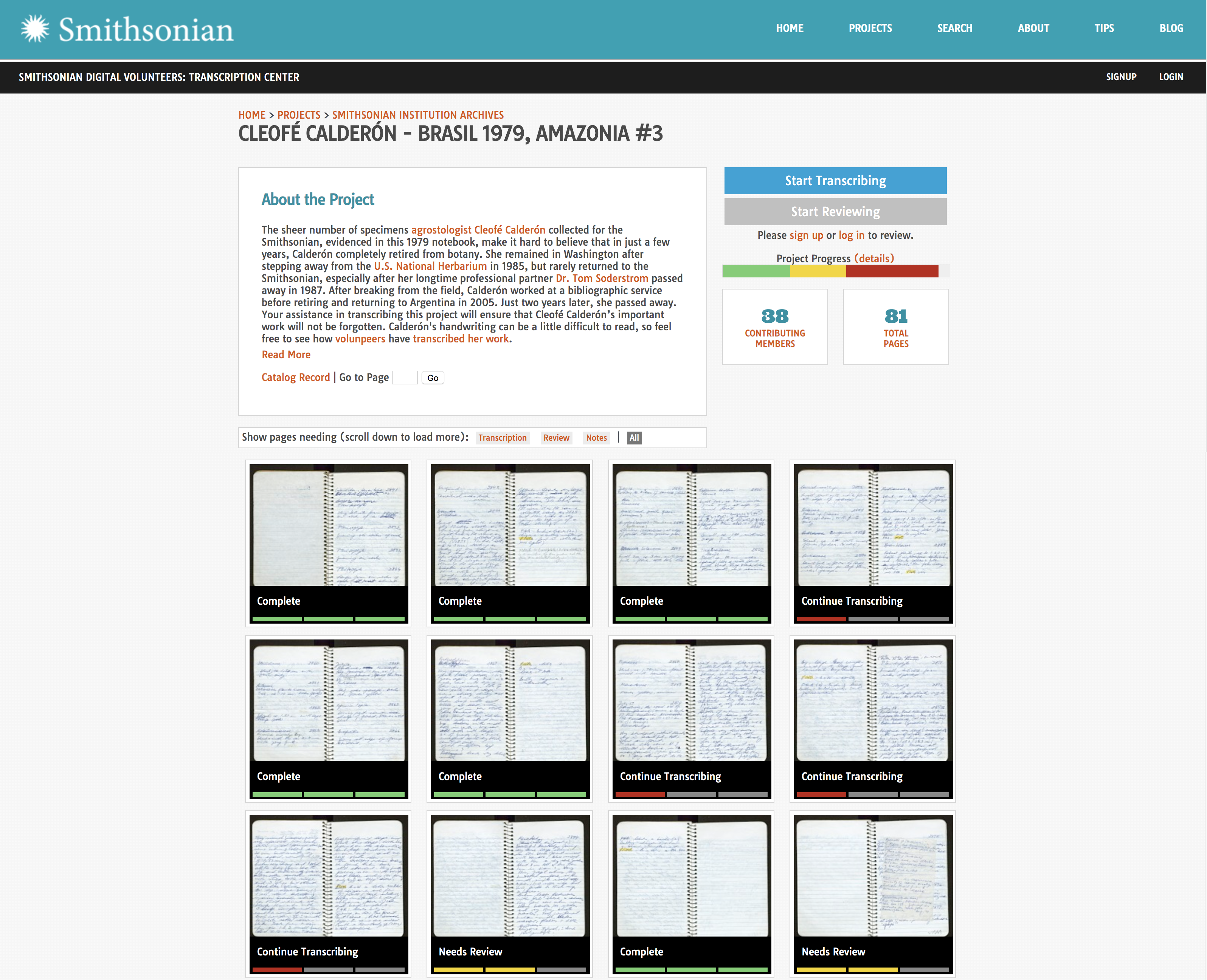
Screenshot of a project in the Smithsonian Transcription Center.

Example of a field notebook being transcribed in the Smithsonian Transcription Center. This notebook, Brasil 1979, Amazonia #3, from Cleofé Calderón is also available in BHL from the Smithsonian Institution Archives.

With this new functionality, these transcriptions can now be uploaded in place of the automatically-generated OCR for these items, allowing them to be full-text searchable and enabling our taxonomic name recognition software to index scientific names within their pages. Since the transcribed text can be viewed alongside the digitized page image, users can also more easily read materials with difficult-to-decipher handwriting. Thus, this new functionality makes it easier for researchers and the public to explore these valuable primary source materials and access specific information from their pages.

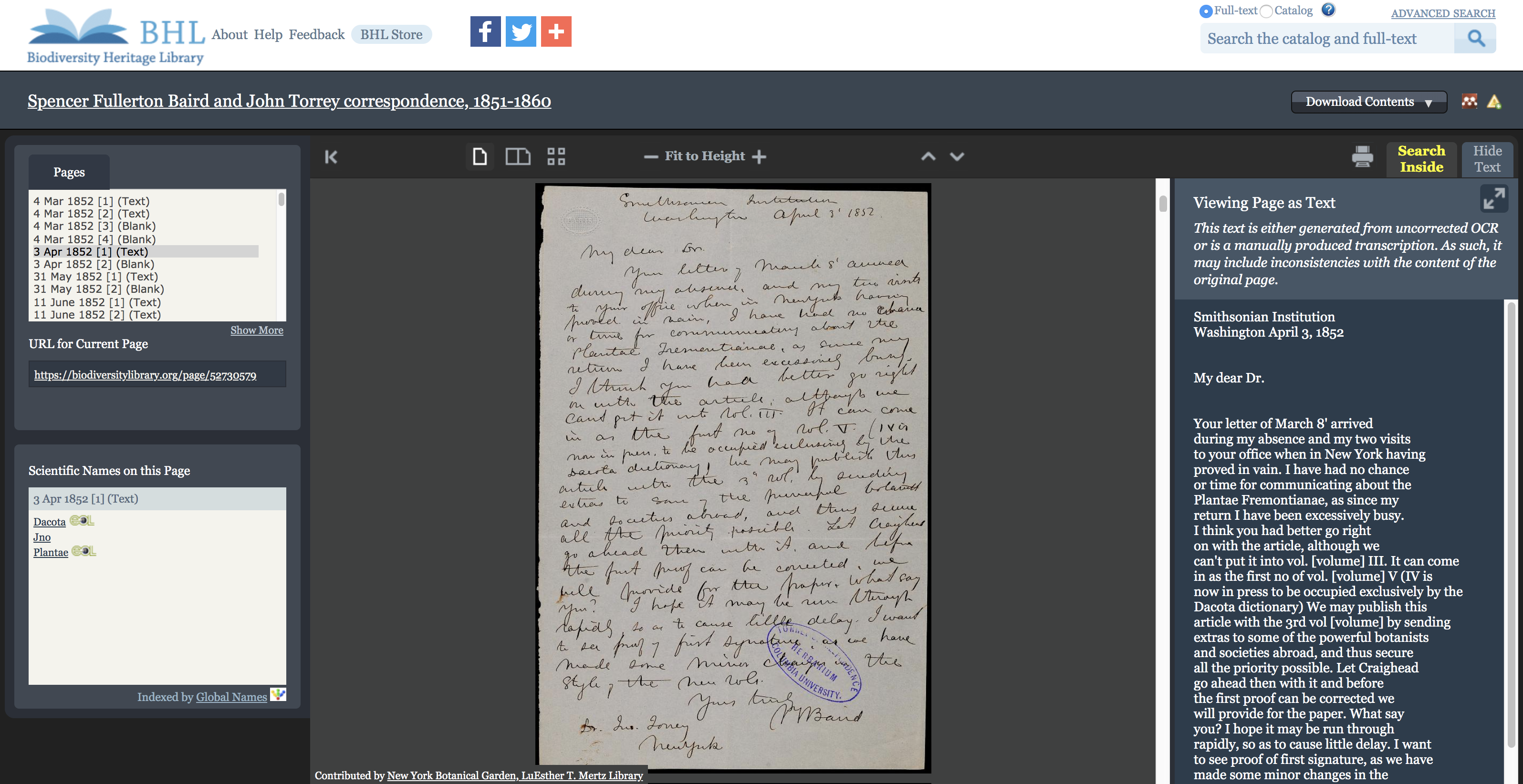
Screenshot of a digital library book viewer with readable OCR.

Above example with the OCR replaced with a crowdsourced transcription generated as part of The John Torrey Papers project from The New York Botanical Garden on From the Page. Spencer Fullerton Baird and John Torrey correspondence, 1851-1860. Contributed in BHL from the LuEsther T. Mertz Library of The New York Botanical Garden.

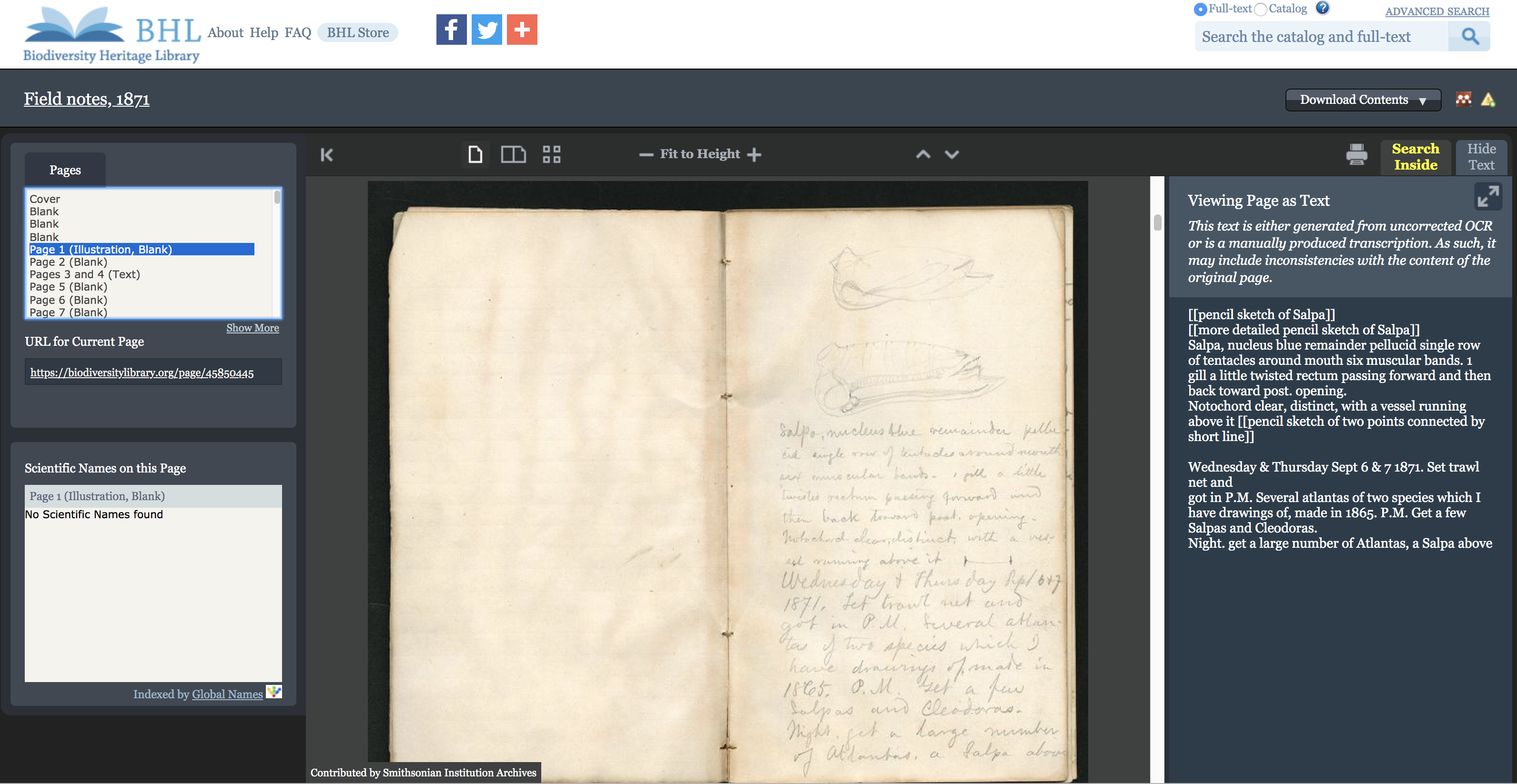
Screenshot of the BHL book viewer with a digitized field book and the transcribed text shown alongside the page in place of the OCR.

Since the transcribed text can be viewed alongside the digitized page image in the BHL book viewer, users can also more easily read archival materials. William Healey Dall’s Field Notes, 1871. Transcription generated on the Smithsonian Transcription Center. Contributed in BHL from the Smithsonian Institution Archives.

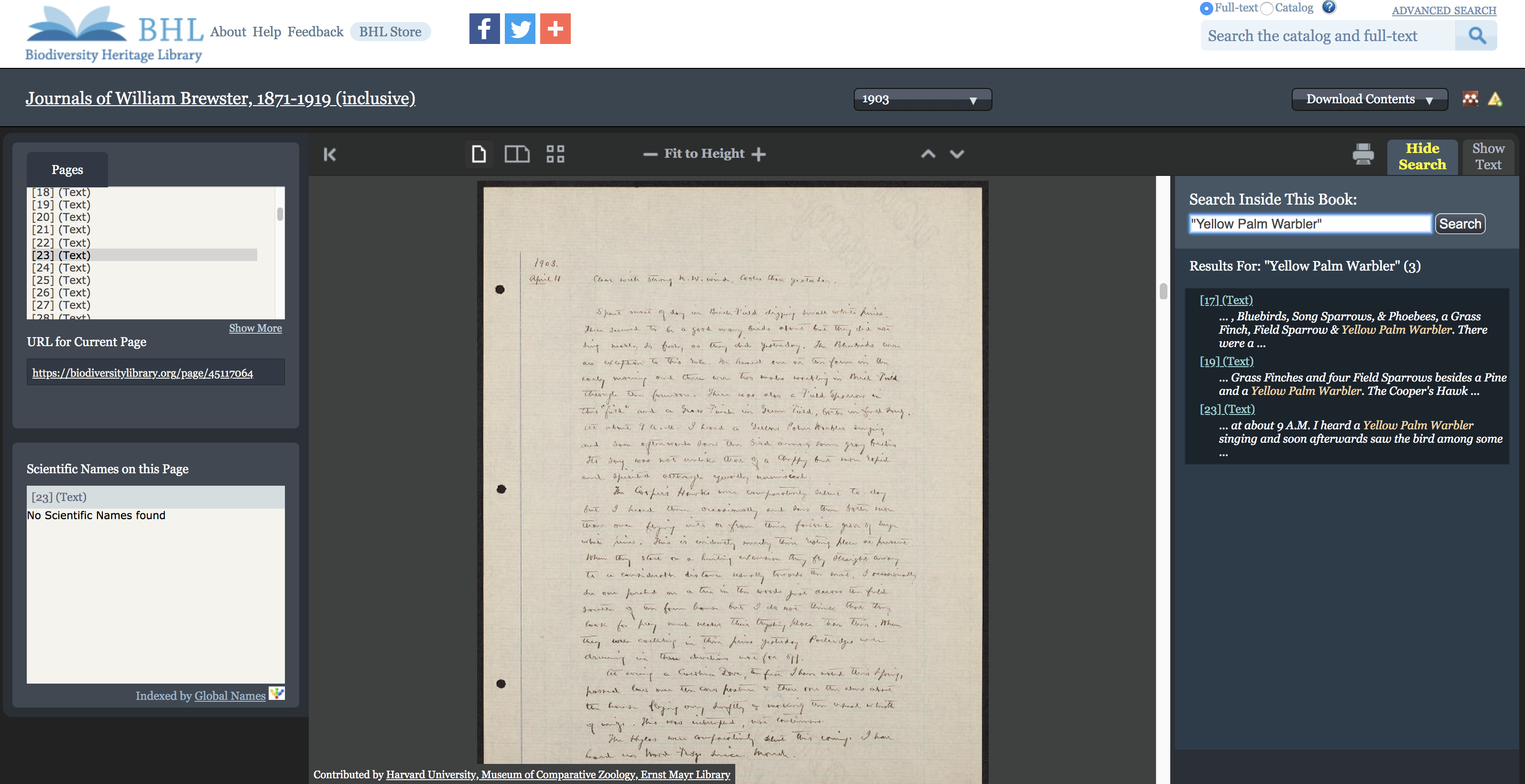
Screenshot of a book viewer with digitized archival materials and full-text search for "Yellow Palm Warbler".

Crowdsourced transcriptions allow digitized archival materials in BHL to be full-text searchable, as shown in this example searching for “Yellow Palm Warbler” within William Brewster’s 1903 journal. Transcription generated as part of the Ernst Mayr Library of Harvard University project on DigiVol. Contributed in BHL from the Ernst Mayr Library of the Museum of Comparative Zoology at Harvard University.

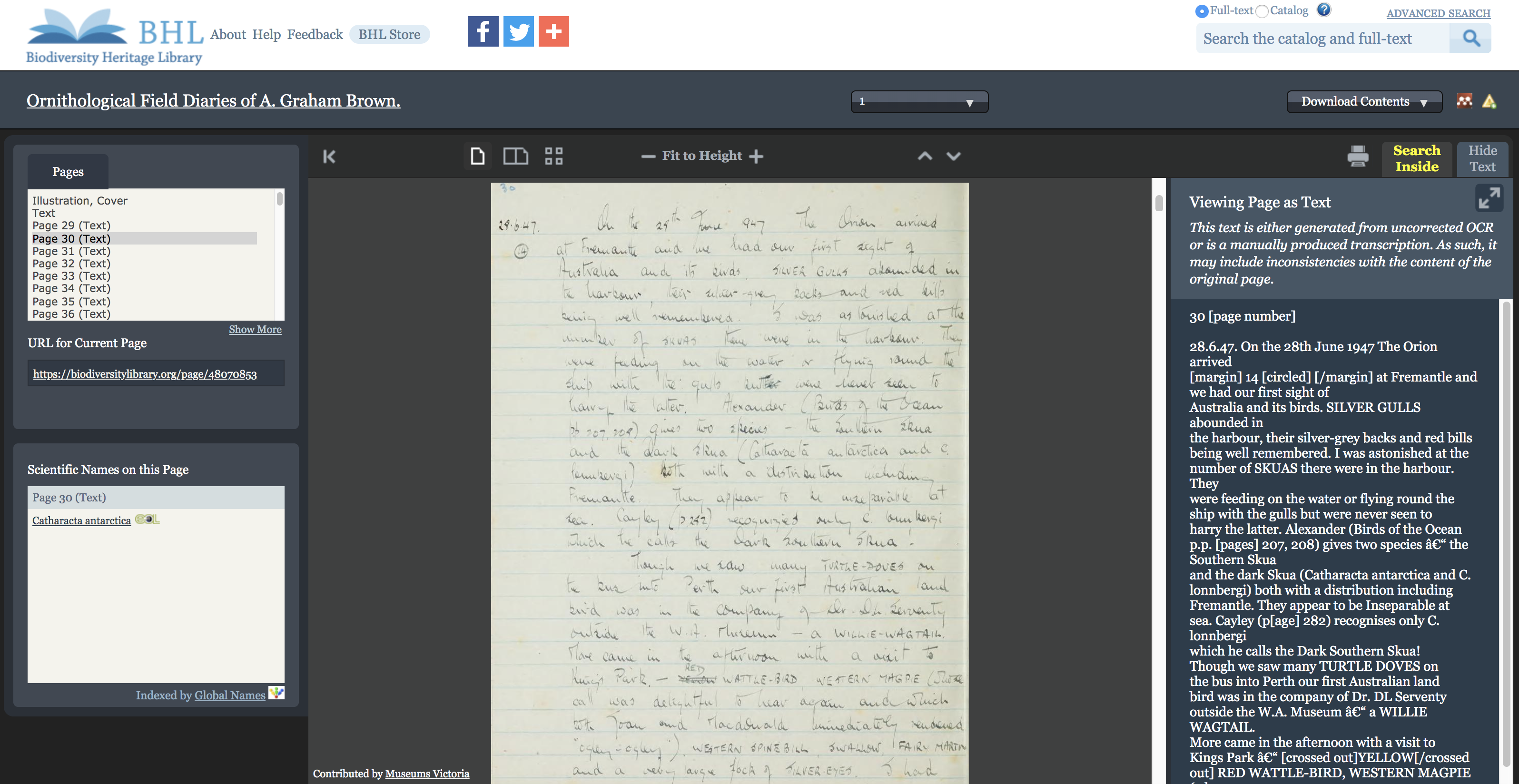
Screenshot of a book viewer with scientific name indexed on the page of an archival notebook.

Crowdsourced transcriptions allow BHL’s taxonomic name recognition software to index scientific names within the pages of digitized archival materials, as seen in this example in which Catharacta antarctica is indexed on a page within the first volume of the Ornithological Field Diaries of A. Graham Brown. Transcription generated as part of a project from BHL Australia and Museums Victoria on DigiVol. Contributed in BHL from Museums Victoria.

Participating Partners have begun uploading transcriptions to BHL. To date, transcriptions have been uploaded from Partner crowdsourcing projects with BHL Australia, Ernst Mayr Library of Harvard University, The New York Botanical Garden, and Smithsonian Institution Archives. This is an ongoing process, and more transcriptions will be uploaded to the Library over time.

Interested in transcribing archival materials? Several BHL Partners have active transcription projects on various crowdsourcing platforms. Follow the links below to explore the opportunities and get involved:

  • Ernst Mayr Library of Harvard University on DigiVol
  • The John Torrey Papers from The New York Botanical Garden on From the Page
  • Smithsonian Institution Archives on the Smithsonian Transcription Center
July 17, 2019by michelle.underhill
BHL News, Blog Reel, Tech Updates

BHL Participates in the Global Names Workshop

gnames-workshop.jpg

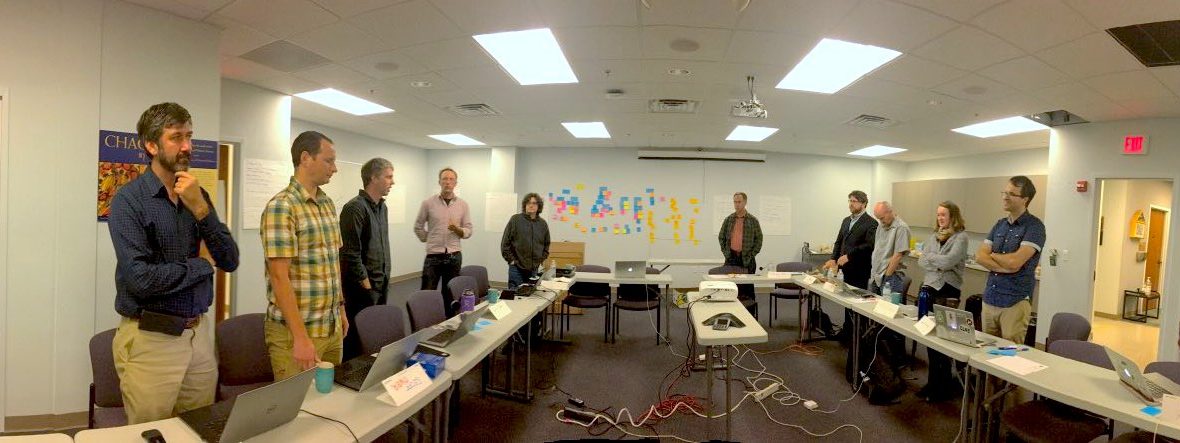
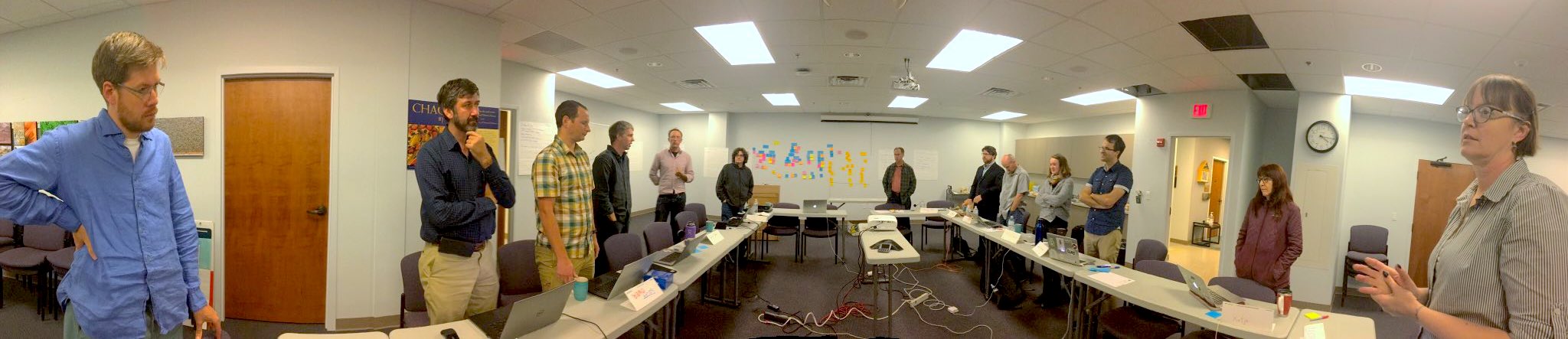
Participants at the The Global Names Project workshop discuss progress in a morning “stand up” briefing. Photo by Deborah Paul (iDigBio).

The Global Names Project held a workshop on 17-19 June 2019 on the Campus of the University of Illinois at Urbana-Champaign. The workshop was titled Scientific names indexing and data mobilization of Biodiversity Heritage Library using tools from Global Names project and was hosted by the Species File Group at the  Illinois Natural History Survey. Eighteen people attended representing a variety of organizations interested in BHL content: Global Names Architecture, iDigBio, TaxonWorks, UIUC Species File Group, the Illinois Library, Encyclopedia of Life, the DINA Project, the Catalogue of Life, GBIF, Species File Group Argentina, the HathiTrust Research Center, and Global Biotic Interactions.

The workshop was organized as an unconference/hackathon in which the meeting is planned by all participants at the workshop. We initially all proposed topics we individually were interested in exploring; these were our “selfish goals”. In an exercise at the workshop, those goals were broken into similar or related topics. The most popular topics (see those sticky notes on the wall — in the background of the photo) became the focus of “pitches”, i.e. challenges that we could address at the workshop. We self-organized into working groups under the banner of pitch and got to work.

Note that at a hackathon, the goal is that you are always either “doing or learning.” For example, some of us learned how to mine BHL content using the Developer and Data Tools. And if you’d like to try it, you too can install and use the gnfinder and gnparser tools. The gnparser tool breaks scientific name-strings into the semantic elements of the string. While gnfinder searches text output (like OCR) for names.

Overall, the activities of the workshop centered around further improving the information that we can extract from the OCR (optical character recognition) content that is generated from the page images in BHL, including improving that OCR content itself.

One group focused on attempting to find Species Identification Keys in BHL. Using a versioned, citable, and verifiable snapshot of the BHL OCR text corpus1, the group discovered that a variety of ways in which a species identification key is labeled in the text combined with the natural inaccuracies of OCR make the task of identifying a heading for a key challenging2.

Another group worked on connecting the APIs of TaxonWorks, Global Names, and BHL. Their goal was to integrate information and resources from all three in a single interface that highlighted the BHL pages that species were originally described on. This group managed to wrap all three APIs in a single place (a “Task” in TaxonWorks), but problems with matching citation data across platforms prevented them from truly “closing the loop”.

Finally, the largest group focused on extracting different entities from the OCR content of the BHL, for example geographic names, people names, and organizations. This group experimented with a variety of natural language techniques and tools including the Edinburgh Geoparser, IBM Watson, Microsoft Azure Cognitive Services, and LingPipe and identified some additional challenges to extracting such entities from BHL. Not surprisingly, there is some overlap between place names and taxon names. For example, “St. Lucia” can be conflated with the genus “Lucia” (a type of butterfly), which certainly adds a hurdle for accurate entity identification.

The results of the workshop are being integrated into a Wiki that contains our initial goals and that invites other stakeholders to get involved. One direct outcome of the workshop is that the BHL will move to provide quarterly exports of the OCR, available to anyone, to mine and experiment with.  Previously, this content was not easily downloadable. The workshop discussions and hacking drove home the point that this corpus is a key element for future developments. Many other broader topics were also raised throughout the meeting. In particular, we explored the idea of opening a worldwide biodiversity informatics channel to better facilitate communication and share ideas among interested parties in real-time. This could be done using Slack.

Many thanks to the Global Names and the Illinois Natural History Survey for hosting, and especially Dima Mozzherin for all of his work on the Global Names Name Finding algorithm, which has opened the door to moving BHL’s content into the next decade.

References

[1] Poelen, Jorrit H. (2019). A biodiversity dataset graph: Biodiversity Heritage Library (BHL) (Version 0.0.1) [Data set]. Zenodo. http://doi.org/10.5281/zenodo.3251134

[2] Poelen, Jorrit H., Schulz, Katja, Trei, Kelli J., & Rees, Jonathan A. (2019, July 10). Finding Identification of Keys in the Biodiversity Heritage Library (Version 1.1). Zenodo. http://doi.org/10.5281/zenodo.3311815

July 15, 2019by Joel Richard
Blog Reel, User Stories

Sharks and More: Discovering Animals in the Sixteenth Century and Today

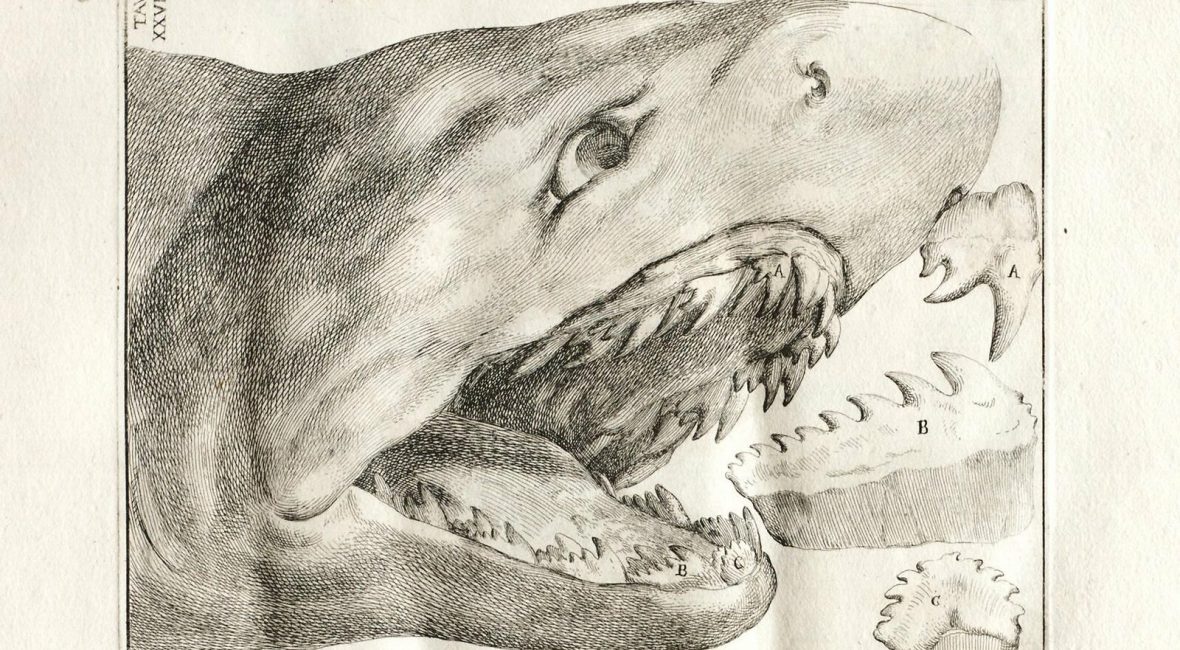
Illustration of a shark

Each year, audiences around the world are gripped with “shark mania”. Since its premier in 1988, the annual Shark Week celebrations have resulted in countless hours of programming devoted to all things sharks.

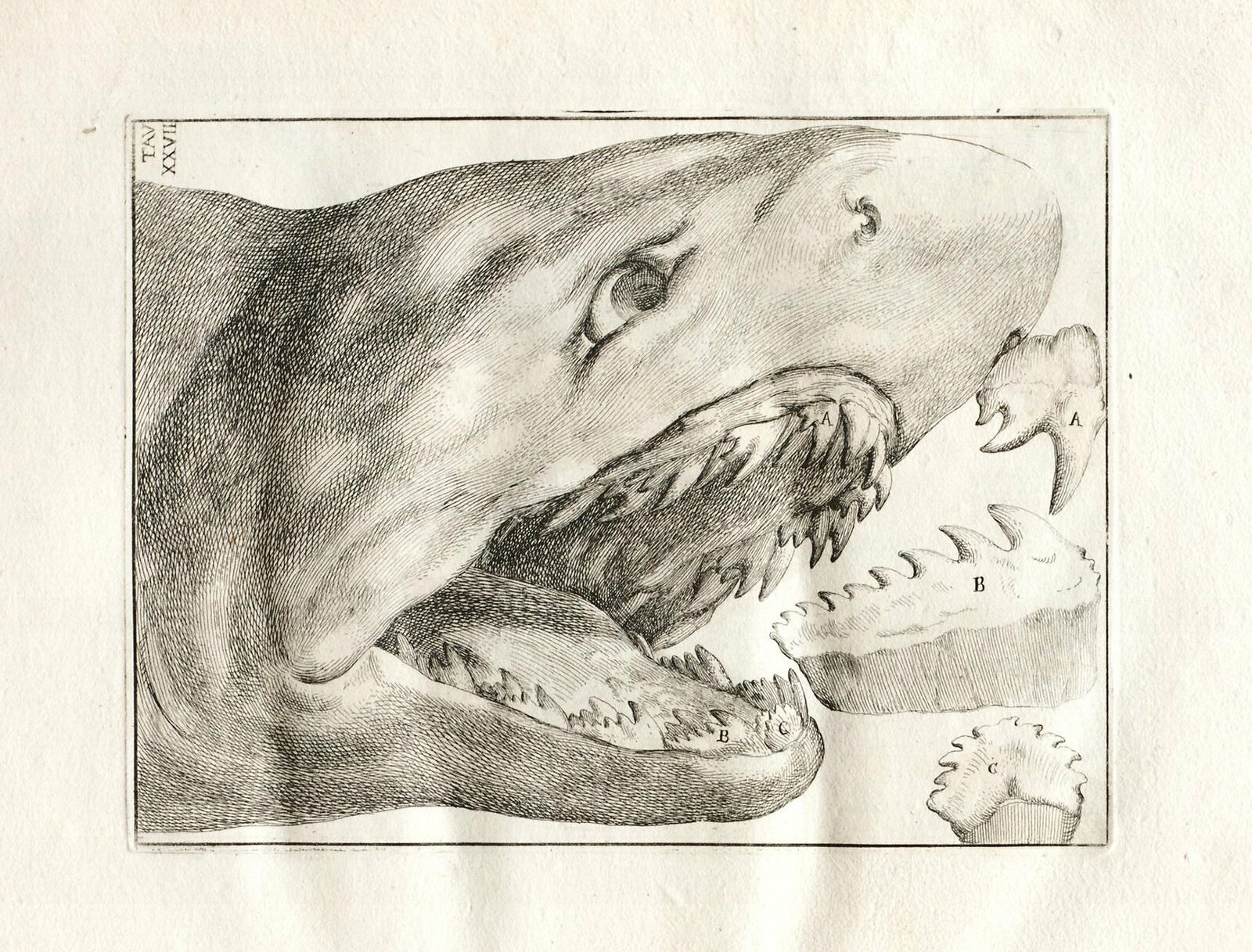
During Shark Week 2017, Vox posted a story with a video explaining why you don’t see Great White Sharks in aquariums. At the end (beginning 5:17), video co-creator Joss Fong highlighted the Biodiversity Heritage Library (BHL) as a “great resource” for historic literature on biodiversity — and gave a shout-out to BHL’s Flickr collection: “Sharks, Skates & Rays!”. The collection includes illustrations dating back to the sixteenth and seventeenth centuries.

Illustration of a shark

Illustration from the Sharks, Skates & Rays! Flickr collection. Scilla, Agostino. De corporibus marinis lapidescentibus quæ defossa reperiuntur. 1752. Contributed in BHL from the United States Geological Survey Libraries Program.

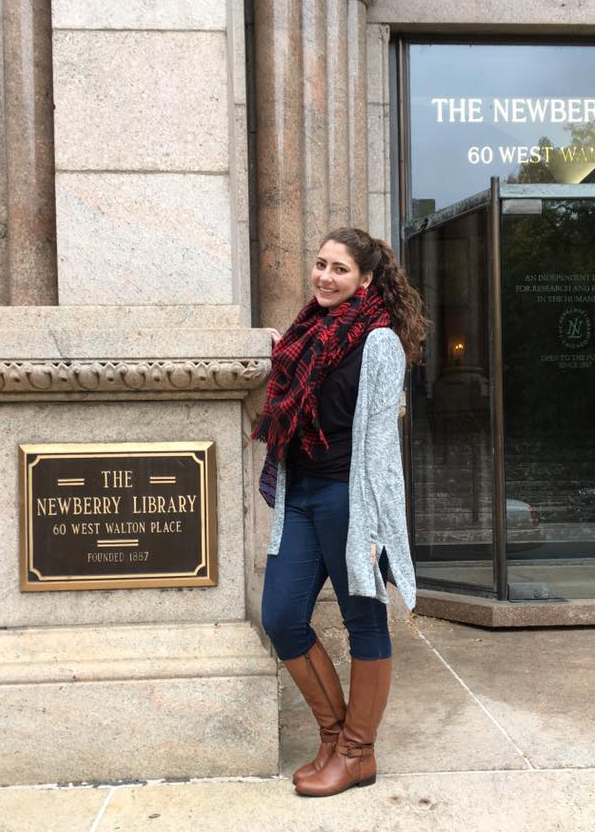
Danielle Alesi, a PhD candidate at the University of Nebraska-Lincoln (UNL), stumbled upon the video one night last summer while taking a break from studying for her comprehensive exams. She was introduced to BHL for the first time.

That serendipitous discovery had a profound impact on her research, which focuses on early modern European and Atlantic world history with an interest in animal studies.

“I was overcome by excitement, realizing that much of the research I required for my dissertation was digitized on the site,” recalls Alesi. “The moment still stands out as one of my ‘breakthrough’ moments early in the dissertation writing process.”

Photograph of a woman standing in front of a glass door.

Danielle Alesi, PhD candidate at the University of Nebraska-Lincoln (UNL).

Alesi is currently entering the fourth year of her PhD program at UNL. Her dissertation explores the interactions of sixteenth- and seventeenth-century European travelers with the people and animals of the Americas. BHL has been a valuable source of information on these encounters.

“BHL is an amazing resource that scholars from many fields are lucky to have available to us,” praises Alesi. “It allows me to access many of the travel narratives and early accounts of animals native to the Americas that I am using in my research. Since I am located in Nebraska and generally have a full teaching schedule, this is an excellent resource that allows me to see many of my sources without having to travel to a library that holds them.”

Alesi generally uses BHL weekly, downloading PDFs of these early narratives to print and translate as needed. The availability of multiple editions of titles in BHL is particularly useful, allowing Alesi to compare changes to the texts over time.

“I love that I can search for authors or texts, see multiple editions, and download a full scan of a book that includes paratexts and marginalia, which is better than other digital library services,” lauds Alesi. “BHL allows me to do much of my research at home without having to travel to various libraries throughout the country or the world.”

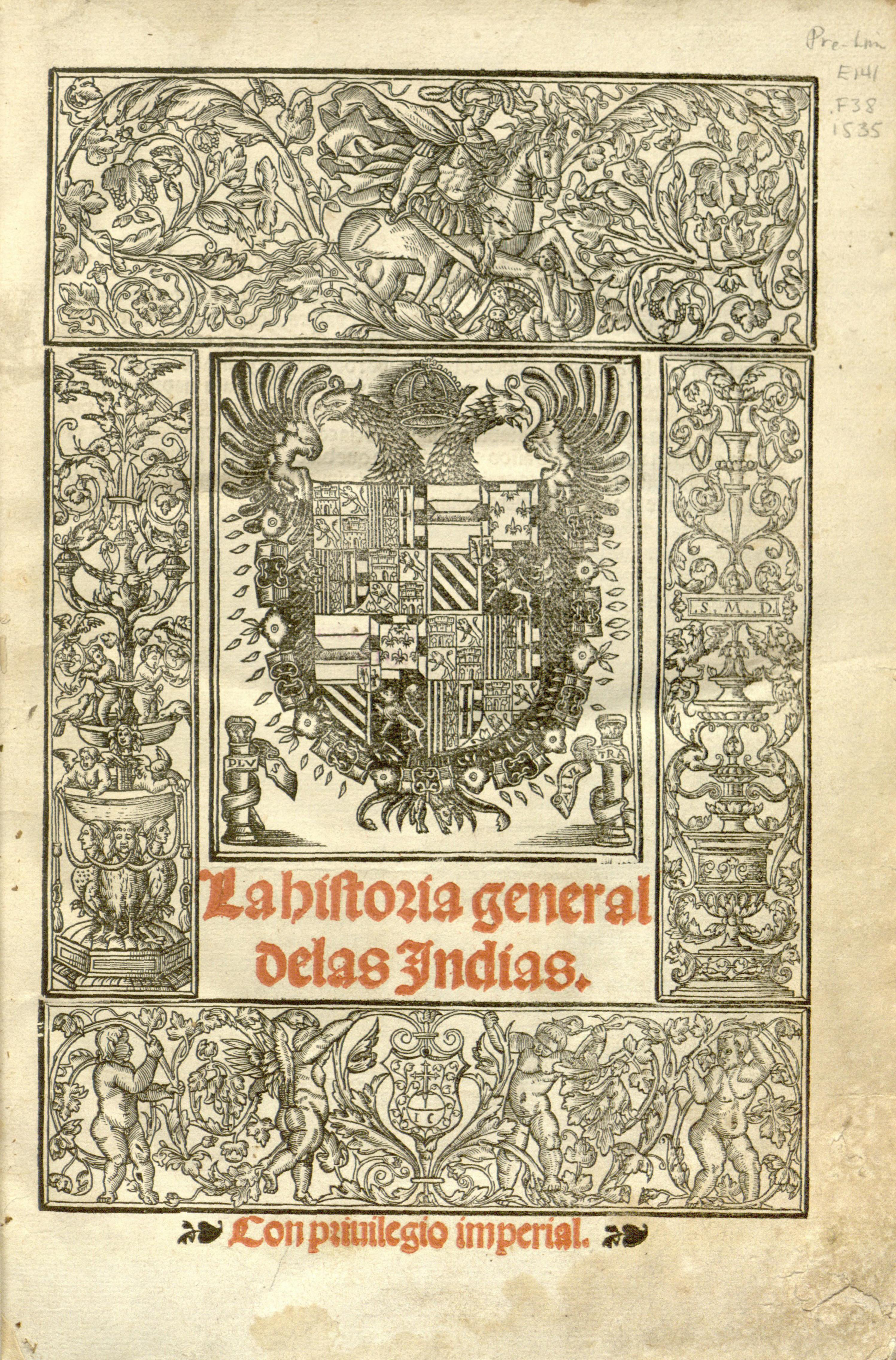
Currently, Alesi’s favorite book in BHL is Gonzalo Fernandez de Oviedo’s La Historia General Y Natural De Las Indias (1535, complete work published posthumously 1851–55). Within it, Spanish captain Oviedo provides a wealth of valuable descriptions of the animals and natural environments that he encountered on his travels.

“Oviedo spends much of his narrative describing the new animals and trying to compare them to, or reconcile them with, animals Europeans would already recognize,” explains Alesi. “This text also influenced many of the writers in Europe that wanted to publish on the ‘New World’ but had not gone there themselves.”

Illustrated title page of "Historia general de las Indias"

Title page of 1535 edition. Fernández de Oviedo y Valdés, Gonzalo. Historia general de las Indias. Contributed in BHL from Missouri Botanical Garden, Peter H. Raven Library.

Whether it be sixteenth century travel narratives by Spanish explorers or early depictions of “sea dogs” (i.e. sharks), BHL is a treasure trove of historic (and modern!) biodiversity literature for a wide array of researchers, from scientists to historians, educators, archivists, and beyond.

Of course, the real moral of this story is, don’t be afraid to take a break for sharks. You never know where it might lead you.

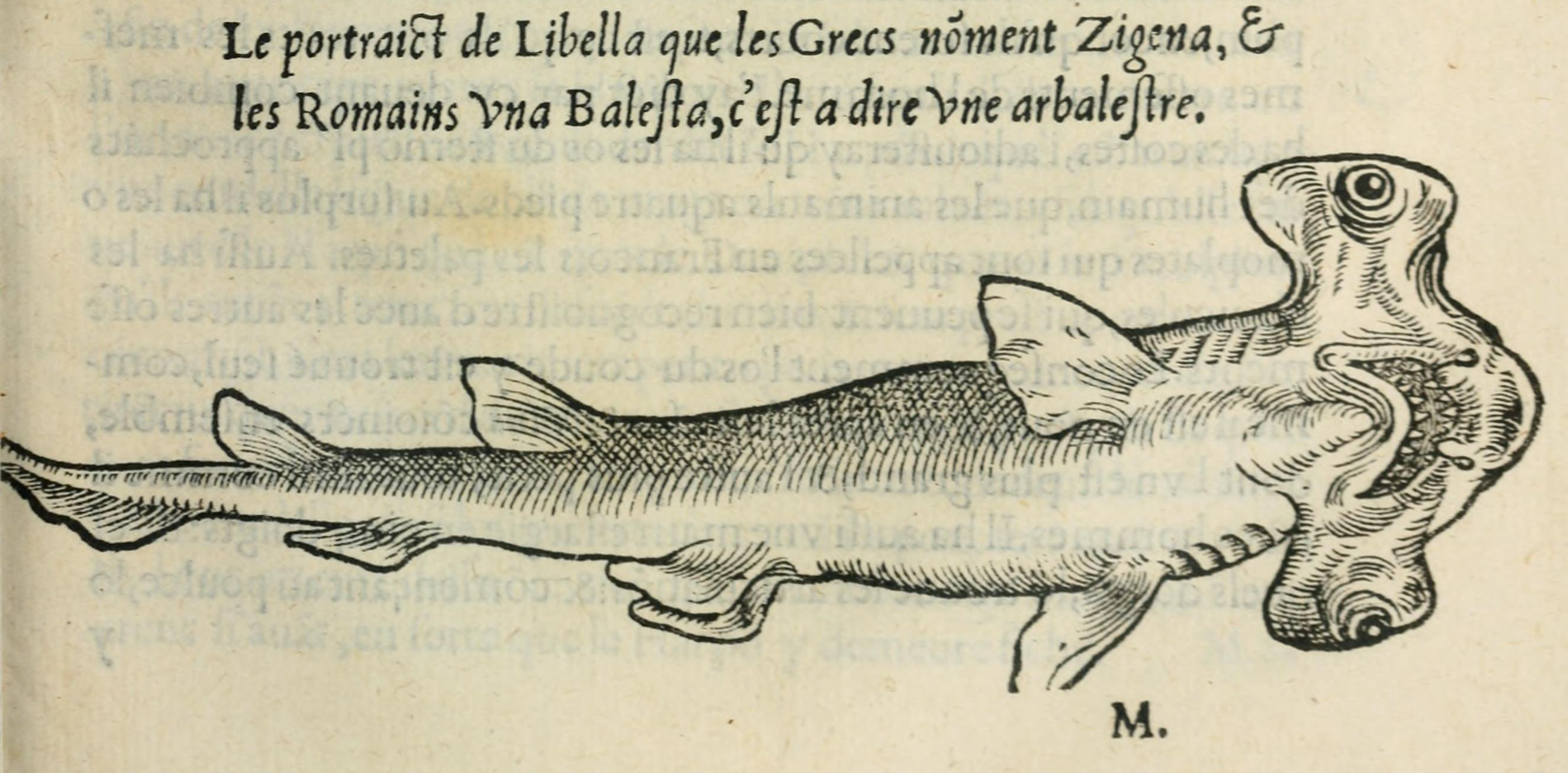
Illustration of a hammerhead shark.

Hammerhead shark. Belon, Pierre. L’histoire naturelle des estranges poissons marins. 1551. Contributed in BHL from University of Toronto – Thomas Fisher Rare Book Library.

July 11, 2019by michelle.underhill
BHL News, Blog Reel

We’ve Expanded the BHL FAQ!

BHL FAQ now expanded

BHL FAQ now expanded

We’ve expanded the BHL FAQ, providing answers to the most common questions we receive from our users. For example…

Do you need help searching BHL? There’s an FAQ for that.

Do you want to know how to download content from BHL? The FAQ has you covered.

Wondering if you can reuse material from BHL? Learn more about reuse in our FAQ.

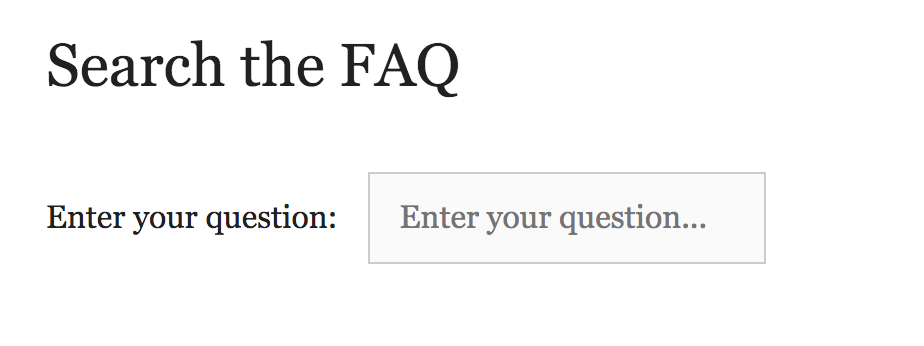
The FAQ is the best place to find answers to your questions about BHL, our collection, and our services. The best way to find an answer for a specific question is to use the FAQ search box. You can also browse by topics using the FAQ categories (e.g. Download, Search, Scientific Names, etc.).

Search box for the BHL FAQ.

Use the FAQ search box to find an answer to a specific question.

The week of 15 July 2019, we’ll be updating the BHL website to replace the links to our Feedback form with links to the FAQ. BHL is voluntarily staffed by our Partner Libraries, and we are limited in our ability to personally respond to individual feedback submitted by our patrons. We encourage you to consult the FAQ first if you need help and to find answers to your questions. We will continue to expand this resource over time. The FAQ also provides information on how to contact us if needed.

Thank you for using the FAQ as your first stop for any BHL-related questions!

July 8, 2019by michelle.underhill
Blog Reel, Featured Books

Charles Lathrop Pack: Pioneering the Idea of the “Victory Garden” in the United States

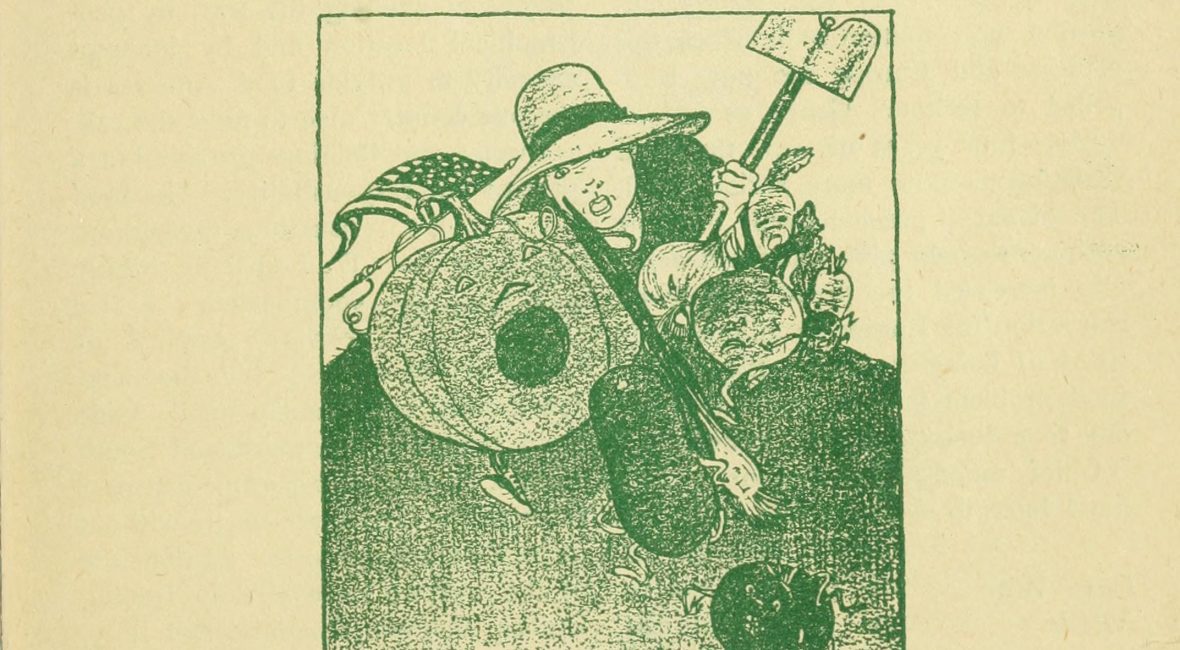
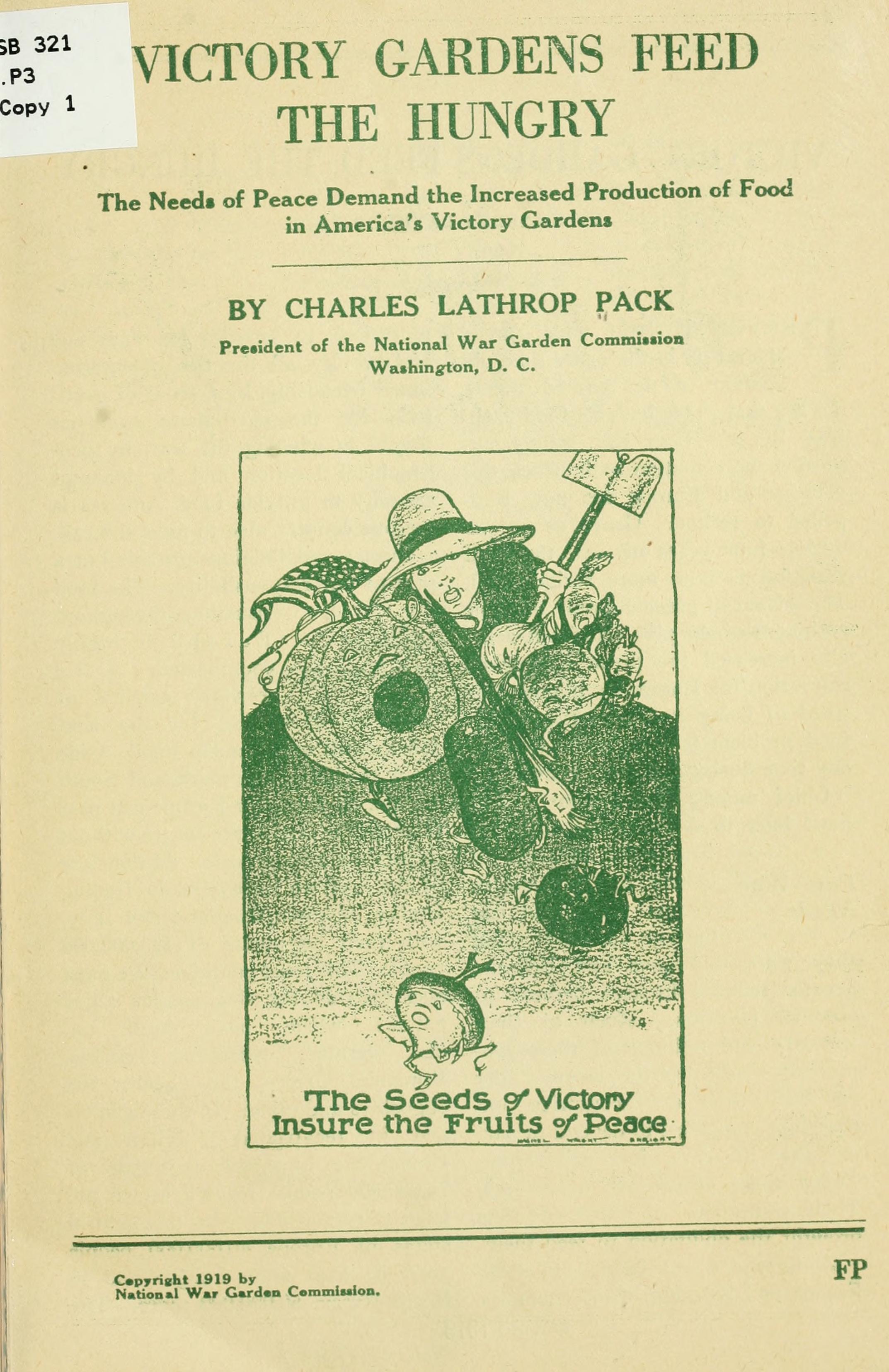
Illustrated cover of the manual "Victory Gardens Feed the Hungry".
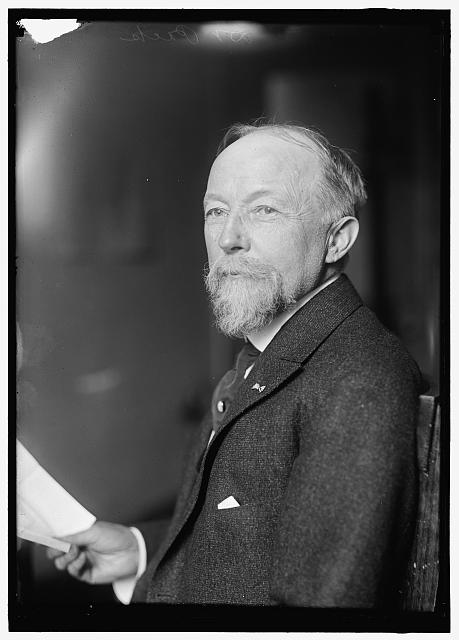
Black and white photograph of an elderly man

Charles Lathrop Pack, President, U.S. National War Garden Commission. Source: https://loc.gov/pictures/resource/hec.08264/.

Charles Lathrop Pack (May 7, 1857 – June 14, 1937) was a forestry expert and third-generation businessman. Both his father, George Willis Pack, and grandfather, George Pack, Jr., were in the forestry business. Charles continued this successful forestry dynasty by investing in the timber business as well as banking and real estate. By the time World War I started in Europe, he was a multi-millionaire and was named one of the five wealthiest men in America.

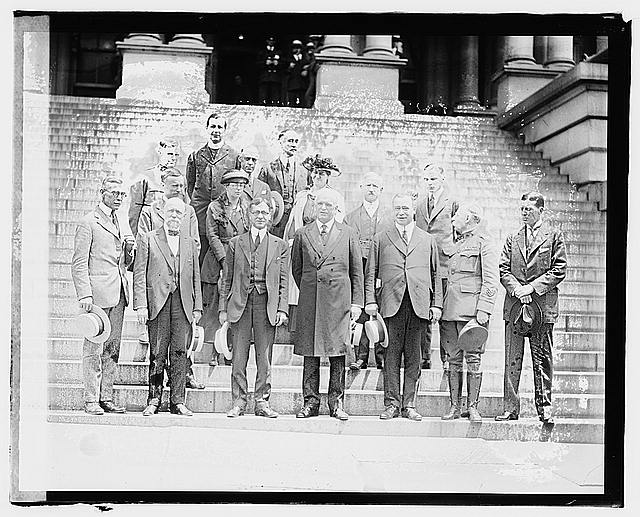
Black and white photograph of a group of men standing on steps.

War Memorial Committee. Source: https://loc.gov/pictures/resource/npcc.01780/.

In addition to being an outstanding businessman, Charles Pack was keen about public education and wrote several instructional books and manual. During World War I, he was eager to promote the importance of self-sustainability of food supplies in the United States and went on to become the President of the U.S. National War Garden Commission.

Pack was a principal organizer of the Victory Garden movement. Victory gardens, war gardens, or, as they were sometimes called, “food gardens for defense,” are gardens meant to be supplement and even improve upon the food supply in times of shortage and rationing due to war, providing a variety of home-grown vegetables, fruits, and herbs. Not limited to typical farming areas or countryside, Victory Gardens were planted in urban areas as well. They sprang up at private homes and in public parks and allotments in the United States, the United Kingdom, Canada, Australia, and Germany during World War I and again in World War II.

Charles Pack helped to promote the understanding that the war efforts were not just frontline battles, but that it is crucial to strengthen the home front of the country by producing healthy food to feed the nation — a concept that has endured into the present.

Illustrated cover of the manual "Victory Gardens Feed the Hungry".

Pack, Charles Lathrop. Victory Gardens Feed the Hungry. c1919. Contributed in BHL from The Library of Congress.

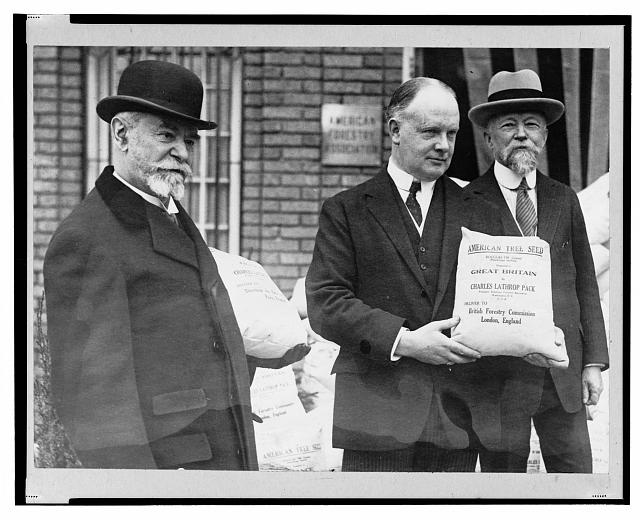
The highlighted book, Victory gardens feed the hungry: the needs of peace demand the increased production of food in America’s victory gardens, is one of the leading monographs in the campaign for the Victory Garden program. In it, Pack also talks about the unfortunate conditions in some European countries (Ex. Belgium and France) due to the ongoing war and the need for Americans to come to their aid by providing seeds for food products and trees.

Black and white photograph of three men, one holding a sack of seeds with the text "American seeds to reforest France and Great Britain."

American seeds to reforest France and Great Britain. Source: https://loc.gov/pictures/resource/cph.3c33281/.

A statement at the bottom of the cover page of Victory gardens feed the hungry sums up his philosophy: “The Seeds of Victory Insure the Fruits of Peace.”

If you are in Washington, please visit the Library of Congress and see the “Victory Garden” at the side of the James Madison Building on First Street between C Street and Independence Ave.

Referenced Works

Victory gardens feed the hungry: the needs of peace demand the increased production of food in America’s victory gardens. By Pack, Charles Lathrop, 1857-1937 National war garden commission. Washington: National War Garden Commission, 1919. Holding Institution: Library of Congress. DOI: https://doi.org/10.5962/bhl.title.41724

The school book of forestry, By Pack, Charles Lathrop, Washington, D.C., The American Tree Association [1922]. Holding Institution: Library of Congress. DOI: https://doi.org/10.5962/bhl.title.49097.

July 2, 2019by michelle.underhill

Help Support BHL

BHL's existence depends on the financial support of its patrons. Help us keep this free resource alive!

search

About BHL

The Biodiversity Heritage Library (BHL) is the world’s largest open access digital library for biodiversity literature and archives. BHL operates as a worldwide consortium of natural history, botanical, research, and national libraries working together to digitize the natural history literature held in their collections and make it freely available for open access as part of a global “biodiversity community.”

Join Our Mailing List

Sign up to receive the latest news, content highlights, and promotions.

Subscribe Now

Subscribe to Blog via Email

Enter your email address to subscribe to this blog and receive notifications of new posts by email.

Join 319 other subscribers

Subscribe to Blog Via RSS

Subscribe to the blog RSS feed to stay up-to-date on all the latest BHL posts.

Access RSS Feed

Inspiring Discovery through Free Access to Biodiversity Knowledge.

The Biodiversity Heritage Library makes it easier than ever for you to access the information you need to study and explore life on Earth…for free, anytime, anywhere.


64+ Million Pages of
Biodiversity Literature Online.

EXPLORE

Tools and Services
to Transform Research.

EXPLORE

300,000+
Illustrations on Flickr.

EXPLORE

ABOUT | HARMFUL CONTENT | PRIVACY | SITE MAP | TERMS OF USE