

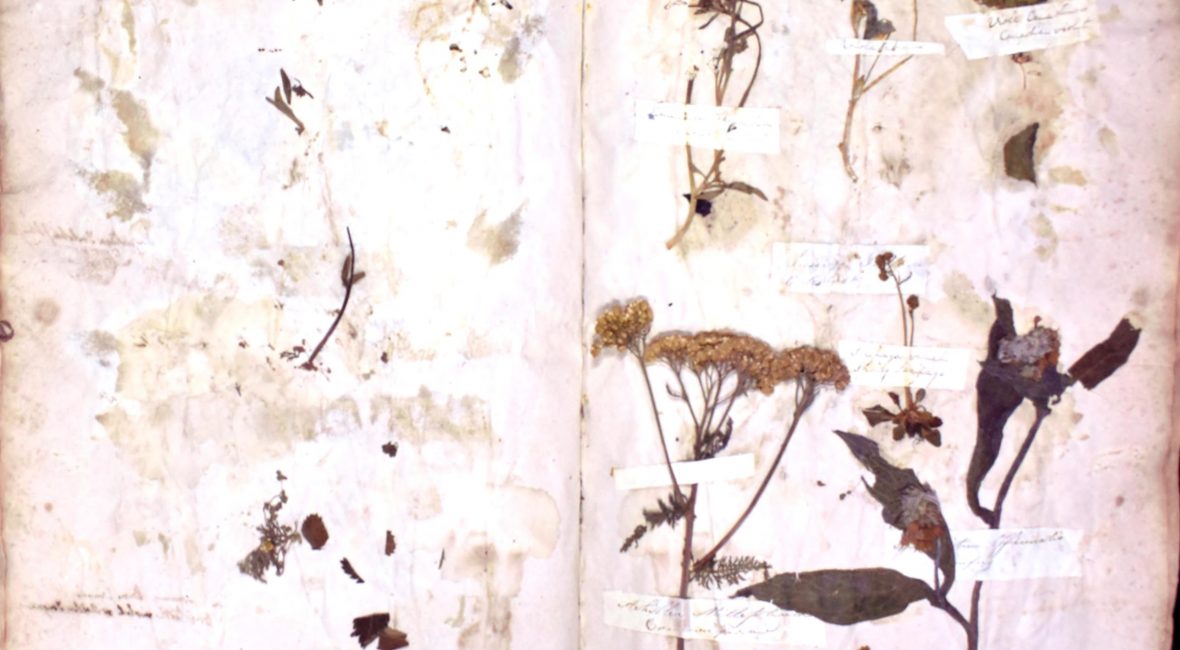
Visit any major botanical research institute today and you’ll find a herbarium, or a collection of preserved plant specimens. These specimens are used to identify plants, to track where and when particular plants grow, and to help understand how plants are influenced by climate change and other environmental factors.
Formal herbaria have been around for about five hundred years. The first recorded herbarium was created by Italian physician and botanist Luca Ghini in the early 1500s. Called a Hortus Siccus, or “dry garden”, the herbarium was populated by drying plants under pressure between pieces of paper and then mounting the specimens for study. Today, herbaria are integral to botanical research.
Dr. Maura Flannery, Professor Emerita of Biology at St. John’s University in New York and a Research Associate in the A.C. Moore Herbarium at the University of South Carolina – Columbia, studies the complex history of herbaria, their many uses, their digital future, and relationships between herbaria and botanical art. While she has been studying biology and its links to art over most of her career, Flannery’s interest in herbaria emerged about ten years ago.
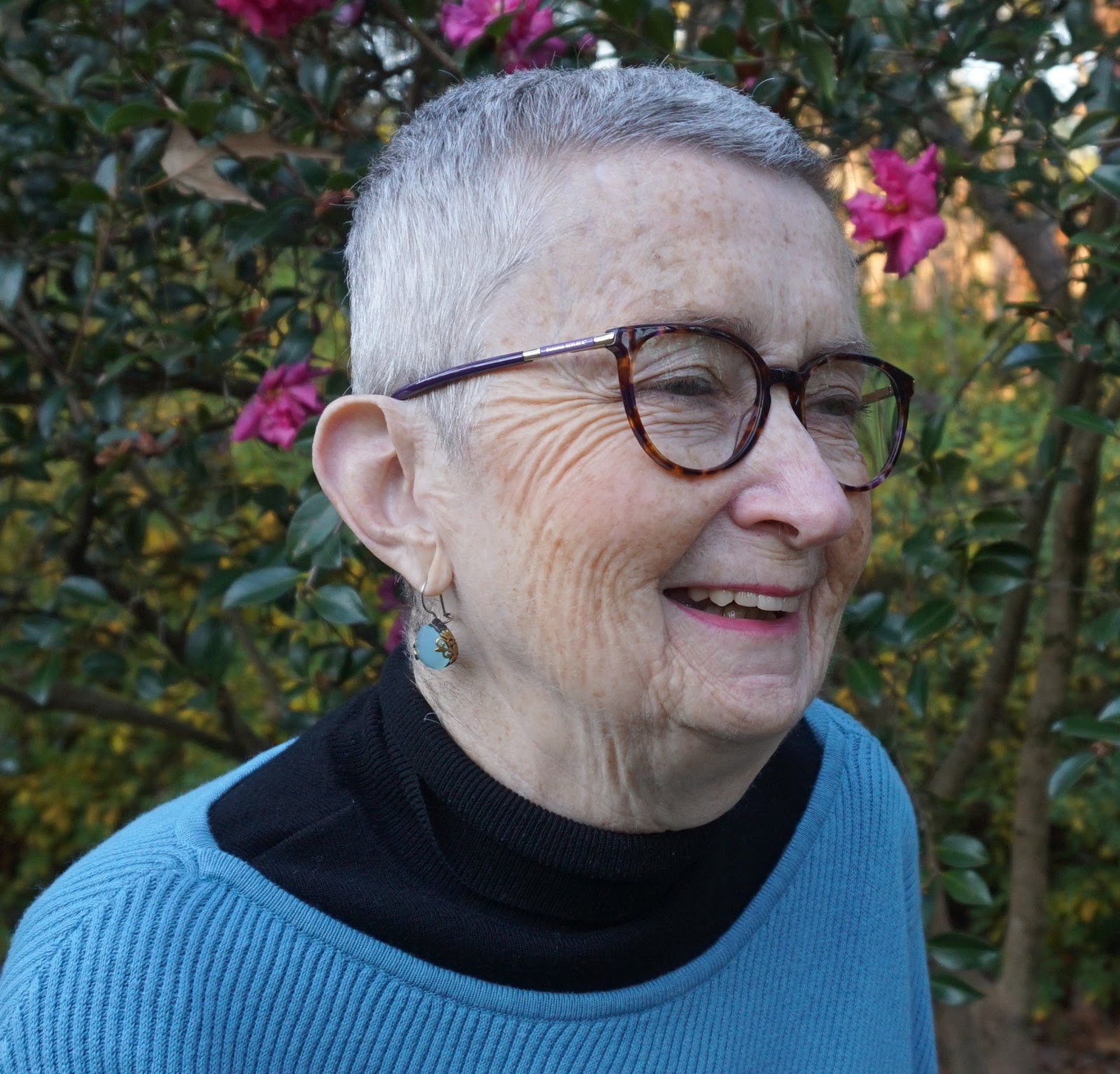
Dr. Maura Flannery, Professor Emerita of Biology at St. John’s University in New York and a Research Associate in the A.C. Moore Herbarium at the University of South Carolina – Columbia. Photo by Laura Hendrick.
Access to a research library is indispensable for herbaria-related research. Whether it be consulting species descriptions for specimens in a herbarium, investigating the history of the collecting expedition in which a specimen was procured, or obtaining complementary data for herbarium specimens, library collections are a rich resource for anyone interested in botanical science and associated collections.
Research libraries, however, are not always easily accessible. Even when they are accessible, visiting myriad, distributed libraries is quite time-intensive. Fortunately, the Biodiversity Heritage Library is breaking down these barriers to access.
“BHL is like having a world-class library in my home,” explains Flannery. “Until two years ago, I lived close to many wonderful research libraries in New York City, but any one of them was an hour away. Now I live in South Carolina, and have access to the great library at the University of South Carolina, and with BHL and other online resources, I can work just as effectively here. BHL has done more than impact my research — it has made it possible, or at least, made it more practical.”
Flannery first discovered BHL over a decade ago during a seminar given at the New York Academy of Sciences. Now, she uses the Library almost every day. She often highlights BHL on her blog, Herbarium World, in which she discusses herbaria and their importance. While she frequently accesses the Library to track down citations or download PDFs of articles relevant to her research, Flannery’s favorite feature is the ability to access millions of scientific illustrations and download them as high resolution images.
“Botanical art is where all my interests come together, and there is no place like BHL to nurture them,” asserts Flannery on Herbarium World.
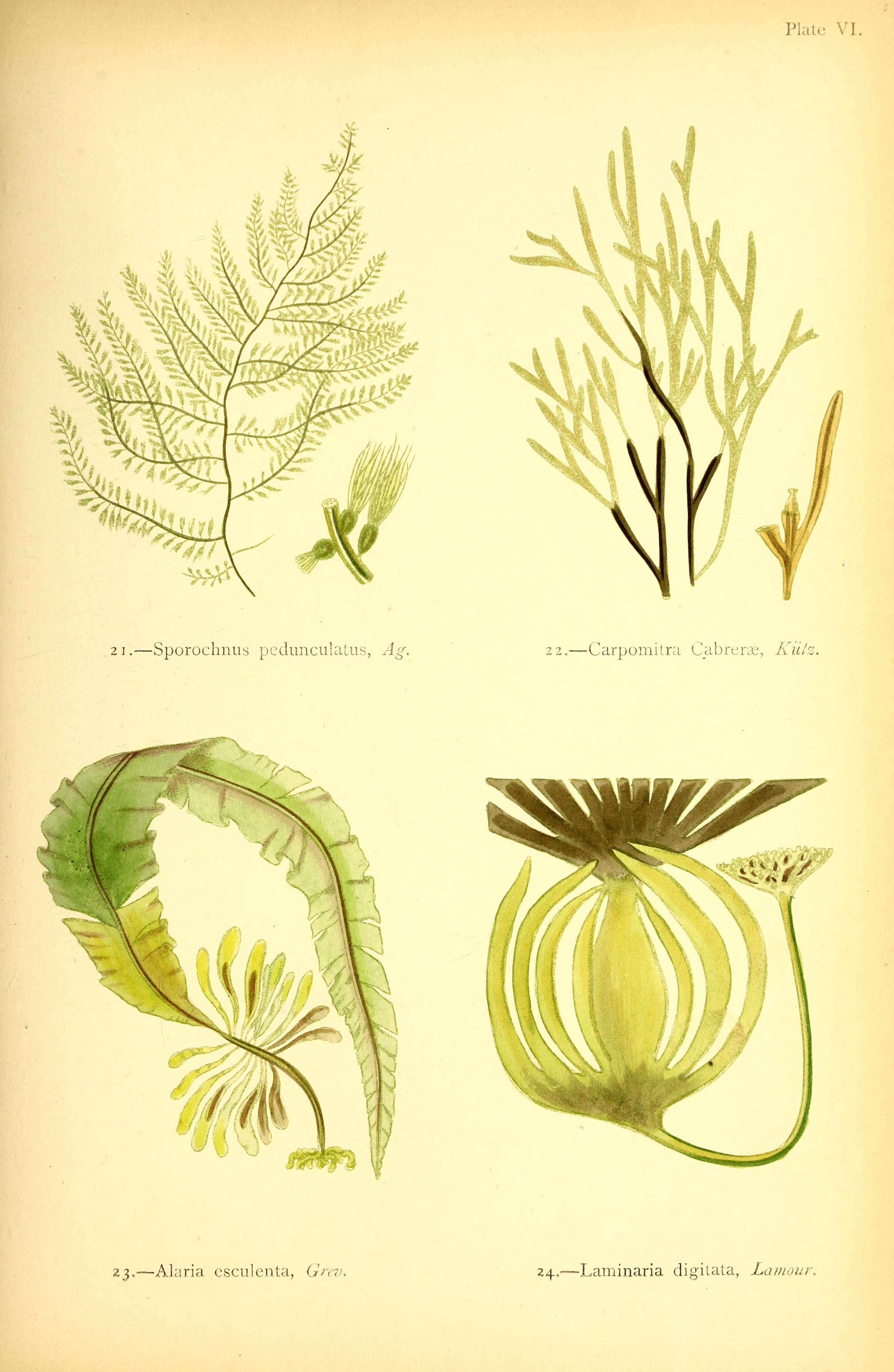
Plate VI from British Sea-Weeds (1872) by Margaret Scott Gatty, one of Flannery’s favorite titles on the BHL Flickr. Contributed in BHL from Smithsonian Libraries.
BHL’s Flickr is a particularly useful resource for Flannery’s artistic interests. She uses it both to search for illustrations or simply, as she describes it, to “browse to feed my soul”.
One of Flannery’s favorite books in BHL, De historia stirpium commentarii insignes (“Notable Commentaries on the History of Plants”), is an excellent example of the intersection between botanical art, science, and herbaria. Authored by German physician and botanist Leonhart Fuchs and published in Basel in 1542, this title is one of the first modern herbals. Covering nearly 500 plants, the Historia included over 500 woodcuts and illustrated over 100 species for the first time in a published work. The woodcuts were made from drawings by Albrecht Meyer based on live plants, which were transferred to woodblocks by Heinrich Füllmaurer and cut into wood by Veit Rudolf Speckle (Glasgow University Library).
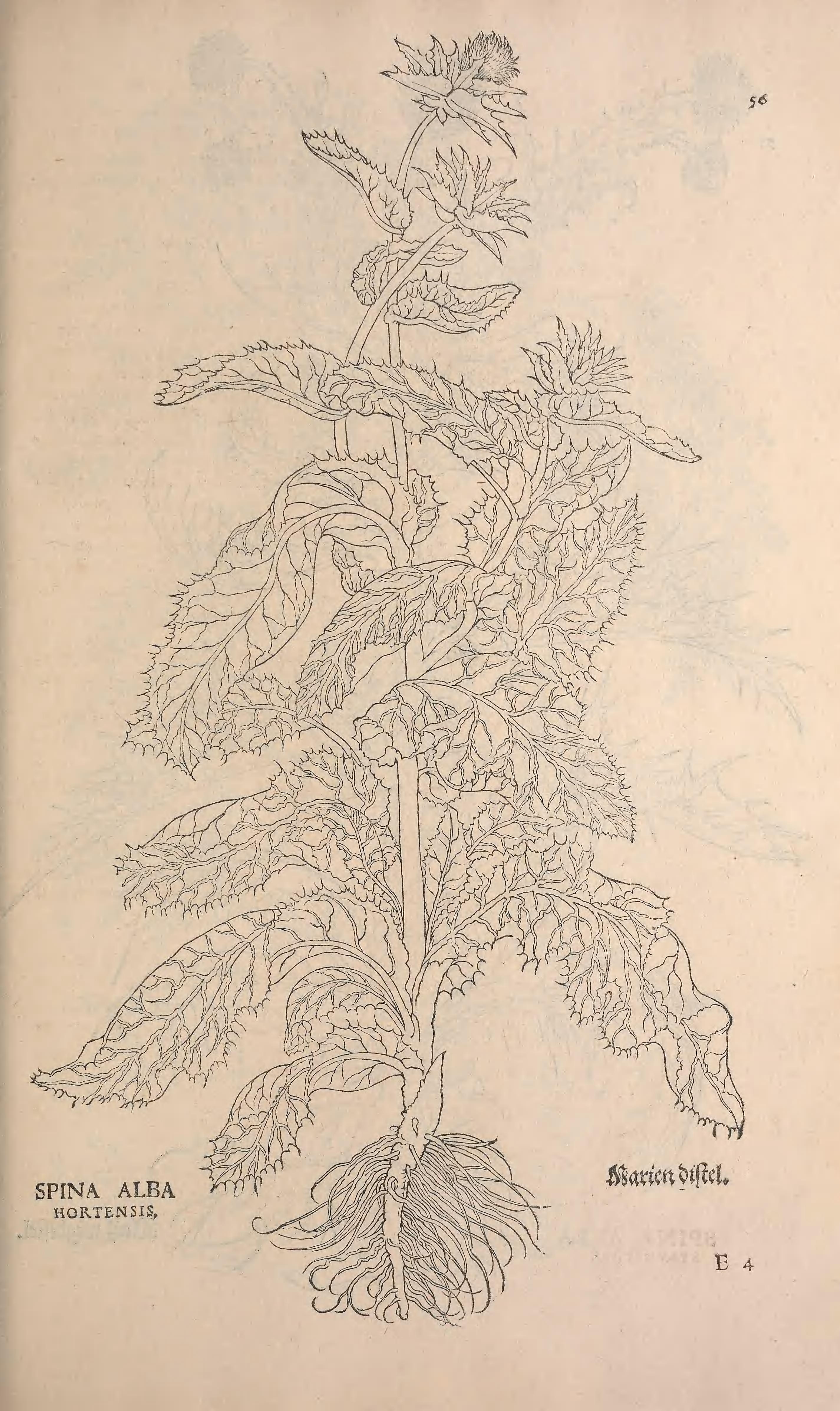
Page 56, Plate [32]. Fuchs, Leonhart. De historia stirpium commentarii insignes (1542). Contributed in BHL from Smithsonian Libraries.
Given the historical and artistic significance of Fuchs’ work, it’s not surprising that it’s one of Flannery’s favorite titles in BHL. Another favorite is Stephen West Williams’ Herbarium, which consists of mounted specimens of American plants collected by Williams and others. It is accompanied by an index to the specimens articulating their medicinal and culinary uses along with watercolors of plants by his wife, Harriet Goodhue Williams.
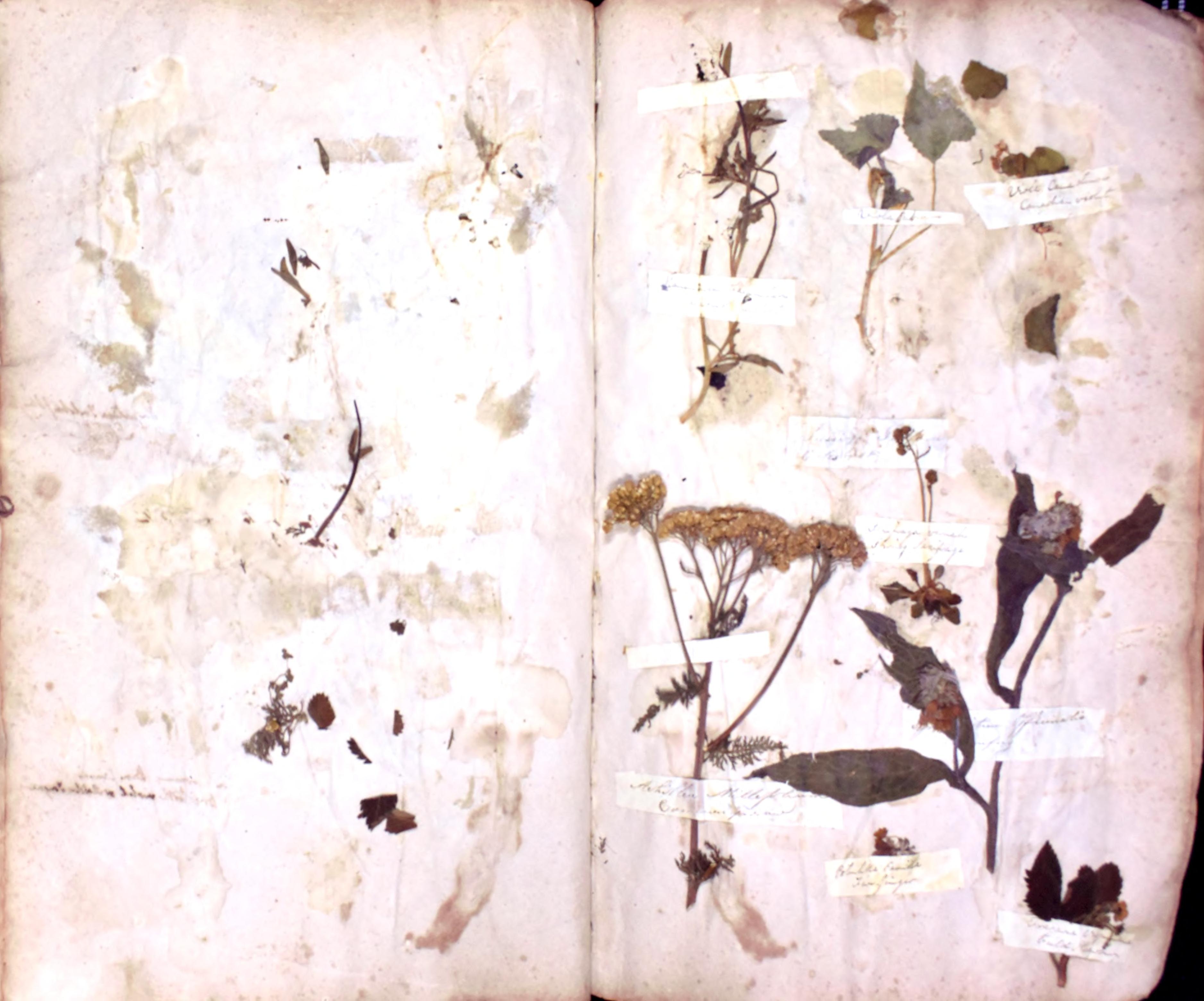
Sheet from Stephen West Williams’ Herbarium (1817). Contributed in BHL from the Harvard University Botany Libraries.
Flannery is keen to see the Library acquire more manuscripts and correspondence, which can offer valuable historical context and help illuminate scientific networks and the exchange of information during centuries past. Since such materials are unique, accessing them previously required visiting each individual holding library or archive. But today, through digitization, these resources are available to the world.
A recent example from Flannery’s experience is the correspondence of John Torrey, one of the most important taxonomic botanists of the nineteenth century. The New York Botanical Garden is in the midst of a project to digitize and transcribe Torrey’s papers.
“Several years ago, I had to spend time visiting the Mertz Library at New York Botanical Garden to read John Torrey’s letters,” recalls Flannery. “Now, they are available through BHL.”
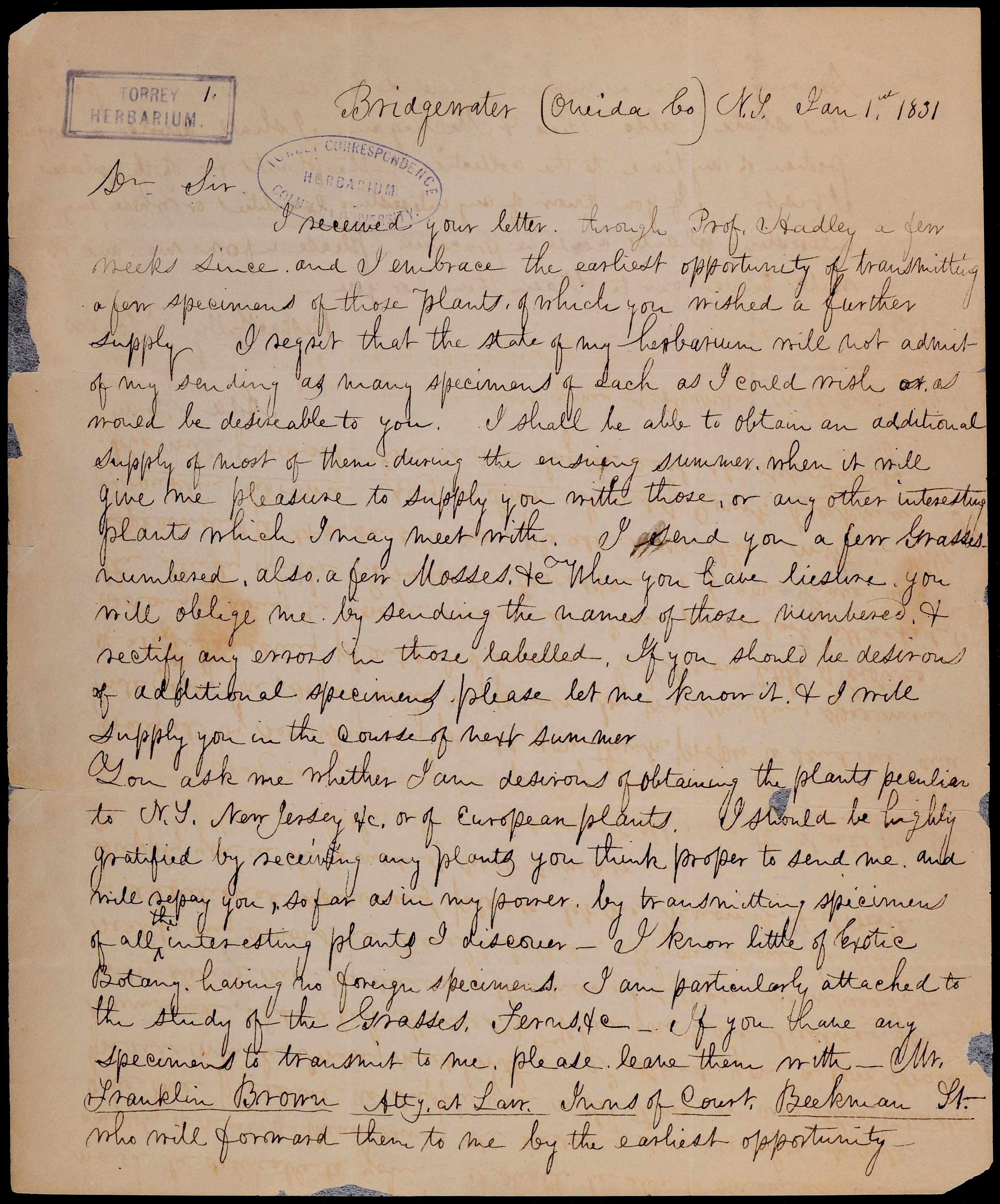
Letter from Asa Gray to John Torrey dated January 1, 1831. It is stamped “Torrey Herbarium”. Asa Gray and John Torrey correspondence, 1831-1871. Contributed in BHL from the LuEsther T. Mertz Library of The New York Botanical Garden.
By offering easy online access, a rich collection including both published and archival materials, and an array of research tools, BHL has not only been a game-changer for Flannery but, as she articulates on Herbarium World, it has truly transformed biological research today.
“I often use the word ‘luxury’ to describe such instant access, what other word really applies?…We have come a LONG way from the days when searching for sources meant pulling Biological Abstracts tomes from the shelves.”
