Biodiversity Heritage Library - Program news and collection highlights from BHL
  • Home
  • News
  • Featured Books
    • All Featured Books
    • Book of the Month Series
    • BHL at 20
  • User Stories
  • Campaigns
    • Fossil Stories
    • Garden Stories
    • Monsters Are Real
    • Page Frights
    • Her Natural History
    • Earth Optimism 2020
  • Tech Blog
  • Visit BHL
Home
News
Featured Books
    All Featured Books
    Book of the Month Series
    BHL at 20
User Stories
Campaigns
    Fossil Stories
    Garden Stories
    Monsters Are Real
    Page Frights
    Her Natural History
    Earth Optimism 2020
Tech Blog
Visit BHL
  • Home
  • News
  • Featured Books
    • All Featured Books
    • Book of the Month Series
    • BHL at 20
  • User Stories
  • Campaigns
    • Fossil Stories
    • Garden Stories
    • Monsters Are Real
    • Page Frights
    • Her Natural History
    • Earth Optimism 2020
  • Tech Blog
  • Visit BHL
Biodiversity Heritage Library - Program news and collection highlights from BHL
BHL News, Blog Reel

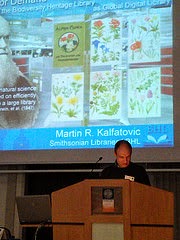
BHL Program Director gives keynote talk at the EOD Conference 2014

View Full Size Image
Helge Knuettel
(University of Regensburg)
introducing talk

On 11 April 2014, BHL Program Director Martin Kalfatovic gave a keynote address at the EOD Conference 2014. The conference, “EOD Conference 2014: Sustaining the networked future: use and reuse of digital content”, was held at the University of Innsbruck. The talk was attended by about 150 librarians from around the European Union. EOD (eBooks on Demand) is a EU funded project to provide for digitization on demand for consortia members and this conference marked the close of the multi-year project.

The talk, entitled “Building for Demand: The Growth of the Biodiversity Heritage Library as Global Digital Library” can be found online here (and embedded below). More information on the conference.


Building for Demand: The Growth of the Biodiversity Heritage Library from Martin Kalfatovic
April 29, 2014by joelrichard
BHL News, Blog Reel

Biodiversity Heritage Library Adds Washington University as New Member

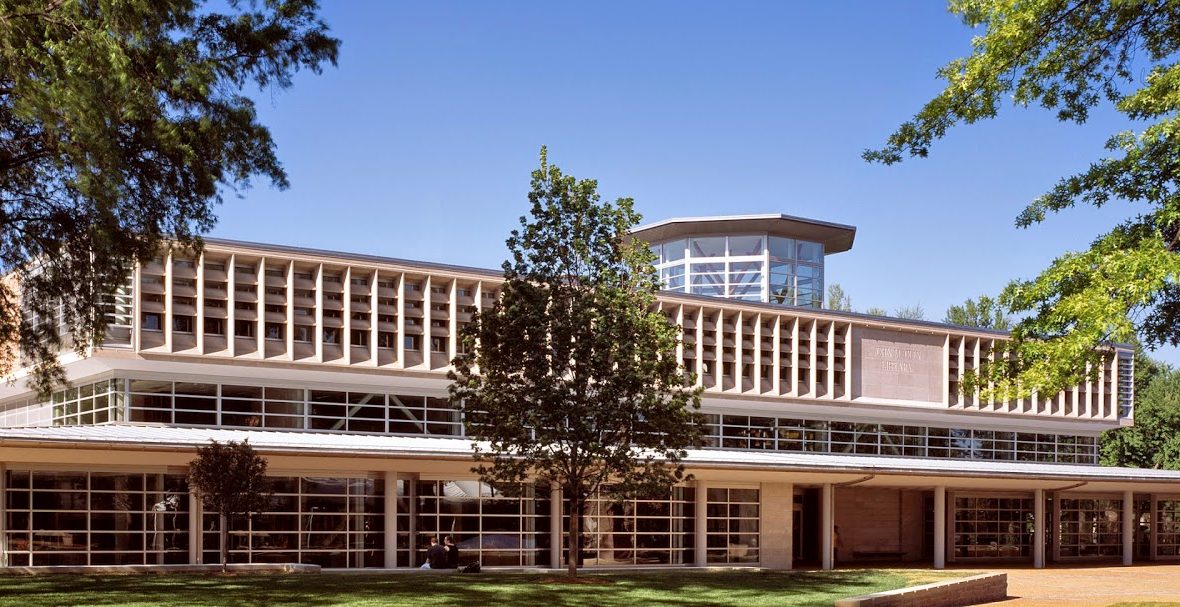
The Biodiversity Heritage Library (BHL), headquartered at the Smithsonian Libraries, welcomes Washington University Libraries (St. Louis, Missouri) as a new member. The 14th member of the BHL consortium, Washington University Libraries will help identify and digitize historical science literature from its collections and add these to the BHL’s online holdings, where all materials may be accessed free by the public.

View Full Size Image
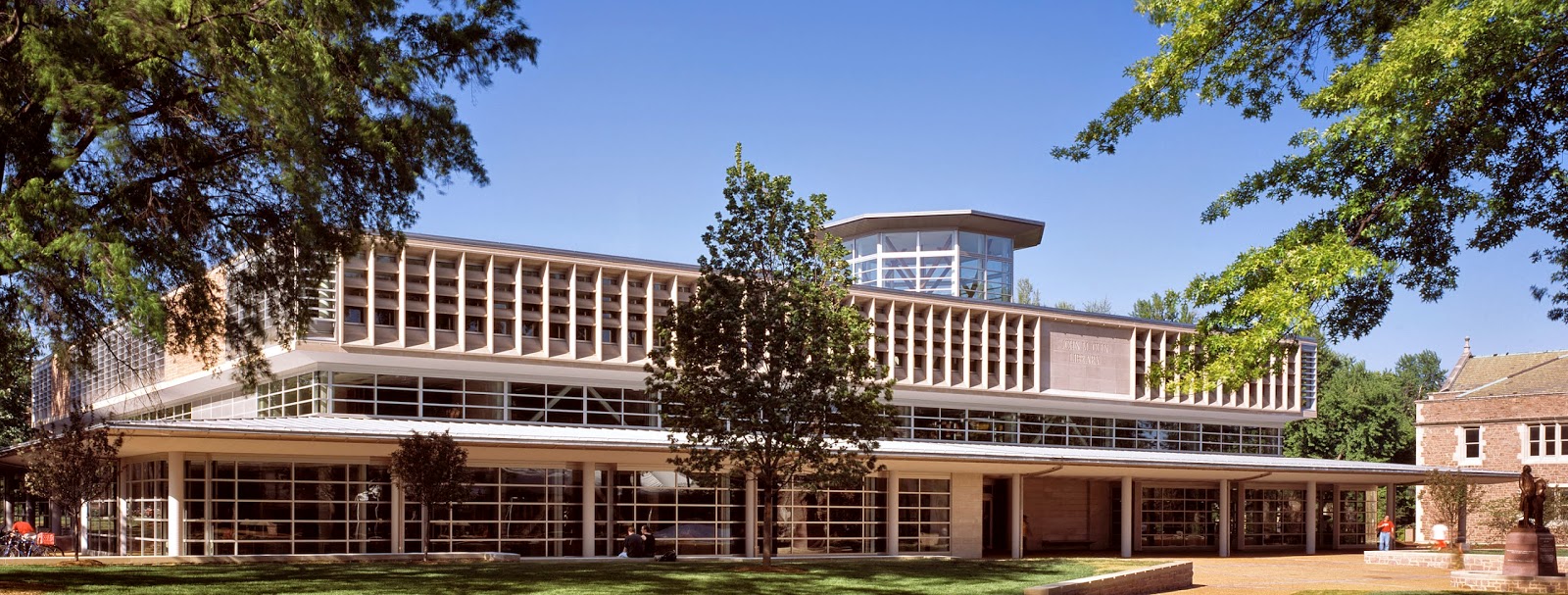
Olin Library at Washington University in St. Louis.
Photographer and copyright holder: Robert Benson.

Founded in 1853, Washington University in St. Louis is a medium-sized independent research institution widely recognized for its teaching, research, patient care and service to society. Washington University operates seven academic divisions (art and architecture, arts and sciences, business, engineering, law, medicine, and social work and public health), served by 12 libraries whose print holdings number nearly 4.5 million, in addition to millions more books and journals available electronically. For more information about Washington University Libraries, visit www.library.wustl.edu.

“The Biodiversity Heritage Library is the preeminent global repository for historic science literature,” said Martin Kalfatovic, BHL program director and associate director for digital services at the Smithsonian Libraries. “We are excited that the Washington University Libraries are joining us in building a vast information center that provides resources to researchers, students and anyone interested in biodiversity.”

The current members of the BHL include: the American Museum of Natural History (New York, N.Y.), the California Academy of Sciences (San Francisco, Calif.), Cornell University (Ithaca, N.Y.), the Botany Libraries (Harvard University), the Ernst Mayr Library at the Museum of Comparative Zoology (Cambridge, Mass.), the Library of Congress (Washington, D.C.), the Marine Biological Laboratory of Woods Hole Oceanographic Institution (Woods Hole, Mass.), the Missouri Botanical Garden (St. Louis, Mo.), the Natural History Museum (London), the Kew York Botanical Garden (Bronx, N.Y.), the Royal Botanic Gardens (Kew, United Kingdom), the Smithsonian Institution (Washington, D.C.), and the United States Geological Survey. Additionally, the three institutions participate at the affiliate level: the Field Museum of Natural History (Chicago, Ill.), American of Natural Sciences of Drexel University (Philadelphia, Pa.) and the Natural History Museum, Los Angeles County. Beyond the English-language efforts, BHL-Europe was founded and includes 28 institutions that are working to digitize European literature. In addition, China, Australia, Brazil, and Africa have created national or regional nodes that may be accessed through the BHL portal.


April 24, 2014by sayeedmd
BHL News, Blog Reel, Tech Updates

BHL Technical Advisory Group meets at the Missouri Botanical Garden

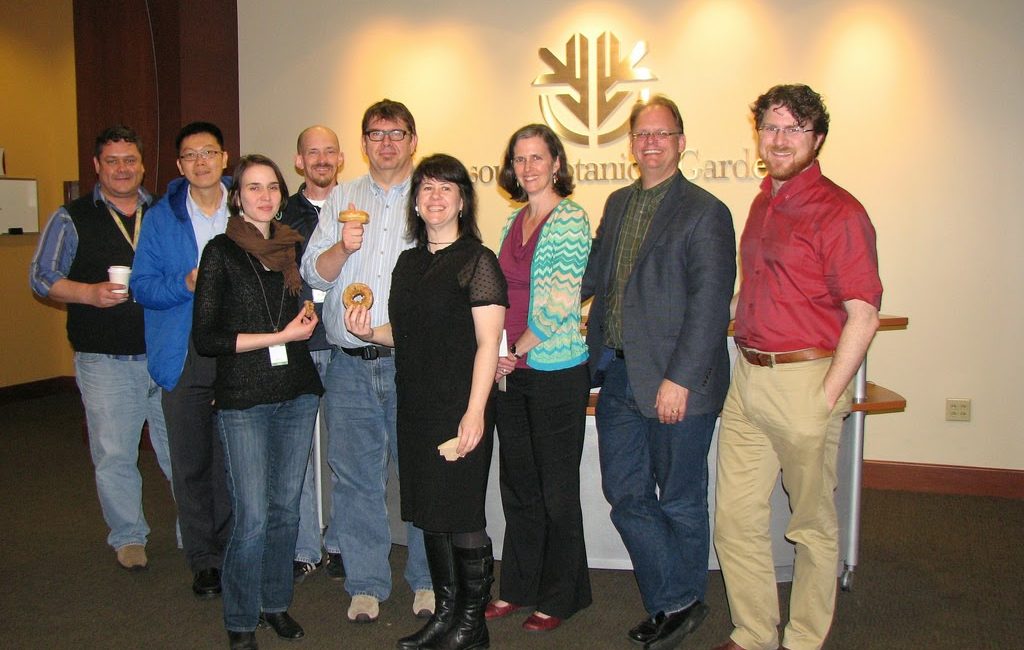
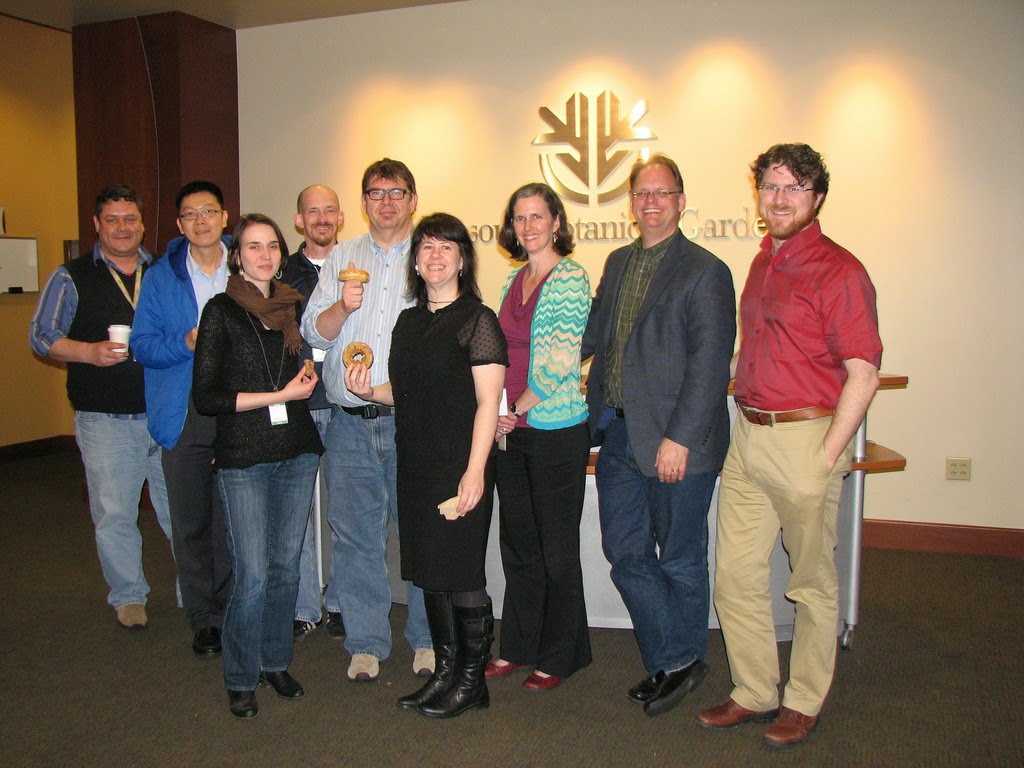
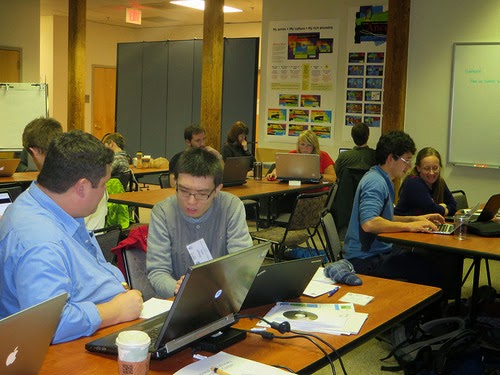
For the 2014 BHL Technical Meeting, the BHL Technical Advisory Group (TAG) met at the Missouri Botanical Garden (MBG) (2-3 April 2014) with William Ulate (Technical Director) and Martin Kalfatovic (BHL Program Director). Also joining the meeting were the BHL tech team based at MBG (Trish Rose-Sandler and Mike Lichtenberg), Carolyn Sheffield (BHL Program Manager), Bianca Crowley (BHL Collections Coordinator, by phone), and Connie Rinaldo (BHL Executive Committee Vice-Chair, by phone).

View Full Size Image
From left: William Ulate, Siang Hock Kia, Carolyn Sheffield, Mike Lichtenberg, John Mignault, Keri Thompson, Trish Rose-Sandler, Martin Kalfatovic, Joel Richard. Not pictured: Chris Freeland, Connie Rinaldo, Joe de Veer, Bianca Crowley)

The group met to review BHL technical development priorities, staffing and communications concerns, and related topics.  Over the course of the two-day meeting, the group discussed priorities in terms of both core BHL technical operations as well as special projects that BHL participates in.  Core operations include things such as server and website maintenance for biodiversitylibrary.org.  The Tech Team also works closely with the BHL Secretariat and BHL Staff to review user feedback related to technical issues as they arise as well as suggested improvements to BHL functionality.  For example, one area for technical development that has come to the top of the list is full text searching and we’re excited to share that work is getting underway to make that a reality.

In addition, the Tech Team is also actively involved in three grant-funded projects to enhance BHL: Art of Life (NEH), Purposeful Gaming & BHL (IMLS), and Mining Biodiversity (IMLS via the Digging Into Data Challenge).  BHL also participates in technical discussions with the larger biodiversity community.  This past December, William Ulate (Technical Director) and Joe DeVeer (TAG Member) virtually attended the iDigBio CITScribe Hackathon in Gainesville, Florida.  In February, Ulate and TAG Member John Mignault participated in the NESCent-EOL-BHL research sprint.

All in all, the Tech Meeting was an opportunity to review several aspects of BHL’s technical direction, identify priorities, and strategize communication workflows for existing and new priorities.


April 17, 2014by joelrichard
Blog Reel, Tech Updates

PDF Generation restored…

Dear BHL users:

View Full Size ImageWe are glad to inform you that our IT staff has solved the technical difficulties found with our PDF Generation process.  We have tested the service and it seems to be working well.
We apologize for the inconveniences this may have caused you. Please let us know through our Feedback form if you find any issues with this or any other BHL functionality again.

Regards,

William Ulate
BHL Technical Director

April 16, 2014by suzanne.chase
BHL News, Blog Reel

BHL and EOL team up for NESCent Research Sprint

View Full Size Image
Research teams at the NESCent-EOL-BHL Research Sprint.
Photograph by Cyndy Parr.

In early February, the National Evolutionary Synthesis Center (NESCent) hosted the EOL-BHL Research Sprint. NESCent, based in Durham, NC, is a non-profit science center supporting research in the evolutionary sciences. NESCent emphasizes an interdisciplinary approach to research, and so the idea behind the Sprint was to put together teams of programmers and life scientists to expose each other to questions and ways of thinking that they might not necessarily consider in their normal work. Informaticians could bring programming and data skills to bear on questions that scientists may not have had the programming expertise to implement effectively, using BHL‘s and EOL‘s now considerable amount of freely available data. Scientists could identify questions based on the data to programmers that they might not have considered. Plus, the meeting was useful in identifying how well researchers could identify and retrieve the data they needed from the BHL text corpus. To this end, William Ulate, BHL Technical Director and John Mignault, a member of the BHL Technical Advisory Group attended the meeting.

The teams covered a wide variety of interesting topics from studying the color of butterflies based on extracting color information from images to studying changes in ontologies over time based on an analysis of the text in the BHL corpus (see http://bit.ly/1dnnhG0). Over the course of the sprint, the teams began data mining EOL and BHL for their data sets and started preliminary analyses of their data. Each day, groups met at the end of the day to share experiences and progress. By the end of the sprint, each of the teams were sharing plans for further collaboration and completing their analyses. Plans for publication and grants proposals based on sprint ideas were also discussed. In an open, collaborative spirit, members shared the materials freely via Google Drive.

We learned some interesting things about the way people approach the BHL data set. Many of the teams on the first day wanted to use the BHL application programming interface for bulk data retrieval. Several team members asked us how they could download “all of the text.” When we told them that this was impractical and would result in a great deal of unwanted data, they asked how they could retrieve data based on, for example taxa – I want to harvest all pages with names from this taxon (Chordata) or this common name (Vertebrate). Others wanted data restricted by location. We tried to assist them given their specific needs rather than their initial request for the whole data set (see http://bit.ly/1rvbut3). This raised useful questions as to how we can provide the data to researchers need in the ways they need it – should we offer ways to request bulk data downloads based on a specific set of criteria? Should we alter the API (http://www.biodiversitylibrary.org/api2/docs/docs.html) in order to make it possible to retrieve more closely focused data sets? As BHL becomes better known as a source of “Big Data” for the biodiversity community, we will need to evolve our access to that data in order to better meet the needs of our users.

We were also surprised to discover the popularity of the R statistical programming language among scientists. Many team members used R in their work, to such an extent that a short R group discussion was scheduled for one morning during the meeting. Scott Chamberlain of Simon Fraser University has created an R interface to the BHL API, available at http://bit.ly/1oAFKjI. It is always good to see BHL and its data used in new and interesting ways. Follow up further results from this Sprint at: http://blog.eol.org.

The Sprint was a valuable meeting for BHL: it exposed our valuable data to more scientists and informaticians, and it gave BHL staff useful feedback on the uses of the BHL data corpus and its value to researchers. We would like to thank EOL, NEScent and the Richard Lounsbery Foundation for the opportunity and their collaboration in making this event a success.

March 27, 2014by sayeedmd
BHL News, Blog Reel

First Meeting of the Mining Biodiversity project

Meet our international partners to extract data from BHL
View Full Size Image
Mining Biodiversity (MiBio project) is one of the projects that won during the third round of the transatlantic Digging Into Data Challenge, a competition aiming to promote the development of innovative computational techniques that can be applied to big data in the humanities and social sciences. The project is an international collaboration between the National Centre for Text Mining (UK), Missouri Botanical Garden (US) and Dalhousie University’s Big Data Analytics Institute (Canada) and Social Media Lab (Canada), along with colleagues from the Encyclopedia of Life and the Smithsonian Institution.

We will integrate novel text mining methods, visualization, crowdsourcing and social media into the BHL to provide a semantic search system that allows users to explore search results according to multiple information dimensions or facets.  The goal is to transform BHL into a next-generation social digital library resource that facilitates the study and discussion (via social media integration) of legacy science documents on biodiversity by a worldwide community.
View Full Size Image
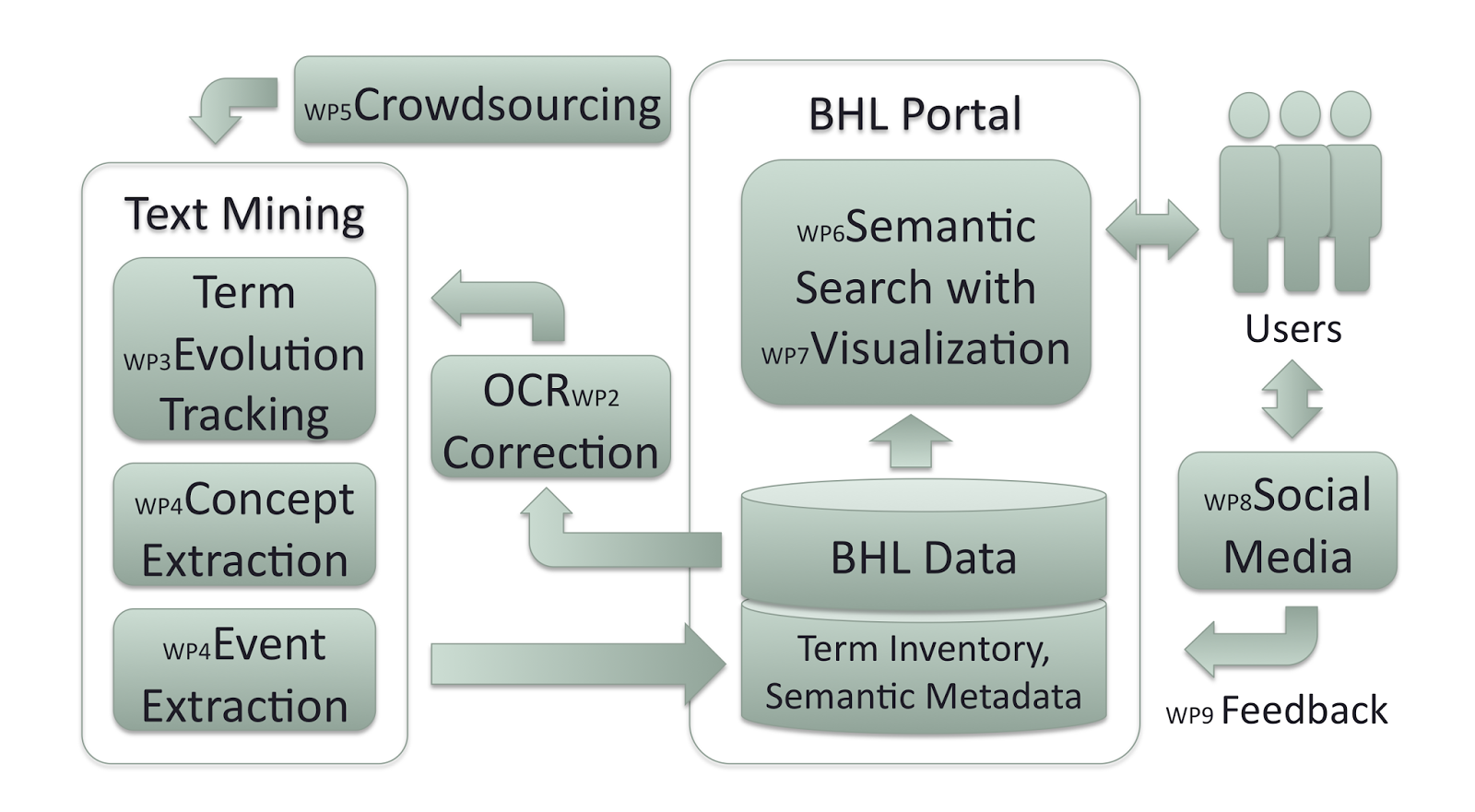
Relations between the Work Packages of the project

The project has five major components, covered in 9 Work Packages (WP):

  1. Automatic correction of errors in OCR using Google n-grams by our colleagues of the Big Data Analytics Institute (WP2).
  2. Crowdsourcing the annotation of semantic metadata (concepts and events) in legacy texts (WP5).
  3. Extract metadata (terms, concepts and significant events) automatically and track their change over time (WP3 & WP4) to facilitate semantic search (WP6) implemented with NaCTeM.
  4. Use interactive visualization techniques to manage the search results, in collaboration with Dalhousie (WP7)
  5. Design a social media layer as an environment for interaction and collaboration on science, education, awareness and outreach, lead by our colleagues of the SocialMediaLab (WP8).
View Full Size Image
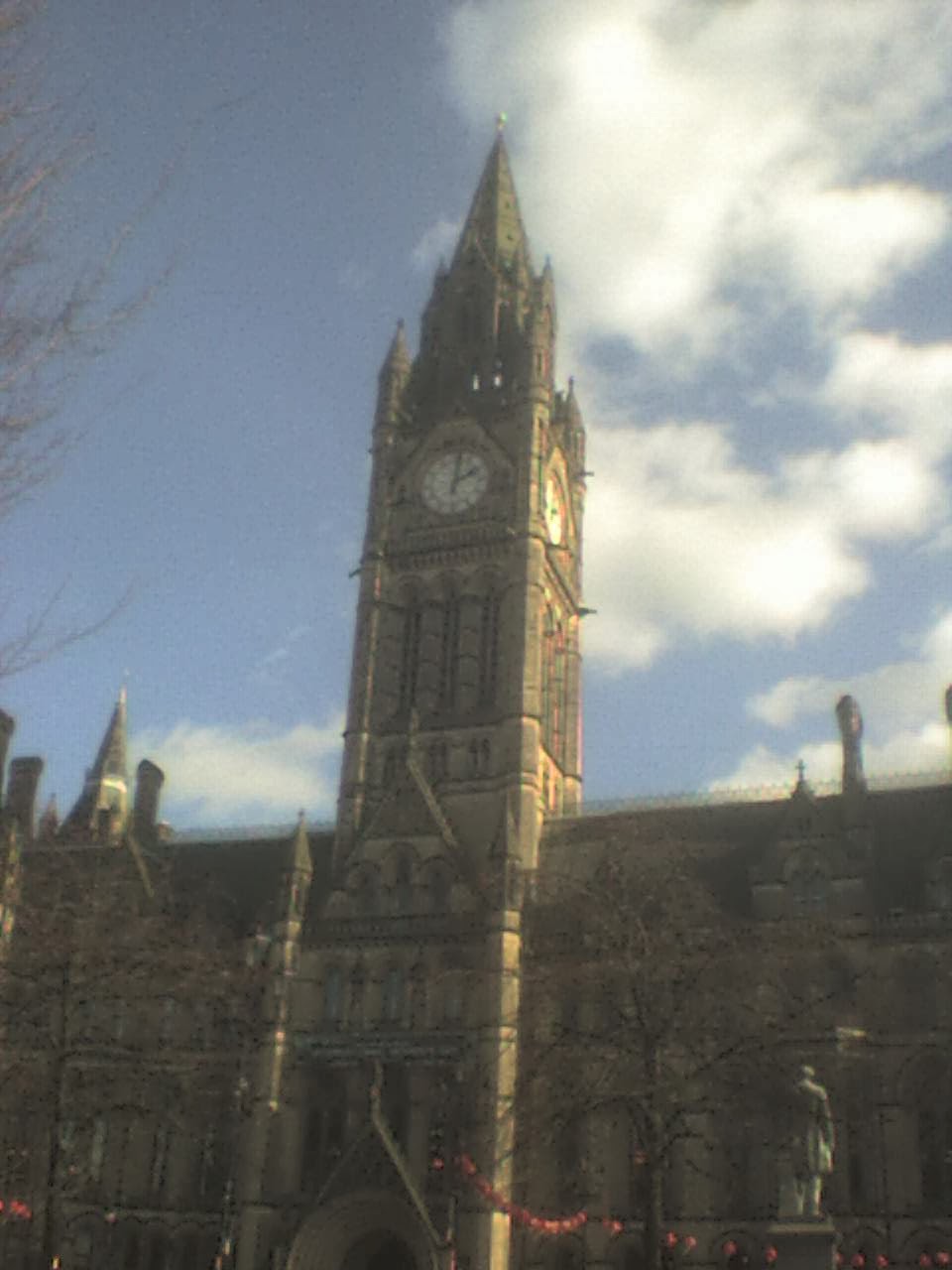
Manchester Town Hall
at Albert Square, UK

On February 17th, the first face to face meeting in Manchester, UK marked the start of this new project.  The Principal Investigators of the project, Dr. Anatoliy Gruzd from Dalhousie University (Canada) and William Ulate from Missouri Botanical Garden (USA), met with Dr. Sophia Ananiadou at the University of Manchester’s National Centre for Text Mining (NaCTeM), where her colleagues involved in the project showcased the tools and services they have developed and will be adapting for our project.

The National Centre for Text Mining (NACTEM)
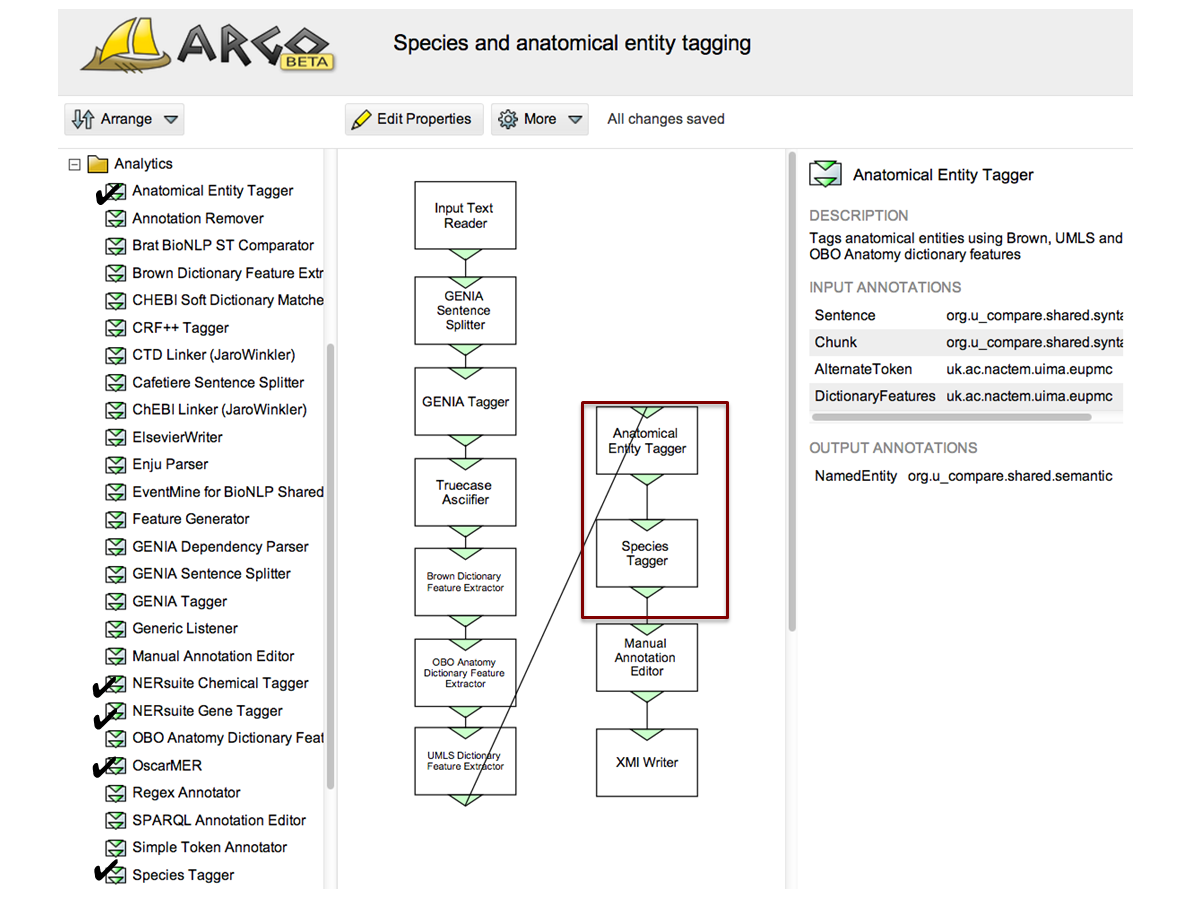
NaCTeM has developed text mining services based on a number of generic natural language processing tools like Argo, their Web-based workflow construction platform for text mining, implemented on top of the OASIS Unstructured Information Management Architecture (UIMA) standard for interoperability among information processing components.
View Full Size Image
Example of an Argo workflow that automatically extracts
species and anatomical features using entity tagging
components that NaCTeM has developed for this purpose.

Several of the NaCTeM tools have been developed as modules that can be adapted and used as components in workflows, receiving input from the previous module, processing or performing a task and passing the results to another module.  In the case of named-entity recognizers, these receive text pre-processed into smaller units (sentences, tokens) and extract features automatically according to statistical models used by different entity taggers (specialized in gene, chemical, anatomical, habitat or species information, for example).

Another type of components of the workflows, in addition to named entity recognizers, are the linkers, which facilitate the automatic linking of names or concepts found in text to entries in external vocabularies via unique identifiers and using a string similarity method.

Argo’s functionality allows workflows to be deployed as a Web service so they can be invoked by external applications, just like BHL currently invokes Name-finding web services to find the taxa within the text.
View Full Size Image
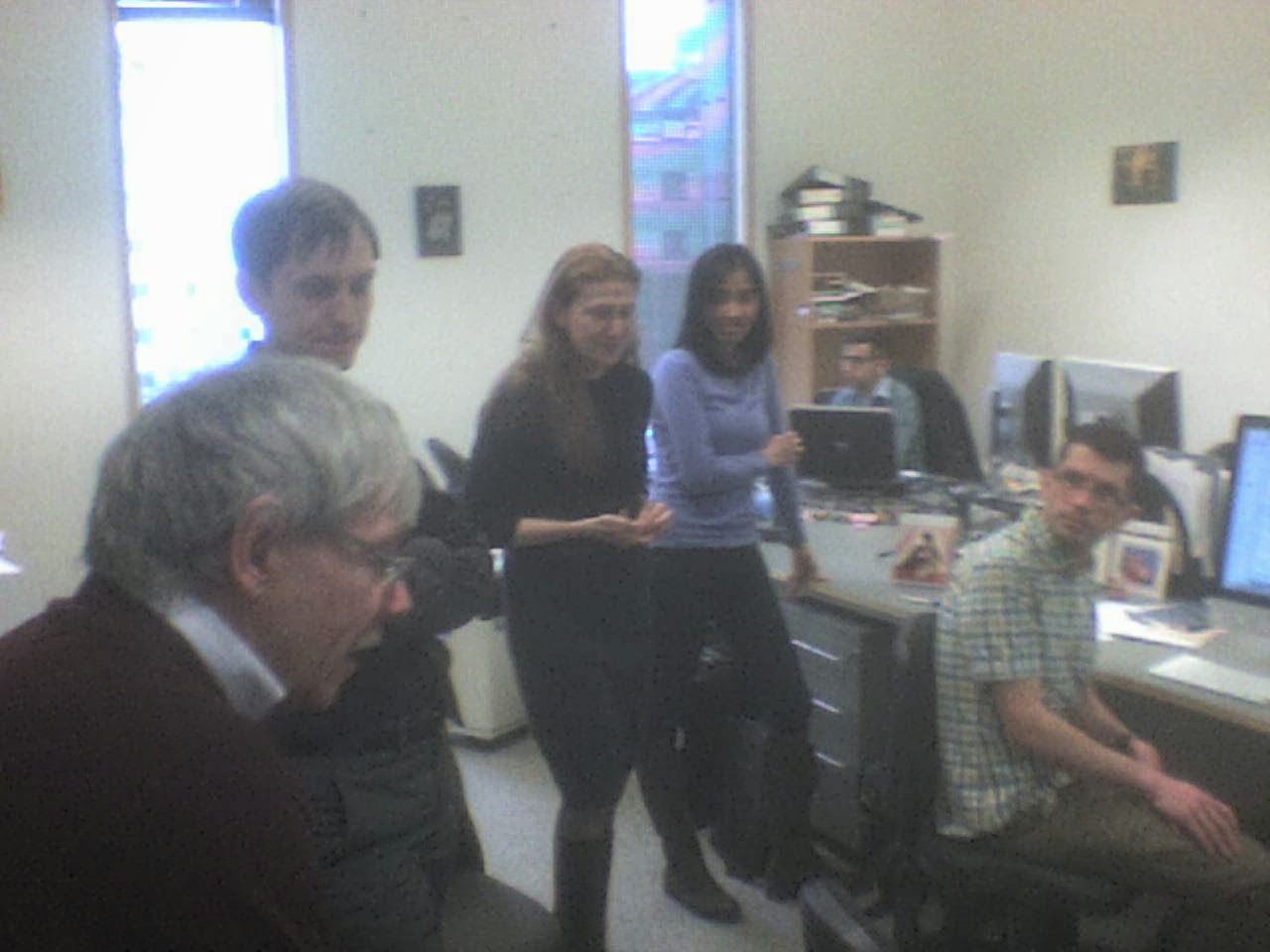
At NaCTeM commenting on the tools for the project.
L to R:  Mr. John McNaught, Dr. Anatoliy Gruzd,
Dr. Sophia Ananiadou, Ms. Riza Batista-Navarro,
Mr. Georgios  Kontonatsios and Mr. Paul Thompson.
Missing from the photo: Dr. Rafal Rak,
Claudiu Mihăilă, and Dr. Ioannis Korkontzelos.

In order to develop these named entity recognizers and linkers for the biodiversity domain, it is necessary first, to identify which entity types are of interest (in our case, it could be names of persons, places, species, among others) and the vocabularies to link to for each type.  To assist on this process, NaCTeM has also developed term extraction tools like TerMine.  TerMine detects terms and acronyms in input text and can be used in building a term inventory for biodiversity.  This is what the initial task for our colleagues at Missouri Botanical Garden and Smithsonian will be about: finding those authoritative sources (vocabularies, ontologies, thesauri, gazetteers, etc.) of terms to help build the term inventory and then train the entity taggers to be used in our workflows.

NaCTeM has also done substantial work on event extraction, i.e., the extraction of  associations or interactions between concepts or entities.  This experience will help us identify and extract the type of events that scientists, historians and other scholars have long wanted to extract from the BHL corpus (like behavior, habitat, trophic relations, geographic range and others ) for our own named-entities: species, people, places throughout time.  Finally, NaCTeM’s vast experience developing customized semantic search engines like KLEIO, ISHER and Europe PubMed Central EvidenceFinder will facilitate providing an enhanced semantic search functionality over the BHL corpus text, to allow users to explore results according to multiple information dimensions or facets.

Additional information on the tools and services can be found at:

  • Rak, R., Rowley, A., Black, W.J. and Ananiadou, S. (2012). Argo: an integrative, interactive, text mining-based workbench supporting curation. Database: The Journal of Biological Databases and Curation.
  • Kolluru, B., Nakjang, S., Hirt, R. P, Wipat, A. and Ananiadou, S.. (2011). Automatic extraction of microorganisms and their habitats from free text using text mining workflows. In: Journal of Integrative Bioinformatics, 8(2), 184

For some interesting explanation of what Unstructured Information is and the terminology of the process around it, look at this nice introduction of the UIMA 1.0 Standard.

Or read more details about these or some of the other service systems and tools that NaCTeM has developed.

The Social Media Lab

On Monday February 17th, 2014, as part of the third Social Media Workshop, which covered the outreach and impact aspects of the International Centre for Social Media Research at Manchester University, our group was invited to attend a talk by our colleague in the project, Dr. Anatoliy Gruzd, where he presented the research done at the Dalhousie University Social Media Lab, how to make sense of the huge quantity of data and the new methods to collect information when studying online social networks through analysis and visualization.
View Full Size Image
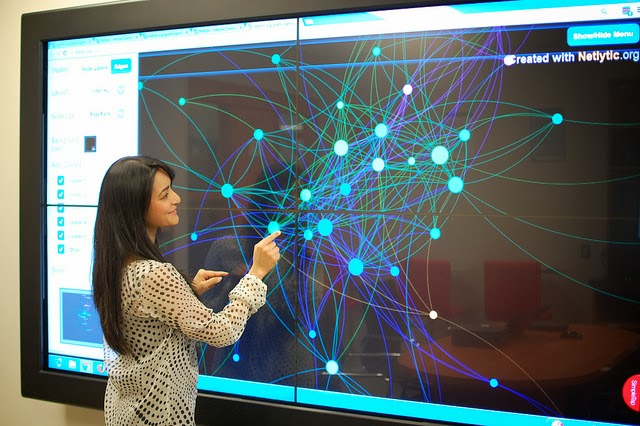
Social Media Lab at
Dalhousie University, Canada
© All Rights Reserved

For our project, the staff at Dalhousie has started investigating what users and communities, as well as the context in which they are currently accessing, commenting and sharing the records from BHL across various social media platforms, such as Twitter and Flickr.  For this work they will be employing some of their own tools developed by the Social Media Lab (such as Netlytic.org) as well as other tools developed by third parties.  Their goal is to add a social layer to integrate content from different biodiversity fora and social media sites with BHL via a user-friendly interface, to foster a community of users that could exploit BHL as an environment for sharing digital objects.

For more information, take a look at:

  • Gruzd, A. & Haythornthwaite, C. (2013). Enabling Community through Social Media.  Journal of Medical Internet Research 15(10):e248. [DOI:10.2196/jmir.2796]

And some of Dr. Gruzd’s and the Social Media Lab staff other publications.

I hope this gives an idea of the work ahead and a better sense of what the project attempts to do and how it aims to do it.  We will keep you informed as results become available, but in the meantime, let us know how do you envision yourself using BHL as a social digital library?  What information you’d like to track and how you’d like to access it?  Tell us the vocabularies you’d need to see included and what types of named entities and associations you’d want to be tagged in the BHL corpus?

View Full Size Image

This project is made possible in part by a grant from the Institute for Museum and Library Services [Grant number LG-00-14-0032-14].

March 20, 2014by Joanne A. Schneider
BHL News, Blog Reel

2014 Annual BHL meeting held in New York City, March 10-11, 2014

View Full Size Image

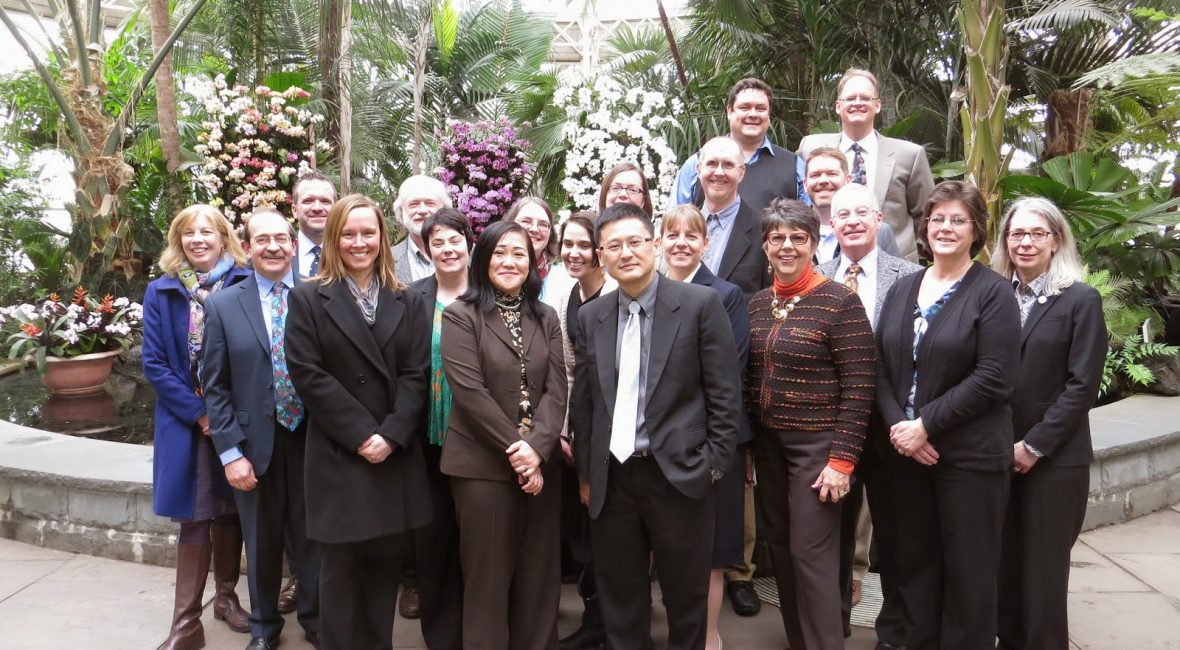
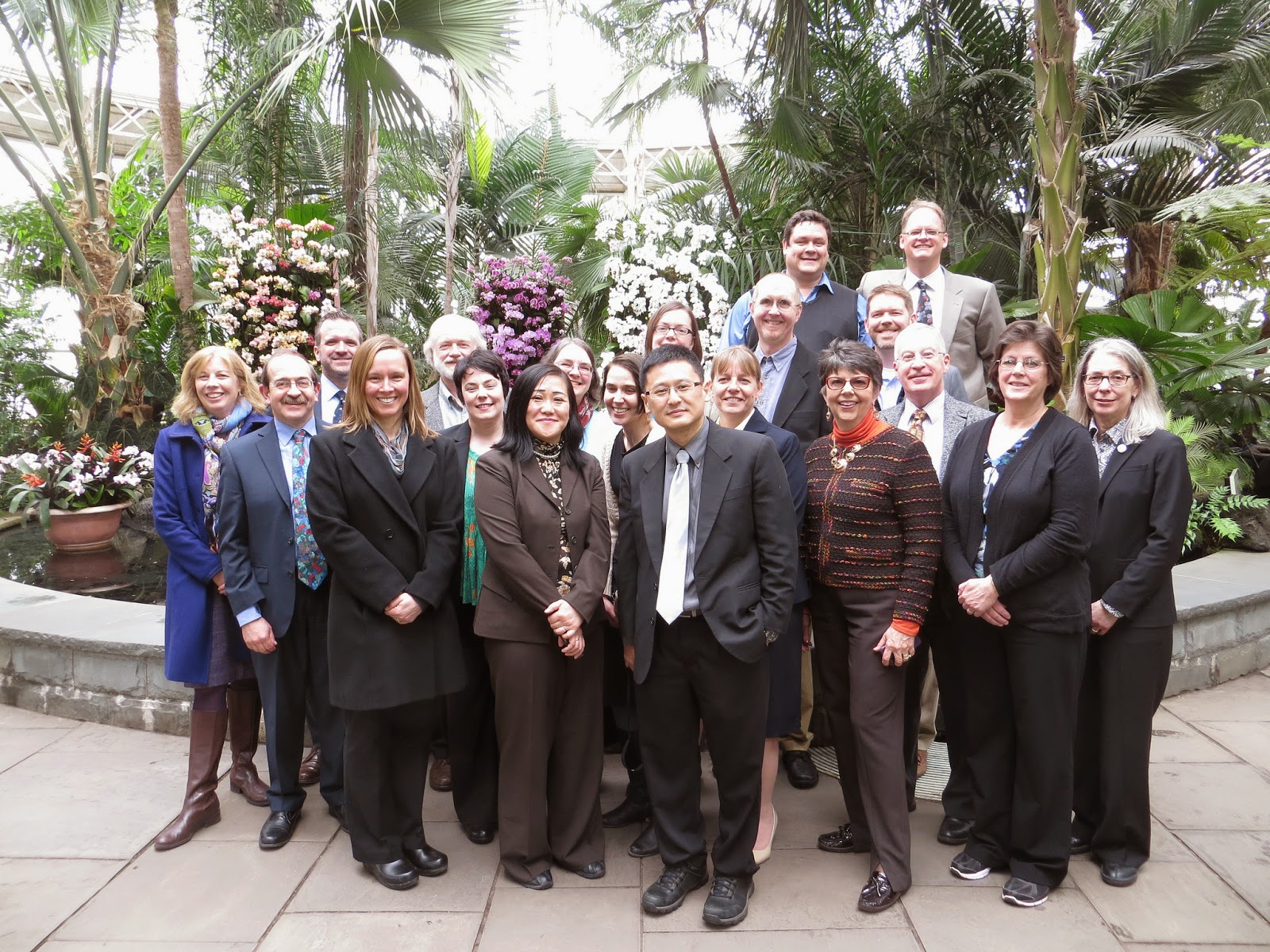
BHL member and affiliates met in New York City for the 2014 Annual Meeting (10-11 March 2014). The annual meeting is a chance for the leaders of BHL members and affiliates to learn what is happening around BHL and to give updates from their own institutions.

This year, the meeting was held jointly by the New York Botanical Garden and the American Museum of Natural History. The first day of meetings was hosted by Susan Fraser, Director of the LuEsther T. Mertz Library of the New York Botanical Garden. The morning session of the meeting included the 2014 BHL Program Director’s Report by Martin R. Kalfatovic; an update on user engagement from Carolyn Sheffield (BHL Program Manager); an overview of BHL technical activities from William Ulate (BHL Technical Director); and a report on the recent Global BHL meetings and membership committee report by Vice-Chair Connie Rinaldo. Bob Corrigan, Director of Operations for the Encyclopedia of Life (EOL), also joined the meeting to give an update on EOL activities. Gregory Long, President and CEO of the New York Botanical Garden, welcomed the BHL members.

Attending the meeting were representatives from fifteen of the sixteen BHL members, including the three most recent members, Washington University of St. Louis, The National Library Board, Singapore (BHL Singapore), and the University of Illinois, Urbana-Champaign. Our newest affiliate, the Natural History Museum, Los Angeles County, also attended.

The business portion of the meeting took place the following day at the American Museum of Natural History, hosted by Tom Baione, the Harold Boeschenstein Director of the AMNH Research Library. Tom also gave the group a tour of Natural Histories: Exploring Rare Books and Scientific Illustration exhibition, based on his book of the same title.

Pictured above are the meeting attendees:

Front Row, left to right: Susan Fraser (NYBG), Chris Mills (Kew), Christine Giannoni (Field Museum), Tomoko Steen (Library of Congress), Eric Chin (BHL Singapore), Nancy Gwinn (Smithsonian Libraries), Cathy Buckwalter (ANSP), Judy Warnement (Harvard Botany Libraries).

Second Row, left to right: Tom Baione (AMNH), Marty Schlabach (Cornell), Connie Rinaldo (Harvard/Museum of Comparative Zoology), Carolyn Sheffield (BHL Program Manager), Diane Reilinger (MBL/WHOI), Richad Hulser (NHMLAC).

Third Row, left to right: Kelli Trei (UIUC), Doug Holland (Missouri Botanical Garden), Chris Freeland (Washington University).

Back Row, left to right: William Ulate (BHL Technical Director), Martin R. Kalfatovic (BHL Program Director).

NOT PICTURED: Jane Smith (Natural History Museum, London). Photograph taken at the Enid A. Haupt Conservatory, New York Botanical Garden.


March 18, 2014by joelrichard
Page 106 of 173« First...102030«105106107108»110120130...Last »

Help Support BHL

BHL's existence depends on the financial support of its patrons. Help us keep this free resource alive!

search

About BHL

The Biodiversity Heritage Library (BHL) is the world’s largest open access digital library for biodiversity literature and archives. BHL operates as a worldwide consortium of natural history, botanical, research, and national libraries working together to digitize the natural history literature held in their collections and make it freely available for open access as part of a global “biodiversity community.”

Join Our Mailing List

Sign up to receive the latest news, content highlights, and promotions.

Subscribe Now

Subscribe to Blog via Email

Enter your email address to subscribe to this blog and receive notifications of new posts by email.

Join 319 other subscribers

Subscribe to Blog Via RSS

Subscribe to the blog RSS feed to stay up-to-date on all the latest BHL posts.

Access RSS Feed

Inspiring Discovery through Free Access to Biodiversity Knowledge.

The Biodiversity Heritage Library makes it easier than ever for you to access the information you need to study and explore life on Earth…for free, anytime, anywhere.


64+ Million Pages of
Biodiversity Literature Online.

EXPLORE

Tools and Services
to Transform Research.

EXPLORE

300,000+
Illustrations on Flickr.

EXPLORE

ABOUT | HARMFUL CONTENT | PRIVACY | SITE MAP | TERMS OF USE