Biodiversity Heritage Library - Program news and collection highlights from BHL
  • Home
  • News
  • Featured Books
    • All Featured Books
    • Book of the Month Series
    • BHL at 20
  • User Stories
  • Campaigns
    • Fossil Stories
    • Garden Stories
    • Monsters Are Real
    • Page Frights
    • Her Natural History
    • Earth Optimism 2020
  • Tech Blog
  • Visit BHL
Home
News
Featured Books
    All Featured Books
    Book of the Month Series
    BHL at 20
User Stories
Campaigns
    Fossil Stories
    Garden Stories
    Monsters Are Real
    Page Frights
    Her Natural History
    Earth Optimism 2020
Tech Blog
Visit BHL
  • Home
  • News
  • Featured Books
    • All Featured Books
    • Book of the Month Series
    • BHL at 20
  • User Stories
  • Campaigns
    • Fossil Stories
    • Garden Stories
    • Monsters Are Real
    • Page Frights
    • Her Natural History
    • Earth Optimism 2020
  • Tech Blog
  • Visit BHL
Biodiversity Heritage Library - Program news and collection highlights from BHL
Blog Reel

Fun with Seeds

Seed and Nursery Catalogs at The New York Botanical Garden

Thanks to a generous grant from the National Endowment for the Humanities (NEH), The New York Botanical Garden’s The LuEsther T. Mertz Library, the most comprehensive botanical and horticultural library in the Americas, has recently cataloged all 58,000 items in its Nursery and Seed Trade Catalog Collection. The grant also funded the digitization of public domain pre-1923 American nursery catalogs and their publication to the web.

The Nursery and Seed Trade Catalog Collection, one of the largest and most important of its kind in the United States, provides one of the best primary sources of information available on the history and development of American botany, horticulture, and commercial agriculture. Their value to humanities research, however, extends far beyond these subjects alone.
View Full Size Image
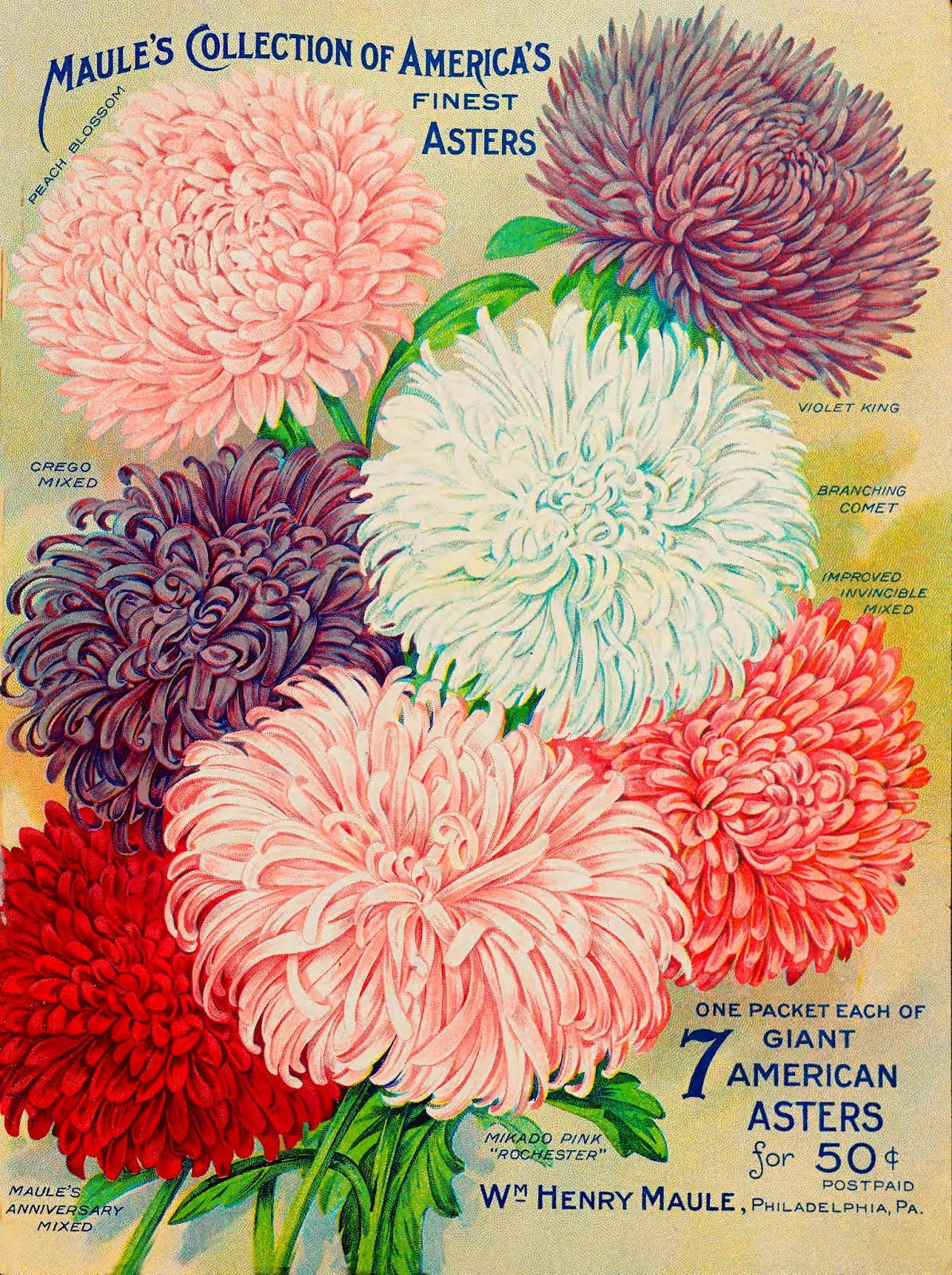
Color, skillful drawing and appealing text popularized American nursery and seed catalogs. Maule’s Seed Catalog. 1914. http://biodiversitylibrary.org/page/46265545.


The Importance of Seed Catalogs

Nursery and seed trade catalogs offer a unique window into other areas of American life, including publishing, landscape design, marketing, industry, and leisure activity, making them valuable resources for humanities research.

Nursery and seed catalogs often provide the first description of a newly introduced species or hybrid, and the establishment of accepted nomenclature for a plant or flower requires knowing the earliest date the name was used. One of the problems facing an International Registrar in establishing name priority is determining the date of the first valid publication for a new cultivar. Very often this publication is a seed catalog. Consequently, botanists and horticulturists utilize nursery catalogs to trace the development of new hybrids, varieties, and mutations.
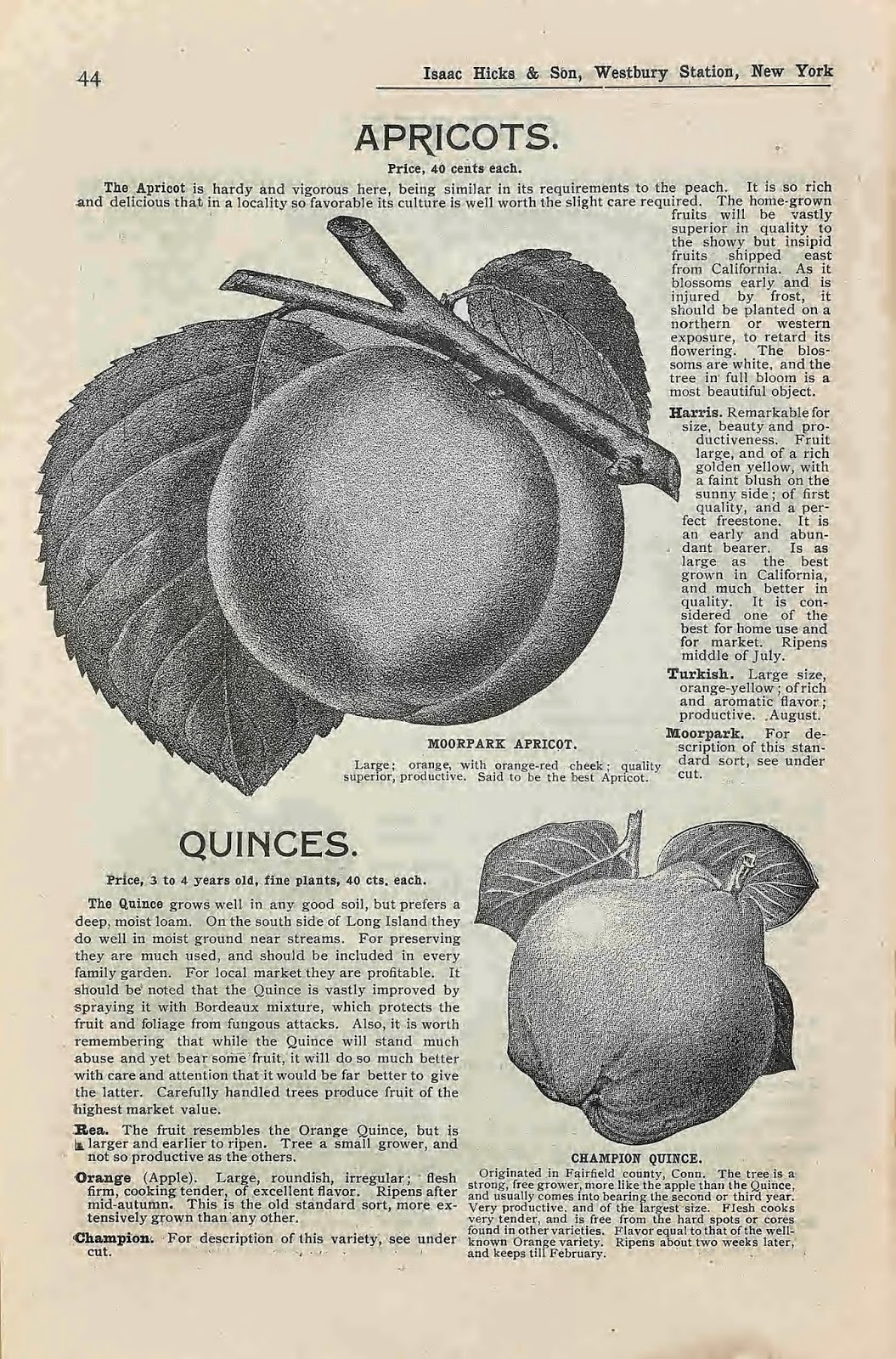
View Full Size Image
Fruits for Long Island with abridged list of lawn and street trees, evergreens, shrubs, roses, vines and hardy flowers. 1898. http://biodiversitylibrary.org/page/46037567.


Enhancing Discovery of Seed and Nursery Catalogs

Searching the text of online vintage seed catalogs, however, has often been problematic. Seed catalogs are notoriously difficult subjects for Optical Character Recognition software (OCR) to parse. The picturesque fonts and elaborate page layouts so endearingly characteristic of seed catalogs have caused the resulting OCR output to be error prone and less than optimal, at least up to now.

The Institute of Museum and Library Services (IMLS) has recently awarded a grant to the Missouri Botanical Garden and its partner institutions, including Harvard MCZ, Cornell University and the the Mertz Library at NYBG, to use purposeful gaming and crowd sourcing to improve the precision of OCR, thereby helping to optimize search and discovery of online collections. Despite the technical difficulties to be overcome, the compelling content of vintage American seed catalogs promises to motivate the search for solutions as it once did the efforts of generations of gardeners to grow flowers like the pictures in the catalog.
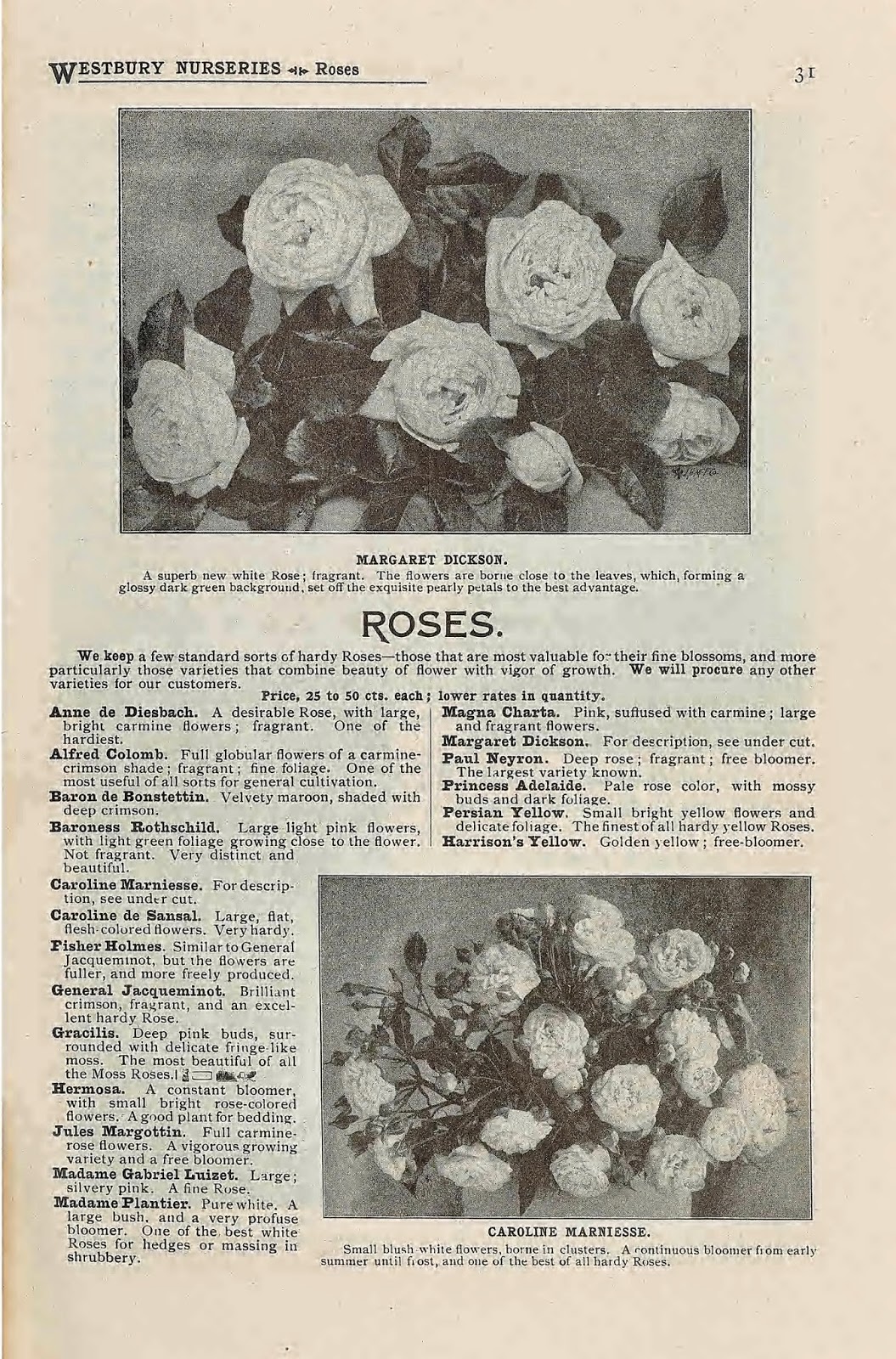
View Full Size Image
Fruits for Long Island with abridged list of lawn and street trees, evergreens, shrubs, roses, vines and hardy flowers. 1898. http://biodiversitylibrary.org/page/46037580.


Seeds and the Entrepreneurial Spirit

Beyond their pictorial features, another reason for the continued intense fascination with seed catalogs is that the American nursery and seed business at the turn of the last century was replete with Horatio Alger stories of enterprising individuals who combined impressive horticultural skills with savvy commercial instincts. The prosperous businesses established by James Vick, John Lewis Childs and D.M. Ferry are typical of these self-taught botanical entrepreneurs.

One image from the Luther Burbank seed catalog of 1916 vividly captures the heroic spirit of the era. It depicts the meeting of Thomas A. Edison, Henry Ford and Luther Burbank on the porch of Burbank’s Santa Rosa, California home in 1915. The aggressive herd of newspaper reporters and newsreel photographers who swarmed all over Burbank’s property that day prompted Edison to grumble “Darn these movies.” Burbank featured the meeting prominently in his catalogs as a celebrity endorsement of his plants and seeds.
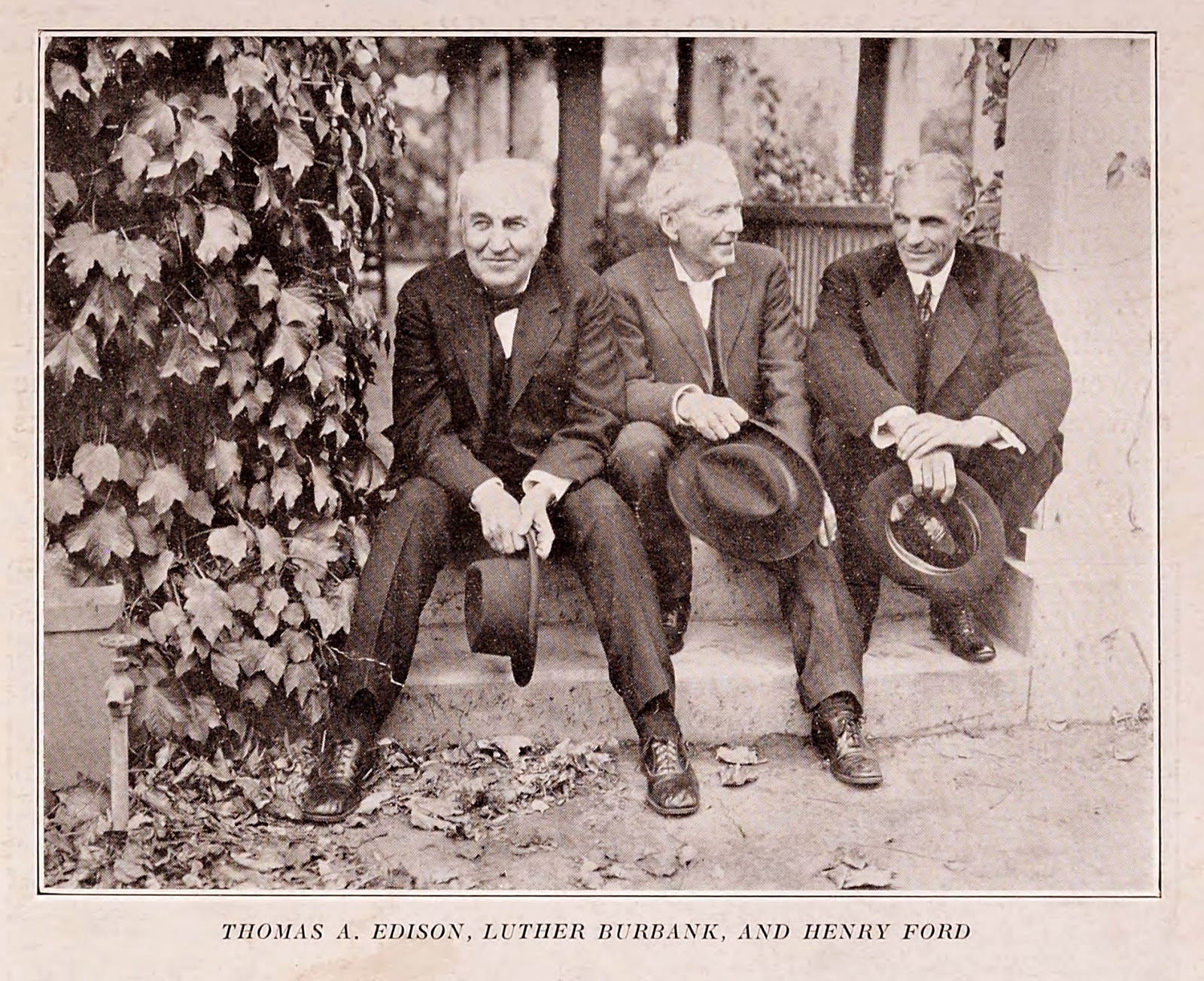
View Full Size Image
Left to Right: Edison, Burbank and Ford. Mertz Library image in BHL. http://biodiversitylibrary.org/page/46319618.

One of the more colorful figures in the American nursery business was another Californian and a close friend of Luther Burbank’s named Carl Purdy (1861-1945). He was called the “Lily Man of Ukiah” by the press and today his life story seems almost mythical. In 1870, at the age of nine, Purdy was brought west in a covered wagon to the still pristine landscape of Mendocino County, California. When he reached adulthood he travelled on stagecoaches to business meetings and botanical conferences. He witnessed the San Francisco earthquake of 1906 and was a key figure in the spectacular San Francisco World’s Fair of 1915. He was fluent in Spanish and several Native American languages and once wrote a splendid book about the extraordinary baskets fashioned by the Indians of Mendocino County. Above all, he studied and mastered the cultivation of California’s native bulbs and plants, successfully introducing them for the first time to European and American gardens. His self-taught knowledge of California’s flora was acquired first hand through precise observation and experimentation prompting the scholarly Willis Linn Jepson to acknowledge that Purdy’s expertise was of the highest order.

Purdy was well read, having immersed himself in classical literature from childhood. He wrote all of the text for his catalogs, filling page after page with expert horticultural instructions and elegant prose. His proud description of the scenery on his 180-acre horticultural ranch named “The Terraces” was a regular feature of his catalogs:

“From a scenic point of view, ‘The Terraces’ are probably the most unique gardens in the world. Large springs feed a mountain stream, which passes through a rich valley, and then, over four limestone bluffs in succession, each from 50 to 75 feet high, it plunges in many most charming cascades and waterfalls. Between the bluffs are the terraced slopes from which the gardens get their name.”

Purdy’s seed and bulb catalogs of native California plants have for decades been one of the hidden treasures of the Mertz Library, but happily they are now easily accessed on both BHL and Mertz Digital.
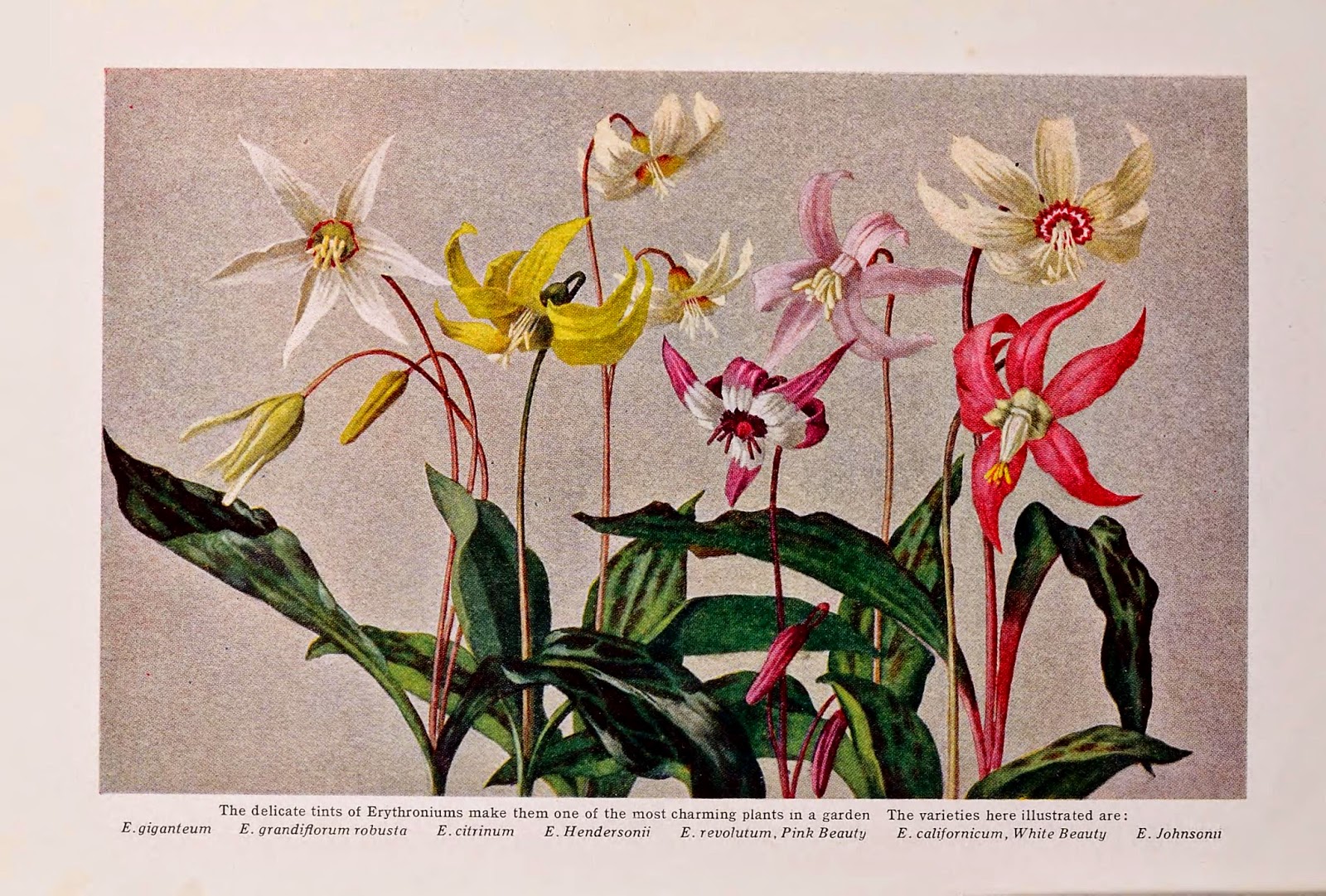
View Full Size Image
Erythroniums (dog-toothed violets). Carl Purdy catalog of 1921. http://biodiversitylibrary.org/page/46307063.

To read more about Carl Purdy, his life and times, please see the Mertz Library’s LibGuide here.

Thousands of Seed Catalogs in BHL

Browse over 11,000 seed and nursery catalogs in the BHL collection, digitized primarily from the significant collections of The New York Botanical Garden, Cornell University and the National Agricultural Library. The collection will continue to grow supported in part by the Purposeful Gaming grant from the Institute of Museum and Library Services. We welcome suggestions of catalogs to consider for digitizing and adding to the collection.
We hope you enjoyed this post. Interested in guest-blogging for BHL? We’d love that! Natural history, biodiversity and conservation topics are especially welcomed. Email us your ideas at [email protected].
December 18, 2014by ulib-libraryjobs
Blog Reel, Featured Books

Early Women In Science: Trekking Through Nature, Trailblazing Their Way Through History

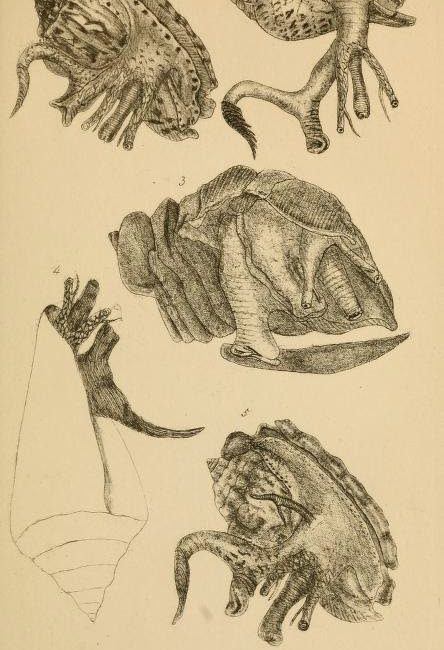
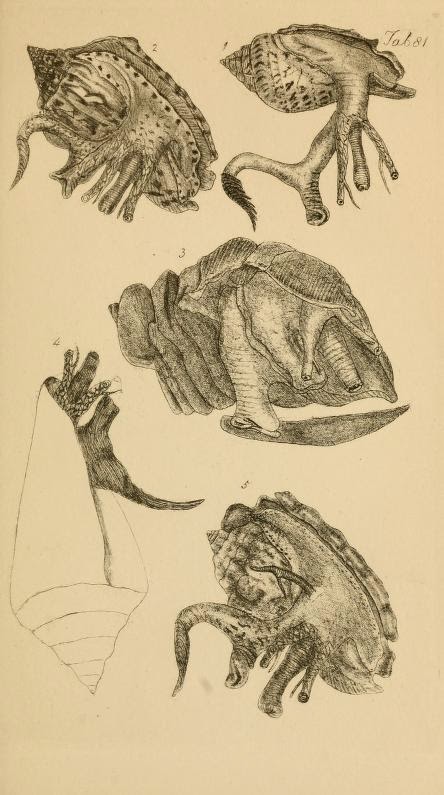
The sixteen women featured in the “Early Women In Science” exhibition are each extraordinary for unique reasons.  One trait they all share is that they were doing work in scientific fields reserved for men. They sometimes had to fight for recognition of their work—or went completely unrecognized for some of their major contributions. For instance, Maria Emma Gray (1787-1876) was a talented natural history illustrator. She not only contributed to the work of her husband, zoologist John Edward Gray, but also saw him through his nervous breakdown, eventually helping him to work again. Despite her contributions to his studies, however, she is not credited in his works.

View Full Size Image
Illustration by Maria Emma Gray, from Figures of Molluscous Animals, Selected from Various Authors. Etched for the Use of Students by Maria Emma Gray, vol. 2, 1859 | Smithsonian Biodiversity Heritage Library

Even when the male scientific community did praise the contributions of their feminine peers, many of the earliest women scientists remained resistant to any form of boasting or taking credit, since that was considered unseemly in women. Not so with bold scientists like Ynes Enriquetta, Julietta Mexia, or Alice Eastwood, who rightfully took credit for their amazing accomplishments.

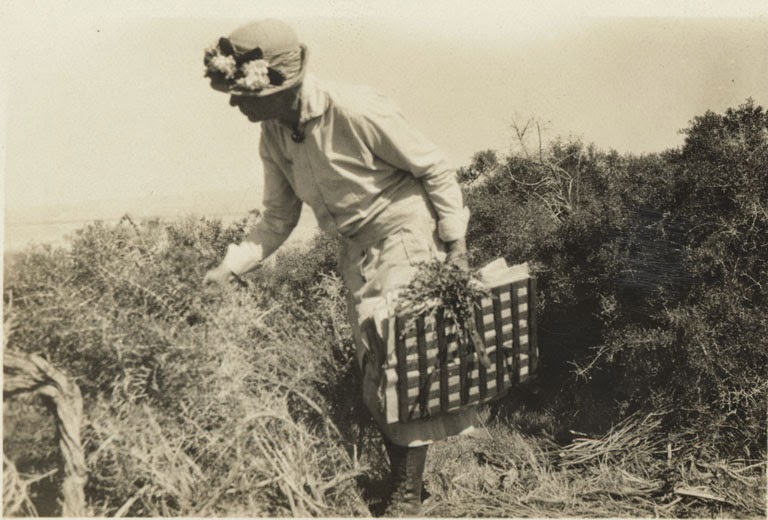
Alice told her contemporary, Agnes Chase (agrostologist, 1869-1963): “the most proper [honor] is that officially the name of the Herbarium is the Alice Eastwood Herbarium of the California Academy of Sciences” since she built it herself “with no help” from 1912 to 1930.And in truth, Alice did manage this effort with little help. Furthermore, prior to the new herbarium’s construction, Alice risked her life to save the Academy’s collections during the San Francisco Earthquake of 1906. Despite fires in the surrounding buildings and a caved-in stairwell, Alice climbed into the previous herbarium and managed to save the most irreplaceable of the herbarium specimens with a rope and pulley and the help of one other man.

View Full Size Image
Alice Eastwood collecting Festuca eastwoodae grass, courtesy of the California Academy of Sciences Archives

These women were brave. Not only did they enter their respective fields at a time when women were meant to remain in the domestic sphere, but they often solitarily braved harsh wilderness conditions to explore, observe, and collect flora, fauna and other specimens.  Katherine Brandegee(1844-1920) was a botanist, and in her journeys she survived shipwrecks, seclusion with bears, wolves and coyotes, and encounters with potentially dangerous men in the uninhabited areas she trekked. All the while, collecting and preserving specimens, rather than her own safety, were her primary concerns.

Many of the women in the exhibit shared a courage, a sense of adventure, and a love of nature that allowed them to push through the difficulties—whether physical or mental—of becoming scientists.Some were self-taught, while others were accepted to prestigious schools. Most of them were given honorary degrees and other awards. Some, like Susan Fenimore Cooper (1813-1894), were multi-talented, engaging not only in scientific pursuits, but other artistic endeavors like fiction writing.Furthermore, many of these women demonstrated exceptional foresight, warning that neglect and abuse of our natural environment would result in dire consequences. They were right.

Enjoy the fascinating stories, illustrations and books from and about “Early Women In Science” in our new exhibit here.

December 9, 2014by micahv
Blog Reel, User Stories

Rejuvenating Centuries’ Old Botany with Phytogeography

Here’s a word of the day for you: Phytogeography.

Phytogeography is a branch of biogeography that investigates the geographic distribution of plants and the effect that the earth’s surface has on that distribution. To go further down the rabbit hole, biogeography studies the distribution of species and organisms now and throughout time. This research reveals important interdependencies between geology, climate, dispersal and evolution.

View Full Size Image
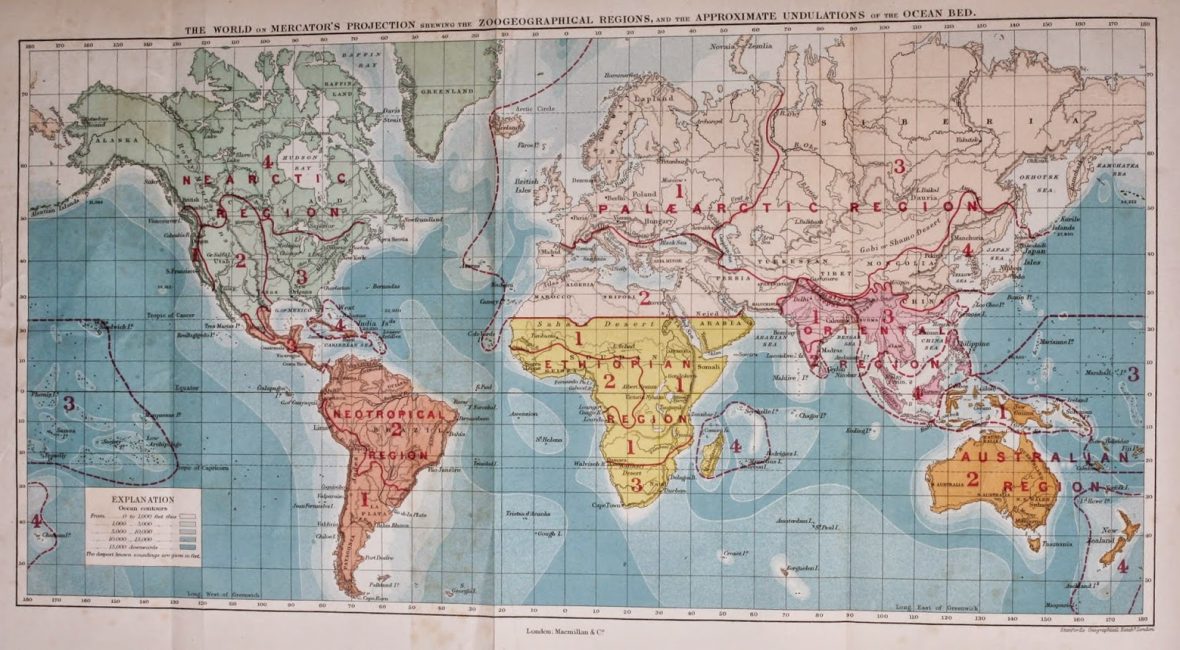
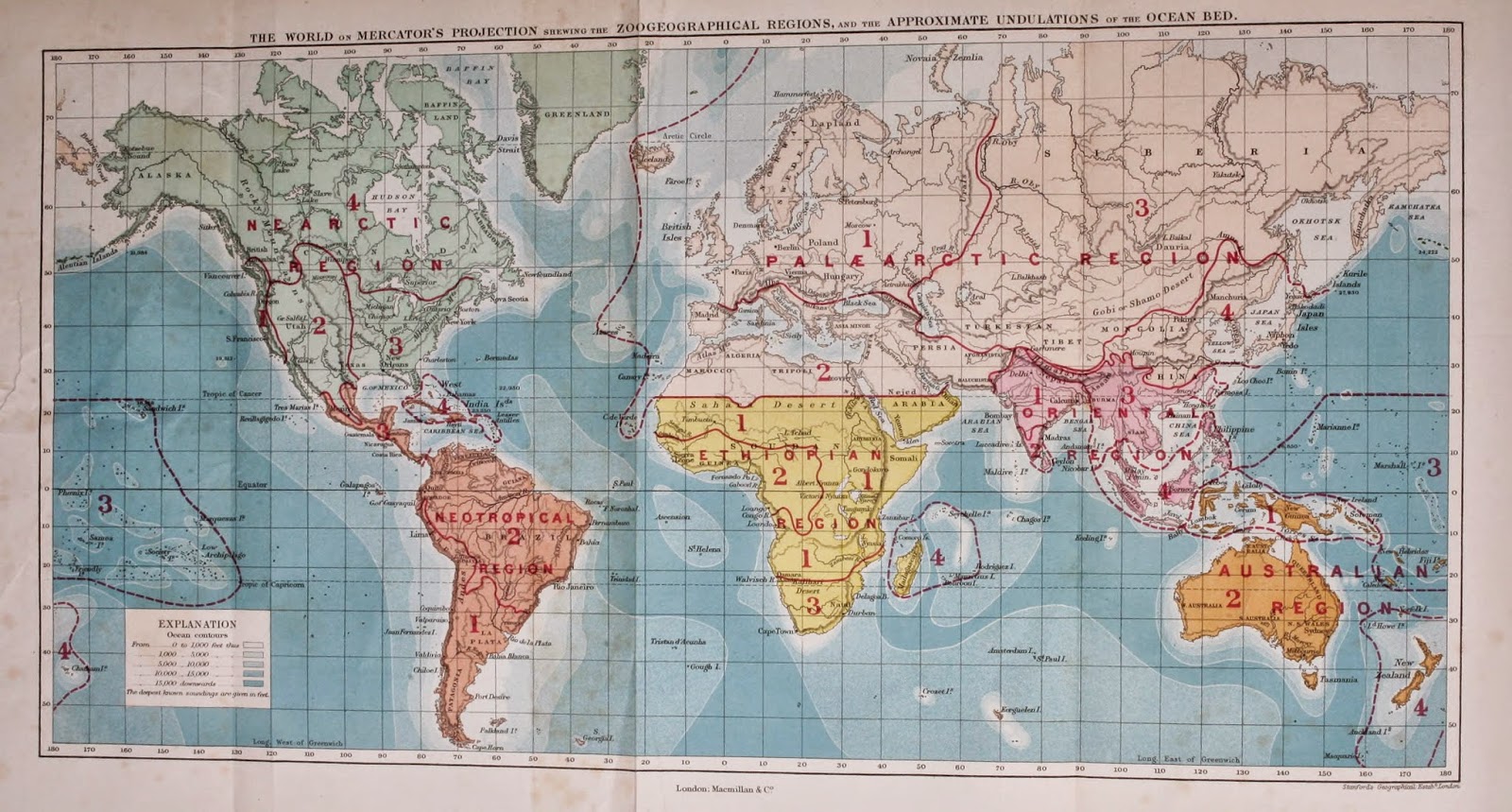
Wallace’s map, showing the zoogeographical regions of the world. The Geographical Distribution of Animals. v.1 (1876). http://biodiversitylibrary.org/page/30228507.

Alfred Russel Wallace is commonly known as the “Father of Biogeography.” Although not as famously recognized as Charles Darwin, Wallace actually came up with the theory of evolution by means of natural selection independent of and simultaneous to Darwin. Wallace spent a great part of his career in South America and the Malay Archipelago. During this time, his observations on distribution, breeding, and migration tendencies helped him develop a theory of evolution incorporating the influence of geological barriers on speciation. He also argued that species abundance was directly related to food availability.

Today, biogeographers are largely interested in how environmental factors and human activities influence species distribution. Biogeographic change and insight offered by historical data are a long-time passion of Dr. Quentin Groom, research assistant at the Botanic Garden Meise, Belgium. His particular interest is phytogeography, especially as it relates to the interaction between humans and plants.

View Full Size Image
Dr. Quentin Groom, research assistant at the Botanic Garden Meise, Belgium.

Groom’s interest in phytogeography began ten years ago, but more recently, his discovery of BHL expanded his research possibilities. “[BHL] is a fantastic resource, making research possible that would never have been considered in the past. I use it to find information on particular species and also to find source documents for further analysis. The ability to search by taxon name is invaluable, but having stable URLs for each page is [also] a great feature.”

The ability to access this digitized literature is only part of the greater picture of facilitating efficient science and discovery. Intuitive search capabilities and the opportunity to augment existing files are other features Groom would like to see within BHL and the larger bioinformatics community.

“I feel [BHL] is just one step in the full digitization and semantic annotation of biodiversity literature. I’d like to be able to add annotations [to BHL]. [The ability to] search by location name and taxon name would be useful, even if the location names were only countries. It might [also] be useful to have the ability to add internal links within BHL to connect citations within one document to their source in BHL,” mused Dr. Groom.

The Mining Biodiversity project, funded by an IMLS Digging Into Data grant, is currently working to address some of these requests. The project aims to create a next-generation digital library by enriching BHL with semantic metadata through deployment of advanced text-mining techniques. This data will be used to support a semantic search system enhanced with clustering and visualization tools. The idea is that a user will be able to search not only for species, but also filter the results for references to habitat, diet, predation, and related facets. The result will be fully interlinked and indexed access to the full content of BHL library documents, allowing users to locate precisely the information of interest to them in an easy and efficient manner.

Furthermore, the project is exploring ways to make BHL more “social”, allowing for collaborative curation where users can easily share and discuss our collections. This will not only facilitate expanded reuse and discovery of our material, but will also allow us to evaluate how our content is being used around the globe and by whom, and better measure its impact on biodiversity awareness.

The Mining Biodiversity project runs through December, 2015. As we continue to improve our collections and services, you can explore our collection of over 44.8 million pages of biodiversity literature spanning over 500 years of research and discovery.

View Full Size Image
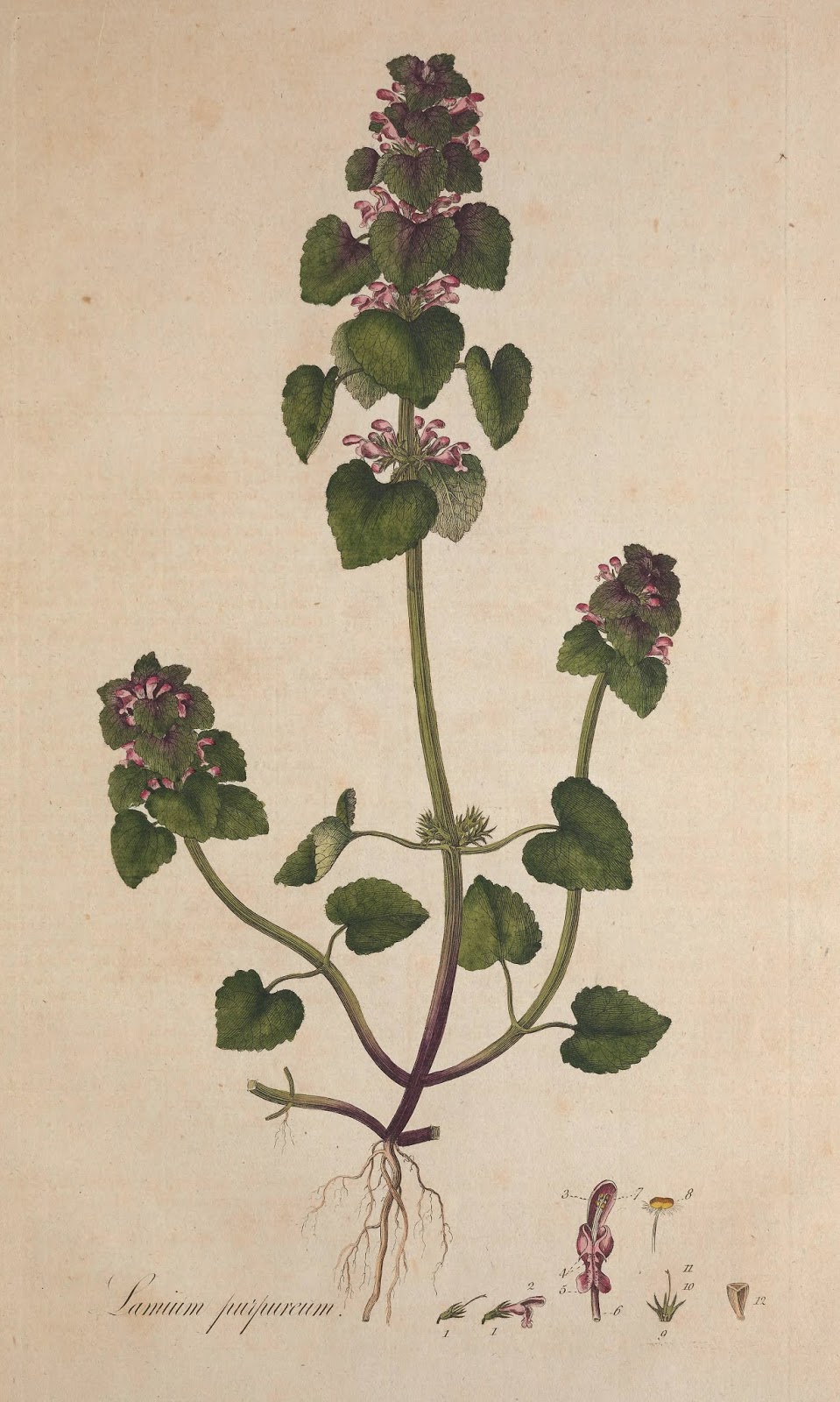
Red Deadnettle (Lamium purpureum) from one of Dr. Groom’s favorite BHL books, Flora Londinensis, v. 1 (1777). http://biodiversitylibrary.org/page/40966493.

Amongst all that content, what would a phytogeographer choose as his favorite items in the collection? “Linnaeus’ Species Plantarum is an inspiring work. Flora Londinensis by William Curtis makes common weeds special with its illustrations. I also have a soft spot for literature from Northumberland where I used to live,” mused Quentin.

Indeed, Dr. Groom recently republished the Flora of Northumberland and Durham (Winch 1831) as an online, semantically enhanced Pensoft “Advanced Book” using the scan originally taken from BHL. The Flora provides valuable insight into how biodiversity in North-east England has changed over time.

“Historic biodiversity literature is not just of cultural interest, it can be used to chart biogeographic change and help us understand the impacts of environmental change on biodiversity,” explains Quentin in an EU BON review of his republication. “Even if we are trying to predict future scenarios for biodiversity, understanding the changes of the past will help understand the changes we should expect in the future.”

Dr. Groom recently submitted another paper using data gathered from BHL, entitled “Piecing together the biogeographic history of Chenopodium vulvaria L. using botanical literature and collections”. The paper charts the distribution of Chenopodium vulvaria over more than 200 years and uses old literature to understand how its habitat may have changed. All of the observations extracted from the literature were georeferenced and are available on GBIF. You can view a preprint of the paper in PeerJ.

The digitization of historic literature, and its enhancement using semantic and linked data, is revolutionizing scientific research, connecting scientists to relevant information more efficiently than ever before. Through continued dedication to open access, BHL and like-minded projects will continue to inspire discovery through free access to biodiversity knowledge.

We extend a special thanks to Quentin for not only describing how BHL is currently impacting his work, but also for revealing important ways that we can improve our library. Do you have ideas about how you would like to see BHL improve? Would you like to tell us about how BHL has impacted your own research? Then send us some feedback!

November 13, 2014by ulib-libraryjobs
Blog Reel, User Stories

Exploring the Rich History of Plant Science

View Full Size Image
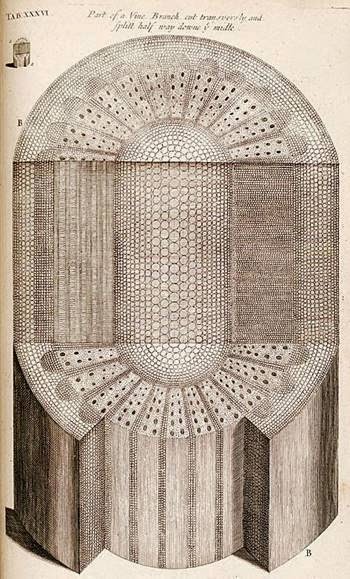
Drawings of a grapevine stem showing the transport vessels, from Nehemiah Grew’s The Anatomy of Plants (1682).

In 1682, the first known microscopic depiction of pollen appeared in Nehemiah Grew’s Anatomy of Plants. Grew, now known as the “Father of Plant Anatomy,” revolutionized botanical science with his studies of plant structure. Exploiting the power of the microscope, he outlined key morphological differences in plant stems and roots and proposed the hypothesis that stamens are a plant’s male reproductive organs.

Science has progressed significantly since the 17th century. Microscopes are no longer novel but commonplace, and scientists occupy their minds with theories about dark matter and quarks. Yet despite the centuries that have elapsed, today’s advances are founded squarely on the discoveries of these bygone eras. Likewise, modern theories often cause us to re-examine assumptions from the past.

Dr. Mary Williams is particularly drawn to this interplay between historic and modern scientific study, specifically in the field of botany. Dr. Williams has been studying and educating people about plants since she began her PhD in Plant Molecular Biology 30 years ago. Serving as a professor at Harvey Mudd College from 1995-2009, Dr. Williams is now a Features Editor for the American Society of Plant Biologists, writing a series of educational articles about plant biology called “Teaching Tools in Plant Biology.” The series connects advanced undergraduate students to current research in plant sciences through textbook-style review articles, diagrams and images.

View Full Size Image
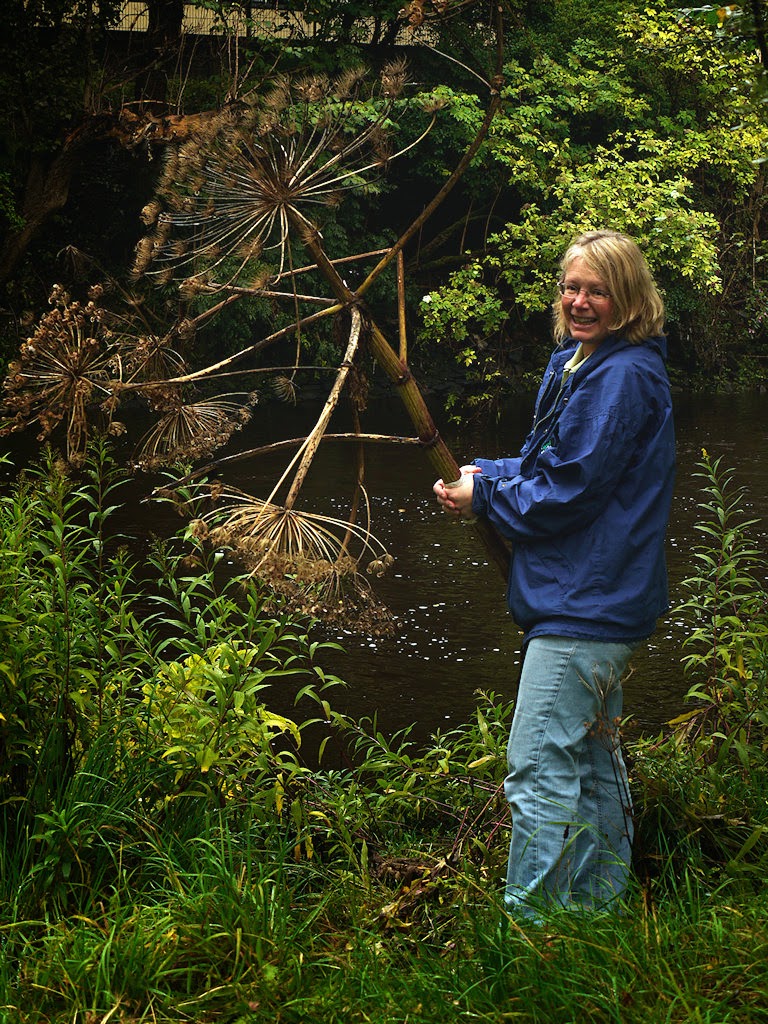
Mary Williams demonstrating the size of giant hogweed (Heracleum mantegazzianum).

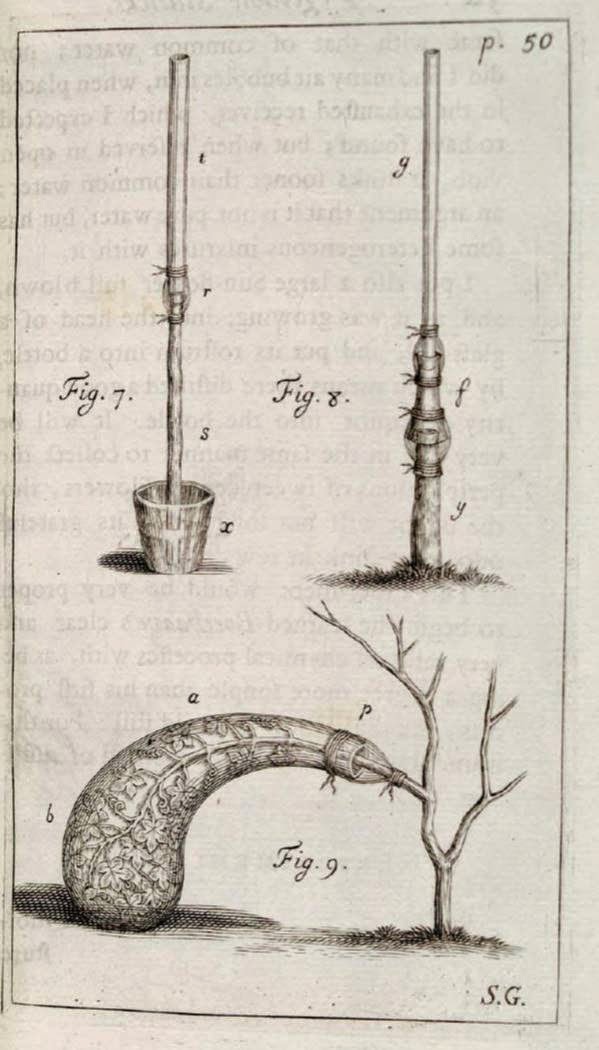
A comprehensive biological education is not just about current research, however. “Educating students about science involves more than teaching them our current models,” explains Dr. Williams. “We also have to help them learn to synthesize information and develop their own models. One way to do this is by asking them to examine how our ideas and understanding have changed with time. As an example, students can read Vegetable Staticks published in 1727 by Stephen Hales, who is considered one of the pioneers of plant physiology. This book is an account of his studies of water transport in plants. In spite of having only simple tools he made key discoveries and developed models that are still useful.”

View Full Size Image
Investigations into the forces and nature of xylem sap, from “Vegetable Staticks,” published in 1727 by Stephen Hales.

BHL has become an important resource for satisfying Dr. Williams’ need for historic botanical literature. Some serendipitous Google searching in 2012 brought her to several digitized classics in the BHL collection, which has since transformed into monthly searches for materials. BHL’s Twitter account, @BioDivLibrary, has also proven helpful for uncovering hidden gems in the collection. Dr. Williams includes links to relevant material and images in her teaching articles.

“BHL makes great scientific works available for students to explore,” lauds Williams. “It can be both fascinating and challenging to see how early scientists conducted experiments and described their results. I particularly like to direct students to “The Power of Movement in Plants”, written by Charles Darwin and his son Francis. Reading it reveals how these exceptional scientists first observe a phenomenon and then set out to understand it. Their investigations of phototropic movement of Phalaris canariensis are brilliant studies that set the stage for the discovery of the plant hormone auxin.”

Providing access to historic literature isn’t the only thing that makes BHL an important resource for Dr. Williams. The diversity and openness of the collection are equally important. “I wrote an article about medicinal plants and was able to draw on BHL for access to dozens of books from across the world and across the ages. Also, the fact that many of the resources are in the public domain makes them easier to share.”

The ability to see the primary sources as they were originally published is another of Williams’ favorite BHL qualities. “Although it would be possible to learn from a transcribed document, somehow seeing the original publications with the old type and especially the old drawings has so much more impact and makes me feel connected to the writers across the centuries.”

View Full Size Image
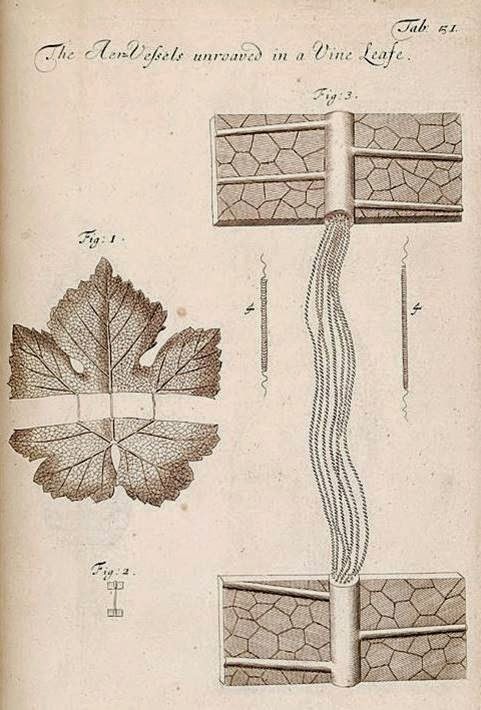
Drawings of a grapevine stem and leaf showing the transport vessels, from Nehemiah Grew’s The Anatomy of Plants (1682).

Her one complaint? “It would be nice if it were easier to search within a book (although I do enjoy scrolling and browsing).” Improved search is a component of the Mining Biodiversity, Digging Into Data project that BHL is currently engaged in. Deliverables will include enhanced search functionality incorporating text mining, semantic metadata, and result visualizations.

So, which books would a botanical educator choose as her favorite within a collection of more than 150,000 volumes? “It would have to be the two important plant anatomy books from the 17th century, Marcello Malpighi’s Anatome Plantarum (1675) and Nehemiah Grew’s The Anatomy of Plants (1682),” asserts Williams. “The detail and observational quality of the drawings is fantastic. Because of their simplicity in some ways these centuries-old line drawings are clearer and easier to comprehend than an image taken today using a powerful microscope. When I look at these books I am struck by the power of the giants whose shoulders we stand on.”

We couldn’t have said it better ourselves.

Thank you, Dr. Williams, for taking the time to tell us how BHL has impacted your work. Do you use BHL regularly? Tell us about it by writing to [email protected]. 

October 10, 2014by michelle.underhill
BHL News, Blog Reel

BHL presentation to the Council on Botanical and Horticultural Libraries

Portrait version of the Biodiversity Heritage Library logo.

On April 30, 2014 I attended the Council on Botanical and Horticultural Libraries (CBHL) annual conference at the Lewis Ginter Botanical Garden in Richmond, VA. CBHL describes itself as, “an international organization of individuals, organizations and institutions concerned with the development, maintenance and use of libraries of botanical and horticultural literature.” With the extent of the BHL’s digitized botanical literature available for free access, CBHL members are regular users and big fans of BHL.

I was delighted to be invited to present an update on BHL happenings over the past year or so, including such highlights as the adoption of a new mission, vision, and goals; our new website user interface (launched in March 2013) and its new article access features, as well as link outs to biodiversity materials on external websites; and our new membership structure and newest members/affiliates.

It was my first time attending a CBHL meeting but hopefully not my last as this easy going group immediately made me feel welcomed. Granted it may be because they are such strong supporters of the BHL, after all they awarded us the Charles Robert Long Award (2013) for our successful collaborative efforts with botanical libraries worldwide. I was impressed with the group’s strong sense of camaraderie and community, and level of organization. As so many BHL participating institutions (Missouri Botanical Garden, New York Botanical Garden, Smithsonian Libraries, Harvard University Botany Libraries, and Cornell University’s Mann Library) are CBHL members themselves I look forward to our networks cross-pollinating in the future!

If you’d like to see more about how the BHL has grown over the past year+, please take a look at my presentation on slideshare:

Cbhl apr2014 from Bianca Crowley
May 22, 2014by SheilaC7108
Blog Reel, User Stories

The Plants of Acadia National Park

As part of our regular BHL and Our Users series, we’re pleased to introduce Dr. Karen James, staff scientist at Mount Desert Island Biological Laboratory (MDIBL).

Karen holds a PhD in genetics and has worked in her field for 11 years since receiving her degree.  About seven years ago, her interests began shifting towards biodiversity and citizen science applications and she has graciously agreed to answer some questions about how BHL has impacted that work.

BHL and Our Users: Dr. Karen James

View Full Size Image
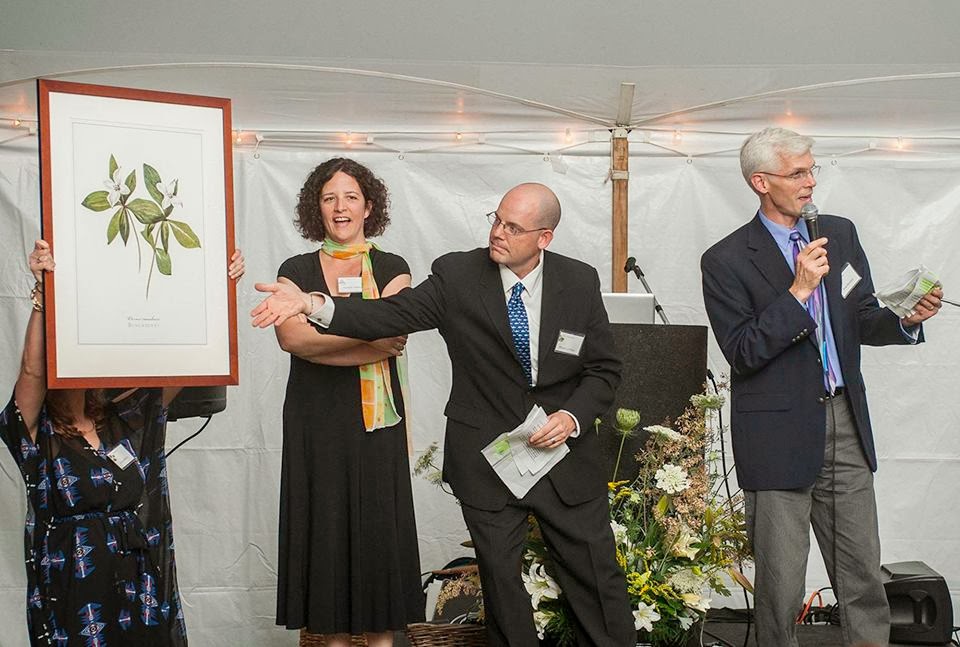
Live auction in support of an extension of the BioTrails project to include 
the plants of Acadia National Park. Karen James is second from the left. 
Photo by Michael York for MDIBL.

When did you first discover BHL?

I was a postdoc at the Natural History Museum in London from 2003-2010. The museum was one of the founding members, so I have known about it from the very beginning. I started using it more regularly in 2009, in relation to my interest in Charles Darwin.  At the time, I was the science coordinator for the NHM’s Darwin200 campaign, and I’ve found countless uses for it since then.

What is your opinion of BHL and how has it impacted your research?

View Full Size Image
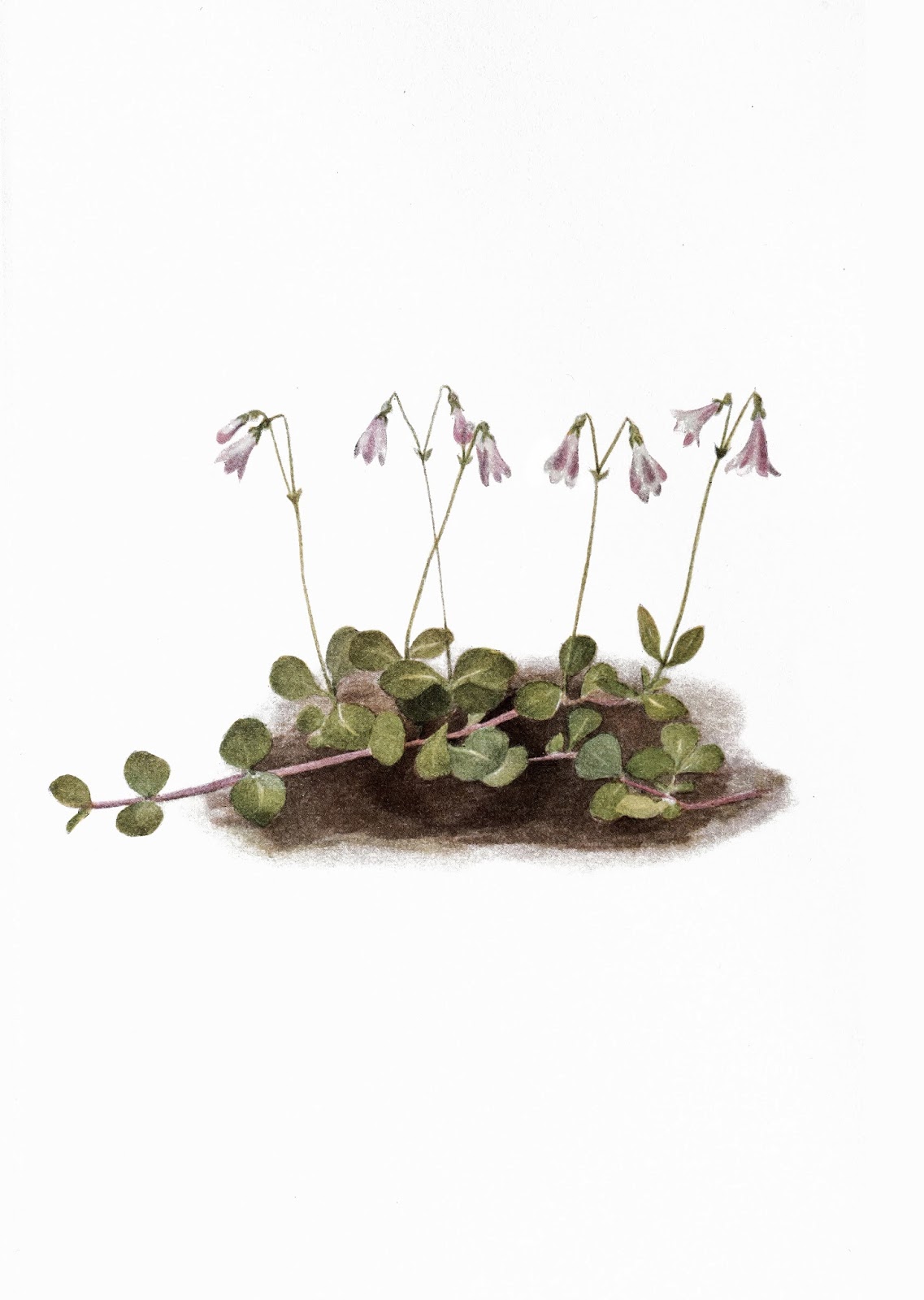
Twinflower (Linnaea borealis) by Mary Vaux
Walcott. 1925. North American Wild Flowers.
Washington, D.C., 1925. (Photographed by
Michael York for MDIBL at Thuya Garden library.)  

The BHL provides a much-needed service – free access to a wide range of natural history publications including artwork. As I mentioned, I’ve used it in a number of different contexts to support and inform my work. One of these was a fundraising campaign is to support an extension of my NSF-funded project called BioTrails. BioTrails combines DNA-based species identification (‘DNA barcoding’) with citizen science in Acadia National Park. The project uses DNA barcoding to validate identifications of invertebrate animals collected by citizen scientists in support of research on the impacts of environmental change. I’d like expand the project to the plants of Acadia National Park, and have been exploring some nontraditional funding avenues for this including private donations and crowdfunding.

I needed some visually compelling images – ideally in the public domain – of some of Acadia’s plants to illustrate our fundraising materials. A colleague of mine at MDIBL discovered a wonderful five-volume book of botanical plates – North American Wild Flowers by Mary Vaux Walcott  – at a local botanical garden. There were a number of Acadia species in the book, and we hired a professional photographer to capture digital images of some of them, but I wanted more. I scoured BHL for high-resolution scans of illustrations not only by Walcott but also by others (Walcott didn’t paint every species I wanted to include). In the end, I had sourced beautiful, high-resolution, public-domain botanical illustrations of 25 of Acadia’s most iconic plant species. We had the white-balance adjusted so they all matched, and we added both common and scientific names to each. We held a live auction at MDIBL’s annual gala to support the project; each high-bidder received a large, framed print of one of the illustrations, and everyone went home with a package of notecards. We’ll be able to re-use these resources for the crowdfunding campaign I’m hoping to launch in the next few weeks, just in time for the holidays.

How often do you use BHL?

Twice a month, but occasionally much more intensively if I’m researching something.

View Full Size Image
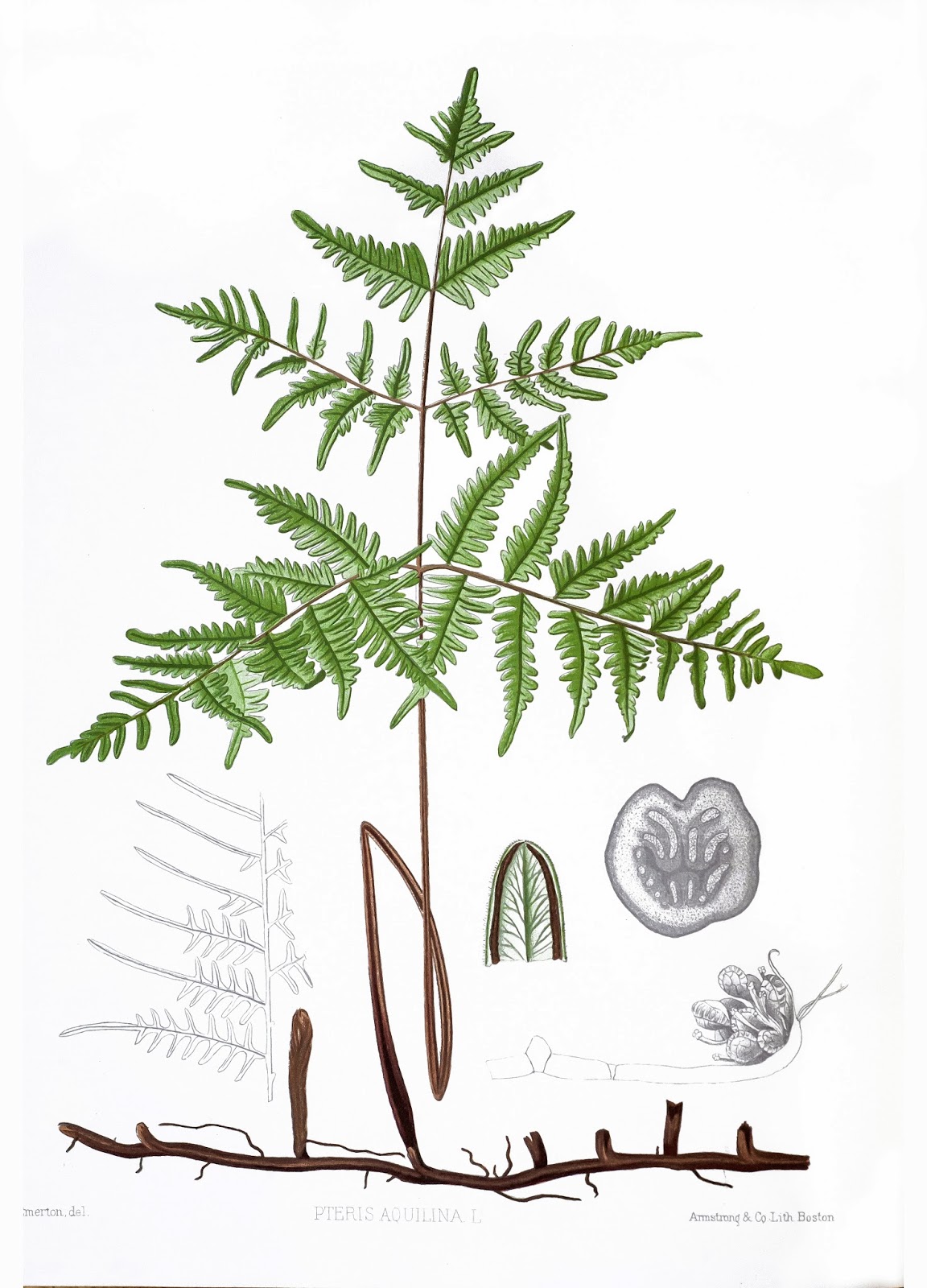
Bracken fern (Pteridium aquilinum) by J. H.
Emerton and C. E. Faxon, C. E. in D. C. Eaton.
1879. The Ferns of North America. Salem. 1879.
(Photographed by Michael York for MDIBL at
Thuya Garden library.) 

How do you usually use BHL?

For research I usually just read online, but when I want high-resolution images I select pages to download.

What are your favorite features/services on BHL?

Being able to search by taxonomic name is HUGE. I wouldn’t have been able to find the images for my project without this.

If you could change one thing about BHL, what would it be, or what developmental aspect would you like the BHL team to focus on next?

I’d like to be able to quickly and easily search for text in the volume I’m browsing.


If you had to choose one title/item in BHL that has most impacted your research, or one item that you prefer above any other in BHL, what would it be and why?

I already mentioned North American Wild Flowers by Mary Vaux Walcott.   Another important one for me has been The British Flora by William J. Hooker (4th edition); I used it extensively researching a book chapter I’m writing on repeating Charles Darwin’s 1855 survey of the plants in a meadow near his home.


November 15, 2013by sayeedmd
Blog Reel

Happy Birthday to John Torrey!

It’s hard to imagine how the wild, western terrain of the United States looked just 200 years ago—try to replace the suburban communities, bright lights, interconnected highways, and towering buildings with the uninhibited growth of native plants in considerable number and variety occupying undeveloped and spacious lands. The pioneers that ventured beyond the Mississippi into this vast unknown were exalted as executors of manifest destiny, responsible for territorial expansion of the fledgling county. But for John Torrey, he saw this point in history not as an opportunity to advance American boundaries, but as the precise moment to advance scientific progress.
View Full Size Image
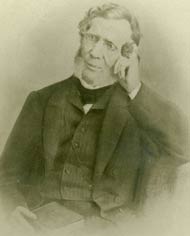
A portrait of the birthday boy, John Torrey.
From the New York Botanical Garden’s
John Torrey Papers collection.

Torrey was a different kind of pioneer, not an explorer, preferring instead the excitement of discoveries made under the microscope, to which he dedicated his life and his passions. So, this week we take a break from the regular Book of the Week posts to recognize Torrey on his 217th birthday for the significant contributions he made to botany, chemistry, and our understanding of North American flora.

Torrey was born August 15, 1796, in New York City to an established New England family, Captain William Torrey and Margaret Nichols. As a young man, Torrey showed great curiosity and interest in many subjects, but especially mechanics, thinking he might become a machinist. But when his father was appointed as Fiscal Agent of the State Prison in Greenwich, Torrey had a chance encounter with prisoner, and botanist in his own right, Amos Eaton. Eaton provided rudimentary instruction to Torrey, but, most significantly, awakened a zeal for the subject that remained with him throughout his life.

At first Torrey sought to cultivate this passion primarily as a leisure activity and pursued a medical degree, graduating and starting a moderately successful practice. But during his studies, Torrey made time to cofound the Lyceum of Natural History, now the New York Academy of Science; began documenting the plants in his vicinity; and published his first tome, “A Catalogue of Plants Growing Spontaneously Within Thirty Miles of the City of New York.”

His numerous correspondences with prominent scientists of the day can be viewed in the BHL and reflect the reach he had in contemporary academia, including contributions to the Smithsonian Institution, the American Philosophical Society, the New York Botanical Gardens, and the National Academy of Sciences at Washington, D.C.

Torrey was drawn to botany, but definitely not to fieldwork. He enjoyed the comforts of home and “considered it a great hardship to be sent after dark in the country.” So Torrey stayed in New York during Stephen Long’s exploration of the Rocky Mountains. And he also didn’t join John Frémont’s expedition to the same range. But that didn’t stop him from using the data and samples collected during Long and Frémont’s travels to name and describe thousands of new species and varieties of plants.

 
View Full Size Image
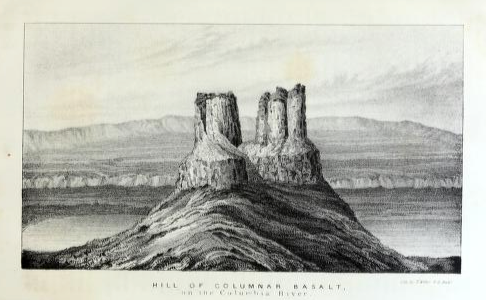
Torrey preferred his bed to landscapes like this one at the Hill of Columnar Basalt, 
illustrated during the 1842 Frémont expedition. 
 

Some of the most notable works he authored include “Flora of the Northern and Middle Sections of the United States,” his extensive two-volume “Flora of the State of New York,” and the joint piece he wrote with Asa Gray “Flora of North America,” which was considered one of the most authoritative works on North American plants up to that time.

Torrey was known as a professor, botanist, chemist, and mineralogist and remembered for identifying, describing, and classifying much of what inhabited the rugged frontier. He was a pioneer for the American scientific community with the fundamental contributions he made to botanical knowledge and institutions. The last line in Torrey’s obituary by friend, co-author, and protégée Asa Gray perfectly encapsulates this lasting legacy:
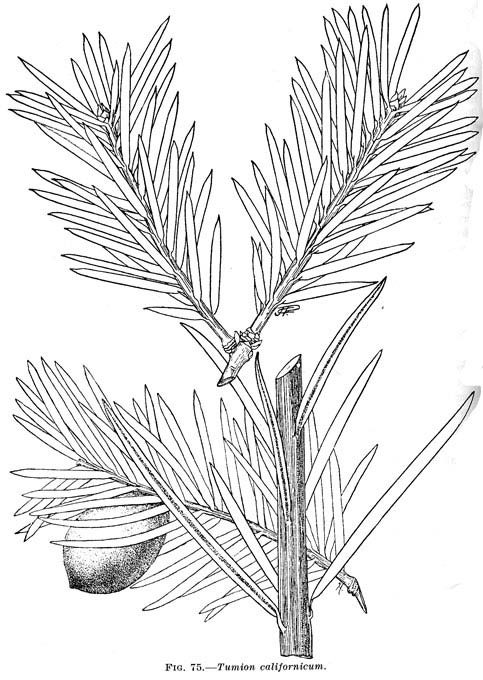
“Thirty or forty years ago, a new and remarkable evergreen tree was discovered in our own Southern States, which it was at once determined should bear Dr. Torrey’s name. More recently a congener was found in the noble forests of California. Another species had already been recognized in Japan, and lately a fourth in the mountains of Northern China. All four of them have been introduced and are greatly prized as ornamental trees in Europe. So that, all round the world, Torreya taxifolia, Torreya Californica, Torreya nucifera, and Torreya grandis—as well as his own important contributions to botany, of which they are a memorial—should keep our associate’s memory as green as their own perpetual verdure.”
Couldn’t say it better than that. Happy birthday, John Torrey!


View Full Size Image
Torreya Californica, one of the legacy trees named in honor of Torrey, 
from trees.stanford.edu.

References:

  •  John Torrey. (2013). In Encyclopædia Britannica. Retrieved from http://www.britannica.com/EBchecked/topic/600140/John-Torrey
  • Polunin, Nicholas. (1944). John Torrey: American Botanist. Nature, 154(3905), p. 294-295.
  • Gray, Asa. (1873, April). Memoir or John Torrey 1797-1873. Speech read before the National Academy.


August 15, 2013by scstanley
Page 13 of 15« First...10«12131415»

Help Support BHL

BHL's existence depends on the financial support of its patrons. Help us keep this free resource alive!

search

About BHL

The Biodiversity Heritage Library (BHL) is the world’s largest open access digital library for biodiversity literature and archives. BHL operates as a worldwide consortium of natural history, botanical, research, and national libraries working together to digitize the natural history literature held in their collections and make it freely available for open access as part of a global “biodiversity community.”

Join Our Mailing List

Sign up to receive the latest news, content highlights, and promotions.

Subscribe Now

Subscribe to Blog via Email

Enter your email address to subscribe to this blog and receive notifications of new posts by email.

Join 319 other subscribers

Subscribe to Blog Via RSS

Subscribe to the blog RSS feed to stay up-to-date on all the latest BHL posts.

Access RSS Feed

Inspiring Discovery through Free Access to Biodiversity Knowledge.

The Biodiversity Heritage Library makes it easier than ever for you to access the information you need to study and explore life on Earth…for free, anytime, anywhere.


64+ Million Pages of
Biodiversity Literature Online.

EXPLORE

Tools and Services
to Transform Research.

EXPLORE

300,000+
Illustrations on Flickr.

EXPLORE

ABOUT | HARMFUL CONTENT | PRIVACY | SITE MAP | TERMS OF USE