Biodiversity Heritage Library - Program news and collection highlights from BHL
  • Home
  • News
  • Featured Books
    • All Featured Books
    • Book of the Month Series
    • BHL at 20
  • User Stories
  • Campaigns
    • Fossil Stories
    • Garden Stories
    • Monsters Are Real
    • Page Frights
    • Her Natural History
    • Earth Optimism 2020
  • Tech Blog
  • Visit BHL
Home
News
Featured Books
    All Featured Books
    Book of the Month Series
    BHL at 20
User Stories
Campaigns
    Fossil Stories
    Garden Stories
    Monsters Are Real
    Page Frights
    Her Natural History
    Earth Optimism 2020
Tech Blog
Visit BHL
  • Home
  • News
  • Featured Books
    • All Featured Books
    • Book of the Month Series
    • BHL at 20
  • User Stories
  • Campaigns
    • Fossil Stories
    • Garden Stories
    • Monsters Are Real
    • Page Frights
    • Her Natural History
    • Earth Optimism 2020
  • Tech Blog
  • Visit BHL
Biodiversity Heritage Library - Program news and collection highlights from BHL
Blog Reel, Featured Books

Our Experience Digitising a Rare Book for the Biodiversity Heritage Library

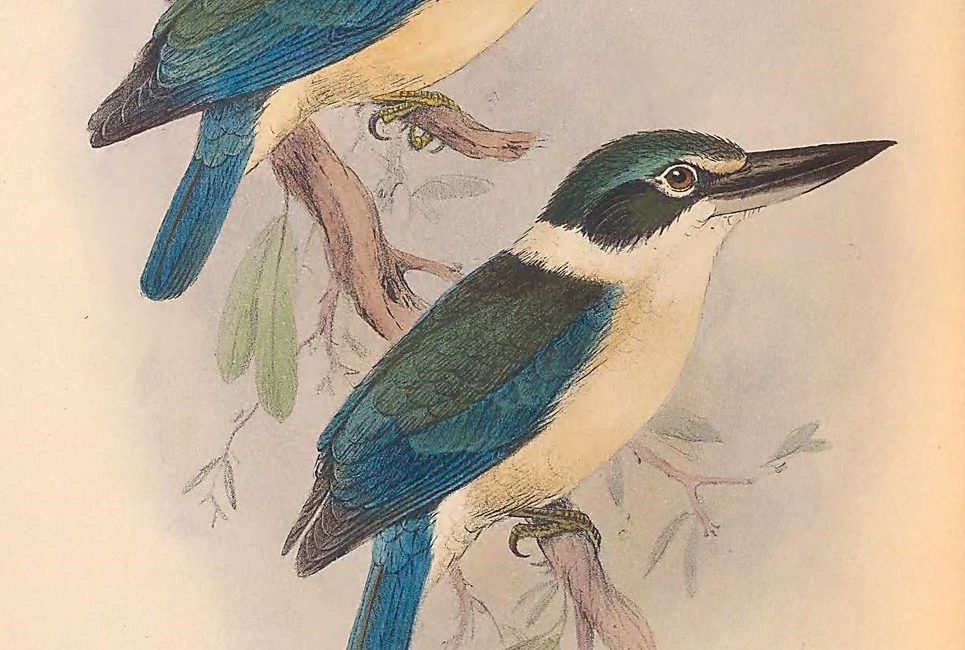
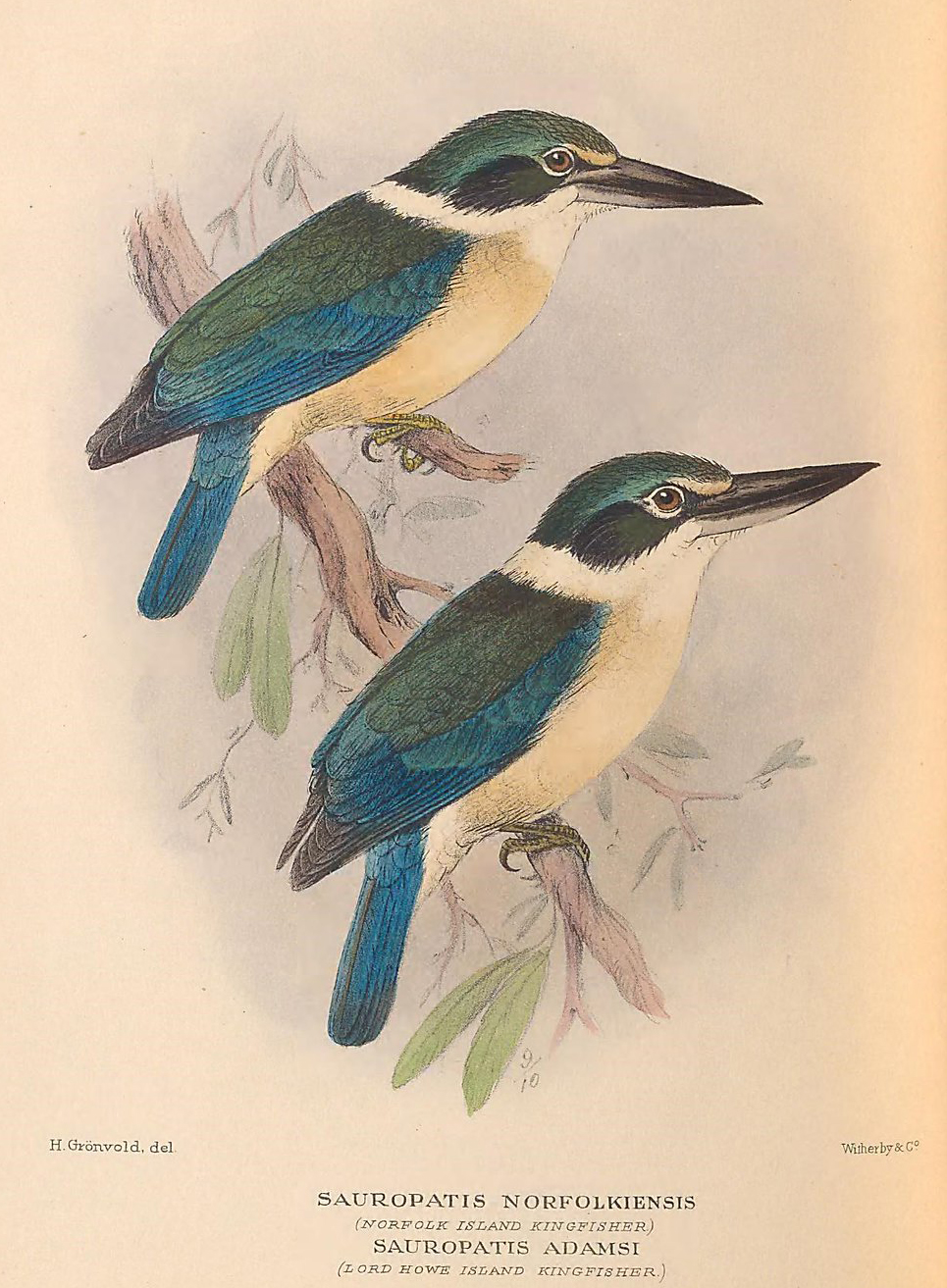
illustration of blue and green birds

Plate 18. Mathews, Gregory M. (Gregory Macalister). The birds of Norfolk & Lord Howe Islands and the Australasian South Polar quadrant. 1928. Art by Henrik Grönvold. Contributed in BHL from Museums Victoria.

Recently, we spent three weeks on student placement at Museums Victoria Library and were fortunate enough to be involved with the digitisation of the beautiful title The birds of Norfolk & Lord Howe Islands and the Australasian South Polar quadrant by Gregory M. Mathews. It was an eye-opening experience, making us aware of the patience and attention to detail that is a necessity for book digitisation.

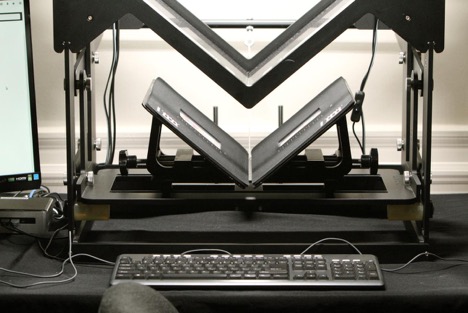
In order to get suitably high resolution scans, a Zeutschel OS 16000 scanner is primarily used for Biodiversity Heritage Library (BHL) digitisations at Museums Victoria. The Australian branch of the project, BHL Australia, digitises the collections of 25 organisations across the country. It is hosted by Museums Victoria and funded by the Atlas of Living Australia.

As this title was rare, it was essential to handle it gently, and to protect the spine from excessive pressure. To ensure minimal impact, we wore gloves when in contact with the book, and scanned one page at a time. We scanned all right-hand pages first, before turning the book around and repeating the process for the left-hand pages. The glass pane normally used to pin pages down on ordinary books can’t be used on rare books, so getting pages to lie flat was a challenge in itself! This digitisation project has given us a chance to see a lot of this beautiful title, with its multitude of breathtaking illustrations.
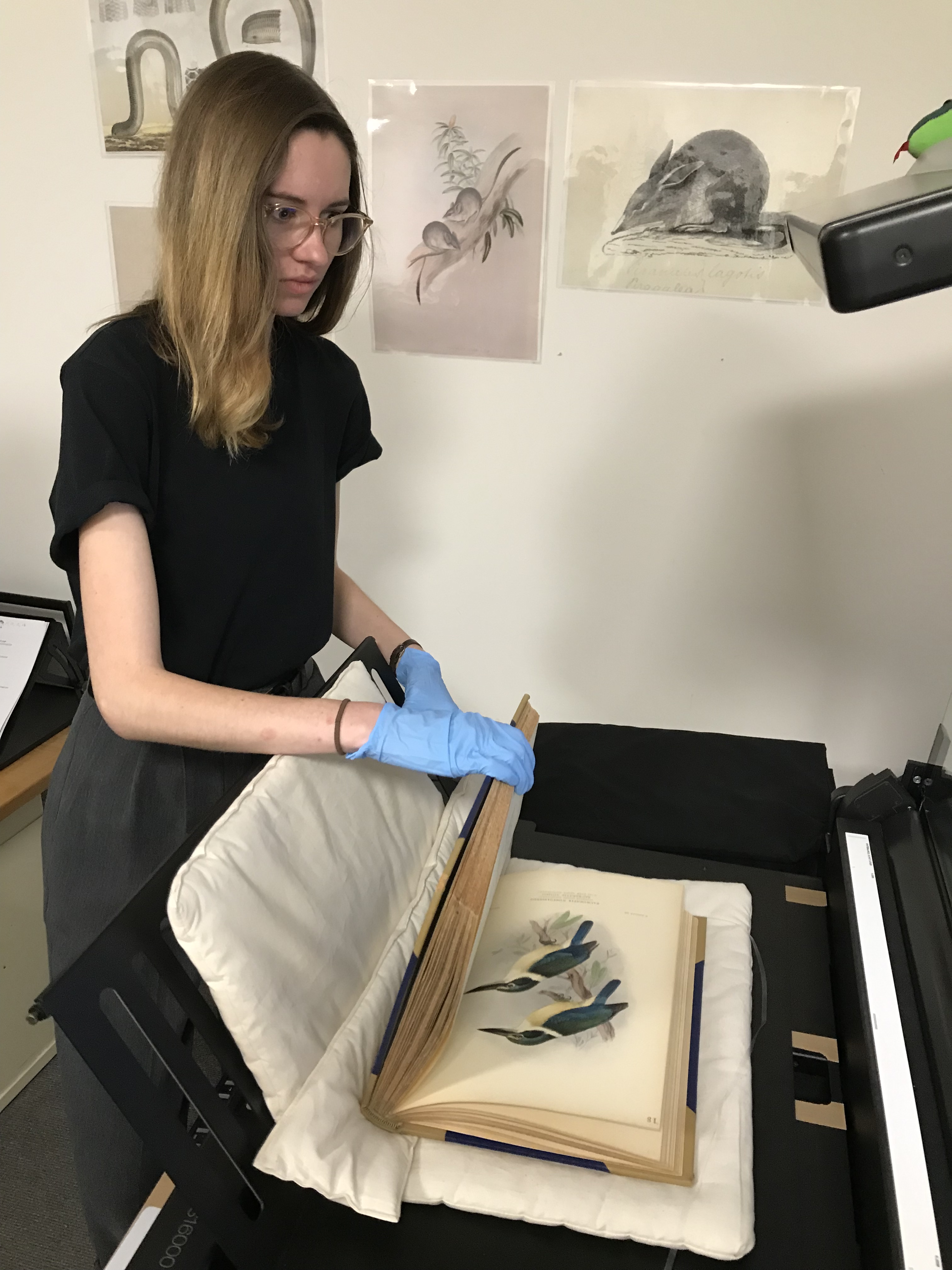
Marina Hunt scanning The birds of Norfolk & Lord Howe Island for the Biodiversity Heritage Library.

Both of us are currently working towards the Master of Information Management qualification at RMIT University. Being involved with the BHL project has been invaluable to our understanding of the challenges and importance of digitisation. As digital technology continues to develop and evolve, digitisation provides exceptional opportunities for further access and research. As such, digitisation is likely to play a significant role in our careers in information management into the future, and we are highly grateful to have had the opportunity to be involved in such a project.
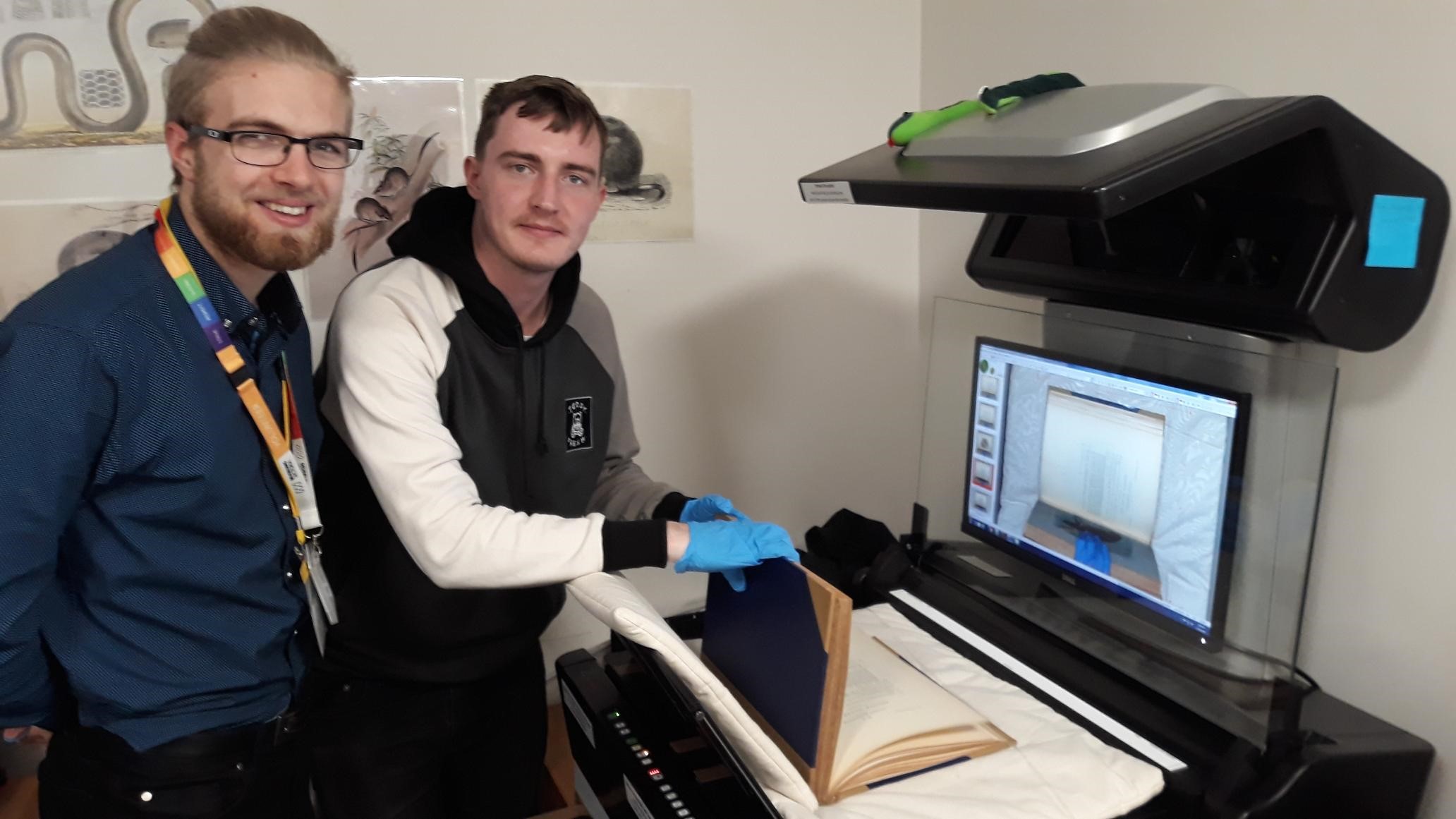
Brendan with Chris Healey, Technical Support Officer BHL.jpg

Brendan Bachman with BHL-AU’s Technical Support Officer Chris Healey.

The birds of Norfolk & Lord Howe Islands and the Australasian South Polar quadrant is a remarkable guide to the birds of some of Australia’s more outlying territories, specifically Norfolk and Lord Howe Islands and areas of the Antarctic. Published in 1928, the title contains detailed description and distribution information for a number of species, as well as beautiful illustrations of each bird. Many of the species covered in the book were extinct when the book was published, while others became extinct in the decades afterwards. This adds to the unique nature of this title. Only 225 copies of this work were produced, and around 57 are currently held in library collections worldwide.
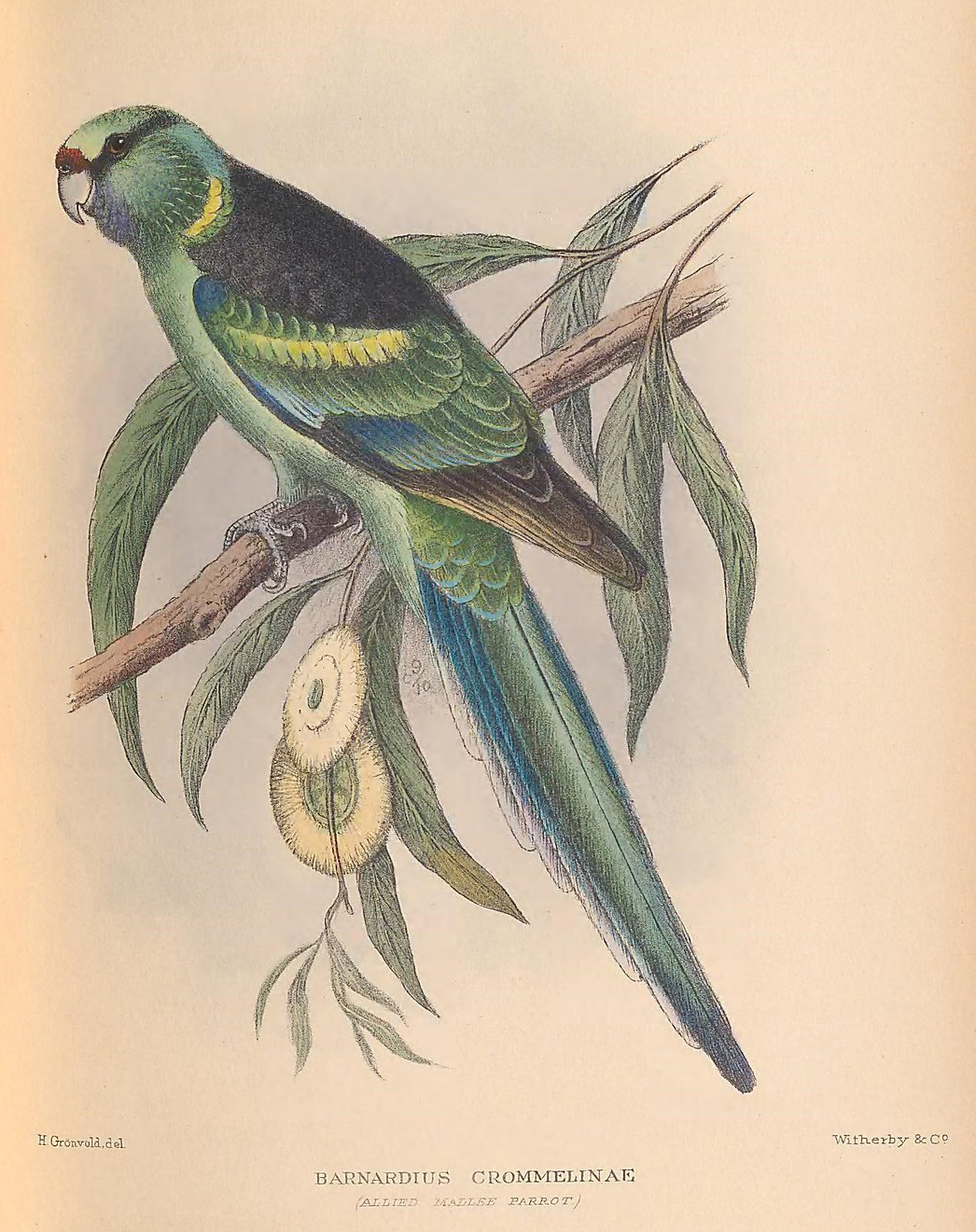
illustration of green bird

Plate 43. Mathews, Gregory M. (Gregory Macalister). The birds of Norfolk & Lord Howe Islands and the Australasian South Polar quadrant. 1928. Art by Henrik Grönvold. Contributed in BHL from Museums Victoria.

The book was written by noted ornithologist Gregory Macalister Mathews. Born in 1876, Mathews grew up in Australia before moving to England, where his interest in birds became an obsession. Over his life Mathews contributed to a significant number of ornithological works, but none drew more attention than his Birds of Australia (which is also available on the BHL website, the final volumes of which were digitised by the BHL Australia project at Museums Victoria). During the creation of Birds of Australia, he regularly worked 16 hour days, and through the course of this work he acquired 30,000 skins and around 5,000 books.

Despite dedicating much of his life to their study, Mathews “was not really interested in the living bird”, and was “essentially a bibliophile” (Kloot, 1986). Mathews stressed that The birds of Norfolk & Lord Howe Islands was not a supplement to his far more famous Birds of Australia, but he did believe that the birds discussed should be considered part of any list of Australian birds. Certainly, it follows the same format, has the same publisher and should be considered a related work.
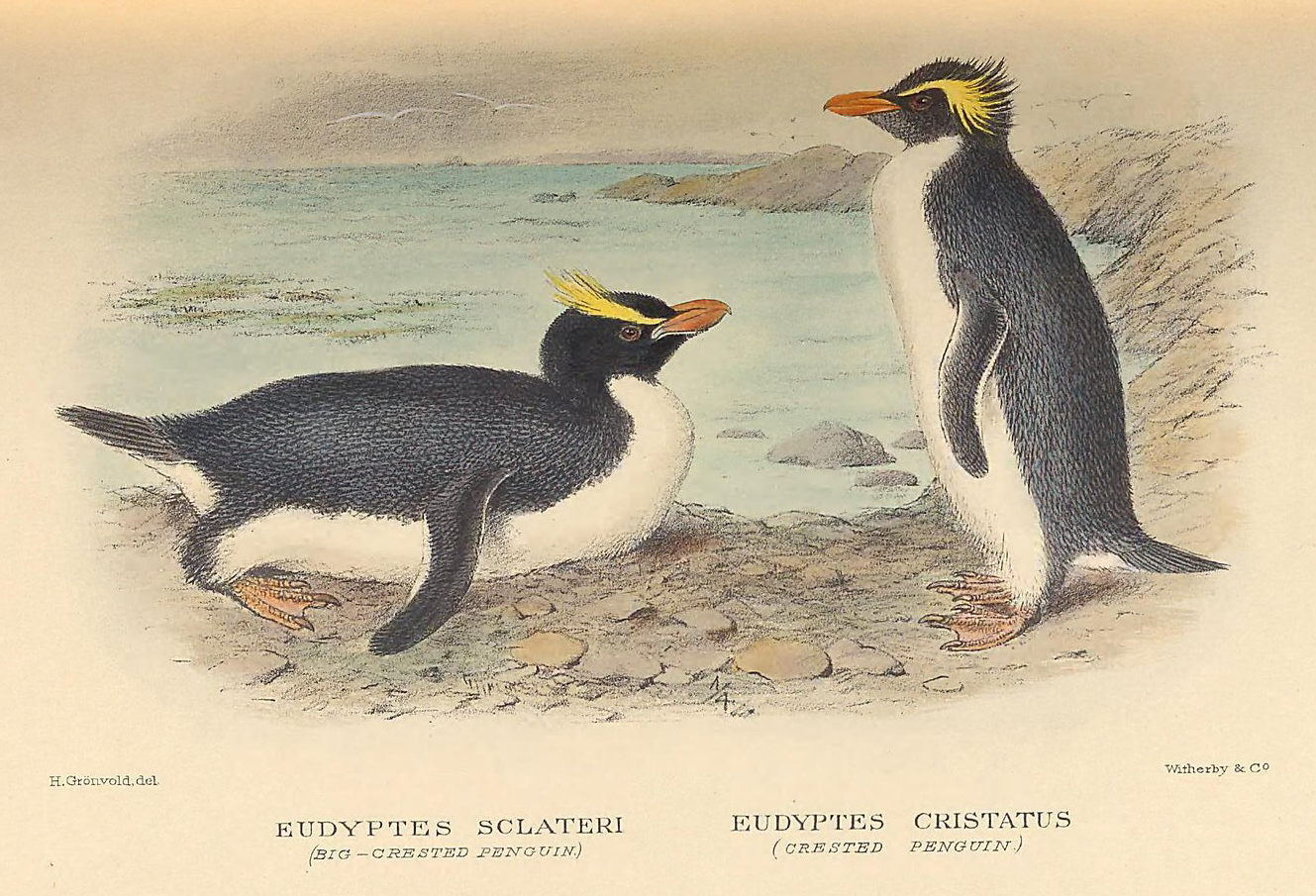
illustration of penguins

Plate 32. Mathews, Gregory M. (Gregory Macalister). The birds of Norfolk & Lord Howe Islands and the Australasian South Polar quadrant. 1928. Art by Henrik Grönvold. Contributed in BHL from Museums Victoria.

The birds of Norfolk & Lord Howe Islands includes 45 hand-coloured lithographs and monochrome plates, with this work being one of the last publications worldwide to include hand-coloured plates (Pasquier & Farrand 1991). These were the work of two illustrators — Henrik Grönvold and Frederick William Frohawk.

Grönvold was a well-known Danish naturalist and lithographer who predominately illustrated birds and their eggs. Born in 1858, he worked on a wide range of ornithological works, including Birds of Africa and The British Warblers, and he created a remarkable 600 plates for Mathew’s Birds of Australia.

Frederick William Frohawk was born in 1861 and had an interest in illustration and natural history from an early age, catching a rare pale clouded yellow butterfly at the age of seven. Despite losing virtually all sight in one eye during his school years, he went on to become a noted illustrator of butterflies and birds. Among his notable works is The complete book of British butterflies, which he both wrote and illustrated.

References

Kloot, T 1986, ‘Mathews, Gregory Macalister (1876–1949)’, Australian Dictionary of Biography, http://adb.anu.edu.au/biography/mathews-gregory-macalister-7517

Pasquier, R. F., & Farrand, J., Jr 1991, Masterpieces of Bird Art: 700 Years of Ornithological Illustration. Abbeville Press. pp. 180–181.
October 10, 2019by Joel Richard
BHL News, Blog Reel

Live Digitisation for BHL at the Long Night of Museums in Berlin

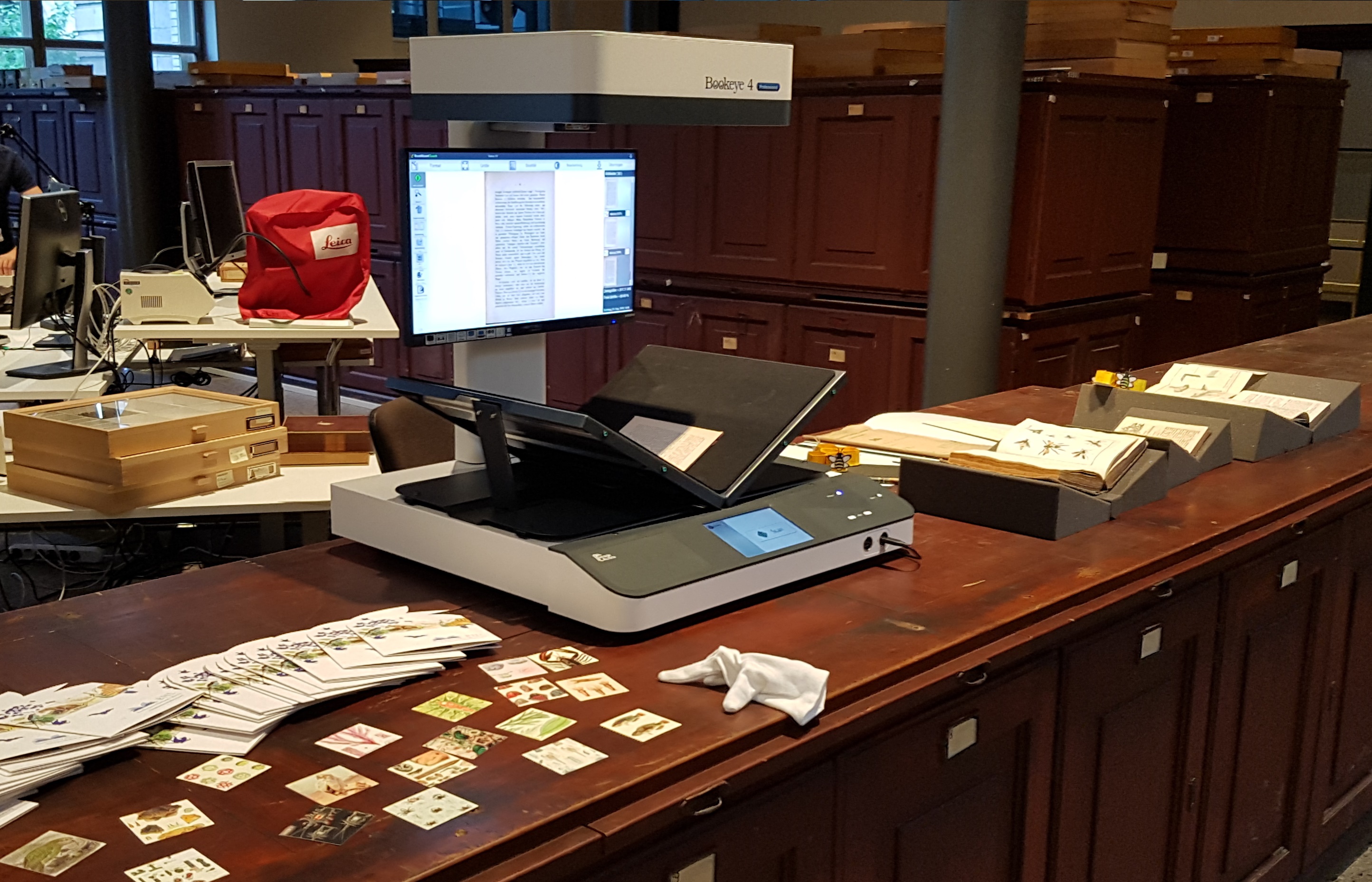
At the Long Night of the Museums on 31 August 2019, the library of the Museum für Naturkunde presented its digitisation activities around a current project to index its Drory Library. In addition to particularly impressive books from the collection, which are already accessible in the Biodiversity Heritage Library, two books were digitised which were not yet available in BHL.

LNDM_01.jpg

Fig. 1. Display during the Long Night of the Museum 2019. Photo by: Elisa Herrmann | MfN.

Long Night of the Museums

The Long Night of the Museums is a popular series of events and a highlight in Berlin’s cultural calendar. This year, 40,000 visitors accepted the invitation of 75 Berlin museums, which opened their collections and offered deeper insight into their research. For the second time in a row, the Museum für Naturkunde was the most popular destination with 10,500 visitors. Current scientific research and internal developments were presented to the public at 20 events. The latter included in particular the digitisation of the museum’s collections. In addition to insect boxes and archival material, the focus was also on the library collection. The Museum für Naturkunde has been a Member of BHL since 2018 and will primarily digitize for BHL.

The Drory Library

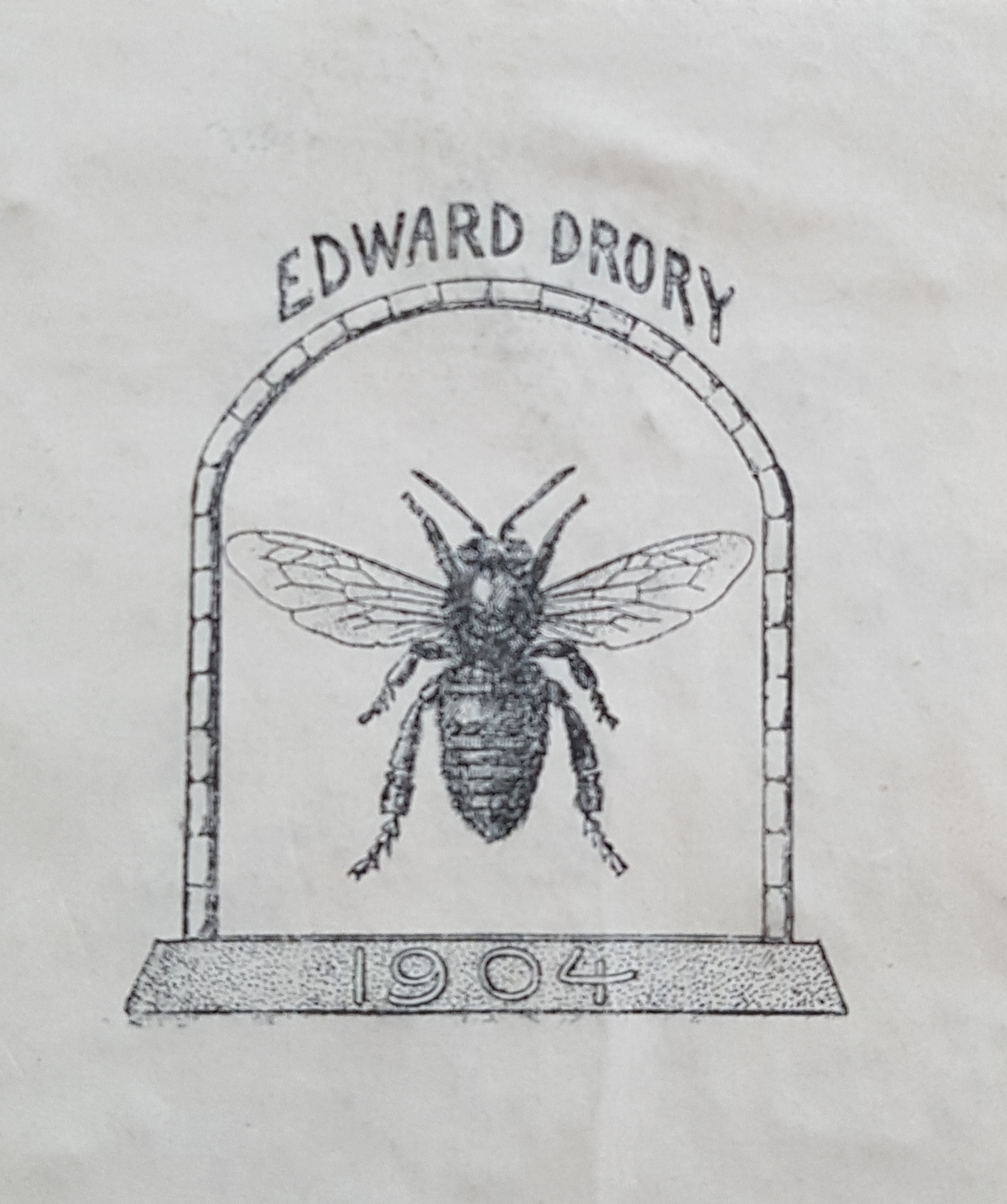
The Drory Library is a sub-collection of the Historic library collection and of special importance. It is the library of Edward Drory (1844-1904), an enthusiastic beekeeper but also an important Berlin personality. Edward Drory was a successful entrepreneur and owner of the English Gas Institute in Berlin. In his time, he owned the “largest apist library” with publications beginning in 1470, although most of the collection dates from the 18th and 19th centuries. In 1904, Edward Drory donated his beekeeping library to the Royal Zoological Museum in Berlin with the agreement that all volumes would receive an ex-libris (fig. 3) and be displayed in the library of the Hymenoptera collection.

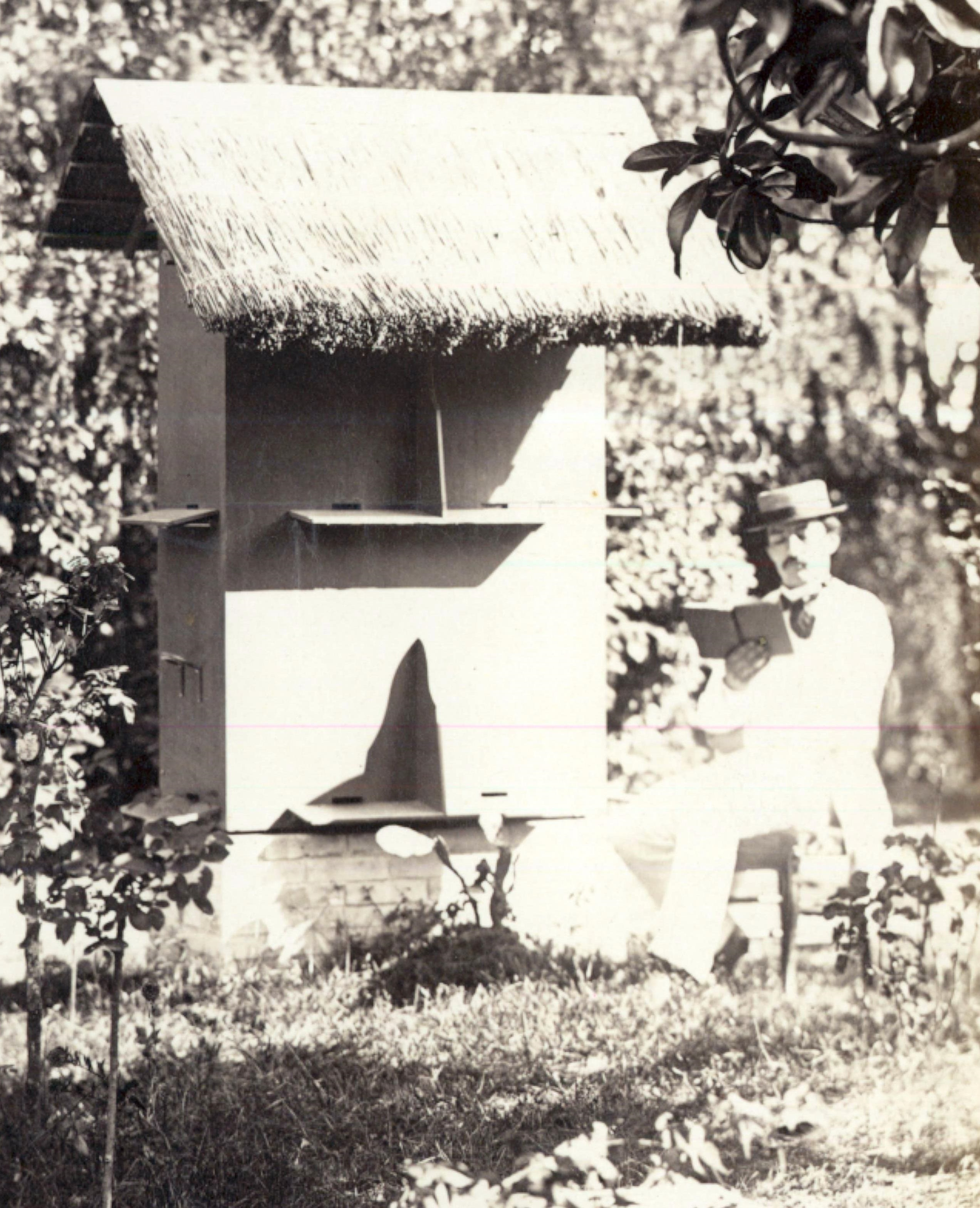
026 Eduard Drory Bienenhaus 1874_smal.jpg

Fig. 2. Edward Drory in front of his apiary, 1874. Photo Courtesy: Viola Richter | MfN.

LNDM_05.jpg

Fig. 3. Ex-Libris of the Dory library. Photo courtesy: Elisa Herrmann | MfN.

The collection comprises approximately 2,400 volumes — of which about 800 are journals and about 1,600 are monographic volumes (around 480,000 pages) — and contains literature in various languages — German, French, English, Latin, Italian, Dutch, Spanish, Finnish, and Polish.

The long-term goal is to digitize the Drory library and the corresponding card catalogue completely or at least partially and to make it available as a research basis or scientific-historical contribution for a number of disciplines — history of science, biology (species diversity of bees, taxonomic findings, endangerment of honeybees by humans), medicine (allergies to bee venoms), pharmacy & naturopathy (bee venom, propolis as a means of treatment) and agricultural sciences (economic significance of bees). To reach this goal, the library started an indexing project with a grant from the von Pawel-Rammingen Stiftung that will answer the most important questions before starting the digitization, such as the exact scope, conservatory condition and availability on the Internet.

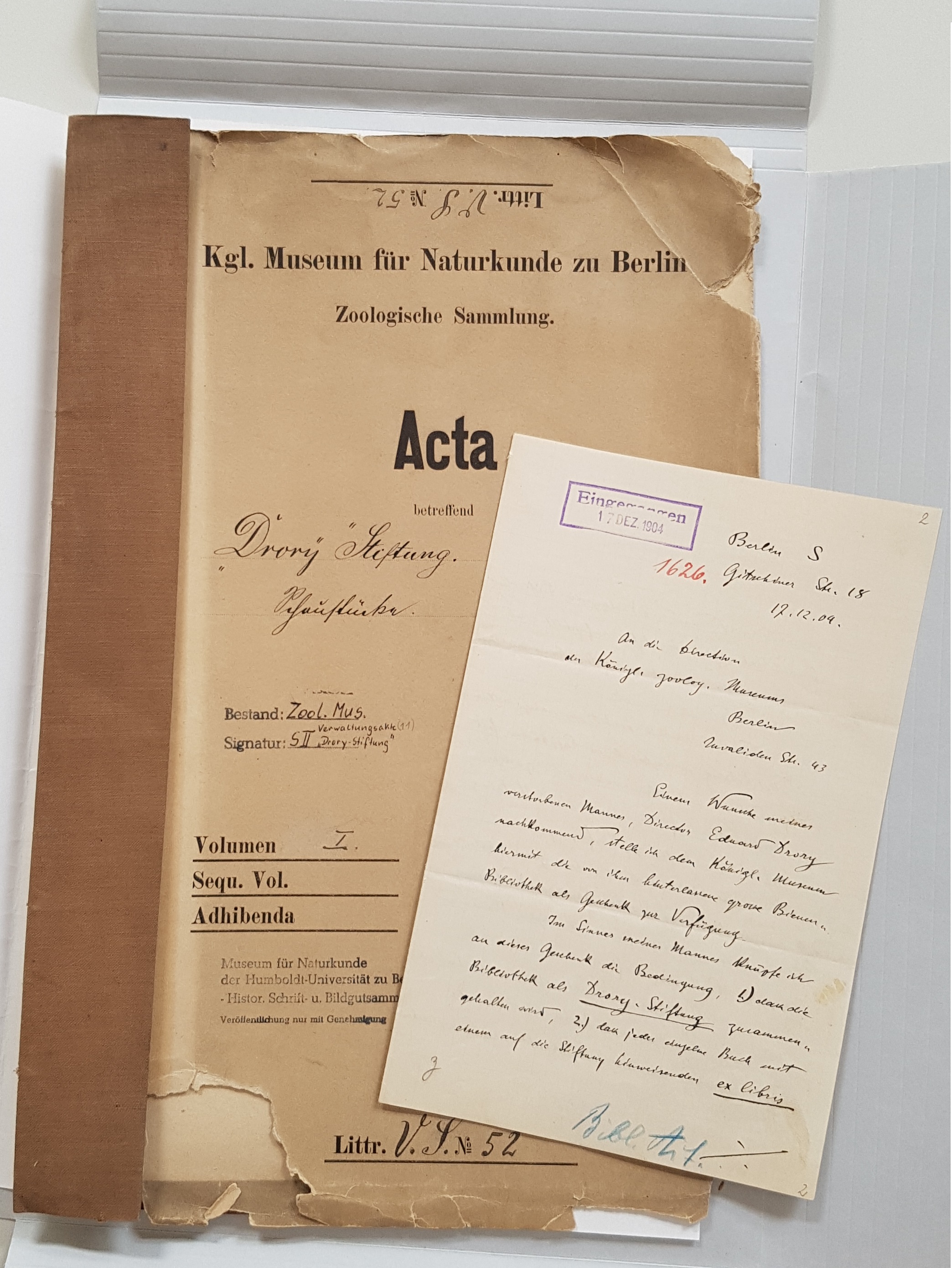
LNDM_02.jpg

Fig. 4. File from the Historical archive of the Museum für Naturkunde Berlin, documenting the handover of the Drory library to the museums. Photo by: Elisa Herrmann | MfN.

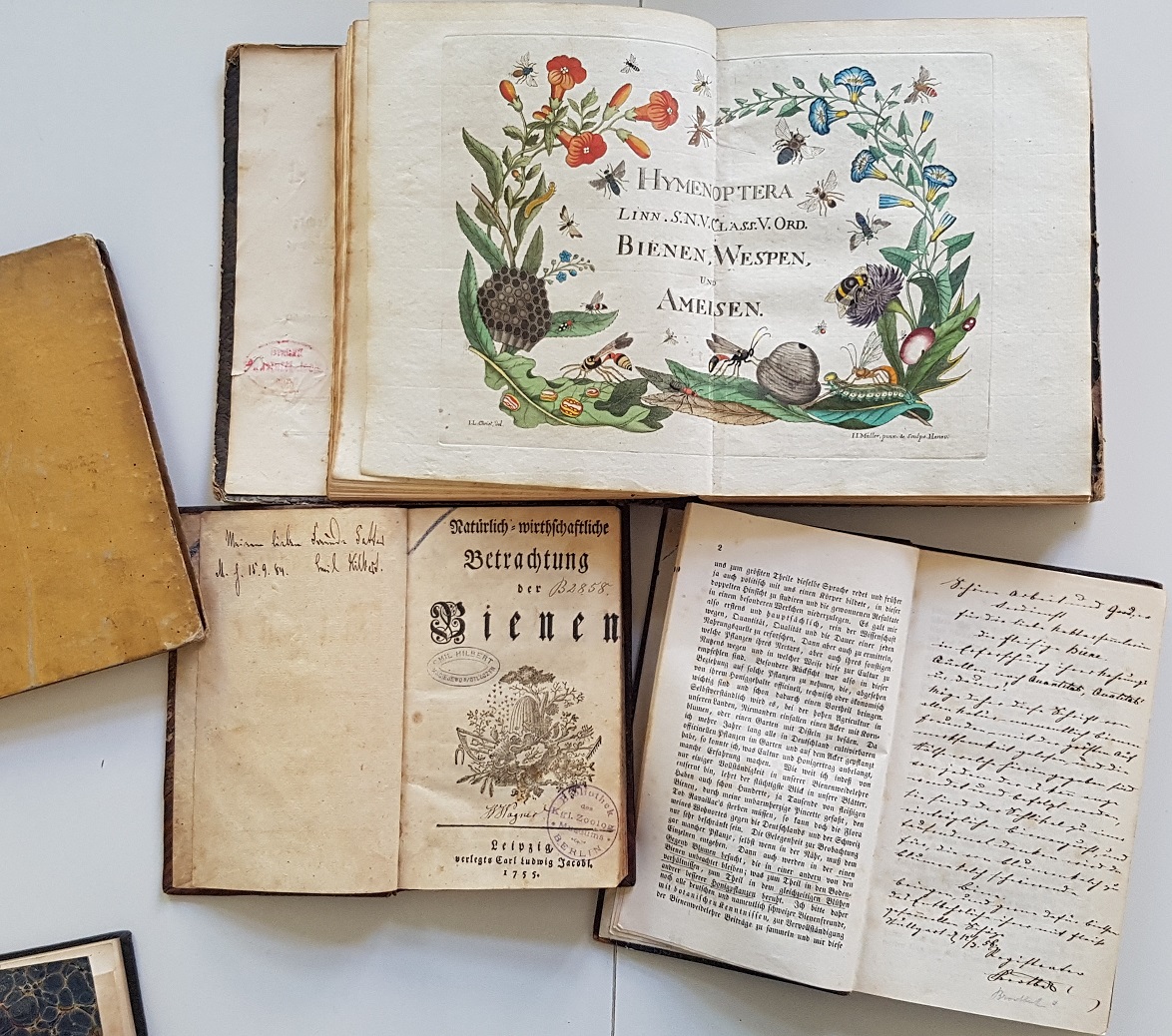
LNDM_04.jpg

Fig. 5. Books from the Drory library that went on display during the Long Night of the Museum 2019. Photo by: Elisa Herrmann | MfN.

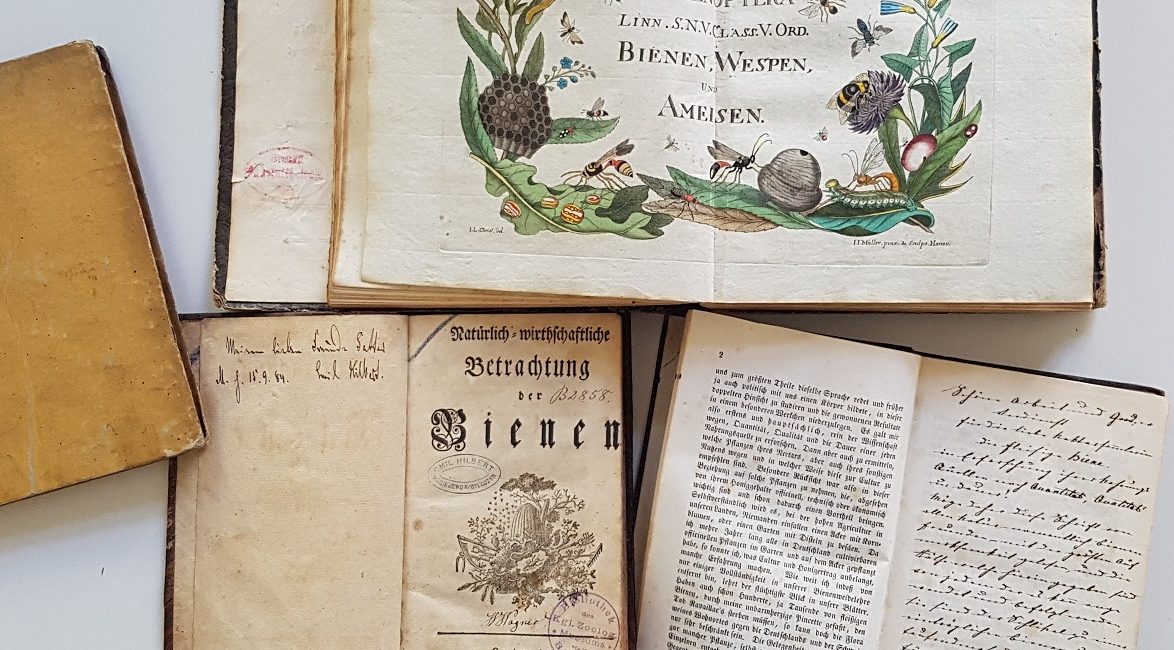
During the Long Night, selected works were presented to the visitors, including a copy of Naturgeschichte, Klassification und Nomenclatur der Insekten vom Bienen, Wespen und Ameisengeschlecht […] by J. L. Christ from 1791, as well as books on beekeeping, bee-friendly plants and philosophical-literary essays on bees, in order to illustrate the range of the Drory Library. One highlight on display was the archive file with the documents for the handover of the library to the museum from 1905 (fig. 4).

Many books from the collection are not yet in BHL; two of them were scanned in front of the visitors that night. They are currently undergoing final quality control and will soon be uploaded to BHL as the first digital collections of the Museum für Naturkunde.

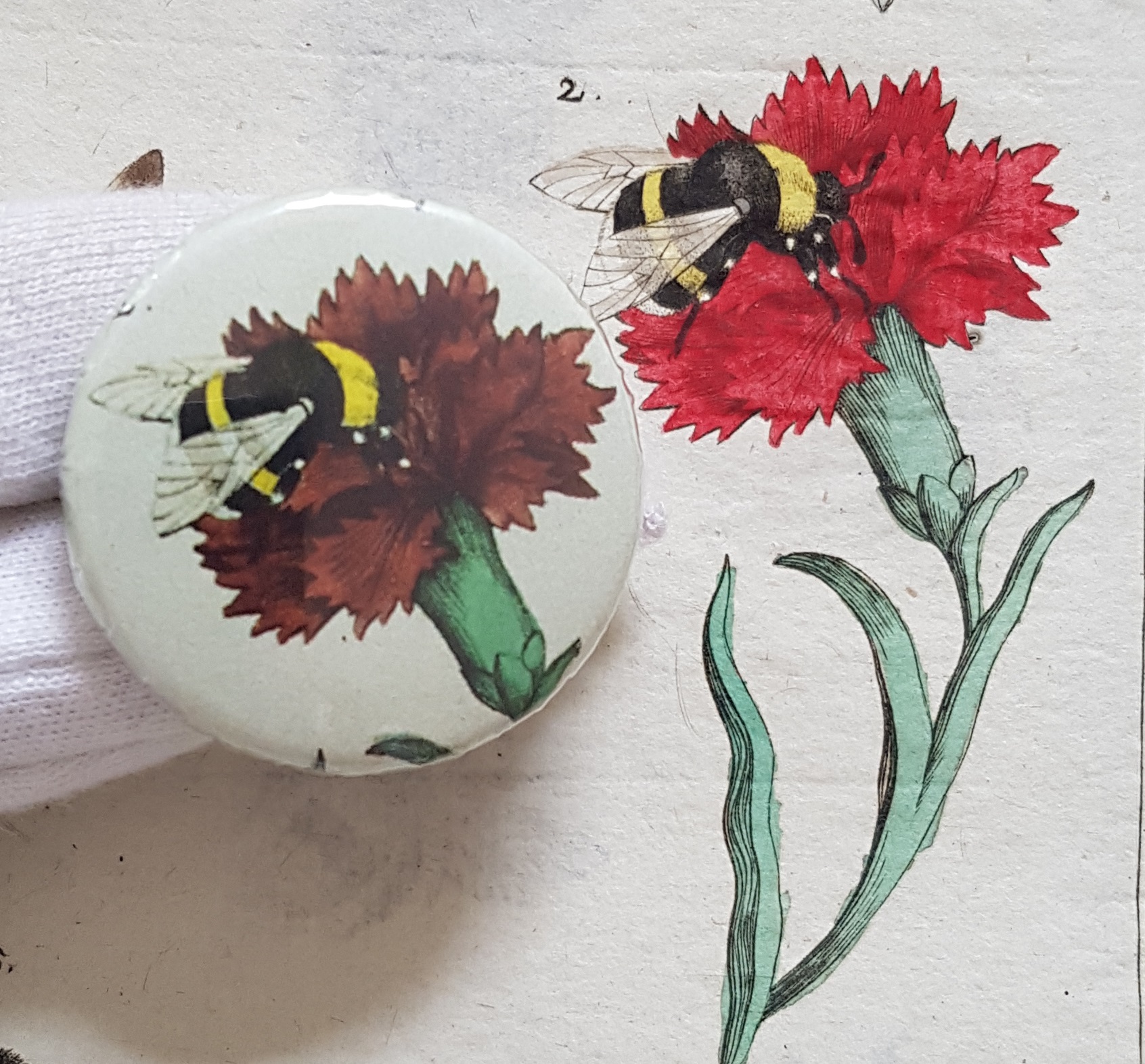
However, at the event visitors were already able to select motifs from digitised material that they took home with them as buttons (fig. 6) and BHL’s motif cards also enjoyed great popularity.

LNDM_03.jpg

Fig. 6. Buttons with motifs chosen from digitised BHL material next to a copy of the original. Photo by: Elisa Herrmann | MfN.

The library team answered many interesting questions about the materials and technology used and was thus able to present not only the library collection but also the digitisation infrastructure and the rich treasure of BHL. Many visitors did not yet know about BHL and were enthusiastic about the prospect of over 54 million freely accessible pages — whether for scientific work, homework or to marvel at the beautiful illustrations.

Digitisation at the Museum für Naturkunde

The Museum für Naturkunde sees itself facing great opportunities to digitally open up its collection through an investment of several million euros by the federal and state governments. The library thus has the opportunity to scan a large number of holdings for BHL and its own digital collections to make them accessible to the scientific community and the general public. The highest priority is given to unique material, such as handwritten entry books, followed by holdings that are not yet available in BHL.

September 19, 2019by Joel Richard
Blog Reel, Featured Books

Lloyd Library and Museum

View Full Size Image
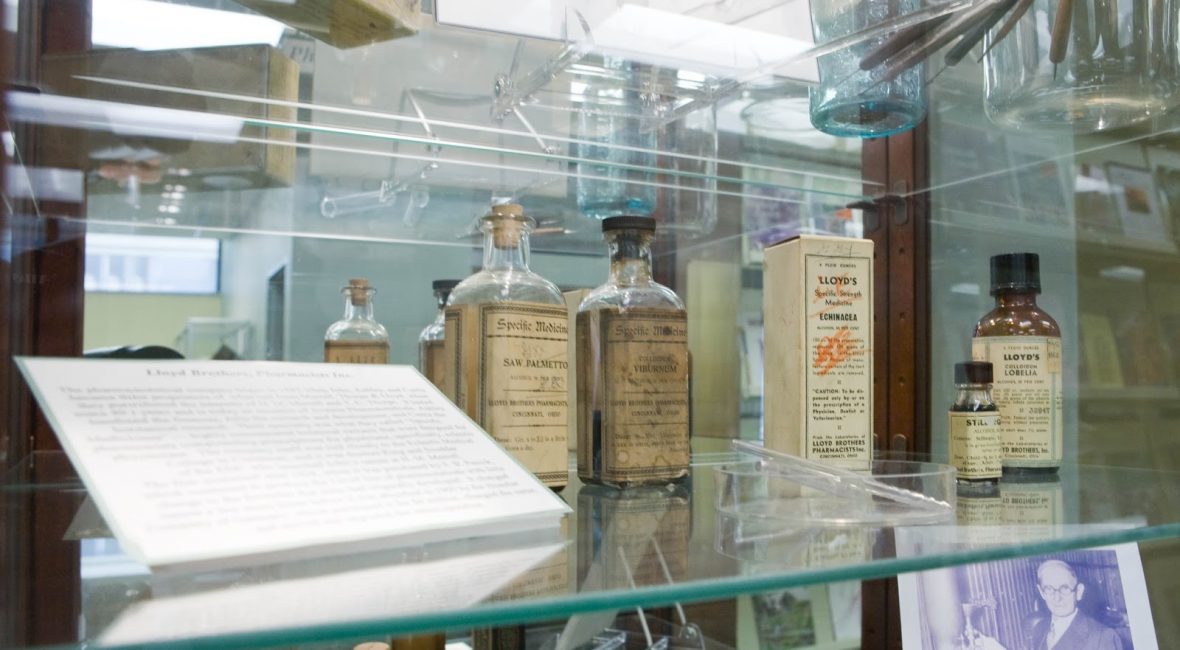
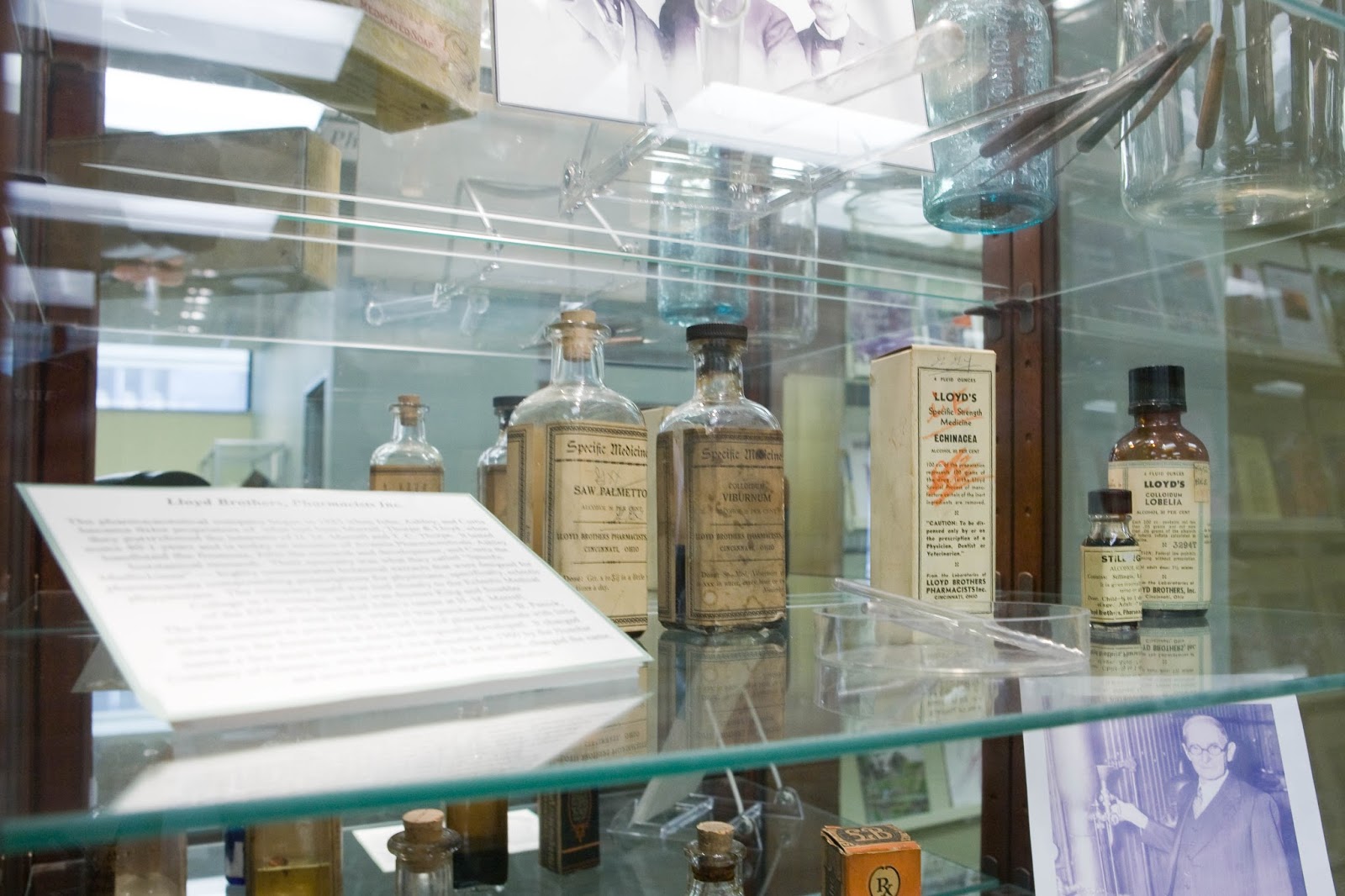
“Paraphernalia,” photo by Cindi (Flickr, Creative Commons)

Over the course of the Expanding Access to Biodiversity Literature (EABL) project, contributing organizations have shipped material to Internet Archive scanning centers around the country. A few have scanned their own material, and a few more have used third-party commercial services. One EABL contributor did things a little differently.

Betsy Kruthoffer, Librarian and Rare Books Cataloger at the Lloyd Library and Museum, selected a number of important titles from the library’s collection that were not in BHL. After weighing various scanning options, she got in touch with the digital lab at the Public Library of Cincinnati and Hamilton County (PLCH), which had done good work for a Lloyd patron the previous year (and, conveniently, is located right down the street). PLCH agreed to do the scanning, with the understanding that the digitized books would also be made available in a PLCH online collection.

Once the scanning was complete, Betsy considered loading all of the images onto an external hard drive and mailing it to Mariah Lewis, the EABL Metadata Specialist, in order to contribute the scans to BHL. After learning about Macaw (BHL’s metadata and upload software), however, she decided to take a stab at the uploading herself–with great success. BHL’s collection is richer thanks to her thorough work.

History of the Lloyd Library and Museum

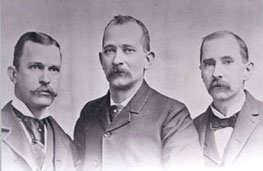
The Lloyd Library began with three brothers: John Uri, Nelson Ashley, and Curtis Gates Lloyd. According to tradition, the first books in the library were Edward Parrish’s A Treatise on Pharmacy (1864 edition) and George Fownes’ A Manual of Elementary Chemistry, Theoretical and Practical (1864 edition). These books accompanied John Uri Lloyd, the oldest of the three, when he went to Cincinnati to become a pharmacist in 1864. His brothers soon followed after.

Eventually, the brothers joined together to form Lloyd Brothers, Pharmacists, Inc. John Uri’s small library grew with the company; in 1901, it got its own building (it would move several times in following years), and in 1919, a trust was established to ensure that the library would continue and be open to the public. A new structure was erected in 1970 adjacent to the one that had housed the library for 75 years. This is where the library remains today.

View Full Size Image
The Lloyd brothers. http://www.lloydlibrary.org/history/lloyd%20pharmacy.html.

The Lloyd Library has one of the preeminent North American collections related to pharmacology and natural products, but it covers many related subjects as well: botany, pharmacognosy, herbal and alternative medicine, horticulture, eclectic medicine (an herbal medicine school), and sectarian medicine (predecessor to homeopathy), among others.

Curtis Gates Lloyd, an avid mycologist, amassed a considerable herbarium, nicknamed the “mushroom museum.” After his death in 1926, the botanical specimens were given to the University of Cincinnati, and the mushrooms went to the U.S. Department of Agriculture. A small collection of medicine bottles and pharmacy implements remains; these comprise the Lloyd Museum, which features permanent and rotating exhibits.

For more detailed accounts of the Lloyd brothers, their company, and the history of the Lloyd Library and Museum, visit the Lloyd’s website.

Rare Books from the Lloyd Library

Of the titles digitized by PLCH, Betsy Kruthoffer considers one the most important: John Sibthorp’s Flora Graeca, published in 10 volumes from 1806 to 1840. This monumental work contains nearly a thousand color plates of the flora of Greece as surveyed in the late 18th century by Sibthorp and Ferdinand Bauer, who illustrated them. Sibthorp himself never lived to see the printed Flora–he died in 1797 of an illness contracted on one of his trips–but he provided for its publication in his will.

View Full Size Image
Sibthorp, John. Flora Graeca. v. 1 (1806). Contributed by the
Lloyd Library and Museum. https://biodiversitylibrary.org/page/54016367.

Betsy has recorded the fascinating story of how the Lloyd Library came to possess a first edition of the Flora Graeca, one of only 25 printed.

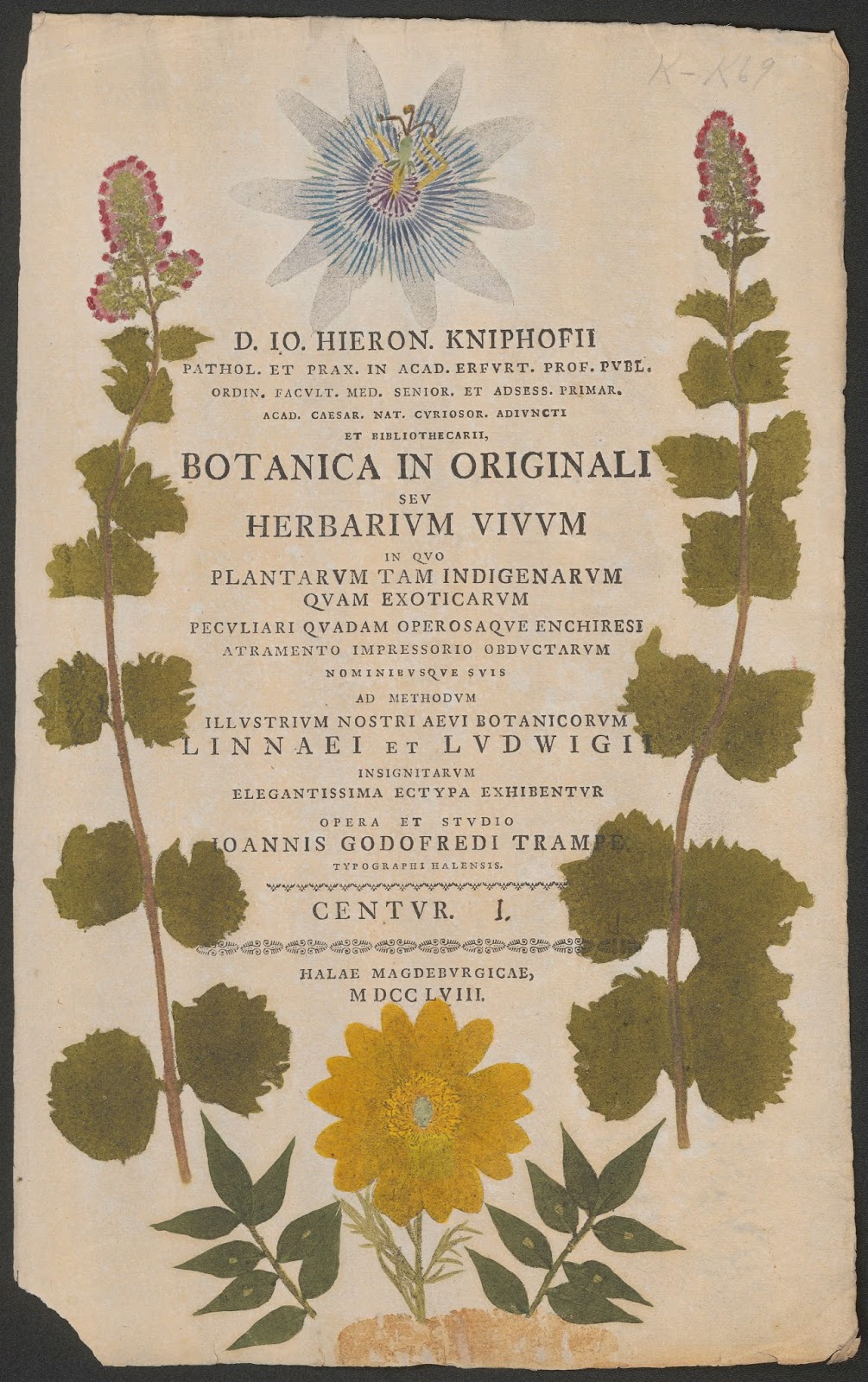
Another important title is Johann Kniphof’s Botanica in originali, published in 12 volumes (1758-1764). The work uses a technique called “nature printing,” which involves creating plates or engravings from direct impressions of actual plant specimens and using those plates to print images.

View Full Size Image
Kniphof, Johannes. Botanica in originali. v. 1 (1758). Contributed by the
Lloyd Library and Museum. https://biodiversitylibrary.org/page/53840216.

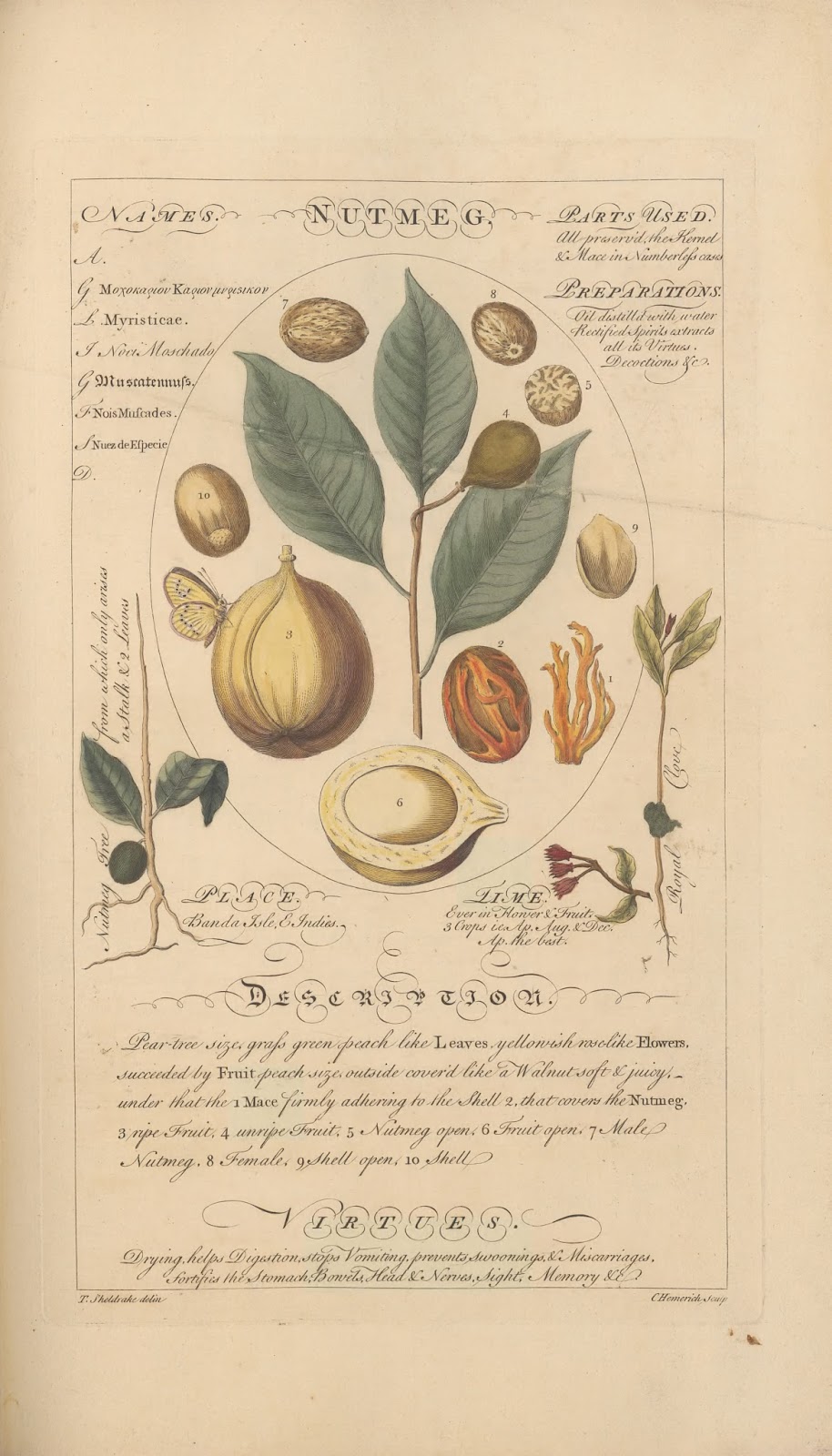
A third title, noteworthy for its illustrations (and its very long subtitle), is Timothy Sheldrake’s Botanicum medicinale : an herbal of medicinal plants on the College of Physicians list : describing their places of growth, roots, bark, leaves, buds, time of flowering, blossoms, flowers, stiles, chives, embrio’s, fruits, farina, colours, seeds, kernels, seed-vessels, parts used in medicine, preparations in the shops, medicinal virtues, names in nine languages : most beautifully engraved on 118 large folio copper-plates from the exquisite drawings of the late ingenious T. Sheldrake ; … To which is now added, his tables for finding the heat and cold in all climates that exotic plants may be raised in summer and preserved in winter (c. 1868).

Less an academic tome and more a physician’s quick-reference herbal, the Botanicum medicinale is organized into single-page summaries of each plant, with engraved text around a colored illustration.

View Full Size Image
Sheldrake, Timothy. Botanicum medicinale. c. 1868. Contributed by the
Lloyd Library and Museum. https://biodiversitylibrary.org/page/53779797.

The complete list of titles submitted by the Lloyd Library to BHL:

  • John Sibthorp’s Flora Graeca (1806-1840)
  • Johannes Kniphof’s Botanica in originali (1758-1764)
    • The index to the above work: Index universalis in omnes XII centurias Botanicae in originali D. Io. Hieron. Kniphofii seu Herbarii vivi (1767)
  • Timothy Sheldrake’s Botanicum medicinale (c.1768)
  • Maria Sybilla Merian’s Erucarum ortus, alimentum et paradoxa metamorphosis (1718)
    • To learn more about this pioneering naturalist, see Grace Costantino’s 2015 blog post, “From Early Women in Science to Ultraviolet Film: Using Art to Understand Insects“
  • Heinrich Witte’s Flora : afbeeldingen en beschrijvingen van boomen, heesters, éénjarige planten, enz., voorkomende in de nederlandsche tuinen (1868)

Thank you to Betsy Kruthoffer, the Lloyd Library, and the Public Library of Cincinnati and Hamilton County for working with EABL to make these historic works available to everyone.

October 19, 2017by eomeara
Blog Reel, Featured Books

Ex. Ex. Marks the Spot: bringing together primary and secondary sources on the United States South Seas Exploring Expedition of 1838-1842

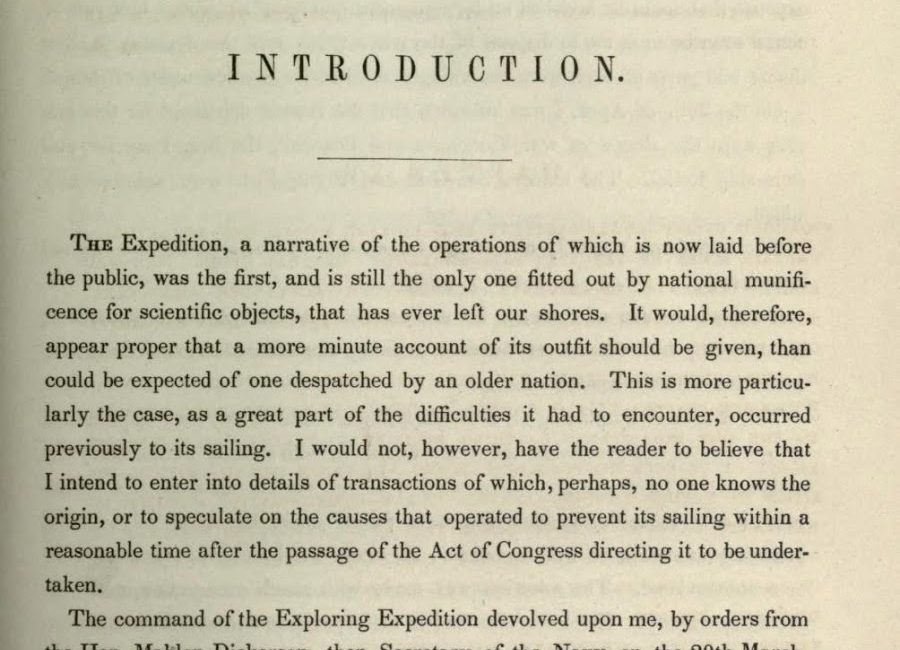
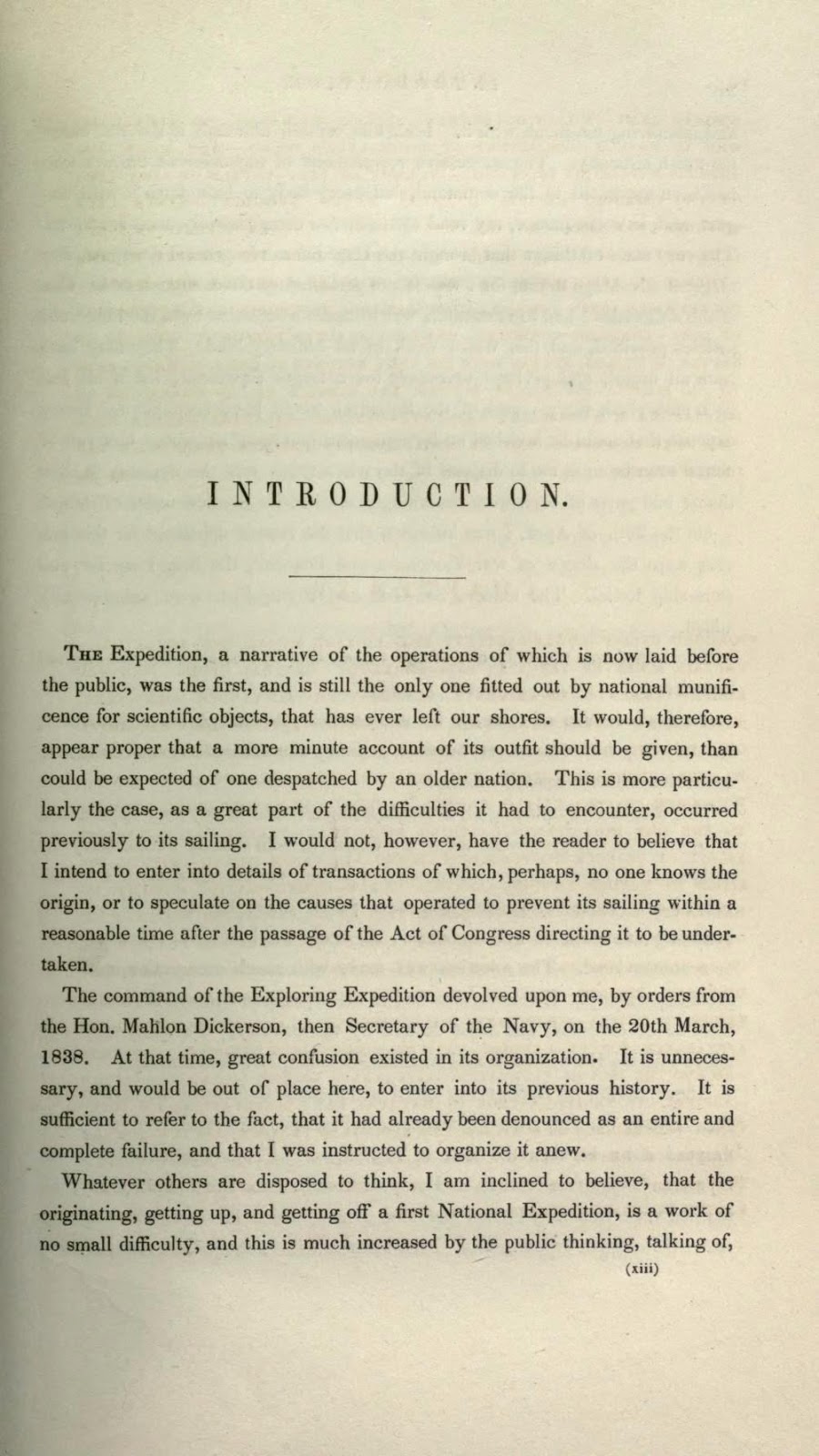
The United States South Seas Exploring Expedition of 1838-1842 was authorized by Congress in 1836 to observe the Pacific Ocean and South Seas. The four-year voyage — also referred to as the Wilkes Expedition or Ex. Ex. for shorthand — covered an expansive geographic region, including the Pacific Northwest, Fiji Islands, and South America. The expedition was under the command of Lieutenant Charles Wilkes of the Unites States Navy, and the resulting collection is thought to be one of the largest early natural history collections, weighing in at an estimated 40 tons. The collection was transferred to the Smithsonian Institution in 1857 and established what would eventually become the National Museum of Natural History. A narrative of the expedition was published in 1844, with a multi-volume publication on the results of the expedition published later.

View Full Size Image
Wilkes, Charles. United States Exploring Expedition. During the year 1838, 1839, 1840, 1841, 1842. Vol. 1 (1845). http://biodiversitylibrary.org/page/21175563.

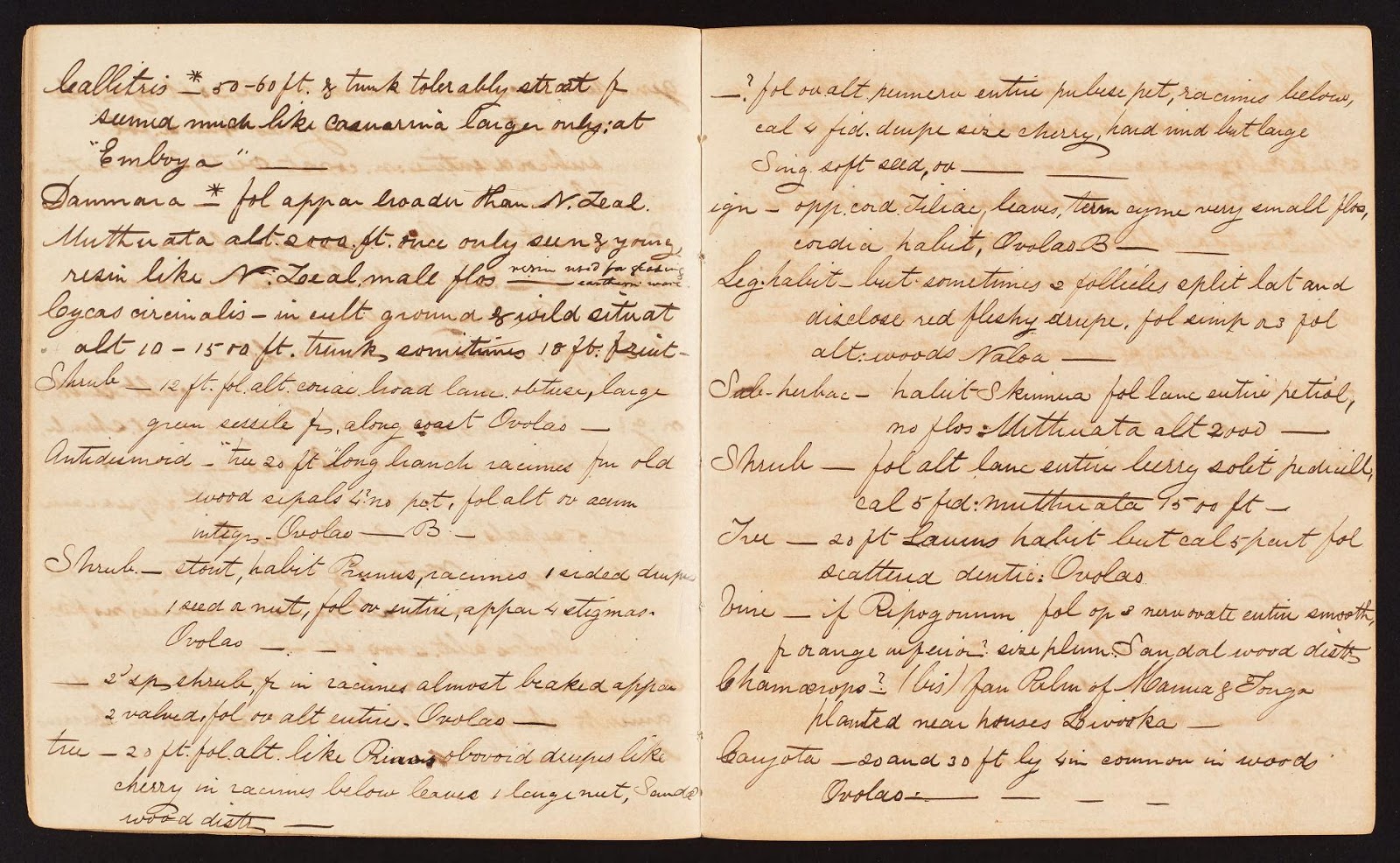
As we have mentioned before, it was an interest in identifying the original source material for the Ex. Ex. which really became a major incentive to establish what would become the Smithsonian Field Book Project. Over the course of the project, team members cataloged the Ex. Ex. field books in Smithsonian Institution Archives’ collection. Now as the Smithsonian Field Book Project team participates in the BHL Field Notes Project, this collection of original expedition notes is being digitized and published in BHL, giving researchers a way to view related content in one place.

View Full Size Image
Brackenridge, William D. Original notebooks of the botanist, volumes 13 – 14, Fiji Islands group. (1838-1842) http://biodiversitylibrary.org/page/53612590.

One of the sets of material SIA has digitized as part of the BHL Field Notes Project are the notebooks of William D. Brackenridge. Brackenridge was a gardener and nurseryman from Scotland who moved to the United States in 1837. Brackenridge became part of the Ex. Ex. as a result of Asa Gray resigning as Botanist of the expedition to take an academic position at the newly established University of Michigan. With Gray’s departure, William Rich was promoted from Assistant Botanist to Botanist, and Brackenridge was brought on to fill the assistantship role.

View Full Size Image
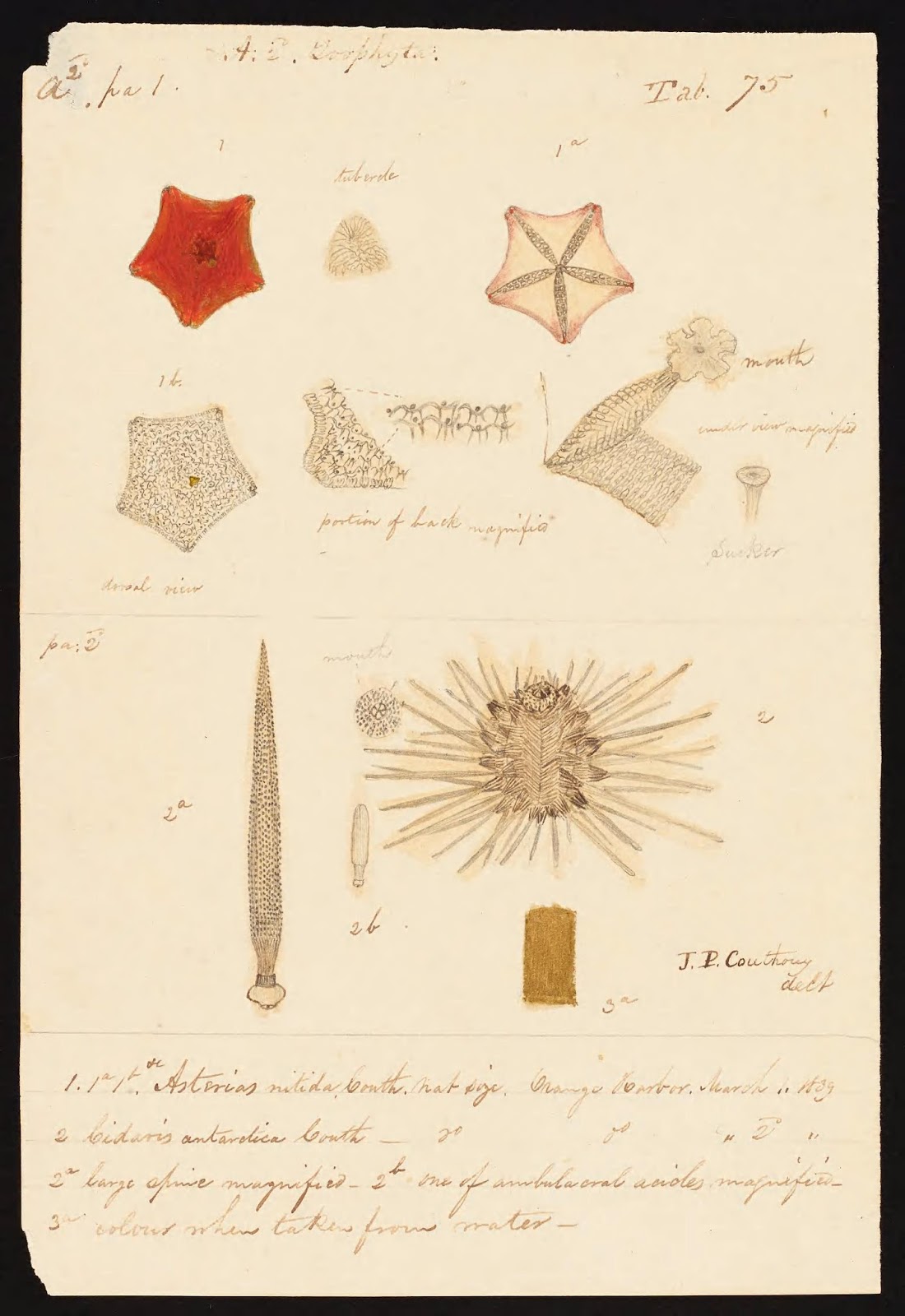
Drayton, Joseph. Botany: Echinoderms, drawings by Joseph Drayton. (1838-1839) http://biodiversitylibrary.org/page/53640152.

Also part of the expedition team were two illustrators, Joseph Drayton and Alfred T. Agate. As part of the BHL Field Notes Project, we have digitized a set of sea star and other marine drawings by Drayton. The drawings include a signature and date, and often additional notes on the location where the specimen was found. As far as we can tell, these illustrations were not used for reference in the multi-volume Expedition publication, making this set of drawings a particularly good example of how field notes can inform research in conjunction with traditionally published material.

Smithsonian Institution Archives still has several field books from the Ex. Ex. to digitize for the BHL Field Notes Project, so be sure to check back over the next few months to see our whole set.

The BHL Field Notes Project is funded by the Council on Library and Information Resources (CLIR).

References:
Finding Aid for “SIA RU007189, Brackenridge, William D (William Dunlop) 1810-1893, William Dunlop Brackenridge Papers, circa 1838-1875” 

Finding Aid for “SIA RU007186, United States Exploring Expedition (1838-1842), United States Exploring Expedition Collection, 1838-1885”

Philbrick, Nathaniel. “The Scientific Legacy of the U.S. Exploring Expedition.” The United States Exploring Expedition, 1838-1842, a Smithsonian Libraries Digital Collection. 

Walsh, Dr. Jane. “From the Ends of the Earth: The United States Exploring Expedition Collections”.” The United States Exploring Expedition, 1838-1842, a Smithsonian Libraries Digital Collection. 

August 10, 2017by mkahn
Blog Reel, Featured Books

George Engelmann’s Botanical Notes Can Now Be Seen!

The Missouri Botanical Garden (MBG), a partner in the Biodiversity Heritage Library Field Notes Project, has spent the last year digitizing the notebooks of George Engelmann.

George Engelmann assisted Henry Shaw, MBG’s founder, in establishing the Garden’s research arm and corresponding library. He arrived in Belleville, Illinois, sometime in the 1830s but soon moved to St. Louis where he set up practice as a physician. In the 1840s, Engelmann began corresponding with—and became a close friend and colleague of—Asa Gray at Harvard University, one of the best known botanists in the United States. This relationship, combined with his passion for plants of the newly opened American west, would lead to Engelmann becoming the principle coordinator for botanical collecting west of the Mississippi River.

View Full Size Image
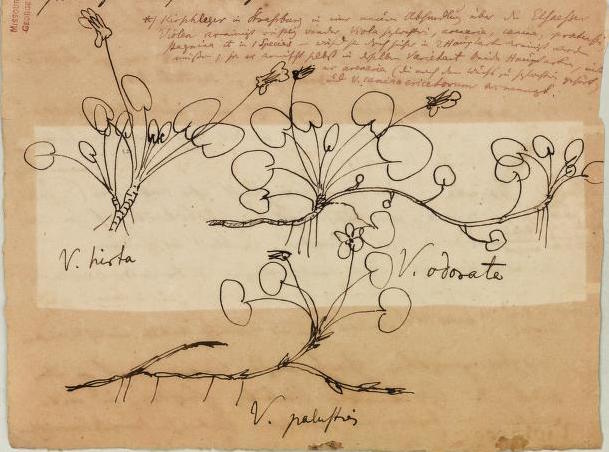
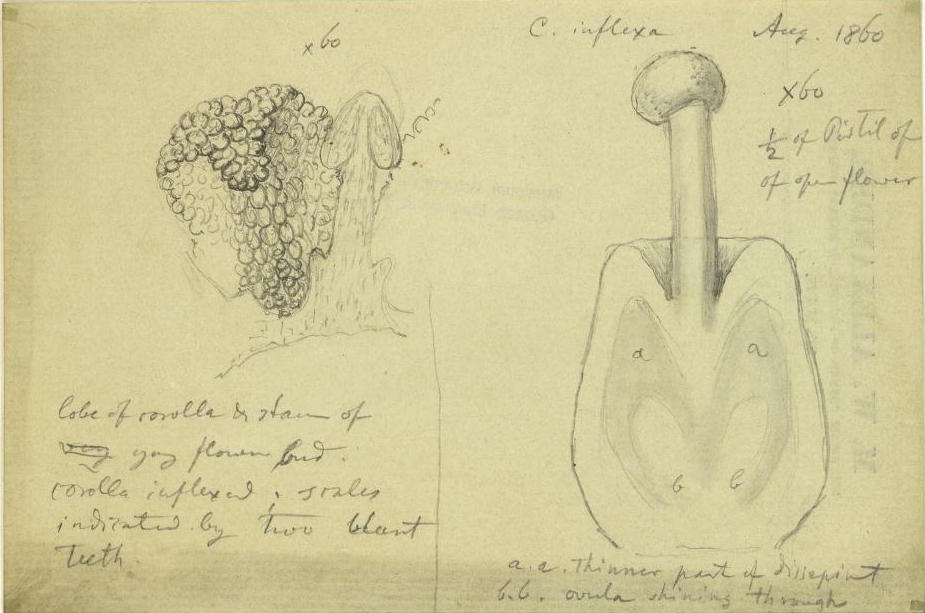
Figure 1 from notebook 1, folder 1. George Engelmann : botanical notebook 1. Cistaceae, Violaceae. [Undated].

Setting up a trifecta of American botanical exploration with Gray at Harvard and John Torrey at the Smithsonian, Engelmann became an avid and knowledgeable botanist as he corresponded with Gray and Torrey to direct various westward explorers. He collected over 98,000 botanical specimens which were donated to MBG upon his death. Combined with 62,000 botanical specimens purchased in 1857 for Shaw from the Bernhardi Herbarium, originally in Germany, these two collections formed the foundation of the MBG herbarium. Engelmann also helped establish the St. Louis Academy of Sciences.

The BHL Field Notes Project is the third time George Engelmann’s collection has been accessed for scanning. In 2010, MBG received a grant to complete a project called Digitizing Engelmann’s Legacy, and another in 2013 to digitize Engelmann’s correspondence. With this latest project, MBG is able to provide access to much of Engelmann’s botanical notebooks.

View Full Size Image
Figure 2 from notebook 25, folder 9. George Engelmann : botanical notebook 25 : Cuscuta. Box 11: Folder 9: Cuscuta. (1860-1875).

The notebooks were dismantled sometime in the past and housed within folders placed in boxes. His 58 notebooks are spread out over 27 boxes and comprise over 14,000 individual items. Not wanting to waste paper, Engelmann often wrote his notes on the back of correspondences, prescription slips, official documents, etc. Among his copious note taking are many botanical drawings likely depicting the specimens as he saw them.

Please feel free to browse Engelmann’s notebooks as they continue to be digitized and uploaded to the Biodiversity Heritage Library and Botanicus.

The BHL Field Notes Project is funded by the Council on Library and Information Resources (CLIR).

May 4, 2017by lmyrick
Blog Reel, Featured Books

Notes from William Brewster: The Evolving Field of Zoology

As a part of the Field Notes Project, the Ernst Mayr Library is digitizing the journals, correspondences and photographs of William Brewster (1851-1919), a self-trained ornithologist and specimen curator at Harvard’s Museum of Comparative Zoology (MCZ), the first president of the Massachusetts Audubon Society, and a co-founder and president of the American Ornithologists’ Union.

Brewster recorded a lifetime of observations on wildlife and plants, changing landscapes, and daily weather, making his notes a valuable resource for modern scientists studying ecological change. After working as an animal specimen curator for the MCZ for many years, he also bequeathed his personal collection of birds and other animals to the museum.

As I’ve worked to digitize and transcribe the Brewster collection, I’ve been periodically sharing interesting finds in a blog post series on the Mayr Library website. These posts highlight entertaining animal encounters, beautiful descriptions, letters, and more.

View Full Size Image
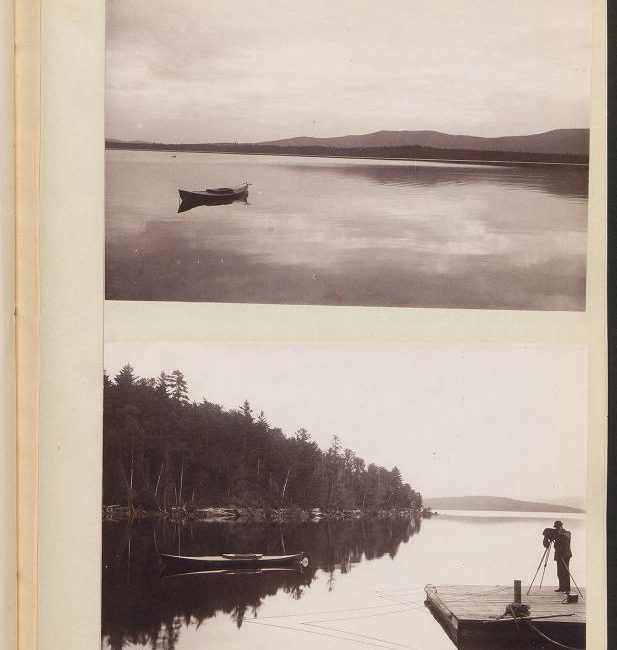
Lower image: Portrait of Brewster with his camera at
Lake Umbagog, Maine, likely captured by his assistant, Gilbert.
Journals of William Brewster, 1871-1919 (inclusive). (1898). http://biodiversitylibrary.org/page/45105729

I’ve been especially fascinated to track the development of Brewster’s thoughts on scientific collecting. I touched on this subject in a post on the Biodiversity Heritage Library blog, “Digging into the writings of a 19th century ornithologist”. As I’ve continued to scan and transcribe the Brewster collection, an interesting story has emerged. It was a complex job to juggle the hats of museum curator, scientific collector, and bird-lover.

In an 1886 letter, Brewster scoffed at the assertion that “the best was to study bird was with an opera glass!”[1] This was one decade before the Massachusetts Audubon Society for the Protection of Birds was founded, with Brewster as its first president. Despite his earlier reservations, journals from the 1890s show Brewster embracing new methods of data collection using binoculars and cameras, and reflecting critically on the future methods and goals in zoology.

While he continued to advocate for the importance of collecting wildlife specimens, Brewster increasingly felt that humans had an ethical responsibility to carefully mitigate human impact on wildlife – and this responsibility belonged to scientists, too.

View Full Size Image
Brewster returned for many years to make observations at Lake Umbagog, Maine, sometimes staying in his specially built house-boat.
The person standing on deck is probably his assistant, Gilbert. Journals of William Brewster, 1871-1919 (inclusive). (1898). http://biodiversitylibrary.org/page/45105746

In the 1890s Brewster began to consistently document a deep conflict between his desire to study nature and his desire to leave wildlife untouched. Because his field notes are typically more focused on data than on personal details, these comments really do stand out and signal that this became a matter of great concern to him. In 1892, he observes:

As on several former occasions when I have seen a Hawk catch a smaller bird and have listened to its expiring cries I was moved by deep pity and fierce wrath to an extent surprising on the part of one who, like myself, has killed thousands of birds without suffering more than an occasional slight qualm. But there is something peculiarly moving and piteous in the voice of a bird in the clutches of a Hawk – a quality of mingled pain and apprehension which the grasp of the human hand seldom or never elicits. [2]

Over the next few years, we find that he has gone from those aforementioned “occasional slight qualm[s]” to a daily struggle to complete his work. In 1896 he refers to collecting birds as “a most painful task”[3], and writes that he is sometimes “quite unable to bring [himself] to the point of doing it.” [4]

View Full Size Image
Close-up of a female moose Brewster sketched at Lake Umbagog, Maine. Journals of William Brewster, 1871-1919 (inclusive). (1896). http://biodiversitylibrary.org/page/44924677

It’s clear that Brewster saw a need for some change in the current scientific practices. Birds were generally being over-harvested, for fashion but also for science. And not only was nature conservation on his mind, but it seems that he felt personally dissatisfied by the limited scope of zoology. Brewster saw the need to legitimize observational studies of animal behavior in a scientific community that was focused primarily on taxonomy and building large collections. While he wrote many letters to colleagues debating the species and subspecies designation of specimens, his journals are brimming with descriptions and speculations about animal behaviors.

From his correspondences, we can see that his thinking was encouraged by Frank Michler Chapman, a younger friend and colleague working at the American Museum of Natural History. In 1890, Chapman had written to Brewster to express his concern that specimen collecting was destructively out of control:

This miserable collecting. It is the cause of all higher failing, it lowers a true love of nature through a desire for gain. I don’t mean a specimen here and there, but this shooting right and left, this boasting of how many skins have been made in a day or season. We are becoming pot-hunters. We proclaim how little we know of the habits of birds and then kill them at sight. Sometimes I am completely disgusted with our ways and myself in particular… I long for an outing where the gun will be secondary, recorded observations primary, where I shall be entirely alone or with a companion whose object is my object. 

We expect too much, that’s the trouble. Collecting, we have at the end of each day some tangible result to show for the day’s work. But it is useless to expect some novel or interesting incident for every day[‘]s observation. But listen to this final result: If I had gone down the Suwanee [River] to record what I saw, I could now have written a more or less interesting paper, as it is I have nothing to say, but I have a hundred or so skins. The question with me is, how am I going to change this? …We have degenerated to ‘gunners’; our success in the field is estimated by the size of our collections. 

… Will you embark with me on a novel ornithological expedition, whose aim shall be to really observe birds to learn something of them. Where the gun shall be a servant, not a master, where days may pass without a skin being made, where there will be time to speculate and discuss the habits of birds observed, where systematic observation of certain phaenomena may be attempted… Returning we could write a paper. How do you suppose this paper would compare with the ones we have to-day, where after a trip[‘]s experience all we can say concerning a given species is: Common, arrived ___.

Such a paper with your name attached to it would start a new epoch in the study of American birds. Imagine any one now-a-days making an extended trip for the sole purpose of observing birds. I know, I have several papers in mind which approach this – yours are nearest. Do you suppose we can reach that condition of mind where one good observation will be considered worth fifty skins, – as it really is. [Line breaks and emphasis added.] [5]

View Full Size Image
A page from William Brewster’s journal. Illustration reads “Made by Mr. Chapman from the feather of the ivory-bill shot March 24 and sent to me as a Christmas mount Dec. 25 1890.”
Journals of William Brewster, 1871-1919 (inclusive). (1890). http://biodiversitylibrary.org/page/44690675

Brewster was too busy with travel and fieldwork to respond directly (in writing, at least) to Chapman’s proposition, but he did reply a few weeks later, “I have been off in my canoe along the ‘South Shore’ of Mass for the past month & have made a good many valuable notes… I left the gun at home for the first time in my life and did not once regret it, either!” [6]

How amazing it was to find, in writing, a proposal to launch “a new epoch in the study of American birds”! While specimen collections are an important part of modern scientific work, it’s true that the study of zoology does look very different today than it did in the 19th century, and here we see the seeds of that change.

It would be easiest to paint Brewster as simply a taxidermist, or as an environmentalist, but as usual we find that the scientist was about as complex as the subjects he studied. Just as Brewster’s careful notes on species abundance and daily temperature are an invaluable resource for researchers, it’s enriching from a humanities perspective to uncover the personal stories that drove a major paradigm shift in the study and stewardship of natural world. While nothing quite compares to studying old documents in a quiet room, it’s exciting to be widening accessibility to these data and historical insights.

The BHL Field Notes Project is funded by the Council on Library and Information Resources (CLIR).
Images used in this post were previously digitized with funds from IMLS.

Citations:
[1] Correspondences, Letter to George Sennet, March 7, 1886. Soon to be available in BHL
[2] July 28. Journals of William Brewster, 1871-1919 (inclusive). (1892). http://biodiversitylibrary.org/page/44790847
[3] July 3. Journals of William Brewster, 1871-1919 (inclusive). (1896). http://biodiversitylibrary.org/page/44924596
[4] July 9. Journals of William Brewster, 1871-1919 (inclusive). (1896). http://biodiversitylibrary.org/page/44924608
[5] Correspondences, Frank Michler Chapman to William Brewster, June 15, 1890. Soon to be available in BHL
[6] Correspondences, William Brewster to Frank Michler Chapman, August 8, 1890. Soon to be available in BHL

Additional Resources:
To read more about Brewster’s encounter with the moose, read ‘Notes from William Brewster: Moose!‘
To learn more about how scientists use specimen collections today read ‘Natural history collections – why are they relevant?’ on The Guardian, or visit the page ‘Why Collections Matter’ on the Society for the Preservation of Natural History Collections’ website.

To learn more about the origins of the Massachusetts Audubon Society, read ‘Hats off to Audubon’ in Audubon Magazine, and the ‘History of Mass Audubon’ page on the society’s website.

April 6, 2017by lmyrick
BHL News, Blog Reel

Building Digital Field Notes Collections Together

At Internet Archive, we are excited to provide digitization services for BHL Field Notes Project contributors from coast to coast. We will be digitizing our partners’ selected field notebooks at two of our eight North American regional digitization centers: San Francisco, CA and Princeton, NJ and providing remote services for the American Museum of Natural History.

View Full Size Image
A page scanned by AMNH staff on a Table Top Scribe. Whitney South Sea Expedition. Journal and letters of William F. Coultas. Volume 3. (1932). http://biodiversitylibrary.org/page/52311554

At regional centers, Internet Archive operators upload metadata from contributing partners, capture high-quality digital images using our Scribe system, then review each image for completeness and add structural metadata as appropriate. We use the term “republish” to refer to this post-capture process in which the operator de-skews pages, asserts page types, and ensures all data is captured. Once complete, operators upload the files and the automated derive process typically completes within 24 hours. The newly digitized books appear in their pre-designated collections and are then accessible to the public via our online book reader and/or downloadable access formats.

View Full Size Image

We are also participating in the Field Notes project through our Table Top Scribe system, which allows partners to capture images onsite within their libraries. Many of the field notebooks seen here were captured by American Museum of Natural History Table Top Scribe operators, and were then republished and uploaded by remotely located Internet Archive operators.

We have enjoyed working with the Field Notes librarians and project coordinators and look forward to adding more works like this to our shared collections.

The BHL Field Notes Project is funded by the Council on Library and Information Resources (CLIR).

March 2, 2017by lmyrick
Page 1 of 212»

Help Support BHL

BHL's existence depends on the financial support of its patrons. Help us keep this free resource alive!

search

About BHL

The Biodiversity Heritage Library (BHL) is the world’s largest open access digital library for biodiversity literature and archives. BHL operates as a worldwide consortium of natural history, botanical, research, and national libraries working together to digitize the natural history literature held in their collections and make it freely available for open access as part of a global “biodiversity community.”

Join Our Mailing List

Sign up to receive the latest news, content highlights, and promotions.

Subscribe Now

Subscribe to Blog via Email

Enter your email address to subscribe to this blog and receive notifications of new posts by email.

Join 319 other subscribers

Subscribe to Blog Via RSS

Subscribe to the blog RSS feed to stay up-to-date on all the latest BHL posts.

Access RSS Feed

Inspiring Discovery through Free Access to Biodiversity Knowledge.

The Biodiversity Heritage Library makes it easier than ever for you to access the information you need to study and explore life on Earth…for free, anytime, anywhere.


64+ Million Pages of
Biodiversity Literature Online.

EXPLORE

Tools and Services
to Transform Research.

EXPLORE

300,000+
Illustrations on Flickr.

EXPLORE

ABOUT | HARMFUL CONTENT | PRIVACY | SITE MAP | TERMS OF USE