Biodiversity Heritage Library - Program news and collection highlights from BHL
  • Home
  • News
  • Featured Books
    • All Featured Books
    • Book of the Month Series
    • BHL at 20
  • User Stories
  • Campaigns
    • Fossil Stories
    • Garden Stories
    • Monsters Are Real
    • Page Frights
    • Her Natural History
    • Earth Optimism 2020
  • Tech Blog
  • Visit BHL
Home
News
Featured Books
    All Featured Books
    Book of the Month Series
    BHL at 20
User Stories
Campaigns
    Fossil Stories
    Garden Stories
    Monsters Are Real
    Page Frights
    Her Natural History
    Earth Optimism 2020
Tech Blog
Visit BHL
  • Home
  • News
  • Featured Books
    • All Featured Books
    • Book of the Month Series
    • BHL at 20
  • User Stories
  • Campaigns
    • Fossil Stories
    • Garden Stories
    • Monsters Are Real
    • Page Frights
    • Her Natural History
    • Earth Optimism 2020
  • Tech Blog
  • Visit BHL
Biodiversity Heritage Library - Program news and collection highlights from BHL
Blog Reel, Campaigns, Featured Books, Garden Stories

Perfecting the Garden: From the Rise of Agriculture to Genetic Modification

Today, commercial agriculture is a multi-trillion dollar global industry, while the global gardening industry, which has maintained an annual market growth of 3% since 2007, is predicted to be worth $220 billion globally by 2016. From the corporate executive looking for ways to maximize profit, to the home gardener toiling to grow the best garden in the neighborhood, the quest to achieve the “perfect” garden or the idealized crop is a passionate, laborious, and indeed ancient pursuit.

But though it may be one of the biggest industries today, agriculture, and by extension gardening, has humble origins.

The Rise of Agriculture

Although theories about ancient agricultural practices are largely speculative due to lack of historical records, some researchers believe that Neolithic agriculture began with attempts by hunter-gatherers to manage nature for their benefit, stimulated perhaps by population pressures, reductions in wild food sources due to climate change, and/or over-exploitation of land by grazing animals. Whatever the catalyst, the first “agricultural” activities comprised land management strategies like burning woodland, draining wet ground and watering dry soil.

The real beginning of cultivation, however, was propagation, whereby ancient civilizations began distributing, dividing, and planting seeds and tubers. This is commonly known as the “Domestication Revolution.”

View Full Size Image
Purple Yam (Dioscorea alata). The Pencil Yam (Dioscorea transversa) is a staple food of Australian Aborigines. Descourtilz, M. E. Flore médicale des Antilles v. 8 (1829). http://biodiversitylibrary.org/page/3587279. Digitized for BHL by the Missouri Botanical Garden.

The earliest propagation probably involved vegiculture – propagation using tubers (modified plant structures that store food and enable asexual reproduction that result in cultivated clones). Australian Aboriginal hunter-gatherers were known to practice vegiculture with yams. Before long, however, humans were practicing seed-based agriculture – collecting, saving, and growing crops from seeds – which led to the domestication of plant species which eventually resulted in plants that were genetically distinct from wild relatives. The very first instance of saving seeds to produce the next year’s crop, which inevitably resulted in certain genes being propagated instead of others, was the start of plant breeding – “the art and science of changing the traits of plants in order to produce desired characteristics.” [1]

Early plant breeding not only involved unconsciously propagating certain genes through seed selection, but also early hybridization (breeding between two genetically-distinct individuals) that occurred as farmers traveled or migrated, bringing seeds with them which were planted in new areas and eventually mixed with local species. Furthermore, natural genetic mutations often resulted in new plant varieties that could be propagated over time.

Nascent plant hybridization and improvements were likely not intentional, but early tribal people did recognize the improvements and eventually selected for them. Plant breeding history reflects the three levels of the “selection process” outlined by Charles Darwin in The Variation of Animals and Plants Under Domestication (1868). Land management and propagation reflect Darwin’s first two levels: Natural Selection and Unconscious Selection. Land management created conditions that spurred species to change by natural selection, and eventual awareness and cultivation of “improved” plants represented unconscious selection, whereby humans preserve the more desirable and destroy the less desirable specimens without intention of altering the breed.

View Full Size Image
Pea varieties cultivated by Charles Darwin. The Variation of Animals and Plants Under Domestication. v. 1. 1868. http://biodiversitylibrary.org/page/40298347.

It would take a revolution to bring about the third level of Darwin’s “selection process”  – Methodical Selection, whereby humans try to systematically modify a species to a predetermined standard.

The Agricultural Revolution

Fast forward several millennia from the Neolithic origins of agriculture to seventeenth century Europe, and a revolution was underway. Not a revolution of violence, but a revolution of the mind. The Enlightenment, and with it the Scientific Revolution, was reforming society, culture, and science. Within the scientific realm, emphasis was diverted from mysticism to experimentation and observation of the natural world. This emphasis was further facilitated through the increasing availability of the printed word, which allowed scientific observations to be more easily passed down, studied, and improved upon. From this movement spread a revolutionary new concept: that if nature could be understood, it could be managed (and even changed) for the benefit of humanity.

While commercial agriculture was practiced throughout China and the Roman Empire centuries earlier, it became increasingly prevalent in England and America in the seventeenth century onwards. Educated farmers began to publish their knowledge, resulting in a steady rise in agricultural literature. Agricultural societies began to form in the eighteenth century and botanic gardens began to shift their focus from herbal medicines to the needs of agriculture, facilitating the free international exchange of new seed acquisition among gardens through seed lists, or indices seminum. [3]  These lists cataloged the seeds housed at the garden available for exchange, and by the nineteenth century the index semina were important sources of taxonomic and nomenclatural information, often including diagnoses, descriptions, and notes either in footnotes or in appendices. Since they are sometimes the first publications to contain the Latin binomial of new species, the rules of botanical nomenclature dictate that these published names must continue to be recognized and used today.

View Full Size Image
Nierembergia frutescens in Catalogue des graines récoltées en. 1866, issued by Jardin-des-plantes de la ville de Bordeaux. This offers just one example of a plant that was first named and described in a seed exchange list. From the Missouri Botanical Garden Index seminum collection. http://biodiversitylibrary.org/page/44946209.

The Enlightenment resulted in and was simultaneously fueled by a revolution in agriculture in the late eighteenth and early nineteenth centuries. The introduction of new crops, more complex and efficient rotation systems, and enclosure techniques allowed farmers to produce more food and cultivate more land, which in turn led to greater food security and laid the foundations for similar advances around the world.

The growth of the agricultural economy exerted greater pressure on quality, productivity, and variety to generate more profit. These pressures resulted in more trading of crops and plants from different areas, while imperial expansion opened up new trade routes, providing opportunities for even more varieties of seeds to be introduced. The seventeenth and eighteenth centuries saw a growing trade in seeds, generally from Italy, southern France, Switzerland, northern Europe, Turkey, Syria and colonial America. The growing popularity of home gardens spurred the development of the seed trade, with more and more nurserymen and seedsmen entering the industry and selling increasing numbers and varieties of seeds (starting with vegetables and forage crops but encompassing flowers as well by the end of the nineteenth century), culminating in the mail order garden phenomenon.

View Full Size Image
Engraving from Hortus Floridus published by Crispijn van de Passe in 1614. One of the earliest European plant catalogs, it was designed as a tool to allow salesmen to show costumers what plants they had for sale would look like in bloom. http://biodiversitylibrary.org/bibliography/75060. Digitized for BHL by Biblioteca Digital del Real Jardin Botanico de Madrid.

As commercial gardening and agriculture grew, competition among seed sellers, productivity pressures, and consumer demands for more interesting and unusual plants turned curious minds in the direction of methodical selection.

Hybridization and the New Agricultural Era

The idea that species were not constant, but could be changed by human intervention, was a revolutionary and somewhat blasphemous concept even as late as the nineteenth century. The prevailing belief was that species were intransmutable. The methods of plant reproduction and genetic transfer, which, along with mutations, provide the mechanisms by which species change, were largely uncharted territories before the Enlightenment. There is evidence of limited knowledge of plant reproduction processes in ancient Assyria and Medieval Arabian documents record some artificial fertilization activities. In Europe and the Mediterranean region, however, knowledge of plant sex organs and seed origins was a concept slowly realized starting in the seventeenth century.

In 1694, Rudolph Jakob Camerer provided the first clear indication of plant gender and the necessity of pollen for reproduction. The realization that plants reproduce sexually was the first step towards creating deliberate hybrids – offspring resulting from the crossing of two genetically different plants – as it illustrated the process by which it could be induced. Several advances in the eighteenth and nineteenth centuries paved the way for deliberate hybridization, including Joseph Gottlieb Kölreuter’s hybridization experiments to refute the constancy of species (which also demonstrated that hybridization was only possible between closely related species and that some characteristics were more likely to be passed on than others), Antoine Nicolas Duchesne’s hybridization of strawberries (which opened the door to deliberate crossing of different species), Linnaeus’ Tragopogon hybrids (which caused him to conclude that hybridization resulted in offspring with a combination of traits exhibited by parents), and Thomas Andrew Knight’s (the first person in Britain to conduct systematic hybridization) principles of heredity.

View Full Size Image
Fairchild’s Mule is a cross between a sweet william (pictured) and a carnation pink. Step, Edward. Favourite flowers of garden and greenhouse. v. 1 (1896). http://biodiversitylibrary.org/page/36442265. Digitized for BHL by the Missouri Botanical Garden.

The first commercial offering of an artificial hybrid plant was “Fairchild’s Mule,” a hybrid pink presented by nurseryman Thomas Fairchild in the seventeenth century. It would be another century before more deliberate commercial hybridization was pursued, partly due to perceived moral and religious conflicts with altering species, and partly because the introduction of foreign varieties through trade was long sufficient to satisfy the consumers’ demand for new plants. However, a breakthrough occurred in the 1820s when G.C.L. Hempel published an article that suggested that, with more knowledge, it might be possible to customize hybridization to identify the characteristics desired and breed for them. Up until this point, breeders had simply crossed whatever species they could to see if they could produce a hybrid, rather than crossing species to deliberately produce certain outcomes. However, it would take an understanding of plant genetics to achieve Hempel’s vision.

The nineteenth century saw the true start of methodical breeding. Darwin’s exploration of self- and cross-fertilization in The Effects of Cross and Self Fertilization in the Vegetable Kingdom (1876) and breeding in The Variation of Animals and Plants under Domestication (1868) laid the foundation for much of this systematic work. It was Gregor Mendel’s famous experiments with pea plants in the mid-1800s, however, that opened a window into the world of genetics, establishing many rules of heredity now known as Mendelian inheritance and enabling the development of systematic hybridization towards an end goal.

Hybrids and the Seed and Nursery Industry

Widespread understanding that plants could be improved and demands for increased productivity to feed a growing population at a profit, with plants adapted to new or human-created environments, alongside the rising popularity of the home garden, a growing capacity for discretionary spending on luxuries, and consumer demand for new, exotic, and flashy commodities, converged in the nineteenth century to create a prime market for hybrids. While farmers themselves drove much early plant selection, breeding, and hybridization work, by the late nineteenth century, seed and nursery companies were playing a dominant role in the production of hybrids for the market and home garden, offering them for sale through an ingenuity of the garden industry: the seed and nursery catalog.

View Full Size Image
Hybrid Gladiolus offered via Dreer’s Garden Book 1931. http://biodiversitylibrary.org/page/45205202. Digitized for BHL by The New York Botanical Garden.

Crossing species to create ever more glorious varieties improved for color, resilience, flowering time, abundance, or longevity, seedsmen and nurserymen began branding the hybrids, using them to promote their business. “An endless search for novelty” drove the hybridization of ornamental plants for home and public gardens, which became one of the most profitable offerings of the seed and bulb industry. Fueled by imports of “exotic” species by “plant hunters” in the nineteenth and early twentieth century, a plethora of hybrids, many now garden staples, ensued, including hybrids of rhododendrons, camellias, daffodils, gladioli, tulips, and roses. But until the late nineteenth century, there was little to no regulation on the seed trade. Untested hybrids sold to gardeners eager for the next great thing, old hybrids were rebranded as new novelties, and identical hybrids were offered by different companies under different names as distinct varieties.

View Full Size Image
“Burpee’s Golden Bantam” and Stringless Green Pod Pea. Burpee’s Farm Annual for 1906. http://biodiversitylibrary.org/page/46815262. Digitized for BHL by the USDA National Agricultural Library.

One of the most successful seed companies (based largely on a realization of the importance of hybridization) was the Burpee Seed Company, responsible for such staple hybrids as Iceberg Lettuce, the Stringless Green Pod Bean, and “Burpee’s Golden Bantam” corn, the first yellow sweet corn. It was one of Burpee founder Atlee Burpee’s cousins, Luther Burbank, that popularly introduced the idea of plant breeding as a desirable activity to the American public. Though often criticized for his intuitive, rather than analytical, process of producing hybrids, Burbank created around 800 new hybrid varieties during his career.

View Full Size Image
Shirley Poppies, branded as “Burbank Poppies” and offered by The Luther Burbank Company in their 1913 seed book. http://biodiversitylibrary.org/page/46307209. Digitized for BHL by The New York Botanical Garden.

Mendel and Genetics Take Center Stage

The widespread impact of Mendelian principles, when true methodical selection began to replace “chance” hybridization en mass, began in the twentieth century as heredity was more widely understood and accepted. William Bateson, the key figure in the introduction of Mendel in the plant sciences, articulated the opportunities that Mendelian principles offered to the plant breeder at the  2nd International Conference on Plant Breeding and Hybridization in New York in 1902:

“He will be able to do what he wants to do instead of merely what happens to turn up. The period of confusion is…passing away, and we have at length a basis from which to attack the mystery.”

The term “genetics” to describe plant heredity came into use in 1906, and from that point forward hybridization began to move from the fields of farmers and seedsmen to the labs of scientists.

Plant Breeding and hybridization resulted in more versatile, robust, hearty, and nutritious crops, essential to the survival of an ever-increasing population. Floral hybridization propagates ever-more exotic, diverse, and luxurious gardens. But recently, hybridization under the name of “genetic engineering” has fallen under severe scrutiny and criticism. The loss of crop biodiversity, use of traditional crops from developing countries to fuel industrialized commercial agriculture, increasing corporate control over breeding,  seed source, and food production, and corporate gene patents, have spurred interest in traditional farming, heirloom seeds, and a curb on genetic engineering. Many now argue that the quest is not to perfect the garden through human intervention, but to un-engineer it to a natural balance.

So we have to ask…Does the future of gardening (and agriculture) now reside in our past?

View Full Size Image
Roses from China were often imported aboard cargo vessels bearing tea in the 1800s. Eventually, roses bred from these were dubbed “tea roses.” Ever-blooming Hybrid Tea Rose. Offered by The Dingee and Conrad Company in Our New Guide to Rose Culture: 1891. http://biodiversitylibrary.org/page/43875590. Digitized for BHL by the USDA National Agricultural Library.

More Garden Stories Fun

  • Follow our blog and #BHLinbloom on Twitter and Facebook (or go directly to BHL’s Twitter and Facebook) this week as we explore the fascinating world of gardening, from its history to plant factoids and practical gardening tips.
  • Browse over 14,000 seed and nursery catalogs in our collection.
  • Browse over 2,500 seed and nursery catalog images in our Flickr collection.
  • Explore select seed catalog art, and stunning bookmarks and postcards developed by Cornell Library, on Pinterest.
  • See historic gardening come to life on the Smithsonian Libraries’ Tumblr.
  • Purchase your very own Garden Stories T-Shirt through T-Fund. All proceeds will go to help us digitize more pages for BHL. Our goal is to sell enough shirts to digitized 5,000 pages. Can you help us get there?
  • Help us improve access to seed and nursery catalogs by transcribing some today as part of our the Institute of Museum and Library Services (IMLS)-funded Purposeful Gaming project!
  • Find great online gardening resources, tips, and help on the BHL Gardening Resources Page.

References and More Information

[1] Poehlman, John M, and D A. Sleper. Breeding Field Crops. Ames: Iowa State University Press, 1995. Print.
[2] (Reference consulted for blog post) Kingsbury, Noel. Hybrid. Chicago: University of Chicago Press, 2009. 20-23 pg. Print.
[3] More Seed List Resources:

  • List of Seed Lists Available at Royal Botanic Gardens, Kew;
  • Guide to the plant species descriptions published in seed lists from Botanic Gardens for the period 1800 – 1900. Leiden Naturalis;
  • Index Semina in BHL.
With Contributions From:
Doug Holland
Director, Missouri Botanical Garden Library
Judith A. Warnement
Librarian of Harvard University Botany Libraries
March 24, 2015by michelle.underhill
Blog Reel, User Stories

The Plants of Acadia National Park

As part of our regular BHL and Our Users series, we’re pleased to introduce Dr. Karen James, staff scientist at Mount Desert Island Biological Laboratory (MDIBL).

Karen holds a PhD in genetics and has worked in her field for 11 years since receiving her degree.  About seven years ago, her interests began shifting towards biodiversity and citizen science applications and she has graciously agreed to answer some questions about how BHL has impacted that work.

BHL and Our Users: Dr. Karen James

View Full Size Image
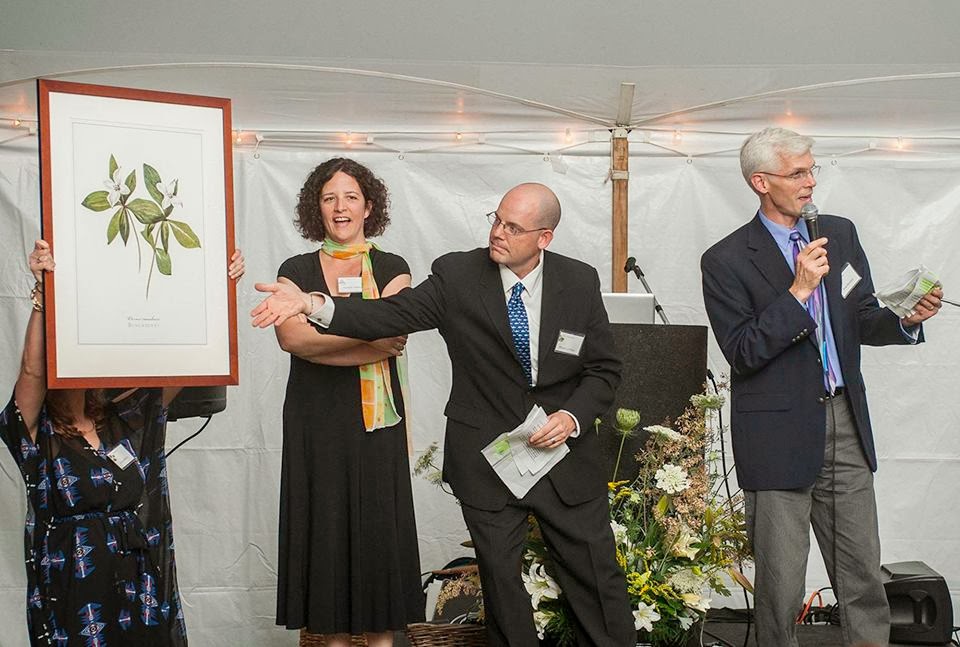
Live auction in support of an extension of the BioTrails project to include 
the plants of Acadia National Park. Karen James is second from the left. 
Photo by Michael York for MDIBL.

When did you first discover BHL?

I was a postdoc at the Natural History Museum in London from 2003-2010. The museum was one of the founding members, so I have known about it from the very beginning. I started using it more regularly in 2009, in relation to my interest in Charles Darwin.  At the time, I was the science coordinator for the NHM’s Darwin200 campaign, and I’ve found countless uses for it since then.

What is your opinion of BHL and how has it impacted your research?

View Full Size Image
Twinflower (Linnaea borealis) by Mary Vaux
Walcott. 1925. North American Wild Flowers.
Washington, D.C., 1925. (Photographed by
Michael York for MDIBL at Thuya Garden library.)  

The BHL provides a much-needed service – free access to a wide range of natural history publications including artwork. As I mentioned, I’ve used it in a number of different contexts to support and inform my work. One of these was a fundraising campaign is to support an extension of my NSF-funded project called BioTrails. BioTrails combines DNA-based species identification (‘DNA barcoding’) with citizen science in Acadia National Park. The project uses DNA barcoding to validate identifications of invertebrate animals collected by citizen scientists in support of research on the impacts of environmental change. I’d like expand the project to the plants of Acadia National Park, and have been exploring some nontraditional funding avenues for this including private donations and crowdfunding.

I needed some visually compelling images – ideally in the public domain – of some of Acadia’s plants to illustrate our fundraising materials. A colleague of mine at MDIBL discovered a wonderful five-volume book of botanical plates – North American Wild Flowers by Mary Vaux Walcott  – at a local botanical garden. There were a number of Acadia species in the book, and we hired a professional photographer to capture digital images of some of them, but I wanted more. I scoured BHL for high-resolution scans of illustrations not only by Walcott but also by others (Walcott didn’t paint every species I wanted to include). In the end, I had sourced beautiful, high-resolution, public-domain botanical illustrations of 25 of Acadia’s most iconic plant species. We had the white-balance adjusted so they all matched, and we added both common and scientific names to each. We held a live auction at MDIBL’s annual gala to support the project; each high-bidder received a large, framed print of one of the illustrations, and everyone went home with a package of notecards. We’ll be able to re-use these resources for the crowdfunding campaign I’m hoping to launch in the next few weeks, just in time for the holidays.

How often do you use BHL?

Twice a month, but occasionally much more intensively if I’m researching something.

View Full Size Image
Bracken fern (Pteridium aquilinum) by J. H.
Emerton and C. E. Faxon, C. E. in D. C. Eaton.
1879. The Ferns of North America. Salem. 1879.
(Photographed by Michael York for MDIBL at
Thuya Garden library.) 

How do you usually use BHL?

For research I usually just read online, but when I want high-resolution images I select pages to download.

What are your favorite features/services on BHL?

Being able to search by taxonomic name is HUGE. I wouldn’t have been able to find the images for my project without this.

If you could change one thing about BHL, what would it be, or what developmental aspect would you like the BHL team to focus on next?

I’d like to be able to quickly and easily search for text in the volume I’m browsing.


If you had to choose one title/item in BHL that has most impacted your research, or one item that you prefer above any other in BHL, what would it be and why?

I already mentioned North American Wild Flowers by Mary Vaux Walcott.   Another important one for me has been The British Flora by William J. Hooker (4th edition); I used it extensively researching a book chapter I’m writing on repeating Charles Darwin’s 1855 survey of the plants in a meadow near his home.


November 15, 2013by sayeedmd

Help Support BHL

BHL's existence depends on the financial support of its patrons. Help us keep this free resource alive!

search

About BHL

The Biodiversity Heritage Library (BHL) is the world’s largest open access digital library for biodiversity literature and archives. BHL operates as a worldwide consortium of natural history, botanical, research, and national libraries working together to digitize the natural history literature held in their collections and make it freely available for open access as part of a global “biodiversity community.”

Follow BHL

  • Bluesky logo
  • Instagram logo
  • Facebook logo
  • Flickr logo
  • Twitter logo

Join Our Mailing List

Sign up to receive the latest news, content highlights, and promotions.
Subscribe Now

Subscribe to Blog via Email

Enter your email address to subscribe to this blog and receive notifications of new posts by email.

Join 319 other subscribers

Subscribe to Blog Via RSS

Subscribe to the blog RSS feed to stay up-to-date on all the latest BHL posts.

Access RSS Feed


64+ Million Pages of
Biodiversity Literature Online.

EXPLORE

Tools and Services
to Transform Research.

EXPLORE

300,000+
Illustrations on Flickr.

EXPLORE

ABOUT | HARMFUL CONTENT | PRIVACY | SITE MAP | TERMS OF USE