Biodiversity Heritage Library - Program news and collection highlights from BHL
  • Home
  • News
  • Featured Books
    • All Featured Books
    • Book of the Month Series
    • BHL at 20
  • User Stories
  • Campaigns
    • Fossil Stories
    • Garden Stories
    • Monsters Are Real
    • Page Frights
    • Her Natural History
    • Earth Optimism 2020
  • Tech Blog
  • Visit BHL
Home
News
Featured Books
    All Featured Books
    Book of the Month Series
    BHL at 20
User Stories
Campaigns
    Fossil Stories
    Garden Stories
    Monsters Are Real
    Page Frights
    Her Natural History
    Earth Optimism 2020
Tech Blog
Visit BHL
  • Home
  • News
  • Featured Books
    • All Featured Books
    • Book of the Month Series
    • BHL at 20
  • User Stories
  • Campaigns
    • Fossil Stories
    • Garden Stories
    • Monsters Are Real
    • Page Frights
    • Her Natural History
    • Earth Optimism 2020
  • Tech Blog
  • Visit BHL
Biodiversity Heritage Library - Program news and collection highlights from BHL
Blog Reel, Campaigns, Featured Books, Her Natural History

Museum für Naturkunde Explores Maria Sibylla Merian’s Legacy and Editions of Her Metamorphosis

Three hundred and seventy-four years ago on 2 April 1647, a remarkable woman was born: the artist and naturalist Maria Sibylla Merian. In the 17th and 18th century world of male-dominated science, Merian had to fight for her place in the natural sciences. Against all odds, she became a trailblazer, especially in developmental biology.
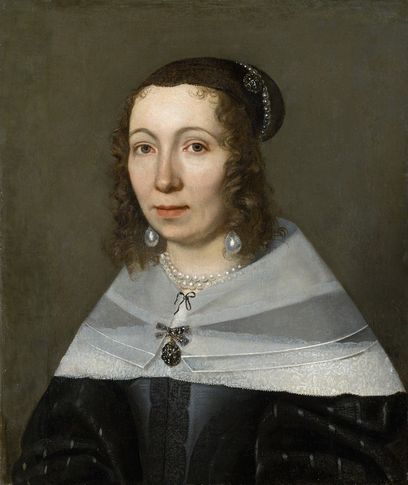
Portrait of a woman in 17th century clothes.

Portrait of Maria Sybilla Merian by Jacob Marrell, 1679.  From the collection of: Kunstmuseum Basel.

Merian’s legacy was recently explored during a 4-week student-project at the library of the Museum für Naturkunde (MfN) in Berlin. The project was part of a master’s program for the University of Applied Science in Leipzig to enlarge the student’s experience in the historical holding field and give a glimpse into the planning and conducting of a project. The aim of the project itself was and is the digitization of two different editions of Merian’s work, Metamorphosis insectorum Surinamensium, as well as a restorative and provenance research summary about the volumes. Both editions show Merian’s talent in painting and observing insects and plants.

Merian’s fascination with flowers and painting had its origin with her stepfather Jacob Marrel, a known flower painter of the time, who took her under his wing. Despite her mother’s wish, who considered painting too “masculine,” Merian learned how to draw and engrave from Marrel and by the age of eleven, she was able to engrave on copper independently (Kutschera 2017: 28). At the age of twelve, she developed a heightened interest in exploring the nature around her and was especially fascinated by the metamorphosis of silk worms. Merian conducted her own studies, feeding the silkworm larvae and observing their transformation. Thus, her collection of different caterpillar species started to grow.
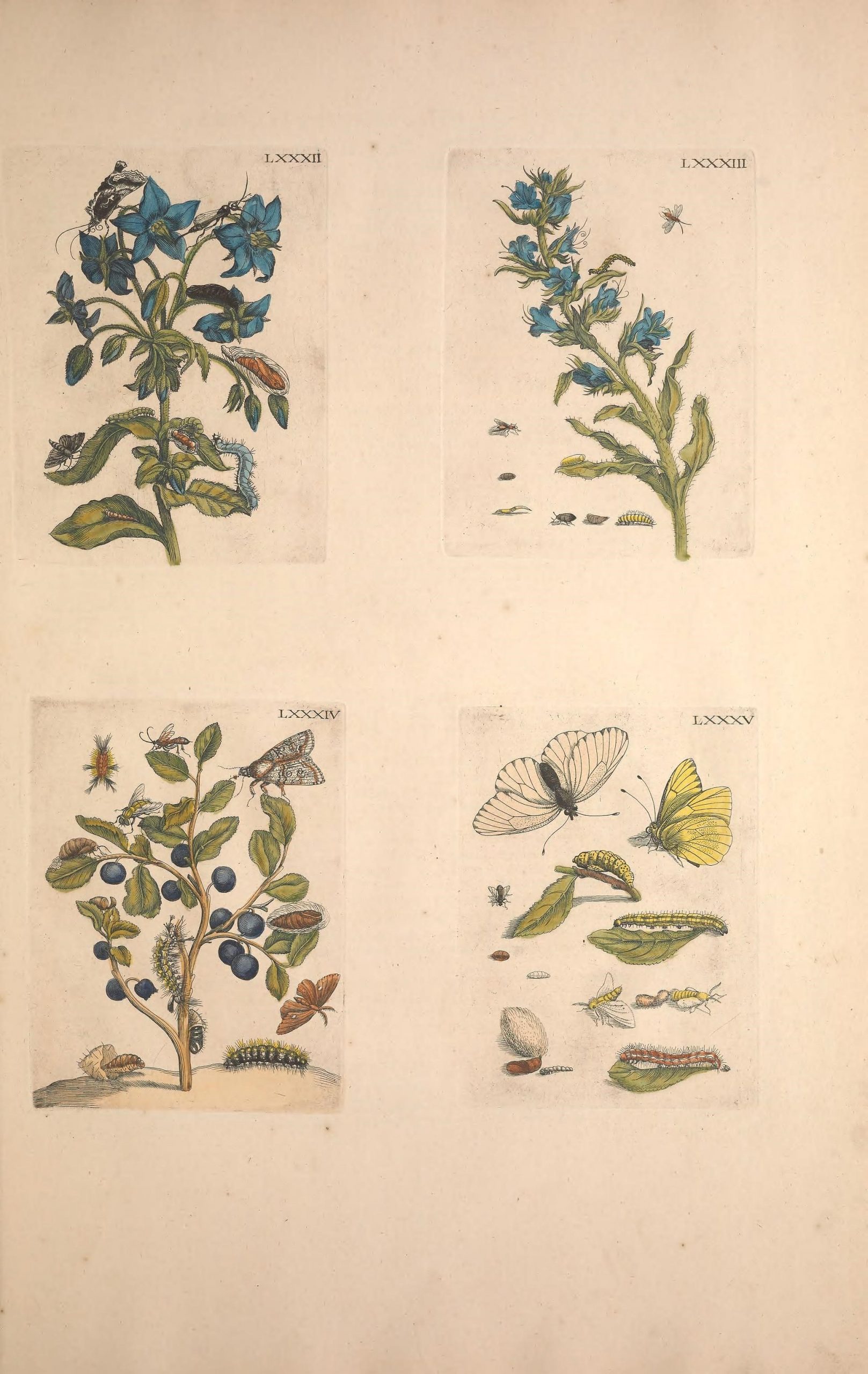
Examples of flowers and insects, found in: De Europischen insecten. 1730.

Examples of flowers and insects. Found in: Merian, Maria Sybilla. De Europischen insecten, v.3. 1730. Contributed in BHL from Smithsonian Libraries and Archives.

In 1665, shortly after her 18th birthday, Merian married Johann Andreas Graff (1636-1701)—a marriage that ended in divorce nearly 30 years later in 1692. Merian published her first work, the flower book Neues Blumenbuch, in 1675. It contained examples for the students of her painting and embroidery classes. She did not lose her interest in the metamorphosis of species, however, and published her first book about caterpillars in 1679 under the name Der Raupen Wunderbare Verwandelung und Sonderbare Blumennahrung (engl. “The Wondrous Transformation of Caterpillars and their Remarkable Diet of Flowers”). The “Anderer Theil” (engl. “Other volume”) followed in 1683.

In 1685, Merian moved with her two young daughters to a community of Labadists in Friesland. There, the exotic butterflies from Suriname in the collection of the castle Waltastate served as a template for new paintings and sparked her interest towards this exotic country. It was also the place she observed and recorded the metamorphosis of the frog in 1686 for the very first time, 13 years before Antonie van Leeuwenhoek documented it in a letter to the Royal Society (Nagendra 2016: 122). However, the small family did not stay in Friesland for long and moved to Amsterdam in 1690. With the help of other naturalists and the caterpillars they brought with them, the three women established themselves as artists.

Through the connections Merian made in Holland, she met travellers that came back from the Dutch colony Suriname with collections full of colourful insects. Although these were pretty to look at, the collections lacked the information about the insects’ developments.

“In Holland, I saw with wonderment the beautiful creatures brought back from the East and West Indies, especially when I had the honour to be able to see the splendid collection belonging to […] Dr Nicolaas Witsen […] and many others, in which I found these and countless other insects, but without their origins and subsequent development, in other words, how they develop from caterpillars into chrysalises and so on. All this stimulated me to undertake a long and costly journey to Suriname […] in order to pursue my investigations further.” (Merian & O’Brien-Twohig 2012: 2)

Merian’s decision to travel to Suriname, a country known for the death of many travelers due to tropical diseases at the time, as a divorced 52-year-old woman was quite scandalous. On top of that, Merian managed to finance herself independently by selling her paintings beforehand.

In 1699, Merian and her youngest daughter Dorothea Maria boarded a ship to Suriname. They arrived in Paramaribo and quickly learned that the Dutch colonists were not interested in helping them in their mission to locate and study the foreign insects. Instead, Merian relied on the assistance and knowledge of the Indigenous and African people enslaved on the Dutch sugar plantations.

Over the next two years, Merian and her daughter spent time exploring the jungle, canoeing rivers and painting every plant and insect they could find. Everything that they collected, from the information to the first artworks, went into Merian’s journal. Unfortunately, the pair returned home in 1701, earlier than expected, when Merian became ill, possibly with malaria. As a result, her stay on a plantation near the riverside of Paramaribo was cut short by three years.

Merian presented the results from her trip in the Metamorphosis insectorum surinamensium, first published in 1705. In it, 60 plates show the variety of the vibrant colours of the rainforest, each accompanied with information about their practical use, medical remedies, or general studies about the development of the insects and plants. A lot of her knowledge about the usage came from the enslaved people of the Suriname plantations. It is unclear whether Merian herself bought the enslaved people with whom she worked or if they were a gift when she first arrived (Davis 1996: 210).

Merian herself wrote on plate 36 about the plant Costus arabicus:

“I had my Indian dig [Costus arabicus] up by the root and carry it home and plant it in my garden” as well as that “because the forest is so densely grown with thistles and thorns, I had to send my slaves ahead of me with axes to hack out an opening for me.”

Therefore, while she writes about the help she received from enslaved people, unlike many other explorers and naturalists of her time, she still did not credit them by names (Baumhammer & Kennedy 2017: 213). In her publication, they remain an anonymous source of information.
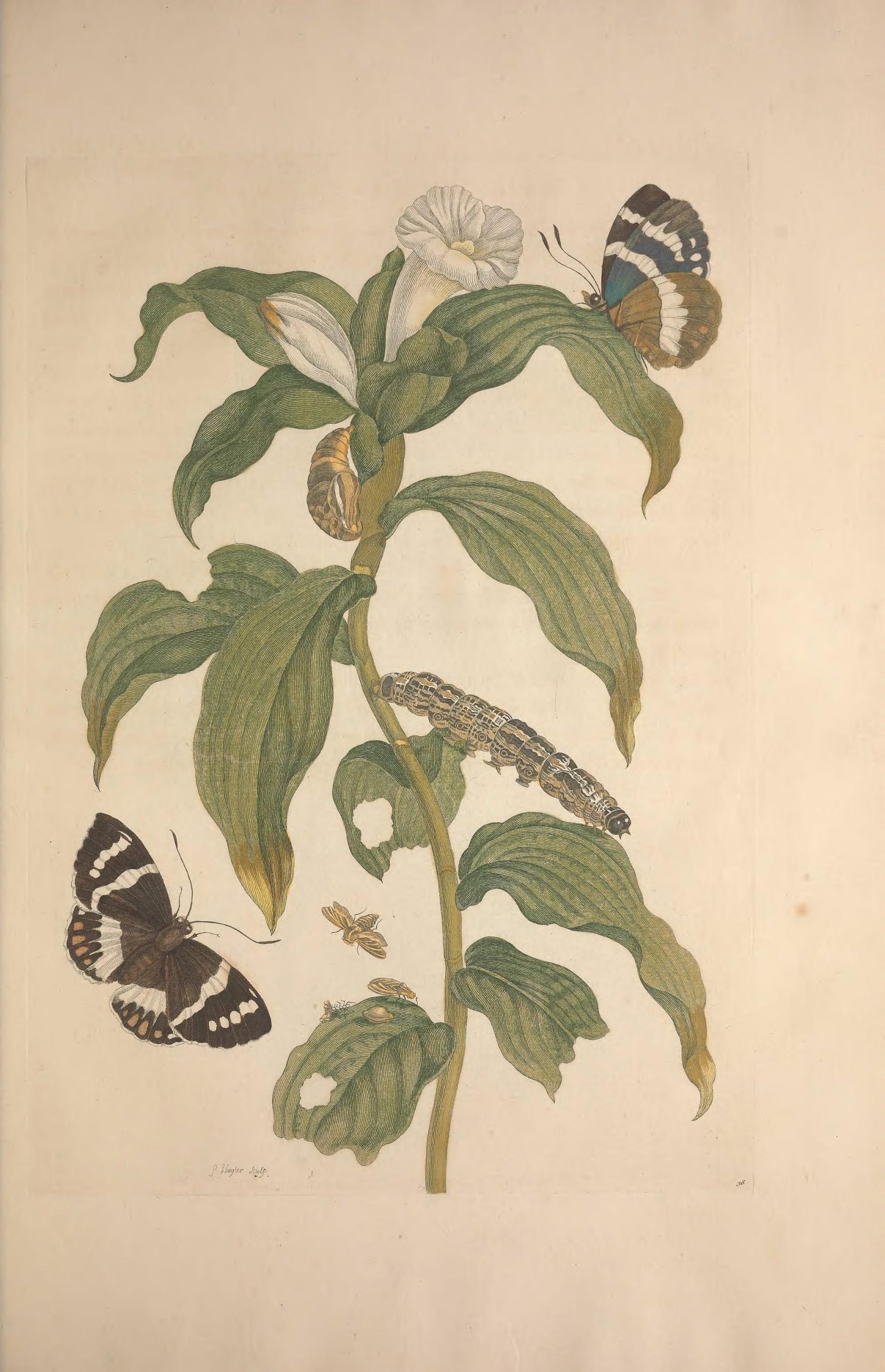
Costus Arabicus, a Banana Stem Borer Moth and an unidentified butterfly. Found in Metamorphosis insectorum surinamensium 1705, plate 36.

Costus arabicus, a Banana Stem Borer Moth, and an unidentified butterfly. Found in: Merian, Maria Sybilla. Metamorphosis insectorum surinamensium. 1705. Contributed in BHL from Smithsonian Libraries and Archives.

In a later part of the book, there is a hard breach between the beautiful painting of the Peacock flower and Merian’s description of the usage of said flower. She writes that enslaved women told her about the horrible treatment from the Dutch and their use of the seeds to cause abortions and save their children from the same enslaved fate.

The focus of Merian’s criticism was mainly on the Dutch farming practices and not on the brutal treatment of the enslaved people. She could not understand how the Dutch ignored the richness and diversity of the flora around them and only planted sugar. Lizabeth Paravisini-Gebert suggests that Merian was interested only in sharing scientific findings from her time in Suriname. “Full of groundbreaking information to communicate to a world avid for scientific knowledge, she was not gifted with a facile pen for anything other than scientific fact” (Paravisini-Gebert 2012: 12). While this might explain her lack of a more pronounced criticism of slavery, it does not condemn the fact that she took an enslaved woman with her back to Amsterdam as indicated by the passenger list for the sailing back home. This woman was most likely the person Merian referenced as “my Indian” from the text about Costus arabicus (Davis 1996: 212; Polcha 2019).

There is no mention in the sources about Merian’s behaviour towards the enslaved people on whom she relied, but Merian did participate in the racial hierarchies of trans-national colonialism. While she may have broken gender rules and created brilliant works of art, Merian ultimately profited from the suffering of others.

Merian’s reliance on and usage of the information and help she received from enslaved people must not be ignored, as it opens the discussion about how slavery affected her work and how she benefited from it. Merian would likely not have had access to most of the plants and insects described in her book without the help from enslaved African and Indigenous people, especially since the Dutch colonists did not support her studies. Would there have been a Metamorphosis without Merian using and exploiting the established oppression?

Ultimately, Metamorphosis did not sell as well as previously hoped and Merian lived in modesty. Her plans to publish translations of the book could not succeed due to the expense. She died poor on 13 January 1717, probably the same day Czar Peter the Great bought her remaining paintings (Nagrenda 2016: 118; Kutschera 2017: 30; Pieters & Winthagen 1999: 6).
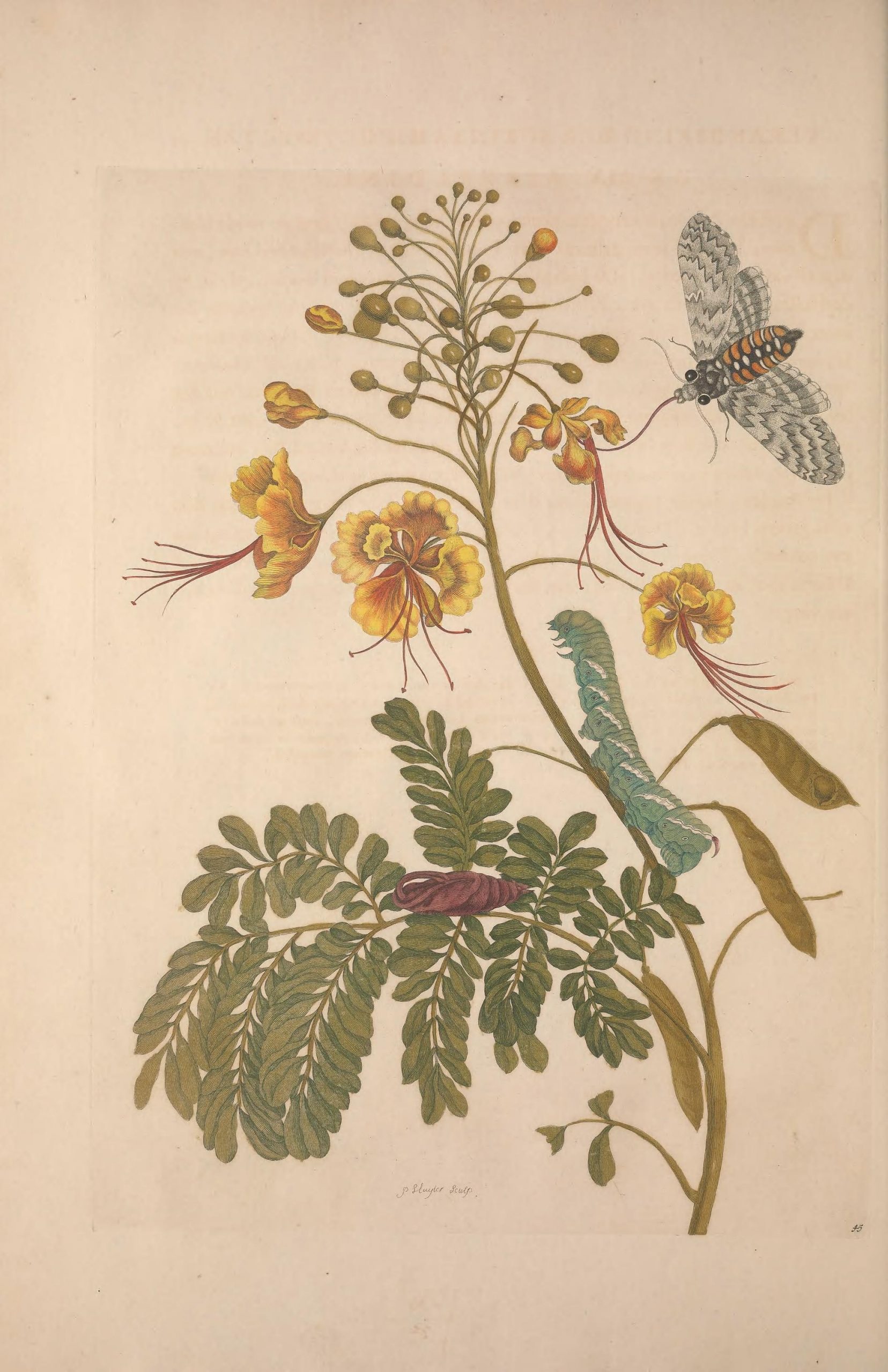
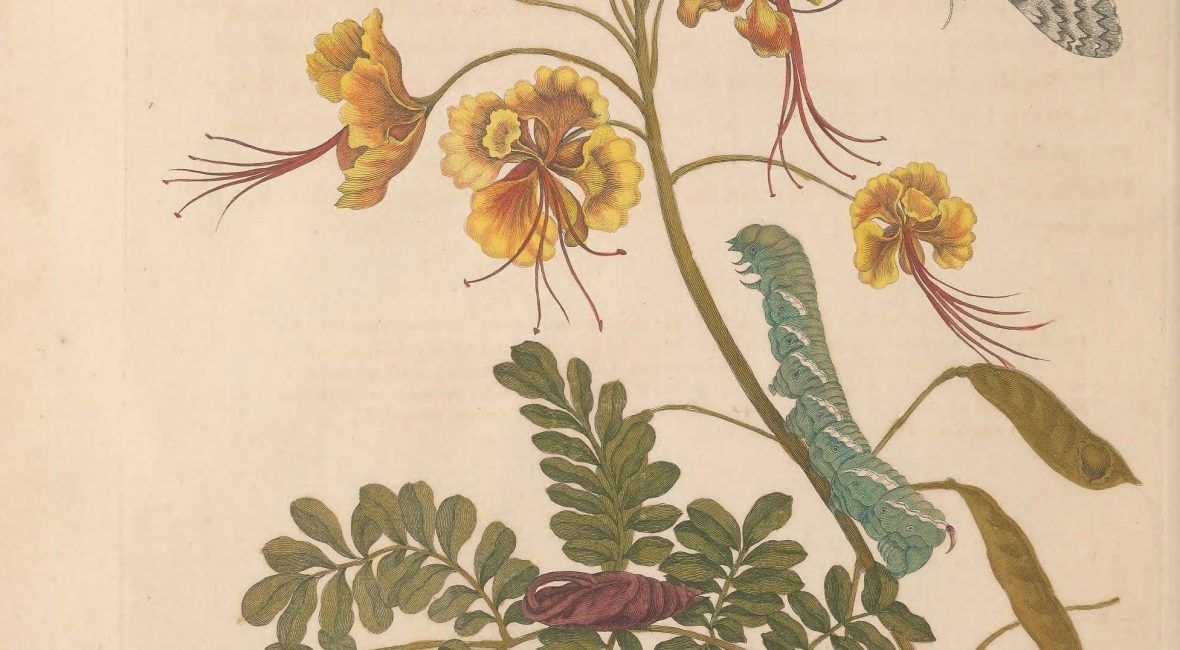
The peacock flower (Caesalpinia pulcherrima) with its seeds and the life cycle of the Caroline Sphinx Moth (Manduca sexta). Found in Metamorphosis insectorum surinamensium 1705, plate 45.

The peacock flower (Caesalpinia pulcherrima) with its seeds and the life cycle of the Caroline Sphinx Moth (Manduca sexta). Found in: Merian, Maria Sybilla. Metamorphosis insectorum surinamensium. 1705. Contributed in BHL from Smithsonian Libraries and Archives.

The beforehand mentioned project at the Museum für Naturkunde in Berlin revolved around the Dissertation sur la generation et les transformations des insectes de Surinam (published in 1726) and the three volumes of Histoire générale des insectes de Surinam et de toute l’Europe (published in 1771). These editions used the copper plates from the original Metamorphosis print. Although they lack the vivid colours of their original counterpart, the black and white engravings still show the broad diversity of the Suriname (and European) insects and plants. Currently the library awaits the arrival of a new book scanner to digitize these four books, as they were too large for the scanner currently in use. They should be available in BHL by the end of the year (2021).

The Dissertation contains twelve more plates, two of which Merian did not make herself. These two plates and their explanation were full of errors. Due to this and wrongly coloured plates in later editions, Merian was harshly criticized despite showing and explaining nearly everything right in her own coloured and published edition (Pieters & Winthagen 1999: 10; Nagrenda 2016: 121). However, “the many racist, sexist, plain nasty (and ignorant) 19th century critiques of her work in Surinam only serve to highlight the remarkable and path-breaking nature of her work in the 17th century” (Nagendra 2016: 121).

The three volumes of Histoire générale des insectes de Surinam et de toute l’Europe furthermore included the European insects as well, using original drawings from Merian, too. The Museum’s copies were a donation by the Gesellschaft naturforschender Freunde zu Berlin (G.n.F., engl. “Berlin Society of Friends of Natural Science”) when they closed their library in 1907. It is unknown who bought them for the G.n.F. but they were acquired between 1793 and 1828. Handwritten annotations show that the same person used the books. Furthermore, the copy at the Museum shows one of the incorrect plates is upside down, which ironically highlights the errors.
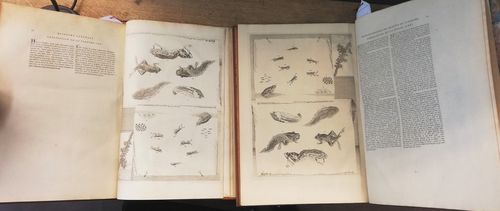
Comparison of two copies of a book with black and white illustrations. One copy has the illustration bound upside down.

Comparison of the incorrect copy of Histoire générale des insectes de Surinam et de toute l’Europe in the collection of the Museum für Naturkunde in Berlin. Photo Credit: Antonia Trojok.

Alongside these four books, another was found and digitized from the MfN collection: a German edition of a volume from Historiae naturalis by John Johnston, for which Maria Sibylla Merian’s older half-brothers, Matthäus and Caspar Merian, made the copper plates. You can find their names engraved on two plates in the books. The siblings learned alongside each other during their childhood as Jacob Marrel’s students. This title testifies to the artistic talent that ran in the family, given the detail included even for those animals of purely fantastical origins.
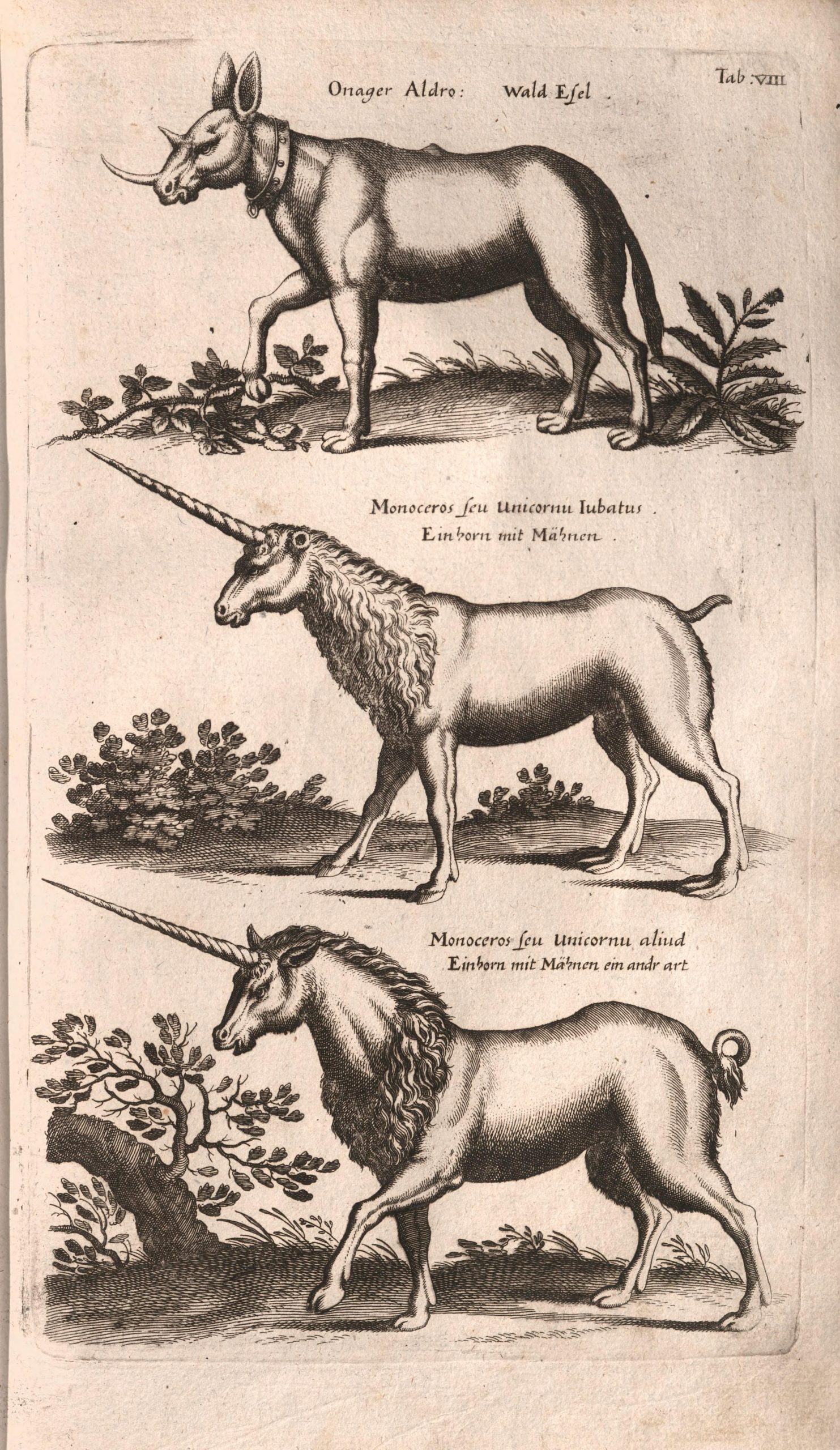
Engraved illustration of three unicorns.

Plate of fantastical creatures. Found in: Decker, Johannes. Naturgeschichte aus den besten Schriftstellern : mit Merianischen und neuen Kupfern. 1772. Digitized in BHL by Museum für Naturkunde Berlin.

In conclusion, the editions in the Museum für Naturkunde and many other instances show that Maria Sibylla Merian’s legacy for natural science still lives on. Merian was also the first European to do a voyage for a solely scientific purpose (Valiant 1993: 470) and recorded the life cycle of a frog. The Father of Taxonomy, Carl Linnaeus, as well as many more scientists cited her work throughout the years. However, we cannot highlight her legacy without also confronting her use of enslaved labour and acknowledging and respecting the impact that enslaved and Indigenous people in Suriname had on her work. Without them, Merian probably would not have shown the diversity of the rainforest for the first time.

With Merian’s legacy digitized, even more researchers and nature lovers can now enjoy her work in the future. Hopefully, these digitized copies will also inspire continued research into the extent and impact of the enslaved African and Indigenous people who contributed to this ground-breaking work.

You can read the first edition (in Dutch) of Metamorphosis insectorum surinamensium (1705)—freely available in BHL thanks to Smithsonian Libraries and Archives. Or check out Merian’s drawings from the first edition on the BHL Flickr page.

References

Davis, Natalie Zemon. 1996. Drei Frauenleben – Glikl – Marie de l’Incarnation – Maria Sibylla Merian. Berlin, Wagenbach.

Baumgarten, Megan & Kennedy Claire. 2017. Merian and the Pineapple: Visual Representation of the Seneses, in: Hacke, D. & Musselwhite, P. (eds.), Empire of the senses: Sensory practices of colonialism in early America, Boston, Brill, 190–222. http://dx.doi.org/10.1163/9789004340640.

Kutschera, Ulrich. 2017. Maria Sibylla Merian (1647-1717) – Pionieren der Entwicklungsbiologie und Ökologie, Biologie in unserer Zeit 47(1), 28–36. http://dx.doi.org/10.1002/biuz.201710610

Nagendra, Harini. 2016. Maria Sibylla Merian (1647–1717), Resonance 21(2), 115–124. http://dx.doi.org/10.1007/s12045-016-0305-9

Merian, Maria Sibylla & O’Brien-Twohig, Sarah. 2012. from Metamorphosis insectorum Surinamensium (Or, Transformations of Surinamese Insects ), Review: Literature and Arts of the Americas 45(1), 21–28. http://dx.doi.org/10.1080/08905762.2012.670451

Pieters, Florence. & Winthagen, Diny. 1999. Maria Sibylla Merian, naturalist and artist (1647-1717): A commemoration on the occasion of the 350th anniversary of her birth, Archives of natural history 26(1), 1–18. http://dx.doi.org/10.3366/anh.1999.26.1.1

Polcha, Elizabeth. 2019. Breeding Insects and Reproducing white Supremacy in Maria Sibylla Merian’s Ecology of Dispossession. https://www.ladyscience.com/breeding-insects-and-reproducing-white-supremacy/no57

Valiant, Sharon. 1993. Maria Sibylla Merian: Recovering an Eighteenth-Century Legend, Eighteenth-Century Studies 26(3), 467–479. https://doi.org/10.2307/2739414
June 3, 2021by Joel Richard
Blog Reel, User Stories

Historic Art Meets Modern Art: Artist’s Recent Works Highlight BHL Images

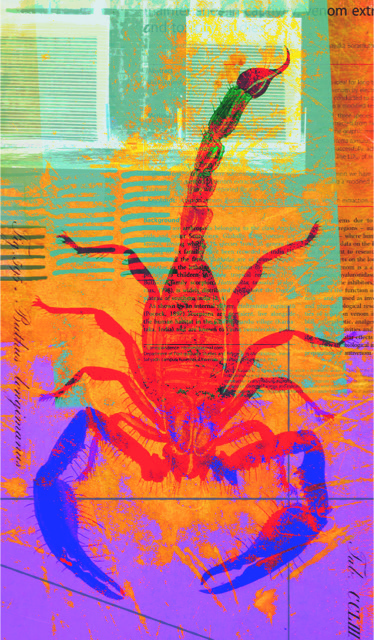
red, purple, blue and green artwork with scorpion in the background
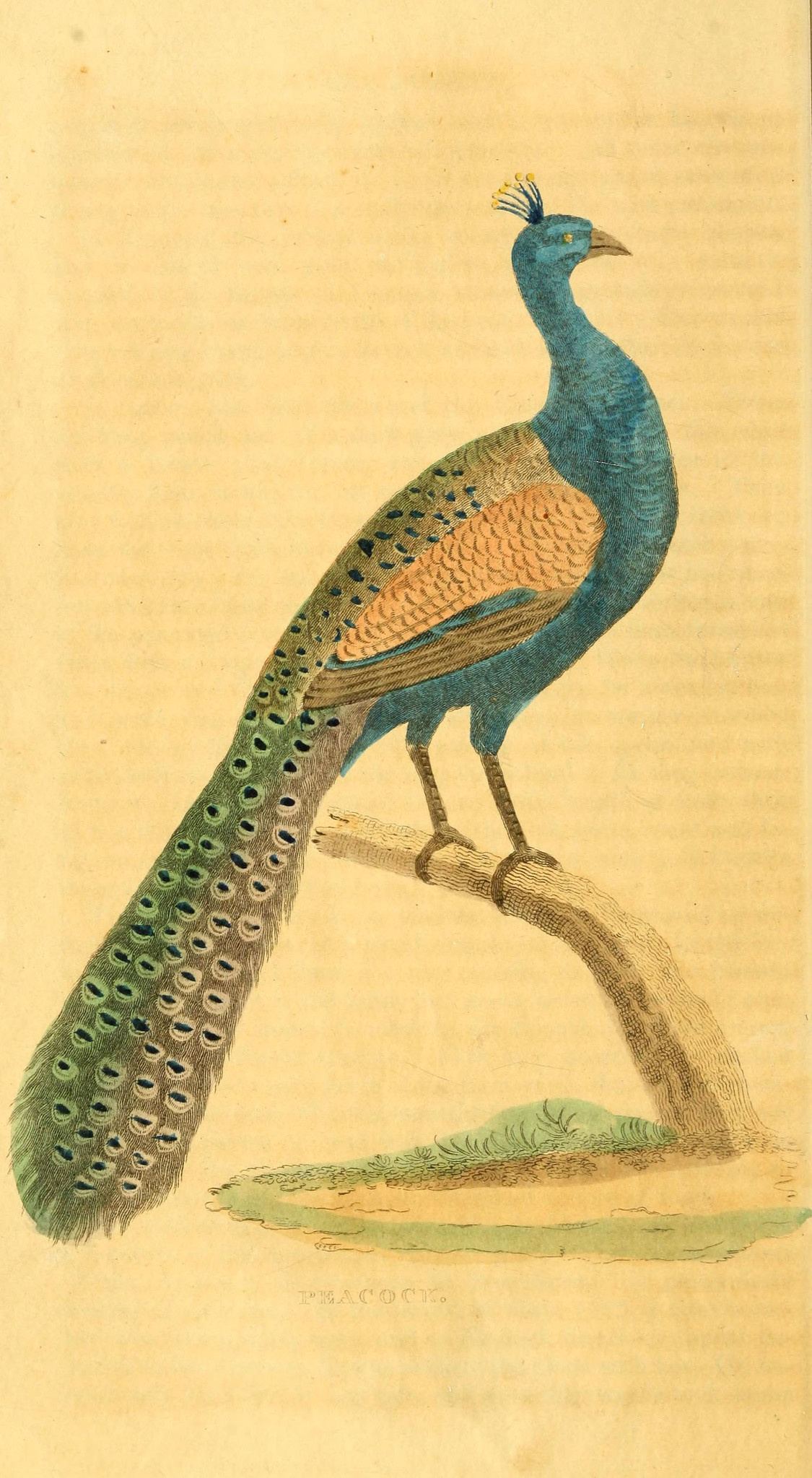
drawing of a blue bird with teal colored tail feathers standing on a branch

Peacock. A Natural History of Birds, Fishes, Reptiles, and Insects (1845). Contributed in BHL from Smithsonian Libraries. Downloaded from the BHL Flickr.

Art is an integral part of scientific investigation and documentation. Before the advent of photography, illustrations were used to capture the natural world and share it with broader audiences through reproduction via woodcuts, engravings and etchings, and lithography in natural history publications. Even today, scientific illustration is important, articulating morphological, physiological and anatomical features with more detail and clarity than can often be captured through photographs.

With more than five centuries of natural history literature, the Biodiversity Heritage Library’s open access collections include millions of scientific illustrations amongst the Library’s nearly 60 million pages. Since 2011, BHL partners have worked to upload many of these illustrations to Flickr. Recent publicity from a myraid of outlets including Colossal, My Modern Met, Open Culture, Atlas Obscura, Lifehacker, and Vice has generated wide public interest in BHL’s Flickr collections, which in 2020 included over 180,000 images freely available to browse, download, and reuse. The images are curated by volume and searchable by subject and, in many cases, scientific names thanks to tags added as part of our Flickr tagging citizen science project.

These illustrations are useful for communities in a wide range of disciplines. Our audiences have shared how they use these illustrations to support studies in the sciences, such as identifying the earliest observations on heterostyly in plants, researching the history of herbaria, and revisiting the legacy of women in science. Citizen scientists make use of these resources on platforms like Wikipedia and to research the identities of natural history artists.

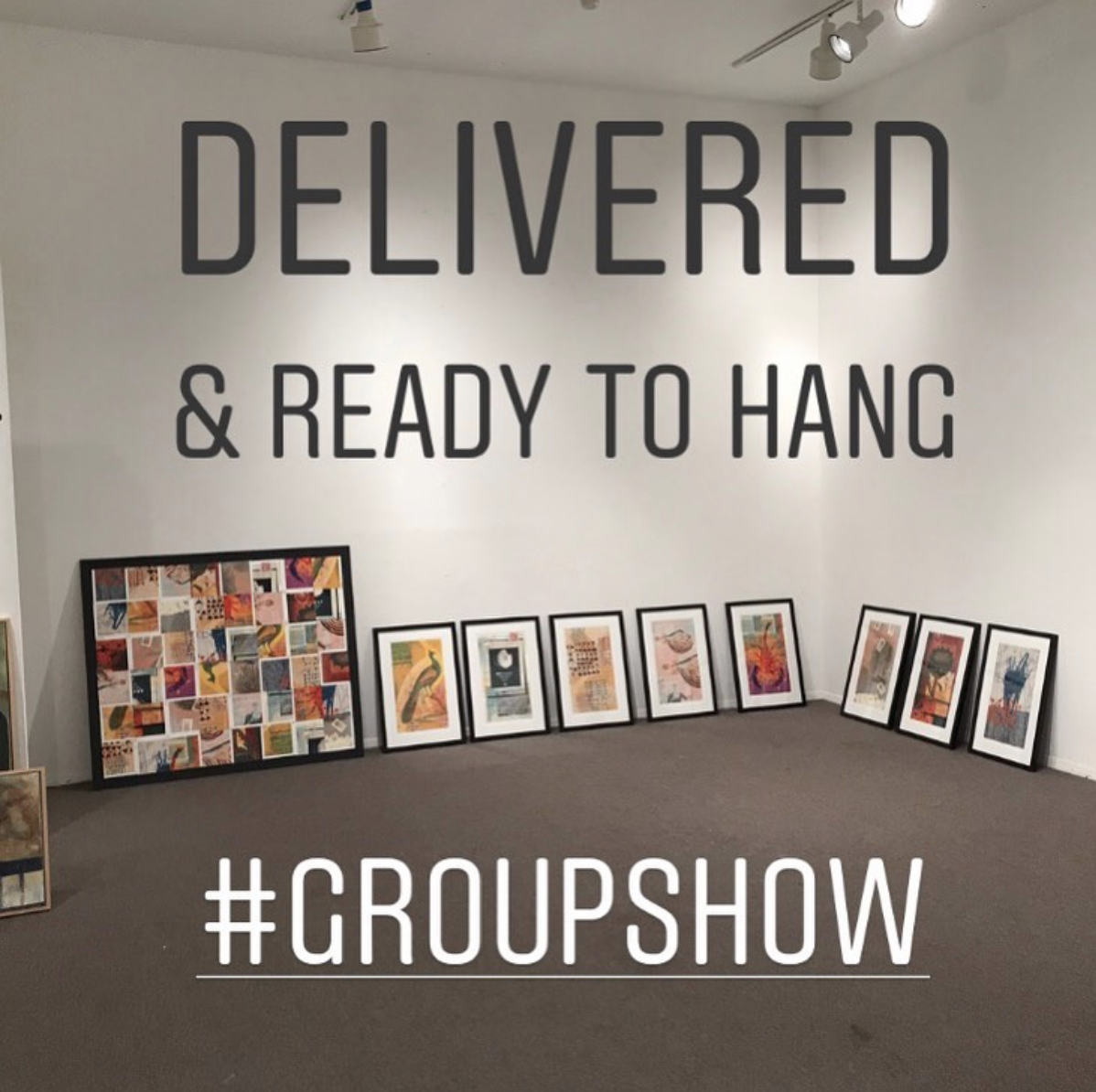
Given that these illustrations are works of art, it’s not surprising that these collections are also providing a wealth of inspiration for artists like Dee Etzwiler, who recently used BHL images within nine pieces she created for a group show — Conversations: Reflections of 14 Women Artists — exhibited at the Maude Kerns Art Center (Eugene, OR) from 10 January – 7 February 2020.

framed artworks on the ground with text "delivered and ready to hang".

Dee Etzwiler’s artworks incorporating BHL imagery, delivered for the group show — Conversations: Reflections of 14 Women Artists — exhibited at the Maude Kerns Art Center (Eugene, OR) from 10 January – 7 February 2020. Photo credit: D. Etzwiler on Instagram.

Photo of a person with curly brown hair smiling at the camera

Photo by: Eric Merrow | @MerrowVisuals (www.merrowvisuals.com)

“As an artist, BHL offers a wealth of imagery for me to explore and discover,” affirms Etzwiler. “The images are abundant in number and are superb in beauty, diversity and quality.”

With a background in art and a master’s degree in architecture, Etzwiler combined her skills to found her own commercial art firm in 2012, where she works collaboratively with clients to create custom artworks. While most of her work is client driven, Conversations gave Etzwiler an opportunity to create a body of work driven by her own interests and influences.

It was while conducting image research in 2019 for these artworks that Etzwiler first discovered BHL.

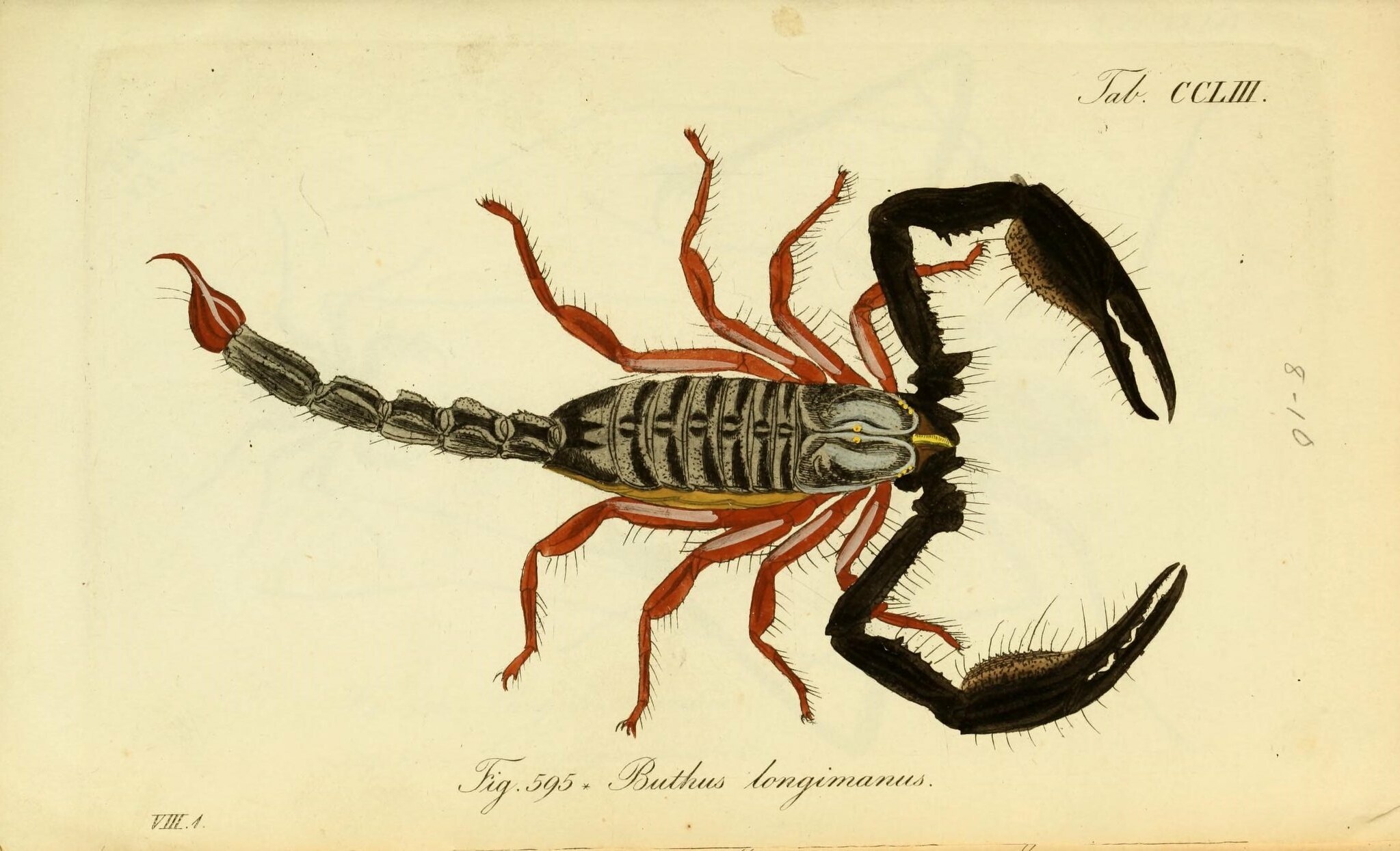
“I had decided to create a number of pieces to represent different adjectives that describe conversations,” explains Etzwiler. “While conducting research, I discovered a scorpion image on the BHL Flickr that became central to one of my pieces. This was the first BHL image I started to seriously digitally manipulate, and the piece quickly developed into an exciting work. I decided that my entire body of work for the Conversations group show would revolve around BHL inspiring images.”

black and red scorpion

Scorpion image from the Biodiversity Heritage Library which Etzwiler incorporated into her artwork, ‘Stinging’ (2019). Plate CCLIII. Die Arachniden, Bd. 8-10 (1841-43). Contributed in BHL from the Ernst Mayr Library, Museum of Comparative Zoology, Harvard University. Downloaded from the BHL Flickr.

red, purple, blue and green artwork with scorpion in the background

‘Stinging’. Artwork by Dee Etzwiler for the group show — Conversations: Reflections of 14 Women Artists — exhibited at the Maude Kerns Art Center (Eugene, OR) from 10 January – 7 February 2020. © Etzwiler 2019. Reproduced with permission from D. Etzwiler.

When looking for BHL imagery to incorporate into her art, Etzwiler starts by conducting searches in the BHL Flickr by common name, scientific name, and other related words so that she can uncover a wide range of potential images with which to work. Once she selects an image, she downloads a full size file and imports it into a Photoshop file where she layers it with textures, images and colors to develop her artwork. Once completed, the art is commercially printed, making use of a variety of printing substrates — fine art paper, metal, acrylic, wood, canvas, fabric, and more.

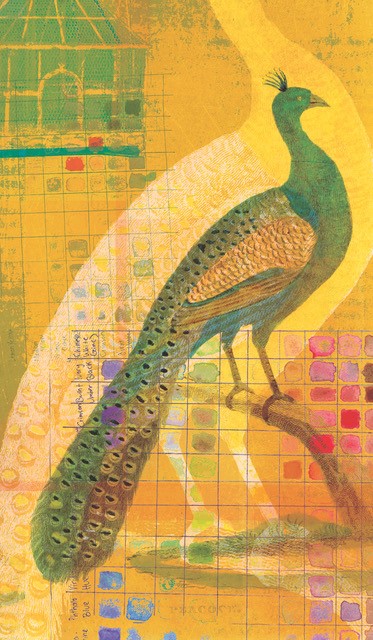
orange and yellow painting with peacock in the background

‘Colorful’. Artwork by Dee Etzwiler for the group show — Conversations: Reflections of 14 Women Artists — exhibited at the Maude Kerns Art Center (Eugene, OR) from 10 January – 7 February 2020. © Etzwiler 2019. Reproduced with permission from D. Etzwiler.
  Incorporating artwork from BHL: Peacock. A Natural History of Birds, Fishes, Reptiles, and Insects (1845). Contributed in BHL from Smithsonian Libraries. Downloaded from the BHL Flickr.

BHL has made incorporating these historic illustrations into her own artworks extremely easy.

“I love how easily I can search the images in Flickr and how well the images are organized and displayed,” asserts Etzwiler. “I love that I can view images in greater detail and download them in a variety of sizes and resolutions. Having access to copyright information is very important, too. It was so much fun to create this body of work, and I am grateful that I committed to this idea.”

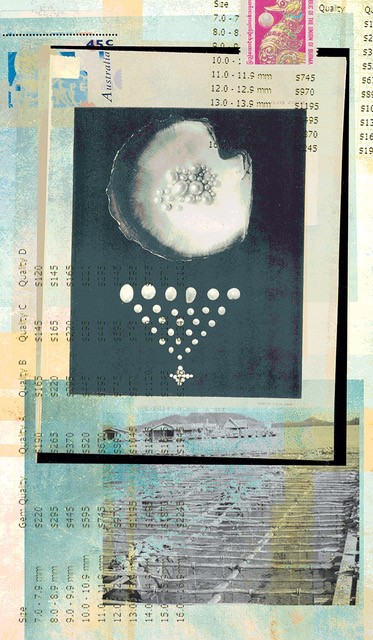
teal and cream artwork with shell and pearls in background

‘Valuable’. Artwork by Dee Etzwiler for the group show — Conversations: Reflections of 14 Women Artists — exhibited at the Maude Kerns Art Center (Eugene, OR) from 10 January – 7 February 2020. © Etzwiler 2019. Reproduced with permission from D. Etzwiler.
Incorporating artwork from BHL: Plate XXXVII. The Great Barrier Reef of Australia (1893). Contributed in BHL from Smithsonian Libraries. Downloaded from the BHL Flickr.

Etzwiler enjoyed her experience working with BHL images so much, she intends to continue to use these collections in her pieces. In fact, this experience has had a deep impact on her artistic interests and the future direction of her work.

“My work with BHL’s images has greatly increased my interest in creating science-related art, which has now become a focus of my work as I move forward,” shares Etzwiler. “With the current coronavirus pandemic, I will be focused on this science-related work in my studio. I know that BHL assists those in the science community, but it has also made a big impact on my life as an artist and I am grateful.”

red and blue painting with blowfish in the background

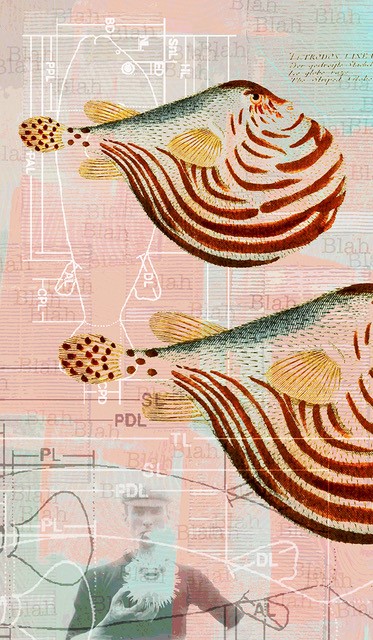
‘Long-Winded’. Artwork by Dee Etzwiler for the group show — Conversations: Reflections of 14 Women Artists — exhibited at the Maude Kerns Art Center (Eugene, OR) from 10 January – 7 February 2020. © Etzwiler 2019. Reproduced with permission from D. Etzwiler.
Incorporating artwork from BHL: Pl. 141. Ichthyologie, v. 1 Plate (1796). Contributed in BHL from the Ernst Mayr Library, Museum of Comparative Zoology, Harvard University. Downloaded from the BHL Flickr.

BHL’s open access digital library portal allows anyone to freely access valuable literature and beautiful images from anywhere — even at home and when access to physical collections is not possible. We’re grateful to our global partners for making their collections freely available — empowering research, learning, and creativity, no matter where you are.

Thank you to Dee Etzwiler and others in our global community for letting us know how valuable and inspirational BHL’s collections are in so many ways and for so many people.

collage with mostly red and orange colors

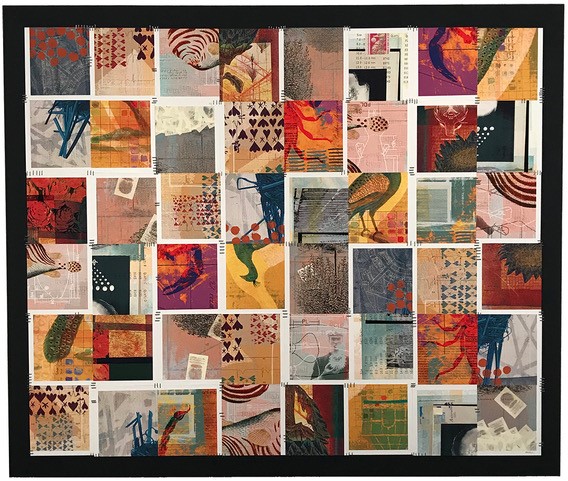
‘The Gathering’. A patchwork of pieces from the original 8 images created by Dee Etzwiler for the group show — Conversations: Reflections of 14 Women Artists — exhibited at the Maude Kerns Art Center (Eugene, OR) from 10 January – 7 February 2020. The original 8 pieces represent conversation types, so this large piece represents a hypothetical social gathering.
© Etzwiler 2019. Reproduced with permission from D. Etzwiler.

May 14, 2020by michelle.underhill
Blog Reel, Featured Books

Wildflowers of Ecuador: Watercolors and eBooks

View Full Size Image
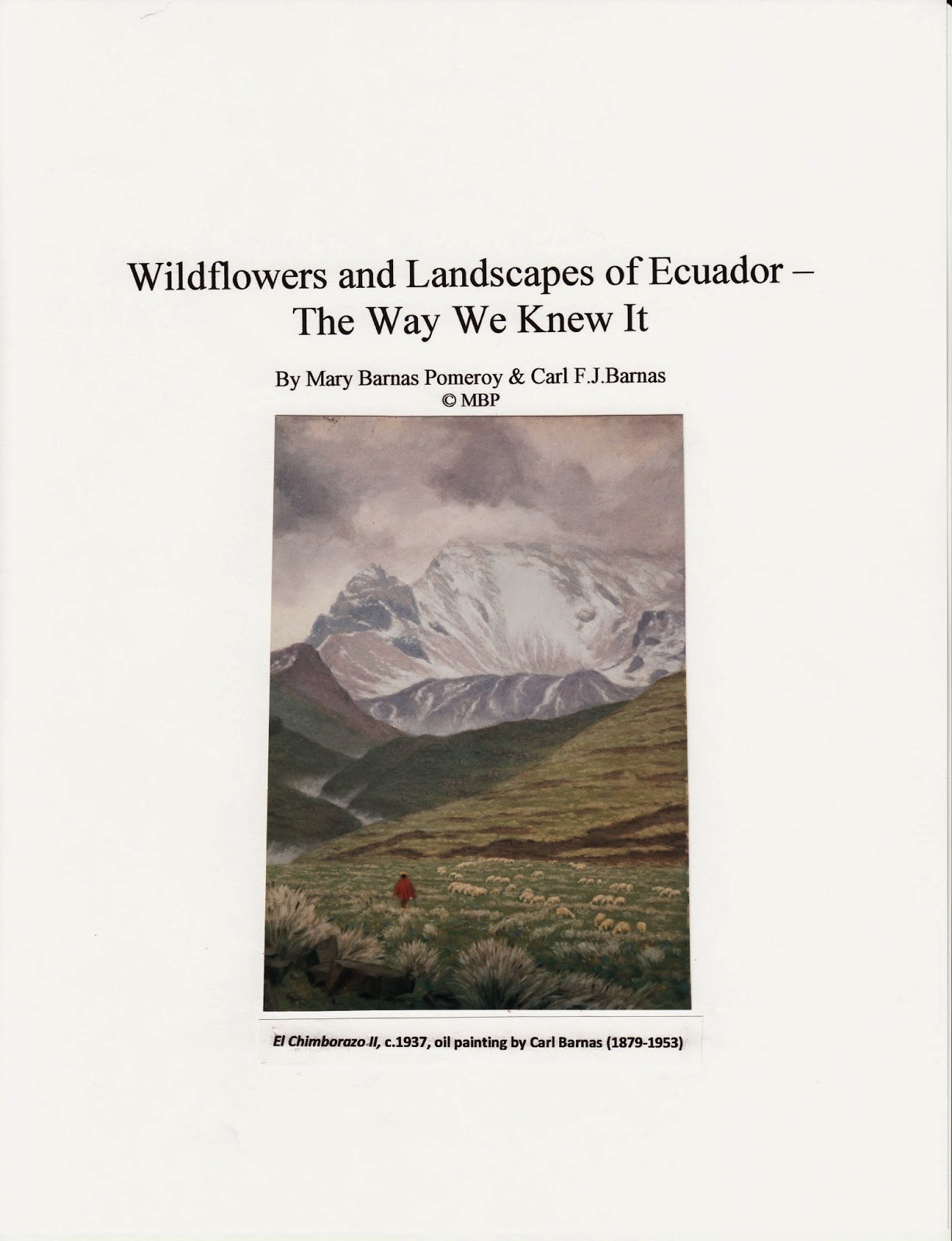
Missouri Botanical Garden, Peter H. Raven Library’s first eBook: Wildflowers and Landscapes of Ecuador: The Way We Knew It.

Every now and then an unusual and exciting opportunity arises to digitize a very unique item. Such an opportunity arrived in the email box of Doug Holland, the director of the Peter H. Raven Library at the Missouri Botanical Garden, one afternoon in January 2014. Anne Hess, daughter of artist Mary Barnas Pomeroy and grand-daughter of artist/teacher Carl Barnas, had decided to donate a collection of artwork and her mother’s unfinished manuscript to the library. It was with great honor that the Raven Library accepted this collection. Not only are the paintings themselves beautiful, but the backdrop to history that this collection provides is also fascinating.

View Full Size Image
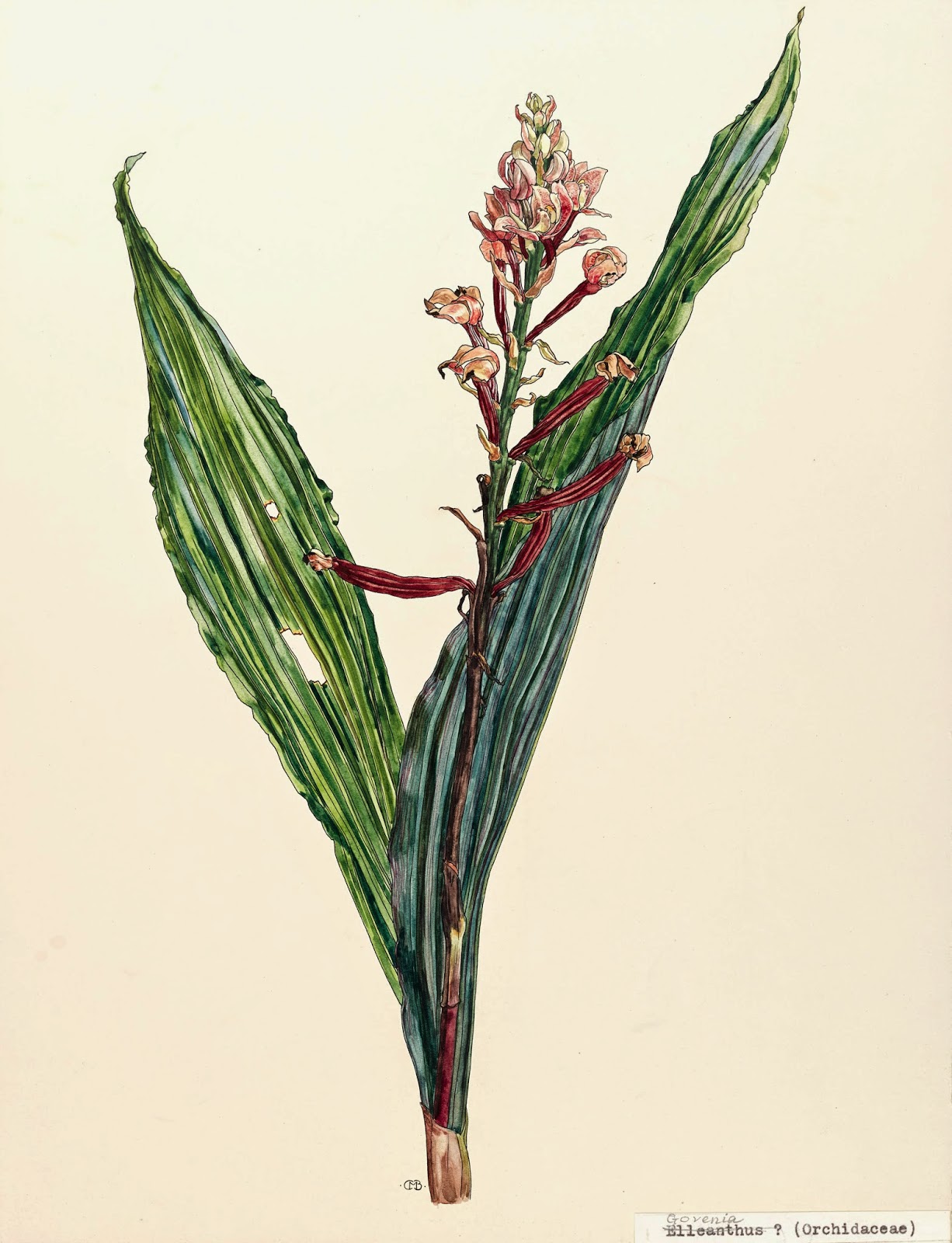
Orchidaceae. Pomeroy, Mary Barnas. Wildflowers and Landscapes of Ecuador: The Way We Knew It (2015). http://biodiversitylibrary.org/page/46381682.

Escaping the rise of Nazism in 1930s Laubach, Germany, the Barnas family travelled to Quito, Ecuador, after a one-year stay in Czechoslovakia. It is in Ecuador that most of the artwork was created. Ms. Pomeroy created detailed watercolors of many botanical specimens, but she also labeled their location and sought to identify each specimen.

Ms. Pomeroy’s interest in botanical illustrations piqued at the suggestion of her father. In 1938, she began the first of what would become more than 200 illustrations, when she decided to start compiling all the information six years later for a book that would contain her numerous illustrations. She decided to focus on illustrating smaller plants and fungi with the thought that the larger specimens might have already been described as “the more attractive ones might have been easier noticed and better known to science.” The 41 different botanical families were examined under a magnifying glass to be able to replicate all visible details.

View Full Size Image
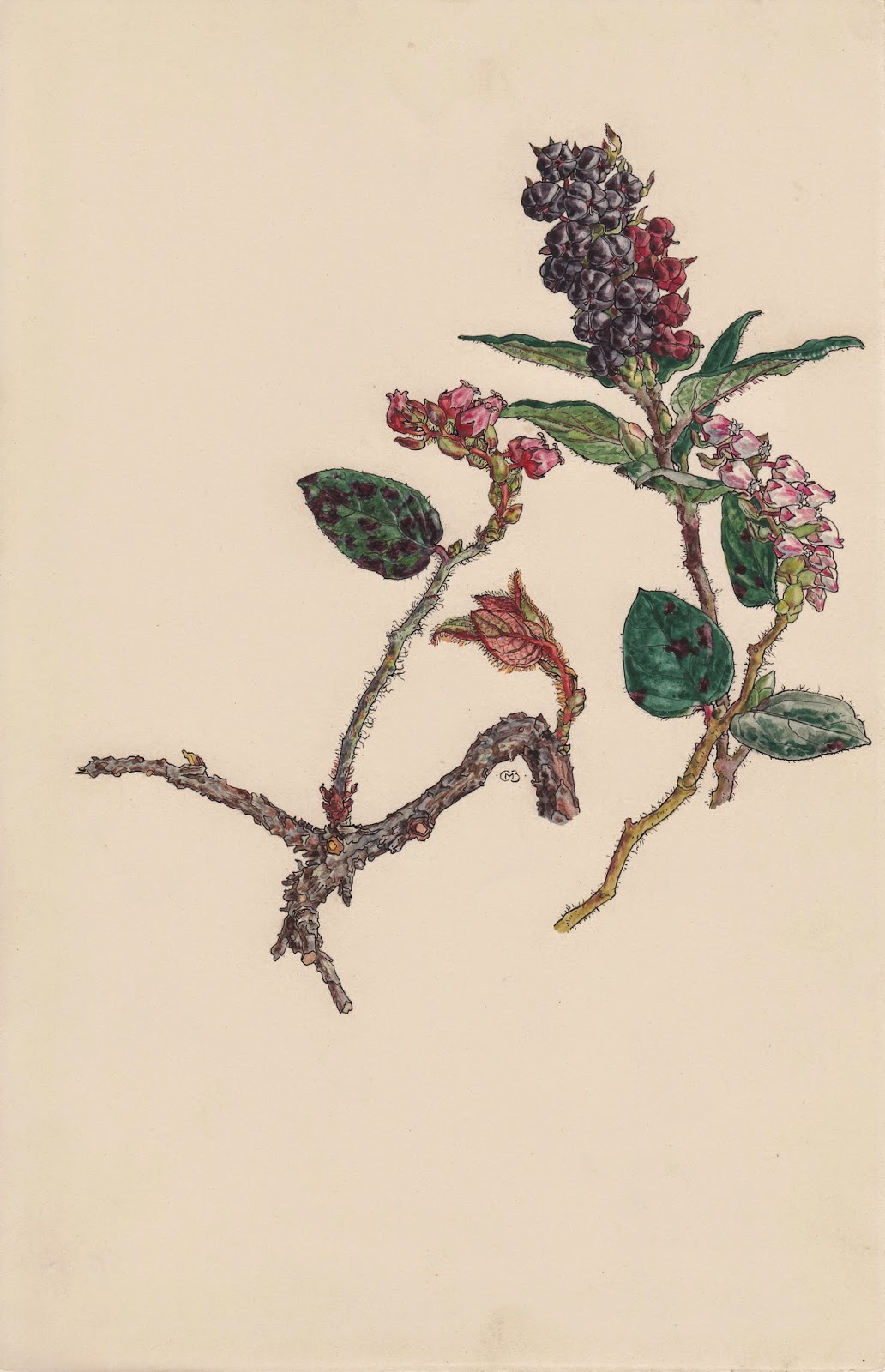
Ericaceae. Pomeroy, Mary Barnas. Wildflowers and Landscapes of Ecuador: The Way We Knew It (2015). http://biodiversitylibrary.org/page/46381572.

As her portfolio kept increasing, she thought it prudent to try to identify and label each of the specimens she had already painted. Although never formally trained as a botanist herself, she enlisted the assistance of many other botanists, such as Dr. Alfredo Paredes of the Universidad Central del Ecuador and Dr. Francis Pennel of the Academy of Natural Sciences of Philadelphia, to help identify or confirm the identity of various specimens to label each one as accurately as possible. Ms. Pomeroy was also employed at various times as a botanical illustrator; for instance, she worked for the University of California – Berkeley’s Herbert L. Mason who was laboring on A Flora of the Marshes of California.

After a more than 50-year hiatus, Ms. Pomeroy returned to her book of botanical illustrations of plants and fungi from Ecuador. Unfortunately, she passed away before being able to complete her book.

During her life, Ms. Pomeroy enthralled Dr. Peter H. Raven, former president of the Missouri Botanical Garden, with her early Ecuadorian illustrations. This led to a showing of the artwork both at the Missouri Botanical Garden in St. Louis and in various other cities.

View Full Size Image
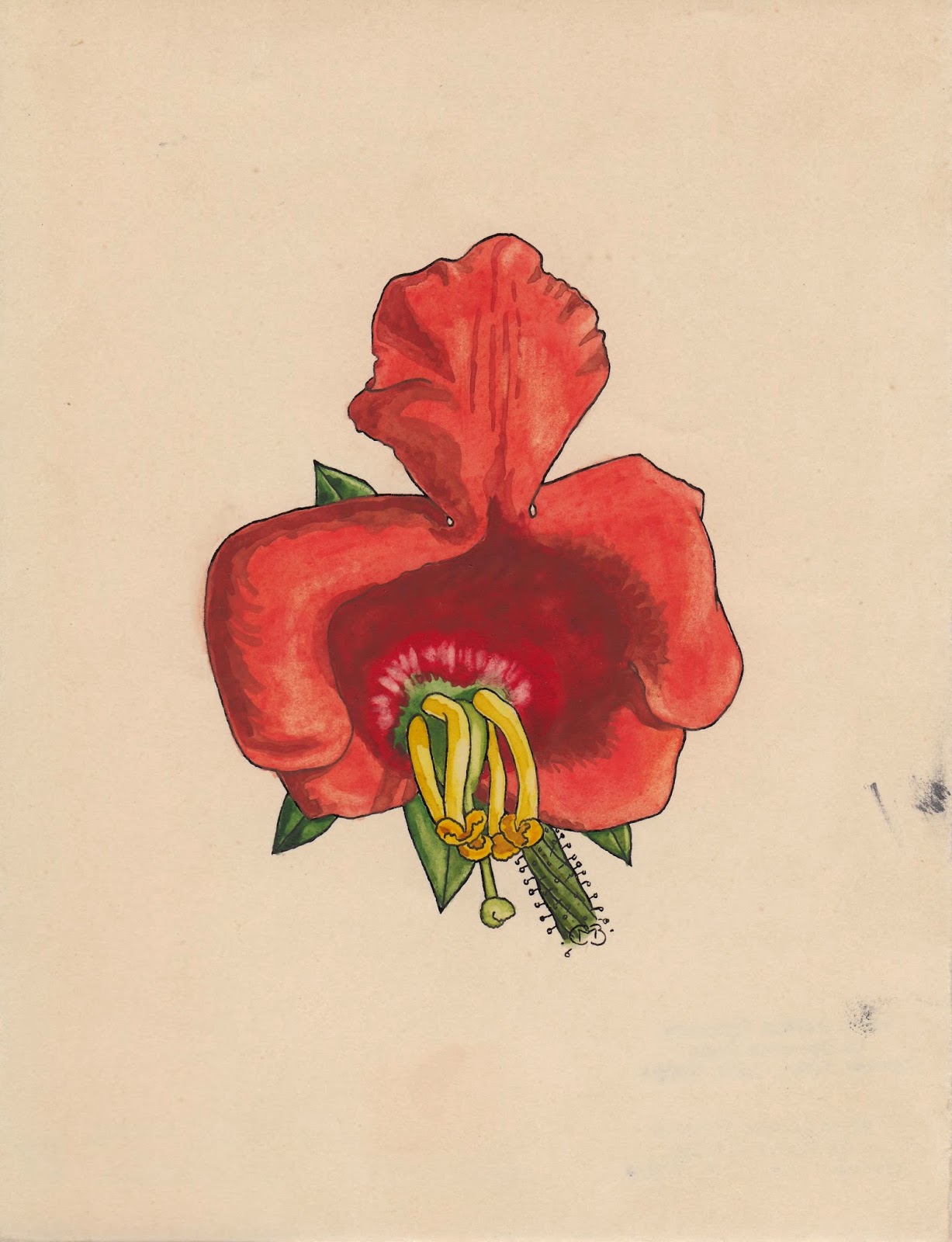
Caritas rojas / Alonsoa meridionalis. Pomeroy, Mary Barnas. Wildflowers and Landscapes of Ecuador: The Way We Knew It (2015). http://biodiversitylibrary.org/page/46381921.

This is where Ms. Pomeroy’s daughter, Anne Hess, stepped into the foreground and offered her mother’s collection to the Raven Library. Upon learning that most of the artwork was meant to tie-in with an unpublished manuscript, suggestions arose that the unpublished manuscript should evolve into the library’s first e-book publication entitled Wildflowers and Landscapes of Ecuador: The Way We Knew It.

Ms. Pomeroy had already sorted all the images into major categories, which facilitated easy pairing of the images with their respective chapters and descriptions.

View Full Size Image
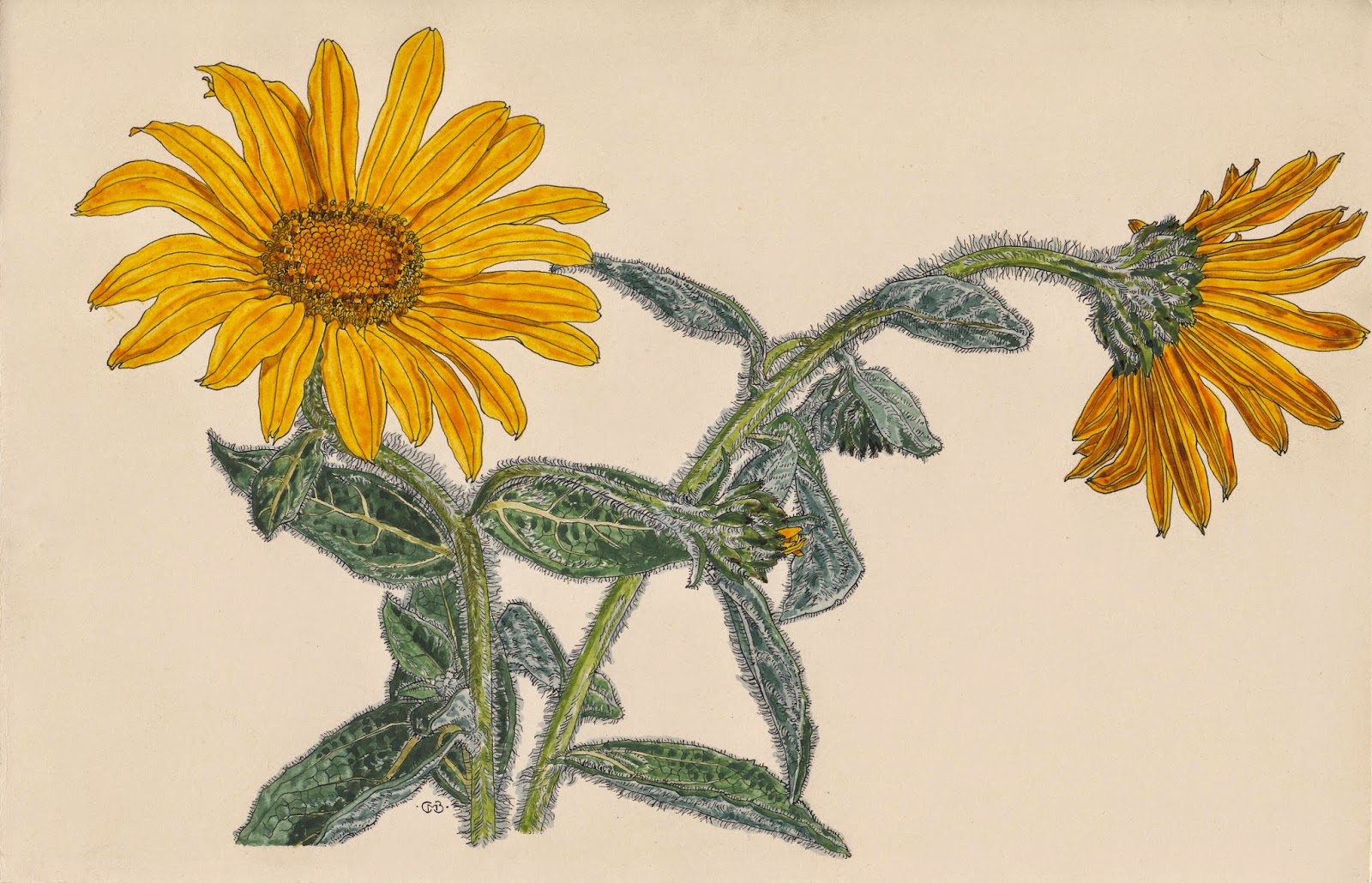
Viguiera sodiroi. Pomeroy, Mary Barnas. Wildflowers and Landscapes of Ecuador: The Way We Knew It (2015). http://biodiversitylibrary.org/page/46381524.

In addition, Ms. Pomeroy had written a short fictional story titled “An Indian boy meets Mount Pichincha’s flowers,” which is included toward the end of the book. The reader is taken on an expedition through the eyes of a young boy, Hilario, as he collects botanical specimens with a botanist named Professor Flores.

View Mr. Barnas’ landscapes and Ms. Pomeroy’s enchanting botanical illustrations, as well as relive her experiences when you peruse this wonderful work on the Biodiversity Heritage Library’s website.

View Full Size Image
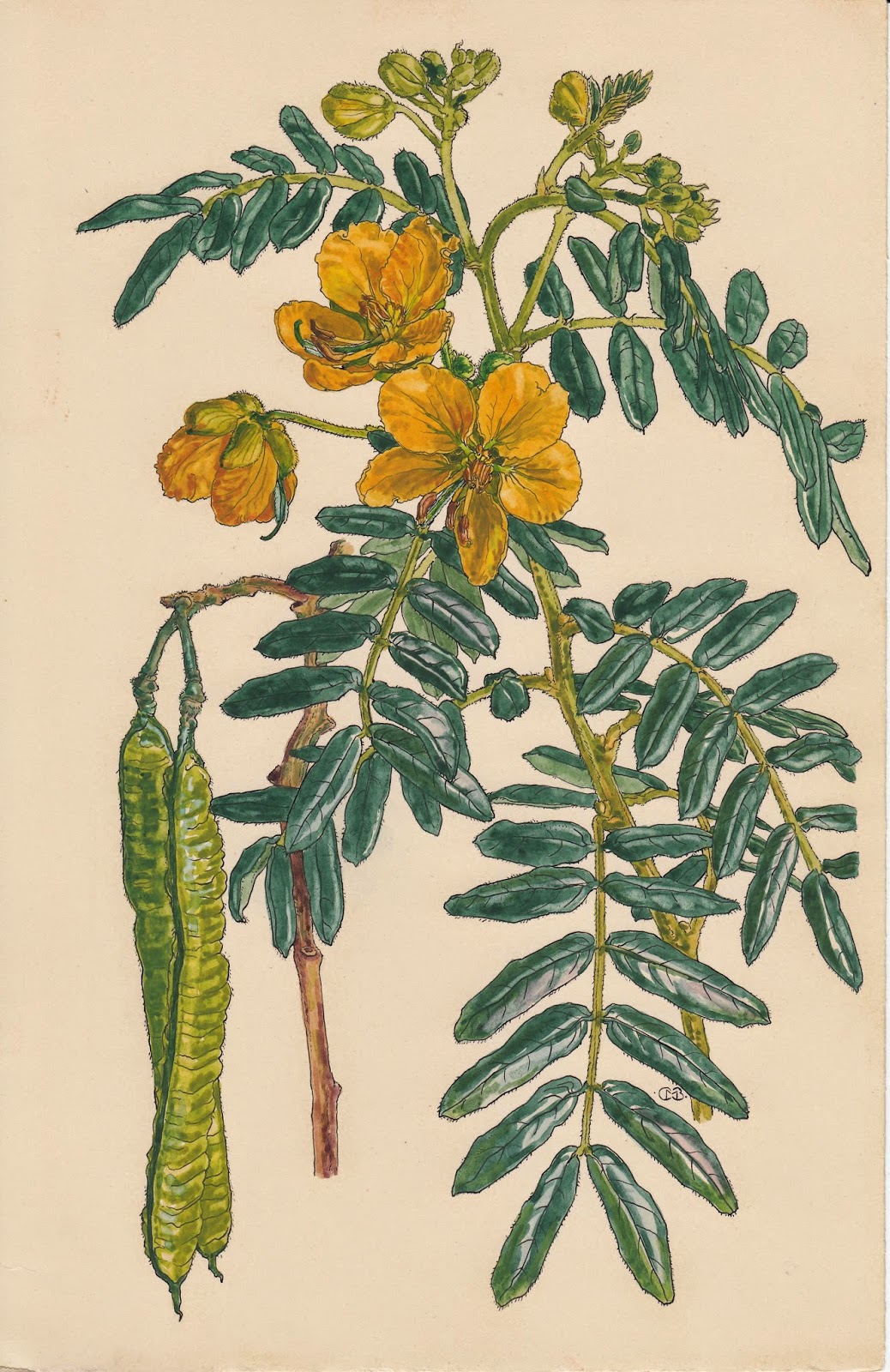
Senna hirsuta. Pomeroy, Mary Barnas. Wildflowers and Landscapes of Ecuador: The Way We Knew It (2015). http://biodiversitylibrary.org/page/46381304.


View Full Size Image
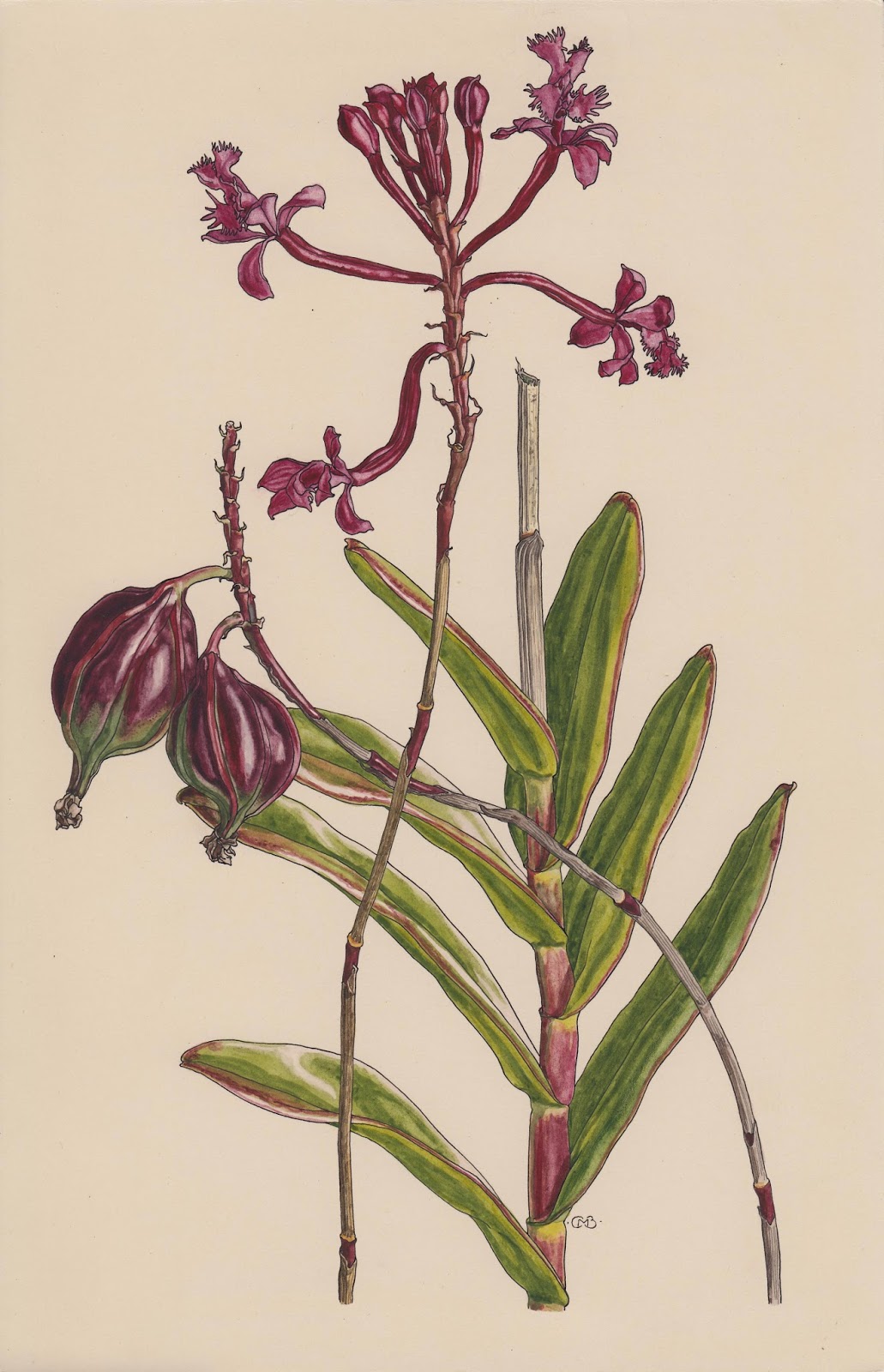
Epidendrum secundum. Pomeroy, Mary Barnas. Wildflowers and Landscapes of Ecuador: The Way We Knew It (2015). http://biodiversitylibrary.org/page/46381402.


View Full Size Image
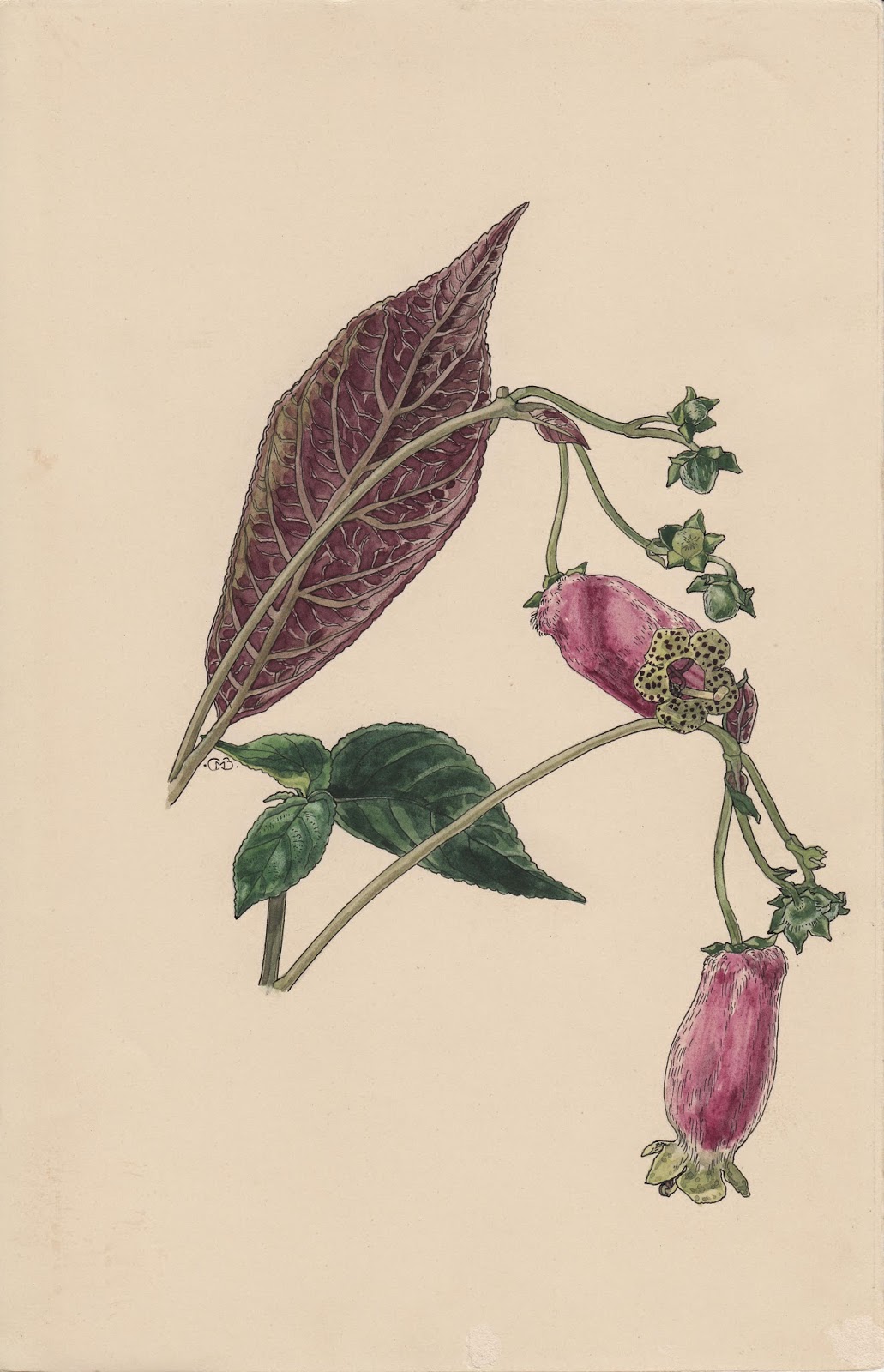
Campanea sp. Pomeroy, Mary Barnas. Wildflowers and Landscapes of Ecuador: The Way We Knew It (2015). http://biodiversitylibrary.org/page/46381463.


View Full Size Image
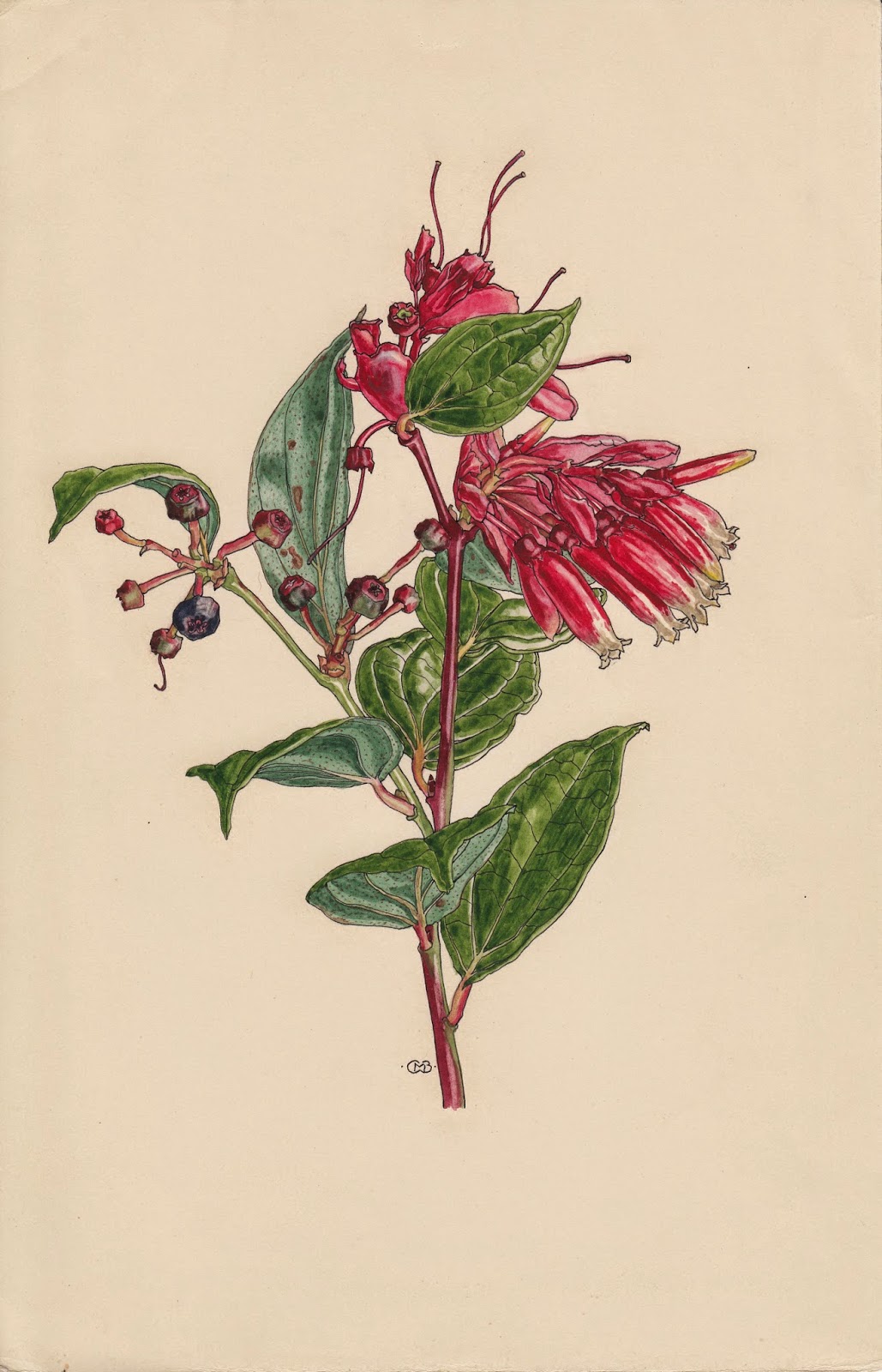
Cavendishia gilgiana. Pomeroy, Mary Barnas. Wildflowers and Landscapes of Ecuador: The Way We Knew It (2015). http://biodiversitylibrary.org/page/46381804.


View Full Size Image
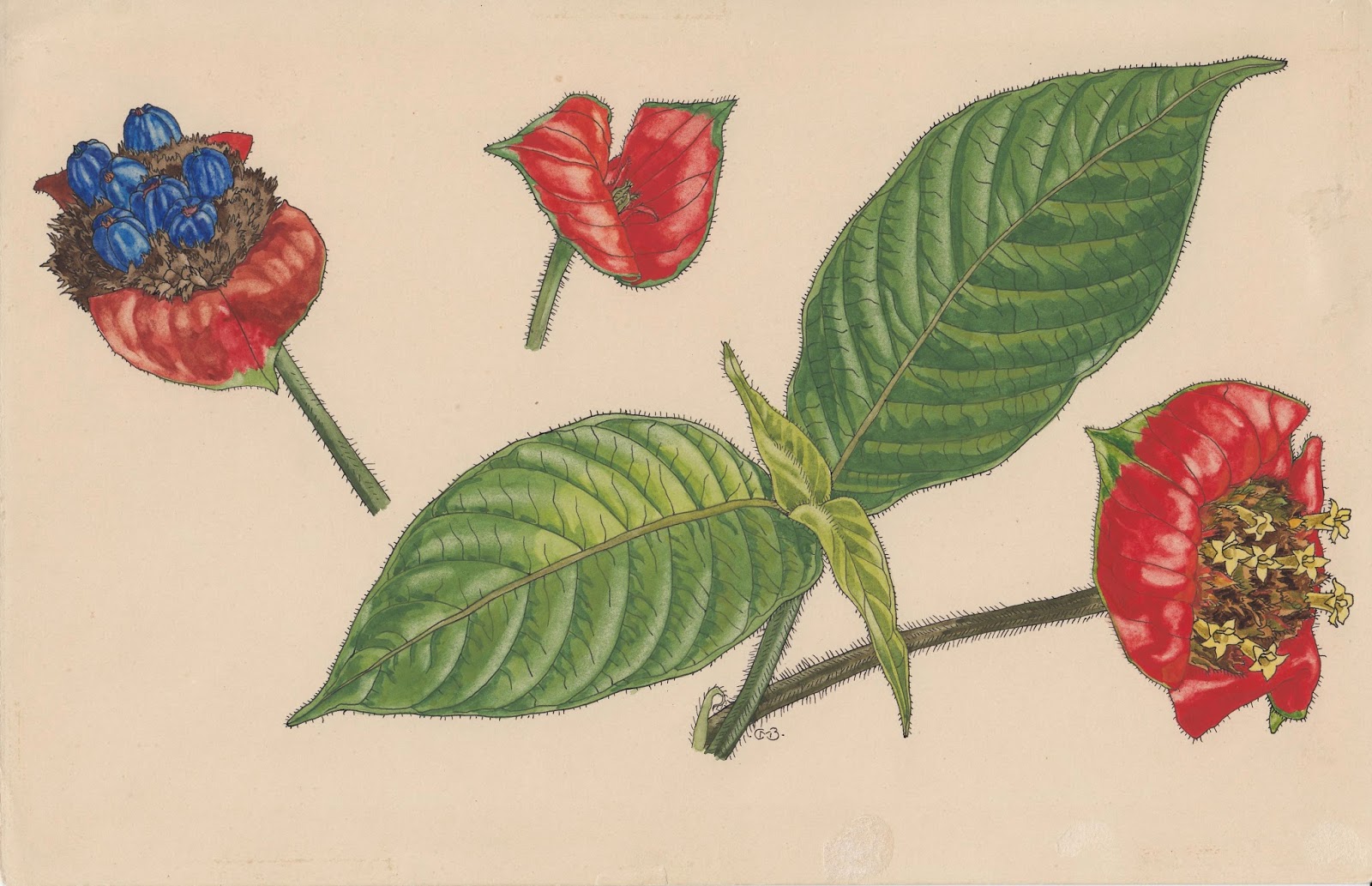
Cephalis tomentosa. Pomeroy, Mary Barnas. Wildflowers and Landscapes of Ecuador: The Way We Knew It (2015). http://biodiversitylibrary.org/page/46381241.


January 22, 2015by ulib-libraryjobs
Blog Reel, Featured Books

Early Women In Science: Trekking Through Nature, Trailblazing Their Way Through History

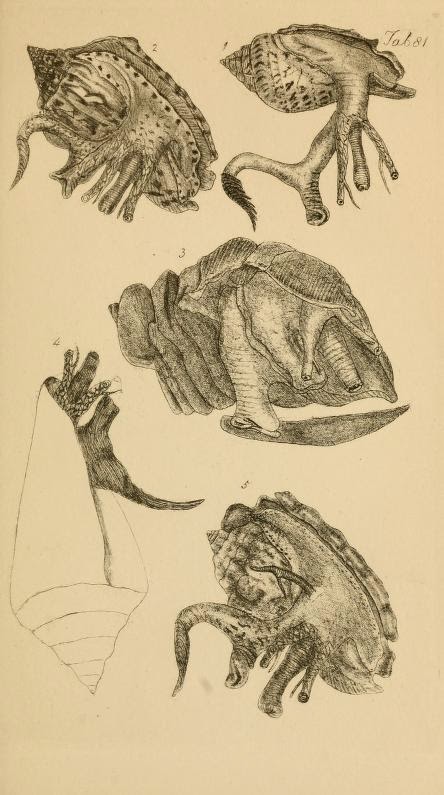
The sixteen women featured in the “Early Women In Science” exhibition are each extraordinary for unique reasons.  One trait they all share is that they were doing work in scientific fields reserved for men. They sometimes had to fight for recognition of their work—or went completely unrecognized for some of their major contributions. For instance, Maria Emma Gray (1787-1876) was a talented natural history illustrator. She not only contributed to the work of her husband, zoologist John Edward Gray, but also saw him through his nervous breakdown, eventually helping him to work again. Despite her contributions to his studies, however, she is not credited in his works.

View Full Size Image
Illustration by Maria Emma Gray, from Figures of Molluscous Animals, Selected from Various Authors. Etched for the Use of Students by Maria Emma Gray, vol. 2, 1859 | Smithsonian Biodiversity Heritage Library

Even when the male scientific community did praise the contributions of their feminine peers, many of the earliest women scientists remained resistant to any form of boasting or taking credit, since that was considered unseemly in women. Not so with bold scientists like Ynes Enriquetta, Julietta Mexia, or Alice Eastwood, who rightfully took credit for their amazing accomplishments.

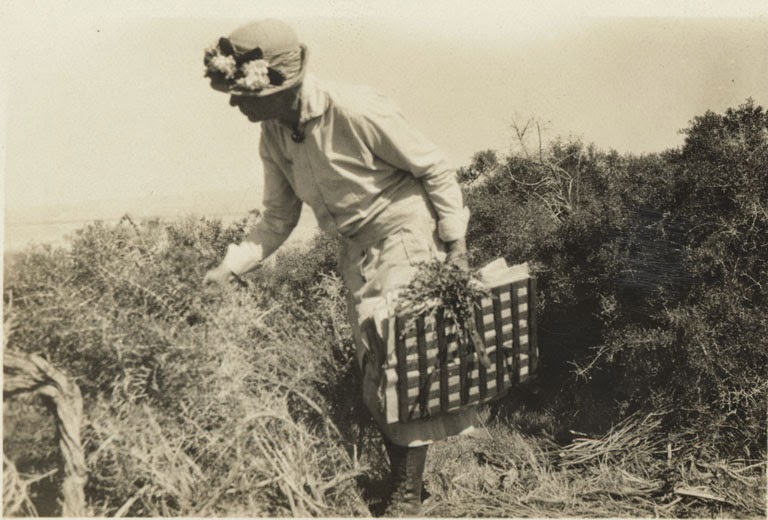
Alice told her contemporary, Agnes Chase (agrostologist, 1869-1963): “the most proper [honor] is that officially the name of the Herbarium is the Alice Eastwood Herbarium of the California Academy of Sciences” since she built it herself “with no help” from 1912 to 1930.And in truth, Alice did manage this effort with little help. Furthermore, prior to the new herbarium’s construction, Alice risked her life to save the Academy’s collections during the San Francisco Earthquake of 1906. Despite fires in the surrounding buildings and a caved-in stairwell, Alice climbed into the previous herbarium and managed to save the most irreplaceable of the herbarium specimens with a rope and pulley and the help of one other man.

View Full Size Image
Alice Eastwood collecting Festuca eastwoodae grass, courtesy of the California Academy of Sciences Archives

These women were brave. Not only did they enter their respective fields at a time when women were meant to remain in the domestic sphere, but they often solitarily braved harsh wilderness conditions to explore, observe, and collect flora, fauna and other specimens.  Katherine Brandegee(1844-1920) was a botanist, and in her journeys she survived shipwrecks, seclusion with bears, wolves and coyotes, and encounters with potentially dangerous men in the uninhabited areas she trekked. All the while, collecting and preserving specimens, rather than her own safety, were her primary concerns.

Many of the women in the exhibit shared a courage, a sense of adventure, and a love of nature that allowed them to push through the difficulties—whether physical or mental—of becoming scientists.Some were self-taught, while others were accepted to prestigious schools. Most of them were given honorary degrees and other awards. Some, like Susan Fenimore Cooper (1813-1894), were multi-talented, engaging not only in scientific pursuits, but other artistic endeavors like fiction writing.Furthermore, many of these women demonstrated exceptional foresight, warning that neglect and abuse of our natural environment would result in dire consequences. They were right.

Enjoy the fascinating stories, illustrations and books from and about “Early Women In Science” in our new exhibit here.

December 9, 2014by micahv
Blog Reel

Is that an Elephant on Your Christmas Tree?

Merry Christmas!

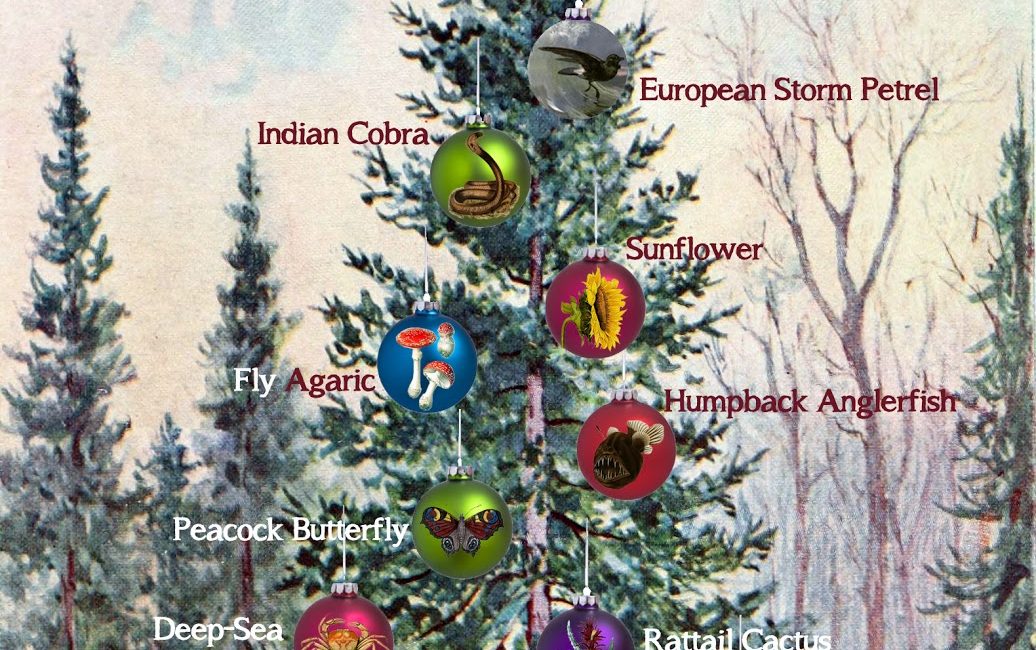
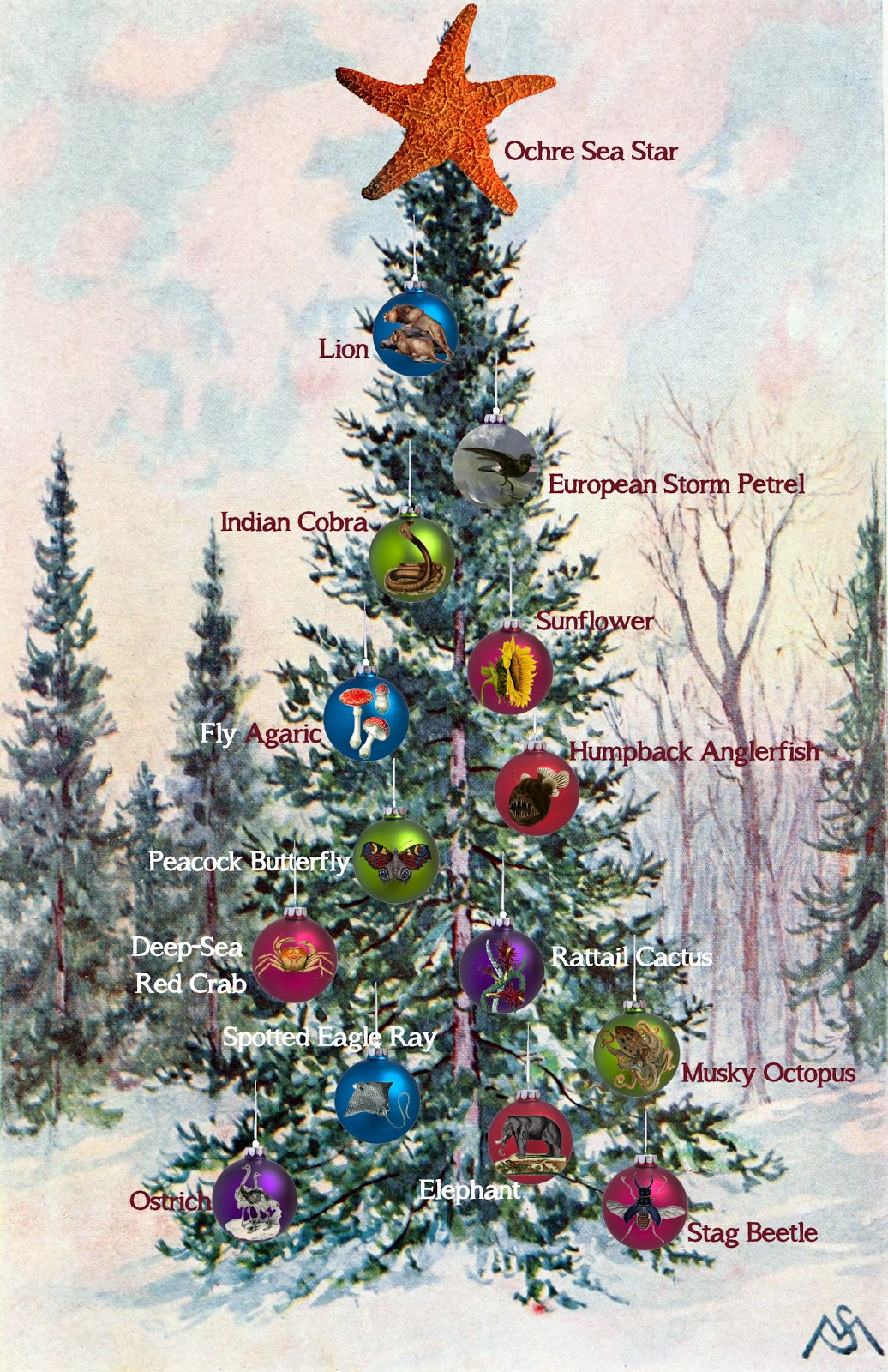
We hope you’re having a marvelous time celebrating the Holidays today! We wanted to do something fun and different for our Christmas post. So, we decided to present (pun intended!) you with your own truly biodiverse BHL Christmas tree – with a twist!

Our tree has been decorated with 15 species ornaments. Each species on the tree is identified by its common name. Below the tree is a list of 20 scientific names. All 15 of the species on the tree are listed among the binomials, as well as 5 that are not on the tree.

Can you associate our ornaments with their scientific names? Simply click on the 15 binomials you believe are represented on the tree and hit “submit.” The subsequent results screen will tell you whether you’re a taxonomy master or beginner.

We hope you enjoy our little Christmas Tree present. Good luck, and we’ll talk to you in the New Year!

View Full Size Image

Loading…
Find the illustrations pictured on the Christmas Tree in BHL:
BHL Christmas Tree  1) Ostrich  2) Stag Beetle3) Elephant4) Musky Octopus5) Spotted Eagle Ray6) Deep-Dea Red Crab7) Rattail Cactus8) Peacock Butterfly9) Humpback Anglerfish 10) Fly Agaric11) Sunflower 12) Indian Cobra13) European Storm Petrel 14) Lion15) Ochre Sea Star

December 25, 2012by ulib-libraryjobs
Blog Reel, Featured Books

Book of the Week: The Human Side of Birds

Approach Nature anew, as a child might. 

View Full Size Image

Royal Dixon, the author of this week’s book of the week, The Human Side of Birds (1917), had an eclectic background. His formal credentials included botanist at the Chicago Field Museum, ornithologist, lecturer for the NY Board of Education, science journalist and author of several books– all of which sought to put a human face on nature. He was also a dancer, thespian, political writer and founder of the First Animal Church in America.

One might ask why was this man was so intent on humanizing plants, animals, trees and birds? Dixon, it seems, was concerned with modern society and its growing inability to relate to nature. To appreciate it. To see it. And most importantly to preserve it. He saw the good in the formal sciences yet, believed in some ways that taxonomy, in particular, barred non-experts from participating in the deeply human act of naming and organizing Nature’s Kingdom. His mission was simple: bring Nature to the people. Show them how similar every creature on this planet is to us and how we are all connected to each other on the most basic and profound levels.

Besides authoring several books, Dixon’s chosen platform from which to disseminate his message was guffawed at by most in his time. He became founder and leader of the First Church for Animal Rights, which met weekly and promoted the idea that “every creature had the inalienable right to life, liberty and the pursuit of happiness.” Although the church is now defunct, or at least seems to be since there isn’t a digital whisper of such an organization to be found out in cyberspace, we here at BHL are entirely sympathetic to Dixon’s cause!  He was a man who had a formal science background yet, his efforts were wholly aimed at the general public. He realized that in order to reach people and get them to care about Nature we need to change the hearts and minds of those who believe in the stereotype that taxonomy is just a dry, stodgy, and inaccessible science concerned with mindless minutiae and doomed to endless arguments between warring factions of men who seemed partial to fabric combinations consisting only of houndstooth, tweed, or corduroy.

View Full Size Image

In his forward Dixon states his purpose simply: “to reject the limitations of unsympathetic research, and to endeavor to see beyond formal classifications, and to understand the spirit, emotions and impulses in the lives of our feathered friends of the air.” Is this not the true reason behind all this binomial naming business? Author Carol Kaesuk Yoon seems to think so in her prize winning book on taxonomy: Naming Nature. Moreover she makes the case that those of our ancestors who were not taxonomists, or folk taxonomists more precisely, did not survive. Therefore, we are all descendents of taxonomists because those who could not name, order and understand nature were unable to discern a poisonous plant from a one that was edible, or which herbal remedy could cure their sick child’s fever. They knew to avoid eating the sacred bird of the neighboring tribe lest they’d like to find their head on a stake in the morning! Our non-taxonomist ancestors were “naturally deselected.” Taxonomy is an ancient science deeply embedded into the human experience, past and present. It was and still is vital to human existence and it belongs to everyone.

So let us humor Dixon: How can he show us that birds are just like US?

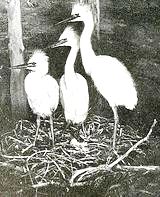
Dixon’s theater background helped him understand storytelling and the human archetypes that we identify with. Therefore, his book is divided into 14 chapters; each assigned a human archetype such as the “Athlete”, the “Artist”, the “Dancer,” and it is under these human classifications that Dixon seeks to place birds:

View Full Size Image
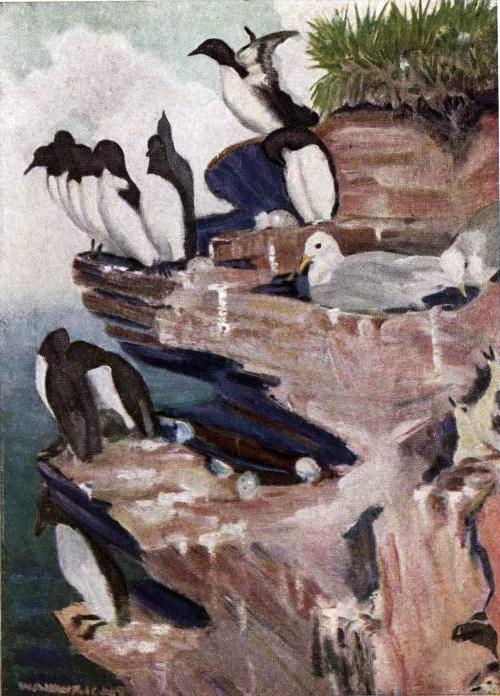
The urbane Penguin’s apartment houses are nestled in cliff cities.
View Full Size Image
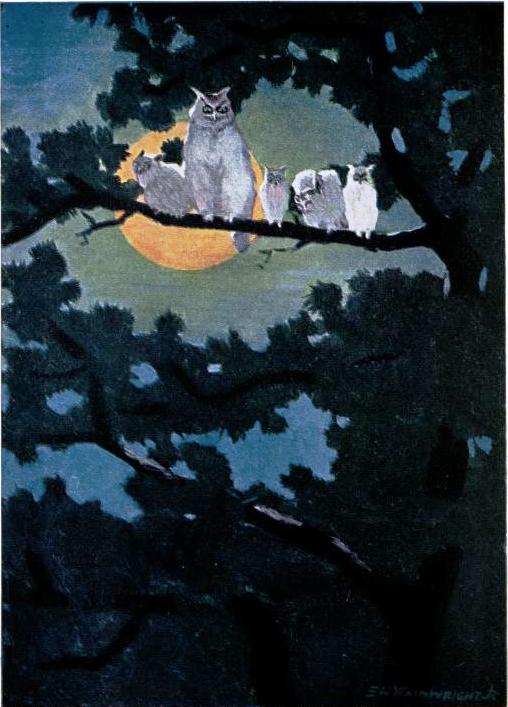
The Wise Mother: ‘Gather ’round young ones, let mother impart her wisdom with a story
View Full Size Image
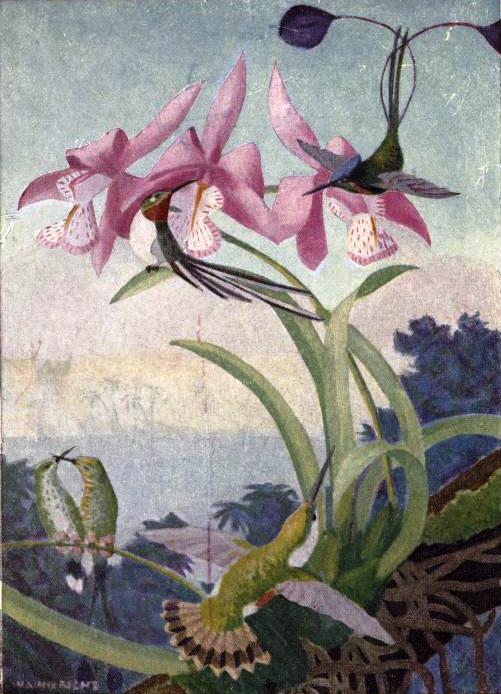
The aesthetic sense of the artistic hummingbird whose nests are wonders of delicacy and beauty
View Full Size Image
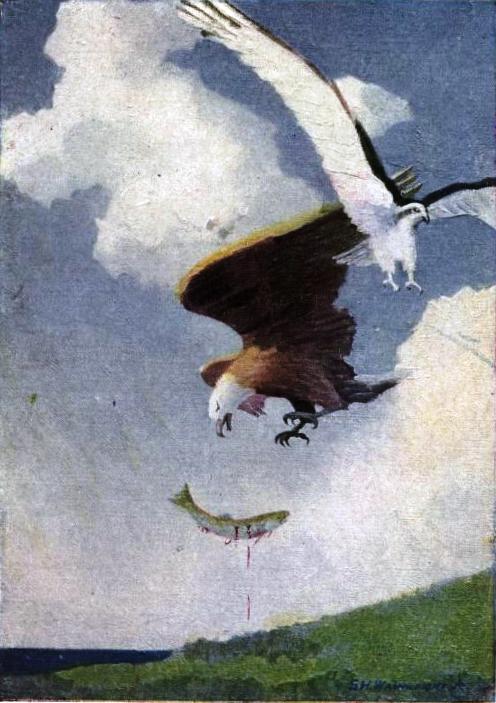
The thieving Osprey rarely fishes for himself preferring to rob others of their work. Human-like?

So today, let’s look at Nature through Dixon’s eyes: awake, appreciative, anew, as a child might. We leave you with a quote to contemplate:

“If I name every bird in my walk, describe its colour and ways, . . . give a lot of facts and details about the bird, it is doubtful if my reader is interested. But if I relate the bird in some way to human life, to my own life; show what it is to me and what it is in the landscape and season, then do I give my reader a live bird and not a labeled specimen.”

 – John Burroughs, American Naturalist and Conservationist

We would like to thank America Museum of Natural History, NY (AMNH) for digitizing this work. Incidentally, the 34 photos in Dixon’s book also come from AMNH. Bravo to the staff there for assisting in the creation and rebirth of this work. We know Dixon would be doubly pleased.

Other work’s by Dixon available on the Biodiversity Heritage Library

The Human Side of Plants (1914)
The Human Side of Trees (1917) 
The Human Side of Animals (1918)

July 19, 2012by [email protected]

Help Support BHL

BHL's existence depends on the financial support of its patrons. Help us keep this free resource alive!

search

About BHL

The Biodiversity Heritage Library (BHL) is the world’s largest open access digital library for biodiversity literature and archives. BHL operates as a worldwide consortium of natural history, botanical, research, and national libraries working together to digitize the natural history literature held in their collections and make it freely available for open access as part of a global “biodiversity community.”

Join Our Mailing List

Sign up to receive the latest news, content highlights, and promotions.

Subscribe Now

Subscribe to Blog via Email

Enter your email address to subscribe to this blog and receive notifications of new posts by email.

Join 319 other subscribers

Subscribe to Blog Via RSS

Subscribe to the blog RSS feed to stay up-to-date on all the latest BHL posts.

Access RSS Feed

Inspiring Discovery through Free Access to Biodiversity Knowledge.

The Biodiversity Heritage Library makes it easier than ever for you to access the information you need to study and explore life on Earth…for free, anytime, anywhere.


64+ Million Pages of
Biodiversity Literature Online.

EXPLORE

Tools and Services
to Transform Research.

EXPLORE

300,000+
Illustrations on Flickr.

EXPLORE

ABOUT | HARMFUL CONTENT | PRIVACY | SITE MAP | TERMS OF USE