Biodiversity Heritage Library - Program news and collection highlights from BHL
  • Home
  • News
  • Featured Books
    • All Featured Books
    • Book of the Month Series
    • BHL at 20
  • User Stories
  • Campaigns
    • Fossil Stories
    • Garden Stories
    • Monsters Are Real
    • Page Frights
    • Her Natural History
    • Earth Optimism 2020
  • Tech Blog
  • Visit BHL
Home
News
Featured Books
    All Featured Books
    Book of the Month Series
    BHL at 20
User Stories
Campaigns
    Fossil Stories
    Garden Stories
    Monsters Are Real
    Page Frights
    Her Natural History
    Earth Optimism 2020
Tech Blog
Visit BHL
  • Home
  • News
  • Featured Books
    • All Featured Books
    • Book of the Month Series
    • BHL at 20
  • User Stories
  • Campaigns
    • Fossil Stories
    • Garden Stories
    • Monsters Are Real
    • Page Frights
    • Her Natural History
    • Earth Optimism 2020
  • Tech Blog
  • Visit BHL
Biodiversity Heritage Library - Program news and collection highlights from BHL
Blog Reel, Featured Books

Researching the American Horseshoe Crab: Connecting 19th and 21st Century Research with the MBLWHOI Library

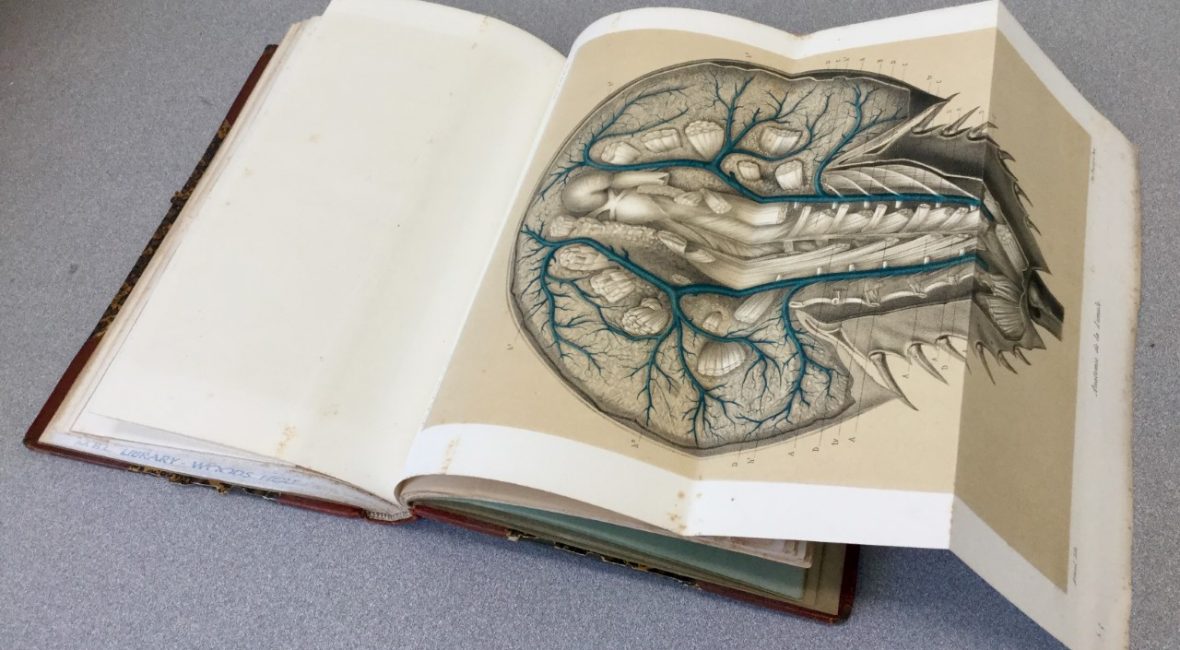
Foldout illustration of a horseshoe crab
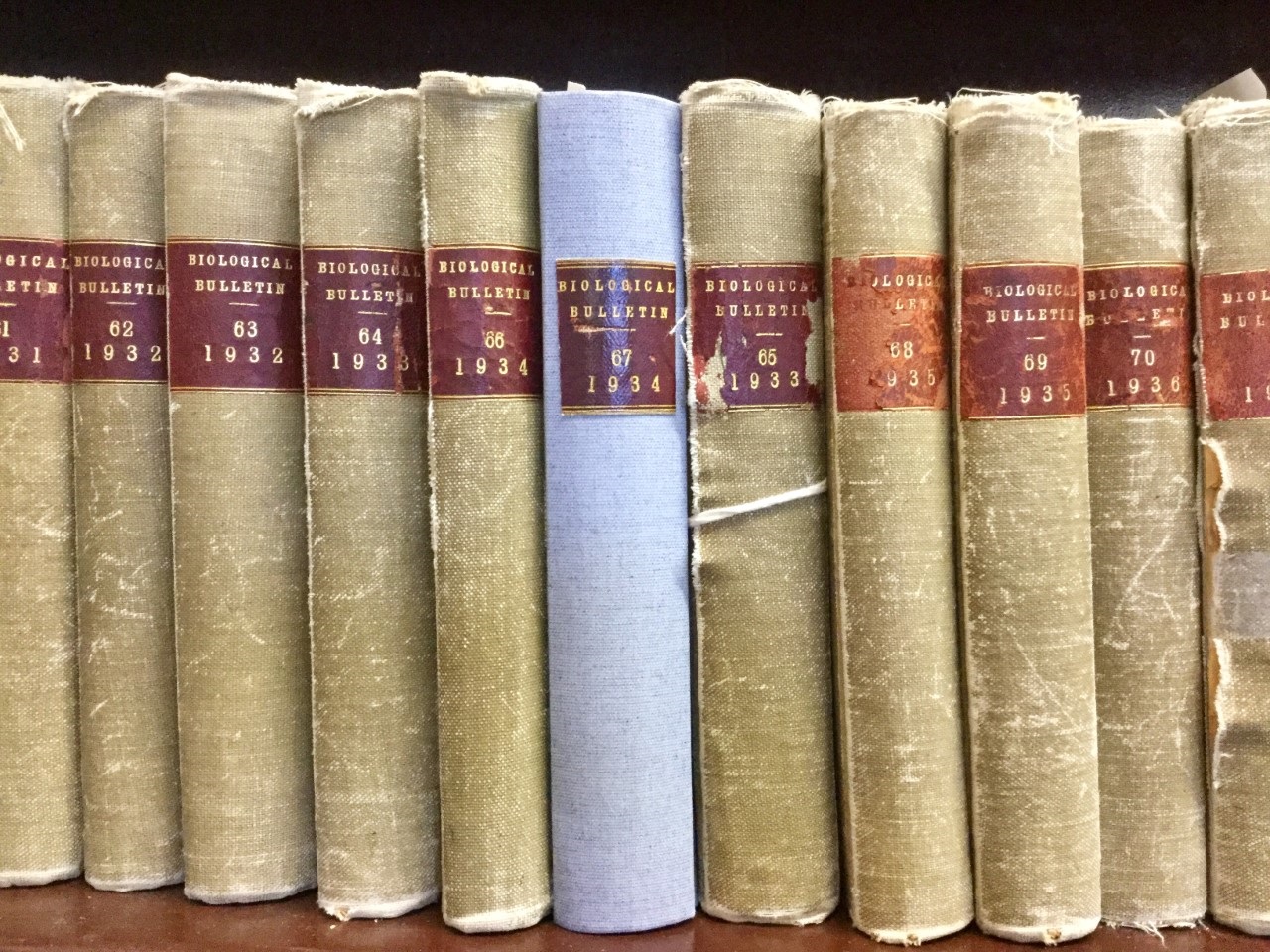
Photo of volumes of the Biological Bulletin on a book shelf.

Volumes of the Biological Bulletin, on the shelf of the MBLWHOI Library. Photo by: Matthew Person.

The venerable science journal the Biological Bulletin has been published in association with the Marine Biological Laboratory of Woods Hole, Massachusetts for over 120 years. Presently, the publisher is the University of Chicago Press, with the editorial office in Woods Hole managed by longtime Editor, Carol Schachinger.

The Marine Biological Laboratory (MBL) was founded in 1888 through the diligent efforts of working scientists and Boston community leaders deeply invested in the marine and associated biological sciences as a tools to conduct research and develop diverse educational opportunities for the study of marine model organisms, through experimental work ultimately leading to an improved understanding of the human condition.
Cover of the Biological Bulletin with a horseshoe crab on it.

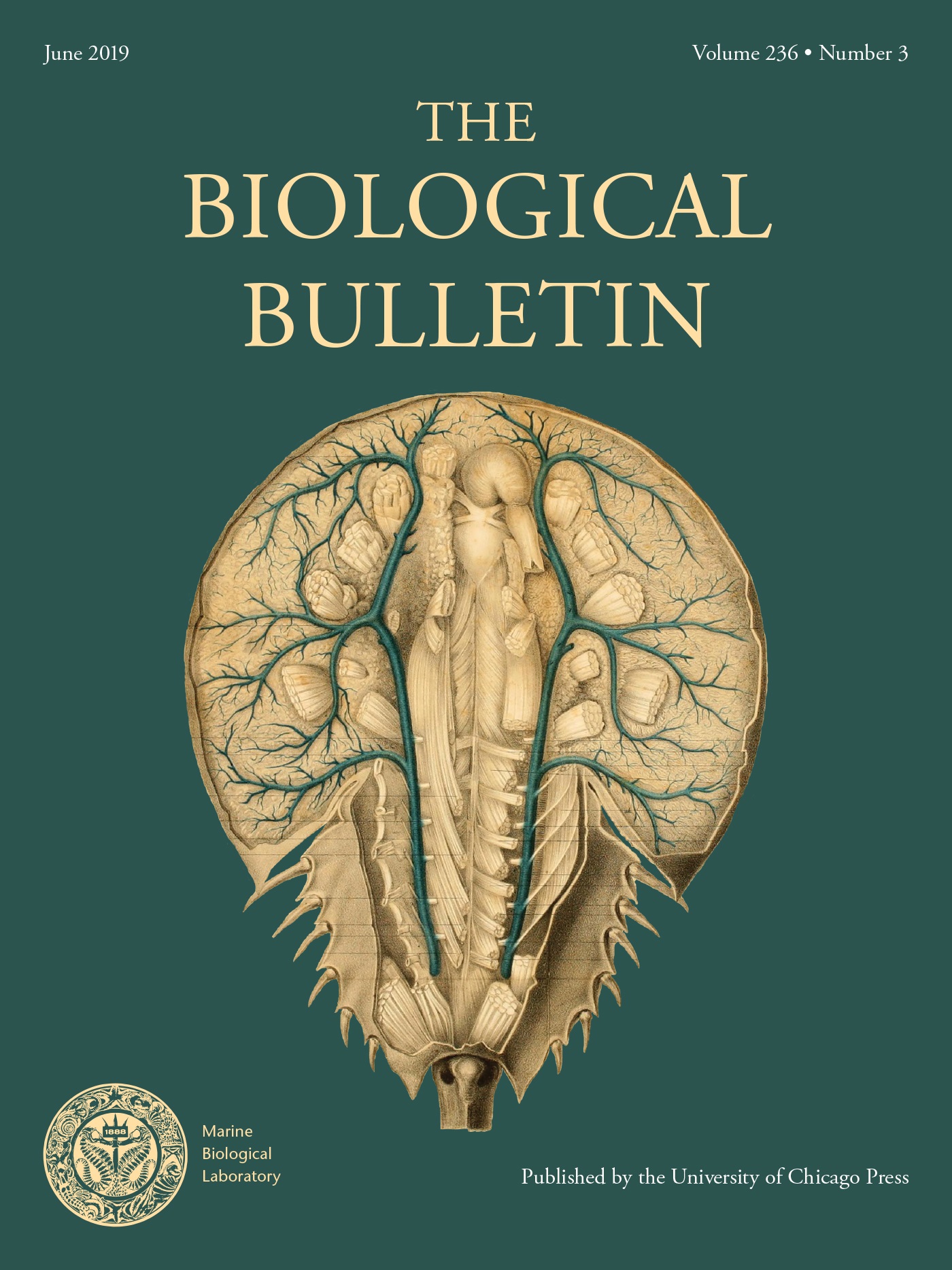
Cover. Biological Bulletin (Volume 236, Number 3, June 2019). Image reprinted by permission of the Biological Bulletin.

The June 2019 issue of the Biological Bulletin (Volume 236, Number 3) has an informative and beautiful cover illustration of the venous return half of the circulatory system of the horseshoe crab (Limulus polyphemus), chosen to illustrate an article in the issue: Effects of the Biomedical Bleeding Process on the Behavior of the American Horseshoe Crab, Limulus polyphemus, in Its Natural Habitat. The cover of this issue of the Biological Bulletin was designed from a freely downloaded Biodiversity Heritage Library file, coincidentally from a monograph about the horseshoe crab: Recherches sur l’anatomie des Limules — an 1873 work by Alphonse Milne-Edwards, the French medical doctor, mammologist, ornithologist, and carcinologist (one who studies crustaceans) who was director of the French Museum National d’Histoire Naturelle from 1891-1900.
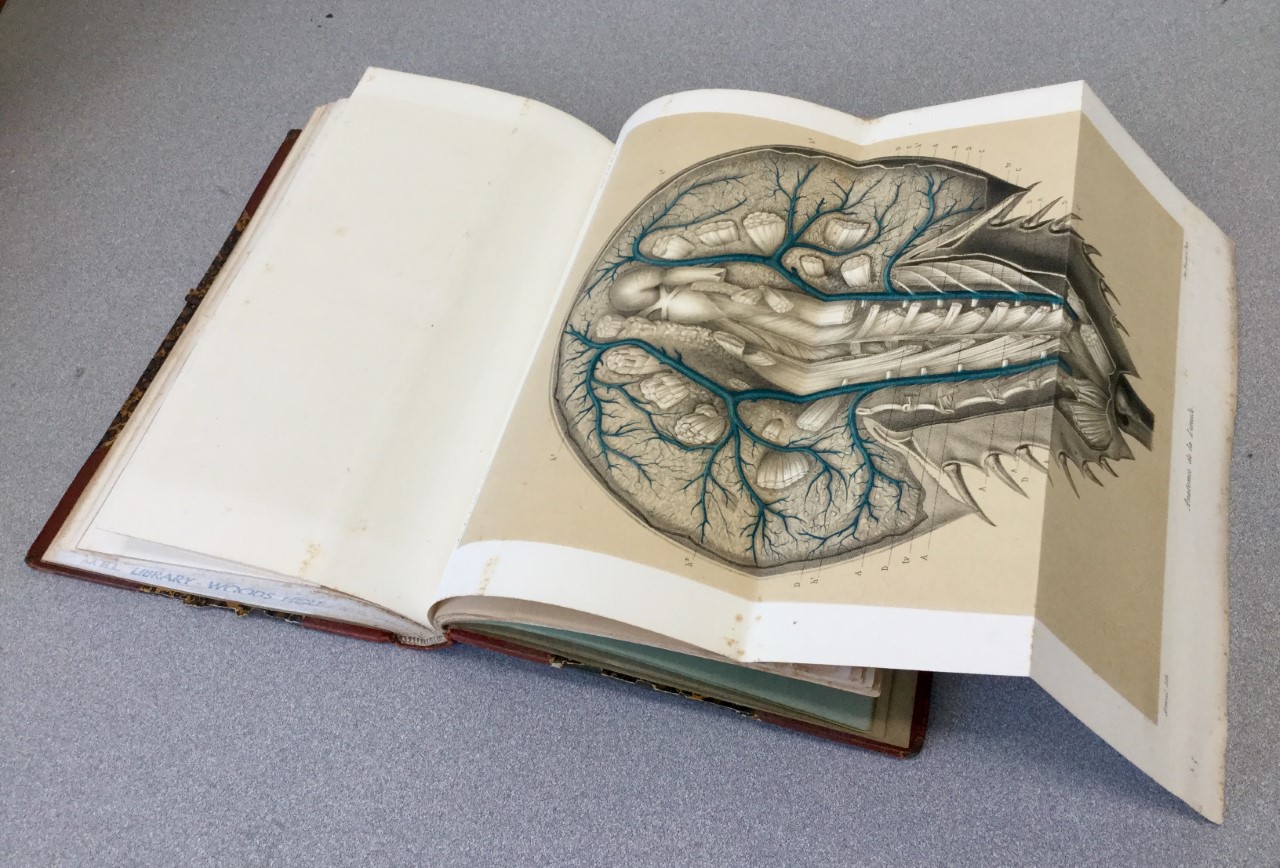
Foldout illustration of a horseshoe crab

Plate of the horseshoe crab (Limulus polyphemus) from “Recherches sur l’anatomie des Limules”, 5th Series, Tome 17, (1873) of the journal, Annales des Sciences Naturelles. Used for the cover of Biological Bulletin (Volume 236, Number 3, June 2019). Contributed in BHL from the MBLWHOI Library.

In the MBLWHOI Library this volume, interestingly, is shelved both in the climate controlled secure Rare Books Room and separately in the freely accessible journal stacks as an article in the 5th Series, Tome 17, (1873) of the journal, Annales des Sciences Naturelles. For important monographic works, multiple shelving locations in the pre-electronic age was common. Much of this content is also available in BHL in the multi-volume work partly edited by Alphonse Milne-Edwards: Mission scientifique au Mexique et dans l’Amérique Centrale : ouvrage publié par ordre de S.M. l’Empereur et par les soins du Ministre de l’instruction publique (1873). The introductory pages of this work speak of the ancient horseshoe crab, living over broadly distributed coastal swaths of the earth, yet the scientific community at that time was stumped as to how this creature was related to other similar species.

Black and white photo of a man with a mustache.

Photo (1883) of Alphonse Milne-Edwards, the author of “Recherches sur l’anatomie des Limules”, from which came the illustration of the horseshoe crab used on the cover of the Biological Bulletin, (Volume 236, Number 3, June 2019). By Th. Truchelut & Valkman, photographers. Upload, stitch and restoration by User:Jebulon – Bibliothèque nationale de France, Public Domain, Wikimedia Commons.

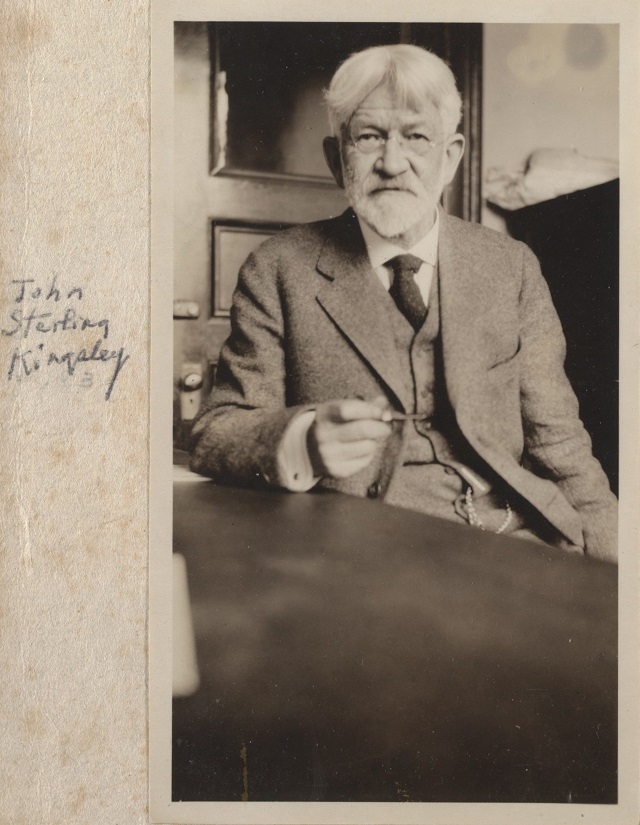
We noticed another aspect of the MBLWHOI Library Rare Books Collection copy of this monograph scanned into BHL. The title page is inscribed by the probable original owner of the volume: “Kingsley”. Looking at the History of the Marine Biological Laboratory’s online database of scientists, we see that biology professor John Sterling Kingsley (1854-1929) — who had appointments during his career at the universities of Indiana, Nebraska, Illinois, and Tufts University, and was editor of books such as The Riverside Natural History series (1885) — spent summers from the late 1880’s to the mid 1910’s doing research at the Marine Biological Laboratory in Woods Hole.

People often wonder how academic research libraries grow and become institutions unto themselves. This example illustrates one method of library growth. With Kinglsey’s name inscribed on page one of Recherches sur l’anatomie des Limules, the book was most probably given to the then-MBL Library by Kingsley or his heirs — one of thousands of volumes over 130+ years which became a part of the Library’s collection in that manner.
Black and white photo of a man in a suit.

Photo of John Sterling Kingsley, the original owner of the MBLWHOI Library copy of “Recherches sur l’anatomie des Limules”, available in BHL. Source: MBL archives. CC-BY-NC-SA.

We spoke with Biological Bulletin Managing Editor Carol Schachinger about the process of selecting a cover for a journal issue. She told us that out of the body of articles comprising a new issue published every two months, an appropriate cover image to be considered for publication often naturally rises to the top. In the case of V.236, n.3 of the Biological Bulletin, however, this did not initially happen, and even after contacting article authors for possible cover issue suggestions, Schachinger was still without a cover image as the issue headed towards completion.

Schachinger’s alternate plan was to begin making simple online image searches related to issue articles. As the horseshoe crab has been one of the most important studied marine organisms at the Marine Biological Laboratory, it was natural to look for images of this organism, and shortly, the plates from Milne-Edwards’ monograph appeared in simple Google website searches as distinct possibilities for a cover image.

At first, she did not realize the image she ultimately chose was from the holdings of the MBLWHOI Library, nor did she realize the image was from the Biodiversity Heritage Library. Carol was also not aware of the flickr feed of BHL images, which was another access point for this image (and many thousands of images extracted directly from the electronic pages of BHL content). However, when she selected plate 14 of the horseshoe crab circulatory system as the probable cover illustration for the June 2019 issue of the Biological Bulletin, she contacted the librarians at the MBLWHOI Library to ask about proper attribution and the workflow for downloading the out-of-copyright image. They directed her to the FAQ pages of BHL, where all of this information sits.

Thus the v.236, n.3 issue of the Biological Bulletin finally had cover art.

The MBLWHOI Library

In 1888, the sea-side Marine Biological Laboratory heeded the charge of its first Director, Charles Otis Whitman (1842-1910), with reference to the building of a working library to serve its scientists. Woods Hole on Cape Cod was just too far from the Boston research institutions for MBL to rely upon libraries there to provide library services to a small Cape Cod research institution (which would eventually grow into a biological research facility of global renown). Dr. Whitman said: “A library is a necessity in such a laboratory…We must have at a minimum to begin with, all the important journals now printed in the four principal languages.” Jump forward 120 years hence, the MBLWHOI Library (the joint library of the Marine Biological Laboratory and the Woods Hole Oceanographic Institution (WHOI, founded in 1930) was a founding partner of the Biodiversity Heritage Library, providing key technical and library staff support to BHL at its founding in 2006, and continuing to this day.

August 22, 2019by michelle.underhill
Blog Reel, User Stories

A Report from the MBLWHOI Library: BHL Supports the Research of Recent Catherine N. Norton Fellows

The MBLWHOI Library is a founding BHL institution. This post is a brief look at how two of the Library’s most recent Catherine N. Norton Fellows have used books from BHL’s collection to support their research.

Beatrice Steinert

In 2016, Beatrice Steinert, a recent BA in Biology (2016) from Brown University, was an inaugural Catherine Norton Fellow. Steinert’s project, in conjunction with the History of the Marine Biological Laboratory Project, studied Edwin Grant Conklin’s (1863-1952) work in embryology and cell biology.

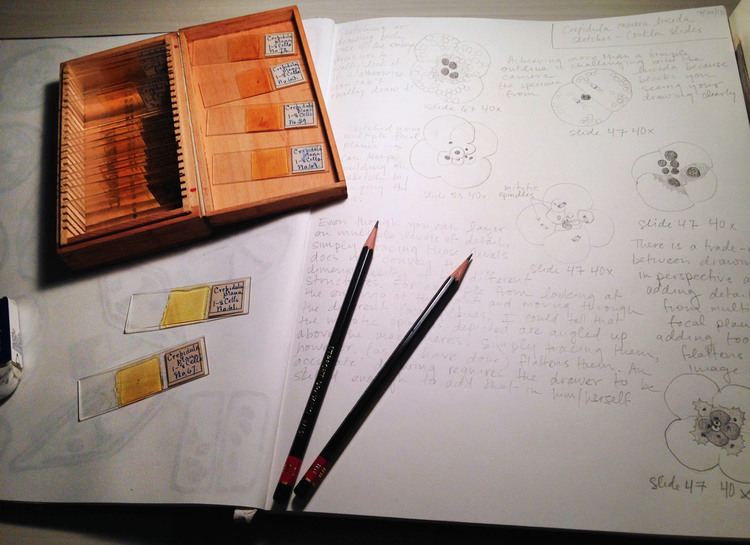
Conklin documented the stages of embryo development in the marine slipper snail Crepidula fornicata using a camera lucida device. The camera lucida projects the image of a specimen being viewed through a microscope onto paper, which can then be drawn. Steinert duplicated Conklin’s work also using a pencil and a camera lucida. This painstaking process involves successively focusing on portions of an image, thereby gathering 3 dimensional visual data.

View Full Size Image
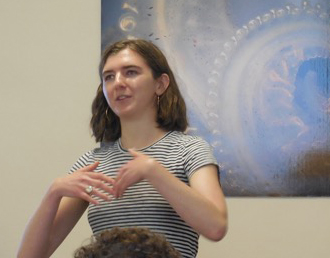
Beatrice Steinert speaking at the MBLWHOI Library about drawing cells of marine slipper shells (photo: Matthew Person).

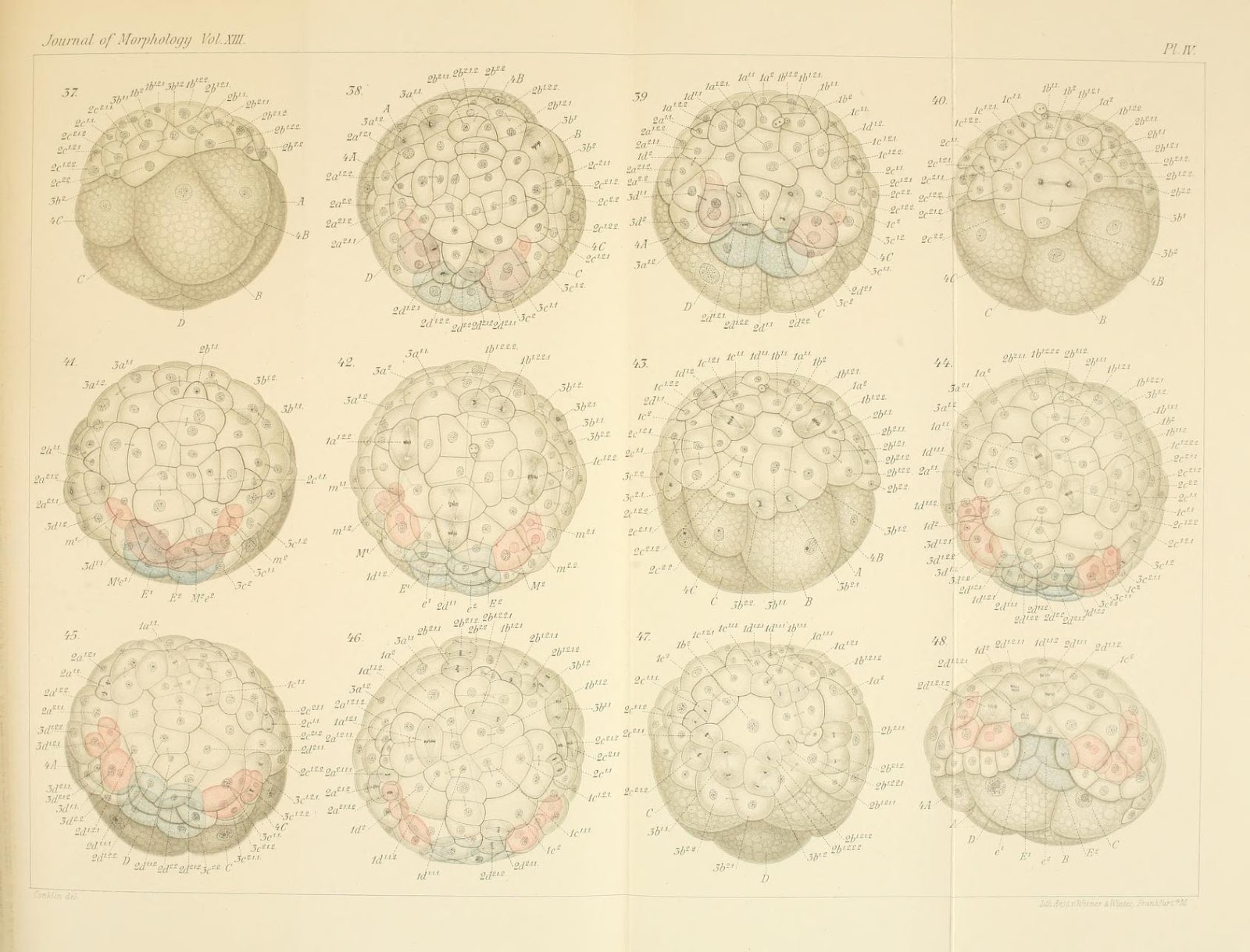
Steinert used both physical texts and BHL content to inform the above mentioned duplication of experimental work performed almost 120 years ago. Conklin’s handwritten Johns Hopkins University digitized doctoral dissertation, The embryology of Crepidula (1891), can be contrasted with the later published full version of the same title (Journal of Morphology v.13 (1897)), by which time Conklin held a professorship in comparative embryology at Johns Hopkins University. Plate IV below is an interesting example of the finished drawings produced using Conklin’s camera lucida sketches.

View Full Size Image
Stages of embryo development of the marine slipper snail Crepidula fornicata. Conklin, Edwin Grant. Journal of morphology. v. 13 (1897). Digitized by Harvard University, Museum of Comparative Zoology, Ernst Mayr Library. http://s.si.edu/2v0NqZj.

To get a sense of how Conklin worked with a microscope and what he thought about the role of drawing in observational practice, Steinert points to the “Notes and Drawings” section within Conklin’s Laboratory Directions in General Biology:

“Even though this was written [after the publication of his thesis] (there is no date on it, but I think it was written somewhere around 1905-1915) and for pedagogical purposes, it briefly describes in Conklin’s own words his approach to seeing/observing through the microscope. Since my project was all his visualization of development in Crepidula, this work was helpful in understanding his process.”

Regarding Conklin’s scientific illustration, Steinert writes:

“While drawing by hand is no longer necessary to generate images of developing embryos, its role as an aid to observation, either from photographs or specimens themselves, still makes it a valuable and relevant skill. Especially for those wanting to learn or develop observation skills, drawing greatly enriches the experience of interacting with an embryo. It actively engages the hand in the act of seeing, heightens spatial awareness, and draws the eye to subtle details that may otherwise be overlooked.”

View Full Size Image
Beatrice Steinert’s sketches from Conklin’s Crepidula fornicata slides (Photo by: Beatrice Steinert).

To learn more about Conklin’s process and Steinert’s work, see this fascinating video produced by the news website STAT:

This video and an accompanying article (by Hyacinth Empinado at STAT News) were published in STAT and Scientific American on February 22nd, 2017.

Sean Cohmer

Sean Cohmer is the 2017 Catherine Norton Fellowship recipient. He is a PhD candidate and historian at the Center for Biology and Society at Arizona State University. Cohmer studies how the act of making choices about what to bring into the laboratory was rooted in a dramatically shifting context in the late 19th and early 20th century.

As an illustrative example, Cohmer looked closely at the marine organisms that Thomas Hunt Morgan was manipulating and putting under the microscope in the late 19th century before he turned to studying fruit flies. Morgan received the Nobel Prize in 1933 for his work in genetics.

View Full Size Image
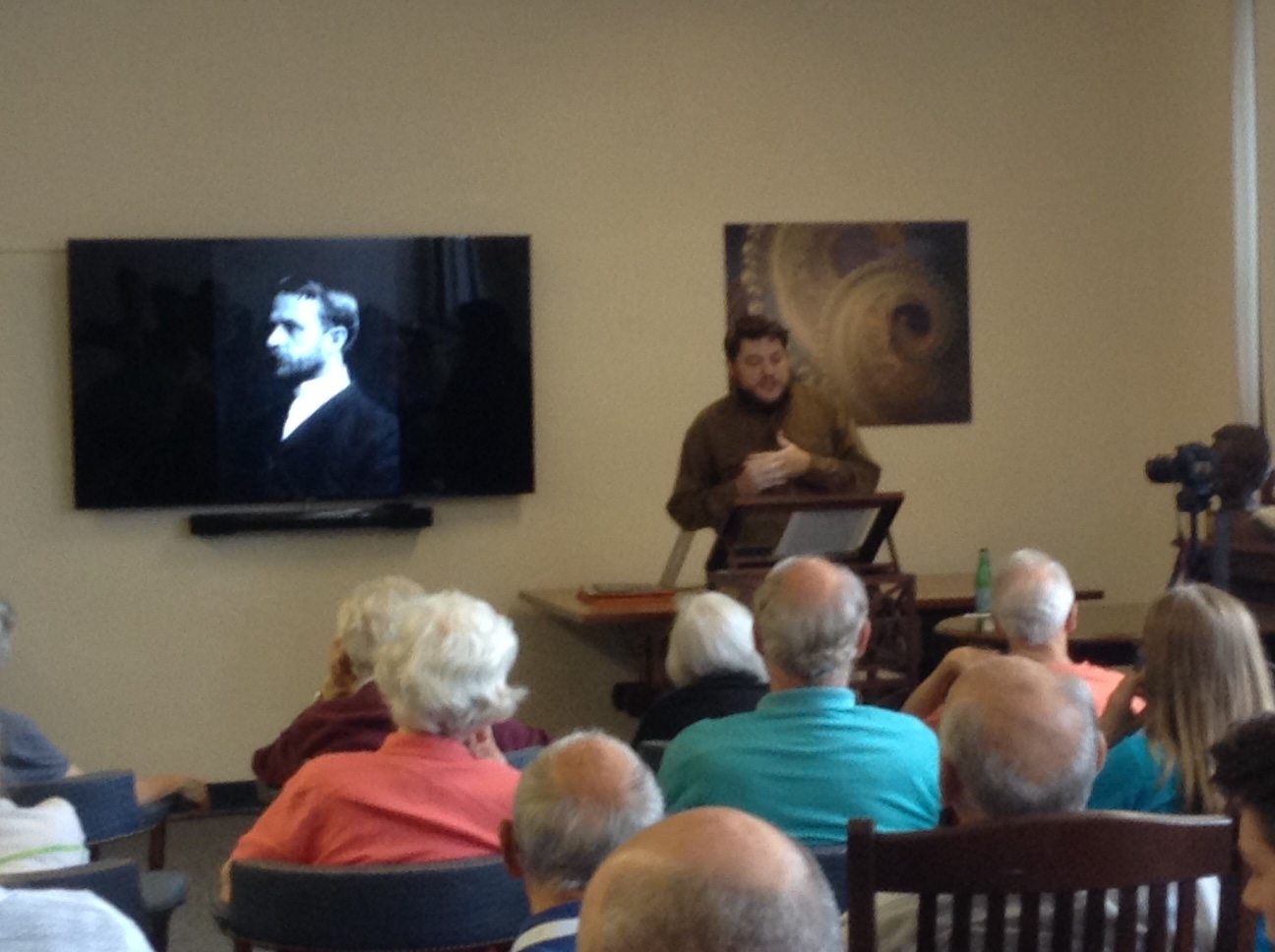
Sean Cohmer speaking at the MBLWHOI Library about Thomas Hunt Morgan (photo: Matt Person).

Cohmer writes:

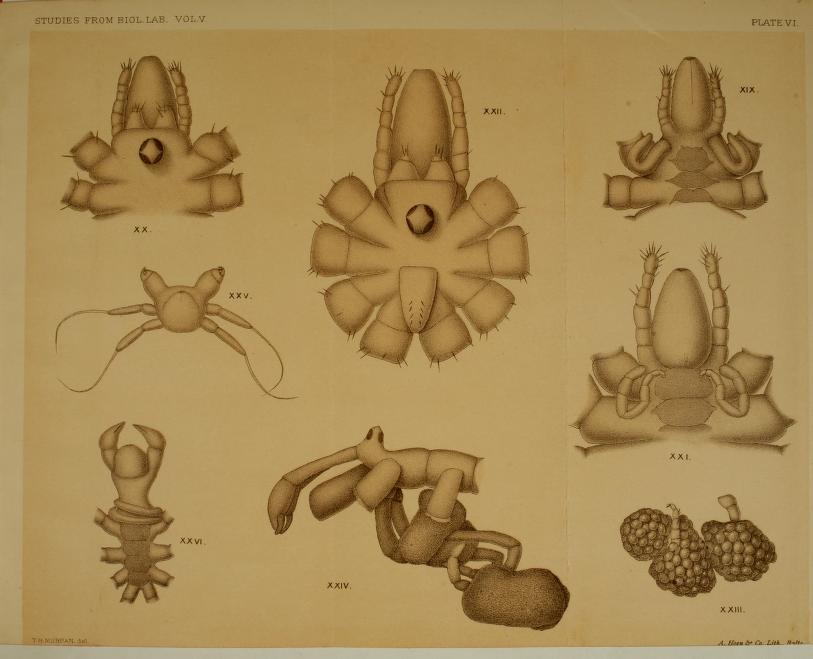
“I continually look to the Biodiversity Heritage Library for early work published by Thomas Hunt Morgan in the 1880s and 90s. For example, Morgan’s dissertation work was on the embryology and phylogeny (evolutionary relationships) of three genera of sea spiders commonly found in and around Woods Hole, Massachusetts. These were Pallene empusa, Phoxichilidium maxillare, and Tanystylum orbiculare.

During this era of scientific publication, scientists commonly included lithographic plates as ‘fold outs’, which typically were diagrams or illustrations. What is so impressive and useful about the books digitized by MBLWHOI Library for the Biodiversity Heritage Library is that they have digitized full-page scans of these wonderful lithographic plates from the original publications. Many other libraries have chosen not to digitize these fold outs and so have missed an opportunity to fully represent the original publication in its entirety. For this reason, I look to the BHL first when doing research in the history of science.”

View Full Size Image
Morgan’s doctoral dissertation: “Contribution to the embryology and phylogeny of the Pycnogonids.” From Studies from the Biological Laboratory v.5:1 (lithograph) Plate 4 (1891). Digitized by the MBLWHOI Library. http://s.si.edu/2uSvlvt.

As Cohmer points out above, the care that BHL has taken to scan all of the “cover to cover content” in books and journals is noticed by researchers who expect digitized copies to reflect the full content of a physical book.

About the Catherine Norton Fellowship

View Full Size Image
Cathy Norton. Founding Vice-Chair of the Biodiversity Heritage Library and former Director of the MBLWHOI Library.

The late Cathy Norton was the founding vice-chair of the BHL and the Director of the MBLWHOI Library (of the Marine Biological Laboratory and the Woods Hole Oceanographic Institution). Funding for the Norton Fellowship was endowed by Cathy’s colleagues, friends, and family soon after her passing. The Fellowship celebrates Cathy’s commitment to sharing knowledge and information, her ability to inspire, her “just do it” attitude (an attitude veteran BHL staff members still fondly recall), and her love of a challenge.

The digital History of the Marine Biological Laboratory Project is a collaboration between the MBLWHOI Library and the Center for Biology and Society at Arizona State University. The Project, which celebrates its fifth anniversary in 2017, reflects a decades-long collaboration between Cathy Norton and Professor Jane Maienschein (Director of the Center for Biology and Society at Arizona State University). This relationship promoted history of science research from the physical library stacks to the digital realm in very much the same way the BHL has done for the global corpus of legacy biodiversity literature.

July 27, 2017by ulib-libraryjobs
Blog Reel, Featured Books

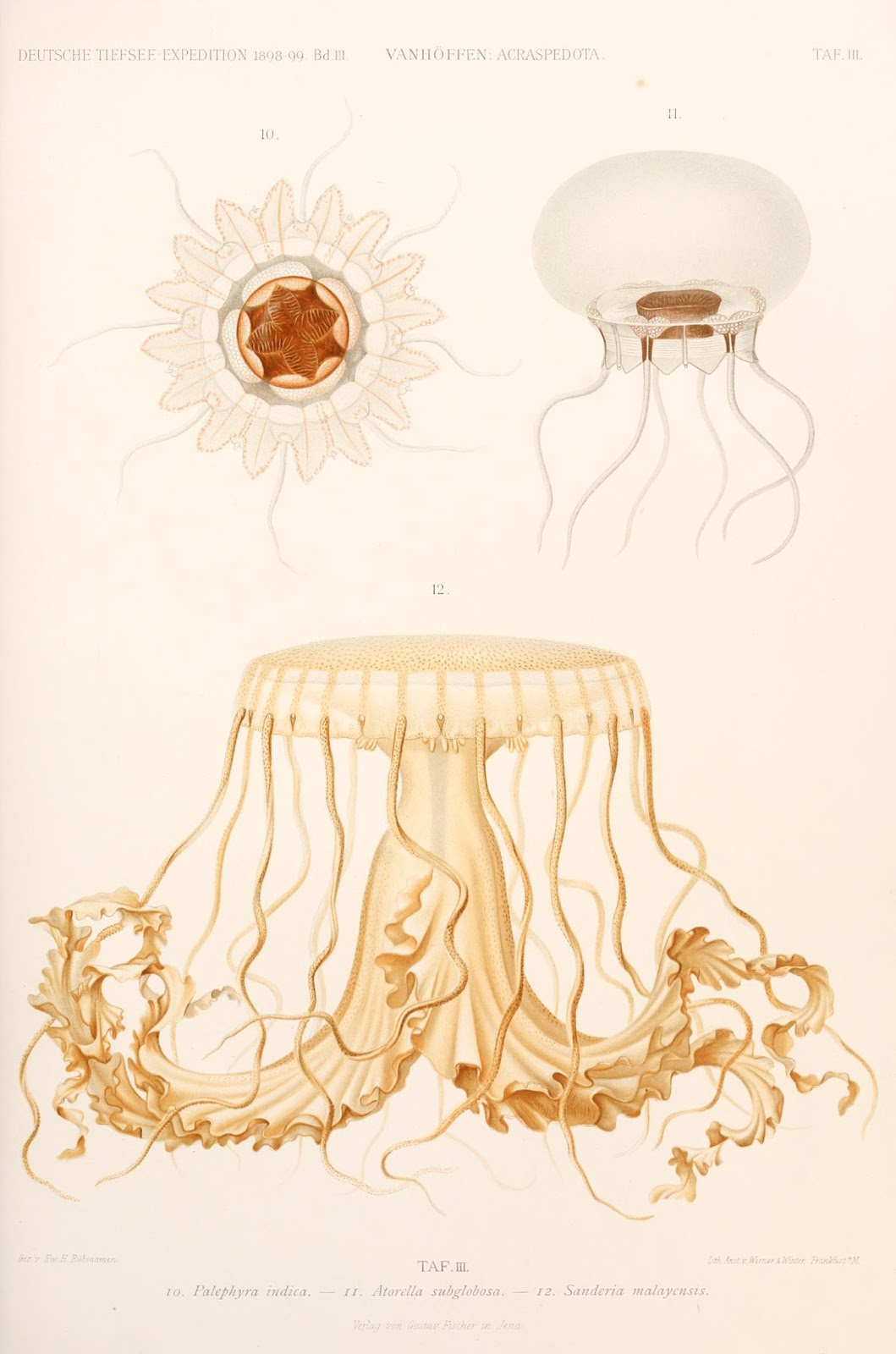
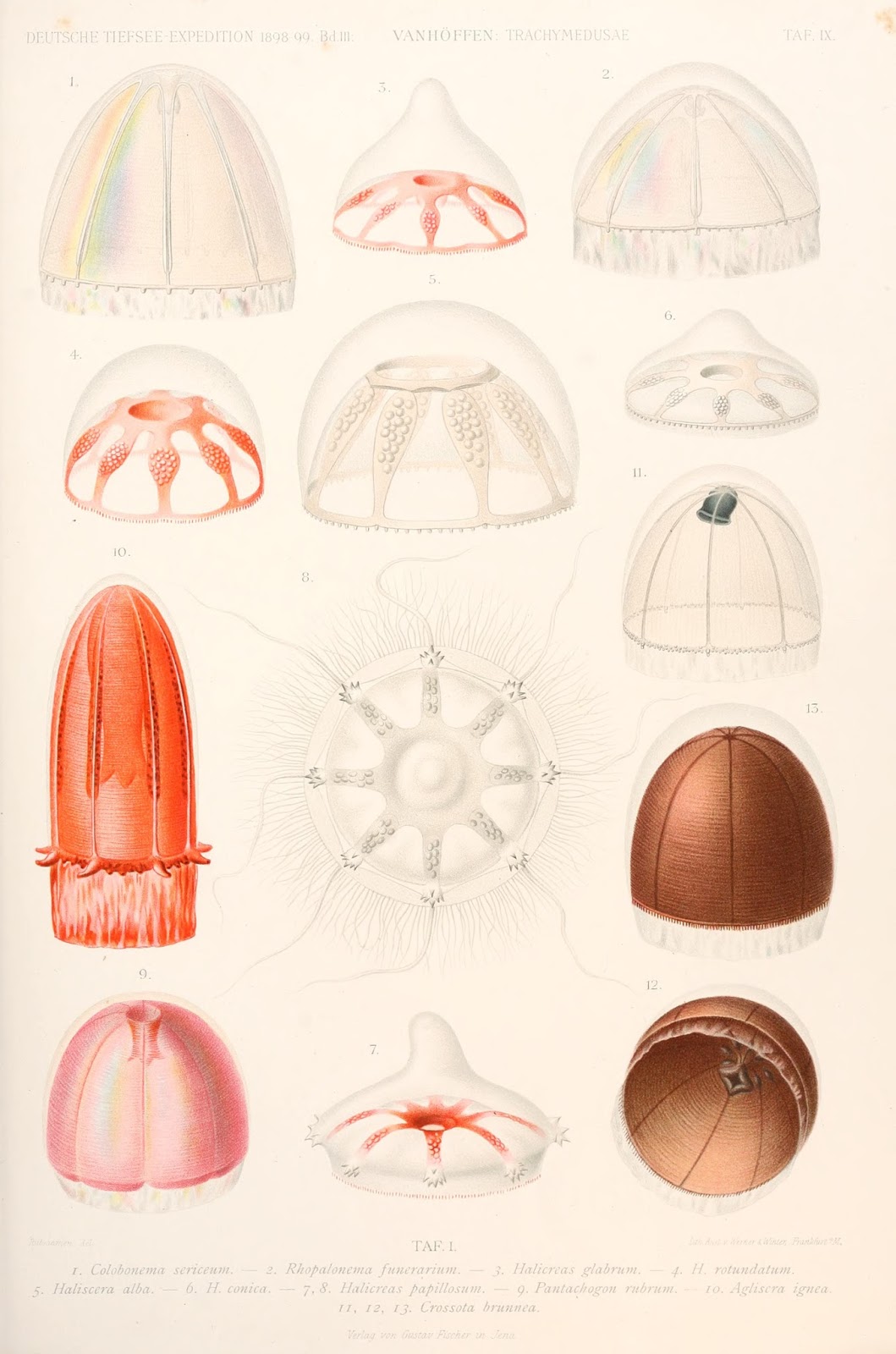
Discovering the Deep Sea

View Full Size Image
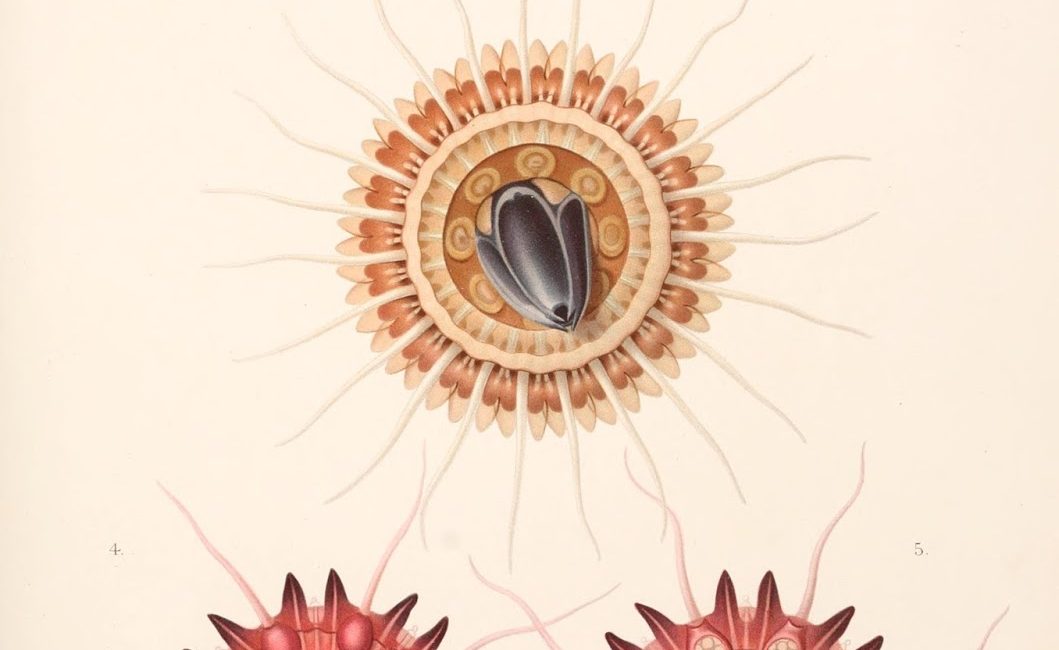
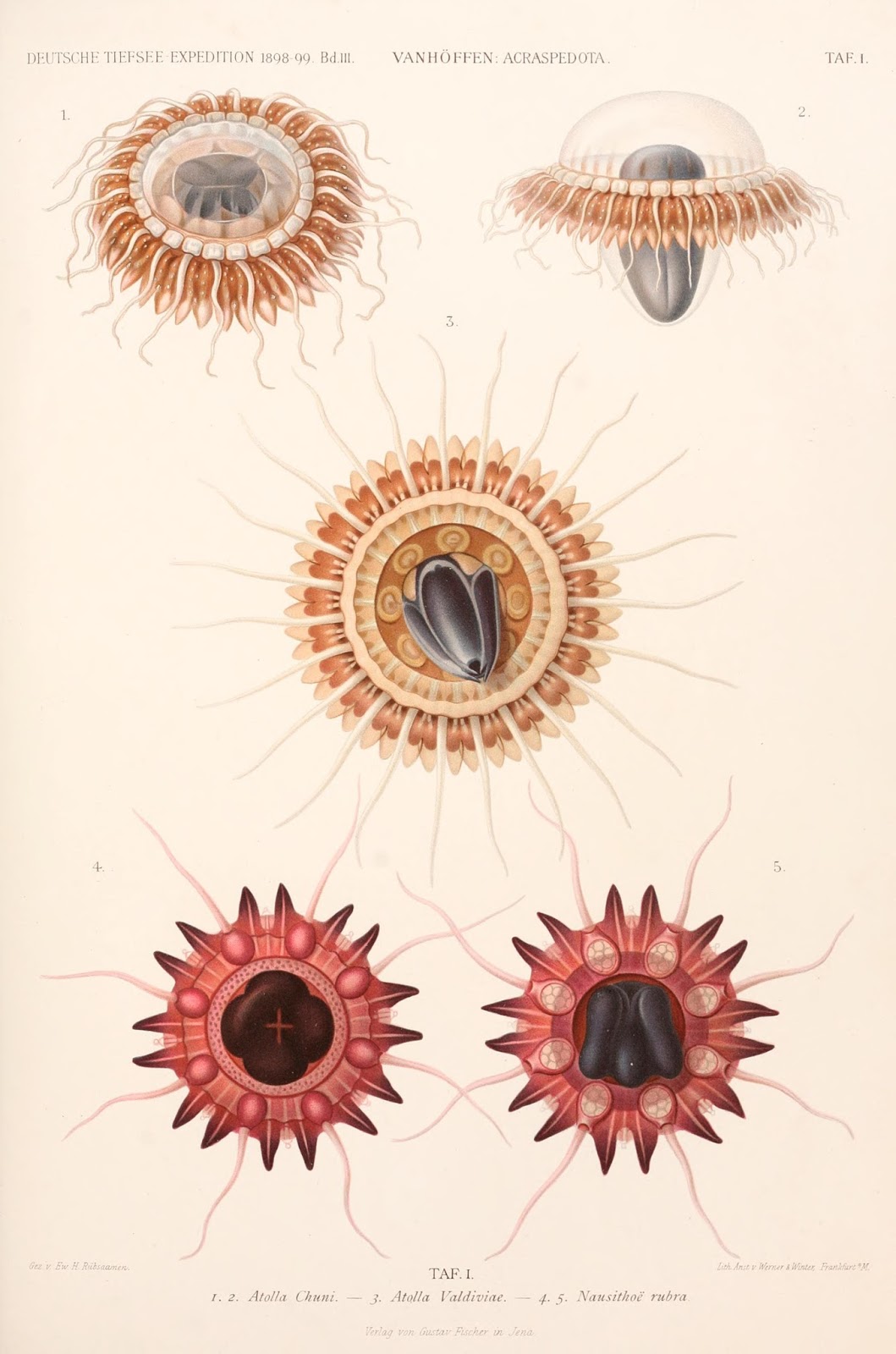
Vanhöffen, Ernst. Die acraspeden Medusen der deutschen Tiefsee-Expedition, 1898-1899. http://biodiversitylibrary.org/page/2121639. Digitized by MBLWHOI Library.

In 1872, the Royal Society of London launched the first non-commercial exploration of the deep sea – the Challenger Expedition. Covering nearly 70,000 nautical miles and resulting in the discovery of nearly 4,700 new-to-science species of marine life, the expedition revolutionized knowledge of the ocean and the field of oceanography. It also ignited an interest in deep-sea dredging as a means of scientific discovery.

Carl Chun, a German zoologist, was particularly inspired by the Challenger‘s discoveries. Recognizing an opportunity to secure Germany’s prominence in the developing field of deep-sea oceanography and expand the world’s scientific knowledge by targeting areas not visited by the Challenger, Chun presented a plan for a deep-sea expedition to the German Society of Naturalists and Physicians in 1897. In July 1898, under Chun’s scientific leadership, the Valdivia set sail from Hamburg with a team of exceptional scientists and an arsenal of the latest technology and equipment (Stiassny, 135).

View Full Size Image
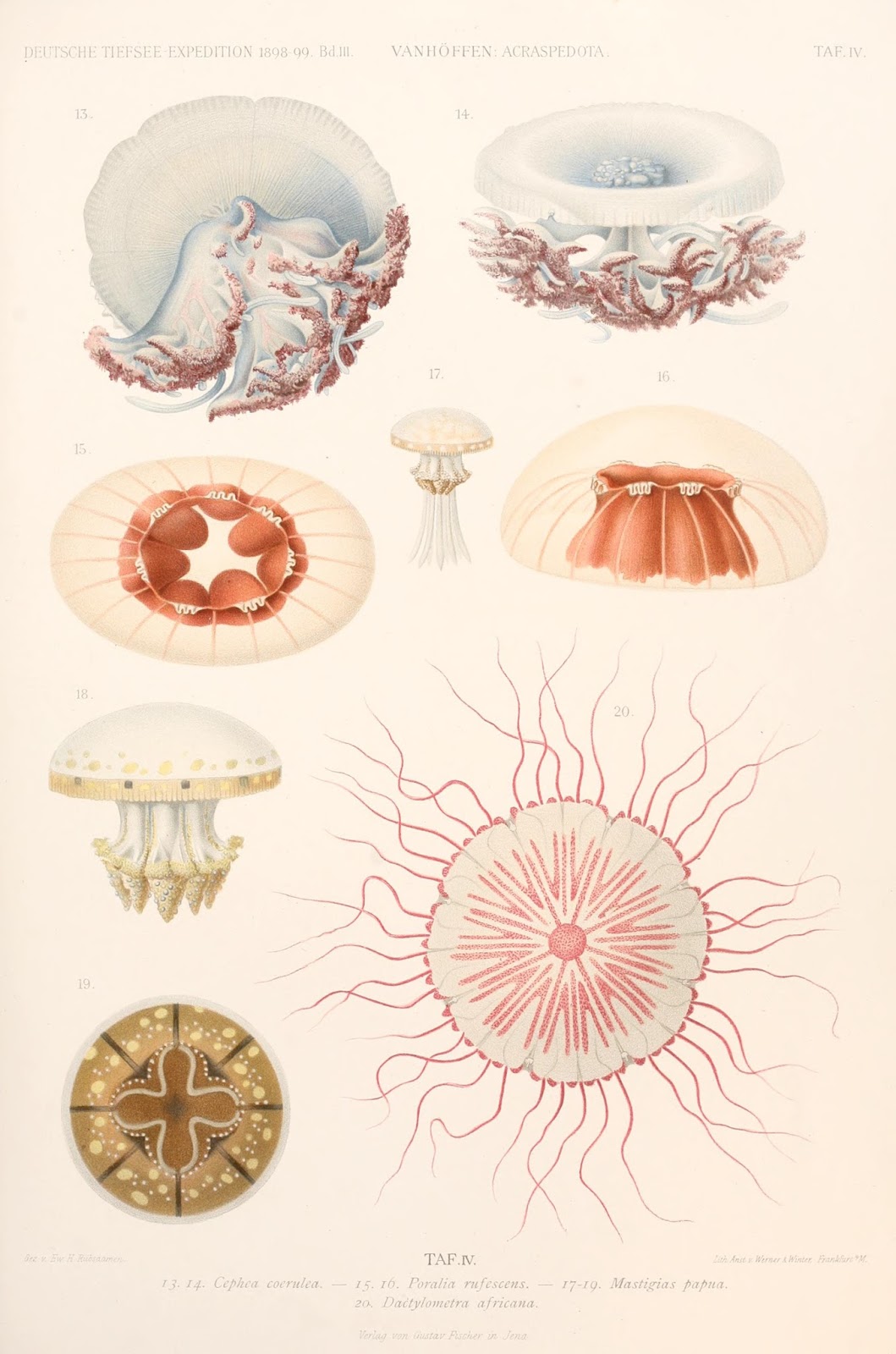
Vanhöffen, Ernst. Die acraspeden Medusen der deutschen Tiefsee-Expedition, 1898-1899. http://biodiversitylibrary.org/page/2121607. Digitized by MBLWHOI Library.

The expedition covered over 32,000 nautical miles, visited 268 stations around the West Coast of South Africa, the Gulf of Guinea, the Antarctic Sea, and a large portion of the Indian Ocean, and collected a wealth of specimens (many of which were new to science) from depths greater than 13,000 feet. Over seventy scientists worked for forty years to publish twenty-four volumes detailing the expedition’s scientific discoveries. The series, which was edited by Chun until his death in 1914 and afterwards by August Brauer, was entitled Wissenschaftliche Ergebniss der Deutschen Tiefsee-Expedition auf dem Dampfer “Valdivia” 1898-1899 (translates to “Scientific Results of the German Deep-Sea Expedition, on the steamer Valdivia 1898-1899″) (Stiassny, 136).

View Full Size Image
Vanhöffen, Ernst. Die acraspeden Medusen der deutschen Tiefsee-Expedition, 1898-1899. http://biodiversitylibrary.org/page/2121611. Digitized by MBLWHOI Library.

German biologist Ernst Vanhöffen, an expert on jellyfish, was a member of the expedition’s scientific crew. After the voyage, he worked to study, classify, and describe the jellyfish specimens collected during the expedition. He published his findings in 1902 as two parts within the larger twenty-four volume series. The works were entitled Die acraspeden Medusen der deutschen Tiefsee-Expedition, 1898-1899 and Die craspedoten Medusen der deutschen Tiefsee-Expedition, 1898-1899. The extraordinary images in these titles were drawn by Ew. H. Rübsaamen and lithographed by Fritz Winter, the expedition’s shipboard artist (Stiassny, 139).

View Full Size Image
Vanhöffen, Ernst. Die craspedoten Medusen der deutschen Tiefsee-Expedition, 1898-1899. http://biodiversitylibrary.org/page/2121715. Digitized by MBLWHOI Library.

You can learn more about this amazing expedition, the resulting publications, and Chun and Vanhöffen’s work in Dr. Melanie L. J. Stiassny’s Natural Histories: Opulent Oceans, published as part of Extraordinary Rare Book Selections from the American Museum of Natural History Library. Browse the public domain volumes of Wissenschaftliche Ergebniss der Deutschen Tiefsee-Expedition auf dem Dampfer “Valdivia” 1898-1899 in BHL, digitized by the MBLWHOI Library and Smithsonian Libraries.

References
Stiassny, Melanie L.J. (2014). Natural Histories Opulent Oceans: Extraordinary Rare Book Selections from the American Museum of Natural History Library. New York: Sterling Publishing.

March 17, 2016by michelle.underhill
Blog Reel, Featured Books

Darwin’s Early Love

Charles Darwin, the famous naturalist known around the world for his publication On the Origin of Species and contributions to evolutionary theory, was born on February 12, 1809. As such, February 12 is known as International Darwin Day – a celebration with a vision to:

“Inspire people throughout the globe to reflect and act on the principles of intellectual bravery, perpetual curiosity, scientific thinking, and hunger for truth as embodied in Charles Darwin. It will be a day of celebration, activism, and international cooperation for the advancement of science, education, and human well-being.”

February 12 also happens to be just days before Valentine’s Day, a holiday now associated with love and the presentation of valentines as expressions of affection. How might these two, seemingly disparate holidays, be brought together? Why not by thinking about who Darwin himself might give a valentine to in the natural world?

Many people, when thinking of Darwin, might associate him with finches, mockingbirds, rheas, or Galápagos tortoises. But when Darwin began to investigate natural history while studying medicine in Edinburgh in the 1820s, it was marine invertebrates that first sparked his interest. While still a teenager, Darwin became a member of the Plinian Society, which was dedicated to the study of natural history amongst Edinburgh students. The zoologist Robert Edmond Grant nurtured Darwin’s interest in natural history, especially marine invertebrates, and taught him how to collect and rear specimens. Darwin’s first scientific paper, which was presented to the Plinian Society in March of 1827, was about bryozoan larvae and the black spots sometimes seen on oyster shells, which he demonstrated were the eggs of marine leeches. Sadly, Darwin’s mentor Grant had presented these same findings just days before Darwin at another venue, leading Darwin to feel betrayed and prompting his exodus from Edinburgh (Stiassny, 83).

View Full Size Image
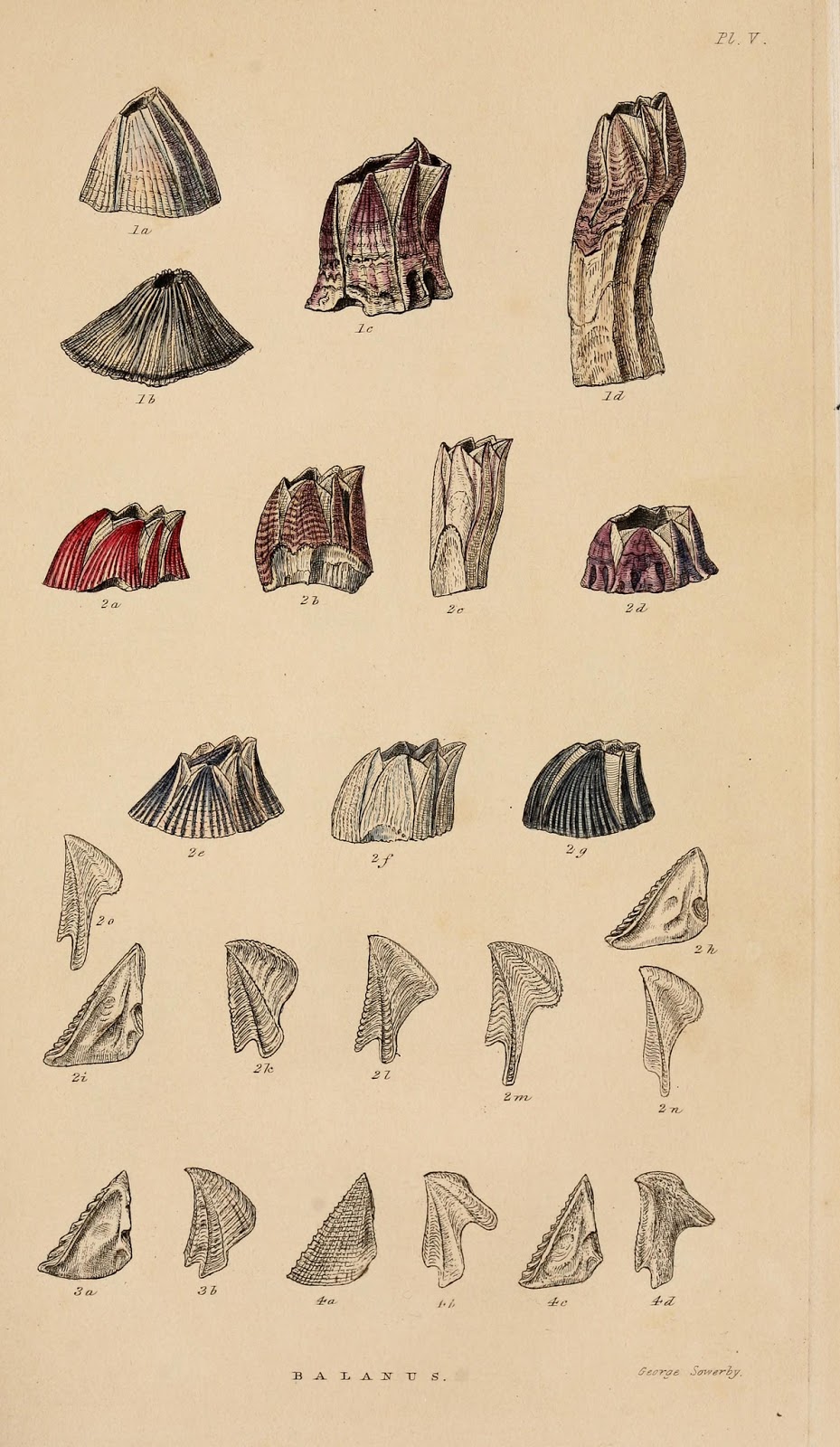
Darwin, Charles. A monograph on the sub-class Cirripedia, with figures of all the species. (1851-54). http://biodiversitylibrary.org/page/2007053. Digitized for BHL by the MBLWHOI Library.

Time passed, Darwin spent some time at Cambridge, and eventually he joined the voyage of the HMS Beagle thanks to a recommendation from his new mentor, botanist and geologist John Stevens Henslow. Darwin’s observations and research during the voyage would fuel his later revolutionary theories. But, as Dr. Melanie L.J. Stiassny, a curator at the American Museum of Natural History, points out in her article on Darwin within the book Natural Histories: Opulent Oceans, Darwin felt somewhat hesitant about his ideas during the early stages of their development. After all, they represented an entirely new way of looking at the natural world and thinking about its origins. So, while he fleshed out his theories on natural selection, Darwin also turned his attention back to, as Stiassny calls it, “his early love” – marine invertebrates. It was his work on barnacles that arguably helped pave the way for the acceptance of his later theories. As Stiassny states on page 84 of Opulent Oceans:

“It was the study of one group, the barnacles (Cirripedia), that would solidify his credentials as a taxonomic expert and provide him with empirical evidence for many of his evolutionary ideas…such as the loss of unnecessary structures (barnacles have no trace of the abdominal segments and swimming appendages of other crustaceans), and evidence that features inherited from a common ancestor can transform in anatomy and function (the typical walking limbs of crustaceans are modified into specialized feeding cirri in barnacles).”


View Full Size Image
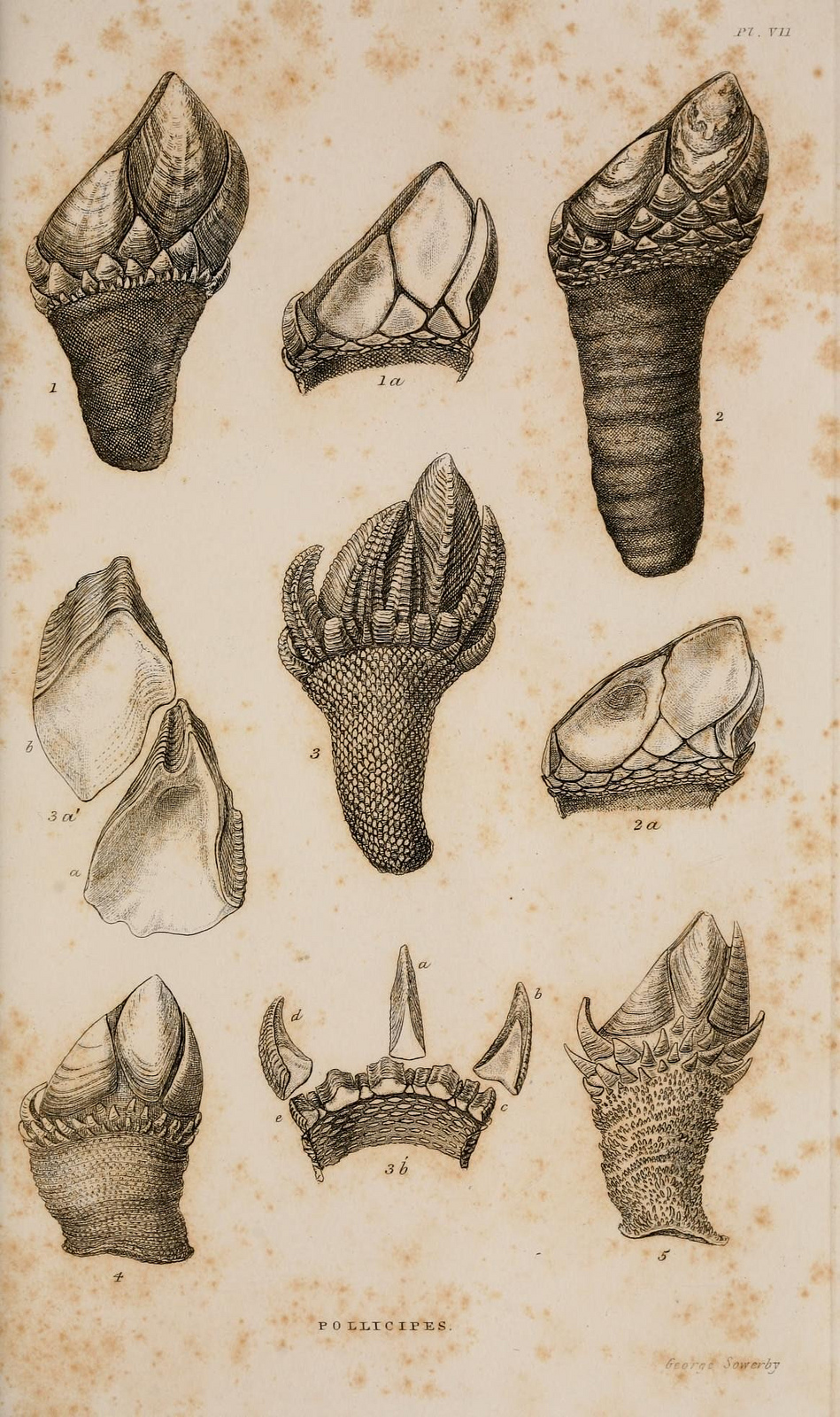
Darwin, Charles. A monograph on the sub-class Cirripedia, with figures of all the species. (1851-54). http://biodiversitylibrary.org/page/2007061. Digitized for BHL by the MBLWHOI Library.

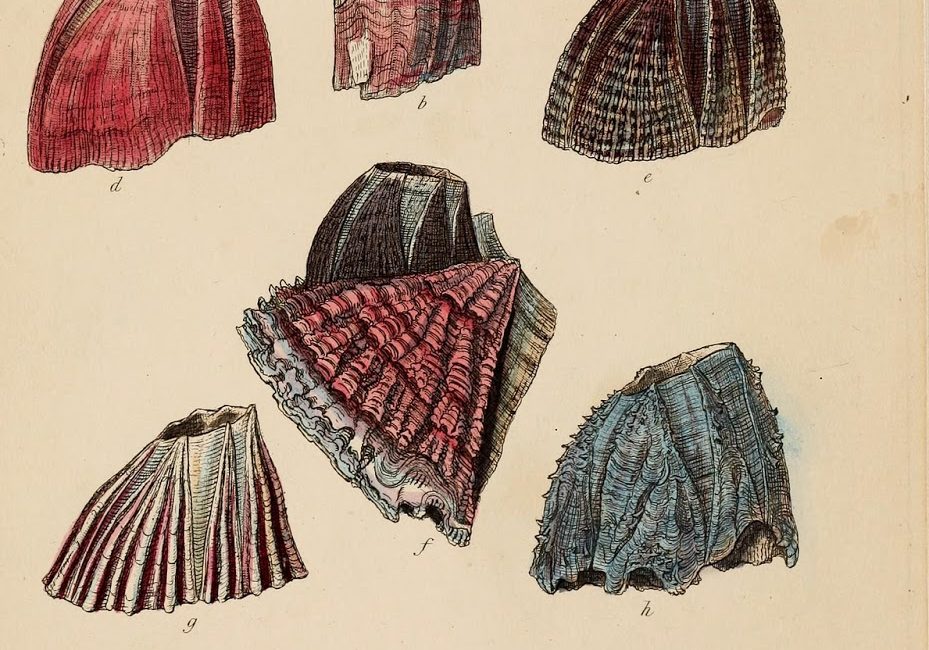
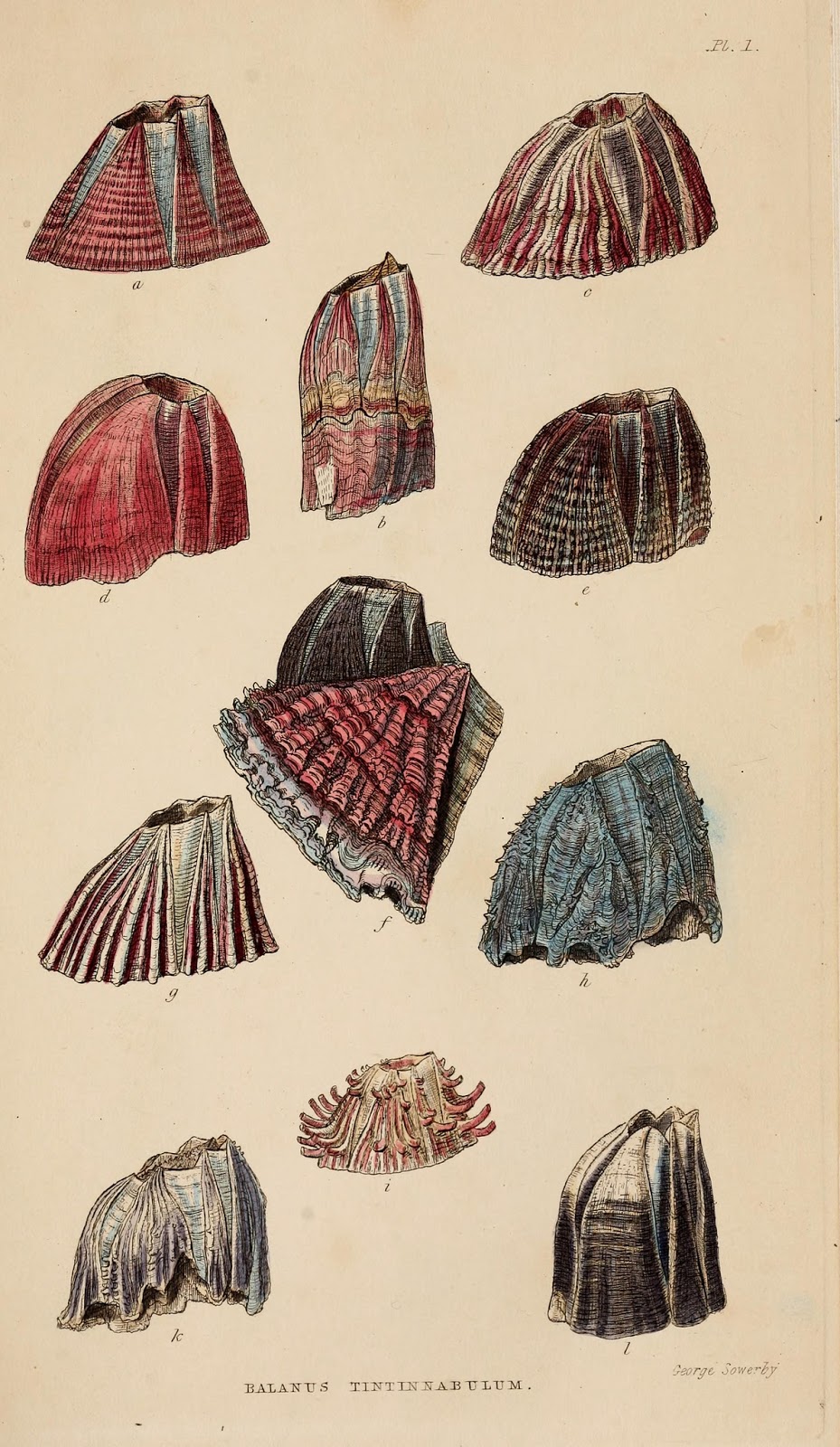
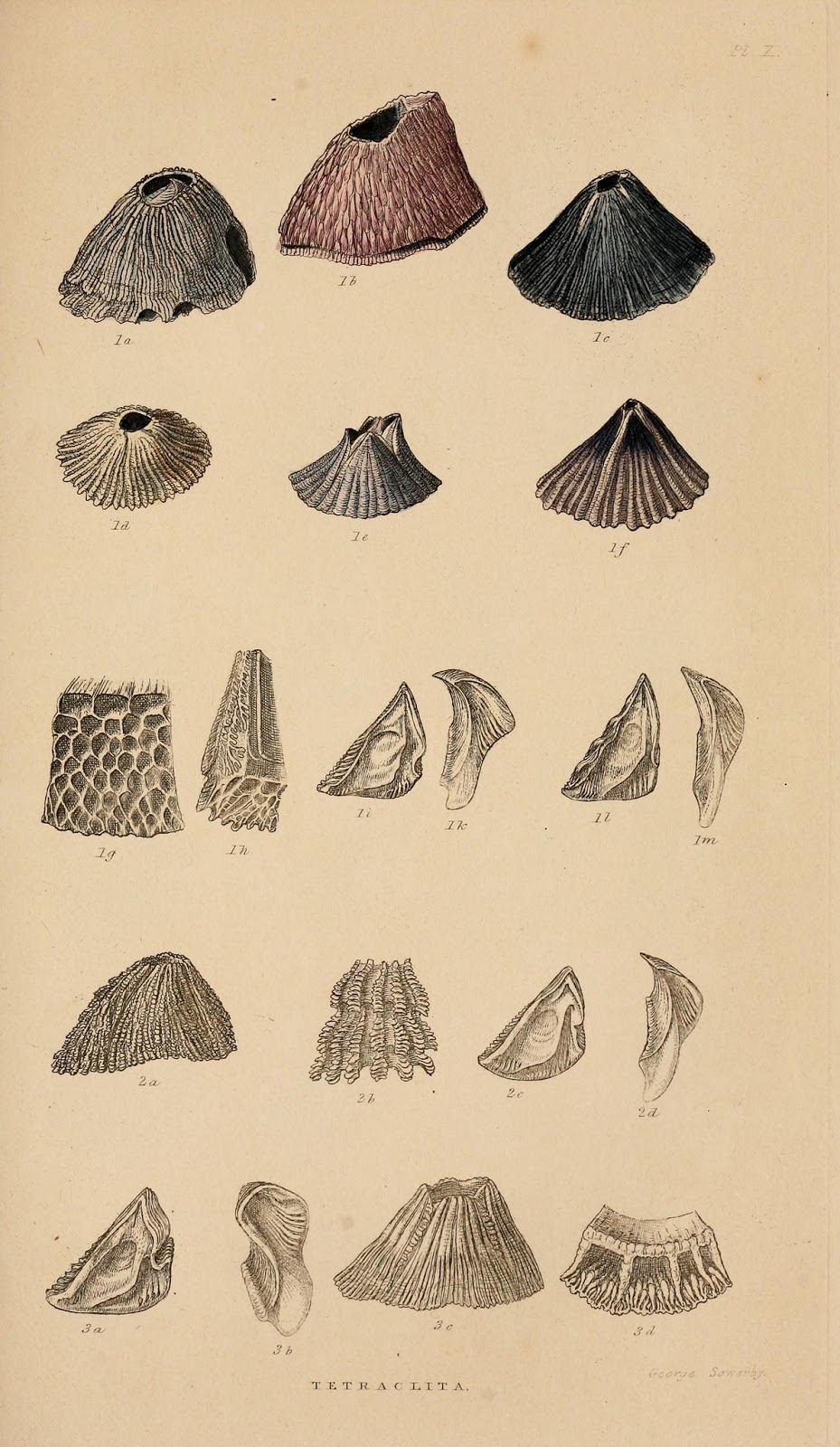
Darwin spent eight years working on his barnacle studies, and from 1851-54 finally published his work in a four-part series: A monograph on the sub-class Cirripedia, with figures of all the species. Within the work, Darwin provides a classification for the crustacean Subclass Cirripedia, making it “the first based on the evolutionary principle of common descent” (Stiassny, 85). His On the Origin of Species, published in 1859, five years after his Cirripedia work, references cirripedes twenty-six times, demonstrating the impact this research had on Darwin’s evolutionary ideas.

View Full Size Image
Darwin, Charles. A monograph on the sub-class Cirripedia, with figures of all the species. (1851-54). http://biodiversitylibrary.org/page/2011425. Digitized for BHL by the MBLWHOI Library.

Darwin’s name is arguably the most well-known from the world of natural history. Knowing Darwin’s history with the Cirripedia, one might wonder if he would have realized the heights of his scientific achievements without his barnacles.

So, we think, if Darwin were to give a Valentine to someone in the non-human animal kingdom, there’s a good chance it would go to a barnacle.

View Full Size Image
Darwin, Charles. A monograph on the sub-class Cirripedia, with figures of all the species. (1851-54). http://biodiversitylibrary.org/page/2007081. Digitized for BHL by the MBLWHOI Library.


  • See books and articles written by Charles Darwin in BHL.
  • Explore digitized versions of the books in his personal library in Charles Darwin’s Library in BHL.
  • Explore images from books in Charles Darwin’s Library in Flickr.

Reference:
Stiassny, Melanie L.J. (2014). Darwin’s “Beloved Barnacles.” Natural Histories Opulent Oceans: Extraordinary Rare Book Selections from the American Museum of Natural History Library (pp. 82-85). New York: Sterling Publishing.

February 12, 2016by ulib-libraryjobs
Blog Reel, User Stories

Using the Salamander Brain to Understand Human Behavior

What can a salamander brain tell us about human behavior?

A lot more than you might think, discovered Lou Morgan, an independent researcher who has been studying the physiological underpinnings of human behavior for 30 years.

View Full Size Image
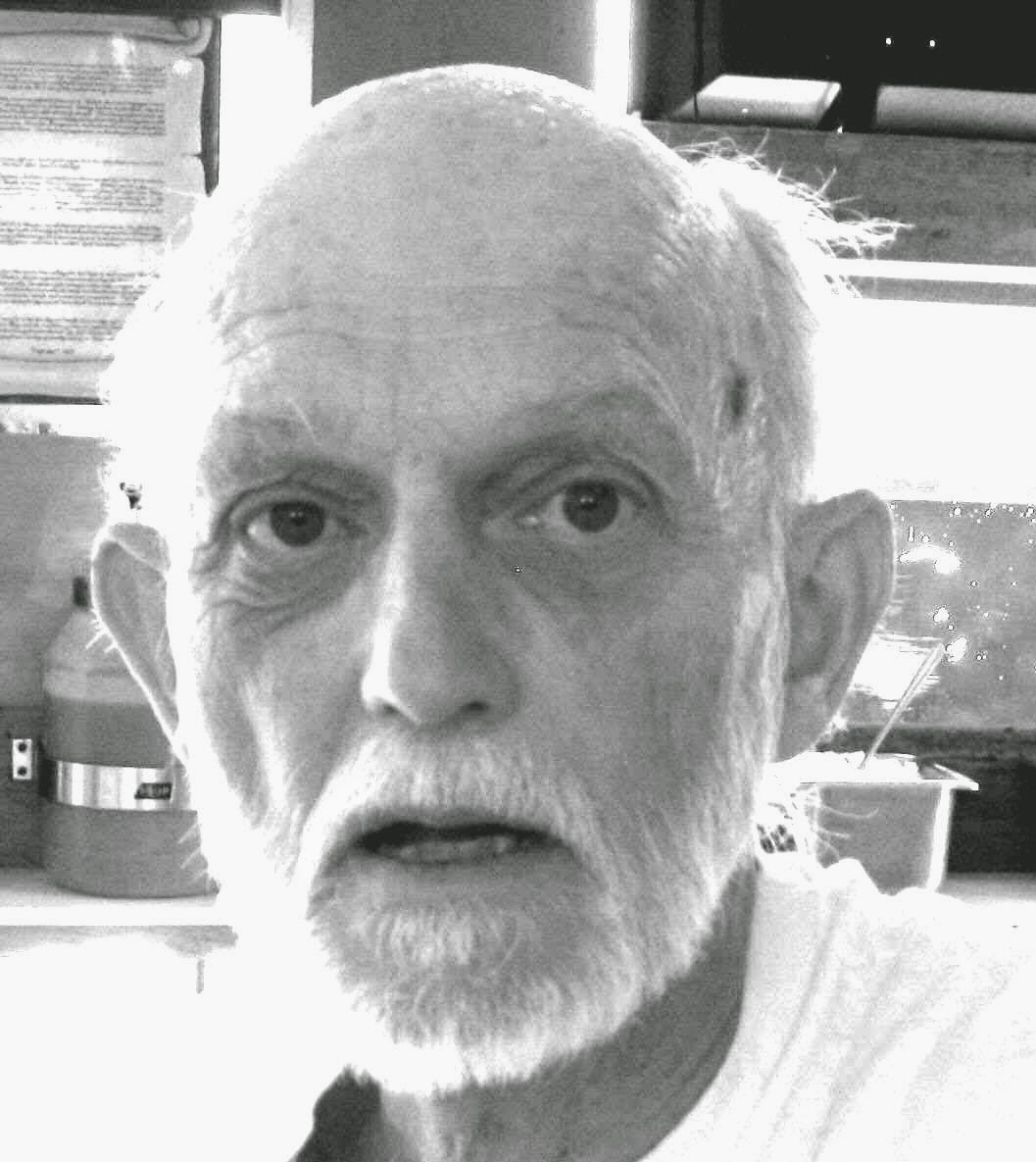
Lou Morgan

While Morgan’s undergraduate education focused on mathematics, a history of familial psychological problems fueled an interest in understanding the underlying mechanisms of human psychology.

In the 1950s, Morgan began taking the first of many college psychology courses. These courses, however, focused largely on human thought and behavior subsequent to their manifestation. Morgan wanted to know about the physiological structures that led to this behavior.

Drawing from his background in mathematics, Morgan decided to approach his investigation by breaking a complex system down into more simplistic elements. “The kind of math I liked best was the deduction of complex structures from a few simple axioms,” explains Morgan. “Think Euclid’s geometry. So I approached psychology looking for the basic principles which underlie our behavior.”

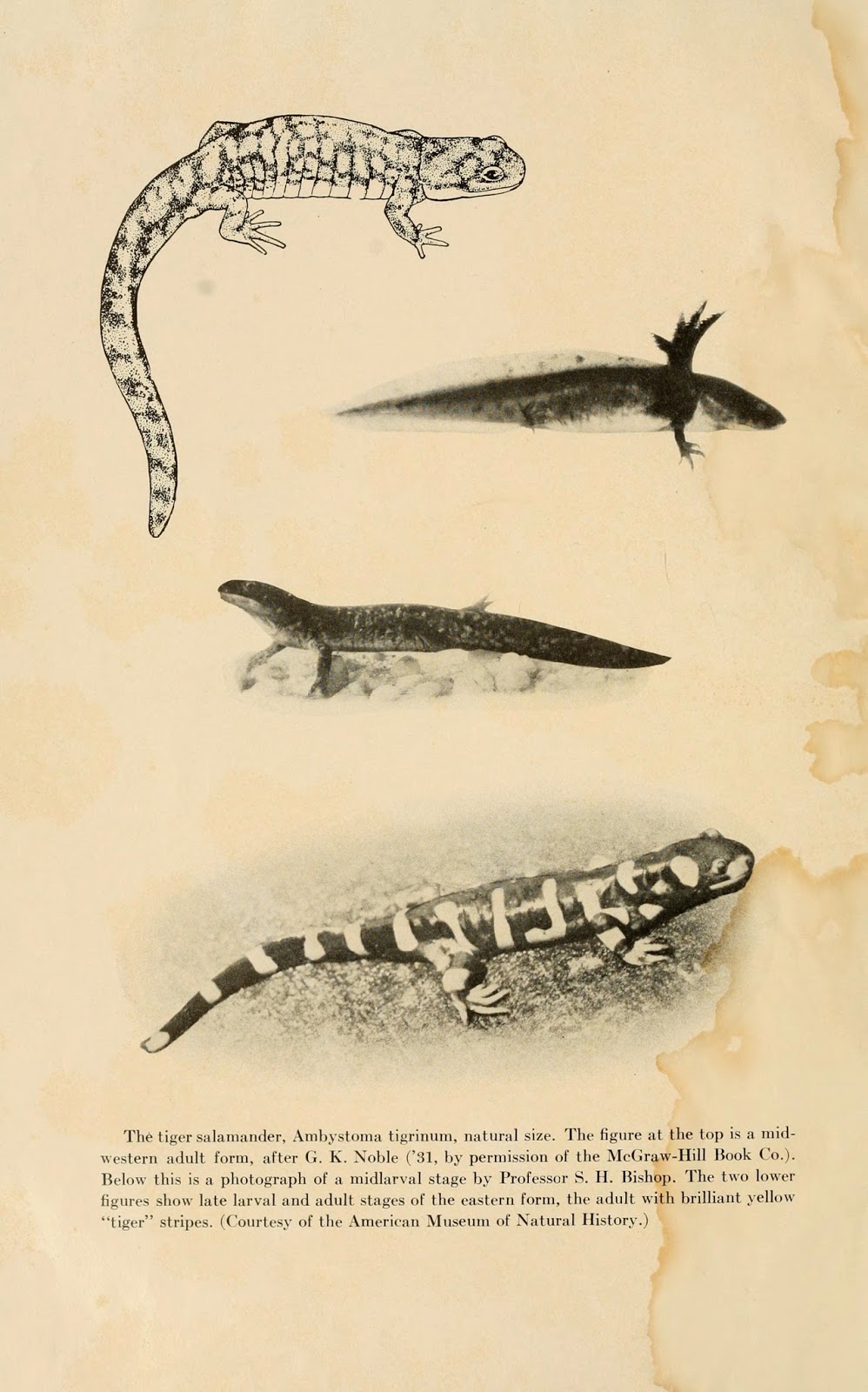
Morgan’s search led him to the study of neuroanatomy, which in turn led him to C. Judson Herrick’s book, The Brain of the Tiger Salamander (1948).

View Full Size Image
The Tiger Salamander. Herrick, C. Judson. The Brain of the Tiger Salamander (1948). http://biodiversitylibrary.org/page/5816541.

The Brain of the Tiger Salamander summarizes 50 years of Herrick’s published research on the vertebrate nervous system, “as revealed in generalized form in the amphibians.”

“Herrick’s book has become central to my attempt to understand human behavior because it contains an immense amount of data which has parallels in the subcortical portion of the human brain,” articulates Morgan. “Humans can be seen as salamanders with a cortex.”

In the 1960s, American physician and neuroscientist Paul D. MacLean proposed an evolutionary model for the vertebrate forebrain suggesting that humans have a “reptilian brain” at our core. Modern comparative evolution, however, has found this theory to be outdated, given the presence of a structure known as the dorsal ventricular ridge (DVR) in reptiles and birds.

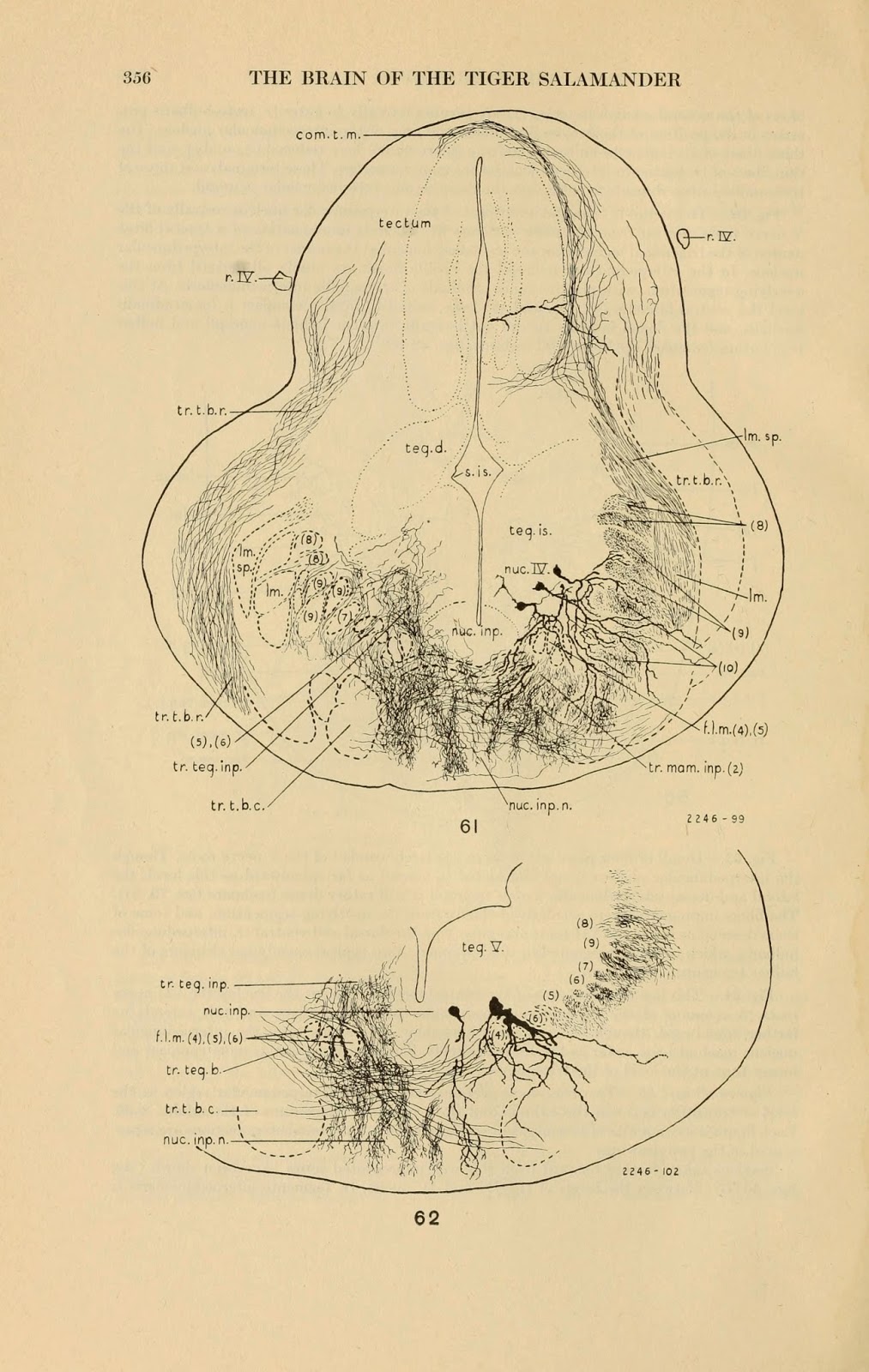
The DVR receives ascending auditory and visual projections and is present in bird and reptile brains. Though absent in mammals, the DVR has been postulated to be homologous to parts of the mammalian isocortex. In humans, the isocortex (also called neocortex) is the largest part of the cerebral cortex, and directs such functions as sensory perception, generation of motor commands, spatial reasoning, conscious thought and language. Amphibians, like humans, do not have a DVR, making their brains, and not reptile brains, a more apt comparison for human neuroanatomy.

View Full Size Image
The Tiger Salamander Brain. Details about the structures depicted on Morgan’s website. Herrick, C. Judson. The Brain of the Tiger Salamander (1948). http://biodiversitylibrary.org/page/5816405.

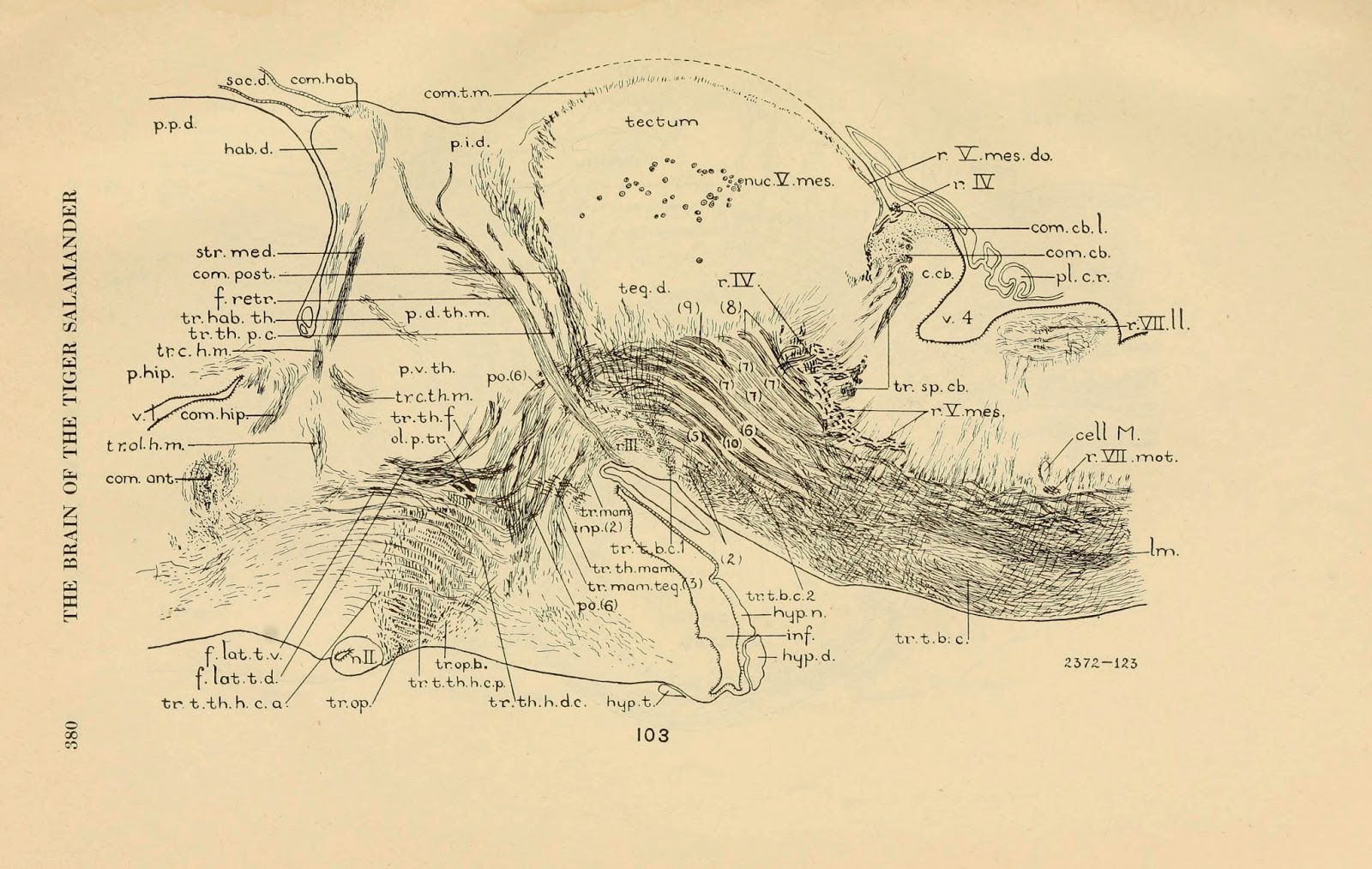
In order to help others explore early research on neuroanatomy, and provide a platform through which to discuss modern theories from the field, Morgan created a website to host a downloaded (from BHL) and partially edited version of Herrick’s book. The website, also entitled Brain of the Tiger Salamander, links to several of Morgan’s other websites detailing subcortical function, human behavior, and the endocrine system.

“I think we humans understand ourselves very poorly, and part of the problem is that we concentrate our attention on the cortical, cognitive, aspects of our behavior,” muses Morgan. “Herrick’s book offers a window into the subcortical aspects of our lives.”

However, like all scientific pursuits, the field of neuroanatomy is still evolving, and while Herrick’s research provides a good foundation for understanding the basics of the vertebrate nervous system, it also has severe limitations.

“Herrick’s Brain of the Tiger Salamander is a marvelous piece of work, but it’s outdated. Most importantly, it does not give any consideration to neurotransmitters or the endocrine system,” Morgan points out. “Our knowledge of neurotransmitters is still evolving. The possibility of their very existence was discovered by Otto Loewi only in 1921. They were still a new concept during Herrick’s time. Similarly, modern endocrinology began with Arnold Berthold in 1849 and is still a very active field of research. I suppose Herrick was aware of the current research while he was working, but there is no mention of either neurotransmitters or hormones in The Brain of the Tiger Salamander. He probably had his hands full with his neuroanatomical research.”

View Full Size Image
The Tiger Salamander Brain. Details about the structures depicted on Morgan’s website. Herrick, C. Judson. The Brain of the Tiger Salamander (1948). http://biodiversitylibrary.org/page/5816438.

Morgan’s newest website, Herrick Update, attempts to “supplement Herrick’s presentation of salamander neuroanatomy with information which may be relevant to salamanders’ neurotransmitters and hormones,” which may in turn provide insight into human behavior.

In the future, Morgan plans to concentrate his study of human behavior around addiction, and the part of our nervous system most involved in that behavior: the Nucleus Accumbens Septi (NAcc). Interestingly, this research may relate quite strongly to Morgan’s salamander research. The NAcc may in fact be the most prominent and clearly defined part of the Lamprey Basal Ganglia. The Lamprey brain is very similar to that of the amphibian, and thus Morgan began his attempt to develop a model of subcortical function with an investigation of the lamprey nervous system.

As humans continue to progress in our understanding of neuroanatomy, and the underlying physical processes that drive our actions and behaviors, Morgan’s research into Herrick’s work demonstrates once again how intrinsically tied modern science is to past discoveries. Thanks to the Biodiversity Heritage Library, this historic knowledge is available to everyone, everywhere, fueling continued understanding of life on earth and what it means to be human.

See Herrick’s original work in BHL, digitized by the MBLWHOI Library. Explore a partially edited version of the work on Morgan’s website. Learn more about how neurotransmitters and hormones affect neuroanatomy and view a model of subcortical function in Morgan’s two recent websites.

December 11, 2014by michelle.underhill
BHL News, Blog Reel

2013 BHL Institutional Council Meeting

View Full Size Image
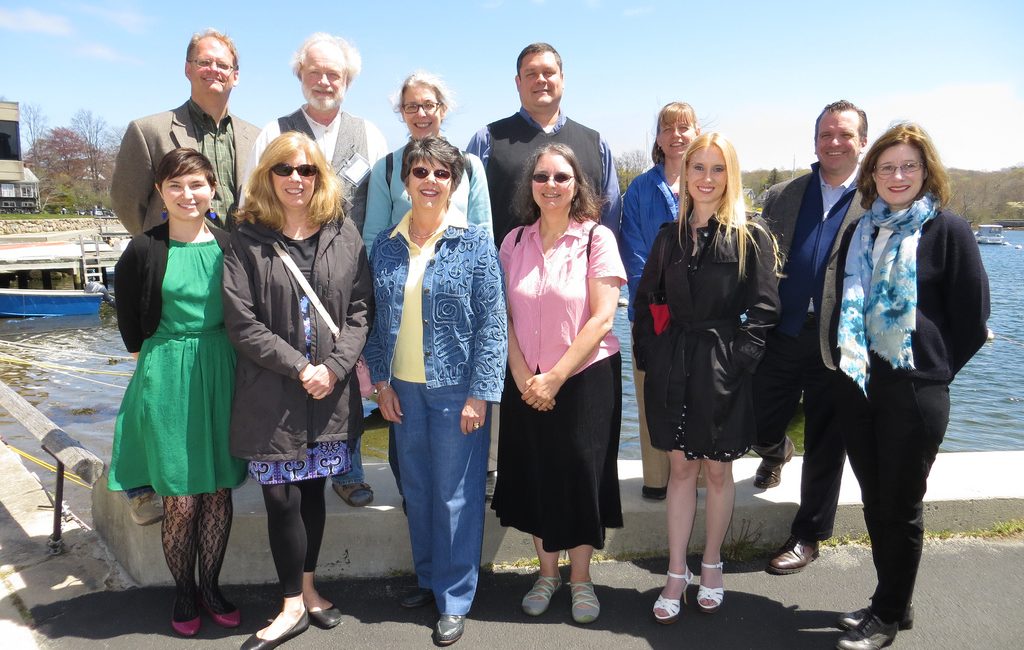
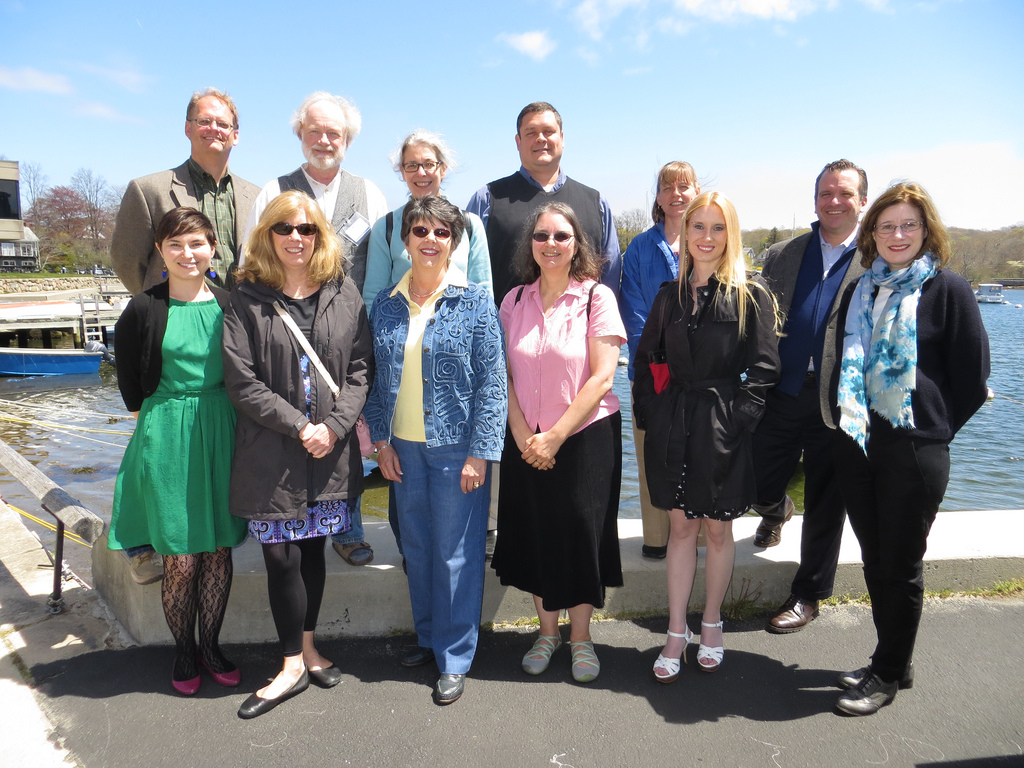
Attendees at the 2013 BHL Institutional Council Meeting. Back Row, Left to Right: Martin Kalfatovic (BHL Program Director); Marty Schlabach (Mann Library, Cornell University); Judy Warnement (Harvard University Herbarium); William Ulate (BHL Technical Director); Diane Rielinger (MBL-WHOI); Tom Baione (American Museum of Natural History). Front Row, Left to Right: Bianca Crowley (BHL Collections Coordinator); Susan Fraser (the New York Botanical Garden); Nancy Gwinn (Smithsonian Libraries); Connie Rinaldo (Harvard Museum of Comparative Zoology); Grace Costantino (BHL Program Manager); Jane Smith (Natural History Museum, London).

The seventh annual BHL Institutional Council Meeting occurred at the Marine Biological Laboratory and Woods Hole Oceanographic Institute Library (MBL-WHOI) in Woods Hole, MA, on May 6-7, 2013.

The BHL Institutional Council is composed of the directors (or designated alternative representatives) of the BHL member libraries. The annual meetings serve as an opportunity for council members to provide updates about BHL activities at their institutions, discuss governance issues, make funding decisions, and strategize about the future of BHL. It also allows BHL Administrative Staff to inform council members about developments in their areas of expertise.

Representatives from eight member libraries were able to attend the meeting in person, and, for the first time in IC Meeting history, those who could not be present physically were able to virtually join the meeting using video conference software available within the MBL-WHOI library. Representatives from California Academy of Science, the Field Museum Library, and our newest BHL member, The Library of Congress, participated in a virtual capacity throughout the meeting. As part of the meeting, each representative gave updates on the BHL activities that occurred at their institutions over the past year.

View Full Size Image
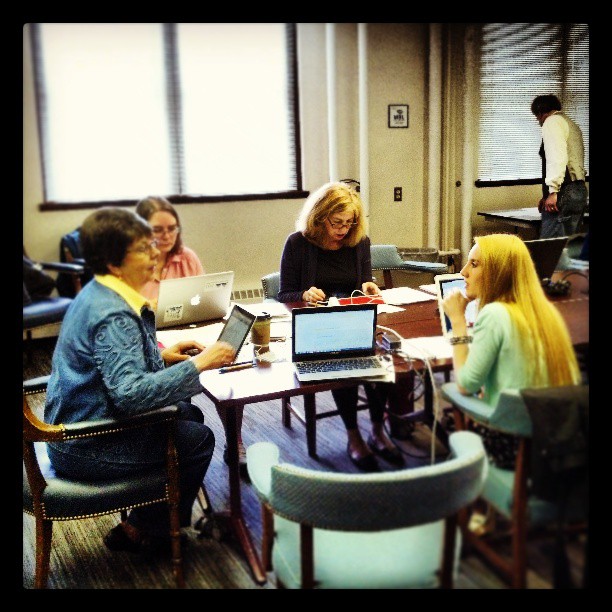
Hard at work at the 2013 BHL IC Meeting!

Day one of the meeting began with a BHL Program Director update, provided by Martin R. Kalfatovic, discussing project developments and achievements.

Also during day one, William Ulate, BHL Technical Director and Global Coordinator, detailed BHL’s work in the past year, highlighting the implementation of the new user interface, work to date on the Art of Life  project, and the status of BHL’s six global nodes. BHL Program Manager, Grace Costantino, also provided an update on BHL’s outreach activities, including the presentation of a new BHL Outreach and Communication plan. Finally, Bianca Crowley, BHL Collections Coordinator, outlined her recent work and that of the BHL Collection’s Committee, including an overview of collection analysis needs and a new Permissions Plans which proposes a strategy for obtaining and fulfilling agreements with publishers to scan in-copyright content for BHL.

The BHL Business Meeting occurred on day two. Topics covered included approval of the 2013 budget, discussion of a new proposed member library organizational structure for BHL, and brainstorming about fundraising options to achieve financial sustainability. One final topic of discussion was a review of a proposed revision to BHL’s vision and mission statements:

Vision

“Inspiring discovery through free access to biodiversity knowledge.”

Mission

“The Biodiversity Heritage Library works collaboratively to make biodiversity literature openly available to the world as part of a global biodiversity community.”

As always, these meetings serve as a valuable opportunity to bring together BHL’s geographically dispersed leadership in order to make important decisions about BHL’s future. The decisions reached at this meeting promise to ensure continued positive growth and prosperity. We look forward to the ninth annual meeting next spring.

See presentations from the meetings by:

  • Martin Kalfatovic, BHL Program Director: Presentation
  • Grace Costantino, BHL Program Manager: Presentation One | Presentation Two
  • Bianca Crowley, BHL Collections Coordinator: Presentation One | Presentation Two

* Photo Credits: Martin Kalfatovic, BHL Program Director

May 11, 2013by Grace Costantino
BHL News, Blog Reel

Two Cities Named Cambridge and One Library Named the Biodiversity Heritage Library

Portrait version of the Biodiversity Heritage Library logo.

Last week the BHL Librarian and Technical Staff met at Harvard University in Cambridge, Massachusetts, for one of our invaluable staff meetings (our last face to face meeting was about one year ago right after the BHL Chicago Life and Literature Conference.)  These meetings are always lively and packed full of agenda items that we generate during our monthly teleconference calls…and usually a memorable meal or some cultural event are also included! After each of these meetings we return to our home libraries laden down with an armful of tasks to complete within a specific timeframe (which we try to stick to!). Check back soon for a post about the Meeting.

View Full Size Image
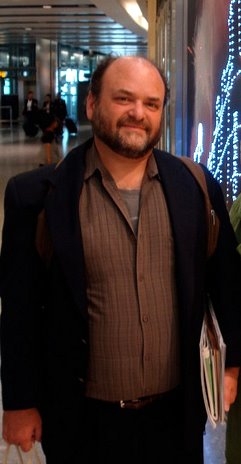
Matthew Person

A month ago one of our librarians, Matthew Person of the MBLWHOI Library in Woods Hole, Massachusetts, was given the unique opportunity to speak about the BHL to Science Historians and digital media specialists who were meeting in the other Cambridge: that’s Cambridge University in England! Matt was attending the 9th Digital History and Philosophy of Science Workshop at Cambridge University as a member of the Arizona State University/Marine Biological Laboratory History and Philosophy of Science Program of MBL’s Center for Library and Informatics.

The opening day afternoon of the Cambridge UK conference was themed “If you build it will they come? Mobilizing online Communities for Research.” Matt was asked by Dr. Alison Pearn, who is Associate Director of the Darwin Correspondence Project, if he would give a presentation about BHL’s social media work, our use of crowd sourcing, and games development, all which assist our BHL development. The presentation Matt gave was titled “Building a large digital library and interacting with the World”, and this was just one of a number of interesting presentations made that day by staff of: The Genizah Project (Dr. Ben Outhwaite of Cambridge University), the oldWeather Project (Dr. Philip Brohan of the MetOffice UK), and the Chymistry of Issac Newton Project (Dr. Wally Hooper of Indiana University), to name just a few of about 20 projects and presenters who spoke during the 3 day workshop.

Matt consulted with BHL colleagues Gilbert Borrego, Grace Costantino, Suzanne Pilsk, and Martin Kalfatovic of the Smithsonian Institution Libraries, Diane Rielinger and Cathy Norton of the MBLWHOI Library, Trish Rose-Sandler and Chris Freeland of the Missouri Botanical Garden, and Connie Rinaldo of the Harvard Museum of Comparative Zoology, in preparation for his BHL talk, the first part of which was a concise account of the purpose, history, and function of the BHL. The second part of the talk detailed our working with the tools of social media websites such as facebook, twitter, and flickr, and our daily use of an issue resolution tool informed by our BHL library users called Gemini. Matt also spoke of our thoughts on the development of a mobile device type of game App, which could assist us with scanned text correction, for example.*

The Biodiversity Heritage Library goes beyond being a virtual biodiversity library serving scholars and citizen scientists. Our work on Flickr isolates some of the remarkable corpus of illustrations in the scanned BHL literature, and works with our partner the Encyclopedia of Life to hold flickr tagging events to have the “crowd sourced” community establish appropriate descriptive metadata for the illustrations so that they can be uploaded to EOL species pages. Our work in social media is dynamic, ongoing and developing, and the talk Matt gave at the Digital History and Philosophy of Science Workshop in Cambridge, UK, was well received by scholars and technicians who both use the BHL and have wondered a bit about what’s behind those 39 million+ scanned pages!

The image of a science historian or any scholar working solely in print materials these days is being replaced by dynamic projects that combine digital versions of scanned historic text with the most advanced computational and visualization tools of the day. Many of these tools have been developed by the BHL partner libraries, and many are also being developed by the History and Philosophy of Science community. This work expands dramatically the scope and depth of the study of the history of science.

We asked Matt, who lives near Cambridge, Massachusetts, to comment on these two cities which figured in BHL life this September…named Cambridge…the one in Massachusetts and the other in England. He told us, “Both cities named Cambridge are relatively small in size, but huge in scholarly content; both cities have bucolic riverside settings, and also are on the forefront of knowledge creation, and have been so for centuries.” So it’s quite appropriate that in September 2012 both historic cities named Cambridge figured in the life of the historic and ground breaking Biodiversity Heritage Library!

* BHL is not, at this time, performing any development with gaming Apps, though we are exploring the possibility of doing so one day.

October 3, 2012by ulib-libraryjobs

Help Support BHL

BHL's existence depends on the financial support of its patrons. Help us keep this free resource alive!

search

About BHL

The Biodiversity Heritage Library (BHL) is the world’s largest open access digital library for biodiversity literature and archives. BHL operates as a worldwide consortium of natural history, botanical, research, and national libraries working together to digitize the natural history literature held in their collections and make it freely available for open access as part of a global “biodiversity community.”

Join Our Mailing List

Sign up to receive the latest news, content highlights, and promotions.

Subscribe Now

Subscribe to Blog via Email

Enter your email address to subscribe to this blog and receive notifications of new posts by email.

Join 319 other subscribers

Subscribe to Blog Via RSS

Subscribe to the blog RSS feed to stay up-to-date on all the latest BHL posts.

Access RSS Feed

Inspiring Discovery through Free Access to Biodiversity Knowledge.

The Biodiversity Heritage Library makes it easier than ever for you to access the information you need to study and explore life on Earth…for free, anytime, anywhere.


64+ Million Pages of
Biodiversity Literature Online.

EXPLORE

Tools and Services
to Transform Research.

EXPLORE

300,000+
Illustrations on Flickr.

EXPLORE

ABOUT | HARMFUL CONTENT | PRIVACY | SITE MAP | TERMS OF USE