Biodiversity Heritage Library - Program news and collection highlights from BHL
  • Home
  • News
  • Featured Books
    • All Featured Books
    • Book of the Month Series
    • BHL at 20
  • User Stories
  • Campaigns
    • Fossil Stories
    • Garden Stories
    • Monsters Are Real
    • Page Frights
    • Her Natural History
    • Earth Optimism 2020
  • Tech Blog
  • Visit BHL
Home
News
Featured Books
    All Featured Books
    Book of the Month Series
    BHL at 20
User Stories
Campaigns
    Fossil Stories
    Garden Stories
    Monsters Are Real
    Page Frights
    Her Natural History
    Earth Optimism 2020
Tech Blog
Visit BHL
  • Home
  • News
  • Featured Books
    • All Featured Books
    • Book of the Month Series
    • BHL at 20
  • User Stories
  • Campaigns
    • Fossil Stories
    • Garden Stories
    • Monsters Are Real
    • Page Frights
    • Her Natural History
    • Earth Optimism 2020
  • Tech Blog
  • Visit BHL
Biodiversity Heritage Library - Program news and collection highlights from BHL
BHL News, Blog Reel

Commemorating 20 Years of BHL at the 2026 Annual Meeting

A group of 26 people posing for a group photo on the steps of a building in front of a green double door. The BHL at 20 logo is in the foreground.

The Biodiversity Heritage Library continued our 20th anniversary celebration at our Annual Meeting in London from 27 April to 1 May. This year, founding members and 10th anniversary co-hosts, the Natural History Museum, London and the Royal Botanic Gardens, Kew, welcomed 46 representatives from 30 institutions across 8 countries to gather and plan for BHL’s future.
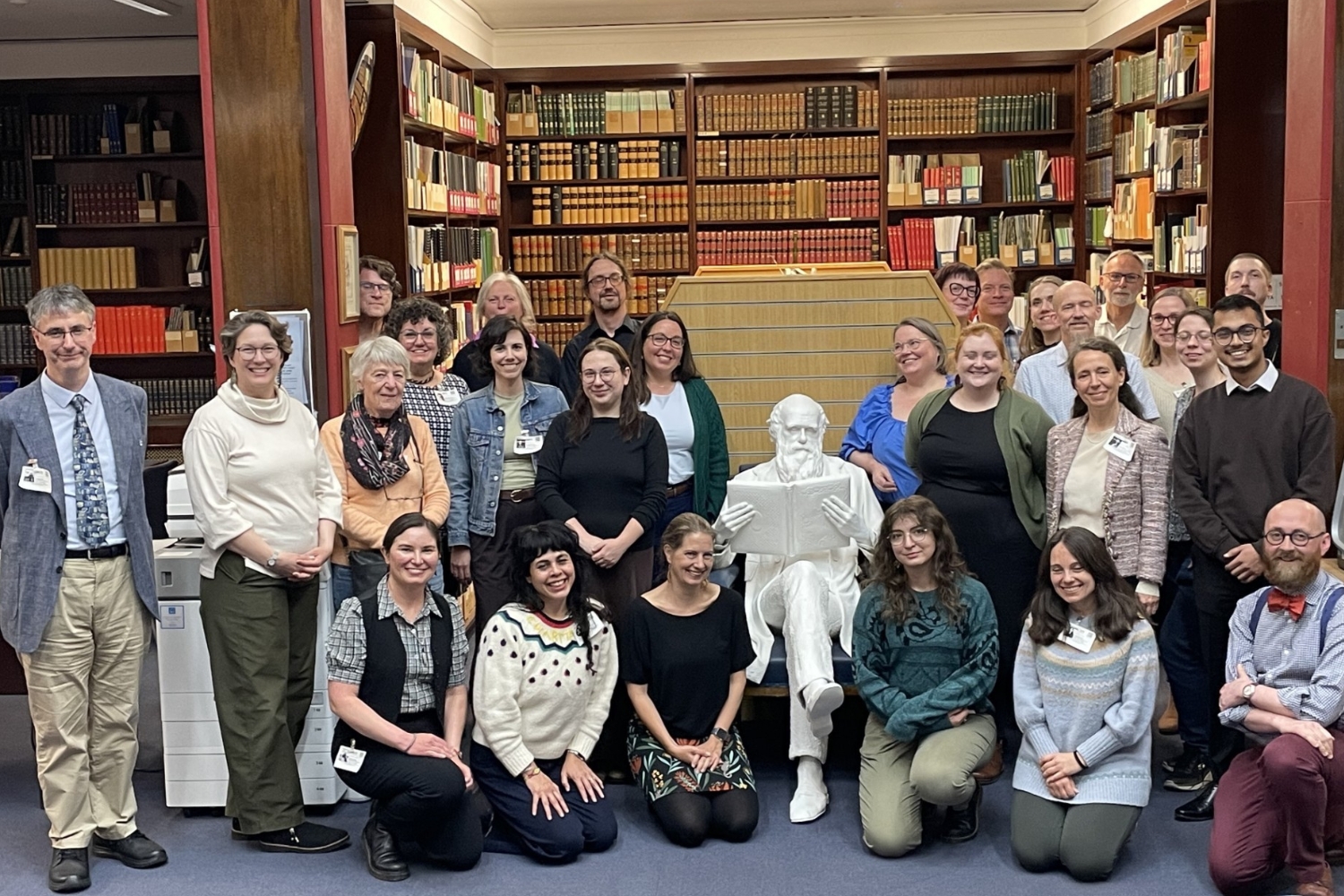
A group of 28 people posing for a group photo in a library around a life-sized white statue of Charles Darwin sitting with his legs crossed reading a book.

The attendees of the 2026 BHL Annual Meeting in the library of the Natural History Museum, London, with Charles Darwin. Photo credit: Victoria Devonport, NHM London

Though we took time to reflect on the successful collaborations of the past 20 years of BHL, this meeting was truly a time for looking forward. For me personally, this was my sixth BHL annual meeting and the most personally energizing. I started with BHL in March 2020 as BHL’s Program Manager. My first task was to help pivot the planned annual meeting in Paris to be fully virtual due to the COVID-19 pandemic. Every annual meeting since has presented its own unique opportunities and challenges; none more challenging than the 2025 annual meeting in which BHL was asked to develop an urgent transition plan to separate from the Smithsonian Institution in less than 9 months. In stark contrast, by April 2026, BHL is now operating under its new home at the Council on Library and Information Resources (CLIR) and moving its technical infrastructure to the Field Museum. We have retained our existing staff and expanded our consortium with new Members. For me, nothing is more revitalizing than gathering with the dedicated and enthusiastic contributors and supporters of BHL.

Strategic Planning

The major focus of the 2026 annual meeting was strategic planning. The BHL Executive Committee (EC) has been leading the global consortium through a strategic planning process in early 2026 to establish new goals for 2026 through 2030, as well as targeted 2 year operational plans to achieve those goals. With the transition to our new fiscal home under CLIR and the migration of our technical hosting to the Field Museum, 2026 is a year of great change for how BHL manages its daily operations.
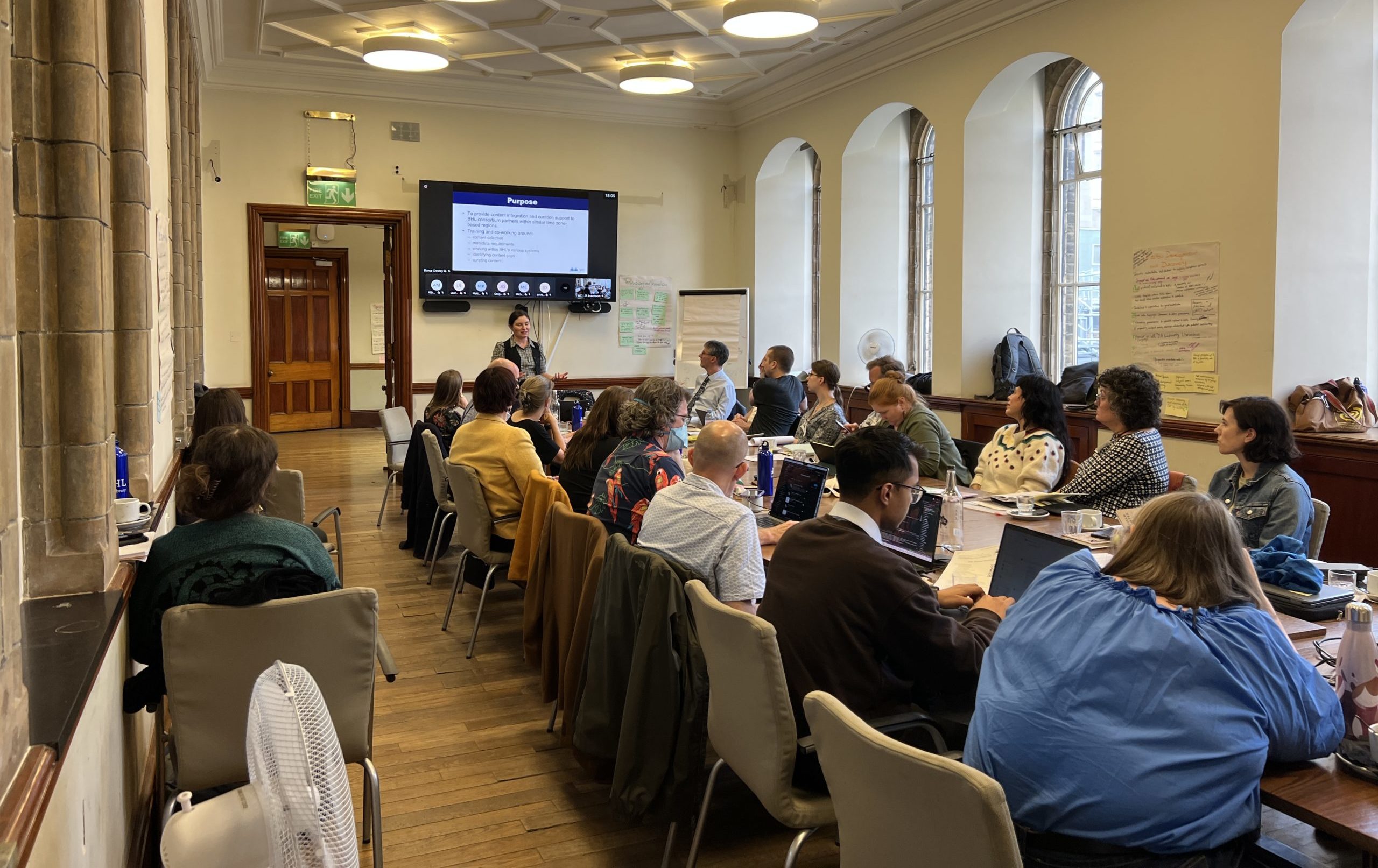
A group of people sitting at a long table watching a person give a presentation in front of a big screen.

Bianca Crowley, Digital Collections Manager, presents a new concept for regional coordination hubs. Photo credit: Colleen Funkhouser

During the business meetings throughout the week, the consortium reviewed how our committees and working groups operate, explored options for better regional support and collaboration, and identified gaps to address in our governance and committee roles. We also welcomed representatives from our newest Members (University of South Florida Libraries, Vanderbilt University Heard Libraries, and Senckenberg Gesellschaft für Naturforschung), bringing fresh perspectives, regional expertise, and new ideas to our collaborative consortium.

We also focused on long-term funding strategies for supporting BHL beyond 2027. Though the Call for Support in 2025 garnered many opportunities for financial, technical, and administrative support, which stabilized BHL’s operations during a critical period of change, the long term funding model for BHL is still a work in progress and a major focus of the year ahead.

As the consortium works to finalize its revised vision, mission, and strategic goals, we’ll be reporting out to the community throughout the year.

Stakeholder Listening Session

On Wednesday 29 April, BHL held a strategic stakeholder session to gather key collaborators from across the biodiversity informatics landscape. BHL’s EC, Secretariat, and Technical Team were on hand to hear our stakeholders’ priorities for technical development, desires for content enhancement, and opportunities for greater collaboration or technical integration. Though BHL engages at various levels with these stakeholders, including GBIF, CETAF, BioStor, Global Names Architecture, Plazi, NHM, and Kew, this collective stakeholder meeting was a first for the BHL Annual Meeting.

BHL Day 2026: Towards a Biodiversity Data Ecosystem Built on BHL Data

Following the stakeholder session, we welcomed more than 120 attendees (online and in person) to the BHL Day 2026 public symposium hosted in the Flett Theatre at NHM. This year’s focus was on the importance of BHL data in building the biodiversity data ecosystem. We heard from colleagues and researchers across the globe on how they have utilized BHL data over the past 20 years to advance their research, and how future developments can improve and expand BHL’s data integration.
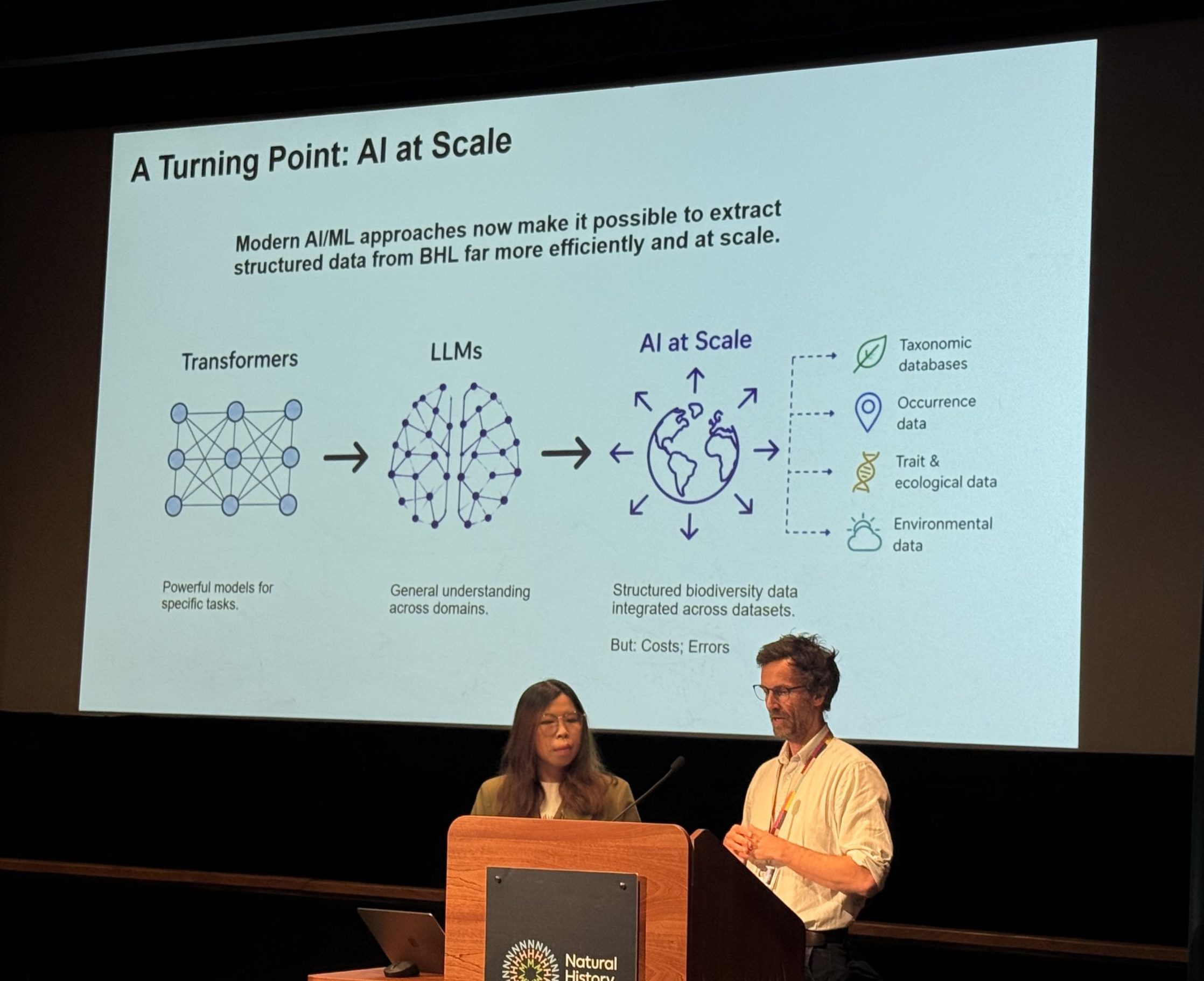
Two people standing behind a lectern on a stage in front of a large screen.

Qianqian Hiris Gu and Ben Hartley from NHM London share the possibilities of using modern AI and Large Language Models to extract data from BHL at scale. Photo credit: Nicole Kearney

Thanks to the collaborative nature of this BHL community, two speakers, Siobhan Leachman from Wikimedia Aotearoa New Zealand and Liz Smith from Cambridge University Library and Archives, brought their unique knowledge and skillsets together to solve an outstanding challenge in sharing data from the Darwin Correspondence Project. Siobhan shared more about this on-the-spot collaboration on the newly launched BHL Community Forum.

For a complete listing of BHL Day presentations and recordings, visit https://bit.ly/bhlday2026

Exploring the rich collections around London, Richmond, and Cambridge

It wouldn’t be a BHL annual meeting without visits to the rich library, archive, museum, and botanical collections around our host cities. Our Chair and Vice-Chair organized behind the scenes visits with some of the outstanding scientific collections in London, Richmond, and Cambridge. We started Monday afternoon at the Royal Society and the Linnean Society of London, exploring their deep histories and unique collections.
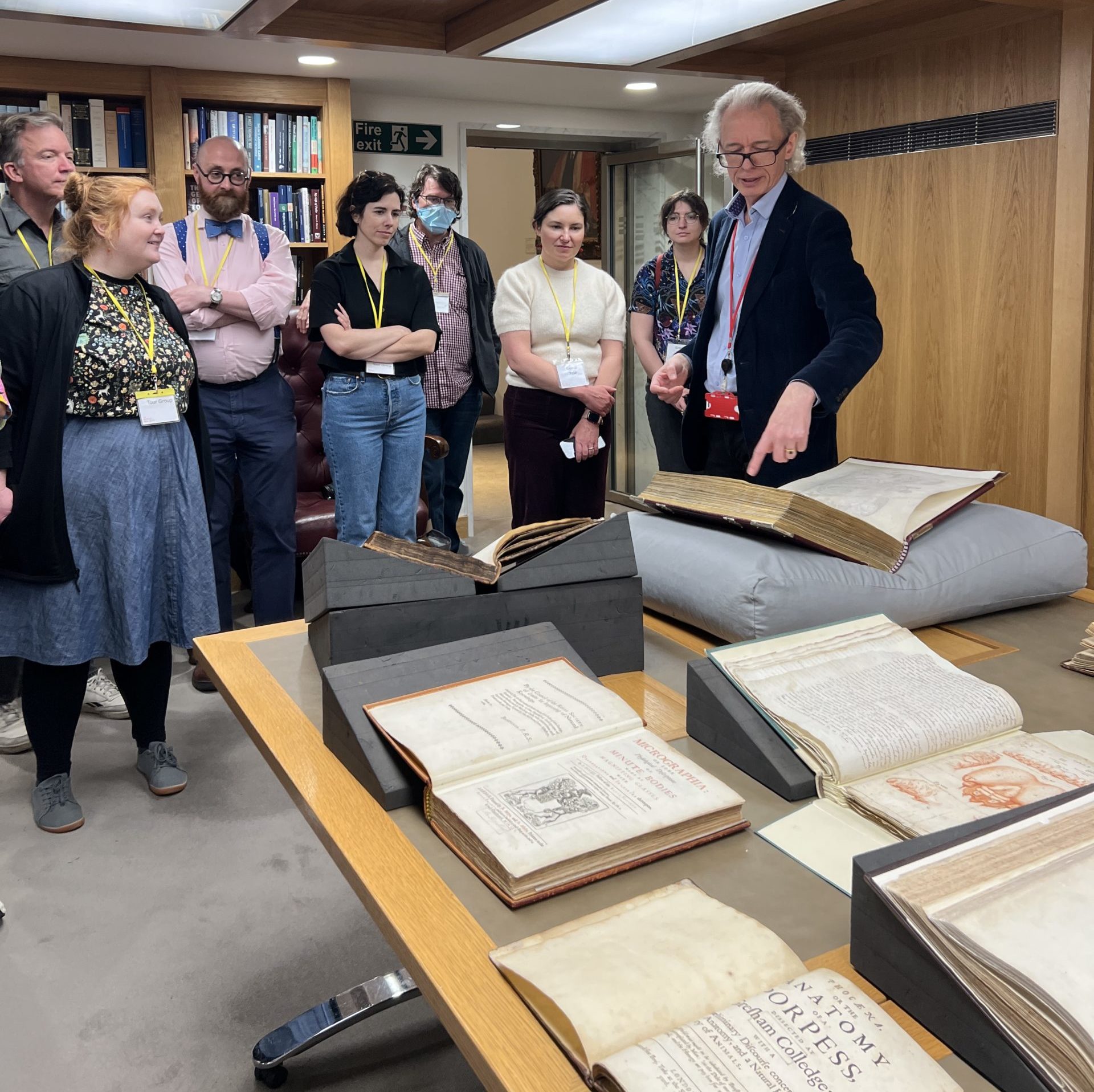
A group of people standing around a table with books on it. A man is pointing to one of the books.

Keith Moore, Head of Library and Information Services for the Royal Society, reads from the Society’s Charter Book containing the signatures of Society fellows dating back to 9 January 1665. Photo credit: Colleen Funkhouser

At the Linnean Society, attendees visited several exhibitions in the Library’s reading room, including Homo sapiens: Classifying the Human Animal and the portrait exhibition Celebrating the Linnean Society’s First Women Fellows, as well as rare materials selected on the topic of biodiversity.
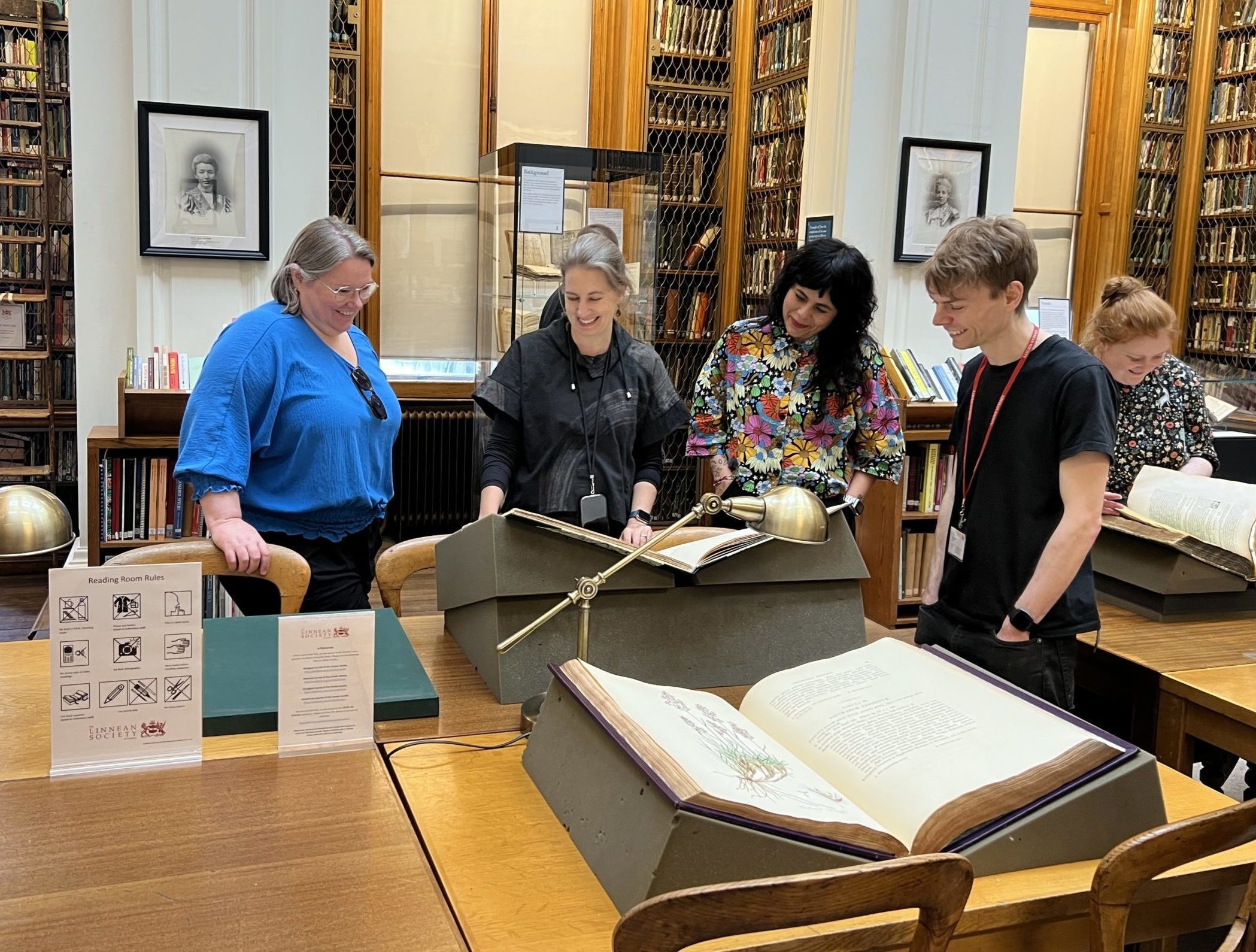
A group of smiling people looking at a large book open on a book stand on a table in a library.

Will Beharrell, Librarian, Linnean Society Library, shares unique items selected for viewing by meeting attendees. Photo credit: Colleen Funkhouser
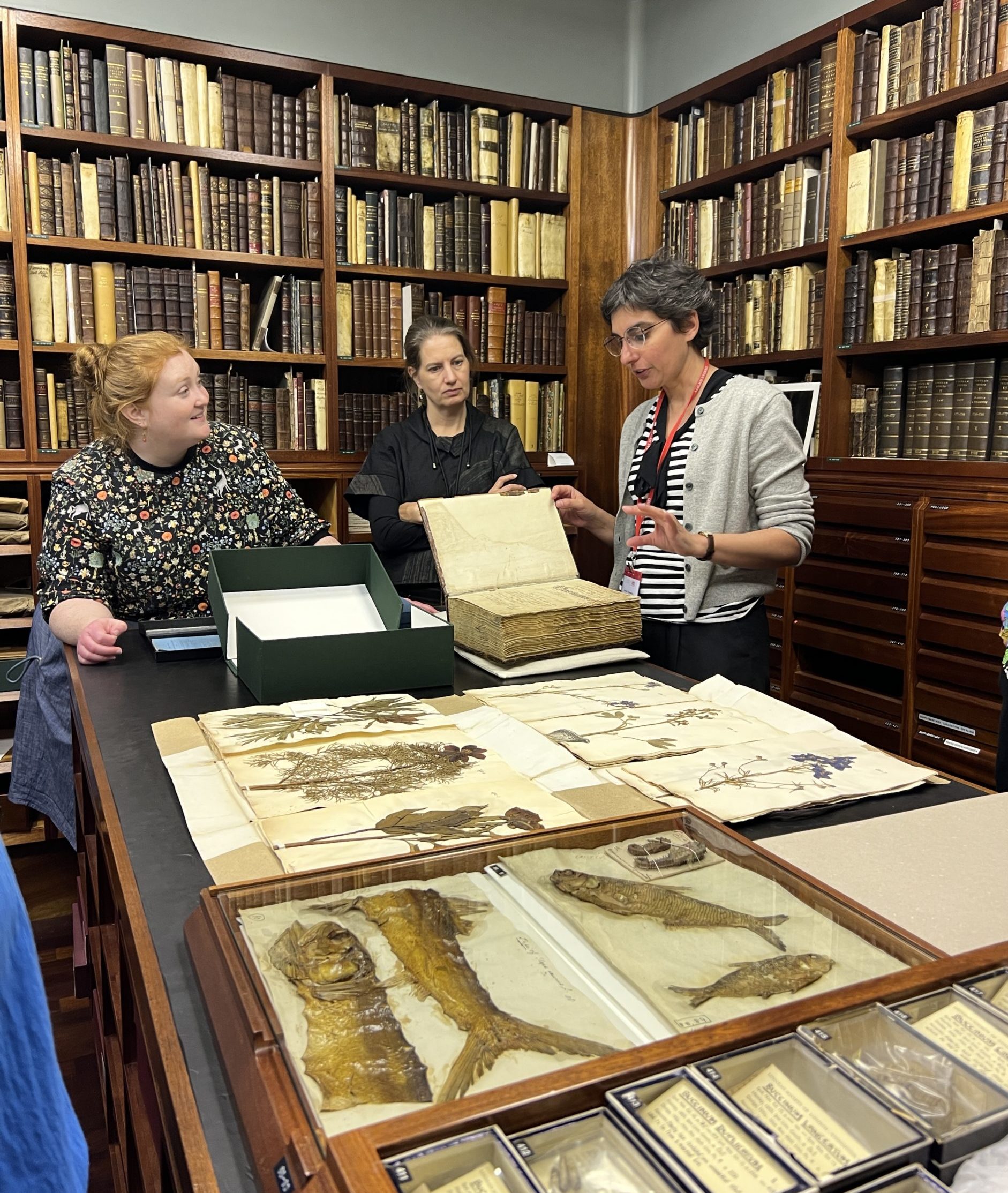
A group of people standing around a table covered in specimens and rare books in an archival storage room.

Dr. Isabelle Charmantier, Head of Collections, shares items from the Linnaeus Collections. Photo credit: Colleen Funkhouser

On Wednesday, meeting attendees received several behind-the-scenes tours of NHM, including the Historical Collections Room (pre-Linnean specimens), the Tank Room, and of course the Library and Archives.

On Thursday, Kew staff provided access to unique treasures from the Library and Archives collections. This included the oldest printed book held by the Library: the Ortus Sanitatis, a 15th century herbal printed in Germany in 1485.
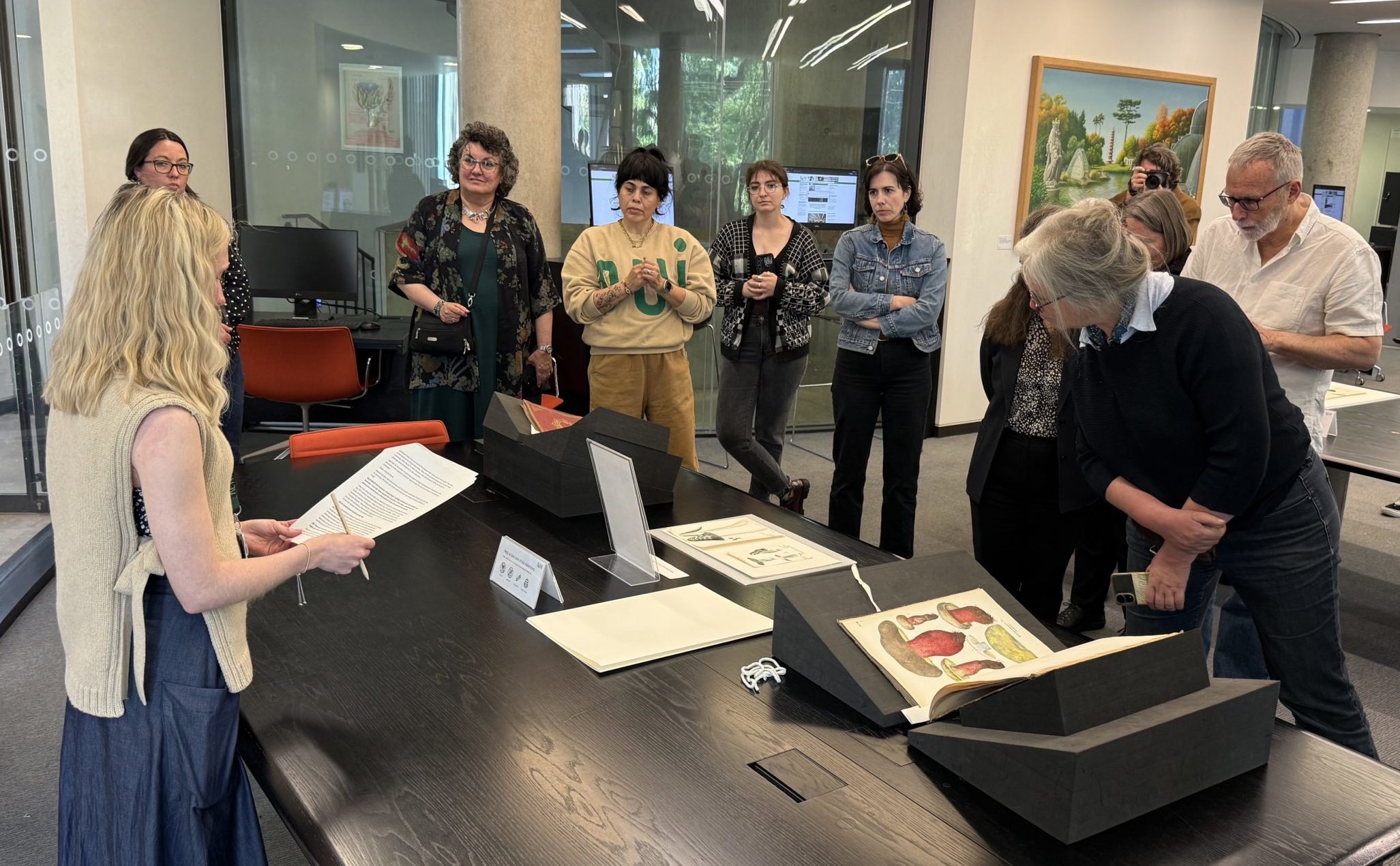
A group of people standing around a table covered in books in a library.

Meeting attendees view rare materials from Kew’s Library and Archives collections with Irene Szmelter, Library Graduate Trainee. Photo credit: Nicole Kearney
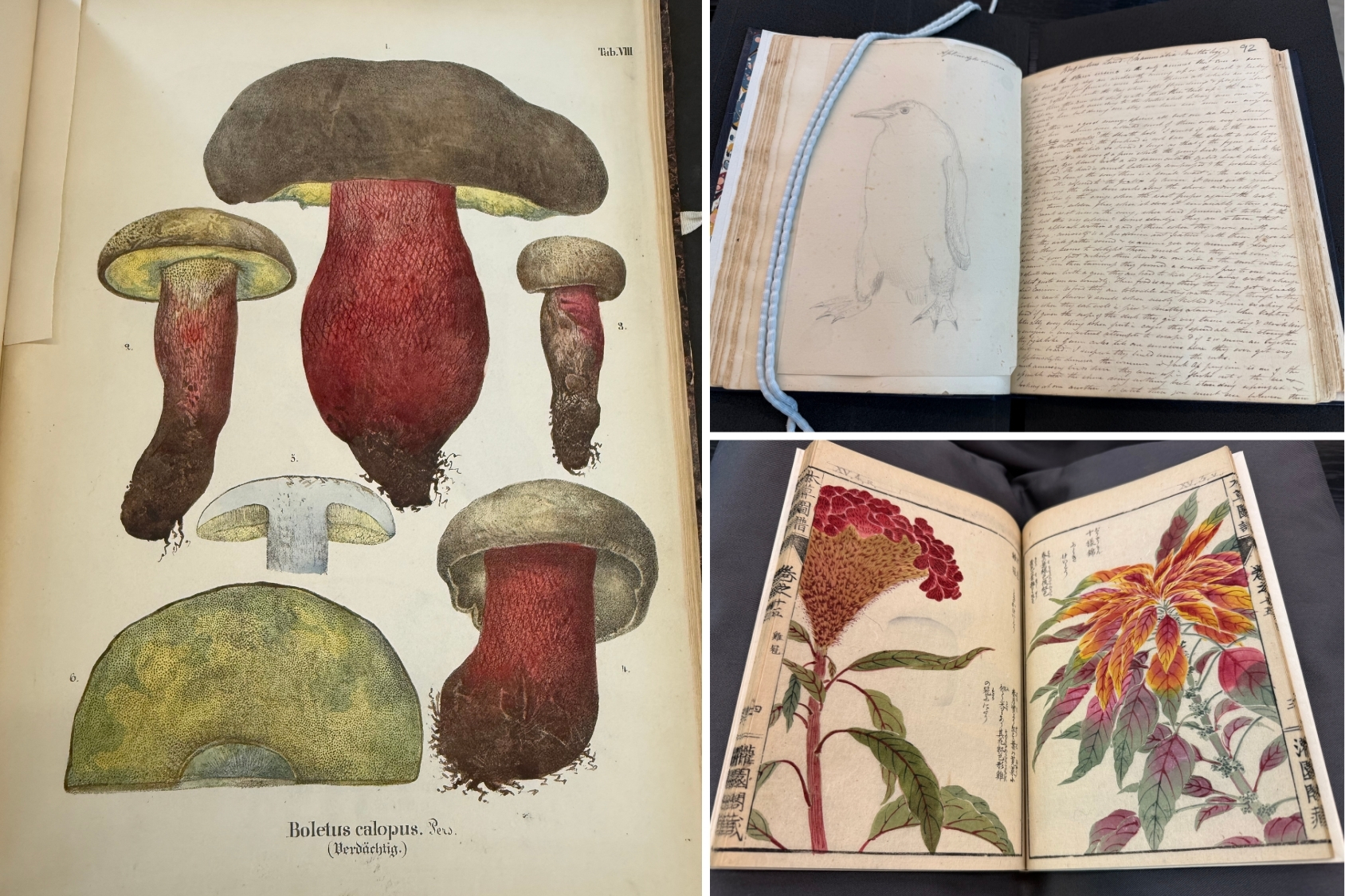
Three pages showing historic illustrations: 1) red and brown mushrooms, 2) a sketch of a penguin alongside handwritten notes, 3) red, orange and green flowers and foliage.

A selection of materials from the Kew Library and Archives collection. Photo credits: Nicole Kearney

On Friday, Vice-Chair Rich Wragg coordinated a day-long tour of institutions in Cambridge, including the Museum of Zoology, St. John’s College, the historic Wren Library at Trinity College, and the Cambridge University Library.
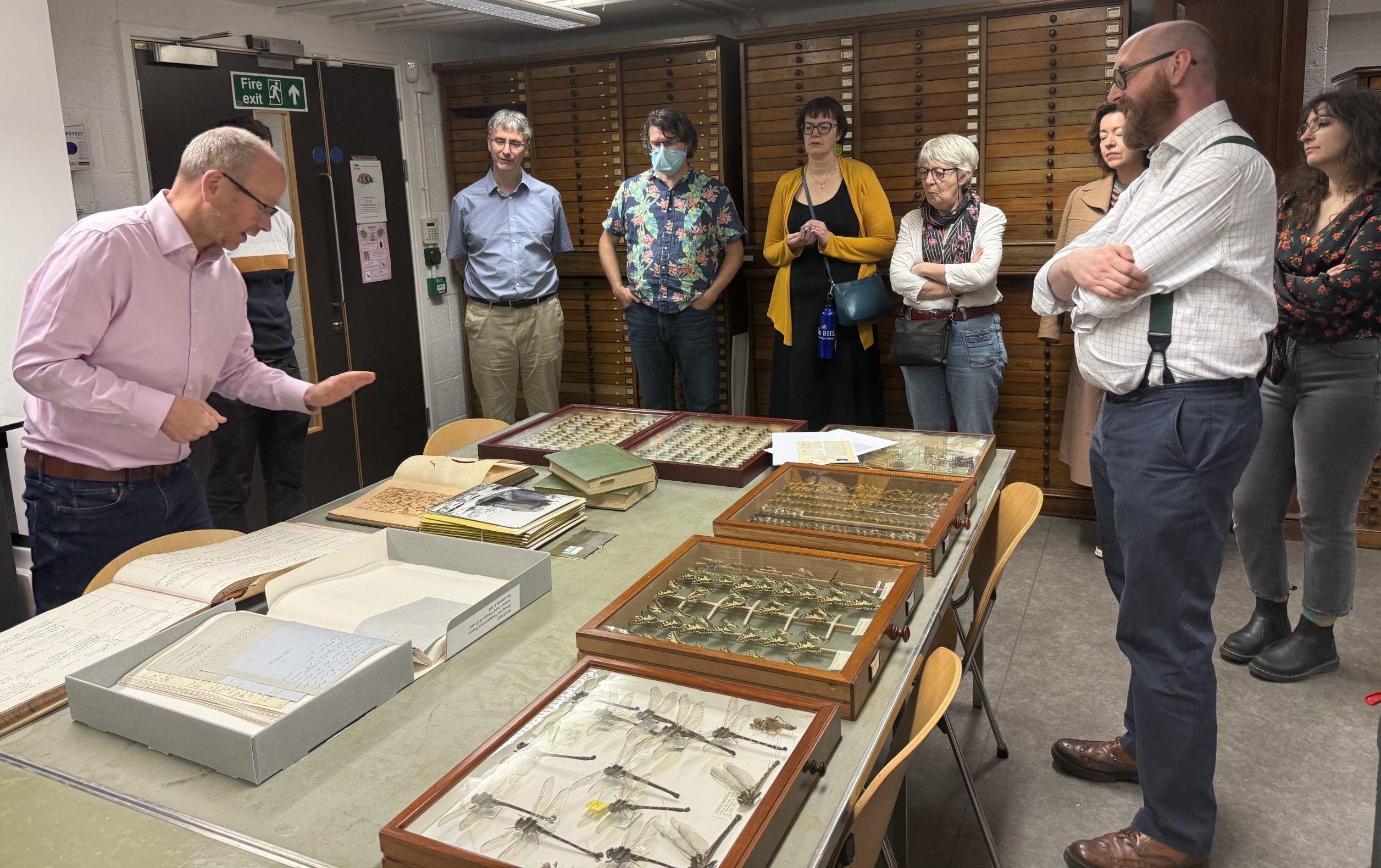
A group of people standing around a table covered in insect specimens, books, and archival material.

Russell Stebbings sharing the fascinating history of the invertebrate collections at Museum of Zoology Cambridge. Photo credit: Nicole Kearney
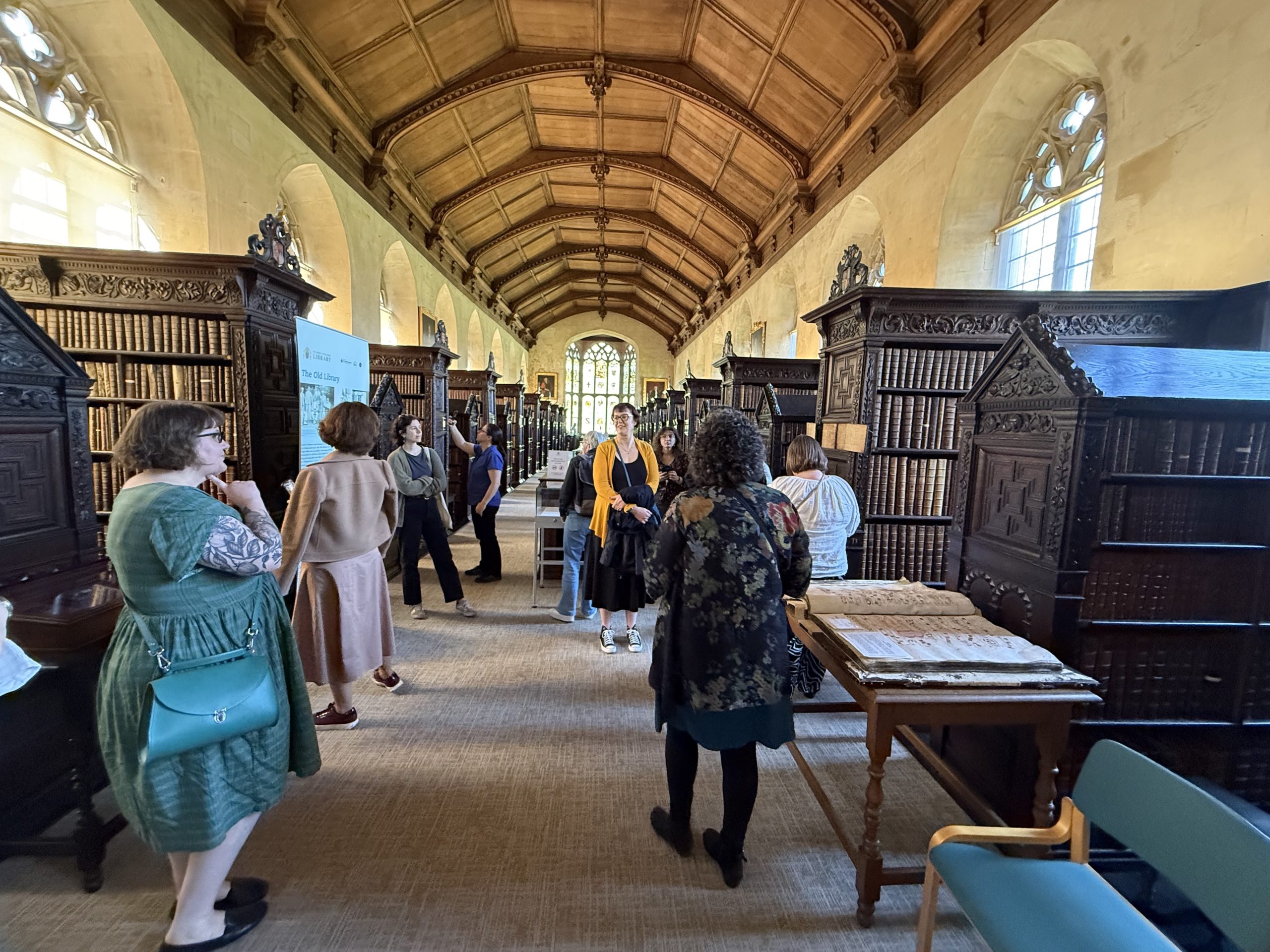
A group of people perusing books and bookshelves in an historic library.

Librarian Tanya Kirk taking BHL Members through The Old Library of St John’s College at Cambridge University. Photo credit: Nicole Kearney
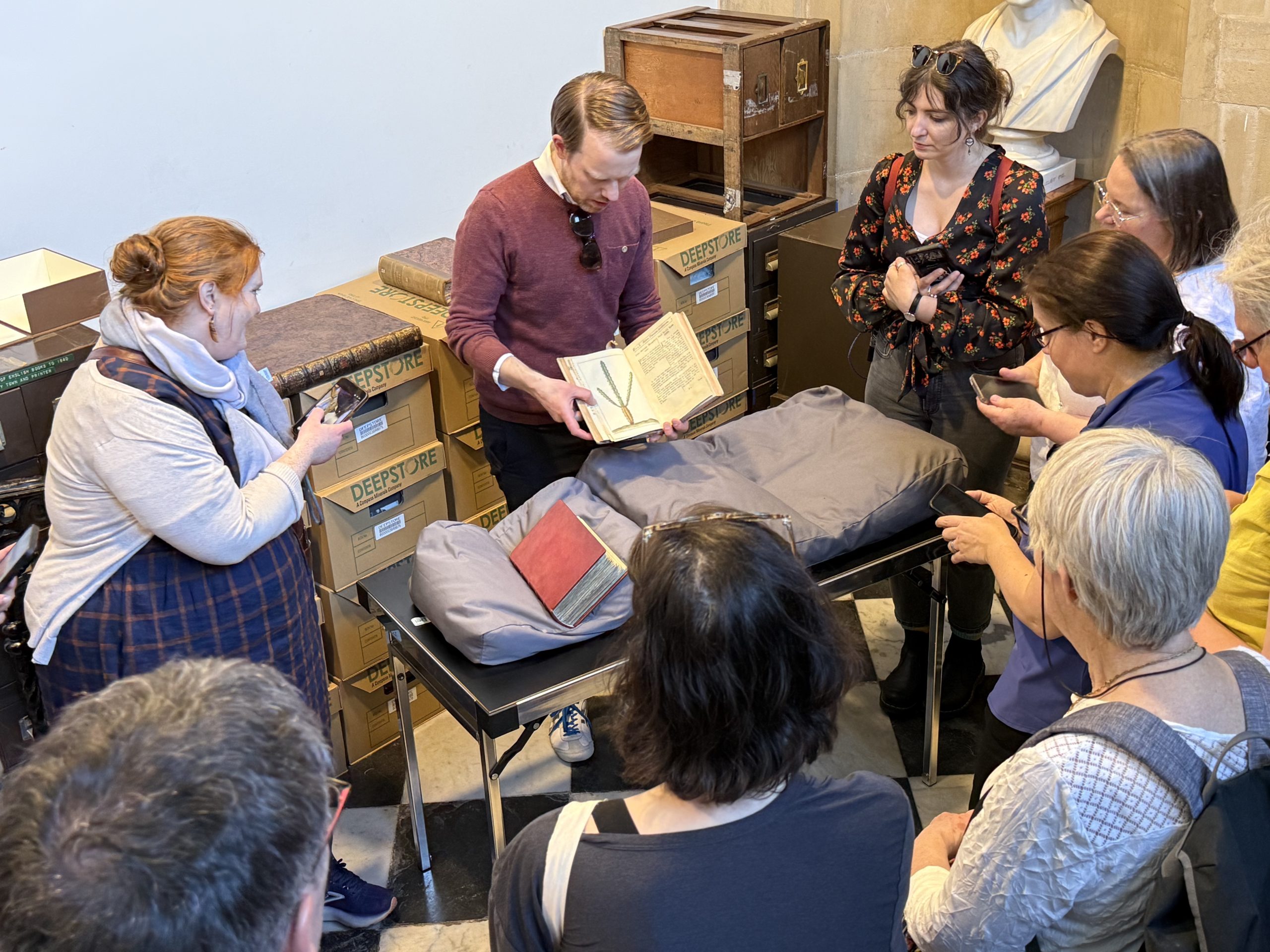
A group of people standing around a table looking at a man holding an open book.

Steven Archer, Sub-Librarian of Trinity College Cambridge, showing BHL Members treasures from Trinity’s Wren Library. Photo credit: Nicole Kearney
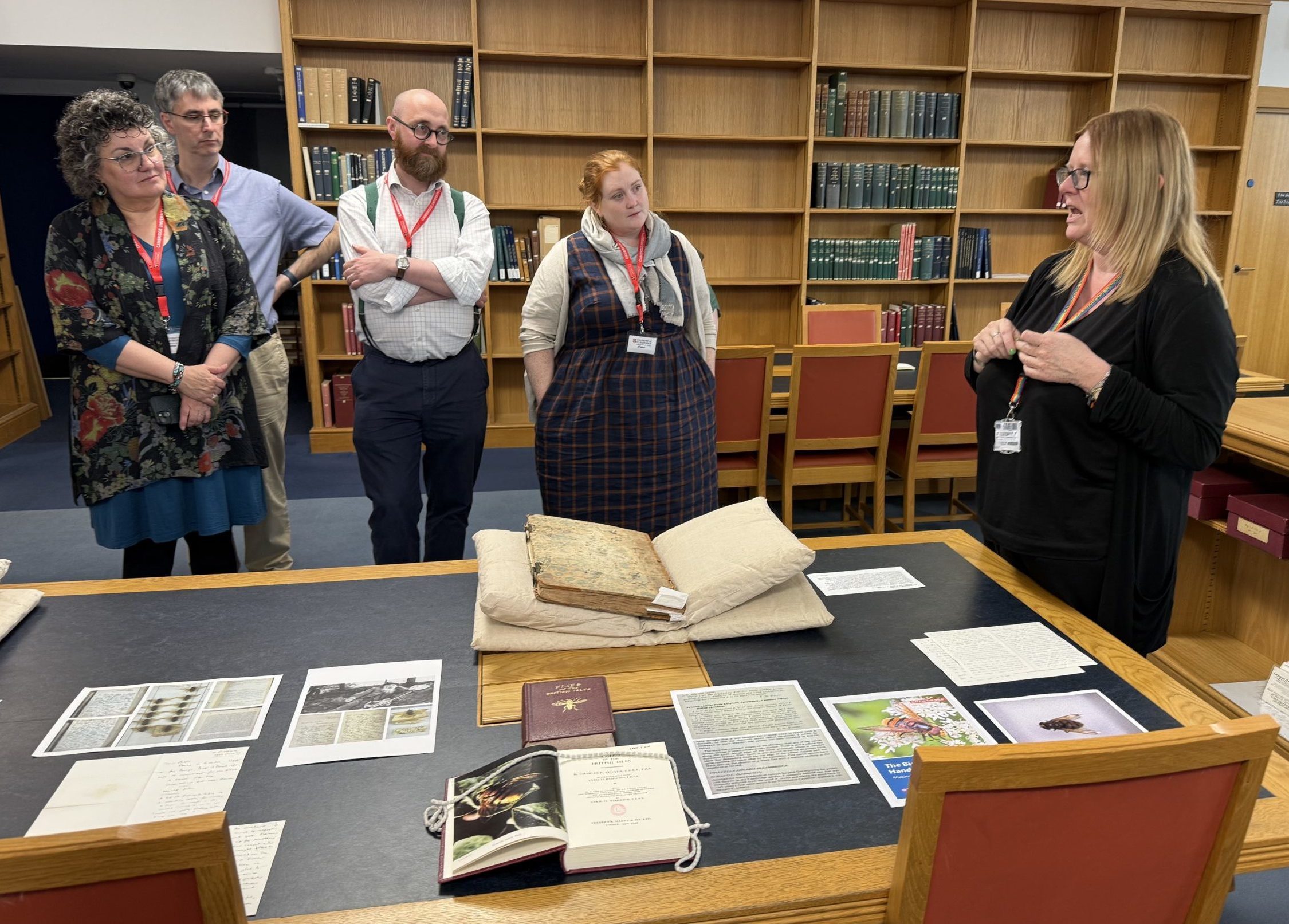
A group of people standing around a table covered in books and brochures in a library.

Jill Whitelock, Head of Special Collections, showcasing special items from the Cambridge University Library. Photo credit: Nicole Kearney
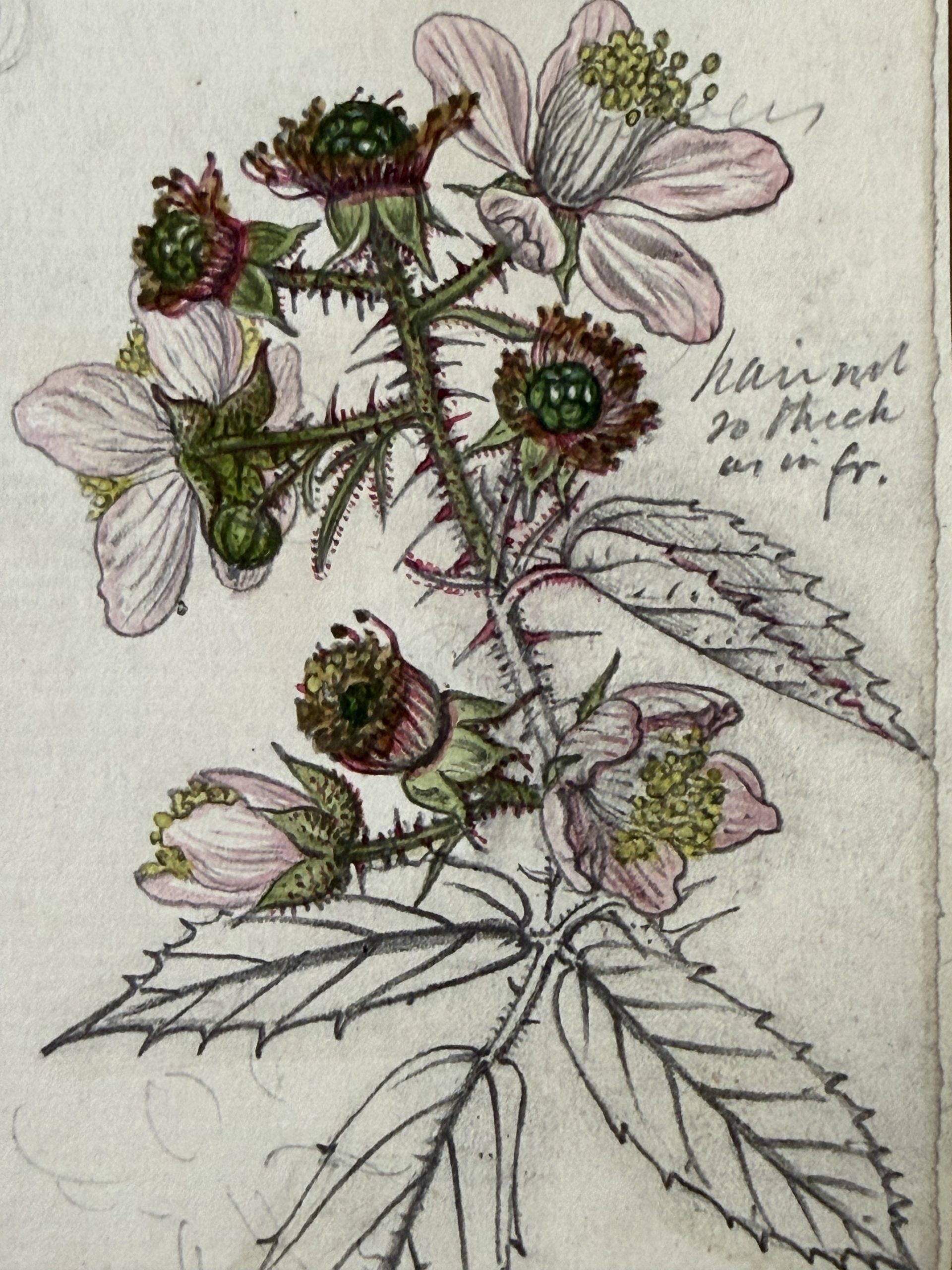
An historic color illustration of a blackberry plant.

Draft plates from British botanist Charles Cardale Babington’s “The British Rubi: an attempt to discriminate the species of Rubus known to inhabit the British Isles, from the Cambridge University Library. Photo credit: Nicole Kearney

Happy Anniversary, BHL

Meeting attendees, strategic stakeholders, and BHL Day speakers gathered after the public symposium for a reception to celebrate 20 years of BHL. Since its founding in 2006, BHL has grown into a core biodata infrastructure serving the global biodiversity community. Cheers to the next chapter for BHL!
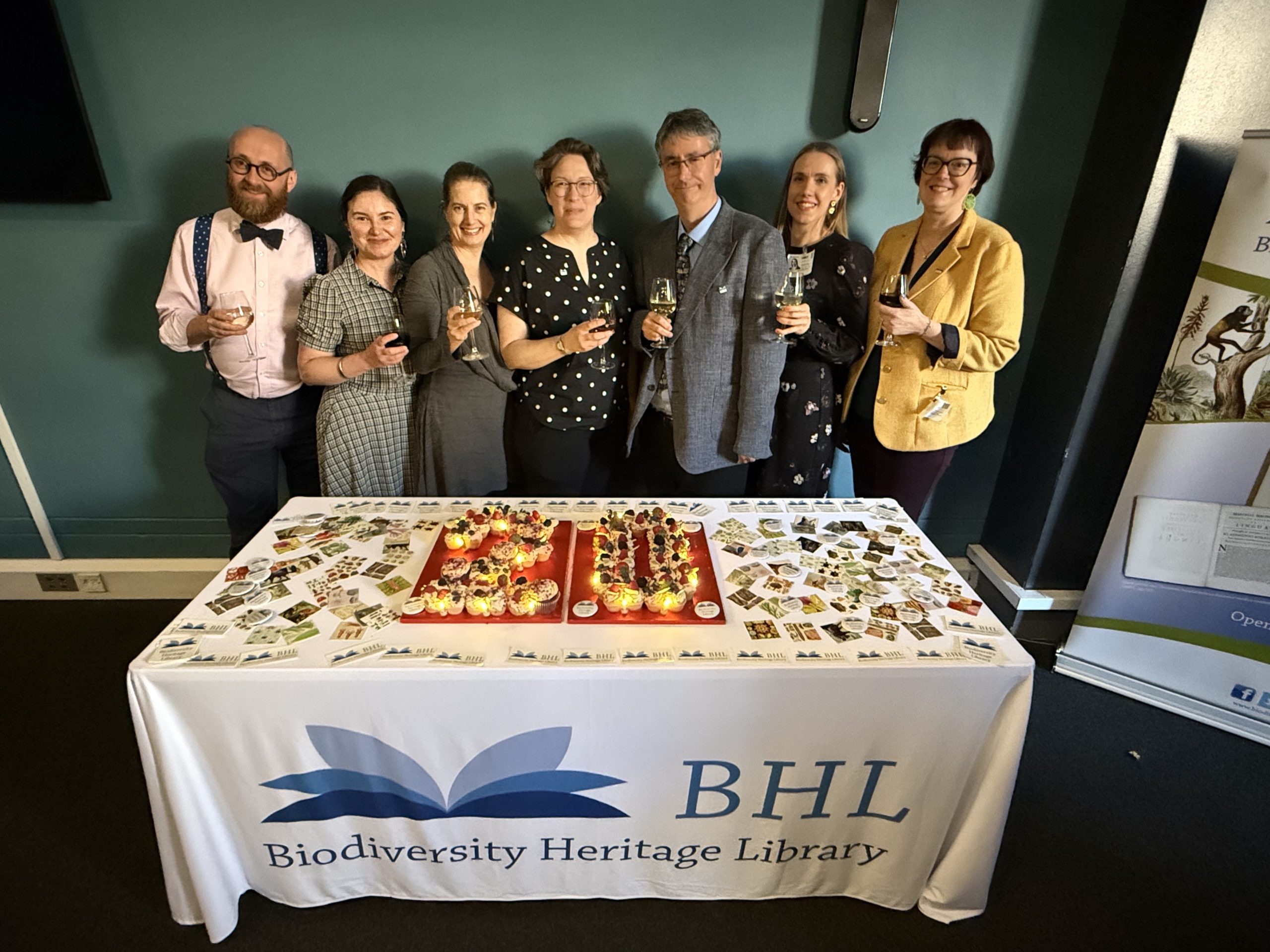
Seven people standing behind a table holding glasses of wine in a toast. The number "20" is spelled out in cupcakes on the table.

The BHL Executive Committee, Transition Team, and Secretariat members share a toast to 20 years of BHL. Left to right: Rich Wragg, Bianca Crowley, Nicole Kearney, Colleen Funkhouser, David Iggulden, Elisa Herrmann, and Kelli Trei.

biodiversity heritage library logo with 2006 and 2026

And finally, I’d like to extend a personal thank you to our co-hosts, David Iggulden and Rich Wragg, for welcoming BHL partners for the 20th anniversary meeting. To my colleagues, Kelli Trei, Nicole Kearney, Bianca Crowley, Joel Richard, and Mike Lichtenberg – thank you for your tireless efforts this past year to think critically about BHL’s future beyond the challenging but necessary transition to a new operating structure. I look forward to the next phase of planning with our global consortium.
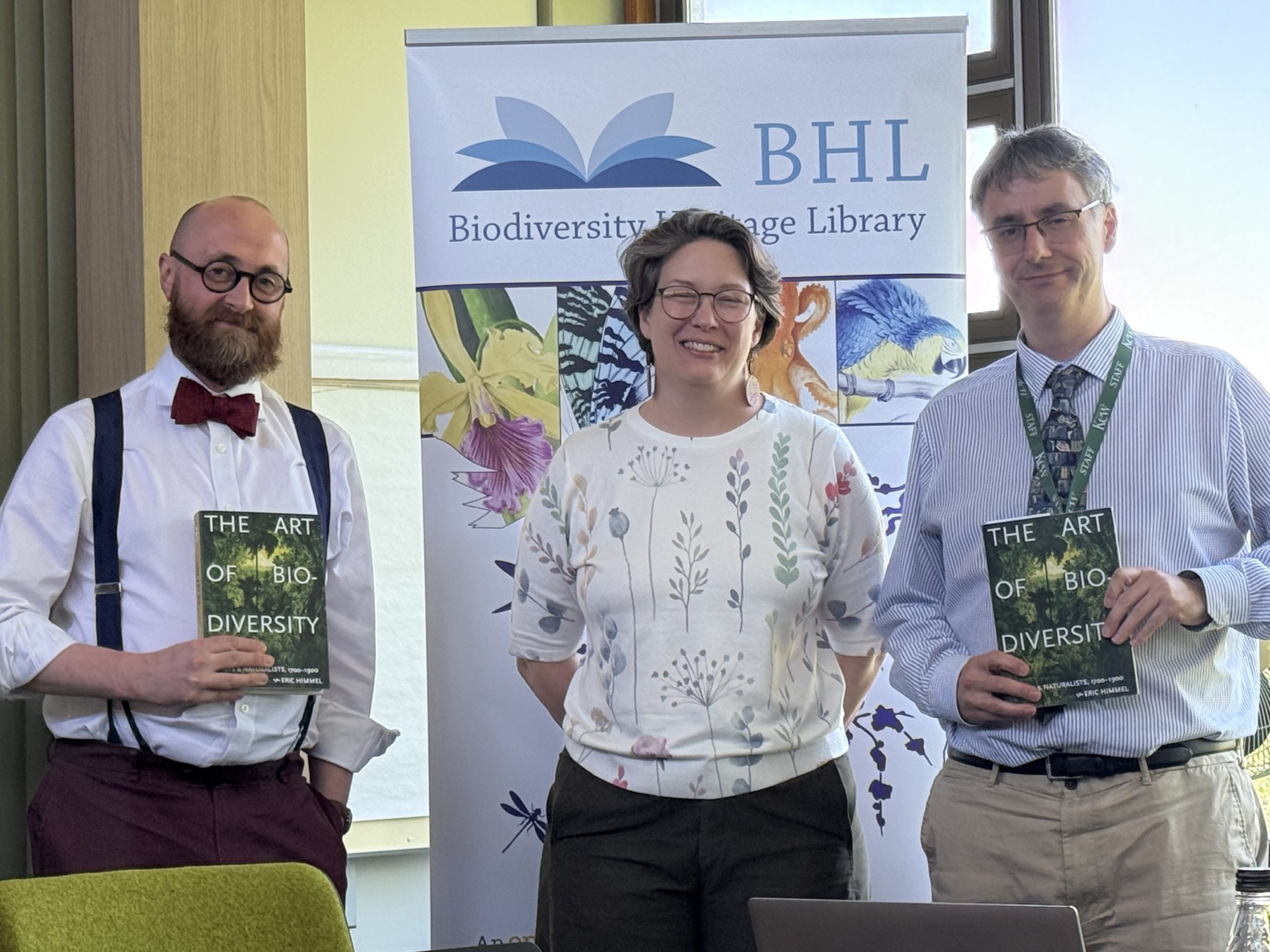
Three smiling people standing in front of a Biodiversity Heritage Library banner, two holding books "The Art of Biodiversity".

Colleen Funkhouser shares host appreciation gifts with annual meeting co-hosts Rich Wragg and David Iggulden. Photo credit: Nicole Kearney
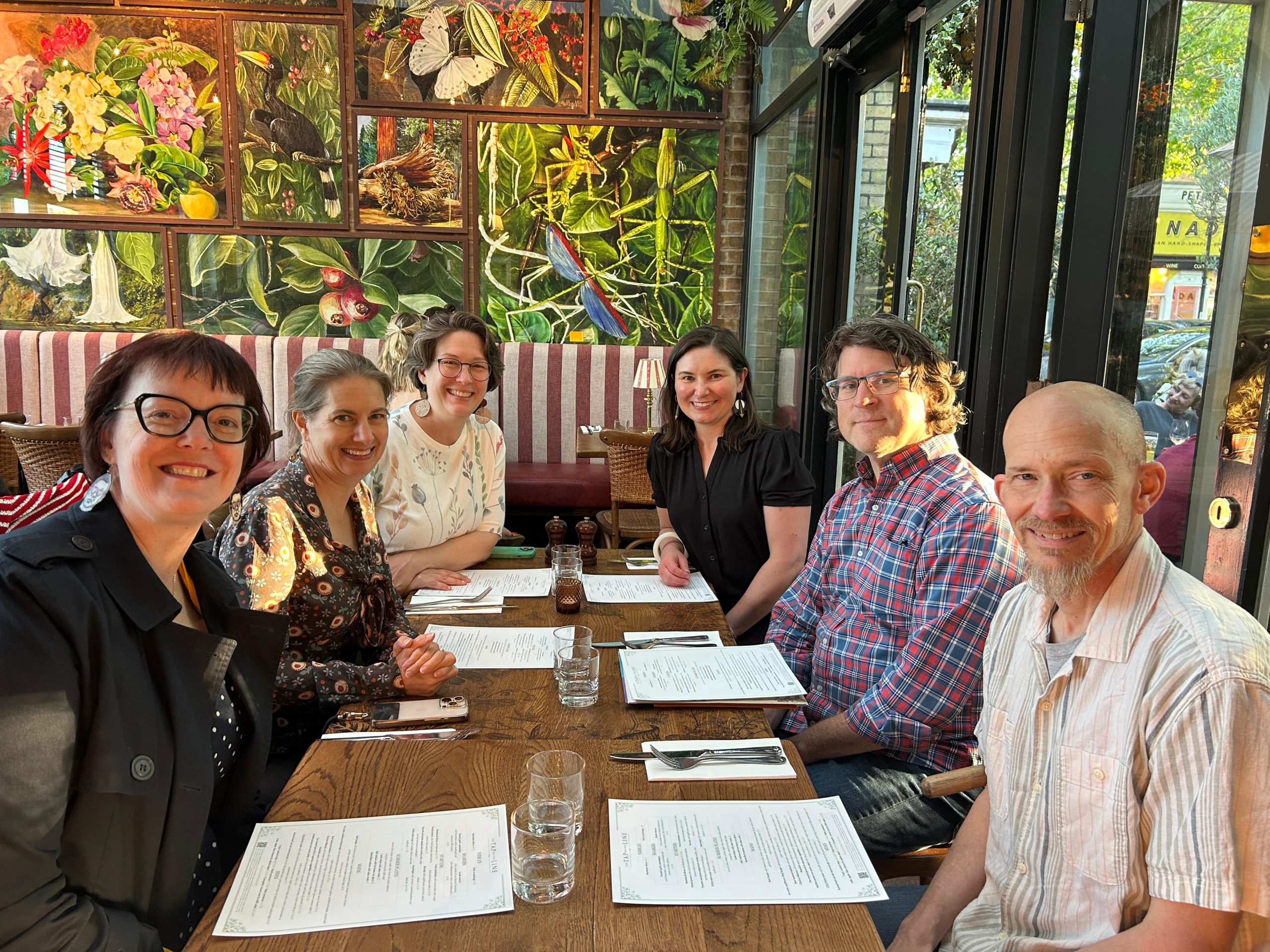
A group of six smiling people sitting around a table in a restaurant.

BHL team members celebrate the end of the meeting. Left to right: Kelli Trei, Nicole Kearney, Colleen Funkhouser, Bianca Crowley, Joel Richard, and Mike Lichtenberg. Photo credit: Emily Benton
May 27, 2026by Colleen Funkhouser
Blog Reel, User Stories

Getting Fishy with BHL: Empowering Discoveries and Connections Around Museum Collections

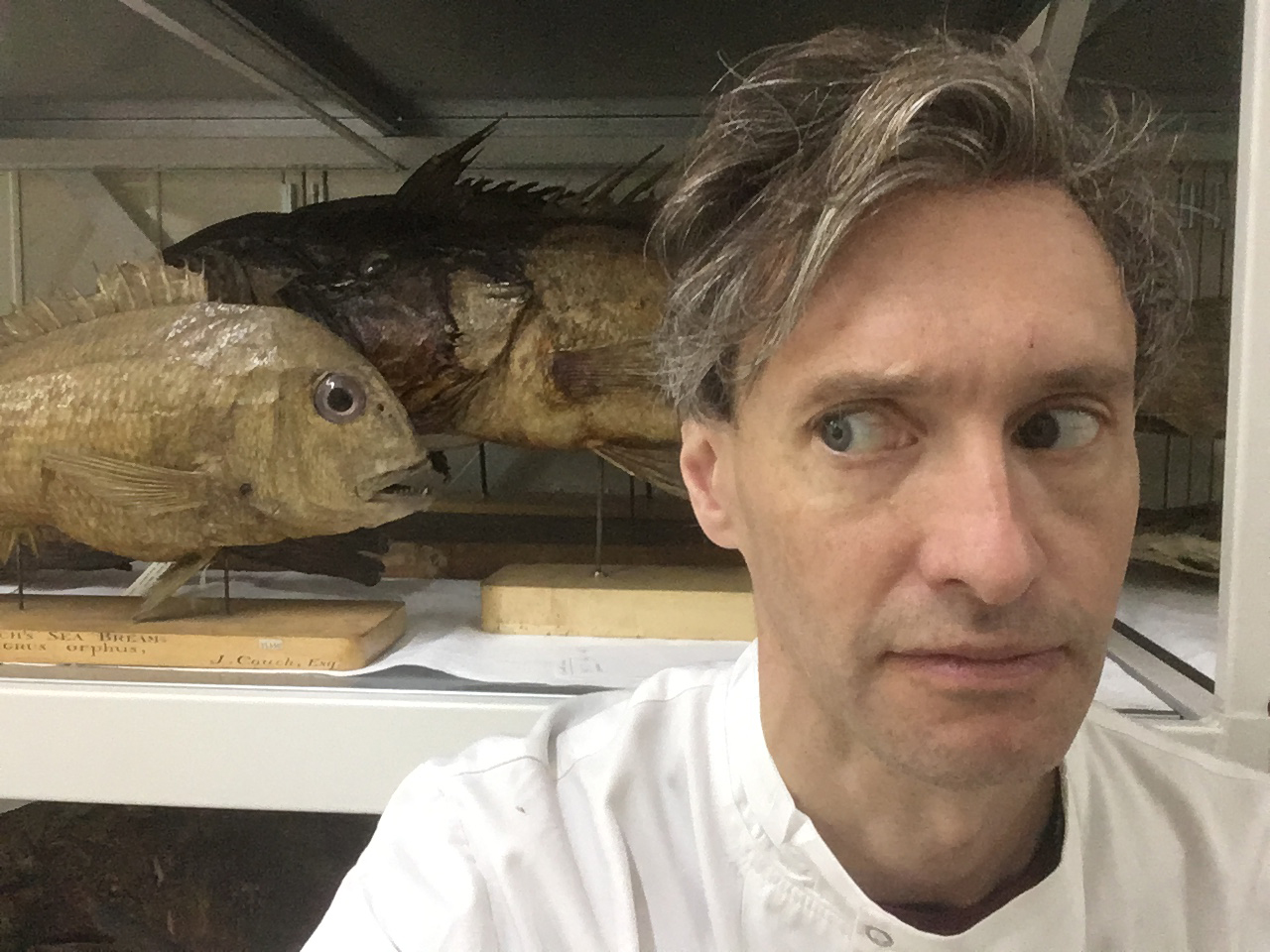
Man in a white shirt standing in front of a dried fish specimen.
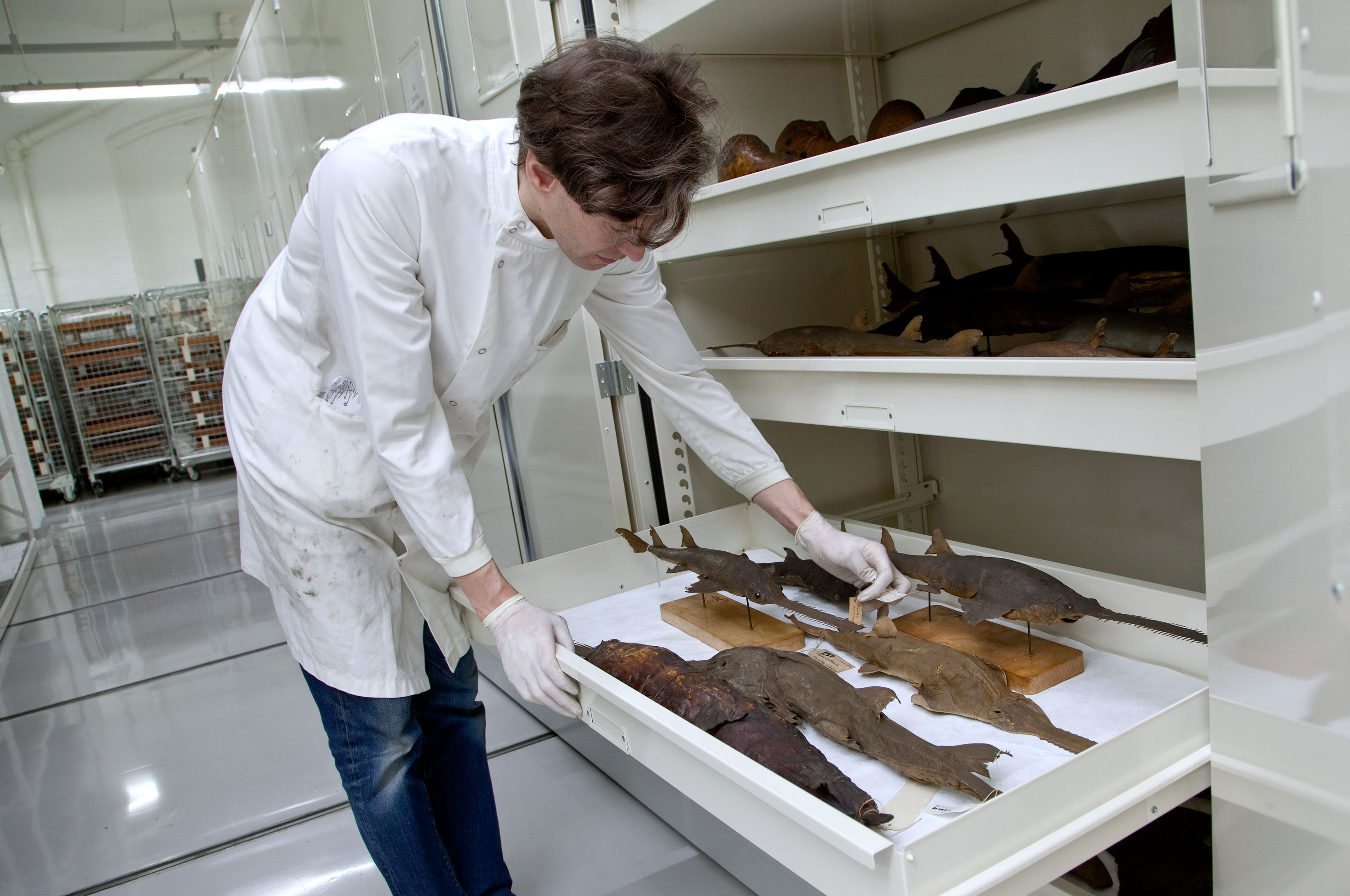
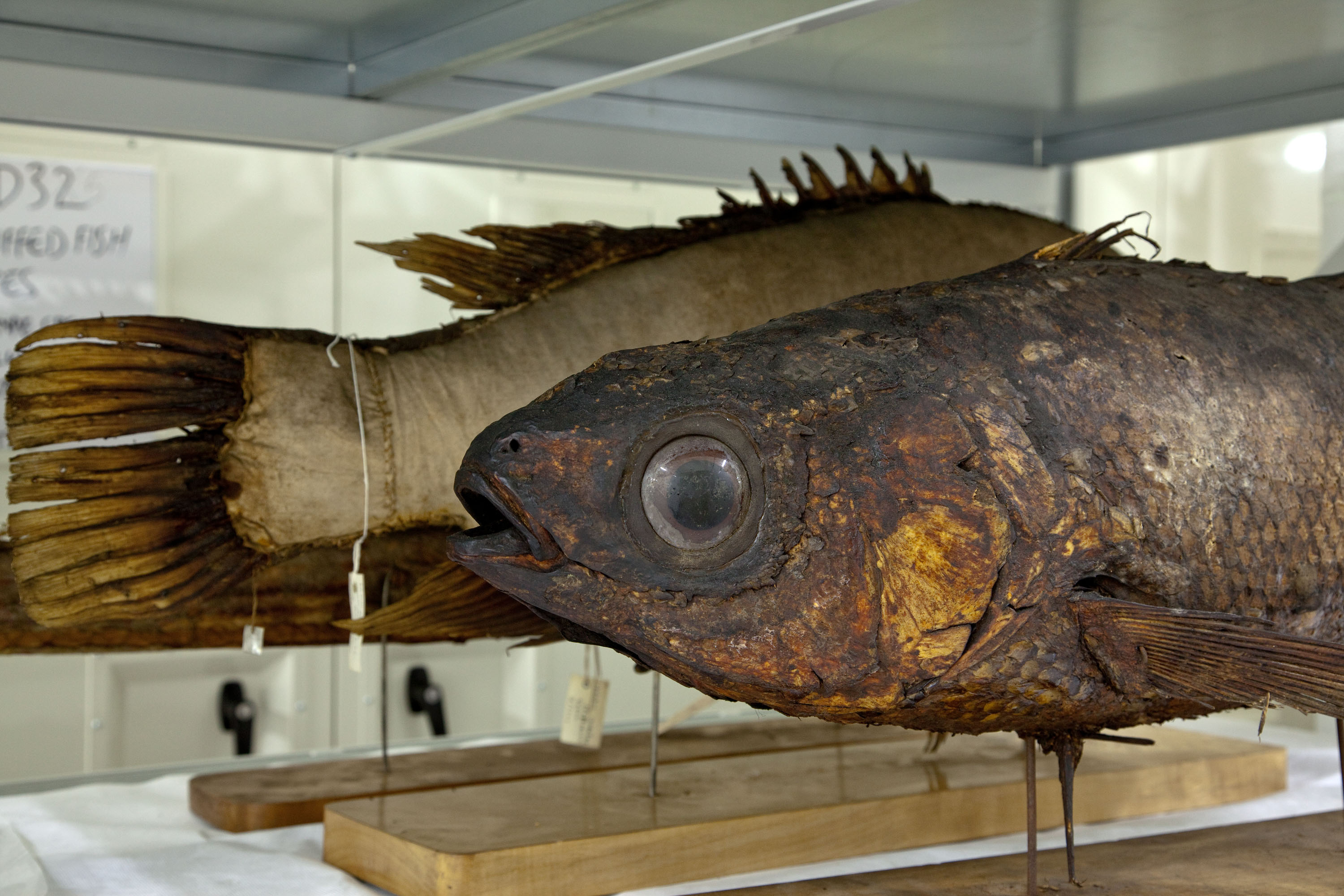
Photograph of a fish specimen.

Type specimen of Cubiceps capensis in the Natural History Museum of London’s dry specimen store, which houses most of the Museum’s skeletons, skins and stuffed fishes. Many specimens in the collection are well over 100 years old. James Maclaine, senior curator of fishes at the Museum, often uses BHL when conducting research on specimens in the collection. Photo by: Kevin Webb, NHM Photo Unit.

Twitter is a popular communication channel amongst the scientific community. Scientists use the platform to communicate with colleagues and share their research findings with both other scientists and the public.[1]

Twitter may also be a valuable source of data for researchers. For example, ecologists from the University of Gloucestershire found that “Twitter-mined” data is useful for phenological studies, such as winged-ant emergence or the appearance of house spiders in the fall.[2]

Twitter conversations can also spark unexpected discoveries. For example, a recent @BioDivLibrary Twitter conversation helped uncover a connection between the scientific literature and a museum’s collections.

It began with Boops boops, a fish — commonly called a bogue — native to the eastern Atlantic. @BioDivLibrary posted an illustration of the species in response to a tweet from Deborah Paul (@idbdeb), who shared the species as an example of a name uncovered while experimenting with parsing taxon names as part of the recent BHL data mining workshop at the University of Illinois.

?

Boops boops #SciArt from “A history of the fishes of the British Islands”, v. 1 (1868), in #BHLib via @SILibraries ➡️ https://t.co/A37BOVJ4Ru pic.twitter.com/HZVxA1ntoT

— BHL (@BioDivLibrary) June 18, 2019

The illustration, published in A History of the Fishes of the British Isles (1862-65), was based on a specimen collected in October 1842 and deposited in the Museum of the Royal Cornwall Institute at Truro. The text also mentions a second specimen, which was presented to the British Museum by a “W.P. Cocks, Esq.”. Paul tweeted an inquiry to see if anyone could help track down the current location of the specimen.

… and did you see this?! https://t.co/WzTtJjf6iN ~ specimen collected October 1842 ~ deposited Museum of the Royal Cornwall Institute at Truro ~ Wonder where it is now? Any help @NHM_Digitise? Who has Boops boops specimen from 1842? @ASIHCopeia @SPNHC @GBIF @DiSSCoEU @iDigBio? pic.twitter.com/TuJ09ueKGK

— Deborah Paul (@idbdeb) June 19, 2019

@NHM_Digitise called on James Maclaine (@beardiddley), senior curator of fishes at the Natural History Museum in London, for help tracking down the specimens. Pulling from a reference in Albert Gunther’s Catalogue of the Fishes in the British Museum, Maclaine responded that the Museum likely held the “W.P. Cocks, Esq.” specimen (with the label reading “Cork” instead of “Cocks”) and proceeded to tweet a picture of the specimen itself.

We do have one of the other ones in the reference I think (assuming W.P.Cocks and W.P.Cork are the same person!). From Albert Gunther’s Catalogue of Fishes, 1859, vol.1, p.419. pic.twitter.com/uZ5gibJmOm

— James Maclaine (@beardiddley) June 20, 2019

Here’s what the Cocks/Cork specimen looks like! The missing one will probably be dried too. pic.twitter.com/sFdaUMn5jW

— James Maclaine (@beardiddley) June 20, 2019

Beyond providing an example of the kinds of discoveries possible on the Twitterverse, this conversation also highlights the value of scientific literature for providing information on museum collections.

“Sadly, despite their many other qualities, the Victorians weren’t great at recording some details which we now would consider essential, so it is often difficult to determine the history of a 19th century fish specimen,” shares Maclaine.

When information is missing on specimen labels, the literature may be able to help fill in the gaps. For Maclaine and others managing collections, having access to this literature through BHL is incredibly valuable.

Can I just say as well, I LOVE BHL, I use it nearly every day!

— James Maclaine (@beardiddley) June 20, 2019

Maclaine finds BHL’s collections particularly useful when researching type specimens, the specific specimen used to describe a new species and the “typical” example of that species.

“Types are the most important part of our collection and are essential to any research on the species that they represent,” explains Maclaine. “However, many currently lurk unrecognized on our shelves, and it’s part of my job to find them, correctly identify them as types, and then update our records accordingly. This is where BHL comes in.”

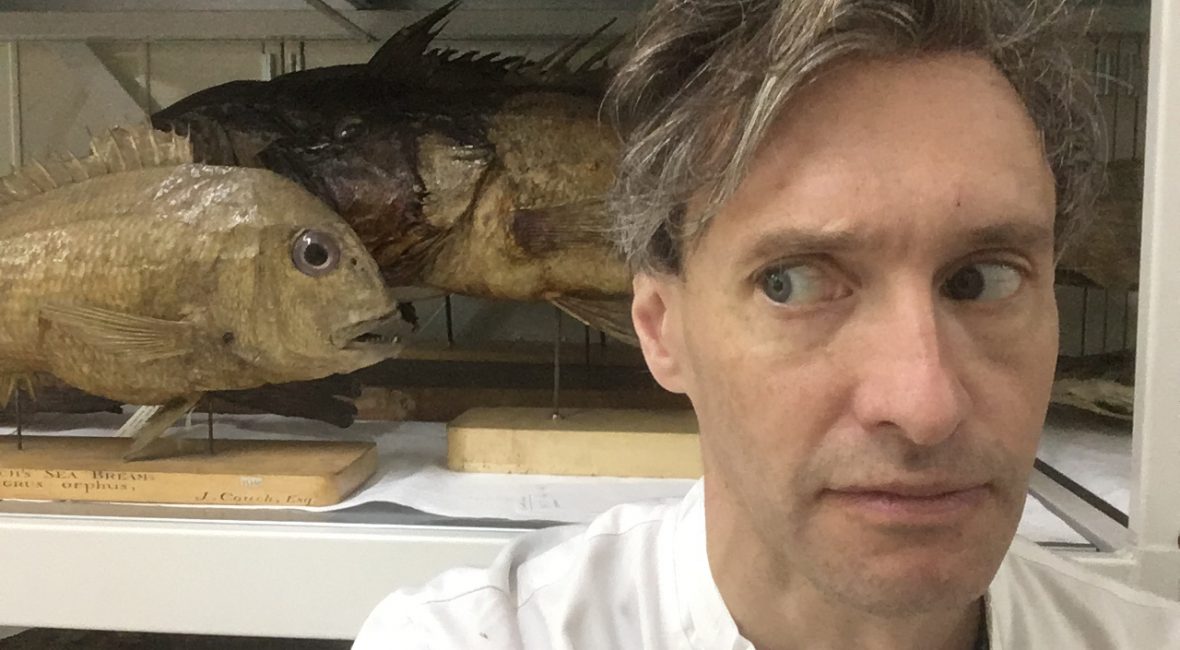
Man in a white shirt standing in front of a dried fish specimen.

James Maclaine, senior curator of fishes at the Natural History Museum in London, with a seabream collected from Cornwall by naturalist Jonathan Couch in 1843. The specimen is housed in the Museum’s dry specimen store. Photo by: James Maclaine.

Maclaine uses BHL sometimes several times each day, using the taxonomic name finding feature to locate literature on specific species, downloading relevant documents as PDFs, and linking to useful references using page permalinks.

“BHL has been fundamentally useful in two ways,” asserts Maclaine. “Firstly, it’s very easy to quickly get old references. Secondly, being able to download them is very helpful too. When investigating potential type specimens, I often have to go back to those first original species descriptions in the 19th century journals, which is now so quick and easy to do online. If I’m lucky, the species author will give a collecting locality, a collector and a measurement. If all three of those and the species name tie up with the specimen, I can be fairly certain that it was used when the species was described and is a type.”

Maclaine first discovered BHL via Eschmeyer’s Catalog of Fishes, a fish taxonomy database of all known fish names, the history of those names and where they were first published.

“One day I noticed a blue hyperlink next to a reference with the message ‘See ref. at BHL’, and that was that,” recalls Maclaine.

Man inspecting fish specimens in a museum drawer.

James Maclaine, senior curator of fishes at the Natural History Museum in London, inspecting specimens in the Museum’s dry specimen store, which houses most of the Museum’s skeletons, skins and stuffed fishes. Photo by: Kevin Webb, NHM Photo Unit.

As the manager of the fish collection at the Natural History Museum, Catalogue of the Fishes in the British Museum (1859-1868) is one of the most useful books in BHL’s collection for Maclaine’s work. In fact, it was this title that led him to the “W.P. Cocks, Esq.” specimen that he shared on Twitter.

Managing a 250+ year old collection means that Maclaine is responsible for ensuring that the information available for the specimens in his care is correct and up-to-date. BHL not only helps him provide reliable data for current researchers, but is also a valuable contributor to the legacy he will leave for future researchers.

“I have to think of all the generations of curators and researchers who will come after me and think, will what I’m doing be clear and comprehensible hundreds of years after I’m dead?” says Maclaine. “So, it’s great that I can now download the relevant references and then attach them to the specimen record so that everyone can see what I’ve done and why. I think the only bad thing about BHL is that it means I now spend less time in our Museum Library, another fantastic and irreplaceable resource!”

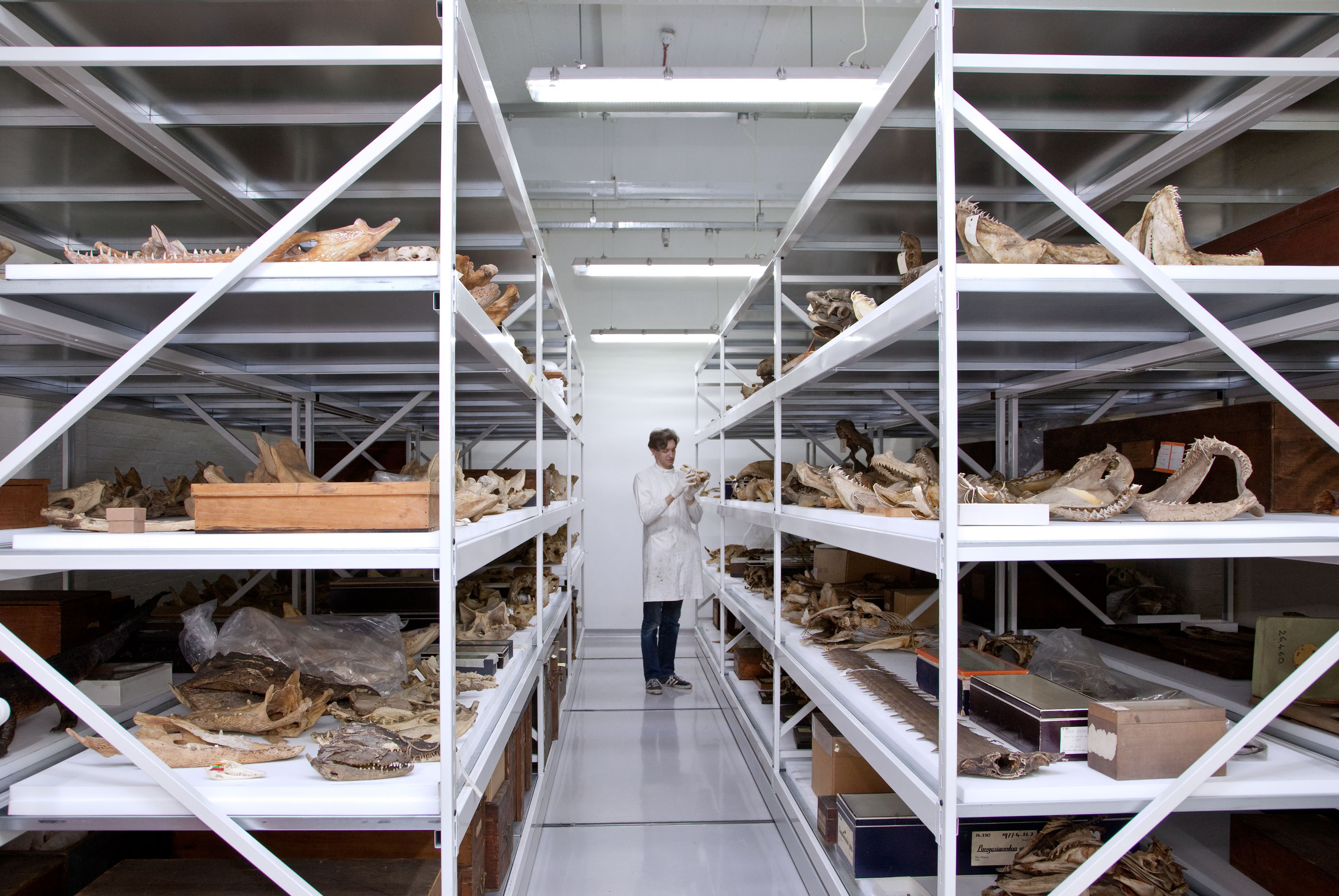
Man standing in a storage room for fish specimens.

James Maclaine, senior curator of fishes at the Natural History Museum in London, inspecting specimens in the Museum’s dry specimen store, which houses most of the Museum’s skeletons, skins and stuffed fishes. Photo by: Kevin Webb, NHM Photo Unit.

By making their literature digitally available, our Partners have ensured that anyone, anywhere can access important collections data. We’re proud to be a part of empowering new discoveries and connections, whether that be through a Twitter conversation or the diligent work of a museum collections manager.

References

[1] Phys.org. 2016. “New Study Reveals How Scientists Use Social Media.” Social Sciences, October 12. Accessed on July 9, 2019. https://phys.org/news/2016-10-reveals-scientists-social-media.html.

[2] Adam G. Hart, William S. Carpenter, Estelle Hlustik-Smith, Matt Reed, Anne E. Goodenough. “Testing the potential of Twitter mining methods for data acquisition: Evaluating novel opportunities for ecological research in multiple taxa.” Methods in Ecology and Evolution, 2018; DOI: 10.1111/2041-210X.13063.

September 5, 2019by michelle.underhill
Blog Reel, Featured Books

The Orchidaceous Plants of Franz Bauer and John Lindley

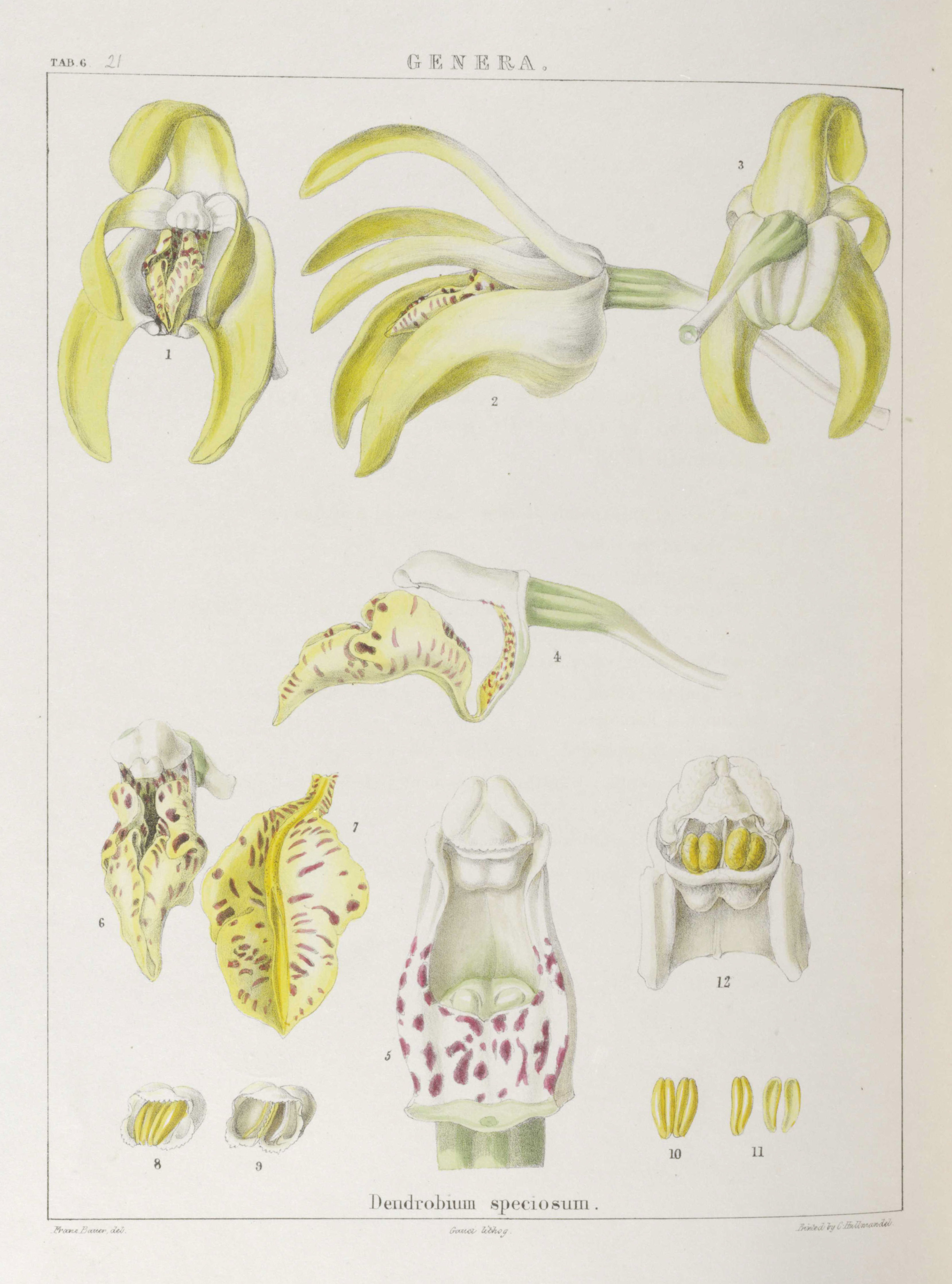
Two of the most important early contributors to our understanding of orchids were the artist Franz Bauer (1758-1840) and the English botanist and gardener John Lindley (1799-1865), who was to become known as the “father of modern orchidology”. The publication of the Illustrations of Orchidaceous Plants [from sketches prepared between 1792 and 1832] between 1830 and 1838 combined Bauer’s great skill and Lindley’s knowledge and industriousness to produce an invaluable artistic and scientific work. The Natural History Museum, London (NHM) has recently uploaded their copy of this volume to sit alongside the Missouri Botanical Gardens’ own volume.

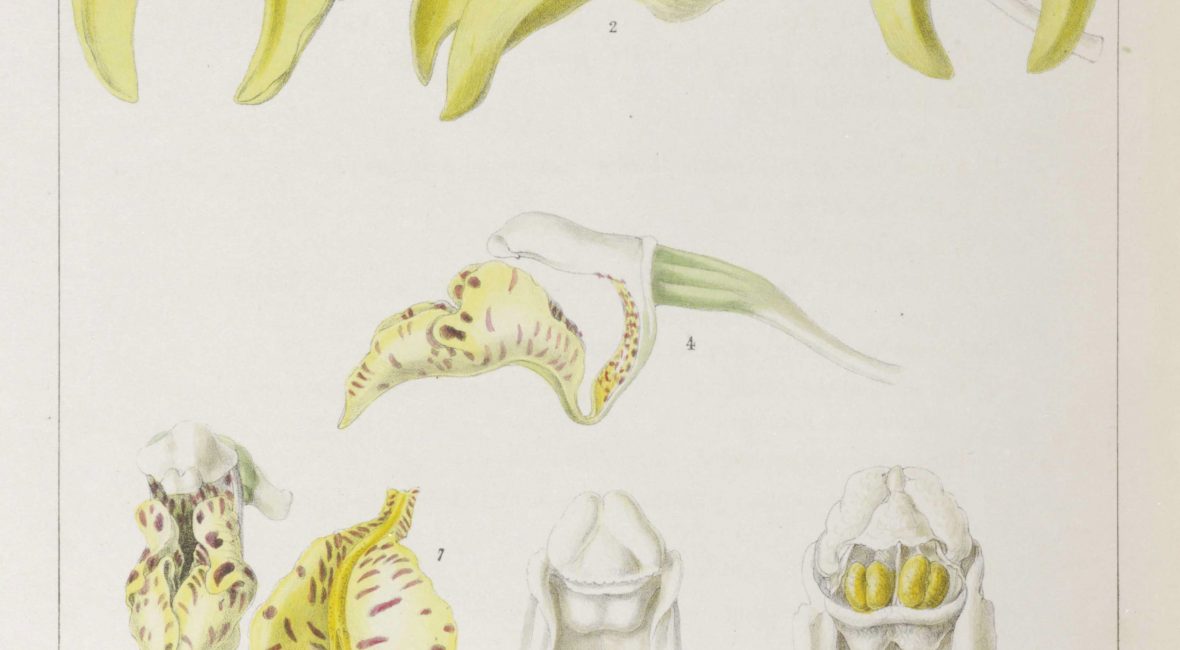
108.jpg

Plate 21. “The parts of fructification of Dendrobium speciosum from a sketch by Mr. Bauer in 1793”. Bauer, Franz Andreas and Lindley, John. Illustrations of Orchidaceous plants. 1830-1838. Contributed in BHL from Natural History Museum, London.

Lindley and Bauer were likely to have met in London under the patronage of Sir Joseph Banks (1743-1820). Bauer had settled in Kew by 1790 as their first artist in residence and was profiting from the technological developments in Kew’s heating of its glasshouses. The change from hot dry air and flue systems to heating by hot water circulating through cast-iron pipes enabled a better control of humidity, a prerequisite for the successful growing of tropical orchids. The following influx in orchidaceous species provided Bauer with a plethora of material to dissect and examine under a microscope and his skill in depicting scientifically accurate and aesthetically pleasing work flourished.

Lindley, on the other hand, was an assistant to Robert Brown (1773-1858) in Banks’s library and herbarium until Banks’s death in 1820. Although his life-long fascination was with orchids, he initially studied roses leading him to publish the volume A botanical history of roses, which he illustrated himself. In 1822, he was appointed by the Royal Horticultural Society as assistant secretary where he supervised their plant collections, and in 1829 he was appointed Professor of Botany at the University College, London, developing a reputation as a leading figure in orchidology and an excellent teacher. His recognition of several major groups of orchids according to the type of pollen and its arrangement on the column is still the basis of orchid classification today.

It was during this period that Lindley set about publishing Bauer’s many drawings of orchids studied under a microscope, of which Bauer had started these drawing in 1792 and continued beyond the first publication of the volume in 1832. Lindley provided the text on the organisation of Orchidaceae in his prefatory remarks, detailing many of the characteristics of orchids he had observed over his lifetime and referencing the various writings available to him at the time.

He states in his preface that “it has been found indispensable to represent Mr Bauer’s drawings by means of lithography instead of engraving on copper” and as such the final published volume contains thirty-five lithographed folio plates. Lindley was conscious of the changes he was making to Bauer’s drawings and goes on to state that he hopes “…that the defects of some of the plates as works of art will not be prejudicial to them as illustrations of science”. The plates are either un-coloured or hand-coloured with the individual components on each plate numbered with an index of what is depicted following each plate. Lindley lithographed several of Bauer’s drawings with the remaining being lithographed by Maxim Gauci (1774-1854).

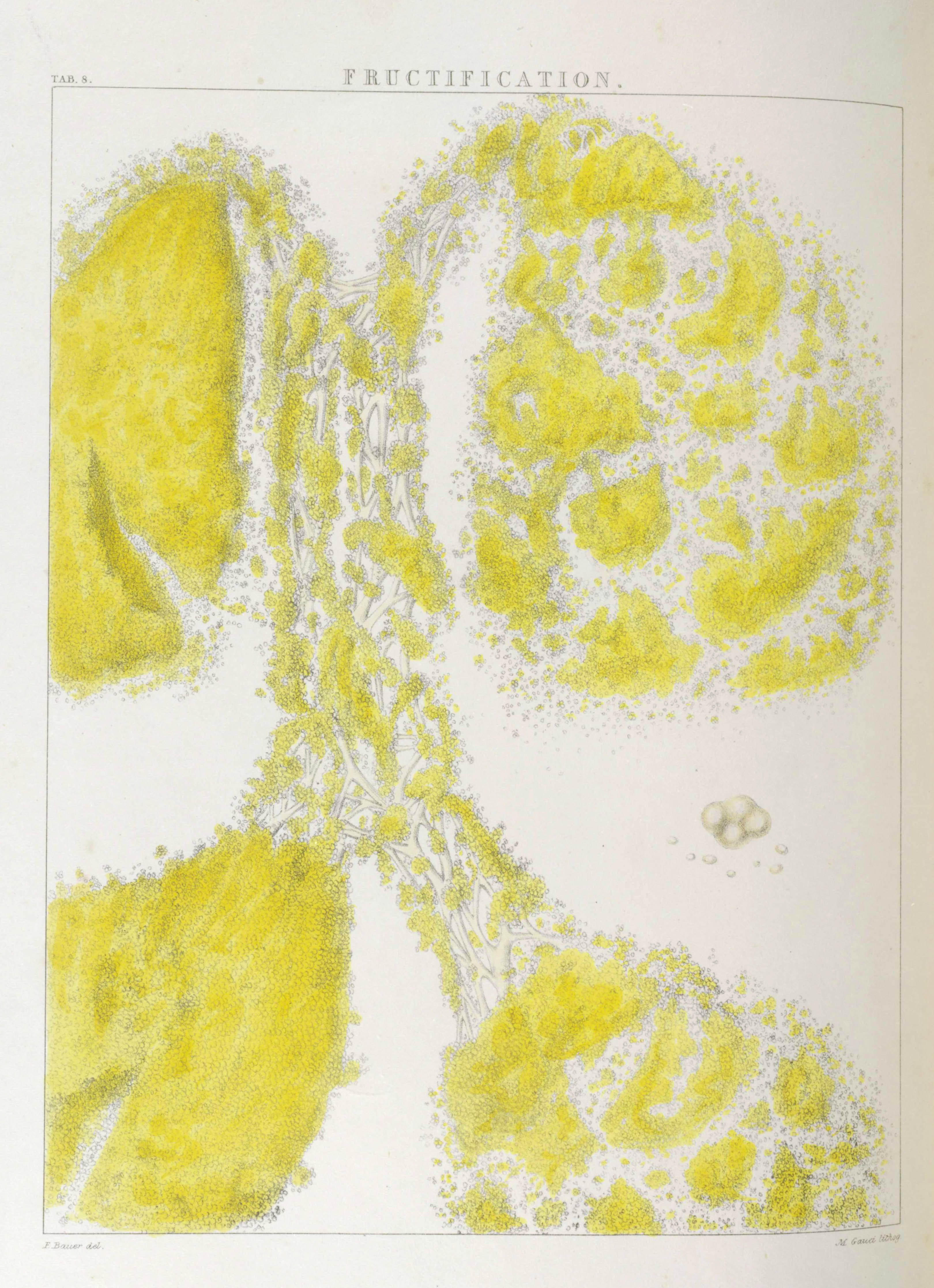
The plates are based on Bauer’s drawings and illustrate various characteristics of the orchid plants, from floral structure to seeds and pollen. The plate below shows the single anther of a Bletia flower at a magnification of 100 times and a few pollen grains at a magnification of 400 times. Bauer ultimately sketched thousands of pollen grain at various magnifications, but in this example, he was able to soak the pollinia in water and thus discover the elastic tissue that connects the pollen grains together.

56.jpg

Plate 8. “A view of the pollen-masses of Bletia verecunda dissolved in water; from a sketch by Mr. Bauer in 1801”. Bauer, Franz Andreas and Lindley, John. Illustrations of Orchidaceous plants. 1830-1838. Contributed in BHL from Natural History Museum, London.

The volume recently uploaded to BHL via the Natural History Museum contains a manuscript dedication by Mr Meyer, Bauer’s friend and executor, to Franz Bauer, attached to the front flyleaf. This letter reads:

“In memory of Francis Bauer Esq.re, FRS & FLS, & c. Botanical Painter to His Majesty George 3rd. And Resident Draughtsman for fifty years to the Royal Botanic Garden at Kew, where he devoted himself to the advancement of natural science under the magnificent patronage of Sir Joseph Banks, Bart. the President of the Royal Society. In the delineation of plants he united the accuracy of the profound naturalist with the skill of the accomplished artist to a degree which has been only equaled by his brother Ferdinand and in microscopical drawing he was altogether unrivaled. In this branch of his most useful labours, the world will ever contemplate with admiration his elaborate illustrations of animal and vegetable structures, especially those which are preserved in the British Museum, and in the University of Göttingen. He was born 4th of October 1758 at Feldsperg in Austria, and came to England from Vienna with the Baron Joseph Jacquin in 1788. He settled at Kew in 1790, where he continued to live in the enjoyment of an exalted reputation, and in the affection and respect of all to whom his generous character, his unassuming manner, and his deep religious feelings were known until 11 December 1840 when he died at the age of 82. While the works of Francis Bauer are his imperishable monument friendship inscribes this record on his honored tomb. [From Mr Bauer’s friend and executor Mr Meyer, 38 Sackville Street, Piccadilly, February 26 1846, at Stanhope Cottage. Wm. Clift (Mr Meyer, Mrs Haverfield’s, Kew Green. March 3, 1846)”

Further reading:

Stewart, Joyce and Stearn, William T. (1993) The orchid paints of Franz Bauer, The Herbert Press

Cooper, Paul M. (2015) The Bauer brothers, Natural History Museum, London

December 19, 2018by Joel Richard
Blog Reel, User Stories

BHL Facilitates Research on Alfred Russel Wallace’s Legacy

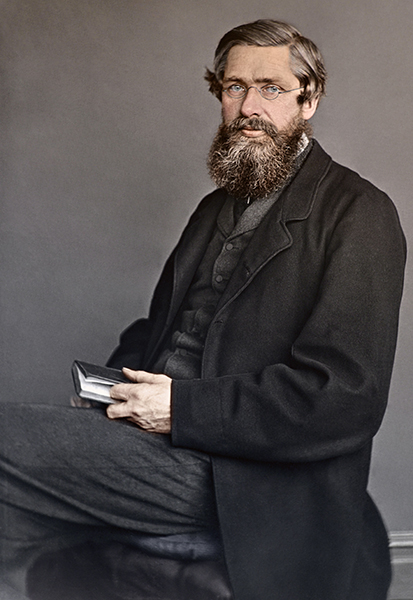
Alfred Russel Wallace in 1869. Copyright George Beccaloni.

In 1854, Alfred Russel Wallace began an eight year collecting trip to Southeast Asia, through the region he called the Malay Archipelago (now Malaysia, Singapore, Indonesia, and East Timor). It was during this expedition, in the midst of a fever in 1858, that Wallace conceived (independently of Darwin) of the theory of natural selection. Wallace expanded his idea into a detailed article which he sent to Charles Darwin for comment, unaware that Darwin himself had come to the same conclusion, though he had yet to publish the theory.

At the suggestion of Darwin’s friends Charles Lyell and Joseph Hooker, Wallace’s article, together with unpublished writings by Darwin on the subject of natural selection and evolution, were presented to the Linnean Society in 1858 and subsequently published in the Society’s journal as “On the Tendency of Species to Form Varieties; and On the Perpetuation of Varieties and Species by Natural Means of Selection,” with Darwin and Wallace as co-authors.

While important for its link to the theory of evolution by means of natural selection, Wallace’s Malay Archipelago expedition was also scientifically significant from a collecting standpoint.

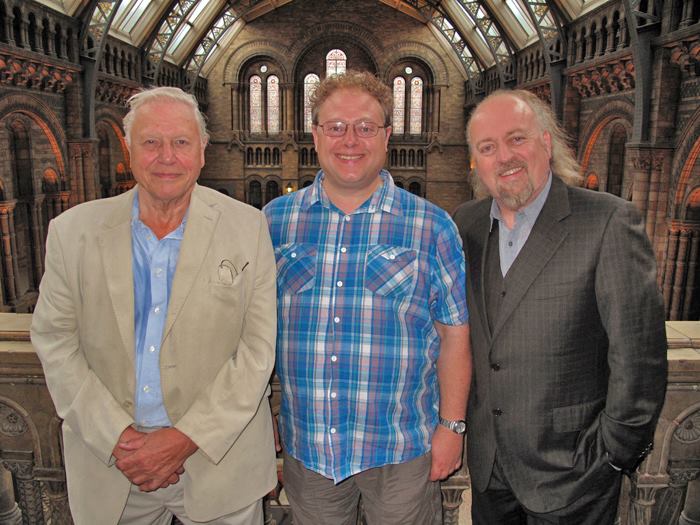
Beccaloni (center) with the Patrons of his Wallace projects. Sir David Attenborough (left), Patron of the Wallace Correspondence Project, and Bill Bailey (right), Patron of the Wallace Memorial Fund. Photographed at London’s Natural History Museum in 2012. Copyright Jan Beccaloni.

Dr. George Beccaloni, Director of the Alfred Russel Wallace Correspondence Project (an open access archive of Wallace’s manuscripts), is working to catalog the animal species collected by him during his expedition. Not surprisingly, given the sheer number of specimens and the passage of time, this is a challenging endeavor.

“We know Wallace collected nearly 126,000 specimens: about 110,000 insects, 7,500 shells, 8,050 bird skins, and 410 mammals and reptiles, which ranged from Orangutans to Birds of Paradise, from land snails to cockroaches, from Birdwing butterflies to tiny parasitic wasps,” shares Beccaloni. “I have estimated that about 5,000 of them were new to science, but apart from the 295 species he described himself, there is no list of all the others – or the many species he collected which already had scientific names.”

Scientific literature is a valuable source of information on Wallace’s specimens, but locating the relevant publications is itself a challenge.

“I am collaborating with colleagues in Southeast Asia and at London’s Natural History Museum to produce a detailed list of the species Wallace collected,” explains Beccaloni. “It is a difficult task because the information about them is scattered through the scientific literature of the last 163 years, in an estimated 400 or more publications. To find these requires considerable detective work.”

Fortunately, the Biodiversity Heritage Library is making it considerably easier for Beccaloni to access the publications he needs for this research.

“BHL is an absolutely fantastic resource which is very important to my work,” affirms Beccaloni. “Locating mentions of Wallace specimens is tricky, but at least most of the articles are now available in the BHL. If they weren’t, it would mean going to a specialist library and searching through the physical publications, which would take a lot more effort and be logistically difficult.”

Once a catalog of Wallace’s specimens is completed, it can be used to help track down the physical specimens in London’s Natural History Museum and other museum collections, leading to increased global access to Wallace’s specimens through digitization.

“The specimens can be digitized and the images and data made freely available on the Internet,” says Beccaloni. “Colleagues in Southeast Asia view this as ‘digital repatriation’ of the material Wallace collected in their countries.”

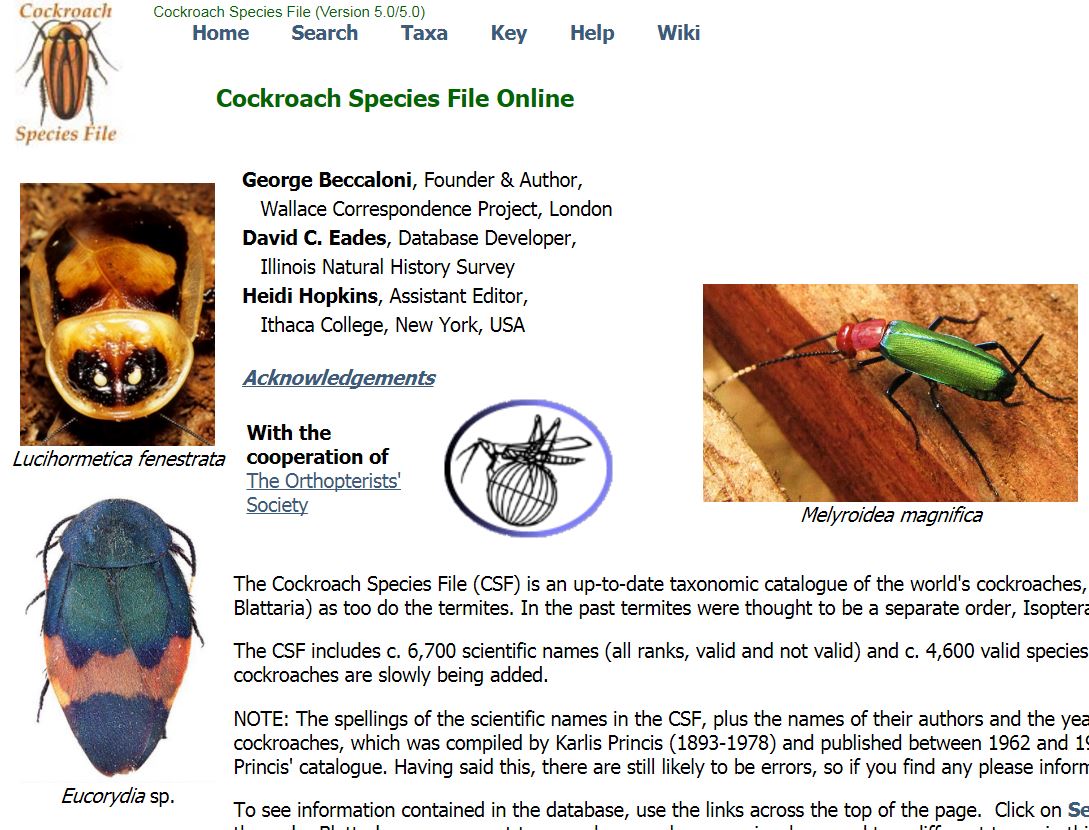
In addition to his work related to Alfred Russel Wallace (including the Alfred Russel Wallace Correspondence Project, Wallace Letters Online and The Wallace Website), Beccaloni is also a specialist in the taxonomy and ecology of butterflies and orthopteroid insects (especially cockroaches). He is the founder and author of the Cockroach Species File, a world catalog of cockroaches. Again, BHL provides access to key resources.

“For my work on the Cockroach Species File, I often need copies of old and often obscure taxonomic papers, which fortunately I am usually able to find in the BHL,” says Beccaloni.

Homepage of the Cockroach Species File.

Beccaloni’s favorite BHL feature is the ability to generate custom PDFs of relevant pages, eliminating the need to download an entire journal volume. To further improve the efficiency of his research, Beccaloni notes that the ability to search the full text of BHL’s collections for specific search terms (e.g. “Wallace”) would be of considerable value.

Full text search is a feature that BHL’s users have long-requested, and we are happy to confirm that its development is currently underway! Through increased research efficiency, full text search will enhance BHL’s ability to inspire discovery through free access to biodiversity knowledge. Stay tuned for more information on this new service.

Alfred Russel Wallace was truly a pioneer who left behind a considerable scientific legacy. Thanks to the work of Dr. Beccaloni and others on the Wallace projects, this legacy is being documented and made more accessible to a worldwide audience. We are proud to know that BHL’s collections are playing an important part in this valuable work.

Explore the Alfred Russel Wallace projects below:

  • Alfred Russel Wallace Correspondence Project
  • Wallace Letters Online
  • The Wallace Website

______________________________________

This post may contain the personal opinions of BHL users or affiliated staff and does not necessarily represent the official Biodiversity Heritage Library (BHL) position on these matters.

November 9, 2017by michelle.underhill
Blog Reel, Featured Books

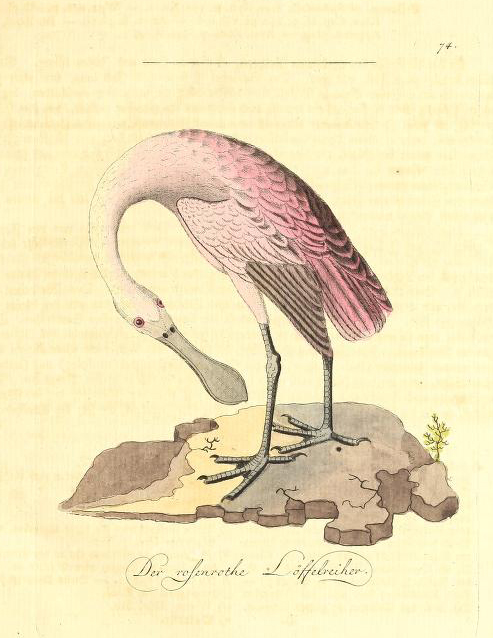
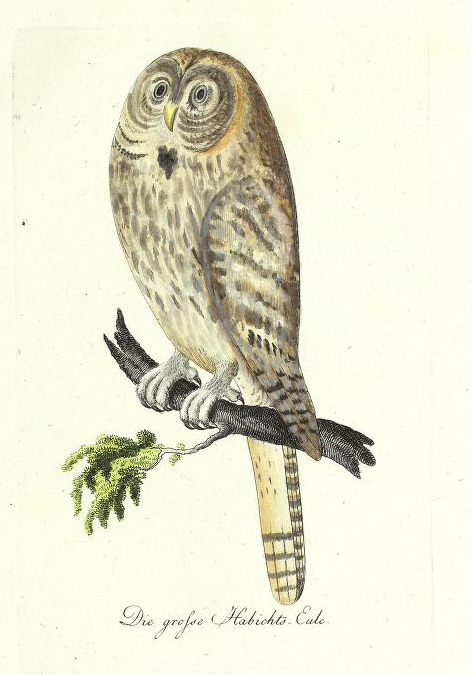
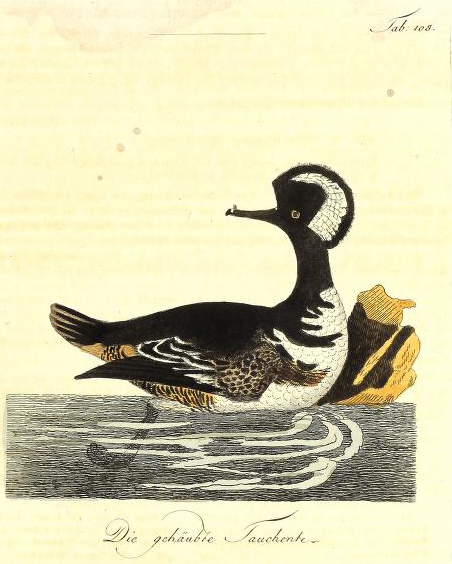
The Birds of the World, German Edition

View Full Size Image
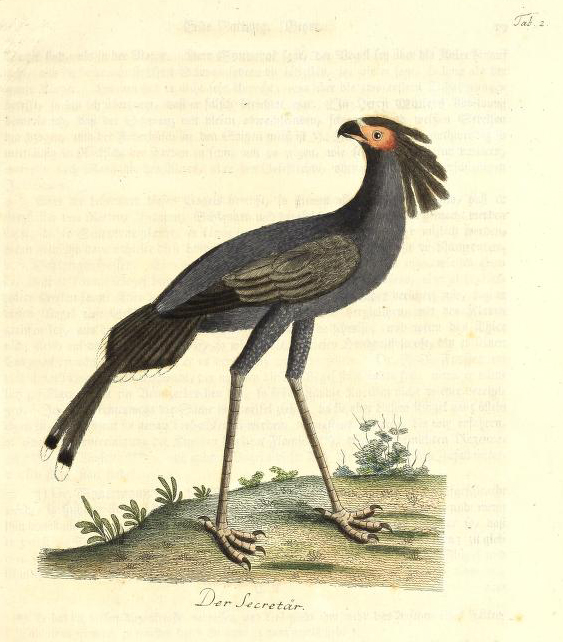
Bechstein, Johann Matthäus. Johann Lathams allgemeine Uebersicht der Vögel. Bd.2:t.2 (1795). German translation of John Latham’s A General Synopsis of Birds. Digitized by Natural History Museum Library, London. http://s.si.edu/2hDSp9n.

At the end of the eighteenth century, the “father of German ornithology” began publishing a German translation of General Synopsis of Birds, an important work by John Latham, the “grandfather of Australian ornithology” [5][6].

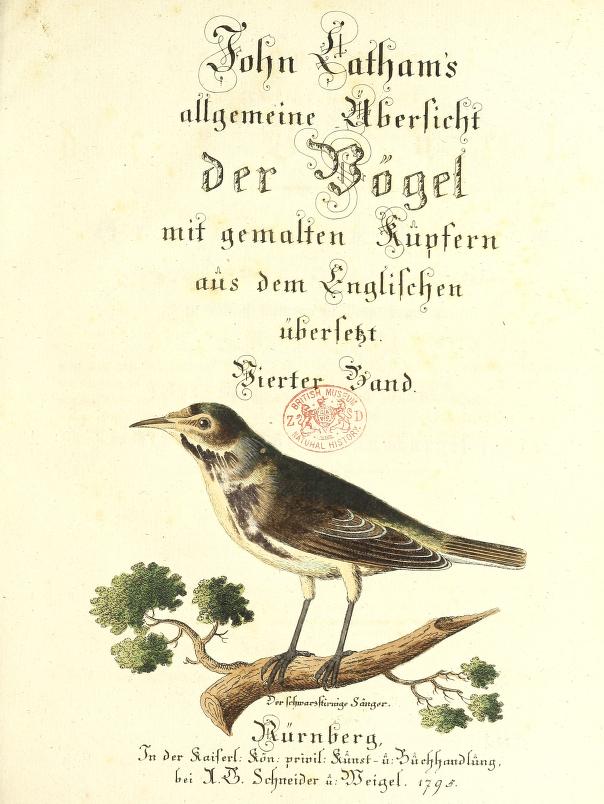
This German edition, entitled Johann Lathams Allgemeine Uebersicht der Vögel ([1792] 1793-1812), was translated and edited by Johann Matthäus Bechstein (1757-1822). As his moniker suggests, Bechstein was a pioneer in German ornithology, having produced what is often regarded as the “first modern handbook of German birds,” Gemeinnèutzige Naturgeschichte [5]. With his translation of Latham’s work, Bechstein made descriptions of worldwide bird species more accessible to German readers.

View Full Size Image
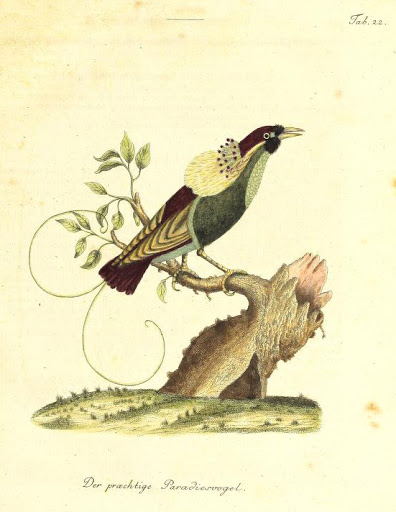
Bechstein, Johann Matthäus. Johann Lathams allgemeine Uebersicht der Vögel. Bd.1:t.1 (1793). German translation of John Latham’s A General Synopsis of Birds. Digitized by Natural History Museum Library, London. http://s.si.edu/2gzJA0m.

Latham’s General Synopsis of Birds, published in three volumes between 1781-1785 followed by supplements in 1787 and 1801, not only provided a natural history of the birds of the world but also importantly presented many Australian species to the European public for the first time.

Born at Eltham, Kent, England in 1740, Latham trained as a physician and set up a medical practice in Darenth at the age of 23. After he was established, Latham began a more concentrated study of natural history, amassing a library and collection of specimens to support his research. By 1800, Latham had recorded around 3,000 bird species [3].

View Full Size Image
Bechstein, Johann Matthäus. Johann Lathams allgemeine Uebersicht der Vögel. Bd.1:t.2 (1793). German translation of John Latham’s A General Synopsis of Birds. Digitized by Natural History Museum Library, London. http://s.si.edu/2gB8gWx.

Latham’s period of ornithological study coincided with the arrival in England of a wealth of specimens and drawings from Australia. These collections, resulting from Captain Cook’s voyages to Australia and Polynesia (1769-75), included many new-to-science bird species [1]. As a friend and correspondent of many of England’s leading naturalists, Latham had access to these collections. He included descriptions and illustrations of many of these new species within his General Synopsis of Birds [2].

Latham provided only vernacular descriptions for the species in his General Synopsis and its first supplement. In 1790, after realizing that he would only receive credit for naming the species if he provided Latin binomials under the Linnaean system, Latham published Index Ornithologicus, a systematic catalog assigning binomial names and taxonomic classifications to the birds in the three volumes and first supplement of General Synopsis [7]. 

View Full Size Image
Bechstein, Johann Matthäus. Johann Lathams allgemeine Uebersicht der Vögel. Bd.3:t.1 (1796). German translation of John Latham’s A General Synopsis of Birds. Digitized by Natural History Museum Library, London. http://s.si.edu/2ziUgZ0.


Unfortunately, between 1788-1789, German naturalist Johann Friedrich Gmelin had published an expanded edition of Linnaeus’s Systema Naturae, providing Latin names for many of Latham’s birds. These names have priority over those published in Index Ornithologicus, and as such Gmelin is credited as the first to scientifically describe many of the species first introduced through Latham’s General Synopsis [2].

However, Latham is still the authority for many of the names in the Index and second supplement, and he is recognized as the first to scientifically describe many iconic species, such as the hyacinth macaw (Anodorhynchus hyacinthinus), and Australian species, including the emu (Dromaius novaehollandiae). His extensive contributions to Australian ornithology earned him the nickname the “grandfather of Australian ornithology” [2].

View Full Size Image
Bechstein, Johann Matthäus. Johann Lathams allgemeine Uebersicht der Vögel. Bd.4:t.1 (1811). German translation of John Latham’s A General Synopsis of Birds. Digitized by Natural History Museum Library, London. http://s.si.edu/2zkmEu0.

The four volumes of Bechstein’s Johann Lathams Allgemeine Uebersicht der Vögel constitute German translations of the three volumes and first supplement of General Synopsis as well as the Index Ornithologicus. In addition to the translation, Bechstein added “much additional matter” [7]. Each volume (or band) was issued in two parts (or theils). The plates are largely reproductions of those from General Synopsis, many of which Latham designed and etched himself [6].

Bechstein’s legacy extends well beyond his translation of Latham’s ornithological work. He was not only a pioneer in German ornithology, but he also contributed extensively to studies on forestry, founding the school of forestry at Waltershausen in 1795 and being named the director of the forestry school at Dreissigacker in 1800. He was also an early advocate for wildlife conservation, encouraging protection for many species then deemed pests, including bats [4].

View Full Size Image
Bechstein, Johann Matthäus. Johann Lathams allgemeine Uebersicht der Vögel. Bd.3:t.2 (1798). German translation of John Latham’s A General Synopsis of Birds. Digitized by Natural History Museum Library, London. http://s.si.edu/2i9JoZh.

You can browse more of Bechstein’s works in BHL.

Thanks to the Natural History Museum Library, London, you can freely explore all four bands, constituting eight volumes in total, of Johann Lathams Allgemeine Uebersicht der Vögel in BHL.


With contributions from:

Harriet Campbell Longley 
Researcher Services Assistant 
Natural History Museum Library and Archives, London

References

[1] Ashworth, William B. Jr., 2016. “Scientist of the Day – John Latham.” Linda Hall Library, February 4. http://www.lindahall.org/john-latham/.
[2] Calaby, J.H. “Latham, John (1740–1837).” Australian Dictionary of Biography, National Centre of Biography, Australian National University. Published first in hardcopy 1967. http://adb.anu.edu.au/biography/latham-john-2333/text3037.
[3] Jackson, Christine E., Ann Datta, and R.I. Vane-Wright. 2013. “Dr John Latham, F.L.S. and His Daughter Ann.” The Linnean, 29(1), pp. 15-30.
[4] Johann Matthäus Bechstein. UpClosed. https://upclosed.com/people/johann-matthaeus-bechstein/.
[5] Mey, Eberhard. 2003. “Johann Matthäus Bechstein: The Father of German Ornithology.” Rudolstädter nat. hist. Schr., 11, pp.63.
[6] Olsen, Penny. 2001. Feather and Brush: Three Centuries of Australian Bird Art. Collingwood: CSIRO Publishing. pp. 28.
[7] Zimmer, John Todd. 1926. Catalog of the Edward E. Ayer Ornithological Library, Part II. Chicago: Field Museum of Natural History. pp. 373-374.

October 26, 2017by michelle.underhill
BHL News, Blog Reel

Report on the 2016 BHL Annual meetings, London

View Full Size Image
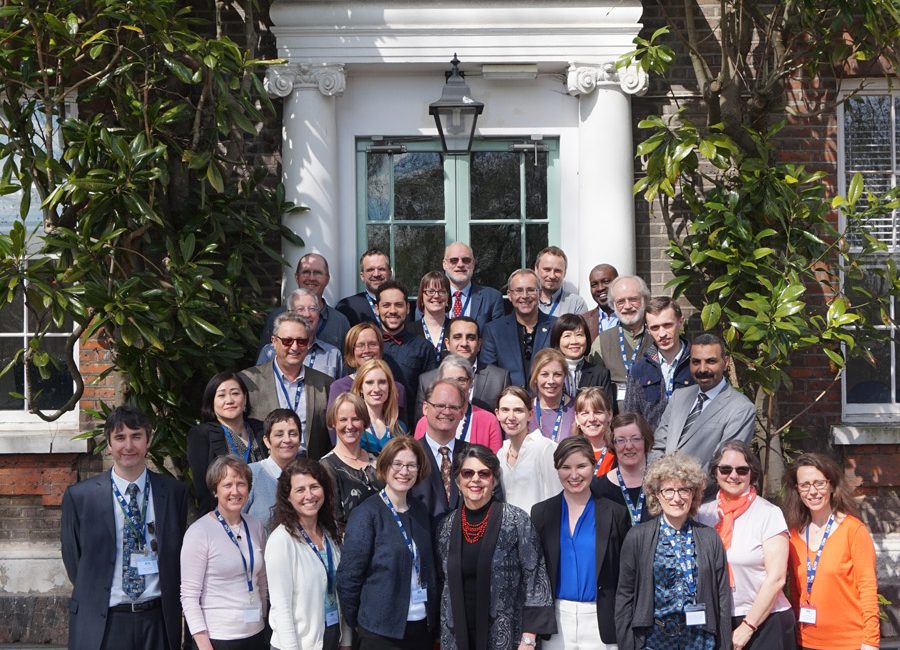
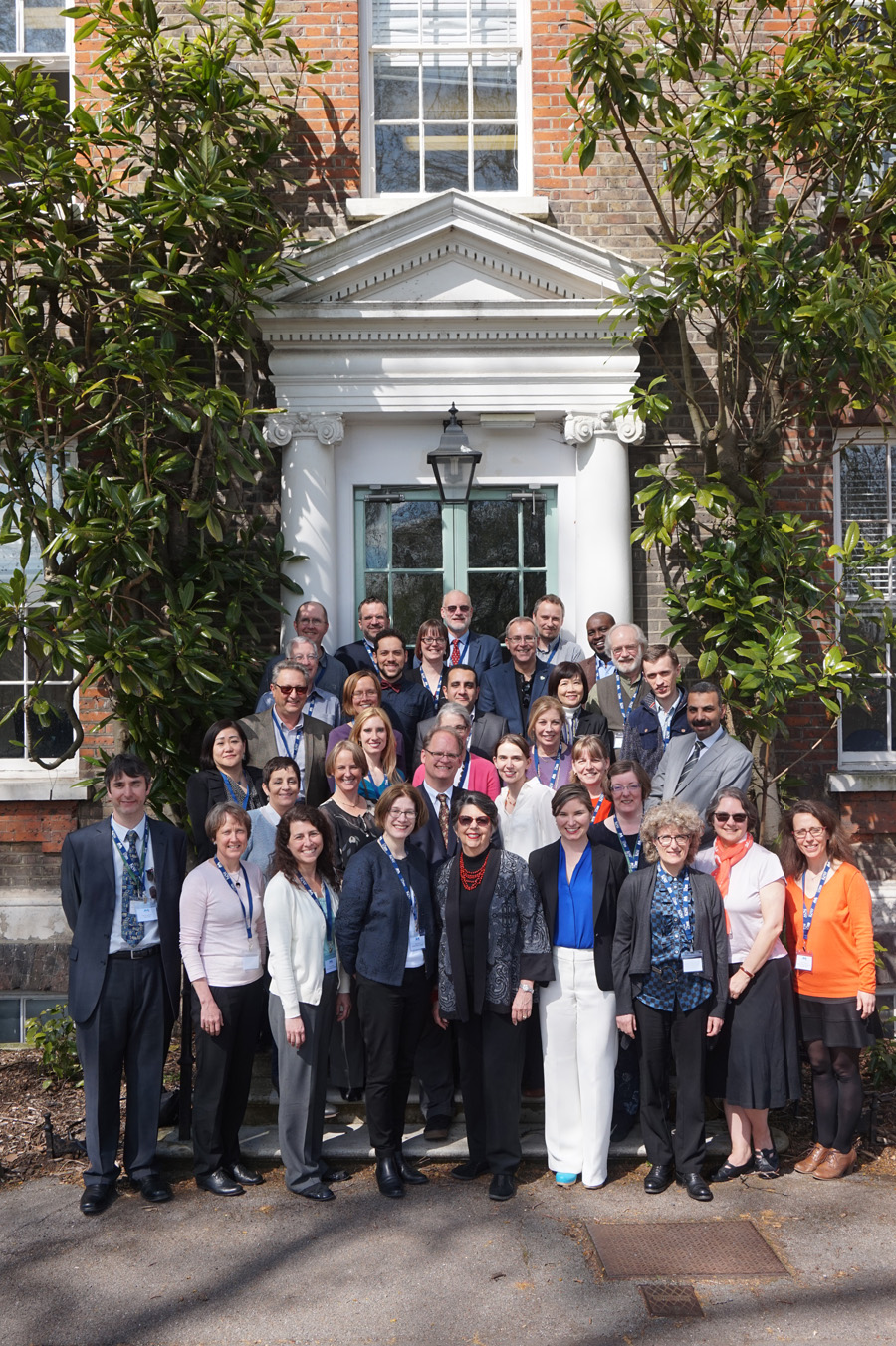
2016 BHL Group Photo

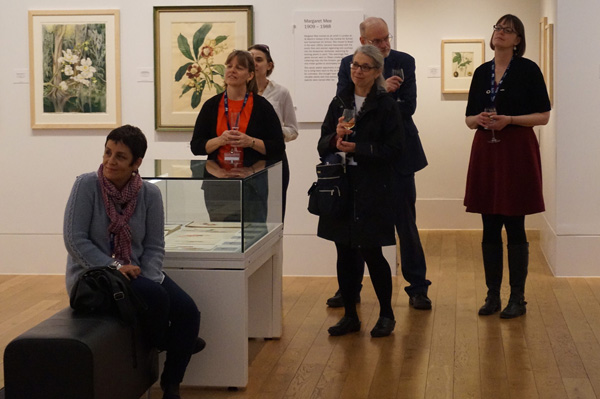
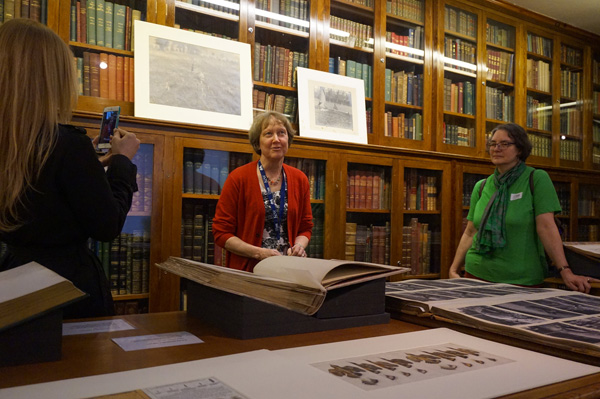
In conjunction with the BHL Day event at the Natural History Museum (NHM) in London, BHL partner representatives got down to work.

The combined 2016 BHL Joint Meeting was co-hosted by Natural History Museum, London and the Royal Botanic Gardens, Kew, 12-15 April 2016.

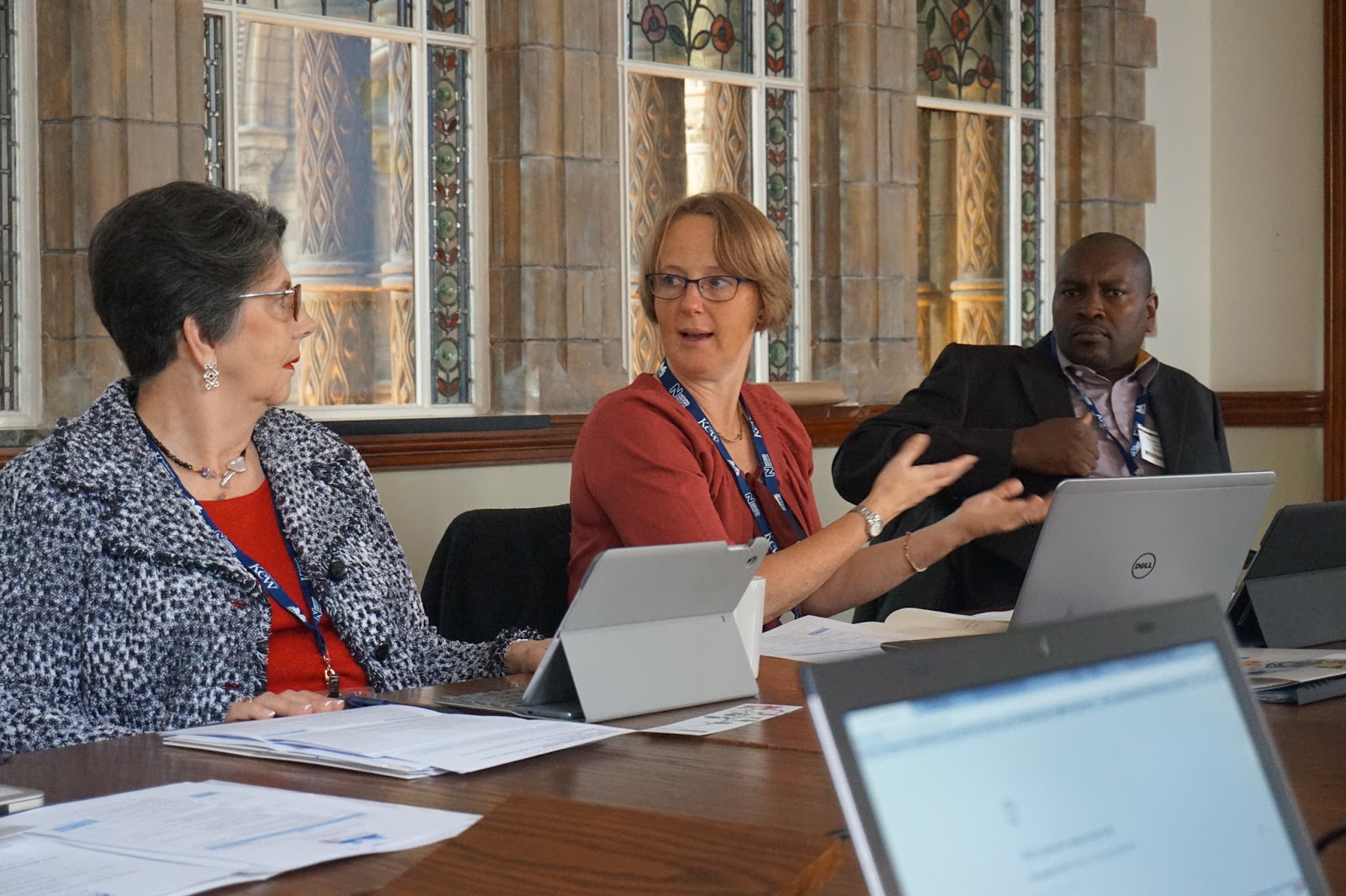
The first order of business was the 7th Global Meeting which took place on 12 April 2016 at the Natural History Museum. Representatives from all BHL’s global partners (with the exception of BHL México) were in attendance. A key outcome of this meeting was to merge the existing Global BHL group into the BHL as the newly formed BHL Global Committee (BGC). The BGC recommended to the BHL Executive Committee Anne-Lise Fourier (BHL Africa) as the Chair of this new committee. The BGC and global BHL concerns are also now instantiated in the BHL Bylaws and the BHL’s global partners will now have a clearer voice in the BHL.

View Full Size Image
Zheping Xu & Jinzhong Cui
View Full Size Image
Nancy E. Gwinn, Ely Wallis, Lawrence Monda

On the 13th, the Royal Botanic Gardens, Kew hosted the Open Partners Meeting where the Secretariat and Partners reported out on initiatives and accomplishments since the last meeting. Attendees included BHL Members, Affiliates, and Partners as well as a handful of invited guests including Dmitry Schigel from GBIF, Rod Page (BioStor), and Laurence Bénichou and Alice Lemaire (Natural History Museum of Paris). Bob Corrigan from the Encyclopedia of Life (EOL) presented on current EOL activities and some plans for the 10th anniversary of EOL in 2017. The day concluded with a reception at the Shirley Sherwood Gallery of Botanical Art where we were welcomed by Acting Librarian Fiona Ainsworth and Chris Mills (former Kew Librarian and representative to the BHL Members’ Council).

View Full Size Image
BHL Open Partners Meeting, RBG Kew

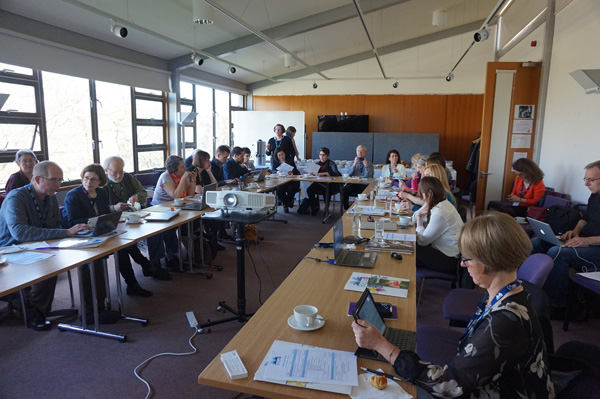
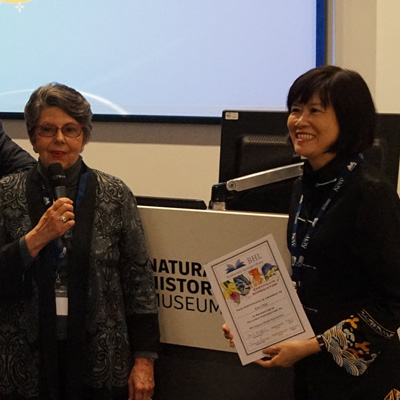
On the 14th, the Members’ Business Meeting was held at NHM. The agenda included discussions of bylaws revisions, a report from the Global Business Meeting, discussions of user-feedback, interlibrary loan, and a report from the Membership Committee (Jane Smith). BHL took this opportunity to thank Marty Schlabach, who will retire later this year, for his service as the BHL representative from Cornell University Library; likewise Eric Chin (National Archives, Singapore) was recognized. Eric is stepping down from his role as BHL Singapore representative and is succeeded by Wai Yin Pryke (National Library of Singapore).

View Full Size Image
Nancy E. Gwinn & Marty Schlabach
View Full Size Image
Nancy E. Gwinn & Wai Yin Pryke

Slides from the Secretariat presentations are available here:

  • 2016 Program Director’s Report (Martin R. Kalfatovic)
  • 2016 Program Managers’ Report (Carolyn A. Sheffield)
  • 2016 Collections’ Managers’ Report (Bianca Crowley)
  • 2016 Outreach & Communications Manager’s Report (Grace Costantino)

Many thanks to Jane Smith (Natural History Museum), David Iggulden (Kew) and their teams for hosting these successful meetings and events!

View Full Size Image
Nancy E. Gwinn, Jane Smith & David Iggulden

Selected other photos from the meeting:

View Full Size Image
Nancy E. Gwinn & Fiona Ainsworth
Reception at RBG Kew
View Full Size Image
Reception at RBG Kew
View Full Size Image
Grace Costantino, Alison Harding, Constance Rinaldo
Periscope filming at Natural History Museum, Tring
May 10, 2016by
BHL News, Blog Reel

BHL Day: Celebrating 10 Years of Open Access to Biodiversity Literature

View Full Size Image

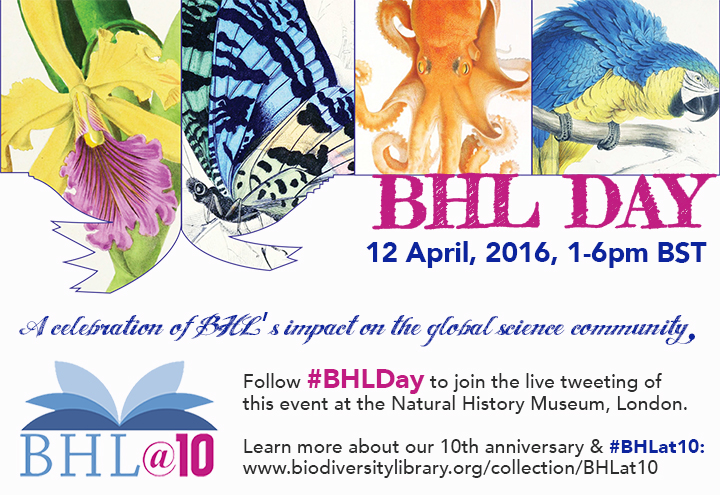
2016 marks the 10th anniversary of the Biodiversity Heritage Library. As part of our #BHLat10 celebrations, and in conjunction with our Annual Members Meeting, we hosted a public BHL Day on April 12 at the Natural History Museum, London. The program highlighted BHL’s impact on the global science community and featured speakers from biodiversity-related disciplines.

View Full Size Image
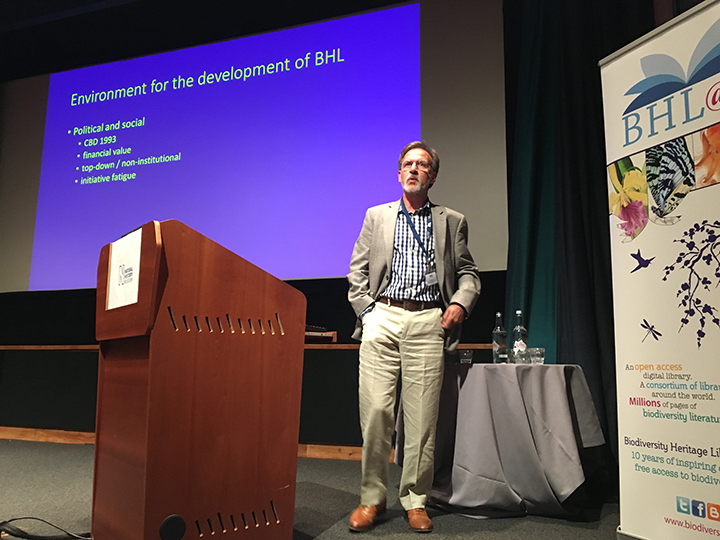
Richard Lane giving the opening keynote at BHL Day.

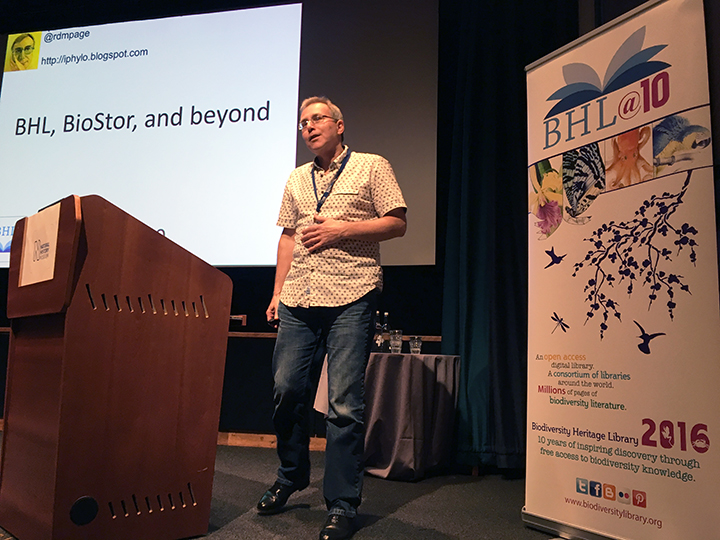
Speakers for BHL Day included Ian Owens, Director of Science at the Natural History Museum, London (NHM); Gowan Dawson and Geoffrey Belknap from the University of Leicester; Jane Smith, Head of Library and Archives at NHM; and Martin R. Kalfatovic, BHL Program Director. The program’s opening keynote speaker was Richard Lane, Consultant and Independent Advisor in Science and Museums and former Director of Science at NHM. The closing keynote was provided by Rod Page from the University of Glasgow and creator of BioStor. See the links at the end of this post to view the presentations by each speaker.

View Full Size Image
Rod Page giving the closing keynote at BHL Day.

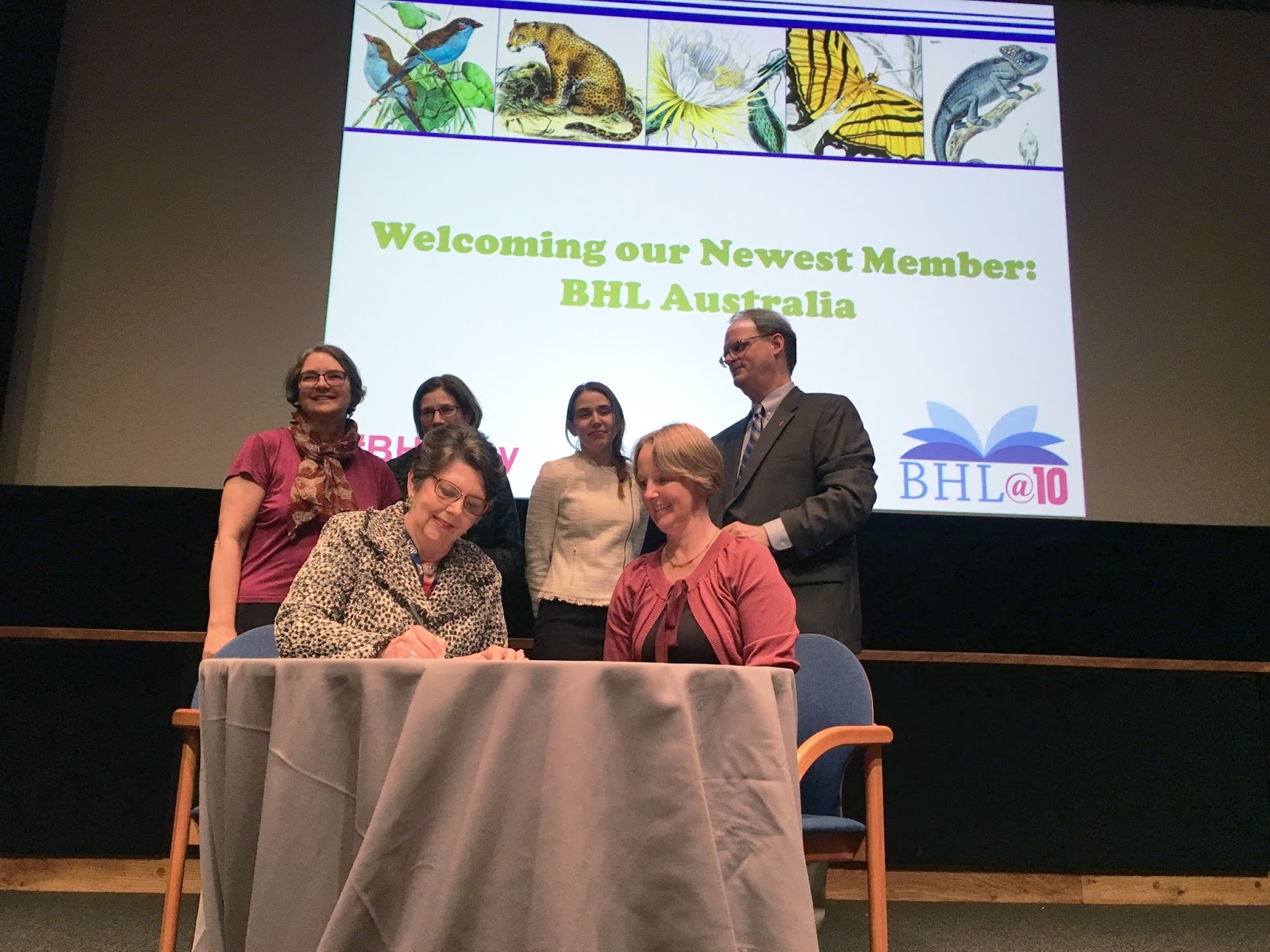
BHL Day also afforded us an excellent opportunity to share the exciting news that BHL Australia has joined BHL as our 16th Member! We marked the occasion with a ceremonial signing of the BHL Memorandum of Understanding between BHL, Museum Victoria, and the Atlas of Living Australia during the event. Learn more.

View Full Size Image
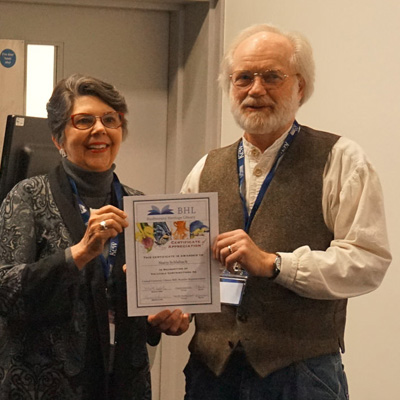
Dr. Nancy E Gwinn (left), Director of Smithsonian Libraries and Chair of the BHL Members’ Council, and Dr. Elycia Wallis, BHL Australia Project Lead and Manager of Online Collections at Museum Victoria, signing the BHL MOU. Back Row, Left to Right: Constance Rinaldo (Librarian of the Ernst Mayr Library of the Museum of Comparative Zoology, Harvard University | Vice-Chair, BHL Members’ Council); Jane Smith (Head of Library and Archives, Natural History Museum, London | Secretary, BHL Members’ Council); Carolyn Sheffield (Program Manager, BHL); Martin R. Kalfatovic (Associated Director, Digital Programs and Initiatives, Smithsonian Libraries | Program Director, BHL).

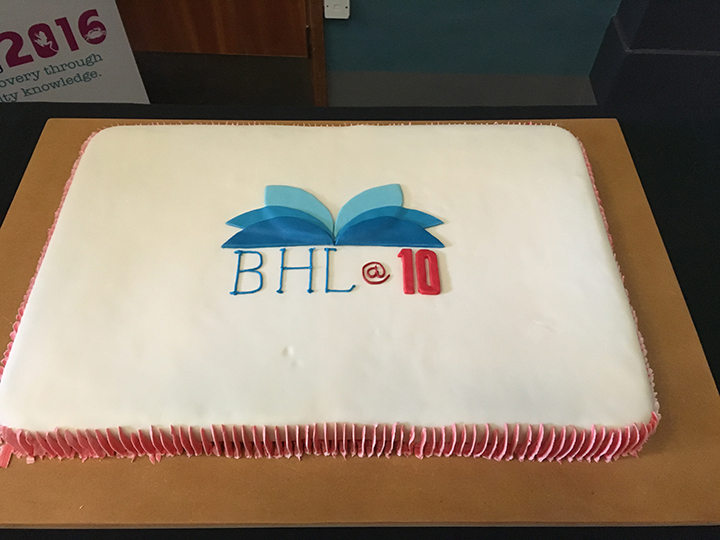
And of course, no celebration is complete without a cake! BHL Day culminated in a reception which included a special #BHLat10 dessert.

View Full Size Image
BHL at 10 cake!

You can explore our live-tweeting of the event on our @BioDivLibrary account under the hashtag #BHLDay.

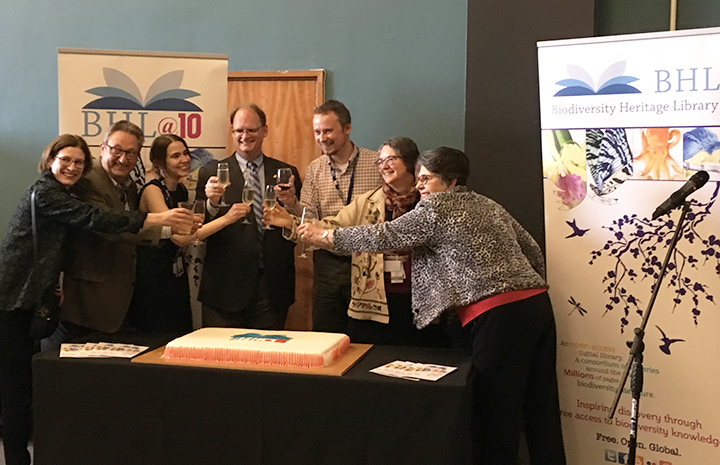
View Full Size Image
A toast to celebrate 10 years of inspiring discovery through free access to biodiversity knowledge.

BHL Day was a wonderful opportunity for us to celebrate the impact that BHL has had on scientific and historical research for the past ten years. We extend a special thanks to the Natural History Museum, London, for hosting the event and to the NHM Library staff who helped make this event a reality. We’re also grateful to all of our marvelous speakers for showcasing the importance, history, and growth of our library. We look forward to continuing our work to inspire discovery through free access to biodiversity knowledge for many decades to come.

Links to BHL Day Presentations:

  • “Biodiversity Heritage Library: Origins and Impact.” Richard Lane.
  • “Welcome to the (Digital) NHM.” Ian Owens.
  • “An Overview of the Biodiversity Heritage Library.” Jane Smith.
  • “Different Perspectives: Multi-disciplinary Use of BHL. The Case of Sciencegossip.org.” Gowan Dawson and Geoffrey Belknap.
  • “The Biodiversity Heritage Library: 10+1 and Beyond: Looking Forward.” Martin R. Kalfatovic.
  • “BHL, BioStor, and Beyond.” Rod Page.
May 9, 2016by ulib-libraryjobs
Page 1 of 212»

Help Support BHL

BHL's existence depends on the financial support of its patrons. Help us keep this free resource alive!

search

About BHL

The Biodiversity Heritage Library (BHL) is the world’s largest open access digital library for biodiversity literature and archives. BHL operates as a worldwide consortium of natural history, botanical, research, and national libraries working together to digitize the natural history literature held in their collections and make it freely available for open access as part of a global “biodiversity community.”

Join Our Mailing List

Sign up to receive the latest news, content highlights, and promotions.

Subscribe Now

Subscribe to Blog via Email

Enter your email address to subscribe to this blog and receive notifications of new posts by email.

Join 319 other subscribers

Subscribe to Blog Via RSS

Subscribe to the blog RSS feed to stay up-to-date on all the latest BHL posts.

Access RSS Feed

Inspiring Discovery through Free Access to Biodiversity Knowledge.

The Biodiversity Heritage Library makes it easier than ever for you to access the information you need to study and explore life on Earth…for free, anytime, anywhere.


64+ Million Pages of
Biodiversity Literature Online.

EXPLORE

Tools and Services
to Transform Research.

EXPLORE

300,000+
Illustrations on Flickr.

EXPLORE

ABOUT | HARMFUL CONTENT | PRIVACY | SITE MAP | TERMS OF USE