Biodiversity Heritage Library - Program news and collection highlights from BHL
  • Home
  • News
  • Featured Books
    • All Featured Books
    • Book of the Month Series
    • BHL at 20
  • User Stories
  • Campaigns
    • Fossil Stories
    • Garden Stories
    • Monsters Are Real
    • Page Frights
    • Her Natural History
    • Earth Optimism 2020
  • Tech Blog
  • Visit BHL
Home
News
Featured Books
    All Featured Books
    Book of the Month Series
    BHL at 20
User Stories
Campaigns
    Fossil Stories
    Garden Stories
    Monsters Are Real
    Page Frights
    Her Natural History
    Earth Optimism 2020
Tech Blog
Visit BHL
  • Home
  • News
  • Featured Books
    • All Featured Books
    • Book of the Month Series
    • BHL at 20
  • User Stories
  • Campaigns
    • Fossil Stories
    • Garden Stories
    • Monsters Are Real
    • Page Frights
    • Her Natural History
    • Earth Optimism 2020
  • Tech Blog
  • Visit BHL
Biodiversity Heritage Library - Program news and collection highlights from BHL
Blog Reel, Campaigns, Her Natural History

Botanical Field Guides of Alice Lounsberry and Ellis Rowan

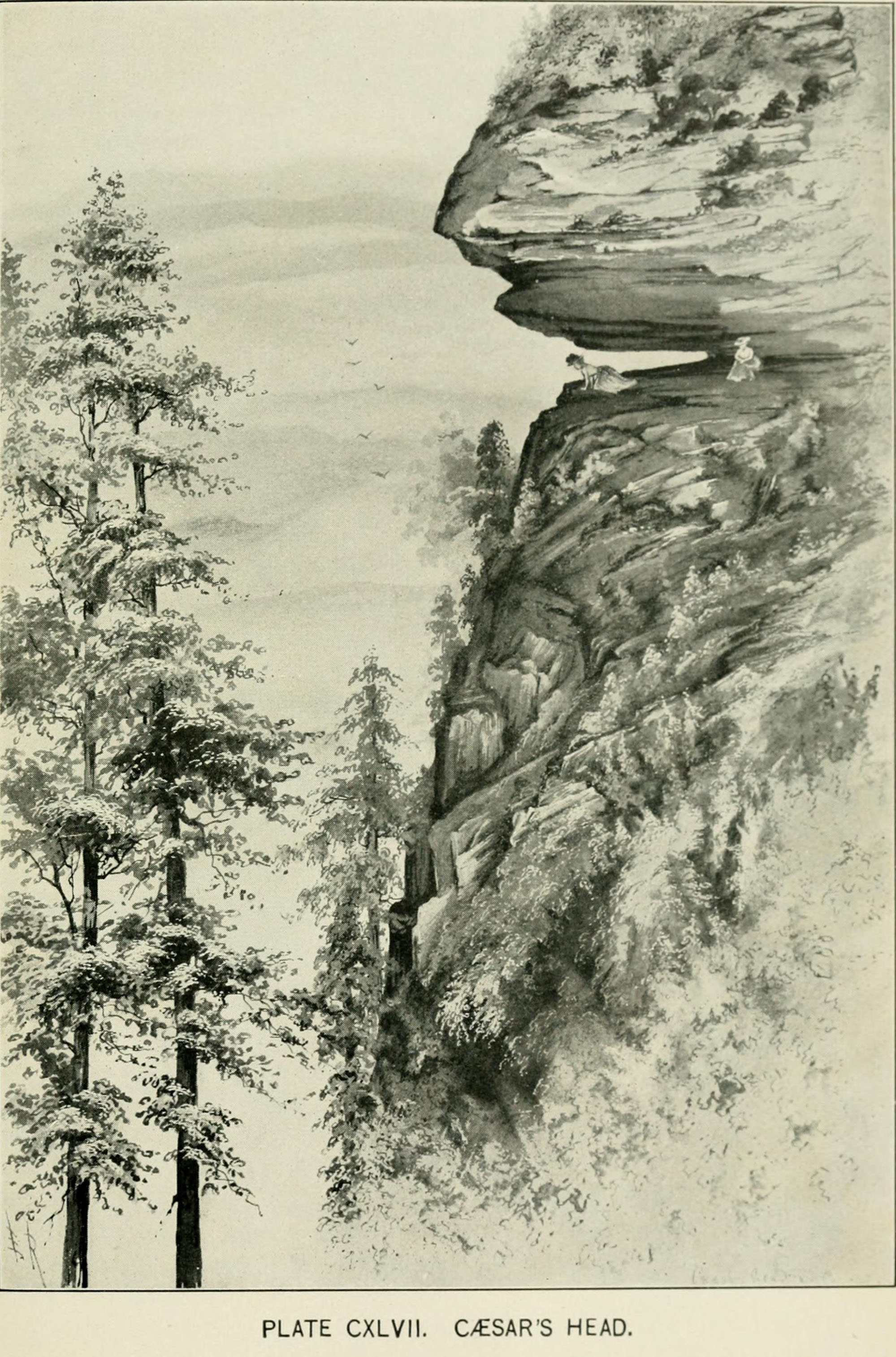
“Caesar’s Head.” Lounsberry and Rowan. Southern wild flowers and trees. 1900. Contributed in BHL by NCSU Libraries /Archive.org.

When the flower seekers reached a great crevice in the rock called Caesar’s Head, their eyes no longer sought the ground, but rested and wandered over the panorama of far-stretching mountains and the fertile valley of the depth below. Could they have trodden over that broad surface, what discoveries might they have made; what secrets have gathered from Nature’s heart? (Lounsberry and Rowan, Southern wild flowers and trees.)

Artist Marian Ellis Rowan depicts herself with botanist Alice Lounsberry peering over a cliff face on Caesar’s Head, South Carolina, as they travel together to research their botanical guidebooks. (Look closely for the two figures on the ledge!) The pair’s collaboration produced A guide to the wild flowers (1899) and A guide to the trees (1900), both popular guides to North American flora; this image comes from their guide Southern wild flowers and trees, together with shrubs, vines and various forms of growth found through the mountains, the middle district and the low country of the South (1901).

Their three guides are illustrated with pen and ink illustrations as well as full color paintings. Intended to make botanical study accessible for a popular audience, they take an ecological approach by organizing species according to where they habitually grow, from aquatic environments to dry sandy soils. In the introduction to Guide to the wild flowers, American botanist and taxonist Nathaniel Lord Britton notes that botanical guides organized by ecosystem reflect a new and significant shift:

[This book will] aid in the appreciation of that new development of botanical study, the science of Plant Ecology. It will teach the novice how altitude, latitude, soil and environment affect the vegetation of certain areas; how certain plants are found growing together because of the nature of the soil and of their surroundings. If it also leads to the understanding of their gradual adaptation to changed conditions it will give a broader and more comprehensive view of plant morphology and lead away from the mistaken idea that plants must and should conform to our artificial definitions, and make clearer the laws of evolution. (Guide to the wild flowers, p. xv)
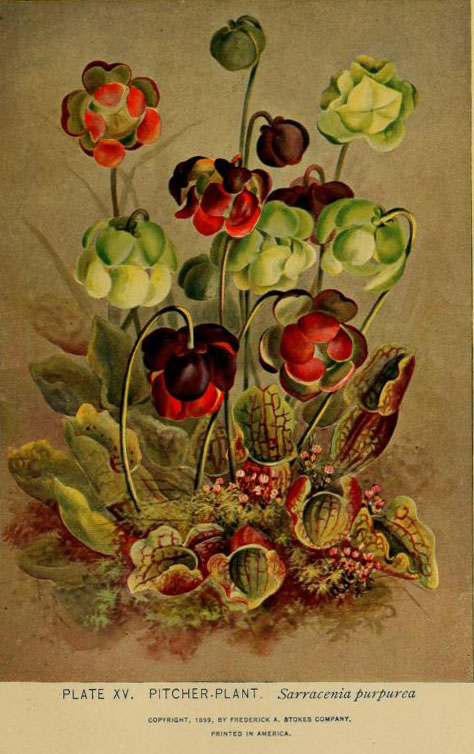
“Pitcher Plant, Sarracenia purpurea.” Lounsberry and Rowan. A guide to the wild flowers. 1899. Contributed in BHL by New York Botanical Garden, LuEsther T. Mertz Library.
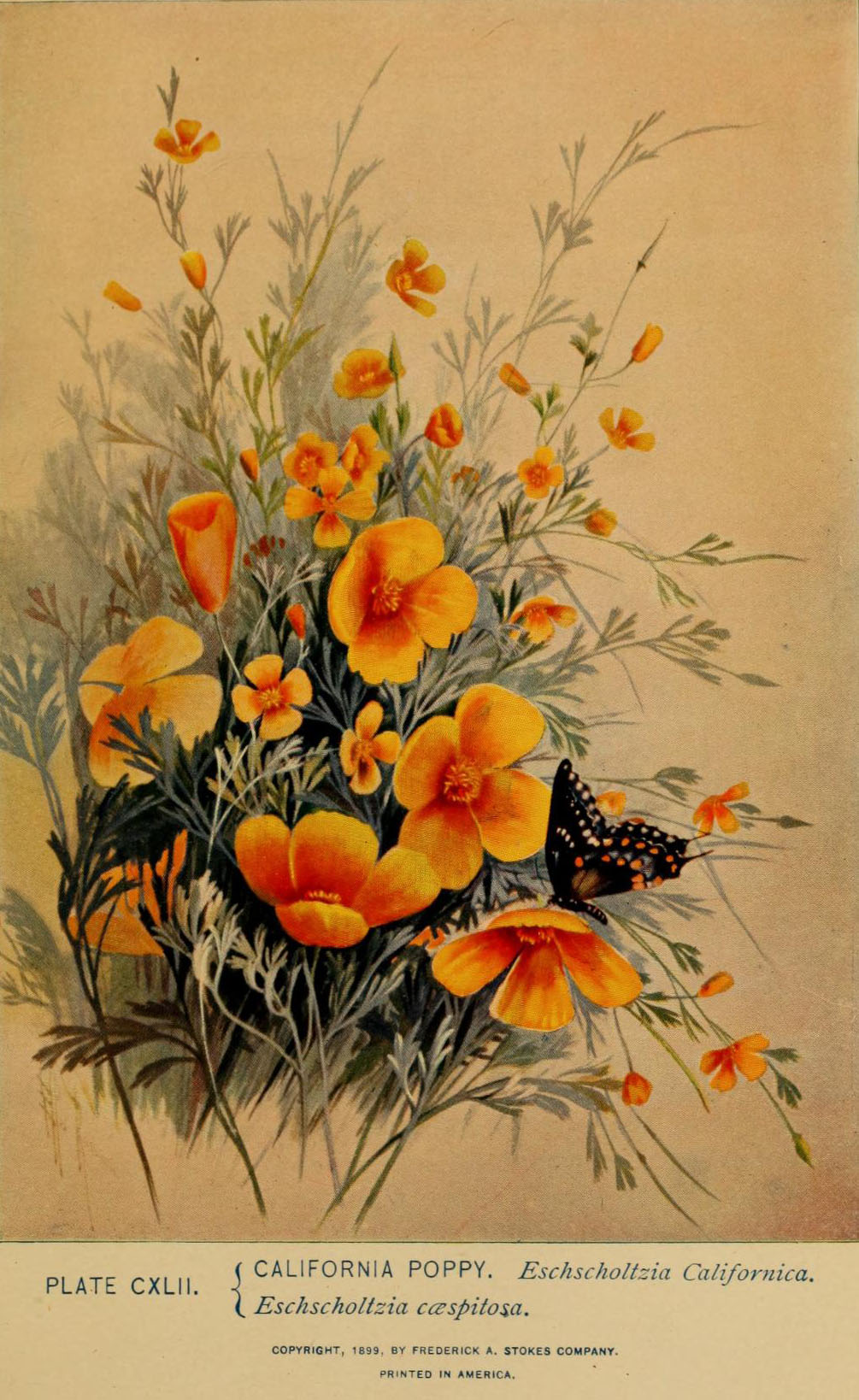
“California poppy, Eschscholtzia Californica and caespitosa.”  Lounsberry and Rowan. A guide to the wild flowers. 1899. Contributed in BHL by New York Botanical Garden, LuEsther T. Mertz Library.
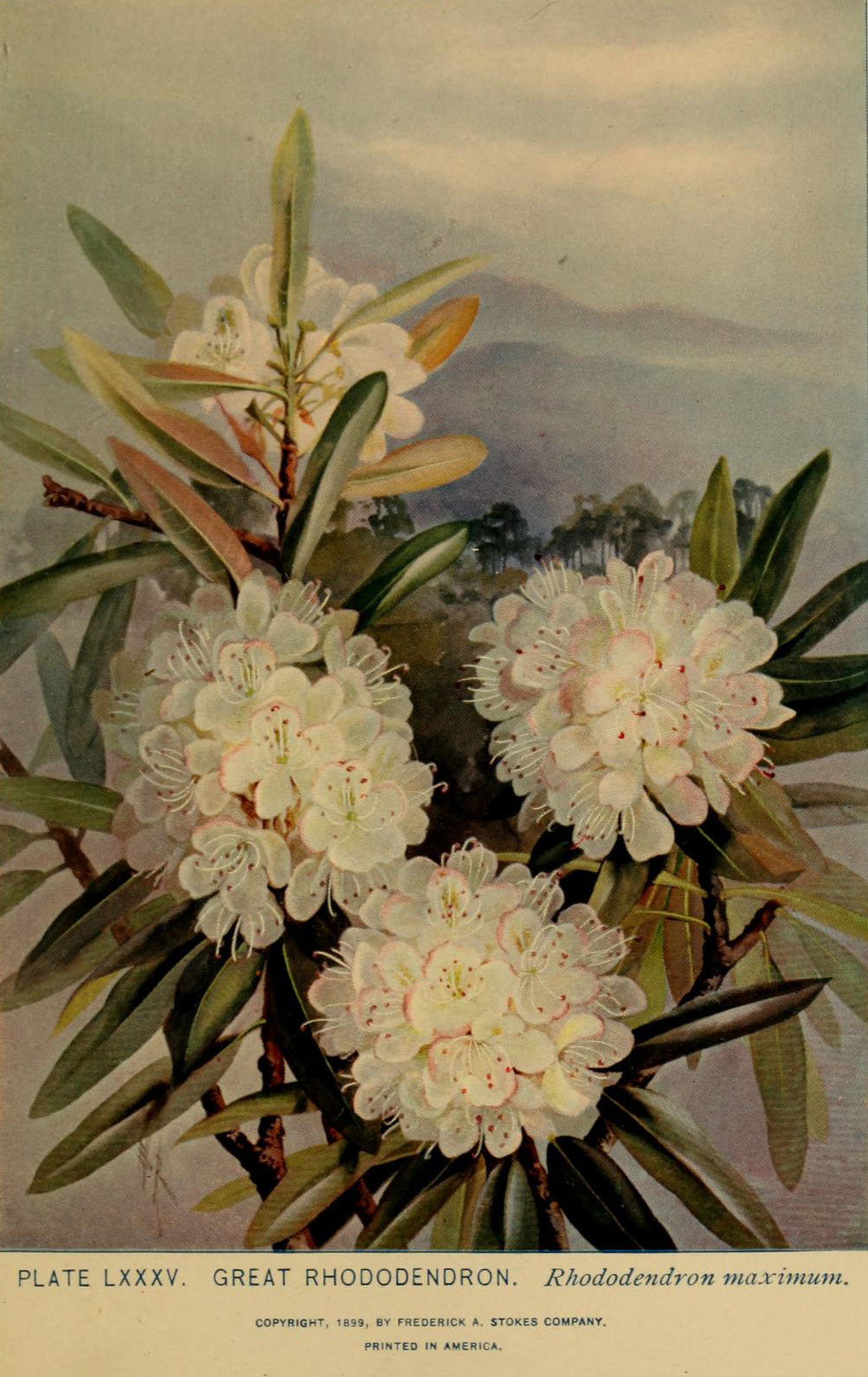
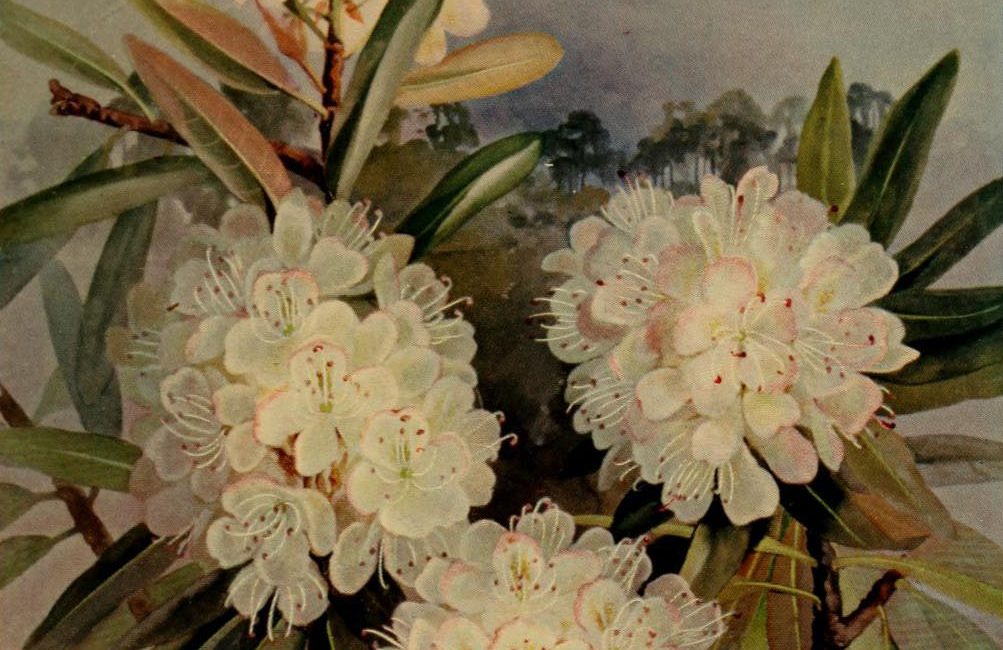
“Great Rhododendron, Rhododendron maximum.”  Lounsberry and Rowan. A guide to the wild flowers. 1899. Contributed in BHL by New York Botanical Garden, LuEsther T. Mertz Library.

Marian ‘Ellis’ Rowan (1848-1922), born in Melbourne, Australia, was a well-known popular artist in her time. Raised by a botanist father, she had access to his internationally famous garden at their home Derriweit Heights while she developed her skills in observational painting. Ferdinand von Mueller, the Victorian Government Botanist and a friend of Rowan’s father, also encouraged her interest in botanical painting and commissioned her illustrations in his publications.
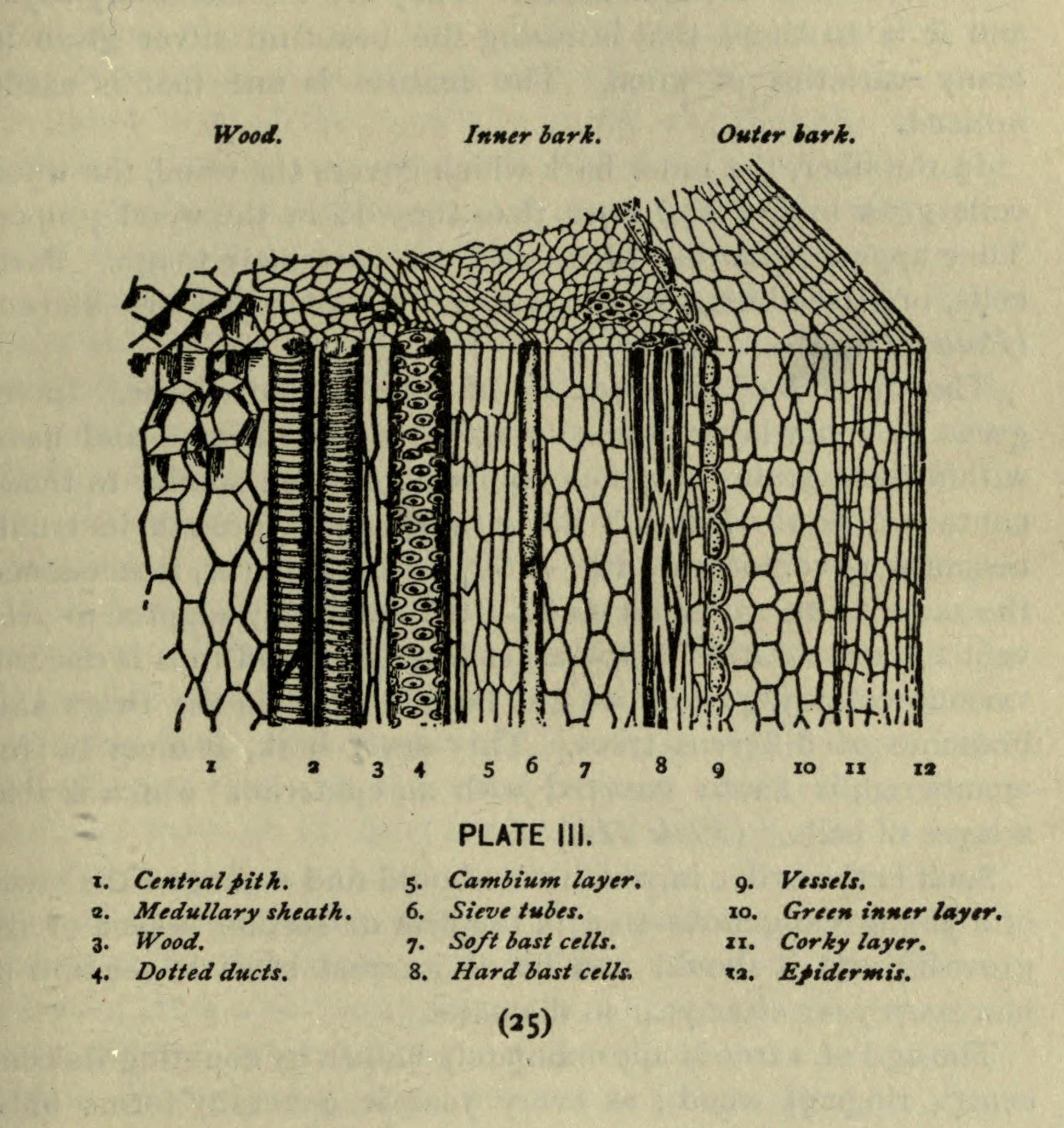
Diagram of wood and bark cell layers. Lounsberry and Rowan. A guide to the trees. 1900. Contributed in BHL by University of Toronto Earth Science Library (Noranda).
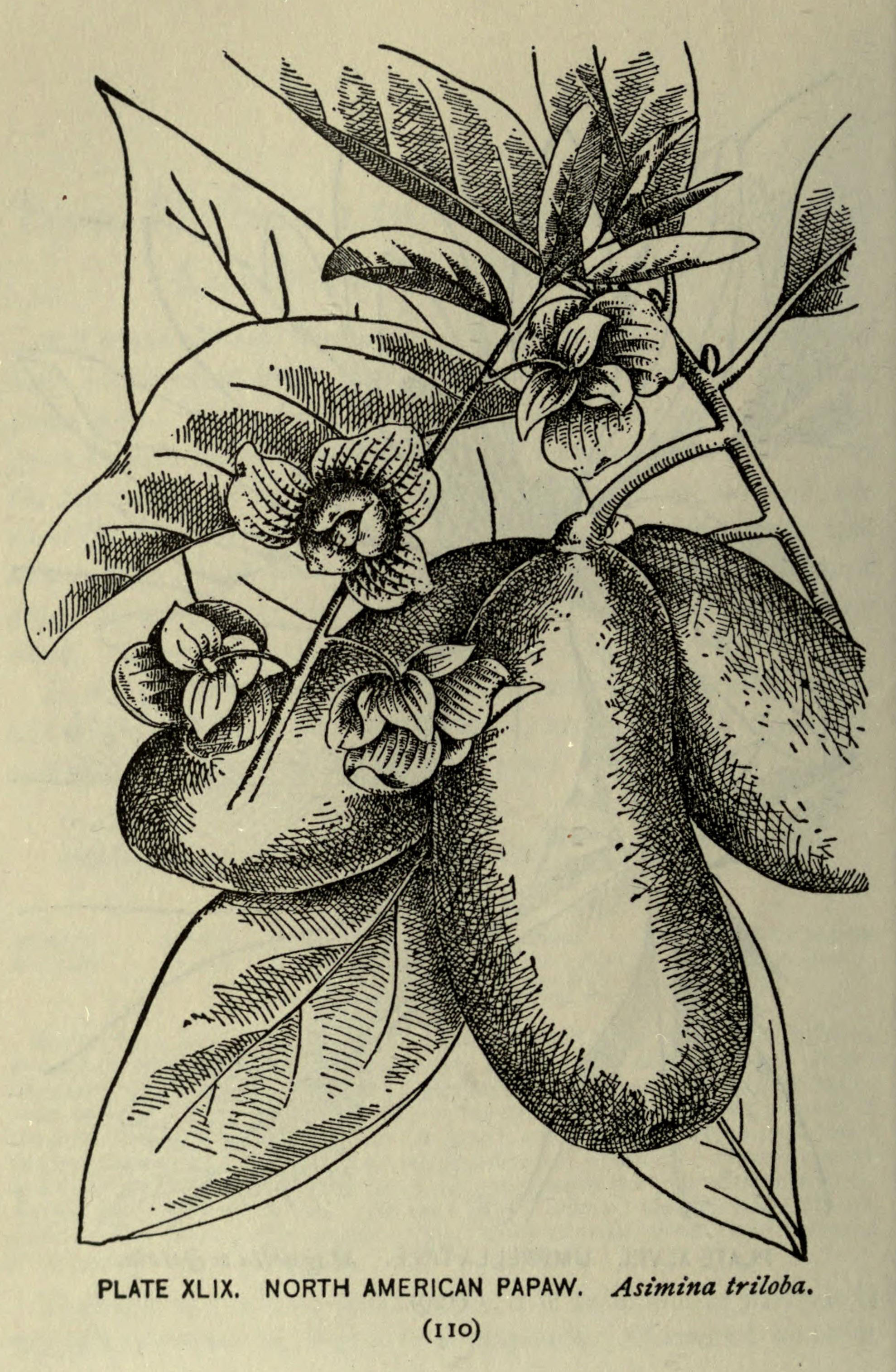
“North American Papaw, Asimina triloba.” Lounsberry and Rowan. A guide to the trees. 1900. Contributed in BHL by University of Toronto Earth Science Library (Noranda).
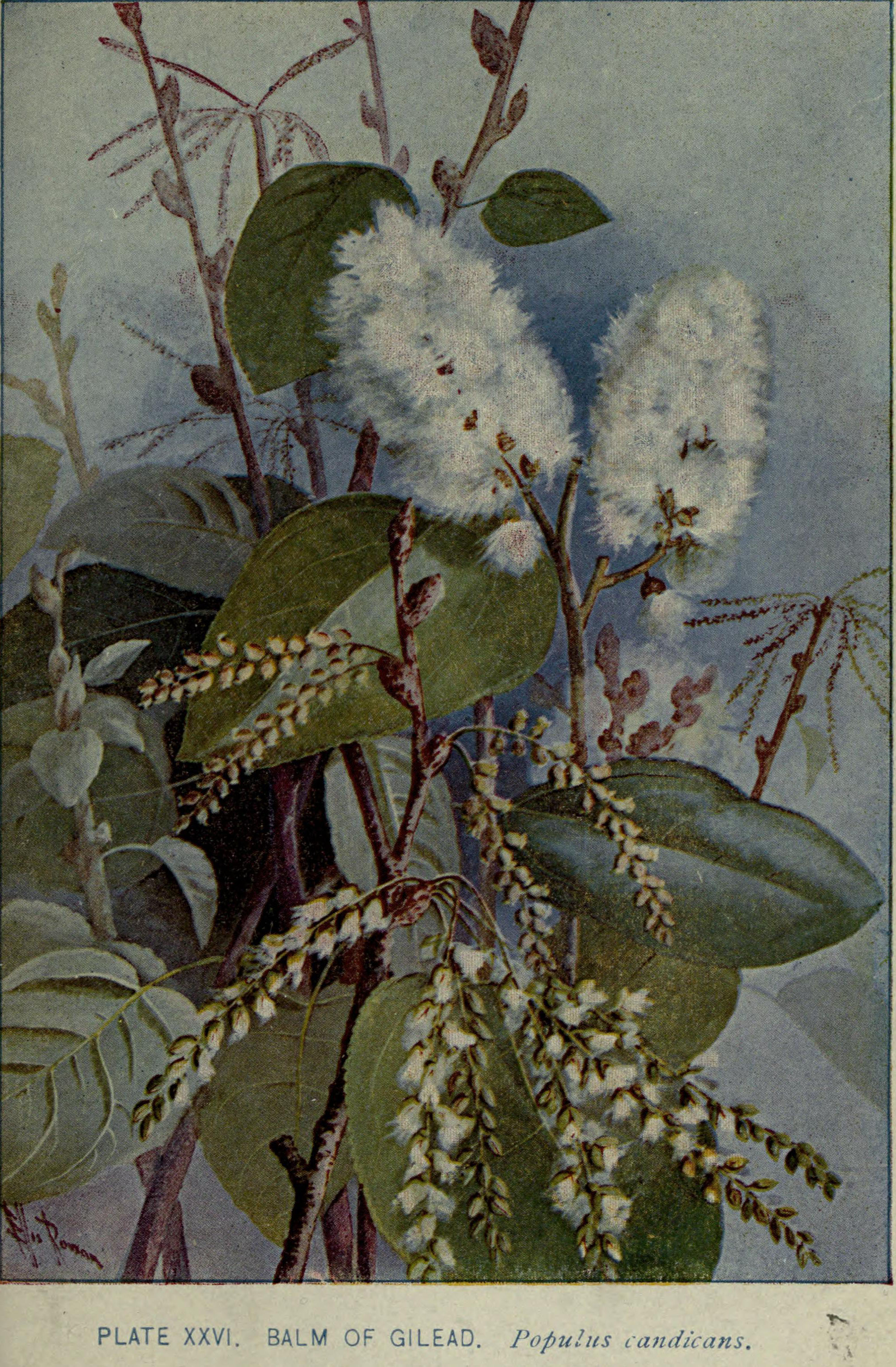
“Balm of Gilead. Populus candicans.” Lounsberry and Rowan. A guide to the trees. 1900. Contributed in BHL by University of Toronto Earth Science Library (Noranda).
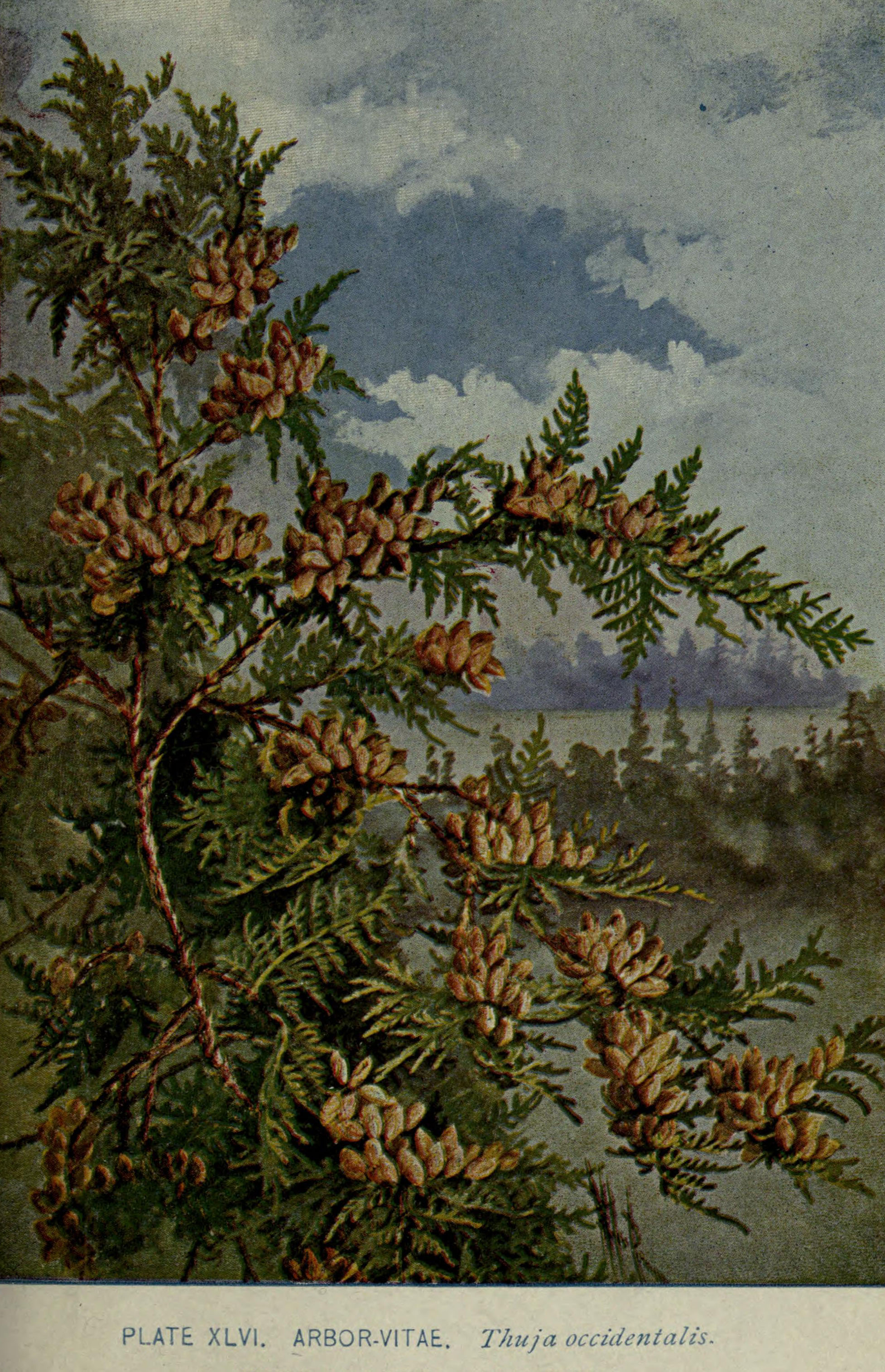
“Arbor-vitae. Thuja occidentalis.” Lounsberry and Rowan. A guide to the trees. 1900. Contributed in BHL by University of Toronto Earth Science Library (Noranda).

Rowan had many opportunities to travel throughout her life, and used them to paint diverse plants in the field. She moved to New Zealand at Pukearuhe on the North Island after her marriage in 1873. During her pregnancy, she moved back to her family home and dove into botanical painting in earnest. In the 1880s she travelled throughout Australia on her husband’s business trips, and also to India and England with her sister. During this time, she painted species for scientific classification, won prestigious exhibition awards, and established herself as a commercially successful artist (despite some controversy stirred by disgruntled male artists). She writes about her travels in her book, A flower-hunter in Queensland and New Zealand (1898). (Interested readers should expect that her descriptions of people of color reflect a white imperialist perspective.)

In 1895 Rowan left Australia for a trip to England and America, where she met Alice Lounsberry in New York in 1896 and extended her stay to take on their collaborative projects. Later in life she would travel to New Guinea, where despite her declining health, she produced over 300 paintings of Birds of Paradise, butterflies, flora, and fungi.
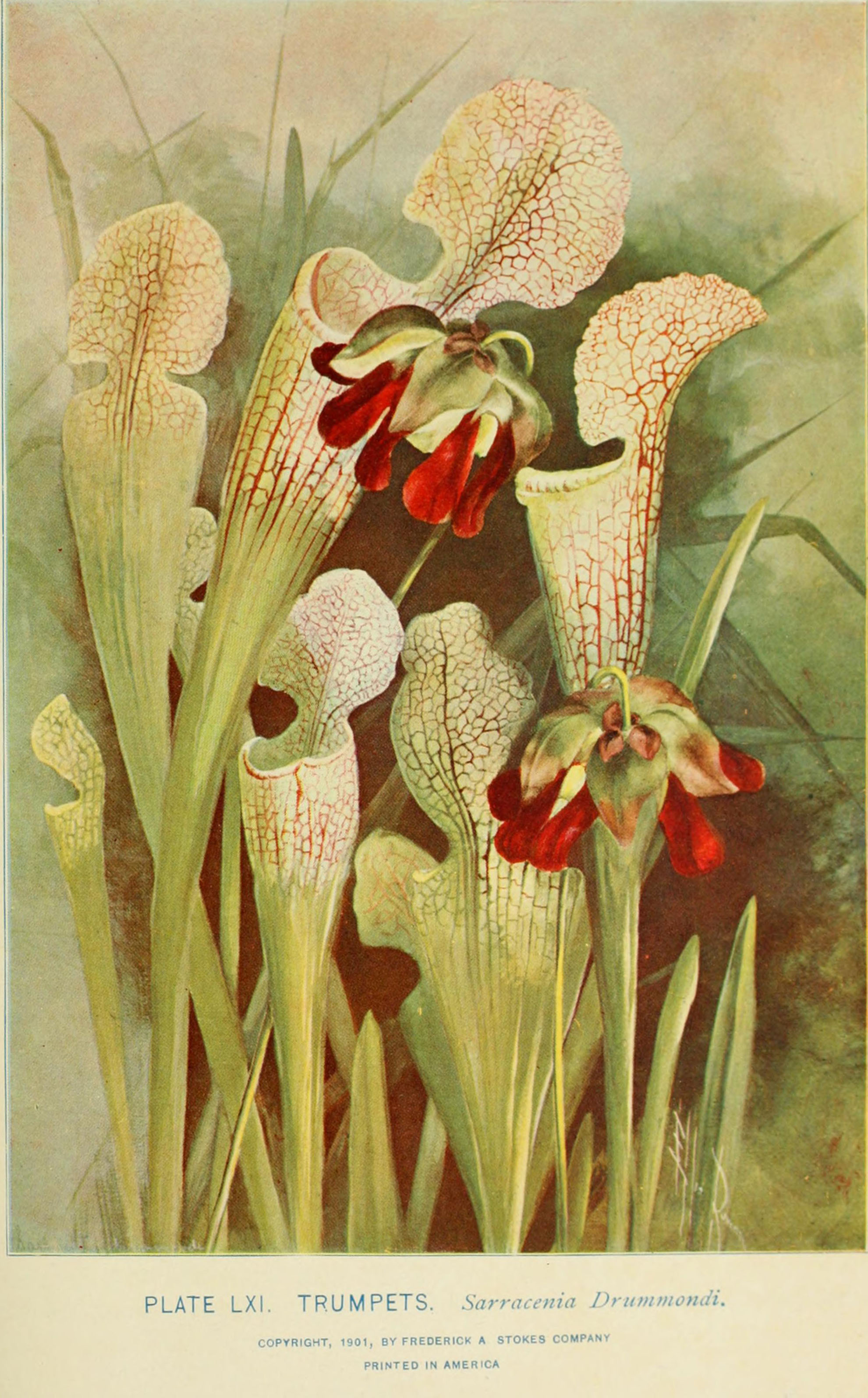
“Trumpets. Sarracenia Drummondi.” Lounsberry and Rowan. Southern wild flowers and trees. 1901. Contributed in BHL by NCSU Libraries.
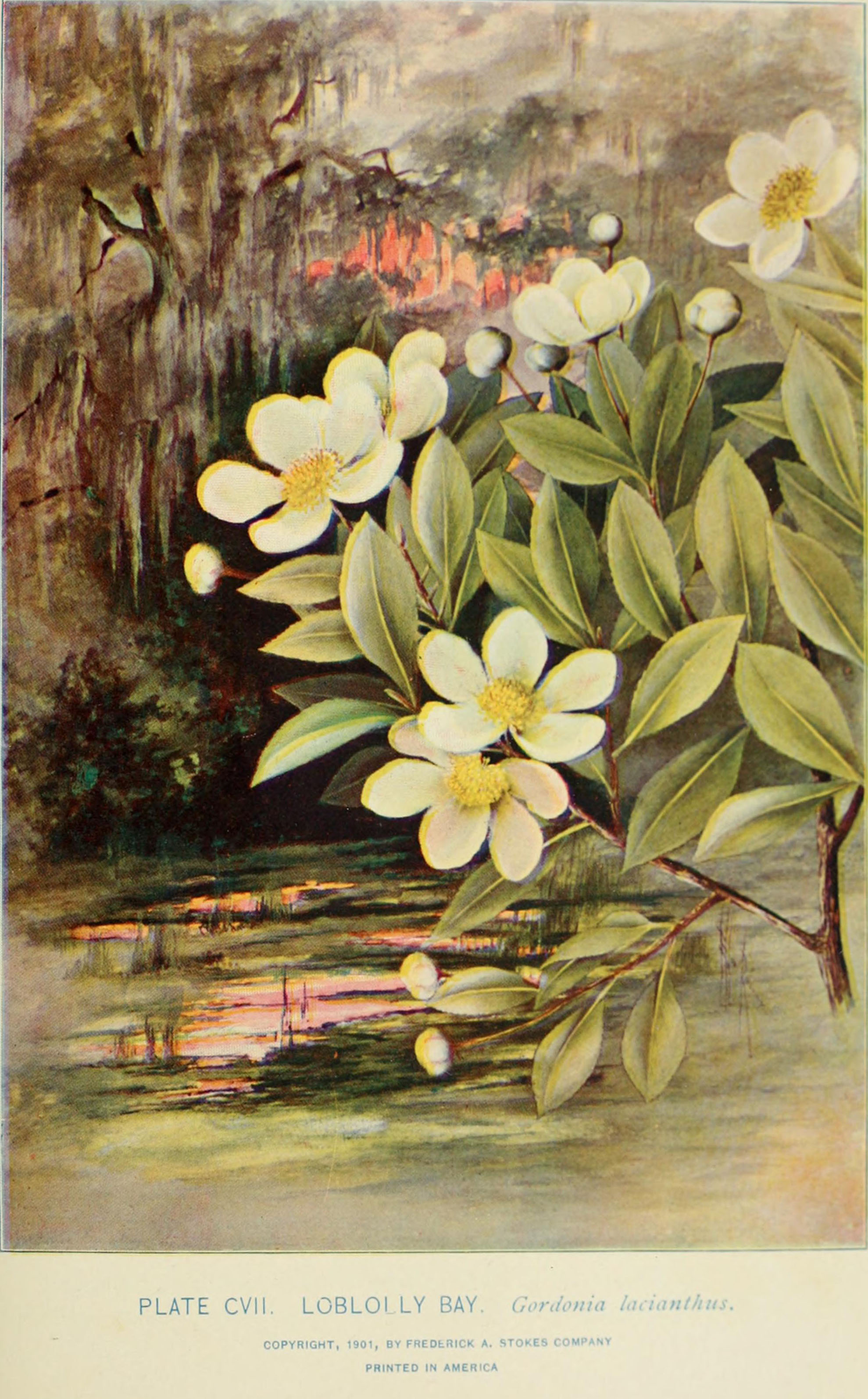
“Loblolly Bay. Gordonia lacianthus.” Lounsberry and Rowan. Southern wild flowers and trees. 1901. Contributed in BHL by NCSU Libraries.
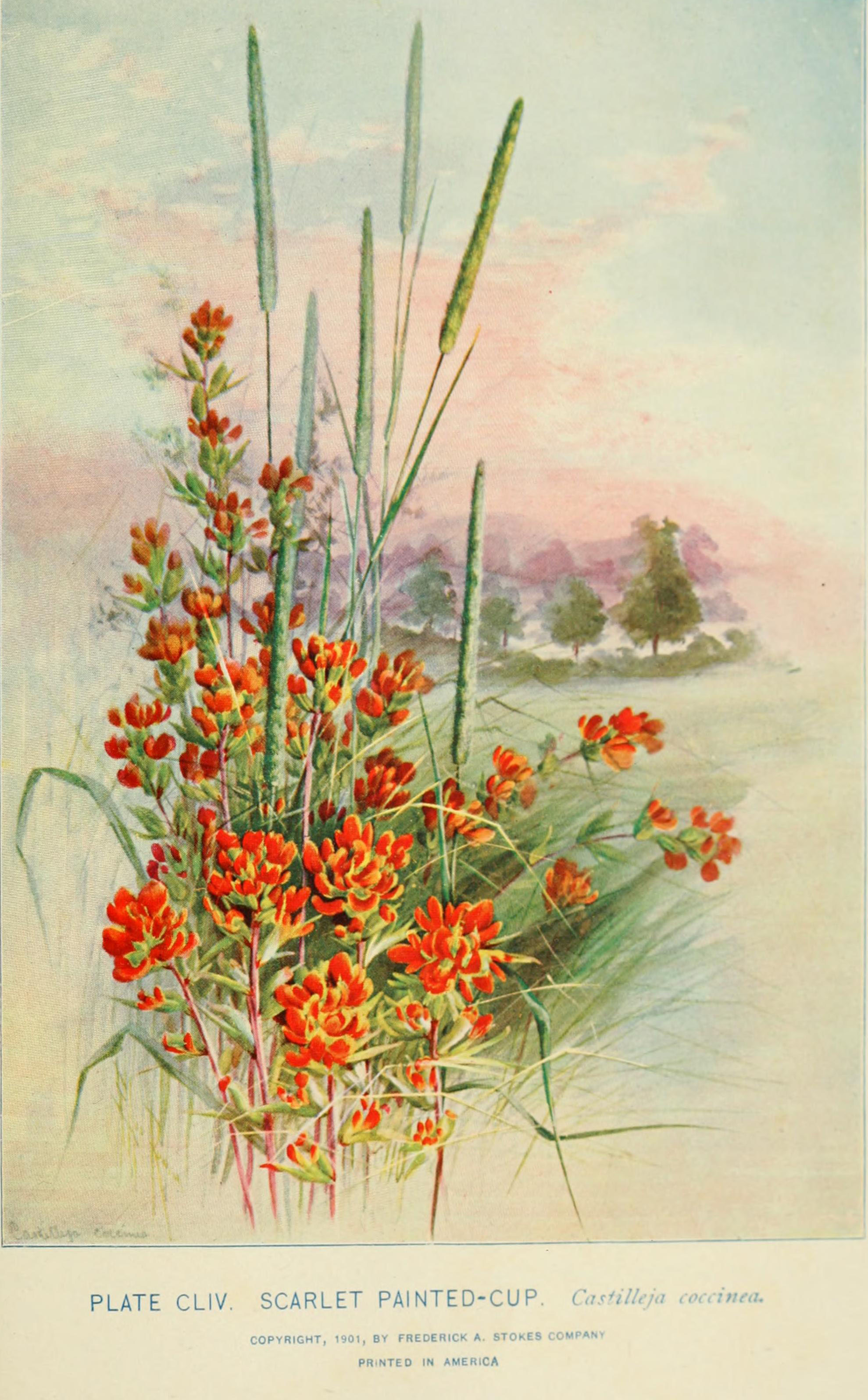
“Scarlet painted-cup. Castilleja coccinea.” Lounsberry and Rowan. Southern wild flowers and trees. 1901. Contributed in BHL by NCSU Libraries.

Biographical details on Alice Lounsberry (1873-1929) are more sparse. She was a New Yorker, and would have been about twenty-three when she proposed her vision of a collaborative project with Rowan, who by then was an internationally acclaimed painter. They spent at least two years traveling together in the U.S. to research their botanical guides.

Lounsberry shares some of that process in the preface to Southern Wildflowers and Trees,

To learn something of the history, the folk-lore and the uses of southern plants and to see rare ones growing in their natural surroundings, Mrs. Rowan and I travelled in many parts of the south, exercising always our best blandishments to get the people of the section to talk with us. Through the mountainous region we drove from cabin to cabin, and nowhere could we have met with greater kindness and hospitality. At the present time, however, there seems to be little country-lore concerning numbers of southern plants. In years to come, when they are better known, more tales of wonder will, no doubt, be woven about them. But for variety and beautiful, luxuriant growth the southern field is perhaps unrivalled. (Lounsberry and Rowan, Southern wild flowers and trees, pp. ix-x).

Lounsberry credits the Biltmore Herbarium in North Carolina as an essential resource.
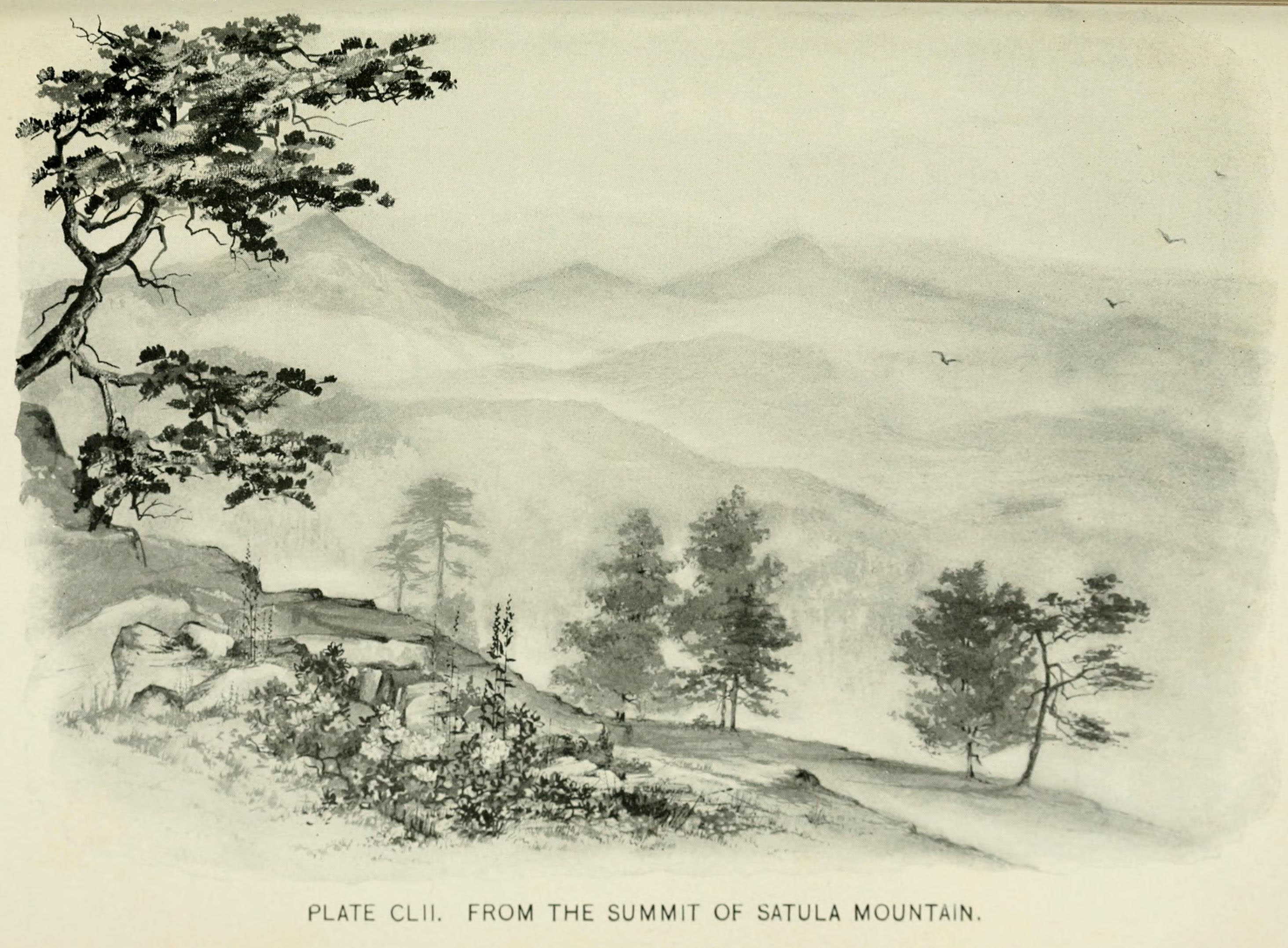
“From the summit of Satula Mountain.” Lounsberry and Rowan. Southern wild flowers and trees. 1901. Contributed in BHL by NCSU Libraries.

Southern wild flowers and trees shares snapshots of the pair’s travels with a scattering of landscape paintings and descriptive vignettes. The above image (“From the summit of Satula Mountain”) pairs with the caption:

At the approach of twilight we stood on the top-most rock of Satula Mountain about which, as a great unbroken ring, row after row, arise the mountains; for so is this peak encircled by the great Appalachian system. To our view the most distant ones appeared as though blending with the sky, while those nearer became more clear until was reached the green verdure at our feet. Nor were these mountains simply an undulatory line. Ruggedly and individually formed, each peak had withal a look humane and friendly. Between the rocks were fresh flowers, and higher than all else a pine, stunted and forlorn, raised its ungainly branches. (Lounsberry and Rowan, Southern wild flowers and trees.)

On her own, Lounsberry wrote and published other books including:

The wild flower book for young people, 1906. New York, F. A. Stokes company. Digitized in BHL by Cornell University Library.

The garden book for young people, 1908. New York, F. A. Stokes company. Digitized in BHL by Smithsonian Libraries.

Gardens near the sea; the making and care of gardens on or near the coast with reference also to lawns and grounds and to trees and shrubbery, 1910. New York, Frederick A. Stokes company. Digitized in BHL by Cornell University Library.

References

“Alice Lounsberry.” Accessed: https://upclosed.com/people/alice-lounsberry/

“Ellis Rowan: Plant Hunter.” Wilson, Sally. Accessed: https://theplanthunter.com.au/culture/ellis-rowan-plant-hunter/

“The Flower Hunter Ellis Rowan.” National Library of Australia. Accessed: http://pandora.nla.gov.au/pan/44384/20040920-0000/www.nla.gov.au/exhibitions/ellisrowan/home.html
March 15, 2019by Joel Richard
Blog Reel, Featured Books

Exploring the First American Silva

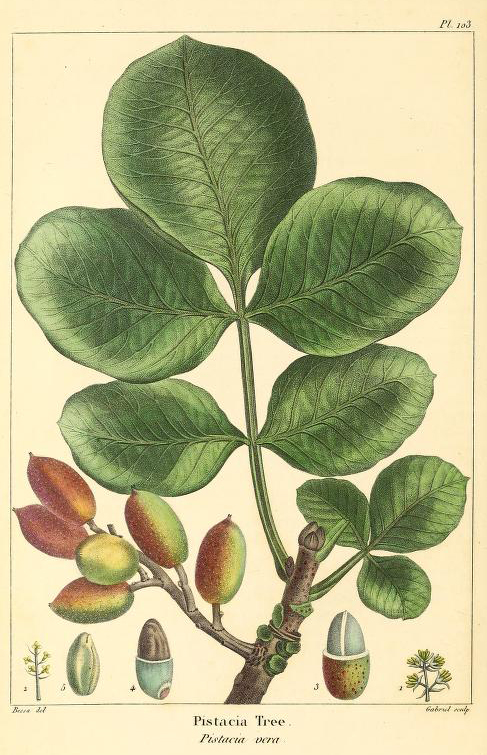
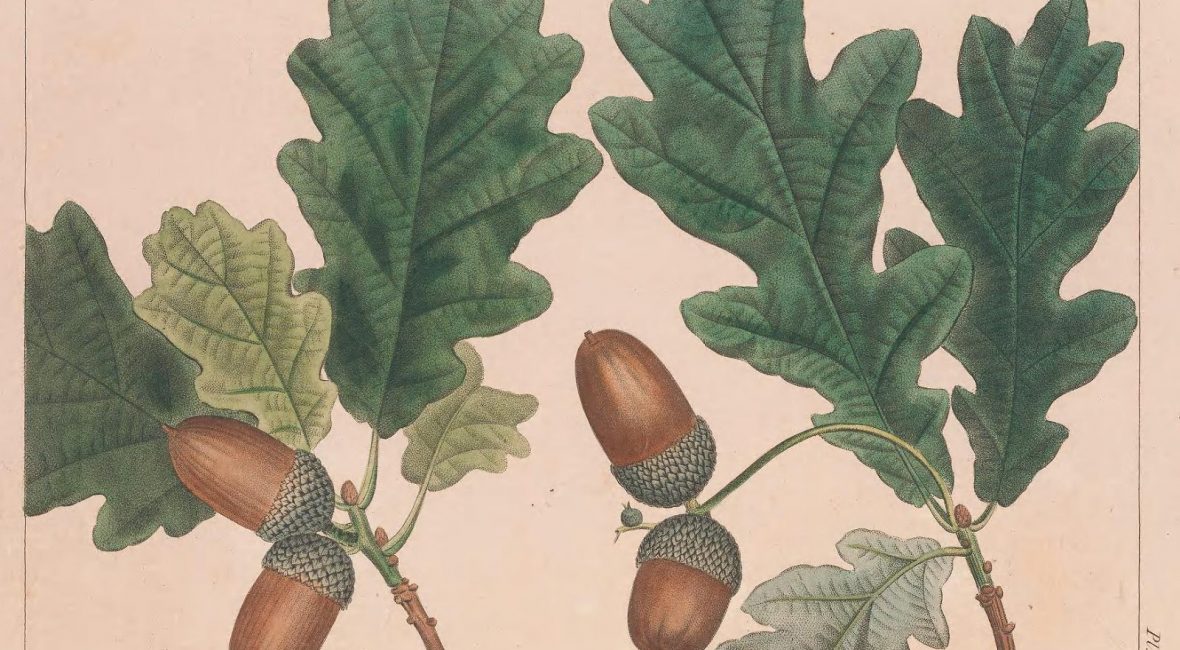
Michaux, François-André. The North American Sylva. v. 1 (1853). Digitized by Smithsonian Libraries. http://s.si.edu/2BeA2nl.

The North American Sylva is a beautiful scientifically and historically-significant work. Authored by François-André Michaux, it is the first American silva – a descriptive flora of forest trees. Published originally in French in 1810, the first English version appeared in 1817, and it was further enhanced with supplementary volumes by Thomas Nuttall in the 1840s.

As an important work in the history of North American botany, The North American Sylva is featured in the National Museum of American History’s Cultivating America’s Gardens exhibit, co-curated by Smithsonian Libraries, Smithsonian Gardens, and the Archives of American Gardens. On display in the exhibit is an 1853 edition of the work, published by Robert P. Smith of Philadelphia. The Smithsonian Libraries has digitized this copy and made it freely available in the Biodiversity Heritage Library.

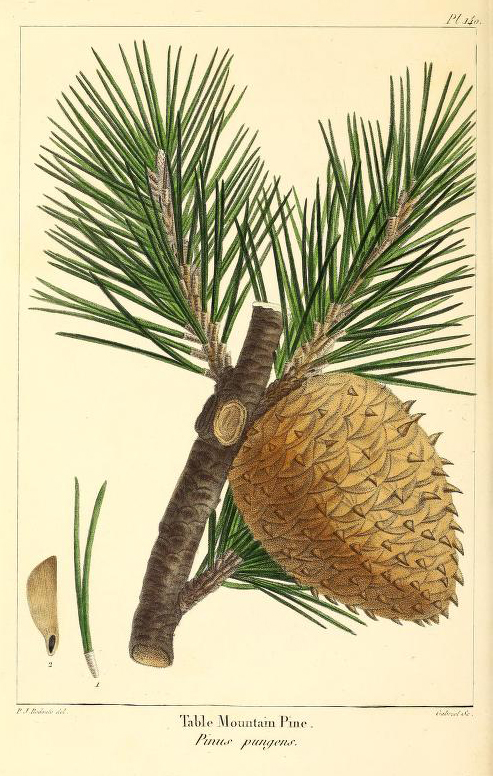
Michaux, François-André. The North American Sylva. v. 1 (1853). Digitized by Smithsonian Libraries. http://s.si.edu/2AmCYOY.

The Smithsonian Libraries’ copy is just one of many editions and printings of this title, which has a rather long and complicated history.

François-André Michaux was the son of André Michaux, also a famed botanist and explorer. In 1785, as the Royal Botanist to Louis XVI, André received a royal commission to travel to America to collect unique plants and identify useful tree species. François-André, then fifteen years old, accompanied his father, and together, the father-son team explored eastern North America, establishing two nursery gardens in New Jersey and South Carolina, and collected specimens, shipping plants and seeds back to France.

Michaux, François-André. The North American Sylva. v. 1 (1853). Digitized by Smithsonian Libraries. http://s.si.edu/2BcTfpH.

In 1789/90, François-André returned to France, and six years later, his father did the same. The duo then prepared André’s Histoire des chênes de l’Amérique (1801) on North American oaks. This work would later serve as the basis for The North American Sylva. François-André would return twice again to North America, in 1801-03 and again in 1806-08, where he continued to develop his passion for trees and forestry.

Eventually, François-André would channel this passion into the production of a magnificent work on the trees of eastern North America: Histoire des Arbres Forestiers de l’Amerique Septentrionale. While his father André would not live to see this publication, having died in 1802 during a scientific voyage bound for Australia, his influence on his son’s botanical career was profound.

Michaux, François-André. The North American Sylva. v. 2 (1853). Digitized by Smithsonian Libraries. http://s.si.edu/2j4RbbW.

Originally published in Paris in 1810 and consisting of 3 French volumes, Histoire des Arbres Forestiers de l’Amerique Septentrionale was later translated into English by Michaux. Colleagues at the American Philosophical Society helped arrange the publication of the first translated edition, which was printed by C. d’Hautel in Paris in 1817 under the title The North American Sylva and sold by Thomas Dobson of Philadelphia. The translation was expected to be published in six half-volumes, but later printings included a seventh half volume, six additional plates, and a revised English text by Augustus L. Hillhouse.

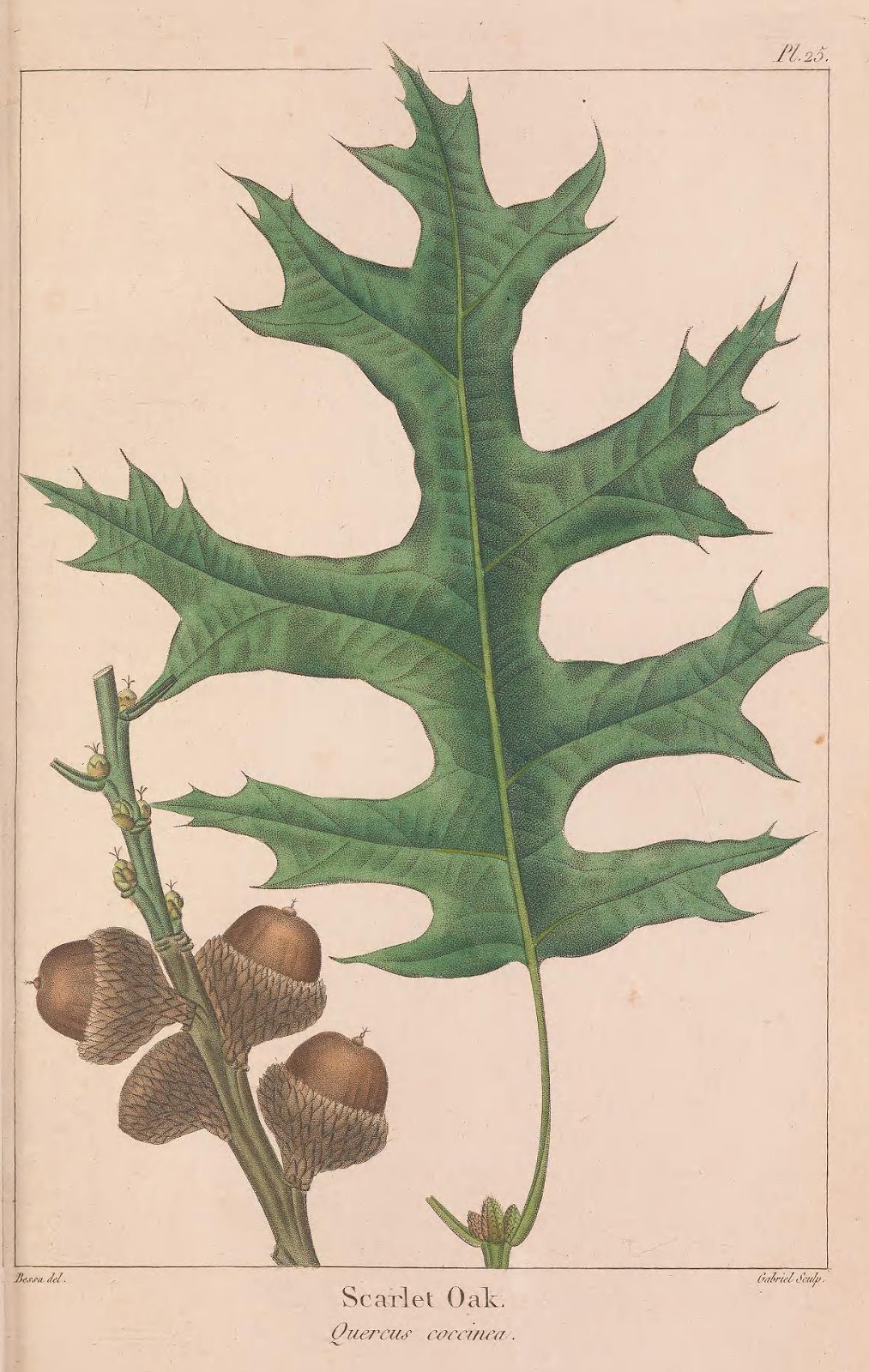
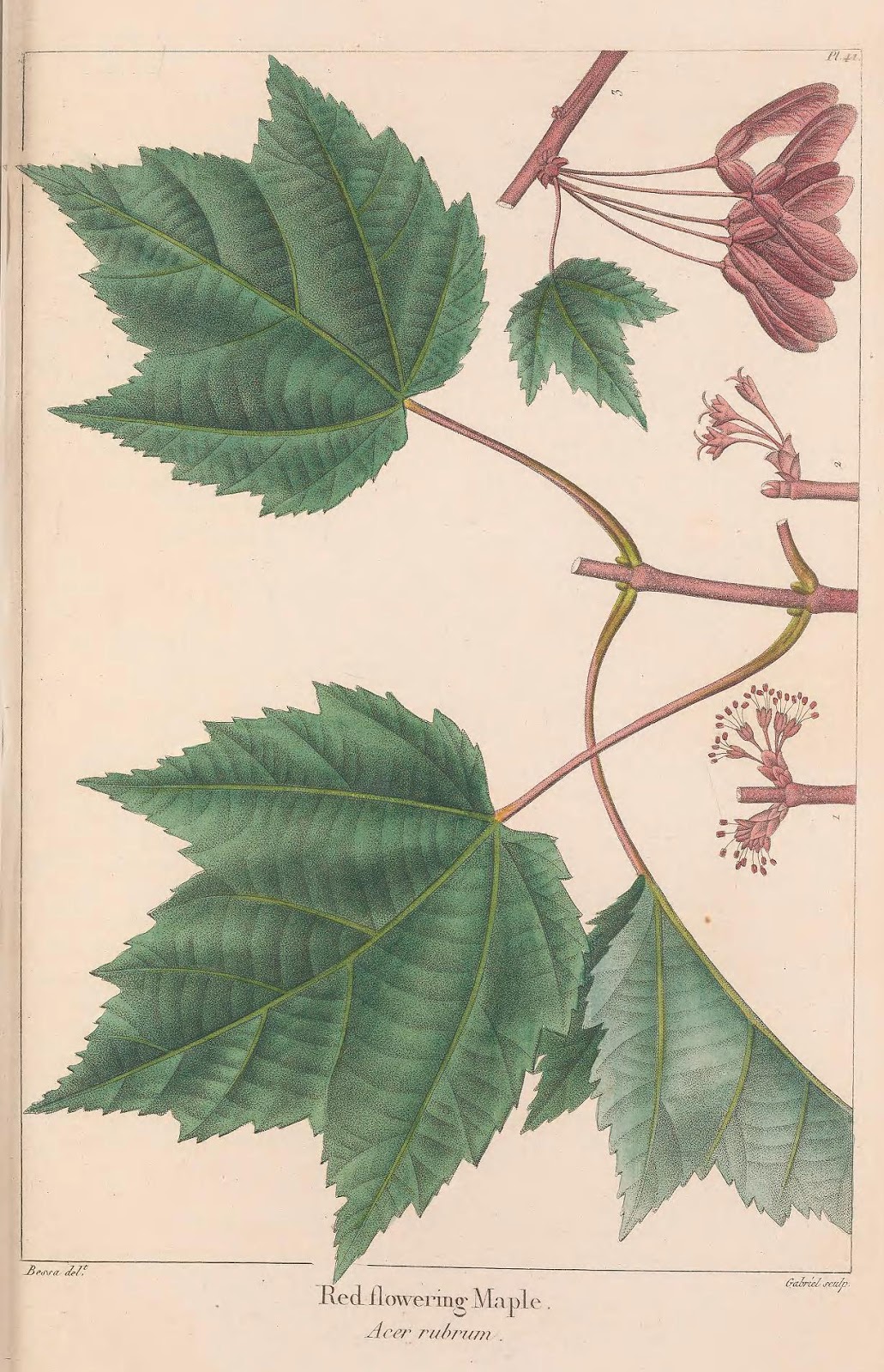
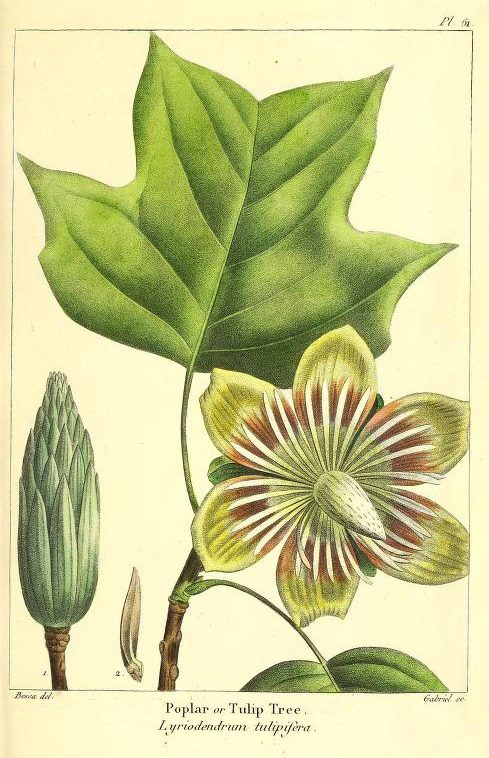
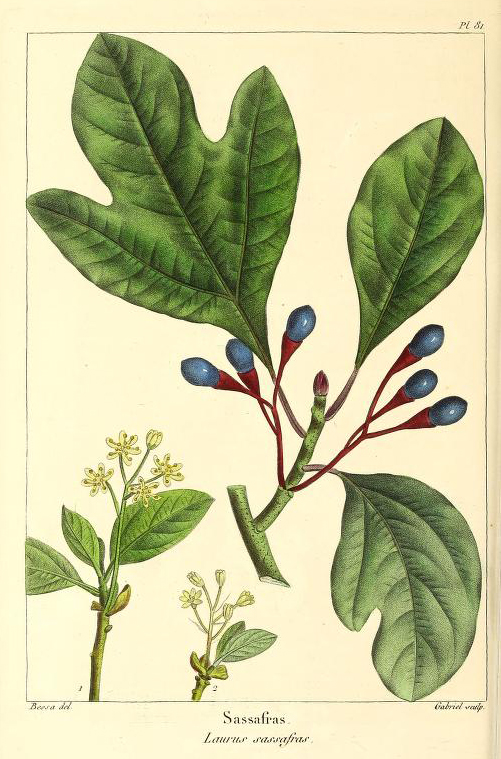
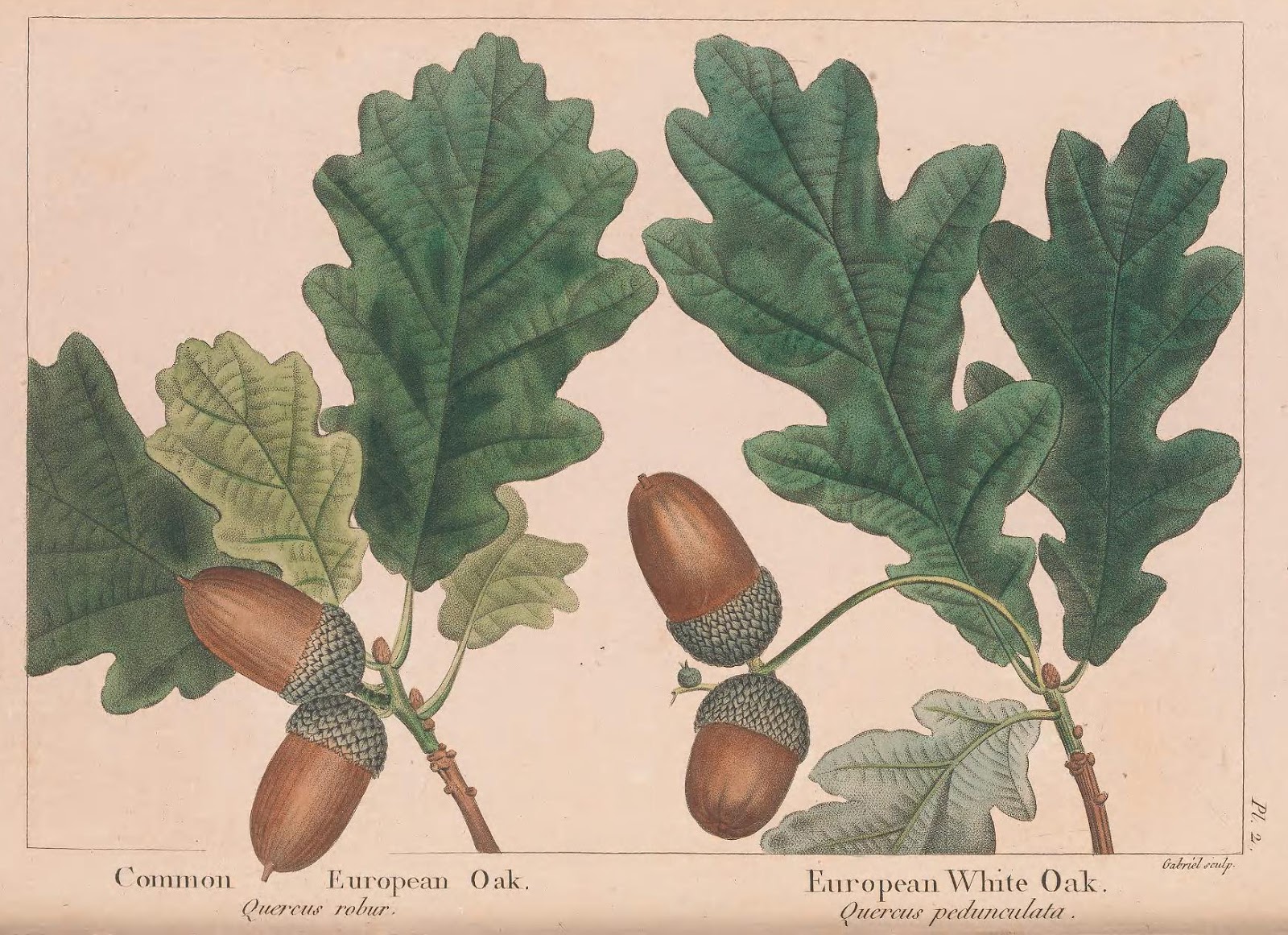
The work was beautifully illustrated with 156 copper plate engravings executed from drawings by Pierre-Joseph Redouté (one of the most-celebrated flower painters in the whole history of botanical art), Pancrace Bessa, Adèle Riché, and Henri-Joseph and Antoine-Ferdinand Redouté. Each treated species is accompanied by an illustration printed in color and finished by hand depicting the tree’s branch, leaves, flowers, and fruit.

Michaux, François-André. The North American Sylva. v. 2 (1853). Digitized by Smithsonian Libraries. http://s.si.edu/2BdK4Fk.

In 1841, the first truly American edition of The North American Sylva was printed in New Harmony, Indiana by expert printer William Amphlett using the original engraved copper plates, which had been secured by philanthropist William Maclure during a trip to Paris with the intention of producing an American edition of Michaux’s work. The 1841 New Harmony edition was a reprint of an 1819 Paris edition which was the first to include Hillhouse’s revised English translation.

The New Harmony edition was also the first whose title page mentioned three supplemental volumes by Thomas Nuttall describing trees from the “Trans-Mississippi” region, the Rocky Mountains, and the western United States. Nuttall was an English naturalist who arrived in North America in 1808 and participated in a series of collecting trips throughout the United States under the auspices of some of America’s most pre-eminent botanists. This, together with the publication of his Genera of North American Plants in 1818, secured his reputation as America’s leading botanist.

Michaux, François-André. The North American Sylva. v. 3 (1853). Digitized by Smithsonian Libraries. http://s.si.edu/2k7s1FW.

Nuttall began work on a revised version of The North American Sylva in 1839. Over a seven-year period, he produced his three-volume supplement printed in Philadelphia, with volume one, parts one and two published by Judah Dobson in 1842 and 1843, volume two published by T. Ward in 1846, and volume three published by Smith and Wistar in 1849.

The volumes included 120 additional plates prepared and executed under Nuttall’s supervision by E.D. Long, G. Worley, G. West, J.T. French, and J.B. Butler based on drawings by several artists, including William Gambel. The original drawings are in the Archives of the Arnold Arboretum (Cambridge) at the Botany Libraries of Harvard University.

Michaux, François-André. The North American Sylva. v. 3 (1853). Digitized by Smithsonian Libraries. http://s.si.edu/2zXQFzt.

Following Maclure’s death, the original copper plates for The North American Sylva were acquired by Samuel George Morton of Philadelphia, after which another American edition was produced, augmented with notes by horticulturalist John Jay Smith, who served as editor of The Horticulturist from 1855 to 1860 and The American Gardener’s Calendar in 1857. The Smithsonian’s 1853 copy in BHL includes Smith’s notes.

More editions and printings followed, amounting to a total of more than a dozen known editions in multiple printings and formats. The long-running publication of the work is a testament to its impact and importance. Indeed, The North American Sylva served as a standard reference for North American woody plants throughout 19th century.

Thanks to the Smithsonian Libraries and many other BHL partners and contributors, you can freely explore several different editions and printings of The North American Sylva in the Biodiversity Heritage Library:

  • First French edition (1810) (Digitized by The New York Botanical Garden)
  • 1819 Paris edition with English translation by Hillhouse (Digitized by University of Pittsburgh Library System)
  • Nuttall’s supplements, 1842-49 (Digitized by The New York Botanical Garden)
  • 1853 edition (Digitized by Smithsonian Libraries)

If you’re in the Washington, D.C. area and would like to see a copy of The North American Sylva in person, be sure to visit the Cultivating America’s Gardens exhibit, on display at the National Museum of American History through August 2018.

Sources

Fraser, Susan M., Sally A Leone, Gregory Long, Marta McDowell, and David Sibley. 2017. The Trees of North America. New York: Abbeville Press.

Reviewed Work: The North American Sylva. 1858. The North American Review, vol. 86, No. 179, pp. 359-368).

March 29, 2018by michelle.underhill
Blog Reel, Featured Books

We All Remember the Hessian Mercenaries….

View Full Size Image
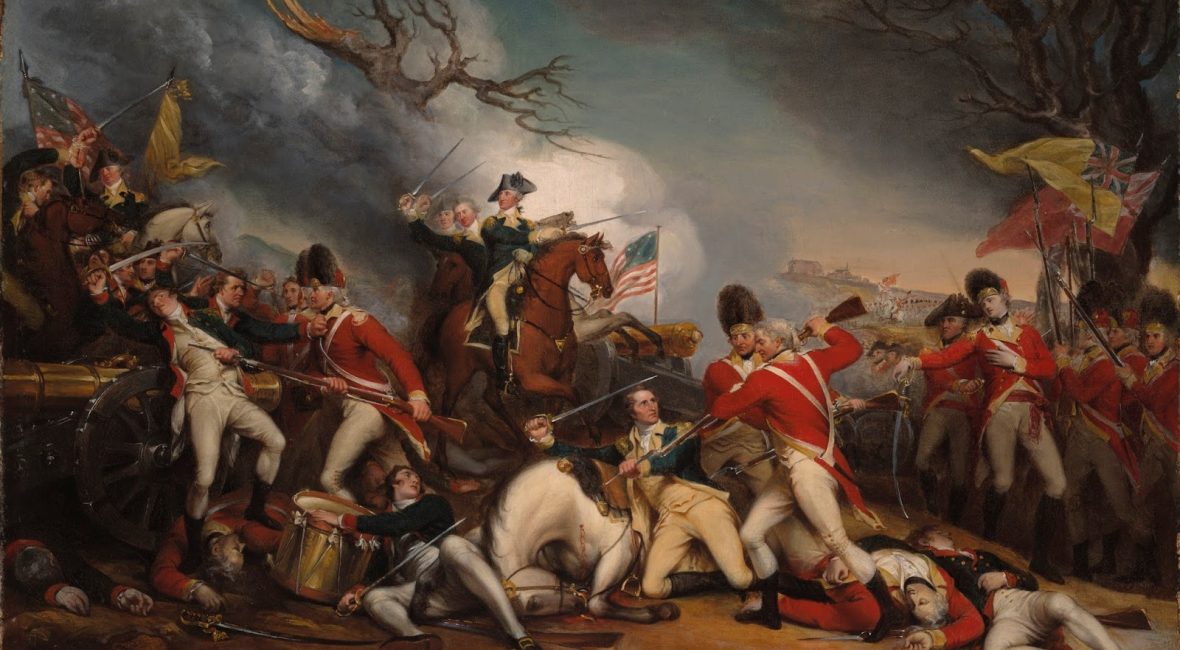
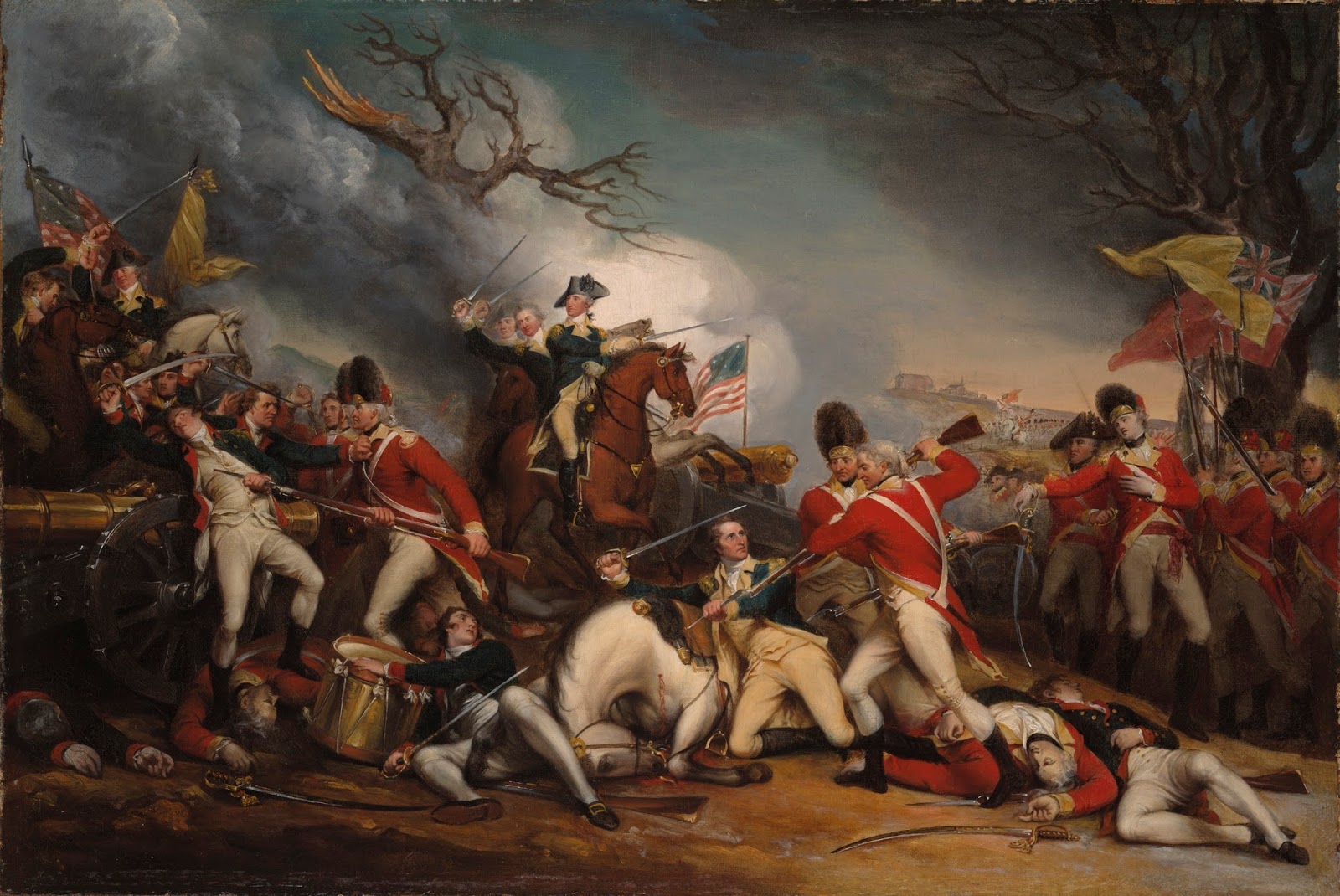
The Death of General Mercer at the Battle of Princeton, January 3, 1777. By John Trumbull. Depicting the death of the American General Hugh Mercer at the Battle of Princeton on January 3, 1777 during the American Revolutionary War. Source: Wikimedia Commons.

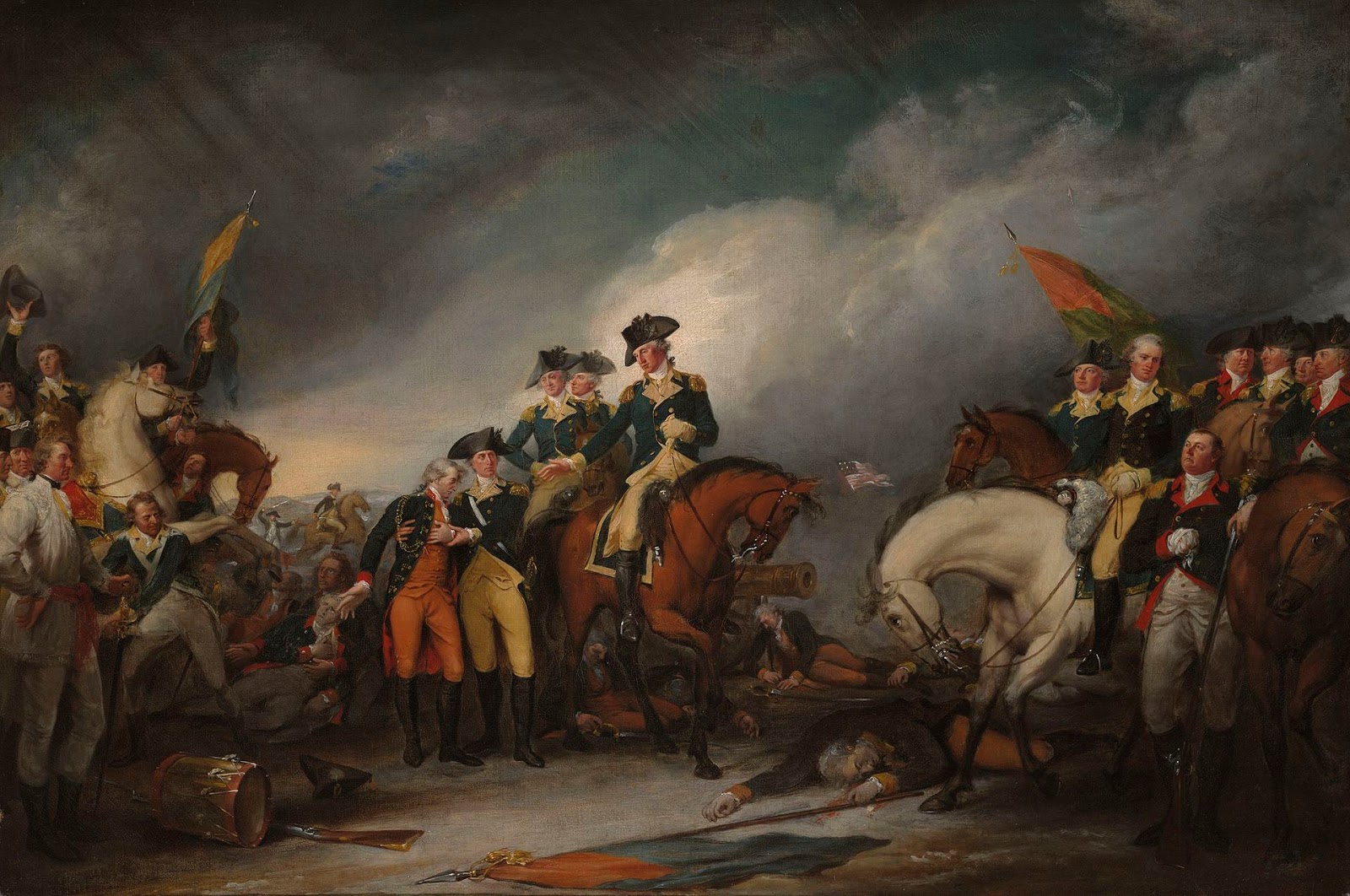
We all remember the Hessian mercenaries, those drunken, bayonet-wielding louts hired by George the Third to put down his rebellious American colonies. Every American schoolchild learns about these monsters, and how they suffered their come-uppance in Trenton in 1776, when their Christmas debauch came to an abrupt and bloody end in a battle their rum-blurred eyes never even saw coming.

View Full Size Image
The Capture of the Hessians at Trenton, December 26, 1776. By John Trumbull. Depicting the capture of the Hessian soldiers at the Battle of Trenton on the morning of December 26, 1776 during the American Revolutionary War. Source: Wikimedia Commons.

For over 200 years, we’ve painted the German soldiers in America with a mighty broad brush. I’m sure that there were barbarians among them, but there were also educated men who spent their time on this side of the Atlantic studying this exotic continent and its inhabitants—when they weren’t drinking and fighting and skewering patriot children, that is.

View Full Size Image
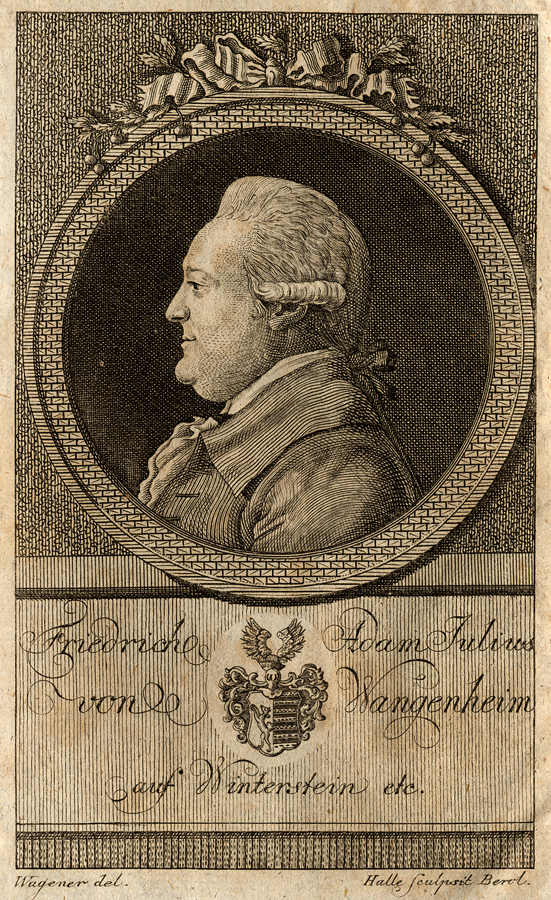
Portrait of Baron Friedrich Adam Julius von Wangenheim. Frontispiece of volume 39 of the Öconomische Enzyklopädie of 1787. Source: http://www.kruenitz1.uni-trier.de/.

The botanists among these scholarly soldiers are the best known today. Baron Friedrich Adam Julius von Wangenheim (1747/1749-1800), educated in forestry science in his native Saxony, arrived in New York in June 1777, and would eventually see combat on the British side at Brandywine and Charleston. When he wasn’t in battle, though, he wrote that:

“without neglecting my official duties, I spent every leisure hour in acquiring both a theoretical and a practical knowledge of the woody plants growing in that temperate region of North America.”

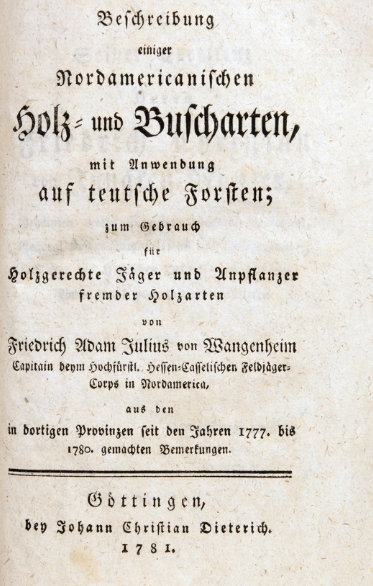
In May 1780, stationed in northern Manhattan, he completed his first book, A Description of Certain North American Trees and Shrubs, which appeared in print in 1781.

View Full Size Image
Title page, A Description of Certain North American Trees and Shrubs by Baron Friedrich Adam Julius von Wangenheim.

On returning to Europe in 1784, von Wangenheim expanded that work, which had covered 72 species, into a comprehensive treatise on the woody plants of North America and the possibility of transplanting them into German forests for timber and fuel.

View Full Size Image
Title page, Beytrag zur teutschen holzgerechten Forstwissenschaft, die Anpflanzung Nordamericanischer Holzarten mit Anwendung auf teutsche Forste. By Baron Friedrich Adam Julius von Wangenheim.

These publications and a mass of articles and essays made von Wangenheim a name and earned him an appointment as chief forester of East Prussia. There he made his most important contribution to zoology, a thorough study of the European elk in Lithuania.

View Full Size Image
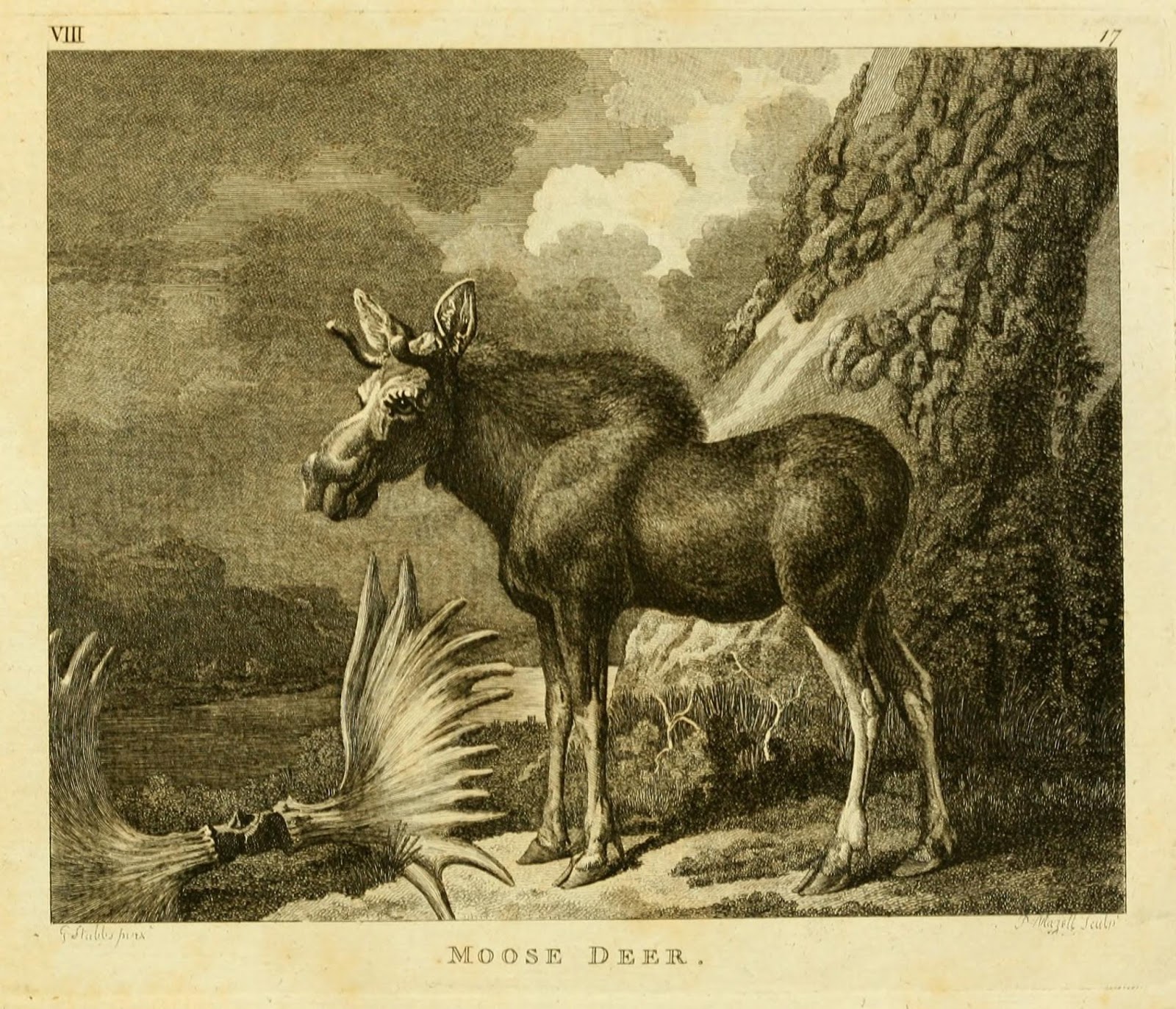
The “moose deer” or European elk (Cervus alces). From Pennant, Thomas. Arctic zoology. v. 1 (1874). http://www.biodiversitylibrary.org/page/29568042. Digitized by Smithsonian Libraries.

Von Wangenheim brought his American experience to bear in his account, noting in his practical way that the species is called the “moose deer” in the New World, where native Americans use its skin for clothing, gloves, moccasins, blankets, and tents.

View Full Size Image
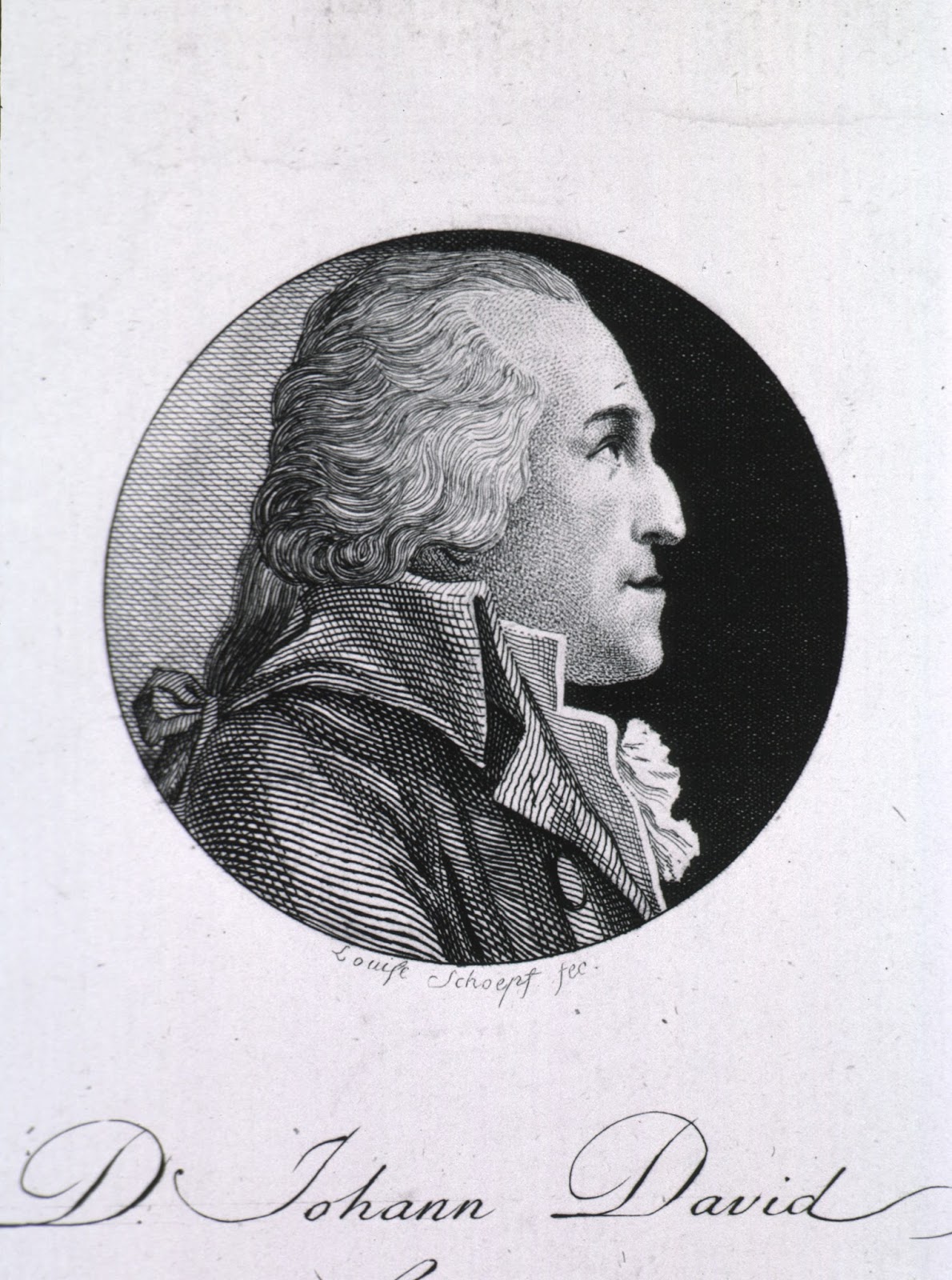
Portrait of Johann David Schoepf. Source: U.S. National Library of Medicine. https://collections.nlm.nih.gov/catalog/nlm:nlmuid-101428527-img.

More ambitious still, and less intensely focused on the economic use of the plants and animals around him, was Johann David Schoepf (1752-1800), field surgeon to one of the most notoriously bloodthirsty of the German regiments. Like von Wangenheim, Schoepf arrived in New York in June 1777. Once the war was over, inspired by the famous tours of Bartram and Catesby, Schoepf spent a year traveling west to Kentucky and south eventually to the Bahamas. Trained, like so many physicians of his day, in botany, Schoepf was naturally most interested in American plants and their medical uses; among the professional colleagues he most eagerly sought out were William Bartram and Henry Melchior Mühlenberg, but he also collected plant lore from native Americans, country doctors, and “old wives.”

View Full Size Image
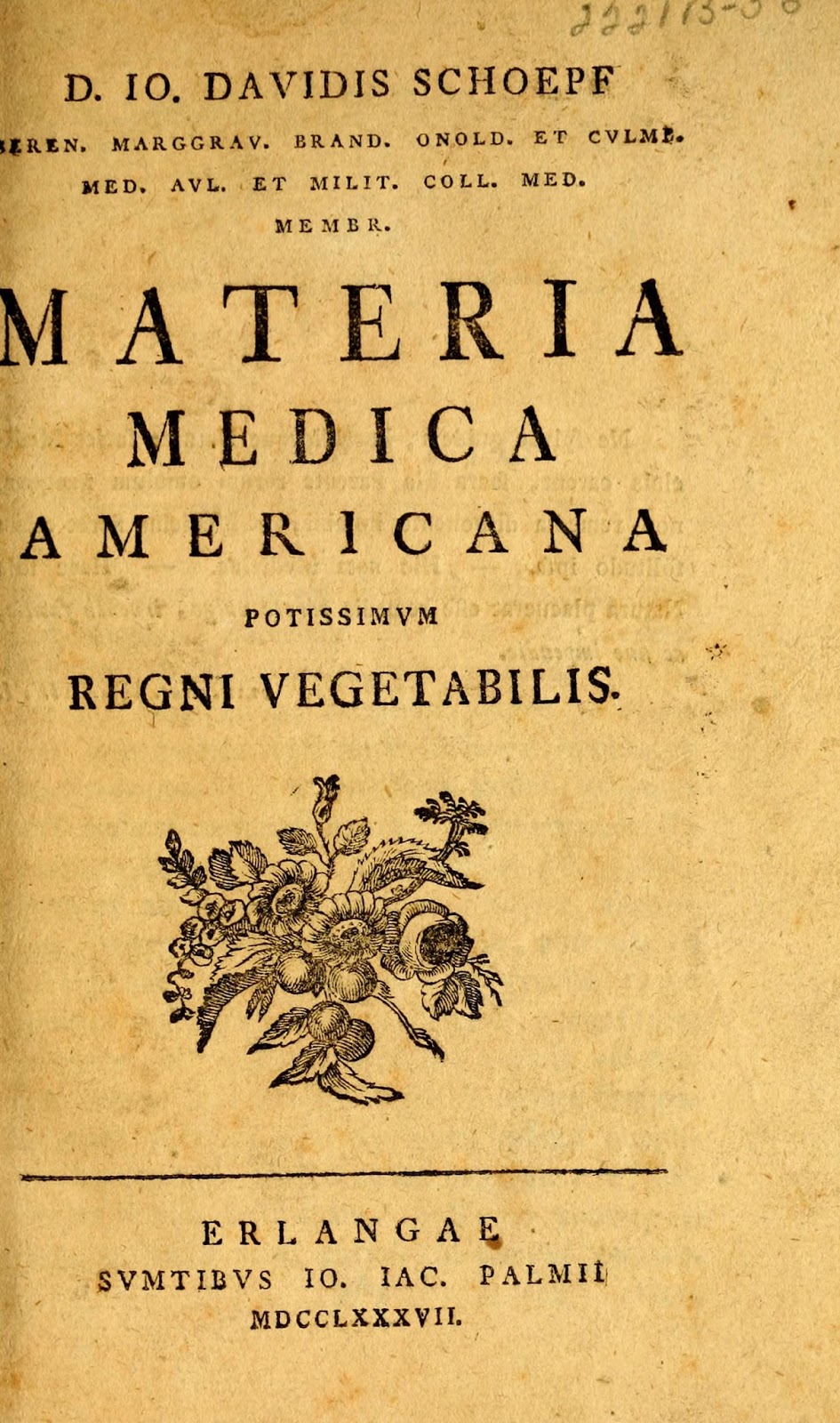
Title page of Materia medica americana potissimvm regni vegetabilis. (1787). By Johann David Schöpf. http://www.biodiversitylibrary.org/page/16502307. Digitized by University of Pittsburgh Library System .

Schoepf published his observations in 1787, in a comprehensive manual of the New World’s medicinal resources. Schoepf lists more than 350 plants, fungi, and lichens used in medicine, and ends his compendium with remarks on remedies derived from animal and mineral materials, ranging from human fat (an “obsolete, superstitious” practice) and dried rattlesnake flesh to amber and coal.

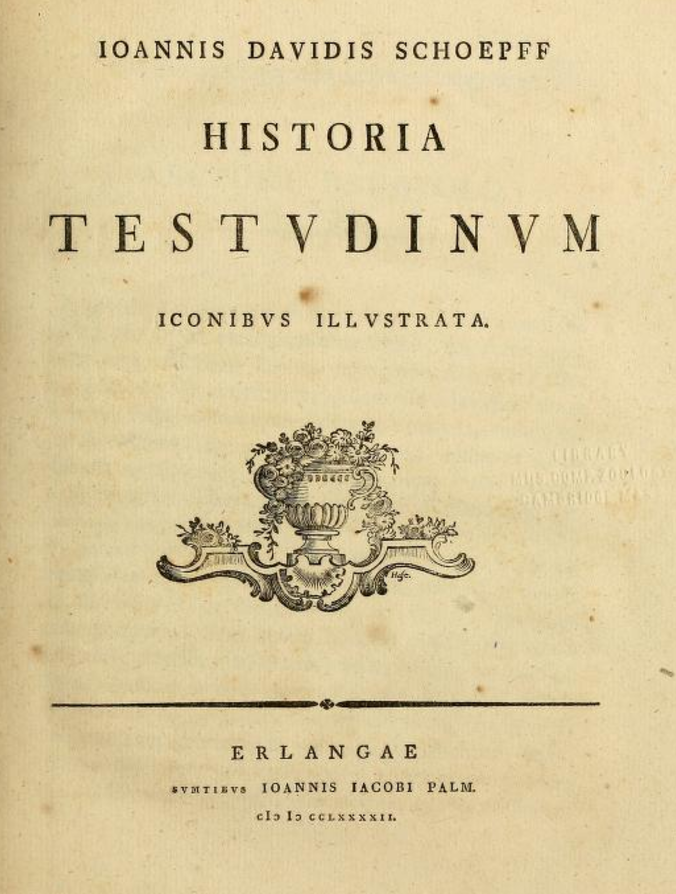
Today, Schoepf is most famous not for his pharmacopeia but for another book, the last he published before his early death in 1800. On his return to Europe in the summer of 1784, Schoepf took with him 64 live turtles, specimens that provided the basis for his Illustrated Natural History of the Turtles, published in Erlangen in 1792.

View Full Size Image
Title page of Ioannis Davidis Schoepff Historia testvdinvm iconibvs illvstrata. (1792) (“Illustrated Natural History of Turtles”). By Johann David Schöpf. http://www.biodiversitylibrary.org/page/32540981. Digitized by Harvard University, Museum of Comparative Zoology, Ernst Mayr Library.

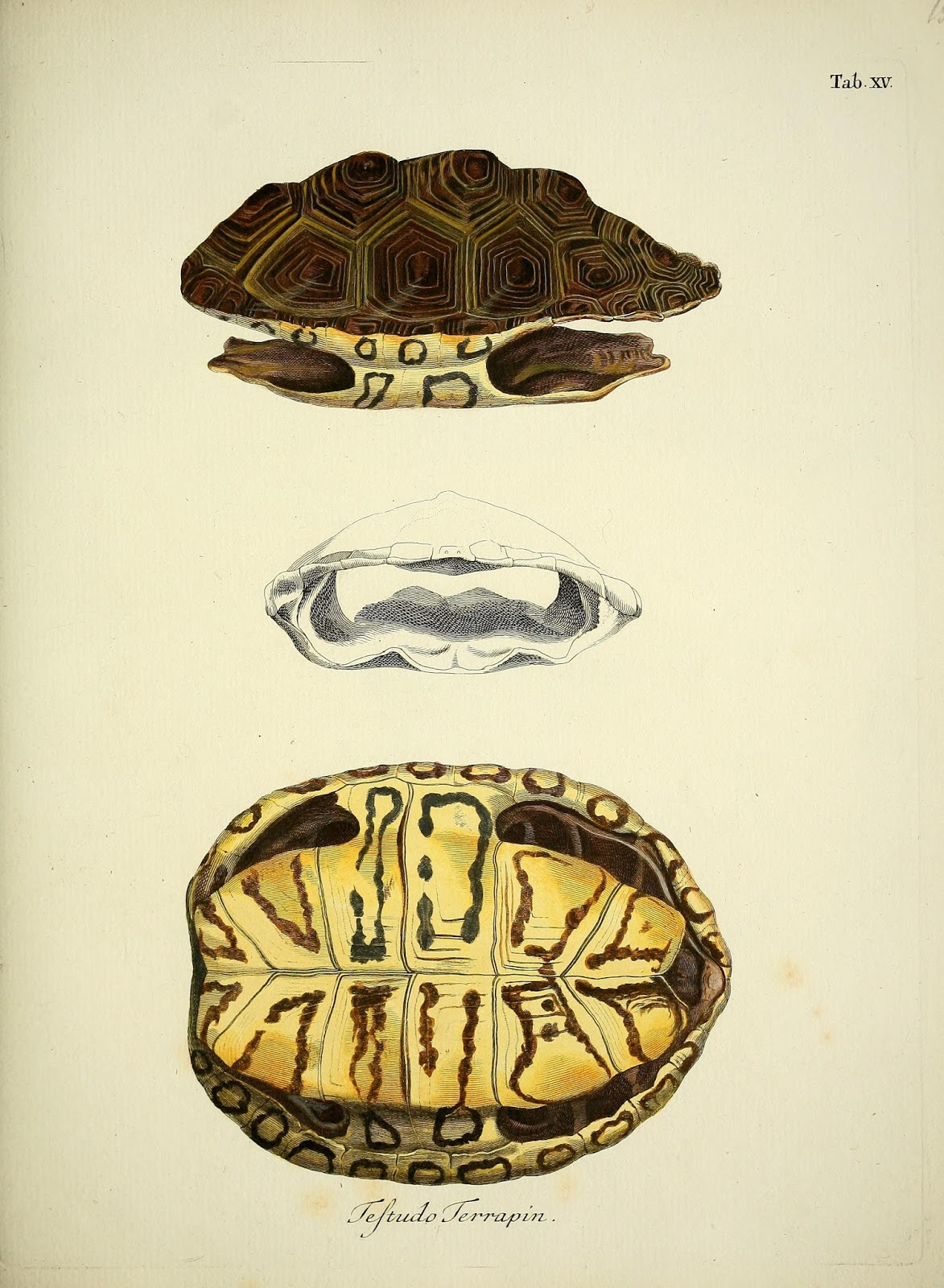
Among the species he treated there was one he named Testudo terrapin; Schoepf based his description and plate on two shells he had collected on Long Island and on two others sent him by Mühlenberg (perhaps from the market in Philadelphia).

View Full Size Image
Testudo terrapin. Naturgeschichte der Schildkröten. (1792-1801). By Johann David Schöpf. http://www.biodiversitylibrary.org/page/38925513. Digitized by Smithsonian Libraries.

This was the first scientific description of the handsome species now known as the diamondback terrapin.

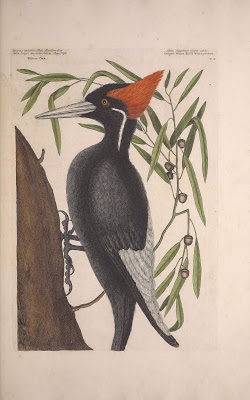
While von Wangenheim barely mentioned birds in his accounts of North American nature, Schoepf was more interested in things feathered. He found northern cardinals and blue grosbeaks in the Carolinas, and appears to have made close observations of turkey vultures, pointing out that the large, moist nostrils suggest that though “not proved, it is nevertheless likely” that they locate their aromatic prey by smell. Less credible is Schoepf’s claim that he and his companions encountered ivory-billed woodpeckers in eastern Pennsylvania.

View Full Size Image
Ivory-billed woodpecker (Campephilus principalis). Catesby, Mark. The Natural History of Carolina, Florida, and the Bahama Islands. Ed. 1, v. 1 (1729-1747). http://www.biodiversitylibrary.org/page/40753165. Digitized by Smithsonian Libraries.

The occasional misidentification aside, early American ornithology suffered a significant loss when Schoepf entrusted to Jacob Rubsamen his manuscript containing “numerous and precisely written descriptions of almost all the birds” he had seen in America. Rubsamen, a German immigrant whose Virginia gunpowder mill had been destroyed by the British at the end of the war, was to have sent those pages on to Schoepf in Charleston, but they never arrived.

One “Hessian” soldier who did make a significant contribution to American ornithology will probably remain forever anonymous.

View Full Size Image
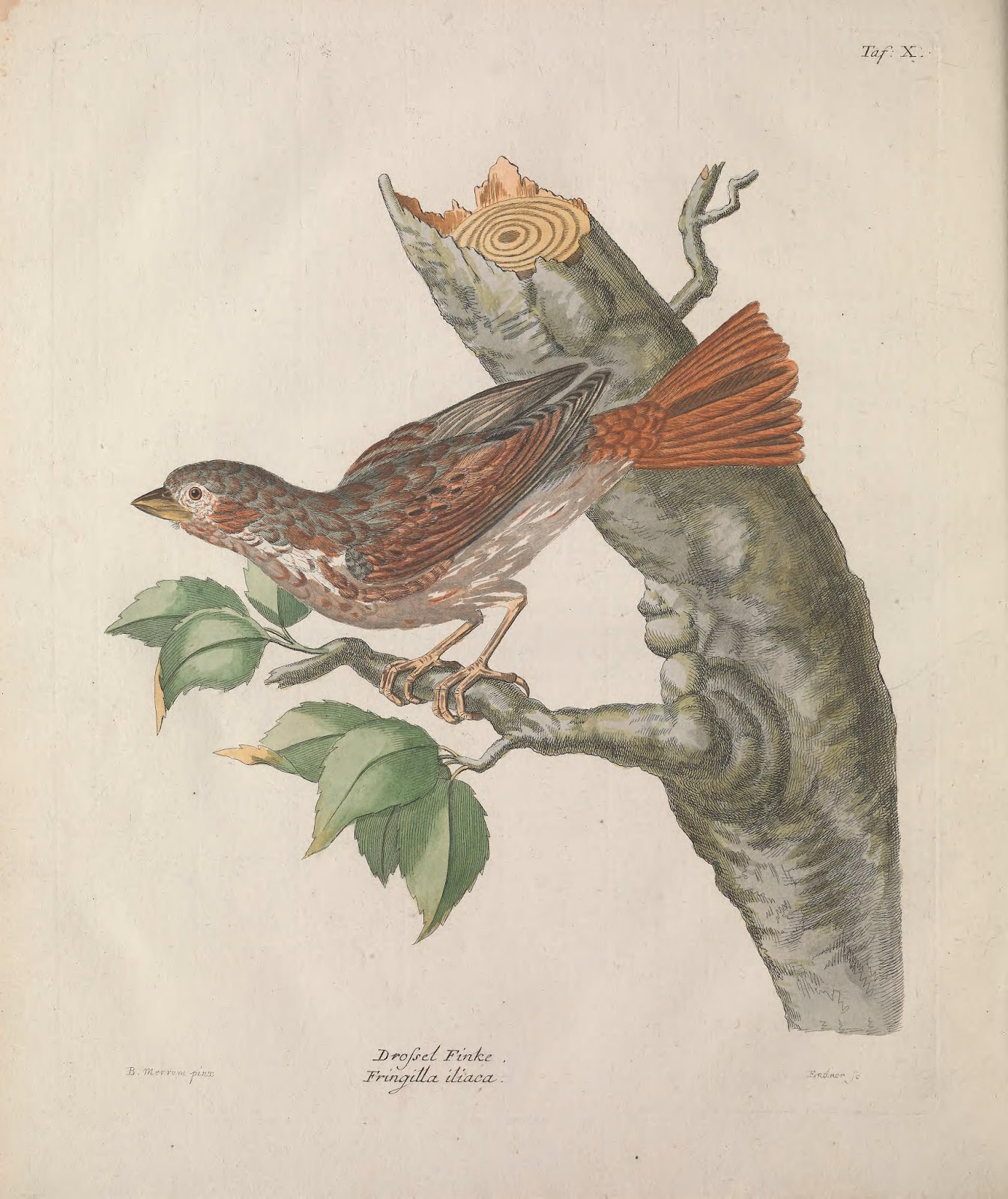
Fringilla iliaca. Avium rariorum et minus cognitarum. (1786). By Merrem, Blasius. http://www.biodiversitylibrary.org/page/46489269. Digitized by Smithsonian Libraries.

Sometime before 1786, this unknown naturalist shipped the preserved skin of a large and colorful bunting to Blasius Merrem, the first professor of zoology at the university of Marburg. Merrem recognized the specimen as the representative of a new species, which he named Fringilla iliaca for the heavy reddish chevrons marking its breast and side. Who knows how long science might have had to wait for a description of the red fox sparrow had George the Third not leaned on his teutonic cousins for help?

In February 1784, five months after the treaty ending the American Revolution was signed in Paris, the great Welsh litterateur Thomas Pennant regretted that the “fatal and humiliating hour” had not only “deprived Britain of power, strength, and glory,” but had “mortified” him into abruptly stopping work on what was to have been a new Natural History of North America. Horrified as he was at the historic turn of events, Pennant was nevertheless confident that “some native Naturalist” in the New World would complete the work that he had begun. Little did he know that some German soldiers fighting in America had been working alongside him all along.

March 31, 2017by ulib-libraryjobs
Blog Reel, Featured Books

Catesby’s Magnificent Natural History, In Three Editions

View Full Size Image
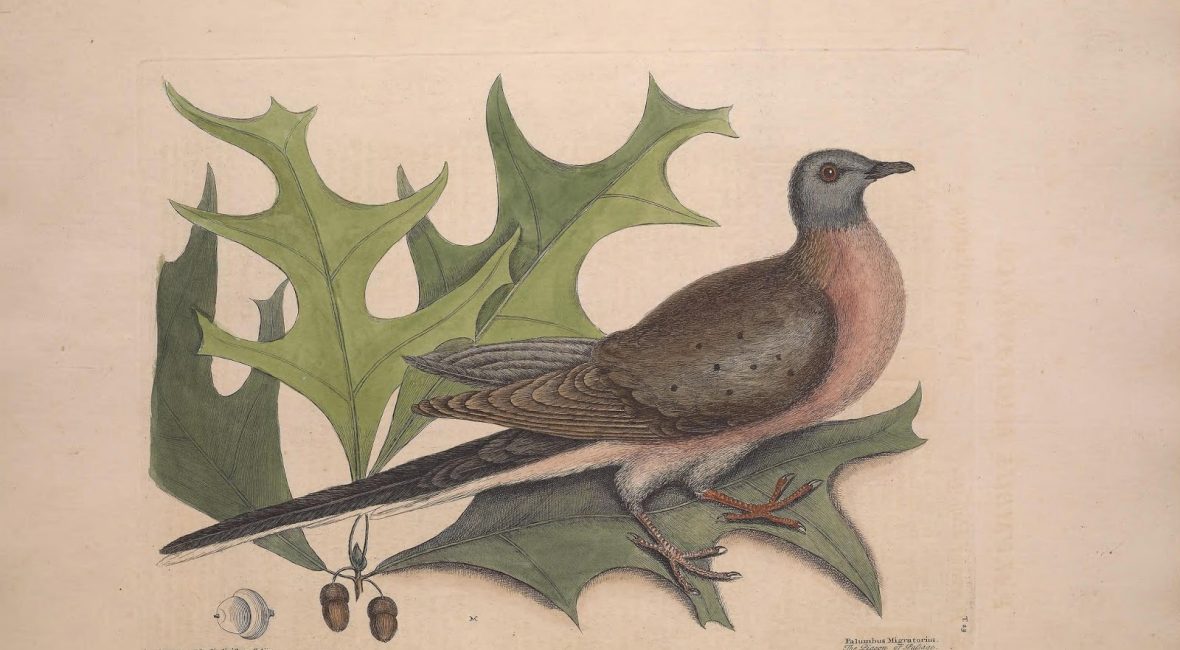
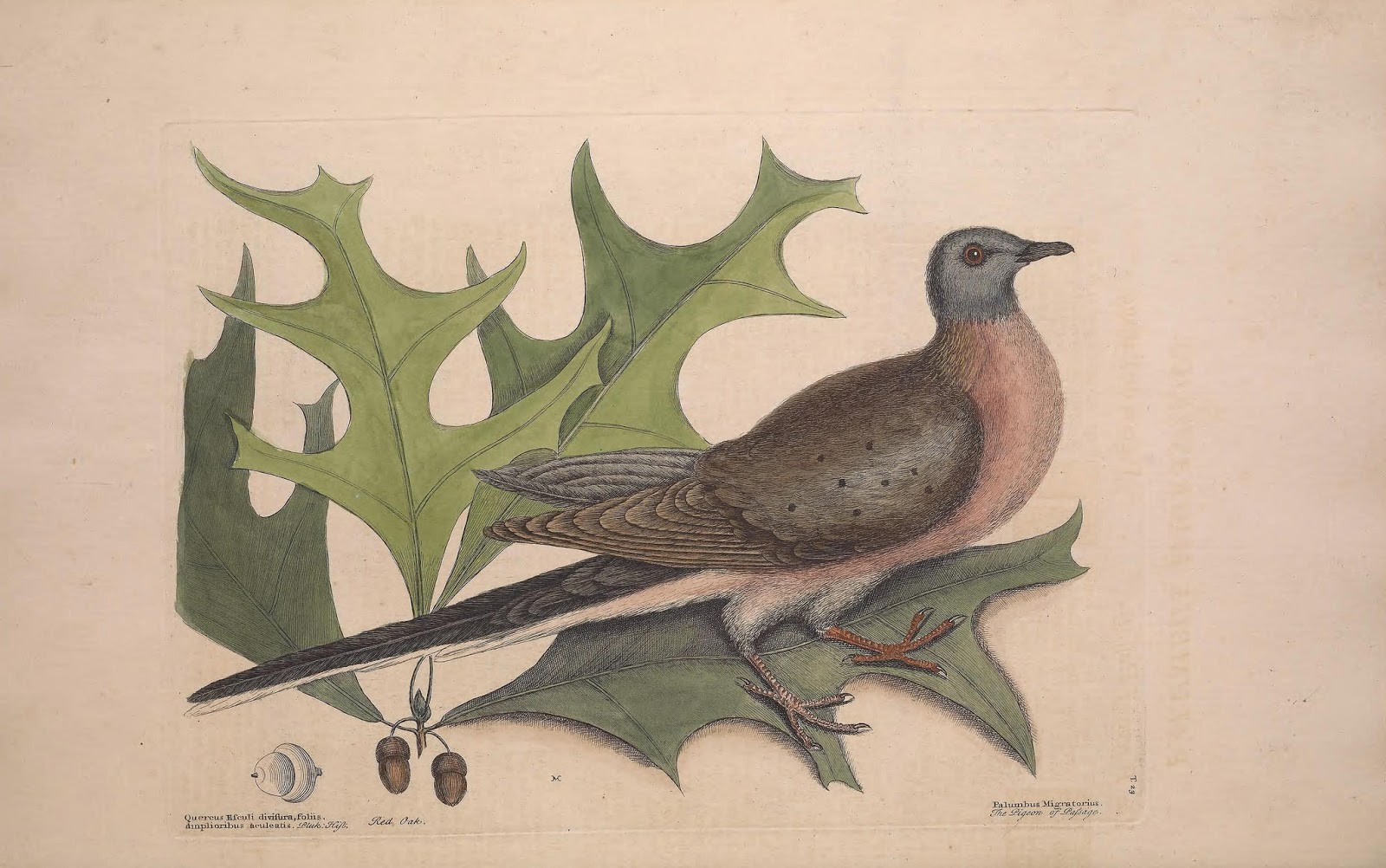
First published illustration of a passenger pigeon (Ectopistes migratorius). Pictured with American turkey oak (Quercus laevis). Catesby, Mark. The Natural History of Carolina, Florida, and the Bahama Islands. v. 1, ed. 1, pl. 23. Digitized by Smithsonian Libraries. http://biodiversitylibrary.org/page/40753186. Taxon tagged in Flickr by Michelle Marshall: https://www.flickr.com/photos/biodivlibrary/26918652441.

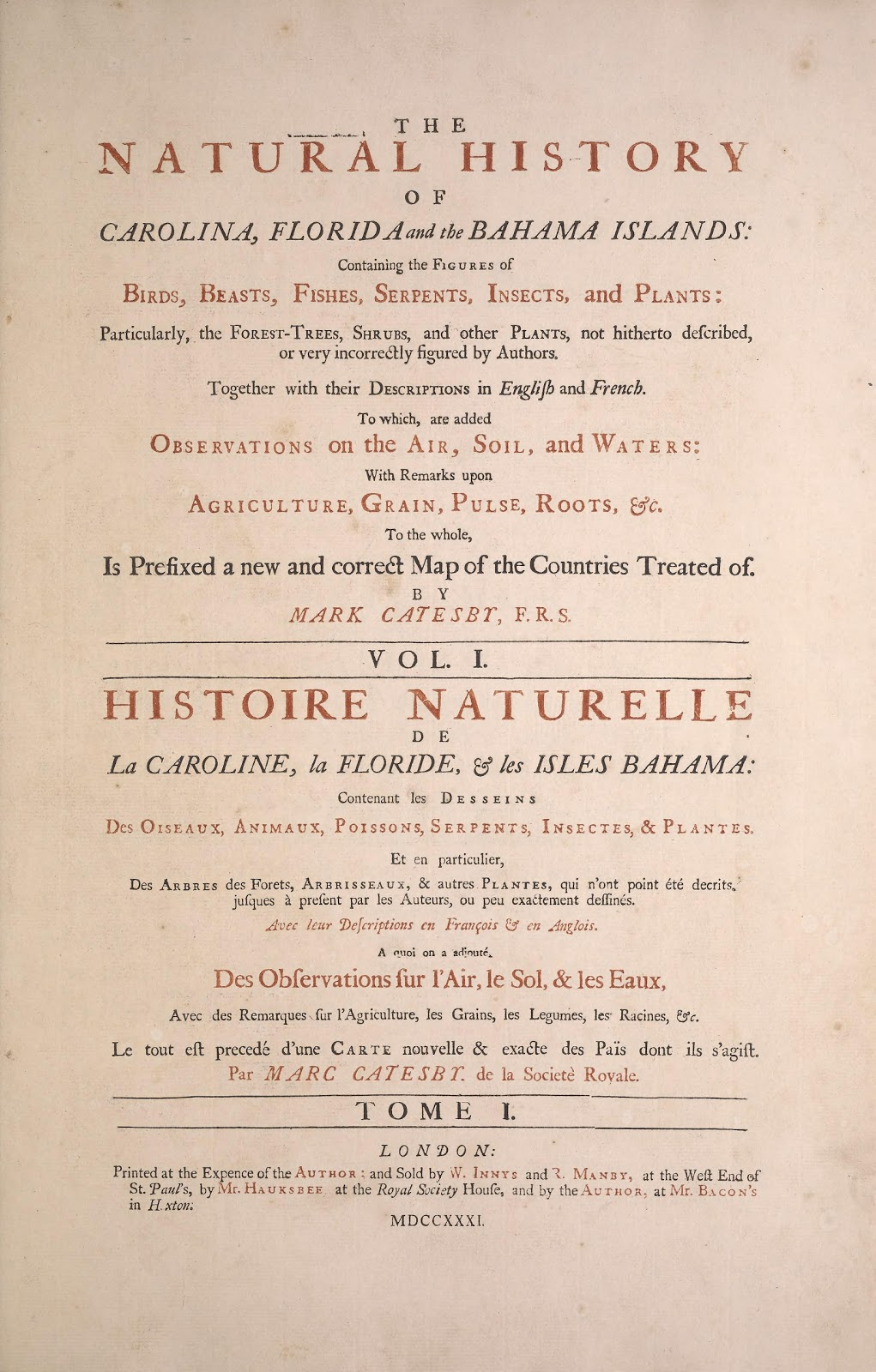
In May of 1729, the first part of the first fully illustrated book on the flora and fauna of North America was presented to the Royal Society. Upon the conclusion of the work, Royal Society Secretary Cromwell Mortimer praised it as “the most magnificent Work I know of, since the Art of Printing has been discovered” (Nelson and Elliott, 165).

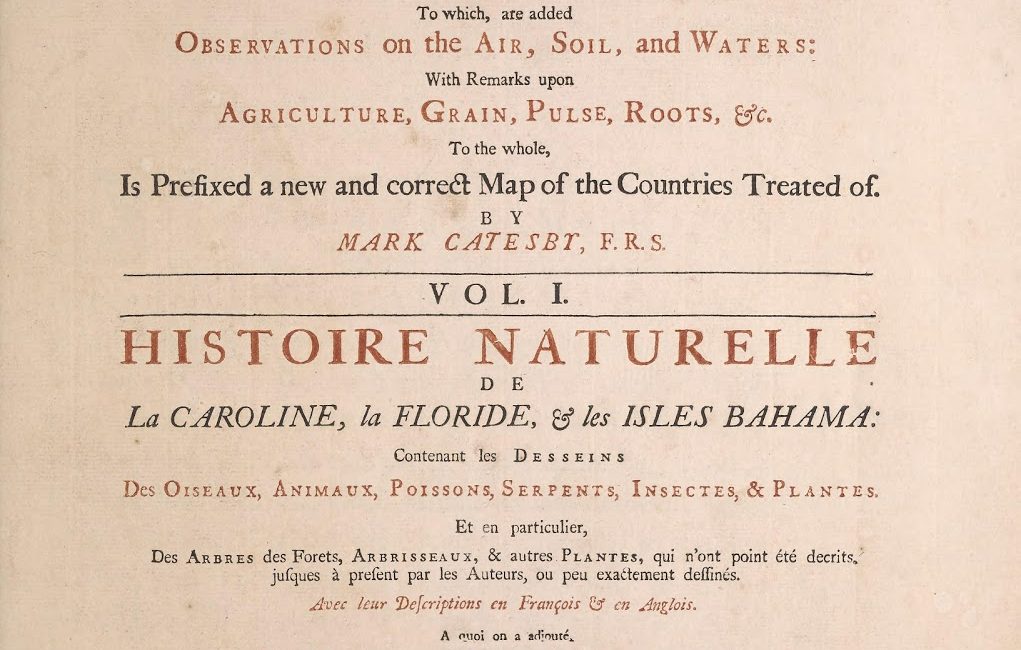
The work was The Natural History of Carolina, Florida, and the Bahama Islands, and all told it was issued in eleven parts (including an appendix) over an eighteen year period (from 1729-1747). It included 220 plates and accompanying pages of text, a map and account of North America, two indices, a preface, a dedication, and a list of subscribers.

The author of the work was Mark Catesby.

An expansive account of Catesby’s life and work is captured in The Curious Mister Catesby, edited by E. Charles Nelson and David J. Elliott, which received the 2016 CBHL (The Council on Botanical and Horticultural Libraries) Annual Literature Award for Overall Significant Contribution to the Literature of Botany or Horticulture. This work allows us to appreciate the extent of Catesby’s contribution to the study of North American biodiversity.

Mark Catesby was born on 24 March 1682/83 in England (probably in Castle Hedingham, Essex), the (probably) fifth son of John Catesby, a gentleman who became mayor of Sudbury in 1673. When John died in 1703, Mark received a substantial inheritance that included property in Sudbury and London, providing him with a level of security that would allow him to pursue his interest in natural history (Nelson and Elliott, 3-4, hereafter referred to as “N&E;”).

View Full Size Image
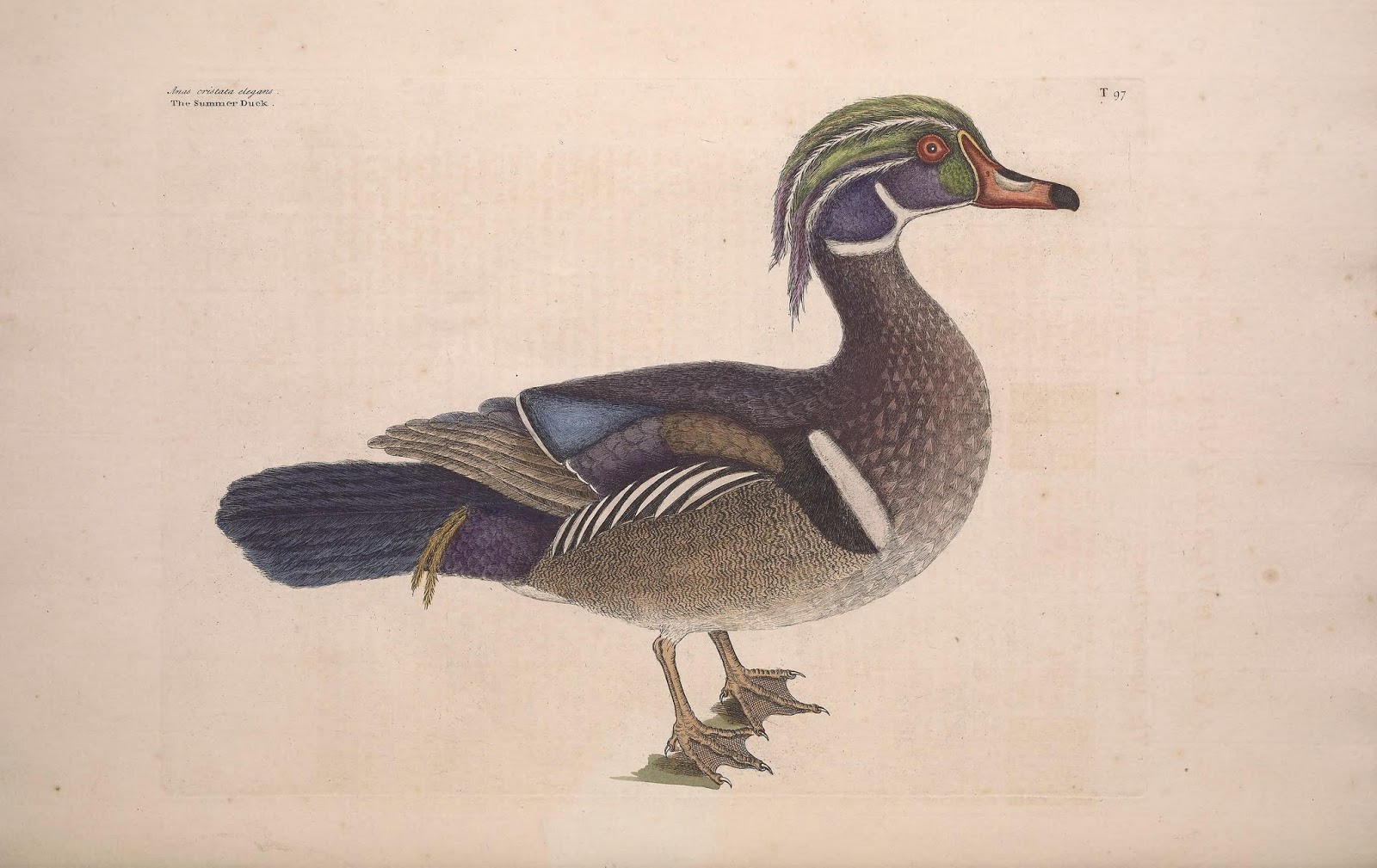
Wood duck (Aix sponsa). Catesby, Mark. The Natural History of Carolina, Florida, and the Bahama Islands. v. 1, ed. 1. pl. 97. Digitized by Smithsonian Libraries. http://biodiversitylibrary.org/page/40753408. Taxon tagged in Flickr by Michelle Marshall: https://www.flickr.com/photos/biodivlibrary/26987327575.

Catesby first set foot in North America in 1712. Serving as chaperone for his sister Elizabeth, whose husband Dr. William Cocke had arrived in Virginia some two years earlier, Catesby was hosted principally by prominent Virginian citizen William Byrd II during this first visit. Shortly after his arrival, Catesby began collecting plants, specimens of which he sent across the Atlantic to Samuel Dale and Dr. Henry Compton (Bishop of London). During these first several years in America, Catesby also visited Jamaica, Bermuda, Hispaniola, and Puerto Rico (N&E;, 8).

Catesby returned to England in 1719, possibly in response to his brother’s death two years earlier (N&E;, 9). He was, however, determined to return to North America and continue his study of the land’s rich flora and fauna. In 1722, he got his wish. This time, his trip was sponsored by members of the Royal Society, who hoped that he would collect specimens from and generally enhance natural history knowledge about this New World. From 1722-early 1725, Catesby explored and collected in South Carolina. The following year, from 1725-26, Catesby ventured to the Bahamas to continue his research (N&E;, 12-13).

View Full Size Image
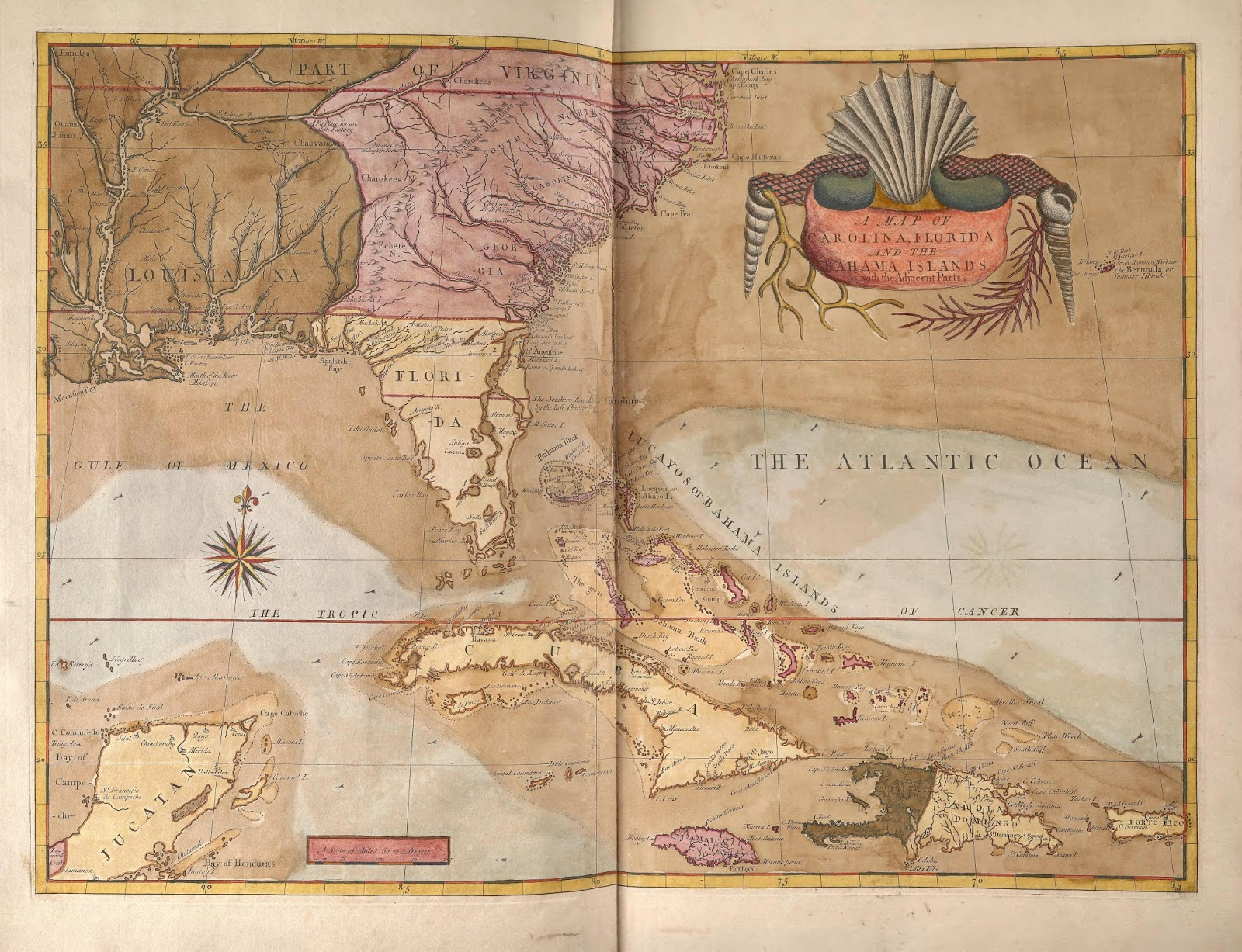
Catesby’s map of Carolina, Florida and the Bahama Islands with the Adjacent Parts.  Catesby, Mark. The Natural History of Carolina, Florida, and the Bahama Islands. v. 1, ed. 1. Digitized by Smithsonian Libraries. http://biodiversitylibrary.org/page/40753095.

During his time in America, Catesby not only collected specimens, many of which he sent back to England, but he also produced sketches and watercolors of the species he encountered. According to Henrietta McBurney, who wrote a chapter for The Curious Mister Catesby on Mark’s preparatory drawings for Natural History, the challenges of transporting the necessary art equipment into the field probably meant that Catesby made field drawings in pen and ink while traveling through the country and then worked up folio-sized watercolors, which would later be translated to etched plates for his publication, back at his lodgings (N&E;, 143). At all times, Catesby placed great emphasis on portraying each species in as life-like a manner as possible, working from live animals when possible and obtaining fresh supplies of specimens, like fish, whose color and appearance change rapidly after death (N&E;, 145).

View Full Size Image
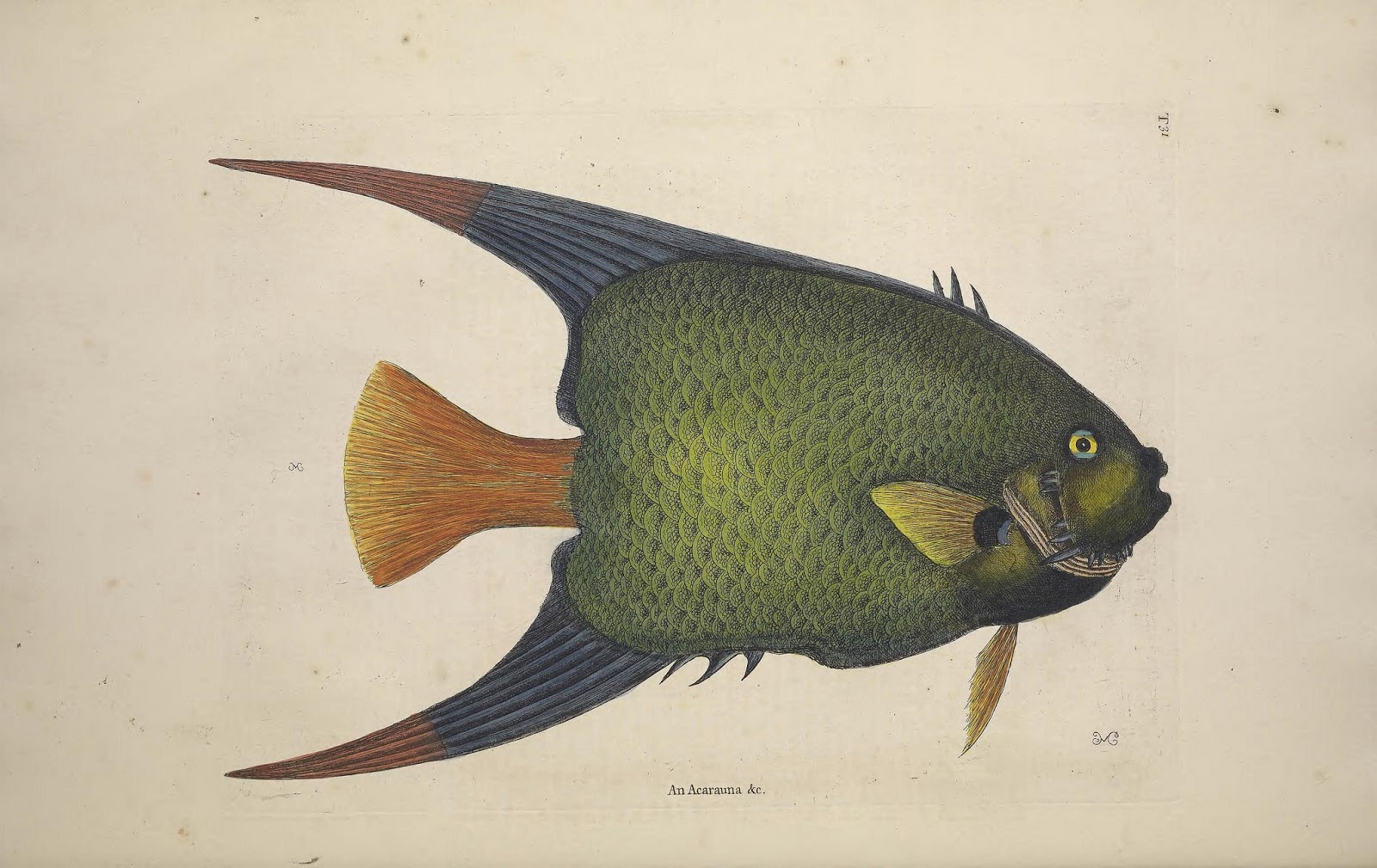
Queen angelfish (Holacanthus ciliaris). Catesby, Mark. The Natural History of Carolina, Florida, and the Bahama Islands. v. 2, ed. 1, pl. 31. Digitized by Smithsonian Libraries. http://biodiversitylibrary.org/page/40680191. Taxon tagged in Flickr by Michelle Marshall: https://www.flickr.com/photos/biodivlibrary/26364199924.

In 1726, Catesby left the Bahamas and returned to England with the intention of publishing his accounts and illustrations in “a large folio on a grand, almost unprecedented scale” (N&E;, 155). Leslie K. Overstreet, Curator of Natural History Rare Books at the Smithsonian Libraries, provides an extensive examination of Catesby’s publication within the twelfth chapter of The Curious Mister Catesby.

According to Ms. Overstreet, Catesby opted to print the work at his own expense. Fortunately, his friend Peter Collinson, a Quaker merchant and Fellow of the Royal Society, agreed to lend Catesby funds to support the publication. These funds were not sufficient to cover the cost of expert engravers, so Catesby hired professional artist Joseph Goupy to teach him how to etch so that Catesby could work up the plates for his publication himself (N&E;, 155).

View Full Size Image
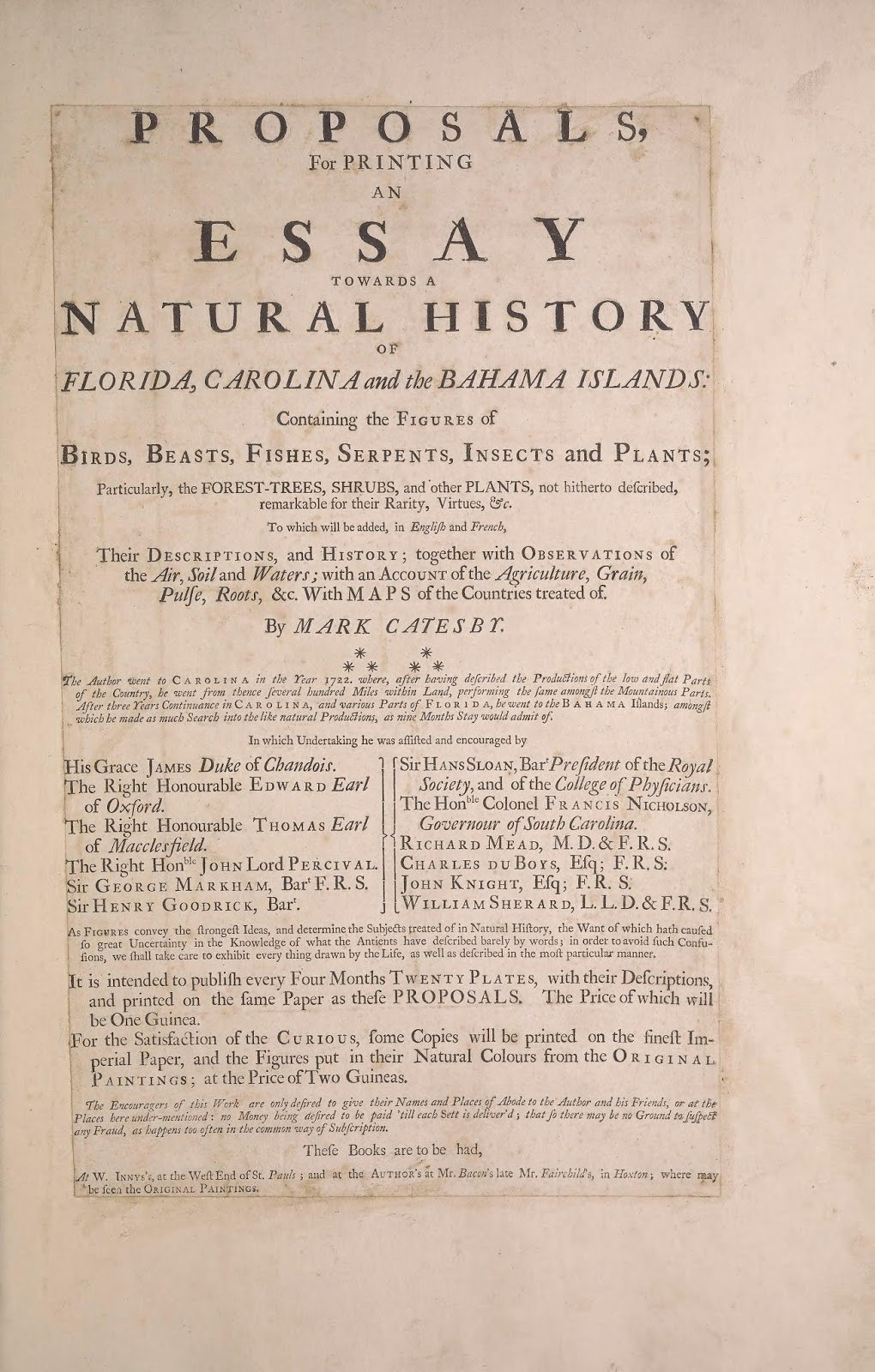
Proposal or prospectus soliciting subscribers for Natural History. Dating from late 1729. Catesby, Mark. The natural history of Carolina, Florida and the Bahama Islands. v. 1, ed. 1. Digitized by Smithsonian Libraries. http://biodiversitylibrary.org/page/40753109.

In order to ensure that enough copies of the work would be sold to justify the cost of its production, Catesby solicited subscribers for Natural History. He distributed a prospectus instructing people who wished to obtain a copy of the work to sign up as subscribers (N&E;, 156). The prospectus indicated that he intended to publish the book in parts of 20 plates and accompanying text issued every four months. Subscribers could elect to receive colored plates for two guineas a part or uncolored plates for one guinea per part (N&E;, 159). The prospectus also directed potential subscribers to view his original artwork, which would be featured in the publication, at Thomas Fairchild’s nursery in Hoxton (N&E;, 147).

All told, Catesby’s final version of the “List of the Encouragers” (a list of the work’s subscribers, which, as was customary at this time, are listed within the publication) includes 155 names (N&E;, 159).

Assured that the book would sell, Catesby set about producing the publication, which included not only etching the copper plates and writing the text, but also hand-coloring (maybe not all) the prints as well (N&E;, 158).  Catesby also enlisted a friend, who requested to remain unnamed, to translate the text into French. The final publication included a column of English text alongside a column of French text (N&E;, 13).

View Full Size Image
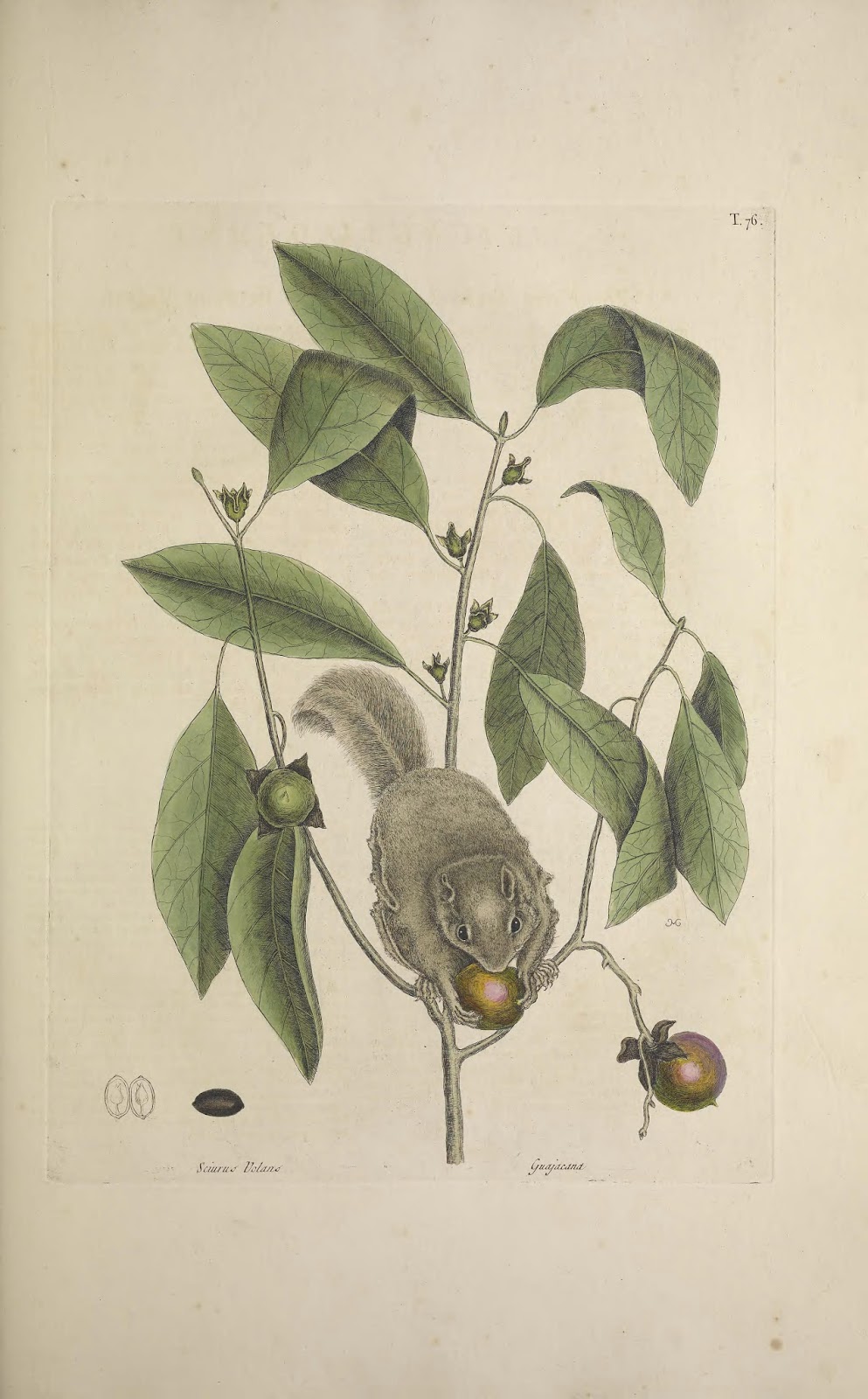
Southern flying squirrel (Glaucomys volans) and American persimmon (Diospyros virginiana). Catesby’s squirrel borrowed from drawing by Everhard Kick. Catesby, Mark. The Natural History of Carolina, Florida, and the Bahama Islands. v. 2, ed. 1. pl. 76. Digitized by Smithsonian Libraries. http://biodiversitylibrary.org/page/40680326. Taxon tagged in Flickr by Michelle Marshall: https://www.flickr.com/photos/biodivlibrary/26696533570.

For the plates, Catesby used his own watercolors and also borrowed and included illustrations from other artists. For example, Catesby’s depiction of the southern flying squirrel in plate 76 was borrowed from Dutch artist Everhard Kick (N&E;, 150-151). Artists Georg Dionysius Ehret and George Edwards also contributed drawings to the work (N&E;, 152-153).

View Full Size Image
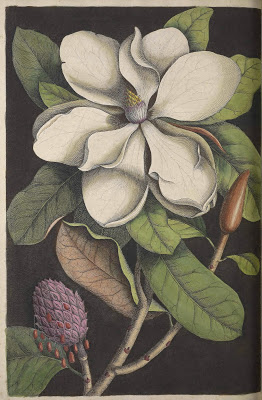
Southern magnolia (Magnolia grandiflora). Illustration etched for Catesby by Georg Dionysius Ehret after Ehret’s own watercolor painting. Catesby, Mark. The Natural History of Carolina, Florida, and the Bahama Islands. v. 2, ed. 1. pl. 61. Digitized by Smithsonian Libraries. http://biodiversitylibrary.org/page/40680281. Taxon tagged in Flickr by Michelle Marshall: https://www.flickr.com/photos/biodivlibrary/26901263141

Due to the amount of work required for the publication, Catesby was not able to adhere to his one part every four months plan. However, he continued to steadily produce new parts, which were sent to his subscribers. The first four parts of the work were issued in numerous typesettings, as Catesby was apparently cautious about ordering too many copies of each part (many subscribers signed up over the life of the publication, so Catesby was not working with a fixed number of “Encouragers”), which in turn required him to order additional copies of the early parts as new subscribers signed on. By the fifth part, however, we see only one typesetting, indicating that Catesby was confident enough in his sales that he ordered sufficient quantities to meet demand (N&E;, 160-163).

In 1743, the last part of volume 2 was presented to the Royal Society. Four years later, in 1747, the appendix, consisting of an additional twenty plates and text, was presented, bringing the first edition to completion (N&E;, 158). Approximately 180-200 copies were produced, only about 100 of which survive. There are only a few known perfect copies of this first edition, and of these, only the Smithsonian Libraries’ copy (which is freely available in BHL) contains “all three pieces of ephemera relating to the production of the work” (N&E;, 165).

View Full Size Image
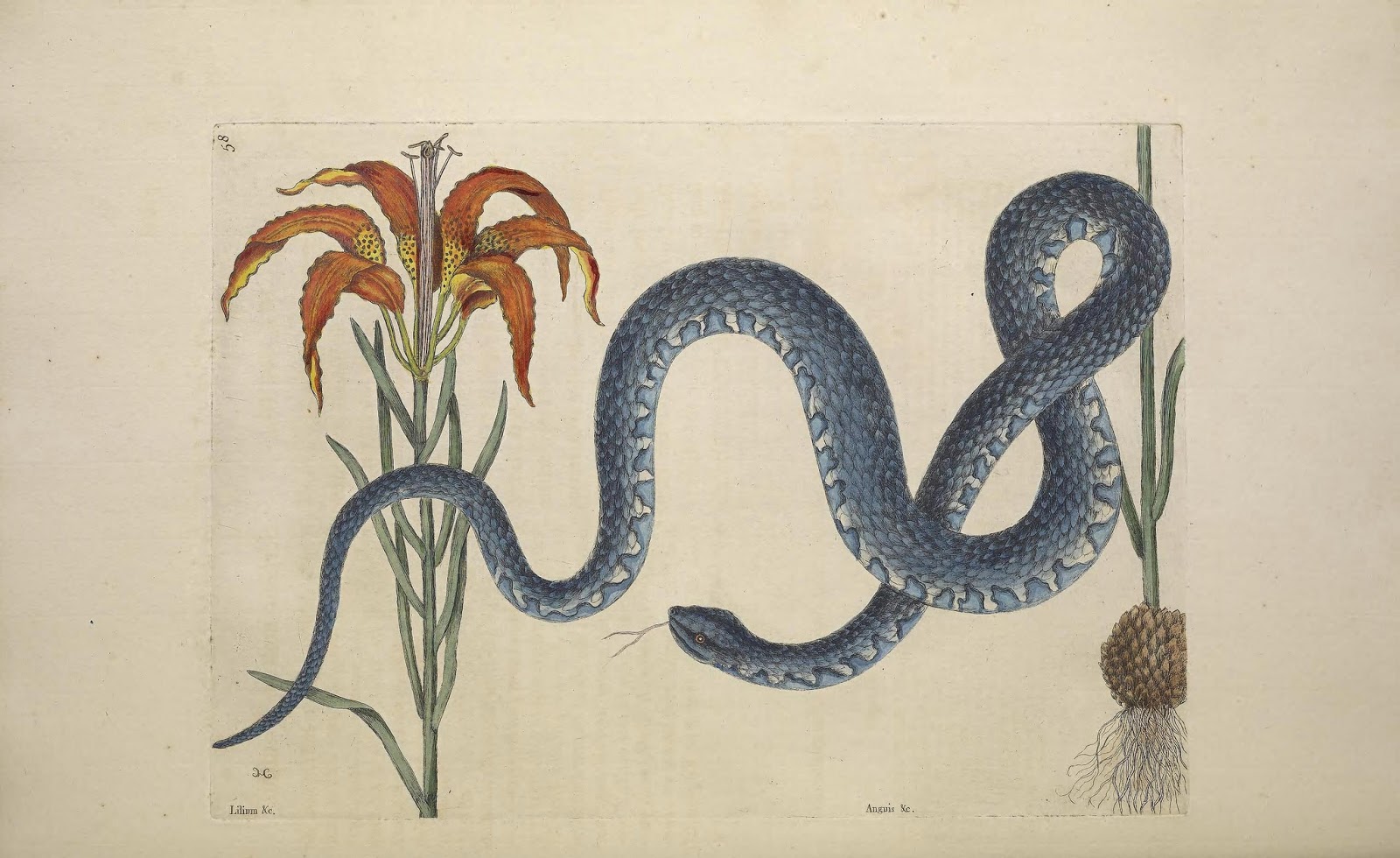
Eastern mudsnake (Farancia abacura) and pine lily (Lilium catesbaei). Catesby, Mark. The Natural History of Carolina, Florida, and the Bahama Islands. v. 2, ed. 1. pl. 58. Digitized by Smithsonian Libraries. http://biodiversitylibrary.org/page/40680272. Taxon tagged in Flickr by Michelle Marshall: https://www.flickr.com/photos/biodivlibrary/26875557812.

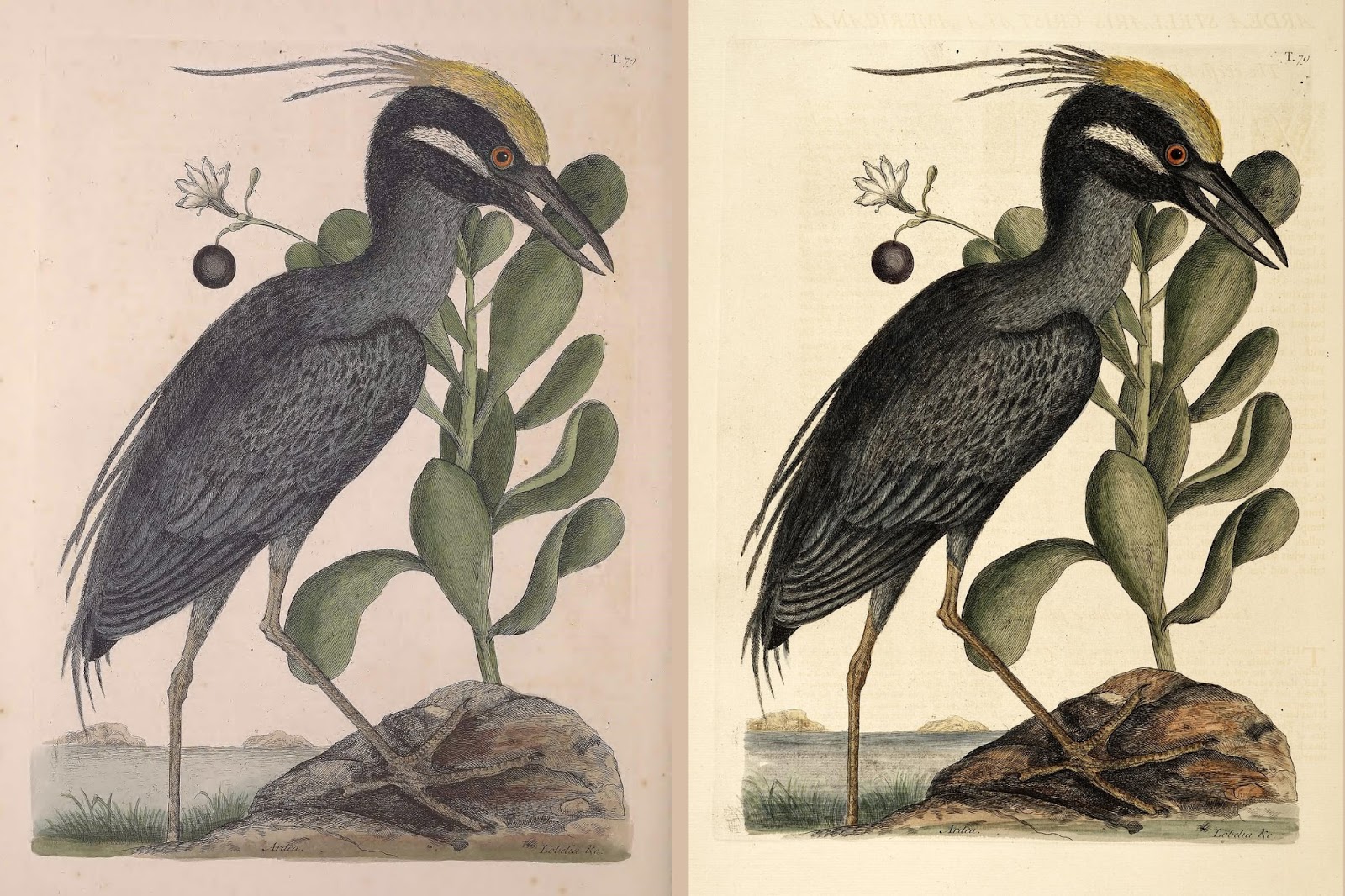
A second edition of Natural History was produced by George Edwards in 1754, five years after Catesby’s death in 1749. This edition is identical to the first, and many copies even include leftover printed sheets from the first edition. The plates for the 2nd edition were produced using Catesby’s original copper plates, but the coloring tends to be brighter than those completed by Catesby himself (N&E;, 166-168). The 2nd edition is freely available in BHL thanks to the Missouri Botanical Garden.

View Full Size Image
Yellow-crowned night heron (Nyctanassa violacea) and gullfeed (Scaevola plumieri). Comparing plate from edition 1 (left) with plate from edition 2 (right). Left: v. 1, ed. 1, pl. 79. Digitized by Smithsonian Libraries. http://biodiversitylibrary.org/page/40753354. Taxon tagged in Flickr by Michelle Marshall: https://www.flickr.com/photos/biodivlibrary/26713640390. Right: v. 1, ed. 2, pl. 79. Digitized by Missouri Botanical Garden. http://biodiversitylibrary.org/page/10900266. Taxon tagged in Flickr by Michelle Marshall: https://www.flickr.com/photos/biodivlibrary/7874637134.

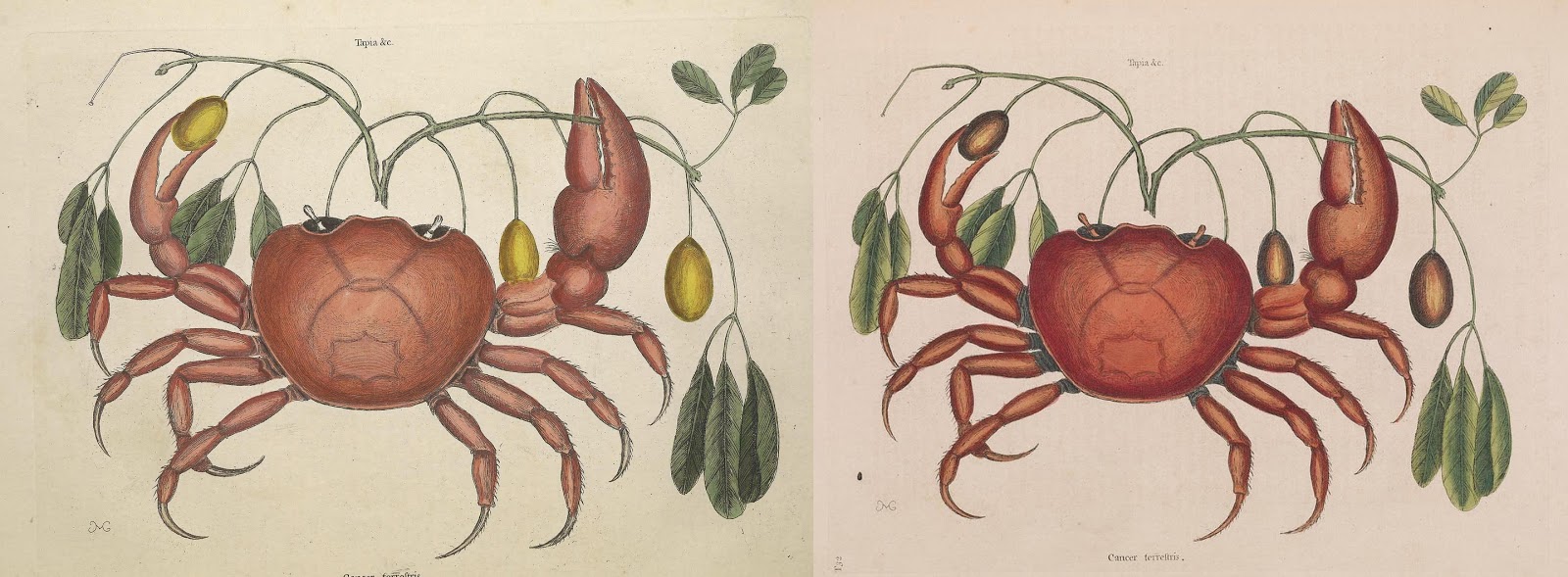
A 3rd edition was published in 1771 by bookseller Benjamin White. This edition is made up of completely reset text and the Linnaean binomials have been added where available. While the edition did use Catesby’s original copper plates, the plates from the 3rd edition are significantly more brightly colored than those of the first edition (N&E;, 168-169). The 3rd edition is freely available in BHL thanks to the University Library at the University of North Carolina, Chapel Hill.

View Full Size Image
Purple land crab (Gecarcinus ruricola) and blackwood (Picrodendron baccatum). Comparing plate from edition 1 (left) with plate from edition 3 (right). Left: v. 2, ed. 1, pl. 32. Digitized by Smithsonian Libraries. http://biodiversitylibrary.org/page/40680194. Taxon tagged in Flickr by Michelle Marshall: https://www.flickr.com/photos/biodivlibrary/26936128596. Right: v. 2, ed. 3, pl. 32. Digitized by University Library, University of North Carolina at Chapel Hill. http://biodiversitylibrary.org/page/38993454. Taxon tagged in Flickr by Michelle Marshall: https://www.flickr.com/photos/biodivlibrary/6829772164.


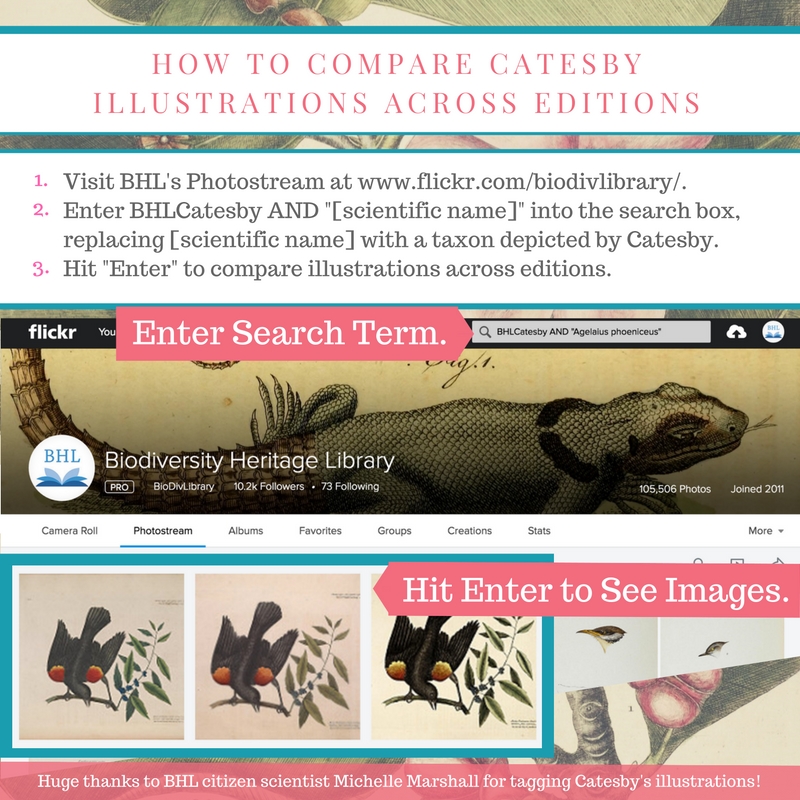
All of the plates from all three editions are available in the BHL Flickr. Thanks to BHL citizen scientist Michelle Marshall (also the curator of BHL’s Instagram), all plates from all editions have been tagged with the common, given and currently accepted scientific names for each species. The Curious Mister Catesby, which includes a species list by James L. Reveal in the book’s appendix (N&E;, 331-341), was used to verify the current accepted name for each species. This not only allows you to search Catesby’s illustrations by taxonomic name, but it also allows us to compare the differences in the illustrations across editions. To compare illustrations across editions, search BHL’s Flickr photostream by BHLCatesby AND “[scientific name]”, inserting the scientific name of a species depicted by Catesby in the brackets where indicated.

View Full Size Image

Catesby’s work, and particularly his illustrations, are significant for a variety of reasons. As the first fully illustrated book on the flora and fauna of North America, this book was the first introduction for many Europeans to much of the biodiversity of the New World. Beyond this, Catesby’s work was a significant resource for Carl Linnaeus, whose binomial system for naming plants (which he introduced in print with his Species Plantarum in 1753) and animals (applied in his Systema Naturae, 1758) is still used today (N&E;, 189).

View Full Size Image
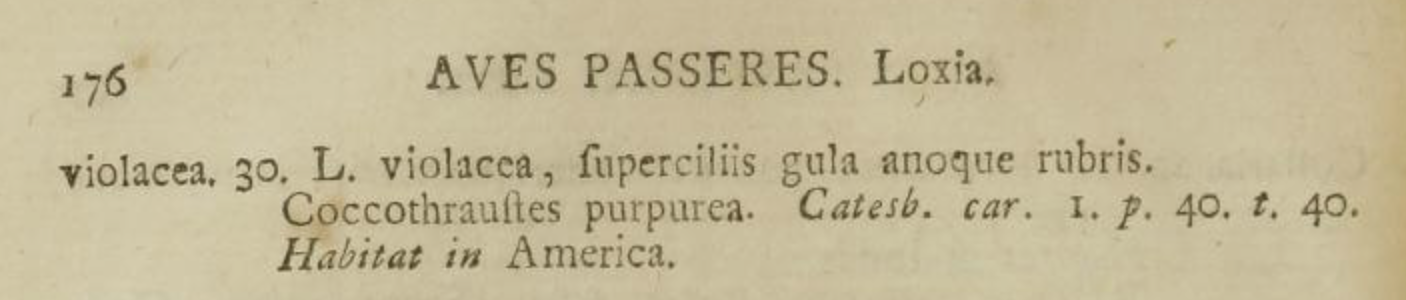
Species description for Greater Antillean bullfinch (Loxigilla violacea, previously Loxia violacea) in Systema Naturae, v. 1 (1758). Catesby is the only reference that Linnaeus cites for this species name. Digitized by the Missouri Botanical Garden. http://biodiversitylibrary.org/page/727083.

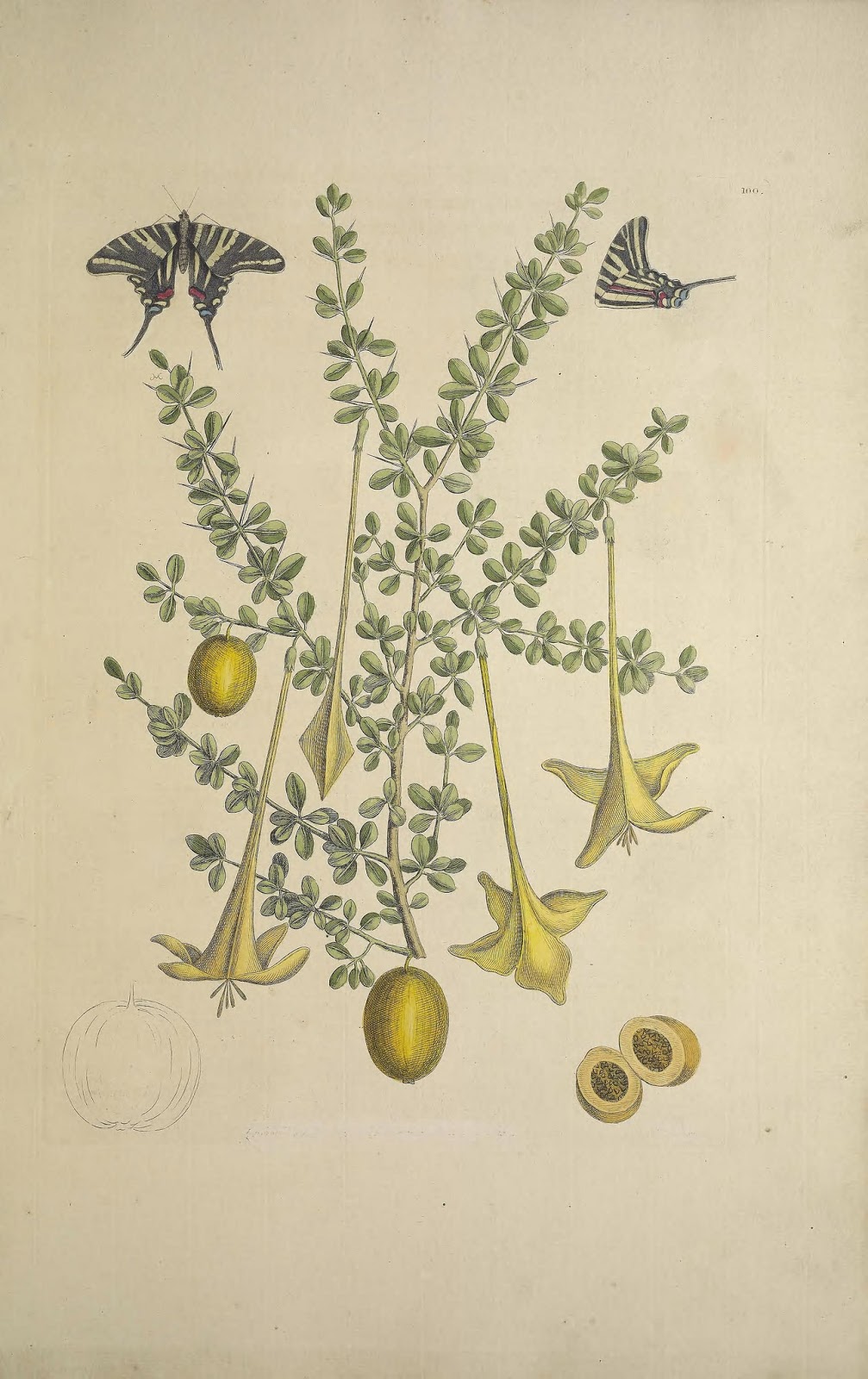
Linnaeus cited Catesby extensively in Species Plantarum and Systema Naturae, showing that Natural History enhanced Linnaeus’ understanding of many species. 131 of the 187 plants depicted by Catesby were cited by Linnaeus in Species Plantarum (N&E;, 201). Additionally, Linnaeus referenced Catesby 139 times in Systema Naturae (N&E;, 254-255). For some of these references, Catesby was the sole source of information for Linnaeus on a given species, and Catesby’s illustrations serve as the type for several of Linnaeus’ species names. In Species Plantarum, for example, 17 of Linnaeus’ species entries cite only Catesby, while Catesby’s plates serve as the type for 34 of the species in that work (N&E;, 201). For 52 of the species entries in Systema Naturae, Catesby was Linnaeus’ only reference (N&E;, 255).

View Full Size Image
Lily thorn (Catesbaea spinosa). Pictured with zebra swallowtail (Protographium marcellus). Catesby is the only source that Linnaeus cited when naming Catesbaea spinosa in Species Plantarum (1753). This engraving serves as the type for this name. Catesby, Mark. The Natural History of Carolina, Florida, and the Bahama Islands. v. 2, ed. 1. pl. 100. Digitized by Smithsonian Libraries.  http://biodiversitylibrary.org/page/40680398. Taxon tagged in Flickr by Michelle Marshall: https://www.flickr.com/photos/biodivlibrary/26936345516.

The Natural History of Carolina, Florida, and the Bahama Islands represents a milestone in the cultivation of natural history knowledge. We are indebted to this “ingenious” naturalist Mark Catesby who dedicated his life to capturing and describing the biodiverse wonders of the New World. What a wondrously beautiful and curious world we live in.

REFERENCE 
Nelson, E C, and David J. Elliott. The Curious Mister Catesby: A “truly Ingenious” Naturalist Explores New Worlds., 2015. Print.

September 1, 2016by ulib-libraryjobs
Blog Reel, Featured Books

John Bartram’s Journey to Onondago

John Bartram was born in Marple, Pennsylvania in 1699. Although he received limited formal education, he eventually distinguished himself as one of the leading botanists of his day. Through an early and intense interest in botany, he collected rare and useful plants and seeds throughout the colonies which he provided to the gentlemen of Europe, an opportunity which arose from his close friendship with the English botanist, Peter Collinson.

He also established one of the finest botanic gardens of the colonial period in Kingsessing (now part of the park system in south Philadelphia). He grew dozens of species of trees, shrubs, and other plants collected on his travels. He even experimented with breeding and selection of cultivars to meet a demand abroad for exotic plants. His botanical supply business was so successful that it provided the income and incentive that enabled him to travel around the colonies and to Florida in search of new specimens.

One such collecting trip occurred in July 1743, when Bartram accompanied Conrad Weiser and Lewis Evans, a skilled cartographer, on a journey to the Iroquois capital, Onondaga (modern day Syracuse). Interestingly, the primary purpose of this trip was more diplomatic than scientific. Weiser was officially Pennsylvania’s main ambassador to the Native Americans. There had been a clash between settlers in Western Virginia and an Iroquois hunting party in the fall of 1742, and rumors of a possible war in Virginia had alarmed those in Pennsylvania. The trip was meant to encourage peace between the Iroquois Confederacy and Virginia. Bartram saw this trip as an opportunity to explore the vast forests in this little known Indian territory, as yet undisturbed by European settlers.

In addition to plant material, Bartram’s English botanist friend, Peter Collinson, had requested a written account of the trip. Unfortunately, in the spring of 1744, the ship carrying Bartram’s manuscript and specimens to London was captured by the French. Bartram had to make another copy of his journal and this copy did not reach Collinson until 1750.

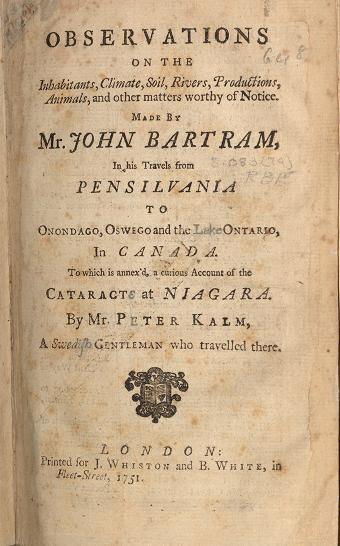
The account of Bartram’s six week journey from Pennsylvania to Upstate New York was so popular among Collinson’s circle that Collinson had the work printed in 1751 by J. Whiston and B. White in London. The published work was entitled Observations on the inhabitants, climate, soil, rivers, productions, animals, and other matters worthy of notice, made by Mr. John Bartram, in his travels from Pensilvania to Onondago, Oswego and the lake Ontario in Canada; to which is annex’d, a curious account of the cataracts at Niagara, by Mr. Peter Kalm, a Swedish gentleman who traveled there and included a brief description of Niagara Falls by the naturalist Peter Kalm.

View Full Size Image
Title Page. Bartram, John. Observations on the inhabitants, climate, soil, rivers, productions, animals, and other matters worthy of notice, made by Mr. John Bartram, in his travels from Pensilvania to Onondago, Oswego and the lake Ontario in Canada; to which is annex’d, a curious account of the cataracts at Niagara, by Mr. Peter Kalm, a Swedish gentleman who traveled there. Digitized by the American Museum of Natural History Library. http://biodiversitylibrary.org/page/49569568.

Unfortunately, at the time, this work was criticized by some for not including enough detail in the descriptions of the plants that Bartram encountered. This criticism does not account for the fact that the journal had been written as a running account for Collinson, who would already have been familiar with the plants that Bartram mentioned. Others criticized the errors in spelling and syntax found throughout the work, due to lack of editing and because the printer had trouble interpreting Bartram’s handwriting and spelling. Today, this work is viewed as an important early insight into the region’s ecology and the activities of the Native American population during the colonial period.

View Full Size Image
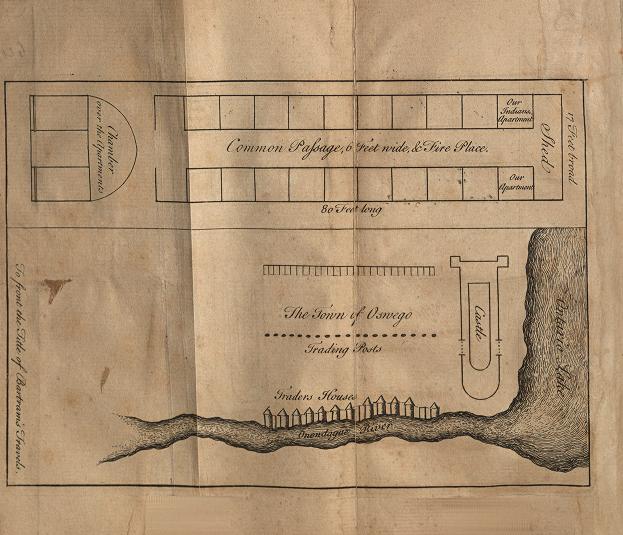
Engraved frontispiece of “the Town of Oswego” illustrating an Iroquois longhouse. Bartram, John. Observations on the inhabitants, climate, soil, rivers, productions, animals, and other matters worthy of notice, made by Mr. John Bartram, in his travels from Pensilvania to Onondago, Oswego and the lake Ontario in Canada; to which is annex’d, a curious account of the cataracts at Niagara, by Mr. Peter Kalm, a Swedish gentleman who traveled there. Digitized by the American Museum of Natural History Library. http://biodiversitylibrary.org/page/49569569.

The American Museum of Natural History (AMNH) Library recently digitized its copy of this work and has made the volume accessible via BHL at this link: http://dx.doi.org/10.5962/bhl.title.112297. This volume was purchased by the Library in 1941 from a local bookseller. The original owner of this copy was Frank Hayward Severance (1856-1931), a leading authority on the Buffalo /Niagara area during the early twentieth century. After graduating from Cornell University in 1879, Severance spent the early part of his career as a reporter, editor and lecturer. He later authored several books about the Niagara frontier.

References:

  • Berkeley, Edmund and Dorothy Smith Berkeley. (1981). The life and travels of John Bartram : from Lake Ontario to the River St. John. Tallahassee : University Presses of Florida.
  • Severance, Frank Hayward. (2009). In MarquisWho’sWho, Marquis who was who in America 1607-1984. New Providence, NJ: Marquis Who’s Who LLC.
March 24, 2016by ulib-libraryjobs
Blog Reel, Featured Books

Things That Go Burp In the Night

 A Tribute to the Nighthawk and “Whip-poor-will”

Imagine away the accumulated knowledge of the past 250 years. Forget that there is such a thing as a field guide. Let google vanish from memory.

And put yourself into the forest primeval of southeastern North America on a warm summer night in the middle of the eighteenth century. Above the rasping of the cicadas and the creaking of the tree crickets, beyond the yowls and hoots and delicate whistles of the owls, you hear the strange syncopated whistles of what has to be a bird.

But which one?

The first scientific attempts to sort out the disembodied voices of the American night were made three centuries ago by Mark Catesby, the great English natural historian who spent the years 1712 to 1719 traveling through the American wilds from Virginia to the Bahamas.

View Full Size Image
Catesby’s Natural History

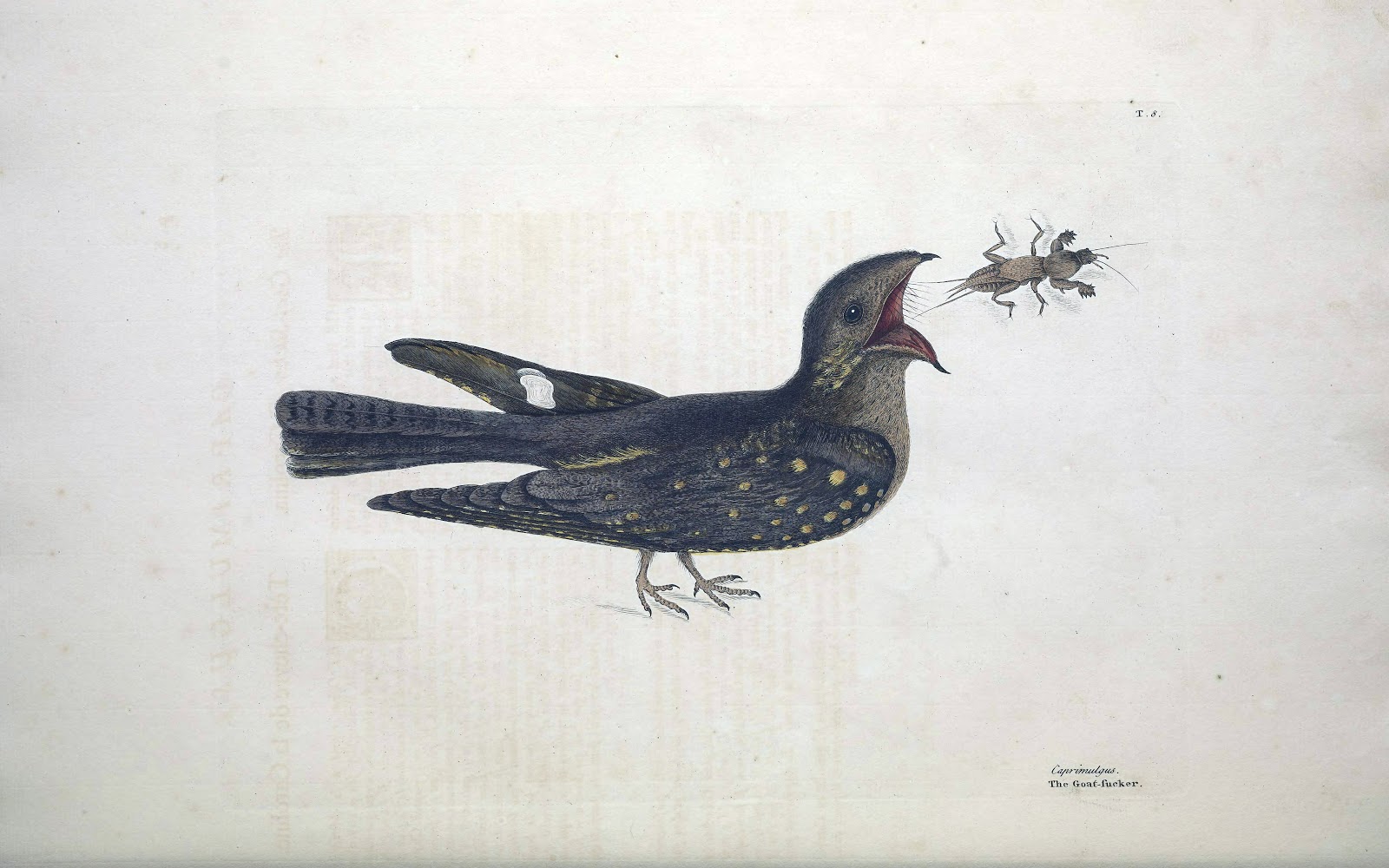
In the published account of his explorations, The Natural History of Carolina, Florida and the Bahama Islands, Catesby reports a bird he names The Goat-Sucker of Carolina; the painting shows a brown, vaguely spotted bird standing on the ground, its grotesquely huge mouth agape and about to swallow a mole cricket.

View Full Size Image
The Goat-Sucker of Carolina

Says Catesby, “this Bird agrees with the description of that in Mr. Willoughby … of the same name, except that this is somewhat less” than the 10 or 12 inches Francis Willoughby gives as the length of his, the European, goat-sucker.

View Full Size Image
The Goat-Sucker from Willoughby’s Ornithologiae

Catesby’s American bird is “very numerous,” he writes, and in Virginia and Carolina people call it the “East India Bat.”

View Full Size Image
Caprimulgus carolinensis

Seventy years after Catesby’s return to England, in his thirteenth edition of the Systema naturae, Johann Friedrich Gmelin gave Catesby’s goatsucker its definitive Latin description and a formally correct Linnaean binomial, Caprimulgus carolinensis.

Absent an early specimen, Catesby’s painting serves as the type of the species, which is now assigned to the genus Antrostomus and known in English by the echoic name Chuck-will’s-widow.

Only trouble is, neither Catesby nor Gmelin actually describes a Chuck-will’s-widow. Here Catesby, on the sounds produced by his Goat-Sucker of Carolina:

Their Note is only a screep; but by their precipitating and swiftly mounting again to recover themselves from the ground, they make a hollow and surprizing noise …. like that made by the wind blowing into a hollow vessel….

And here Gmelin, on the wing pattern of his Caprimulgus carolinensis:

The flight feathers of the wing are marked with black and gray bars, with yellow dots on the outer vanes; the three first flight feathers of the wing are marked on the inner vanes with a large white spot.

This is obviously a reference to the odd oblong white patches visible on the underside of the left wing in Catesby’s painting—patches that, together with Gmelin’s plumage description and Catesby’s account of the bird’s voice, make it evident that both the Goat-Sucker of Carolina and Caprimulgus carolinensis in fact originally name, at least in muddled part, not the Chuck-will’s-widow but the Common Nighthawk, a familiar but sadly declining species in eastern North America, identified by the white bar across its outermost primaries and the whooshing, whirring boom made by its wingtips in a dive.

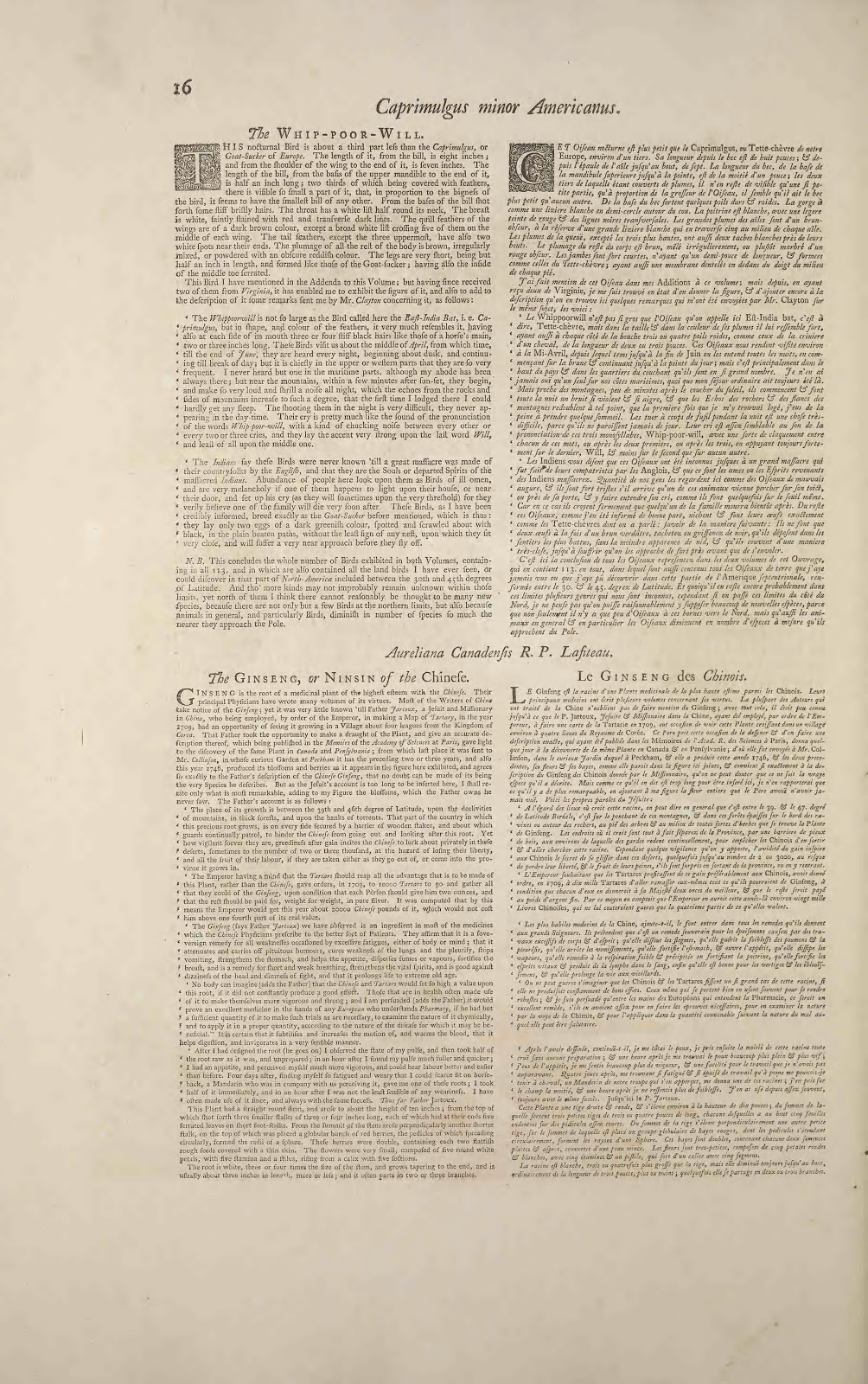
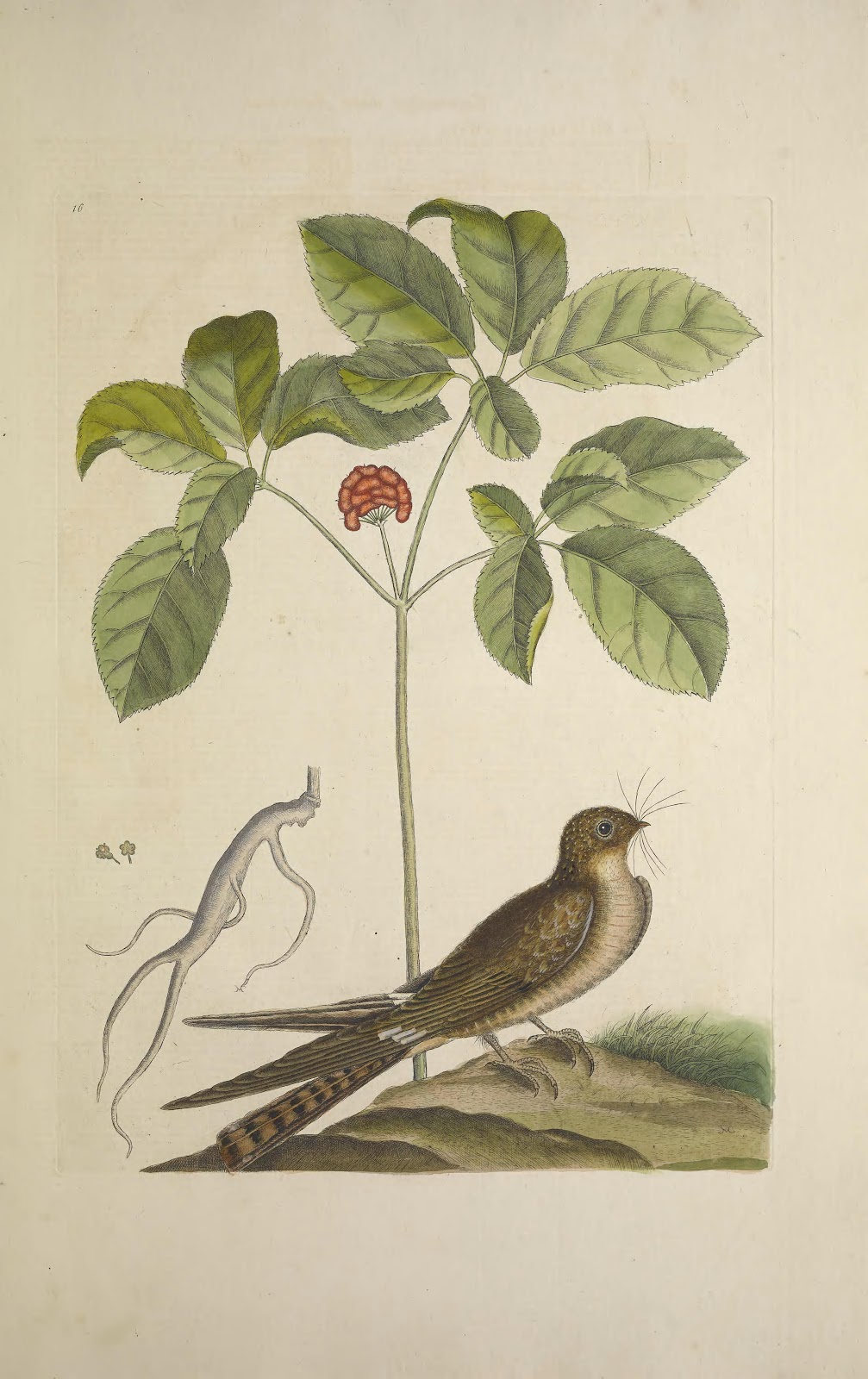
In 1746-47, Mark Catesby issued an Appendix to his Natural History. Among the additional birds illustrated there is The Whip-poor-Will; Catesby’s text quotes at length from a letter sent to him by the Virginia physician John Clayton.

View Full Size Image
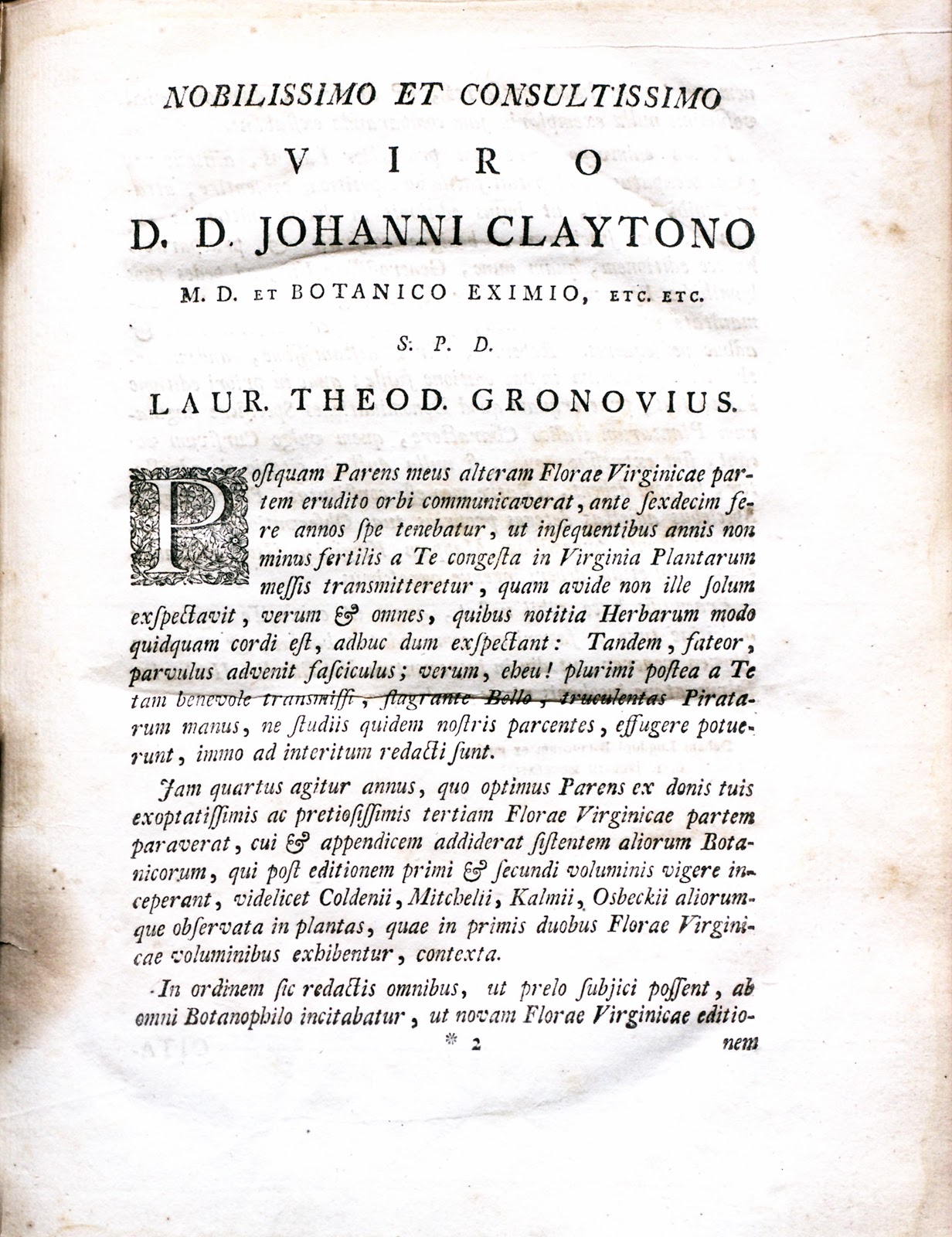
Flora Virginica, by John Clayton

Clayton, a distinguished botanist and natural historian himself, contributes a fine description of the bird’s strangely accented chanting song, and also records the poignant belief of “the Indians [that] these birds were never known ‘till a great massacre was made of their countryfolks by the English, and that they are the Souls or departed Spirits of the massacred Indians.”


View Full Size Image
The Whip-poor-will in Catesby’s Natural History

Catesby’s own words are more problematic. Much of his plumage description clearly applies to the Eastern Whip-poor-will, but then, fatally, we learn that the “quill feathers of the wing are of a dark brown colour, except a broad white list [=contrasting stripe] crossing five of them on the middle of each wing.” This is, once again, the distinctive wing pattern of the Common Nighthawk, and Catesby’s painting clearly combines the pointed, white-barred wings of that species with the long, rounded tail and extravagant rictal bristles of the Eastern Whip-poor-will.

View Full Size Image
Combining the Common Nighthawk with the Eastern Whip-poor-will in Catesby’s Natural History

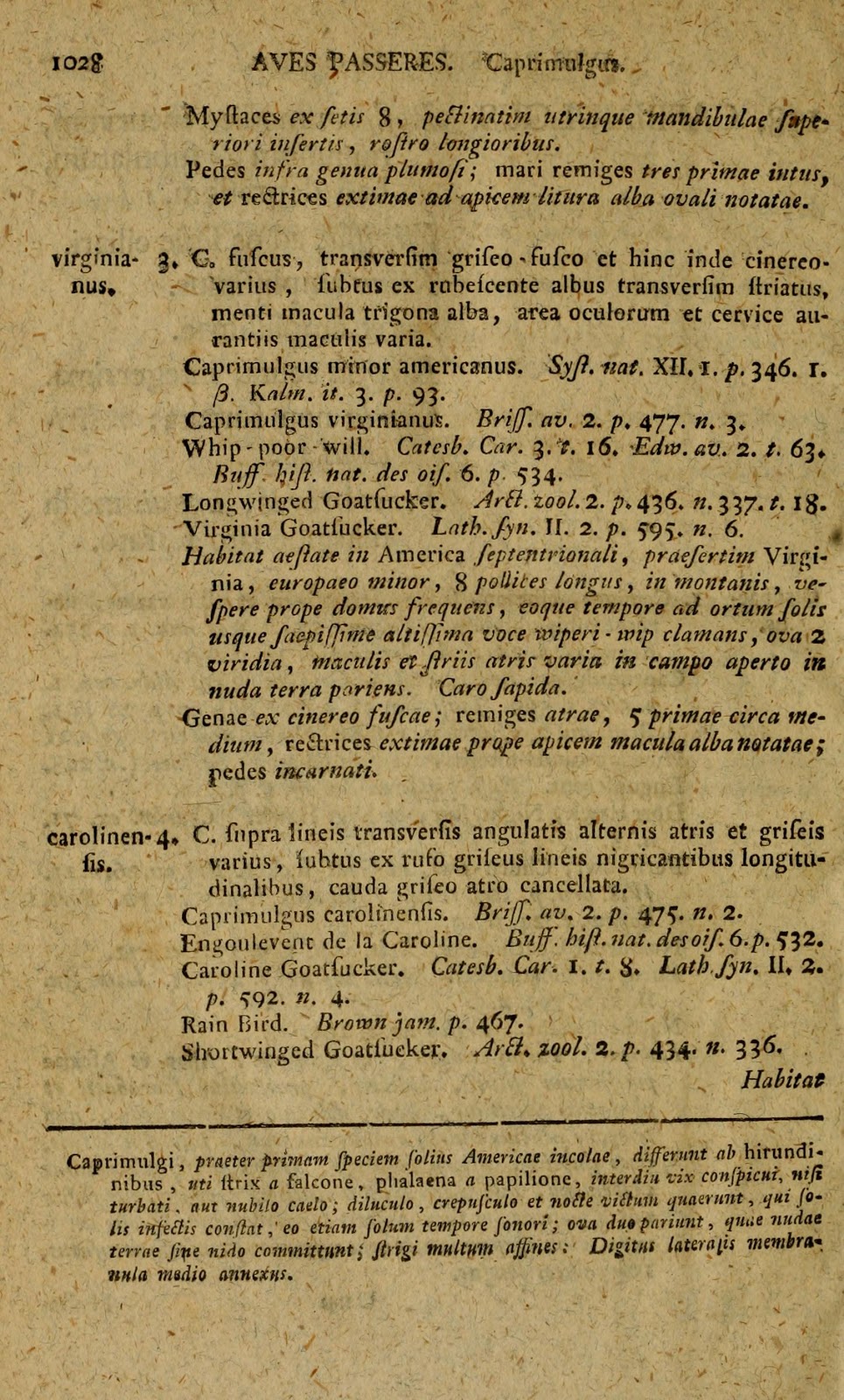
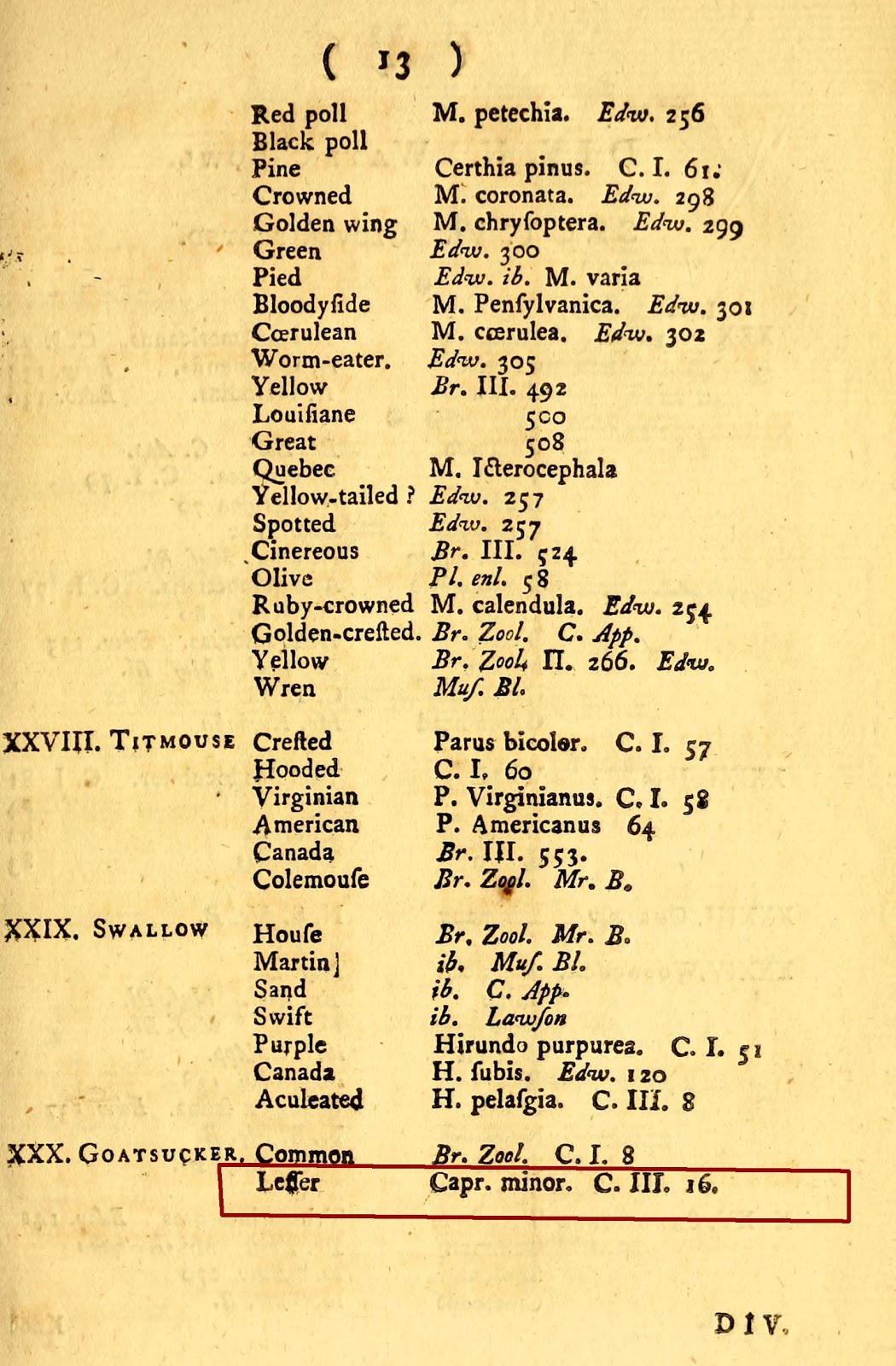
Like his Goat-Sucker of Carolina, this illustration, too, served as the type “specimen” for a later taxonomer. In 1771, Johann Reinhold Forster assigned the Linnaean name Caprimulgus minor to what he called in English the Lesser Goatsucker—giving as his authority “C.III.16,” an unequivocal citation to the “Whip-poor-will” on Plate 16 in Catesby’s Appendix.

View Full Size Image
Forster’s citation of the “Lesser Goatsucker,” based on Catesby’s Appendix

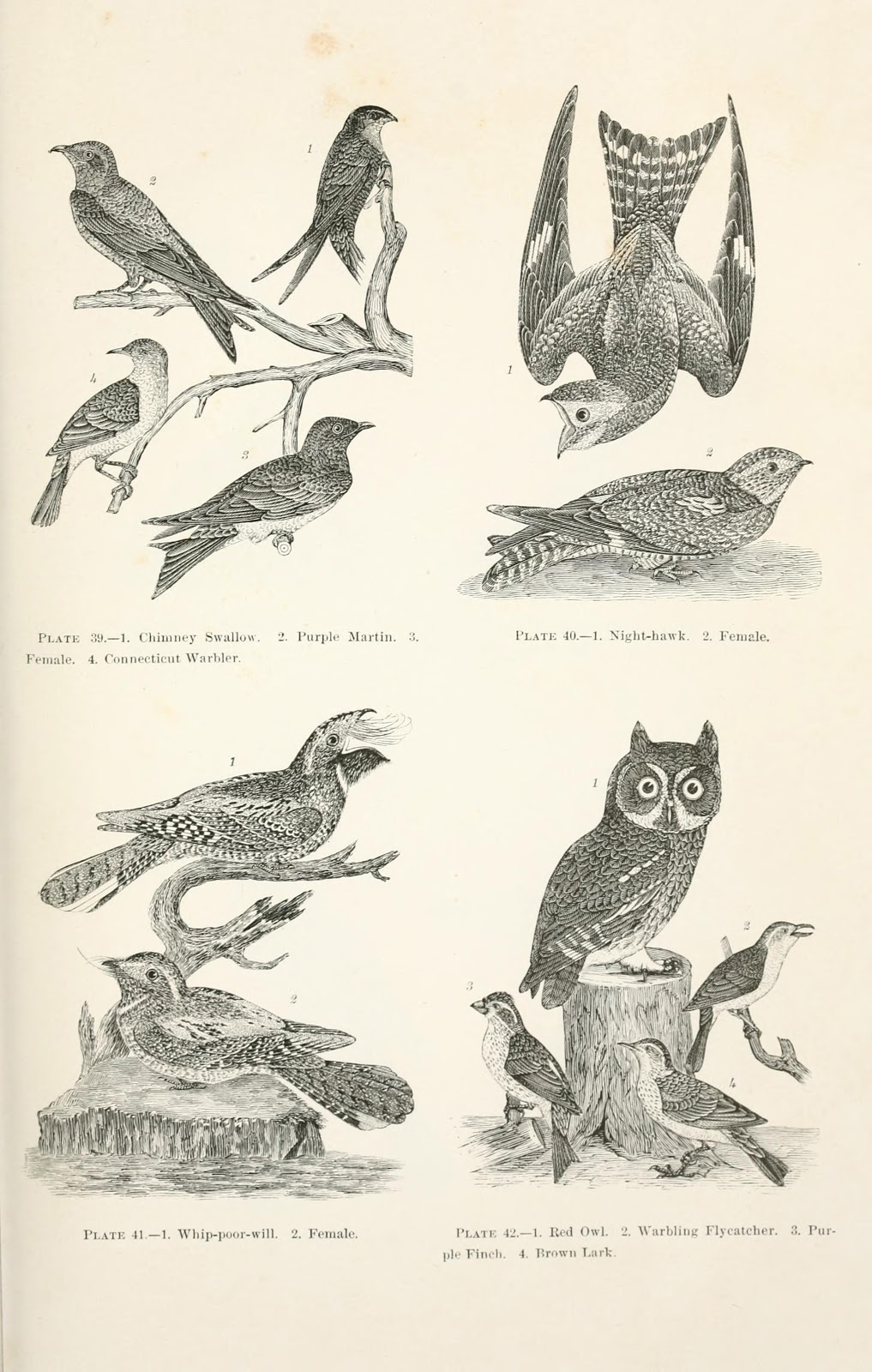
There things stood until Alexander Wilson took the birds into his own hands—quite literally.

View Full Size Image
Wilson’s illustrations of the Nighthawk and Whip-poor-will


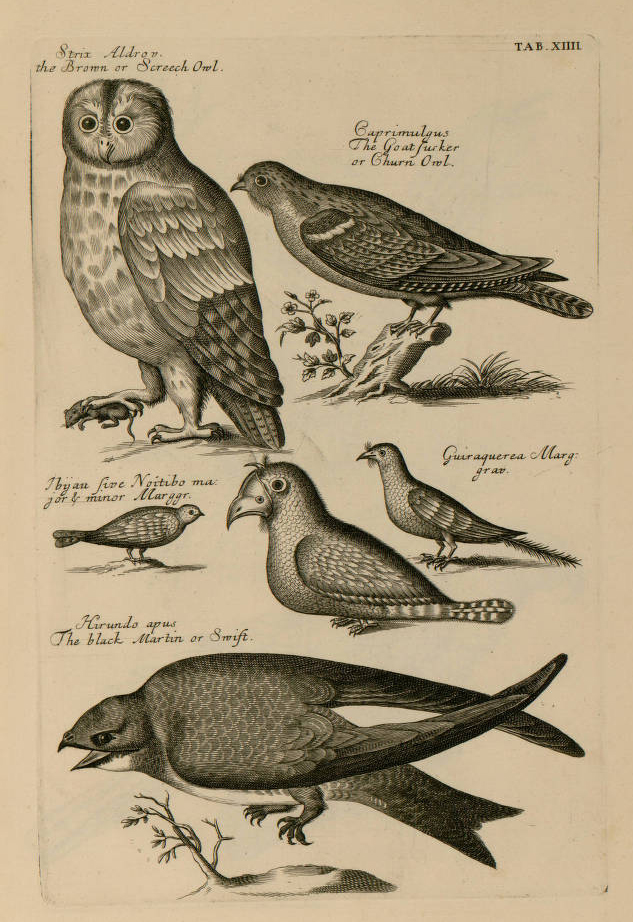
Wilson, the bicentennial of whose death we celebrate this year, determined to “divest” the North American nightjars of the “considerable obscurity” promulgated by Catesby, George Edwards, Thomas Pennant, and “many of our own citizens and … some of our naturalists and writers.”

Wilson solved the riddle in a thoroughly straightforward way, shooting and carefully dissecting nineteen of the controverted night birds. Those that

dart about in the air like Swallows, and sometimes descend with rapidity from a great height, making a hollow sounding noise like that produced by blowing into the bunghole of an empty hogshead …. All corresponded in the markings and tints of their plumage … evidently of the same species….

Another, though,

shot in the evening, while in the act of repeating his usual and well-known notes…. was found to … [differ] in many remarkable particulars…. Three others were shot… all four were evidently of one species [different from the first birds].

Wilson goes on at length to describe the differences between the first set of specimens—which were Common Nighthawks—and the second—Eastern Whip-poor-wills—concluding that it is “impossible to withstand the conviction, that these two birds belonged to two distinct species….” Wilson ends in a note of triumph:

these facts having been laid before Mr. Bartram, together with a male and female of each of the above-mentioned species … that venerable naturalist was pleased to declare … that he had no doubt of the Night Hawk and the Whip-poor-will being two very distinct species….

William Jardine, in his posthumous edition of the American Ornithology, signaled Wilson’s detective work as one of the author’s great accomplishments. But not all American ornithologists saw it the same way. Audubon, reluctant as so often to acknowledge Wilson’s attainments, wrote in the Ornithological Biography that he “had known both birds from [his] early youth,” and, more snidely still, that he had “seldom seen a farmer or even a boy in the United States, who did not know the difference between them.”

Those must have been exceptionally learned farmboys. It took a full century, from Catesby’s arrival in America in 1712 to Wilson’s Ornithology of 1812, for science to work out the voices of the night. And the unraveling continues even today: 2010 saw the split of the Whip-poor-will into two species, and in 2012—three hundred years after Catesby’s arrival in North America, 200 years after Wilson’s unveiling of the “real” Whip-poor-will—both the Chuck-will’s-widow and the whip-poor-wills were moved from the Linnaean genus Caprimulgus to Charles-Lucian Bonaparte’s Antrostomus of 1838. The night still holds its secrets.

This post was contributed by guest-blogger Rick Wright. Interested in guest-blogging for BHL? We’d love that! Natural history, biodiversity and conservation topics are especially welcomed. Email us your ideas at [email protected]
January 3, 2013by ulib-libraryjobs
Blog Reel, Featured Books

Book of the Week: Wild Animals of North America

Here in the Washington, D.C. area, where the BHL Secretariat is housed, North American wildlife is a hot topic with the grand opening of the new National Zoo American Trail exhibit. The exhibit features some of the most iconic American species, including the Bald Eagle, Gray Wolf, North American Beaver, and the Otter. We’ve been celebrating the exhibit all week on Twitter and Facebook, and we thought it only natural to further commemorate American fauna with our book of the week. To do so, we’ve selected Wild Animals of North America (1918), contributed by the American Museum of Natural History.

Wild Animals of North America

Edward W. Nelson, American naturalist and ethnologist, penned Wild Animals of North America for the National Geographic Society over the course of two magazine issues: The November 1916 issue, which focused on Larger Mammals of North America, and the May 1918 issue, devoted to North America’s smaller mammals. These issues were enhanced by famed painter Louis Agassiz Fuertes, who also illustrated the spectacular Album of Abyssinian Birds and Mammals from Paintings (which we featured as a book of the week in 2011). Agassiz, who had done previous work for the Society on The Book of Birds, crafted over five dozen stunning portraits of the animals described within the text for this title.

View Full Size Image
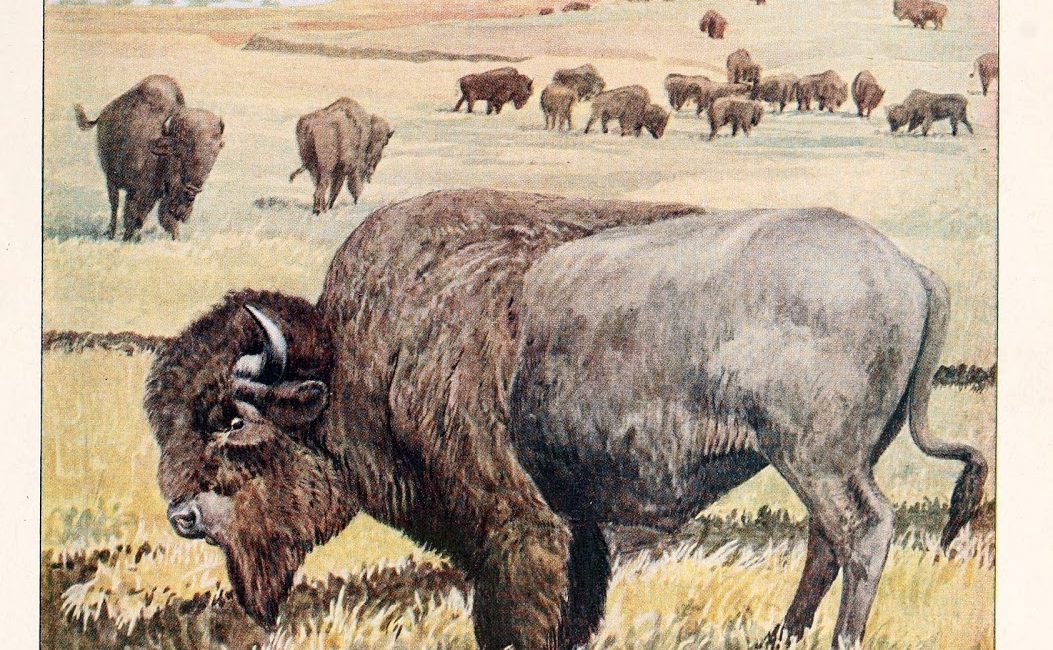
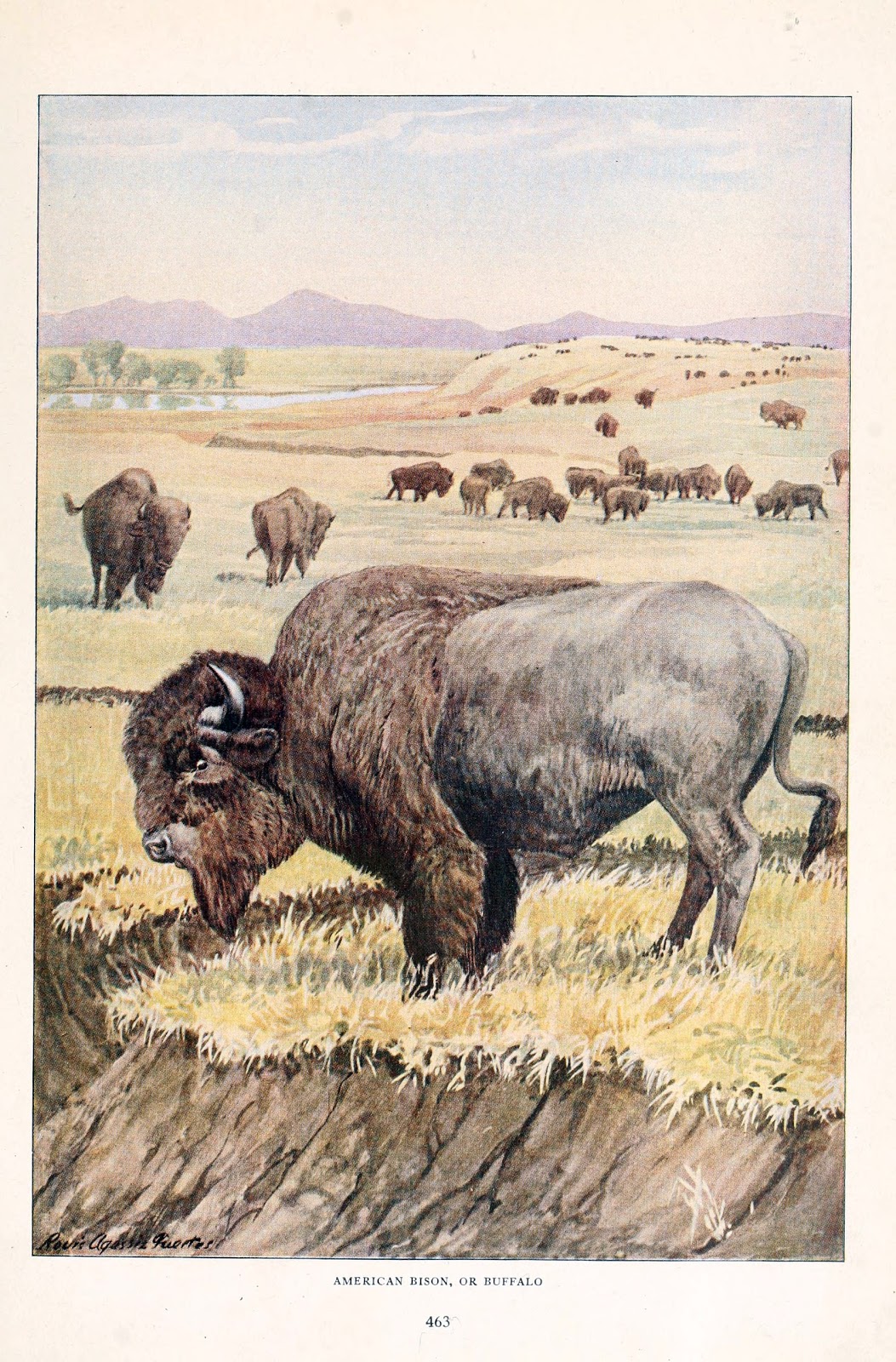
North American Buffalo

National Geographic clearly understood the importance of this work, expending $100,000 for the production of the two original magazine articles which sired this book. The success of the issues prompted the Society to combine them into the comprehensive Wild Animals of North America.

Wild Animals presents 119 “animal biographies,” which present not just pictures and scientific facts about the species, but also entertaining anecdotes about Americans’ interaction with these creatures.

Take, for instance, the account of the American Buffalo. Nelson writes that,

A number of men now living were privileged to see some of the great herds of the West before they were finally destroyed. Dr. George Bird Grinnell writes:

‘In 1870, I happened to be on a train that was stopped for three hours to let a herd of buffalo pass. We supposed they would soon pass by, but they kept coming. On a number of occasions in earlier days, the engineers thought that they could run through the herds, and that, seeing the locomotive, the buffalo would stop or turn aside : but after a few locomotives had been ditched by the animals the engineers got in the way of respecting the buffaloes’ idiosyncrasies.’

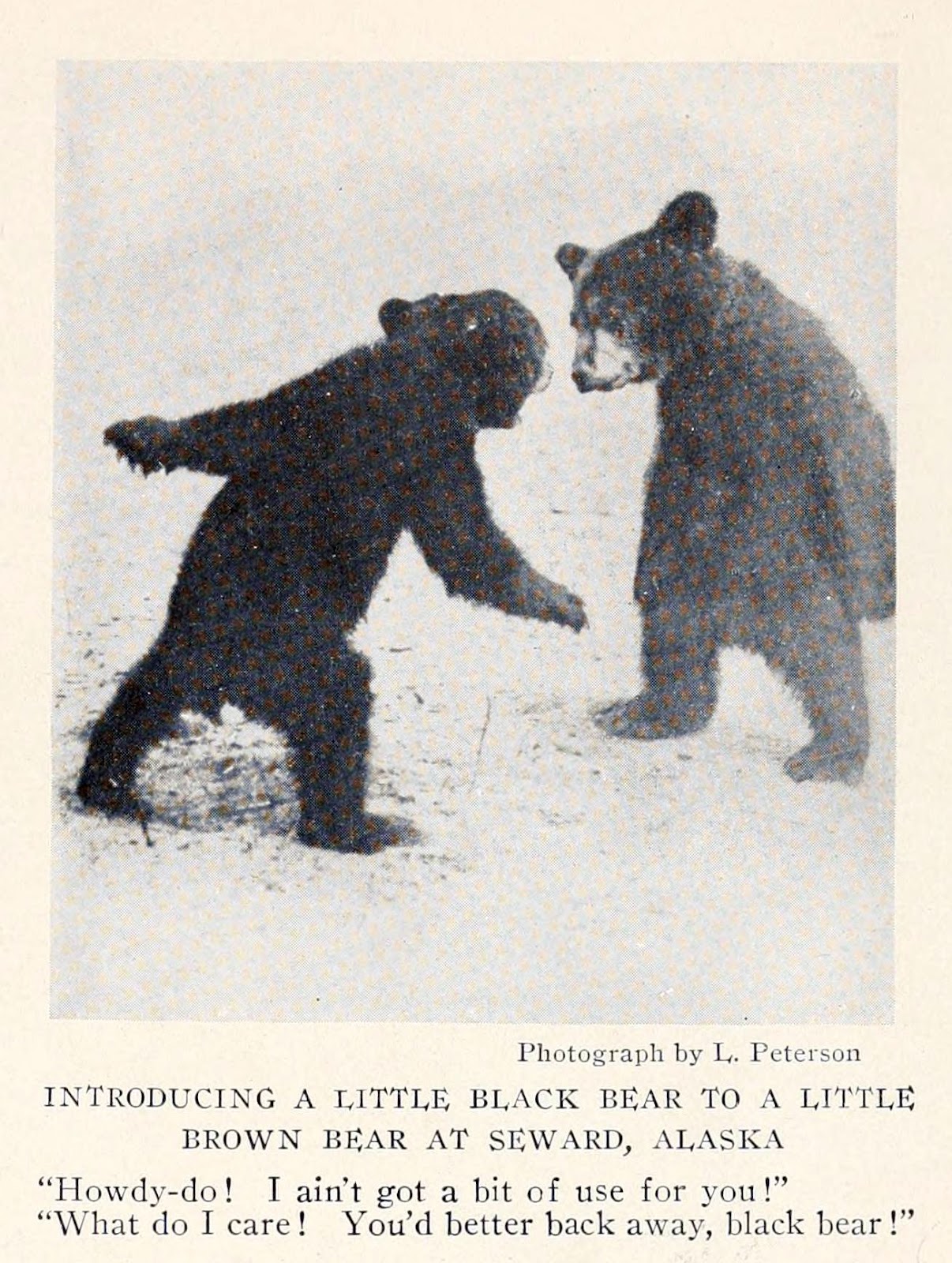
And one of our favorite excerpts from the book is a photograph and caption depicting the introduction of black and brown bear cubs:

View Full Size Image
Black and Brown Bear Cubs Being Introduced

Species Highlights

For this post, we’ve selected a few of the our favorite of the 119 species Nelson describes, accompanied by Fuertes’ enticing paintings. We’ve provided additional links and images for those species below which are also found in the new American Trail exhibit. See a full list of species you’ll encounter in the exhibit by visiting the zoo’s website.

See all of the images from our book of the week on Flickr, and check out select illustrations on Pinterest.

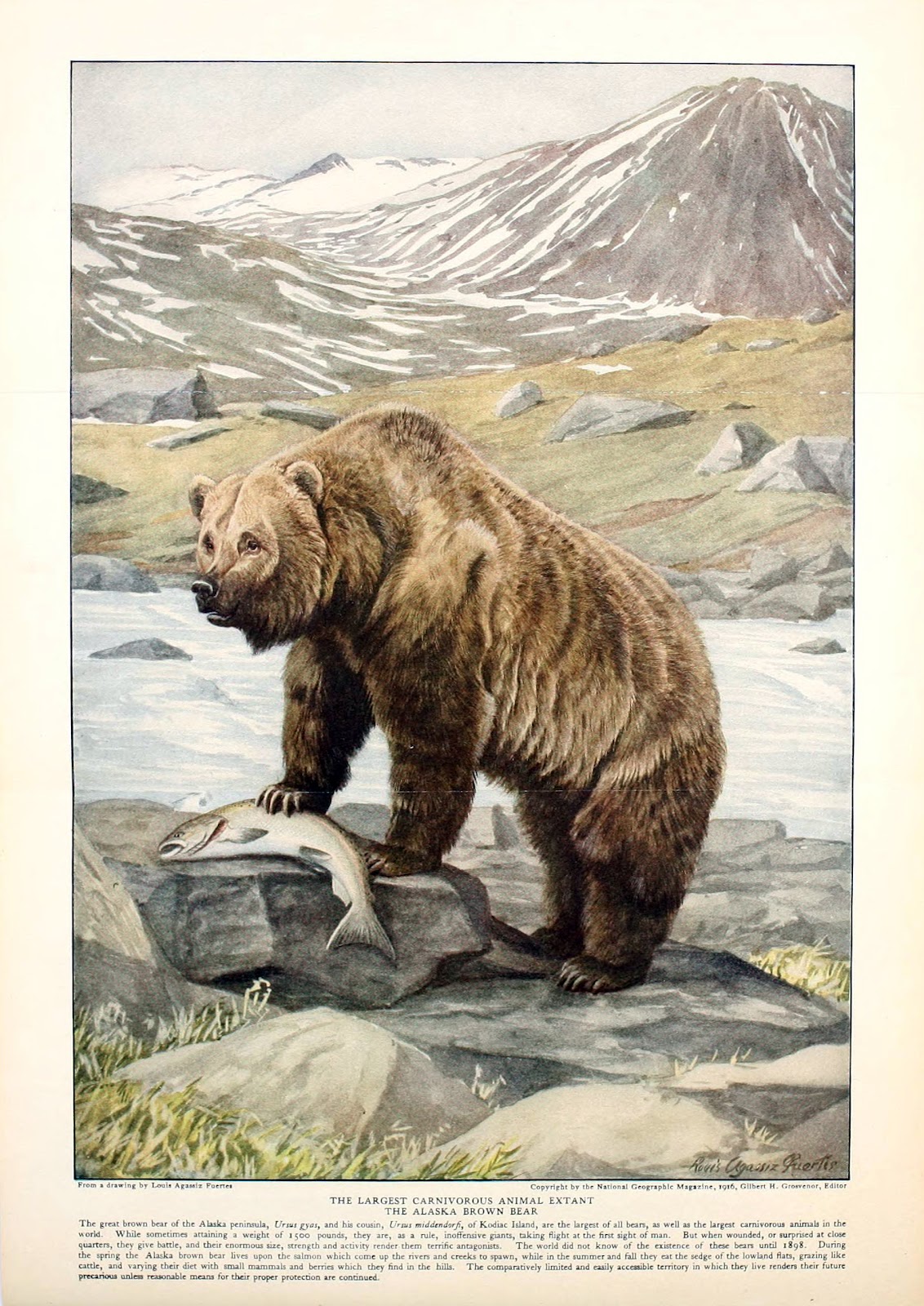
Alaskan Brown Bear

“The great brown bear of the Alaskan peninsula, Ursus [arctos], and his cousin, Ursus middendorffi, of Kodiac Island, are the largest of all bears, as well as the largest carnivorous animals in the world. [The Polar Bear, of roughly the same size, is documented as the largest bear alongside the Kodiak]. While sometimes attaining a weight of 1500 pounds, they are, as a rule, inoffensive giants, taking flight at the first sight of man. But when wounded, or surprised at close quarters, they give battle, and their enormous size, strength and activity render them terrific antagonists.

“The world did not know of the existence of these bears until 1898.

“During the spring the Alaska brown bear lives upon the salmon which come up the rivers and creeks to spawn, while in the summer and fall they eat the sedge of the lowland flats, grazing like cattle, and varying their diet with small mammals and berries which they find in the hills.”

View Full Size Image
The Alaskan Brown Bear


View Full Size Image
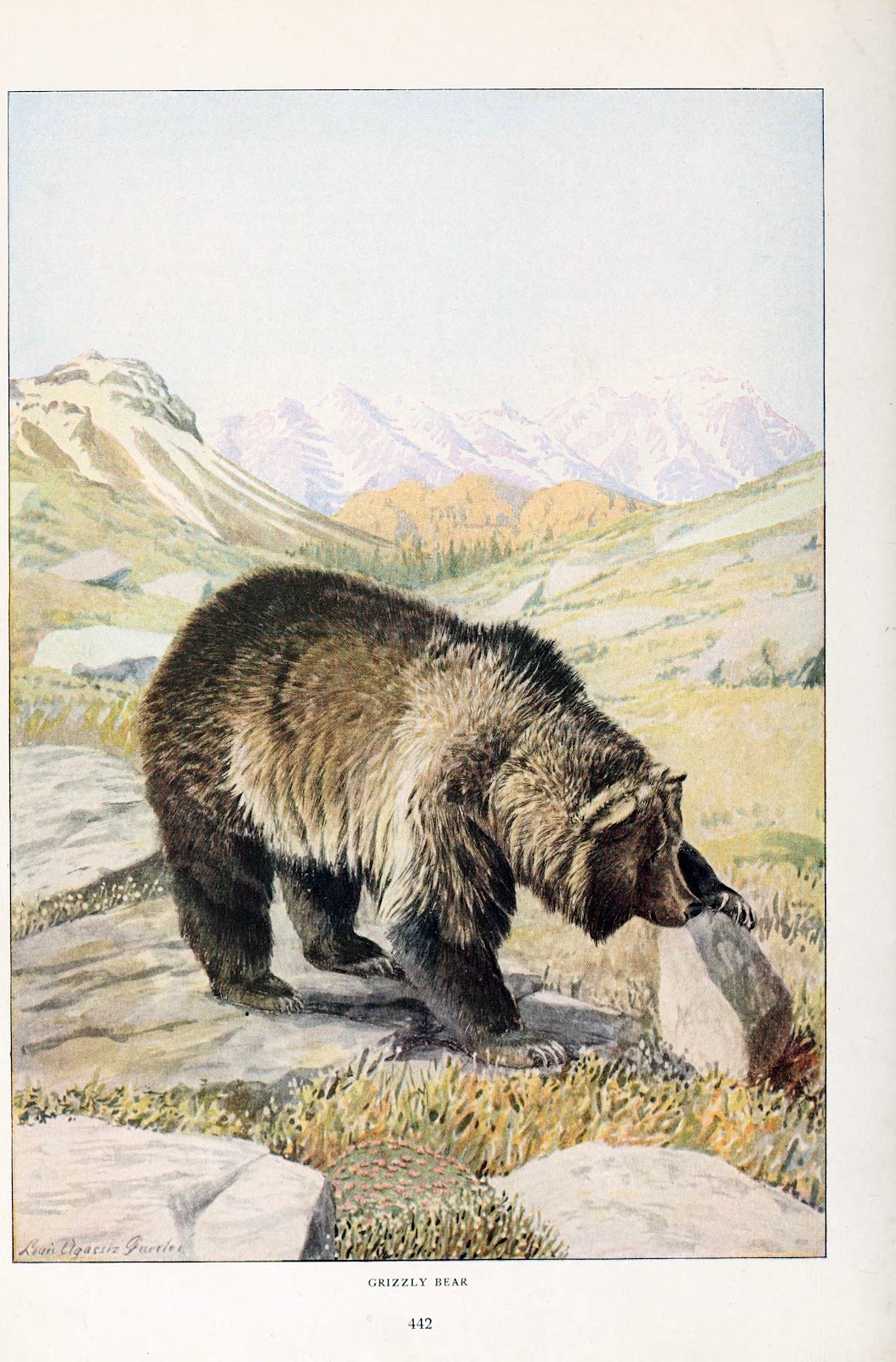
The Grizzly Bear


 North American Beaver

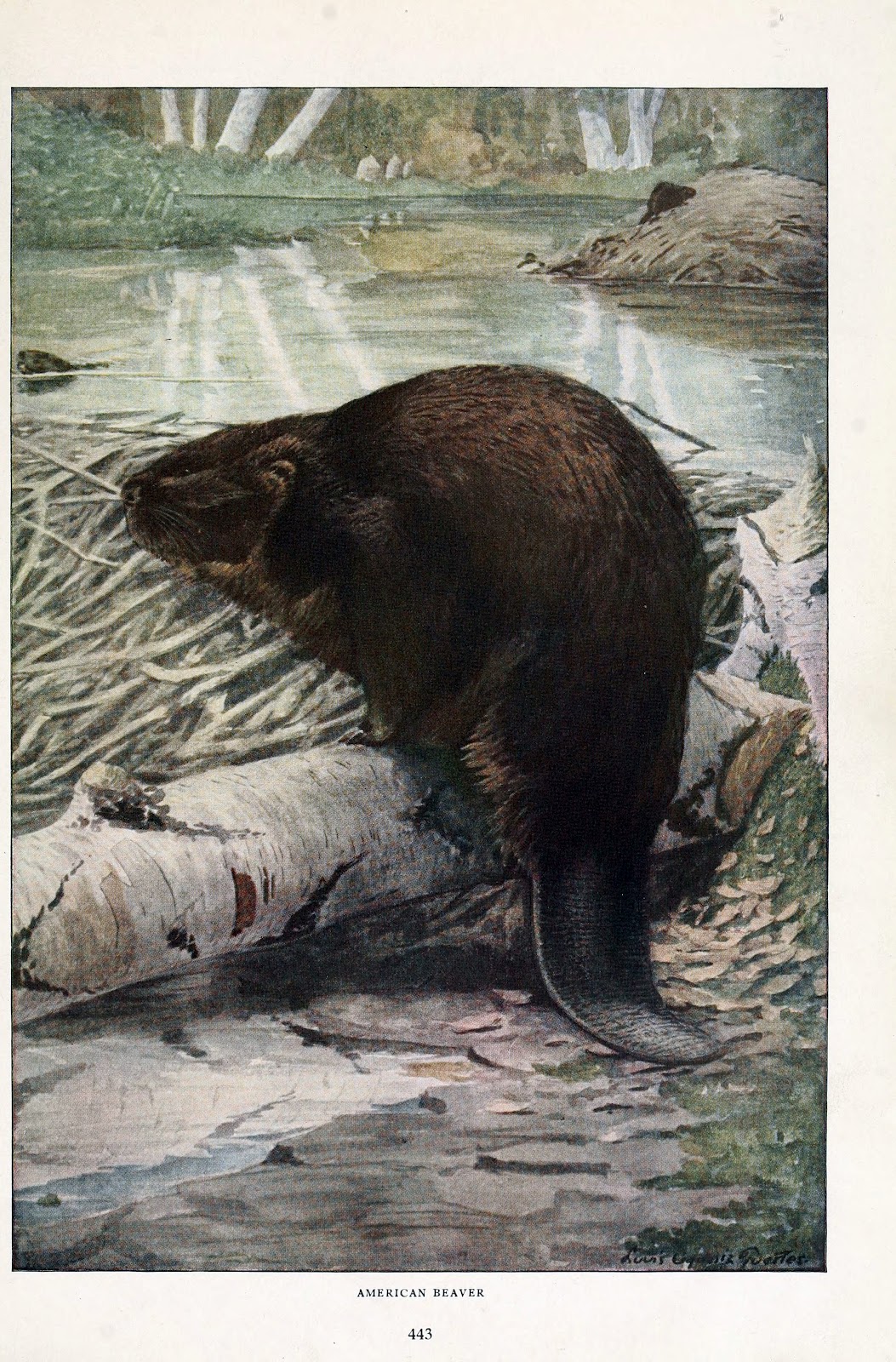
“Beavers belong to the rodent family – a group of animals notable for their weak mental powers. The beaver is the striking exception to the rule, and its extraordinary intelligence, industry, and skill have long excited admiration….

“[Beavers] are very proficient in building narrow dams of sticks, mud, and small stones across small streams for the purpose of backing up water and making ‘beaver ponds.’ In the border of these ponds a conical lodge is usually constructed of sticks and mud…The mud used by beavers in building dams and houses is scooped up and carried against the breast, the front feet being used like hands.”

View Full Size Image
North American Beaver

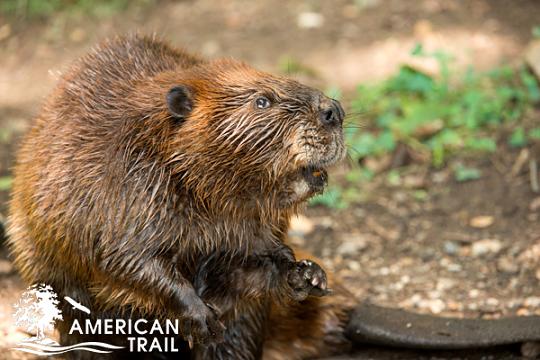
Three North American beavers are featured as part of the new American Trail exhibit. One, by the name of Willow, “is easily identifiable by a notch in her tail.”

View Full Size Image
North American Beaver from the American Trails exhibit


Moose

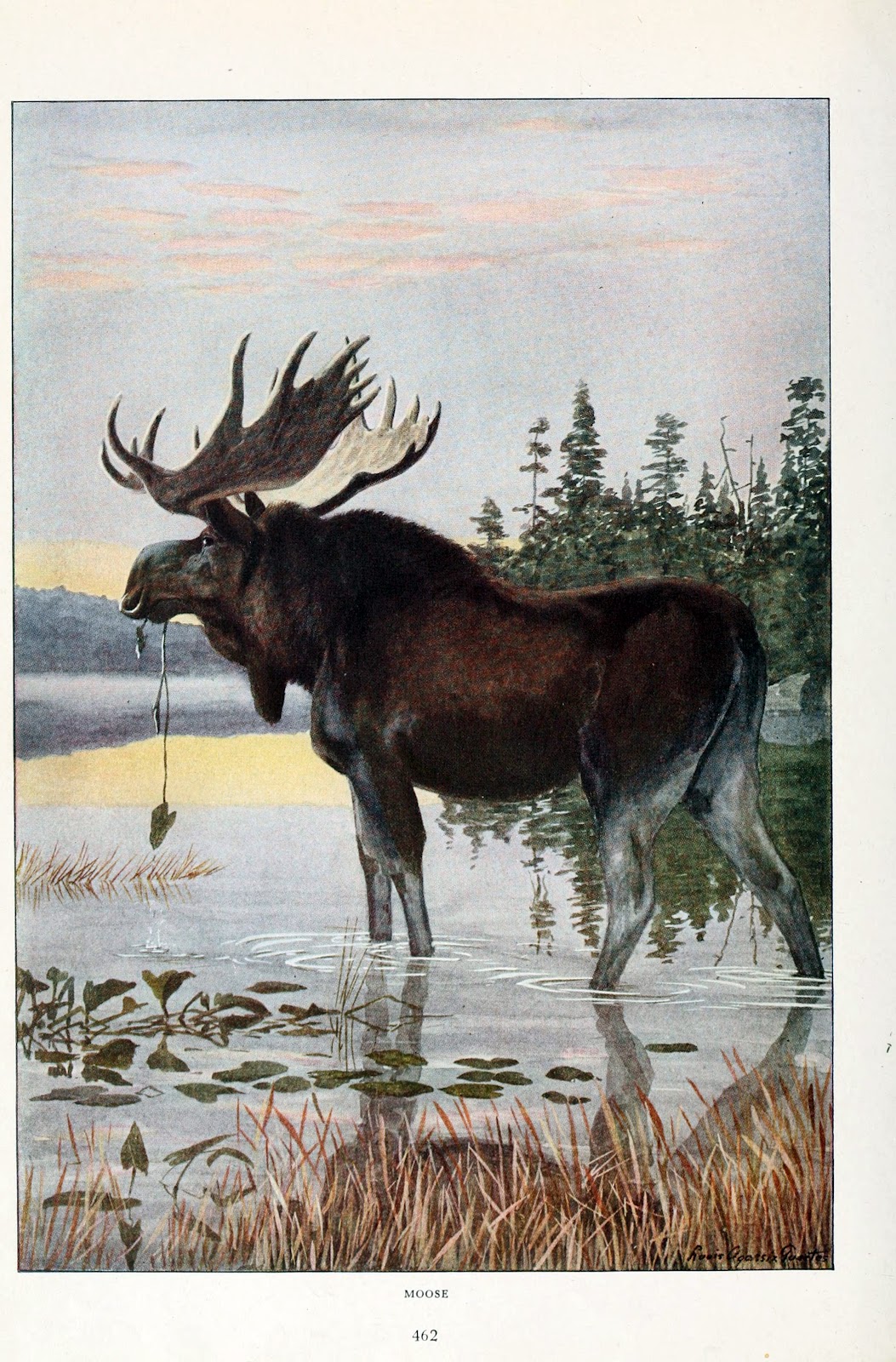
“The moose is a large, grotesquely formed animal, with the most impressive individuality of any of our large game. Its great head, with oddly formed nose, huge palmated antlers, pendulous bell under the neck, short body, and disproportionately long legs unite to lend the impression that it may be a strange survivor from some remote geologic period.

“Although taller than an ordinary horse, weighing more than half a ton, and adorned with wide-spreading antlers, the bull moose stalks with ghostly silence through thickset forests.”

View Full Size Image
Moose

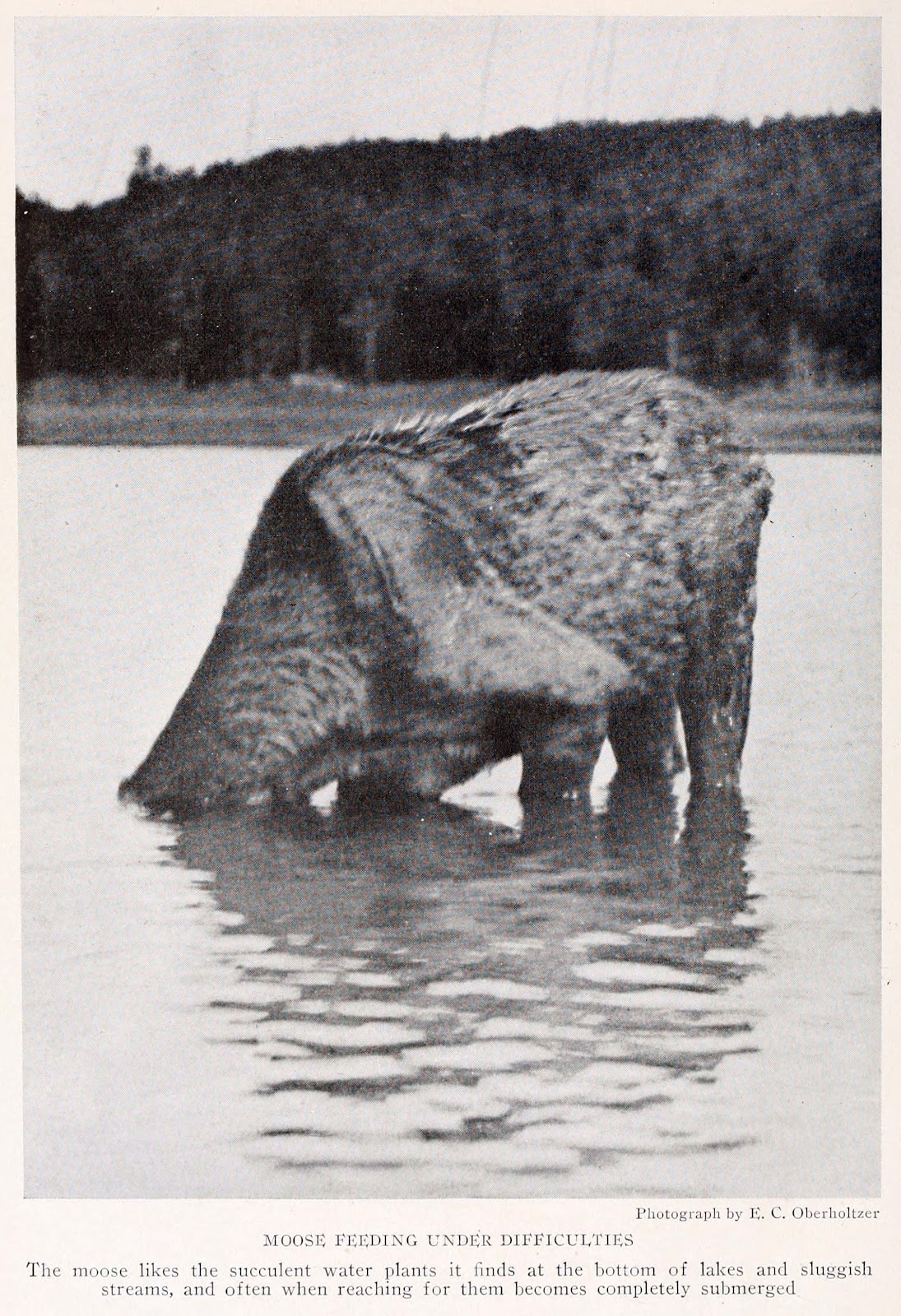
“In summer it loves low-lying, swampy forests interspersed with shallow lakes and sluggish streams. In such places it often wades up to its neck in a lake to feed on succulent water plants, and when reaching to the bottom becomes entirely submerged.”

View Full Size Image
Moose submerged in water, foraging for food.


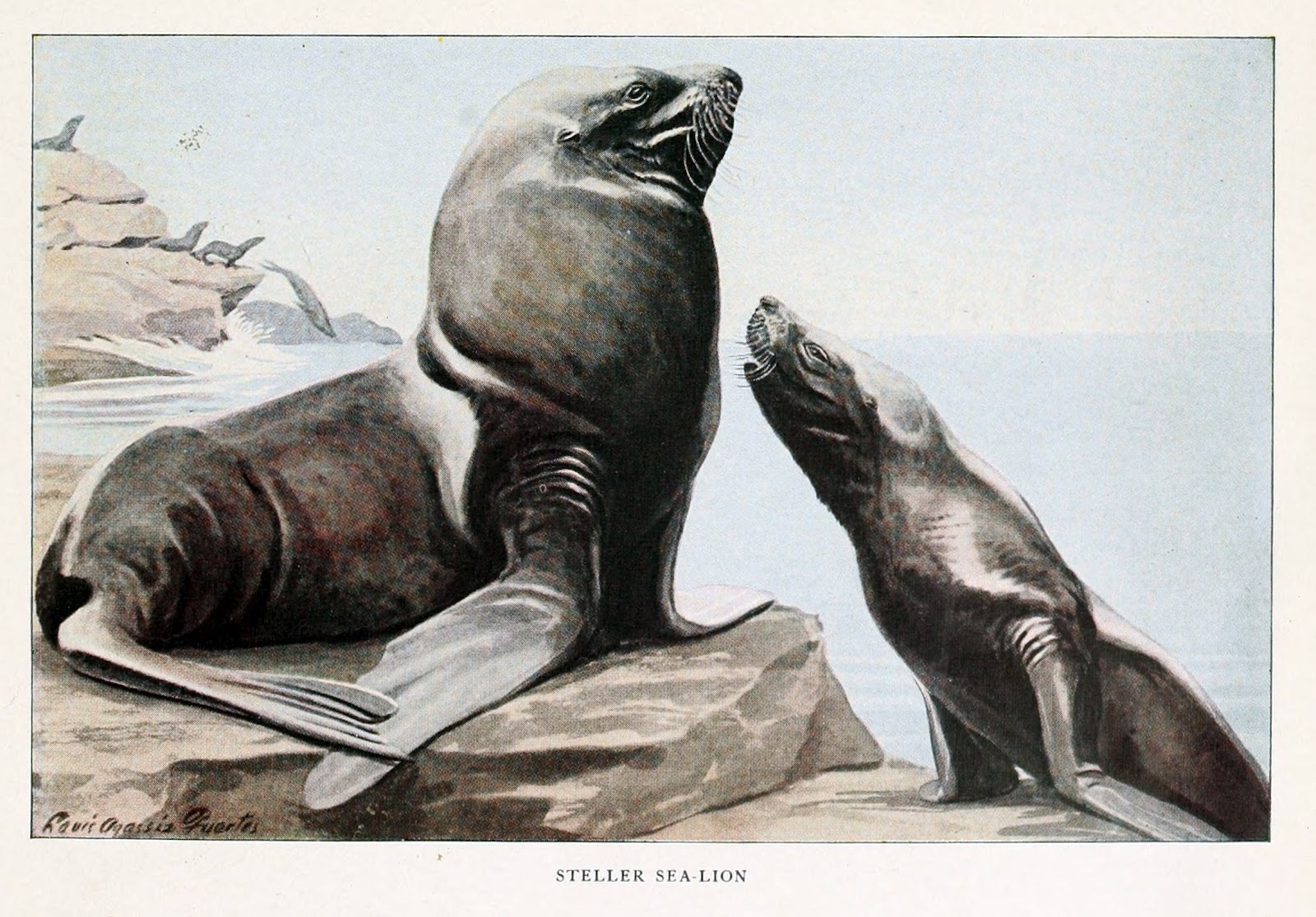
Steller Sea Lion

“Sea-lions are near relatives of the fur seals and have a nearly similar distribution, both in far southern and northern seas…The Steller Sea Lion is the largest member of the group, the old bulls weighing from 1,200-1,500 pounds.

“They are preeminently animals of the most rugged of shorelines and the stormiest of seas, being superbly powerful beasts with extraordinary vitality. The ease with which they pass through a smother of pounding seas to mount their rugged resting places is an admirable exhibition of skill and strength. The males have a bellowing roar, on the rocks in savage unison with the booming of the sea against the base of their refuge…

“It is reported that an umbrella opened and closed suddenly in the faces of the old sea-lions appears to terrify them more than any other weapon and is used successfully in drives.

“At sea they have only a single known enemy to fear – the fierce killer whale.”

View Full Size Image
Steller Sea Lion

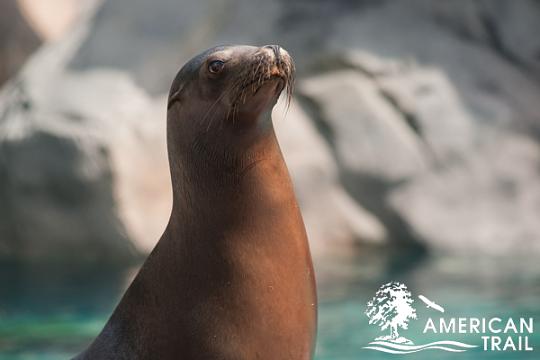
The American Trail exhibit features four of the Steller Sea Lion’s smaller cousin – the California Sea Lion. Two of them, Calli and Sophie, were rescued from the wild after being orphaned. A third, named Sophie, is Calli’s first pup.

View Full Size Image
Sea Lion from the American Trail exhibit


Threatened Species Day

Today is threatened species day – a day set aside to raise awareness about the predicament facing thousands of species throughout the world today. It was originally established to commemorate the death of the last Tasmanian Tiger at the Hobart zoo in 1936.

While many North American species can be found on the Threatened and Endangered Species List, some of our most iconic, including the Gray Wolf and Bald Eagle – which were once doomed to possible extinction – have miraculously recovered and are no longer among those listed as threatened. Human conservation efforts had much to do with these status reversals, proving that when we come together to conserve, we can make a major impact. Let’s hope similar efforts can help restore the future for the species that still remain threatened.

Explore images of IUCN Endangered and Critically Endangered species on our Flickr page.

Learn how you can help conservation efforts with some ideas from the World Wildlife Foundation’s “Campaign for Change.”

September 7, 2012by michelle.underhill

Help Support BHL

BHL's existence depends on the financial support of its patrons. Help us keep this free resource alive!

search

About BHL

The Biodiversity Heritage Library (BHL) is the world’s largest open access digital library for biodiversity literature and archives. BHL operates as a worldwide consortium of natural history, botanical, research, and national libraries working together to digitize the natural history literature held in their collections and make it freely available for open access as part of a global “biodiversity community.”

Join Our Mailing List

Sign up to receive the latest news, content highlights, and promotions.

Subscribe Now

Subscribe to Blog via Email

Enter your email address to subscribe to this blog and receive notifications of new posts by email.

Join 319 other subscribers

Subscribe to Blog Via RSS

Subscribe to the blog RSS feed to stay up-to-date on all the latest BHL posts.

Access RSS Feed

Inspiring Discovery through Free Access to Biodiversity Knowledge.

The Biodiversity Heritage Library makes it easier than ever for you to access the information you need to study and explore life on Earth…for free, anytime, anywhere.


ABOUT | HARMFUL CONTENT | PRIVACY | SITE MAP | TERMS OF USE