Biodiversity Heritage Library - Program news and collection highlights from BHL
  • Home
  • News
  • Featured Books
    • All Featured Books
    • Book of the Month Series
    • BHL at 20
  • User Stories
  • Campaigns
    • Fossil Stories
    • Garden Stories
    • Monsters Are Real
    • Page Frights
    • Her Natural History
    • Earth Optimism 2020
  • Tech Blog
  • Visit BHL
Home
News
Featured Books
    All Featured Books
    Book of the Month Series
    BHL at 20
User Stories
Campaigns
    Fossil Stories
    Garden Stories
    Monsters Are Real
    Page Frights
    Her Natural History
    Earth Optimism 2020
Tech Blog
Visit BHL
  • Home
  • News
  • Featured Books
    • All Featured Books
    • Book of the Month Series
    • BHL at 20
  • User Stories
  • Campaigns
    • Fossil Stories
    • Garden Stories
    • Monsters Are Real
    • Page Frights
    • Her Natural History
    • Earth Optimism 2020
  • Tech Blog
  • Visit BHL
Biodiversity Heritage Library - Program news and collection highlights from BHL
Blog Reel, Featured Books

Ferrante Imperato: Step Into His Cabinet of Wonders!

Cabinets of Wonder: What Are They and Why Were They Created?

The term, “cabinet of wonder”, comes from the term “wunderkammer” (literally meaning “wonder chamber”).  The tradition of creating cabinets of wonder began during the Renaissance, the period of time between the 14th and 17th centuries.

In England and France, these cabinet of wonder collections were called “cabinets” or “curiosity cabinets”.  German speaking countries called the collections a variety of more specific terms: kunstkammer (“art cabinets”), schatzkammer (“treasure cabinets”), rüstkammer (history cabinets), and eventually wunderkammer (“marvel or curiosity cabinets”).  People during the Renaissance referred to these collections generically using the terms “wunderkammer” or “curiosity cabinet” interchangeably.
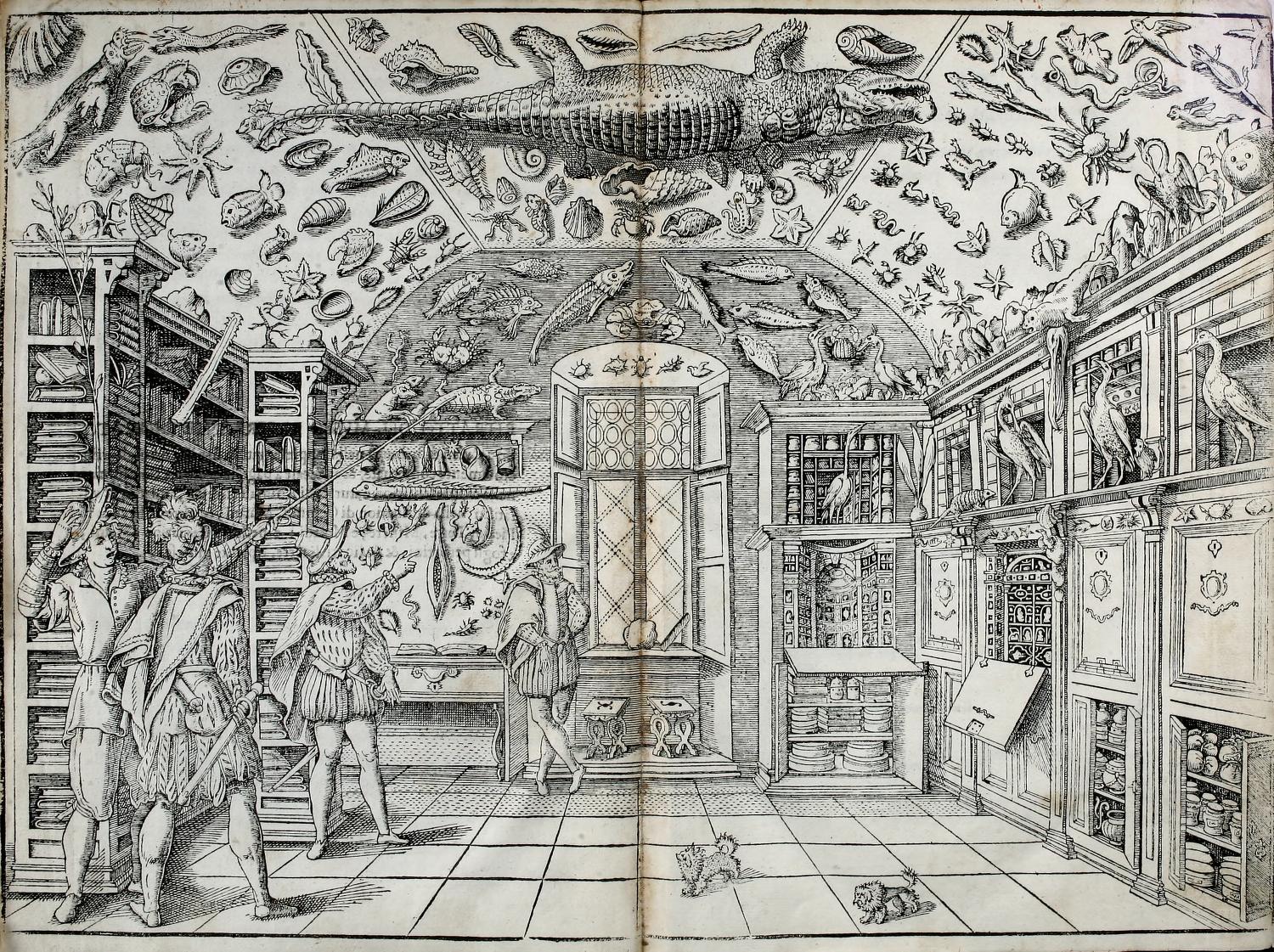
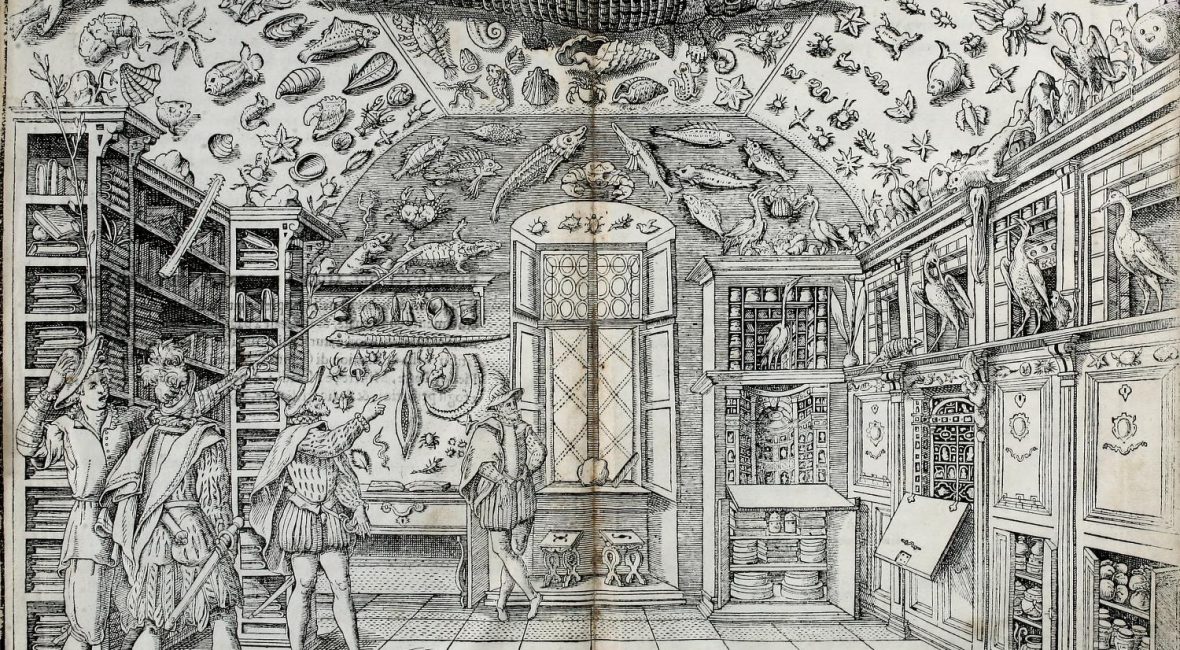
View Full Size Image
The first published pictorial representation of a Renaissance cabinet of curiosity in Ferrante Imperato’s Dell’historia Naturale. (Image digitized by Smithsonian Libraries.)

The Renaissance idea of creating a collection of (formerly) animate, inanimate, and botanical objects, and even odd specimens, came from a human desire to place mankind somewhere within the larger scheme of things.  Formerly, European princes built their own private studiolo or cabinets, which contained rare natural objects and books, and acted as status symbols to impress others.  Then the cabinets came to be used for scientific observation and contained more humble–but important–natural objects and specimens.  During the Renaissance, theorists from all fields of academia were making new scientific and philosophical discoveries, and realized that all of this new knowledge sometimes challenged previous beliefs about existence and mankind’s place within it.
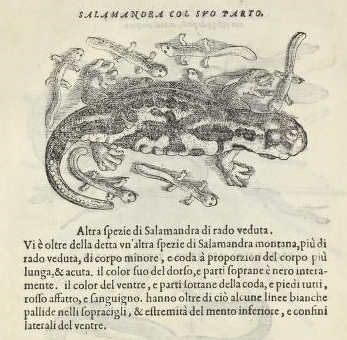
View Full Size Image
Salamander, from Ferrante Imperato’s Dell’historia Naturale (1599). Digitized by Smithsonian Libraries.

Different from modern museums, wunderkammer were generally created by a single scholar: in our example, Ferrante Imperato (1550-1625), an apothecary and scholar living in Naples.  In addition, the objects were believed to be interconnected by some singular purpose that could shed light on man’s place within existence.

Humanism was one of the most predominant movements in Italy during the Renaissance, and some humanists believed, among other things, in a notion of universalism–the idea that all things and all people were connected by some shared visible and/or invisible similarities, and all created by the divine.

The Renaissance humanists endeavored to use reasoning to explain unknown aspects of nature, which developed into the study of natural history: empirical observations and experimentation were used to make conclusions about the physical world.  Thus the Renaissance, and the creators of cabinets of wonder, were important in setting the stage for extraordinary advances in scientific knowledge in the decades following.
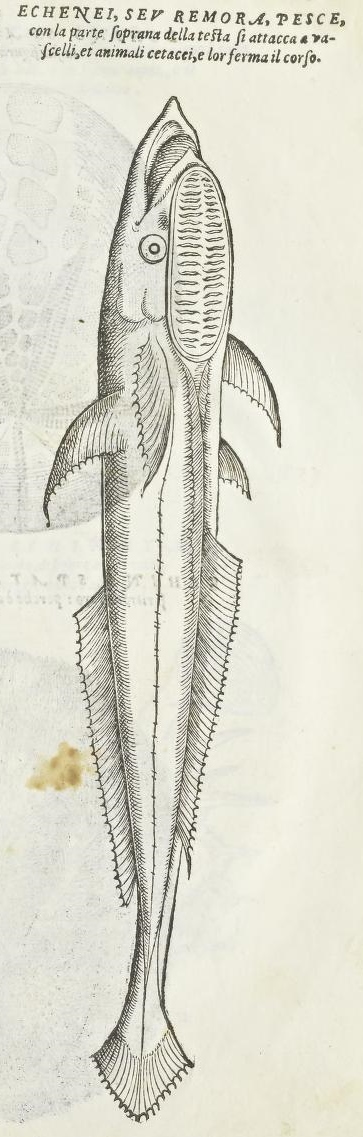
View Full Size Image
Remora fish, from Ferrante Imperato’s Dell’historia Naturale (1599). Digitized by Smithsonian Libraries.

What Were the Beliefs of Some Creators of Cabinets of Wonder, and Why Was Ferrante Imperato So Important?

Some creators of cabinets of wonder used for scientific observation and experimentation were pietistic, and stressed living a good and helpful life.  For this reason, the cabinets’ creators often wrote of their collections and made them open to the public to make people aware of the beauty of nature and the usefulness of natural objects.  The creators would also observe and experiment on items in their collections in an endeavor to increase knowledge of all aspects of the world.  Additionally, creators of cabinets of wonder often corresponded with, and visited, one another and discussed their collections and findings to increase the collective knowledge about the natural world and existence.

In this vein of sharing knowledge, Ferrante Imperato was convinced by his son, Francesco, and by his own friends, to produce a written account of his cabinet of wonder, in the form of the 28 books which comprise his work Dell’historia Naturale.  The majority of the work’s books are concerned with stones, minerals, gems and earth (i.e., minerology and related fields).  The last two books deal with living organisms: plants and animals.  Imperato especially featured and worked with herbs used to create medicines as an apothecary.

The first version of Dell’historia Naturale, printed in 1599, totaled 791 pages between the 28 books that comprised it, with 119 woodcut illustrations interspersed throughout the text.  One of the first European natural history research collections, Imperato’s cabinet may have contained as many as 35,000 plant, animal and mineral specimens.  Imperato quoted other authors at the beginning of his subject sections and discussed what he thought of the authors’ ideas, and then launched into his own beliefs about the subjects based on his experimentation on, and observation of, specimens in his cabinet of wonder.
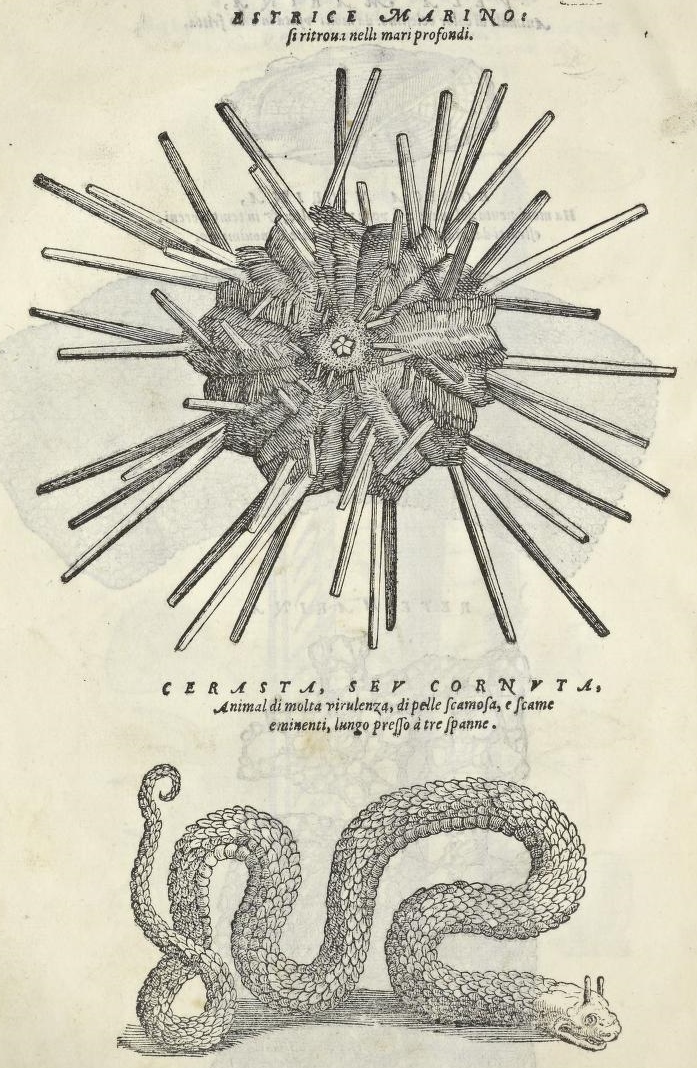
View Full Size Image
Marine creature and Horned Viper, from Ferrante Imperato’s Dell’historia Naturale (1599). Digitized by Smithsonian Libraries.

Many creators of these cabinets were drawn to collecting specimens in an endeavor to make life more comfortable for people in acts of piety, either by collecting herbs and natural materials like Imperato did in order to create medicines, or by collecting natural materials believed to be alchemical or metallurgical in order to experiment with new recipes (“segreti”, or “secrets”) to ease human ailments. Sometimes piety, however, was considered heretical by the Catholic Church in Italy at this time due to pietism’s emphasis on individual religious devotion (which leaves room for the idea that the Church may not be needed).

Imperato’s friend and scientific rival, Giovanni Battista Della Porta, who practiced pietism, created the Academia Secretorum Naturae (“Accademia dei Segreti”), which translates to “The Academy of the Mysteries of Nature”, in order to study and share information about natural science with like-minded scholars.  In 1579, Della Porta’s Accademia was accused of sorcery and disbanded by the Pope.
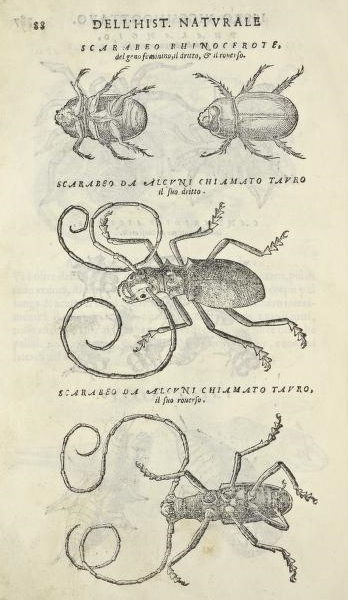
View Full Size Image
Insects from Ferrante Imperato’s Dell’historia Naturale (1599). Digitized by Smithsonian Libraries.
View Full Size Image
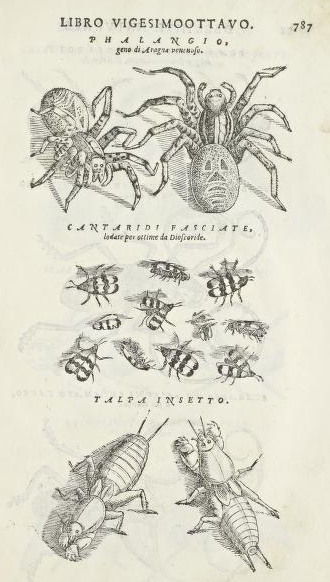
Arachnids and other insects from Ferrante Imperato’s Dell’historia Naturale (1599). Digitized by Smithsonian Libraries.

Some humanist scholars did, in fact, possess objects in their cabinets of wonder believed to have magical properties based on arcane knowledge, and these items included magical lanterns, speaking tubes, and distorting mirrors.  So the humanist sharing of “secrets of nature” did include, for some, secret of a magical (heretical) sort.

Imperato saw his cabinet of wonder as a place to derive knowledge directly from the artifacts before him, rather than trying to apply secret knowledge from arcane ancient and contemporary manuscripts to the objects in order to try and produce a result, like other scholars of his time, such as Girolamo Ruscelli (who had his own Accademia Segreta).

When Imperato’s Dell’historia Naturale was being printed in 1599, and more people knew about the pietism, and beliefs in magical properties of some items in some cabinets of wonder, Imperato’s son, Francesco, feared his father’s text might lead to heresy charges.  Francesco thus quickly printed another shorter version of his father’s text with many references to saints and Christian writers.

Imperato was not charged by the Church with heresy or sorcery when his full text, in all 28 books, came out, and this text became the first to feature an illustration of a cabinet of wonder, and the first work on natural history completely written in Italian (rather than scholarly Latin).
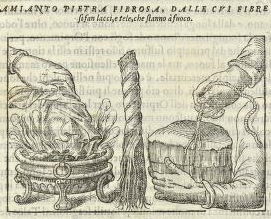
View Full Size Image
An experiment with asbestos, from Ferranto Imperato’s Dell’historia Naturale (1599). Digitized by Smithsonian Libraries.

Interesting Facts:

Some of the scholars and knowledgeable men with whom Ferrante Imperato corresponded included: Ulisse Aldovrandi, Gaspard Bauhin, Pierandrea Mattioli, and Fabio Colona.

Imperato was amazed by asbestos, which was a relatively new substance at the time, with paradoxical and malleable qualities.  Imperato experimented with asbestos and included an illustration of one of his experiments with it in Dell’historia Naturale (fig. 18)–the only experiment depicted in the work.

In order to argue that a toad’s skull was actually a stone unlike any other natural stones, Imperato captured a pregnant viper and gathered many toads to prove that the viper could not penetrate the toad’s skull, and called the toad’s skull “toadstone” (pietra di rospo).

In 1611, Galileo demonstrated for other scholars the luminescent nature of a stone called the “Bologna stone” (lapis Bononiensis), or the “solar sponge”.  When Imperato heard about this stone, he was fascinated but thought it qualified as natural magic and claimed: “I believe that it is not natural but artificial”.

Cabinets of wonder often included fossils–Imperato had many–and humanist debate in Italy in the early fifteenth century led to subsequent discussions about what the existence of fossils meant; European students visiting Italy spread this debate throughout many regions when they returned to their home towns.

Ferrante Imperato’s Dell’historia Naturale contains medical folklore such as the ideas that wearing amethyst in the navel prevents drunkenness, sapphire cleans the eyes in such a way as to prevent lust, and jasper worn as an amulet can stop bleeding.

References:

Dion, M. (n.d.). History of the wunderkammern (cabinet of curiosities). Mark Dion: Tate Thames Dig. Retrieved from http://www.tate.org.uk/learn/online-resources/mark-dion-tate-thames-dig/wunderkammen

Duffin, C.J., Moody, R.T.J., & Gardner-Thorpe, C. (Eds.). (2013). A history of geology and medicine. Geological Society: Special Publication, 375, 23-24.

Findlen, P. (1994). Possessing nature: Museums, collecting, and scientific culture in Early Modern Italy. Berkeley, C.A.: University of California Press.

Grice, G. (2015). Cabinet of curiosities: Collecting and understanding the wonders of the natural world. New York, N.Y.: Workman Publishing.

Guitard, E. (1937). Ferrante Imperato. Revue d’histoire de la pharmacie, 25(100), 196.

Mottana, A. (n.d). The first modern translation of Theophrastus’ “On Stones” (pi epsilon rho Anot sign lambda AI omega I1/2; De lapidibus): Ferrante Imperato (1599). Rendiconti Lincei-Scienze Fisiche E Naturali, 21(1), 1-25.

Philippe, J. (2003). Les curiosités de trois apothicaires. Revue d’histoire de la pharmacie, 91(340), 603-610.

Rosenberg, G.D. (Ed.). (2009). The revolution in geology from the Renaissance to the Enlightenment. GSA Memoir Series, 203, 84.

Vai, G. B., & Cavazza, W. (2006). Ulisse Aldrovandi and the origin of geology and science. The origins of geology in Italy: GSA special papers, 411, 43-63.
March 13, 2017by micahv
Blog Reel, Featured Books

Digging into the personal writings of a 19th century ornithologist

Tuesday, June 12, 1866 
A.M. pleasant P.M. cloudy. Studied part of P.M. Went to circus in evening & saw a hippopotamus for the first time. Got four warbling vireos before breakfast. The algebra is now rather hard. 
(Diaries of William Brewster). 

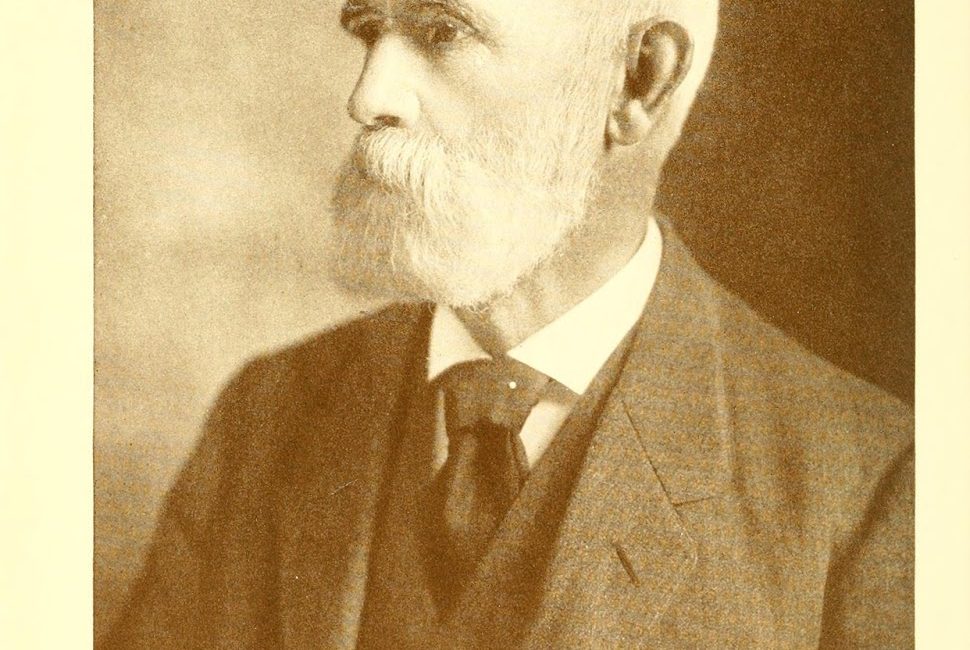
View Full Size Image
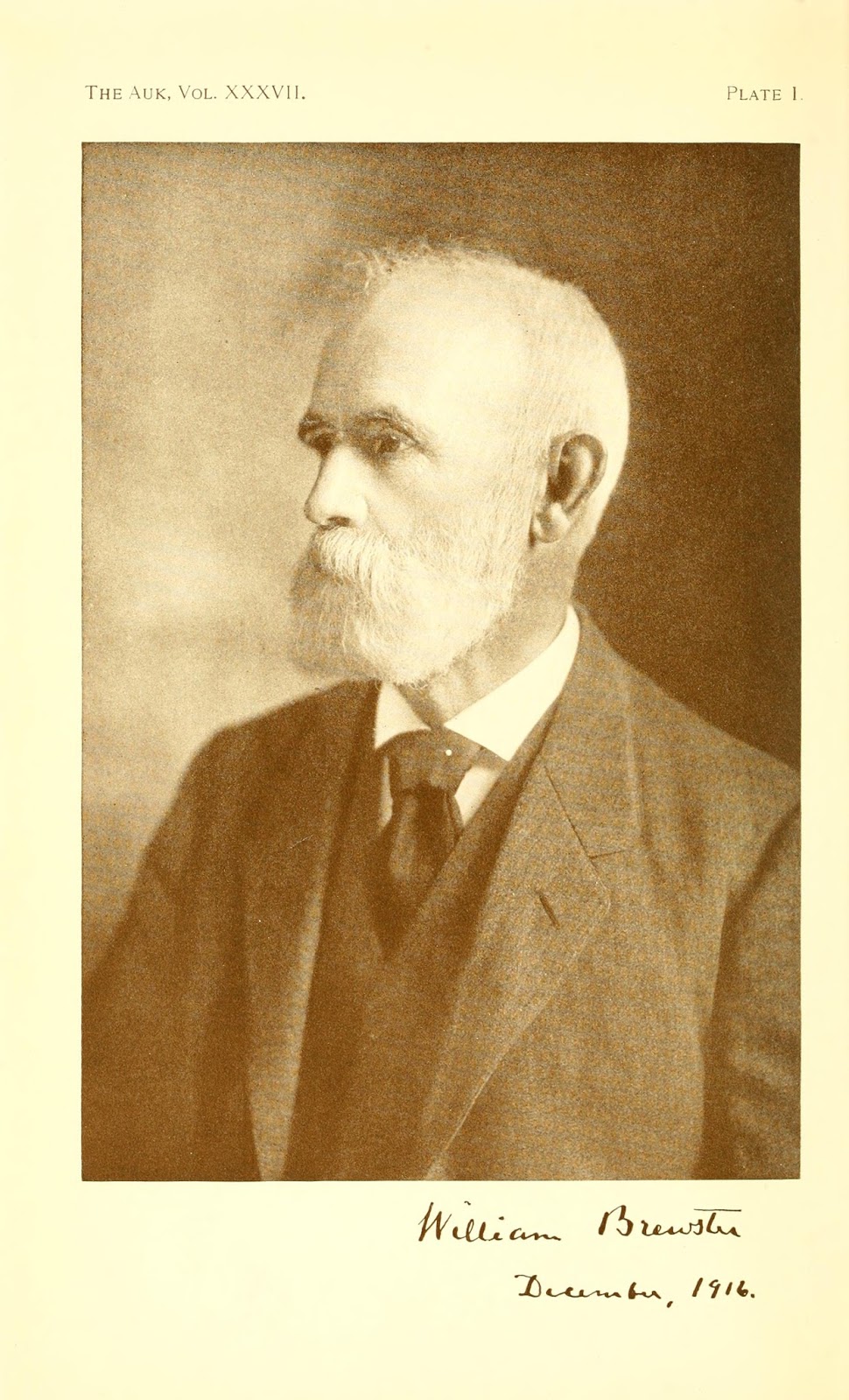
William Brewster. The Auk. v. 37 (1920). Digitized by Smithsonian Libraries. http://biodiversitylibrary.org/page/15938473

As a teen in Cambridge, Massachusetts during the 1860s, William Brewster (1851-1919) woke up early to collect birds before school, practiced taxidermy with friends, and carefully noted the dates when local plants flowered and produce ripened in the family garden.

His early fascination for birds and his observant note-taking laid the groundwork for his career as a prominent amateur ornithologist. He would become the first president of the Massachusetts Audubon Society and a co-founder and president of the American Ornithologists’ Union.

An ongoing project at the Ernst Mayr Library of Harvard University’s Museum of Comparative Zoology has been the digitization and transcription of Brewster’s diaries, field journals, and correspondences. Some of these journals and diaries are available to read on the Biodiversity Heritage Library, and we are working toward making all his notes and correspondences digitally accessible for study.

Over the course of his life, Brewster saw Massachusetts landscape and ecology change dramatically. Cambridge developed from farmland to urban city, and House Sparrows introduced from Europe decimated the farmers’ beloved Eastern Bluebirds. These kinds of observations about land use and animal presence, as well as his notes on plants and weather, make the Brewster collection a valuable resource for scientists studying ecological change.

Brewster published articles prolifically in scientific publications such as the ornithological journal, the Auk. In his field notes and journals, we can find the stories that lie behind those scientific papers: they document the development of a scientist, professionally and personally. They reveal his relationships with other scientists, document in detail what a typical day’s work looked like, and are sprinkled with amusing observations, beautiful scenes, and personal insights that would not necessarily be documented in a scientific publication.

These three bird stories illustrate the value of records where the scientific and the personal overlap.

Pine Grosbeak: Nature Writing and Scientific Work

View Full Size Image
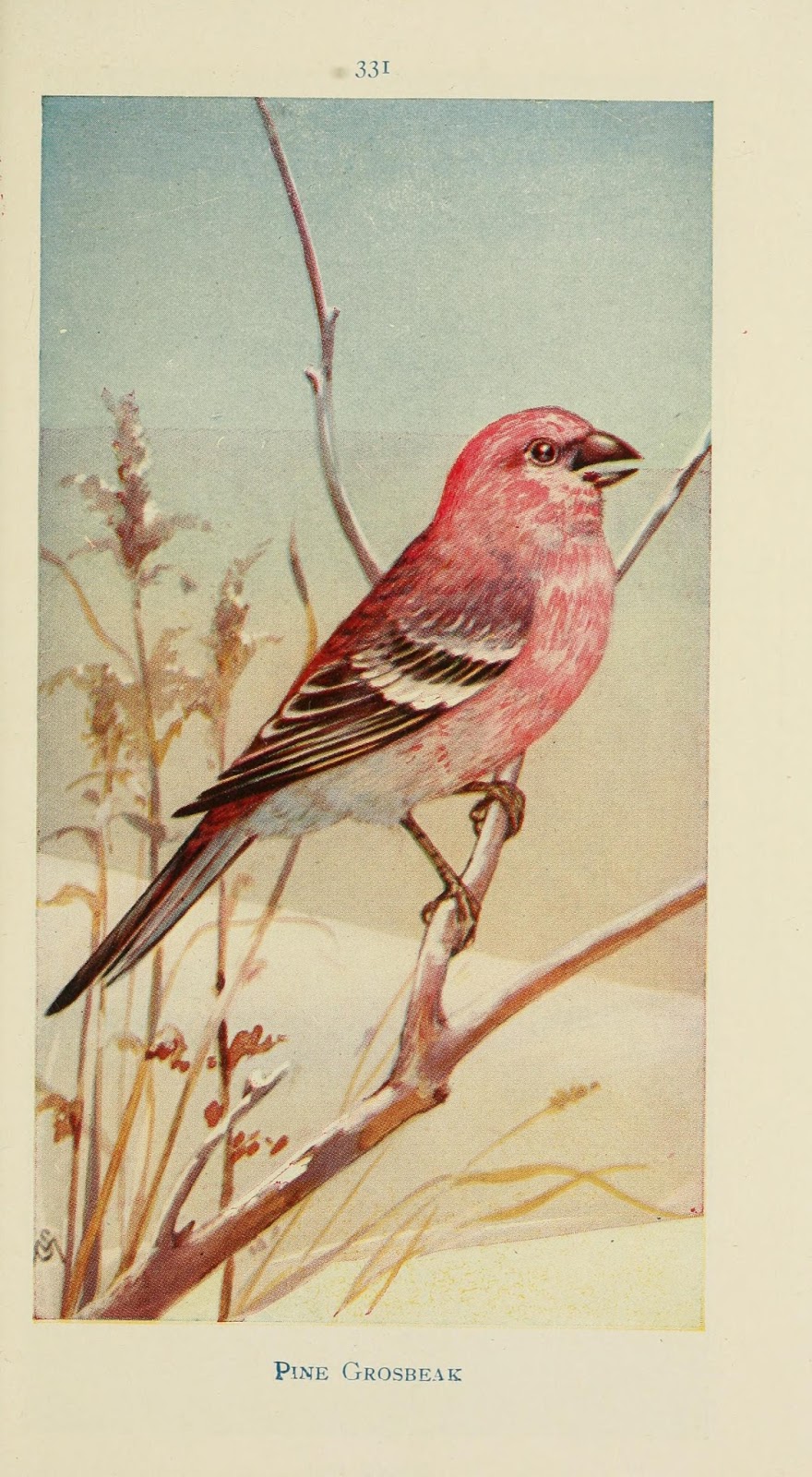
Pine Grosbeak illustration from Field book of wild birds and their music. London, G.P. Putnam’s Sons [c1921]. Digitized by Smithsonian Libraries. biodiversitylibrary.org/page/13653735

For a few days in January of 1893, Cambridge and Boston were abuzz with an unfamiliar sight: hundreds of red and gold birds that drew lots of attention from residents.

Brewster recognized them as Pine Grosbeaks. In the winter, large foraging flocks of Pine Grosbeaks often strip entire trees of their fruits, crushing through pulp and seeds and moving on when the food source has been exhausted.

Brewster observes:

“There were a good many Pine Grosbeaks scattered along the line of ashtrees on the ridge to my left and as I approached Mt. Auburn Street their numbers increased until upon reaching Mr. Hayes’s place I found the trees literally alive with them. 

Soon after I stopped to look at them they began flying from every direction into a large white ash which stands near the foot of the avenue. This tree was loaded with fruit and with snow clinging to the fruit clusters and to every twig. In a few minutes it supported also more than a hundred Grosbeaks which distributed themselves quite evenly over every part from drooping lower to the upright upper branches and began shelling out and swallowing the seeds.

The rejected wings floated down in showers and soon began to give the surface of the snow beneath a light brownish tinge.The snow clinging to the twigs and branches was also quickly dislodged by the movements, of the active, heavy birds and for the first few minutes it was continually flashing out in puffs like steam from a dozen different points at once. The finer particles, sifting slowly down, filled the still air and enveloped the entire tree in a gauzy veil or mist tinted, where the sun-beams pierced it, with rose, salmon and orange, elsewhere of a soft, dead white and of incredible delicacy and beauty, truly a fitting drapery for this winter picture- the hardy Grosbeaks at their morning meal. 

They worked in silence when undisturbed and so very busily that at the end of an hour they had actually eaten or shaken off nearly half the entire crop of seeds. Some men employed in a marble cutter’s shop near the tree were neglecting their tasks to watch and discuss them. One of these men told me that a few Grosbeaks were seen in the tree late yesterday afternoon.” (Cambridge, January 10, 1893.) [Edited with paragraph breaks and punctuation for readability.] 

A sudden, unexpected appearance of a large flock non-resident birds is known in the ornithological world as an irruption. (In recent years in Massachusetts, we’ve often heard the word irruption used to describe an unexpected influx of snowy owls that aren’t our usual residents.) Details on a historical irruption of Pine Grosbeaks may be of value to modern day scientists looking back in time for trends.

But while Brewster often recorded bird sightings as lists or in simple, factual paragraphs, some of the scientific observations are rendered with an artistry that carries them into the genre of nature writing. The image of the tree alive with birds, the rosy quality of light in the snowy air, and the excitement of the marble cutters makes these bird notes especially memorable.

The journal entries for these days form the basis of an article he had published in the Auk two years later, ‘A remarkable flight of Pine Grosbeaks (Pinicola enucleator)’. While Brewster’s article reads as somewhat more fact-driven, it’s written as a personal narrative that draws heavily on his notes, and it contains a condensed version of the visual description shared above.

It seems to be fairly normal at that time for published scientific work to include personal narrative and assertions which we would edit out today. But letters between Brewster and ornithologist friends reveal that they critiqued each other’s work not only on the reliability of their data but also on the style of their prose. Brewster’s scientific journals suggest that personal note-taking was a crucial opportunity to practise the art of writing, and digging into these journal entries allows us a glimpse into a scientist’s thinking and writing process.

American Robin: Personal Musings and Anthropomorphization

View Full Size Image
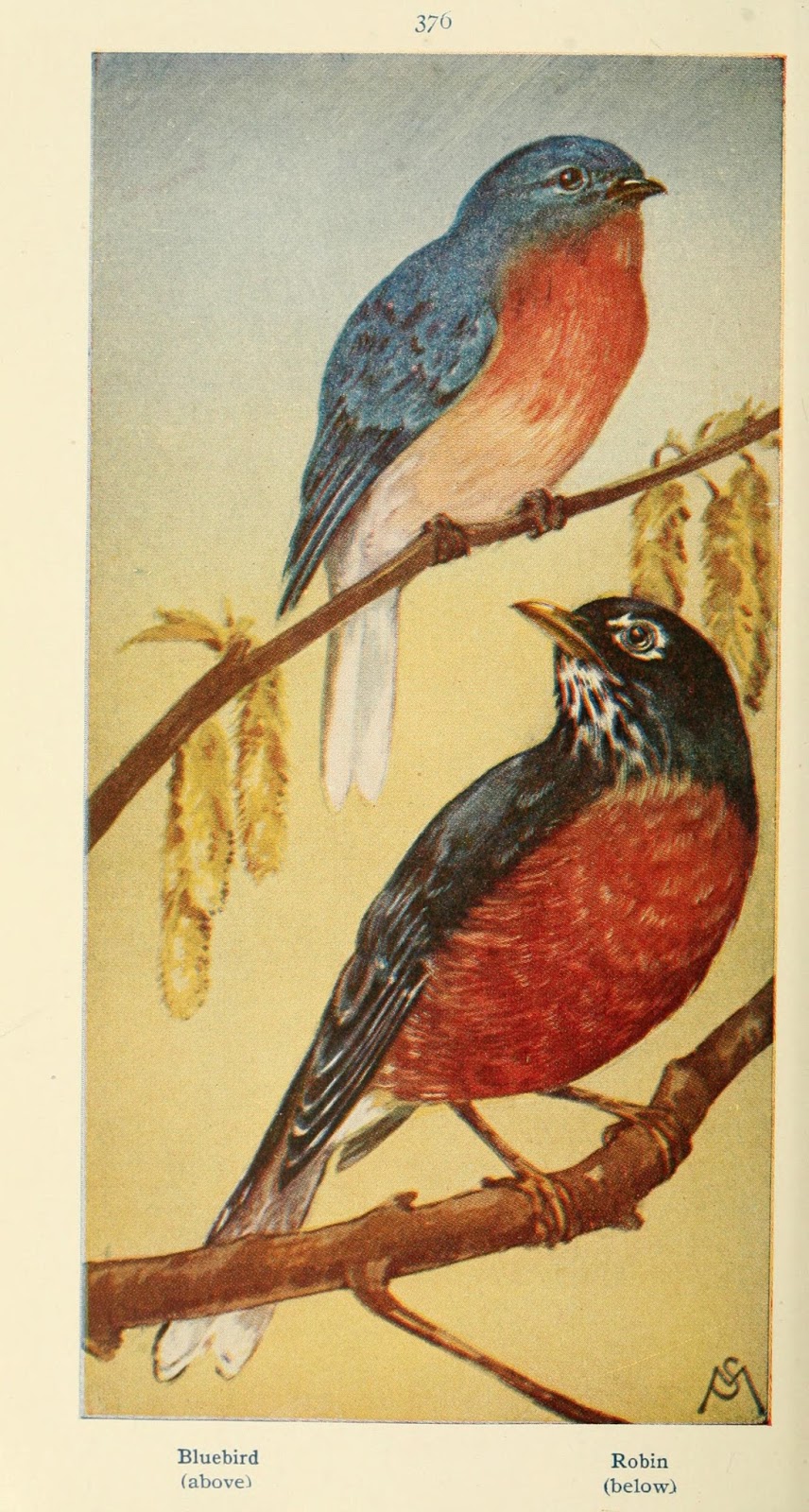
Bluebird and American Robin illustration from Field book of wild birds and their music. London, G.P. Putnam’s Sons [c1921]. Digitized by Smithsonian Libraries. biodiversitylibrary.org/page/13653780

Brewster carefully documented wild encounters with blow-by-blow details about animals’ behavior. Beyond behavioral data, his personal writings also include his interpretations of animal ‘personalities’ that reveal both his scientific perspective on animal cognition, and his personal feelings about interactions with animals.

Take for example this short but resonant excerpt from a letter penned to a friend:

“It is sunset and as I sit in my study in the Museum a Robin is singing in an elm in the garden. What a hopeful, earnest strain! It always cheers and encourages me. Our Robin must have a brave heart and a pure conscience.” (William Brewster, March 26, 1893. Cambridge, Mass. in correspondence to his friend, ornithologist Frank Michler Chapman.) 

His comment on the “brave heart and a pure conscience” certainly isn’t a piece of scientific data (it’s anthropomorphization, an interpretation of animal behaviors using the logic of human emotions) –but it unearths a very human part of the story to consider how a natural scientist reacted emotionally to his subjects in daily life.

Toucan: Perspectives on Scientific Collecting

View Full Size Image
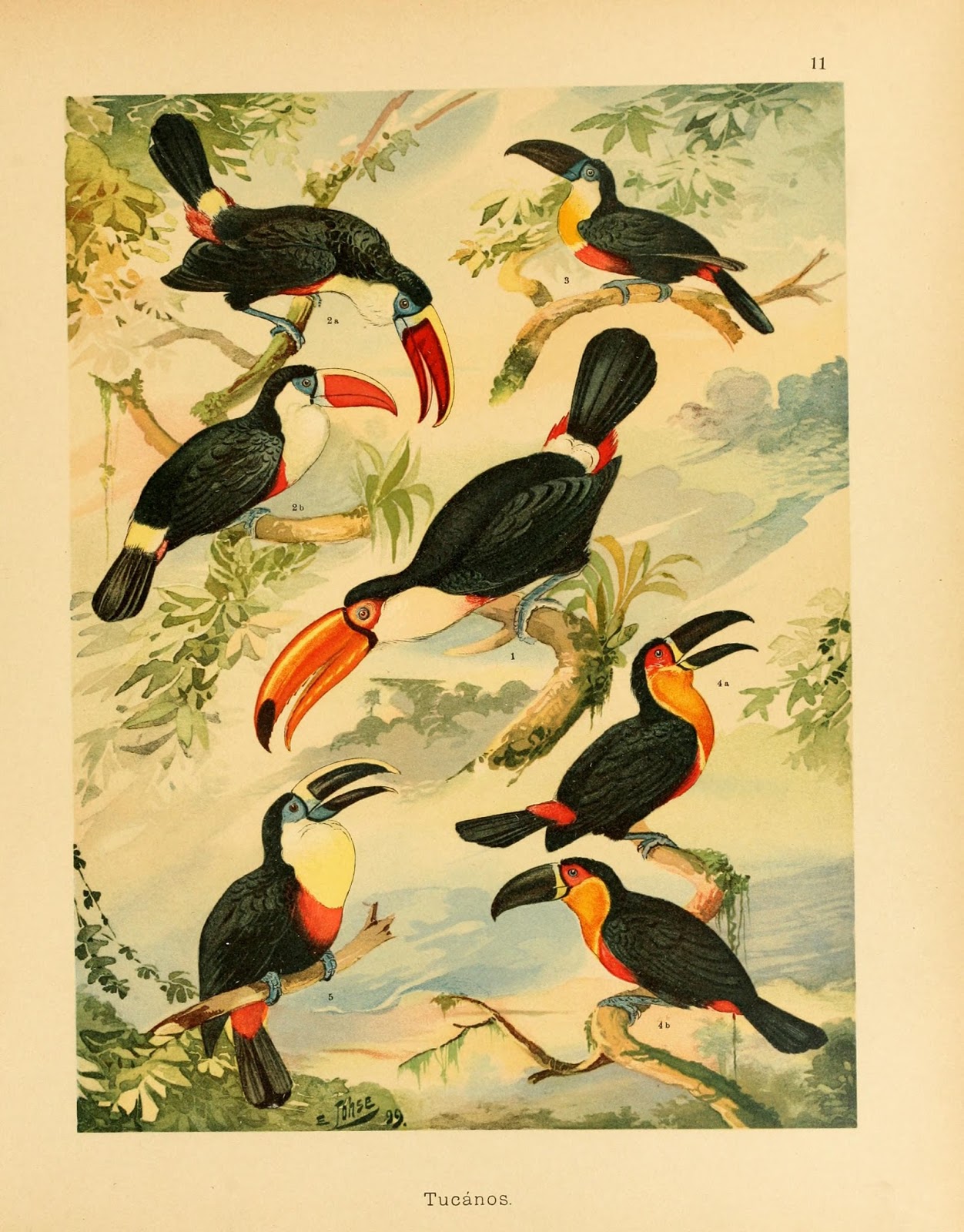
Toucan illustration from Album de aves amazonicas. Zürich: Impressão do Instituto Polygraphico a.g., 1900-06. Digitized by Smithsonian Libraries. biodiversitylibrary.org/page/13804665

If you’ve ever browsed the galleries at Harvard’s Museum of Natural History, then you’ve passed by Brewster’s life’s work. After working as an animal specimen curator for the museum for many years, he also bequeathed his personal collection of birds and other animals to the museum.

Taxidermy collections like Brewsters’ are the foundation of zoology and are invaluable for scientific researchers today. For example, scientists can analyse DNA samples from historic specimens to track evolutionary changes, and look for traces of environmental chemicals such as pesticides to learn more about their ecological impact. (These are just two of many ways that collections can be used for beneficial research–to learn more, read ‘Natural history collections – why are they relevant?’ on The Guardian, or visit the page ‘Why Collections Matter?’ on the Society for the Preservation of Natural History Collections’ website.)

While Brewster strongly advocated for the importance of scientific collecting, his journals also illustrate changes in his collecting practices over time, including the adoption of complementary methods like photography.

In March 1886, just a month after the Massachusetts Audubon Society for the Protection of Birds had organized, Brewster wrote three letters to an ornithologist friend, describing an early attempt to pass bird protection legislation in Massachusetts. Brewster advocated in court for a bill that would ban the hunting of birds for decorative use on women’s hats, but allow scientific collection by permit-holders.

In one of these letters, he scoffs at the idea of only studying birds observationally:

“One of these [Fish & Game Commissioners]… announced at the beginning that he considered Science a humbug and that the best was to study bird was with an opera glass!” (Cambridge, March 7, 1886. Letter to George Sennet.) 

However, his journals reveal that around the 1890s he seems to have developed some mindfulness of how damaging over-hunting could be for animal populations. Around this time he began to collect birds more sparingly and took up the challenge of wildlife photography in the field.

An interesting example of this shift in his attitude occurred during an 1894 collecting trip to the tropics:

“I started out early this morning with the express intention of shooting a toucan. Rather curiously I had at once an opportunity which I did not improve and shortly afterwards a experience which is probably rare for Mr. Chapman [Frank Chapman] has seen nothing of the kind, nor has Mr. Carr either for that matter. 

It all happened in this [way]. I went first to the ajoupa to get my collecting basket and while there heard a toucan calling apparently at a considerable distance. I started in the direction of the sound but I had gone scarce twenty yards when I became conscious that it came from nearly over head. 

Looking up I at once saw the beautiful great bird sitting in the top of a bois immortel its breast turned towards the rising sun which brought out the brilliant colouring of the plumage, the shining black of the large bill and the blue of the bare skin about the eyes with the greatest distinctness. 

Here was my chance for the bird was not thirty yards off but I simply stood and stared at him with speechless wonder and admiration until he finally flew, when the dense cacao foliage prevented my getting a shot. 

Clearly a case of Toucan “fever” but I did not regret the episode.” (Trinidad, March 20, 1894.) [Edited with paragraph breaks and punctuation for readability.] 

* * *

The Brewster collection, and other field journals and notes, contain a wealth of information beyond useful scientific data. They reveal scientific paradigms, study methods and reasoning; information about working relationships between scientists; and historical and biographical information, including personal thoughts and feelings. Some sections can be fairly dry, but some make for pretty good reading.

If you’ve enjoyed these excerpts, an ongoing blog post series on Mayr Library blog highlights interesting tidbits from Brewster’s writing as we continue to digitize and transcribe the collection.

July 1, 2016by ulib-libraryjobs

Help Support BHL

BHL's existence depends on the financial support of its patrons. Help us keep this free resource alive!

search

About BHL

The Biodiversity Heritage Library (BHL) is the world’s largest open access digital library for biodiversity literature and archives. BHL operates as a worldwide consortium of natural history, botanical, research, and national libraries working together to digitize the natural history literature held in their collections and make it freely available for open access as part of a global “biodiversity community.”

Join Our Mailing List

Sign up to receive the latest news, content highlights, and promotions.

Subscribe Now

Subscribe to Blog via Email

Enter your email address to subscribe to this blog and receive notifications of new posts by email.

Join 319 other subscribers

Subscribe to Blog Via RSS

Subscribe to the blog RSS feed to stay up-to-date on all the latest BHL posts.

Access RSS Feed

Inspiring Discovery through Free Access to Biodiversity Knowledge.

The Biodiversity Heritage Library makes it easier than ever for you to access the information you need to study and explore life on Earth…for free, anytime, anywhere.


ABOUT | HARMFUL CONTENT | PRIVACY | SITE MAP | TERMS OF USE