Biodiversity Heritage Library - Program news and collection highlights from BHL
  • Home
  • News
  • Featured Books
    • All Featured Books
    • Book of the Month Series
    • BHL at 20
  • User Stories
  • Campaigns
    • Fossil Stories
    • Garden Stories
    • Monsters Are Real
    • Page Frights
    • Her Natural History
    • Earth Optimism 2020
  • Tech Blog
  • Visit BHL
Home
News
Featured Books
    All Featured Books
    Book of the Month Series
    BHL at 20
User Stories
Campaigns
    Fossil Stories
    Garden Stories
    Monsters Are Real
    Page Frights
    Her Natural History
    Earth Optimism 2020
Tech Blog
Visit BHL
  • Home
  • News
  • Featured Books
    • All Featured Books
    • Book of the Month Series
    • BHL at 20
  • User Stories
  • Campaigns
    • Fossil Stories
    • Garden Stories
    • Monsters Are Real
    • Page Frights
    • Her Natural History
    • Earth Optimism 2020
  • Tech Blog
  • Visit BHL
Biodiversity Heritage Library - Program news and collection highlights from BHL
BHL News, Blog Reel

A Global Discussion about Martha, Extinction and Conservation

Thanks to everyone who tuned in for our #Martha100 TwitterChat with @NMNH (National Museum of Natural History) and @SILibraries (Smithsonian Libraries) yesterday! The chat was a commemoration of the death of the last passenger pigeon, Martha (died Sept. 1, 1914), and a discussion on extinction, conservation, and the importance of historic literature to these fields.

We had some fantastic questions and discussions, as well as great contributions from @fieldmuseum, @SmithsonianArch (Smithsonian Archives), @birdernewjersey (aka Rick Wright, a regular guest blogger for BHL), and @SiobhanLeachman (volunteer with the SI Transcription Center).

View Full Size Image

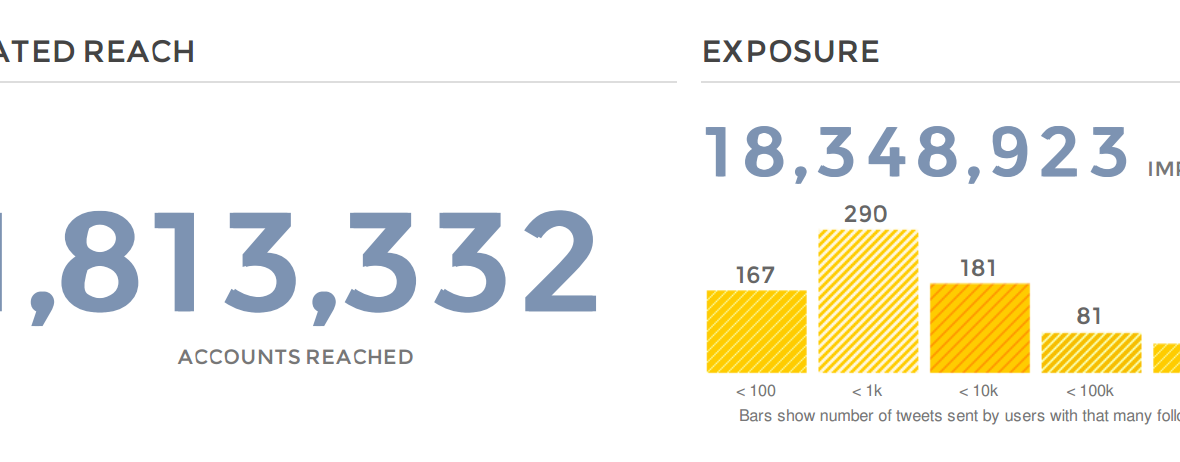
Over 350 people participated in the conversation, which produced over 770 tweets seen by over 1.8 million people! BHL saw a 66% increase in the reach of our tweets and a 240% increase in engagement with users on Twitter during the event as compared with our average daily reach and engagements. This translates to a 92% increase in clicks on links, a 117% increase in retweets, a 103% increase in favorites, and a 650% increase in replies. We also saw an increase in our audience, with a 422% increase in Twitter followers compared to our average daily increase.

View Full Size Image

For a quick snapshot of the conversation, take a look at some of our favorite questions and answers from the TwitterChat:

Q1: @SILibraries: Who was Martha and what is a passenger pigeon?
Answers:
@NMNH: The Passenger Pigeon is an extinct North American pigeon + Martha, the last individual alive, died 9/1/1914
@SILibraries: Passenger Pigeons lived only in North America. @eol has range maps http://ow.ly/B23u5
@BioDivLibrary: Learn more about how the passenger pigeon went extinct http://ow.ly/B25az
@SmithsonianArch: Martha was named after George Washington’s wife!
@SILibraries: Some flocks were thought to contain over 2 billion birds, taking days to pass by.
@SILibraries: How did passenger pigeon get its name? From French passenger, which means to pass by.
@Fezook: Was depletion of numbers below that necessary for migration a main cause of passenger pigeon extinction?
@NMNH: essentially yes; numbers declined because of hunting + habitat loss. They were highly social, probably couldn’t survive in low numbers.
@BioDivLibrary: Passenger Pigeon may have survived commercial slaughter if nesting grounds not destroyed too http://ow.ly/B24Pa

View Full Size Image
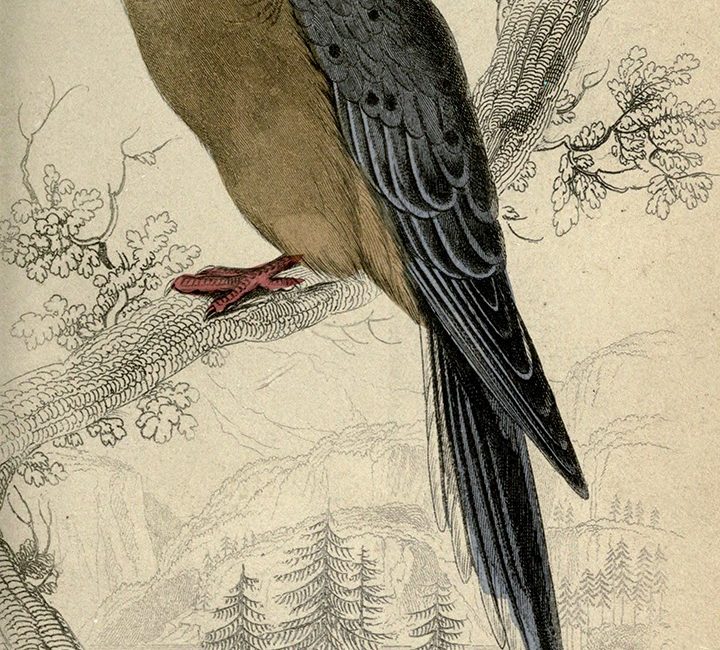
Mark Catesby’s 1754 illustration of the Passenger Pigeon is thought to be the first published depiction of the species. The Natural History of Carolina, Florida, and the Bahama Islands. v. 1. 1754. http://biodiversitylibrary.org/page/10900155

Q2: @SILibraries: How fast are we losing species?
Answers:
@BioDivLibrary: Recent estimates say by as much as 1000x the natural rate http://ow.ly/B21uY
@SILibraries: This article from @SmithsonianMag says 75% of species extinct in next century http://ow.ly/B21Im
@BioDivLibrary: Among terrestrial vertebrates: 322 species extinct since 1500. 25% average decline http://ow.ly/B21ZA
@ROMbiodiversity: and they’ve just announced it might be worse http://ow.ly/B227Z

Q3: @SiobhanLeachman: Was wondering if it was the advent of railroads that helped allow extinction?
Answers:
@BioDivLibrary: Absolutely! Railroads allowed millions to be shipped each year http://ow.ly/B20pt
@BioDivLibrary: Cheap meat, large supply & easy distribution via railroads fueled PP annihilation
@SiobhanLeachman: Assumed it took hunters to PP as well
@birdernewjersey: Yes hotels sprang up at railroad terminus when pigeons were around to be shot
@BioDivLibrary: Telegraph was another tech allowing hunters to know quickly where PP were roosting

View Full Size Image
Passenger Pigeon among its relatives. Pycraft, W.P. A Book of Birds. 1908. http://biodiversitylibrary.org/page/13504819

Q4: @SILibraries: What is so important about Taxonomic Literature?
Answers:
@BioDivLibrary: Lit provides record of species and helps scientists identify new species
@BioDivLibrary: Helps track changes in ecosystems & distributions to identify species & habitats to protect
@HsapiensMarissa: Taxonomic lit bridges gaps in understanding of biodiversity concepts so issues can be targeted holistically
@BioDivLibrary: United Nations requires countries to identify/monitor species w/in borders-BHL provides inventories/info
@BioDivLibrary: It also documents extinct species and their life, morphology, and phylogeny
@SILibraries: How does BHL helps scientists in remote countries?
@BioDivLibrary: BHL provides #openaccess to info on species anywhere/everywhere, even if no access to libraries http://ow.ly/B22xt 
@birdernewjersey: Not just in remote countries: I’d hate to go to the library every time I needed to look something up #badolddays

If you missed the chat, or want to see some of the discussions again, you can see the conversations via Storify. Thanks to everyone who participated! It was a great educational and collaborative event!

Learn more about the passenger pigeon and North American bird extinction, and see Martha, the last passenger pigeon, in the joint SIL/BHL exhibit Once There Were Billions at NMNH. Check out images of the Passenger Pigeon and other extinct birds and view Martha’s autopsy in BHL.

Be sure to follow BHL on Twitter for more great biodiversity and literature content and information!

September 3, 2014by ulib-libraryjobs
BHL News, Blog Reel

Twitterchat on Martha, Extinction, & Historic Literature

View Full Size Image
Pigeons. Selby, P. John (1845). http://biodiversitylibrary.org/page/20191792

Please join the Biodiversity Heritage Library (BHL), the Smithsonian Libraries, and the National Museum of Natural History (NMNH) for a twitterchat on September 2nd, 2014. The chat will take place between 2-3 pm (EST) and feature Helen James, Curator of Birds and our recent Once There Were Billions exhibit in NMNH, and Martin Kalfatovic, BHL Program Director.

This September marks the 100th anniversary of the death of the very last passenger pigeon, Martha. In honor of the event, our chat will focus on Martha and the passenger pigeon, extinction and the importance of saving historic taxonomic literature through projects such as BHL. Folks will also have an opportunity to ask questions about Once There Were Billions, species survival or anything else on your minds about birds or biodiversity.

You can send questions using #Martha100 to @BioDivLibrary, @SILibraries, or @NMNH. Helen will be taking over the @NMNH account and Martin will man @BioDivLibrary to answer your questions. Everyone is invited to participate and follow the discussion by using #Martha100. If you’re not on Twitter, feel free to leave your question in a comment below or drop us a line by email at [email protected].

August 25, 2014by ulib-libraryjobs
Blog Reel, Campaigns, Featured Books

Once There Were Billions: The Great Auk

Once an amazing diversity of birds–some in breathtaking abundance–inhabited the vast forests and plains of North America. But starting around 1600, some species began to disappear, as humans altered habitats, over-hunted, and introduced predators.

A notable extinction occurred 100 years ago, with the death of Martha the Passenger Pigeon, the last member of a species that once filled America’s skies.  The story of the last Passenger Pigeon and the disappearance of the Great Auk, Carolina Parakeet, and Heath Hen reveal the fragile connections between species and their environment.

To help tell their story, the Smithsonian Libraries, the Biodiversity Heritage Library, and the National Museum of Natural History have curated a joint exhibit entitled Once There Were Billions: Vanished Birds of North America that will open June 24 in the National Museum of Natural History in Washington D.C.  Over the next several weeks, we’ll be highlighting each of the four birds with content from the exhibit and illustrations found in BHL.

View Full Size Image
Naturgeschichte der Vögel Mitteleuropas
[Natural history of birds of Central Europe] Johann Andreas Naumann et al.
Gera-Untermhaus, Germany: F.E. Köhler, 1897–1905 http://biodiversitylibrary.org/item/108804#page/219/mode/1up


Great Auk: Flightless, Social … and Doomed
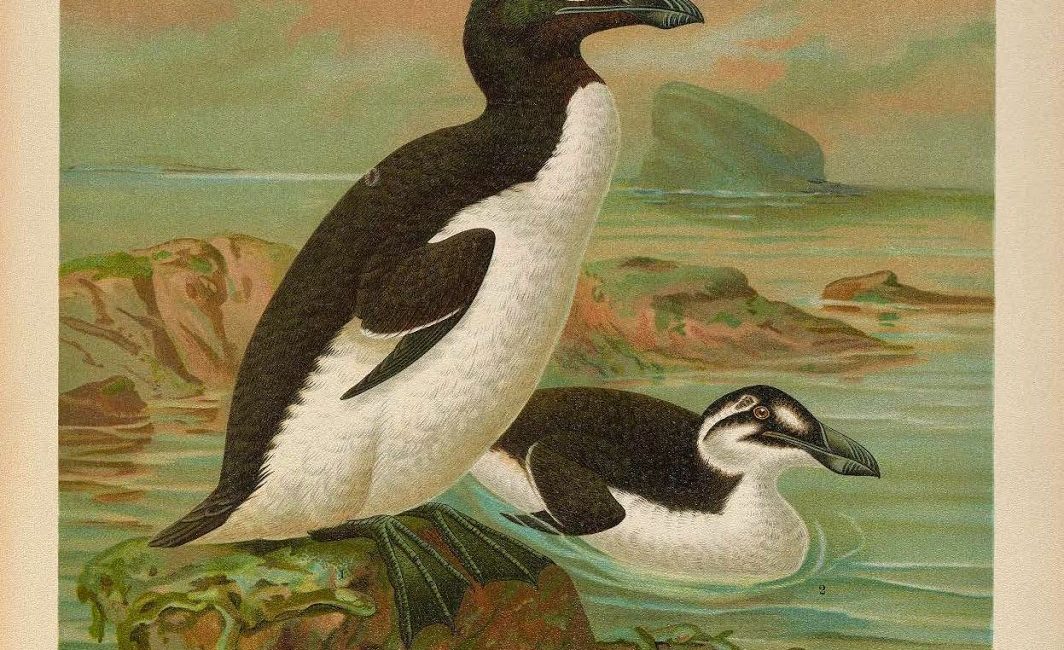
The Great Auk (Pinguinus impennis) once lived in large, dense colonies along North Atlantic shores. Clumsy and flightless on land, they were perfectly adapted to “fly” underwater, with their small wings and streamlined bodies.

View Full Size Image
Extinct Birds. Walter Rothschild
London: Hutchinson, 1907
Plate 38, Alca impennishttp://biodiversitylibrary.org/
page/38665797#page/367/mode/1up

The caption for this image of the Great Auk gives its old scientific name, Alca impennis. Now termed Pinguinus impennis, the auk may look penguin-like, but it is related to the puffin. Great Auks mated for life nesting in crowded colonies on rocky islands. Females laid one egg per year on bare rock, and both parents took turns incubating the egg.

Unfortunately, they could not flee human predators.  Hunters slaughtered Auks by the thousands for meat, eggs, feathers, and oil. Once the bird’s numbers dwindled precipitously, naturalists hurried to add them as specimens to their collections before they disappeared forever.  By the mid-1800s the species went extinct–the final result of centuries of human exploitation.

What can be done to prevent future extinctions? One way is to support researchers who seek a better understanding of the biodiversity of this planet.

The Biodiversity Heritage Library (BHL) is a global project that is changing the way research is done, by digitizing and sharing biodiversity literature online. BHL makes more than 43 million pages and nearly 100,000 scientific illustrations–of animals and plants, living and extinct–freely available to scientists and others around the world.

The Great Auk is documented in over 3,000 pages of the literature found in the BHL corpus. BHL relies on donations from individuals to support scanning of the biodiversity literature held in some of the world’s most renowned natural history and botanical libraries.  To learn more about how your donation supports the continued growth of BHL, please visit http://archive.constantcontact.com/fs181/1103622715135/archive/1115465985290.html. We hope you’ll consider making a contribution today!

June 20, 2014by brooksm

Help Support BHL

BHL's existence depends on the financial support of its patrons. Help us keep this free resource alive!

search

About BHL

The Biodiversity Heritage Library (BHL) is the world’s largest open access digital library for biodiversity literature and archives. BHL operates as a worldwide consortium of natural history, botanical, research, and national libraries working together to digitize the natural history literature held in their collections and make it freely available for open access as part of a global “biodiversity community.”

Join Our Mailing List

Sign up to receive the latest news, content highlights, and promotions.

Subscribe Now

Subscribe to Blog via Email

Enter your email address to subscribe to this blog and receive notifications of new posts by email.

Join 319 other subscribers

Subscribe to Blog Via RSS

Subscribe to the blog RSS feed to stay up-to-date on all the latest BHL posts.

Access RSS Feed

Inspiring Discovery through Free Access to Biodiversity Knowledge.

The Biodiversity Heritage Library makes it easier than ever for you to access the information you need to study and explore life on Earth…for free, anytime, anywhere.


64+ Million Pages of
Biodiversity Literature Online.

EXPLORE

Tools and Services
to Transform Research.

EXPLORE

300,000+
Illustrations on Flickr.

EXPLORE

ABOUT | HARMFUL CONTENT | PRIVACY | SITE MAP | TERMS OF USE