Biodiversity Heritage Library - Program news and collection highlights from BHL
  • Home
  • News
  • Featured Books
    • All Featured Books
    • Book of the Month Series
    • BHL at 20
  • User Stories
  • Campaigns
    • Fossil Stories
    • Garden Stories
    • Monsters Are Real
    • Page Frights
    • Her Natural History
    • Earth Optimism 2020
  • Tech Blog
  • Visit BHL
Home
News
Featured Books
    All Featured Books
    Book of the Month Series
    BHL at 20
User Stories
Campaigns
    Fossil Stories
    Garden Stories
    Monsters Are Real
    Page Frights
    Her Natural History
    Earth Optimism 2020
Tech Blog
Visit BHL
  • Home
  • News
  • Featured Books
    • All Featured Books
    • Book of the Month Series
    • BHL at 20
  • User Stories
  • Campaigns
    • Fossil Stories
    • Garden Stories
    • Monsters Are Real
    • Page Frights
    • Her Natural History
    • Earth Optimism 2020
  • Tech Blog
  • Visit BHL
Biodiversity Heritage Library - Program news and collection highlights from BHL
Blog Reel, Featured Books

Notes accompanying collection of useful plants made by W. J. Fisher at [Kodiak] in 1899

In honor of Native American Heritage Month, we would like to highlight a field book that documents Native American knowledge of natural resources. The field book was created by William J. Fisher, who lived in southern Alaska from 1879 until his death in 1903.

Fisher’s notebook documents his final years collecting and looks at the relationship between the Alutiiq (Aleut) and their plants by recording medicinal and food uses for 48 specimens. Only a handful of the specimen entries include the taxonomic names of plants; instead, entries focus on recording the Russian and Sugpiat/Alutiiq names of plants, how the plants were used, and plant distribution. Detail varies, as seen below in entries three and forty-seven.

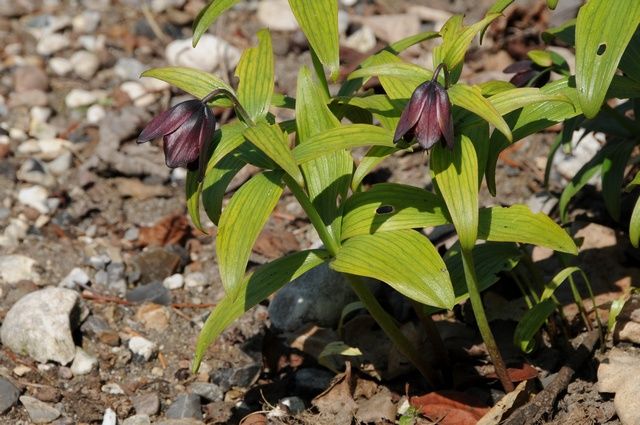
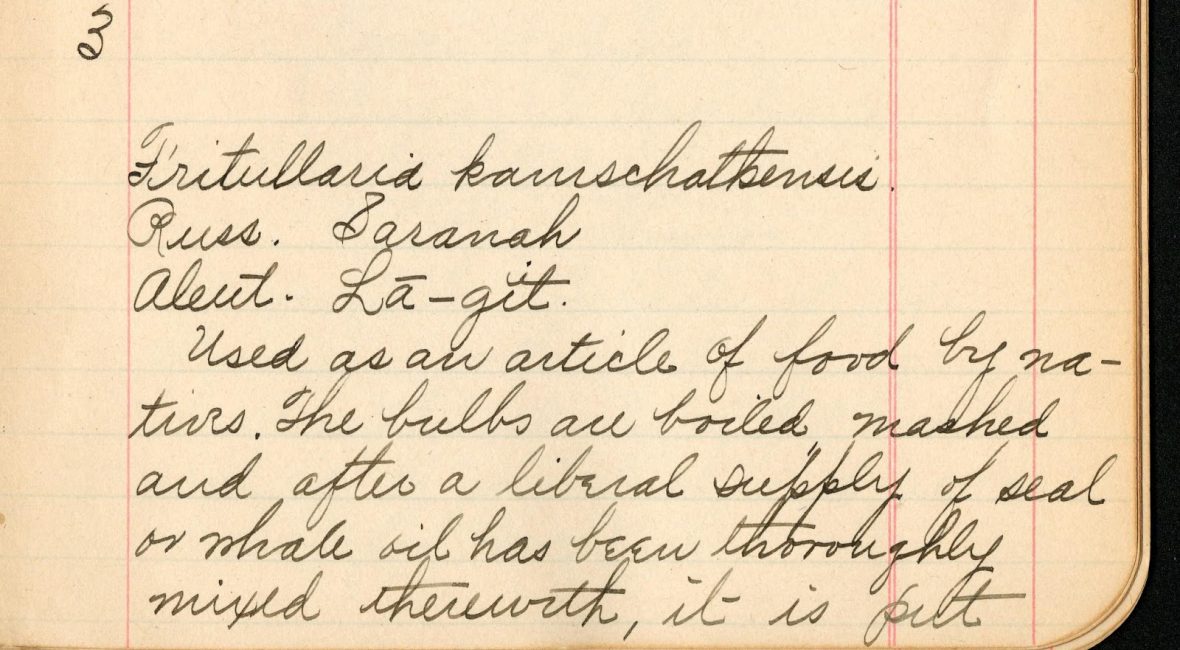
Entry three describes Fritullaria kamschathensis [Fritillaria camschatcensis], also known as the Kamchatka Fritillary, and lists general use and preparation: “Used as an article of food by natives. The bulbs are boiled mashed and after a liberal supply of seal or whale oil has been thoroughly mixed therewith, it is put away for winter’s use.”
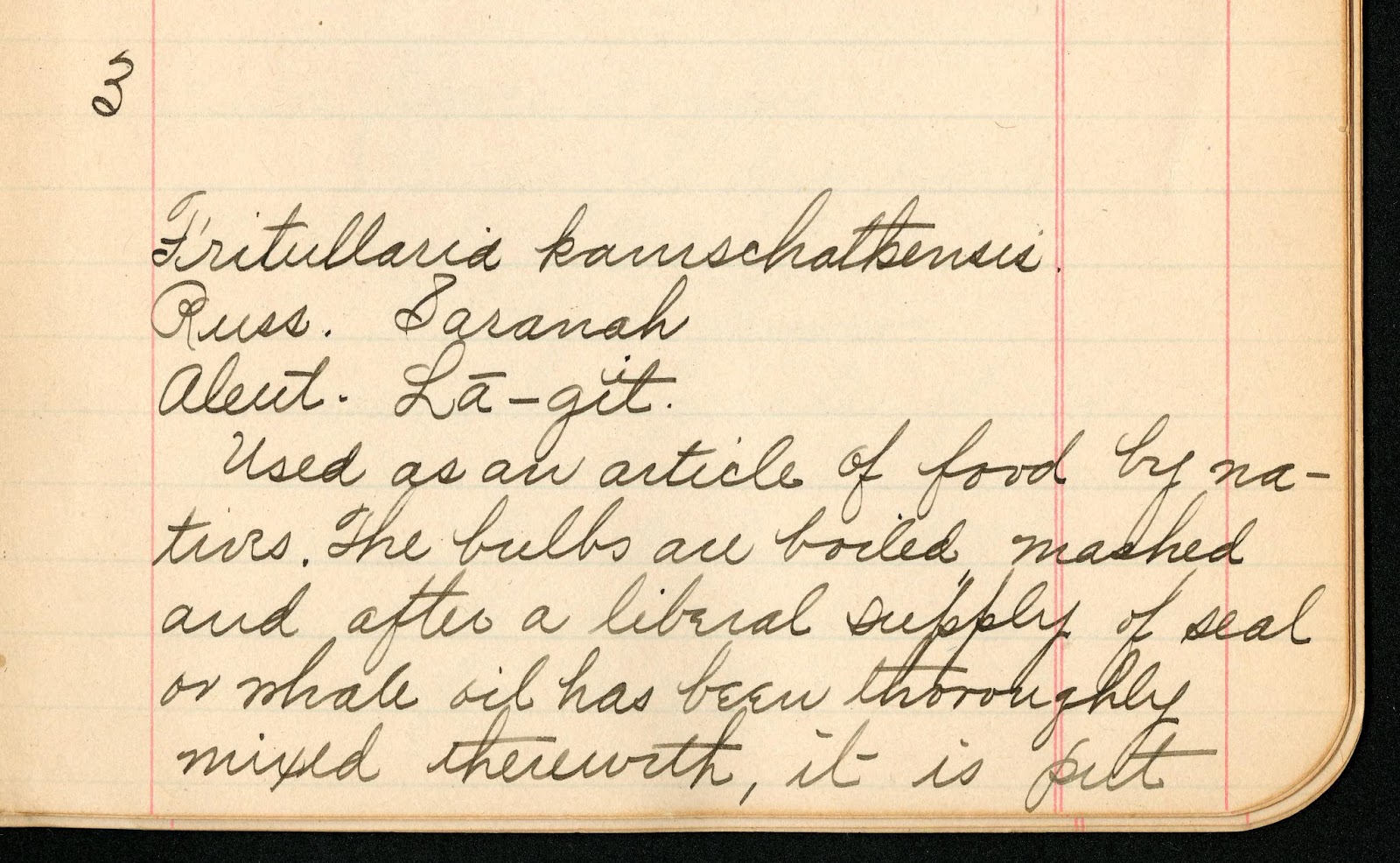
View Full Size Image
Specimen entry three from “Notes accompanying collection of useful plants made by W. J. Fisher at [Kodiak] in 1899,” Smithsonian Institution Archives, SIA Acc. 12-038. http://www.biodiversitylibrary.org/page/46428854. Digitized by Smithsonian Institution Archives.
View Full Size Image
Image of Fritillaria camschatcensis from Encyclopedia of Life, provided by Biopix. http://eol.org/data_objects/19162439.

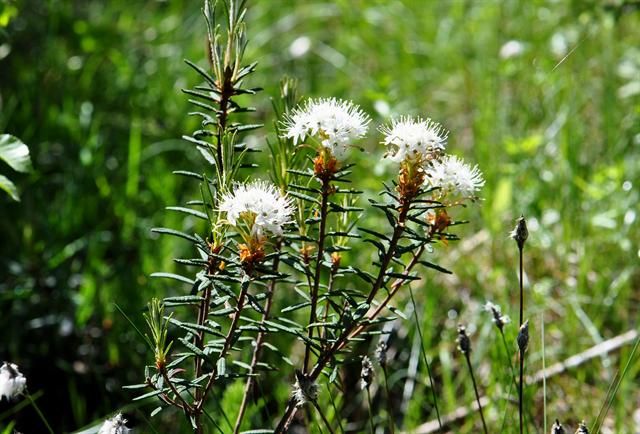
Entry forty-seven for Ledum palustre [Rhododendron tomentosum], also known as Northern Labrador Tea (also pictured below), takes up an entire page describing the plant’s habitat, the appearance of its flowers, and multiple local medicinal applications: “(1) As a tea it is freely drunk in alleviating the hacking cough of consumptives. (2) As a gargle in sore throat. (3) Administered as tea it is efficacious in relieving asthmatic complaints.”
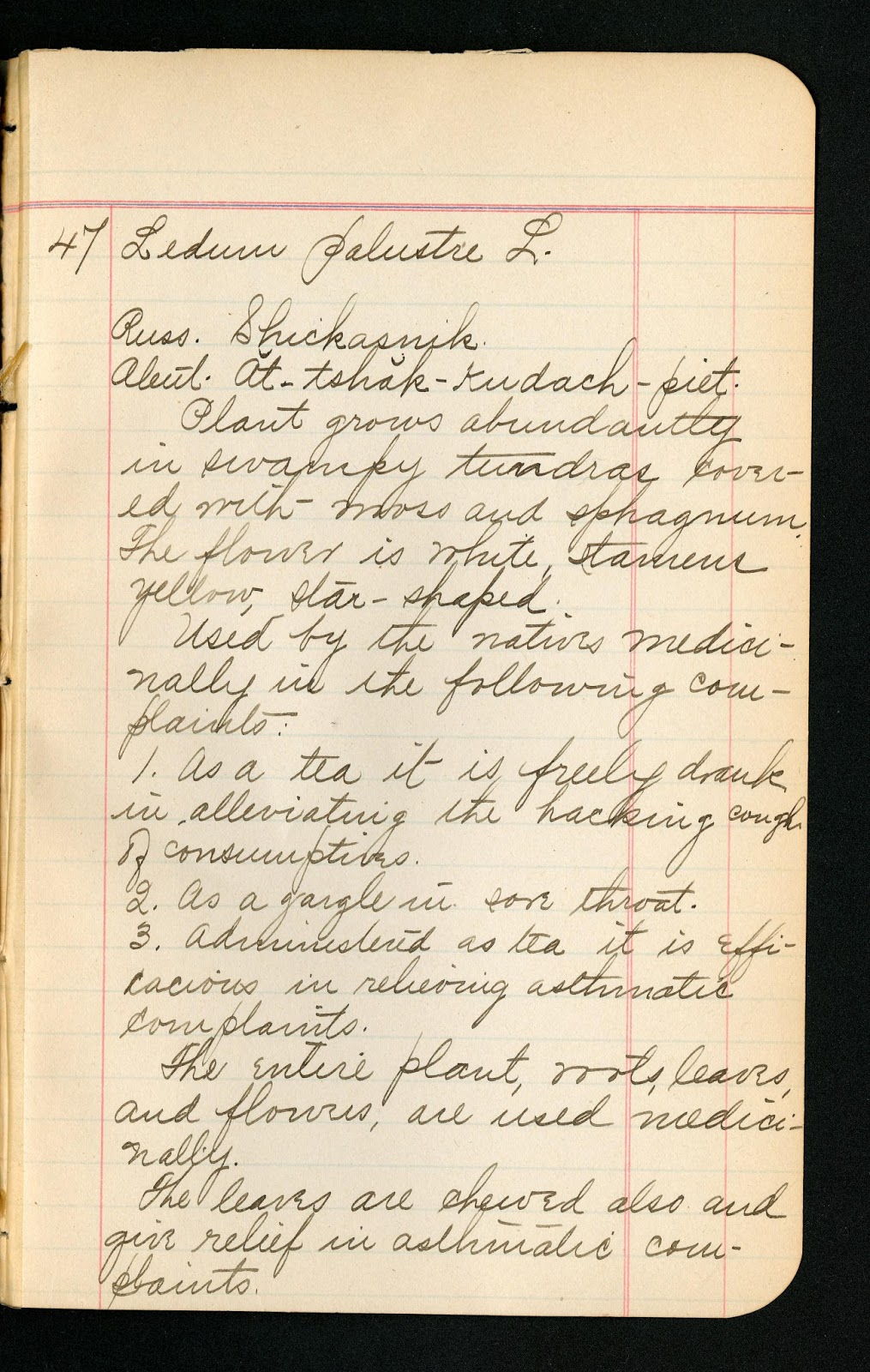
View Full Size Image
Specimen entry forty-seven, from “Notes accompanying collection of useful plants made by W. J. Fisher at [Kodiak] in 1899,” Smithsonian Institution Archives, SIA Acc. 12-038. http://www.biodiversitylibrary.org/page/46428831. Digitized by Smithsonian Institution Archives.
View Full Size Image
Image of Rhododendron tomentosum (Northern Labrador Tea), from Encyclopedia of Life. Image by Biopix. http://eol.org/data_objects/19183248.

Fisher’s ethnographic focus while collecting plants is clear. The field book provides detailed information regarding local names and knowledge, but leaves out basic information often found in botany field books like date and detailed locality information. This lack of information may relate to a note Fisher wrote on the title page: “dried plants with Mr. Kearney, alcoholics in seed collection.” “Mr. Kearney” was Thomas Henry Kearney (1874-1956), a botanist with the Bureau of Plant Industry at the US Department of Agriculture (USDA). Kearney was in Alaska to work with Frederick Coville from April 1898 – August 1899, and along the Northwest Coast from Puget Sound to the Bering Strait in 1899. He then served as a member of the Harriman Alaska Expedition of 1899.

It is unclear how the two men became acquainted. Fisher had a relationship with the Smithsonian Institution; Coville as a USDA employee worked with Smithsonian, and perhaps he introduced the two. Whatever the reason, Kearney’s field notes for his work in Alaska are also available on BHL through the Smithsonian Field Book Project, and they provide a tantalizing overlap in content and geographical coverage.

A field book at the end of a collecting career

Fisher’s field book is also interesting because it document’s his collecting focus and interests as they evolved over a lifetime. Fisher’s initial scientific interest was in marine biology. During the 1870’s he was a curator of conchology at the California Academy of Sciences and served as a marine biologist for the U.S. Fish Commission on several cruises in the Pacific headed by William Healey Dall.

In 1879, Fisher accepted a position as tidal recorder in St. Paul, now known as the city of Kodiak, Alaska. After accepting the position, he wrote to Dall, who was affiliated with the Smithsonian Institution, and offered to collect natural history specimens. The offer was accepted, and Fisher was instructed that the museum was also interested in ethnographic artifacts from the region.

The town of St. Paul where Fisher settled was originally established by the Russians as a center for fur trading. By the time Fisher arrived, it was a town of approximately 500 residents, primarily of Russian and Native Alaskan heritage. According to an article in Arctic Anthropology (no. 1, 1992) the community was still significantly mixed regarding the adoption of European culture in terms of religion, language, and beliefs.

Fisher initially focused on collecting natural history specimens, but as he began to correspond with Smithsonian’s Secretary Spencer Baird, his interest and collecting shifted to ethnography. He even began to commission works by Native Alaskans. Fisher’s main source of income was his position as tidal recorder; Smithsonian was frequently unable to finance his work. This lack of funding apparently did not dim Fisher’s enthusiasm, but it did lead to financial hardship. During an extended collecting trip to Bristol Bay in the summer of 1885, his assistant successfully petitioned for Fisher’s job. Fisher’s collecting came to an end by the 1890’s; the ethnobotany field notes document the end of his work with the Smithsonian Institution.

Interested in learning more? We encourage you to learn about the William J. Fisher collection at the National Museum of Natural History, which was highlighted as part of a book Looking Both Ways: Heritage and Identity of the Alutiiq People, in the online exhibit featuring artifacts created by the Alutiiq people and collected by Fisher during his years in Alaska.

Other resources include:

Aron L. Crowell, 1992, Postcontact Koniag Ceremonialism on Kodiak Island and the Alaska Peninsula: Evidence from the Fisher Collection. Arctic Anthropology 29(1):18-37. Retrieved on November 16, 2016 from https://www.jstor.org/stable/40316240?seq=3#page_scan_tab_contents

Highlights of the William J. Fisher collection at the National Museum of Natural History: http://naturalhistory.si.edu/arctic/features/fisher/collect.html

The field books of William Healey Dall, available on Biodiversity Heritage Library: http://www.biodiversitylibrary.org/search?searchTerm=Dall+%22field+notes%22#/titles

Field Book Project blog post by Sonoe Nakasone: http://nmnh.typepad.com/fieldbooks/2012/02/sharing-culture-through-plants.html
November 22, 2016by ulib-libraryjobs
Blog Reel, Campaigns, Featured Books, Page Frights

Arachnophobes Beware! The Birth of Spider Nomenclature Just in Time for Halloween!

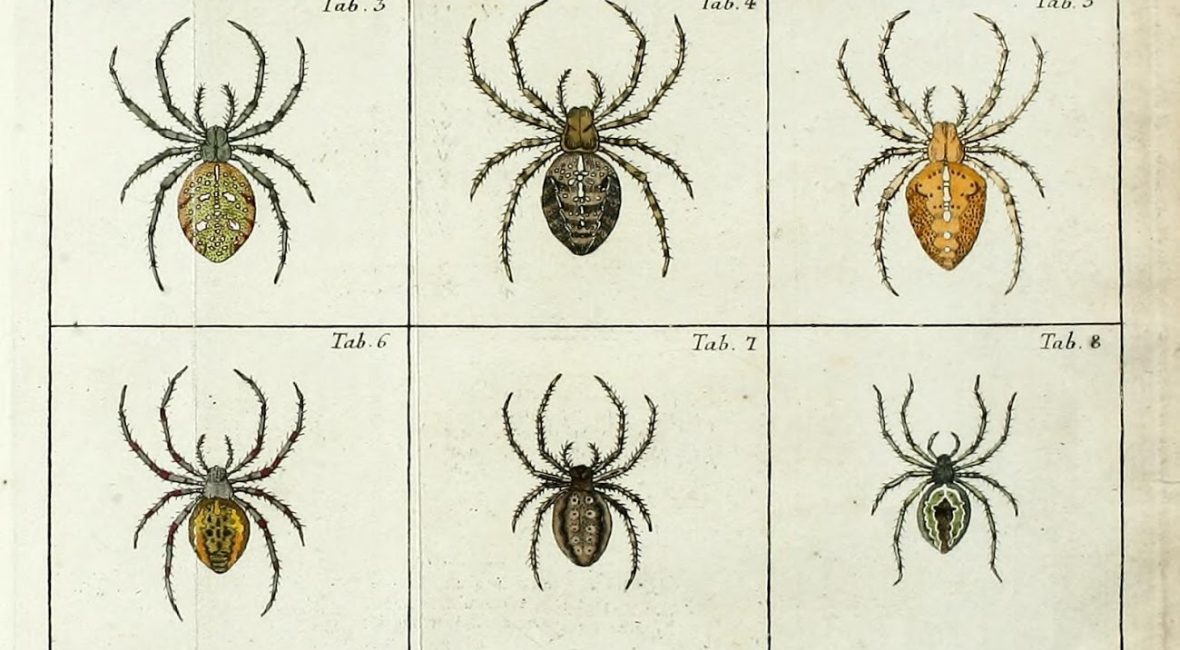
View Full Size Image
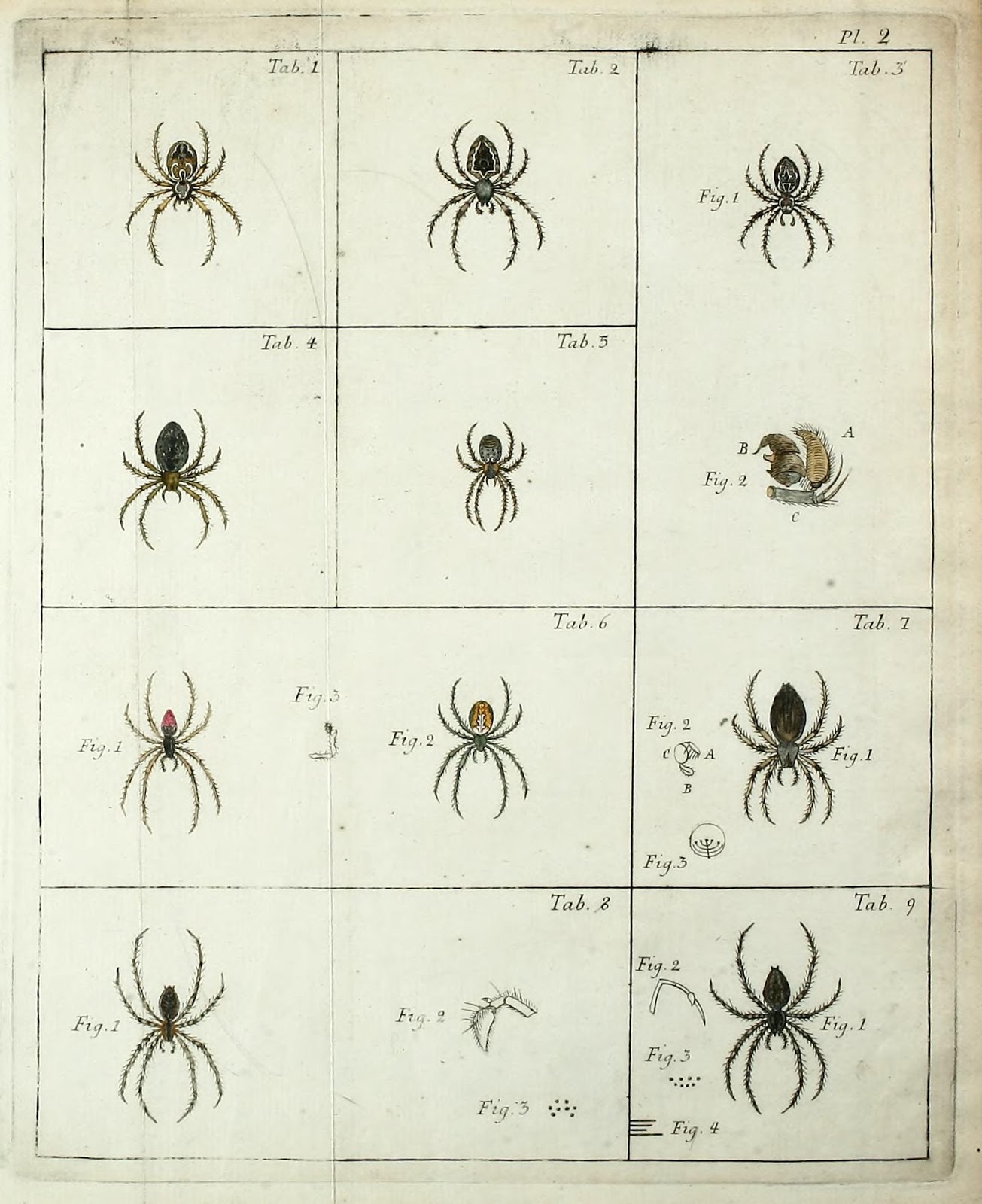
Clerck, Carl. Svenska Spindlar. 1757. Digitized by Smithsonian Libraries. http://www.biodiversitylibrary.org/page/51379398.

Arachnophobia (the fear of spiders and other arachnids) is one of the most prevalent phobias in the world, and some estimates suggest that over 30.5% of people in the United States alone have a fear of arachnids (Health Research Funding 2014).

Given the pervasiveness of this phobia, we thought it only appropriate to spend some time on the subject of spiders as part of our Page Frights celebration. Being the science-focused organization that we are, we decided to look at the topic of arachnids from a taxonomic point of view.

View Full Size Image
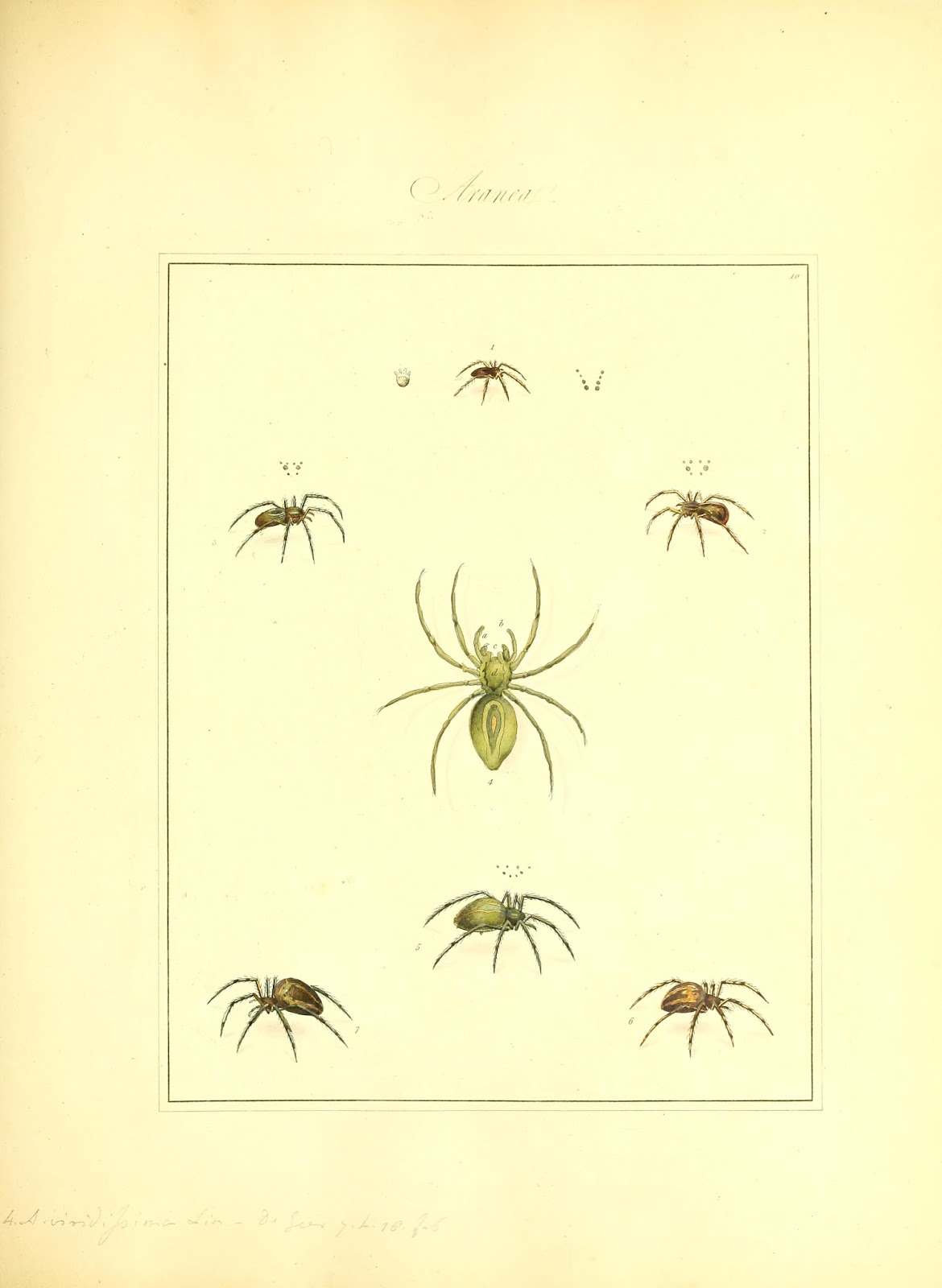
Clerck, Carl. Svenska Spindlar. 1757. Digitized by Smithsonian Libraries.  http://www.biodiversitylibrary.org/page/51379410.

The founding text on spider nomenclature is Svenska Spindlar. It was published in 1757 by Carl Clerck, a member of the Swedish nobility. If you’re familiar with the history of taxonomy, you may notice something interesting about the date of this publication. The International Commission on Zoological Nomenclature considers Carl Linnaeus’ Systema Naturae, published in 1758, to be the starting point of zoological nomenclature. How then could a book published in 1757 be considered the starting point of spider nomenclature?

Leslie Overstreet, Curator of Natural History Rare Books at the Smithsonian Libraries (who recently digitized this title for BHL), helped shed some light on the situation.

Clerck became a friend and correspondent of Linnaeus’ after attending Uppsala University, where Linnaeus had received most of his own higher education and served as a professor beginning in 1741. In 1753, Linnaeus applied his binomial system for botanical names within Species Plantarum. When Clerck went to publish his descriptions of the large number of Swedish spiders that he had collected and studied, he did so following Linnaeus’ binomial system. As Linnaeus would not publish his own foundational text on zoological nomenclature until 1758, Clerck’s spiders became the first animals in modern zoology to receive valid scientific names according to the Linnaean system.

View Full Size Image
Clerck, Carl. Svenska Spindlar. 1757. Digitized by Smithsonian Libraries.  http://www.biodiversitylibrary.org/page/51379414.

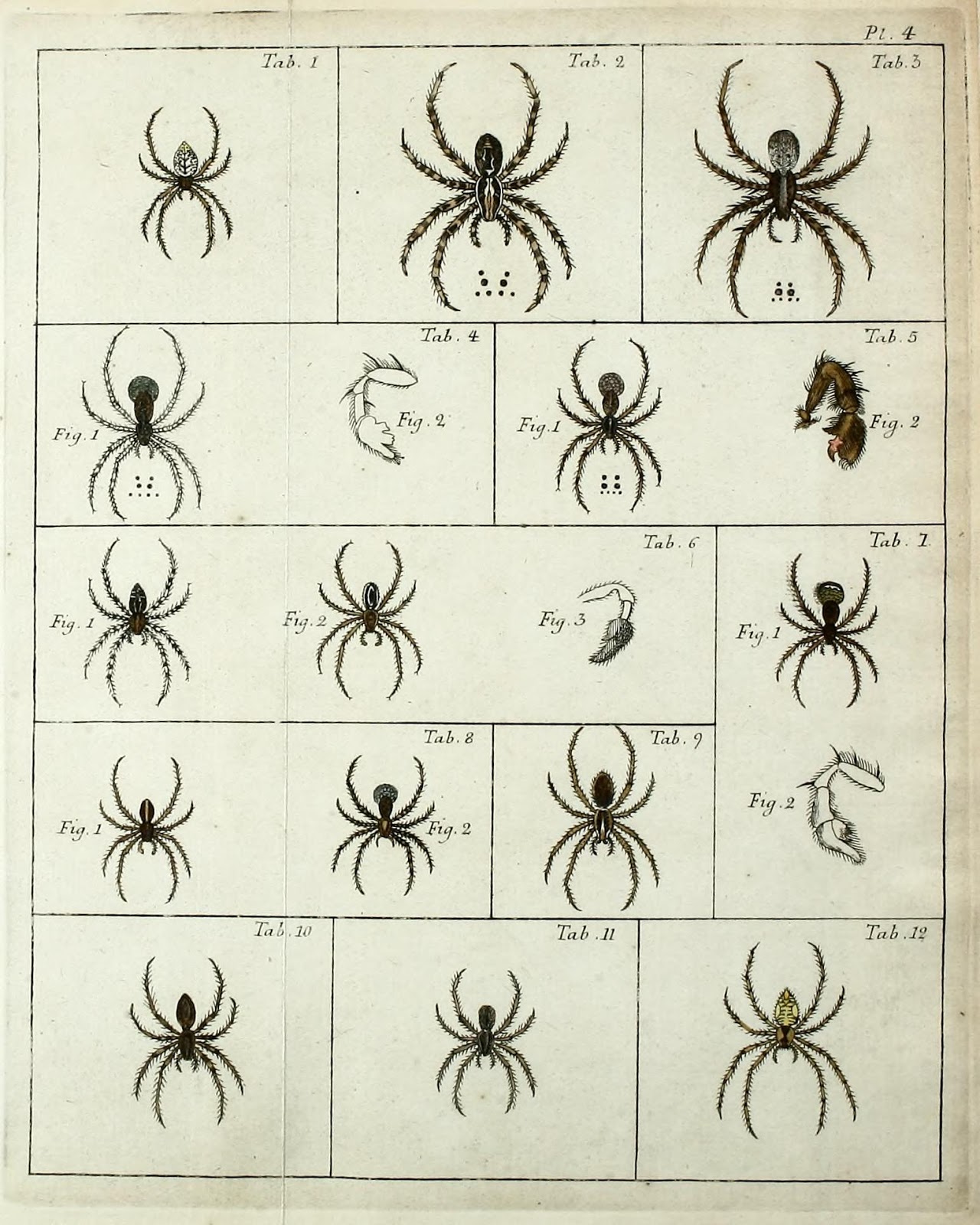
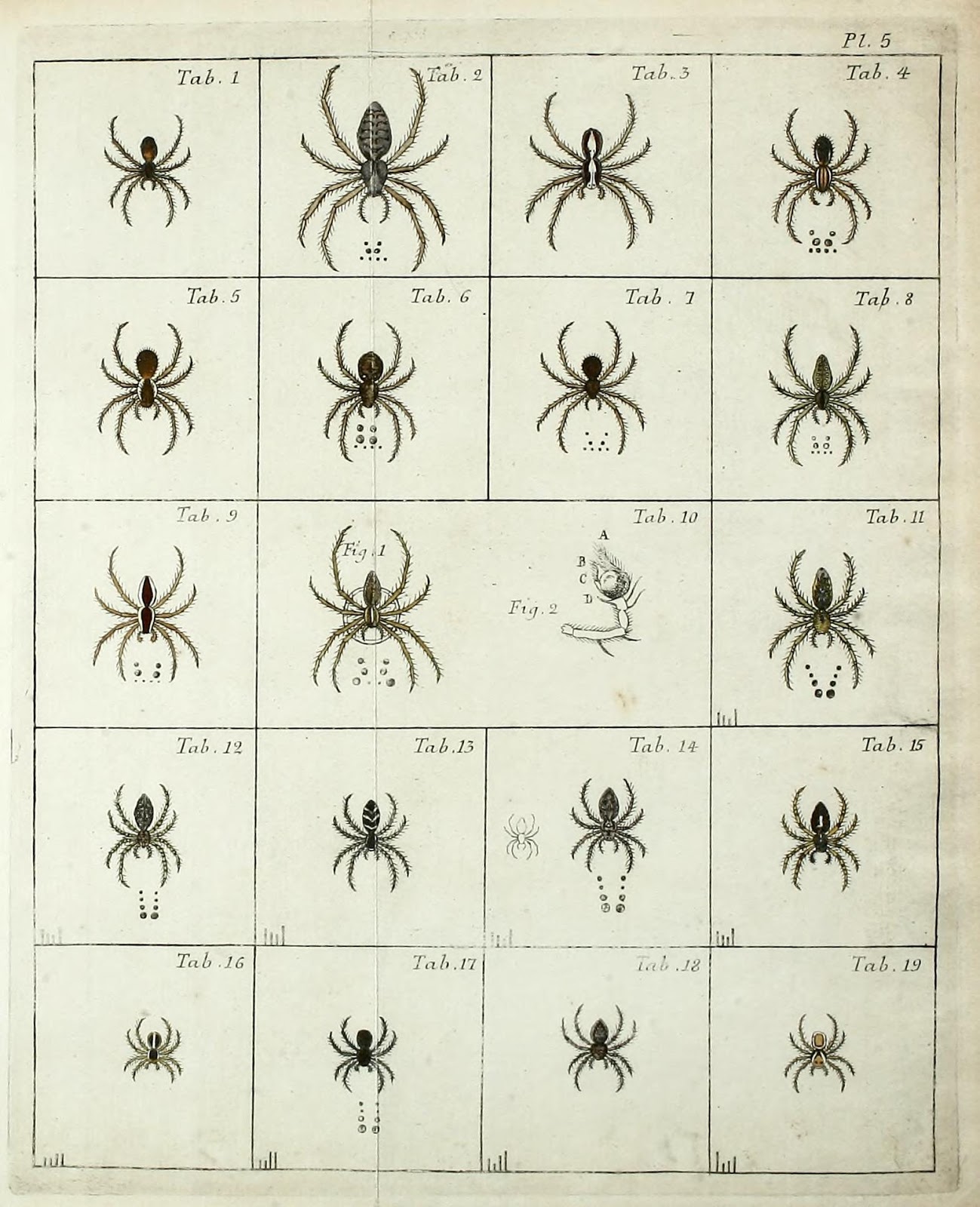
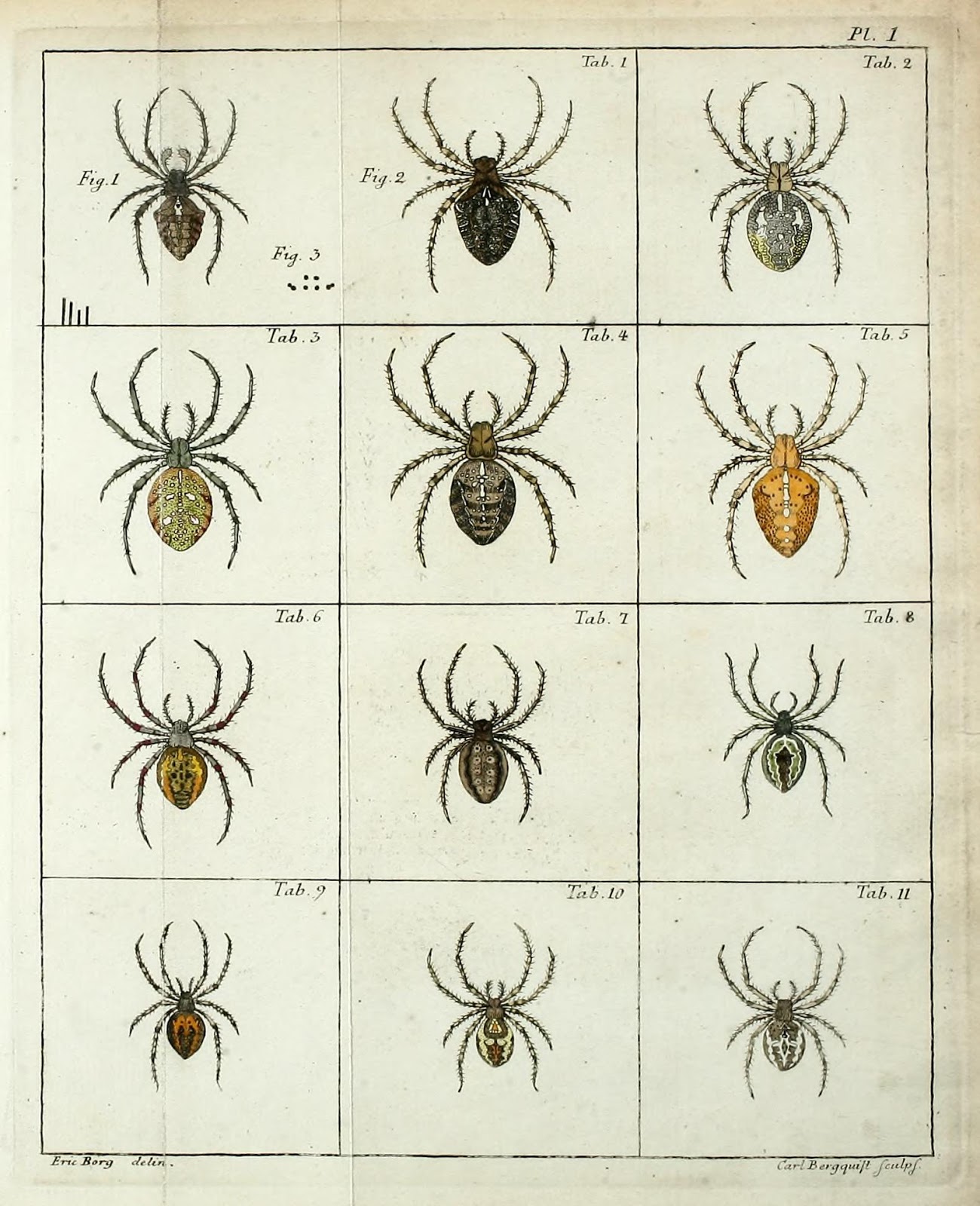
Clerck’s Svenska Spindlar describes and illustrates 70 species and includes 6 hand-colored plates containing 89 figures. Artists for the work include Eric Borg and L. Gottman, and the plates were engraved by Carl Bergquist. The text is printed in both Swedish and Latin, and for each species, Clerck uses the single generic name Araneus followed by a specific, one-word name (constituting the species name).  Clerck then provides detailed information about each species, from the dates that he collected his specimens to descriptions of anatomical features and differences between sexes.

Clerck also restricted his use of the term “spider” to those species possessing eight eyes and separated prosoma and opisthosoma. As such, he, unlike many previous authors, excluded Opiliones (harvestmen) and other arachnids from his treatment of the subject.

View Full Size Image
Clerck, Carl. Svenska Spindlar. 1757. Digitized by Smithsonian Libraries. http://www.biodiversitylibrary.org/page/51379402.

The International Commission for Zoological Nomenclature recognizes Clerck’s names as having precedence over any varieties that may have been proposed by Linnaeus, and as such the names in Svenska Spindlar have the unique distinction of being considered valid despite having been published a year before Linnaeus’ Systema Naturae. For example, while Linnaeus used the generic name Aranea, Clerck’s Araneus is considered the valid generic name.

In 1793, the first English translation of Clerck’s Svenska Spindlar appeared under the title Aranei, or, A natural history of spiders, by Thomas Martyn. Martyn supplemented the text with additional illustrations originally published in Eleazar Albin’s Natural history of spiders (1736).

View Full Size Image
Martyn, Thomas. Aranei, or, A natural history of spiders. 1793. Digitized by Smithsonian Libraries. http://www.biodiversitylibrary.org/page/51378856.

So, as you gear up for Halloween this weekend, take a moment to look through the book that started it all when it comes to spider nomenclature. If you’re one of those 30.5% of U.S. people with arachnophobia, you’re sure to consider it a true Page Frights experience!

Special thanks to Leslie Overstreet, Curator of Natural History Rare Books at Smithsonian Libraries, for providing information about this title for this post.

Reference

Health Research Funding. 2014. “7 Uncommon Arachnophobia Statistics.” September 22. Accessed October 25, 2016. http://healthresearchfunding.org/7-arachnophobia-statistics/.

October 27, 2016by michelle.underhill
BHL News, Blog Reel, User Stories

Rod Page Talks Bioinformatics, Linked Data, and Primary Literature at the Smithsonian

Portrait version of the Biodiversity Heritage Library logo.

On 22 September, Dr. Rod Page, Professor at the University of Glasgow and creator of BioStor, gave a presentation at the Smithsonian’s National Museum of Natural History Library about ideas for extracting and linking data across biodiversity repositories and primary literature.

The talk, entitled “The Sam Adams Talk,” covered topics including phylogenetics, geophylogeny visualizations, linking article and specimen data across repositories, annotations, the biodiversity knowledge graph, and data as source code. A lively Q&A; session between Rod and the audience followed the presentation.

You can view a recording of the presentation on YouTube.

Rod’s talk at the Smithsonian followed the Scientific Collections International Food Security Symposium at the National Agricultural Library, 19-21 September. At the invitation of BHL, Rod gave a presentation at the symposium about using publication data to support food security research. You can view Rod’s Food Security Symposium presentation, entitled “Unknown Knowns, Long Tails, and Long Data“, on his Slideshare.

Visit Rod’s blog iPhylo and follow him on Twitter at @rdmpage to see more of his thoughts on bioinformatics, linked data, and primary literature.

September 29, 2016by ulib-libraryjobs
Blog Reel, User Stories

Supporting Historical Paleontological Research

View Full Size Image
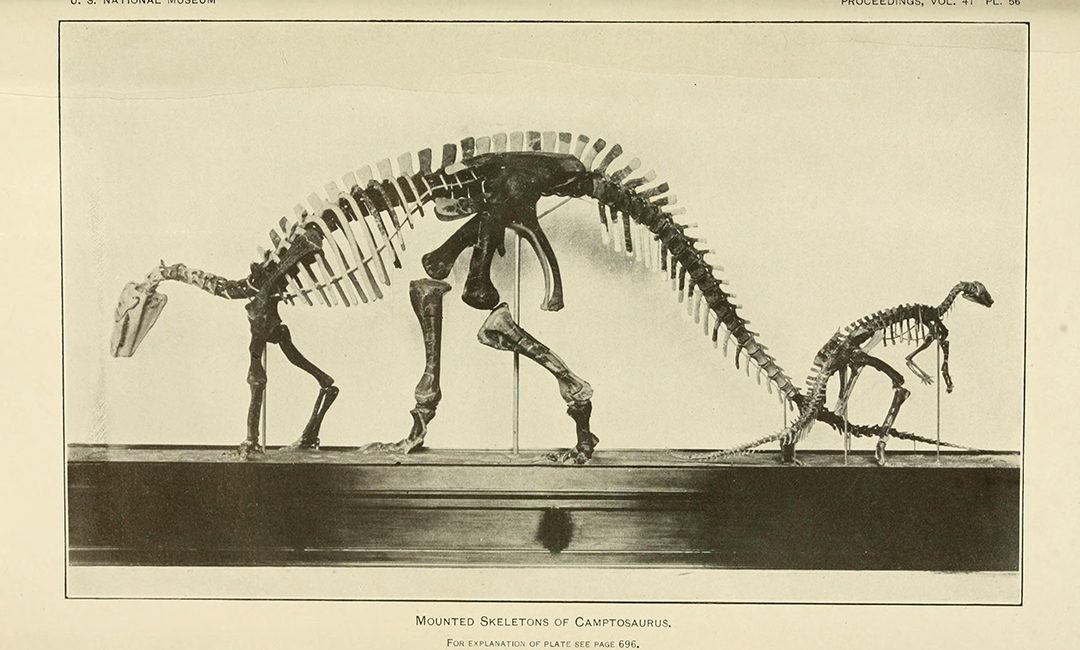
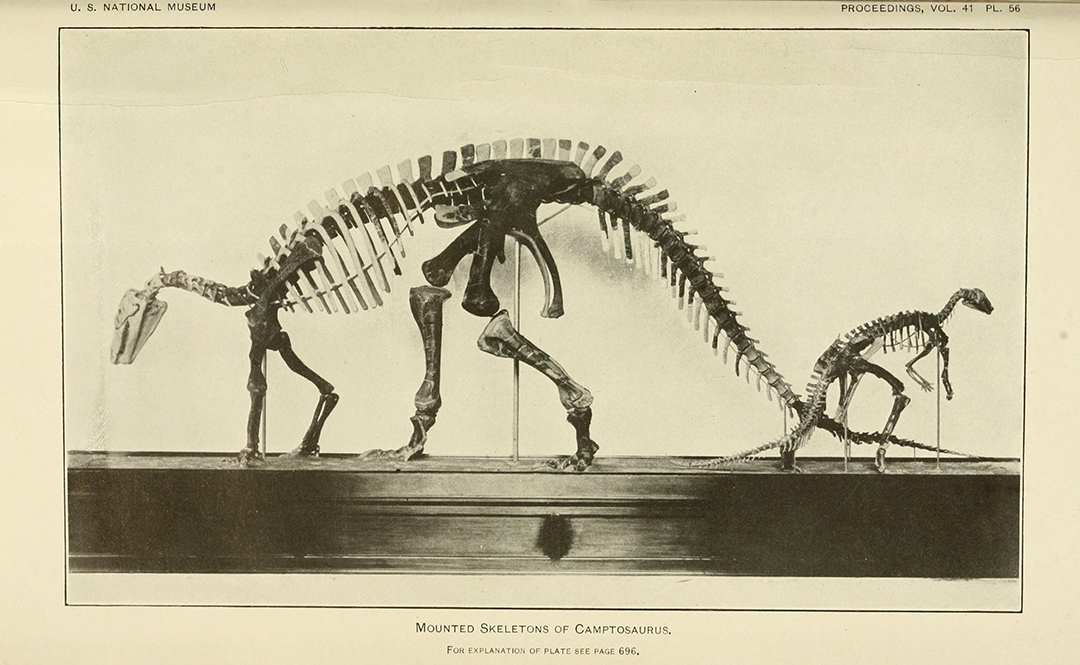
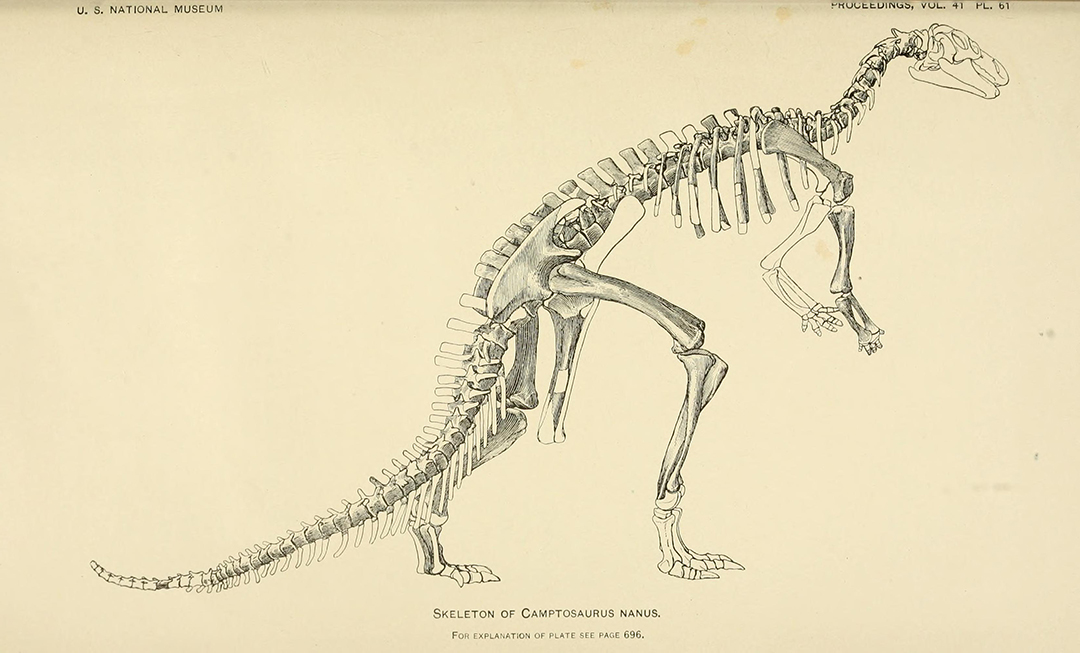
World’s first large mounted Camptosaurus skeleton at the National Museum of Natural History. Proceedings of the United States National Museum. v. 41 (1912). Digitized by Smithsonian Libraries. http://biodiversitylibrary.org/page/29866417.

In 1911, the Smithsonian Institution debuted the world’s first large mounted Camptosaurus skeleton at its newly-opened Natural History building. The display featured two specimens erected side-by-side, one identified as Camptosaurus nanus and the other as Camptosaurus browni.

Camptosaurus, whose name means “flexible lizard,” was a plant-eating, beaked dinosaur that lived during the Late Jurassic period. Both Smithsonian specimens were uncovered at a quarry near Como Bluff, Wyoming. The smaller of the specimens, dubbed C. nanus, was collected in 1882 by William Reed as part of a collecting expedition funded by the United States Geological Survey and under the technical direction of famous paleontologist Othniel Charles Marsh.

Marsh is well-renowned for his many contributions to the field of paleontology, which include discovering a plethora of fossil animals and naming a multitude of dinosaur genera including Camptosaurus. He is also notoriously remembered for his longstanding conflict with fellow paleontologist Edward Drinker Cope – a conflict that came to be known as the Bone Wars. The intense rivalry between the two men spanned decades as each undermined, ridiculed, and even sabotaged the work of the other in a struggle for scientific dominance.

The C. nanus fossil was originally accessioned into the collection of the Yale Peabody Natural History Museum, where Marsh was the Curator of Paleontology, until, after Marsh’s death in 1899, it was transferred to the Smithsonian in compliance with legislation regarding objects collected for, or whose collection was funded by, the US government. The fossil, which was cataloged as USNM 2210, was then prepared and mounted by Norman H. Boss in 1911 alongside the larger C. browni specimen. The mounts are detailed in a 1912 publication by Charles W. Gilmore. Interestingly, the specimens are now known to represent the juvenile (previously C. nanus) and mature (previously C. browni) stages of a single species, C. disbar.

View Full Size Image
C. nanus, as mounted at the National Museum of Natural History. Proceedings of the United States National Museum. v. 41 (1912). Digitized by Smithsonian Libraries. http://biodiversitylibrary.org/page/29866427.

Between 2004 and 2008, the Camptosaurus fossils were taken off display to allow for repairs and the creation of casts that may be re-exhibited with the reopening of the Smithsonian’s Deep Time Hall in 2019. The authentic fossils will be placed in the museum’s collections for research and conservation reasons.

The fascinating history of USNM 2210’s journey from rock to museum is detailed by National Museum of Natural History (NMNH) volunteer Mark Lay in the article A Brief History of Camptosaurus, U.S. National Museum Specimen 2210.

View Full Size Image
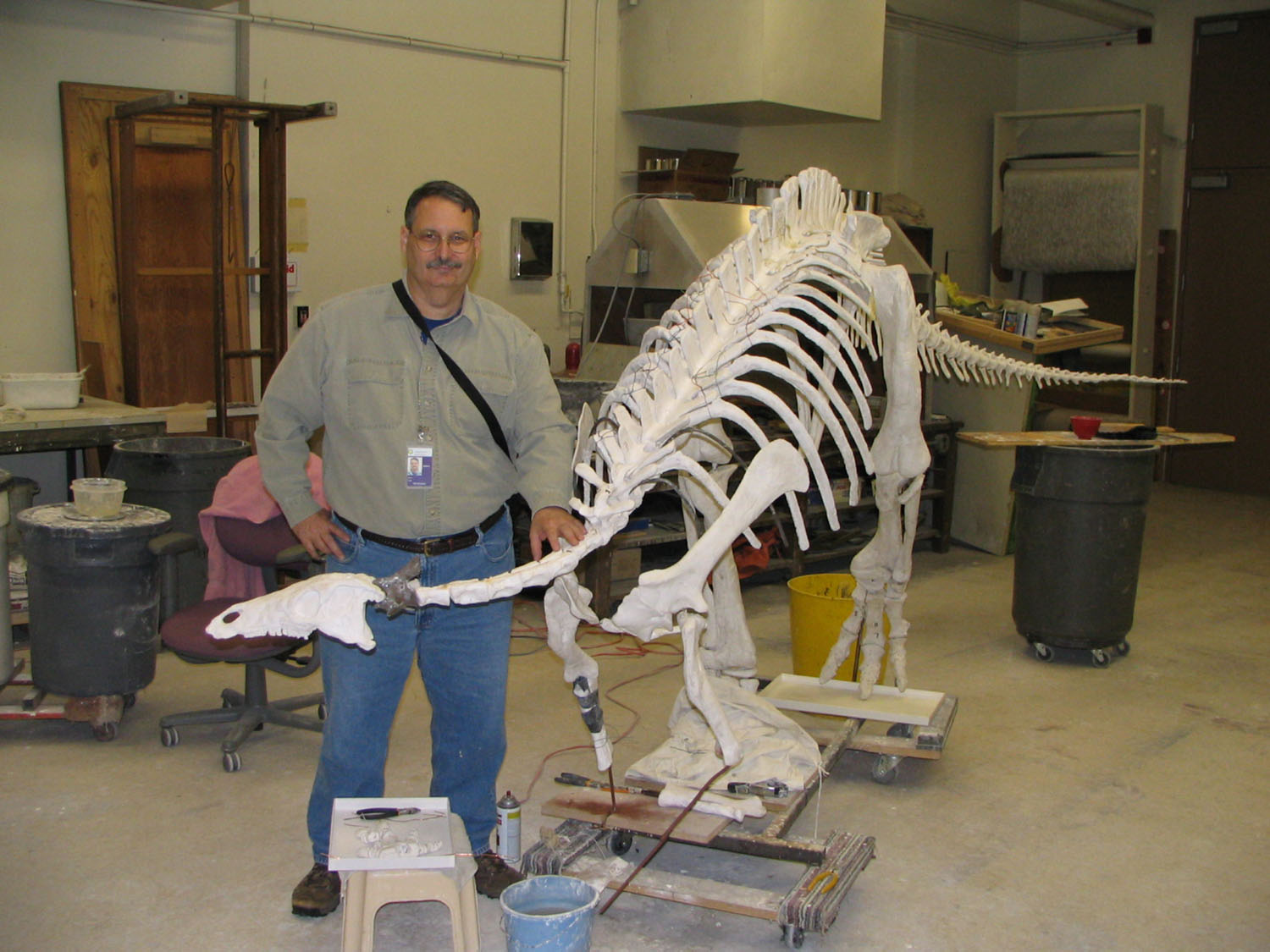
Mark Lay with Camptosaurus cast at the National Museum of Natural History.

Trained as a physicist and nuclear engineer, Mark began volunteering in the Vertebrate Paleontology Preparation Lab at NMNH in 2007 after retirement provided him more time to pursue personal interests like paleontology.

Mark’s early volunteer activities in the Preparation Lab involved making molds and casts, primarily of USNM 2210. Since then, after moving to work with Department of Paleobiology Information Officer Tom Jorstad, he has transitioned to providing research support for requests from the public and outside researchers, as well as organizing and developing “who, what, when, where” metadata for paleontology-related photographic images in both Department and Smithsonian Institution Archives files. He also writes articles on various aspects of the Department’s history and currently is researching the first 100 years of vertebrate fossil preparation in the Smithsonian.

The Biodiversity Heritage Library has proven to be an important resource for Mark’s research, providing information both about items in the collection and historical documents regarding the history of the NMNH and other natural history museums around the US.

“I am a big fan of BHL,” lauds Mark, who uses BHL up to 4-5 times a week. “I am able to spend only roughly one day per week in the NMNH. This means I can spend only a limited amount of time examining actual hard copy documents in the museum libraries. The fact that I can access many of the same documents via BHL means that I can also work from home – greatly increasing the amount of time that I can devote to my volunteer research. In addition, BHL’s inclusion of documents from other museums and universities enables me to access documents that otherwise would be extremely difficult for me to obtain. BHL doesn’t have everything I want, but I would be hard-pressed to do my research without it.”

View Full Size Image
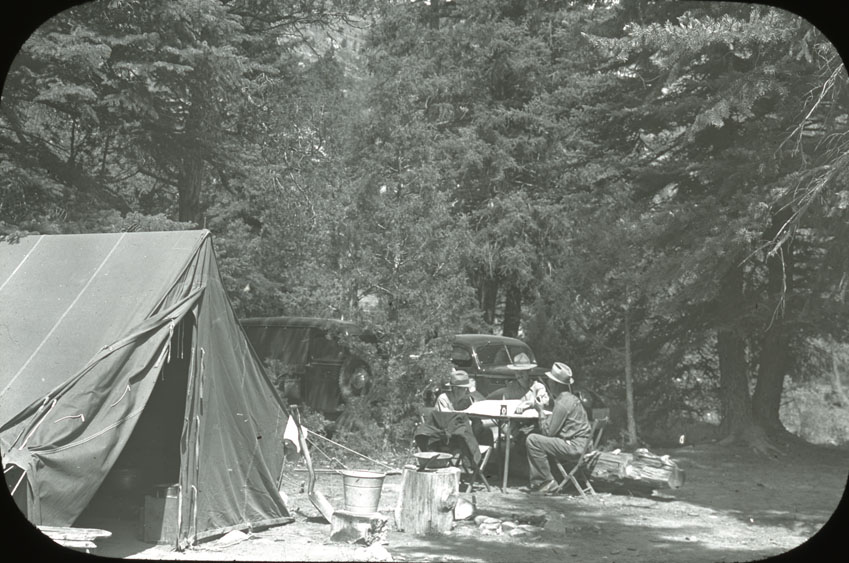
This image, SIA 2011-1418, shows USNM Curator of Vertebrate Paleontology Charles Gilmore’s camp site near North Horn Mountain, Utah during his 1937 expedition. It appears as Figure 1 in Gilmore’s 1938 publication, “Fossil Hunting in Utah and Arizona”, Explorations and Field-work of the Smithsonian Institution in 1937, pp 1-4, available in BHL here: http://biodiversitylibrary.org/page/40734134 (Digitized by Smithsonian Libraries).

Currently, Mark is working on a series of glass lantern slides dating from the mid-1890s through the late 1930s, now being digitized by the Archives and possessing limited metadata. BHL has been a valuable resource for obtaining more information about the slides.

“Some of these slide images were originally used in various Smithsonian publications from that era, making positive identification of the people, fossil localities, and dates much easier,” explains Mark. “More challenging have been the slides sent to the Smithsonian from a variety of museums around the U.S. So, our identification process has first concentrated on determining an initial ‘guesstimate’ of the curator, specimen, or collecting locality involved, then backtracking through relevant Smithsonian publications to see if the image appears. If not, we backtrack our guesstimate to publications from other ‘most likely’ museums. If all that fails, we dig deeper into the view or geology portrayed to see if we can find something similar and broaden the search to include relevant publications from other sources. Having so many of the Smithsonian and other museum publications from that time period in BHL has greatly sped up this process.”

Before using BHL, Mark scoured the physical copies of these publications to find this information – a time consuming and sometimes frustrating process. This all changed when Martha Rosen, a librarian in the NMNH Smithsonian Libraries, introduced him to BHL.

“I discovered BHL 5 or 6 years ago when I was sitting in the museum reference collection reading through some old United States National Museum annual reports, and complaining that my eyes were getting ready to drop out from going through so much text all at once,” recalls Mark. “Martha mentioned that I could get the documents on-line and gave me the BHL link. I downloaded a searchable PDF of the documents and went through them that evening, actually finding relevant information faster than I could with the hard copy.”

View Full Size Image
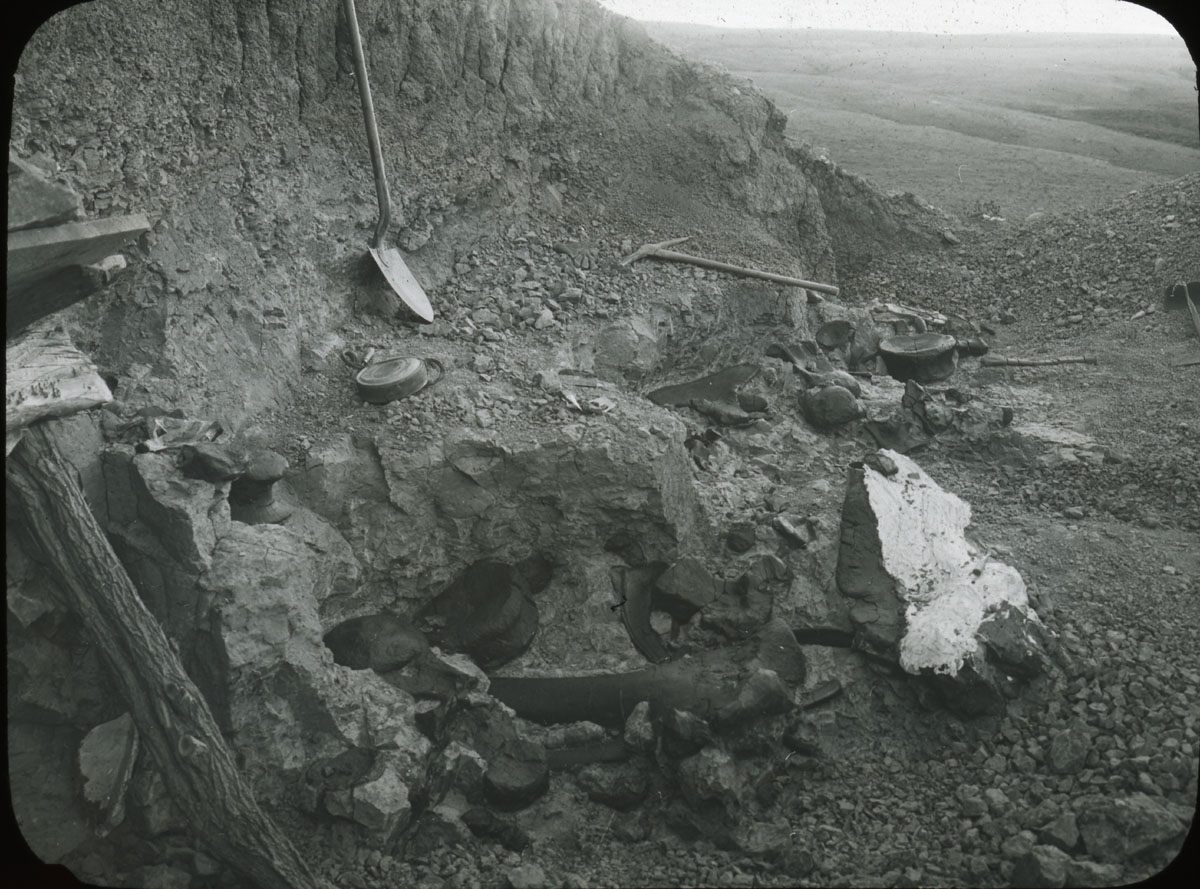
This image, SIA 2011-1429, shows Quarry 6 in the Freezeout Mountains of Wyoming, as worked by the Field Columbian Museum expedition of 1899. It was used as Plate XXX in the Field Columbian Reports, Volume 1, October 1899, included in the Annual Report of the Director to the Board of Trustees for the Years 1894-1900, available in BHL here: http://biodiversitylibrary.org/page/45723188 (Digitized by Smithsonian Libraries).

Mark’s volunteer work with the Smithsonian has allowed him to pursue his passions, enhance collection information, and share wonderful insights into the history of the museum and fossil preparation.

“Paleontology has been a long-standing interest,” Mark asserts. “To me, there is a fascination with bringing a fossil out of the rock encasing it and learning more about it. My interest in paleontological history is more recent, but the research has turned out to be no less rewarding.”

Mark’s articles, published through the Department of Paleobiology’s website, provide him a means to share the wonderful knowledge and history he is uncovering. For instance, Mark’s Camptosaurus article highlights the sometimes tangled path of a fossil from field to museum and provides insight into the changing philosophy of fossil preparation.

As Mark explains in his article, in the early 1900s, “preparators mounted a specimen and expected it to stay mounted forever – no provision was made for repair or reconstruction.” So when preparing USNM 2210 back in 1911, “heavy copper wire and iron strapping were used as a support armature, with thinner copper wire used to secure the manus and pes elements. In general, these supports have held up well, with only slight corrosion damage, but some of the bolts and rivets securing the skeleton were drilled through real bone and secured with glue. As we have dismantled the specimen, this mounting technique has occasionally necessitated our cracking bones in order to remove them from the armature, and then making appropriate repairs.”

Modern techniques accommodate the possible future need to dismantle specimens and allow for a more-realistic presentation of specimens. “The hard plaster we have used for the casts allows for support connections to be made through the simulated bone, reducing the amount of armature seen by the public and providing a more natural looking display. The philosophy is to make all changes reversible, while also ensuring repairs are both state of the art and long lasting,” explains Mark in his article.

We’re excited to see the ways that BHL has helped support Mark’s valuable work at the Smithsonian. It’s a great example of one of the many ways that BHL inspires discovery through free access to biodiversity knowledge.

__________________________

This post may contain the personal opinions of BHL users or affiliated staff and does not necessarily represent the official Biodiversity Heritage Library (BHL) position on these matters.

August 11, 2016by ulib-libraryjobs
BHL News, Blog Reel

National Digital Stewardship Residency (NDSR) Job Postings

Portrait version of the Biodiversity Heritage Library logo.

We’re hiring!

The vacancies for the five National Digital Stewardship Residency (NDSR) cohort positions have been posted through Harvard University. These five residents will work on projects related to the Biodiversity Heritage Library at BHL partner institutions in Cambridge, MA, Washington, DC, Chicago, IL, St. Louis , MO or Los Angeles, CA from January 2017 to December 2017. Learn more about the NDSR program, funded by the Institute of Museum and Library Services (IMLS) as part of the Laura Bush 21st Century Librarian Program.

For more information, visit the vacancies posting page here. To apply, click here.

Qualification requirements and information about each of the five projects (as provided on the Harvard University posting page above) are listed below. Residents will each be assigned one of the five available projects and corresponding host institution(s). Applicants should specify their top three choices of institutions and projects from the list below in the cover letter included in their application. Application review will begin immediately and will continue until the positions are filled.

Applications received by October 5, 2016 will be given first consideration.

WHO MAY APPLY: 

Applicants must be U. S. citizens who have graduated from an accredited degree-granting Master’s or Doctoral program between Summer 2014 and January 2017. Applicants must be US citizens or permanent residents.

QUALIFICATIONS REQUIRED: 

  • Possess a master or doctoral degree with graduation between spring 2014 and January 2017 in one of the following fields (or other discipline engaged in the stewardship of digital materials):
    • Library Science
    • Information Science
    • Archival Science
    • Records Management
    • Computer Sciences
    • Museum Studies
    • Art History
    • Engineering
    • Digital Media
    • Master of Fine Arts in New Media
  • Must be available to work on-site for the entire one-year period (relocation expenses are not offered).
  • Must be a US citizen or permanent resident.


AVAILABLE PROJECTS:

Content Analysis. 
This project will be an analysis of the quantity of literature underpinning the field of biodiversity, the amount of that literature in the public domain, the representation of each discipline (delineated by taxon group) within BHL, an exploration of methodologies to scope the collections, and areas where BHL may target development to better serve the research population. Host: BHL Chicago partners (The Field Museum of Natural History and the Chicago Botanic Garden) with mentors Library Directors Christine Giannoni and Leora Siegel.

Import of Crowdsourced Data Corrections and Enhancements. 
Building on the IMLS grant received by the Missouri Botanical Garden, Purposeful Gaming and BHL, in which BHL worked with Mary Flannagan and Tiltfactor , the mentors for this project will work with the resident to develop methodologies and propose tools for integration of crowdsourced data corrections and enhancements back into the BHL portal. Best practices will be documented for verification, trust, and multi-tier review. Host: Harvard University: MCZ, mentors Library Managers Constance Rinaldo and Joseph deVeer.

Enabling image discovery within the Biodiversity Heritage Library. 
Building on the successful NEH Art of Life grant, crowdsourced metadata around BHL images hosted on Flickr and Zooniverse would be integrated back into the BHL through user interface modifications to the BHL portal to enable image searching, browsing and display. The resident will work with the BHL technical team to propose best practices for integration of this data into BHL as well as sustainable methodologies for augmenting image tagging for BHL content. Host: Missouri Botanical Garden (MOBOT), mentors Library Director Douglas Holland and Data Projects Coordinator, Trish Rose-Sandler.

Digital Library Best Practices Analysis. 
The mentor will work with the resident to consult with BHL partners such as DPLA and Europeana to determine how BHL data works in these large scale national and pan-national digital libraries. The resident will propose analyses of other large-scale digital libraries (HathiTrust, the Internet Archive, National Digital Library of New Zealand, Trove, for example) to categorize high value tools and services that can be built into the next version of BHL or developed with existing APIs from partners. Host: Los Angeles County Natural History Museum, mentor Chief Librarian and Curator Richard Hulser. NHM Research Library.

User Needs and Usability Analysis. 
The mentor will work with the resident to identify members of the larger taxonomic and biodiversity informatics community to determine user needs and services for providing increased value to BHL content. Building on a ten year relationship with this community, BHL staff will introduce the resident to relevant initiatives hosted at the Smithsonian, such as Consortium for the Barcode of Life (CBoL) and Encyclopedia of Life (EOL) and to partners such as Global Biodiversity Information Facility (GBIF). The resident will analyze input gathered to define recommendations and requirements for expanding the BHL digital library functionality. Host: BHL Secretariat/Smithsonian Libraries, mentor Carolyn Sheffield, BHL Program Manager.

August 3, 2016by ulib-libraryjobs
Blog Reel, User Stories

Diving into Marine Biodiversity & Coastal Ecosystem Research

On the eastern coast of Florida, about 120 miles north of Miami, there’s a very special research center. It serves as a field station specializing in marine biodiversity and Florida ecosystems, especially that of the Indian River Lagoon – one of the most biologically-diverse estuaries in North America. The center serves as a destination for scientists around the world who are interested in studying the extraordinary biodiversity in the area as well as ocean and coastal processes at large.

View Full Size Image
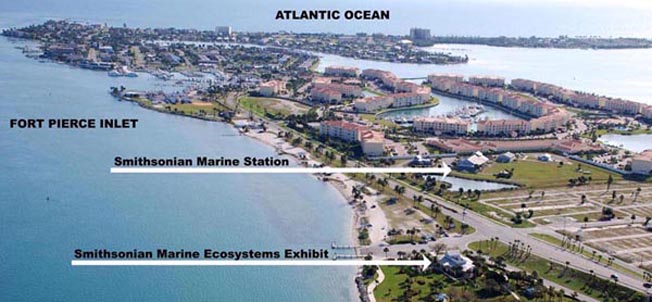
Aerial view of the Smithsonian Marine Ecosystems Exhibit and the Smithsonian marine Station. http://www.sms.si.edu/.

This center is the Smithsonian Marine Station at Fort Pierce, and its mission is to “support and conduct…scholarly research in the marine sciences, including collection, documentation and preservation of south Florida’s marine biodiversity and ecosystems, as well as education, training, and public service.”

The Smithsonian has had a presence in Fort Pierce since 1969. While the station and facilities have grown and evolved tremendously over the past four decades, a $10 million donation from Suzanne and Michael Tennenbaum in 2012 launched a project that further expands the Station’s contributions to worldwide coastal marine biodiversity and ecosystem research.

Entitled the Tennenbaum Marine Observation Network (TMON), the project establishes “the first worldwide network of coastal ecological field sites” and “will provide an unprecedented understanding of how marine biodiversity is affected by local human activities and global change, such as ocean warming, acidification and rising sea levels.” The Smithsonian Marine Station at Fort Pierce was named one of five field sites in the project, which aims to incorporate an additional ten new sites within the next decade.

View Full Size Image
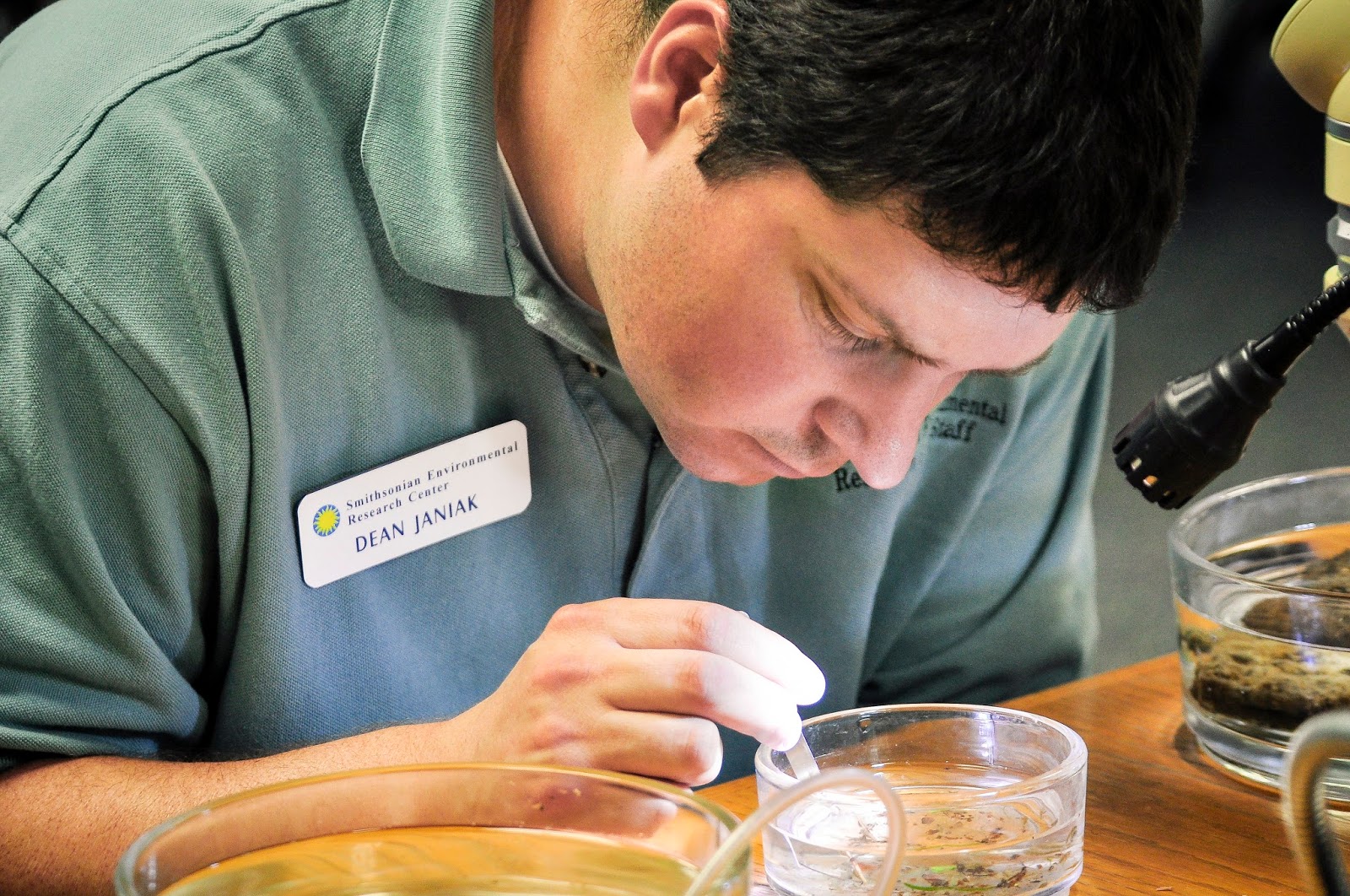
Dean Janiak, Biologist, TMON/MarineGEO, Smithsonian Marine Station at Ft Pierce.

Dean Janiak has served as a biologist on TMON and the related Marine Global Earth Observatory (MarineGEO) program at the Fort Pierce Marine Station for the past year and a half. Before joining the station in Florida, he served as the Head Technician in the Benthic Ecology lab at the Smithsonian Environmental Research Center (SERC) in Maryland. With a B.Sc. in Biology from Humboldt State University and an M.Sc. in Marine Sciences from the University of Connecticut, Janiak has a passion for marine ecology, invasion biology, and life histories – a passion which attracted him to the position in Fort Pierce.

“I would consider myself a general marine ecologist with a particular interest in how marine invertebrate communities are both formed and maintained in space and time,” explains Janiak. “When we travel out into the field and see communities of animals living in close proximity to each other, we could assume that they just randomly arrived there and have made a living. However, most species actually have gone through a harrowing adventure to get to where they are. Besides how they got there, the animals themselves are unbelievably diverse. I would argue that within ½ meter 2, in many parts of the ocean you could find more diversity than any zoo or aquarium could ever show you. Because of this, much of my interests are in not only why communities look the way they do but also what species or groups of species make up these communities. In particular, I do a lot of research in an unusual type of habitat – artificial habitats (e.g. docks, marinas, seawalls, etc.) – which are actually pretty common. While they tend to have a positive effect for those installing them (storm protection, recreational boating), we have little knowledge on how they function in terms of the animals on them and how they contribute to the overall system. For example, a large percentage of non-native species are found in these types of habitats, and one of the topics I am interested in is the consequences of these species spreading into more pristine, native habitat like seagrasses or reefs.”

Such research is dependent upon information contained within published literature.

“In my opinion, there is no way to do science of any kind without having a solid background on what has been done in the past,” affirms Janiak. “Unlike past history where we must learn from our mistakes in order to be successful, the sciences allow us to learn from our accomplishments. Each species is unique in its evolutionary journey and should be treated as such. Identifying a species and learning about how that species makes its living requires an extensive use of the library system.”

Traditionally, access to historic literature can be difficult to obtain, even for researchers working at institutions with extensive library collections such as those that Janiak has access to through the Smithsonian Libraries. While Janiak is quick to point out that he benefits enormously from the e-journal subscriptions and robust ILL services offered by the Smithsonian, being stationed in Florida, away from the library base of his home institution, means that his opportunity to access the Library’s physical collections are limited. Even the speediest ILL services inevitably introduce delays into the research process. The Biodiversity Heritage Library (of which Smithsonian Libraries is a founding Member), however, is revolutionizing scientific research, providing researchers across the globe with free and immediate access to the information and publications they require to study life on Earth.

“BHL is a great resource for trying to find things that have typically been forgotten by most,” applauds Janiak. “[It provides access to] literature that would be otherwise impossible to find or know that it even existed.  From a research perspective, I use BHL as a starting to point to find taxonomic information on a particular species or group that I am working on. As we move closer and closer to new age molecular approaches to identifying species, we are losing people who can simply look at an animal and tell you what it is, why it is that, and the interesting way that it makes a living. I think that much of this knowledge would be lost if BHL was not trying to keep this information available.”


View Full Size Image
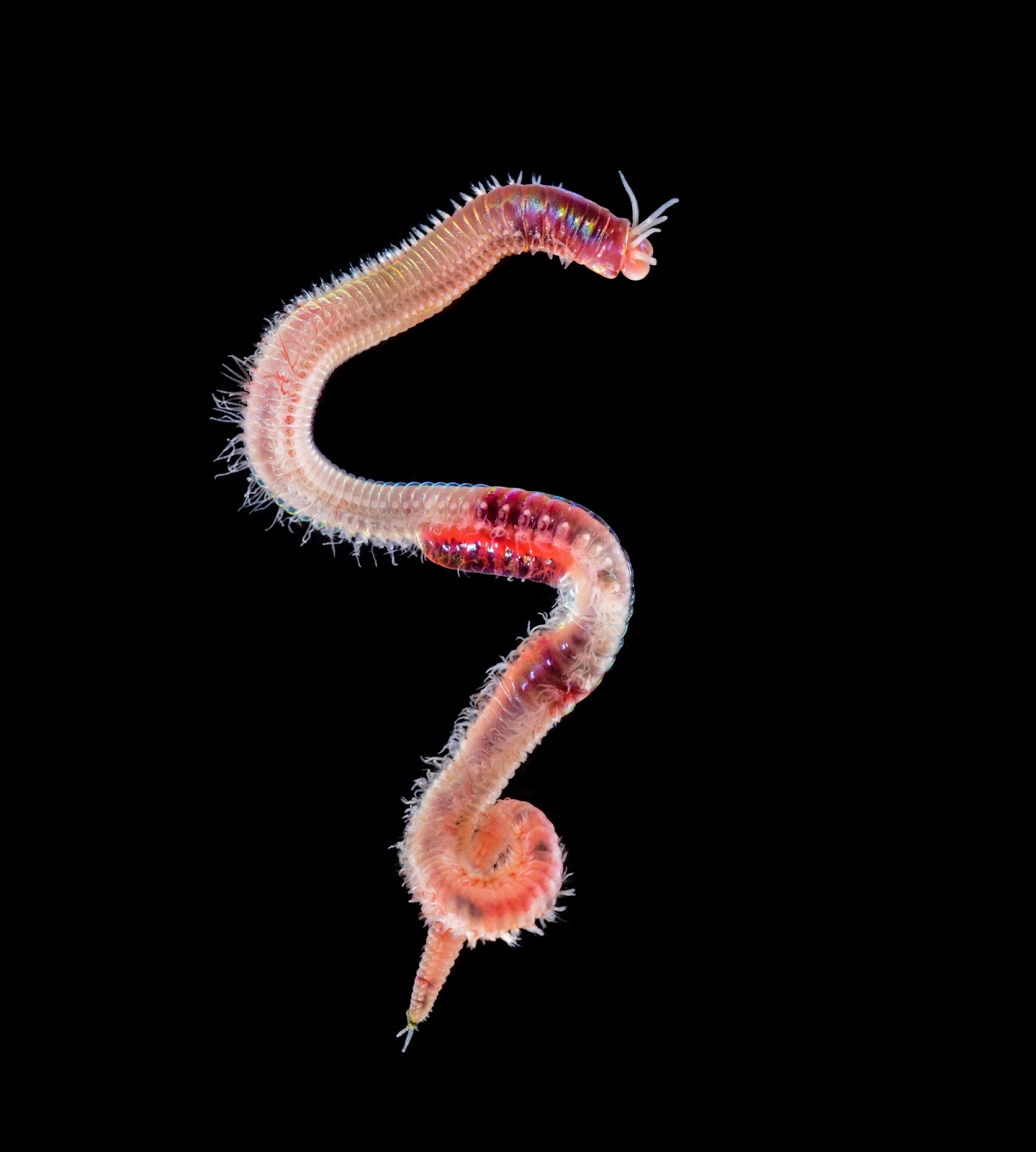
Rockworm (Marphysa sanguinea). An example of one of the species found in the Indian River Lagoon. Image Credit: Dean Janiak.

In particular, BHL has proven to be a useful resource for the TMON project, providing information that supports research on global change.

“TMON has at its core to understand biodiversity and how it changes through time,” explains Janiak. “I think that we are all aware that the climate is changing, and it is natural for change to occur. There are built-in positive and negative feedback loops that allow the climate to do so. I think the problem is that this change is happening at a rapid rate and we, in a single generation, can see this happening. It is therefore important to have access to a biodiversity library that has done so well to document the past, as this is vital to our understanding of the future.”

Thanks to the free online access to biodiversity literature provided by BHL, combined with the extensive resources offered by the Smithsonian Libraries, Janiak has the information he needs to follow his research passions.

“I have always been career-minded and have also always wanted to be a part of something special with the caveat that it must come with a constant challenge. I think that the Smithsonian has not only offered me that but has also given me the opportunity to build a career with all the resources that I would need plus that relentless challenge that keeps me engaged and excited each day. It’s essentially like the popular kid at school asking you to play in their sandbox; you never want to leave.”

______________________

This post may contain the personal opinions of BHL users or affiliated staff and does not necessarily represent the official Biodiversity Heritage Library (BHL) position on these matters.

June 9, 2016by ulib-libraryjobs
BHL News, Blog Reel

Celebrating Women In Science and Museum Day Live

March is Women’s History Month, a month dedicated to celebrating the contributions of women to events in history and contemporary society. In recognition of this celebration, the Smithsonian is coordinating a special edition of its signature Museum Day Live! event in a nationwide effort with museums and cultural institutions around the country to reach women and girls in underserved communities.

View Full Size Image

Held on March 12, 2016, Museum Day Live! will encourage all people, and particularly women and girls of color, to explore their nation’s museums, cultural institutions, zoos, aquariums, parks and libraries—which will offer free admission for the day.

The event is also intended to encourage people, especially young women, to think about careers in museums, libraries, and research. To this end, there will be a special career-focused event on March 12 in the Smithsonian Castle Commons in Washington, DC, consisting of lightning round discussions with museum professionals about careers in museums, a mix and mingle, and information tables. The discussions will be at 11:30am and 2:30pm EST; the mix and mingle will be from 1-2:30pm EST; the tables will be open from 12:30-3pm EST.

The Biodiversity Heritage Library is partnering with the Smithsonian Libraries, one of its founding Members, to host one of the information tables at the Museum Day Live! career event. The purpose of the tables is to expose people, especially students, to the wide range of careers and units within the Smithsonian, as well as any opportunities that they may be able to participate in.

If you’re in the area, we encourage you to stop by the Smithsonian Castle Commons (1000 Jefferson Drive, SW Washington, DC 20560) anytime between 12:30-3pm EST to talk with staff from both BHL and the Smithsonian Libraries about careers in libraries and ways that you can get involved with our organizations today. The Smithsonian Libraries is also hosting another fun event during the day called “Explore the Four,” which encourages visitors to explore all four of the Libraries’ current exhibits.

Celebrating Women in Natural History, BHL-Style

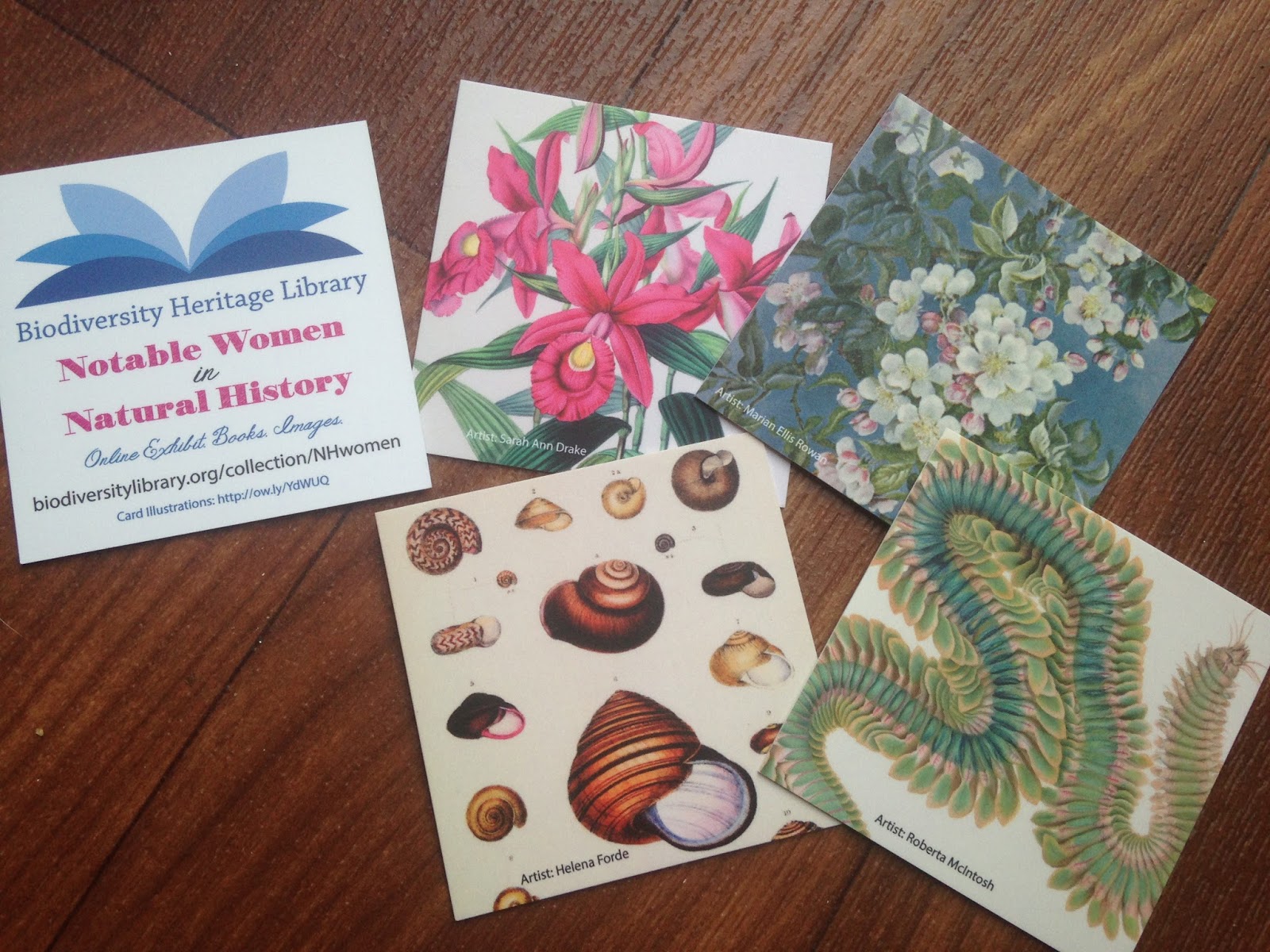
To celebrate both Women’s History Month and in recognition of the event’s mission to reach young women in particular, we’ll be handing out special cards at the information table highlighting BHL’s Notable Women in Natural History collection. This collection includes links to our Early Women in Science online exhibition (curated by Laurel E. Byrnes and funded by a grant from the Smithsonian Women’s Committee), our collection of books authored, edited, or illustrated by women, and our Women Illustrators in Natural History Flickr collection containing over 1,500 biodiversity images illustrated by women. All images in the Flickr collection have also been tagged with the name of the artist (Check out the “tags” section and you’ll see entries for “artist:name=[Insert Artist Name]”).

View Full Size Image
The Notable Women in Natural History cards we’ll be handing out at the Museum Day Live! information table on 12 March.

Additionally, since the Museum Day Live! event is also focused on sharing ways that people can get involved with libraries and cultural institutions around the country, we’re encouraging visitors (and all of our online audiences!) to add species name machine tags to the images in the Women Illustrators in Natural History Flickr collection. These tags describe the species illustrated in each image and allow scientists and people all over the world to more easily discover visual resources about plants and animals of interest. Learn how you can help add tags to BHL images today.

View Full Size Image
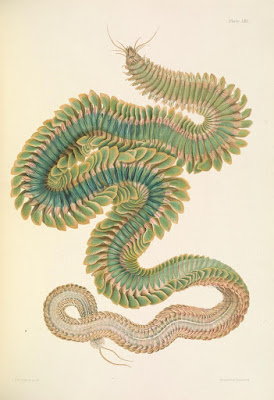
King ragworm (Alitta virens) illustrated by Roberta McIntosh. A monograph of the British marine annelids. v. 2, pt. 2 (1910). http://biodiversitylibrary.org/page/38533302. Digitized by Smithsonian Libraries.

We hope you’ll visit us at the Smithsonian Libraries information table on March 12, from 12:30-3pm EST, at the Smithsonian Castle Commons. If you can’t make it in person, we encourage you to explore our Notable Women in Natural History collection on BHL and find out how you can get involved in BHL no matter where you live.

View Full Size Image
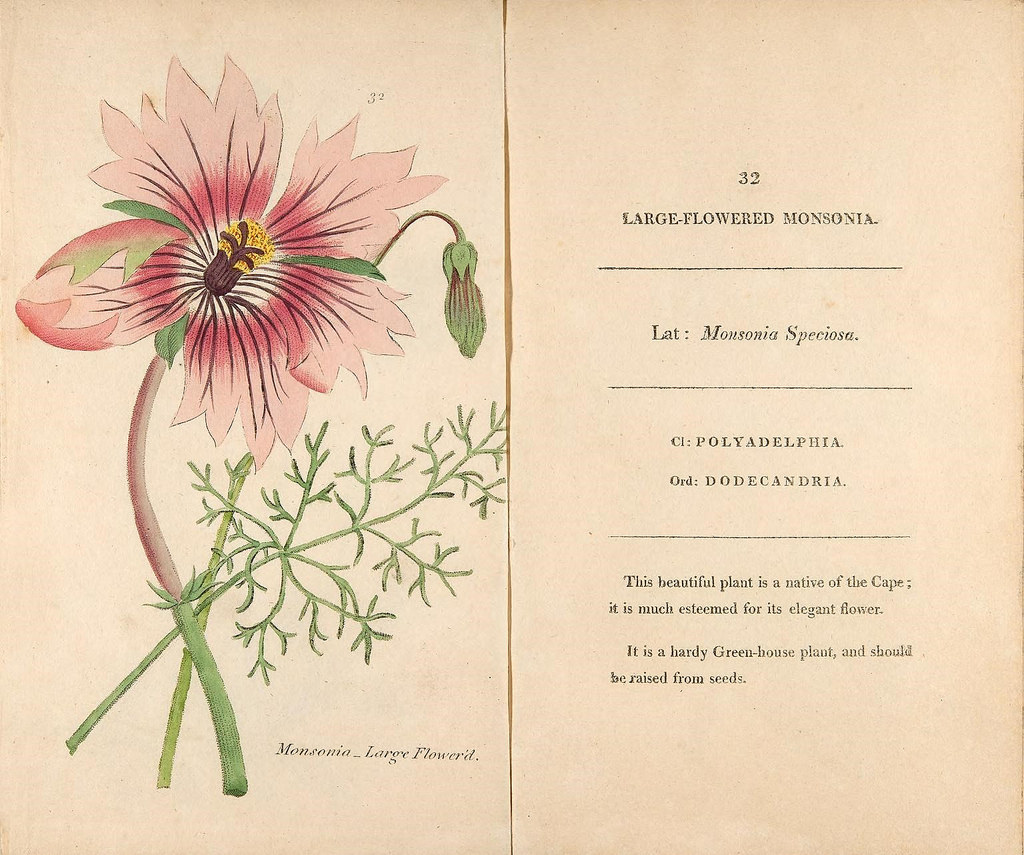
Monsonia speciosa illustrated by Henrietta Maria Moriarty. Fifty plates of green-house plants, drawn and coloured from nature (1807). http://biodiversitylibrary.org/page/48345267. Digitized by Chicago Botanic Garden, Lenhardt Library.

We’re excited to celebrate all women and girls, past and present, at Museum Day Live!, all this month, and everyday of the year. Happy Women’s History Month!

View Full Size Image
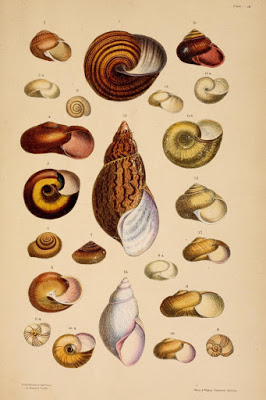
Various Callia, Helix and Helicina species illustrated by Harriet Scott. A monograph of Australian land shells (1868). http://biodiversitylibrary.org/page/1034564. Digitized by the MBLWHOI Library.


March 3, 2016by ulib-libraryjobs
Page 4 of 7« First...«3456»...Last »

Help Support BHL

BHL's existence depends on the financial support of its patrons. Help us keep this free resource alive!

search

About BHL

The Biodiversity Heritage Library (BHL) is the world’s largest open access digital library for biodiversity literature and archives. BHL operates as a worldwide consortium of natural history, botanical, research, and national libraries working together to digitize the natural history literature held in their collections and make it freely available for open access as part of a global “biodiversity community.”

Join Our Mailing List

Sign up to receive the latest news, content highlights, and promotions.

Subscribe Now

Subscribe to Blog via Email

Enter your email address to subscribe to this blog and receive notifications of new posts by email.

Join 319 other subscribers

Subscribe to Blog Via RSS

Subscribe to the blog RSS feed to stay up-to-date on all the latest BHL posts.

Access RSS Feed

Inspiring Discovery through Free Access to Biodiversity Knowledge.

The Biodiversity Heritage Library makes it easier than ever for you to access the information you need to study and explore life on Earth…for free, anytime, anywhere.


64+ Million Pages of
Biodiversity Literature Online.

EXPLORE

Tools and Services
to Transform Research.

EXPLORE

300,000+
Illustrations on Flickr.

EXPLORE

ABOUT | HARMFUL CONTENT | PRIVACY | SITE MAP | TERMS OF USE