Biodiversity Heritage Library - Program news and collection highlights from BHL
  • Home
  • News
  • Featured Books
    • All Featured Books
    • Book of the Month Series
    • BHL at 20
  • User Stories
  • Campaigns
    • Fossil Stories
    • Garden Stories
    • Monsters Are Real
    • Page Frights
    • Her Natural History
    • Earth Optimism 2020
  • Tech Blog
  • Visit BHL
Home
News
Featured Books
    All Featured Books
    Book of the Month Series
    BHL at 20
User Stories
Campaigns
    Fossil Stories
    Garden Stories
    Monsters Are Real
    Page Frights
    Her Natural History
    Earth Optimism 2020
Tech Blog
Visit BHL
  • Home
  • News
  • Featured Books
    • All Featured Books
    • Book of the Month Series
    • BHL at 20
  • User Stories
  • Campaigns
    • Fossil Stories
    • Garden Stories
    • Monsters Are Real
    • Page Frights
    • Her Natural History
    • Earth Optimism 2020
  • Tech Blog
  • Visit BHL
Biodiversity Heritage Library - Program news and collection highlights from BHL
Blog Reel, Featured Books

Artist Kumataro Ito Aboard the USS Albatross

This post was originally published on The Field Book Project blog on 30 June 2017.
View Full Size Image
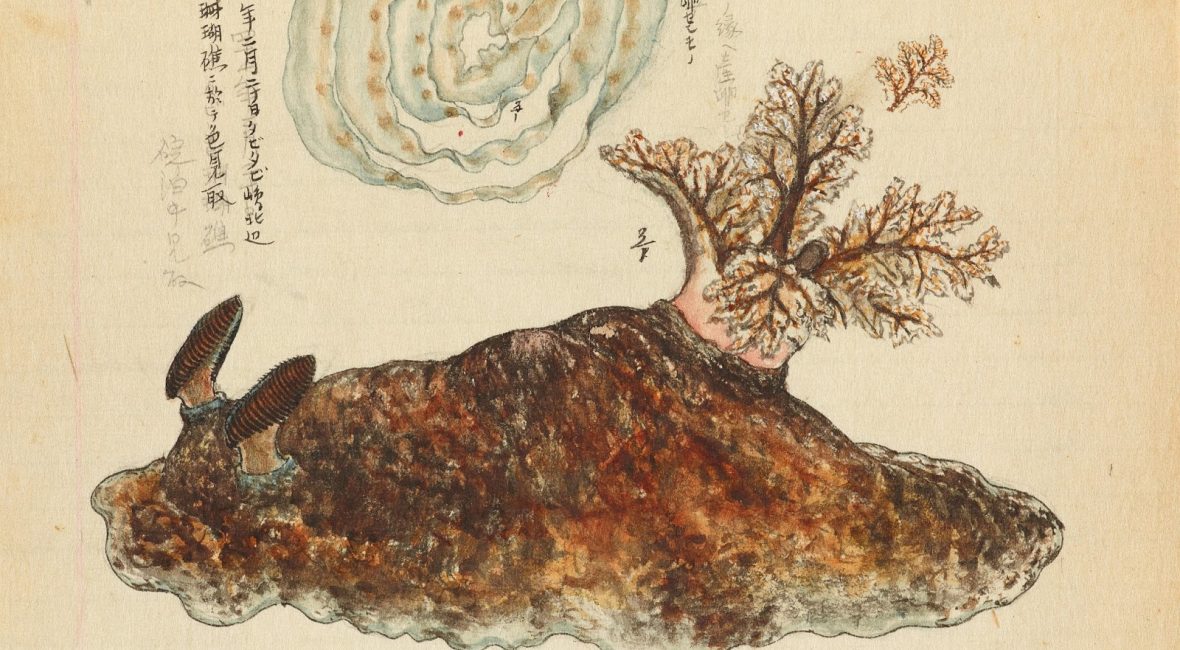
Bartsch, Paul. Notes and description of specimens collected on the Philippine Expedition of the Steamer Albatross, circa 1908. Illustration by Kumataro Ito. Digitized by Smithsonian Institution Archives. http://s.si.edu/2wm30MY.

In 1907, the U.S. Bureau of Fisheries—now known as NOAA Fisheries or the National Marine Fisheries Service—embarked on a 2 ½ year research trip to the Philippine and neighboring islands. Of the many research trips conducted on their steamer the USS Albatross, the Philippine expedition resulted in a staggering estimate of 490,000 specimens turned over to the U.S. National Museum, what is now the National Museum of Natural History. When specimens are stored in ethanol, as these were, they do not retain their original coloring. To capture this information, these trips would also include efforts to document the specimens in other ways, such as photos or illustrations.

At the time of this expedition, a portable, reliable way to create quality color photographs was still several decades away, so it wasn’t an option for researchers in the field. Having an artist on board was the only option to capture the brilliant colors of the collected marine species. For this particular outing of the Albatross, Tokyo-based artist Kumataro Ito was hired to illustrate specimens collected by researchers.

Ito studied under Gyozan Nakajima, noted illustrator of the 19th century, and had already established himself as a natural history painter at Department of Zoology of Tokyo University and working on publications such as the Fishes of Japan, an account principally on economic species.
View Full Size Image
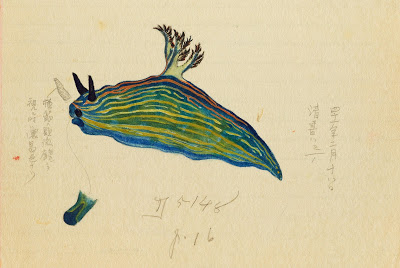
Bartsch, Paul. Notes and description of specimens collected on the Philippine Expedition of the Steamer Albatross, circa 1908. Illustration by Kumataro Ito. Digitized by Smithsonian Institution Archives. http://s.si.edu/2iFc64e.

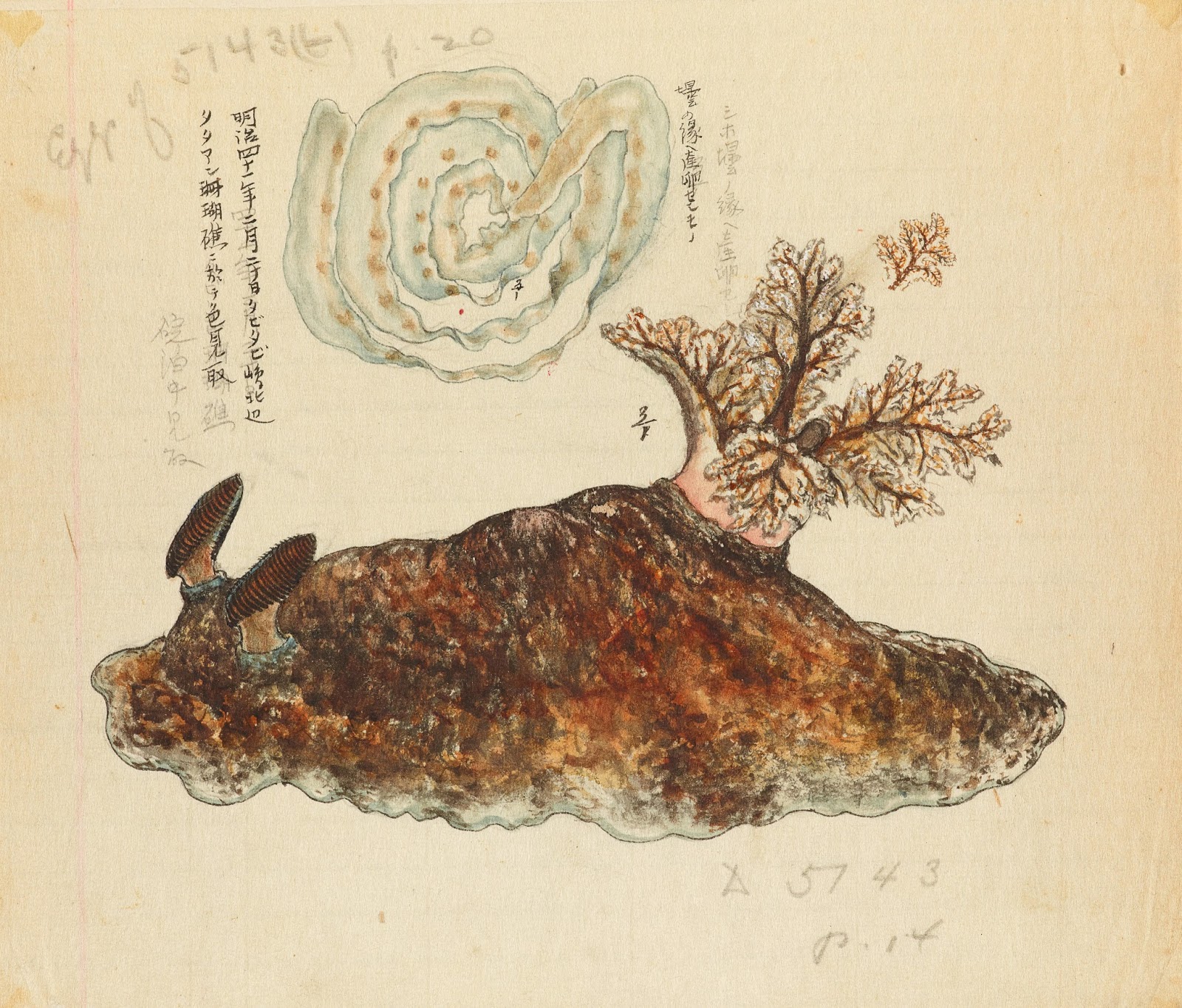
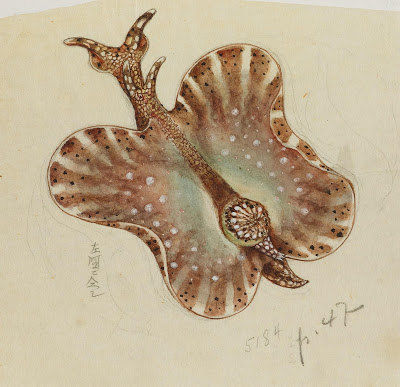
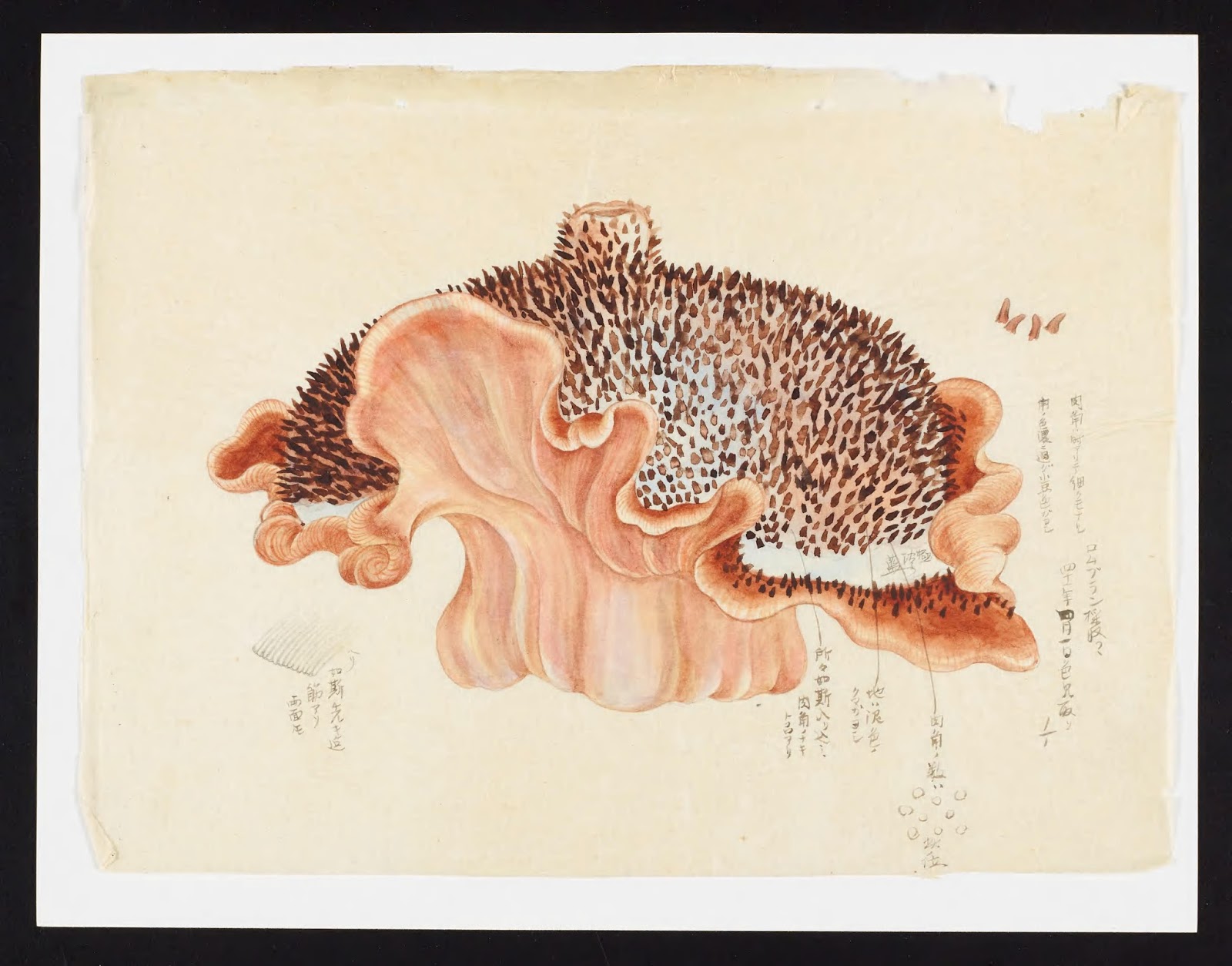
Over the course of the expedition, Ito created over 200 paintings of specimens collected by the small research crew, including mollusks collected by Smithsonian’s Paul Bartsch. Last month, our team digitized one of Bartsch’s notebooks from the expedition. The notebook caught our eye from the first time we saw it because of the beautiful full-color paintings of nudibranchs, all by Ito. Each painting includes notations in Japanese which supplement Bartsch’s notes. Based on how well the paintings have aged, it’s likely they were created on quality Japanese paper similar to what is used today for book repairs.
View Full Size Image
Bartsch, Paul. Notes and description of specimens collected on the Philippine Expedition of the Steamer Albatross, circa 1908. Illustration by Kumataro Ito. Digitized by Smithsonian Institution Archives. http://s.si.edu/2wgmjsR.

Unfortunately, Ito’s paintings often went unattributed or incorrectly credited to the researcher when later reproduced in publications. It’s a shame considering the clear talent Ito had in capturing the diversity of marine life. The nudibranch paintings in the Bartsch notebook are an incredible sight and we are pleased they are now available to view online, with proper credit to Kumataro Ito.
View Full Size Image
Bartsch, Paul. Notes and description of specimens collected on the Philippine Expedition of the Steamer Albatross, circa 1908. Illustration by Kumataro Ito. Digitized by Smithsonian Institution Archives. http://s.si.edu/2vClXJY.


Digitization of this field book was sponsored by a grant from Arcadia – a charitable fund of Peter Baldwin and Lisbet Rausing. 

Further Reading:

  • Bennett, William. “An Undersea Invertebrates Update: Treatment Progress on Bartsch’s Nudibranchs Field Book.” Smithsonian Institution Archives blog. May 18, 2017.
  • Bennett, William. “Coming Soon to the Transcription Center: Department of Invertebrate Zoology.” Smithsonian Institution Archives blog. November 15, 2016.
  • Springer, Victor G. “Kumataro Ito, Japanese Artist on Board the U.S. Bureau of Fisheries Steamer Albatross During the Philippine Expedition, 1907-1910.” Marine Fisheries Review 61, no.4 (1999): 42-57.
  • Bartsch, Paul. “Dr. Hugh M. Smith, Director of the Philippine Cruise of the “Albatross”” Copeia 1941, no. 4 (1941): 209-15.

August 31, 2017by mkahn
BHL News, Blog Reel

Overdue Thanks and Recognition for Rusty Russell and Lesley Parilla

This post originally appeared on the Smithsonian Field Book Project blog.

Since its inception, the Field Book Project has evolved from a single project focused on cataloging Smithsonian collections into a growing portfolio of projects, at first focusing on enhancing access to those same collections through conservation and digitization of the Smithsonian materials, and now as a multi-institutional digital initiative to provide open access to field notes through the Biodiversity Heritage Library. As with so many long-term projects or programs, staff have come and gone over the years. Many of those staff have made significant contributions and we try to share adequate thanks and acknowledgment for each.

Two individuals who were especially key to the project’s success—Rusty Russell, one of the original PI’s, and Lesley Parilla, the project’s longest serving cataloger—recently moved on to new positions. Both were integral to the project and we couldn’t be more grateful for their contributions. So with great pleasure, the current project team extends both their congratulations on the next phase of their respective careers and acknowledgement to both for their contributions.

View Full Size Image
Rusty Russell

In fact, when we look back it’s truly hard to imagine the Field Book Project taking off in quite the way it did without Rusty’s own intellectual investment and collaborative spirit. At the time the project kicked off, Rusty was serving as Collections Manager in the Department of Botany in the Smithsonian National Museum of Natural History. In many ways, it was his interest in the United States Exploring Expedition, also known as the Wilkes Expedition, and his efforts to track down some of the original source materials that became a major impetus for the project. A four-year voyage from 1838-1842, the Wilkes Expedition covered an impressive expanse of land and sea, including regions of the Pacific Northwest, down to Tierra del Fuego, on to Antarctica, not to mention the Fiji Islands. The expedition resulted in one of the largest, early collections of natural history specimens and artifacts—related not just to botany, but also ornithology, marine biology, anthropology and other fields—to be deposited in what was then known as the National Museum.

As with so many expeditions and other collecting events, over time the field notes and other original documentation from this expedition had become separated from the specimens and artifacts. If you’ve been following the Field Book Project blog, you already know that scientists’ field notes can be especially tricky to track down as they are often treated as what we refer to as “ancillary collections”, that is material that might support understanding of the main collections but because of their format are generally not managed using the same catalogs as those collections. As a result, field notes might be found in libraries, archives, or curators’ offices. And it can be quite difficult to know not only which department to start with but even which museum. Thus it can quickly become a wild goose chase.

For Rusty, though, rather than simply focusing all of his time and energy on finding the field notes relevant to his own interests, he started asking the bigger question: how can we make these kinds of materials easier to find in general?

Those who know Rusty will not be surprised that he approached the question in his typical collaborative fashion and began discussing possible strategies with colleagues both within and beyond the Smithsonian. Then, in 2009, he and Anne Van Camp, Director of Smithsonian Institution Archives, submitted a successful grant proposal to the Council on Library and Information Resources (CLIR). As enthusiasm for the project spread, additional funding was brought in to support conservation and digitization of Smithsonian field notes, thanks to Smithsonian Women’s Committee, Save America’s Treasures, and others. More recently, the Arcadia Fund also provided generous funding, enabling us to continue both cataloging and digitizing Smithsonian field book collections, and CLIR has provided additional support to collaborate across 10 institutions to digitize and provide open access to their field note collections as well.

View Full Size Image
Lesley Parilla

Lesley Parilla was one of our first catalogers, joining the project in 2011 as part of that first CLIR grant, so she was with us as the project continued to evolve. Lesley was already part of the Smithsonian family when she started, having worked as part of the Entomology Department where she took on a variety of tasks, including creating finding aids for field books and oral histories. Her transition to the Field Book Project seemed a natural fit!

In her six years with us, Lesley helped catalog almost half of the field books cataloged for the project so far. That’s over 4000 field book records! Not to mention the over 700 related collection and authority records she created as well. To say that Lesley’s work has increased the discoverability of Smithsonian’s field books would be an understatement. As the project progressed, Lesley also started taking on more responsibilities beyond cataloging, from managing the field book record database and website, to creating project documentation and training our interns. To better reflect her increased responsibilities, in 2015 Lesley became our Cataloging Coordinator, juggling her cataloging work along with the other behind-the-scenes tasks.

A great thing about having Lesley on the project was her knack for stories. She was always coming across interesting stories and threads when cataloging, and was happy to share her finds. She was a regular contributor to our different social media outlets (including this blog) where she would write about the fascinating things she found while cataloging field books. The topics that could pique her interest spanned the gamut. One day she could write about how the study of an expedition is supported by field books, herbarium sheets and published material, the next she would share an illustration of Albatross courtship behavior, and finally she’d write about how often researchers seemed to come across moonshiners in the field. Regardless of the topic at hand, what was always evident was Lesley’s enthusiasm for the project, the field books, and the researchers. Lesley’s eye for interesting details was our gain. This compelling storytelling wasn’t limited to the Field Book Project social media accounts. Lesley is a gregarious storyteller, and on any given day will have something new to share with friends and coworkers, be it about the material she is cataloging or the career of chef Jacques Pépin. Lesley moved on earlier this year to become an original cataloger for Smithsonian Libraries. While we were sad to see her leave the project, we are so happy her skills and enthusiasm will be supporting the Smithsonian in other ways.

Rusty has also since moved on and is now Director of the Gantz Family Collections Center at the Field Museum of Natural History. While we miss having Rusty at the Smithsonian, we are incredibly happy for him and the Field Museum. It is also perhaps a bit serendipitous for us, too, as the Library at the Field Museum is not only a BHL Member but also one of the partners on the current CLIR grant. So we’re feeling pretty lucky that they have a new leader in their corner who understands and loves field notes as much as we do.

So a hearty congratulations to Rusty and Lesley and warmest wishes to you both from the Smithsonian Field Book Project and BHL Field Notes Project teams!

June 2, 2017by lmyrick
Blog Reel, Campaigns, Featured Books

Holmes, Shells, and the Intersection of Art & Science

View Full Size Image
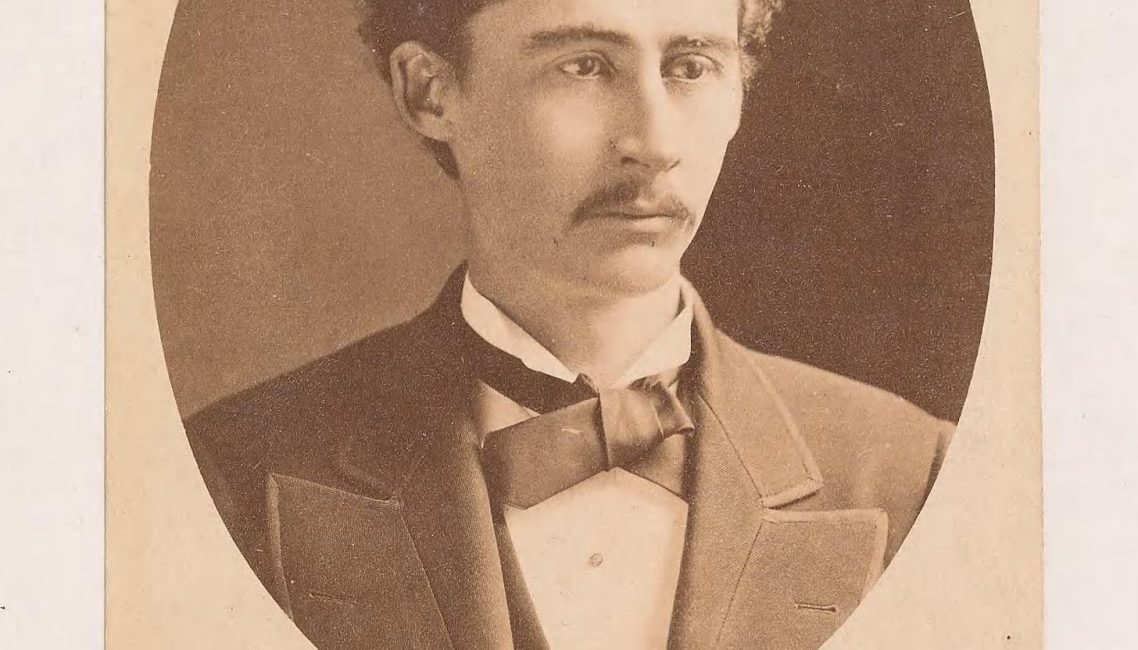
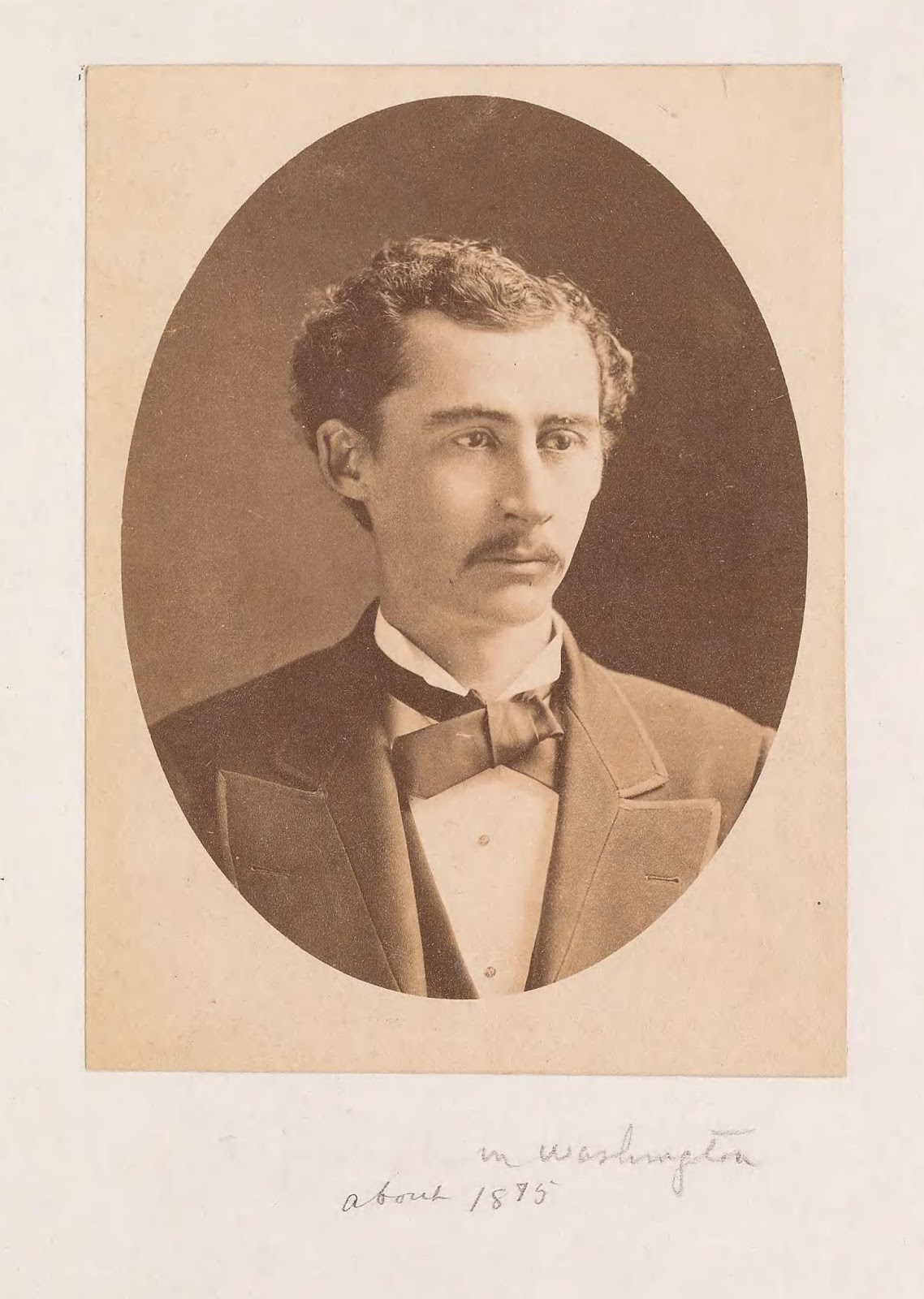
William Henry Holmes, about 1875. Random Records of a Lifetime. v. 1. http://www.biodiversitylibrary.org/page/52009570. Digitized by Smithsonian Libraries.

From November 28th through December 9th, BHL is joining the Smithsonian Libraries, Smithsonian Institution Archives, Smithsonian Field Book Project, and Smithsonian Transcription Center in hosting the #ManyHatsofHolmes transcription event. This event challenges volunteers around the world to help us transcribe William Henry Holmes’ archival materials. Learn more on the Smithsonian Libraries’ blog.

As the hashtag implies, William Henry Holmes (1846-1933) studied a variety of topics throughout his distinguished career, including anthropology, archaeology, art, and geology. He spent much of his career affiliated with the Smithsonian Institution. He studied art under Theodore Kauffman and went on to work as a scientific illustrator with Smithsonian staff. In 1872, he was appointed artist-topographer to the United States survey of the territories under Ferdinand V. Hayden and in 1874 was appointed assistant geologist. He went on to work with the United States Geological Survey (USGS) and the Bureau of American Ethnology (BAE) before returning to the Smithsonian’s United States National Museum (USNM). Holmes eventually became head curator of the Smithsonian Institution’s Department of Anthropology and Director of the National Gallery of Art.

Many of Holmes’ field notes and personal records have been digitized by Smithsonian Libraries and Smithsonian Institution Archives as part of The Field Book Project. These are available in BHL. In addition to these archival materials, BHL also holds a number of publications by Holmes.

View Full Size Image
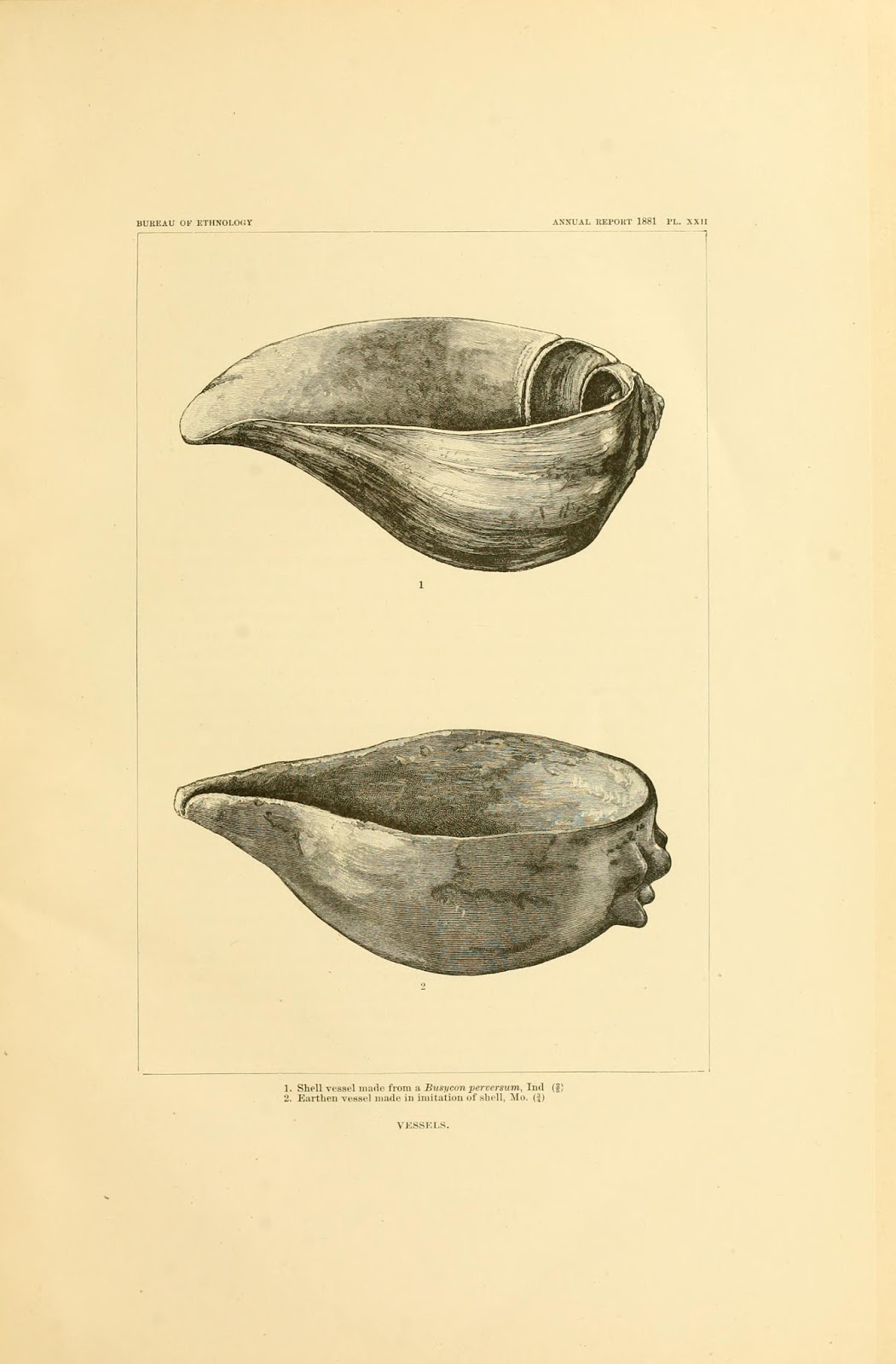
Top figure: Vessel made from a lightning whelk (Sinistrofulgur perversum) – synonym Busycon perversum – shell. Bottom figure: Earthen vessel made in imitation of a shell. Holmes, William Henry. Art in Shell of the Ancient Americans. 1883. http://biodiversitylibrary.org/page/11258636. Digitized by Smithsonian Libraries.

One of those publications is Art in Shell of the Ancient Americans, which was published in 1883 as part of the second annual report of the Bureau of Ethnology.

Holmes intended this publication to be a preliminary study of the ways in which Native Americans in the distant past used shells as a medium for artistic expression and how this artwork represents a phase in the evolution of human culture. It discusses the use of shells as implements, utensils, and objects of ornamentation (such as jewelry).

Most of the objects presented in the publication were obtained from graves and tumuli (ancient burial mounds), which explains how such delicate pieces survived throughout the centuries. But, while these pieces can be deemed ancient, Holmes did not have enough data to provide a reliable estimation of age.

At this point, you might be wondering why a book about shell art would be relevant for a biodiversity library and what bearing it might have on scientific research. The simple answer is that these shells are remnants of living creatures – mollusks that died long ago but still left behind a legacy in shell. However, Art in Shell has relevance for scientific research beyond this vague connection with the natural world.

View Full Size Image
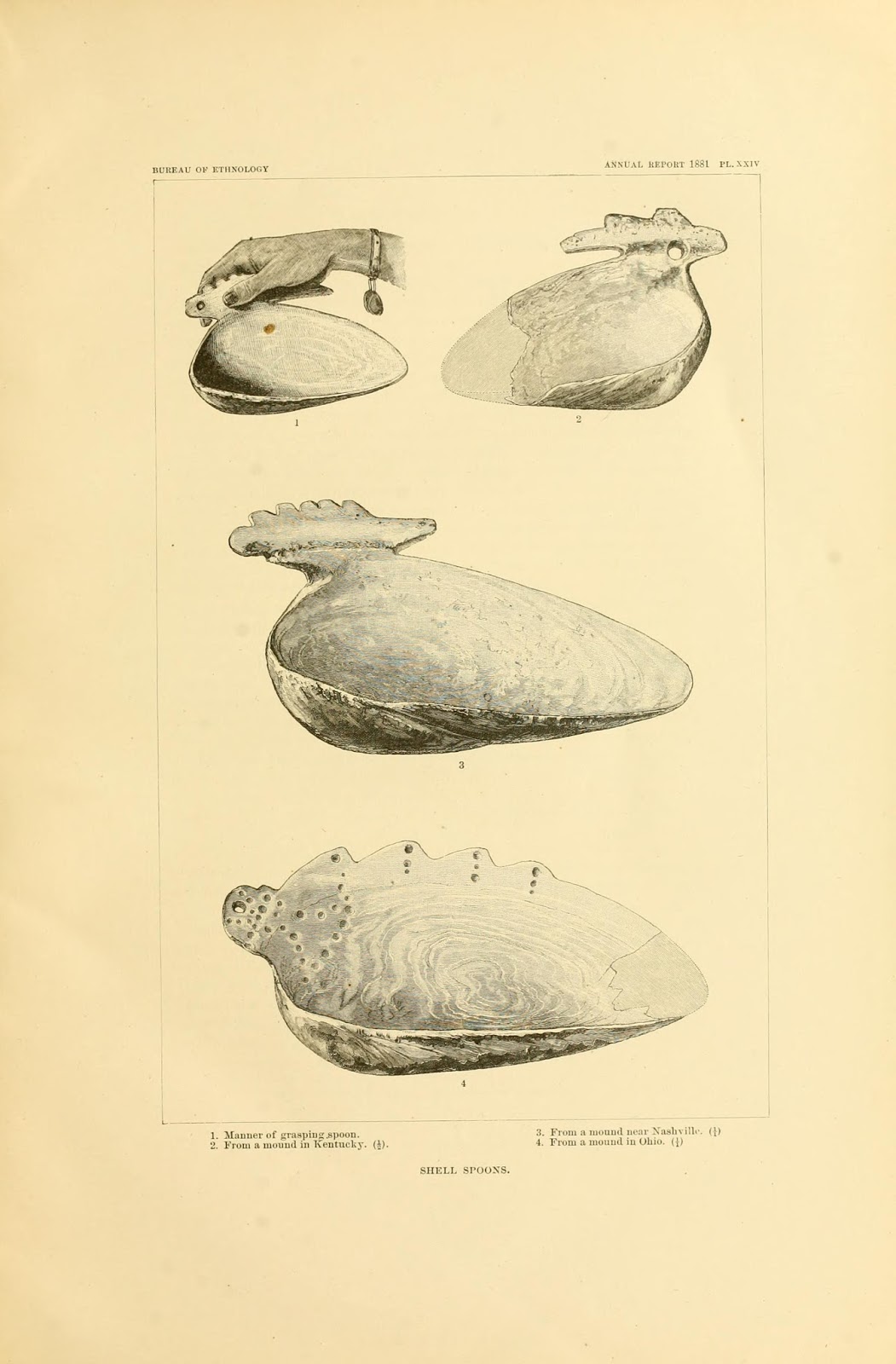
Shell spoons made from Lampsilis ovata (synonym Unio ovatus) – top and center – and Potamilus alatus (synonym Unio alatus) – bottom. Holmes, William Henry. Art in Shell of the Ancient Americans. 1883. http://www.biodiversitylibrary.org/page/11258608. Digitized by Smithsonian Libraries.

In the publication, Holmes attempts to identify the species (or most-specific taxa possible) to which the shell used for the object belongs. This information provides a valuable record of human interaction with various mollusk species and helps document the diversity of species present in ancient America. The presence of shells in various regions, when coupled with species distribution data that demonstrates the transport of these shells from their source, can also provide insight into historic Native American migration paths, tribal contacts, and trade.

Thus, this book is not just a book about art. It represents a beautiful union of art and science. And considering the many disciplinary hats that Holmes wore throughout his career, it’s no surprise that his publication would bridge these two worlds. Art in Shell is therefore not only a very fitting book to highlight as a representation of the union of Holmes’ many interests, but the insights it provides into Native American culture also make it particularly relevant this month as we celebrate Native American Heritage Month.

View Full Size Image
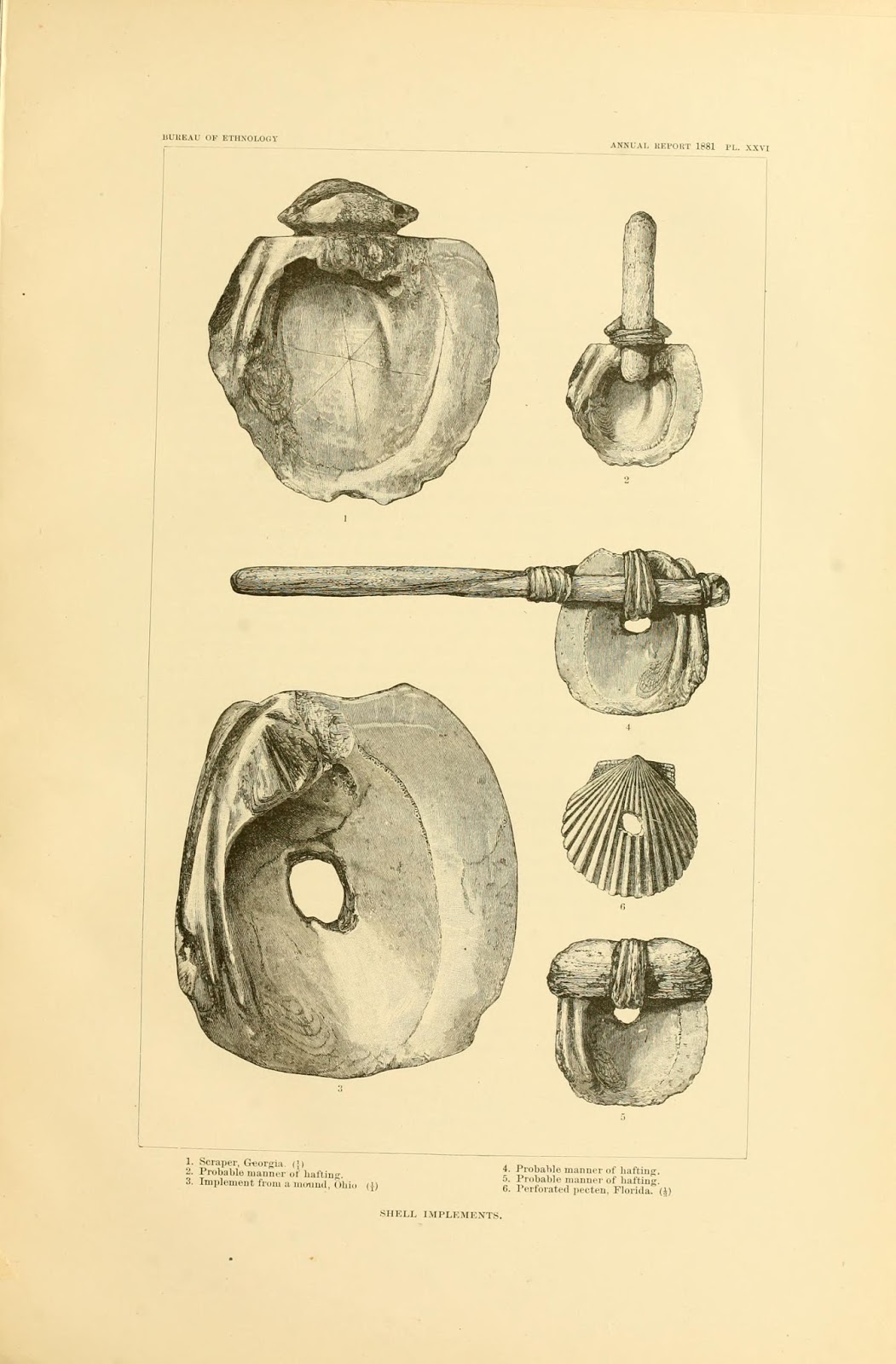
Implements made from Unio vericosus (figs. 1 and 2), Cyclonaias tuberculata (synonym Unio tuberculosus, figs. 3-5) and Pecten (fig. 6). Holmes, William Henry. Art in Shell of the Ancient Americans. 1883. http://www.biodiversitylibrary.org/page/11258618. Digitized by Smithsonian Libraries.

So, can we tie this publication back to the Random Records of a Lifetime series that is the subject of our #ManyHatsofHolmes transcription event? Holmes’ discussion about his work with shell art in these records seems to be fairly limited, but in his biographical sketch in volume I, Holmes does report that, “The years 1882-3-4 and 5 were devoted largely to Museum work and the study of primitive art in its various branches.” As Art in Shell was published in 1883, this account is likely a reference in part to his work on this publication (as well as the many others on ancient American art that he produced during this time period).

As you participate in the challenge, can you find additional references in the Random Records that can be linked back to Art in Shell? If you do, share them on social media with #ManyHatsofHolmes.

Additionally, if you need a break from transcription or want another challenge, try taxon tagging the illustrations from Holmes’ Art in Shell on Flickr. By tagging the shell art with the taxonomic name of the species to which the shell belongs, you can help researchers more easily discover which species ancient Americans were using to create these objects. Learn more about taxon tagging in this article and see our detailed instructions here. Find the Art in Shell images in Flickr here.

See this video for basic instructions on how to tag the illustrations in Art in Shell:

Holmes was truly a man of many trades and talents. As you dig deeper into his work during the #ManyHatsofHolmes event, be sure to share your findings on social media with the hashtag. Thanks so much for participating in our Holmes extravaganza!

View Full Size Image
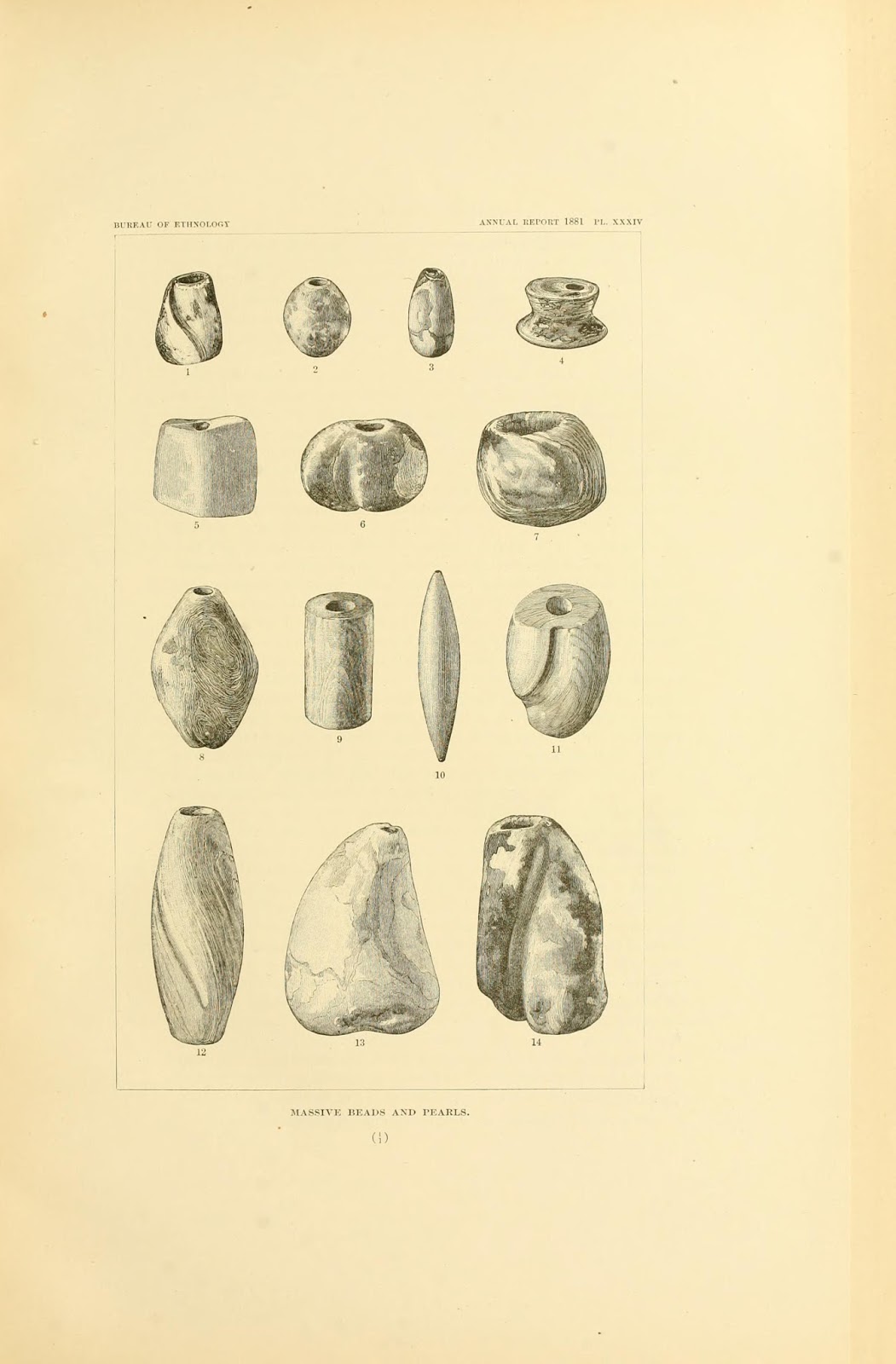
Beads and pearls. Figs. 1, 7, 12, and 9: Sinistrofulgur perversum (synonym Busycon perversum); Fig. 2: Crassadoma gigantea (synonym Hinnites giganteus); Fig. 3 and 13: pearls, latter from Haliotis californianus; Fig. 4: unknown univalve; Fig. 5: ivory?; Figs. 6 and 11: unknown dextral whorled shell; Fig. 14: Strombus or Busycon. Holmes, William Henry. Art in Shell of the Ancient Americans. 1883. http://www.biodiversitylibrary.org/page/11258675. Digitized by Smithsonian Libraries.
November 30, 2016by michelle.underhill
Blog Reel, Featured Books

Notes accompanying collection of useful plants made by W. J. Fisher at [Kodiak] in 1899

In honor of Native American Heritage Month, we would like to highlight a field book that documents Native American knowledge of natural resources. The field book was created by William J. Fisher, who lived in southern Alaska from 1879 until his death in 1903.

Fisher’s notebook documents his final years collecting and looks at the relationship between the Alutiiq (Aleut) and their plants by recording medicinal and food uses for 48 specimens. Only a handful of the specimen entries include the taxonomic names of plants; instead, entries focus on recording the Russian and Sugpiat/Alutiiq names of plants, how the plants were used, and plant distribution. Detail varies, as seen below in entries three and forty-seven.

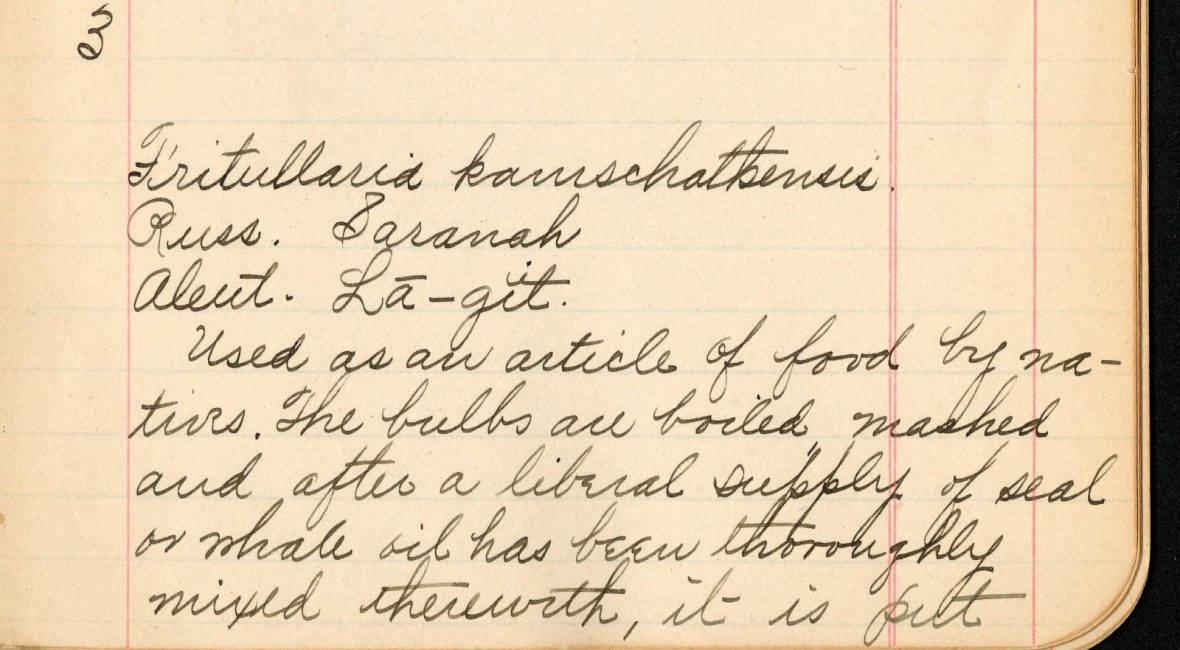
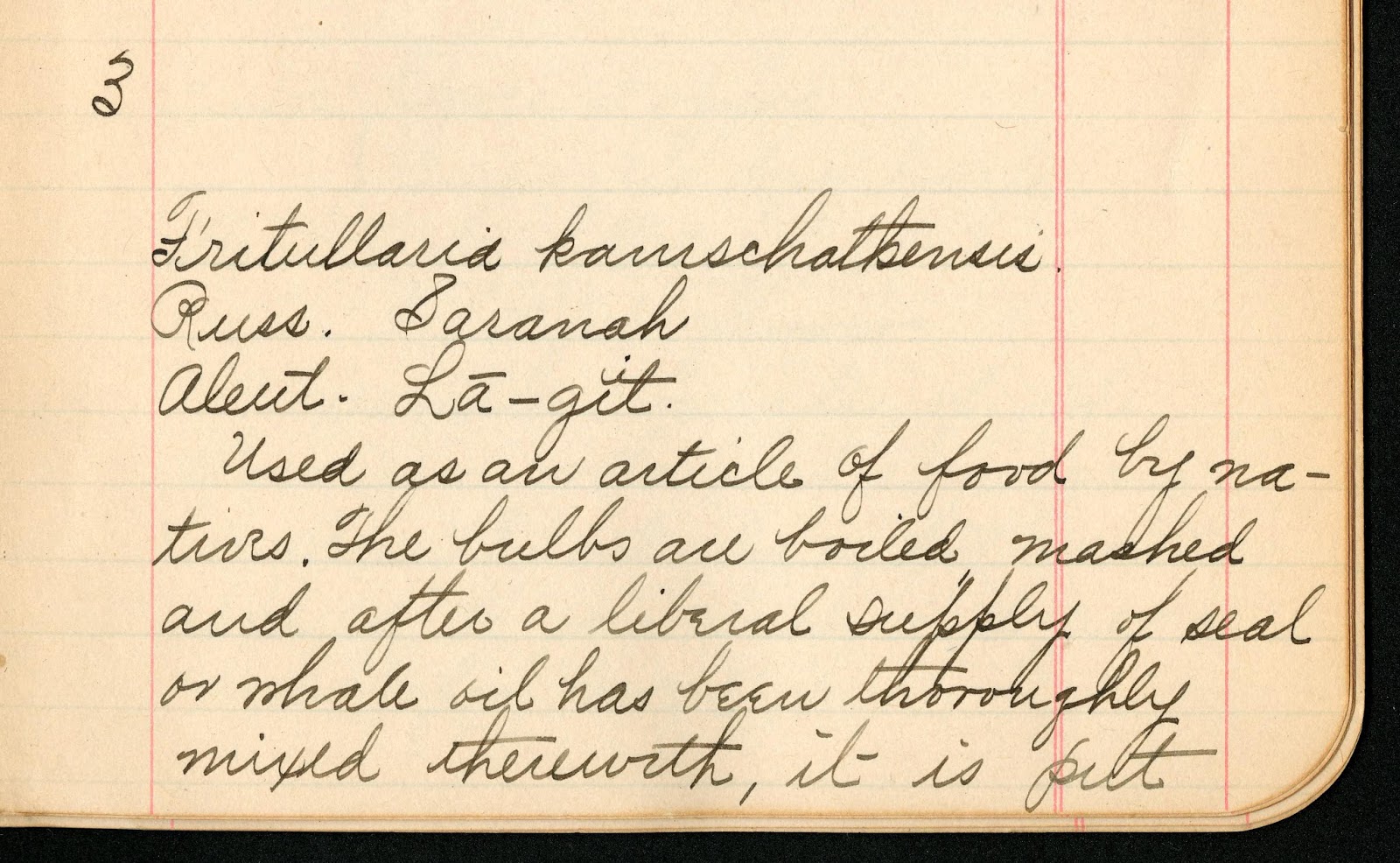
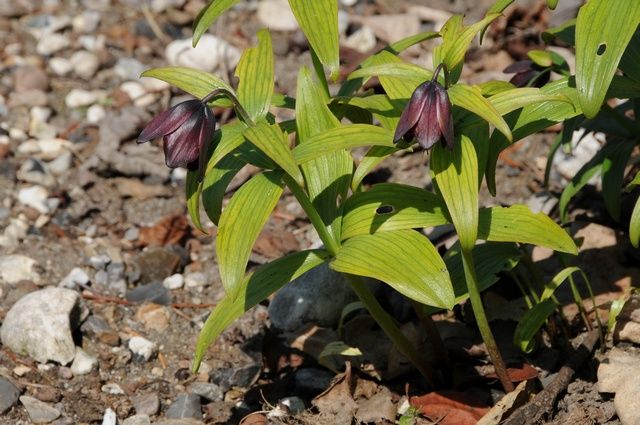
Entry three describes Fritullaria kamschathensis [Fritillaria camschatcensis], also known as the Kamchatka Fritillary, and lists general use and preparation: “Used as an article of food by natives. The bulbs are boiled mashed and after a liberal supply of seal or whale oil has been thoroughly mixed therewith, it is put away for winter’s use.”

View Full Size Image
Specimen entry three from “Notes accompanying collection of useful plants made by W. J. Fisher at [Kodiak] in 1899,” Smithsonian Institution Archives, SIA Acc. 12-038. http://www.biodiversitylibrary.org/page/46428854. Digitized by Smithsonian Institution Archives.
View Full Size Image
Image of Fritillaria camschatcensis from Encyclopedia of Life, provided by Biopix. http://eol.org/data_objects/19162439.

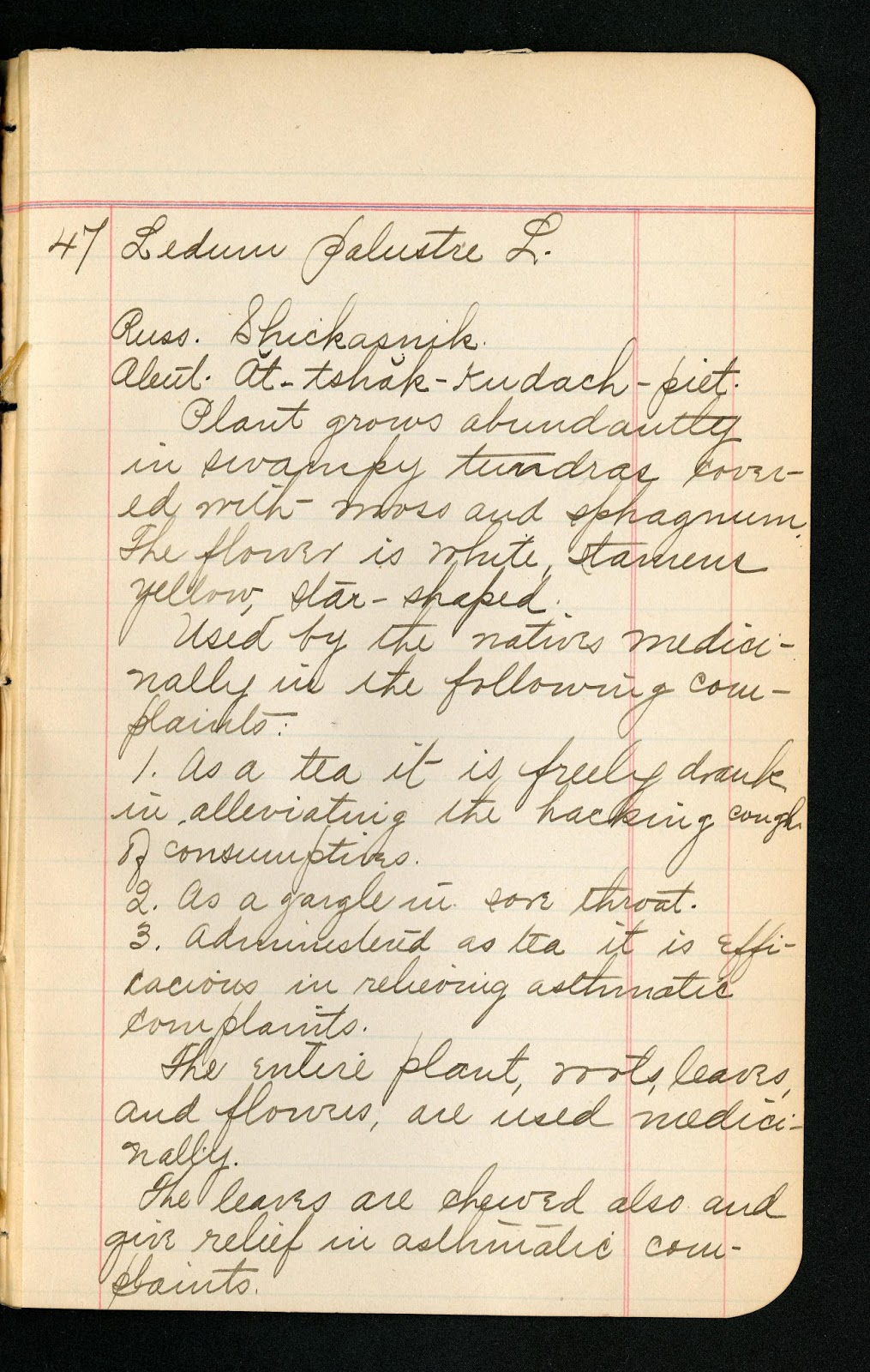
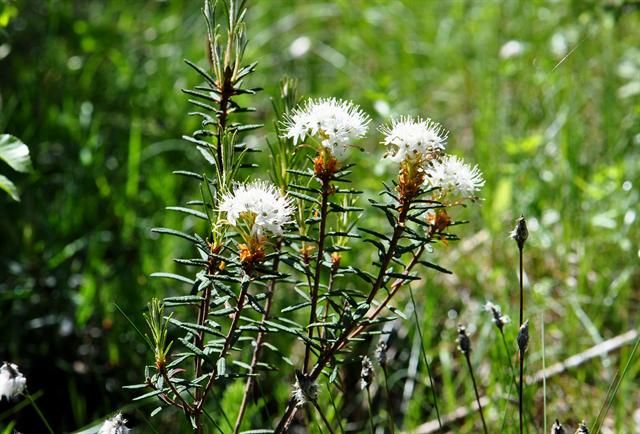
Entry forty-seven for Ledum palustre [Rhododendron tomentosum], also known as Northern Labrador Tea (also pictured below), takes up an entire page describing the plant’s habitat, the appearance of its flowers, and multiple local medicinal applications: “(1) As a tea it is freely drunk in alleviating the hacking cough of consumptives. (2) As a gargle in sore throat. (3) Administered as tea it is efficacious in relieving asthmatic complaints.”

View Full Size Image
Specimen entry forty-seven, from “Notes accompanying collection of useful plants made by W. J. Fisher at [Kodiak] in 1899,” Smithsonian Institution Archives, SIA Acc. 12-038. http://www.biodiversitylibrary.org/page/46428831. Digitized by Smithsonian Institution Archives.
View Full Size Image
Image of Rhododendron tomentosum (Northern Labrador Tea), from Encyclopedia of Life. Image by Biopix. http://eol.org/data_objects/19183248.

Fisher’s ethnographic focus while collecting plants is clear. The field book provides detailed information regarding local names and knowledge, but leaves out basic information often found in botany field books like date and detailed locality information. This lack of information may relate to a note Fisher wrote on the title page: “dried plants with Mr. Kearney, alcoholics in seed collection.” “Mr. Kearney” was Thomas Henry Kearney (1874-1956), a botanist with the Bureau of Plant Industry at the US Department of Agriculture (USDA). Kearney was in Alaska to work with Frederick Coville from April 1898 – August 1899, and along the Northwest Coast from Puget Sound to the Bering Strait in 1899. He then served as a member of the Harriman Alaska Expedition of 1899.

It is unclear how the two men became acquainted. Fisher had a relationship with the Smithsonian Institution; Coville as a USDA employee worked with Smithsonian, and perhaps he introduced the two. Whatever the reason, Kearney’s field notes for his work in Alaska are also available on BHL through the Smithsonian Field Book Project, and they provide a tantalizing overlap in content and geographical coverage.

A field book at the end of a collecting career

Fisher’s field book is also interesting because it document’s his collecting focus and interests as they evolved over a lifetime. Fisher’s initial scientific interest was in marine biology. During the 1870’s he was a curator of conchology at the California Academy of Sciences and served as a marine biologist for the U.S. Fish Commission on several cruises in the Pacific headed by William Healey Dall.

In 1879, Fisher accepted a position as tidal recorder in St. Paul, now known as the city of Kodiak, Alaska. After accepting the position, he wrote to Dall, who was affiliated with the Smithsonian Institution, and offered to collect natural history specimens. The offer was accepted, and Fisher was instructed that the museum was also interested in ethnographic artifacts from the region.

The town of St. Paul where Fisher settled was originally established by the Russians as a center for fur trading. By the time Fisher arrived, it was a town of approximately 500 residents, primarily of Russian and Native Alaskan heritage. According to an article in Arctic Anthropology (no. 1, 1992) the community was still significantly mixed regarding the adoption of European culture in terms of religion, language, and beliefs.

Fisher initially focused on collecting natural history specimens, but as he began to correspond with Smithsonian’s Secretary Spencer Baird, his interest and collecting shifted to ethnography. He even began to commission works by Native Alaskans. Fisher’s main source of income was his position as tidal recorder; Smithsonian was frequently unable to finance his work. This lack of funding apparently did not dim Fisher’s enthusiasm, but it did lead to financial hardship. During an extended collecting trip to Bristol Bay in the summer of 1885, his assistant successfully petitioned for Fisher’s job. Fisher’s collecting came to an end by the 1890’s; the ethnobotany field notes document the end of his work with the Smithsonian Institution.

Interested in learning more? We encourage you to learn about the William J. Fisher collection at the National Museum of Natural History, which was highlighted as part of a book Looking Both Ways: Heritage and Identity of the Alutiiq People, in the online exhibit featuring artifacts created by the Alutiiq people and collected by Fisher during his years in Alaska.

Other resources include:

Aron L. Crowell, 1992, Postcontact Koniag Ceremonialism on Kodiak Island and the Alaska Peninsula: Evidence from the Fisher Collection. Arctic Anthropology 29(1):18-37. Retrieved on November 16, 2016 from https://www.jstor.org/stable/40316240?seq=3#page_scan_tab_contents

Highlights of the William J. Fisher collection at the National Museum of Natural History: http://naturalhistory.si.edu/arctic/features/fisher/collect.html

The field books of William Healey Dall, available on Biodiversity Heritage Library: http://www.biodiversitylibrary.org/search?searchTerm=Dall+%22field+notes%22#/titles

Field Book Project blog post by Sonoe Nakasone: http://nmnh.typepad.com/fieldbooks/2012/02/sharing-culture-through-plants.html

November 22, 2016by ulib-libraryjobs
Blog Reel, User Stories

Beyond Tunnels & Bigamy: The Scientific Contributions of the Infamous Harrison Dyar

View Full Size Image
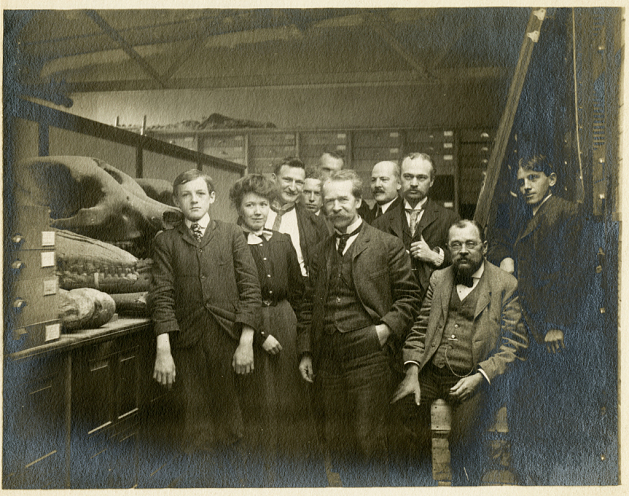
Harrison G. Dyar, Jr., third from right, with Entomology staff of the U.S. National Museum in 1905. Courtesy of Smithsonian Institution Archives.

If you have ever heard of entomologist Harrison Dyar, there’s a good chance that it was in relation to a series of tunnels that he dug beneath Washington, D.C. Or it may have been in relation to his bigamy. But if that’s all you know about Dyar, then you only know the tabloid tales.

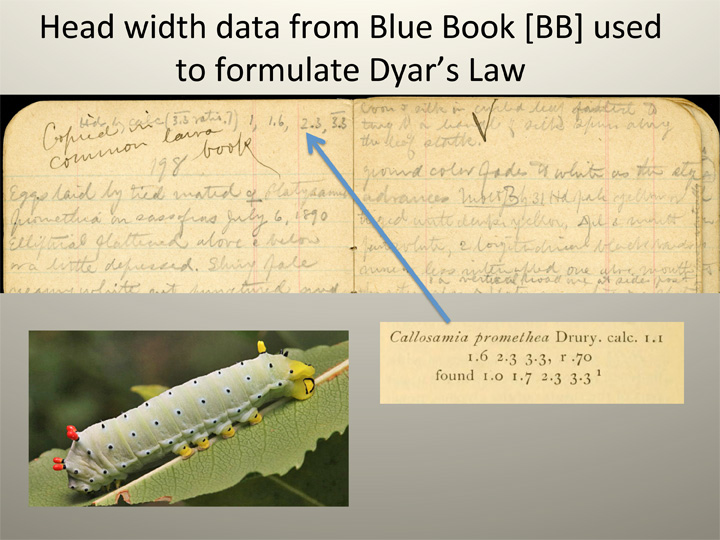
Harrison Dyar was Honorary Custodian of Lepidoptera at the United States National Museum for over 30 years. He studied sawflies, moths, butterflies and mosquitos and described hundreds of species and genera. He also contributed significantly to the study of insect development by formulating Dyar’s Law of Geometric Growth. By observing that the width of caterpillar heads was fixed within each stage of development, Dyar realized that he could use a ratio to predict the width of the head at various stages of development, and that this ratio could in turn be used to differentiate insect instars. By using this law, entomologists can identify the developmental stage of an immature insect.

Dyar’s field notebooks, including his “blue books” and “catalogue” as they’re called, contain valuable information both on Dyar’s scientific research and aspects of his personal life. For instance, they include his scientific observations made while rearing specimens, head width data used to formulate Dyar’s Law, and, on a more personal note, the identity of relatives who helped Dyar collect and rear insects.

View Full Size Image
Image Source: Smithsonian Libraries.

Dyar’s field notebooks, which are held by the Smithsonian Institution Archives, have been digitized as part of The Field Book Project and are available in BHL, making it much easier for researchers around the world to access and study Dyar’s work.

View Full Size Image
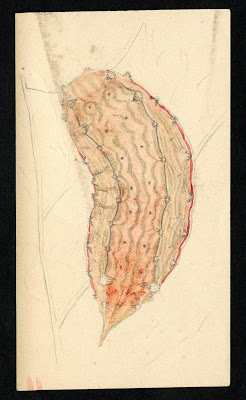
Drawing from a Dyar blue book. H. G. Dyar bluebook 575 – 625. 1896-1898. Digitized by Smithsonian Institution Archives. http://biodiversitylibrary.org/page/46194051.

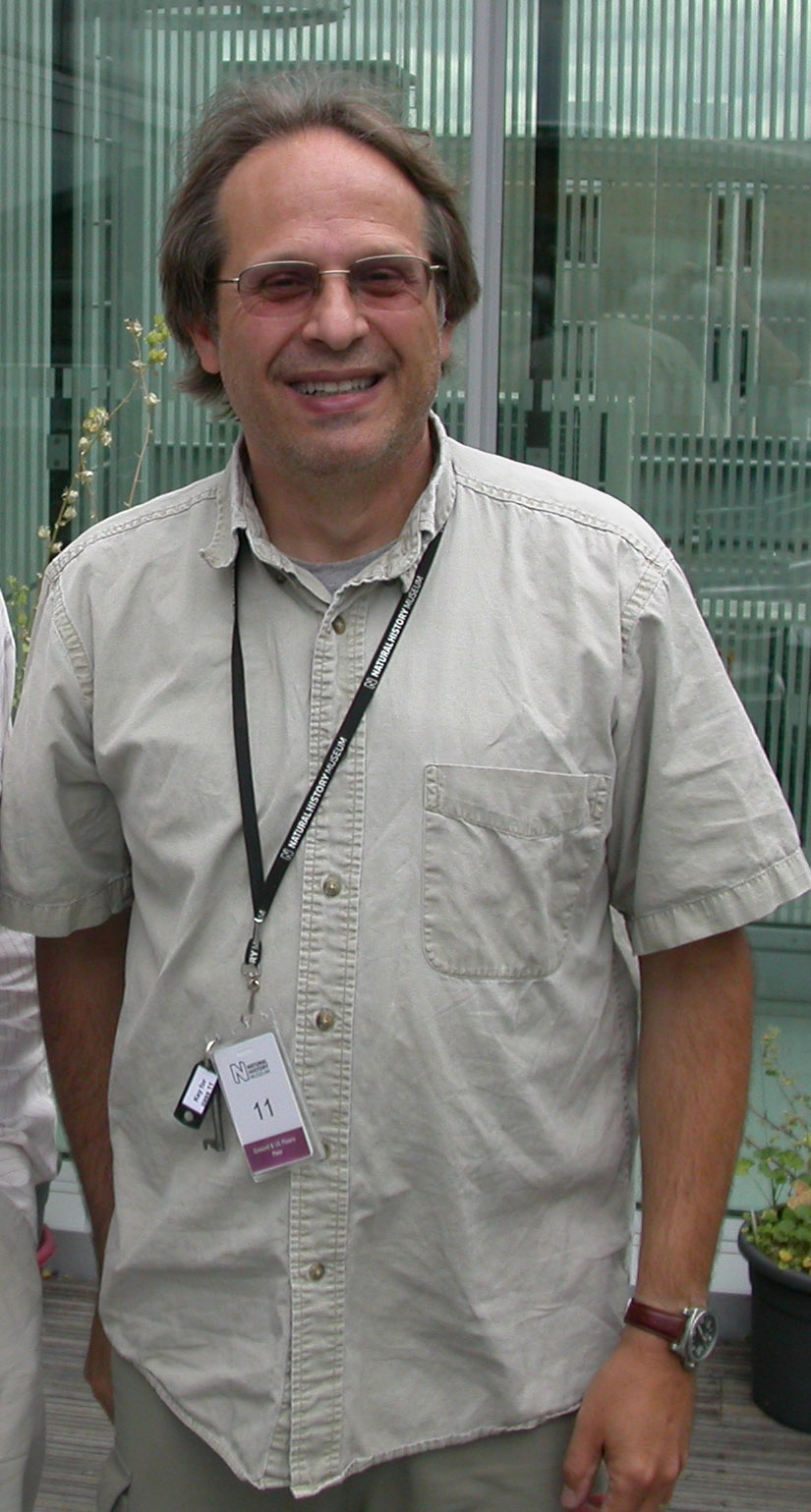
One such researcher that has benefited from online access to this materials is Dr. Marc Epstein, Research Associate at the National Museum of Natural History and Senior Insect Biosystematist (Lepidoptera) at the Plant Pest Diagnostics Center of the California Department of Food and Agriculture. Dr. Epstein has studied Dyar’s work and legacy extensively and has authored a biography on this remarkable entomologist entitled Moths, Myths and Mosquitos:The Eccentric Life of Harrison G. Dyar, Jr.. Marc discovered BHL, thanks to recommendations from his colleagues, around the time that our online library launched. Since then, BHL’s collections have had an immense impact on Marc’s research.

View Full Size Image
Dr. Marc Epstein. Image Source: California Department of Food and Agriculture.

“Even though I’m fortunate to have a good entomology library at the Plant Pest Diagnostics Center in Sacramento, CA, BHL has provided me access to so many journals that I haven’t had easy access to in California since with my move here in 2003,” asserts Marc. “In fact BHL has often provided me with the very copies I used to refer to in the Smithsonian National Museum of Natural History (NMNH) libraries!”

BHL has greatly facilitated Marc’s research on Lepidoptera and more specifically on Harrison Dyar.

“Day to day BHL has helped me do my job to identify Lepidoptera that threaten California agriculture, while providing a tremendous boost to my research projects,” explains Marc. “These have included the completion of Moths, Myths, and Mosquitoes: the Eccentric Life of Harrison G. Dyar, Jr. as well as studies on Costa Rican moths and the evolution of Lepidoptera and their caterpillars.

“Related to the Moths, Myths, and Mosquitoes, it enabled me to much more efficiently transcribe portions of Dyar’s hand-written notebooks, once in my office at NMNH. Prior to the availability of these notebooks on BHL, The Field Book Project at the Smithsonian provided me with electronic files of all of the notebooks, which are now becoming available along with transcriptions made by a corps of volunteers. Having both BHL and the notebooks on my [computer] desktop in Sacramento has enabled me to transcribe portions needed for my research while in Sacramento and saved me valuable time to focus on specimens during my visits to the NMNH entomology collections.”

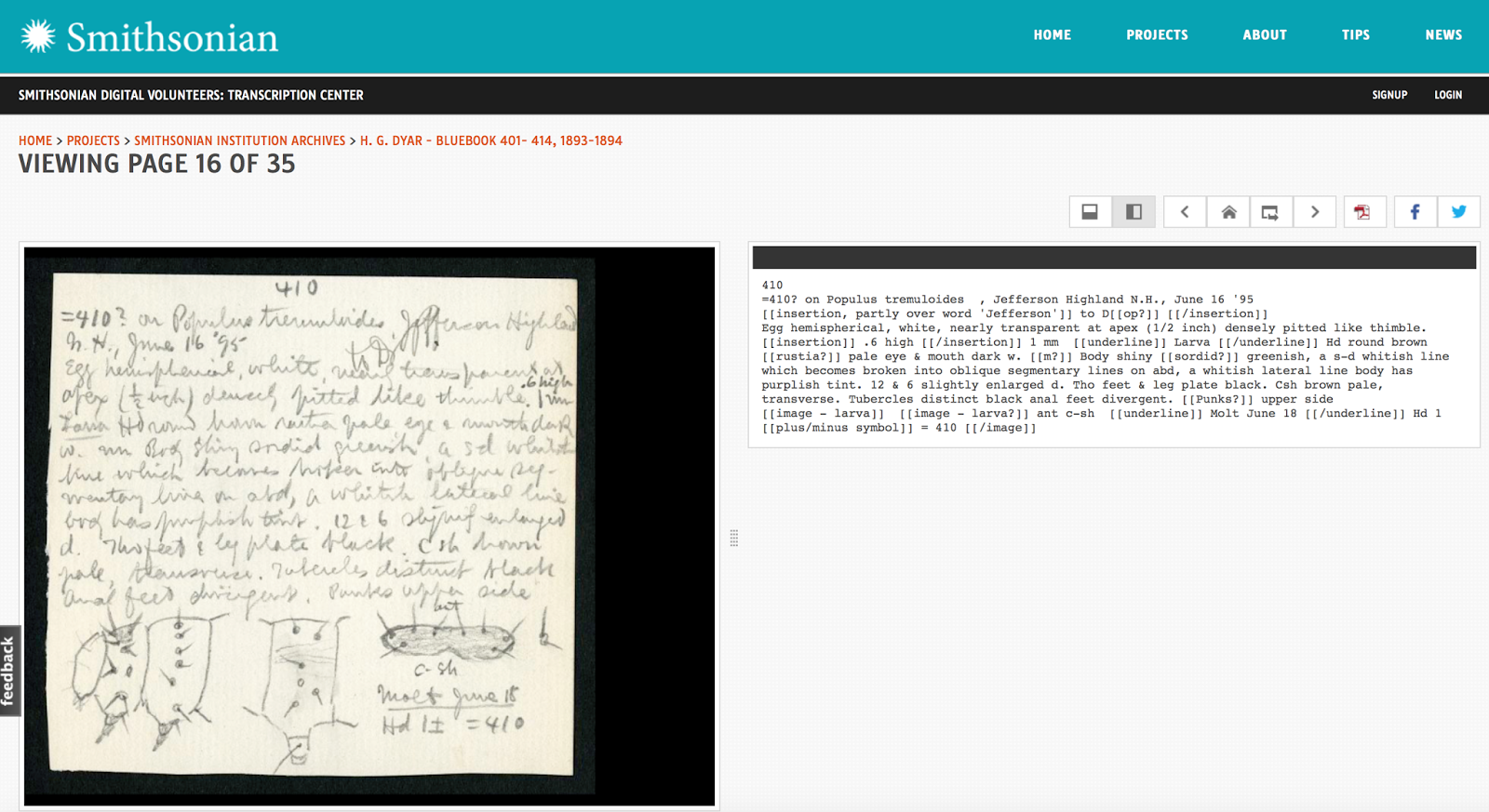
The volunteer transcriptions that Marc refers to were the result of the May 2016 #DigIntoDyar campaign, which challenged volunteers to help transcribe five of Dyar’s blue books within the Smithsonian Transcription Center. The five blue books constituted a total of 169 pages, 60% of which were fully transcribed by over 60 volunteers by the end of May. Today, all 169 pages have been fully transcribed (thank you, citizen science volunteers!). You can browse the transcriptions in the Smithsonian Transcription Center at the links below:

H. G. Dyar – Bluebook 401- 414, 1893-1894 | https://transcription.si.edu/project/8144
H. G. Dyar – Bluebook 415-435, 1893-1894 | https://transcription.si.edu/project/8145
H. G. Dyar – Bluebook 436-450, 1893-1894 | https://transcription.si.edu/project/8146
H. G. Dyar – Bluebook 451-473, 1894 | https://transcription.si.edu/project/8147
H. G. Dyar, Bluebook 474-491, 1894-1897 | https://transcription.si.edu/project/8148

View Full Size Image
A page from H. G. Dyar bluebook 401 – 414 (1893-94), transcribed in the Smithsonian Transcription Center.

Interested in learning more about Harrison Dyar’s work and contributions? Then check out this Google Hangout from Smithsonian Libraries with Dr. Epstein. You can also learn more in this series of blog posts that Dr. Epstein wrote for Smithsonian Libraries as part of #DigIntoDyar.

Harrison Dyar’s contributions to science may often be overshadowed by his intriguing personal life, but hopefully the efforts of Dr. Epstein and others will ensure that his entire legacy is appreciated and remembered. We’re proud to be able to provide free, online access to materials, like the “blue books” and “catalogue,” that make it easier for researchers to study Dyar’s work.

______________________________________

This post may contain the personal opinions of BHL users or affiliated staff and does not necessarily represent the official Biodiversity Heritage Library (BHL) position on these matters.

September 8, 2016by michelle.underhill
Blog Reel, Featured Books

The National Park Service, Historic Surveys, and the Hunt for Documentation

View Full Size Image
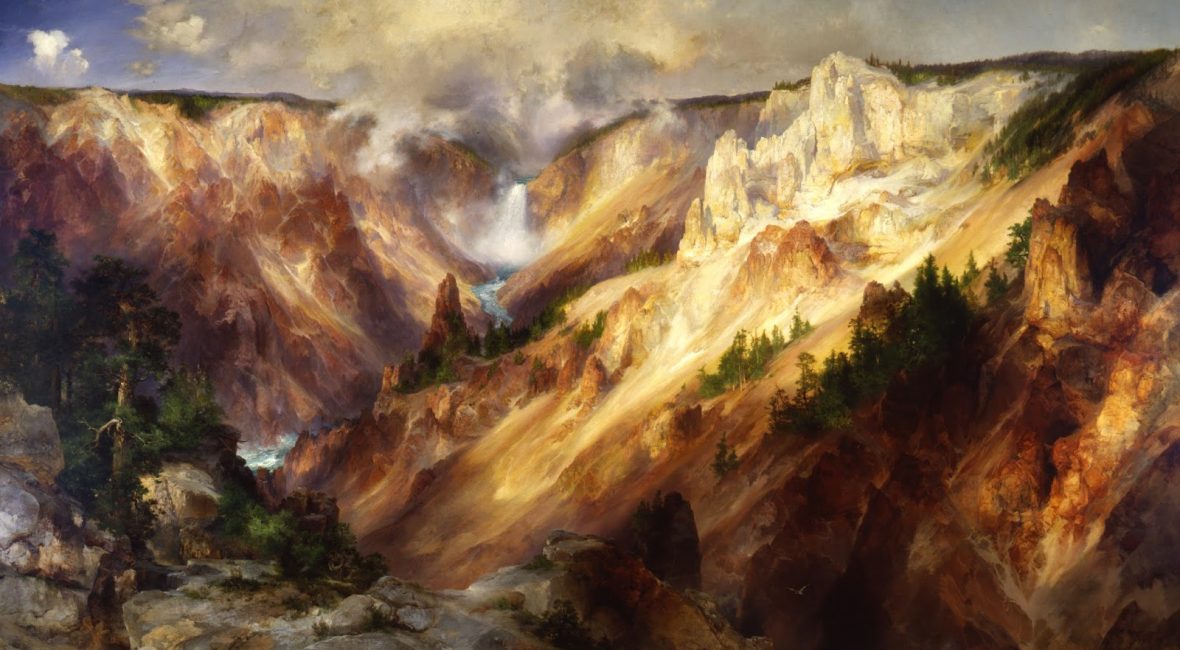
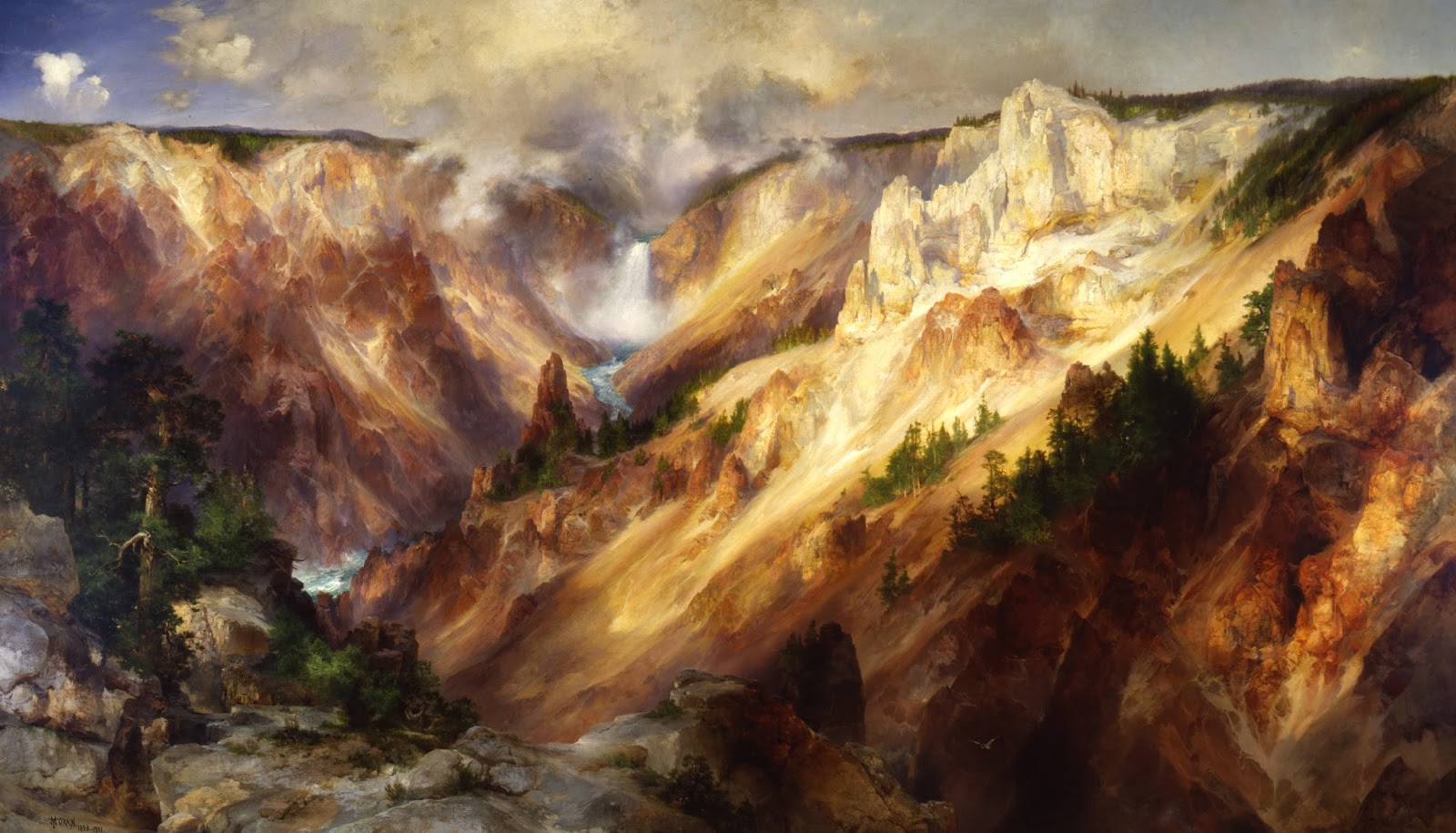
“The Grand Canyon of the Yellowstone” by Thomas Moran, artist for Hayden Survey 1871. Smithsonian American Art Museum, Gift of George D. Pratt. Courtesy of Wikipedia Commons.

This year is the National Park Service’s Centennial anniversary. In recognition, we thought we would take a look at one of the geological surveys that inspired the founding of Yellowstone National Park. In recent months, researchers in increasing numbers have looked for specimens and field documentation relating to Yellowstone, specifically from the Hayden Geological Survey of 1871. This survey is important for a number of reasons. It was the first federally funded survey, and was instrumental in introducing the American public to Yellowstone’s natural wonders. It inspired Congress to establish Yellowstone as the first national park in 1872.

Smithsonian is a repository for specimens and documentation from the Hayden Geological Survey and numerous others relating to the U.S. territories during the nineteenth century. However, it can be surprisingly challenging to find the documentation and specimens from these surveys. This challenge is not unique. Any researcher who has worked with historic material can attest to the challenges of locating materials as decades and centuries pass. Smithsonian Institution was the main repository for the Hayden Geological Survey, but field notes and specimens can end up in many other places. Expedition members may have taken specimens and documentation back to their home institutions, specimens may have been loaned to researchers, others may have been kept as personal mementoes.

The Hayden Survey of 1871 provides an example, because it not only demonstrates the importance of the primary documentation (these specimens and field notes provide a baseline of description for studying Yellowstone’s changing environment), but also how documentation scatter, even when it relates to such a well-known survey. The challenges discussed are prime reasons Natural Sciences institutions around the world are working diligently to make their materials and description available online, so that even if the materials are physically separated, they can be reconnected digitally.

Where are the specimens?

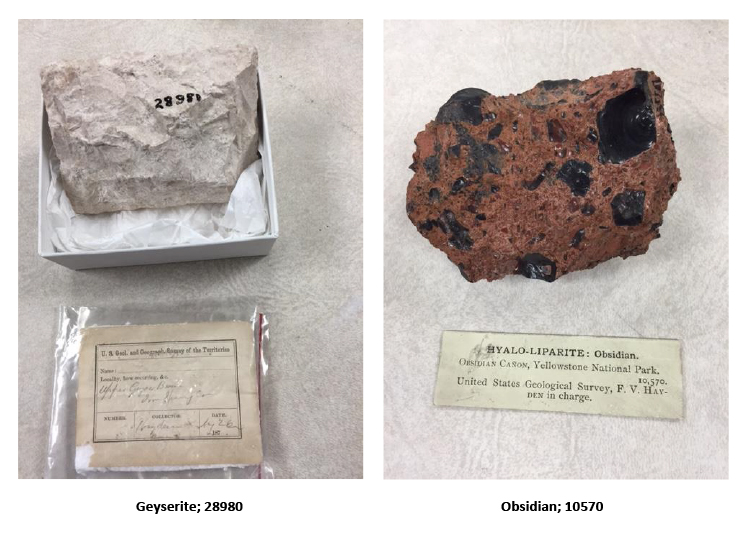
Leslie Hale, Curator at the Division of Mineral Sciences, National Museum of Natural History, shared some of her experience trying to locate these materials for researchers. “By all accounts, every rock they picked up on every Yellowstone expedition of the 1870’s allegedly came here. But I have only located a few drawers full…. I have been able to identify rocks collected in [subsequent Hayden surveys] ’72, ’73, and ’78, but none that I am certain are from that so-important first trip in 1871. There are specimen labels, but that’s it, no field notebooks or any other ancillary documentation.”

View Full Size Image
Geyserite (Catalog number 28980) from upper geyser basin and Obsidian (Catalog number 10570) collected at Yellowstone during the Hayden Geological Surveys. Specimens are part of the Volcanology and Petrology collection at the Department of Mineral Sciences, National Museum of Natural History.

It turns out that the specimens can have a pretty interesting journey of their own, due to changing norms in scientific disciplines and institutions over the decades. During much of the Smithsonian’s history, curator positions could be honorary and thus not always a paid position. Leslie shared, “It was not uncommon for them [curators] to remove specimens as payment. I believe that is what happened to most of these specimens.”

So where are these specimens now? Some went to other institutions, most likely with Survey participants. Some are now in private collections as some institutions have sold off portions of their rock and mineral collections (as did, for example, the Philadelphia Academy of Sciences in 2011).

Where are the field notes?

Hayden used his field notes to compose an extensive report that described the expedition work in the Yellowstone area during 1871. The notes were subsequently lost. This loss has been particularly troubling since other publications prepared from the field notes or Hayden’s personal recollections years later contain errors that cannot be checked against the original source.


View Full Size Image
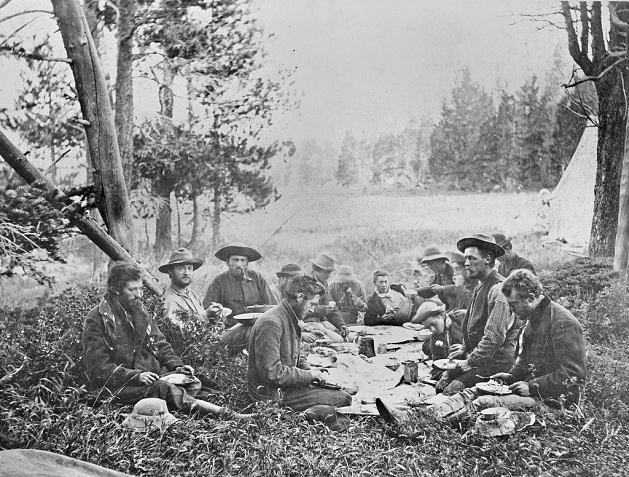
Hayden Survey participants at dinner during 1872. Includes West, Carrington, Taggart, William H. Jackson, Jay Cox, Clifford De V. Negley, and William Henry Holmes. Smithsonian Institution Archives. Record Unit 95, Box 56, Folder 2. 1872.

Luckily other field notes and letters from the expedition exist. However these cannot provide as full a picture as the expedition leader’s notes. In 1999, a book was published by University of Nebraska Press entitled Yellowstone and the Great West: Journals, Letters, and Images from the 1871 Hayden Expedition, which pieced together a description of the expedition from the diaries of George Nelson Allen (geologist) and Albert C. Peale (mineralogist) and correspondence by expedition members. In order to create a comprehensive narrative, Merrill (the book’s editor) relied on correspondence from expedition members found in numerous archives across the country, including the Library of Congress, U.S. Geological Survey Field Registry Library (Colorado), National Archives, Academy of Natural Sciences in Philadelphia, and Oberlin College Archives (Ohio) just to name a few.

This published work only serves to demonstrate how much was lost with Hayden’s notes. According to a review published during 2000 in ISIS, a journal of the history of science society, the selected diary entries and correspondence demonstrate that Hayden was significantly involved in the expedition’s scientific work, far more than initially believed. The fate of Hayden’s field notes was not unique for the survey. Journals from the survey in general are difficult to locate or were also lost. According to the book’s preface, Allen’s and Peale’s journals are the only known unpublished journals to still exist.

Where are the publications?

In 1872, Hayden used his field notes to compose a single report covering the 1871 survey, entitled Preliminary report of the United States Geological Survey of Montana, and portions of adjacent territories : being a fifth annual report of progress, which is available in Internet Archive and will shortly be available in BHL. His final report documented several years’ worth of his surveys in the field.

View Full Size Image
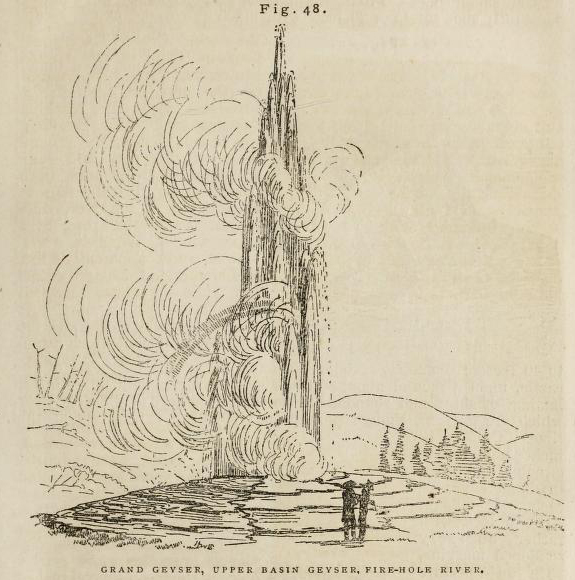
Illustration of the Grand Geyser, the tallest predictable geyser known. It was named by Dr. F.V. Hayden in 1871. Preliminary report of the United States Geological Survey of Montana, and portions of adjacent territories : being a fifth annual report of progress. (1872).

Also available through BHL is a Catalogue and index of the publications of the Hayden, King, Powell, and Wheeler surveys (1904), which provides a list of publications relating to the study of specimens in numerous fields collected during the Survey.

The rest of the story…

The survey of 1871 was one of several that Hayden directed as part of the U.S. Geological and Geographical Survey of the Territories during 1867-1879. He was one of four men, (Clarence King, George Wheeler, and John Wesley Powell) who defined exploration of the western U.S. territories during the 1860’s and 1870’s. Reports describing his explorations and those of Powell, Wheeler and King can be found on the Biodiversity Heritage Library.

View Full Size Image
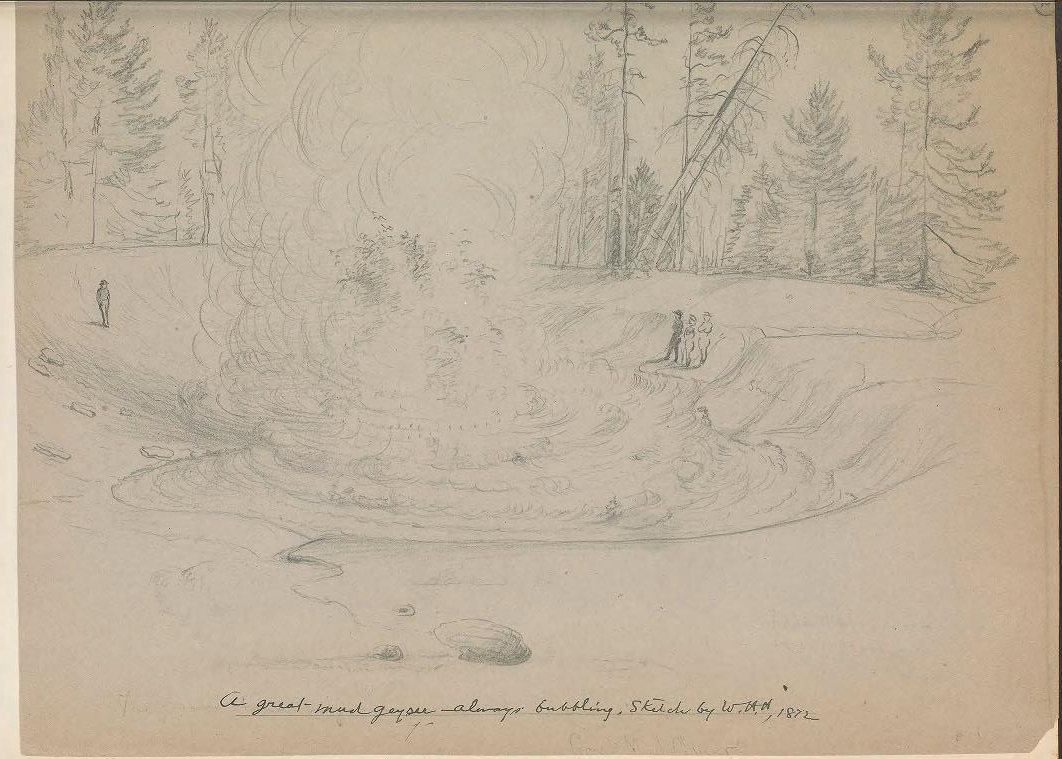
Sketch by William Henry Holmes, drawn during 1872 Hayden Geological Survey. Random records of a lifetime, 1846-1931 [actually 1932]. Digitized by Smithsonian Libraries for The Field Book Project.

Primary source materials from later Hayden surveys to Yellowstone can be found in Smithsonian Institution holdings, including The William Henry Holmes autobiography (typewritten manuscripts detailing Holmes’ life and work), which are held by the American Art and Portrait Gallery Library. Holmes was appointed as the artist-topographer on the Hayden Survey in 1872. In 1874 he was appointed assistant geologist, and he served in this capacity during the 1878 Hayden Survey. Two of Holmes’ volumes have been digitized and are currently available in Internet Archive (vol. 2 | vol. 3). The third volume specifically deals with the 1872 and 1878 Hayden Surveys. Both volumes will be added to the BHL collection soon.

View Full Size Image
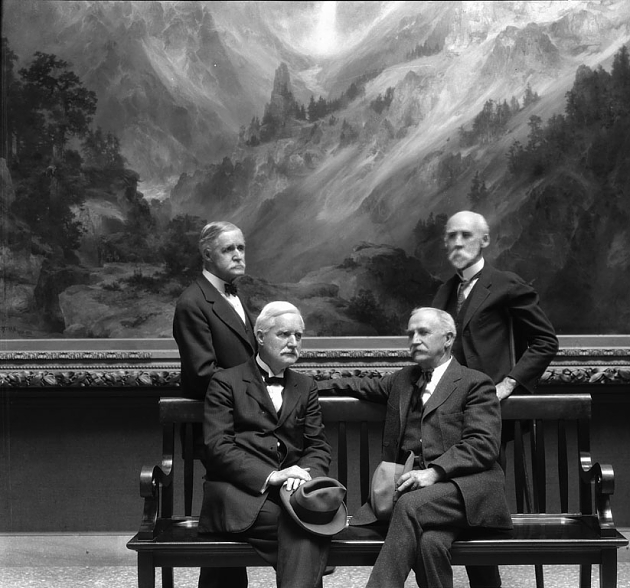
William Henry Holmes with other members of the Hayden Survey, at the U.S. National Museum, circa 1930. Smithsonian Institution Archives, Record Unit 311, Box 27, Folder 7.

The story of the 1871 survey highlights the risks to documentation, even from a historically important expedition that appealed to the public of its day and produced important changes in the nation, including our first national park. Documentation can end up in seemingly disparate locations; through online consortiums these materials are being made available in new ways, restoring important historic context, sometimes lost for decades.

August 25, 2016by ulib-libraryjobs
BHL News, Blog Reel

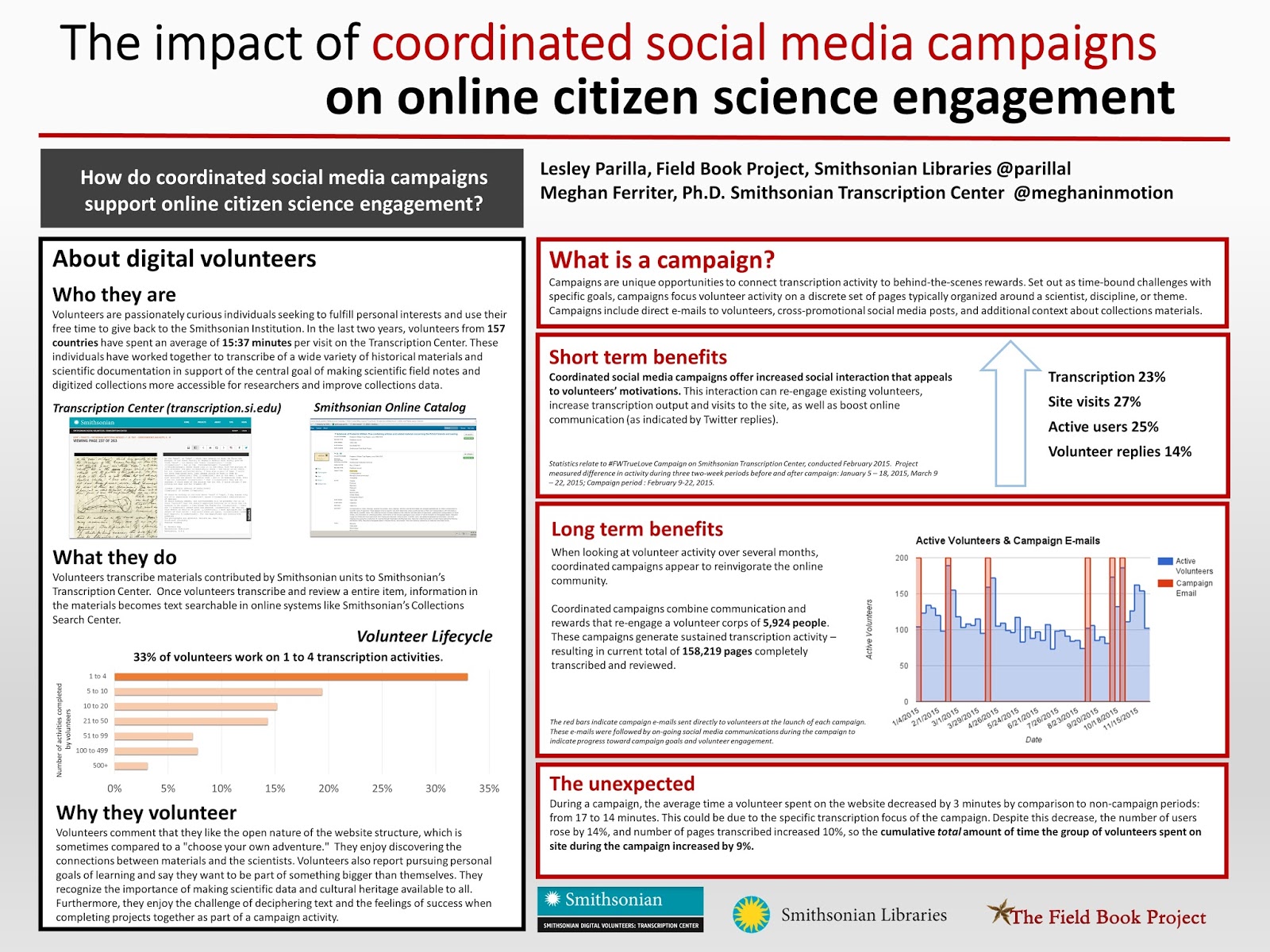
The Impact of Coordinated Social Media Campaigns on Online Citizen Science Engagement

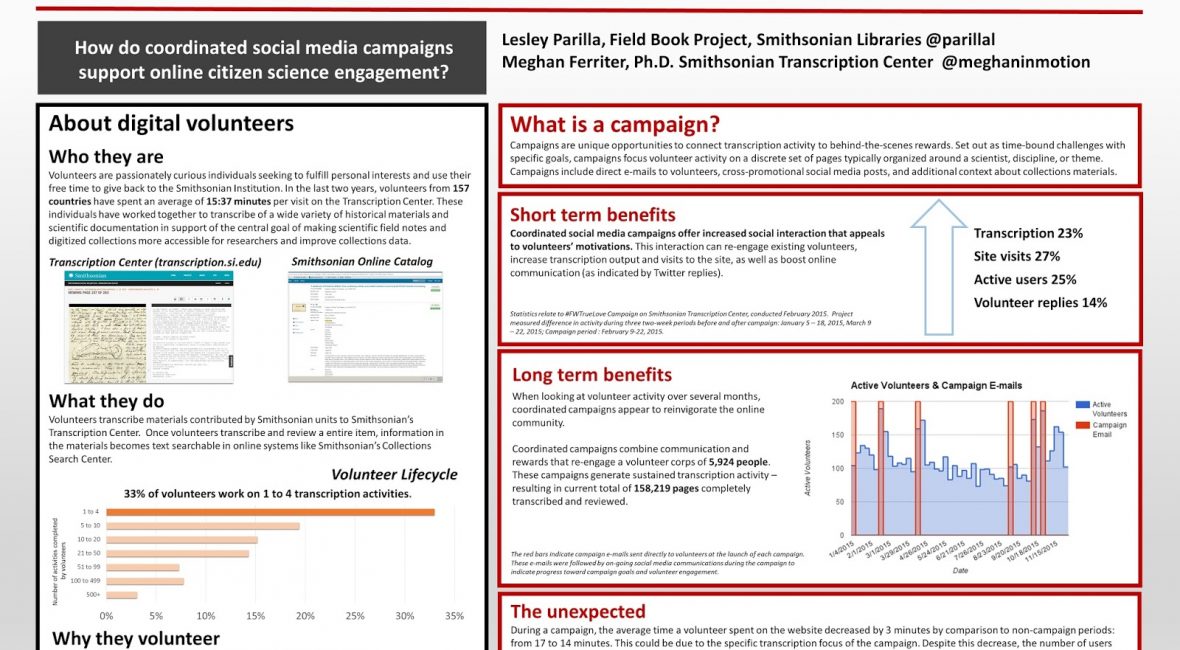
Smithsonian staff members recently presented a poster at the American Association for the Advancement of Science (AAAS) Annual Meeting in Washington, DC, 11-15 February, 2016. The poster, entitled “The Impact of Coordinated Social Media Campaigns on Online Citizen Science Engagement” by Lesley Parilla (Cataloging Coordinator, The Field Book Project) and Meghan Ferriter, Ph.D. (Project Coordinator, Smithsonian Transcription Center), highlighted the impact of a coordinated social media campaign on crowdsourced transcriptions of field notes.

View Full Size Image

The poster outlined the details and outcomes of the #FWTrueLove campaign, a collaboration involving The Field Book Project, the Smithsonian Institution Archives, the Smithsonian Transcription Center, Pyenson Lab, and the Biodiversity Heritage Library. The event challenged volunteers to fully transcribe a selection of field notes by Frederick W. True, held by the Smithsonian Institution Archives and uploaded to the Smithsonian Transcription Center, by the end of the campaign period. Materials for the challenge were identified and selected with Smithsonian Curator of Fossil Marine Mammals Dr. Nick Pyenson and the Smithsonian Field Book Project, a joint initiative of the National Museum of Natural History, Smithsonian Libraries and Smithsonian Institution Archives. The field notes are an important source of natural science data that is difficult to utilize, since they are often handwritten and fragile due to age.

The Transcription Center coordinated the multi-institutional campaign during the month of February 2015. The campaign involved blog posts, Twitter, Instagram, Facebook, and a targeted email to the Transcription Center’s current volunteers, all of which challenged users to completely transcribe 523 pages from F.W. True’s field notes within one week. Updates were posted on: http://nmnh.typepad.com/fieldbooks/fwtruelove/.

As a reward for the successful completion of the challenge, the Transcription Center coordinated Google Hangouts with Curator of Fossil Marine Mammals Dr. Nick Pyenson. Dr. Pyenson discussed the interdisciplinary nature of F.W. True’s scientific pursuits – plus True’s connections with Smithsonian researchers like Leonhard Stejneger and William Healey Dall.

The #FWTrueLove campaign contrasted with a typical experience by focusing on a specific set of materials. The modular design of the Transcription Center’s website, which incorporates multiple collection types, means that a typical volunteer experience is flexible and highly tailored to their individual interests. This flexible design enables volunteers to create their own online experience. This can be expanded with engagement via social media. An analysis of the event showed that coordinated social media campaigns increase volunteer interaction, transcription output, and the number of active users on the Transcription Center. However, there was a decrease in the average length of a visit during the campaign. This may be because new active users are specifically coming to spend time on the projects highlighted in the campaign. This varies from other periods of time on the site, when volunteers come to work on one project but move onto unrelated projects that catch their attention thanks to the site’s open structure. These focused campaigns that appear to work in direct opposition to the flexible nature of the Transcription Center may keep the community growing, serving to reinvigorate the volunteer community as a whole and combat the natural cycling of volunteers out of active participation.

Learn more about the results of the campaign on the AAAS website. See the posted in more detail on BHL’s Pinterest.

February 18, 2016by ulib-libraryjobs
Page 1 of 212»

Help Support BHL

BHL's existence depends on the financial support of its patrons. Help us keep this free resource alive!

search

About BHL

The Biodiversity Heritage Library (BHL) is the world’s largest open access digital library for biodiversity literature and archives. BHL operates as a worldwide consortium of natural history, botanical, research, and national libraries working together to digitize the natural history literature held in their collections and make it freely available for open access as part of a global “biodiversity community.”

Join Our Mailing List

Sign up to receive the latest news, content highlights, and promotions.

Subscribe Now

Subscribe to Blog via Email

Enter your email address to subscribe to this blog and receive notifications of new posts by email.

Join 319 other subscribers

Subscribe to Blog Via RSS

Subscribe to the blog RSS feed to stay up-to-date on all the latest BHL posts.

Access RSS Feed

Inspiring Discovery through Free Access to Biodiversity Knowledge.

The Biodiversity Heritage Library makes it easier than ever for you to access the information you need to study and explore life on Earth…for free, anytime, anywhere.


64+ Million Pages of
Biodiversity Literature Online.

EXPLORE

Tools and Services
to Transform Research.

EXPLORE

300,000+
Illustrations on Flickr.

EXPLORE

ABOUT | HARMFUL CONTENT | PRIVACY | SITE MAP | TERMS OF USE