Biodiversity Heritage Library - Program news and collection highlights from BHL
  • Home
  • News
  • Featured Books
    • All Featured Books
    • Book of the Month Series
    • BHL at 20
  • User Stories
  • Campaigns
    • Fossil Stories
    • Garden Stories
    • Monsters Are Real
    • Page Frights
    • Her Natural History
    • Earth Optimism 2020
  • Tech Blog
  • Visit BHL
Home
News
Featured Books
    All Featured Books
    Book of the Month Series
    BHL at 20
User Stories
Campaigns
    Fossil Stories
    Garden Stories
    Monsters Are Real
    Page Frights
    Her Natural History
    Earth Optimism 2020
Tech Blog
Visit BHL
  • Home
  • News
  • Featured Books
    • All Featured Books
    • Book of the Month Series
    • BHL at 20
  • User Stories
  • Campaigns
    • Fossil Stories
    • Garden Stories
    • Monsters Are Real
    • Page Frights
    • Her Natural History
    • Earth Optimism 2020
  • Tech Blog
  • Visit BHL
Biodiversity Heritage Library - Program news and collection highlights from BHL
Blog Reel, Featured Books

Travelling Plants: A Collaborative Project

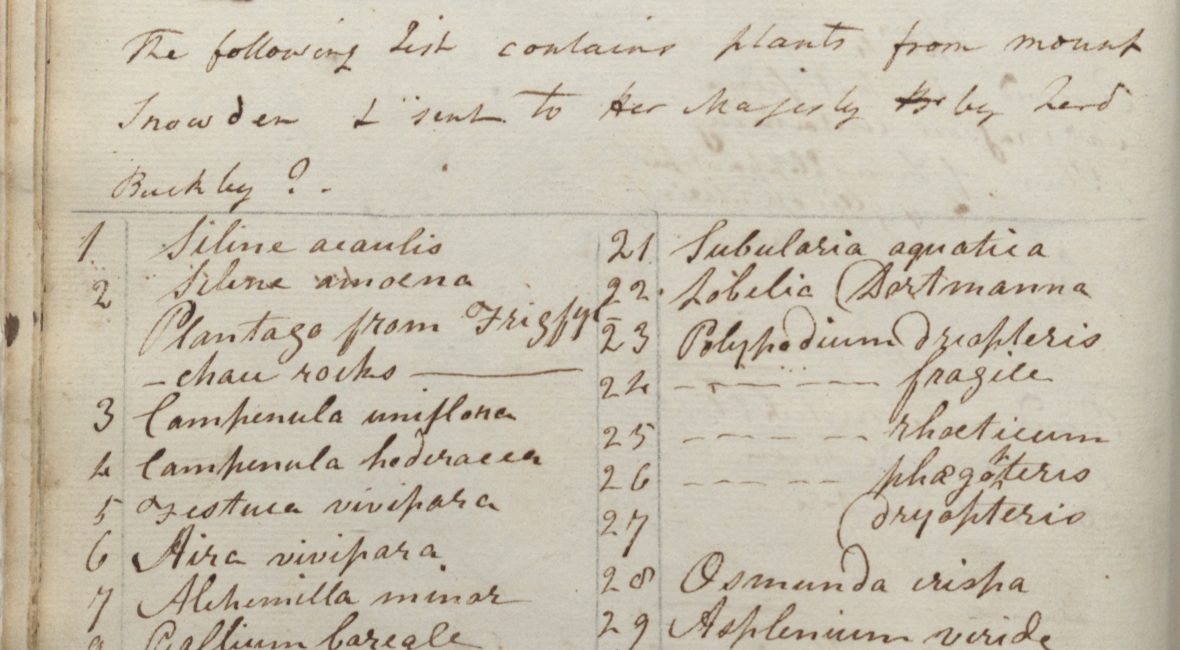
Page 18 of the Kew Record Book with handwritten list of plants

During 2020, the Archives team at the Royal Botanic Gardens, Kew developed a collaboration with the University of Roehampton, the University of the Third Age (U3A), and the Biodiversity Heritage Library (BHL), to create a model for the archive sector, which uses volunteer-driven, remote methods to transcribe and research collections, making them easily shareable and accessible using TEI-XML encoding. We wanted to create ways in which TEI could be embedded in the archive sector and managed by archivists with little experience of textual encoding, or time to carry out encoding themselves. In creating this model, we would also digitise, transcribe, encode, and make accessible in BHL one of Kew’s most important, but inaccessible volumes – the Kew Record Book. For Kew, it was important that the volume would be made fully accessible, as part of our commitment to transparency around our history and involvement in colonialism.
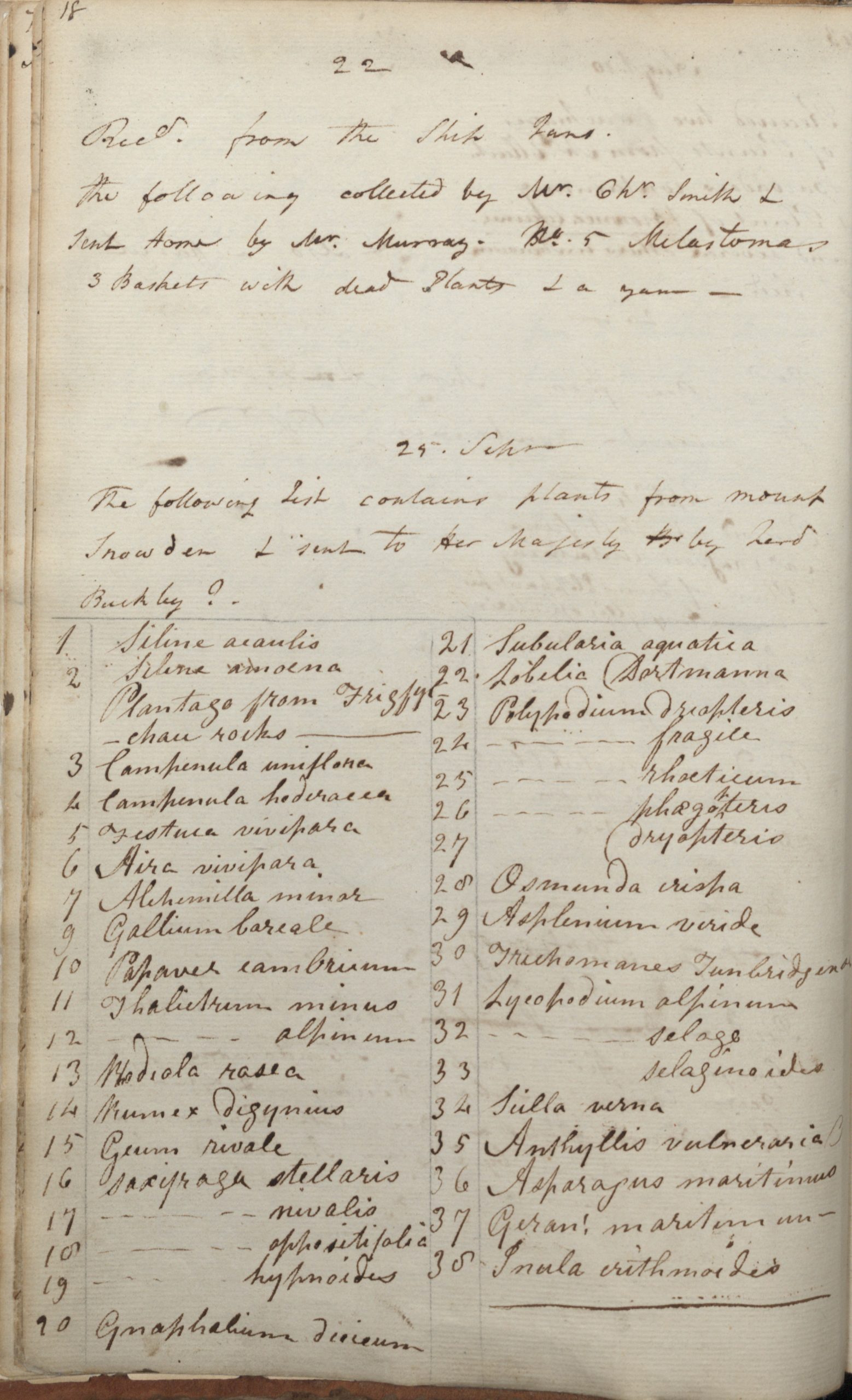
Page 18 of the Kew Record Book with handwritten list of plants

Kew Record Book. Folio 18. Royal Botanic Gardens, Kew. 1793-1809. Contributed in BHL from Royal Botanic Gardens, Kew.

The model we created was timely, as the COVID-19 pandemic meant many institutions could no longer accommodate volunteers on-site, and remote ways of working have persisted. The Travelling Plants project built a community and model of engaging with and developing the digital capacity of older people remotely, a sector of society that particularly felt the impact of social isolation during the pandemic. We received a grant from The National Archives to carry out this project.

We split the project into four phases: transcription, TEI-XML encoding, plant names, and project celebration.
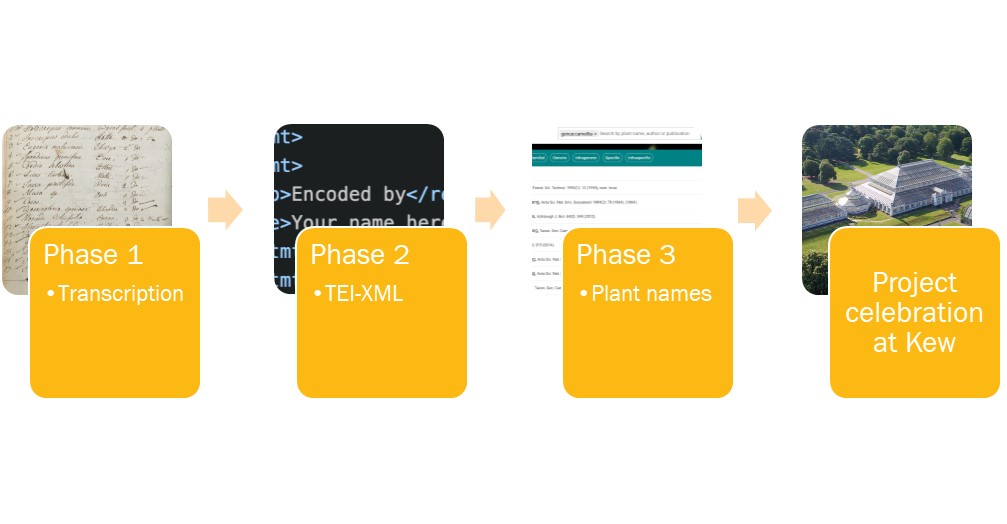
The four phases of the project: transcription, TEI-XML, Plant names, and Project celebration at Kew.

Phases of the Travelling Plants project.

We aimed for the project to be self-supporting, delivering remote training sessions, drop-in Q&As, creating protocols, and using the cloud for sharing documents. The most successful form of support was the small working groups of volunteers that we created, empowering volunteers to help each other. Transcriptions had to be checked by another member in the group, but support went far beyond this, with the groups setting up WhatsApp groups and even meeting in the Gardens once lockdown restrictions lifted.

About the Kew Record Book
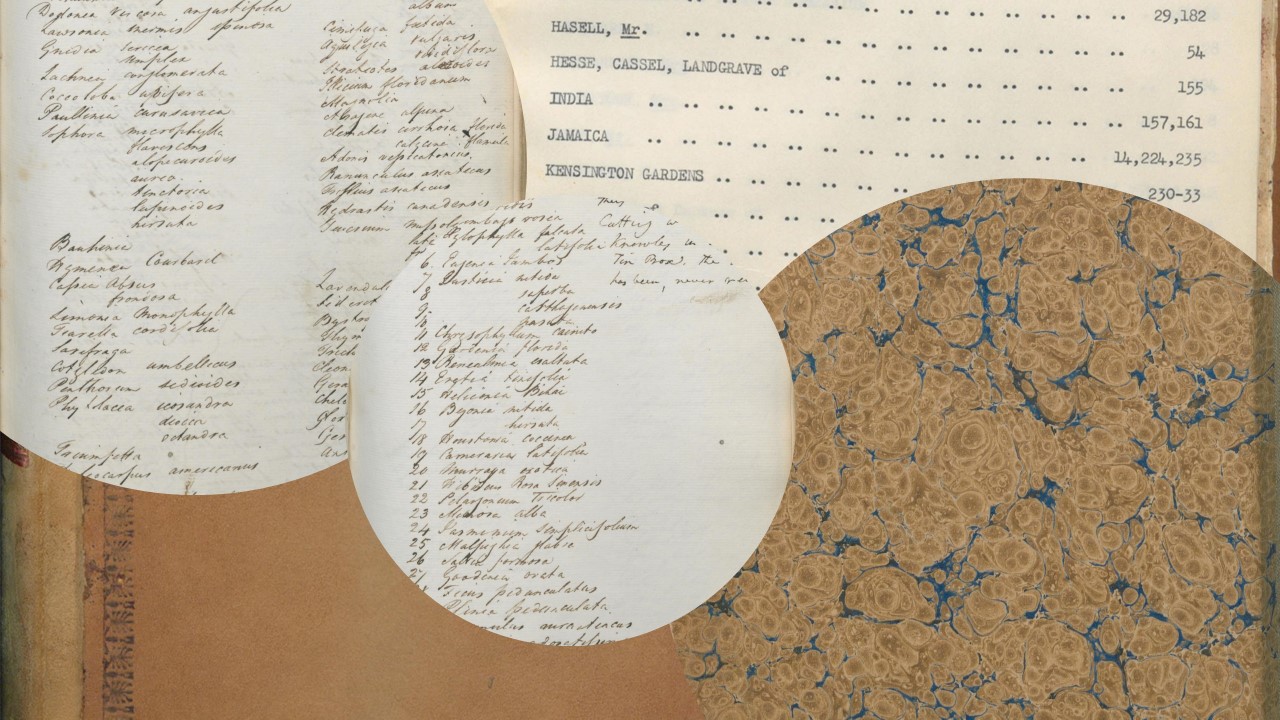
Collage of images cropped from the Kew Record Book

Excerpts from the Kew Record Book

The Kew Record Book is a unique document in the history of botany and horticulture. It records incoming and outgoing plants at the Royal Botanic Gardens, Kew, from 1793 to 1809. This was a period of intense activity at Kew, under the informal directorship of Sir Joseph Banks, President of the Royal Society. With the support of King George III and major trading bodies such as the East India Company, Banks sent gardeners from Kew to accompany plant consignments, collect specimens and supervise colonial botanic gardens across the globe. Botanic gardens played a central role in the establishment of British power overseas, facilitating the transfer of food crops and useful plants between colonies, and providing staging posts for horticultural specimens on their way to Kew.

The volume opens in 1793, when William Townsend Aiton succeeded his father as superintendent of Kew. Entries are in a variety of hands, noting donors and recipients of consignments, identifying plants by their Latin botanical names. Also included are a number of copies of letters sent to and from plant collectors overseas. A particular highlight is Francis Masson’s 1798 letter from New York recounting his capture by French pirates when crossing the Atlantic (folio 84).

The volume records plant exchange for a range of commercial, colonial, and diplomatic purposes and Kew’s involvement in colonialism is clearly documented. Among the most active donors to Kew was William Roxburgh, superintendent of the East India Company’s botanic garden in Calcutta (Kolkata). Roxburgh established firm and long-lasting links between the East India Company and Kew.

Regular shipments were received from plant collectors around the world. In 1793, 82 crates arrived from the new penal colony of Botany Bay in Eastern Australia (folio 7). Banks had lobbied hard for the establishment of the colony and supplied the first settlers with seeds and plants. Two Kew-trained gardeners tended the crops and collected Australian plants on behalf of Kew.

Banks was also responsible for organising one of the most well-known – indeed notorious – of plant transfers: that of the breadfruit from Tahiti to the Caribbean (1791-3). The breadfruit, Artocarpus altilis, was proposed as a suitable foodstuff for enslaved people on British-owned plantations in the West Indies (although it only became a staple food in the Caribbean post-emancipation). The Kew Record Book includes a list of plants brought back to Kew from the voyage: from Tahiti, New Guinea, St. Helena, St Vincent and Jamaica (folios 10-16). Heading the list are ‘Otaheita Plants’, some with Tahitian names, but the first entry is for ‘Bread fruit 4 plants’ (folio 10).

Plants were also used to forge diplomatic alliances. In 1795 a shipment of over 300 rare plants was sent to Maria Feodorovna, “the Great Dutchess of Russia” who, the following year, would become Empress consort of Russia (folio 38). The batch was headed by the spectacular bird of paradise Strelitzia regina, named in honour of Queen Charlotte (of the house of Mecklenburg-Strelitz).

With its detailed inventories and multiple correspondents, the volume offers an invaluable resource to reconstruct botanical networks and chart the routes of plants across the globe.

View the complete Record Book in BHL.

The Encoding

To make the Kew Record Book as accessible and searchable as possible, we decided to train volunteers to encode their transcriptions. We chose to follow the guidelines of the Text Encoding Initiative (TEI), an international consortium whose XML standard is used globally to create digital texts. As a markup standard based in natural language, TEI-XML represented a relatively friendly way of enhancing the Travelling Plants volunteers’ digital skillset.

Given the limited timeframe of the project, we didn’t aim to produce a complete digital edition of the Record Book. Instead, our goal was to develop and test a model for engaging volunteers in the encoding of archival texts; to refine the model through testing and dialogue; and to produce guidance that could be used by other archive-based projects. Travelling Plants volunteers were given the option of learning TEI-XML and encoding the text after they had begun transcribing and annotating it. Almost all tried their hand at encoding. Approximately half shifted their focus to encoding during the project’s final phase, while the others completed the transcription and annotation of the volume.

Because TEI-XML was new to all of the volunteers, we created detailed written guidance complemented by ten training videos. Three real-time tech support sessions on Zoom gave volunteers opportunities to share their learning with one another and to ask questions about the most technically challenging aspects of encoding the Record Book’s many types of entries. Volunteers then worked in teams to produce their digital edition.

By the end of the project, approximately 100 pages had been encoded in a way that made the Record Book easily searchable by the names (in all forms) of plants, people, ships, and institutions, as well as by places that can be plotted on digital maps. The digital edition and training materials will be made available via the Travelling Plants website, as soon as final revisions are complete. In the words of one volunteer, “I never thought I would enjoy coding but now I find I don’t want to stop!”

In the end-of-project evaluation, our volunteers said making history accessible and deciphering the handwriting were enjoyable parts of the project. However, the group work was the universally most enjoyed:

“I’ve really enjoyed working on the transcriptions, in particular the research and ‘detective’ work to firstly figure out what a letter or word is and then the investigation into the people and places which really brings the archive alive, and it’s been lovely to work with my group and get to know them.”

“It was a gift in lockdown to have something else to focus on other than the virus, masks, social distancing.”
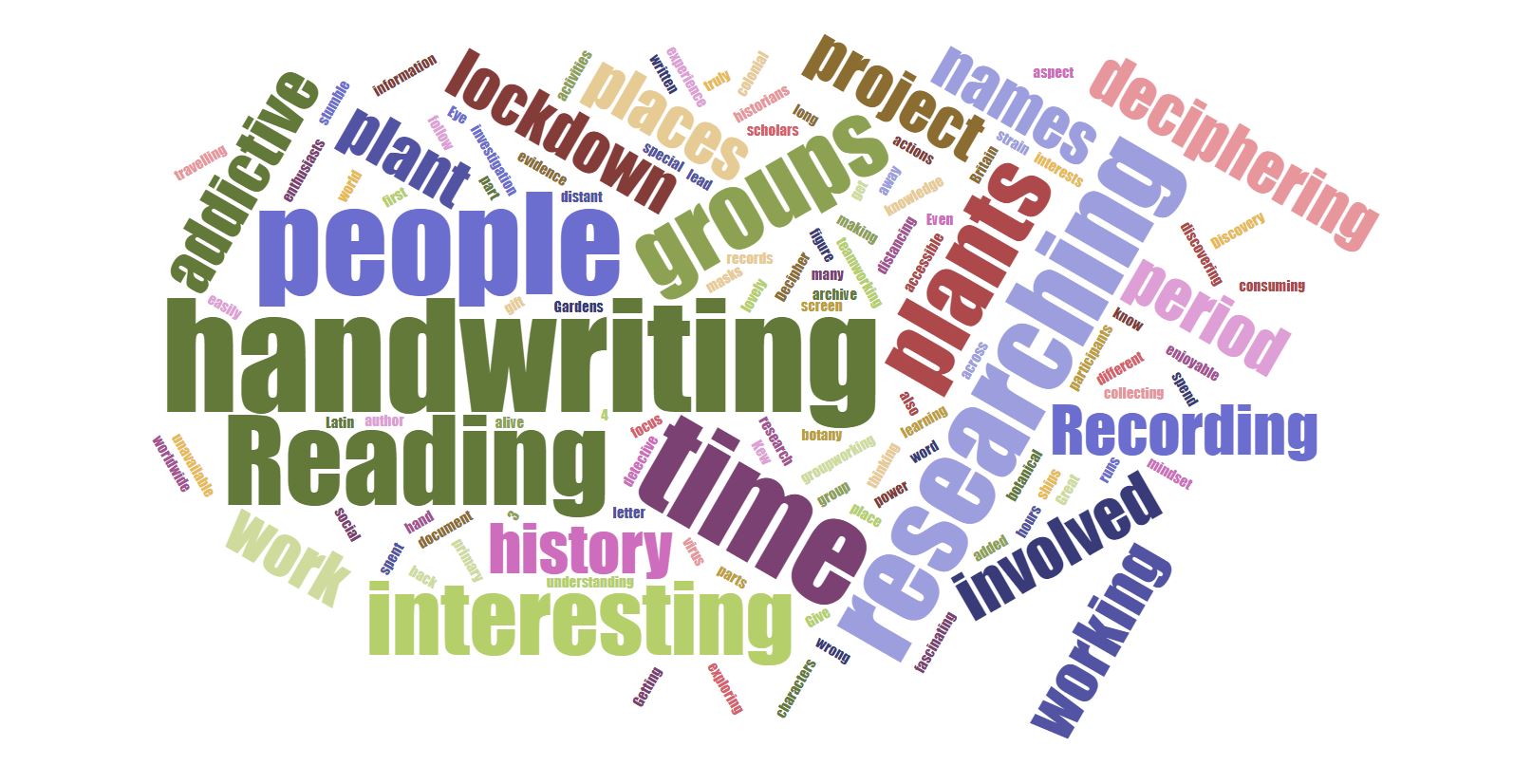
Word cloud of feedback from volunteers. Most prominent words include: handwriting, reading, people, time, researching, interesting, plants, addictive

What the volunteers found most enjoyable about the Travelling Plants project

The least enjoyable part was unanimously reading the handwriting!

By developing and sharing our protocols and training resources, we aim to empower other archivists to work with volunteers to create open access, shareable transcriptions that will help open their collections to the world.
May 11, 2023by [email protected]
Blog Reel, Featured Books

The Life and Work of Robert Alexander Gilbert: Empowering New Insights through Digitization and Transcription of Archival Materials

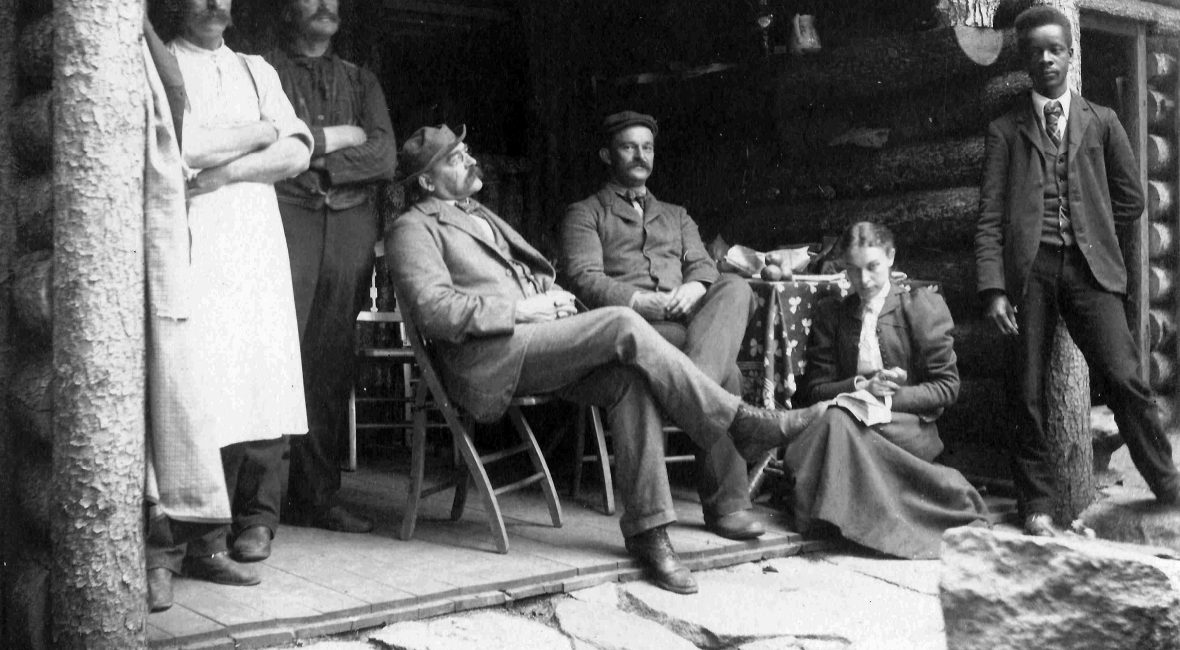
Black and white photo of a group of people standing on the porch of a log cabin.

This post is part of a series from the Ernst Mayr Library exploring the digitization and transcription of ornithologist William Brewster’s archival materials and the insights and scholarship made possible thanks to this work.

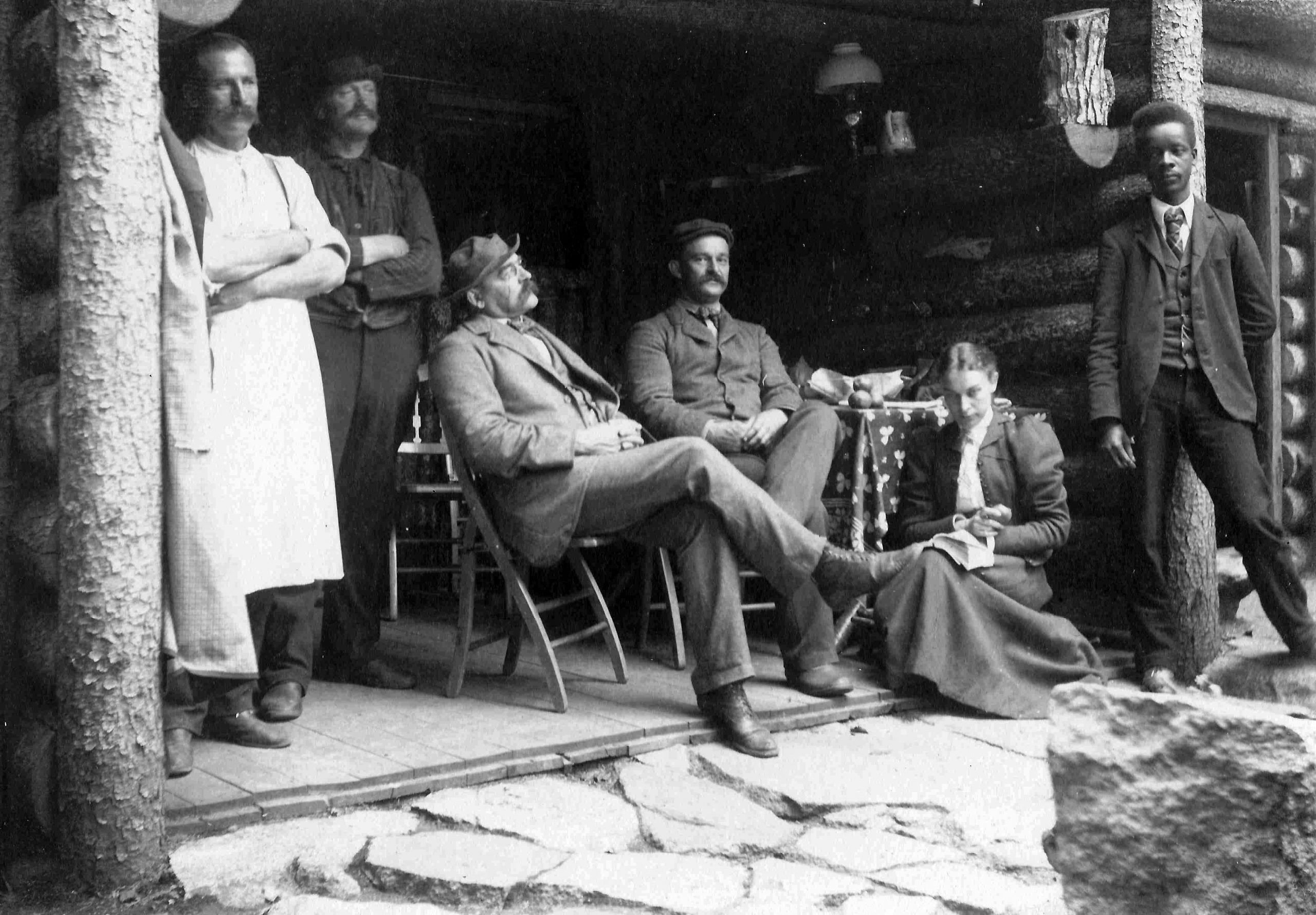
Black and white photo of a group of people standing on the porch of a log cabin.

Robert A. Gilbert, far right, at William Brewster’s cabin at Pine Point, Umbagog Lake, Maine. From the collection of the Museum of American Bird Art, Massachusetts Audubon Society and reproduced with their permission.

Robert Alexander Gilbert (1870-1942) was a Black photographer interested in ornithology and chemistry who worked for ornithologist William Brewster from the mid 1890s until Brewster’s death in 1919 and at various tasks around the Museum of Comparative Zoology (MCZ) at Harvard University beyond 1919. He was an Associate of the American Ornithologists’ Union.

Gilbert was not officially recognized for his photographic work with William Brewster, although Brewster did not claim credit for all the images in his collection. It was assumed that Brewster took all the photographic prints bequeathed to the Ernst Mayr Library and Archives of the MCZ (EMLA) upon his death. However, while conducting research for a book, author John Hanson Mitchell, former editor of the Massachusetts Audubon Society’s (MAS) Sanctuary magazine, discovered over 2000 of Brewster’s glass plate negatives in the attic of a building owned by the MAS. One of the images in particular, a photograph of a young, well-attired Black man standing in front of a rustic cabin in the wilderness, captured his interest. Mitchell was curious as to the identity of this young man. Later, in the mid-1970s, Mitchell had a chance encounter with an Archives Assistant at the MCZ who suggested to him that all of Brewster’s photographs were, in fact, taken by Brewster’s assistant, a young Black man named Robert Gilbert. This piqued Mitchell’s interest and launched his journey to discover more about Gilbert.[1] The quest culminated with the publication in 2005 of Mitchell’s Looking for Mr. Gilbert: the Reimagined Life of an African American. In 2014 an e-book edition was published as well.

Mitchell’s publication helps provide new insight into Robert Gilbert’s life and work. Brewster’s journals and diaries, now digitally available on the Biodiversity Heritage Library (BHL), are also valuable records attesting to Gilbert’s contributions in a variety of areas. While only a handful of Brewster’s photographs in the MCZ collection can be positively attributed to Gilbert, it is clear that Gilbert was with Brewster for photo sessions during the years they worked together. The photographic relationship between Brewster and Gilbert is intriguing. There is new enthusiasm to examine Brewster’s journals and diaries more closely now that they are digitized and being transcribed, to clarify Gilbert’s role in photographic collaboration with Brewster. As a result of identifying connections between the collections in the Museum of American Bird Art at the Massachusetts Audubon Society and the EMLA, a cooperative research project is underway.

Robert Gilbert was born and raised in the rural town of Natural Bridge, Virginia, in the valley of Broad Creek. In 1886, at the age of 16, he moved to Boston, Massachusetts where he would reside for the remainder of his life. Gilbert had an assortment of odd jobs during his first ten years in Boston, including working as a laboratory assistant for Dr. Arthur P. Chadbourne of Harvard Medical School, an amateur ornithologist and acquaintance of William Brewster. The records are unclear as to the actual year, but sometime between 1895 and 1897, work in Chadbourne’s lab slowed down and he recommended Gilbert to Brewster, who was in need of a temporary assistant to help him set up his personal bird museum. Gilbert met with Brewster, who showed him his extensive specimen collection and the tasks at hand, and for the next ten weeks Gilbert helped Brewster establish his new museum on the grounds of his home in Cambridge, MA. Afterward, Gilbert returned to working for Dr. Chadbourne, but shortly thereafter the laboratory experiments were completed whereupon Brewster hired Gilbert as his full-time assistant.[2] Brewster’s first mention of Gilbert in his journals is in his entry for March 31, 1897.

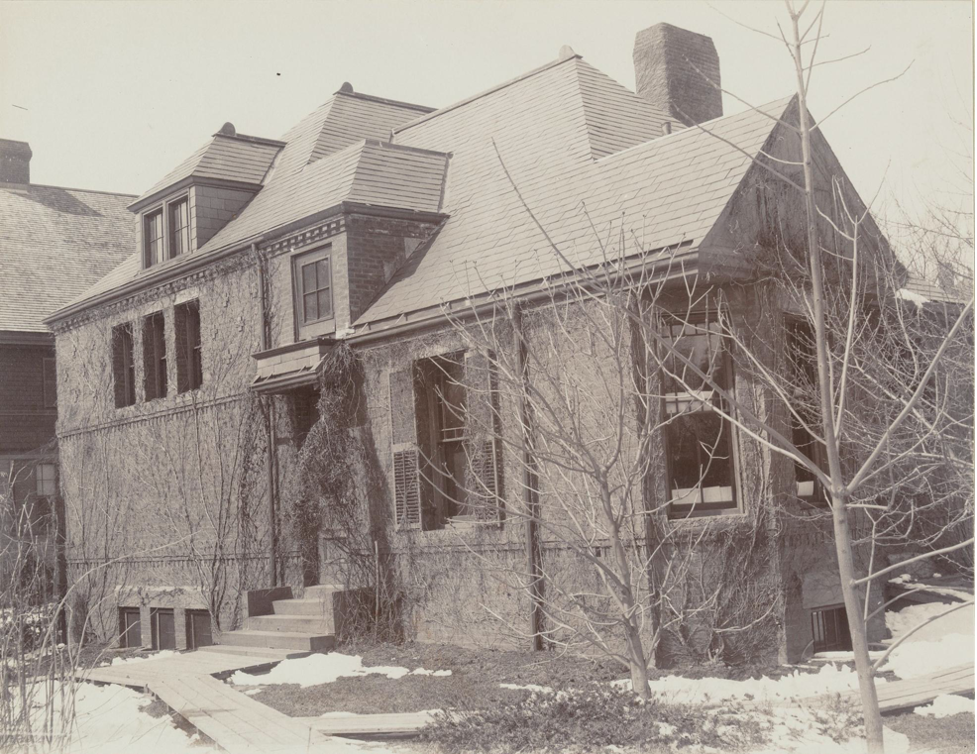
Black and white photograph of a brick house.

Brewster’s museum on the grounds of his home in Cambridge, MA. From the collection of the Ernst Mayr Library of the Museum of Comparative Zoology, Harvard University. Call number bBr 97.70.12.19.

It is clear from Brewster’s diaries and journals that the tasks performed by Gilbert in Brewster’s employ were many and varied. Glover M. Allen, Curator of Mammals at the MCZ, described Gilbert as “Mr. Brewster’s trusted assistant, looking after innumerable details at his museum or his camp, doing everything from photographic work to preparing and serving meals, and always with a quiet dignity and devotion that never for a moment failed.”[3] Gilbert quickly became Brewster’s right-hand man as evidenced by the innumerable references to him from 1897 to 1919 in his diaries and journals. Here are a few examples:

Journal, June 8, 1897. As a field assistant, note Gilbert’s observational skills and attention to detail as he documents the behavior of a Whistler Duck for Brewster:

“Gilbert who had been to the boat for his breakfast came to relieve me and to keep guard while I had mine. It was arranged between us that if the Whistler began taking out her young while I was absent he would shout a few times to let me know of the fact. I had just finished breakfast when I heard this signal and jumping into the St. Lawrence skiff rowed as hard as I could pull for the nest but as soon as I came in sight of it I knew I was too late for Gilbert was standing up in his boat and paddling slowly towards the tree. Here is his account of what happened during my absence: At 6.45 the old Duck appeared at the entrance (the lower hole) to the nest where she sat for five minutes moving her head continually and looking about in every direction included within her field of vision; then she sank back out of sight reappearing at the end of a minute and looking about as before for another five minutes. At the end of this second period of observation she flew down to the water and swam around the stub three times clucking and calling. On completing the third round she stopped directly under the hole and gave a single loud call or cluck when the ducklings at once began scrambling up to the entrance from the nest and dropping down to the water falling on top of one another. In other words the brood literally poured out of the nest much as shot would fall from one’s hand. One or two hesitated or paused for an instant reaching the mouth of the hole but the greater number toppled out over the edge as soon as they appeared. All used their tiny wings freely beating them continuously as they descended. They did not seem to strike the water with much fear.”

Journal, November 5, 1897. Bird observations reported to Brewster: “Gilbert counted fourteen Chickadees in one flock on Ball’s Hill this morning. With them was a Downy, two Tree Sparrows & two Juncos. He also saw five Black Ducks passing over the meadows at evening.”

Journal, March 24, 1898. Work at Brewster’s cabin in Concord, MA: “Spent the forenoon clearing out the path behind the hill, Gilbert helping me.”

Diary, March 6, 1909. Photographic work: “Lizzy Fuller came over at 8 P.M. She with C. & E.R.S. [Caroline and Elizabeth R. Simmons] spent evening in Museum where I showed them about 100 lantern slides that Gilbert has just made.”

Diary, January 9, 1918. Work in Brewster’s museum: “Gilbert is now going through the collections in search of Anthrinae [Anthrenus] & other insect pests. Thus far he has found traces of them in the cans only.”

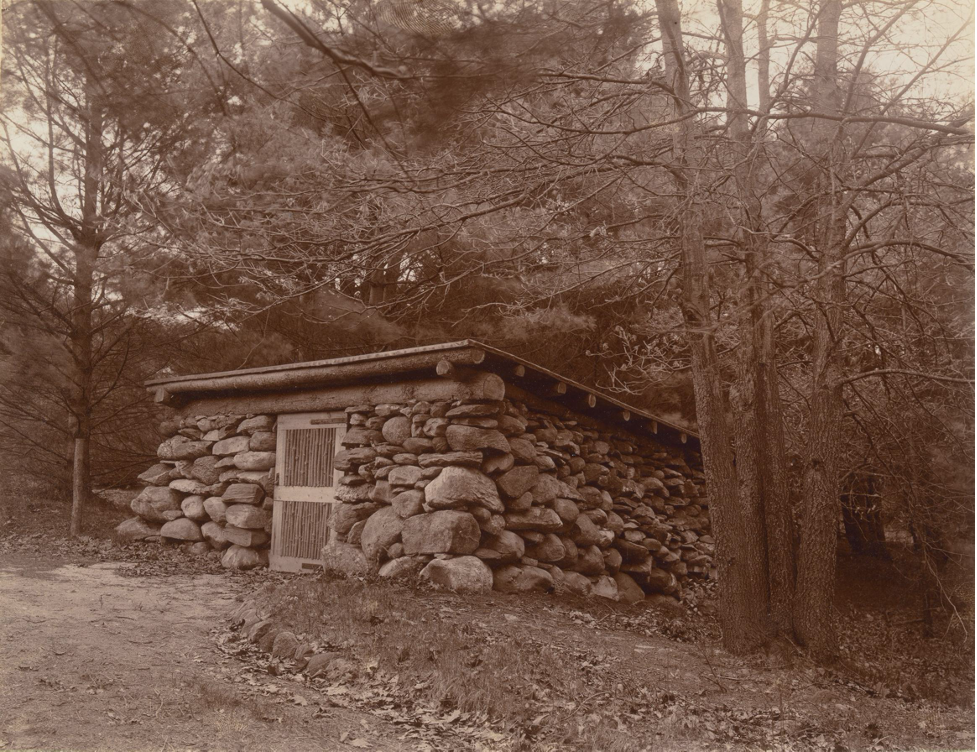
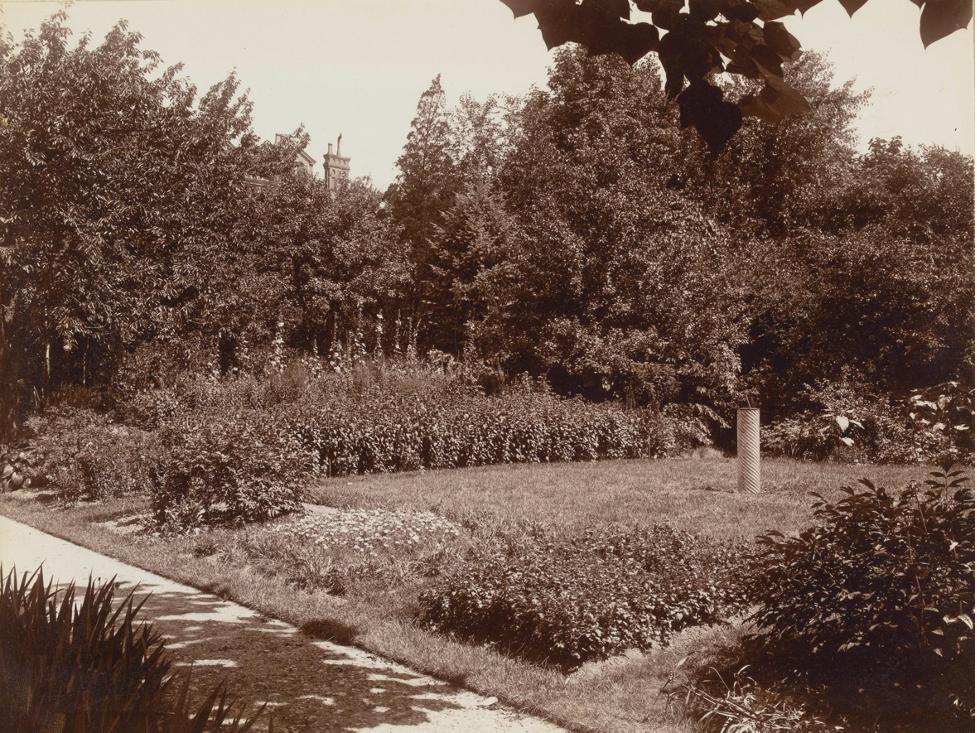
In the 1890s Brewster was earnestly transitioning from collecting bird specimens with his shotgun to field observation and photography. He had, in Robert Gilbert, an assistant knowledgeable in ornithology and capable with photography and photographic processing. It is unfortunate that in the Ernst Mayr Library collection of over 1,700 of Brewster’s photographic prints, only six have an inscription on the verso stating that the photograph was taken by Robert Gilbert. Below are two such photographs:

Black and white photograph of a stone wood-house in the woods.

From inscription on verso: “Wood-shed, Hemlock Grove, Concord, Mass., April 1904, taken by R.A. Gilbert.” From the collection of the Ernst Mayr Library of the Museum of Comparative Zoology, Harvard University. Call number bBr 97.70.7.23.

Black and white photograph of a garden.

Brewster’s garden. From inscription on verso: “Garden, Cambridge, Mass. July 30th 1904. Taken by R. A. Gilbert.” From the collection of the Ernst Mayr Library of the Museum of Comparative Zoology, Harvard University. Call number bBr 97.70.12.59.

It is possible that many other photographs were taken by Gilbert, but we don’t know for sure. There are a number of occasions recorded in Brewster’s writings where it is clear that Brewster himself was doing the photography. In his journal entry for May 18, 1897, for example, Brewster writes:

“I visited the Hermit’s nest in the Brown clearing taking five photographs of it. The [female] was on the nest and for a Hermit sat very closely allowing me to set up the camera & focus on her at a distance of about 4 ft. but gliding away just as I was about to expose a second plate. She would not return to her eggs, however, while the camera was in position although I waited for her nearly an hour.”

Whether or not Gilbert was taking the picture, it is clear that he played a major role assisting with various aspects of Brewster’s photography. Inscriptions on the verso of photographic prints reveal that Gilbert owned darkroom apparatus and copied glass plate negatives to make prints. In a journal entry dated May 29, 1897 Brewster writes: “In the forenoon I took several photographs (with Gilbert’s help) in the gulf at the head of Great Island and along the western shore of the Sweat Cove.” Though Brewster was taking the pictures, Gilbert was assisting in some fashion.

It is evident that Gilbert was an invaluable assistant and friend who greatly facilitated Brewster’s ornithological accomplishments. Gilbert remained in Brewster’s employ until the latter’s death in 1919. Brewster arranged for the MCZ to hire Gilbert upon his death, another attestation to Brewster’s high regard for him.

There is little on record describing Gilbert’s tasks at the MCZ, but the Annual Report of the Director sheds some light. In the Report of the Director for 1931/1932 Thomas Barbour writes: “Robert Gilbert, aided by several young men, has done excellent work in rearranging some of the exhibition halls.” In the 1933/1934 Annual Report Glover Allen writes in his Report on Mammals: “In the ever-present work of cleaning skulls and skeletal material French and Gilbert have latterly borne a helpful hand, developing some skill.” Were Gilbert doing similar tasks today, he would likely be given the title Curatorial Assistant in the MCZ. Barbour’s report intimates that, among many other skills, supervision and at least familiarity with exhibit design properly belong on Gilbert’s resume. No doubt, Gilbert’s work in Brewster’s museum prepared him well for his tasks in the MCZ.

Gilbert worked at the MCZ until his death in 1942. In his 1941/1942 Director’s report, Barbour provided the following tribute:

“On January 7, 1942 Robert A. Gilbert died. For years before he came to the Museum he had helped Mr. Brewster in many ways and his sterling personal characters of integrity, affection, courtesy, and loyalty made him not only a [sic] honor to his race but one who was proud to do everything which he did as well as he could do it, and who was beloved by us all.”

Robert Gilbert’s many talents as well as his passion, curiosity and integrity enriched Brewster’s life and pursuits. It is evident that he brought these same qualities to his work at the MCZ.

The Ernst Mayr Library is actively transcribing the digitized journals, diaries and correspondence of William Brewster, enabling full-text searching of these resources in the Biodiversity Heritage Library. It is our hope that this will facilitate digital scholarship and further interest in the life and work of Robert Gilbert. In the next blog post we will discuss this transcription work.

References

[1] Mitchell, John Hanson. 2005. Looking for Mr. Gilbert: The Reimagined Life of an African American. Washington, DC: Shoemaker.

[2] Mitchell, John Hanson. 2014 e-book edition. Looking for Mr. Gilbert: The Unlikely Life of the First African American Landscape Photographer. New York, New York : Open Road Distribution.

[3] Allen, Glover M. 1942. Obituaries. Robert A. Gilbert. The Auk 59.3: 467. JSTOR. Accessed on 25 January 2021. https://www.jstor.org/stable/4079251.

February 23, 2021by michelle.underhill
Blog Reel, Campaigns, Her Natural History

Transcribe Field Notes by Female Naturalists with the #HerNaturalHistory Transcription Challenge

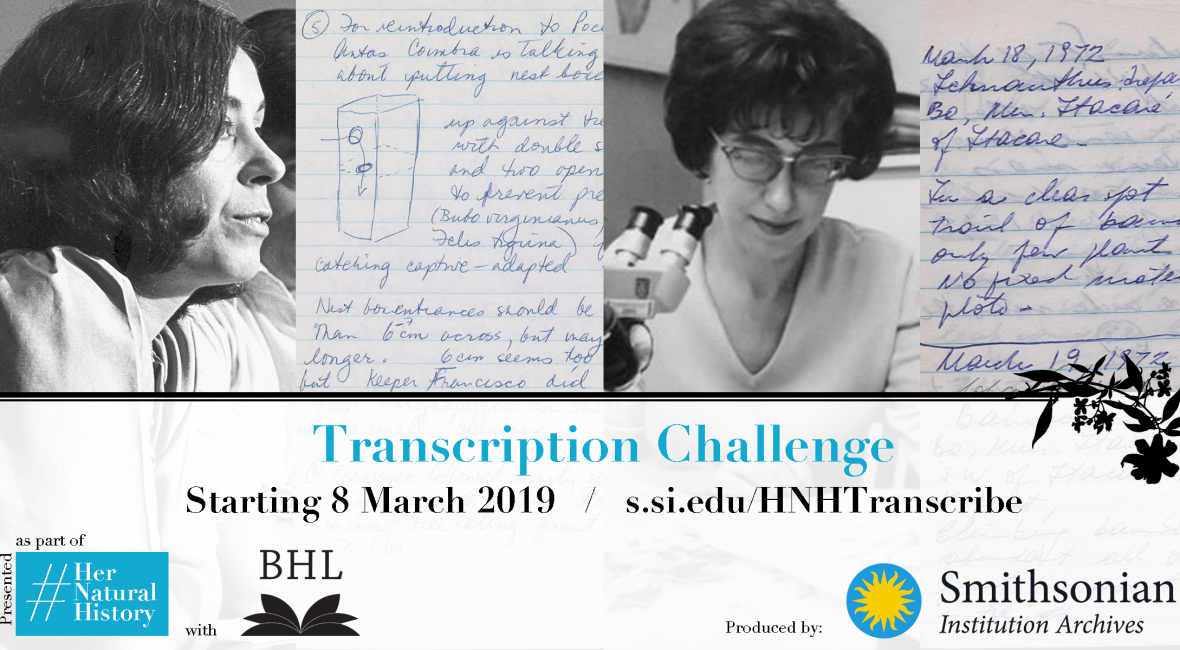
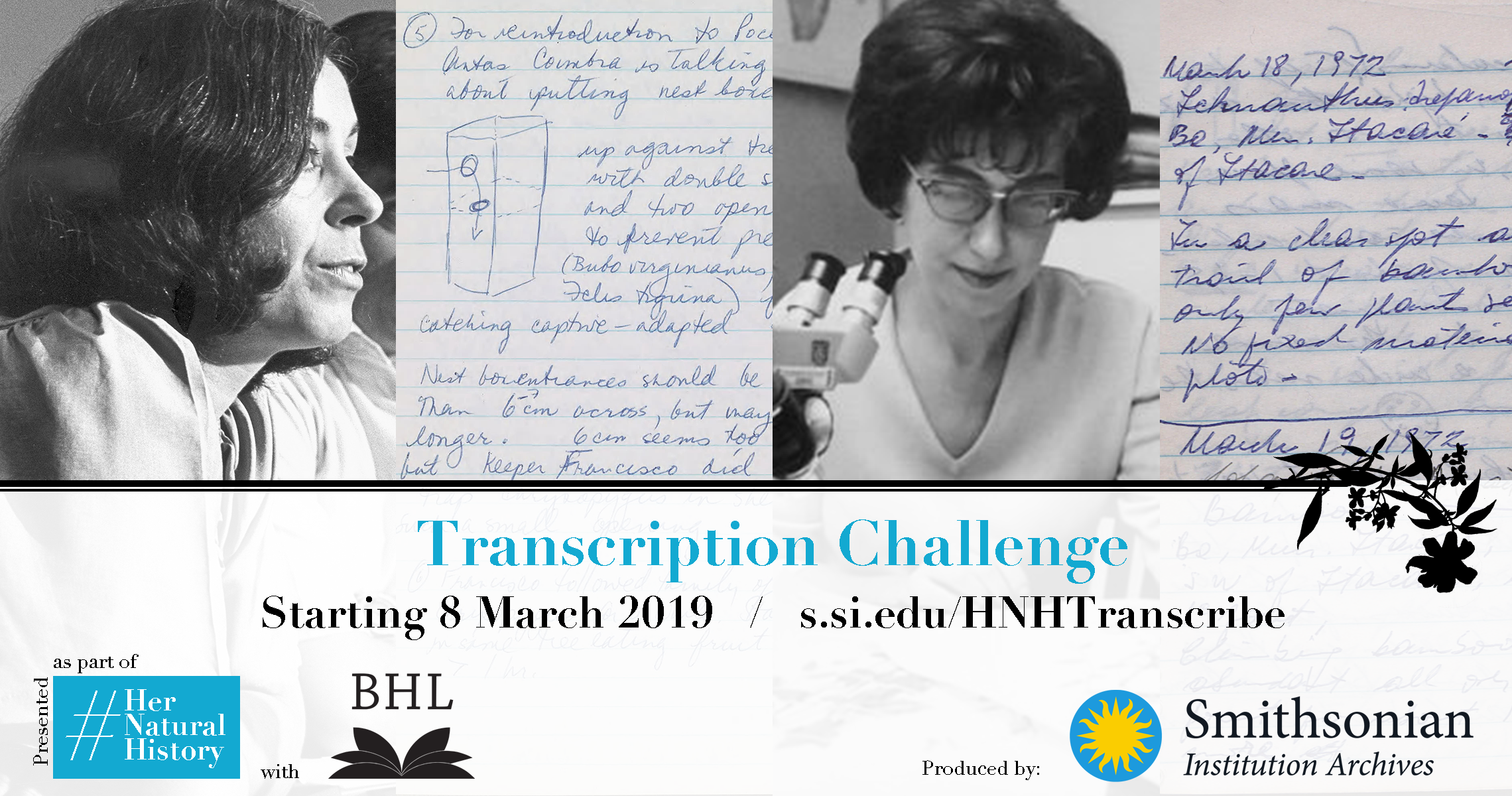
L to R: Photo of Devra Kleiman by Hirshfeld, Max, 1978, Smithsonian Archives – History Div, 94-8340; Page from Kleiman field book (Brazil notebook, 1975-1982); Photo of Cleofé E. Calderón, Smithsonian Institution Archives, SIA Acc. 11-008, Box 02, Image No. OPA-90; Page from Calderón field book (Brasil 1972, 1).

Looking for a challenge? The Smithsonian Institution Archives and the Smithsonian Transcription Center are teaming up for a #HerNaturalHistory-themed transcription challenge. Starting today (8 March), help a team of #volunpeers transcribe field notes from conservation biologist Devra Kleiman and botanist Cleofé Calderón. Dive into observations of golden lion tamarins with Kleiman, who worked at Smithsonian’s National Zoological Park from 1972 to 2001. And head to South America with Calderón to collect grasses for Smithsonian’s Department of Botany.

When? Starting TODAY, 8 March 2019
Where? Smithsonian Transcription Center. The field notes are available on the Smithsonian Institution Archives project page.

The Smithsonian Institution Archives has launched 11 field books on the Smithsonian Transcription Center. Throughout the month, additional field books will be added as others are completed. Our goal is to fully transcribe 18 field books in total (9 from each woman) by the end of March.

These transcriptions will also make the corresponding digitized field books in the Biodiversity Heritage Library more discoverable, as they can be uploaded in place of the automatically-generated OCR text in BHL to allow the field books to be full-text searchable. This will make it easier for researchers and the public to explore these valuable primary source materials and access specific information from their pages.

We hope you’ll join our #HerNaturalHistory transcription challenge to help improve access to and discoverability of the primary research of two female naturalists. Continue reading to learn more about Kleiman and Calderón.

This challenge is presented as part of the #HerNaturalHistory campaign — an international social media campaign produced in collaboration with BHL partners to celebrate women in natural history. Visit the Her Natural History webpage to learn more about this and other events and programming occurring all month long.

Devra Kleiman

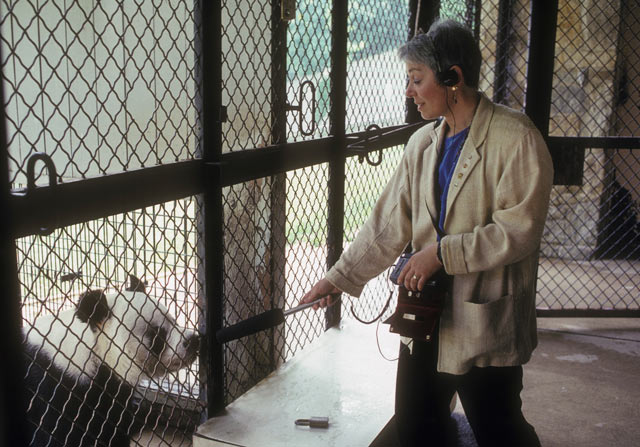
Giant Panda researcher Devra Kleiman records Hsing-Hsing’s vocalizations during breeding season, 1991, by Jessie Cohen, C-type print, National Zoo, Image ID: 614-95JC.

Conservation biologist Devra G. Kleiman (1942-2010) was the first female scientist at the National Zoological Park (NZP). She was hired by NZP in 1972 to manage the zoo’s captive breeding program. Much of her research focused on the captive breeding of giant pandas and the reintroduction of golden lion tamarins to the wild. Over her career at the zoo, she served as Assistant Director for Animal Programs, Assistant Director of Zoological Research and Education, Assistant Director of Research, Assistant Director of Zoological Research, and Senior Scientist. She authored approximately 150 manuscripts and two books.[1]

Smithsonian Institution Archives holds a large collection of archival materials documenting Kleiman’s research and professional activities. Many of her field books have been digitized in the Biodiversity Heritage Library as part of the Smithsonian Field Book Project.

Cleofé Calderón

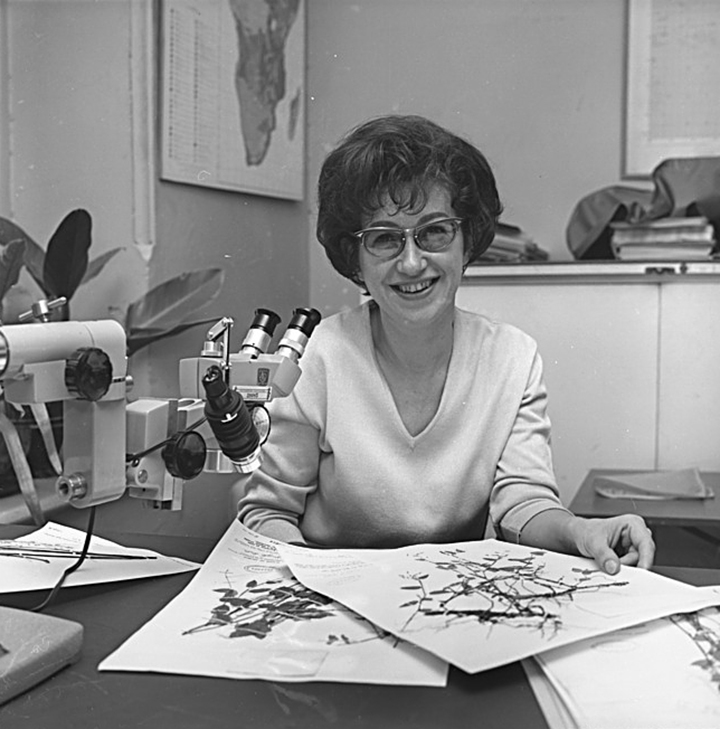
Visiting Argentine botanist Cleo Calderón with plant specimens and microscope. 1965.
From 120mm black and white negative. Smithsonian Institution Archives, SIA Acc. 11-008, Box 02, Image No. OPA-90.

Botanist Cleofé Calderón (1929-2007), born in Buenos Aires, Argentina, studied with renowned agrostologist Prof. Ing. Lorenzo Parodi at the University of Buenos Aires. She was introduced to Dr. Thomas R. Soderstrom, Curator of Grasses in the Department of Botany at the U.S. National Herbarium at the Smithsonian, during a trip to Washington, D.C. in 1961-62. The two began a close collaboration, and Calderón became a prominent botanist specializing in bamboo. With support from the Smithsonian, the Office of Scientific Affairs of the Organization of American States, and the National Geographic Society, Calderón conducted extensive field work in Central and South America, collecting plant specimens in Panama, Costa Rica, Ecuador, Colombia, and Brazil between 1966 and 1982. One of her most significant finds was the “re-discovery” of Anomochloa marantoidea, a small species of bamboo last seen in the late 1840s.[2]

Smithsonian Institution Archives holds a collection of field books documenting Calderón’s botanical research in Brazil, Panama, and Colombia between 1967 and 1981. Many of these have been digitized in the Biodiversity Heritage Library as part of the Smithsonian Field Book Project.

References

[1] Smithsonian Institution Archives. 2018. “Kleiman, Devra G.” Finding Aid, November 5. Accessed on February 28, 2019. https://siarchives.si.edu/collections/siris_arc_302446.

[2] Smithsonian Institution Archives. 2019. “Calderón, Cleofé E.” Collections. Accessed on February 28, 2019. https://siarchives.si.edu/collections/auth_per_fbr_eacp248.

March 8, 2019by michelle.underhill
Blog Reel, Featured Books

Notes from William Brewster: The Evolving Field of Zoology

As a part of the Field Notes Project, the Ernst Mayr Library is digitizing the journals, correspondences and photographs of William Brewster (1851-1919), a self-trained ornithologist and specimen curator at Harvard’s Museum of Comparative Zoology (MCZ), the first president of the Massachusetts Audubon Society, and a co-founder and president of the American Ornithologists’ Union.

Brewster recorded a lifetime of observations on wildlife and plants, changing landscapes, and daily weather, making his notes a valuable resource for modern scientists studying ecological change. After working as an animal specimen curator for the MCZ for many years, he also bequeathed his personal collection of birds and other animals to the museum.

As I’ve worked to digitize and transcribe the Brewster collection, I’ve been periodically sharing interesting finds in a blog post series on the Mayr Library website. These posts highlight entertaining animal encounters, beautiful descriptions, letters, and more.

View Full Size Image
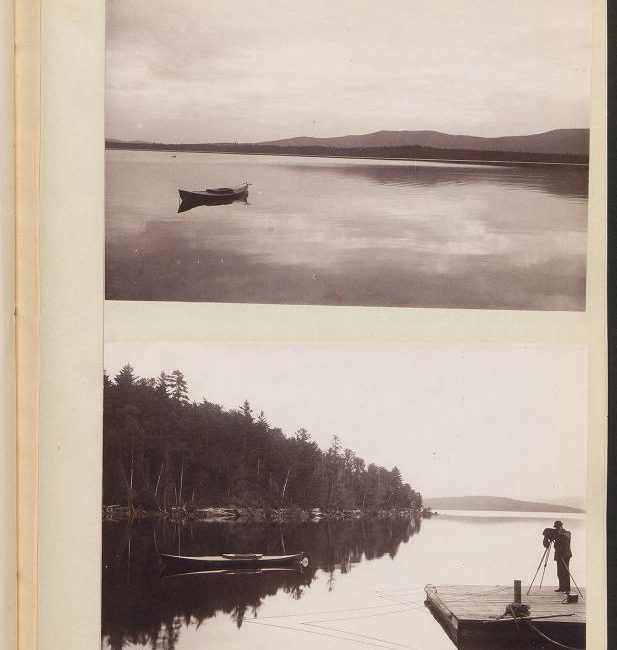
Lower image: Portrait of Brewster with his camera at
Lake Umbagog, Maine, likely captured by his assistant, Gilbert.
Journals of William Brewster, 1871-1919 (inclusive). (1898). http://biodiversitylibrary.org/page/45105729

I’ve been especially fascinated to track the development of Brewster’s thoughts on scientific collecting. I touched on this subject in a post on the Biodiversity Heritage Library blog, “Digging into the writings of a 19th century ornithologist”. As I’ve continued to scan and transcribe the Brewster collection, an interesting story has emerged. It was a complex job to juggle the hats of museum curator, scientific collector, and bird-lover.

In an 1886 letter, Brewster scoffed at the assertion that “the best was to study bird was with an opera glass!”[1] This was one decade before the Massachusetts Audubon Society for the Protection of Birds was founded, with Brewster as its first president. Despite his earlier reservations, journals from the 1890s show Brewster embracing new methods of data collection using binoculars and cameras, and reflecting critically on the future methods and goals in zoology.

While he continued to advocate for the importance of collecting wildlife specimens, Brewster increasingly felt that humans had an ethical responsibility to carefully mitigate human impact on wildlife – and this responsibility belonged to scientists, too.

View Full Size Image
Brewster returned for many years to make observations at Lake Umbagog, Maine, sometimes staying in his specially built house-boat.
The person standing on deck is probably his assistant, Gilbert. Journals of William Brewster, 1871-1919 (inclusive). (1898). http://biodiversitylibrary.org/page/45105746

In the 1890s Brewster began to consistently document a deep conflict between his desire to study nature and his desire to leave wildlife untouched. Because his field notes are typically more focused on data than on personal details, these comments really do stand out and signal that this became a matter of great concern to him. In 1892, he observes:

As on several former occasions when I have seen a Hawk catch a smaller bird and have listened to its expiring cries I was moved by deep pity and fierce wrath to an extent surprising on the part of one who, like myself, has killed thousands of birds without suffering more than an occasional slight qualm. But there is something peculiarly moving and piteous in the voice of a bird in the clutches of a Hawk – a quality of mingled pain and apprehension which the grasp of the human hand seldom or never elicits. [2]

Over the next few years, we find that he has gone from those aforementioned “occasional slight qualm[s]” to a daily struggle to complete his work. In 1896 he refers to collecting birds as “a most painful task”[3], and writes that he is sometimes “quite unable to bring [himself] to the point of doing it.” [4]

View Full Size Image
Close-up of a female moose Brewster sketched at Lake Umbagog, Maine. Journals of William Brewster, 1871-1919 (inclusive). (1896). http://biodiversitylibrary.org/page/44924677

It’s clear that Brewster saw a need for some change in the current scientific practices. Birds were generally being over-harvested, for fashion but also for science. And not only was nature conservation on his mind, but it seems that he felt personally dissatisfied by the limited scope of zoology. Brewster saw the need to legitimize observational studies of animal behavior in a scientific community that was focused primarily on taxonomy and building large collections. While he wrote many letters to colleagues debating the species and subspecies designation of specimens, his journals are brimming with descriptions and speculations about animal behaviors.

From his correspondences, we can see that his thinking was encouraged by Frank Michler Chapman, a younger friend and colleague working at the American Museum of Natural History. In 1890, Chapman had written to Brewster to express his concern that specimen collecting was destructively out of control:

This miserable collecting. It is the cause of all higher failing, it lowers a true love of nature through a desire for gain. I don’t mean a specimen here and there, but this shooting right and left, this boasting of how many skins have been made in a day or season. We are becoming pot-hunters. We proclaim how little we know of the habits of birds and then kill them at sight. Sometimes I am completely disgusted with our ways and myself in particular… I long for an outing where the gun will be secondary, recorded observations primary, where I shall be entirely alone or with a companion whose object is my object. 

We expect too much, that’s the trouble. Collecting, we have at the end of each day some tangible result to show for the day’s work. But it is useless to expect some novel or interesting incident for every day[‘]s observation. But listen to this final result: If I had gone down the Suwanee [River] to record what I saw, I could now have written a more or less interesting paper, as it is I have nothing to say, but I have a hundred or so skins. The question with me is, how am I going to change this? …We have degenerated to ‘gunners’; our success in the field is estimated by the size of our collections. 

… Will you embark with me on a novel ornithological expedition, whose aim shall be to really observe birds to learn something of them. Where the gun shall be a servant, not a master, where days may pass without a skin being made, where there will be time to speculate and discuss the habits of birds observed, where systematic observation of certain phaenomena may be attempted… Returning we could write a paper. How do you suppose this paper would compare with the ones we have to-day, where after a trip[‘]s experience all we can say concerning a given species is: Common, arrived ___.

Such a paper with your name attached to it would start a new epoch in the study of American birds. Imagine any one now-a-days making an extended trip for the sole purpose of observing birds. I know, I have several papers in mind which approach this – yours are nearest. Do you suppose we can reach that condition of mind where one good observation will be considered worth fifty skins, – as it really is. [Line breaks and emphasis added.] [5]

View Full Size Image
A page from William Brewster’s journal. Illustration reads “Made by Mr. Chapman from the feather of the ivory-bill shot March 24 and sent to me as a Christmas mount Dec. 25 1890.”
Journals of William Brewster, 1871-1919 (inclusive). (1890). http://biodiversitylibrary.org/page/44690675

Brewster was too busy with travel and fieldwork to respond directly (in writing, at least) to Chapman’s proposition, but he did reply a few weeks later, “I have been off in my canoe along the ‘South Shore’ of Mass for the past month & have made a good many valuable notes… I left the gun at home for the first time in my life and did not once regret it, either!” [6]

How amazing it was to find, in writing, a proposal to launch “a new epoch in the study of American birds”! While specimen collections are an important part of modern scientific work, it’s true that the study of zoology does look very different today than it did in the 19th century, and here we see the seeds of that change.

It would be easiest to paint Brewster as simply a taxidermist, or as an environmentalist, but as usual we find that the scientist was about as complex as the subjects he studied. Just as Brewster’s careful notes on species abundance and daily temperature are an invaluable resource for researchers, it’s enriching from a humanities perspective to uncover the personal stories that drove a major paradigm shift in the study and stewardship of natural world. While nothing quite compares to studying old documents in a quiet room, it’s exciting to be widening accessibility to these data and historical insights.

The BHL Field Notes Project is funded by the Council on Library and Information Resources (CLIR).
Images used in this post were previously digitized with funds from IMLS.

Citations:
[1] Correspondences, Letter to George Sennet, March 7, 1886. Soon to be available in BHL
[2] July 28. Journals of William Brewster, 1871-1919 (inclusive). (1892). http://biodiversitylibrary.org/page/44790847
[3] July 3. Journals of William Brewster, 1871-1919 (inclusive). (1896). http://biodiversitylibrary.org/page/44924596
[4] July 9. Journals of William Brewster, 1871-1919 (inclusive). (1896). http://biodiversitylibrary.org/page/44924608
[5] Correspondences, Frank Michler Chapman to William Brewster, June 15, 1890. Soon to be available in BHL
[6] Correspondences, William Brewster to Frank Michler Chapman, August 8, 1890. Soon to be available in BHL

Additional Resources:
To read more about Brewster’s encounter with the moose, read ‘Notes from William Brewster: Moose!‘
To learn more about how scientists use specimen collections today read ‘Natural history collections – why are they relevant?’ on The Guardian, or visit the page ‘Why Collections Matter’ on the Society for the Preservation of Natural History Collections’ website.

To learn more about the origins of the Massachusetts Audubon Society, read ‘Hats off to Audubon’ in Audubon Magazine, and the ‘History of Mass Audubon’ page on the society’s website.

April 6, 2017by lmyrick
Blog Reel, Campaigns, Featured Books

Holmes, Shells, and the Intersection of Art & Science

View Full Size Image
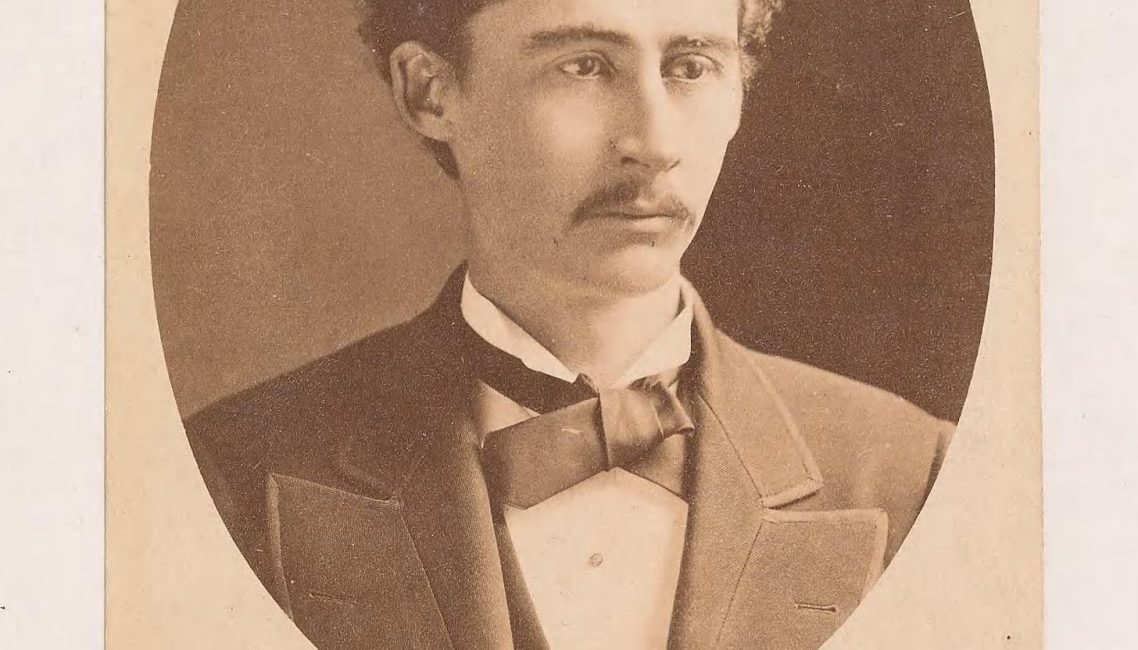
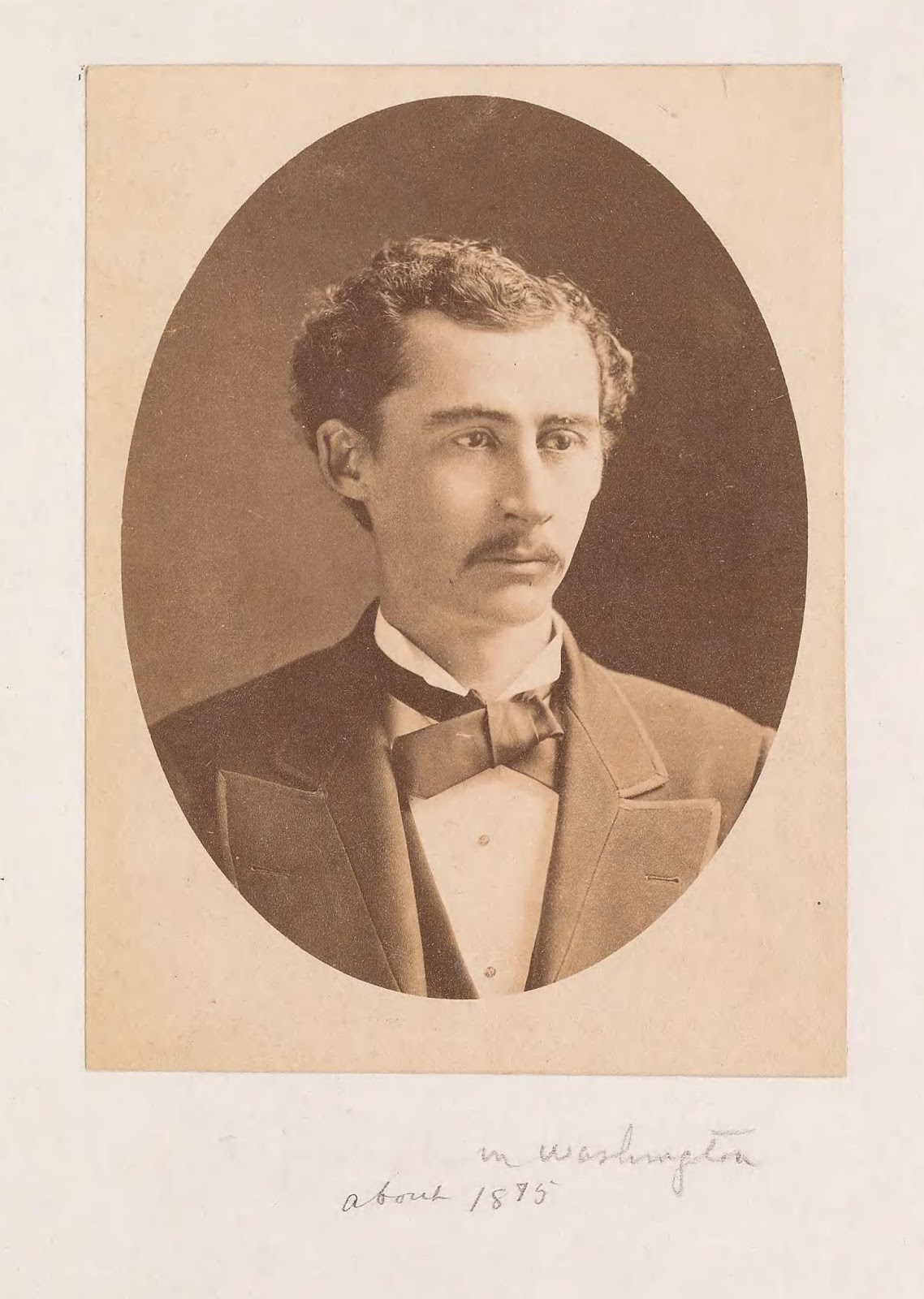
William Henry Holmes, about 1875. Random Records of a Lifetime. v. 1. http://www.biodiversitylibrary.org/page/52009570. Digitized by Smithsonian Libraries.

From November 28th through December 9th, BHL is joining the Smithsonian Libraries, Smithsonian Institution Archives, Smithsonian Field Book Project, and Smithsonian Transcription Center in hosting the #ManyHatsofHolmes transcription event. This event challenges volunteers around the world to help us transcribe William Henry Holmes’ archival materials. Learn more on the Smithsonian Libraries’ blog.

As the hashtag implies, William Henry Holmes (1846-1933) studied a variety of topics throughout his distinguished career, including anthropology, archaeology, art, and geology. He spent much of his career affiliated with the Smithsonian Institution. He studied art under Theodore Kauffman and went on to work as a scientific illustrator with Smithsonian staff. In 1872, he was appointed artist-topographer to the United States survey of the territories under Ferdinand V. Hayden and in 1874 was appointed assistant geologist. He went on to work with the United States Geological Survey (USGS) and the Bureau of American Ethnology (BAE) before returning to the Smithsonian’s United States National Museum (USNM). Holmes eventually became head curator of the Smithsonian Institution’s Department of Anthropology and Director of the National Gallery of Art.

Many of Holmes’ field notes and personal records have been digitized by Smithsonian Libraries and Smithsonian Institution Archives as part of The Field Book Project. These are available in BHL. In addition to these archival materials, BHL also holds a number of publications by Holmes.

View Full Size Image
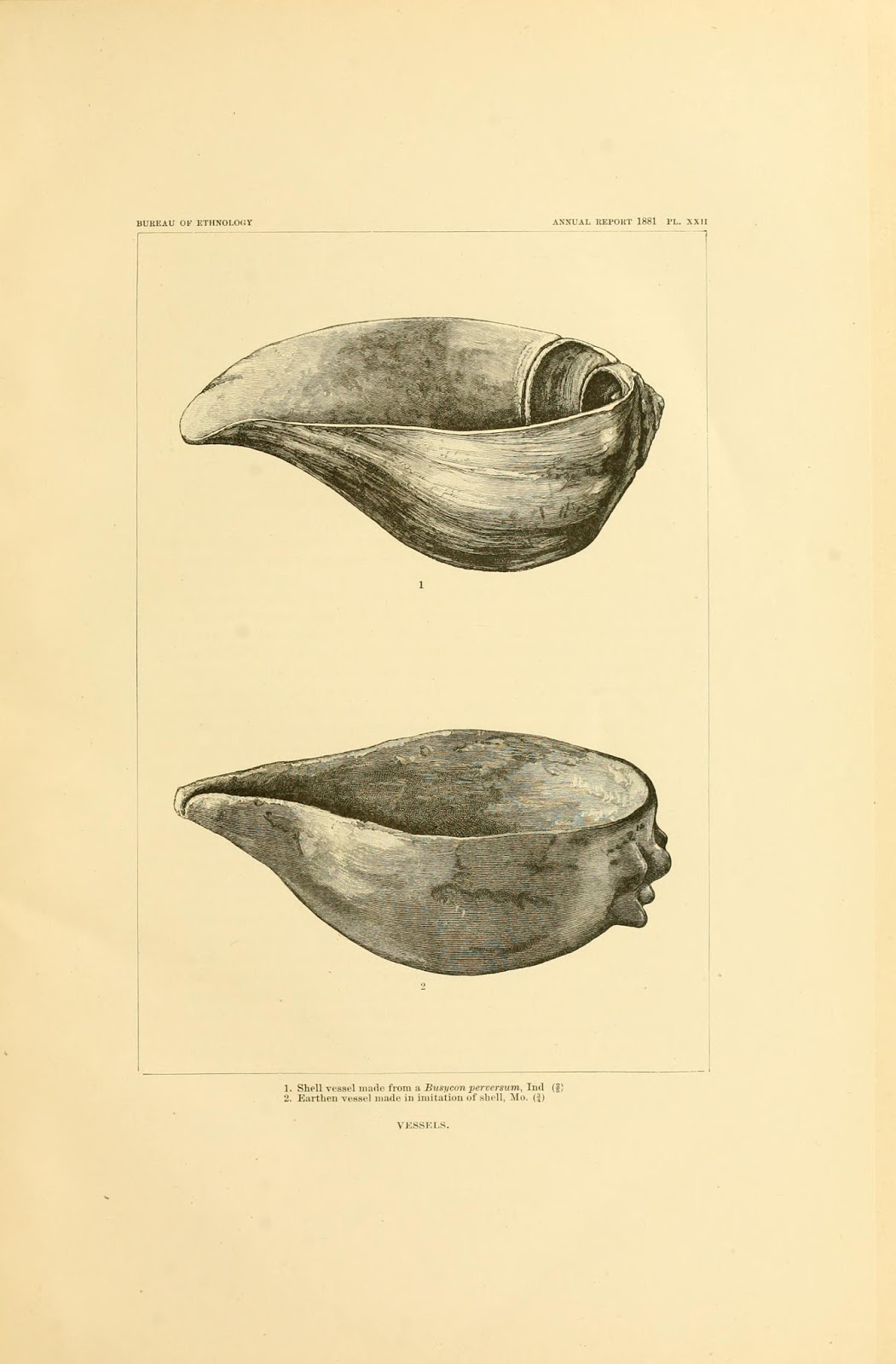
Top figure: Vessel made from a lightning whelk (Sinistrofulgur perversum) – synonym Busycon perversum – shell. Bottom figure: Earthen vessel made in imitation of a shell. Holmes, William Henry. Art in Shell of the Ancient Americans. 1883. http://biodiversitylibrary.org/page/11258636. Digitized by Smithsonian Libraries.

One of those publications is Art in Shell of the Ancient Americans, which was published in 1883 as part of the second annual report of the Bureau of Ethnology.

Holmes intended this publication to be a preliminary study of the ways in which Native Americans in the distant past used shells as a medium for artistic expression and how this artwork represents a phase in the evolution of human culture. It discusses the use of shells as implements, utensils, and objects of ornamentation (such as jewelry).

Most of the objects presented in the publication were obtained from graves and tumuli (ancient burial mounds), which explains how such delicate pieces survived throughout the centuries. But, while these pieces can be deemed ancient, Holmes did not have enough data to provide a reliable estimation of age.

At this point, you might be wondering why a book about shell art would be relevant for a biodiversity library and what bearing it might have on scientific research. The simple answer is that these shells are remnants of living creatures – mollusks that died long ago but still left behind a legacy in shell. However, Art in Shell has relevance for scientific research beyond this vague connection with the natural world.

View Full Size Image
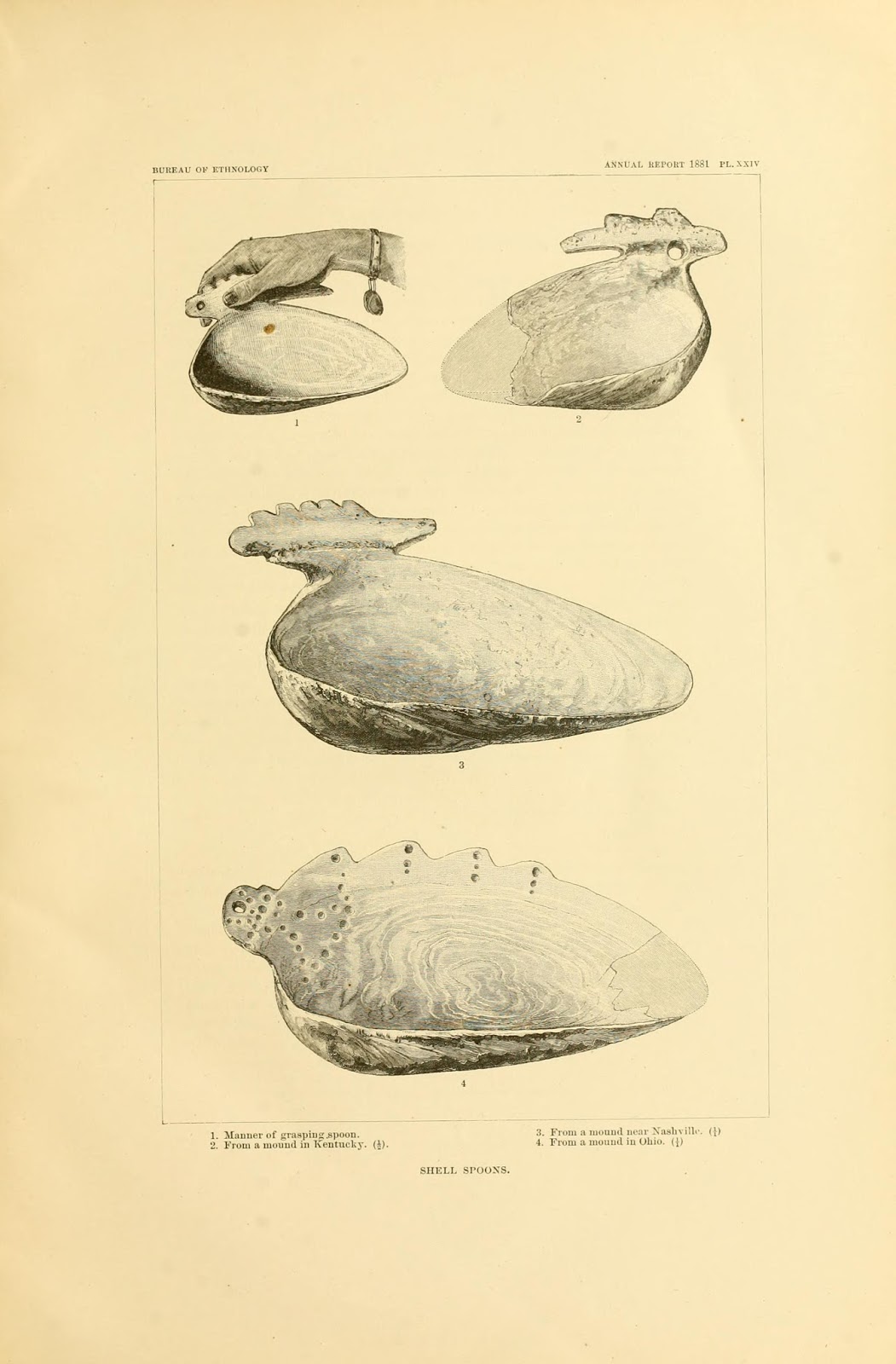
Shell spoons made from Lampsilis ovata (synonym Unio ovatus) – top and center – and Potamilus alatus (synonym Unio alatus) – bottom. Holmes, William Henry. Art in Shell of the Ancient Americans. 1883. http://www.biodiversitylibrary.org/page/11258608. Digitized by Smithsonian Libraries.

In the publication, Holmes attempts to identify the species (or most-specific taxa possible) to which the shell used for the object belongs. This information provides a valuable record of human interaction with various mollusk species and helps document the diversity of species present in ancient America. The presence of shells in various regions, when coupled with species distribution data that demonstrates the transport of these shells from their source, can also provide insight into historic Native American migration paths, tribal contacts, and trade.

Thus, this book is not just a book about art. It represents a beautiful union of art and science. And considering the many disciplinary hats that Holmes wore throughout his career, it’s no surprise that his publication would bridge these two worlds. Art in Shell is therefore not only a very fitting book to highlight as a representation of the union of Holmes’ many interests, but the insights it provides into Native American culture also make it particularly relevant this month as we celebrate Native American Heritage Month.

View Full Size Image
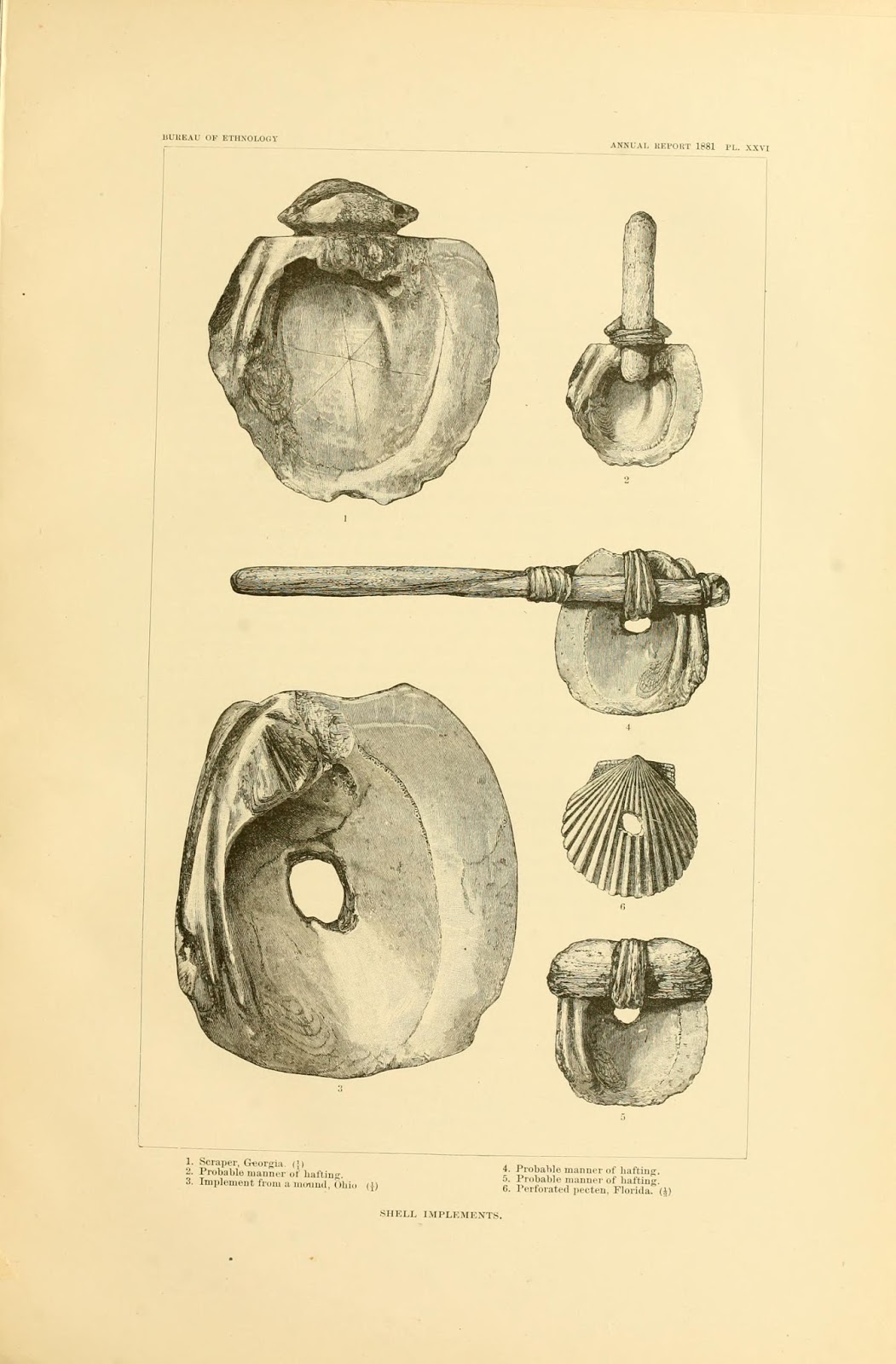
Implements made from Unio vericosus (figs. 1 and 2), Cyclonaias tuberculata (synonym Unio tuberculosus, figs. 3-5) and Pecten (fig. 6). Holmes, William Henry. Art in Shell of the Ancient Americans. 1883. http://www.biodiversitylibrary.org/page/11258618. Digitized by Smithsonian Libraries.

So, can we tie this publication back to the Random Records of a Lifetime series that is the subject of our #ManyHatsofHolmes transcription event? Holmes’ discussion about his work with shell art in these records seems to be fairly limited, but in his biographical sketch in volume I, Holmes does report that, “The years 1882-3-4 and 5 were devoted largely to Museum work and the study of primitive art in its various branches.” As Art in Shell was published in 1883, this account is likely a reference in part to his work on this publication (as well as the many others on ancient American art that he produced during this time period).

As you participate in the challenge, can you find additional references in the Random Records that can be linked back to Art in Shell? If you do, share them on social media with #ManyHatsofHolmes.

Additionally, if you need a break from transcription or want another challenge, try taxon tagging the illustrations from Holmes’ Art in Shell on Flickr. By tagging the shell art with the taxonomic name of the species to which the shell belongs, you can help researchers more easily discover which species ancient Americans were using to create these objects. Learn more about taxon tagging in this article and see our detailed instructions here. Find the Art in Shell images in Flickr here.

See this video for basic instructions on how to tag the illustrations in Art in Shell:

Holmes was truly a man of many trades and talents. As you dig deeper into his work during the #ManyHatsofHolmes event, be sure to share your findings on social media with the hashtag. Thanks so much for participating in our Holmes extravaganza!

View Full Size Image
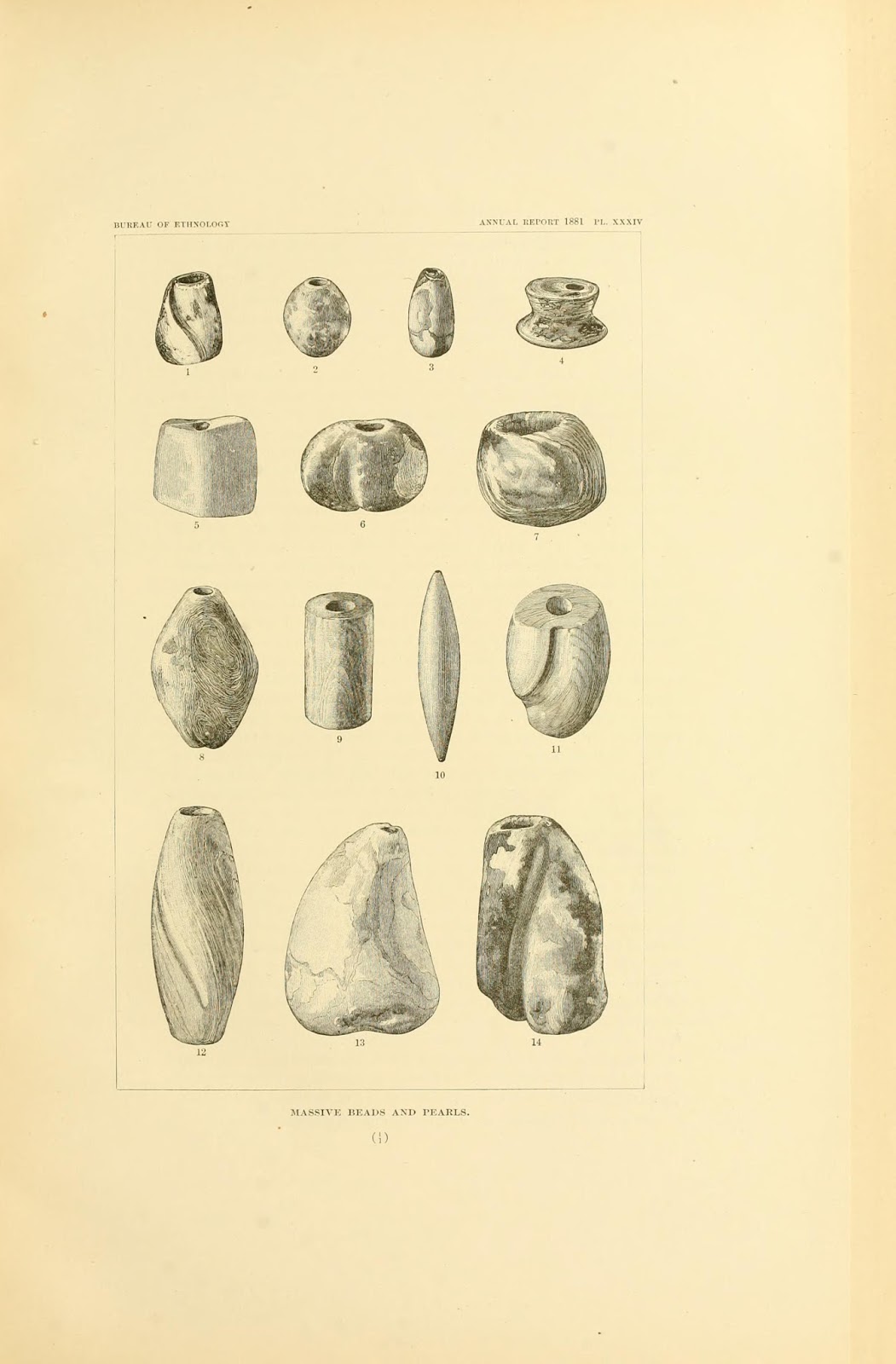
Beads and pearls. Figs. 1, 7, 12, and 9: Sinistrofulgur perversum (synonym Busycon perversum); Fig. 2: Crassadoma gigantea (synonym Hinnites giganteus); Fig. 3 and 13: pearls, latter from Haliotis californianus; Fig. 4: unknown univalve; Fig. 5: ivory?; Figs. 6 and 11: unknown dextral whorled shell; Fig. 14: Strombus or Busycon. Holmes, William Henry. Art in Shell of the Ancient Americans. 1883. http://www.biodiversitylibrary.org/page/11258675. Digitized by Smithsonian Libraries.
November 30, 2016by michelle.underhill
Blog Reel, Featured Books

Digging into the personal writings of a 19th century ornithologist

Tuesday, June 12, 1866 
A.M. pleasant P.M. cloudy. Studied part of P.M. Went to circus in evening & saw a hippopotamus for the first time. Got four warbling vireos before breakfast. The algebra is now rather hard. 
(Diaries of William Brewster). 

View Full Size Image
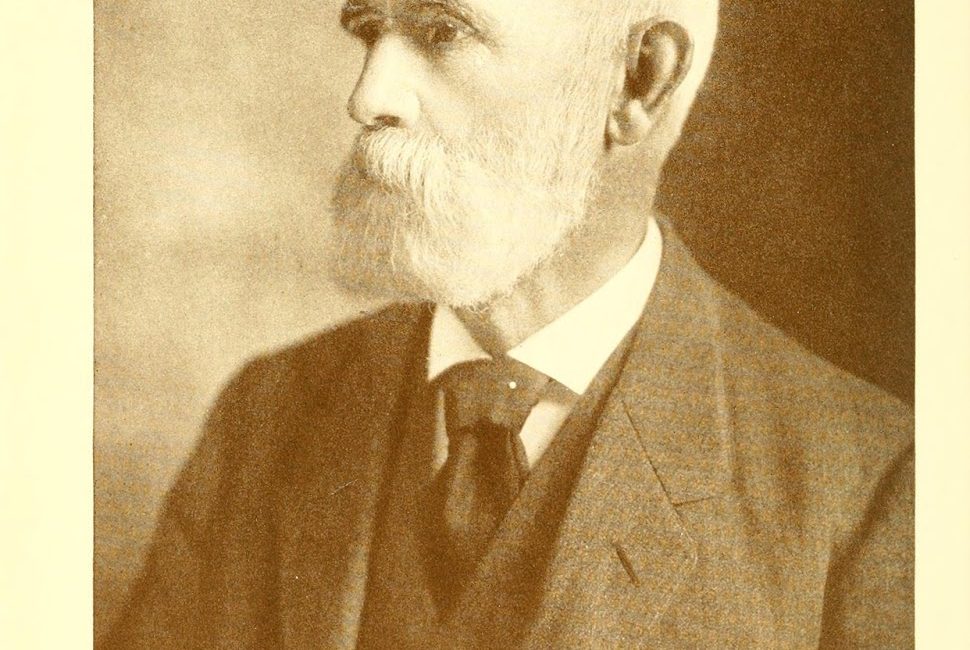
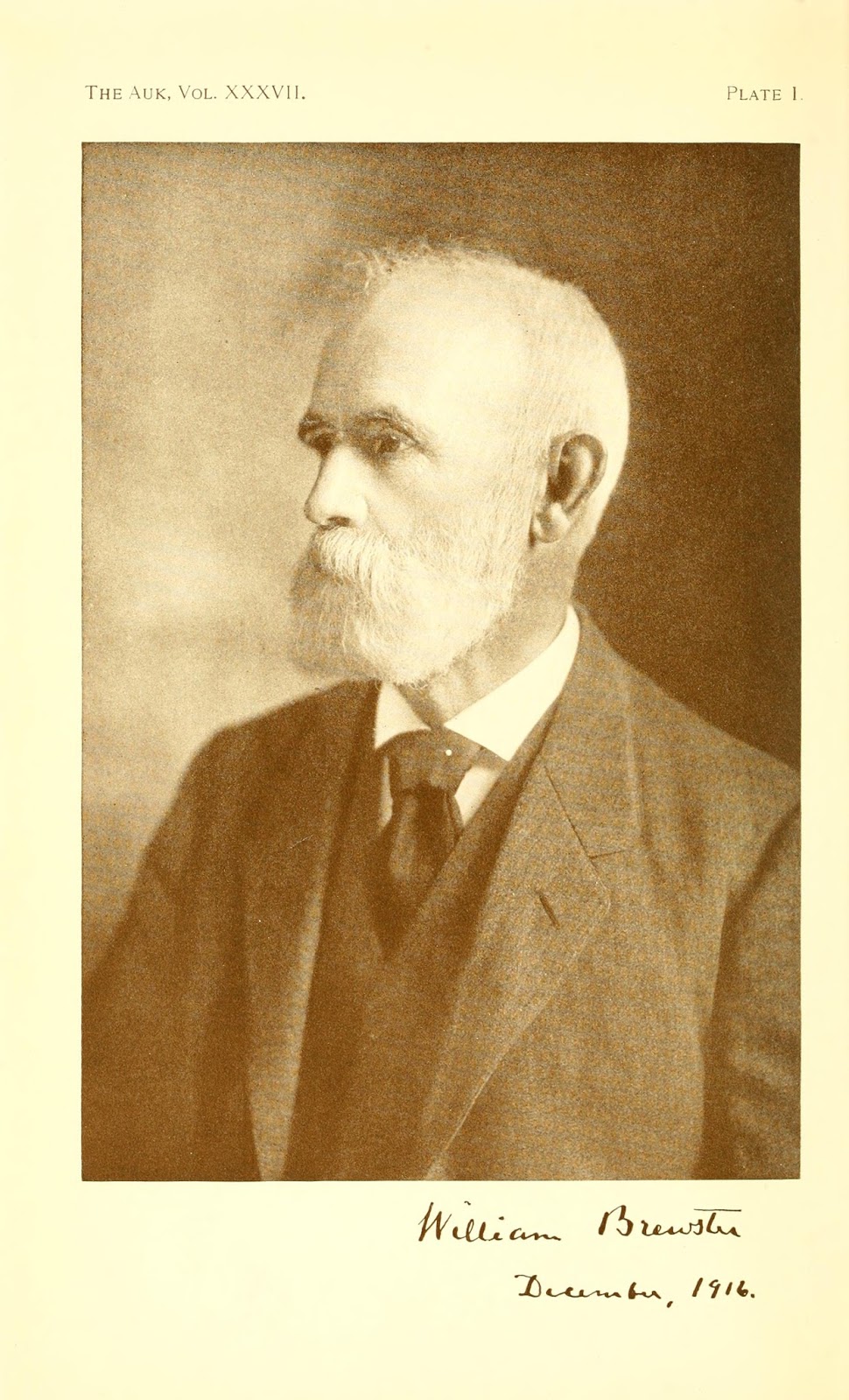
William Brewster. The Auk. v. 37 (1920). Digitized by Smithsonian Libraries. http://biodiversitylibrary.org/page/15938473

As a teen in Cambridge, Massachusetts during the 1860s, William Brewster (1851-1919) woke up early to collect birds before school, practiced taxidermy with friends, and carefully noted the dates when local plants flowered and produce ripened in the family garden.

His early fascination for birds and his observant note-taking laid the groundwork for his career as a prominent amateur ornithologist. He would become the first president of the Massachusetts Audubon Society and a co-founder and president of the American Ornithologists’ Union.

An ongoing project at the Ernst Mayr Library of Harvard University’s Museum of Comparative Zoology has been the digitization and transcription of Brewster’s diaries, field journals, and correspondences. Some of these journals and diaries are available to read on the Biodiversity Heritage Library, and we are working toward making all his notes and correspondences digitally accessible for study.

Over the course of his life, Brewster saw Massachusetts landscape and ecology change dramatically. Cambridge developed from farmland to urban city, and House Sparrows introduced from Europe decimated the farmers’ beloved Eastern Bluebirds. These kinds of observations about land use and animal presence, as well as his notes on plants and weather, make the Brewster collection a valuable resource for scientists studying ecological change.

Brewster published articles prolifically in scientific publications such as the ornithological journal, the Auk. In his field notes and journals, we can find the stories that lie behind those scientific papers: they document the development of a scientist, professionally and personally. They reveal his relationships with other scientists, document in detail what a typical day’s work looked like, and are sprinkled with amusing observations, beautiful scenes, and personal insights that would not necessarily be documented in a scientific publication.

These three bird stories illustrate the value of records where the scientific and the personal overlap.

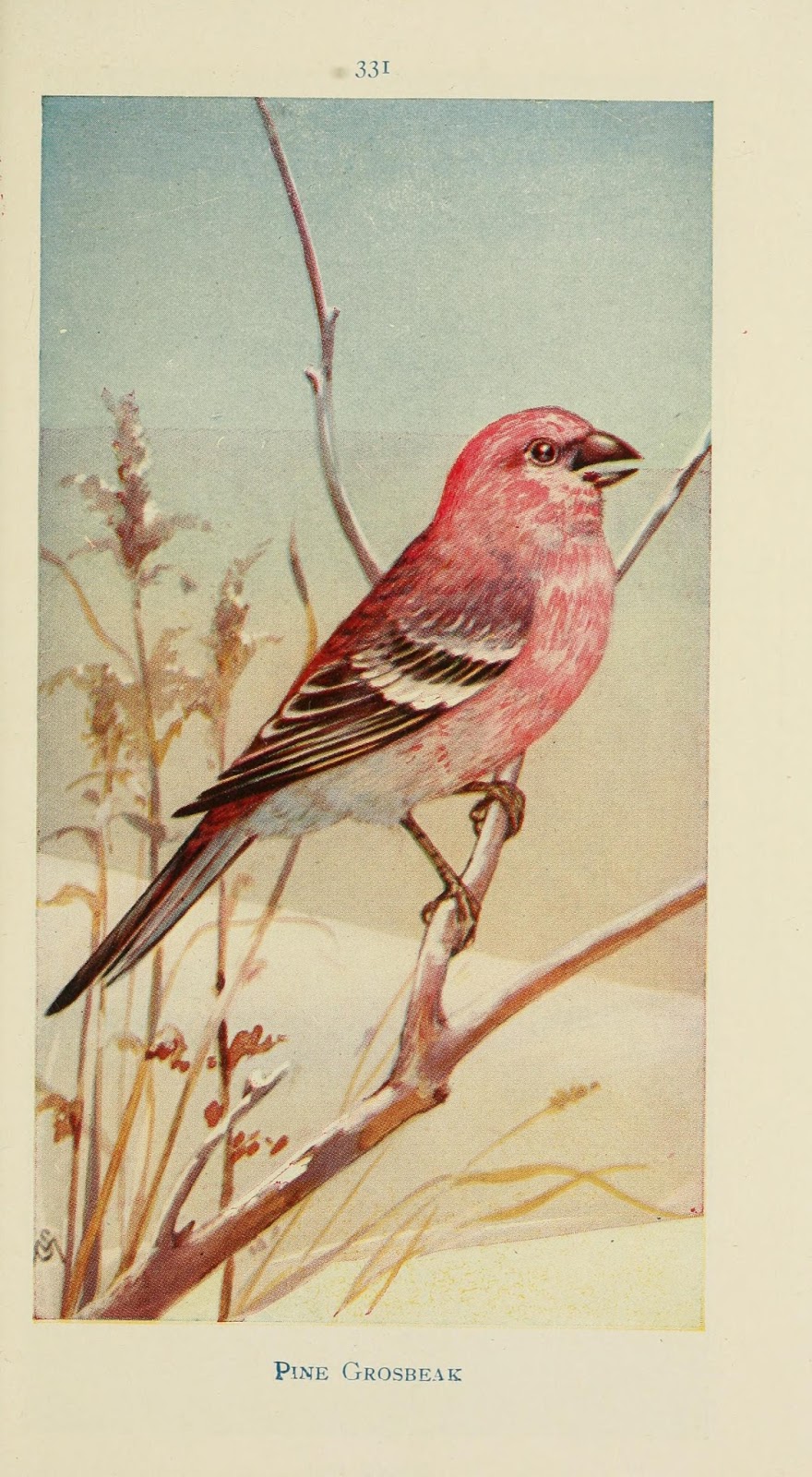
Pine Grosbeak: Nature Writing and Scientific Work

View Full Size Image
Pine Grosbeak illustration from Field book of wild birds and their music. London, G.P. Putnam’s Sons [c1921]. Digitized by Smithsonian Libraries. biodiversitylibrary.org/page/13653735

For a few days in January of 1893, Cambridge and Boston were abuzz with an unfamiliar sight: hundreds of red and gold birds that drew lots of attention from residents.

Brewster recognized them as Pine Grosbeaks. In the winter, large foraging flocks of Pine Grosbeaks often strip entire trees of their fruits, crushing through pulp and seeds and moving on when the food source has been exhausted.

Brewster observes:

“There were a good many Pine Grosbeaks scattered along the line of ashtrees on the ridge to my left and as I approached Mt. Auburn Street their numbers increased until upon reaching Mr. Hayes’s place I found the trees literally alive with them. 

Soon after I stopped to look at them they began flying from every direction into a large white ash which stands near the foot of the avenue. This tree was loaded with fruit and with snow clinging to the fruit clusters and to every twig. In a few minutes it supported also more than a hundred Grosbeaks which distributed themselves quite evenly over every part from drooping lower to the upright upper branches and began shelling out and swallowing the seeds.

The rejected wings floated down in showers and soon began to give the surface of the snow beneath a light brownish tinge.The snow clinging to the twigs and branches was also quickly dislodged by the movements, of the active, heavy birds and for the first few minutes it was continually flashing out in puffs like steam from a dozen different points at once. The finer particles, sifting slowly down, filled the still air and enveloped the entire tree in a gauzy veil or mist tinted, where the sun-beams pierced it, with rose, salmon and orange, elsewhere of a soft, dead white and of incredible delicacy and beauty, truly a fitting drapery for this winter picture- the hardy Grosbeaks at their morning meal. 

They worked in silence when undisturbed and so very busily that at the end of an hour they had actually eaten or shaken off nearly half the entire crop of seeds. Some men employed in a marble cutter’s shop near the tree were neglecting their tasks to watch and discuss them. One of these men told me that a few Grosbeaks were seen in the tree late yesterday afternoon.” (Cambridge, January 10, 1893.) [Edited with paragraph breaks and punctuation for readability.] 

A sudden, unexpected appearance of a large flock non-resident birds is known in the ornithological world as an irruption. (In recent years in Massachusetts, we’ve often heard the word irruption used to describe an unexpected influx of snowy owls that aren’t our usual residents.) Details on a historical irruption of Pine Grosbeaks may be of value to modern day scientists looking back in time for trends.

But while Brewster often recorded bird sightings as lists or in simple, factual paragraphs, some of the scientific observations are rendered with an artistry that carries them into the genre of nature writing. The image of the tree alive with birds, the rosy quality of light in the snowy air, and the excitement of the marble cutters makes these bird notes especially memorable.

The journal entries for these days form the basis of an article he had published in the Auk two years later, ‘A remarkable flight of Pine Grosbeaks (Pinicola enucleator)’. While Brewster’s article reads as somewhat more fact-driven, it’s written as a personal narrative that draws heavily on his notes, and it contains a condensed version of the visual description shared above.

It seems to be fairly normal at that time for published scientific work to include personal narrative and assertions which we would edit out today. But letters between Brewster and ornithologist friends reveal that they critiqued each other’s work not only on the reliability of their data but also on the style of their prose. Brewster’s scientific journals suggest that personal note-taking was a crucial opportunity to practise the art of writing, and digging into these journal entries allows us a glimpse into a scientist’s thinking and writing process.

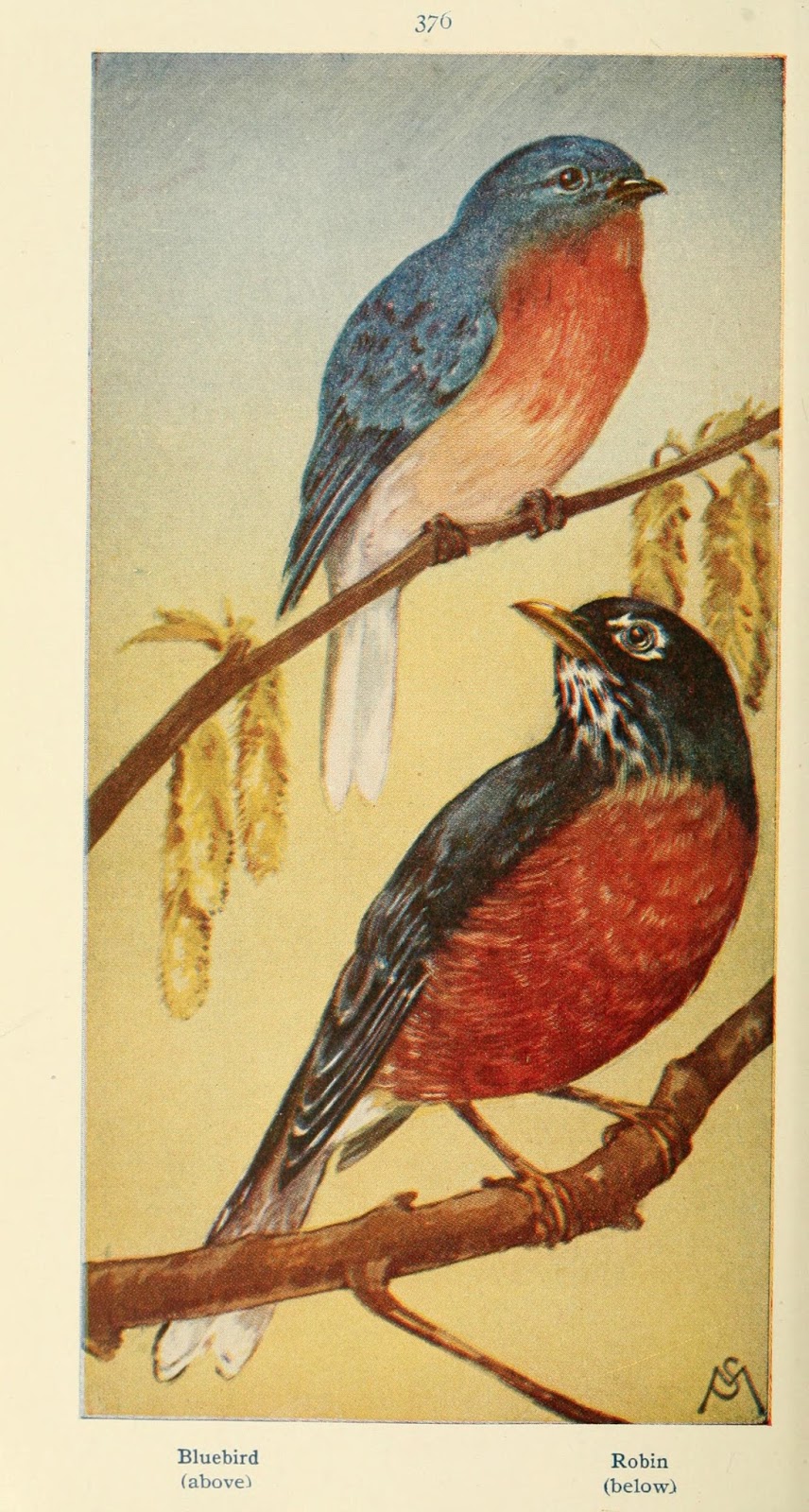
American Robin: Personal Musings and Anthropomorphization

View Full Size Image
Bluebird and American Robin illustration from Field book of wild birds and their music. London, G.P. Putnam’s Sons [c1921]. Digitized by Smithsonian Libraries. biodiversitylibrary.org/page/13653780

Brewster carefully documented wild encounters with blow-by-blow details about animals’ behavior. Beyond behavioral data, his personal writings also include his interpretations of animal ‘personalities’ that reveal both his scientific perspective on animal cognition, and his personal feelings about interactions with animals.

Take for example this short but resonant excerpt from a letter penned to a friend:

“It is sunset and as I sit in my study in the Museum a Robin is singing in an elm in the garden. What a hopeful, earnest strain! It always cheers and encourages me. Our Robin must have a brave heart and a pure conscience.” (William Brewster, March 26, 1893. Cambridge, Mass. in correspondence to his friend, ornithologist Frank Michler Chapman.) 

His comment on the “brave heart and a pure conscience” certainly isn’t a piece of scientific data (it’s anthropomorphization, an interpretation of animal behaviors using the logic of human emotions) –but it unearths a very human part of the story to consider how a natural scientist reacted emotionally to his subjects in daily life.

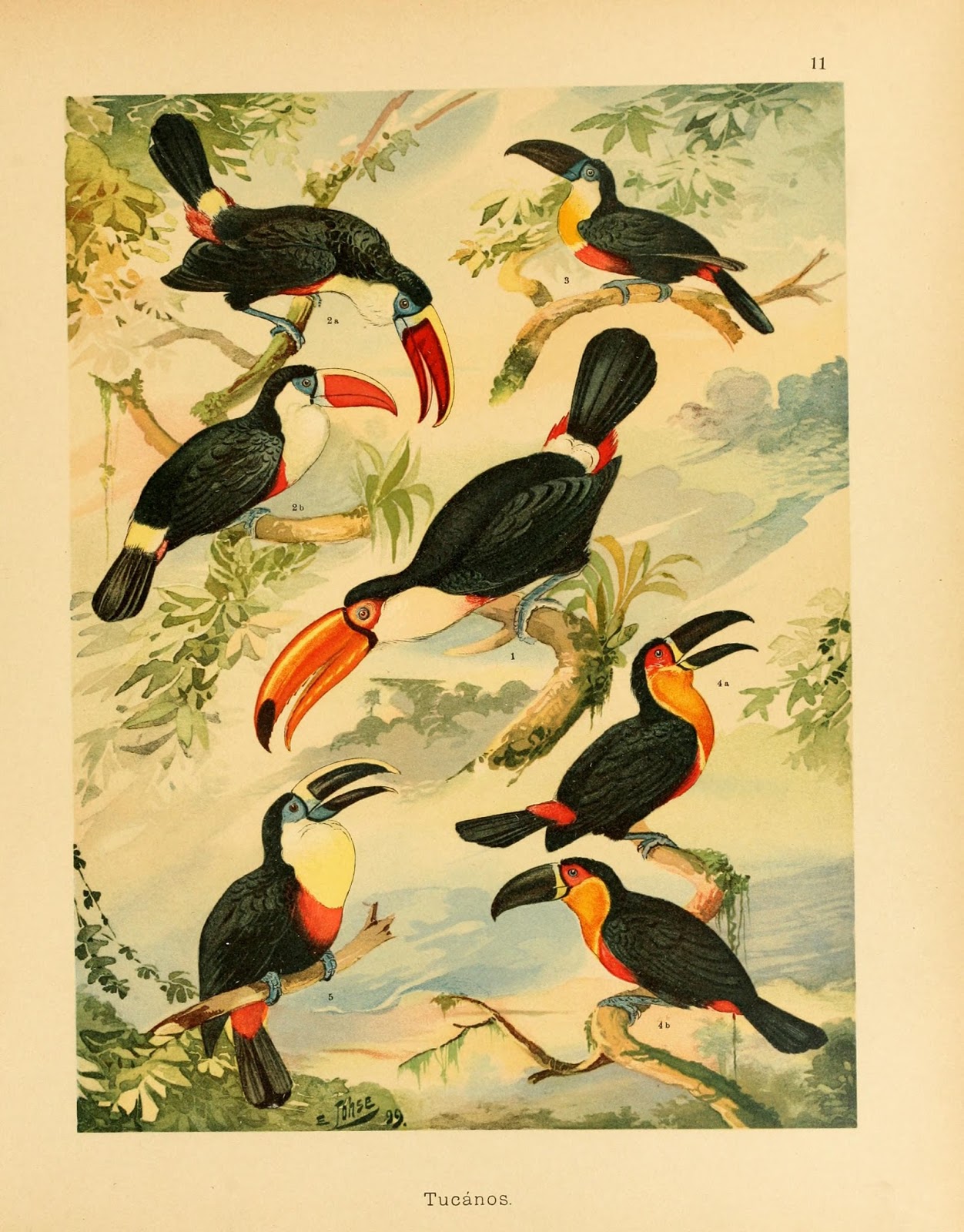
Toucan: Perspectives on Scientific Collecting

View Full Size Image
Toucan illustration from Album de aves amazonicas. Zürich: Impressão do Instituto Polygraphico a.g., 1900-06. Digitized by Smithsonian Libraries. biodiversitylibrary.org/page/13804665

If you’ve ever browsed the galleries at Harvard’s Museum of Natural History, then you’ve passed by Brewster’s life’s work. After working as an animal specimen curator for the museum for many years, he also bequeathed his personal collection of birds and other animals to the museum.

Taxidermy collections like Brewsters’ are the foundation of zoology and are invaluable for scientific researchers today. For example, scientists can analyse DNA samples from historic specimens to track evolutionary changes, and look for traces of environmental chemicals such as pesticides to learn more about their ecological impact. (These are just two of many ways that collections can be used for beneficial research–to learn more, read ‘Natural history collections – why are they relevant?’ on The Guardian, or visit the page ‘Why Collections Matter?’ on the Society for the Preservation of Natural History Collections’ website.)

While Brewster strongly advocated for the importance of scientific collecting, his journals also illustrate changes in his collecting practices over time, including the adoption of complementary methods like photography.

In March 1886, just a month after the Massachusetts Audubon Society for the Protection of Birds had organized, Brewster wrote three letters to an ornithologist friend, describing an early attempt to pass bird protection legislation in Massachusetts. Brewster advocated in court for a bill that would ban the hunting of birds for decorative use on women’s hats, but allow scientific collection by permit-holders.

In one of these letters, he scoffs at the idea of only studying birds observationally:

“One of these [Fish & Game Commissioners]… announced at the beginning that he considered Science a humbug and that the best was to study bird was with an opera glass!” (Cambridge, March 7, 1886. Letter to George Sennet.) 

However, his journals reveal that around the 1890s he seems to have developed some mindfulness of how damaging over-hunting could be for animal populations. Around this time he began to collect birds more sparingly and took up the challenge of wildlife photography in the field.

An interesting example of this shift in his attitude occurred during an 1894 collecting trip to the tropics:

“I started out early this morning with the express intention of shooting a toucan. Rather curiously I had at once an opportunity which I did not improve and shortly afterwards a experience which is probably rare for Mr. Chapman [Frank Chapman] has seen nothing of the kind, nor has Mr. Carr either for that matter. 

It all happened in this [way]. I went first to the ajoupa to get my collecting basket and while there heard a toucan calling apparently at a considerable distance. I started in the direction of the sound but I had gone scarce twenty yards when I became conscious that it came from nearly over head. 

Looking up I at once saw the beautiful great bird sitting in the top of a bois immortel its breast turned towards the rising sun which brought out the brilliant colouring of the plumage, the shining black of the large bill and the blue of the bare skin about the eyes with the greatest distinctness. 

Here was my chance for the bird was not thirty yards off but I simply stood and stared at him with speechless wonder and admiration until he finally flew, when the dense cacao foliage prevented my getting a shot. 

Clearly a case of Toucan “fever” but I did not regret the episode.” (Trinidad, March 20, 1894.) [Edited with paragraph breaks and punctuation for readability.] 

* * *

The Brewster collection, and other field journals and notes, contain a wealth of information beyond useful scientific data. They reveal scientific paradigms, study methods and reasoning; information about working relationships between scientists; and historical and biographical information, including personal thoughts and feelings. Some sections can be fairly dry, but some make for pretty good reading.

If you’ve enjoyed these excerpts, an ongoing blog post series on Mayr Library blog highlights interesting tidbits from Brewster’s writing as we continue to digitize and transcribe the collection.

July 1, 2016by ulib-libraryjobs
BHL News, Blog Reel

We Challenge You to #DigIntoDyar

This post originally published on the Smithsonian Libraries blog Unbound. 

Important entomological work. The Bahá’í faith. Secret tunnels under Washington, DC. What do all of these elements have in common? Curiously, Smithsonian scientist Harrison Gray Dyar, Jr..

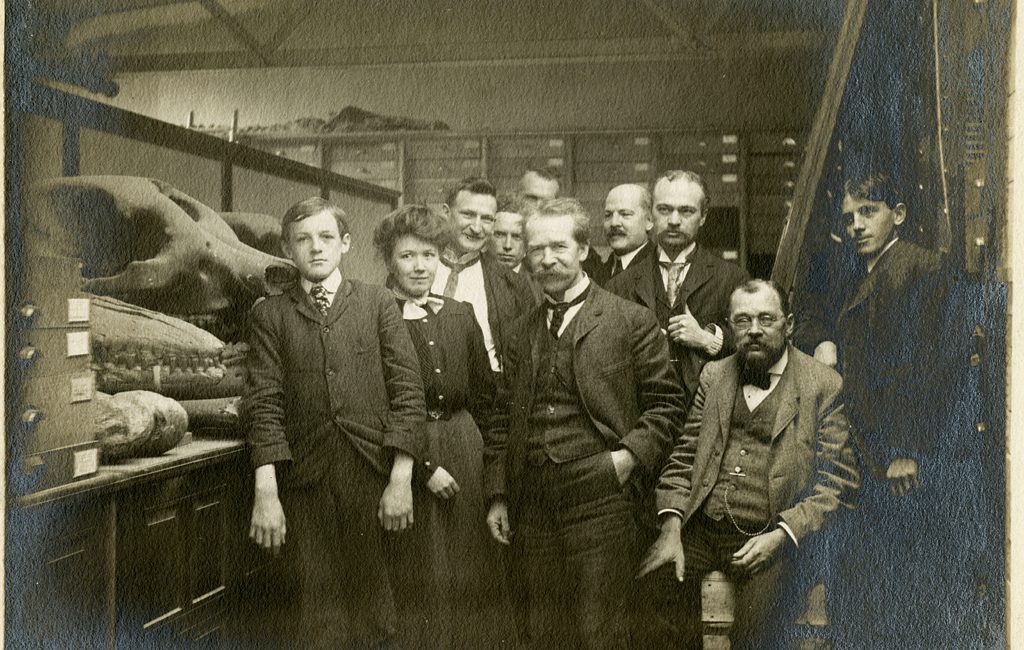
Dyar, Honorary Custodian of Lepidoptera at the United States National Museum (now, National Museum of Natural History) for over 30 years, was a prolific entomologist – studying sawflies, moths, butterflies and mosquitos and publishing his findings. He described hundreds of species and genera and brought new ones to light. “Dyar’s Law”, a standard rule used to measure premature insects, is named in his honor.

View Full Size Image
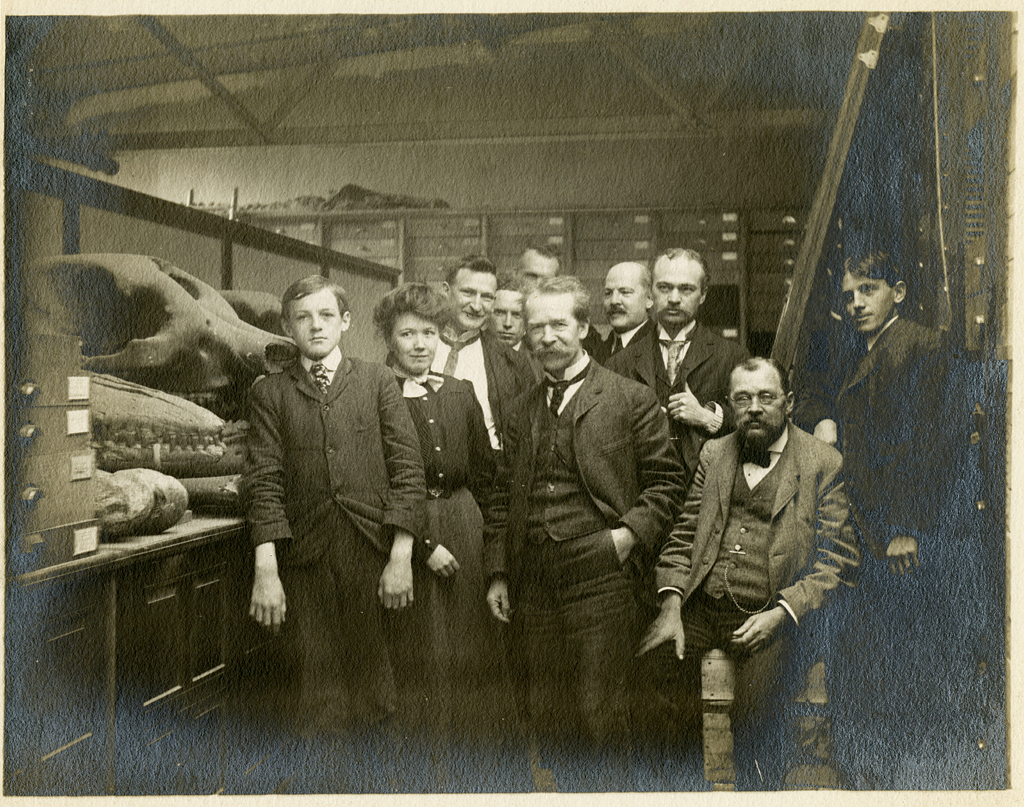
Harrison G. Dyar, Jr., third from right, with Entomology staff of the U.S. National Museum in 1905. Courtesy of Smithsonian Institution Archives.

Yet, the work of this successful entomologist is often overshadowed by his fascinating personal life. Dyar was a bigamist and consequently dismissed from the USDA for conduct unbecoming of a federal employee. He practiced the Bahá’í faith, a movement that seeks to reconcile science with religion. And perhaps most newsworthy: he dug a series of mysterious tunnels beneath his home in Northwest DC. Tunnels that many believed were the work of spies until Dyar finally fessed up.

Starting today, you can be a part of the scientific legacy of this interesting figure in Smithsonian science. The Smithsonian Institution Archives has uploaded five volumes of Dyar’s “blue books” (notebooks in which he jotted down scientific observations) to the Smithsonian Transcription Center. Volunteers are encouraged to dive into the books and help us transcribe Dyar’s work for future study.

View Full Size Image
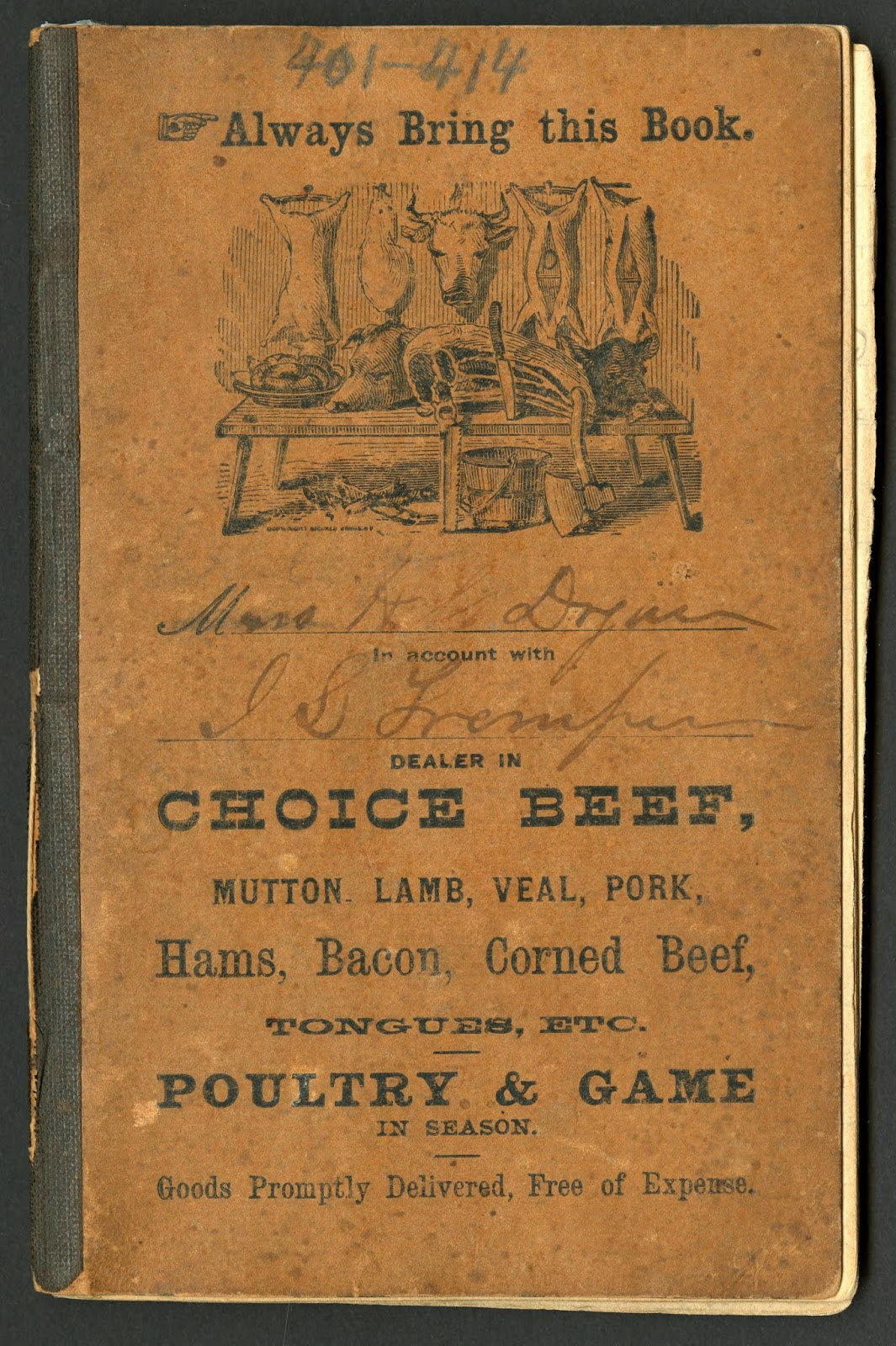
Cover of “Bluebook 401-414”, by H.G. Dyar. Digitized by Smithsonian Institution Archives. http://biodiversitylibrary.org/page/46177763.

From now until May 20th, we’ll be encouraging everyone to #DigIntoDyar with a series of blog posts about Dyar’s work as well as a live Google Hangout on May 17th (2:30, EDT). Both will feature National Museum of Natural History research associate and Dyar biographer, Marc Epstein. Marc, who recently published Moths, Myths and Mosquitos: The Eccentric Life of Harrison G. Dyar, Jr., will help us understand Dyar’s work, his sordid personal life, and his legacy.

View Full Size Image

Along the way, we’ll be sharing other tidbits and images via social media. We hope you’ll tune in as we #DigIntoDyar and learn more about this fascinating part of Smithsonian history.

You can browse Dyar’s field notebooks in BHL, digitized by Smithsonian Institution Archives as part of the Field Book Project. Below are the BHL links to the field notes that are part of this challenge, as well as the links to those projects in the Smithsonian Transcription Center to help you get started transcribing right away!

Happy Digging!

H. G. Dyar – Bluebook 401- 414, 1893-1894 | https://transcription.si.edu/project/8144
H. G. Dyar – Bluebook 415-435, 1893-1894 | https://transcription.si.edu/project/8145
H. G. Dyar – Bluebook 436-450, 1893-1894 | https://transcription.si.edu/project/8146
H. G. Dyar – Bluebook 451-473, 1894 | https://transcription.si.edu/project/8147
H. G. Dyar, Bluebook 474-491, 1894-1897 | https://transcription.si.edu/project/8148

May 13, 2016by ulib-libraryjobs
Page 1 of 3123»

Help Support BHL

BHL's existence depends on the financial support of its patrons. Help us keep this free resource alive!

search

About BHL

The Biodiversity Heritage Library (BHL) is the world’s largest open access digital library for biodiversity literature and archives. BHL operates as a worldwide consortium of natural history, botanical, research, and national libraries working together to digitize the natural history literature held in their collections and make it freely available for open access as part of a global “biodiversity community.”

Join Our Mailing List

Sign up to receive the latest news, content highlights, and promotions.

Subscribe Now

Subscribe to Blog via Email

Enter your email address to subscribe to this blog and receive notifications of new posts by email.

Join 319 other subscribers

Subscribe to Blog Via RSS

Subscribe to the blog RSS feed to stay up-to-date on all the latest BHL posts.

Access RSS Feed

Inspiring Discovery through Free Access to Biodiversity Knowledge.

The Biodiversity Heritage Library makes it easier than ever for you to access the information you need to study and explore life on Earth…for free, anytime, anywhere.


64+ Million Pages of
Biodiversity Literature Online.

EXPLORE

Tools and Services
to Transform Research.

EXPLORE

300,000+
Illustrations on Flickr.

EXPLORE

ABOUT | HARMFUL CONTENT | PRIVACY | SITE MAP | TERMS OF USE