Biodiversity Heritage Library - Program news and collection highlights from BHL
  • Home
  • News
  • Featured Books
    • All Featured Books
    • Book of the Month Series
    • BHL at 20
  • User Stories
  • Campaigns
    • Fossil Stories
    • Garden Stories
    • Monsters Are Real
    • Page Frights
    • Her Natural History
    • Earth Optimism 2020
  • Tech Blog
  • Visit BHL
Home
News
Featured Books
    All Featured Books
    Book of the Month Series
    BHL at 20
User Stories
Campaigns
    Fossil Stories
    Garden Stories
    Monsters Are Real
    Page Frights
    Her Natural History
    Earth Optimism 2020
Tech Blog
Visit BHL
  • Home
  • News
  • Featured Books
    • All Featured Books
    • Book of the Month Series
    • BHL at 20
  • User Stories
  • Campaigns
    • Fossil Stories
    • Garden Stories
    • Monsters Are Real
    • Page Frights
    • Her Natural History
    • Earth Optimism 2020
  • Tech Blog
  • Visit BHL
Biodiversity Heritage Library - Program news and collection highlights from BHL
Blog Reel, Featured Books

Book of the Week: The Sealers and Antarctica

Portrait version of the Biodiversity Heritage Library logo.

View Full Size Image
The lure of Antarctica has been captivating humans for hundreds of years, centuries even before the discovery of such a landmass occurred. Discussions about the existence of such a place were proposed as early as the first century AD, when Ptolemy suggested that there must be a giant landmass to the south serving to counterbalance the mass of the giant northern lands (Europe, Asia and North Africa) and preserve symmetry in the world. Following such proclamations, maps constructed as early as the 1500s began portraying a giant continent in the mysterious southern reaches of the globe. However, while belief in the existence of this southern continent permeated antiquity, it was not until the 1800s that confirmation of such a place actually occurred.

The famed Captain James Cook came within seventy-five miles of the illusive landmass in January 1773 before he was forced to abandon the effort in the face of the water’s icy threats to his vessels. Later, remarking upon his failure to sight the fabled continent, Cook wrote,
“The risque one runs in exploring a coast, in these unknown and icy seas, is so very great that no man will ever venture further than I have done.”

Fortunately, for history’s sake, Cook was proven wrong some fifty years later, when the first confirmed sightings of Antarctica occurred. History narrows the first sighting, in 1820, down to three possible candidates: Fabian Gottlieb von Bellingshausen of the Russian Imperial Navy, Edward Bransfield of the Royal Navy, and Nathaniel Palmer, an American sealer. Though somewhat disputed, the first documented landing on Antarctica occurred on February 7, 1821, when the American sealer John Davis set foot on West Antarctica.

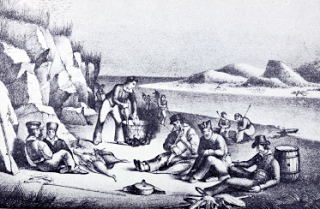
Exploration of this great icy land, and conflicting territorial claims, have continued for the nearly two centuries since the confirmed discovery of Antarctica, but many are soon to forget that early extensive interaction with this frozen wasteland cannot be accredited to scientists and the great naval powers of the world, but to sealers who flocked to the “South Shetland Islands,” as they called them, to collect fur seal pelts. This week’s book of the week, The Voyage of the Huron and the Huntress: The American Sealers and the Discovery of the Continent of Antarctica, documents the extraordinary daring of these early seamen, and their contributions to the scientific knowledge since amassed. As the text so eloquently expresses:

“On this fringe of Antarctic seas, [the sealers] established camp and rendezvous, sailing through the ice-filled channels and along the rocky shores of the desolate islands…here they braved the unknown dangers of the icy, uncharted waters to the south, becoming the first among men to sight, recognize and land where rise the snowy mountains of the last great continent – Antarctica.”

This week’s Book of the Week, The Voyage of the Huron and the Huntress: The American Sealers and the Discovery of the Continent of Antarctica (1955), was contributed by the Marine Biological Laboratory, Woods Hole Oceanographic Institution.
January 25, 2010by michelle.underhill
Blog Reel, Featured Books

Book of the Week: Botanical Illustrations

View Full Size Image
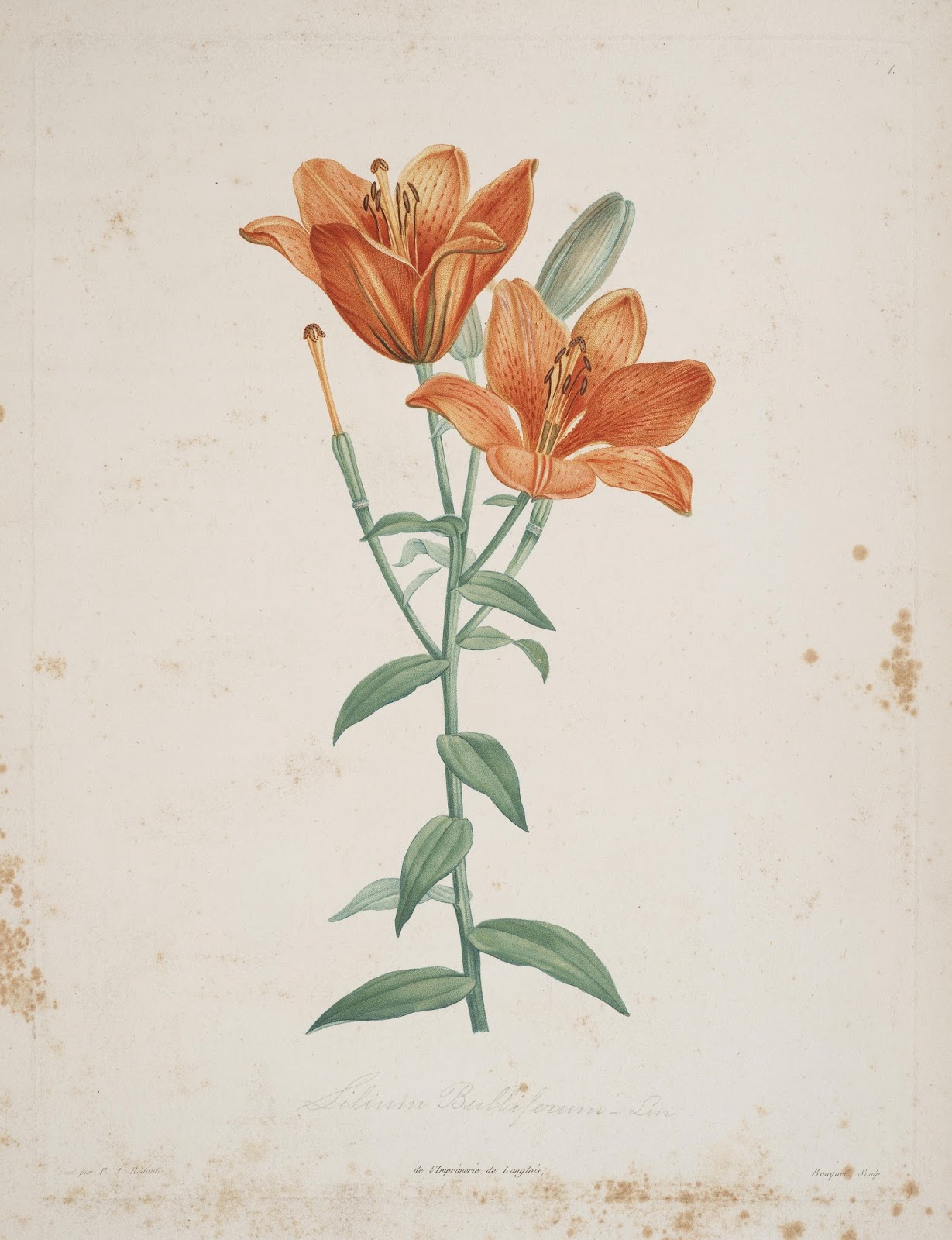
Rousseau, Jean-Jacques. La botanique de J.J. Rousseau. 1805. Digitized by the Missouri Botanical Garden. http://biodiversitylibrary.org/page/6164734.

The history of botanical taxonomic literature began in a textual format as far back as the 400s B.C. Such prestigious names as Hippocrates, the “father of medicine,” and Theophrastus of Eresius, the “father of botany,” are among those to have first written about botany. These early writings, however, lacked the illustrations which are so important to botanical (and all other forms of biodiversity, for that matter) identification. Even when illustrations entered the scene, they were rare and costly, as they had to be reproduced by hand. It was the introduction of the printing press that changed this situation, as this allowed woodcuts producing line illustrations to be inserted into botanical books.

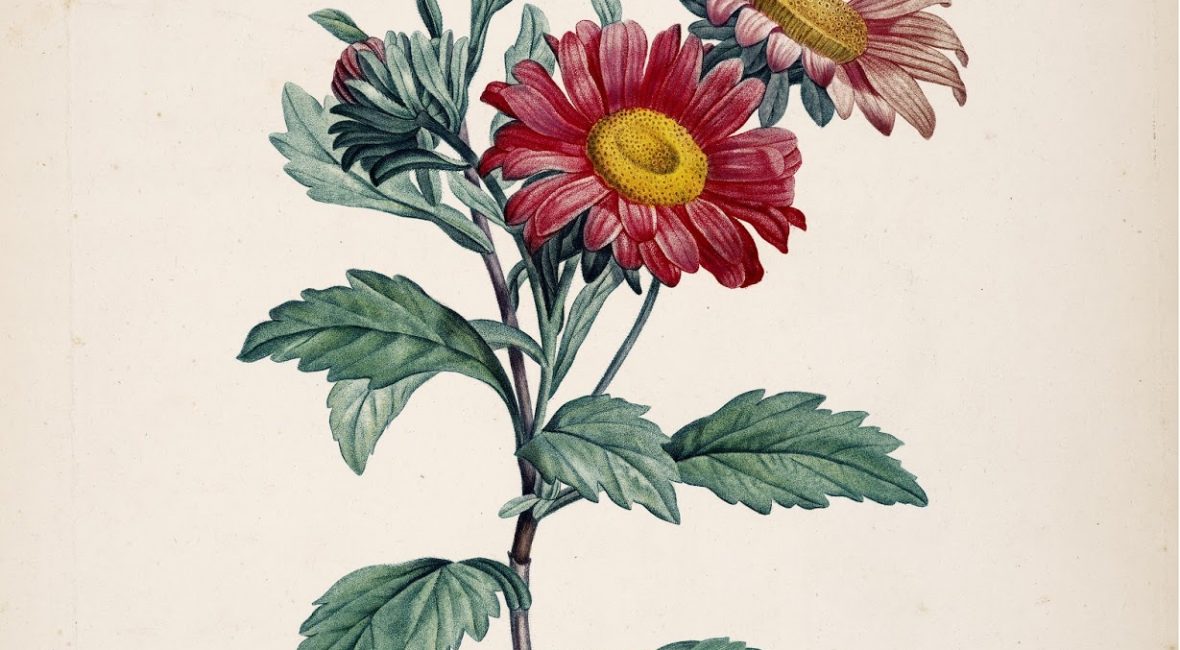
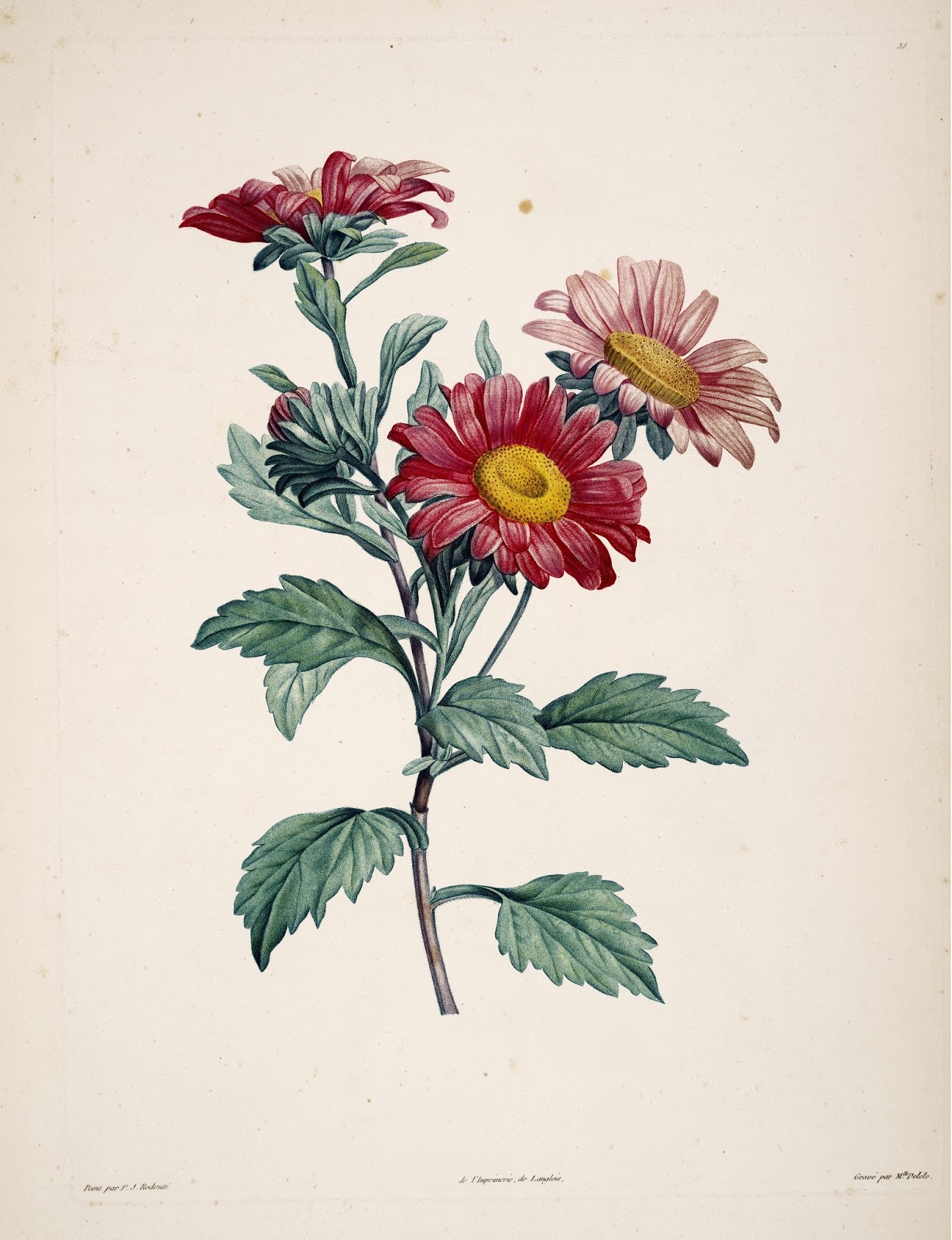
Since the introduction of large quantities of botanical illustrations in scientific literature, there have been a great many famous illustrators to contribute to the visual wealth of knowledge recorded in these works. One of the most celebrated is Pierre Joseph Redouté (1759-1840). This Belgian illustrator is credited with developing the technique of hand colored stipule engraving, which has since been widely used in botanical illustrations.

View Full Size Image
Rousseau, Jean-Jacques. La botanique de J.J. Rousseau. 1805. Digitized by the Missouri Botanical Garden. http://biodiversitylibrary.org/page/6164697

The hand-coloring stipule engraving technique involves applying ink to a copper plate on which an image has been etched, after which the plate is run through a press to imprint the image onto paper. Following this printing, the images are hand colored using watercolor.

Over his career, Redouté produced over 2100 published plates, documenting over 1800 species. The Biodiversity Heritage Library contains many publications to which Redouté contributed, one of which is La botanique de J.J. Rousseau (1805). This publication contains sixty-five plates created by Redouté, documenting a variety of species. These illustrations, along with the thousands of others contributed by Redouté over the years of his career, greatly enhanced the science of botanical investigation, and formed the building blocks upon which subsequent botanical study was built.

This week’s Book of the Week, La botanique de J.J. Rousseau :ornée de soixante-cinq planches, imprimées en couleurs d’après les peintures de P.J. Redouté (1805), by Jean-Jacques Rousseau, was contributed by the Missouri Botanical Garden.

January 19, 2010by michelle.underhill
Blog Reel, Featured Books

James D. Dana, meet Charles V. Riley: BHL Books of the Week

View Full Size ImageApart from the morbid coincidence of dying in the same year–1895–there’s not a whole lot binding these two scientific luminaries together. Minerals and volcanoes on one hand and entomology and horticulture on the other. But, the world is small and the sub-world of scientific publishing even smaller, so onward, ho!

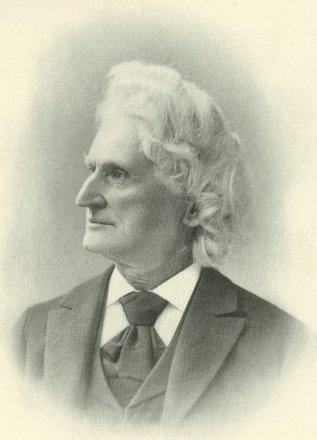
James Dwight Dana (February 12, 1813 – April 14, 1895) was the resident mineralogist aboard the United States Exploring Expedition, commanded by Captain Charles Wilkes. (According to pure rumor and hear-say, Wilkes’ oppositional demeanor was the inspiration for Captain Ahab in Herman Melville’s classic, Moby-Dick). According to fact-checkable history, however, Captain Wilkes authored a volume on (marine) Meteorology based on his observations while the expedition toured the Pacific. The environment in and around the Pacific also inspired Observations of a naturalist in the Pacific between 1896 and 1899, by H. B. Guppy. Our esteemed Mr. Guppy also wrote Studies in seeds and fruits, an investigation with the balance.View Full Size Image

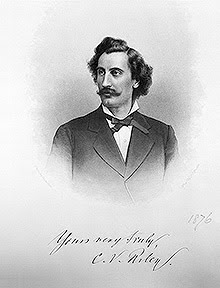
And as we all now know, Charles V. Riley (September 19, 1843 – September 14, 1895) studied botany and horticulture with sufficient vigor and savvy to help save the French wine industry from biological infestations of Phylloxera that threatened production. (click here for more detailed information, in case you missed it in earlier comments).
And, as it turns out, both figures published extensively in the American Journal of Science, but mentioning that sooner would have precluded the whirlwind tour of the collection that we all enjoyed so much!

Titles courtesy various BHL partners and contributing libraries.
January 11, 2010by jwinberry

Help Support BHL

BHL's existence depends on the financial support of its patrons. Help us keep this free resource alive!

search

About BHL

The Biodiversity Heritage Library (BHL) is the world’s largest open access digital library for biodiversity literature and archives. BHL operates as a worldwide consortium of natural history, botanical, research, and national libraries working together to digitize the natural history literature held in their collections and make it freely available for open access as part of a global “biodiversity community.”

Join Our Mailing List

Sign up to receive the latest news, content highlights, and promotions.

Subscribe Now

Subscribe to Blog via Email

Enter your email address to subscribe to this blog and receive notifications of new posts by email.

Join 319 other subscribers

Subscribe to Blog Via RSS

Subscribe to the blog RSS feed to stay up-to-date on all the latest BHL posts.

Access RSS Feed

Inspiring Discovery through Free Access to Biodiversity Knowledge.

The Biodiversity Heritage Library makes it easier than ever for you to access the information you need to study and explore life on Earth…for free, anytime, anywhere.


64+ Million Pages of
Biodiversity Literature Online.

EXPLORE

Tools and Services
to Transform Research.

EXPLORE

300,000+
Illustrations on Flickr.

EXPLORE

ABOUT | HARMFUL CONTENT | PRIVACY | SITE MAP | TERMS OF USE