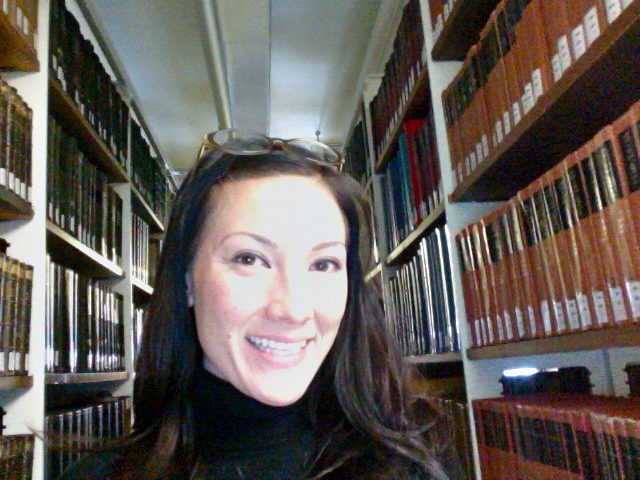
 Greetings from Cambridge, Mass.! My name is JJ Ford and I have been working as the BHL Project Assistant at the Ernst Mayr Library located in Harvard’s Museum of Comparative Zoology since May 2011. And although I’ve only been working as a BHL staff member for ten months, it feels like so much longer — in a good way of course! In less than a year’s time, I have learned just how much staff time, effort and brainpower it takes to build the world’s first collaborative digital library that makes legacy taxonomic literature available to users for free. The BHL staff members that I have come to know, truly are committed to the idea of making knowledge open, extensive and available to a global audience. Sometimes I have to stop and pinch myself because I feel so lucky to be contributing to such a gratifying mission.
While I may be stationed at Harvard, my role is actually quite similar to Smithsonian staff member, Gilbert Borrego, who we heard from in last month’s installment of “My Life as a BHL Staffer.” Gilbert beautifully outlined the nuts and bolts of the BHL digitization operation, which gave us an overview of how the books in each partner library’s physical collections are selected, processed and scanned. Additionally, we learned why Paginationand Flickr are such important activities. Having the correct pagination for books in BHL and allowing the fabulous plates and illustrations to be exposed in Flickr are two ways that we facilitate better user discovery of articles and images. Like Gilbert, I manage many of these very same activities for Harvard’s portion of BHL user requests. We even have our own Facebook and Flickr sites which, we use to disseminate BHL’s outreach messages locally for the students and faculty members here at Harvard. However, to keep things interesting and build on Gilbert’s last blog post, I am going to touch on two of my favorite extracurricular BHL activities : 1) the basics of book preservation and 2) my involvement with BHL’s website usability studies.
Preservation and Book Repair
Unlike many of the other institutions, many of the book repairs at the Ernst Mayr Library are done on-site. We are lucky to have on staff a resident preservation specialist, Susan DiSanctis, a woman with one of the most interesting lives on human record. Not only has Susan lived amongst the native people of Papua New Guinea, she knows how to fix a book! While working under Susan’s instruction, I learned the basics of paper repair and contrary to what one may think, this is not a skill that is normally taught in library school. In today’s digital world, many might say that book preservation is a dying art. Nevertheless, it is still an extremely important activity because often the books that users request to be digitized are damaged and require preservation treatment prior to being sent over to the Internet Archive for scanning. It is my job to determine what our preservation strategy should be for these vulnerable books. In some unfortunate cases, there is very little that we can do for a book because the decaying process is in the advanced stages. For example, this book cannot be repaired because the paper is far too brittle:
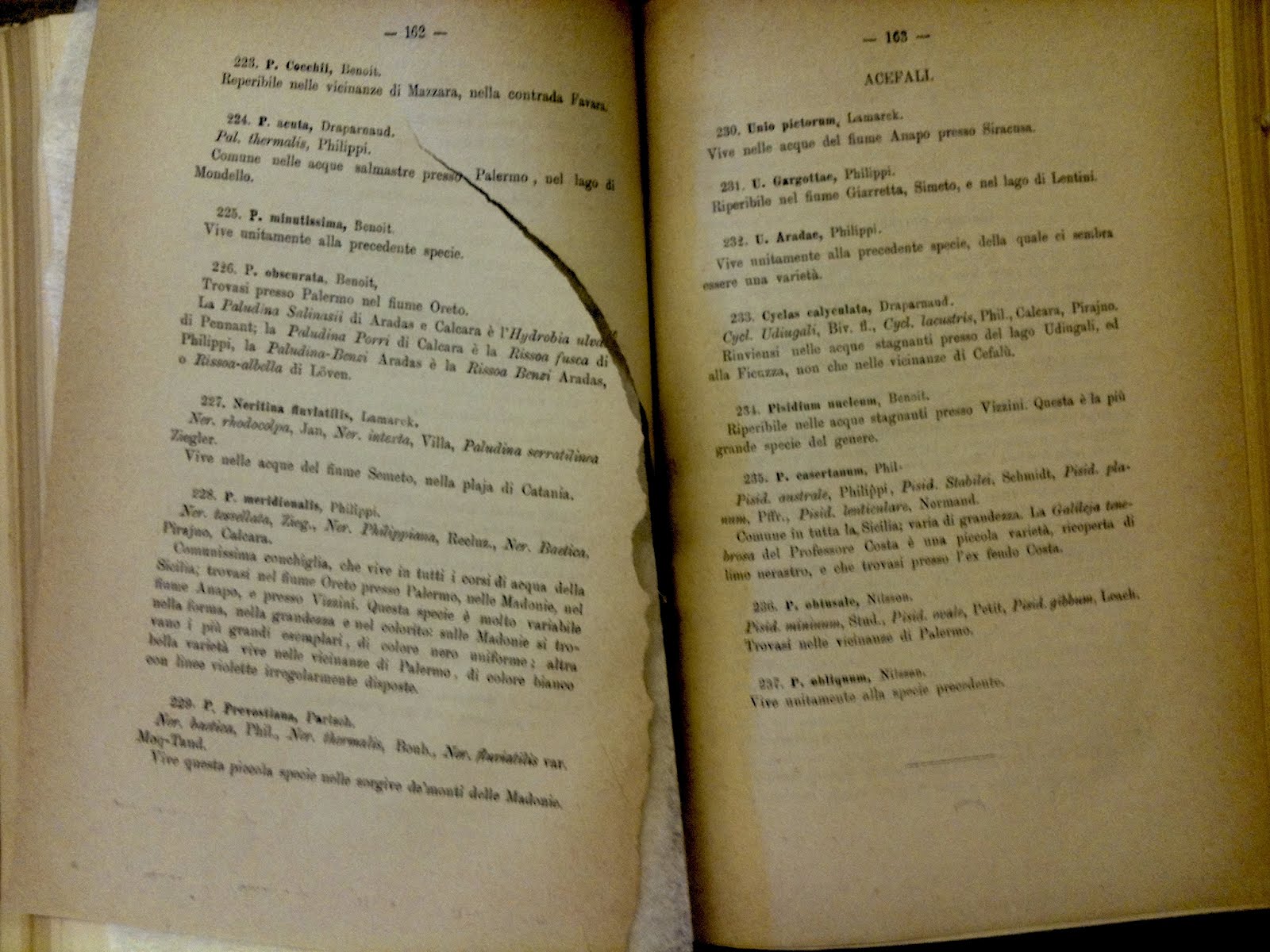
Brittle books like these are made from wood-pulp paper. Their pages are literally “burning” from the slow fires of acid decay. The paper in this book will eventually disintegrate into a pile of dust. A very sad fate indeed.
However, there are a good number of lucky books that can be saved and subsequently scanned.
Usability Studies
In stark contrast to the hands-on work that book preservation requires, usability studies are conducted in order to measure ” the quality of a user’s experience when interacting with a product or system–whether a Web site, a software application, mobile technology, or any user-operated device.” (Usability.gov)
The results of these types of studies help web designers build more effective user-centric websites. In keeping with this principle, it has always been BHL’s goal to provide a web interface that marries both efficiency and design.
Recently, BHL staff members saw the need to conduct a usability study of our own. The emergence of a newly designed BHL-AU portal from our partners down in Australia prompted us to compare their design with the existing BHL-US website that most of you are probably already intimately acquainted with. Along with my colleagues at the other BHL partner libraries, I conducted local usability tests here at Harvard. The results of the study were illuminating and surprising and will certainly help inform future BHL web interface designs.
BHL-Australia Web Portal

BHL-US Web Portal

Same content. Different interface. Which one do you like better? Which one is easier to navigate and use? Keep reading to find out…
And what was the outcome of the usability study done here at Harvard? Our study participants found that the BHL-US portal website was easier to navigate and complete specific BHL related tasks such as finding articles, images and taxonomic species names however, most users thought that BHL-Australia was visually more appealing. The results of this study, will inform the future design of the BHL-US interface which, will be a “love-child” that merges the beauty of Australia’s BHL portal with the function of the US version of the site. Stay tuned for more details on design developments in the months to come! Additionally, if you have extra time to kill you can see the entire usability study in action via screencast.