Biodiversity Heritage Library - Program news and collection highlights from BHL
  • Home
  • News
  • Featured Books
    • All Featured Books
    • Book of the Month Series
    • BHL at 20
  • User Stories
  • Campaigns
    • Fossil Stories
    • Garden Stories
    • Monsters Are Real
    • Page Frights
    • Her Natural History
    • Earth Optimism 2020
  • Tech Blog
  • Visit BHL
Home
News
Featured Books
    All Featured Books
    Book of the Month Series
    BHL at 20
User Stories
Campaigns
    Fossil Stories
    Garden Stories
    Monsters Are Real
    Page Frights
    Her Natural History
    Earth Optimism 2020
Tech Blog
Visit BHL
  • Home
  • News
  • Featured Books
    • All Featured Books
    • Book of the Month Series
    • BHL at 20
  • User Stories
  • Campaigns
    • Fossil Stories
    • Garden Stories
    • Monsters Are Real
    • Page Frights
    • Her Natural History
    • Earth Optimism 2020
  • Tech Blog
  • Visit BHL
Biodiversity Heritage Library - Program news and collection highlights from BHL
BHL News, Blog Reel

Game Laboratory Tiltfactor Selected for the Purposeful Gaming and BHL Project

BHL and the Missouri Botanical Garden are pleased to announce a major milestone reached in the project, “Purposeful Gaming and BHL”. Dartmouth College’s Tiltfactor was chosen to design the game that will help improve access to texts from the Biodiversity Heritage Library (BHL).

View Full Size Image

The Purposeful Gaming and BHL project is based at the Missouri Botanical Garden (MOBOT) in St Louis, Missouri. In the fall of 2013, MOBOT was awarded a $449,641 grant by the Institute of Museum and Library Services (IMLS) to test new means of using crowdsourcing and gaming to support the enhancement of texts from the BHL. Grant funding began in December 2013 and ends in December 2015. The Garden is partnering with Harvard University, Cornell University and the New York Botanical Garden on the project.

Principal Investigator for the project, Trish Rose-Sandler, reports that the project received “several strong bids for the design of the game so it wasn’t an easy decision. We are very excited to have found a great partner for this project because the game will be the critical component to improving access to digitized texts of the BHL.” The project’s goal is to demonstrate whether or not online games are a successful tool for analyzing and improving digital outputs. Users will be presented words that are difficult for software to recognize as tasks in a game.
View Full Size Image
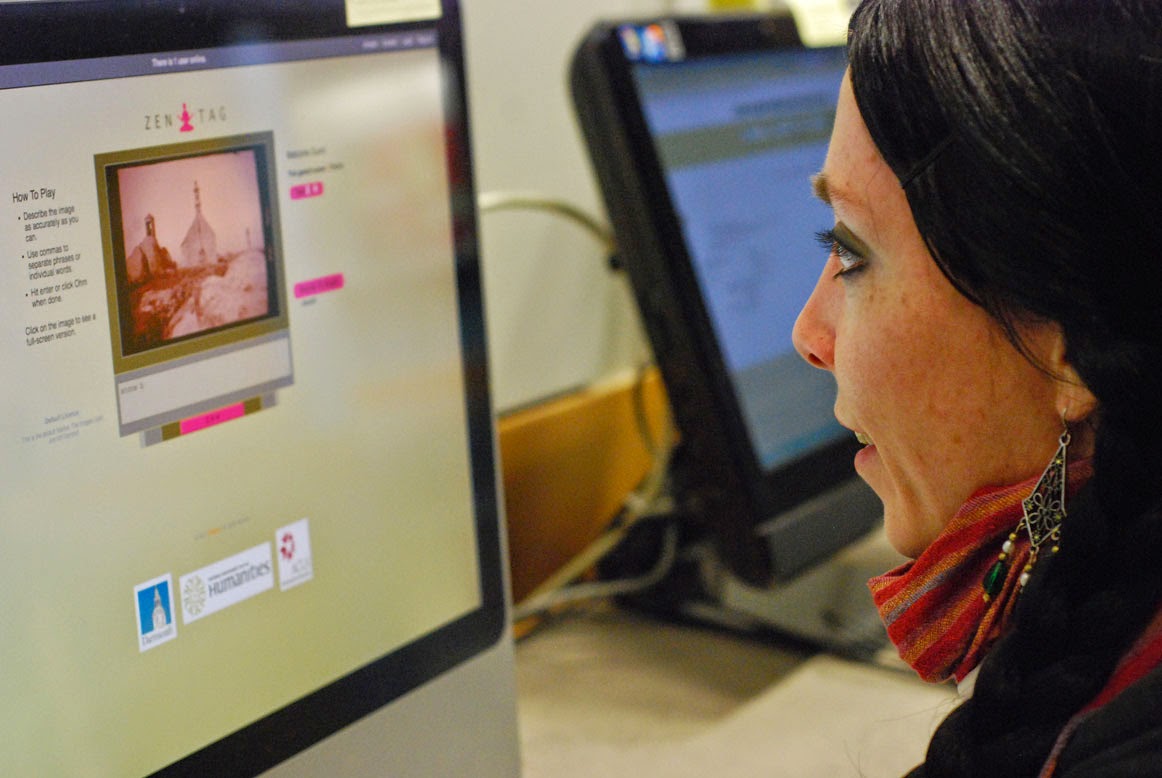
User engages with Zen Tag, one of Tiltfactor’s games available via the Metadata Games platform.

Tiltfactor had several strengths that made their bid stand out, including extensive experience designing games for the education sector. “We were also impressed that not only do they design games but they do extensive research into the impact of those designs on players from a psychological perspective – they even have two social psychologists on their design team,” states Rose-Sander. Tiltfactor’s greatest strength, however, is arguably their work with crowdsourcing metadata as demonstrated in their Metadata Games platform, which entices players to engage with and help improve access to archival content found in cultural heritage institutions.

The folks at Tiltfactor were interested in bidding on the project for several reasons. “The ‘Purposeful Gaming and BHL’ initiative extends our work with metadata games creation to bring in the public to meaningfully participate in our nation’s robust archives,” states Tiltfactor’s founding director, Dr. Mary Flanagan. “Games can be harnessed to provide fun experiences that also improve transcription and make bioheritage accessible to many more people. Tiltfactor is thrilled to work with BHL and their partners on an endeavor with such a high social return.”

The two teams will begin working collaboratively on the design of the game in July of 2014, and it is expected that the game will be released publicly sometime in early summer of 2015.

To learn more about project details see http://biodivlib.wikispaces.com/Purposeful+Gaming.

View Full Size Image

This project was made possible in part by the Institute of Museum and Library Services [LG-05-13-0352-13].
June 30, 2014by ulib-libraryjobs
BHL News, Blog Reel, Campaigns

Breathing Life Into a Museum Exhibit About Extinction

View Full Size Image
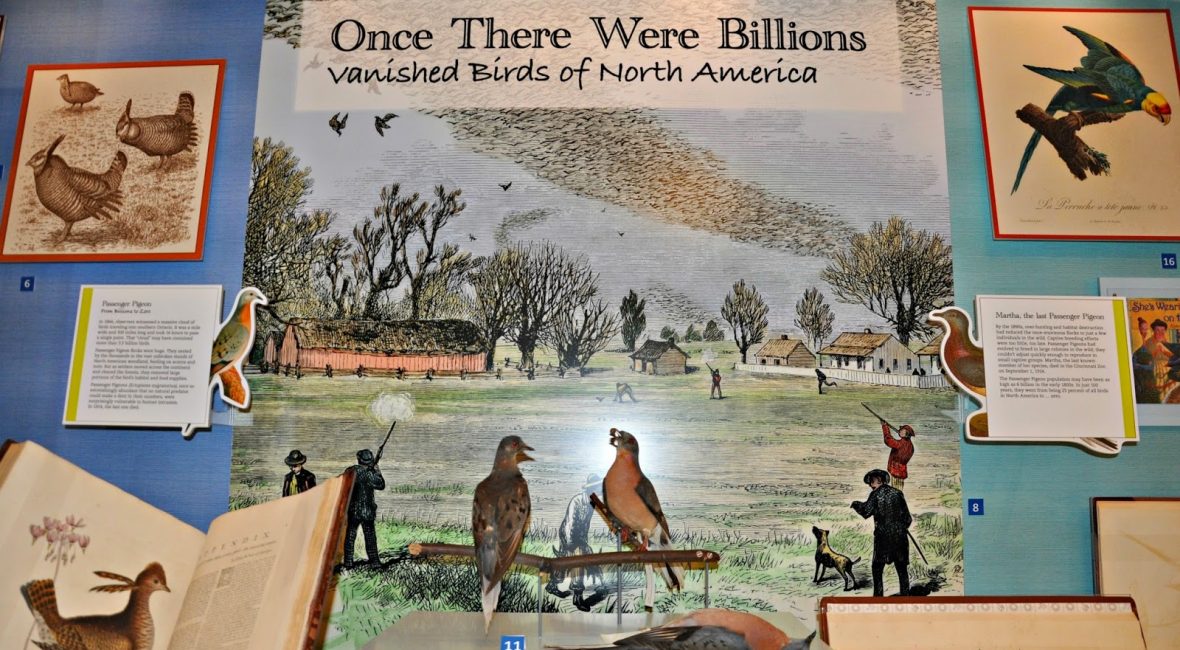
Once There Were Billions, the new Smithsonian Libraries/BHL exhibit at the National Museum of Natural History.  The Passenger Pigeon on the left, with her back to the viewer, is Martha, the last Passenger Pigeon that died 100 years ago in 1914.

You are living in the midst of earth’s sixth great extinction event. You’ve been living in it since you were born. So have your parents, your grandparents, your great-great-great-great-grandparents, and all of your ancestors for about 10,000 years. It dates back to the extinction of the mammoths and has been increasingly accelerating as human actions and climate change reshape the balance of our planet.  Within the next century, 75% of the conservatively estimated 8.75 million species on earth may be extinct.

When many of us think of extinctions, we think of the countless species disappearing in the Amazon rainforest, the ocean’s coral reefs, or the forests of South-east Asia. But the truth is that extinctions happen in every corner of the globe. Some are noticeably notorious, others occur without us even knowing that the species existed in the first place. One of the most infamous North American extinctions is the demise of the Passenger Pigeon.

By the time Europeans first came to the New World, approximately 40% of all land birds in North America were a member of the species Ectopistes migratorius, or the Passenger Pigeon. Their population numbered in the billions, and their abundance spurred intense human hunting in the mid-1800s. Less than a century later, the Passenger Pigeon was extinct.
View Full Size Image
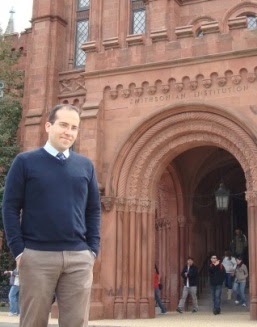
Gilbert Borrego, co-curator of the Once There Were Billions exhibit.

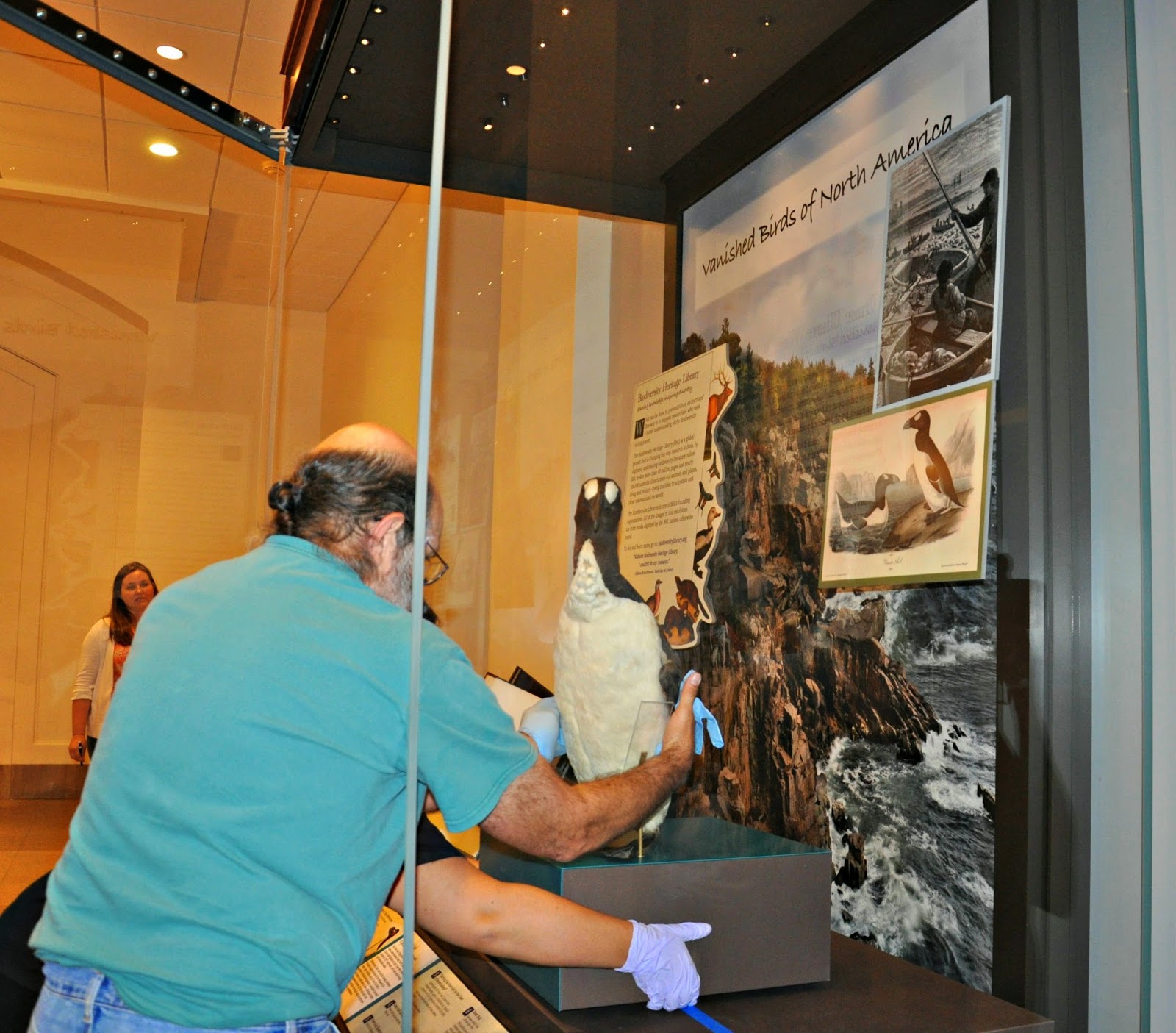
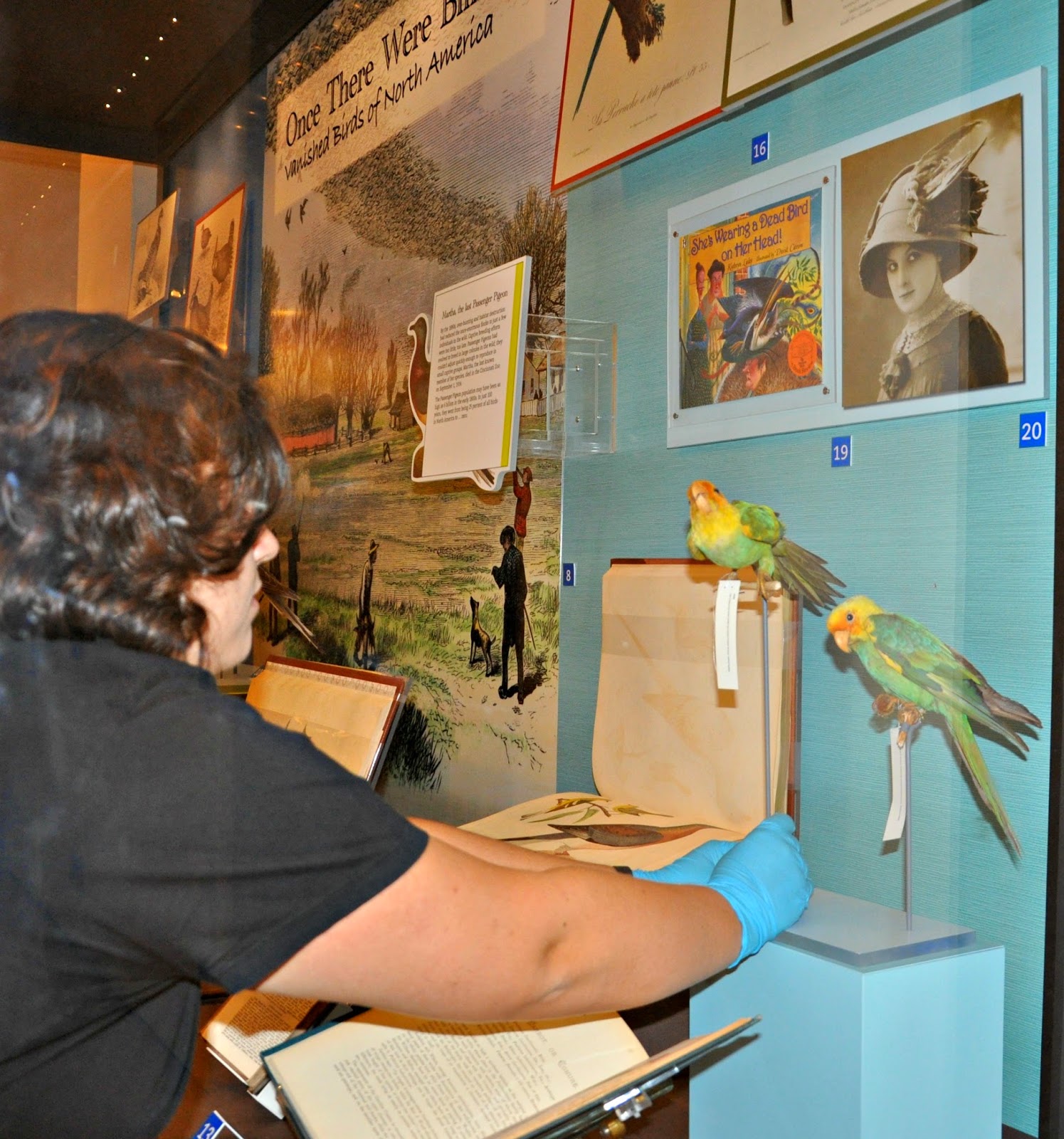
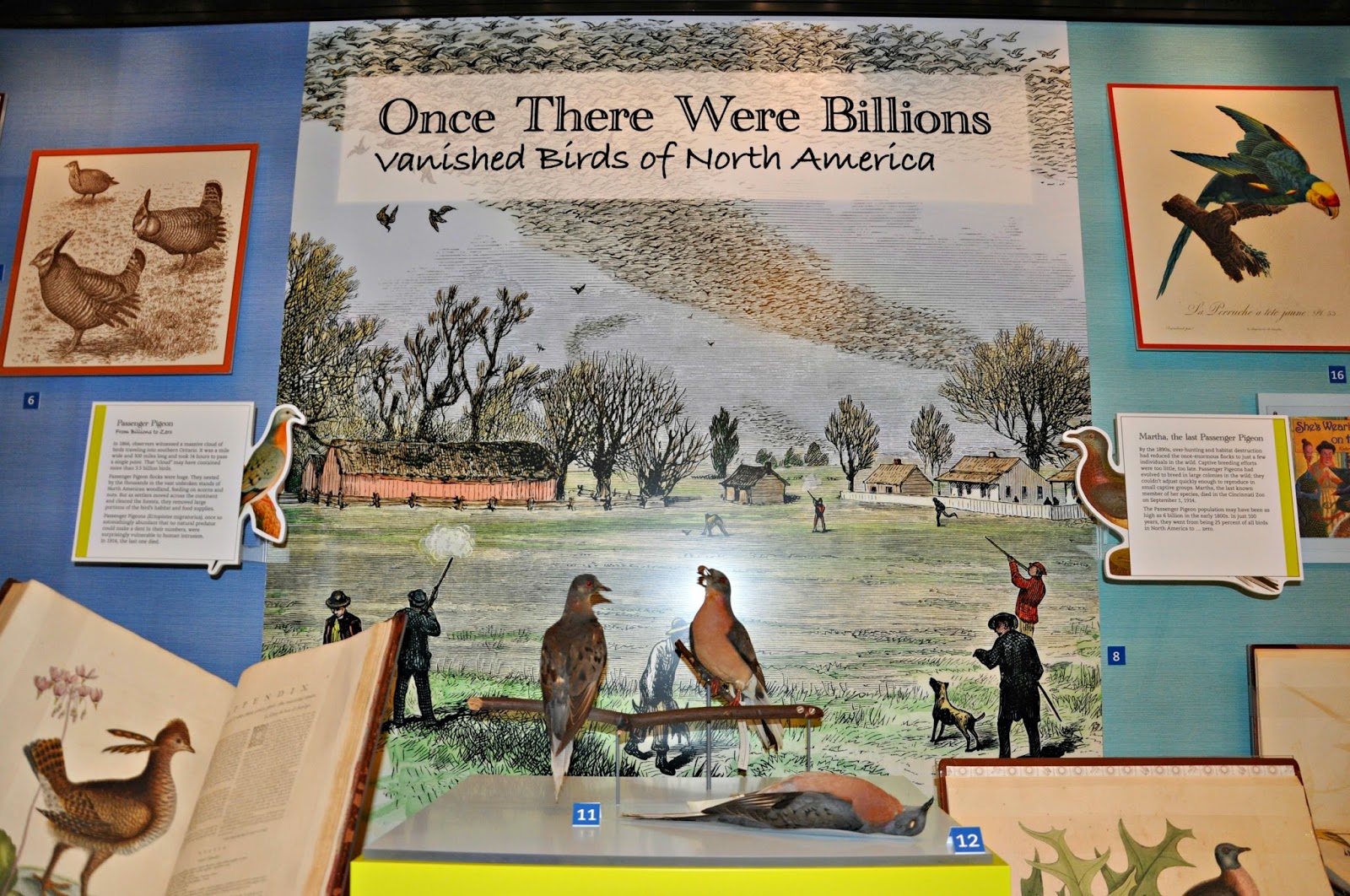
The fate of the Passenger Pigeon, and three other extinct North American bird species (Great Auk, Carolina Parakeet, and Heath Hen), are the focus of the new joint BHL/Smithsonian Libraries‘ exhibit at the National Museum of Natural History: Once There Were Billions.

The exhibit represents the culmination of three years of work for its curators, Gilbert Borrego (former BHL Library Technician for Smithsonian Libraries) and Dr. Helen James (Curator in Charge, Division of Birds, National Museum of Natural History). The histories of these lost species are told through compelling narratives, taxidermied specimens (including Martha, the last Passenger Pigeon), books from the Smithsonian Libraries’ collection (many of which are available digitally in BHL), and images from BHL.

Most people are unaware of how involved and sometimes challenging building an exhibit can be. Several years, countless meetings, copious research, and dozens of individuals are required to bring an exhibit from conception to public launch. Sometimes the most difficult part can be simply honing in on the exact story you want to tell.

View Full Size Image
Positioning the Great Auk in the exhibit.

“The most challenging part of the exhibit was narrowing down our source material,” said Borrego. “The topic [of the exhibit] was originally much more general, focusing on extinct species. We knew Martha the Passenger Pigeon was to be included, but we looked at many other types of animals and plants before settling on the plight of birds from North America.”

Borrego first presented the proposal for “Once There Were Billions” in 2011, and since then he, James, and an army of scientists, librarians, and museum support staff defined the scope, drafted a script, selected specimens and images, and fashioned layouts for the physical and supplementary digital exhibits.
Once all the foundational work was complete, it was time to bring the exhibit to life. Plaques fresh off the press, freshly-cleaned bird specimens, and carefully conserved books were artistically arranged within two mammoth exhibit cases in the Evans Gallery on the Ground Floor of the National Museum of Natural History.
View Full Size Image
Adjusting the Carolina Parakeet specimens.

And voila! This specialized hub for extinction education opened to the public this past Monday, June 24, 2014, and will remain open until October, 2015.

If you’re visiting D.C., be sure to check out the exhibit. And if you’re an art fan, take some time to see the massive bronze sculptures of the birds crafted by artist Todd McGrain as part of “The Lost Bird Project” and situated around the Smithsonian grounds.
If you’re not in the area, you can still enjoy “Once There Were Billions” via the online exhibit, by browsing digital versions of select exhibit books in BHL, or by downloading free, spectacular illustrations of the featured species.
Educating each and every person about the plight of biodiversity on our planet, and the repercussions of doing nothing, is a critical part of ensuring that today’s species do not become just another extinction statistic. Exhibits like “Once There Were Billions” are just one way we can achieve this global awareness. But while you might not be in a position to build a museum exhibit, there are other ways you can help change the fate of doomed species. Supporting initiatives like BHL, which enable the research of scientists trying to document and conserve species around the world, helps prevent species decline.

Everyone can make a difference. What will you do to help curb the tide of the Sixth Great Extinction Event?

June 27, 2014by michelle.underhill
Blog Reel

Welcoming Grace Costantino, BHL Outreach and Communication Manager

View Full Size Image
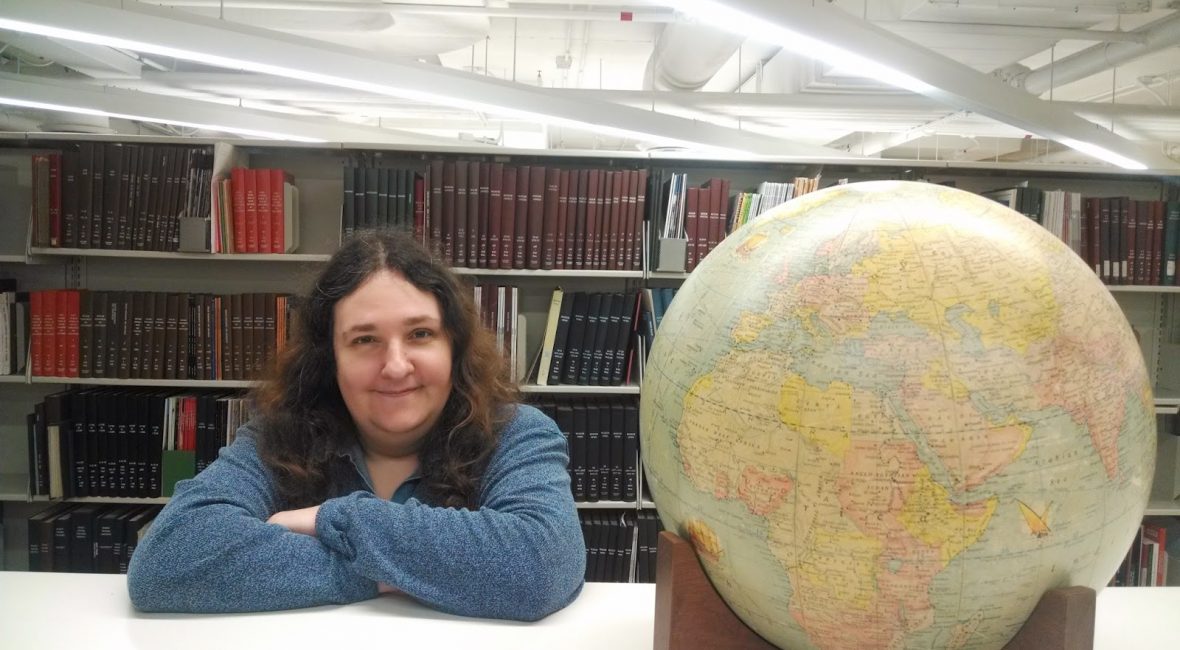
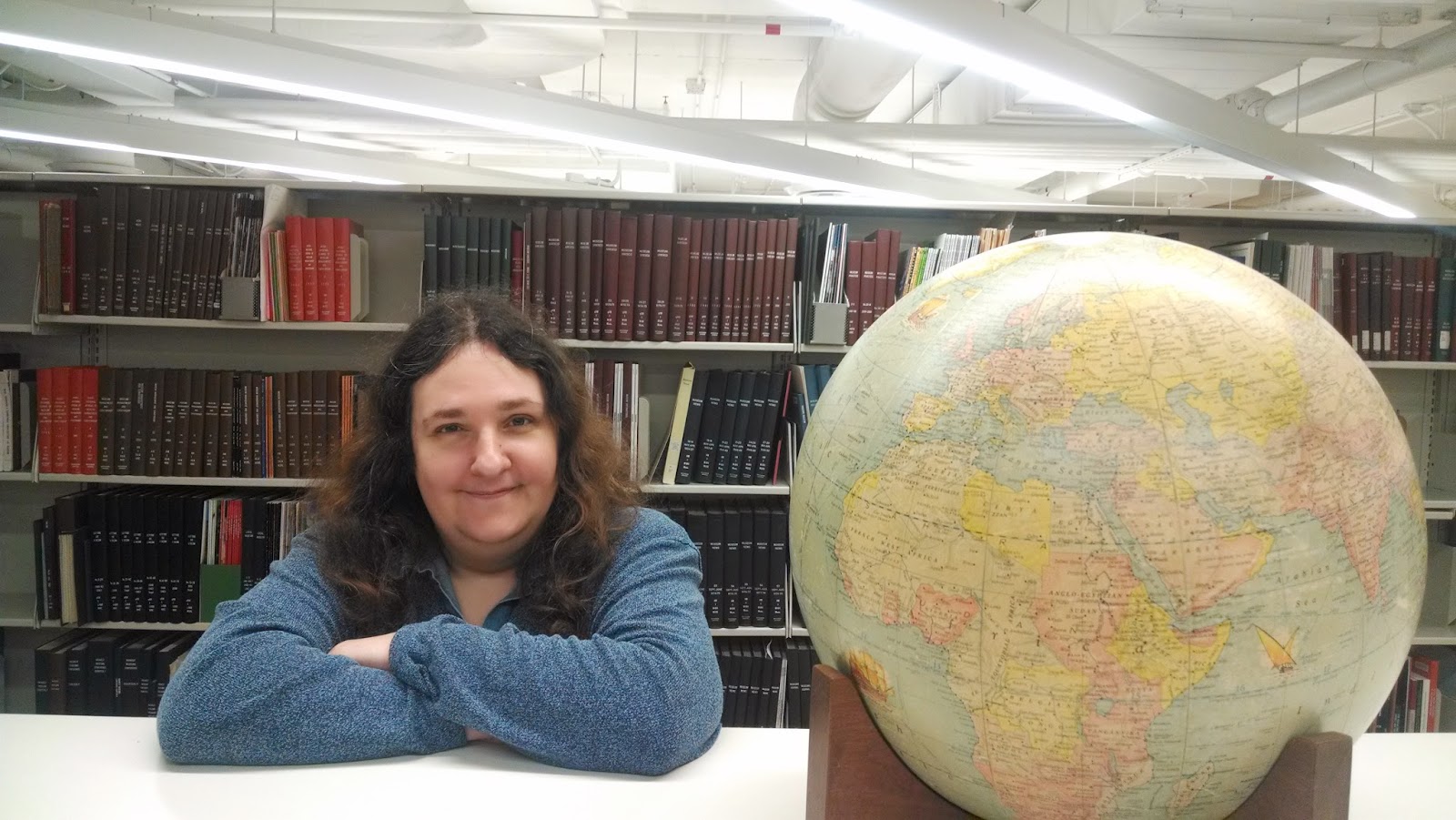
Grace Costantino, BHL Program Manager. Image Credit: MYH Photography.

We are pleased to announce that Grace Costantino has joined BHL as our new Outreach and Communication Manager!

Grace is no stranger to BHL. She started with the project back in 2008 as a BHL Librarian at the Smithsonian Libraries, after which she served as the BHL Program Manager from 2012-2013. Over her years on BHL, she has helped shape the program’s digitization workflow, assisted in the implementation and administration of the user feedback system, facilitated strategic planning efforts, organized evaluation and reporting policies, spearheaded marketing and promotional activities, performed financial administration, and developed and managed BHL’s outreach and communication strategy.

In her new capacity, Grace will further refine BHL’s outreach strategy, expand social media initiatives, supervise marketing and promotional activities, and engage with the public to excite audiences about the wealth of biodiversity heritage and knowledge available in BHL while also educating them about its critical importance to modern scientific, conservation, and informatics efforts.

View Full Size Image
Grace with her husband, Justin, and their dog, Jack.
Image Credit: MYH Photography.

Grace received her BA in Studio Art, Graphic Design, and Art History, as well as her Master’s degree in Information Systems and Management, from the University of Maryland, College Park. She currently resides in Crofton, Maryland, with her husband, Justin (a middle school art teacher), and their dog, Jack. Her hobbies include drawing, painting, reading, writing fiction, watching fantasy and sci-fi movies, and traveling. She hopes to one day travel to every US state and continent. She has 21 states and 4 continents to go…Come on BHL-Antarctica!

View Full Size Image The BHL Outreach and Communication Manager position is part of the BHL Secretariat, housed at the Smithsonian Libraries. The position is made possible in part through funding from the Institute of Museum and Library Services (Grant number LG-00-14-0032-14).
June 26, 2014by ulib-libraryjobs
BHL News, Blog Reel

Russian librarians visit Smithsonian Libraries’ BHL operations

View Full Size Image

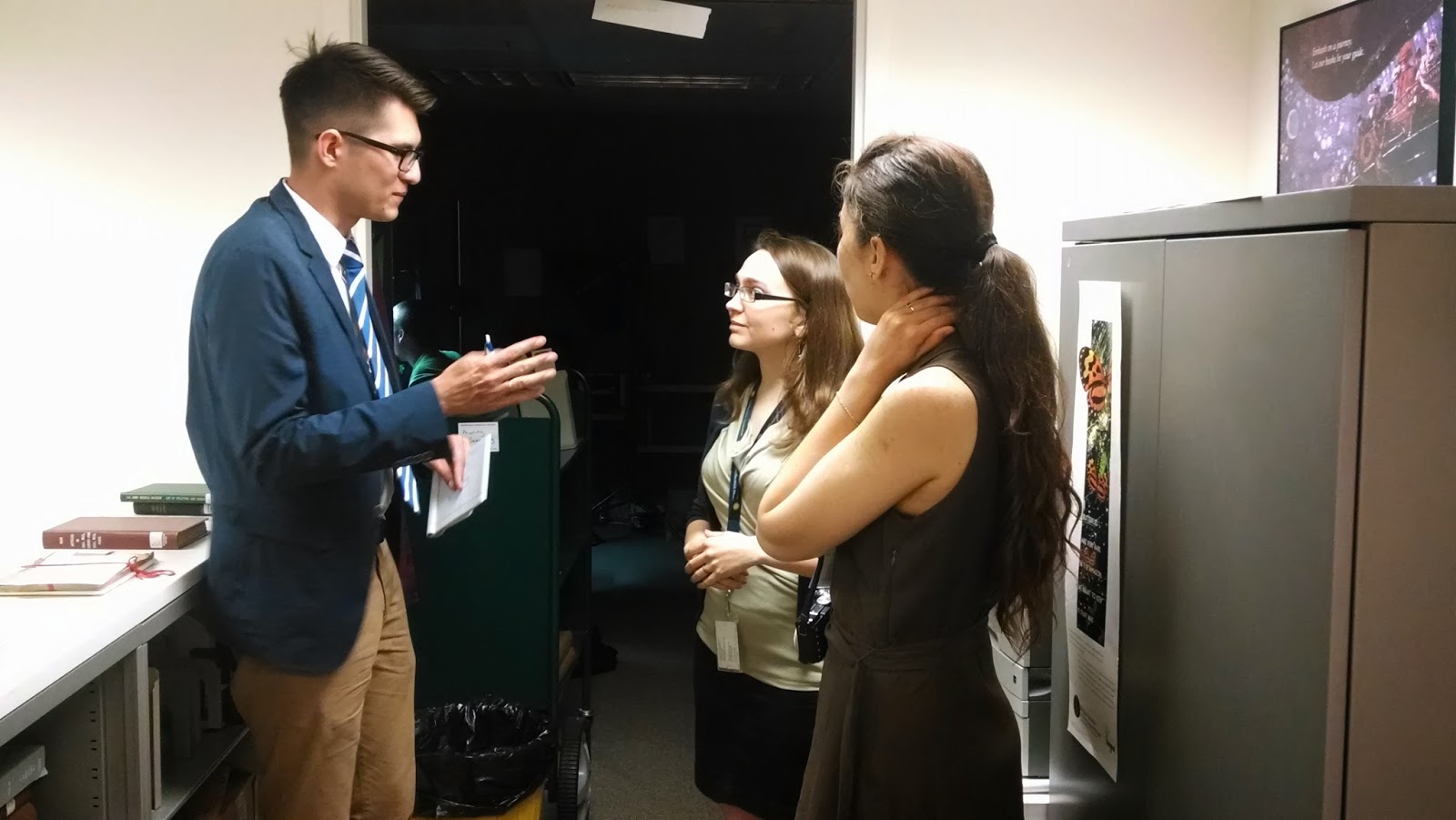
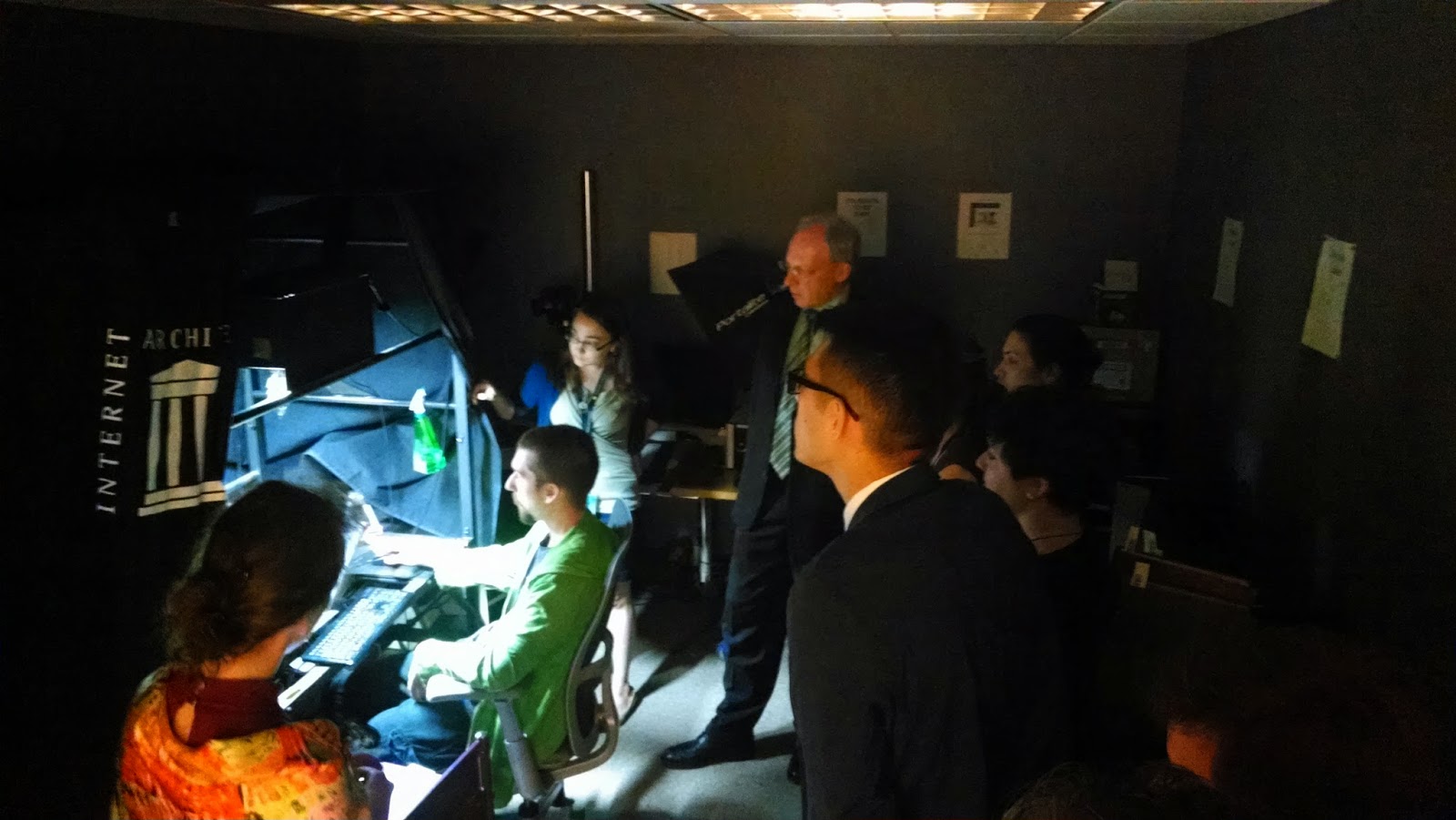
On 17 June 2014, a visiting delegation of librarians from across Russia visited Smithsonian Libraries and our BHL operations. Coming from a wide variety of institutions in Russia, the group was particularly interested in digitization and digitization workflow.

Smithsonian Libraries (SIL) Deputy Director Mary Augusta Thomas provided a welcome and general overview of Smithsonian Libraries to the group and the SIL Associate Director and BHL Program Director discussed Smithsonian and BHL digital initiatives.

View Full Size Image

The highlight for the group, however, was their visit to the SIL scanning room in the National Museum of Natural History where they met with Jackie Chapman (SIL BHL Librarian) and discussed BHL and pan-BHL scanning operations.

The visitors and their institutions were:

  • Ms. Iulia Maratovna GABIDULLINA
    American Center Coordinator, Perm Krai Library n.a. Gorky, Perm
  • Ms. Sofia Alekseevna KOCHERGINA Jr.
    American Shelf Coordinator, St. Petersburg
  • Ms. Olga Yurievna MAKAROVA Sr.
    Director, Central City Public Library ‘Chitay-Gorod, ‘ Novgorod Velikiy
  • Mr. Kirill Arkadyevich SAMARKIN
    Library Manager, Moscow City Library Center
  • Mr. Sergey Gennadievich SOLOVEV
    Acting Director, Vladivostok Centralized Library System, Vladivostok
  • Ms. Nadezhda Yurievna VALIAEVA
    Chief Librarian, Library of American Literature, Nizhegorodskiy State Linguistic University n.a. Dobrolyubov, Nizhniy Novgorod
  • Mr. Renat Bulatovich ZAKIROV
    Deputy Director, Automation, Moscow City Library Center
  • Mr. Alexandr Ivanovich KUNIN
    Department Head, Center of Comics and Visual Culture, Russian State Library for Youth
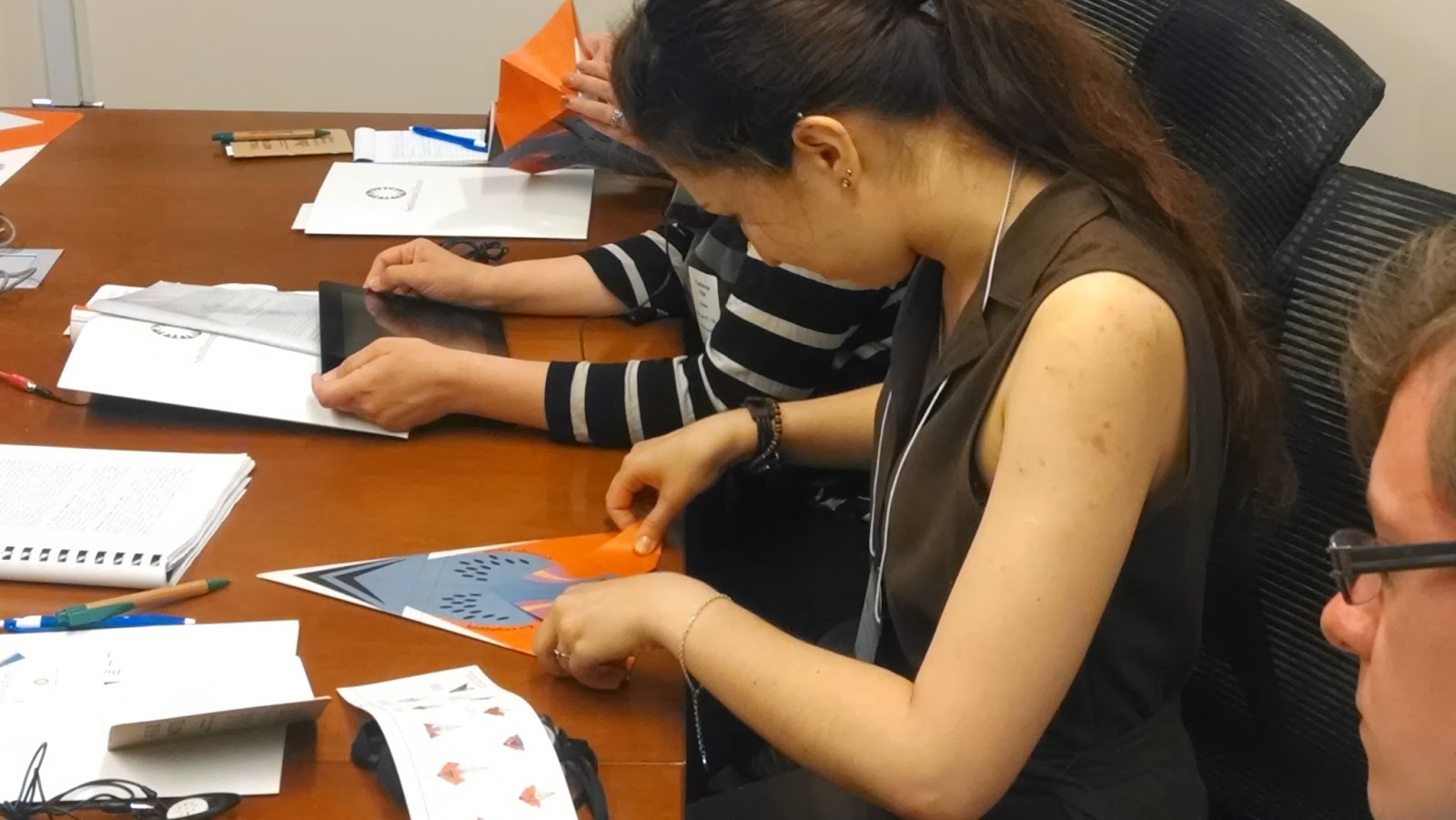
Visitors “Folding the Flock” for the upcoming “Once There Were Billions” exhibition at Smithsonian Libraries:
View Full Size Image
June 24, 2014by joelrichard
Blog Reel, Campaigns, Featured Books

Once There Were Billions: The Great Auk

Once an amazing diversity of birds–some in breathtaking abundance–inhabited the vast forests and plains of North America. But starting around 1600, some species began to disappear, as humans altered habitats, over-hunted, and introduced predators.

A notable extinction occurred 100 years ago, with the death of Martha the Passenger Pigeon, the last member of a species that once filled America’s skies.  The story of the last Passenger Pigeon and the disappearance of the Great Auk, Carolina Parakeet, and Heath Hen reveal the fragile connections between species and their environment.

To help tell their story, the Smithsonian Libraries, the Biodiversity Heritage Library, and the National Museum of Natural History have curated a joint exhibit entitled Once There Were Billions: Vanished Birds of North America that will open June 24 in the National Museum of Natural History in Washington D.C.  Over the next several weeks, we’ll be highlighting each of the four birds with content from the exhibit and illustrations found in BHL.

View Full Size Image
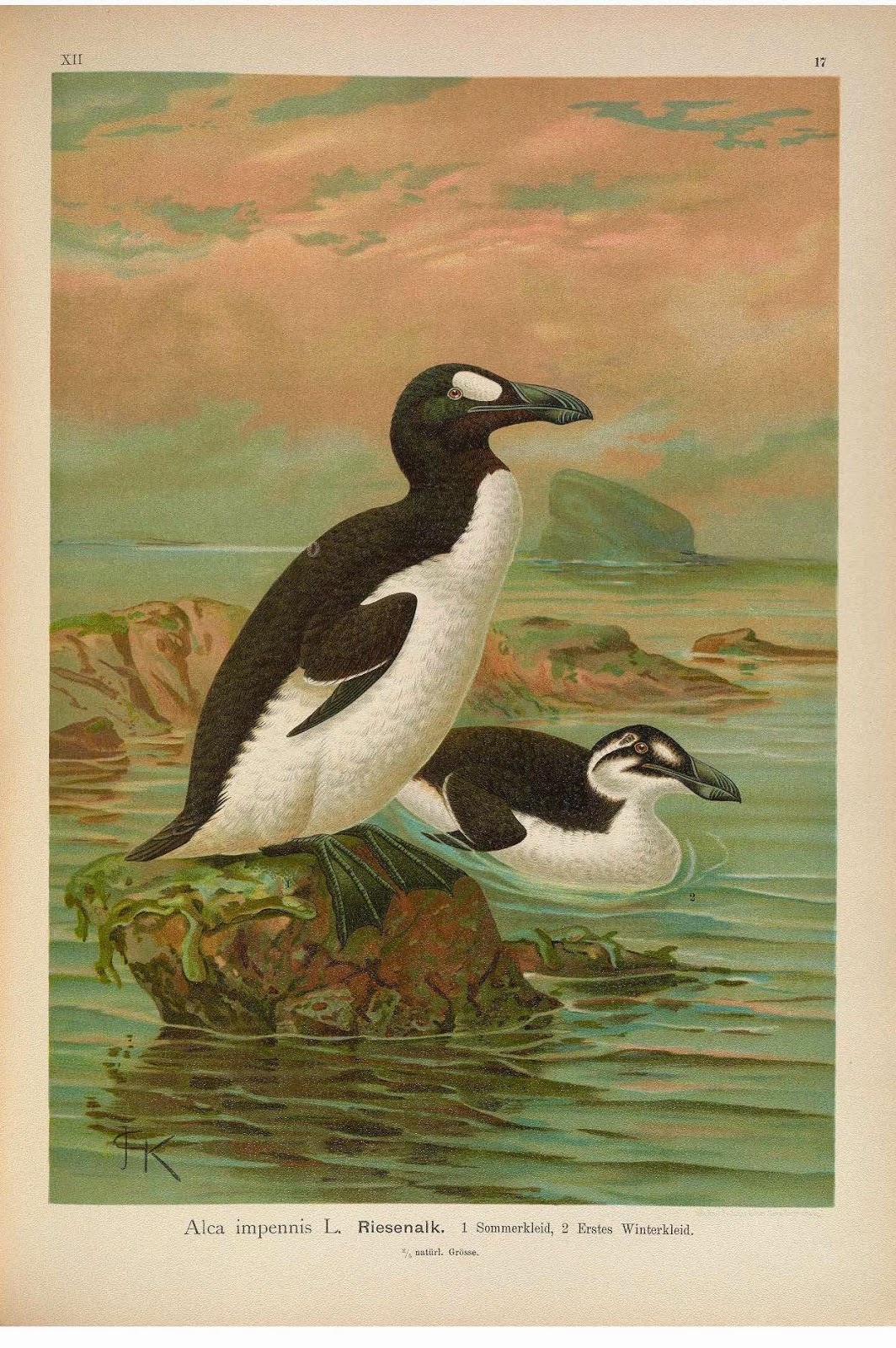
Naturgeschichte der Vögel Mitteleuropas
[Natural history of birds of Central Europe] Johann Andreas Naumann et al.
Gera-Untermhaus, Germany: F.E. Köhler, 1897–1905 http://biodiversitylibrary.org/item/108804#page/219/mode/1up


Great Auk: Flightless, Social … and Doomed
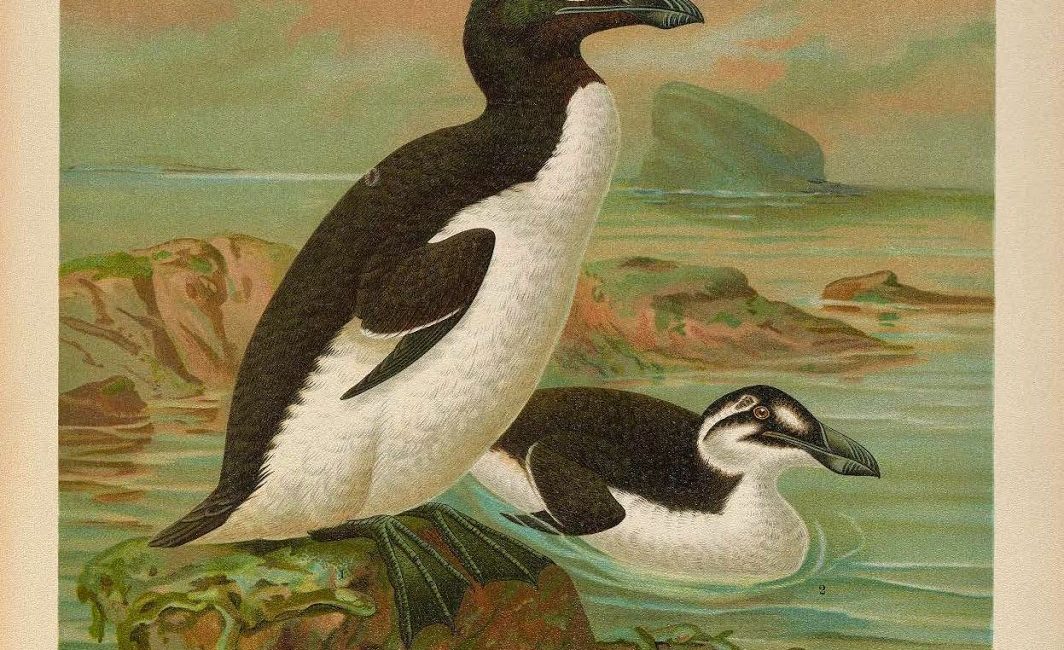
The Great Auk (Pinguinus impennis) once lived in large, dense colonies along North Atlantic shores. Clumsy and flightless on land, they were perfectly adapted to “fly” underwater, with their small wings and streamlined bodies.

View Full Size Image
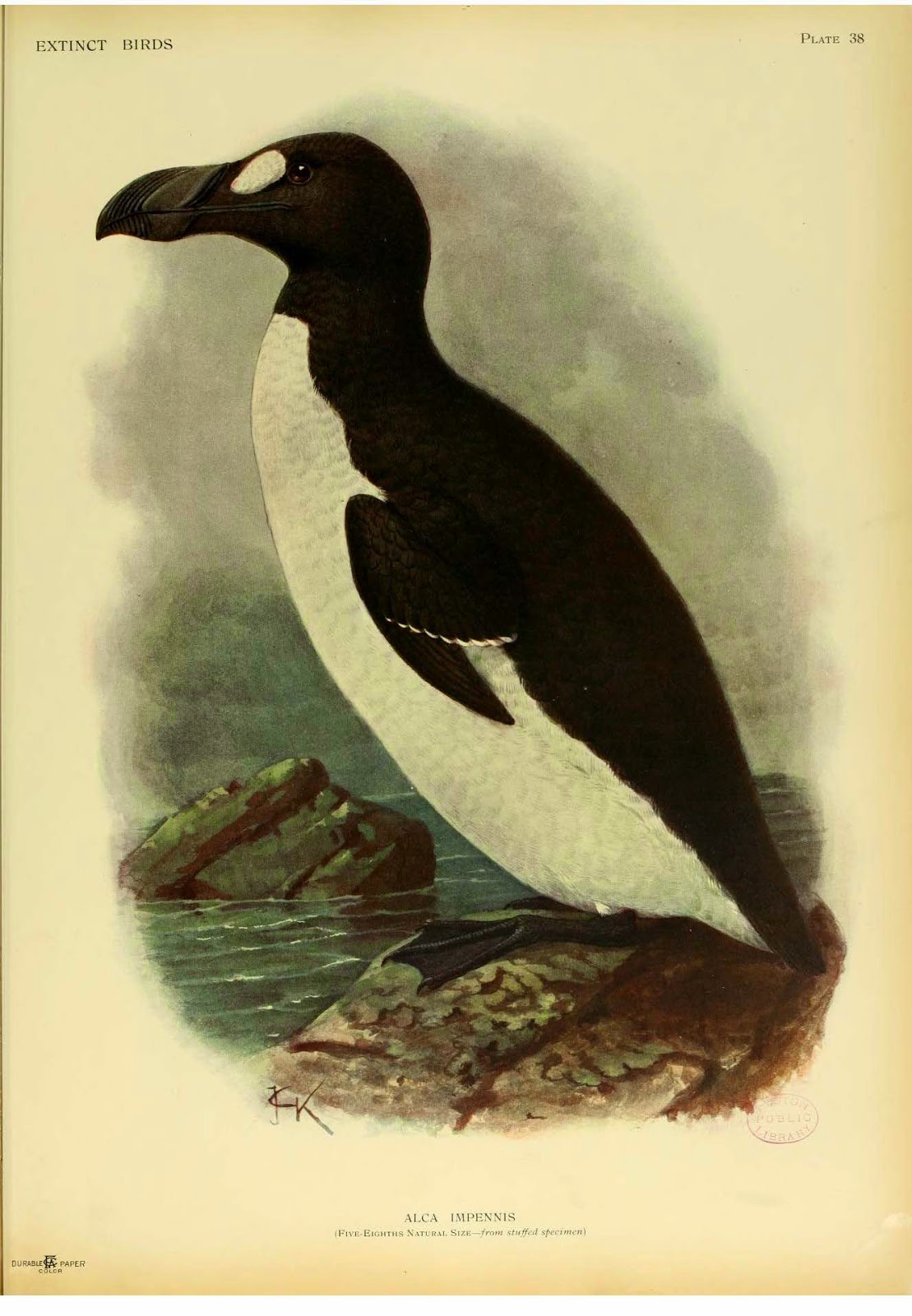
Extinct Birds. Walter Rothschild
London: Hutchinson, 1907
Plate 38, Alca impennishttp://biodiversitylibrary.org/
page/38665797#page/367/mode/1up

The caption for this image of the Great Auk gives its old scientific name, Alca impennis. Now termed Pinguinus impennis, the auk may look penguin-like, but it is related to the puffin. Great Auks mated for life nesting in crowded colonies on rocky islands. Females laid one egg per year on bare rock, and both parents took turns incubating the egg.

Unfortunately, they could not flee human predators.  Hunters slaughtered Auks by the thousands for meat, eggs, feathers, and oil. Once the bird’s numbers dwindled precipitously, naturalists hurried to add them as specimens to their collections before they disappeared forever.  By the mid-1800s the species went extinct–the final result of centuries of human exploitation.

What can be done to prevent future extinctions? One way is to support researchers who seek a better understanding of the biodiversity of this planet.

The Biodiversity Heritage Library (BHL) is a global project that is changing the way research is done, by digitizing and sharing biodiversity literature online. BHL makes more than 43 million pages and nearly 100,000 scientific illustrations–of animals and plants, living and extinct–freely available to scientists and others around the world.

The Great Auk is documented in over 3,000 pages of the literature found in the BHL corpus. BHL relies on donations from individuals to support scanning of the biodiversity literature held in some of the world’s most renowned natural history and botanical libraries.  To learn more about how your donation supports the continued growth of BHL, please visit http://archive.constantcontact.com/fs181/1103622715135/archive/1115465985290.html. We hope you’ll consider making a contribution today!

June 20, 2014by brooksm
BHL News, Blog Reel

Global BHL visitors in Washington, Patricia Mergen and Abel Packer visit BHL Secretariat and Smithsonian Libraries

View Full Size Image
Patricia Mergen at Smithsonian Libraries

Dr. Patricia Mergen, Liaison Officer,  Legal Entity Appointed Representative (LEAR) at the European Commission, Royal Museum for Central Africa, Tervuren, Belgium, visited the BHL Secretariat and Smithsonian Libraries on 31 May 2014.

Mergen was in Washington to attend the Catalogue of Life Workshop and  Symposium (2-4 June 2014). In discussions with Program Director Martin Kalfatovic and Program Manager Carolyn Sheffield, Mergen gave updates on activities of BHL Europe and upcoming European biodiversity initiatives, including the Horizon 2020 programme. There were also updates from Biodiversity Information Standards (TDWG) of which Mergen is the Secretary.


Dr. Abel Packer, head of BHL SciELO (Brazil) also stopped by between the Society for Scholarly Publishing 2014 meeting (in Boston) and other work in Philadelphia. Packer gave updates on the work being done to upload BHL SciELO content to the BHL portal. As planned host for the 2015 Global BHL meeting, Packer outlined some ideas that will be presented to the Global Steering Committee.

June 19, 2014by joelrichard
BHL News, Blog Reel

BHL and EOL co-host a Smithsonian Associates event

On May 28, the Biodiversity Heritage Library (BHL) and the Encyclopedia of Life (EOL) co-hosted an evening program on digital volunteerism.  The event was organized by The Smithsonian Associates (TSA) and was attended by 74 people.

View Full Size Image
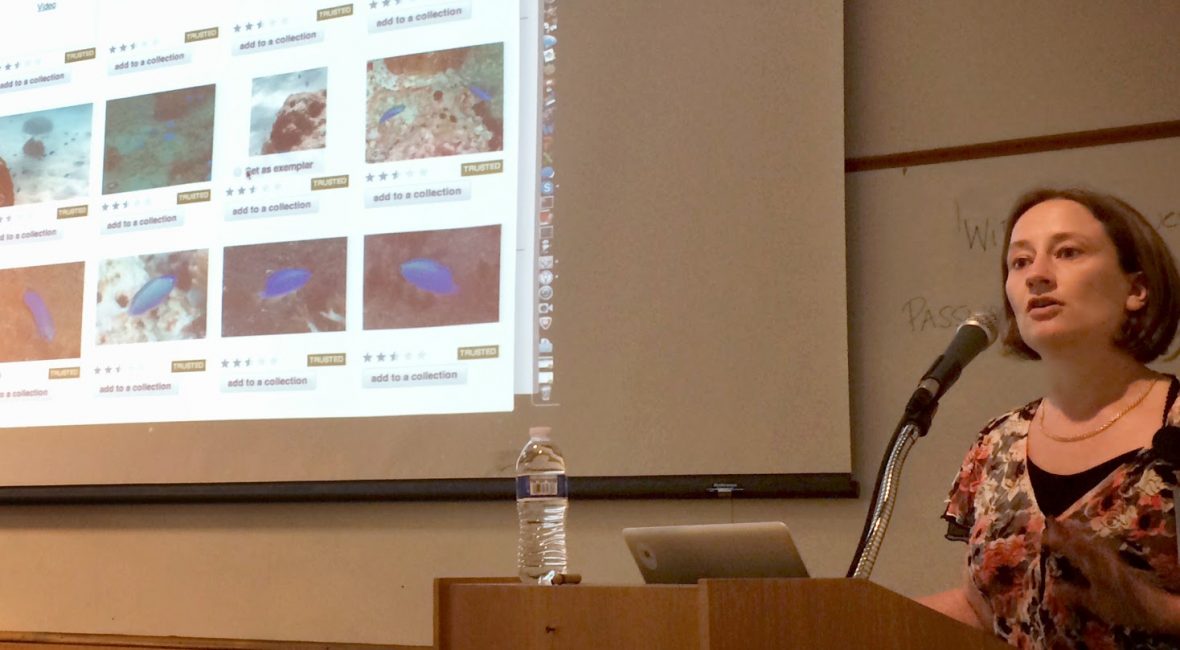
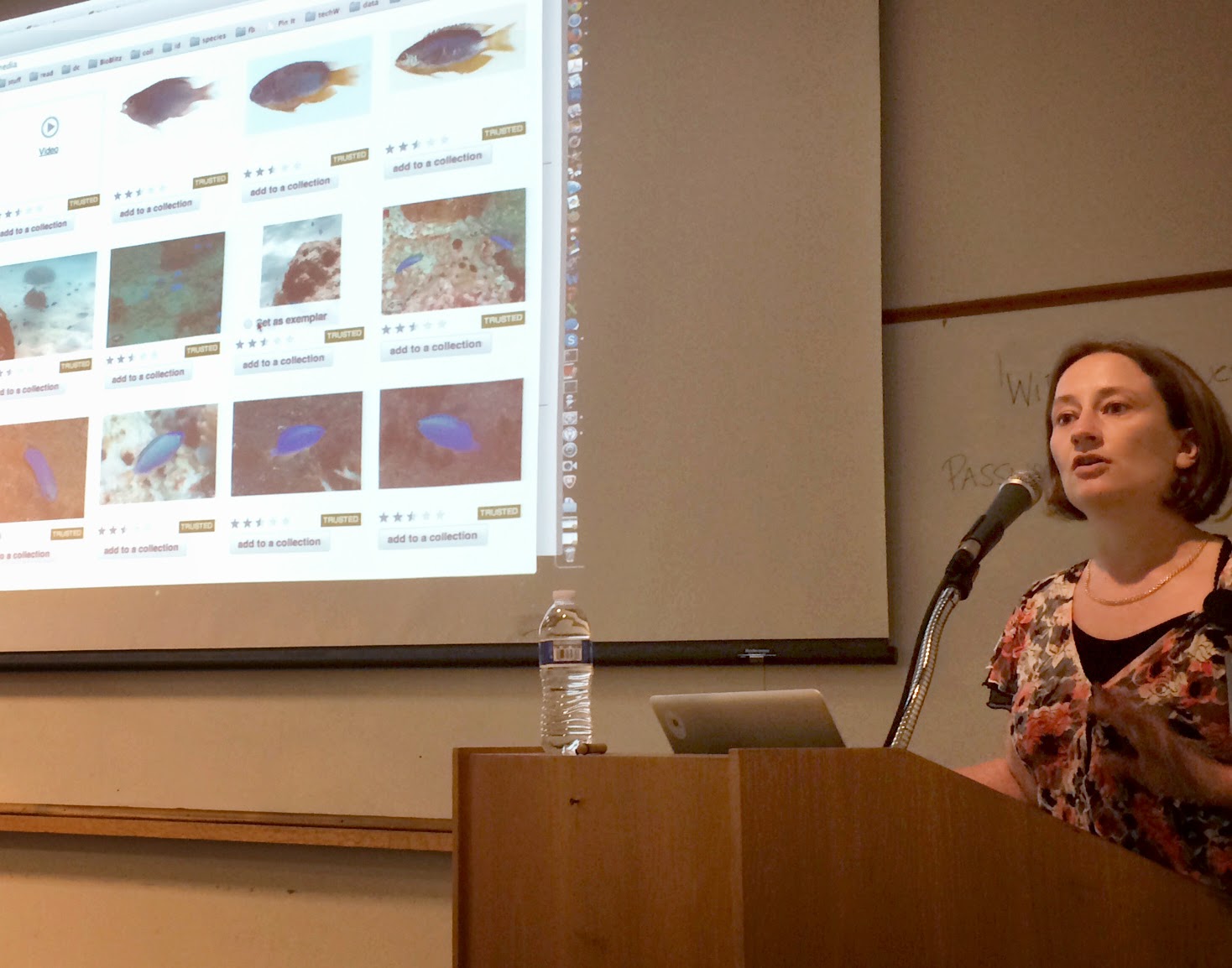
Jen Hammock presenting at the
Smithsonian Associates program

Carolyn Sheffield (BHL), Katja Schulz (EOL), and Jen Hammock (EOL) presented on BHL, EOL, and examples of how people could contribute to growing our knowledge of the planet’s biodiversity.  Presentations were followed by a hands-on session where attendees were encouraged to start machine tagging images in BHL’s Flickr Photostream, cropping and rating images, and exploring the iNaturalist platform.

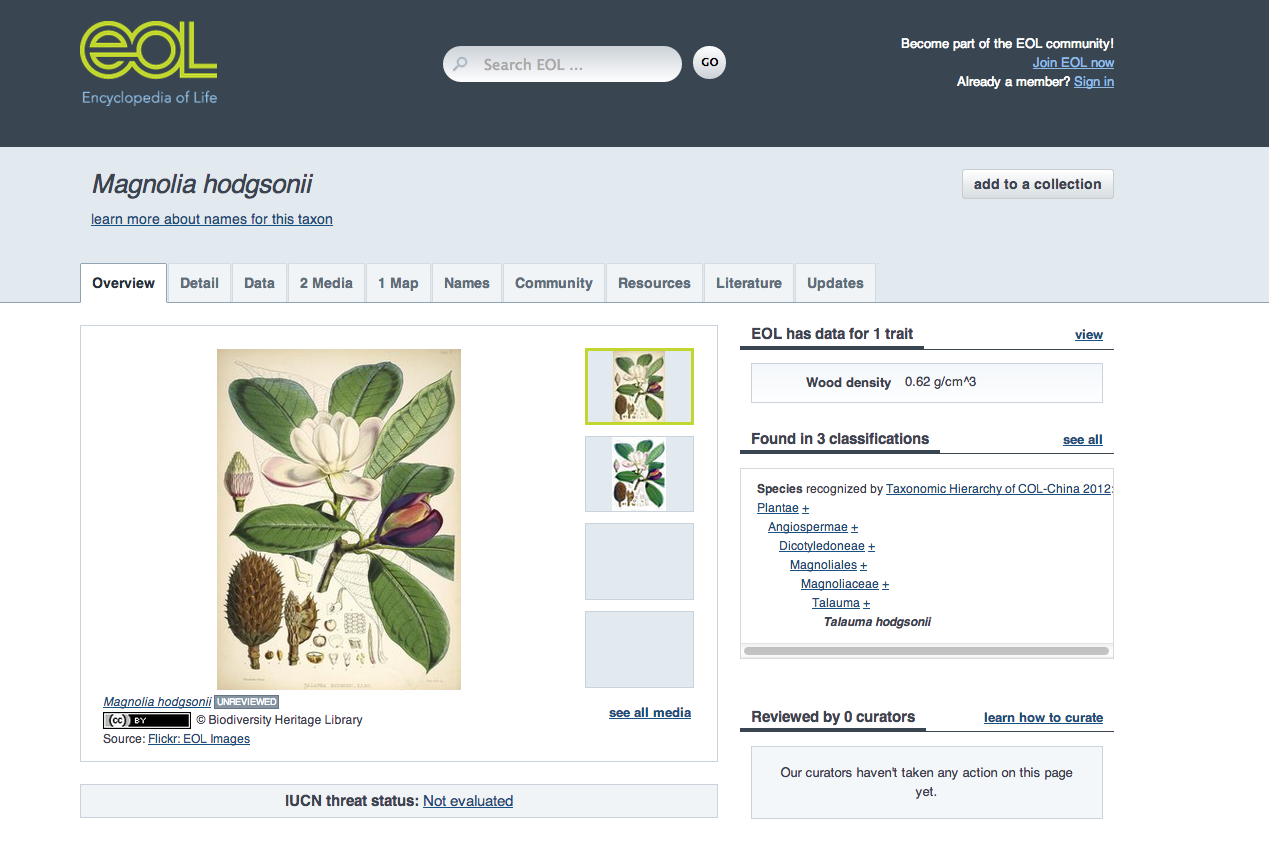
BHL has hosted similar events in the past for Smithsonian staff to learn about–and add–machine tags to the images in BHL’s Flickr Photostream.  A machine tag is a tag that is structured in such a way that a machine can read and understand it. In our case, we’re assigning machine tags of scientific names to the BHL illustrations in Flickr so that EOL can recognize those as images that can be harvested and associated with the appropriate species page in EOL.  See an example of an EOL species page with a BHL image here:

View Full Size Image
EOL species page for Magnolia hodgsonii with
illustration from BHL’s Flickr photostream

The structure that we use for the machine tags is:

taxonomy:binomial=”genus species”

You can replace “binomial” with another taxonomic tag, such as “genus” or “family, if you can only identify the organism at that level.  Learn more about the Flickr tagging process and machine tag formats in the instructions we provided to session attendees.

View Full Size Image
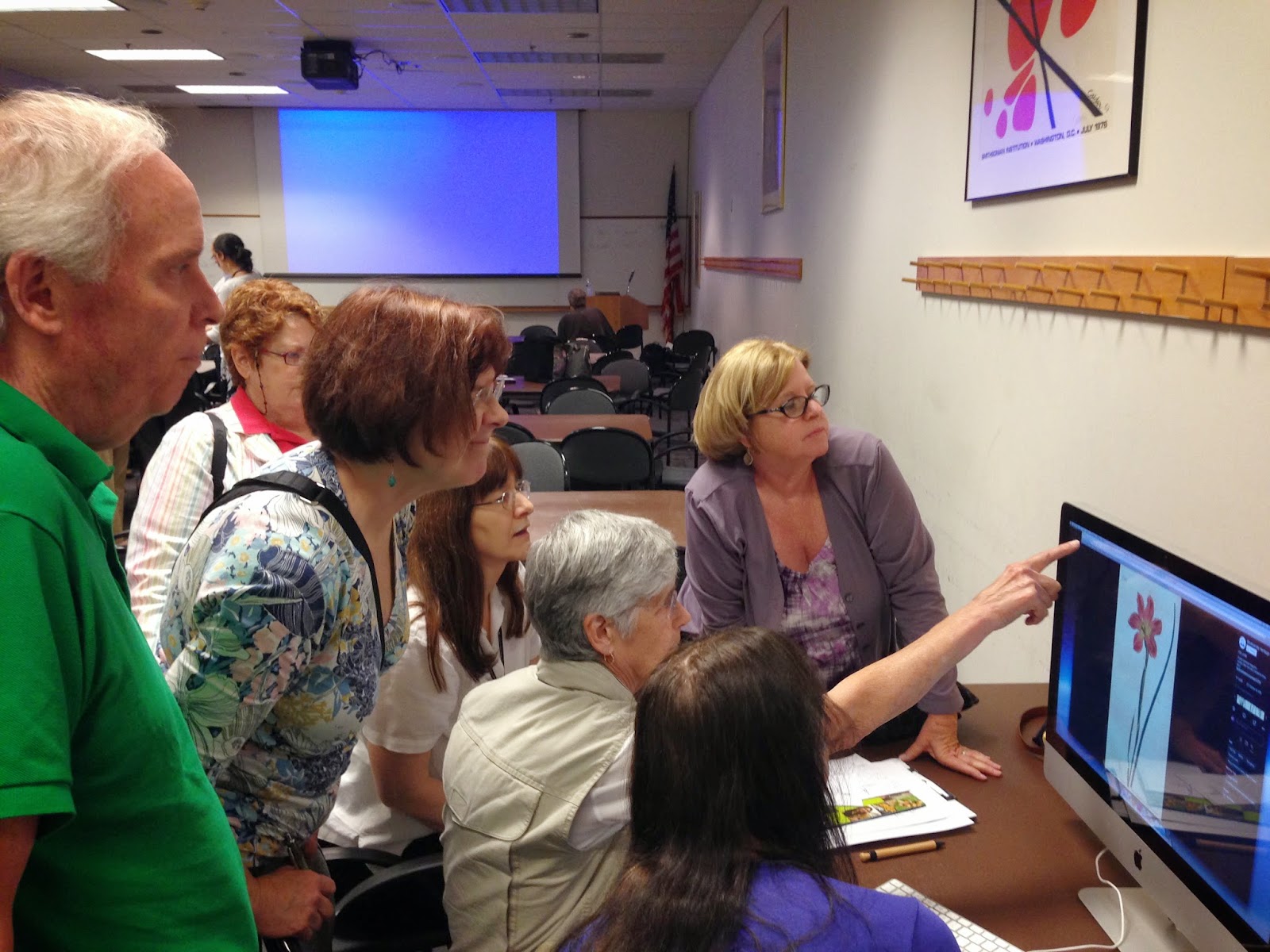
Katja Schulz working with
some of the TSA attendees

The TSA event was not only an opportunity to expand our cadre of machine taggers but also gave us a chance to share multiple ways that people could get involved with BHL and EOL. For example, images that depict multiple species can create confusion when associated with a single species page in EOL.  Attendees were shown how to replace such images with a cropped version showing only the relevant species.  The evening also provided a chance to showcase EOL’s recently launched iNaturalist Collections.

All told, it was a very successful event.  Several guests said they were delighted to learn about EOL and BHL and, by the end of the day, 129 more images in BHL’s Flickr Photostream boasted machine tags.  We look forward to the continued contributions of these amazing Smithsonian Associates session attendees!

Looking for a way that you can get involved?
Check out the instructions on machine tagging or visit EOL to sign up for an account and to learn more about recording your own observations of the natural world through EOL’s iNaturalist collections.

June 17, 2014by brooksm
Page 1 of 212»

Help Support BHL

BHL's existence depends on the financial support of its patrons. Help us keep this free resource alive!

search

About BHL

The Biodiversity Heritage Library (BHL) is the world’s largest open access digital library for biodiversity literature and archives. BHL operates as a worldwide consortium of natural history, botanical, research, and national libraries working together to digitize the natural history literature held in their collections and make it freely available for open access as part of a global “biodiversity community.”

Join Our Mailing List

Sign up to receive the latest news, content highlights, and promotions.

Subscribe Now

Subscribe to Blog via Email

Enter your email address to subscribe to this blog and receive notifications of new posts by email.

Join 319 other subscribers

Subscribe to Blog Via RSS

Subscribe to the blog RSS feed to stay up-to-date on all the latest BHL posts.

Access RSS Feed

Inspiring Discovery through Free Access to Biodiversity Knowledge.

The Biodiversity Heritage Library makes it easier than ever for you to access the information you need to study and explore life on Earth…for free, anytime, anywhere.


64+ Million Pages of
Biodiversity Literature Online.

EXPLORE

Tools and Services
to Transform Research.

EXPLORE

300,000+
Illustrations on Flickr.

EXPLORE

ABOUT | HARMFUL CONTENT | PRIVACY | SITE MAP | TERMS OF USE