Biodiversity Heritage Library - Program news and collection highlights from BHL
  • Home
  • News
  • Featured Books
    • All Featured Books
    • Book of the Month Series
    • BHL at 20
  • User Stories
  • Campaigns
    • Fossil Stories
    • Garden Stories
    • Monsters Are Real
    • Page Frights
    • Her Natural History
    • Earth Optimism 2020
  • Tech Blog
  • Visit BHL
Home
News
Featured Books
    All Featured Books
    Book of the Month Series
    BHL at 20
User Stories
Campaigns
    Fossil Stories
    Garden Stories
    Monsters Are Real
    Page Frights
    Her Natural History
    Earth Optimism 2020
Tech Blog
Visit BHL
  • Home
  • News
  • Featured Books
    • All Featured Books
    • Book of the Month Series
    • BHL at 20
  • User Stories
  • Campaigns
    • Fossil Stories
    • Garden Stories
    • Monsters Are Real
    • Page Frights
    • Her Natural History
    • Earth Optimism 2020
  • Tech Blog
  • Visit BHL
Biodiversity Heritage Library - Program news and collection highlights from BHL
Blog Reel, Featured Books

An Artist Steps Out of the Shadows: Using Social Media to Solve a Question of Identity

Over the years, we’ve discovered that social media is a pretty awesome way to learn more about our collections. Recently, a Twitter conversation helped us unravel the true identity of an incredible natural history artist.

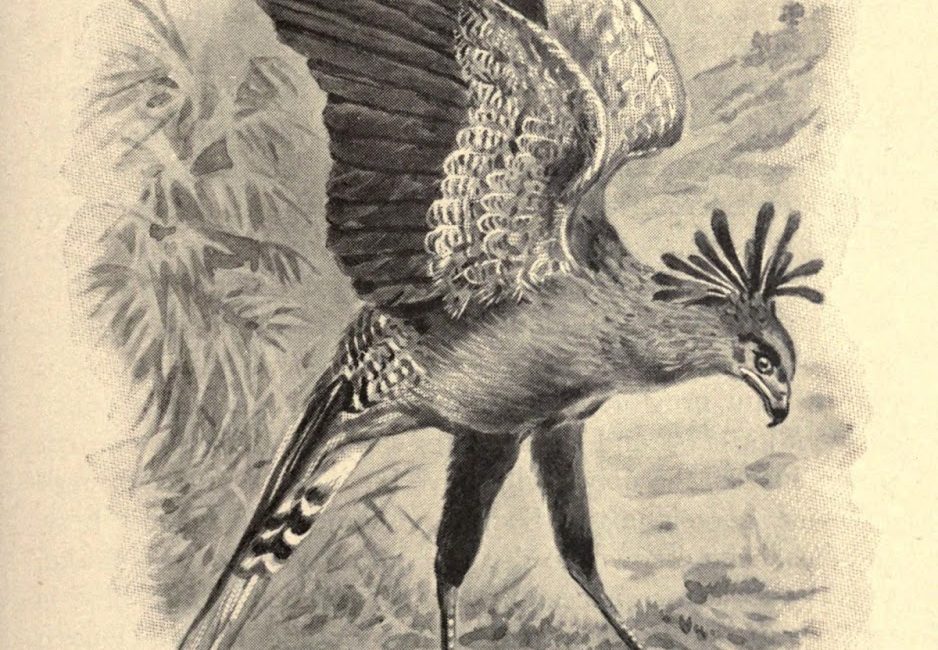
In November, one of our star citizen scientists Siobhan Leachman was working on adding artist machine tags to images in the BHL Flickr (want to learn more about how to do that? See this guide!). She was working on Wonders of the Bird World (1921), which was digitized for BHL by Cornell University Library. The title page stated that it was illustrated by A.T. Elwes. But who exactly was this Elwes?

View Full Size Image
Wonders of the bird world. By Bowdler Sharpe. Illustrations by A. T. Elwes. (1921) http://biodiversitylibrary.org/page/16742946.

There was lots of information online about an Alfred Elwes (1819-1888), a prolific 19th century British author who wrote many books related to animals. What was unclear was whether this Alfred Elwes was the same person as A.T. Elwes, which, after some research, was found to be an abbreviation for Alfred Thomas Elwes. Siobhan reached out to BHL and many other libraries on social media to uncover the truth.

.@BioDivLibrary @Cornell_Library Can u confirm A. T. Elwes = Alfred Thomas Elwes 1819-1888 Want 2 artist machine tag https://t.co/Fw5hAKawQJ

— Siobhan (@SiobhanLeachman) November 16, 2015

Thanks to leads from a variety of people, including @silmaril11 and Mann Library at Cornell University, the mystery was finally solved.

@SiobhanLeachman strange. This of any help https://t.co/5NAyKxyjCm ?

— Steve Em (@silmaril11) November 17, 2015

@SiobhanLeachman @BioDivLibrary @Cornell_Library LOC name authority dbase (https://t.co/KMrnoDec8Q) shows this: pic.twitter.com/X3CLgK0sok

— Mann Library (@Mann_Library) November 19, 2015

A.T. Elwes was NOT Alfred Elwes. They were distinct individuals that shared nearly identical names and were active during many of the same years. Alfred Thomas Elwes (A.T. Elwes), however, was born in 1841 and died in 1917 (compared to Alfred Elwes’ 1819 birth and 1888 death).

Through the leads she discovered via social media, Siobhan was able to learn much more about A.T. Elwes. She consolidated this information into a new Wikipedia article about him.

Alfred Thomas Elwes (A.T. Elwes) was a British natural history illustrator of mammals and birds. Though born in Leghorn, Italy around 1841, he lived and worked for most of his life in England. From 1872 to 1877, he was employed by the Illustrated London News as the chief draftsman of natural history subjects.

View Full Size Image
The birds of our rambles : with a companion for the country. By Charles Dixon. Illustrations by A. T. Elwes. (1891) http://biodiversitylibrary.org/page/22695638.

A.T. Elwes was an extremely productive artist, illustrating many natural history books over his lifetime. Many of these titles are in BHL, and, thanks to Siobhan, the Wikipedia article includes a list of a good many of them, as well as links to them in BHL where available. Some of the titles include The birds of our rambles : with a companion for the country (1891), The game birds and wild fowl of the British Islands; being a handbook for the naturalist and sportsman (1893), Birds’ Nests (1902), and Wonders of the Bird World (1921).

View Full Size Image
Birds’ nests; an introduction to the science of caliology. By Charles Dixon I.lustrations by A. T. Elwes. (1902). http://biodiversitylibrary.org/page/23036298.
View Full Size Image
The game birds and wild fowl of the British Islands; being a handbook for the naturalist and sportsman. By Charles Dixon. Illustrations by A.T. Elwes. (1893). http://biodiversitylibrary.org/page/37686026.

Social media is a powerful tool. It’s not just a way to share what you ate for lunch or even just a tool for chatting with friends. It’s also a networking and information goldmine, allowing you to draw on the expertise of disparate individuals and organizations in a variety of disciplines to get answers to questions that might otherwise be nearly impossible to solve on your own. For us at BHL, it’s an amazing tool for not only sharing BHL and our collections with the world, but also for learning more about the incredible books we hold and the remarkable individuals that produced them. Thanks, Siobhan, for all of your incredible dedication and passion. We love our collections even more because of you!

Want to share your own expertise about our collections with us or learn more about the books we hold? Engage with us on Twitter and Facebook, follow our blog, and leave comments on books in BHL.

December 31, 2015by michelle.underhill
BHL News, Blog Reel

Farewell from Technical Director William Ulate

Portrait version of the Biodiversity Heritage Library logo.

The dawn of a new year is an exciting time – a time to look forward to new possibilities and embark on new initiatives. Sometimes, however, it can also be tinged with sadness as these new beginnings may require us to say goodbye as well. For us at BHL, 2016 will also mean saying goodbye to William Ulate as our Technical Director. We have been honored to have him as our Technical Director since 2012 and will miss him in this role. 

William also wanted to take an opportunity to share his thoughts and well-wishes for everyone at BHL in this post:

As some of you may know, I will no longer be the BHL Technical Director after 2015, so I want to take this opportunity to thank everyone in our BHL family for your valuable and kind support during these last three years as Technical Director and two years before that as Global Coordinator.

View Full Size Image
At the Center for Biodiversity Informatics
with Founding BHL Technical Director
Chris Freeland, back in 2012.

Particularly, I would like to thank my colleagues at the BHL Technical Team, our former Technical Director, Chris Freeland, the Executive Committee and the TAG members, past and present, for their guidance and trust since 2012.  I also have to recognize the invaluable support from all the folks from the IT Department at Missouri Botanical Garden (MBG).  My gratitude goes also to our Director, Martin Kalfatovic, the Secretariat at Smithsonian and the BHL Staff for all the time we spent working together in numerous meetings and calls… and outside of them too.

But most of all, I would like to wish you all in BHL the best for the upcoming years.  I am positive that the future plans and challenges we have been talking about will make for very interesting technical developments.  I look back proudly to our past achievements from these last 5 years and, as often happens, wish we could’ve done more. However, I believe changes are opportunities and judging from my experience, I am sure BHL will succeed on its endeavor thanks to the continuous work and involvement of each one of you.

View Full Size Image
At Missouri, USA

For me, this is not a reason to be sad but rather hopeful, because I know the best for BHL is yet to come and, besides, I’m not going too far next year either.  I will still be around since we have received a no-cost extension from the IMLS for the Digging into Data Challenge to finish the Mining Biodiversity project.  And I will remain employed at the Center for Biodiversity Informatics of the Missouri Botanical Garden with the World Flora Online project, so you may still be hearing from me from time to time…

Finally, I just want to say that it has been an honor and a privilege to work by your side. I’ve made a lot of friends worldwide and learned a lot from you all.  For that and many reasons more, my sincerest “¡Gracias!”   As a Latin American, I believe BHL is evidently one of the most successful projects for biodiversity information repatriation, so I would love to see its continuous development for many years to come…  Keep the good work!

¡Hasta pronto!

William Ulate.

View Full Size Image
Somewhere in Costa Rica

Thank you, William, for all of your wonderful years of service, and we look forward to still seeing you on various other biodiversity projects in the future!

Best Wishes, The BHL Family

December 29, 2015by suzanne.chase
BHL News, Blog Reel

Ondřej Dostál, Director of the Mendel Museum visit the BHL Secretariat Offices

View Full Size Image

The BHL Secretariat was honored to be visited by Mgr. Ondřej Dostál, Director of the Mendel Museum of Masaryk University in Brno, Czech Republic.

Dr. Dostál shared information about the digitization work being done at the museum, particularly around the works of Mendel.

Special thanks to Tomoko Steen, BHL Member representative from the Library of Congress, who introduced Dr. Dostál to Program Director Martin Kalfatovic and also joined us for our meeting.

There was also an opportunity for Dr. Dostál to visit the Smithsonian Libraries’ Joseph F. Cullman 3rd Library of Natural History and the Smithsonian Libraries’ digitization facility in the National Museum of Natural History.

December 28, 2015by
BHL News, Blog Reel

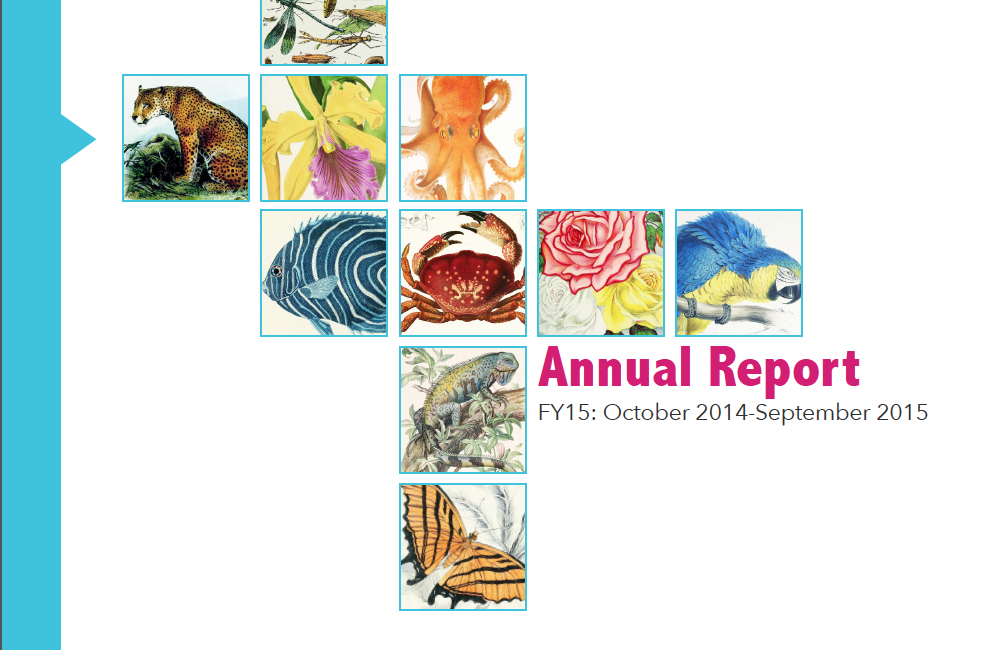
BHL Annual Report Now Available!

We are pleased to announce that the Fiscal Year 2015 BHL Annual Report is now available!

View Full Size Image

Want to learn how our collections grew this past year, or how our audiences engaged with these collections, or explore the many new and exciting citizen science and outreach initiatives we’ve embarked on this year? Then check out the report today!

View Full Size Image


View Full Size Image

You can also see the latest updates from BHL in our newsletter. See the Fall 2015 edition archived here.

Want to stay up to date with all the great news from BHL? Then be sure to sign up for our quarterly newsletter here.

December 23, 2015by ulib-libraryjobs
Blog Reel, Featured Books

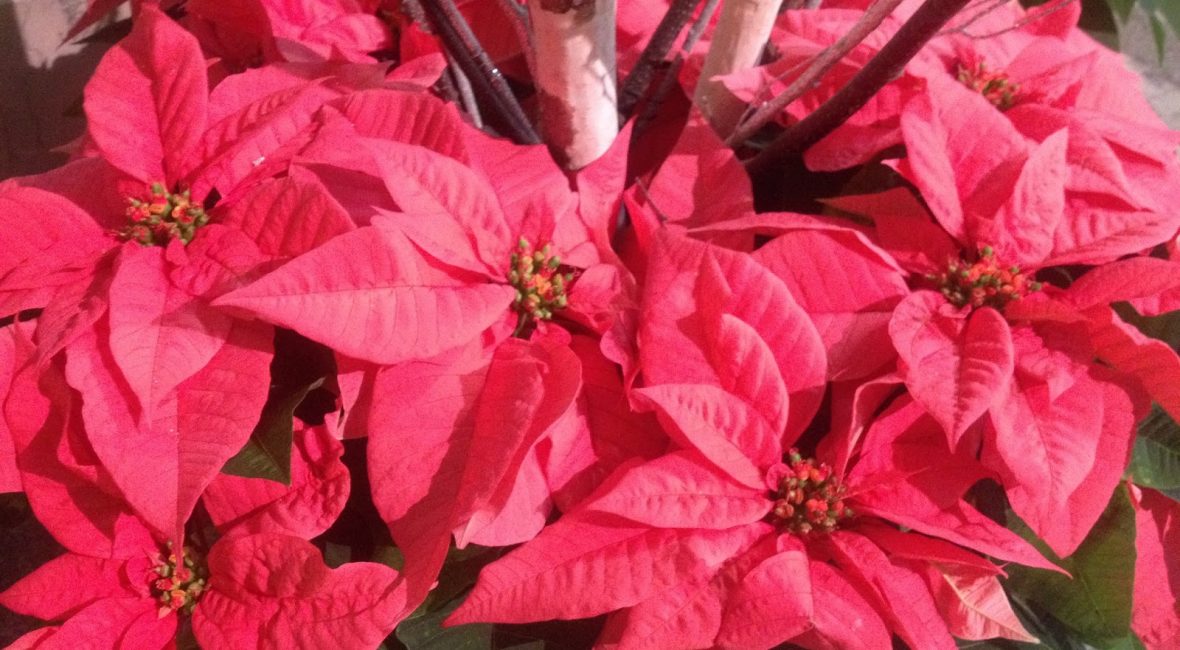
Tired of Poinsettias? Bah, Humbug! Then into the Smithsonian Libraries

This post originally published on the Smithsonian Collections Blog. View the original post here.
View Full Size Image
Blooms in the Rotunda of the National Museum of Natural History.

Tired of poinsettias?

Last year, we at BHL asked this question in social media and offered up vibrant, joyful portraits of the amaryllis instead. But one commentator declared “Poinsettias rule!” And indeed poinsettias do reign as an economic powerhouse of the nursery industry, cultivated all over the world. The public areas of the various Smithsonian museums and the neighboring Botanic Gardens on the Mall in Washington now have abundant, seasonal displays of poinsettias, beautiful specimens propagated by the talented horticulturists of the Federal greenhouses. The palette of colors and shapes are wonderful, never a dull sight this time of year.

View Full Size Image
The Smithsonian Castle (made up entirely of plant materials) nestled in the display of poinsettias in the Garden Court of the United States Botanic Garden.

Potted plants in the Smithsonian Libraries’ collection areas are generally discouraged because of the insects they may harbor, potentially harmful to the books on the shelves. Consequently, there are no seasonal flowers welcoming researchers to the reading rooms. However, anyone can find holiday blossoms in the Libraries by going on a virtual plant hunt. The range of holdings in the Smithsonian Libraries provides both images and a full portrayal of the poinsettias’ history (some of it mythic) and, a renewed appreciation for this remarkable plant. There is still a fuller story yet to be told, to separate oft-repeated lore from actual evidence, waiting to be fully investigated in the Libraries’ resources.

It is commonly known that the poinsettia was named to honor physician, politician, diplomat, and amateur botanist, Joel Roberts Poinsett (1779-1851). He was a special envoy, then first Minister, representing the United States in Mexico from 1822 to 1830. Perhaps not as well-known is that the flower (the showy part is actually leaves or bracts) had an association with Christmas long before it was promoted by American and European nurseries. Further, the relationship between the plant and Poinsett is not as straightforward as often portrayed.

View Full Size Image
Lithograph and cut paper on paper portrait of Joel Roberts Poinsett (1841, National Portrait Gallery, Smithsonian Institution; gift of Robert L. McNeil, Jr.).

The Aztecs of the principal city of Tenochtitlan (now Mexico City) imported the plant from southern Mexico to northern Guatemala, where it thrives in the landscape of lower altitudes and warmer climate. In the ancient Nahuatl language it is called cuetlaxochitl – xochitl meaning ornamental flower. The winter-blooming plant was used for medicinal purposes (from its sap) and as a source of red dye (from the bracts). There is also evidence that cuetlaxochitl was used in religious ceremonies, its brilliant color representing purity. Ancient Aztec herbals, the few surviving from the Pre-Columbian period, may have references and illustrations to both the health properties and ritual uses of the plant. There are facsimile copies of these rare works in both the Smithsonian Libraries’ Anthropology, National Museum of American Indian and Special Collections Libraries.

As with other pagan rituals and symbols – think of winter greenery (pine, holly, mistletoe), of wreaths and trees brought indoors and the yule log – the star-shaped flower was incorporated into Christmas celebrations. In particular, it had a role in the nativity procession of the Fiesta of Santa Pesebre. After the Conquest, with Spanish missionaries in Mexico, the plant became known as “Flore de Noche Buena” or “Flower of the Holy Night” (Christmas Eve).

In a 2011 article by the Agricultural School of Purdue University, many of the myths of the poinsettia were investigated and debunked. There is no evidence, only legend, that it was Poinsett who introduced the plant to the United States, first to his native South Carolina. As a learned gentleman, he may have had a role in sending seeds to colleagues in Philadelphia where poinsettias were displayed in 1828. From that city, Scottish nurseryman Robert Buist brought cuttings to James McNab in Edinburgh. A German botanist, Karl Willdenow, provided the botanical name, Euphorbia pulcherrima, first published in 1834, by Johann Friedrich Klotzsch. Back in Edinburgh, another botanist, Robert Graham, changed the name in 1836 to Poinsettia pucherrima, although that version never did take officially. Another story is that William Hickling Prescott, the author of The History of the Conquest of Mexico (1843) gave the name to honor his friend in that publication. There are many copies of this title in the Smithsonian Libraries. As early as 1836 Curtis’s Botanical Magazine (London, volume 63) published a stunning illustration entitled Poinsettia pulcherrima (Showy Poinsettia).

View Full Size Image
Hand-colored engraving by Samuel Curtis. Curtis’s Botanical magazine. Digitized image from the Biodiversity Heritage Library, copy supplied by the Peter H. Raven Library of the Missouri Botanical Garden.

There is research, appropriately enough published by The Botanic Garden and Botanical Museum Berlin in the journal Willdenowia, finding that earlier botanical expeditions to Mexico predating Poinsett had sent the first cuttings back to Europe. The Royal Botanical Expedition to New Spain, led by Martín de Sessé y Lacasta (1751-1808) and José Mariano Mociño (1757–1820) is the first contender. Following that were the explorations of Alexander Freiherr von Humboldt (1769-1859) and Aimé Bonpland (1773-1858) and, after the independence of Mexico in 1821, the collectors for the Natural History Museum in Berlin, Christian Julius Wilhelm Schiede (1798-1838) and Ferdinand Deppe (1798-1836).

Poinsettias were prized in Europe and America from the mid-19th century, although still a luxury grown in greenhouses. The Ecke family nursery, founded by German immigrants setting in Hollywood, California, was the great popularizer of poinsettias. The Eckes focused their floriculture business exclusively on poinsettias from 1909. Talented in their cultivation of exotics and clever in marketing, the nursery made the plant widely available. Their promotion of the plant can be seen in nursery catalogs digitized in BHL. The Ecke poinsettia nurseries were taken over by the Dutch conglomerate Agribo in 2012, now owned by a private equity group comprising the third-largest horticultural business in the world.

View Full Size Image
The growth in the commercial trade of the poinsettia can be traced in nursery catalogs. There are a great number in the trade literature collection of the National Museum of American History Library. This title page is courtesy of the Biodiversity Heritage Library, digitized from a copy in the National Agricultural Library.

In our search for a fuller history of the plant as preserved in the Smithsonian Libraries, it should be pointed out that Joel Roberts Poinsett is also a figure in the pre-history of the Smithsonian, as a co-founder of the National Institute for the Promotion of Science and the Useful Arts. This organization was made up of prominent figures advocating a vision for the use of James Smithson’s unexpected bequest to the United States. There are several works either written by Poinsett or associated with the National Institute in the Smithsonian Libraries’ Special Collections.

Poinsett’s death date, December 12th, is now National Poinsettia Day in the United States. Pause and admire living blooms you pass by and ponder the plant’s rich, if not entirely, settled history. Then consider exploring the wide-range holdings of the Smithsonian Libraries – from the art, natural and American histories, botanical, horticultural, anthropology, rare books, digital resources, and trade literature collections – to find new discoveries of the story of the poinsettia.

View Full Size Image
Studies of Poinsettias, Sophia L. Crownfield, drawing, early 20th century (Cooper Hewitt, Smithsonian Design Museum Collection; gift of Starling W. Childs and Ward Cheney).
December 22, 2015by ulib-libraryjobs
Blog Reel, User Stories

BHL Isn’t Just For Biologists

Portrait version of the Biodiversity Heritage Library logo.

Charles Darwin is famous for the theory of evolution by means of natural selection. The theory hinges on the mutability of species, whereby the propagation of certain favorable traits within members of a species may gradually result in the evolution of that species. The question of when Darwin first came to believe in the mutability of species – when he became a “convinced transmutationist” – has long been a point of contention among historians of science.

There are two prevailing theories on the topic. The early conversion hypothesis states that Darwin developed a belief in the transmutation of species while on the Beagle voyage based on observed similarities between the fossils he was collecting and extant species in the area. The second theory, the late conversion hypothesis, holds that Darwin did not start believing that species were mutable until after the Beagle voyage, once experts in England had studied the specimens he collected. Today, most historians of science support the latter theory.

Dr. Paul D. Brinkman, Head of the History of Science Research Lab and Curator of Special Collections at the North Carolina Museum of Natural Sciences, finds the late conversion theory flawed.

View Full Size Image
Paul D. Brinkman consorting with known pirates in Charleston, SC.

Brinkman has been studying the history of science for nearly twenty years. He specializes in late nineteenth- and early twentieth-century geology and vertebrate paleontology, especially in the American West, and is also interested in the spread of science from Europe to the New World and the trans-Atlantic exchanges of specimens and ideas. The question of when Darwin adopted a transmutationist viewpoint is of particular interest to Dr. Brinkman.

In a 2010 paper published in the Journal of the History of Biology entitled “Charles Darwin’s Beagle Voyage, Fossil Vertebrate Succession, and the ‘Gradual Birth & Death of Species,'” Brinkman argues that Darwin’s own journals from the Beagle voyage (which include discussions of the similarities between some of the fossils he was collecting and extant species – notably Glyptodontidae fossils and living armadillos – and reflections regarding fossil vertebrate succession – which Darwin himself later identified as a key element in his contemplation on the origin of species) suggest that Darwin’s adoption of transmutationism happened gradually but certainly during, and not after, the Beagle voyage.

Darwin’s journals and publications, as well as the books that Darwin was known to have in his Beagle library, provide key information that Brinkman used to support his arguments. As such, access to these materials is crucial to Brinkman’s research. Thanks to BHL, it’s easier than ever for him to obtain these resources.

Dr. Brinkman was introduced to BHL many years ago by Christine Giannoni, Museum Librarian at The Field Museum. Christine is a star promoter of BHL, having been involved with the program for many years; she currently serves as the Museum’s Member Representative to BHL. Thanks to her introduction, Brinkman is now a regular user of BHL.

“BHL is a wonderful resource,” lauds Brinkman. “I use a lot of old and obscure resources in my line of work, and BHL makes getting access to these sources a lot easier.”

View Full Size Image
The cover of the American Naturalist of September, 1895, which Brinkman downloaded from BHL for a recent project entitled “Edward Drinker Cope’s final feud.” http://biodiversitylibrary.org/item/129692.

When conducting research, Brinkman often refers to BHL 8-10 times a day, reading articles online or downloading relevant pages as PDFs. He also downloads title pages and significant figures for use in lecture slides. And while he may refer to specialized material when conducting specific research, the most-common type of material that he consults on BHL may surprise you.

“I probably use old museum annual reports more than any other single resource on BHL,” explains Brinkman. “This is especially useful, as a lot of these old reports have been relegated to offsite storage at many university libraries, which can sometimes mean long delays. BHL, however, provides them at the click of a button!”

So, whether it’s helping a scientist confirm the identity of a specimen collected in the field or providing primary source evidence to support the work of historians of science, it’s clear that BHL greatly increases the efficiency of research for those working in a variety of disciplines. We think Darwin would approve.

December 17, 2015by ulib-libraryjobs
Blog Reel, Featured Books

In Search of the White Whale: A Legend, a Fossil, a Living Mammal

Portrait version of the Biodiversity Heritage Library logo.
View Full Size Image
In this reconstruction, a pod of Albicetus travel together through the Miocene Pacific Ocean, surfacing occasionally to breathe. Modern sperm whales are also known for forming these tight-knit groups, composed mainly of females and their calves. Art by A. Boersma for the Smithsonian.

1820. Far west of the Galapagos Islands in the Pacific Ocean. A whaleship pursues a pod of sperm whales. Suddenly, an eighty-five foot long giant charges the ship, ramming it with its head not once, but twice, caving in the bows and sending the ship to a watery grave.

This is the story of the sinking of the Essex, the subject of Ron Howard’s movie adaptation of Nathaniel Philbrick’s novel In the Heart of the Sea, opening this Friday. The sperm whale that sank the Essex also served as one source of inspiration for another literary icon – the infamous white whale Moby Dick.

In addition to the big screen, another “white whale” hits the spotlight on a different stage this week – the scientific stage. Scientists from the Smithsonian Institution have just published new research on an extinct sperm whale that roamed the seas millions of years ago, which they’ve named Albicetus (“white whale”).

Today’s modern sperm whale was first scientifically described by Carl Linnaeus in the tenth edition of his 1758 Systema Naturae, a pivotal work that laid the foundation for our modern system of zoological nomenclature. Within this work, Linnaeus initially described the sperm whale as four separate species: Physeter catodon, Physeter macrocephalus, Physeter microps, and Physeter tursio. Today, we recognize that Linnaeus was actually describing only one species, which is now known by the binomial Physeter macrocephalus.

In the years following Linnaeus’ naming of the species, mystery and confusion surrounded the sperm whale, and over a dozen species names and multiple genera were published for the whale by the mid-1800s. Most of what information could be gleaned about the animal came from specimens that washed ashore, such as that depicted in Johann Jonstonus’ 17th century work Historiae naturalis de quadrupetibus libri, and from whaling expeditions.

View Full Size Image
Sperm Whale stranding. Jonstonus, Joannes. Historiae naturalis de quadrupetibus libri. pt. 2-6. 1650. http://biodiversitylibrary.org/page/44040300.

In the 18th, 19th, and early 20th centuries, whaling was an important industry, and the sperm whale, with its spermaceti organ full of valuable sperm oil, was a primary target for whalers.  Despite the threats posed by the industry to whale populations, whalers were perhaps in the best position to learn more about the species they hunted. These expeditions also offered naturalists excellent opportunities to study these cetaceans.

One such individual was Thomas Beale (1807-1849), a British surgeon who, in 1830, joined the London whaling ship Kent as the physician on an expedition to the South Seas. Through his keen observations during the expedition, Beale gathered much information about the sperm whale, and, upon his return to England, published a fifty-eight page booklet for subscribers in 1835 entitled A Few Observations on the Natural History of the Sperm Whale, with an account of the Rise and Progress of the Fishery, and of the Modes of Pursuing, Killing, and “Cutting In” that Animal, with a List of its Favourite Places of Resort. The booklet was so well received that Beale revised, expanded, and republished it in 1839 as The Natural History of the Sperm Whale. This work served as the primary source of what was known about sperm whales at the time, and the Penny Cyclopedia hailed “Mr. Beale…in his excellent work on the ‘Natural History of the Sperm Whale,’ has done more to elucidate its habits and form than any other writer.”

View Full Size Image
Beale, Thomas. The Natural History of the Sperm Whale. 1839. http://biodiversitylibrary.org/page/48976761.

Beale’s work was an important reference for Herman Melville, who acknowledged the book as a primary source of information for the cetological section of Moby-Dick; or, The Whale. Whaling provided additional inspiration for this work; the climax of Melville’s novel is based on the same events recounted within In the Heart of the Sea – the sinking of the Nantucket whaleship Essex. The crew that escaped the sinking of this ship spent three months at sea, covered 4,500 miles, and resorted to tragic lengths to stay alive. Of the 20 men who left the Essex, only 5 survived. Owen Chase, chief mate of the Essex, kept a journal of the events, which was later published as Narrative of the Most Extraordinary Shipwreck of the Whale-ship Essex, of Nantucket; which was Attacked and Finally Destroyed by a Large Spermaceti-whale, in the Pacific Ocean. Melville read Chase’s account of the event, and acknowledged its impact on his writing. The events were circulated within many natural history books, such as in this account within Johnson’s Household Book of Nature (1880).

While today there are only three extant species in the sperm whale family (the sperm whale and its relatives, the pygmy and dwarf sperm whales), their evolutionary history has seen many additional members. One of these, Albicetus oxymycterus, lived around 15 million years ago in the North Pacific Ocean, and now, thanks to research conducted by Dr. Nick Pyenson, curator of fossil marine mammals at the Smithsonian’s National Museum of Natural History, and Smithsonian research student Alex Boersma, we have a better understanding of this animal’s place in its family’s evolutionary history.

View Full Size Image
Archival specimen notes for type specimen for Albicetus oxymycterus.

Mr. Charles A. Roe collected the type specimen for Albicetus oxymycterus from the sea cliffs near the original Santa Barbara Lighthouse (known as the Santa Barbara Light) sometime around 1909. Archival typewritten notes at USNM indicate that Mr. Roe had “first observed the specimen when he was a boy, some 30 years before.” After Mr. Roe’s death, his wife presented the National Museum of Natural History (then the United States National Museum) with the specimen in 1924.

View Full Size Image
Albicetus oxymycterus specimen. Kellogg, Remington. Proceedings of the United States National Museum. v. 66 (1926). http://biodiversitylibrary.org/page/7739240.

At the time, well-known naturalist and paleontologist Remington Kellogg had an avid interest in this material (Kellogg would later become curator of vertebrate paleontology at USNM and make extensive contributions to the study of fossil marine mammals). Kellogg took it upon himself to describe the Santa Barbara specimen, and published his findings in 1925. He assigned the specimen to the genus Ontocetus, which was first named by Joseph Leidy on the basis on a large tooth found in the 19th century, which he thought belonged to a large marine mammal, and likely a sperm whale. Kellogg also thought this tooth, Ontocetus emmonsi, resembled the large dentition of his sperm whale specimen, which led him to place the Santa Barbara fossil as a new species in the genus Ontocetus. However, recent authors, weighing in favor of dissenting opinions about Ontocetus since the 19th century, have argued that the original tooth of Ontocetus emmonsi belongs not to a sperm whale, but to an ancient walrus.

In light of our improved understanding of the Ontocetus genus, Pyenson and Boersma re-evaluated the specimen and erected a new genus for it, Albicetus, or “white whale,” in homage to Melville’s Moby Dick.

“Since our specimen is most definitely an ancient sperm whale, we needed to give it a new and more appropriate genus name,” explained Pyenson. “While we don’t know what its skin color in life actually looked like, the color of the fossil is an ashen white. It only seemed appropriate to evoke Melville’s white sperm whale Moby Dick.”

View Full Size Image
Alex Boersma with the NMNH Albicetus oxymycterus specimen. Photo Credit: James Di Loreto, NMNH Imaging.

Boersma and Pyenson published the name and their accompanying research about the fossil, which includes an estimation of the size of the whale and its place in the sperm whale evolutionary tree, today in the PLOS ONE article “Albicetus oxymycterus, a new generic name and redescription of a basal physeteroid (Mammalia, Cetacea) from the Miocene of California, and the evolution of body size in sperm whales.” The paper helps to resolve questions about how sperm whales have evolved into the singular creatures they are today, with insights on the increase in body size and changes in feeding strategies.

To accompany the redescription, Boersma and Pyenson created a 3-dimensional model of the specimen, available on the Smithsonian X 3D website (http://3d.si.edu). “In addition to making the specimen available for public viewing, the model was also necessary just for us to describe the specimen fully,” confesses Pyenson. “It weighs well over 300 pounds, taking four people just to slowly roll it over. Having the model was crucial for easy examination of the specimen from all angles for description and comparison.”

3D model of Albicetus oxymycterus from Smithsonian X 3D.

Thanks to Herman Melville, the White Whale is arguably one of the most recognizable figures in literary history. It is a figure with many identities. It is a harbinger of death; the personification of evil. It is a symbol of unattainable glory. But today, it is also something more. Today, the white whale is also Albicetus, a majestic, ancient, and complex creature that swam in the heart of the sea millions of years ago.

  • You can browse historic illustrations of the sperm whale in the BHL Flickr.
  • Browse publications about the sperm whale in our White Whale collection on BHL.

With Contributions By:

Nick Pyenson
Curator of Fossil Marine Mammals
Smithsonian National Museum of Natural History

Alex Boersma
Smithsonian Research Student
Smithsonian National Museum of Natural History

December 9, 2015by michelle.underhill
Page 1 of 212»

Help Support BHL

BHL's existence depends on the financial support of its patrons. Help us keep this free resource alive!

search

About BHL

The Biodiversity Heritage Library (BHL) is the world’s largest open access digital library for biodiversity literature and archives. BHL operates as a worldwide consortium of natural history, botanical, research, and national libraries working together to digitize the natural history literature held in their collections and make it freely available for open access as part of a global “biodiversity community.”

Join Our Mailing List

Sign up to receive the latest news, content highlights, and promotions.

Subscribe Now

Subscribe to Blog via Email

Enter your email address to subscribe to this blog and receive notifications of new posts by email.

Join 319 other subscribers

Subscribe to Blog Via RSS

Subscribe to the blog RSS feed to stay up-to-date on all the latest BHL posts.

Access RSS Feed

Inspiring Discovery through Free Access to Biodiversity Knowledge.

The Biodiversity Heritage Library makes it easier than ever for you to access the information you need to study and explore life on Earth…for free, anytime, anywhere.


64+ Million Pages of
Biodiversity Literature Online.

EXPLORE

Tools and Services
to Transform Research.

EXPLORE

300,000+
Illustrations on Flickr.

EXPLORE

ABOUT | HARMFUL CONTENT | PRIVACY | SITE MAP | TERMS OF USE