Biodiversity Heritage Library - Program news and collection highlights from BHL
  • Home
  • News
  • Featured Books
    • All Featured Books
    • Book of the Month Series
    • BHL at 20
  • User Stories
  • Campaigns
    • Fossil Stories
    • Garden Stories
    • Monsters Are Real
    • Page Frights
    • Her Natural History
    • Earth Optimism 2020
  • Tech Blog
  • Visit BHL
Home
News
Featured Books
    All Featured Books
    Book of the Month Series
    BHL at 20
User Stories
Campaigns
    Fossil Stories
    Garden Stories
    Monsters Are Real
    Page Frights
    Her Natural History
    Earth Optimism 2020
Tech Blog
Visit BHL
  • Home
  • News
  • Featured Books
    • All Featured Books
    • Book of the Month Series
    • BHL at 20
  • User Stories
  • Campaigns
    • Fossil Stories
    • Garden Stories
    • Monsters Are Real
    • Page Frights
    • Her Natural History
    • Earth Optimism 2020
  • Tech Blog
  • Visit BHL
Biodiversity Heritage Library - Program news and collection highlights from BHL
Blog Reel, Featured Books

“Abnormal apples” and “proliferous potatoes” – Uncovering the stories behind Kew’s Museum of Economic Botany Collection.

What is Economic botany?

Economic botany can, in a nutshell (excuse the pun), be described as the use of plants by people. This relationship spans thousands of years and includes both individuals and cultures – making this subject a rich and fascinating link between botany and anthropology. Economic botany collections can essentially be described using the term biocultural.

Kew’s Museum of Economic Botany.

The Economic Botany Collection at the Royal Botanic Gardens, Kew holds around 100,000 objects from around the globe. Established as the Museum of Economic Botany by Kew’s first official Director, Sir William Jackson Hooker, in 1847, it was cited as a public repository for ‘all kinds of useful and curious Vegetable Products, which neither the living plants of the Garden nor the specimens in the Herbarium could exhibit’.

Raw materials are housed in the Collection, alongside objects ranging from jewellery, musical instruments and an array of dyes and medicines. Many of these items were acquired by Kew during the peak of colonial expansion, with the majority dating from around 1847 to 1930. Kew staff are currently working with indigenous cultures and partner institutions to ensure that traditional crafts, such as the use and manufacture of Tapa (Pacific barkcloth), are being kept alive and in some cases revived in the communities where they first originated.
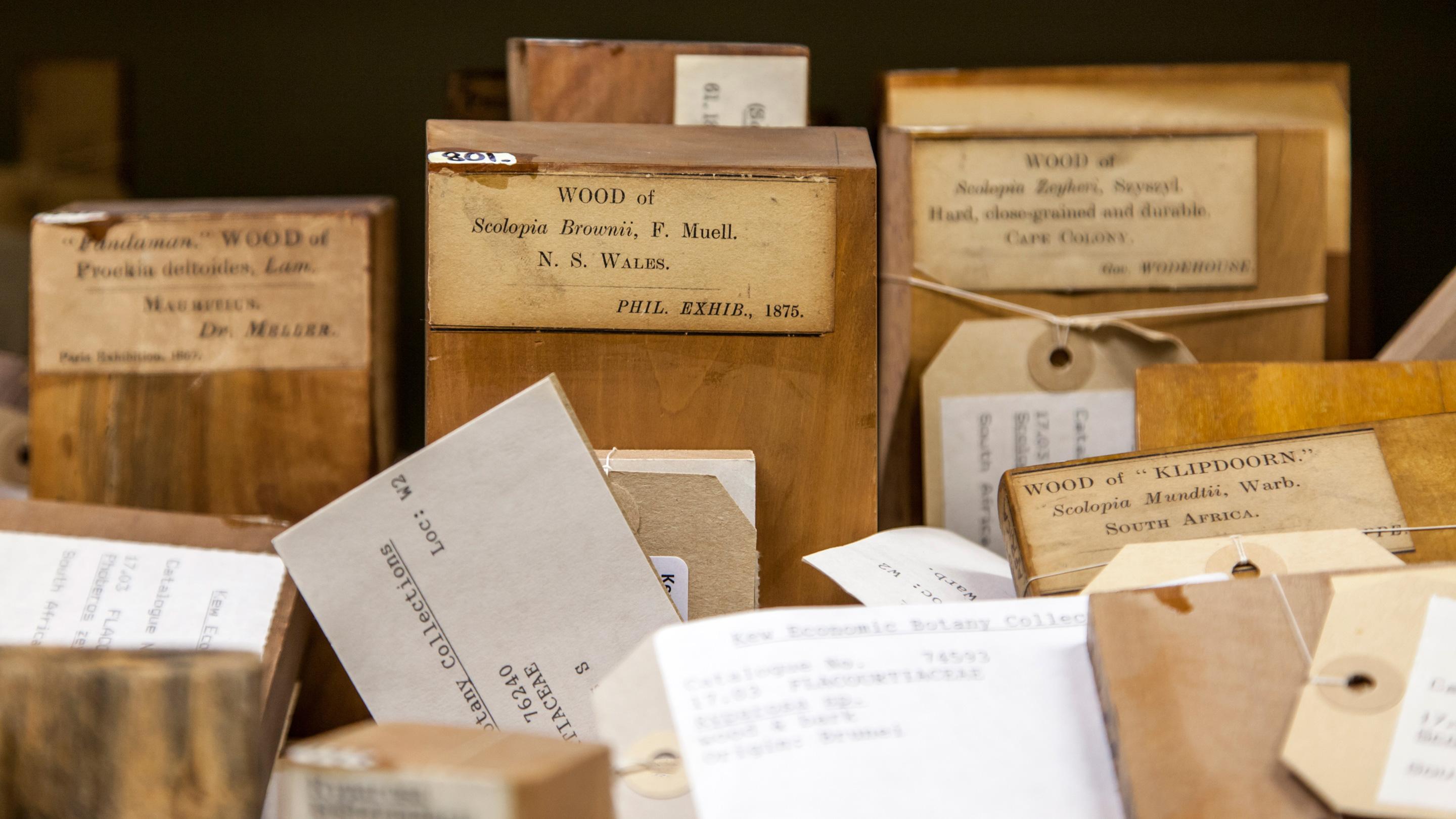
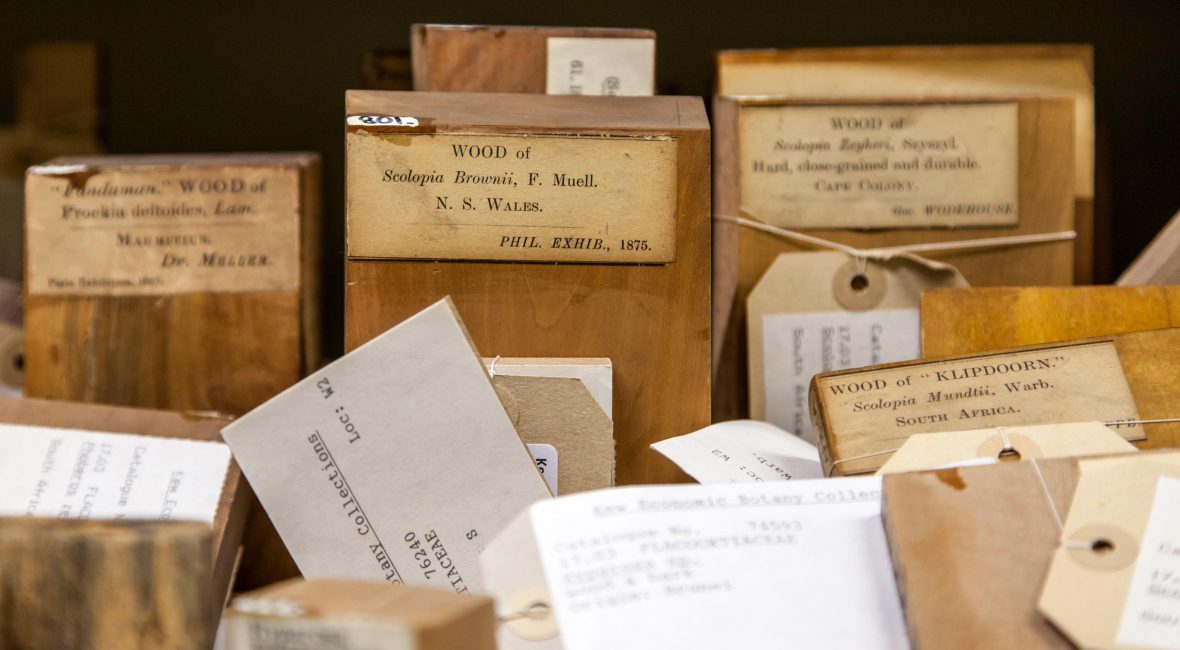
EcBotWoodColln_IMG_5764_hero_web.jpg

Economic botany wood collection samples

The Mobile Museum Project.

In parallel with this research and outreach, Kew’s Museum of Economic Botany has recently embarked on a project called The Mobile Museum: Economic Botany in Circulation. This is, in effect, where the Royal Botanic Gardens Kew, Library, Art & Archives and Biodiversity Heritage Library comes in.

As part of the Mobile Museum project, Kew is digitising and making available online through BHL the Collection’s “Entry and Exit books”. These huge tomes each consist of thousands of entries made by Kew staff over the years, listing every specimen either sent out from or sent in to the Museum of Economic Botany from 1847 right up to the present day. Each book is in the process of being scanned and uploaded to BHL, and the project team, including a number of dedicated volunteers, are working hard to transcribe each page so that there will be both a physical and digital record of these unique and invaluable logbooks. This data transcription is initially being entered into searchable Excel spreadsheets, which will then be transferred into an Access database and raw data files from this will be available to download from the project website.

The existing Kew Economic Botany Database will also be enhanced, with all objects located in other institutions being added. This will mean that interested parties will soon be able to search not just for objects currently in the collection, but also objects that were once at Kew and are now housed elsewhere.

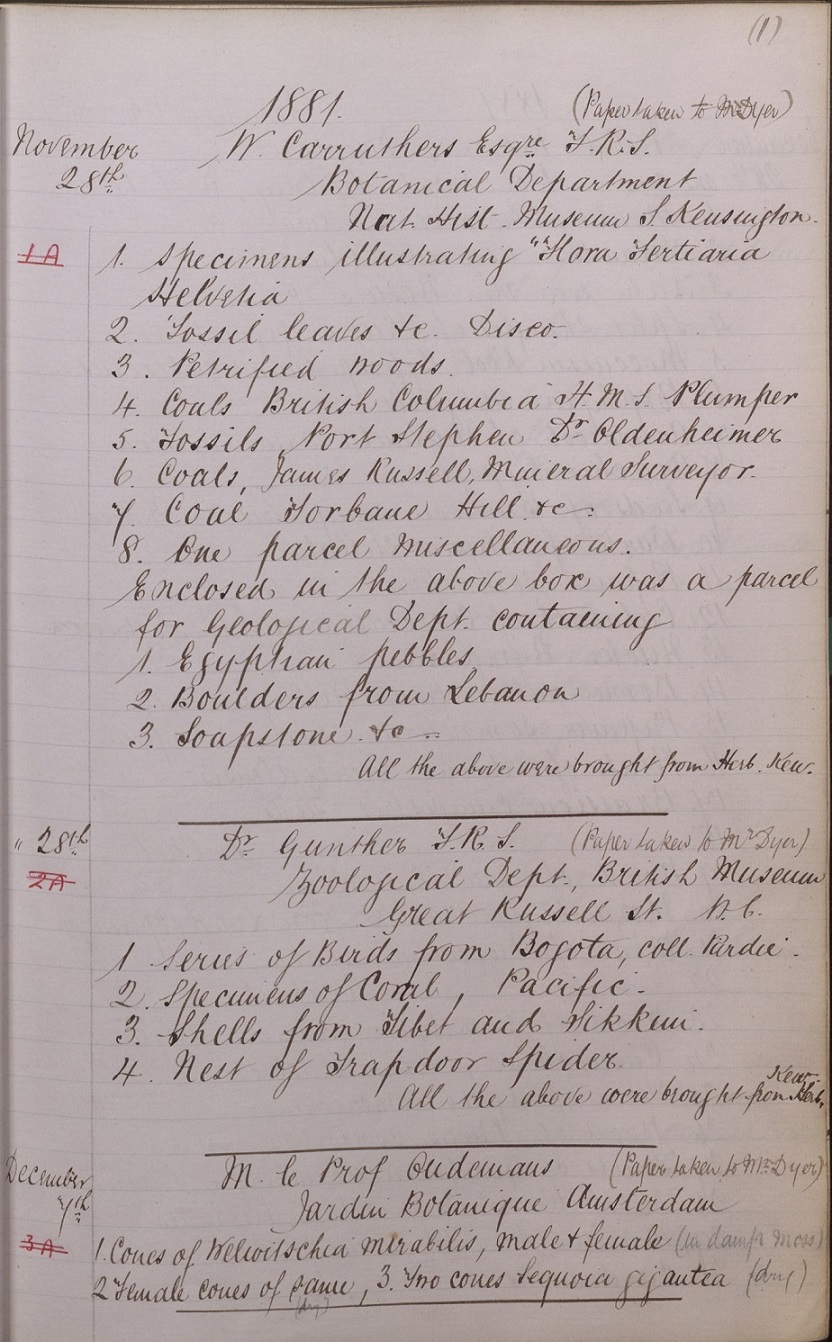
The first of these books, which is now freely available on BHL, is entitled “Specimens Distributed” and spans from 1881 to 1901. It is a fascinating continuous record of specimens, materials and artefacts that were sent from Kew to over 1000 institutions worldwide, including other botanic gardens, schools and universities and local museums.
SpecimensDistributed1881-1901_0057.jpg

The first page of records for Specimens Distributed, which includes entries for “fossil leaves” and “petrified woods”

Specimens distributed.

The first thing that I noticed when researching this blog, as I skimmed through the hundreds of pages of handwritten entries, was just how many plant parts the Museum of Economic Botany held. On first thought, you may think of a few important parts of a plant that could be held in this sort of collection – bark, petals, seeds, stems or similar. But what struck me was the sheer scope of plants and all their various facets that were collected – resins, gums, fibers, bulbs, fruits, roots, pods, pulps, rubbers, even galls (a kind of benign growth on the external tissue of some plants, usually a reaction to parasites or bacteria).

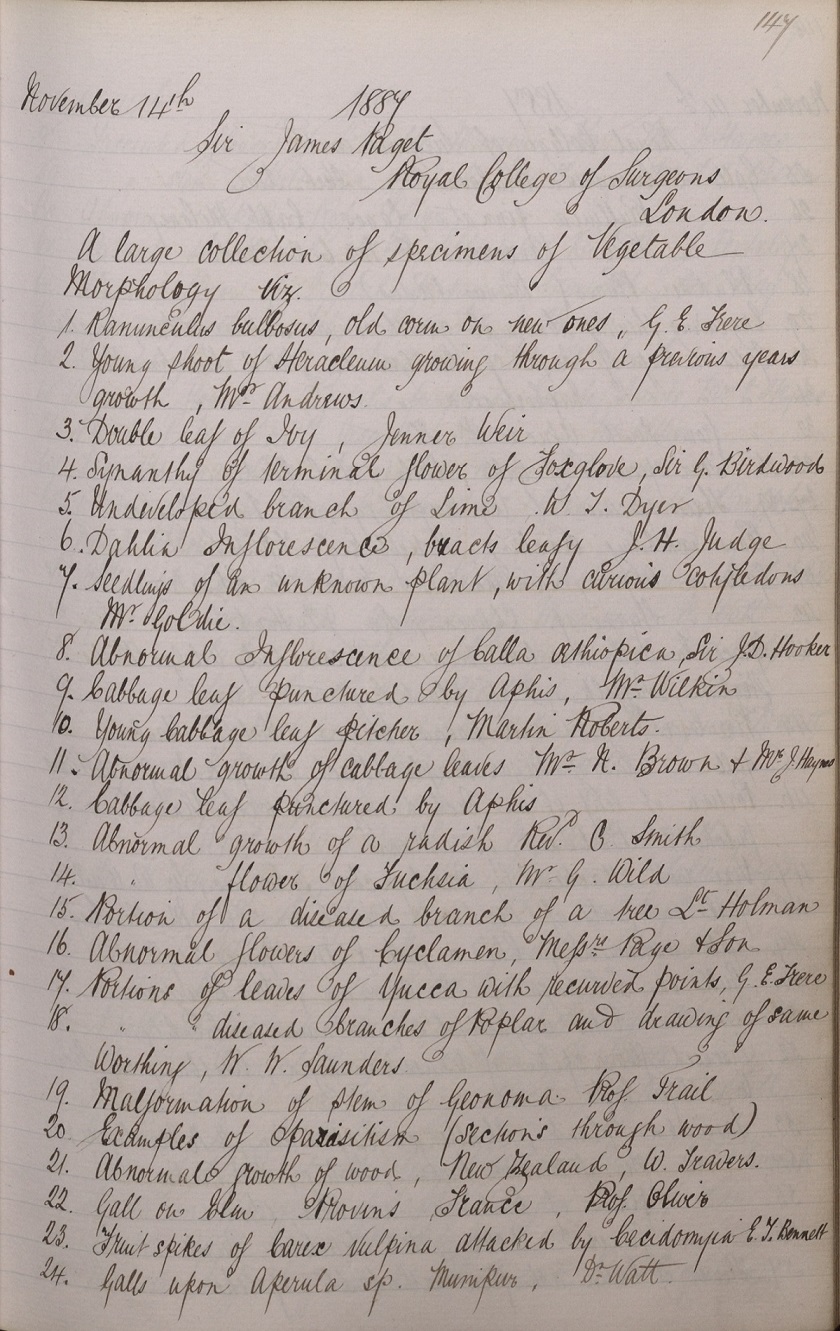
As I browsed the book, I became engrossed in 6 pages in particular entitled November 14th 1887 – Sir James Paget, Royal College of Surgeons – A large collection of specimens of vegetable morphology.
SpecimensDistributed1881-1901_0203.jpg

Page 147 of Specimens Distributed, showing the beginning of the distribution list for Sir James Paget at the Royal College of Surgeons

Sir James Paget.

As I looked over these pages, I noticed that words such as “undeveloped”, “abnormal” and “malformation” were preceding plant names or plant parts. It occurred to me that the plants being described had possibly been collected due to their interesting morphological or biological anomalies – and they were being sent out, maybe for further investigation, to Sir James Paget at the Royal College of Surgeons. This name rang a vague bell, so I did a little research.

Sir James Paget is considered one of the most outstanding medical researchers of the 19th century and is known as the father of British pathology. He described diseases including Paget’s disease of the bone and Paget’s disease of the nipple, and throughout his career he stressed how vital science research was for medical practise.

Interestingly, Paget was a close friend of Charles Darwin, who helped his medical research by sharing thoughts and musings. Darwin also sent Paget books, including a book that he wrote on earthworms, prompting this response from Paget: “It seems to me the best that ever you have written in showing the splendid and great truths that may be found in common things”.
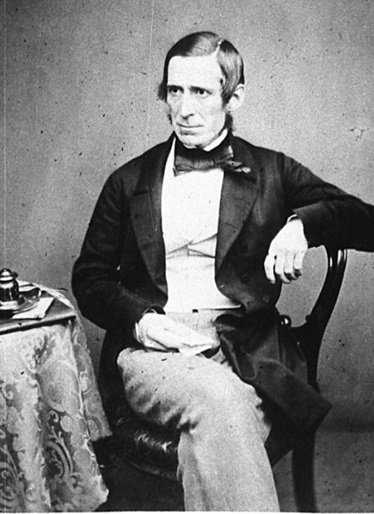
Sir-James-Paget.jpg

Sir James Paget, the father of British pathology (Credit: The Paget’s Association)

The next chapter.

As part of the Mobile Museum Project, Kew are also in the process of digitising the Museum of Economic Botany’s “School Letter Books”. These are logbooks containing hundreds of letters of correspondence between the Museum of Economic Botany and schools across the UK – the first book spanning from 1877 – 1894. These letters are mainly requests from teachers and lecturers who asked Kew for educational objects and samples, either to use as teaching aids or to help establish their own small collections.

The Economic Botany Collection at Kew has a rich and varied history that spans over three centuries. By making these unique books available online through BHL, we hope that more people can make use of the fascinating information held within them that has been so meticulously recorded throughout the years.
 

April 26, 2018by Joel Richard
BHL News, Blog Reel

Chicago Botanic Garden’s Lenhardt Library Receives over $200,000 to Digitize Language of Flower Books for BHL

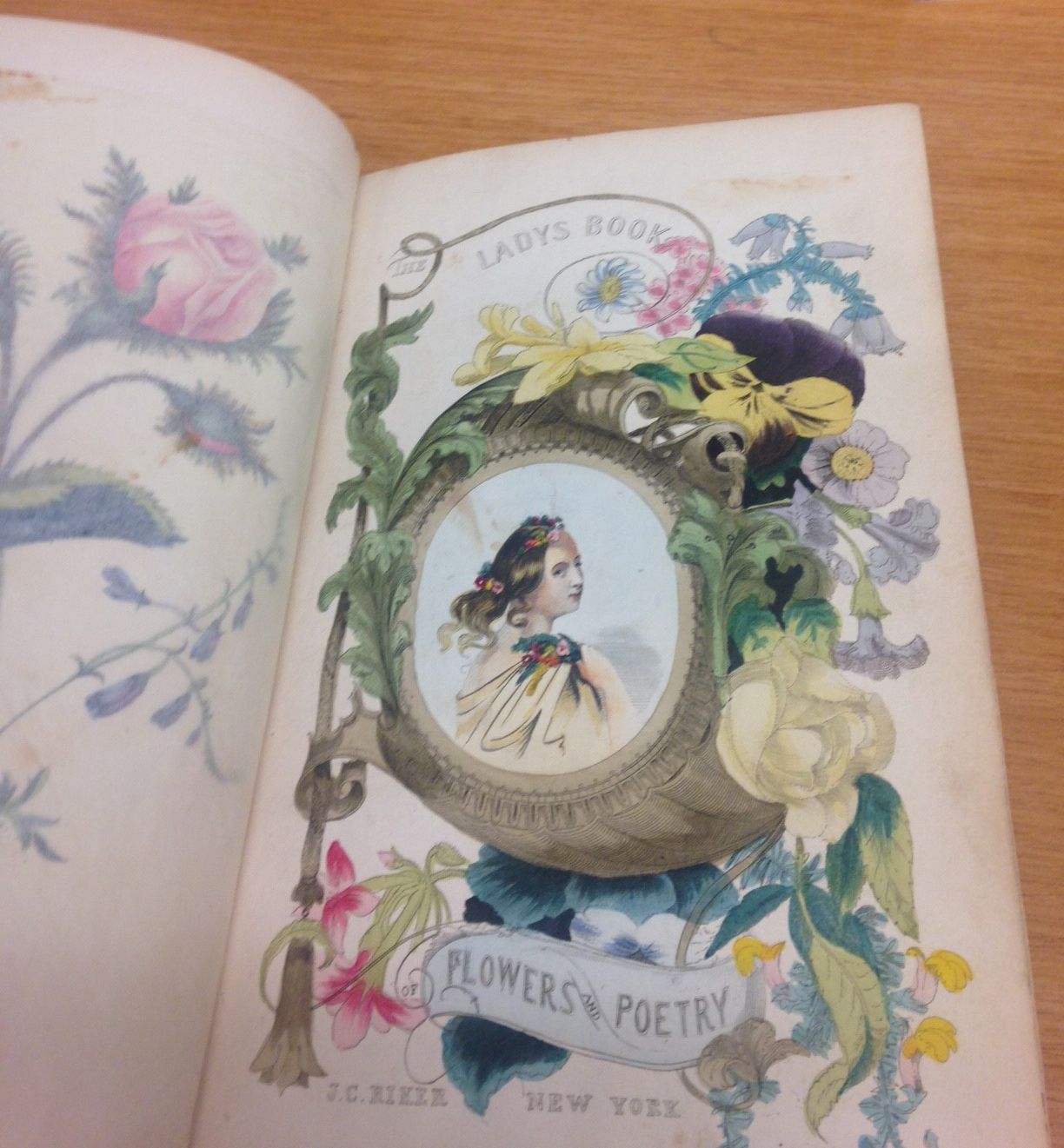
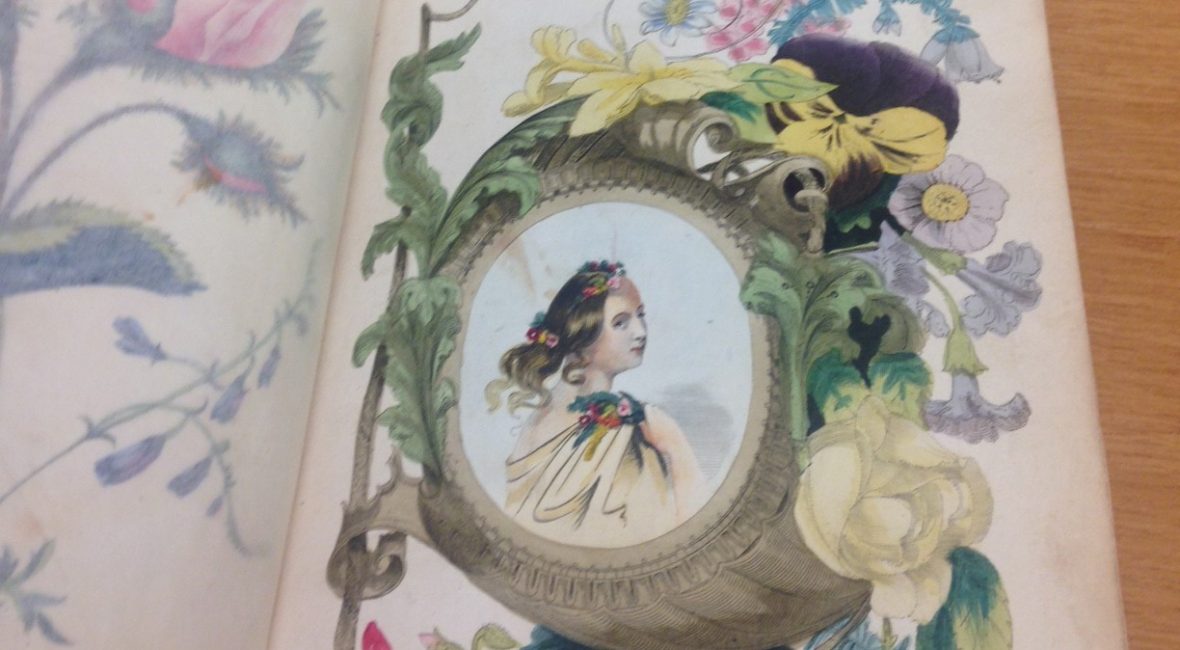
illustration with a portrait of a woman surrounded by flowers

The Lenhardt Library of the Chicago Botanic Garden has received over $200,000 from a National Endowment for the Humanities (NEH) grant awarded to the Chicago Horticultural Society for the conservation and digitization of 62 rare and unique “language of flower” books published in the 19th century. The Lenhardt Library has been a BHL Affiliate since 2014.

Over the next three years, the volumes will be conserved and digitized by expert staff at the Northeast Document Conservation Center.  The charming books with colorful illustrations of flowers, bouquets, and floral poetry will be subsequently uploaded to the Biodiversity Heritage Library where they will be freely available to a global audience for research and enjoyment.

Want to get a sneak peek of some of the books that will be digitized as part of this grant? Explore a selection of titles below.

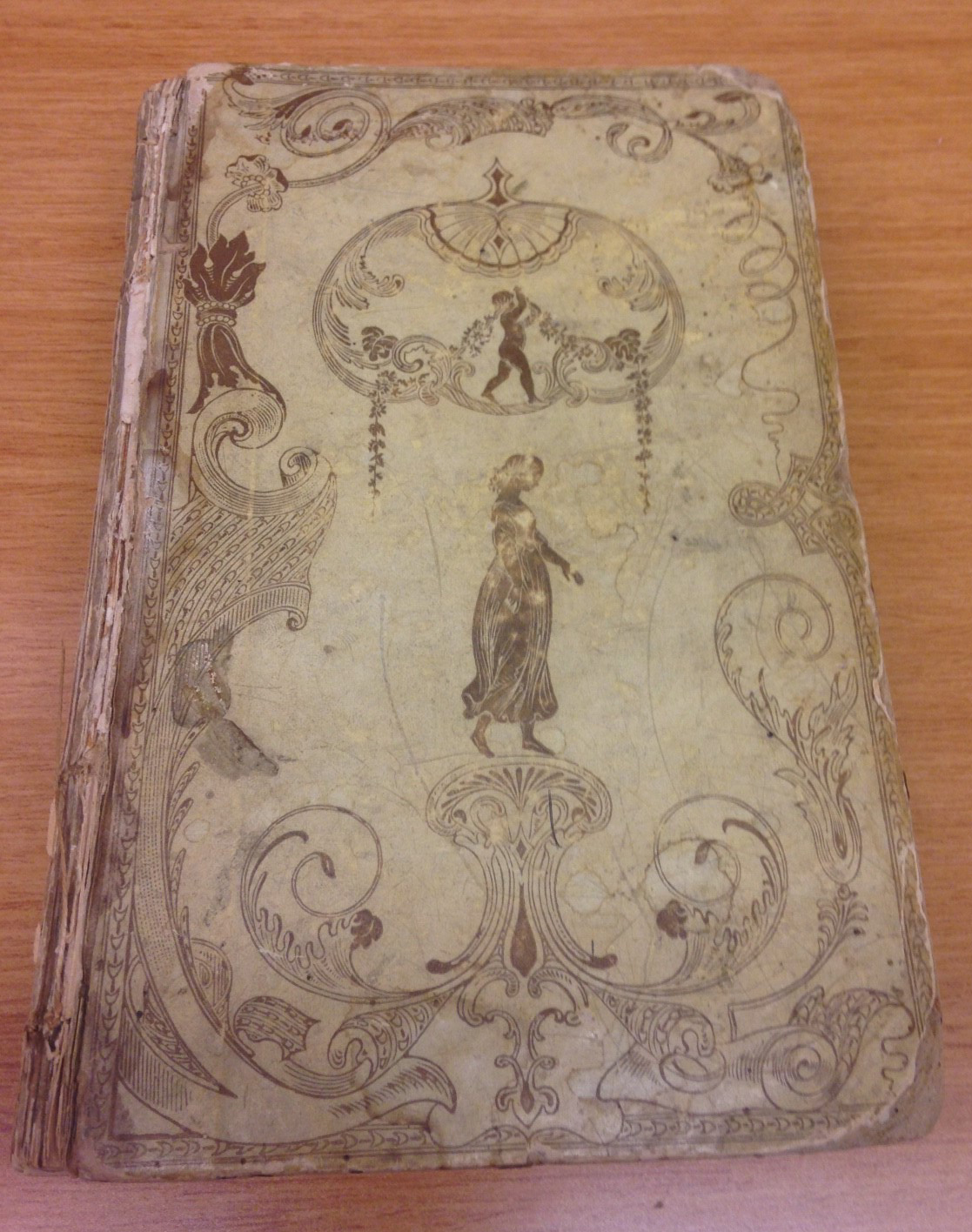
book with light binding and imprint of woman on cover

Hooper, Lucy. The lady’s book of flowers and poetry; to which are added, a botanical introduction, a complete floral dictionary, and a chapter on plants in rooms. New York: J.C. Riker, 1845. To be digitized from the collection of the Lenhardt Library of the Chicago Botanic Garden and added to the Biodiversity Heritage Library as part of a recent NEH grant. Image credit: Leora Siegel.

illustration with a portrait of a woman surrounded by flowers

Hooper, Lucy. The lady’s book of flowers and poetry; to which are added, a botanical introduction, a complete floral dictionary, and a chapter on plants in rooms. New York: J.C. Riker, 1845. To be digitized from the collection of the Lenhardt Library of the Chicago Botanic Garden and added to the Biodiversity Heritage Library as part of a recent NEH grant. Image credit: Leora Siegel.

Hooper, Lucy. The lady’s book of flowers and poetry; to which are added, a botanical introduction, a complete floral dictionary, and a chapter on plants in rooms.
New York: J.C. Riker, 1845.

Lucy Hooper (1816-1841), an American poet, combines botany and poetry in this work. She describes specific flowers through poetry and presents scientific concepts, organizing flowers by species, and includes a practical guide to growing houseplants and a “Botanical Introduction” based on Linnaean taxonomy.

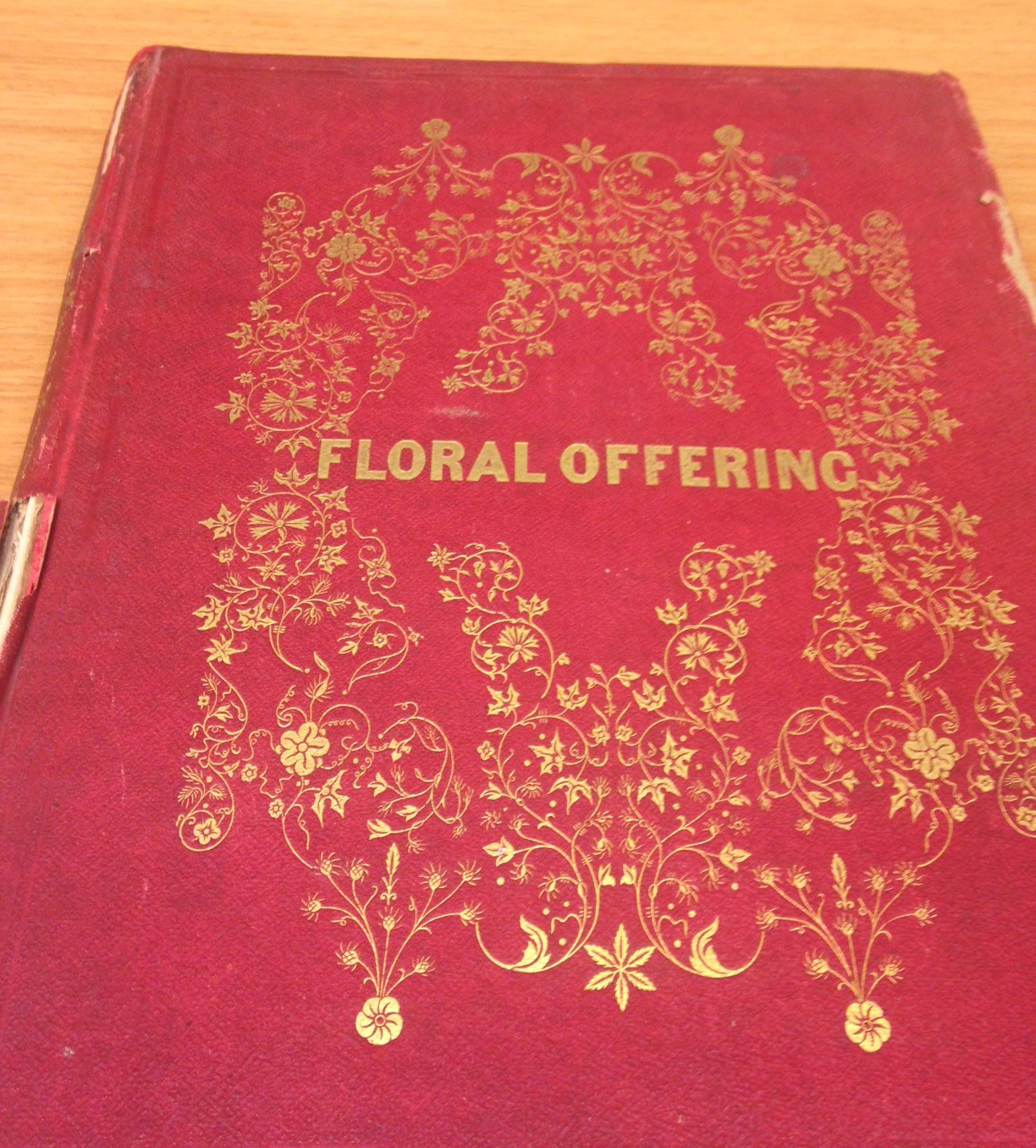
book with red binding and imprint of gold flowers

Osgood, Frances Sargent, editor. The floral offering, a token of friendship. Philadelphia: Carey and Hart, 1847. To be digitized from the collection of the Lenhardt Library of the Chicago Botanic Garden and added to the Biodiversity Heritage Library as part of a recent NEH grant. Image credit: Leora Siegel.

Osgood, Frances Sargent, editor. The floral offering, a token of friendship.
Philadelphia: Carey and Hart, 1847.

Frances Sargent Osgood (1811-1850), author of The Floral Offering, was an influential American female writer and prolific contributor to the leading periodicals of the day, a published poet, and author of Puss in Boots.

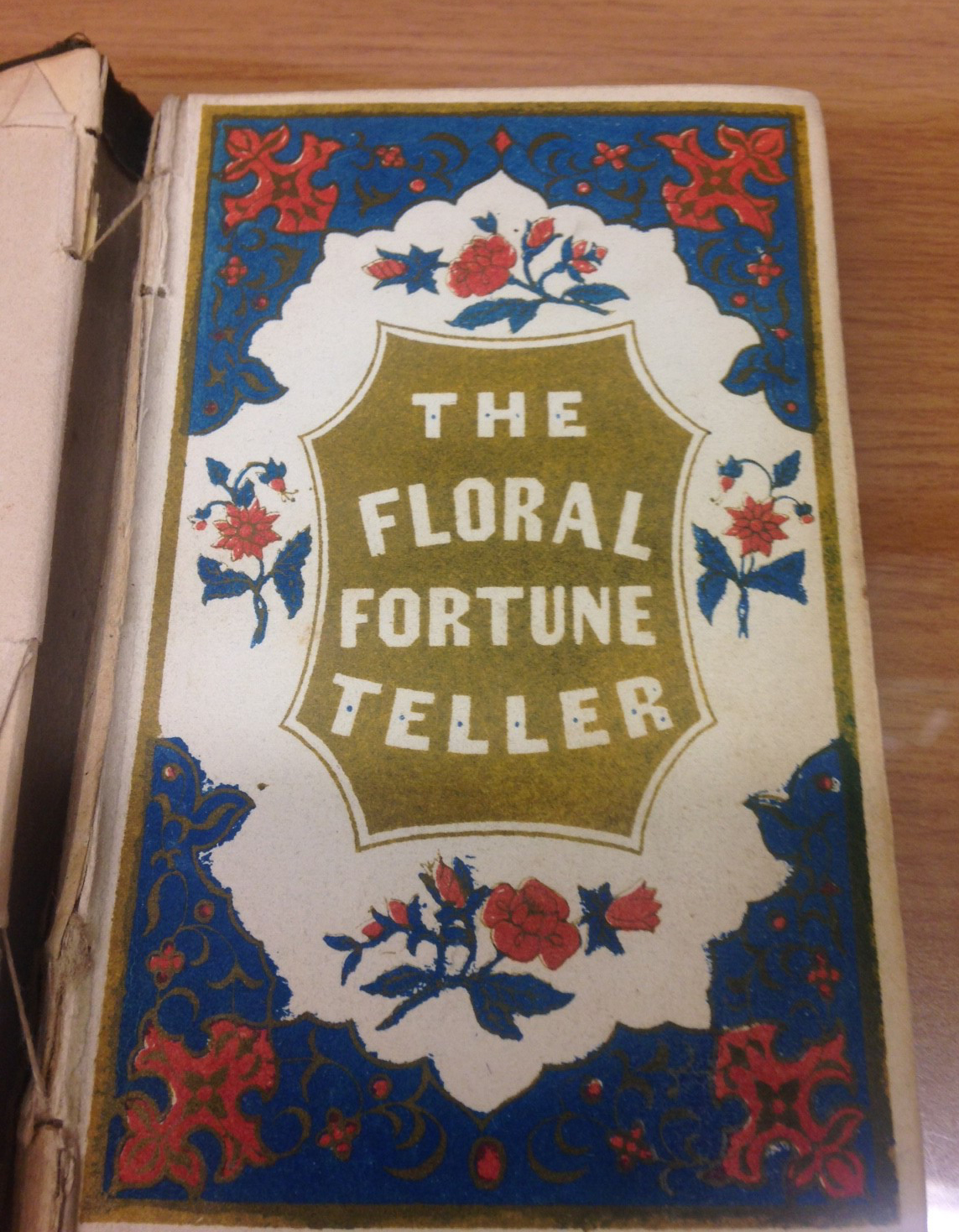
a book with a blue, white, and red cover that reads "the floral fortune teller"

Edgarton, Sarah Carter. The floral fortune-teller: a game for the season of flowers. Boston: A. Tompkins, 1847. To be digitized from the collection of the Lenhardt Library of the Chicago Botanic Garden and added to the Biodiversity Heritage Library as part of a recent NEH grant. Image credit: Leora Siegel.

Edgarton, Sarah Carter. The floral fortune-teller: a game for the season of flowers.
Boston: A. Tompkins, 1847.

One of the earliest complete American floral fortune telling books, Floral Fortune-teller combines poetry and flowers of different colors to answer questions. Popular literature such as this offered women a publishing outlet during a time of a male dominated printing industry.

Congratulations to the Lenhardt Library on this amazing news, and we can’t wait to see the books in BHL.

See the awards press release from the National Endowment for the Humanities.

The National Endowment for the Humanities: Exploring the human endeavor.

Any views, findings, conclusions, or recommendations expressed in this email, do not necessarily represent those of the National Endowment for the Humanities.

April 23, 2018by michelle.underhill
Blog Reel, Featured Books

American Daffodil Society Expands Access through BHL and ‘DaffLibrary’

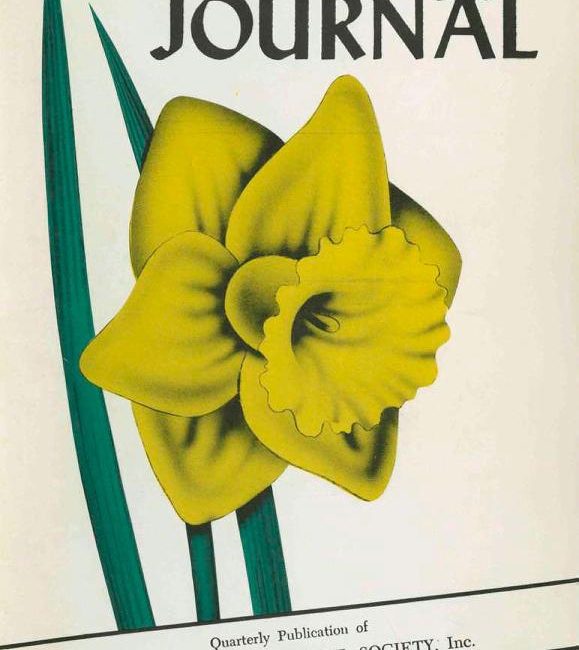
1_daff.jpg

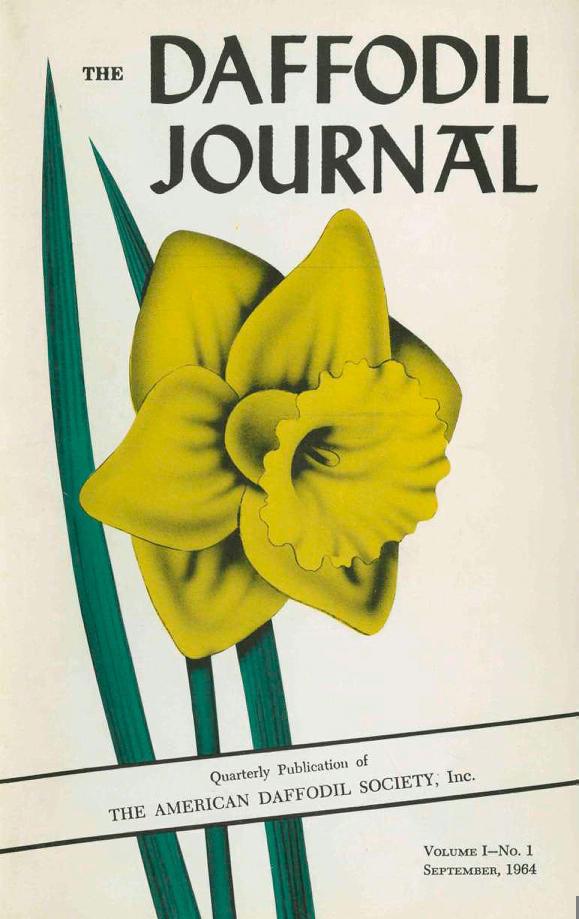
Illustration of a large, yellow flower with green stem and leaves. American Daffodil Society. The Daffodil Journal. Volume 1. 1961. Digitized in BHL by American Daffodil Society.

For Mary Lou Gripshover, daffodils started as an easy entry into horticulture, but led her to the unexpected, too.

“Half a century ago, when I was a young housewife, I belonged to a garden club which in turn participated in an area-wide flower show,” she explains. “Everyone had to enter. At that point I wasn’t much good at flower arrangements, and entering daffodils in the Horticulture Section was easy. Just cut a bloom and put it in the vase provided. And the stems didn’t bend, like tulips did. So then of course I had to get more daffodils so I could enter all the classes for the various divisions… and it just grew from there. Who knew 50 years ago that I’d make friends the world over, just because of a little yellow flower?”

2_daff.jpg

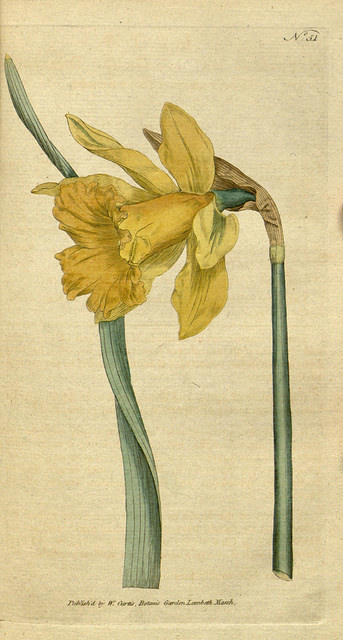
A delicate painting of a single daffodil flower with a green stem and leaf. Curtis, William. The Botanical magazine, or, Flower-garden displayed. 1790. Digitized in BHL by Missouri Botanical Garden, Peter H. Raven Library.

Gripshover serves as a librarian / digitizer for the American Daffodil Society (ADS), a group with international membership that has connected daffodil enthusiasts since its founding in 1954. In the spirit of National Gardening Month, we’re highlighting the ADS’ publication, The Daffodil Journal, which comes to BHL as part of the Expanding Access to Biodiversity Literature project. Early volumes of this quarterly journal from 1964-1968 are currently available on BHL, with more volumes on the way.

4_daff.jpg

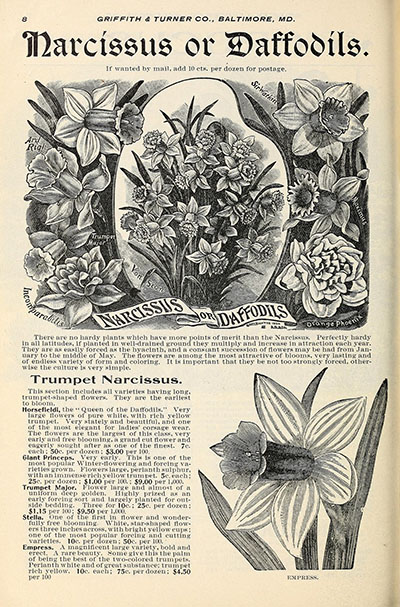
A page from a seed catalog with descriptions of varieties of Daffodil for sale, and two black and white illustrations; one a close-up of a flower variety called Empress, the other a mix of many flowers. Griffith and Turner Co. Bulbs and seeds.  1900. Digitized in BHL by U.S. Department of Agriculture, National Agricultural Library.

According to the ADS website, ‘daffodil’ is the common name for all members of the genus Narcissus. There are somewhere between 40 and 200 different species/subspecies/varieties (depending on who you ask), and more than 25,000 registered cultivars (named hybrids).

The first mission of the ADS was to create a publication, starting with a small bulletin and yearbook. After its first decade, the society released its quarterly publication, The Daffodil Journal, to share information on “all aspects of daffodil culture, breeding, and exhibition.” Now the ADS has its own digitization project, DaffLibrary, where more than 3,000 resources on daffodils are available as downloadable PDFs or as links to other websites. The Daffodil Journal through the year 2012 is available on DaffLibrary, so you can view more recent issues of the publication there until more are added to BHL.

5_daff.jpg

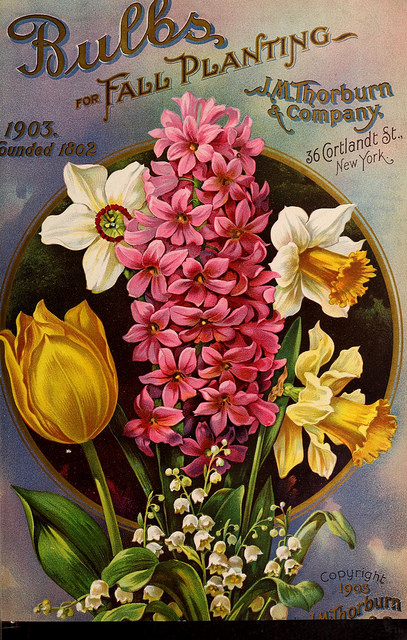
Colorful painting from the cover of a bulb magazine, including white and yellow daffodils and other yellow, white and pink flowers. Thorburn, J.M. & Co. Annual descriptive catalogue of flower seeds. 1903. Digitized in BHL by New York Botanical Garden, LuEsther T. Mertz Library.

“The ADS has had a ‘paper library’ almost from the beginning,” Gripshover says. But because the society has no permanent headquarters, the physical collection had to move several times, and didn’t get much use. “Occasionally a list of available titles would be published in the Journal, and maybe there’d be a little action then, but interest didn’t last. Eventually, it was decided that we should at least get back issues of the Journal scanned, so in 2004 we had 40 years’ worth of the Journal professionally scanned. Several years later, someone suggested that we should think about scanning some of the other materials we had. I foolishly said that I could do some scanning… and it’s turned into a permanent job! But it’s one I enjoy.”

6_daff.jpg

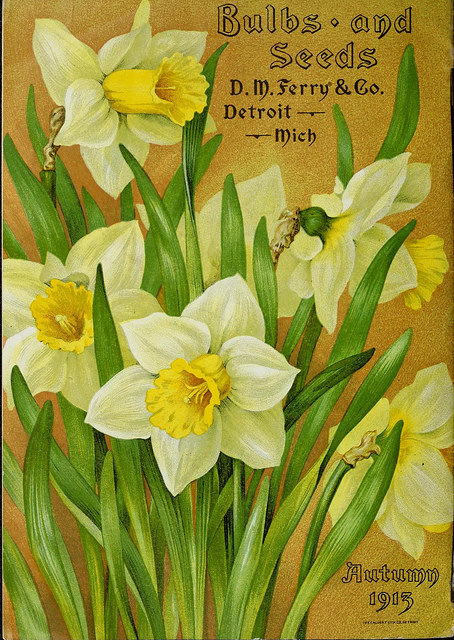
A painting of yellow flowers with a darker yellow background. Ferry, D.M. & Co. Bulbs and seeds. 1913. Digitized in BHL by U.S. Department of Agriculture, National Agricultural Library.

DaffLibrary is now the most-viewed of the ADS’ websites, and gets much more use than the physical collection did: in just the first 3 months of 2018, it connected close to 15,700 visitors to nearly 55,000 pages. Popular resources included book, historic, and scientific references; plant show handouts/material; casual-reading books and articles; biography information; and information about growing daffodils using different methods.

Many thanks to the American Daffodil Society for contributing The Daffodil Journal to BHL, and to Mary Lou Gripshover for sharing her story with us and dedicating years of work to support open access information!

7_daff.jpg

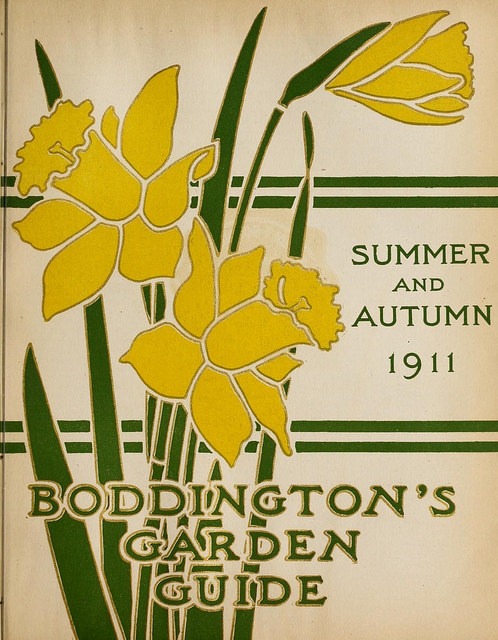
A bold stencil-style image of yellow daffodils with green leaves and stems. Boddington, Arthur T.  Boddington’s quality bulbs, seeds and plants. 1911. Digitized on BHL by New York Botanical Garden, LuEsther T. Mertz Library.

References

American Daffodil Society

‘About’ DaffLibrary

April 19, 2018by Joel Richard
Blog Reel, User Stories

On Fish, Color, and Social Behavior: Connecting Current Research to Historical Scientific Studies through Open Access Archives

photo of a blonde woman with sunglasses on her head standing in front of a lake

Social orders exist throughout the animal kingdom. Comprised of dominant and subordinate individuals, these orders dictate how members of a group interact, influencing everything from food access to mating privileges.

Sometimes, the behavior of the dominant individual is more extreme, and the “alpha” actively inhibits interactions between other members of the group. This sort of “monarchistic dominance” has been reported in male laboratory mice and African lions. The behavior is not restricted to mammals, however.

In a 1962 study published in the Bulletin of the Southern California Academy of Sciences, researchers observed this monarchistic behavior in captive male mosquitofish. In a series of controlled experiments, the study authors witnessed a range of aggressive behaviors being used to establish the dominant individual, who then suppressed interactions between the remaining fish (Caldwell and Caldwell 1962).

photo of a blonde woman with sunglasses on her head standing in front of a lake

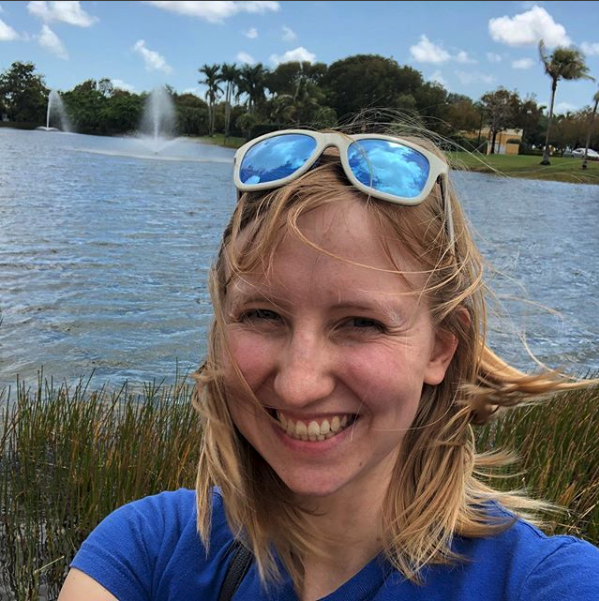
Tanja Zerulla takes a moment to snap a selfie while catching Eastern Mosquitofish at Florida International University. Photo credit: Tanja Zerulla.

Tanja Zerulla, a Ph.D. candidate at Florida International University (FIU), is currently studying social behaviors in the Eastern Mosquitofish (Gambusia holbrooki). While her research is specifically looking at the role of color in social interactions, this 1962 study offered valuable insight into broader mosquitofish behavior. The Biodiversity Heritage Library (BHL) provided Zerulla with easy access to the publication.

“I’ve been working on defining the social behavior of male Eastern Mosquitofish color morphs,” explains Zerulla. “While reading, I found references to a few older articles about the genus (Gambusia) behavior. While looking on Google Scholar, I found the article ‘Monarchistic dominance in small groups of captive male mosquitofish, Gambusia affinis patruelis’ – and it linked me to BHL! I was able to read about how male fish interact with each other and now have a point of comparison for my own research.”

Blonde woman in shorts using a fishing net in a lake.

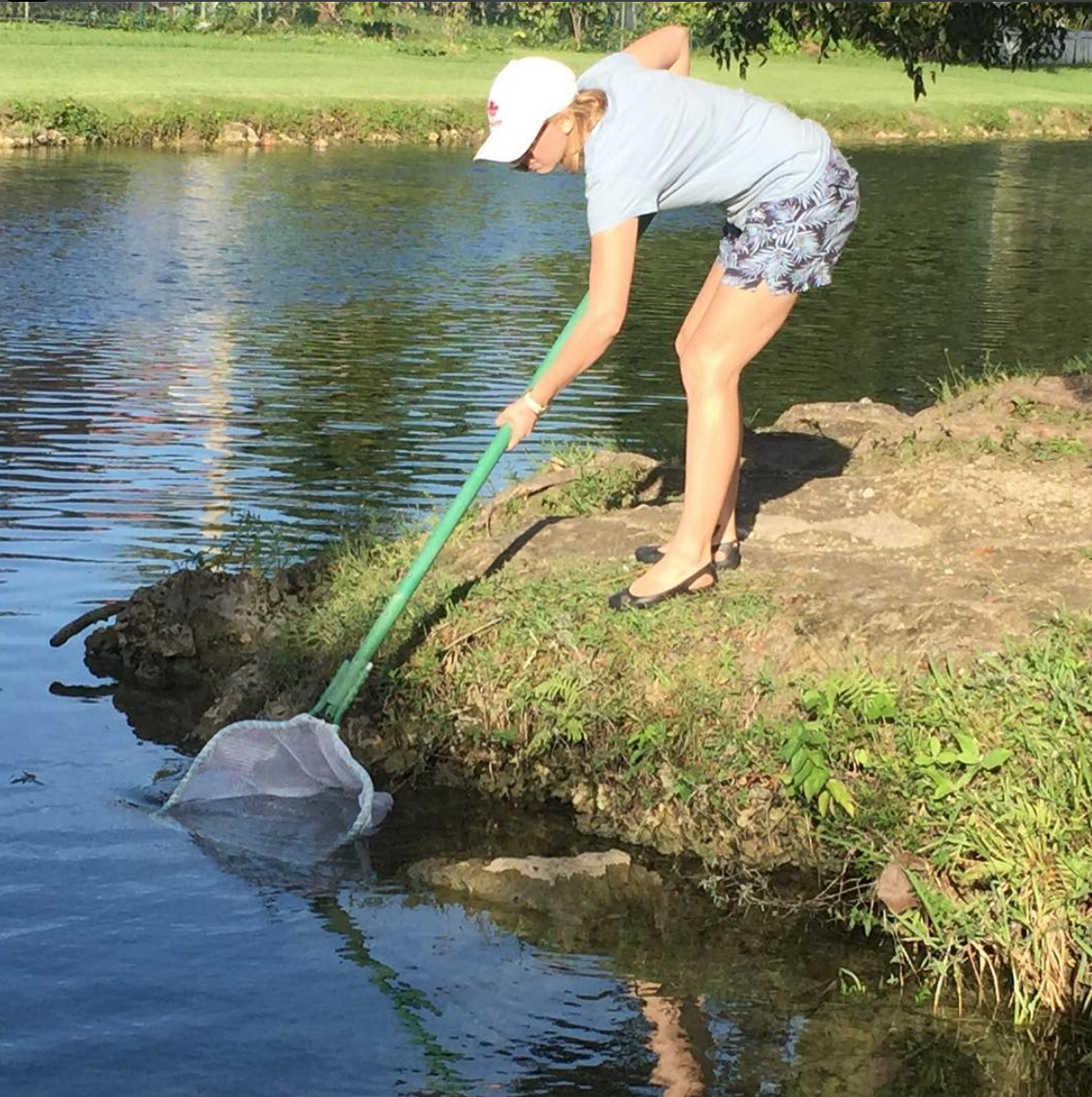
Tanja Zerulla catches mosquitofish using a dip net in Miami, Florida. Photo credit: Tanja Zerulla.

Zerulla has been studying fish biology for over six years. Her research passion is understanding the underlying causes of biological behavior. Zerulla’s undergraduate research included studies on the effects of chemicals and compounds in water systems on fish swimming behavior and the impact of nucleotides on fish feeding behavior. For her graduate work, Zerulla applied to several programs with leaders in the field of behavioral biology.

“In particular, I wanted to work with someone who studied behavior across biological levels – from genetics and physiology to ecology and evolution,” explains Zerulla. “I found my fit at Florida International University working for Dr. Philip Stoddard, where I now study how color pattern is linked to social behaviors in the Eastern Mosquitofish (Gambusia holbrooki).”

Black and white illustration of fish.

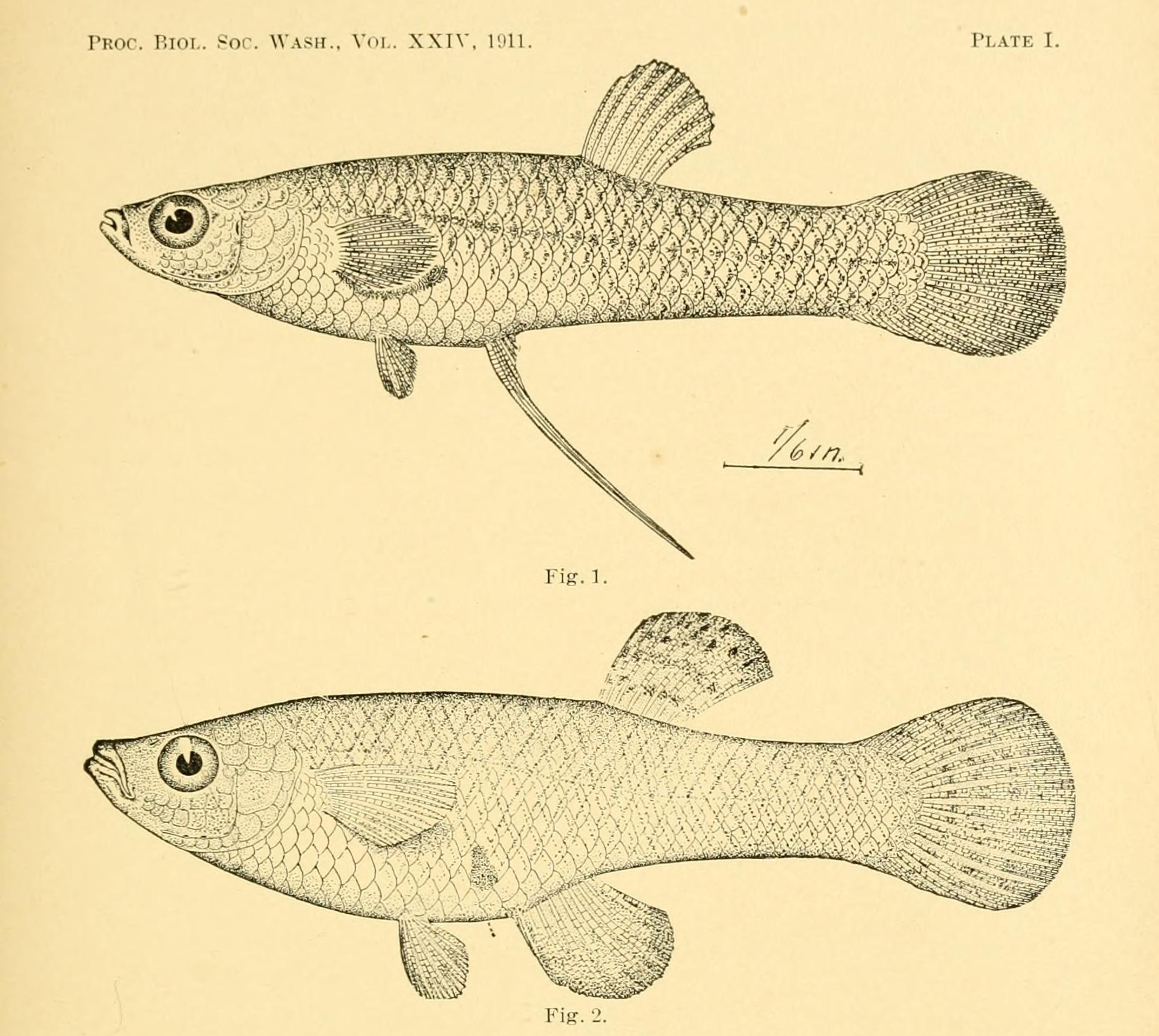
Male (Fig. 1) and female (Fig. 2) Eastern Mosquitofish (Gambusia holbrooki). Illustration from “Breeding habits of the viviparous fishes Gambusia holbrookii and Heterandria formosa” by William P. Seal. Published in Proceedings of the Biological Society of Washington, v. 24 (1911). https://s.si.edu/2JeW6PK.

Two small fish swiming.

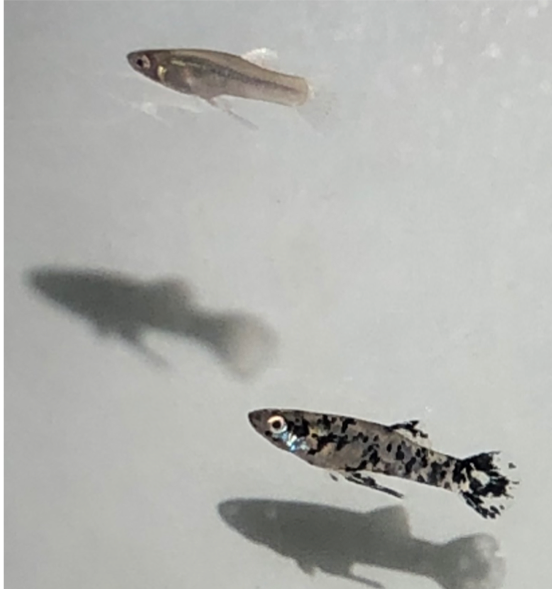
Eastern Mosquitofish (Gambusia holbrooki) males swim in a laboratory aquarium. A silver male swims at the top while a melanistic (spotted) male swims below. Photo credit: Tanja Zerulla.

Zerulla first discovered BHL through Twitter several years ago, when she began following scientists and other graduate students on the platform.

“Some of the graduate students were tweeting about their efforts to transcribe field journals and label taxonomic images for BHL,” recalls Zerulla. “One of my first major interactions was helping someone figure out that the image they were working on was a fetal Squalus squalus (dogfish shark) and translating German on an image of an Axolotl.”

While she has just recently begun exploring how BHL can support her current research, Zerulla’s primary interactions with the Library still occur through social media, where the publications – and particularly scientific illustrations – shared through BHL’s feeds serve as a valuable source of inspiration and motivation.

“I love seeing the historical drawings of animals and plants! Seeing beautiful images drawn by people who were curious about the world reminds me of my own love for science,” affirms Zerulla. “Grad school can be overwhelming, so little reminders of my passion for natural history and science renews my energy for research.”

Blonde woman in a hat standing in a cypress dome.

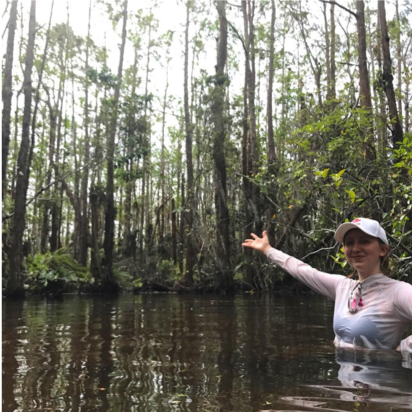
Tanja Zerulla standing in a cypress dome in Everglades National Park where she teaches students about the natural history of Florida plants and animals. Photo credit: Tanja Zerulla.

She finds these drawings so inspiring that she would love to have them displayed as a tab in the search results on the BHL website to allow easier discovery. But while she thoroughly enjoys these illustrations, for Zerulla, the best thing about BHL is its vast, open access collection.

“I was surprised but really pleased to see so much scientific literature available for free to the public,” lauds Zerulla. “I personally have pushed for open access releases of my published papers because I think that everyone – whether a scientist in the US or Indonesia, or a person who’s just really interested in fish – should be able to access scientific literature.”

We couldn’t agree more. We are proud to know that our commitment to open access is helping to advance global scientific research and inspire discovery of the natural world.

Follow Tanja Zerulla on Twitter at @TalkstoFish.

Reference

Caldwell, Melba C. and David K. Caldwell. 1962. “Monarchistic dominance in small groups of captive male mosquitofish, Gambusia affinis patruelis.” Bulletin of the Southern California Academy of Sciences 61: 37-43.

April 12, 2018by michelle.underhill
BHL News, Blog Reel

A Look at the 2018 BHL Annual Meeting in Los Angeles

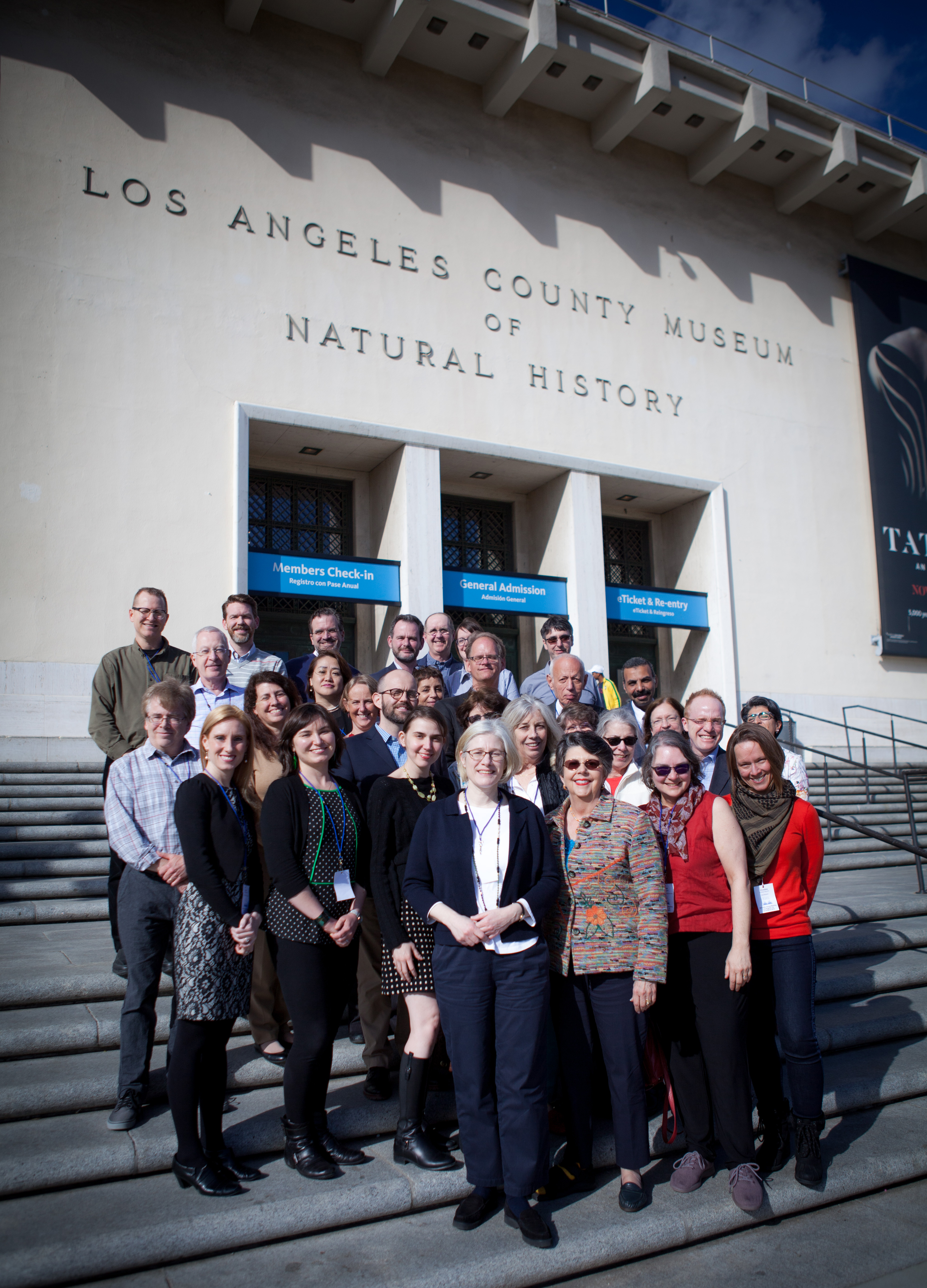
group of men and women standing in front of a white building labeled "Los Angeles County Museum of Natural History"

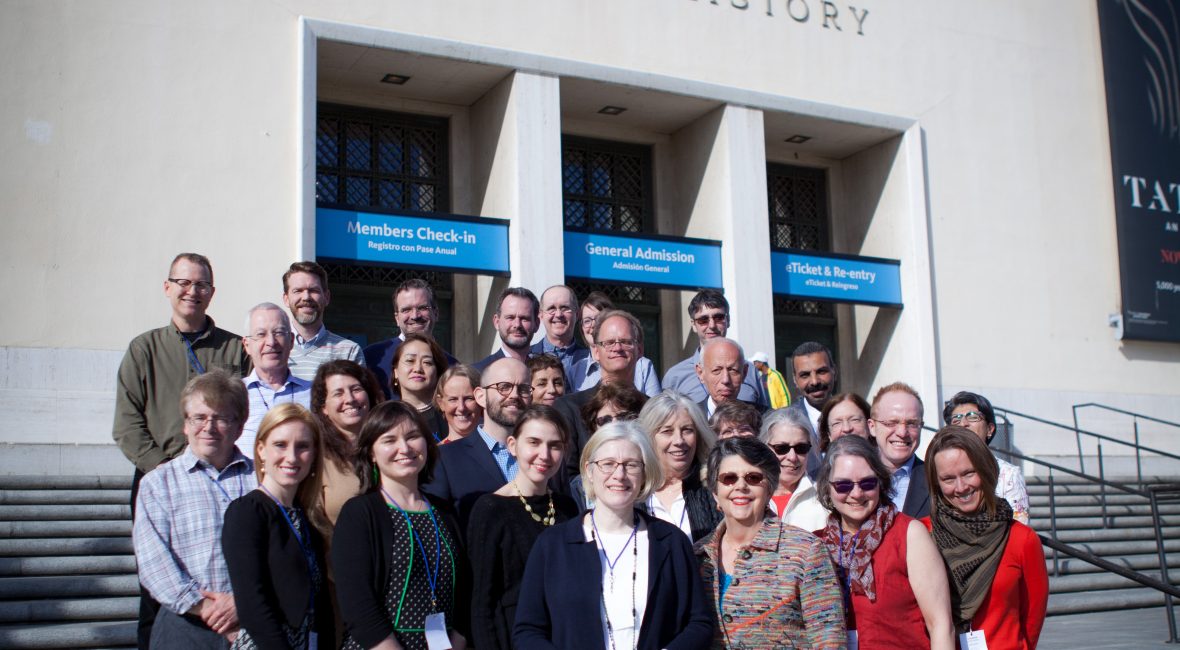
Group photo of attendees at the 2018 BHL Annual Meeting. Photo taken in front of the Los Angeles County Museum of Natural History. Photo credit: Edgar Chamorro.

The 2018 BHL Annual Meeting was held in Los Angeles at the Natural History Museum of Los Angeles County and Los Angeles County Arboretum and Botanic Garden. The meeting was attended by 35 representatives of BHL partners from 11 countries.

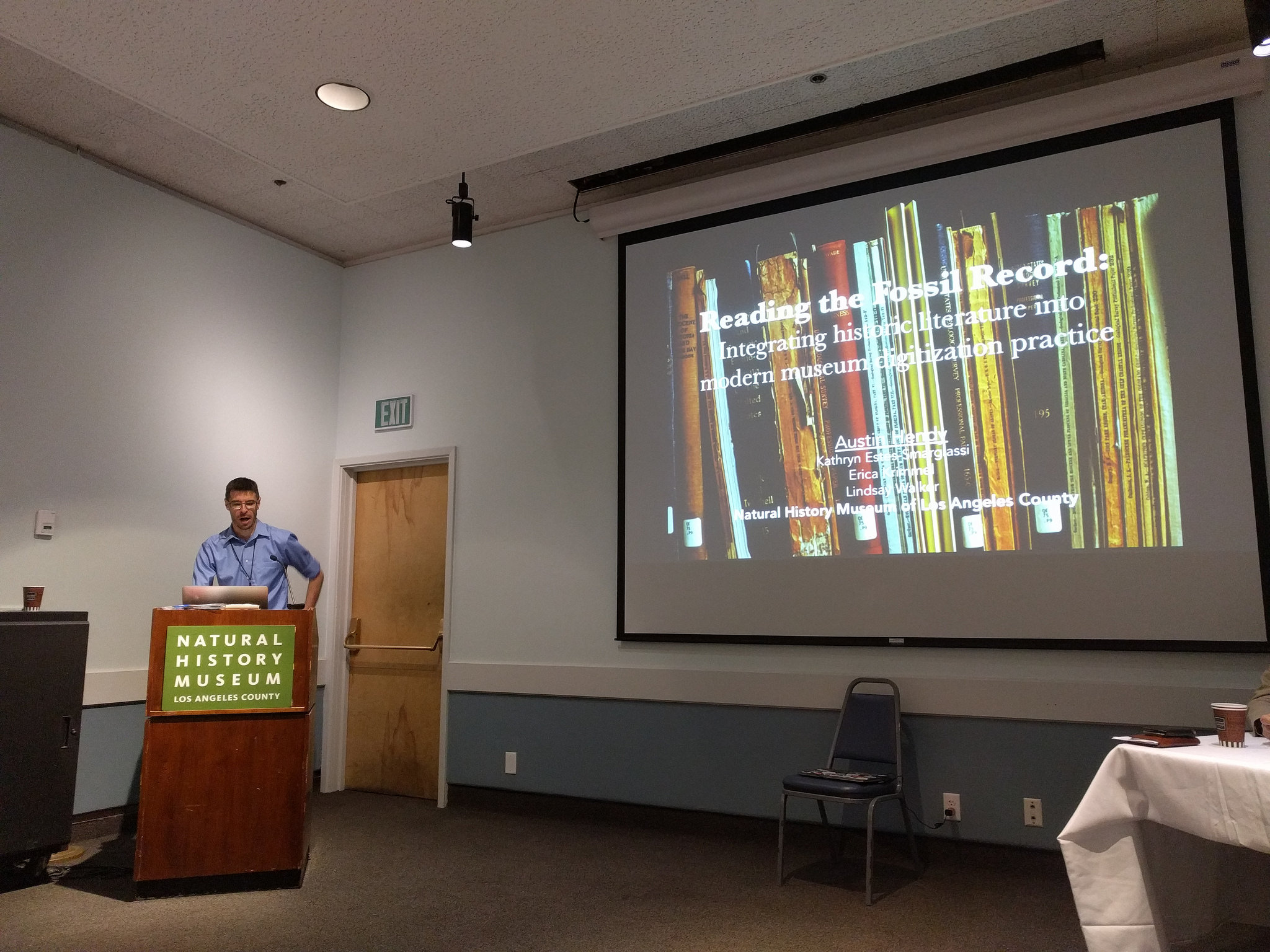
Four  guest speakers discussed how biodiversity literature is relevant to their work : Dr. Austin Hendy, Collections Manager, Invertebrate Paleontology, NHMLAC; Dr. Jody Martin, Associate VP of Research and Collections and Curator of Crustacea, NHMLAC (Marine Invertebrate Larvae and the BHL); Dr. Gary Wallace, Research Associate at Rancho Santa Ana Botanic Garden and Botanist, Retired, United States Fish and Wildlife Service (BHL at LACM); and Dr. Victoria Vesna, Professor, Dept. of Design, Media Arts, UCLA and Founder and Director of the Art | Sci Center + Lab, CNSI, and Visiting Professor, Empowerment Informatics Program, University of Tsukuba, Japan.

man in blue shirt talking into a microphone behind a podium. Slides are visible on a screen behind him.

Dr. Austin Hendy, Collections Manager, Invertebrate Paleontology, NHMLAC, presenting during the BHL Users Symposium at the 2018 BHL Annual Meeting. Photo credit: Martin R. Kalfatovic.

At an evening reception hosted by the Natural History Museum of Los Angeles County, BHL Outreach and Communication Manager Grace Costantino was joined by two Postdoctoral Fellows at the Rancho La Brea Tar Pits, Dr. Alexis Mychajiliw and Dr. Libby Ellwood, as the featured speakers. The topic of the evening talks was BHL and our users; Grace gave examples from conversations with our users (Empowering Global Research) and Drs. Ellwood (Passenger Pigeons in the Western United State) and Mychajiliw (Eyewitness to Extinction) spoke of their use of BHL in their work.

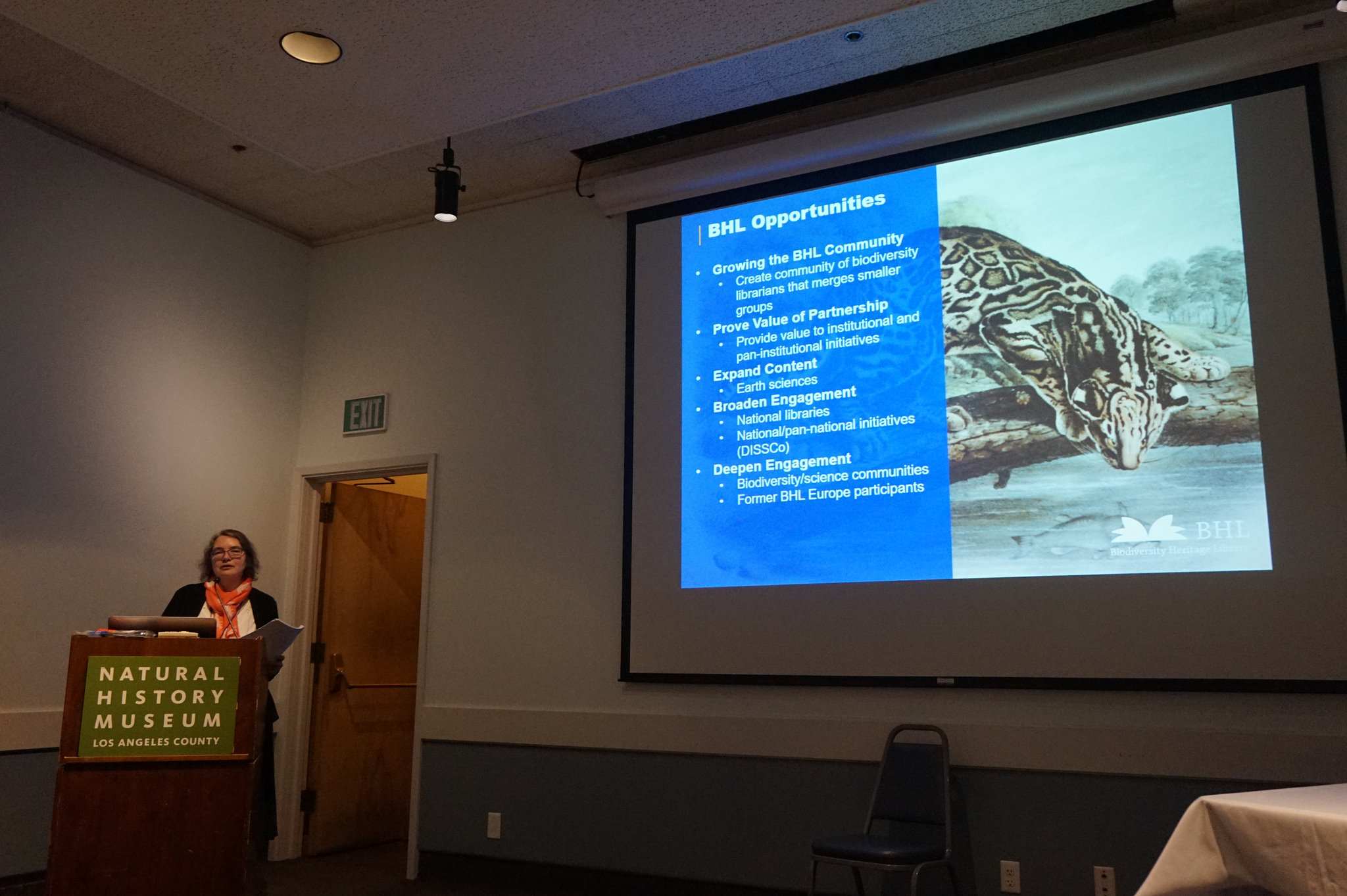
In the business portion of the meeting, BHL Chair Constance Rinaldo gave an inspiring look to the future of BHL based on her ongoing discussions with the science community and BHL members and staff (BHL 2018: Looking to the Future). The BHL Secretariat provided updates on their work. Bianca Crowley (BHL Collections Manager) talked about the growth of the BHL collections and Grace Costantino (BHL Outreach and Communication Manager) gave an update on outreach activities.

woman talking into a microphone behind a podium. Slides are visible on a screen behind her.

BHL Chair Constance Rinaldo presenting on “BHL 2018: Looking to the Future” at the 2018 BHL Annual Meeting. Photo credit: Martin R. Kalfatovic.

BHL Program Director Martin R. Kalfatovic and Program Manager Carolyn A. Sheffield gave updates on the work of the past year and the financial health of the BHL. The BHL Program Director’s Secretariat & Technical Update is available online.

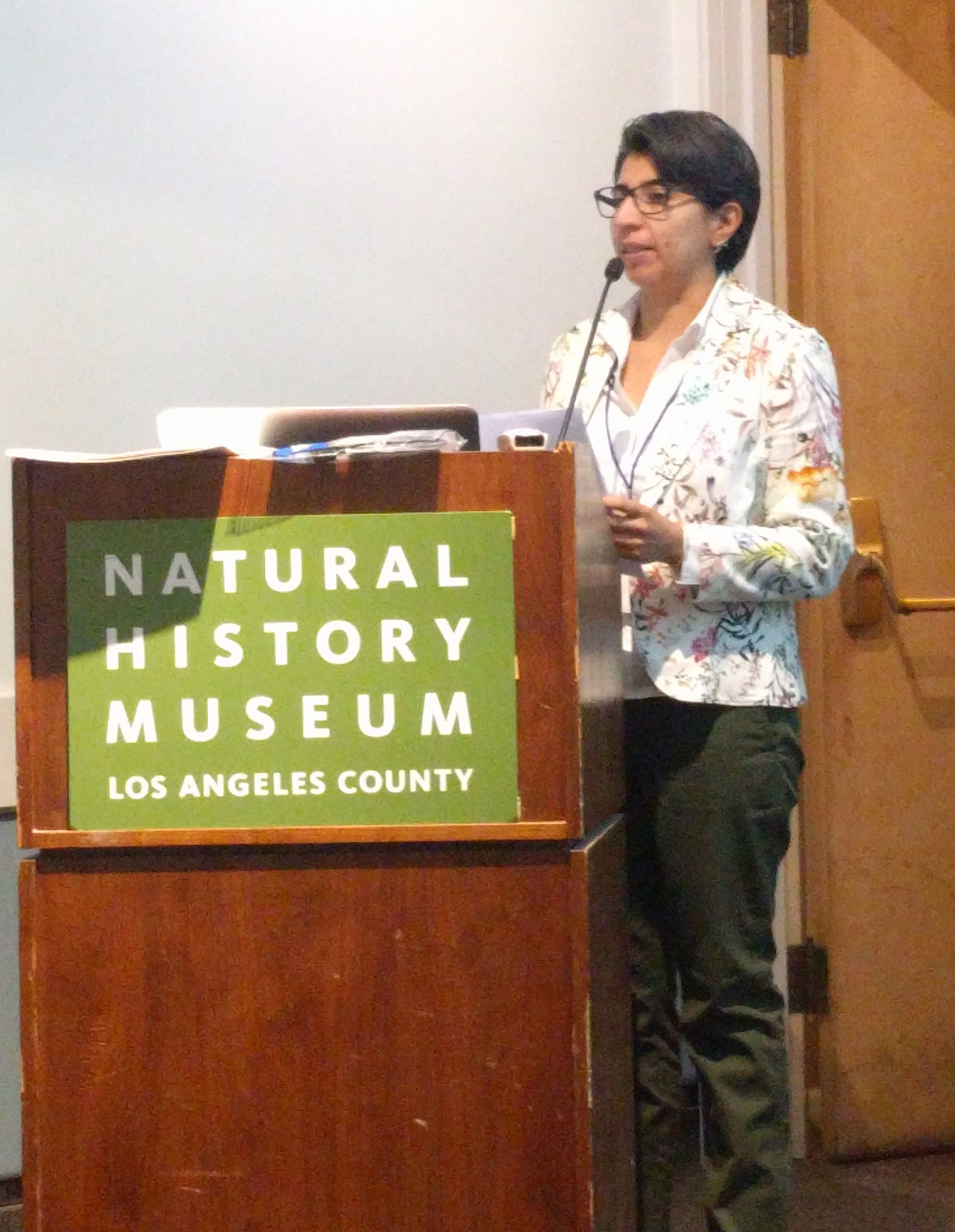
A new feature added to this year’s meeting was the Consortium Introspective: A BHL Symposium. BHL Chair Constance Rinaldo facilitated talks by Kelli Trei, Biosciences Librarian & Assistant Professor, University of Illinois (What Scientists Value about the Biodiversity Heritage Library: A BHL Blog Analysis); Susan Fraser, Thomas J. Hubbard Vice President and Director, LuEstherT. Mertz Library, The New York Botanical Garden (BHL — A Bright Constellation in the Biodiversity Universe); Mrs Wai Yin Pryke, Director of the National Library Singapore (BHL Singapore: Stories Our Collections Tell); and Mónica Aguilar Rocha, Digital Library Coordinator BHL México (Integrating digital content: issues and challenges to face in BHL México).

woman with brown hair talking into a microphone behind a podium

Mónica Aguilar Rocha, Digital Library Coordinator BHL México, presenting during the Consortium Introspective: A BHL Symposium at the 2018 BHL Annual Meeting. Photo credit: Martin R. Kalfatovic.

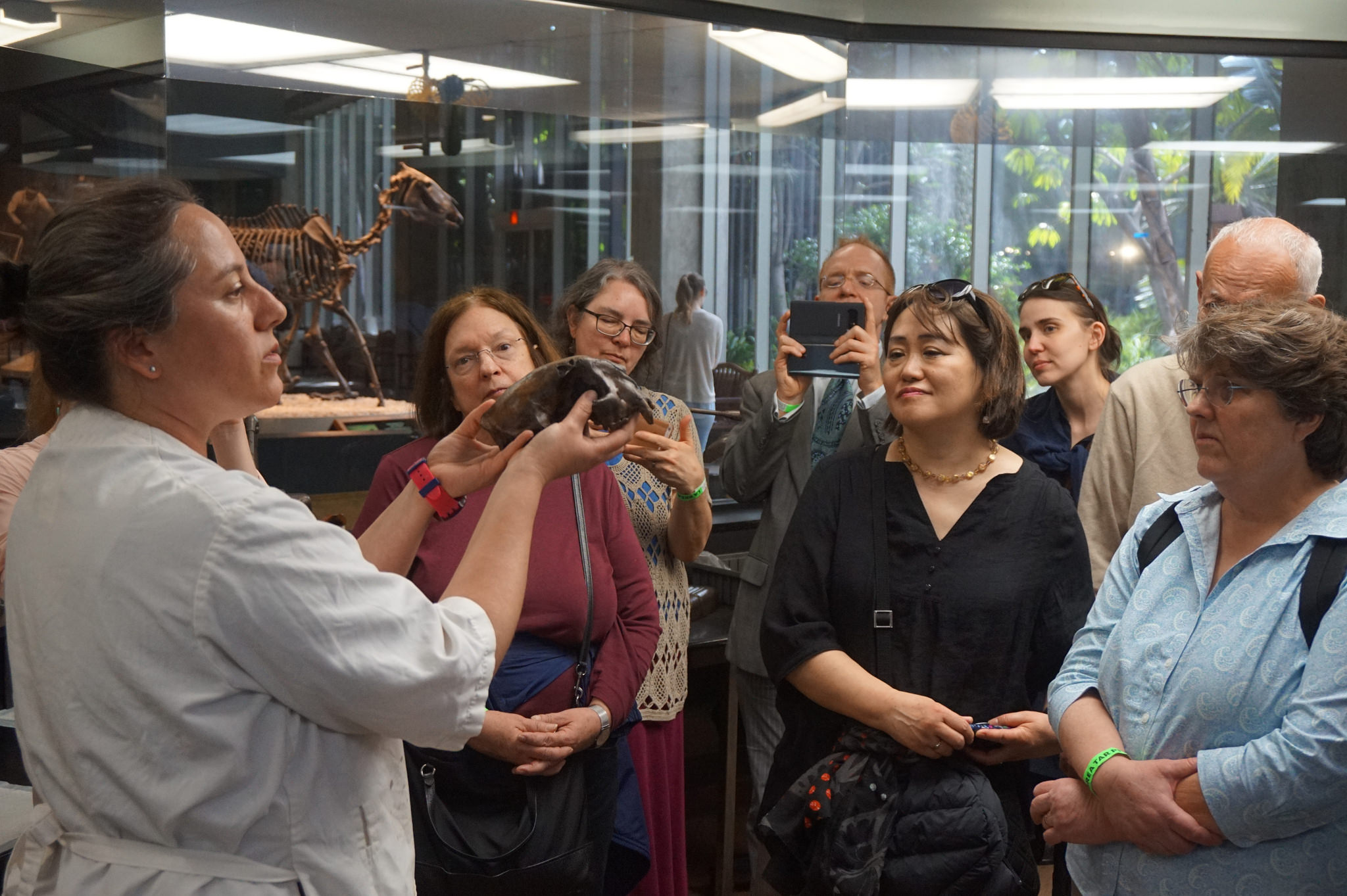
Attendees at the meeting had the opportunity to participate in some wonderful tours. The first was to the La Brea Tar Pits and Museum. The tour of the La Brea Tar Pits had two components – an overview and visit to the active fossil excavation sites in Hancock Park as well as a “behind the scenes” tour of work that goes on in the Fossil Laboratory. Among the items seen in the Fossil Laboratory were macrofossil (bones of dire wolves, sabre-tooth cats, etc.) preparation techniques, conservation and restoration work, and the large scale microfossil sorting project.

woman in white lab coat holding animal skull while group of men and women stand around her.

Stephany Potze (Fossil Lab Manager) showing off macrofossils during a tour of the Fossil Lab at the La Brea Tar Pits. Photo credit: Martin R. Kalfatovic.

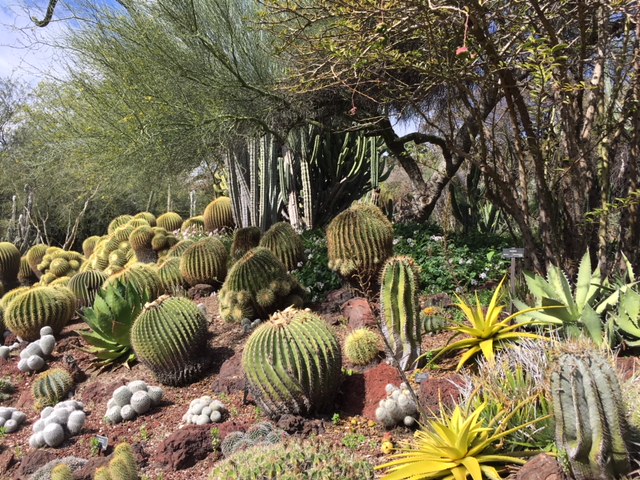
Susan Eubank facilitated a visit to the world-renowned Huntington Library, Art Collections and Botanical Gardens, where a tour of the Library as well as the Botanical Gardens was provided. The library and garden professionals highlighted their conservation and digital imaging labs along with the botanical and garden collections during a walking  tour.

collection of cacti and other succulents at an outdoor garden

Photo of the Desert Garden at The Huntington Library, Art Collections, and Botanical Gardens, taken during tour of the Gardens. Photo credit: Constance Rinaldo.

The culmination of the meeting was the selection of the host for the 2019 BHL Annual Meeting, and much excitement was generated as we waited for the voting results. The three contenders were the University of Toronto, Cornell University and the Smithsonian Tropical Research Institute in Panama. The Members voted to accept the bid of Cornell University. We look forward to gathering in Ithaca next year.

The BHL community wishes to thank again our hosts, Richard Hulser (Natural History Museum of Los Angeles County) and Susan Eubank (Los Angeles County Arboretum and Botanic Garden).

April 9, 2018by
Blog Reel, Featured Books

From ‘Shotgun Ornithology’ to Nature Conservation: Scientific Stories and Data from the Field Notes of William Brewster

handwritten text on a page with a drawing of a moose

William Brewster (1851-1919) was a renowned American amateur ornithologist, serving as a co-founder of the American Ornithologists’ Union, the first president of the Massachusetts Audubon Society, and a curator at Harvard’s Museum of Comparative Zoology (MCZ). As a part of the CLIR-funded BHL Field Notes Project, MCZ has been digitizing Brewster’s journals, diaries, letters, and photographic prints, which are held in Special Collections at the MCZ’s Ernst Mayr Library.

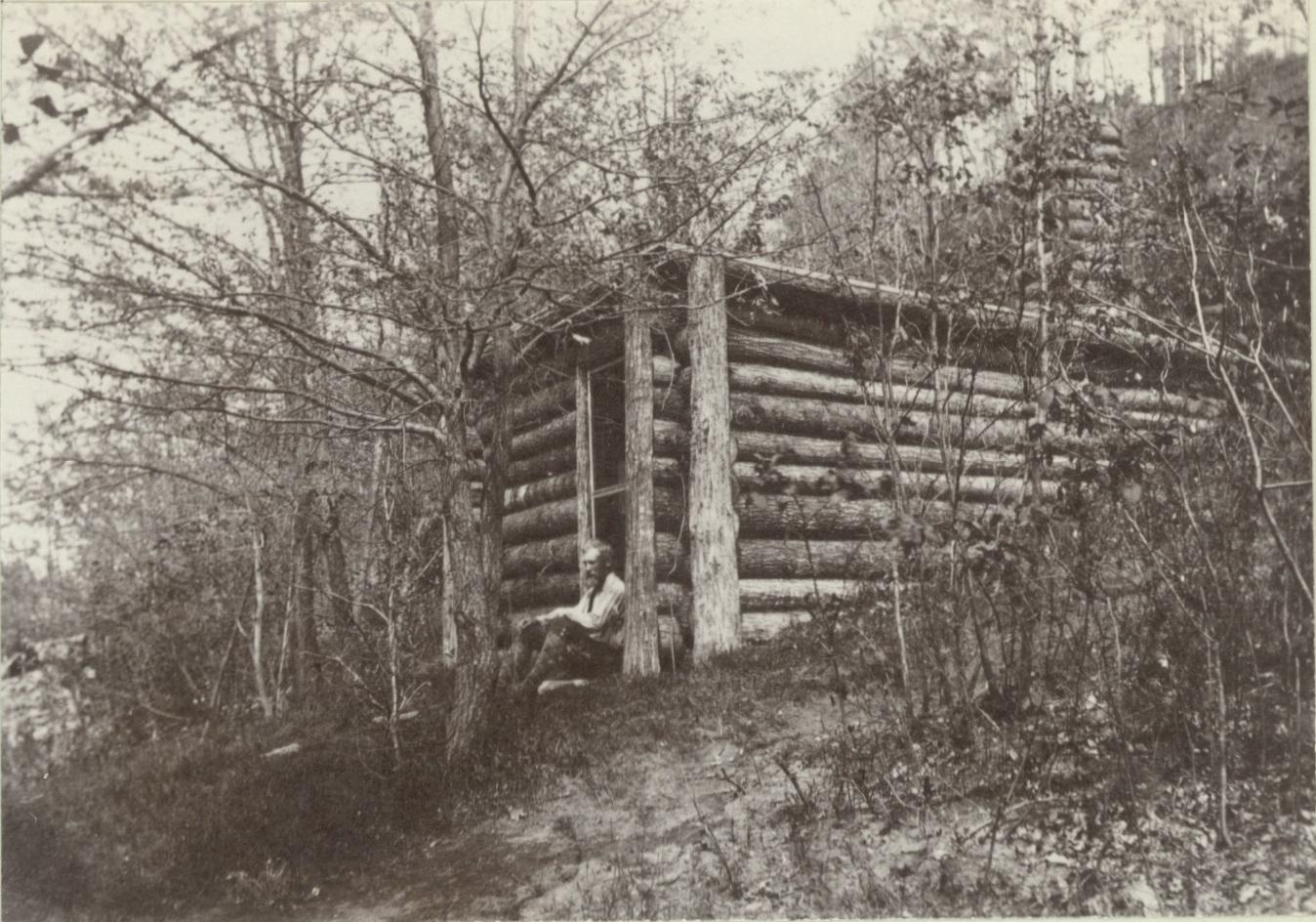
Most of Brewster’s observations are based in New England, where he split his time between two homes in Cambridge and Concord, Massachusetts. Brewster would stay in a cabin by the Concord River to study nature and escape city life in Cambridge. He also took notes when travelling: his notebooks document trips to the southern USA, the Caribbean, and Europe.

black and white photo of a man sitting in front of a cabin in the woods.

A black and white photograph of Brewster sitting on the front doorstep of his cabin in Concord, Ma. The small, one-story log cabin is set in a hillside and surrounded by small trees and shrubs. The back of the photograph has the note: “Concord, Mass. May 20, 1892.” (Ernst Mayr Library Special Collections, call no. bBr97.70.7.)

Brewster’s writings contain a wealth of information, from data on temperature and weather conditions to descriptions of animal behavior and personal musings. Some of the extensive Brewster collection is already available to view on BHL – here’s a sampling of the kinds of information you’ll find.

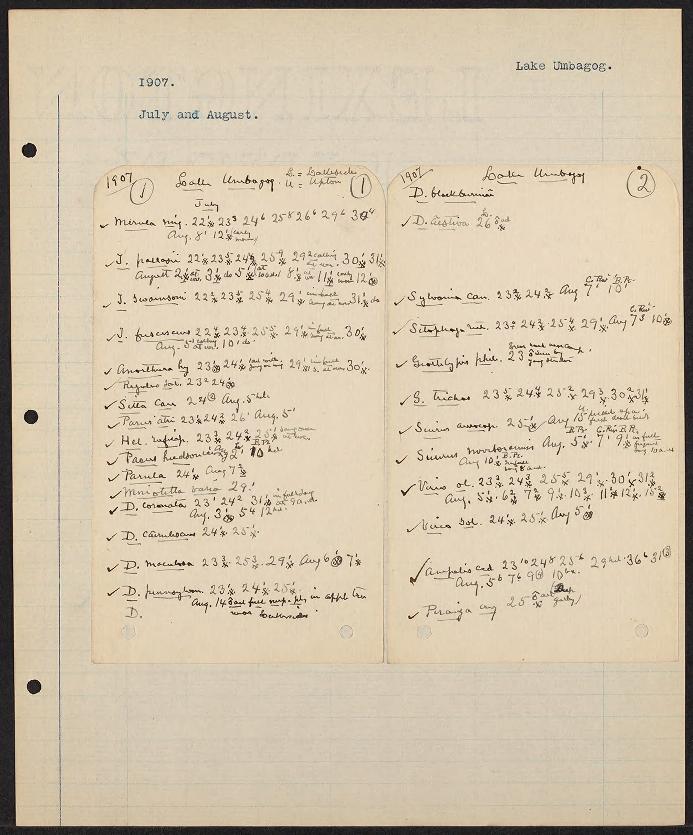
In the warmer months, Brewster often camped at Lake Umbagog (north of the White Mountain National Forest, straddling Maine – New Hampshire border), where he spent his days tracking the progress of bird nests around the lake and making other general observations. Here’s a typical example of one of Brewster’s bird lists, recorded at Lake Umbagog in 1907. The larger numbers are dates, with superscripts indicating the number of individuals counted that day. Asterisks tell us that the bird was heard vocalizing. Some additional details are also penned in (for example, he notes that Dendroica pensylvanica, the Chestnut-sided Warbler, was in an apple tree). [1]

handwritten page from a journal

An image of a page from a journal. Two smaller papers with handwritten, numbered lists are attached to a larger page. The heading reads: “Lake Umbagog, 1907. July and August.” The lists have scientific names of bird species, followed by dates, numbers of birds observed, and some additional notes. (1907. Journals of William Brewster, 1871-1919 (inclusive). Find this journal on BHL.)

Beginning in the 1890s, Brewster’s journals document a transition of focus from mainly specimen-collecting to photography and documenting behaviors. (His journals reveal an interesting story about his increasing ethical conflict and desire to study wildlife without contributing to its decline. You can read more about this in a previous BHL blog post found here.) Earlier in Brewster’s career, his journals list and provide details on species collected – data that is similarly useful to the list above in that it gives an indication of species distribution and abundance. It also corresponds with existing specimens and documents the impact made by scientific collectors of the era.

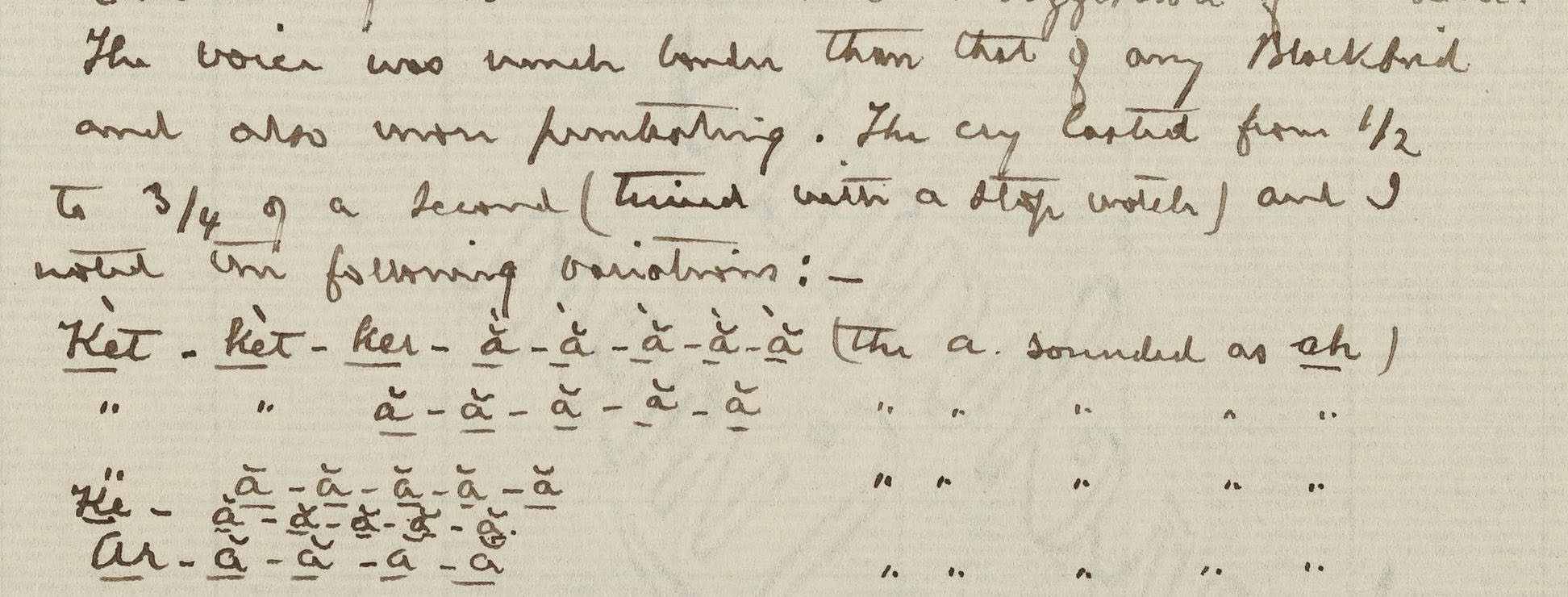
The kinds of data in these journals diversifies as Brewster started devoting more time to documenting animal behaviors. In many ways, this work seems to have been harder than getting a good shot at a bird. Even with today’s apps and audio libraries, figuring out bird calls can be a challenge. Equipped with just pencil, paper, field glasses and ears, studying bird vocalizations is much trickier, as shown by Brewster’s notes below from 1902. [2] Today, we can represent bird vocalizations visually using spectrograms. In order to translate sounds to text, Brewster listened diligently to invent mnemonics, describe patterns, and make comparisons to other more familiar sounds.

handwritten text on a page

An image from one of Brewster’s journals showing his written renditions of an unknown bird’s vocalizations. He writes: “The voice was much louder than that of any Blackbird and was also more penetrating. The cry lasted from ½ to ¾ of a second (timed with a stop watch) and I noted the following variations: Kèt – kèt – kèt – ă – ă – ă – ă – ă (the a sounded as ah) [etc.]” https://s.si.edu/2q6rKGa.

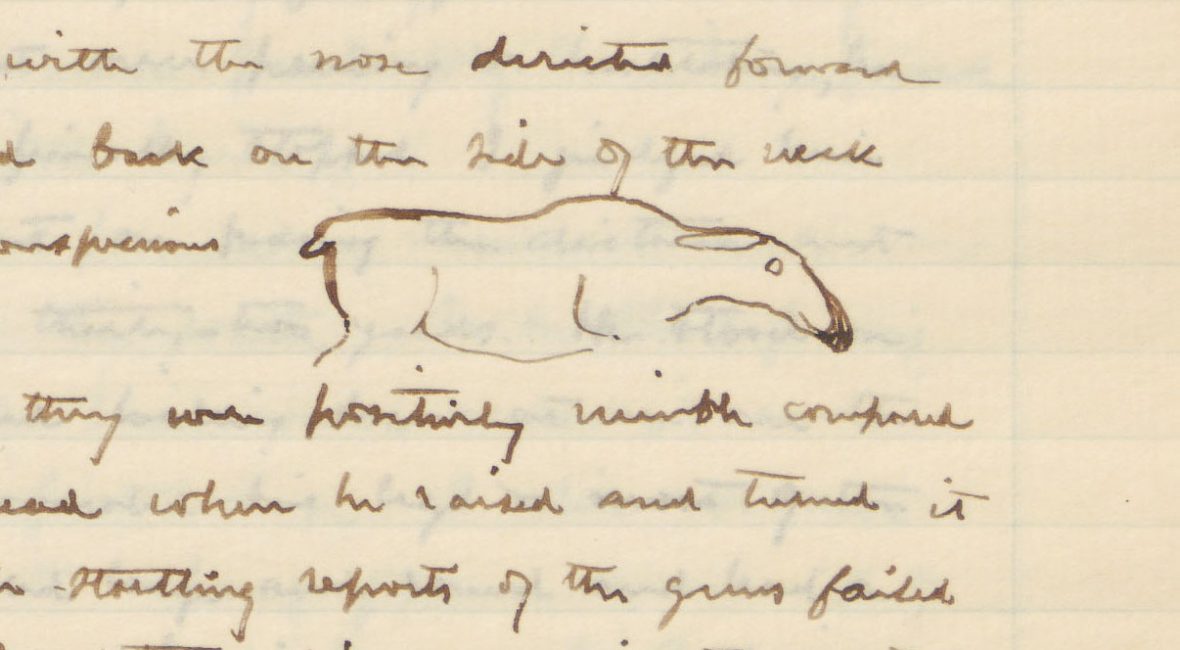
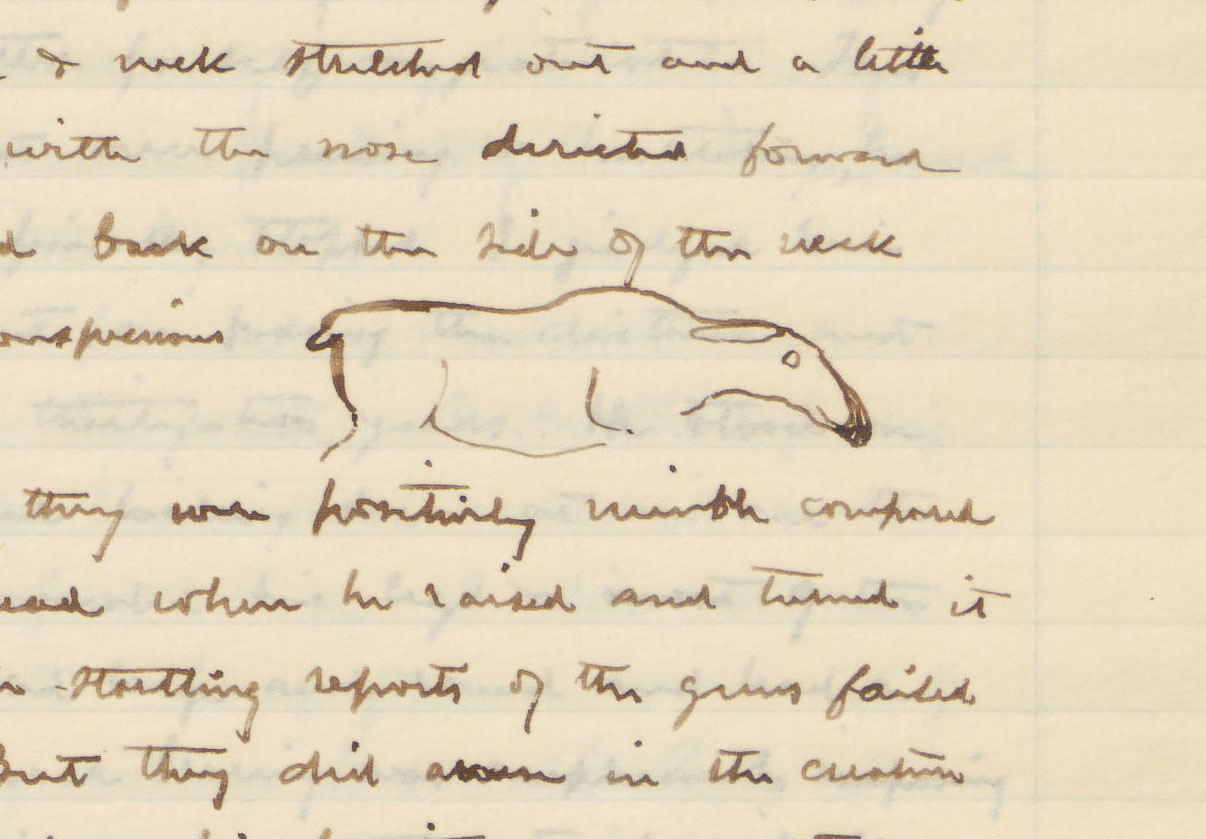
It’s worth mentioning that Brewster’s animal observations weren’t limited to birds, and that a lot of his animal encounters made for interesting stories. Below is a sketch of a moose from Lake Umbagog, observed in August 1869. [3] His impression: “He seemed like some long-forgotten antedeluvian creature which, arousing from a sleep of thousands of years, was wandering aimlessly about in a land so changed that it no longer had any place for such strange monsters.”

handwritten text on a page with a drawing of a moose

A simple ink-sketched outline of a female moose with head held low and ears lying flat back. The sketch is embedded in a paragraph handwritten in cursive script on lined paper. https://s.si.edu/2GD0beA.

As though telling the story to a friend, he recounts following the moose through the wetland in his canoe – sometimes ending up way too close for comfort. After talking to a local guide, he learned that the moose that he’d seen was a mid-sized female, and concluded, “If she was not really a very large one I have no wish to be equally near to a big bull!”

Because he returned to Lake Umbagog year after year, Brewster was able to notice longer-term changes in familiar ecosystems. Increasingly, these changes were man-made disturbances: the clearing of woods, the creation of new roads, and other urbanizing changes. He also recorded how local communities of animals and plants responded after these disturbances. The following passages from Brewster’s field notes document some changes that he saw in the Maine woods as a consequence of logging for paper mills, and include some of his own predictions.

“Where the road passes through the woods … the roadworkers last May cut away the mountain maples, cornels and other shrubs and low trees that made such a beautiful border to the forest clearing in their places a broad belt of bare rocks half covered with the fallen brush wood. This deed of vandalism was performed while I was here and at the time I feared that years must elapse before Nature, with all her diligence, could repair the injury.

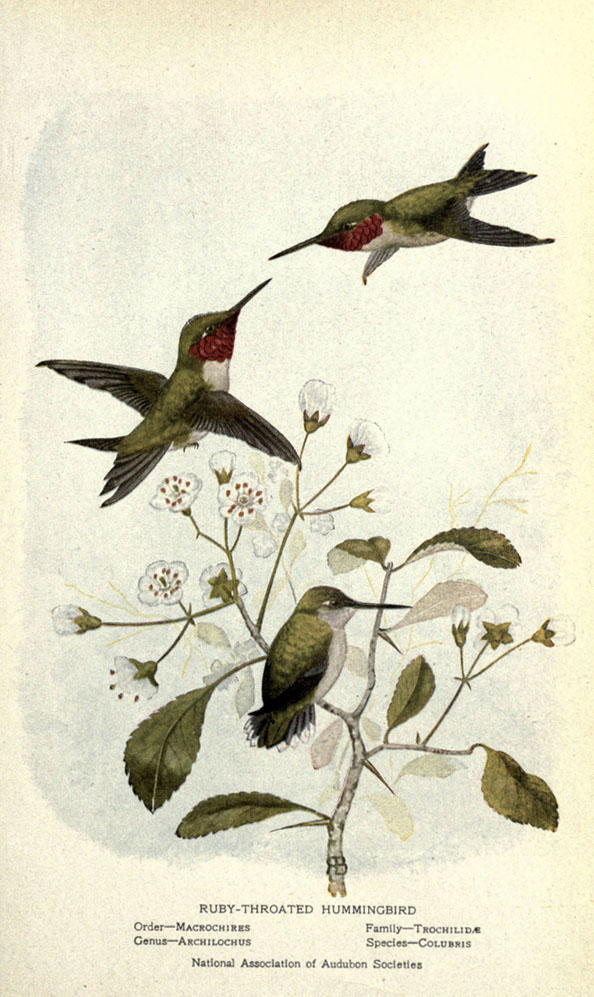
“I underrated her powers for already this thicket of road is, if anything, more beautiful than ever. Fire weed, Eupatorium, Impatiens, Asters, Golden rod and several other tall and rank flowering plants have shot up through and almost perfectly concealed the unsightly brush and stone heaps and I have rarely seen a more brilliant or attractive display of wild flowers. The fire weed is especially tall and fine and the jewel weed grows in solid beds yards in extent. Of course the Humming birds had not overlooked such a feeding ground. There were at least three of them there at once including an adult male with blazing ruby throat at which I fired an ineffectual shot.” [4]

In this instance, Brewster noticed that one year was enough time to see plant growth after the woods had been cleared, that the colonizing plants were different from the ones that characterized the location before, and that they had impacted animal life. He penned these observations on ecological succession just a few years before the first scientific paper on this concept was published (“An Ecological Study of the Sand Dune Flora of Northern Indiana”, Henry Chandler Cowles, 1898.). [5]

illustration of two hummingbirds

A painting of Ruby-throated hummingbirds. Two male birds with red throats are hovering face-to-face with their beaks nearly touching. A female sits below in a branch with white flowers. All the birds are green above with white undersides and have long, narrow beaks. Below the painting is the text: “RUBY-THROATED HUMMING Order – MACROCHIRES Family – TROCHILUS Genus – ARCHILOCUS Species – COLUBRIS National Association of Audubon Societies.” (Portraits and habits of our birds. v.2. New York city: National association of Audubon societies,1920. (See on BHL.)

The following year, he wrote:

“The Lake shore has been sadly marred … by the lumbermen who last winter cut all the spruces and many of the fine, tall white pines all the way from this landing to the deep cove near the Tidswell place. […] Lumbering is a very different business now from what it was twenty years ago. Then only the larger trees were taken; now the pulp mills devour everything and nothing is spared thicker at the base than five inches! […] These changes in the character of the forests must make speedy & considerable changes in the bird fauna. The shore near Crocker’s camp, for instance, has been one of the chief breeding grounds for the Bay breasted Warbler. They will breed there no longer, now that all the spruces are gone.” [6]

Knowing now that local extirpations and even total extinction can occur (this was the decade when the passenger pigeon disappeared from the wild), he would have penned this prediction with heavy heart. To help preserve an area he cared about – his familiar stomping grounds along the Concord River in Concord, Mass. – over time, Brewster purchased 300 acres of the riverfront. His ‘October Farm,’ across the river from Great Meadows National Wildlife Refuge, is now protected land with trails recently opened to the public – while his writings, notes and photographs preserve the region for us as he knew it in the 19th and early 20th centuries.

(If you’re interested in learning more, I write an ongoing series of blog posts on the Brewster collection on the Ernst Mayr Library blog. You might like to see archival and modern photos of October Farm, Brewster’s property in Concord.)

References

[1] July and August 1907. Journals of William Brewster, 1871-1919 (inclusive). Find this journal on BHL.

[2] June 1, 1902. Journals of William Brewster, 1871-1919 (inclusive). Find this journal on BHL.

[3] August 27, 1896. Journals of William Brewster, 1871-1919 (inclusive). Find this journal on BHL.

[4] August 15, 1896. Journals of William Brewster, 1871-1919 (inclusive). Find this journal on BHL.

[5] ‘Henry C. Cowles’. The University of Chicago Centennial Catalogues. Web accessed: https://www.lib.uchicago.edu/projects/centcat/fac/facch14_01.html

[6] May 15, 1897. Journals of William Brewster, 1871-1919 (inclusive). Find this journal on BHL.

April 5, 2018by kmichaelis
BHL News, Blog Reel

BHL Welcomes the University Library Johann Christian Senckenberg

drawing and text in blue of logo for Universitätsbibliothek Johann Christian Senckenberg

drawing and text in blue of logo for Universitätsbibliothek Johann Christian Senckenberg

The Biodiversity Heritage Library (BHL) is pleased to welcome the University Library Johann Christian Senckenberg as a new Affiliate. The University Library is the first German library to join BHL as an Affiliate.

The University Library Johann Christian Senckenberg serves as the Central Library of the Goethe University of Frankfurt am Main and functions as an academic library for the City of Frankfurt, a university library with several state commitments for the Rhine-Main region and Hesse, and is a major participant in the national supply of literature.

The University Library’s Biology Collection comprises excellent holdings of historic and modern biodiversity literature, representing some 400,000 volumes on a wide range of biological subjects. The collection is constantly expanding thanks to the Library’s own acquisition efforts, co-funding by the German Research Council (DFG), and exchange activities with the Senckenberg Gesellschaft für Naturforschung. In 2007, the Virtual Library, comprised of catalog data and online resources including databases and e-journals, was launched to increase visibility of the Biology Collection.

The University Library has a long history of collection digitization and provides access to a large corpus of digitized literature through its “Digitale Sammlungen” portal, including a notable collection of German botanical journals from 1753-1914. In 2017, the Specialised Information Service Biodiversity Research project (co-funded by the German Research Council DFG) was established to enhance access to the Biology Collection. Through continued literature digitization and the development of new services including text mining tools to mobilize data within the literature, the project aims to build a bridge between historical holdings and modern biodiversity research.

As a publicly-funded organization, the University Library Johann Christian Senckenberg is committed to free and open access to research literature and the knowledge contained therein. As a BHL Affiliate, the University Library will expand BHL’s corpus by contributing content from its rich Biology Collection. By enabling free access to Central European biodiversity literature, the Library will significantly enhance discoverability of knowledge contained in a segment of literature which is not yet satisfactorily represented online.

Further Information

See the press release from Goethe-Universität Frankfurt am Main (German language).
See an English version of the press release on IDW.
Learn more about the University Library Johann Christian Senckenberg.
Learn more about the Specialised Information Service Biodiversity Research project.

April 3, 2018by michelle.underhill

Help Support BHL

BHL's existence depends on the financial support of its patrons. Help us keep this free resource alive!

search

About BHL

The Biodiversity Heritage Library (BHL) is the world’s largest open access digital library for biodiversity literature and archives. BHL operates as a worldwide consortium of natural history, botanical, research, and national libraries working together to digitize the natural history literature held in their collections and make it freely available for open access as part of a global “biodiversity community.”

Join Our Mailing List

Sign up to receive the latest news, content highlights, and promotions.

Subscribe Now

Subscribe to Blog via Email

Enter your email address to subscribe to this blog and receive notifications of new posts by email.

Join 319 other subscribers

Subscribe to Blog Via RSS

Subscribe to the blog RSS feed to stay up-to-date on all the latest BHL posts.

Access RSS Feed

Inspiring Discovery through Free Access to Biodiversity Knowledge.

The Biodiversity Heritage Library makes it easier than ever for you to access the information you need to study and explore life on Earth…for free, anytime, anywhere.


64+ Million Pages of
Biodiversity Literature Online.

EXPLORE

Tools and Services
to Transform Research.

EXPLORE

300,000+
Illustrations on Flickr.

EXPLORE

ABOUT | HARMFUL CONTENT | PRIVACY | SITE MAP | TERMS OF USE