Biodiversity Heritage Library - Program news and collection highlights from BHL
  • Home
  • News
  • Featured Books
    • All Featured Books
    • Book of the Month Series
    • BHL at 20
  • User Stories
  • Campaigns
    • Fossil Stories
    • Garden Stories
    • Monsters Are Real
    • Page Frights
    • Her Natural History
    • Earth Optimism 2020
  • Tech Blog
  • Visit BHL
Home
News
Featured Books
    All Featured Books
    Book of the Month Series
    BHL at 20
User Stories
Campaigns
    Fossil Stories
    Garden Stories
    Monsters Are Real
    Page Frights
    Her Natural History
    Earth Optimism 2020
Tech Blog
Visit BHL
  • Home
  • News
  • Featured Books
    • All Featured Books
    • Book of the Month Series
    • BHL at 20
  • User Stories
  • Campaigns
    • Fossil Stories
    • Garden Stories
    • Monsters Are Real
    • Page Frights
    • Her Natural History
    • Earth Optimism 2020
  • Tech Blog
  • Visit BHL
Biodiversity Heritage Library - Program news and collection highlights from BHL
BHL News, Blog Reel

BHL at the GBIF 25th Governing Board Annual Meeting

GBIF 25th Annual Meeting logoAs Chair of the BHL Members’ Council, I had the privilege of attending the 25th Meeting of the GBIF Global Governing Board convened in Kilkenny, Ireland, 15-18 October 2018. I represent BHL in its capacity as an Associate Participant in GBIF at the governing board meeting. BHL has been a participant since 2014.

The Global Biodiversity Information Facility (GBIF) operates through a network of global nodes to develop and maintain an open data infrastructure for sharing digital biodiversity data.
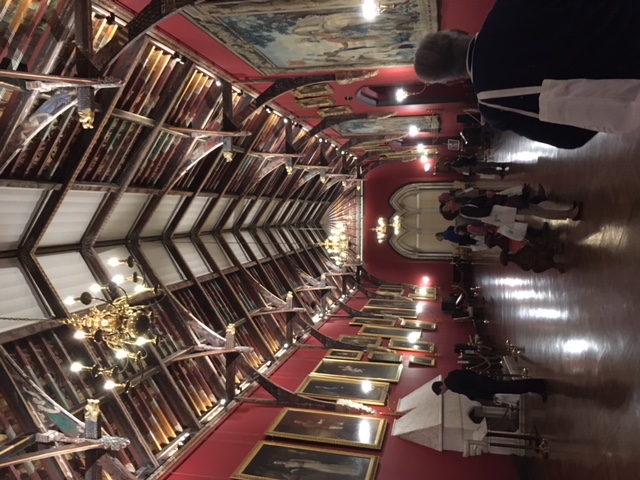
Tour of Kilkenny Castle

Tour of Kilkenny Castle as part of the opening reception at the GBIF 25th Governing Board Annual Meeting. Photo credit: Constance Rinaldo.

GBIF Governing Board Chair Tanya Abrahamse (former CEO South African National Biodiversity Institute) and Donald Hobern (GBIF Executive Secretary), along with the host, Liam Lysaght (National Biodiversity Data Centre, Ireland) led the meeting. Abrahamse and Hobern provided an overview of GBIF activities over the past year, including a discussion of the GBIF Strategic Plan Goals and Work Program updates. The various GBIF Committee chairs (Science, Nodes, Budget) all reported the past year’s activities. Around 4 July 2018, GBIF reached the one billion record mark. The GBIF 26 Governing Board meeting will be part of the Biodiversity_next joint conference in Leiden, The Netherlands.
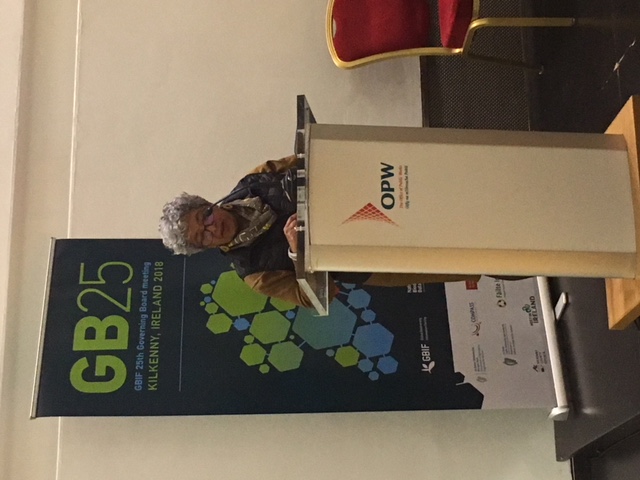
Tanya Abrahmse speaking

Tanya Abrahmse, chair of GBIF governing board, speaking at the GBIF 25th Governing Board Annual Meeting. Photo credit: Constance Rinaldo.

Results of the Governing Board elections with terms ending in 2020:

  • 1st Vice-Chair, Governing Board: Christoph Hauser, Deputy Director General, Museum fur Naturkunde, Berlin
  • 3rd Vice-Chair, Governing Board: Leonard Krishtalka, Director University of Kansas, Biodiversity Institute and Natural History Museum
  • Nodes Committee Chair: André Heughebaert, Belgian Biodiversity Platform
  • Nodes Committee 1st ViceChair : Anders Telenius, Swedish Museum of Natural History
  • Nodes Committee 2nd Vice-chair : Hulda Gideon, Tanzania Commission for Science and Technology
  • Science Committee 1st ViceChair: Gregory Riccardi, iDigBio/Institute of Scientific Data, Florida State University
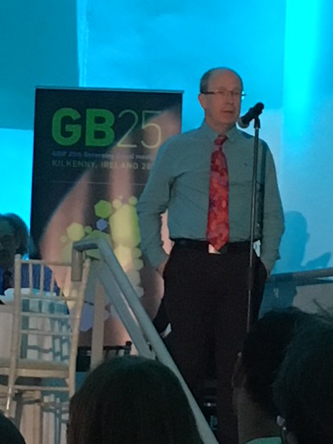
Donald Hoburn speaking

Donald Hobern, Executive Secretary of GBIF, speaking during the GBIF 25th Annual Governing Board Meeting. Photo credit: Constance Rinaldo.

Public Session of GBIF Governing Board. GBIF applications and relevance: progress and next steps.
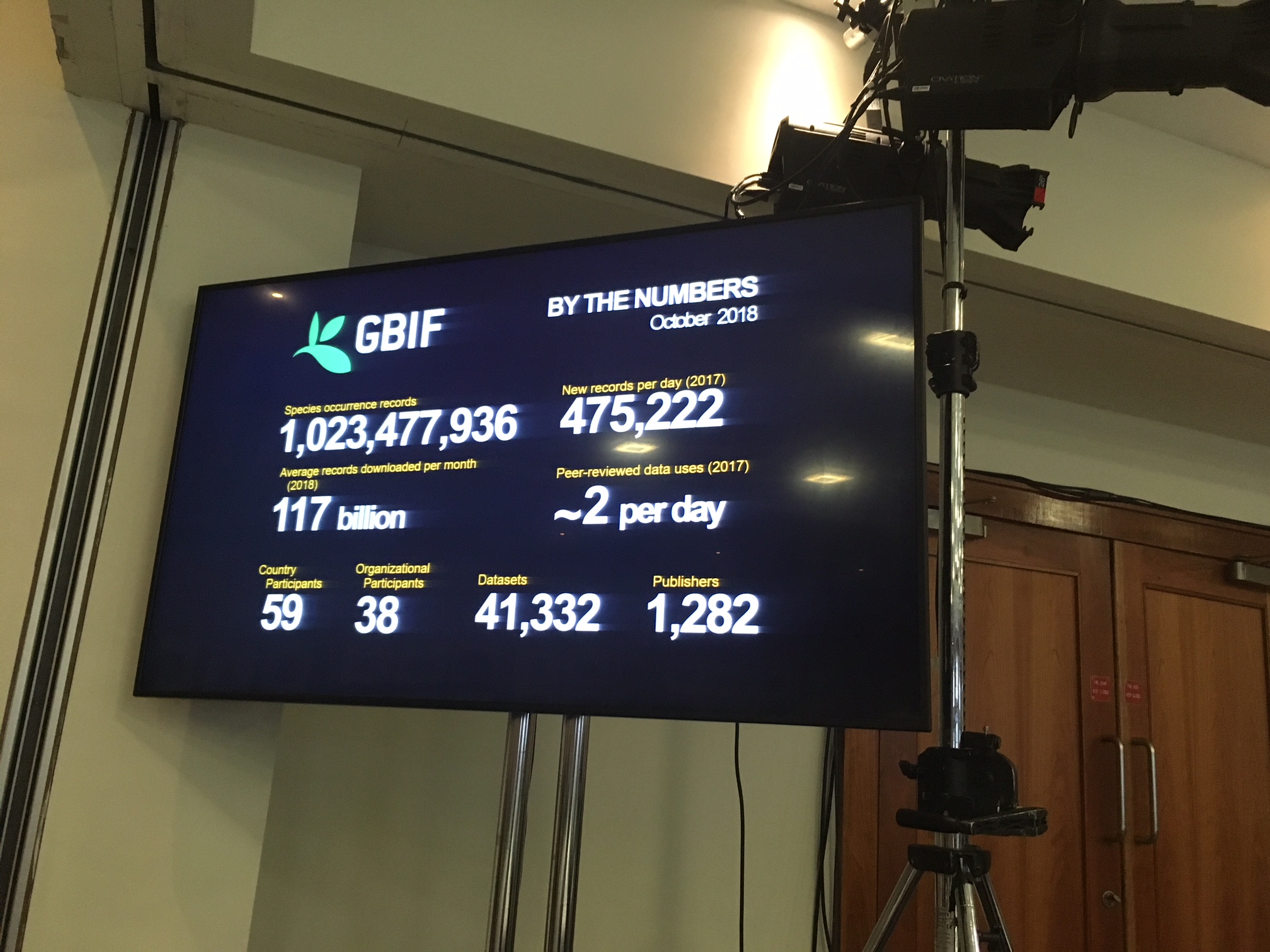
GBIF by the numbers. Photo credit: Constance Rinaldo.

All GBIF delegates and others from the greater biodiversity community in Ireland were invited to the public session. Many of the talks focused on data discovery and mobilization, improving functionality and relevance to policy.

Presentations were introduced by Tim Hirsch (GBIF).

  • org at 1 billion records: trends in data publication and research use
    Kyle Copas, Communications Manager, GBIF Secretariat | presentation
  • Encouraging a data citation culture
    Daniel Noesgaard, Science Communications Coordinator, GBIF Secretariat | presentation
  • Shining a light on ‘dark taxa’: naming and discovering DNA-based biodiversity data, Part 1
    Dmitry Schigel, Scientific Officer, GBIF Secretariat | presentation
  • Shining a light on ‘dark taxa’: naming and discovering DNA-based biodiversity data, Part 2
    Urmas Kõljalg, University of Tartu Natural History Museum & Botanic Garden, Estonia
  • Shining a light on ‘dark taxa’: naming and discovering DNA-based biodiversity data, Part 3
    Dmitry Schigel, Scientific Officer, GBIF Secretariat
  • Improved information on invasive and alien species, Part 1
    Shyama Pagad, IUCN Invasive Species Specialist Group (via video), New Zealand
  • Improved information on invasive and alien species, Part 2
    Tim Hirsch, Deputy Director, GBIF Secretariat | presentation
  • Improved ecological data capture and Essential Biodiversity Variables
    introduced by Donald Hobern, Executive Secretary, GBIF Secretariat
  • Improved ecological data capture and Essential Biodiversity Variables Laetitia Navarro, GEO BON: Group on Earth Observations – Biodiversity Observation Network, Germany | presentation
  • Overcoming the taxonomic challenge Olaf Bánki, Species 2000| Catalogue of Life, Netherlands | presentation
  • Biodiversity data for national reporting Liam Lysaght, National Biodiversity Data Centre, Ireland | presentation
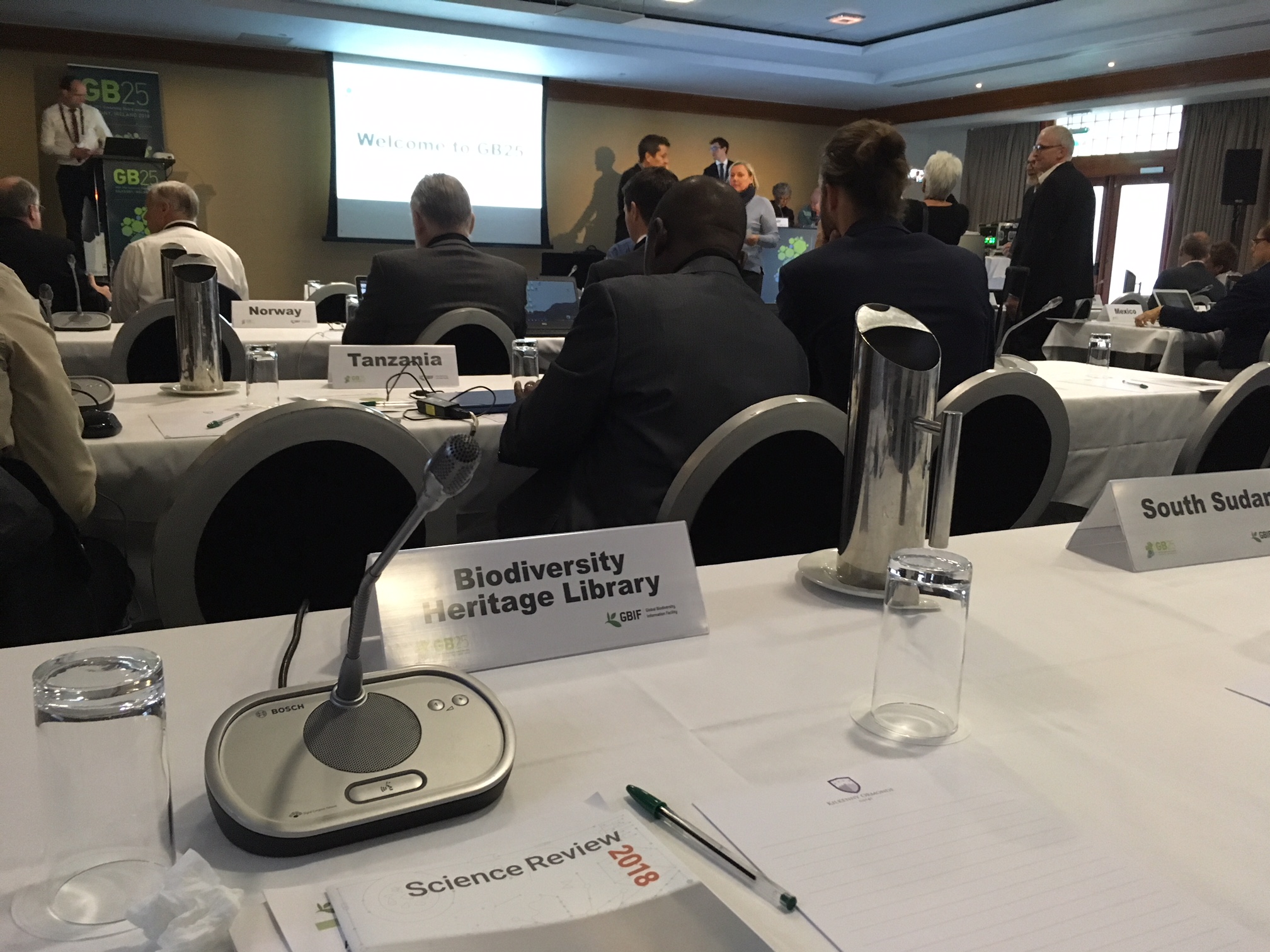
View from Constance Rinaldo’s seat at the GBIF 25th Governing Board Annual Meeting. Photo credit: Constance RInaldo.

The winners of the 2018 Young Researchers Award and Ebbe Nielsen Challenge were presented at the end of the public session. The Young Researchers Award honors projects that foster innovative research and discovery in biodiversity informatics and provides financial support for winners.

  • Raquel Gaião Silva, University of Algarve, Portugal: Raquel is a Master’s student in International Science/ Marine Biodiversity Conservation. She has used GBIF mediated data in her work on climate-driven changes in seaweed distribution in Atlantic Iberian marine forests.
  • Kate Ingenloff, University of Kansas Biodiversity Institute is a doctoral student who used GBIF mediated data along with time-specific environmental and behavioral data to develop better niche models for highly mobile species such as pelagic birds.

The Ebbe Nielsen Challenge annual prize honors the memory of Dr Ebbe Schmidt Nielsen, a principal founder of GBIF and leader in biodiversity informatics. The six recipients shared prize money, some provided by the Swedish Research Council.

  • Checklist recipe: a template for reproducible standardization of species checklist data Lien Reyserhove, Damiano Oldoniand Peter Desmet, INBO: Research Institute for Nature and Forest, Belgium First prize
  • Ozymandias: a biodiversity knowledge graph Roderic D. M. Page, University of Glasgow, United Kingdom First prize
  • The bdverse. Tomer Guetaand Yohay Carmel, The Technion – Israel Institute of Technology, Israel, Vijay Barve, Florida Museum of Natural History, United States, Thiloshon Nagarajah, Informatics Institute of Technology, Sri Lanka, Povilas Gibas, Vilnius University, Lithuania, Ashwin Agrawal, Indian Institute of Technology (BHU), India Second prize
  • GBIF Issues Explorer. Luis J. Villanueva, Smithsonian Institution, United States Second prize
  • Smart mosquito trap to DwC pipeline. Connor Howingtonand Samuel Rund, VectorBase, United States Second prize
  • Taxonomy Tree Editor. Ashish Singh Tomar, University of Granada, Spain | BIG4 Second prize

Videos of the public sessions of the meeting are available on the GBIF website.

Other Explorations
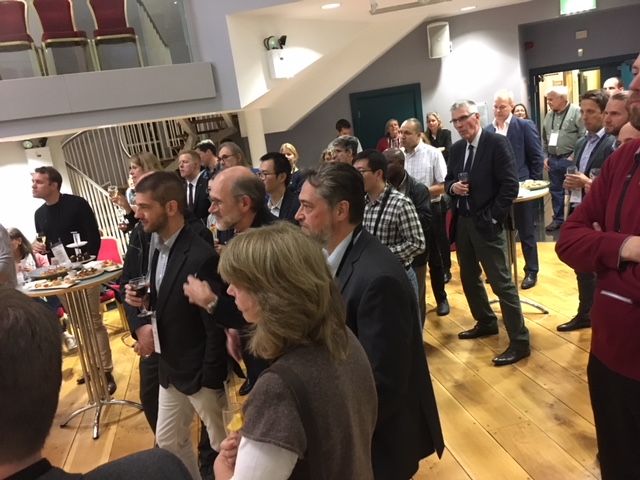
people during an opening reception

Attendees at the opening reception of the GBIF 25th Governing Board Annual Meeting. Photo credit: Constance Rinaldo.

I had some productive, informal meetings with BHL partners and potential partners providing opportunities to explore new partnerships or deepen existing ones. During the reception and other networking events, I learned about GBIF’s Biodiversity Open Ambassador program, a chance to promote the principles of open data sharing in presentations, whether or not the work is about GBIF. GBIF will provide slides and information or you can develop your own to add to appropriate presentations. Discussions with Ana Casino of the Consortium of European Taxonomic Facilities (CETAF), Donald Hobern and Dmitry Shigel (GBIF), Dmitris Koureas (TDWG) and Patricia Koleff (BHL México), among others, determined that BHL’s future plans will augment interoperability in the biodiversity community and that BHL is a critical resource for many GBIF participants.

November 27, 2018by michelle.underhill
BHL News, Blog Reel

BHL Welcomes the Auckland War Memorial Museum Tāmaki Paenga Hira

Auckland Museum Logo

The Biodiversity Heritage Library is pleased to welcome the Auckland War Memorial Museum Tāmaki Paenga Hira as a new Affiliate. Auckland Museum is BHL’s first partner in Aotearoa New Zealand.

Tracing its roots back to 1852, Auckland Museum was one of New Zealand’s first museums and is regarded as one of the finest in the Southern Hemisphere. Renowned for its collection of Māori and Pacific treasures along with significant natural history resources, the Museum tells the story of New Zealand, its place in the Pacific and its people. It is also a war memorial for the province of Auckland.

The Museum is home to one of New Zealand’s finest heritage research libraries. Serving the Museum since 1867, the Library’s key focus is caring for and providing access to the Museum’s Documentary Heritage collections, including manuscripts, photographs and artwork, ephemera, oral histories, rare books, and serials. The Library’s collections have an overarching focus on the Auckland province and te ao Māori (the Māori world), and its natural history collection strengths include botany, and academic and general-interest works related to the natural sciences.

“Auckland Museum’s long natural history specialism has resulted in a world-class collection of New Zealand specimens of flora and fauna. Coupled with published research and a wealth of untapped curatorial correspondence, our holdings will be a valuable addition to the BHL community,” affirmed Adam Moriarty, Head of Information, Library and Enquiry Services at the Auckland Museum. “As the first New Zealand-based institution to join the BHL, we can dramatically increase what the world knows about Aotearoa’s unique natural environment.”

BHL representatives Constance Rinaldo (Ernst Mayr Library, Harvard and Chair of the BHL Members’ Council) and Dr. Elycia Wallis and Nicole Kearney (BHL Australia) traveled to the Museum in early September to welcome the Library and provide an orientation to the BHL program. In late October, Kearney, manager of the BHL Australia program, and Cerise Howard, digitization coordinator for BHL Australia, returned to provide an intensive three-day training workshop to Library staff covering a broad range of topics from metadata requirements to digitization workflow processes.

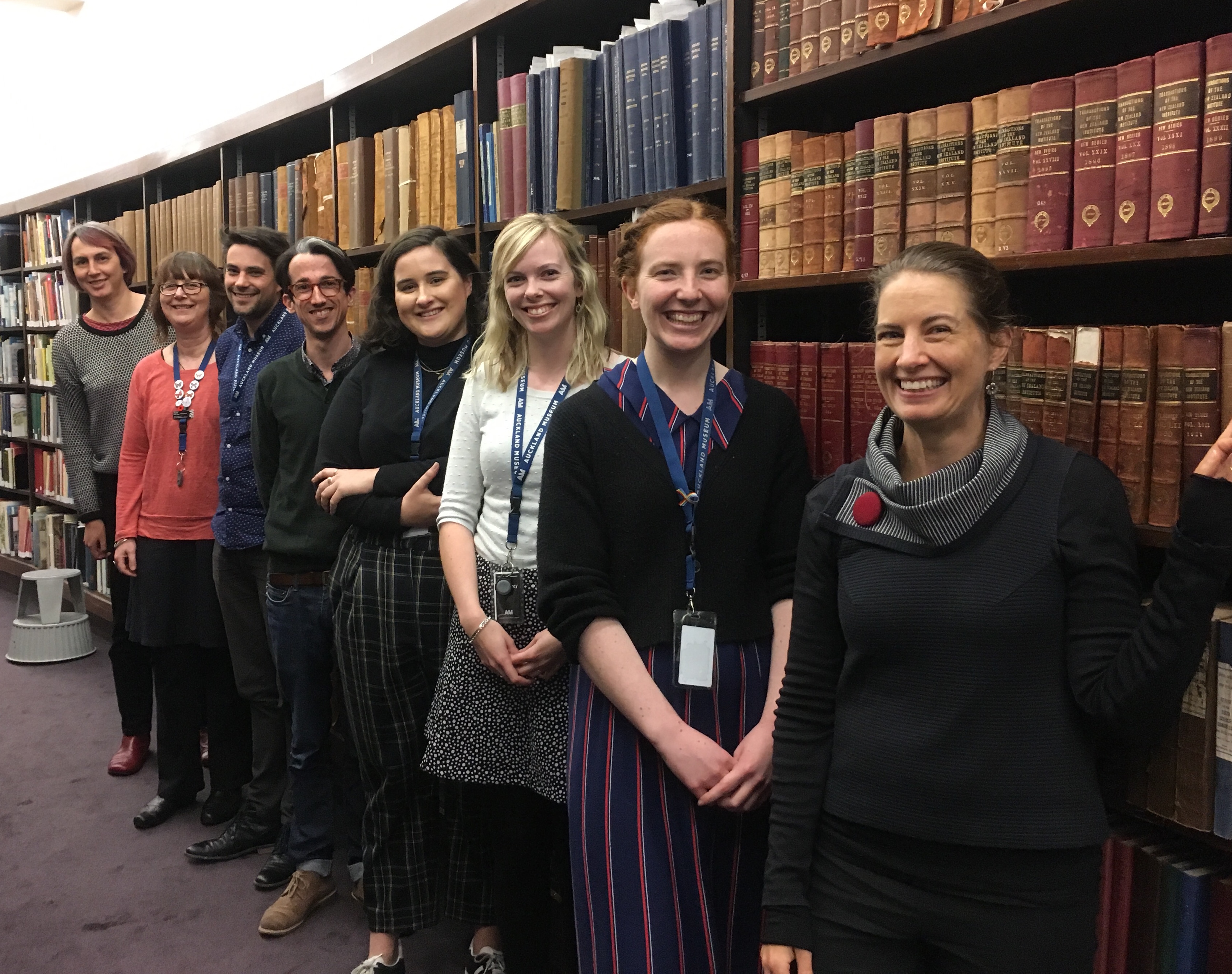
people standing in front of a bookshelf

Nicole Kearney (front) and Cerise Howard (back), BHL Australia, with colleagues from Auckland Museum during the three-day workshop at the Library in Auckland.

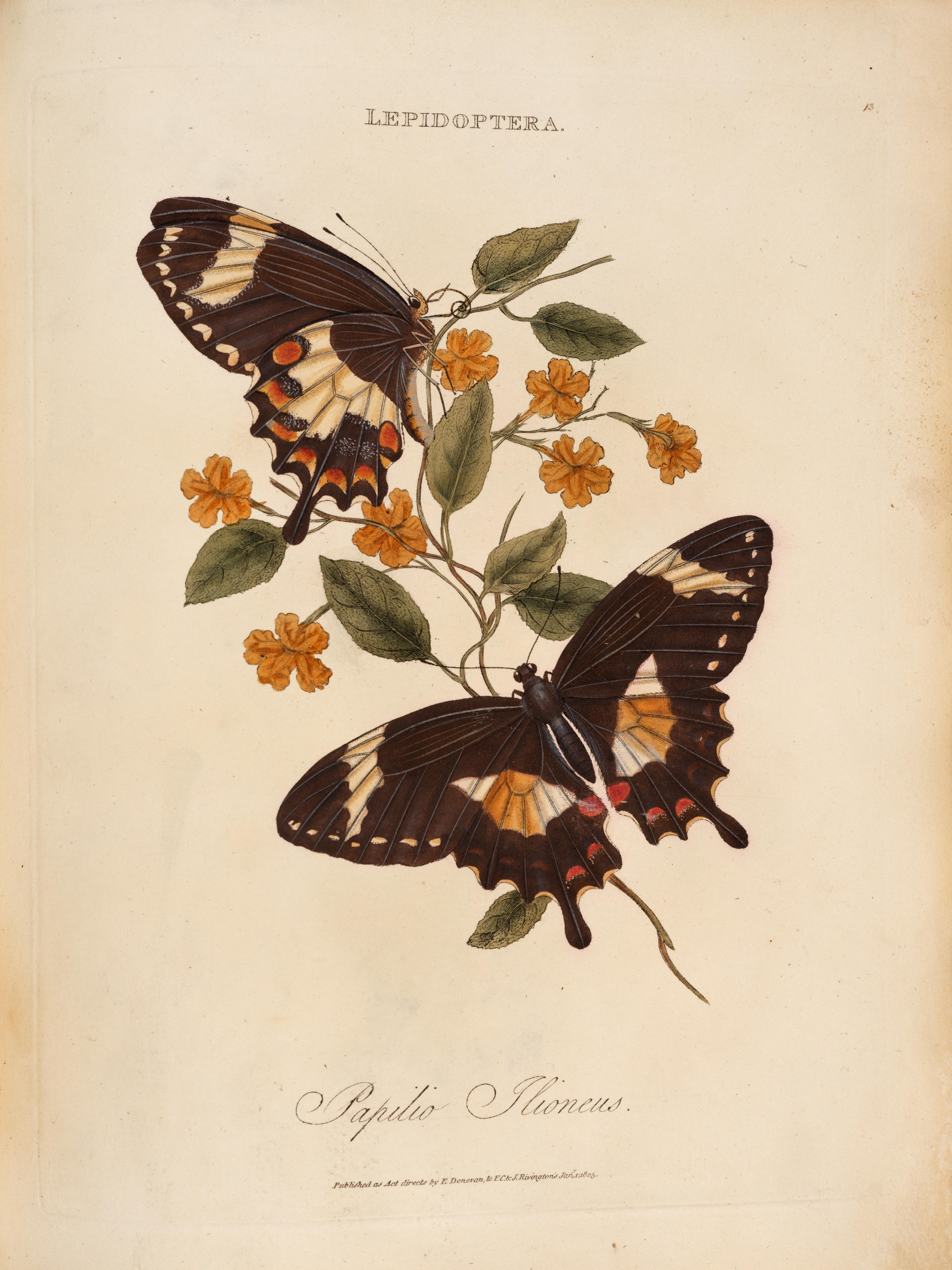
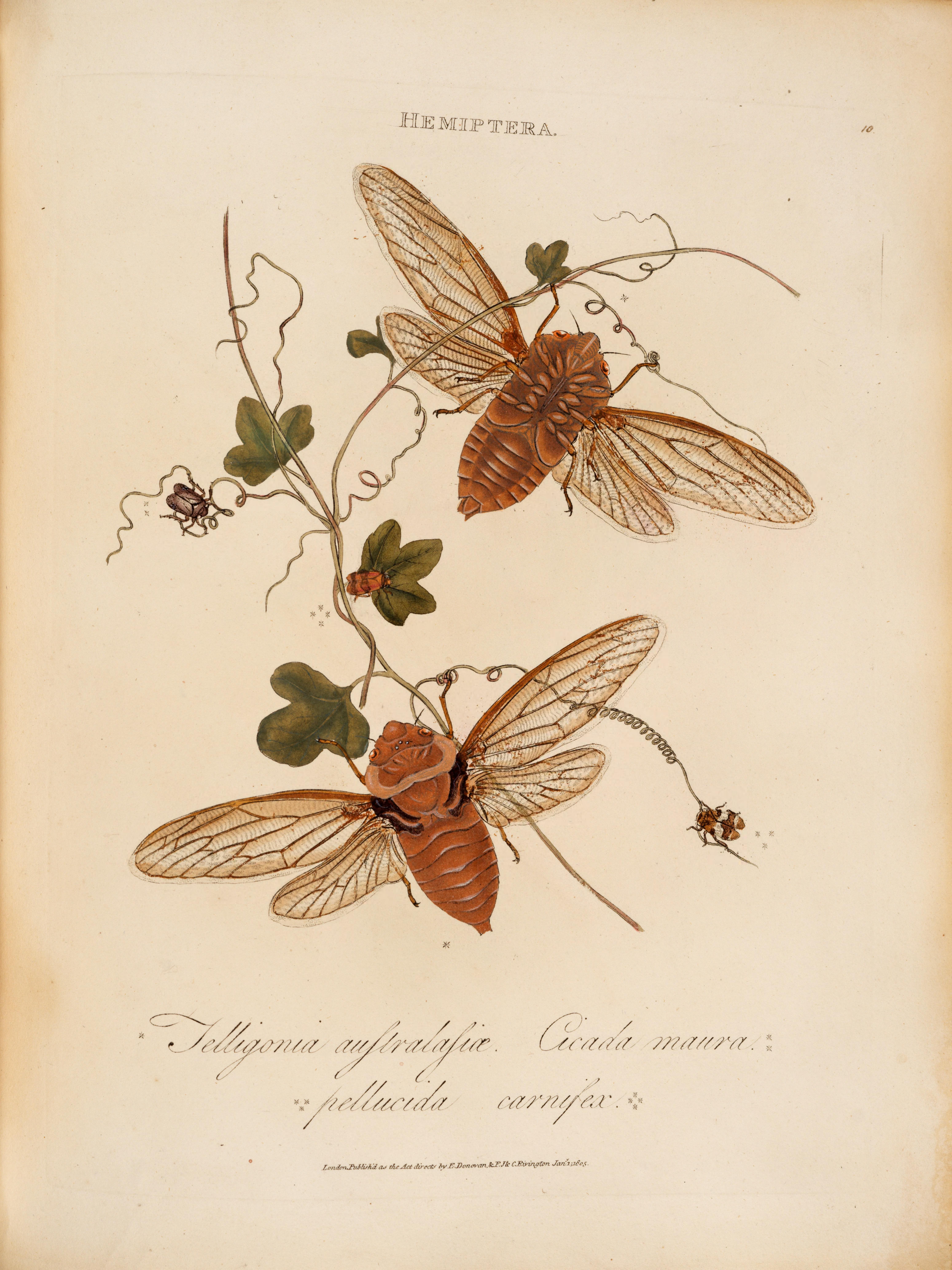
Following the workshop, staff digitized the Library’s first contribution to BHL: An epitome of the natural history of the insects of New Holland, New Zealand, New Guinea, Otaheite, and other islands in the Indian, Southern, and Pacific oceans (1805) by Edward Donovan. This rare work includes hand-colored drawings and descriptions of over 100 species from Australia, New Zealand, and neighboring islands. The title is the first of many currently being digitized for BHL from the Library’s collection.

Illustration of butterflies

Plate 13. Donovan, Edward. An epitome of the natural history of the insects of New Holland, New Zealand, New Guinea, Otaheite, and other islands in the Indian, Southern, and Pacific oceans. 1805. Illustration by Donovan. Contributed in BHL from Auckland War Memorial Museum Tāmaki Paenga Hira.

We are delighted to see our partnerships in Australasia expand to New Zealand through the Auckland Museum and look forward to seeing many more fascinating contributions to the BHL collection in the future. We also extend our thanks to our BHL Australia colleagues for providing training and support to our newest Affiliate.

Illustration of insects

Plate 10. Donovan, Edward. An epitome of the natural history of the insects of New Holland, New Zealand, New Guinea, Otaheite, and other islands in the Indian, Southern, and Pacific oceans. 1805. Illustration by Donovan. Contributed in BHL from Auckland War Memorial Museum Tāmaki Paenga Hira.

“We are thrilled to welcome the Auckland Museum as our first partner in New Zealand,” affirmed Martin R. Kalfatovic, Program Director for the Biodiversity Heritage Library. “We have long desired to establish a partnership in the country, and we look forward to working with our colleagues in Auckland to share their collections with global audiences and foster new relationships with other institutions across the New Zealand.”

The BHL Consortium now includes 20 Members, 22 Affiliates, and over 80 partners globally. Learn more.

November 26, 2018by michelle.underhill
Blog Reel, Featured Books

MUDPIE — Online at BHL! Documenting the History of Computers in Museums

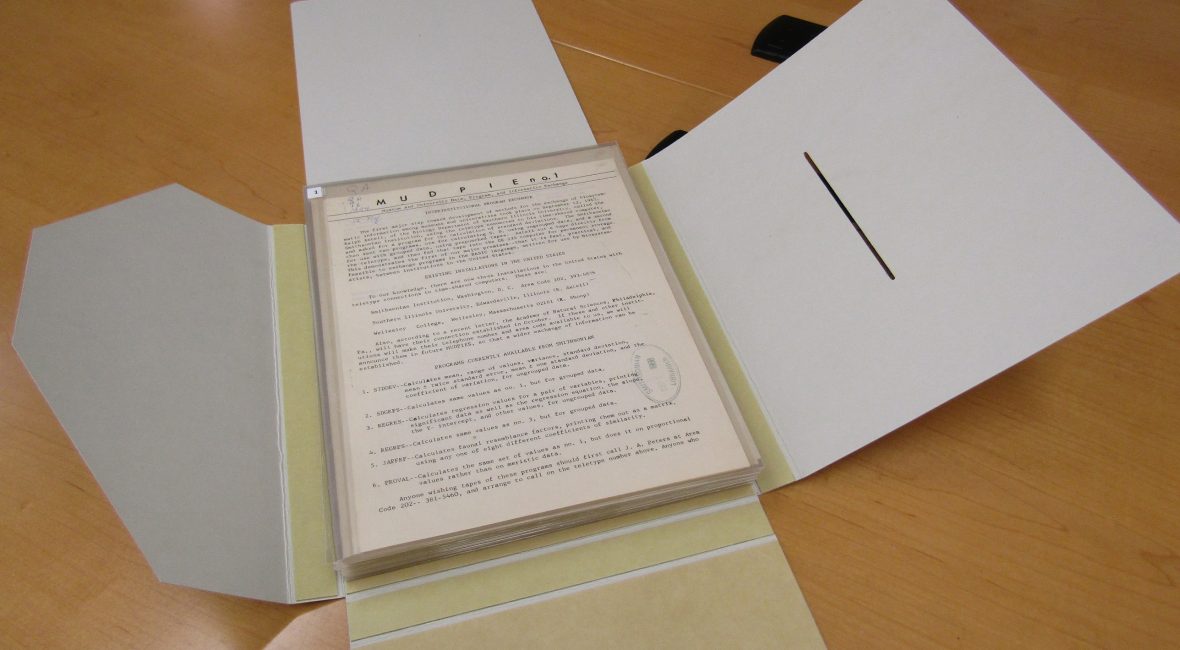
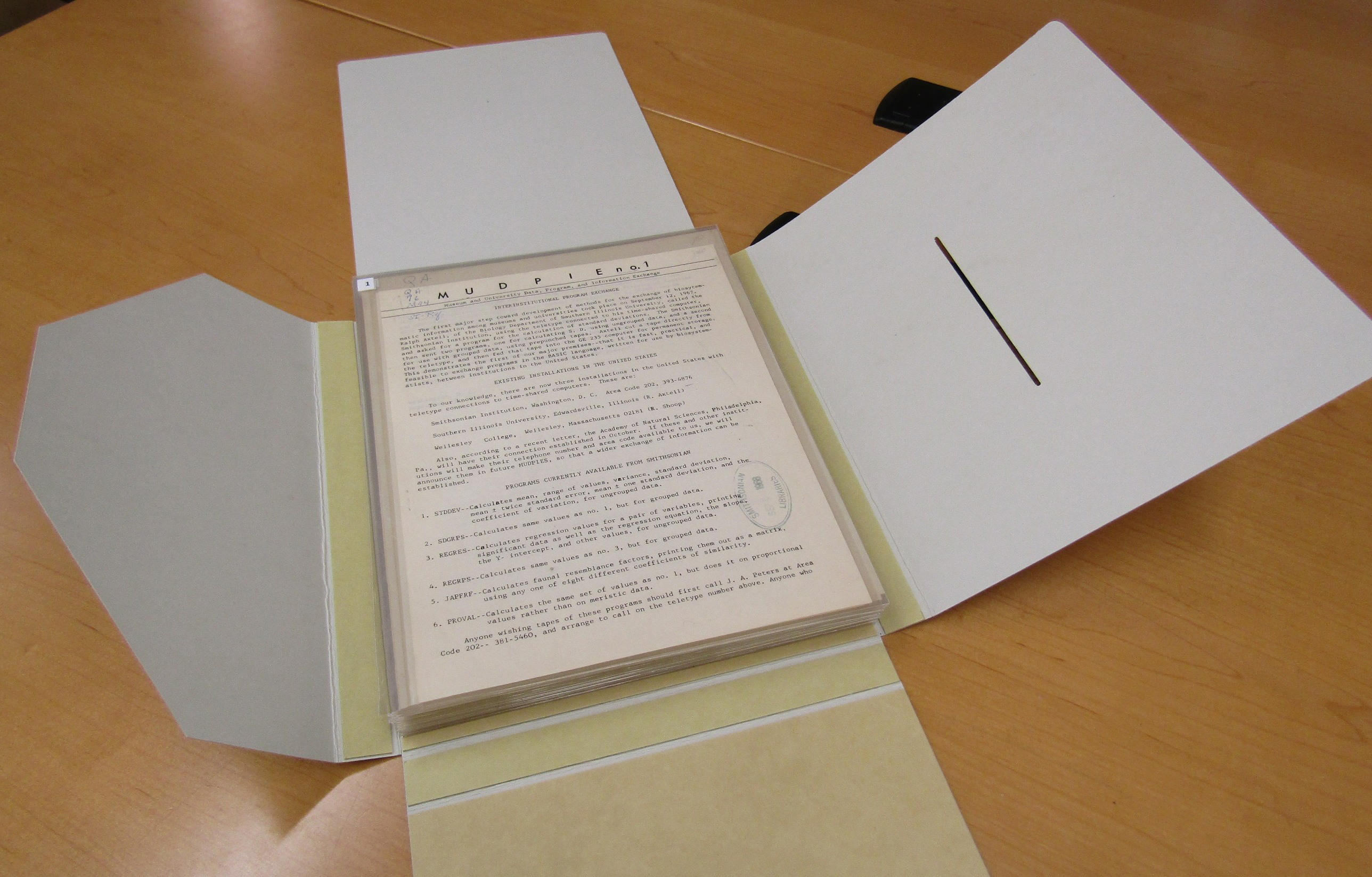
MUDPIE newsletter in re-housing

On September 12, 1967 Ralph Axtell, of the Biology Department of Southern Illinois University, called the Smithsonian Institution using the teletype connected to his time-shared computer and asked for a [computer] program for the calculation of standard deviations. The Smithsonian then sent him two computer programs. This demonstrated that, using data communications equipment and telephone lines, “it is fast, practical, and feasible to exchange programs in the BASIC language, written for use by biosystematists, between institutions in the United States.” A revolution had begun that would transform museums, research, systematics and science.

The following day, Dr. James A. Peters produced the inaugural issue of the MUDPIE (Museum and University Data Program and Information Exchange) Newsletter.

MUDPIE newsletter documents many early events in the adoption of computers and timesharing computing in museums and universities, and was founded and produced by Dr. Peters, the only editor in the newsletter’s publication history. Twenty-six issues of MUDPIE were produced and distributed over a five-year period, between September 1967 and September 1972. All issues are now digitally available at the Biodiversity Heritage Library thanks to the Smithsonian Libraries.

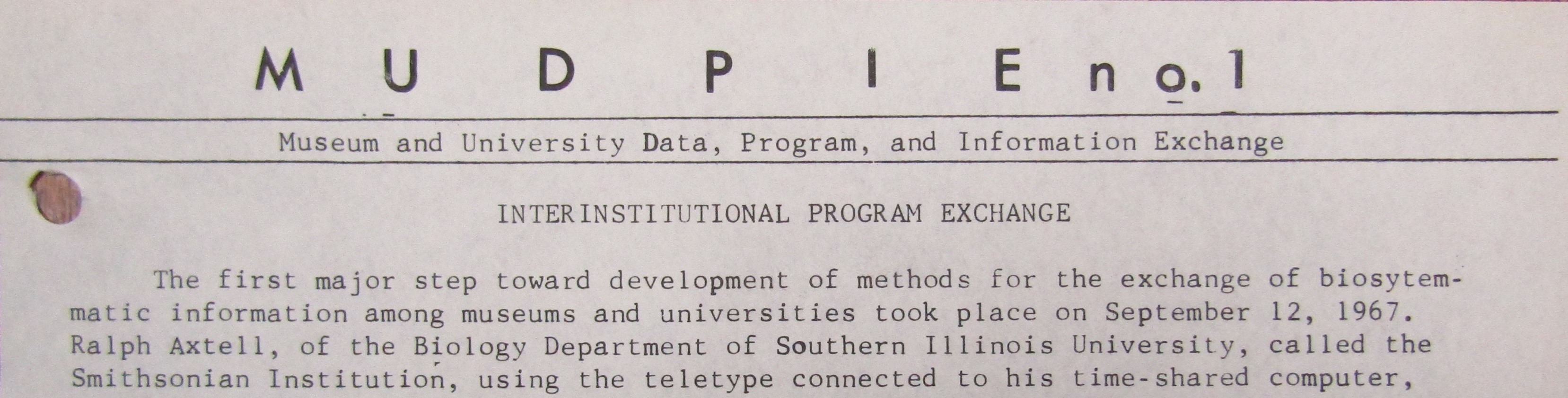
newsletter heading reading MUDPIE

MUDPIE Newsletter masthead, number 1, September 13, 1967. Photo by David Bridge.

The length and contents of each MUDPIE issue varied depending on the amount of information available; it was published irregularly from two and eight issues per year; one to seven pages per issue. Peters’ name appeared infrequently; however some MUDPIE articles were signed with his initials “(JAP)”. The publication of the MUDPIE newsletter ceased with his untimely death.

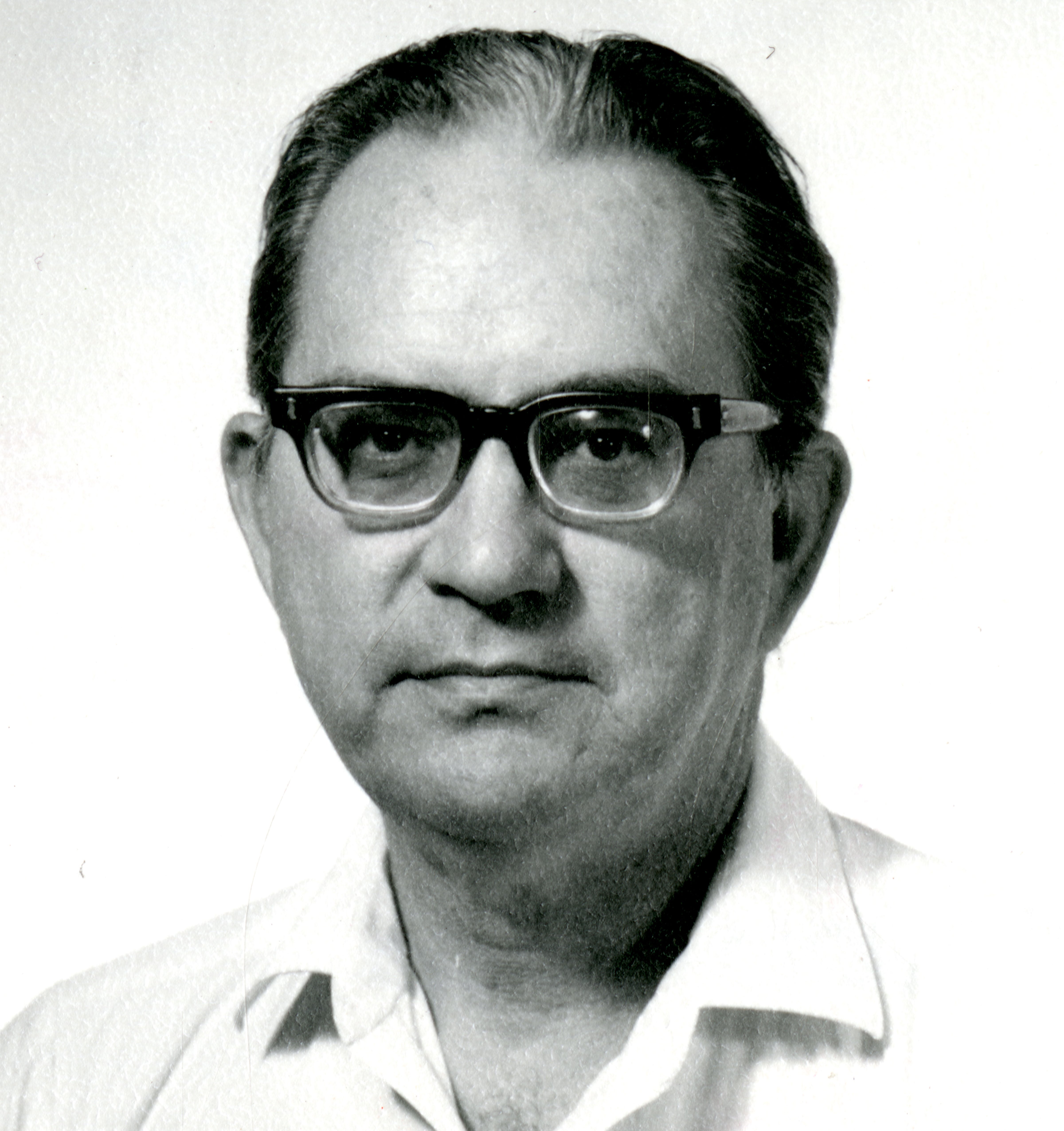
Dr. James Arthur Peters (June 13, 1922 – December 18, 1972), biologist and herpetologist, held two positions in the National Museum of Natural History (NMNH), Division of Reptiles and Amphibians at the Smithsonian Institution, first as Associate Curator (1964–1967), and later Curator (1967–1972).

black and white image of a man in glasses, Dr. Peters

Dr. James Arthur Peters, herpetologist and MUDPIE editor, National Museum of Natural History, Smithsonian Institution. Smithsonian Archives, SIA2010-3050.

Dr. Peters clearly stated his aspirations in the first issue: “MUDPIE represents an attempt to keep everyone up to date on the development of time-shared computing in museums and universities engaged in systematic research. Several individuals receiving this first copy had written asking the same questions, and this is a quick way of answering them. There was a tremendous temptation to set it up so that it could be received only through the teletype and computer — but that proved to be a little too advanced for the present!”

This newsletter was a pioneering example of “electronic networking” between people. It foreshadowed the development of Usenet newsgroups, mailing lists, Listserv software, BITNET, and Internet Forums.

Two years later Dr. Peters wrote (p. 4) under the heading Participation in the Making of Mudpies: “There seems to be a genuine interest in the continued existence of this Newsletter, to judge from the number of people in the natural history museum business who have requested to be placed on the mailing list. We will continue to put it together and get it out at irregular intervals, but we have no objection at all to any of you who have something that you think might be of interest to others and send it in for inclusion to MUDPIE. We have had no indication of specialized programs written for use by systematists, for example, in the last few issues, but it is quite likely that such work is being done.”

Caroline A. Bull interviewed Dr. Peters on April 25, 1969, and provided an independent assessment (p. 47): “Museum and University Data, Program and Information Exchange, known by its acronym MUDPIE. There are six institutions which participate actively in the exchange.  Each has computer access and cooperation ranges from the exchange of [paper] tapes to actual direct access to storage units. The direct access capability occurs only between the Smithsonian Museum of Natural History and the American Museum of Natural History in New York. Since these two [organizations] share the same central computer at C.E.I.R.[1] in Silver Spring, Maryland, each may tap into the others’ data bank and exchange messages and data directly. These two form the nucleus for a major network, which could involve other Institutions on the Northern Atlantic Seaboard. In addition to its computerized information exchange, MUDPIE circulates a monthly newsletter to some 100 individuals and institutions.”

The period 1967-1972 was well before the development of personal computers and major advances in data communications. The Teletype Model 33 ASR (Automatic Send and Receive) was the likely computer terminal of choice for time-sharing computing activities by MUDPIE members during this time-period. The Teletype was an electromechanical device which stored data and computer programs on punched paper tape in ASCII code. A Teletype Model 33 terminal that was used at the Smithsonian was connected to a telephone line using an acoustic modem, see illustration in Peters and Collette [2].

After Peters’ death George R. Zug [3]wrote: “James A. Peters died on 18 December 1972 of liver cancer. With his death, we have lost the most ardent supporter of a low cost museum and university time-sharing computer network. He had seen the concept of computer networks gain wider acceptance and had just participated in the first general working seminar on a National Science Computer Network in mid-November.

Jim established MUDPIE in 1967 in order to promote the use of time-sharing and the establishment of a computer network among the major American natural history museums. The scope of MUDPIE gradually broadened to encompass the use of time-sharing in all types of museums and for the analysis of all types of data, including systematic data.”

No copy of the MUDPIE mailing list is known to have survived. However, among Dr. Peters’ papers in the SI Archives[4] is a folder labeled “MUDPIE Letters”. This includes more than 120 items of correspondence largely related to MUDPIE memberships, but also includes some requests for reprints of publications listed in MUDPIE issues. In this folder there is a handwritten list of 24 names, labeled “MUDPIE #1”, which appears to be the initial newsletter distribution list. In April 1969, Bull and Shank, (p.47) reported that the membership was “100 individuals and institutions”. Requests to be added to the mailing list could have been received verbally in person, by telephone, etc. The “MUDPIE Letters” folder is certainly not a comprehensive list of names and organizations.

As word of MUDPIE newsletter spread and interest in computers grew, membership increased also. Bruce Collette[5], (p. 390) observed that, “The mailing list for MUDPIE was over 250, an indication of how much effect the interest and dedication of one man can accomplish.”

Outcome

This free interchange of data and computer programs probably seemed like a utopian dream for these early visionary of 1960’s, but has become the norm today with the adoption of open computer systems, open data standards, standardized software, high speed data communication networks, and of course, the Internet. The MUDPIE newsletter represents an important historical record of the early exploration of and developments in computer technology and its application in museums and systematic biology.

A special thank you is extended to the Smithsonian Libraries staff, particularly Martha Rosen of the National Museum of Natural History Library and its Smithsoniana Collection, who was a persistent advocate for preserving and improving access to the newsletter. And to the Preservation Services staff – Katie Wagner, Don Stankavage, and Michael Keeling – for their review, repair, and rehousing of the original MUDPIE newsletters.

MUDPIE newsletter in re-housing

The rehoused MUDPIE newsletters, ready for re-shelving. Photo by David Bridge.

Thanks also to Discovery Services staff – Erik Bergstrom and Dana Feil – for their review and re-cataloging, and for providing item-level description for the newsletters. And a final thank you to the Digital Programs and Initiatives staff – Jacqueline E. Chapman and Daniel Euphrat – for coordinating this process, digitizing the newsletters, and including them in the BHL corpus.

[1]  CEIR or the Center for Enterprise Information Research was a commercial company which operated several computer data centers and provided, among other things, dial-up computer time-sharing service.

[2]  Peters, James A. and Bruce B. Collette. 1968. The role of Time-share computing in museum research. Curator 11(1):65-75.

[3]  George R. Zug, a colleague of Peters and Curator at the National Museum of Natural History.

[4]  Smithsonian Institution Archives, Record Unit 7175, Peters, James Arthur, 1922-, James A. Peters Papers, and Records of the Division of Reptiles and Amphibians, box 37, folder 8.

[5]  Collette, B. B., “James A. Peters”, Copeia, 1973 (2):388-390.

November 15, 2018by michelle.underhill
Blog Reel, User Stories

Uncovering Mycological History…One Sketch at a Time

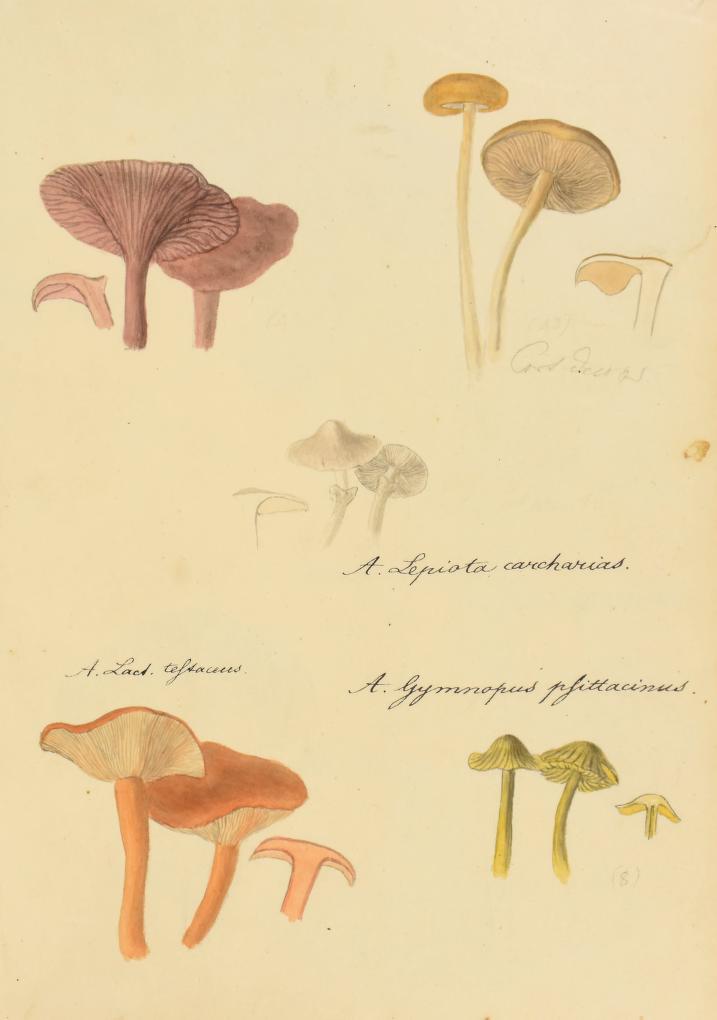
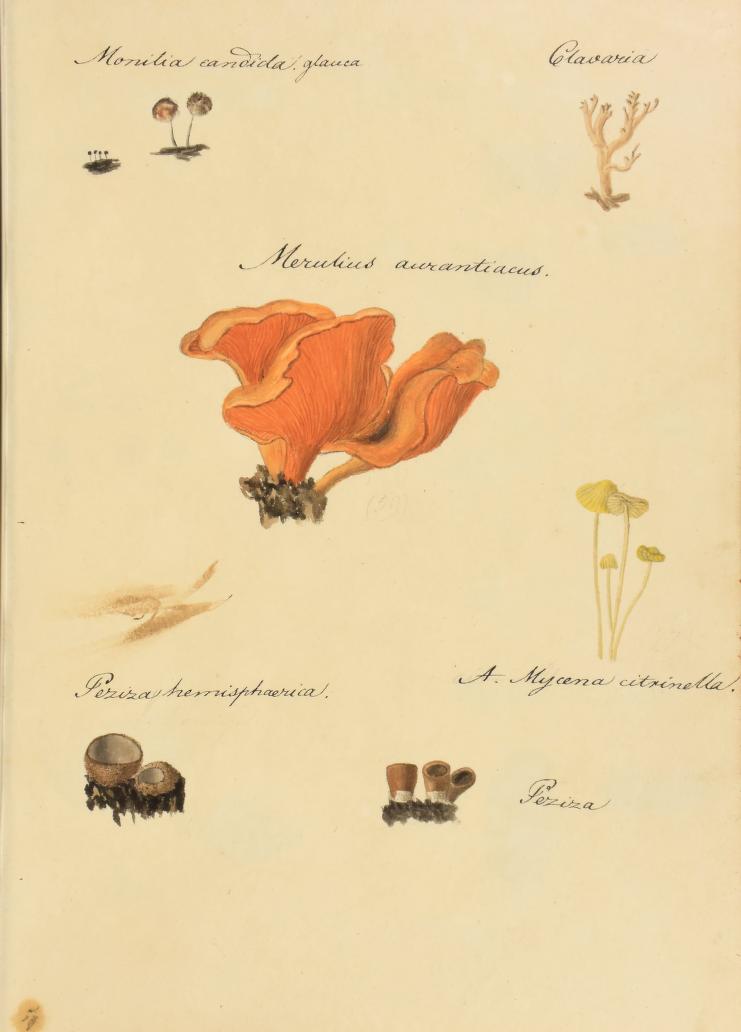
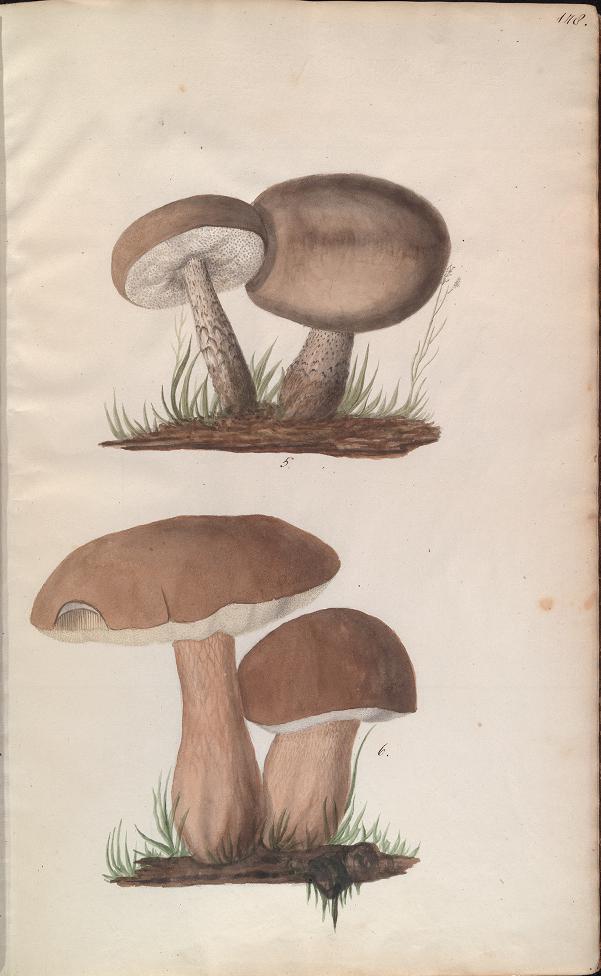
illustration of fungi

Plate 12. Schweinitz, Lewis David von. Icones fungorum Niskiensium. (ca.) 1798-1802. Contributed in BHL from Botany Libraries, Farlow Reference Library of Cryptogamic Botany, Harvard University.

In the archives of the Farlow Reference Library of Cryptogamic Botany at Harvard University, there is a curious volume of 249 original watercolors of fungi species bearing the title Icones fungorum Niskiensium.

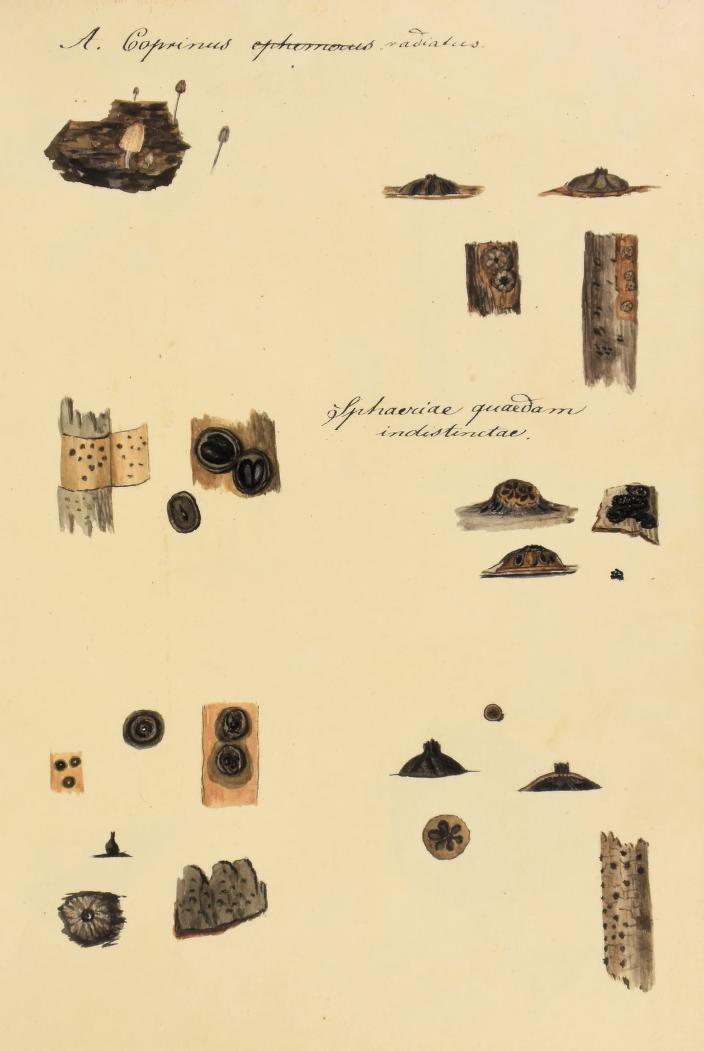
Devoid of any creator identification, the provenance and historical significance of the volume seems shrouded in mystery. A cursory examination of the work reveals a collection of charming, but often incomplete, figures and a myriad of annotations in pencil and ink, some struck through, others revealing uncertainty over species identifications or recording observations on specimen quality or coloration.

illustration of fungi

Plate 47. Schweinitz, Lewis David von. Icones fungorum Niskiensium. (ca.) 1798-1802. Contributed in BHL from Botany Libraries, Farlow Reference Library of Cryptogamic Botany, Harvard University.

In short, there is little to suggest that this sketchbook is actually an important document in the history of mycological research.

The truth, however, is that this volume is the work of the “Father of North American mycology”, Lewis David von Schweinitz (1780-1834). It served him as a sketchbook that was used to inform his monumental Conspectus fungorum in Lusatiae Superioris agro Niskiensi crescentium, e methodo Persooniana (1805), co-authored with Johannes Baptista von Albertini (1769-1831) and documenting over 1,000 species of fungi from the Niesky, Germany region, including 100 published as new-to-science. The volume is also related to a collection of six other original watercolor volumes by Schweinitz dispersed throughout several American institutions.

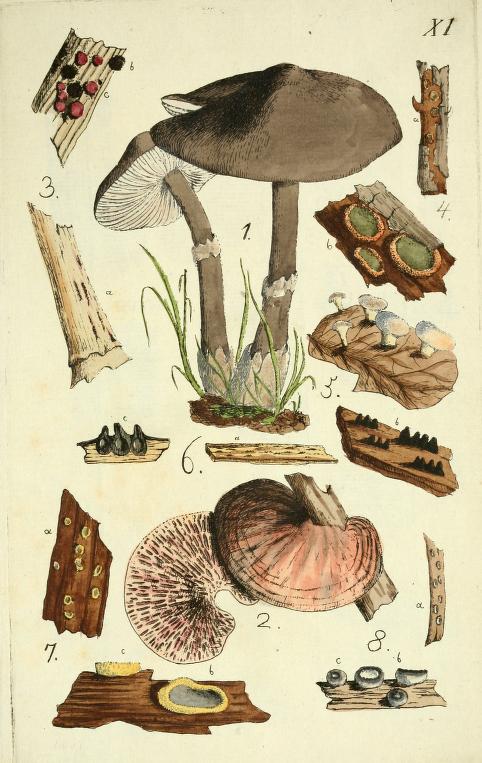
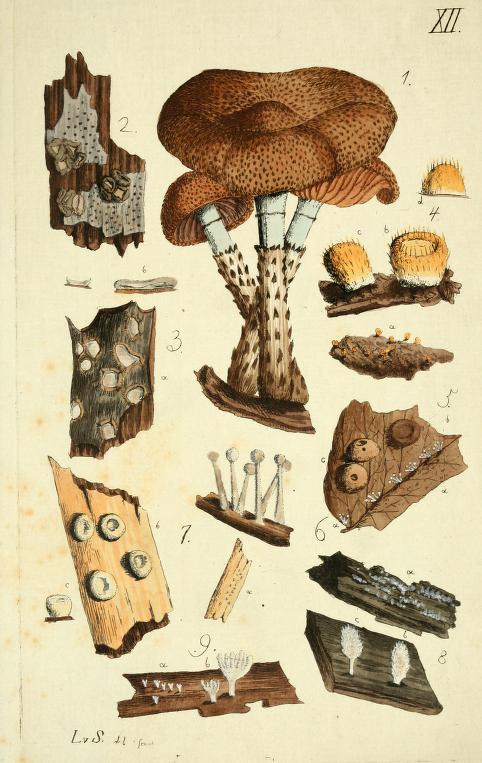
Illustration of fungi

Plate 11. Conspectus fungorum in Lusatiae Superioris agro Niskiensi crescentium, e methodo Persooniana(1805). Figures based on drawings by Schweinitz. Icones fungorum Niskiensium served as a sketchbook to inform this work. Contributed to BHL by the LuEsther T. Mertz Library of The New York Botanical Garden.

The history of this volume, dubbed the Harvard Icones, and its relationship to the Conspectus and Schweinitz’s other watercolor volumes, was recently examined in-depth within the article “New Light on the Mycological Work of Lewis David von Schweinitz” (2018) by Jason M. Karakehian, William R. Burk and Donald H. Pfister, published in IMA Fungus: 9(1). The article presents research made possible in-part thanks to the digital copies of the Harvard Icones and Schweinitz’s other works available in the Biodiversity Heritage Library.

We recently explored this fascinating history in our Book of the Month series. The findings presented by Karakehian et al. underscore the importance of the Harvard Icones to the development of Schweinitz and Albertini’s research and the progression of mycology in the early 19th century.

“Our research is important because the volumes of watercolor illustrations produced by Schweinitz have been little known to mycologists who worked with fungi described by Albertini and Schweinitz,” explains Karakehian. “These high-quality illustrations can help to inform our concepts of some of these species, as often times early nineteenth century verbal descriptions can be short and somewhat vague.”

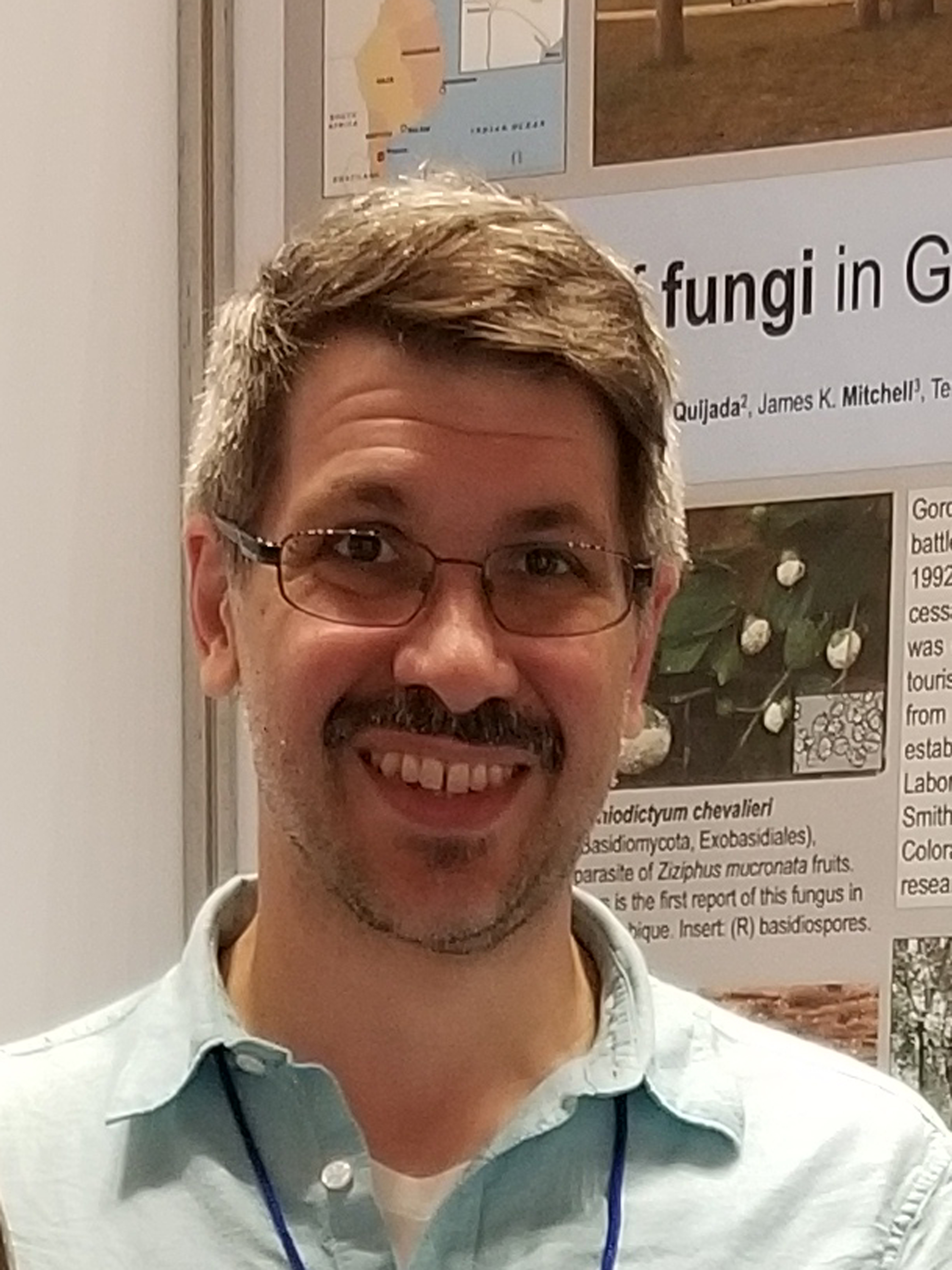
photo of a man in glasses and blue shirt

Jason M. Karakehian. Master’s degree candidate at the Harvard Extension School.

Jason M. Karakehian is a Master’s degree candidate at the Harvard Extension School, studying biology with a focus on mycology and the systematics of ascomycetes or “cup-fungi.” With a background in the visual arts, Karakehian’s interest in mycology stems from his career as an artist, when he began perusing illustrated books on fungi as a creative reference point for his large, outdoor sculptures exhibited in wooded environments. This inspired him to take a short class on fungi, join a local mycological club, and begin collecting and identifying mushrooms. Eventually, he gave up his art career and embraced mycology full-time.

Karakehian’s journey down the fungi path includes serving as the archivist for the Boston Mycological Club. The task of organizing the mass of artifacts and documents held by the archives necessitated research at other libraries and archives, such as the Reference Library of the Farlow Herbarium of Cryptogamic Botany at Harvard University. He was welcomed by the Herbarium and Library staff, including Professor Donald Pfister and Judy Warnement (Head Librarian of the Harvard Botany Libraries).

Karakehian’s work at the Boston Mycological Club and the relationships he developed as part of that process led to research on other topics in mycological history, especially Schweinitz’s fungi watercolors.

The Biodiversity Heritage Library played an essential role in that research.

“I don’t think that we could have done this work without regular access to BHL,” affirms Karakehian. “BHL is invaluable to us for the wide selection of classic mycological literature that we needed to reference in our research.”

illustration of fungi

Plate 23. Schweinitz, Lewis David von. Icones fungorum Niskiensium. (ca.) 1798-1802. Contributed in BHL from Botany Libraries, Farlow Reference Library of Cryptogamic Botany, Harvard University.

That research involved indexing the more than 1,000 species treated in the Conspectus and cross-referencing them to the species figured in Schweinitz’s watercolor volumes in order to examine the relationship between the works and understand how the archival materials informed Schweinitz’s research.

This work required regular access to Schweinitz’s Conspectus and other classic mycological publications, including Christiaan Hendrik Persoon’s Synopsis methodica fungorum (1801), which outlines a systematic framework for fungi that was employed by Schweinitz and Albertini.

“For both of these volumes, we had to go through them page by page to populate spreadsheets with data that we could then collate to make inferences about the relationship between them,” explains Karakehian. “This was greatly facilitated by having high-quality electronic versions of the volumes with OCR.”

Karakehian and his colleagues also created an index to the figures in the Harvard Icones, cross-referencing them to their treatment in the Conspectus, Persoon’s Synopsis, and Schweinitz’s six other watercolor volumes. This index was published as part of their IMA Fungus article.

illustration of fungi

Plate 41. Schweinitz, Lewis David von. Icones fungorum Niskiensium. (ca.) 1798-1802. Contributed in BHL from Botany Libraries, Farlow Reference Library of Cryptogamic Botany, Harvard University.

For Karakehian, BHL’s impact is about more than just providing online access to materials. It’s the quality of the available materials that really distinguishes BHL from other online repositories.

“BHL volumes are high-quality digitizations and I am never frustrated by missing pages, cut-off words, or poor-quality digitizations of delicate line drawings in figures,” lauds Karakehian. “I often think of BHL in contrast to Google’s digitization project that is easily searchable, but the digitizations are of such poor quality that one often needs to track down the original volume somehow to understand the print or the figure that you need.”

Karakehian and his colleagues were instrumental in advocating for Schweinitz’s archival materials to be made available online and for free to the public through BHL. This not only facilitates future research on these works, but also allows more people to explore and enjoy these archives and the history they represent.

“For us, BHL is the gold standard, and for our papers on Schweinitz’s watercolor illustrations, it was important to request that the archives holding these volumes digitize them and have them available in BHL to the public,” asserts Karakehian. “We were absolutely confident that the product would be usable and high-quality. It is a true gift that they are now freely available to users.”

illustration of fungi

Plate 13. Schweinitz, Lewis David von. Icones fungorum Niskiensium. (ca.) 1798-1802. Contributed in BHL from Botany Libraries, Farlow Reference Library of Cryptogamic Botany, Harvard University.

We are honored to host a digital copy of the Harvard Icones in BHL, and are grateful to the Botany Libraries, Farlow Reference Library of Cryptogamic Botany, Harvard University for digitizing the volume and making it freely available to the world. We’re also thrilled that Schweinitz’s other archival materials and the Conspectus are freely available in the collection, and extend our sincere thanks to the Library & Archives of the Academy of Natural Sciences of Drexel University, the Wilson Library of the University of North Carolina at Chapel Hill, and the LuEsther T. Mertz Library of The New York Botanical Garden for digitizing these works.

Thanks to these contributions from so many libraries, BHL was able to play a vital role in allowing Karakehian and his colleagues to provide new insight into the contributions of such an important figure in the history of mycology.

“Our work broadens our knowledge of the scientist and artist that Schweinitz was,” affirms Karakehian. “He was an accomplished and prolific mycological illustrator with a keen sense of depicting his subjects in ways that would convey the maximum of biologic information as well as capturing their natural beauty.”

That “natural beauty” is now freely available for everyone to enjoy through the Biodiversity Heritage Library.

November 8, 2018by michelle.underhill
Blog Reel, Featured Books

Unearthing Scientific History through Art: New Insights from the Archives of Lewis David von Schweinitz, the “Father of North American Mycology”

illustration of fungi

The information in this post is derived from the article “New Light on the Mycological Work of Lewis David von Schweinitz” (2018) by Jason M. Karakehian, William R. Burk and Donald H. Pfister, published in IMA Fungus: 9(1).

fungi illustration

Plate 12. Conspectus fungorum in Lusatiae Superioris agro Niskiensi crescentium, e methodo Persooniana (1805). Figures based on drawings by Schweinitz. Icones fungorum Niskiensium served as a sketchbook to inform this work. Contributed to BHL by the LuEsther T. Mertz Library of The New York Botanical Garden.

In 1805, the “Father of North American mycology”, Lewis David von Schweinitz (1780-1834), published an account of the fungi in Niesky, Germany with his friend and mentor, Johannes Baptista von Albertini (1769-1831). Documenting over 1,000 species, including 100 published as new-to-science, Conspectus fungorum in Lusatiae Superioris agro Niskiensi crescentium, e methodo Persooniana is still referenced to this day as a classic mycological text and ecological record.

The Conspectus is illustrated with 12 hand-colored plates based on drawings by Schweinitz, each featuring 6-10 figures of new species described. Whenever possible, Schweinitz based his drawings on fresh specimens, but when this was not an option, he referred to fungarium specimens or to a collection of earlier watercolors he’d created of representative specimens.

fungi illustrations

Plate 178. Fungorum Nieskiensium Icones. (ca.) 1802-1805. v. 3. Contributed in BHL from the Academy of Natural Sciences of Drexel University, Library & Archives.

Today, these watercolor volumes are dispersed between several American institutions and offer a wealth of insight into the history and development of the Conspectus. A five-volume set created (ca.) 1802-1805 and bearing the title Fungorum Nieskiensium Icones is distributed between the Archives of the Academy of Natural Sciences of Drexel University, Philadelphia (volumes 1-3 and 5) and the Rare Book Collection, Wilson Library, University of North Carolina, Chapel Hill (volume 4). Nearly every specimen featured in the Conspectus has a corresponding illustration in these 5-volumes.

A volume of original watercolors consisting of copies of figures from the 5-volume set, bearing the title Icones Fungorum and created (ca.) 1818-1826, is held by the Herbarium Library, University of Michigan, Ann Arbor, MI.

The earliest volume of original watercolors related to the Conspectus, however, is the Icones Fungorum Niskiensium, created (ca.) 1798-1802 and held in the archives of the Farlow Reference Library of Cryptogamic Botany at Harvard University. This volume (hereafter referred to as the Harvard Icones) served Schweinitz as a sketchbook of sorts, which he used to inform the final paintings in the 5-volume Fungorum Nieskiensium Icones and eventually the Conspectus itself.

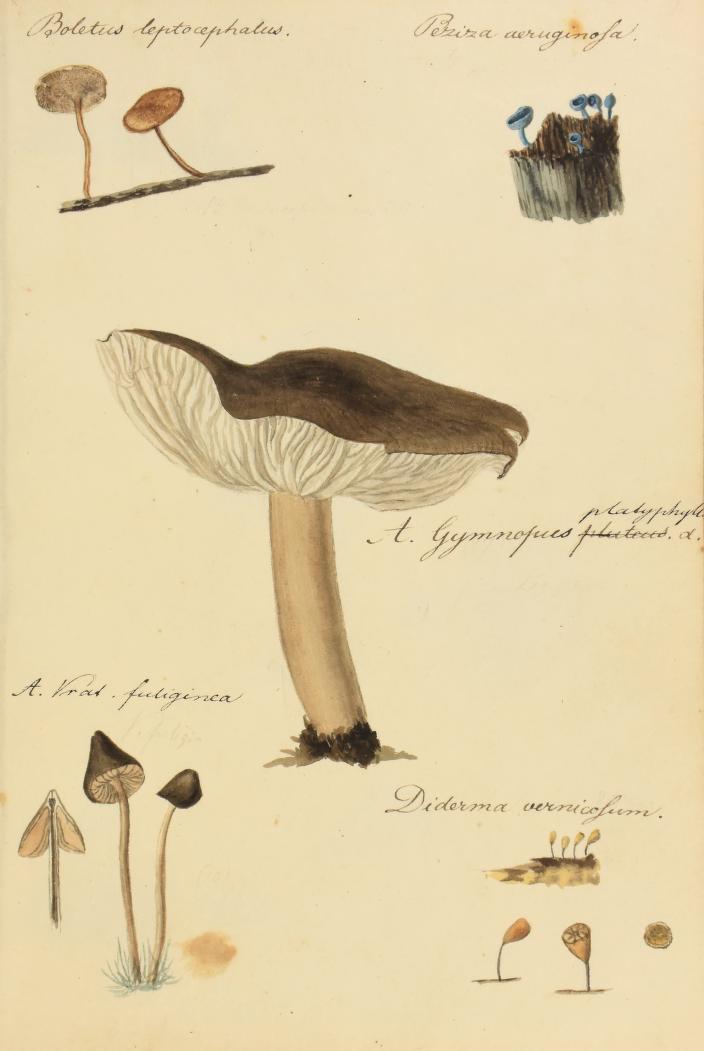
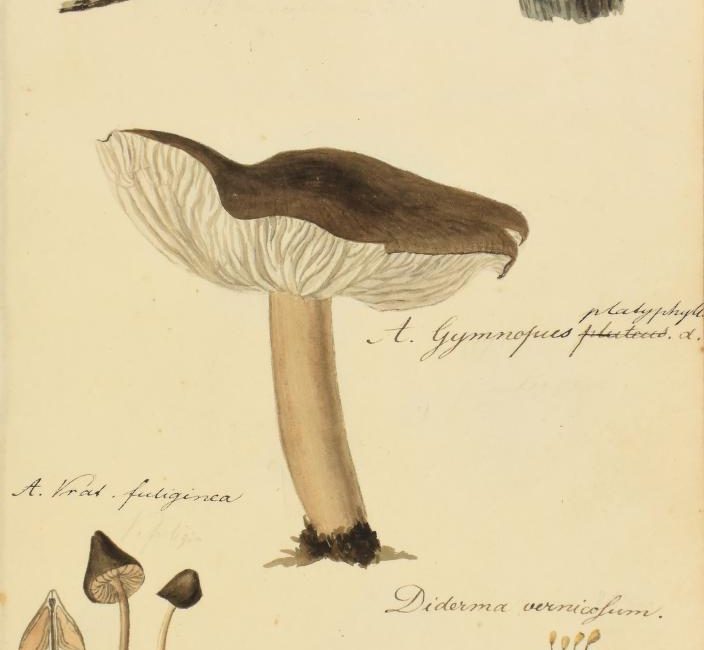
fungi illustrations

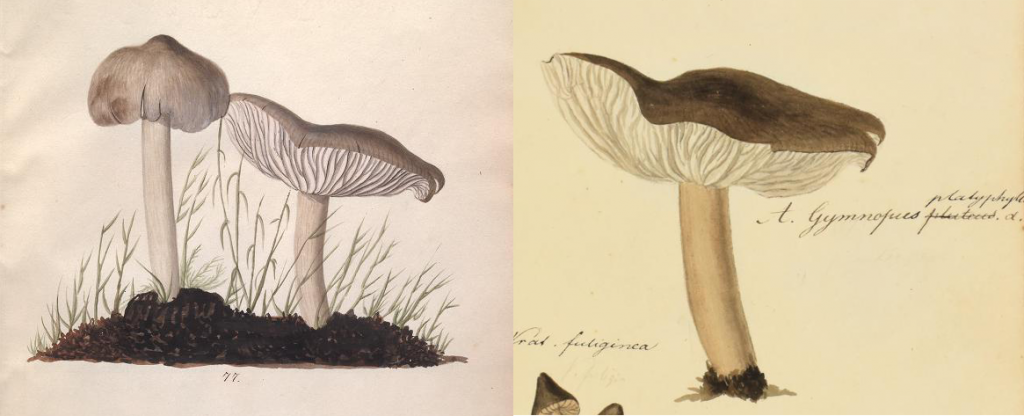
Agaricus (Gymnopus) platyphyllus. Illustration from Fungorum Nieskiensium Icones v. 2, pl. 113, fig. 77 (left) and corresponding illustration in Icones Fungorum Niskiensium, pl. 23 (right). Contributed in BHL from the Library & Archives of the Academy of Natural Sciences of Drexel University and Botany Libraries, Farlow Reference Library of Cryptogamic Botany, Harvard University.

The Harvard Icones has been digitized in the Biodiversity Heritage Library thanks to the Botany Libraries, Farlow Reference Library of Cryptogamic Botany, Harvard University, while the 5-volume set is available in BHL thanks to the Library & Archives of the Academy of Natural Sciences of Drexel University and the Wilson Library of the University of North Carolina at Chapel Hill. The Conspectus has been digitized in BHL by the LuEsther T. Mertz Library of The New York Botanical Garden.

The history of these watercolor volumes and their relationship to the Conspectus was recently examined in-depth within the article “New Light on the Mycological Work of Lewis David von Schweinitz” (2018) by Jason M. Karakehian, William R. Burk and Donald H. Pfister, published in IMA Fungus: 9(1). The article presents research made possible in-part thanks to the digital copies available in BHL.

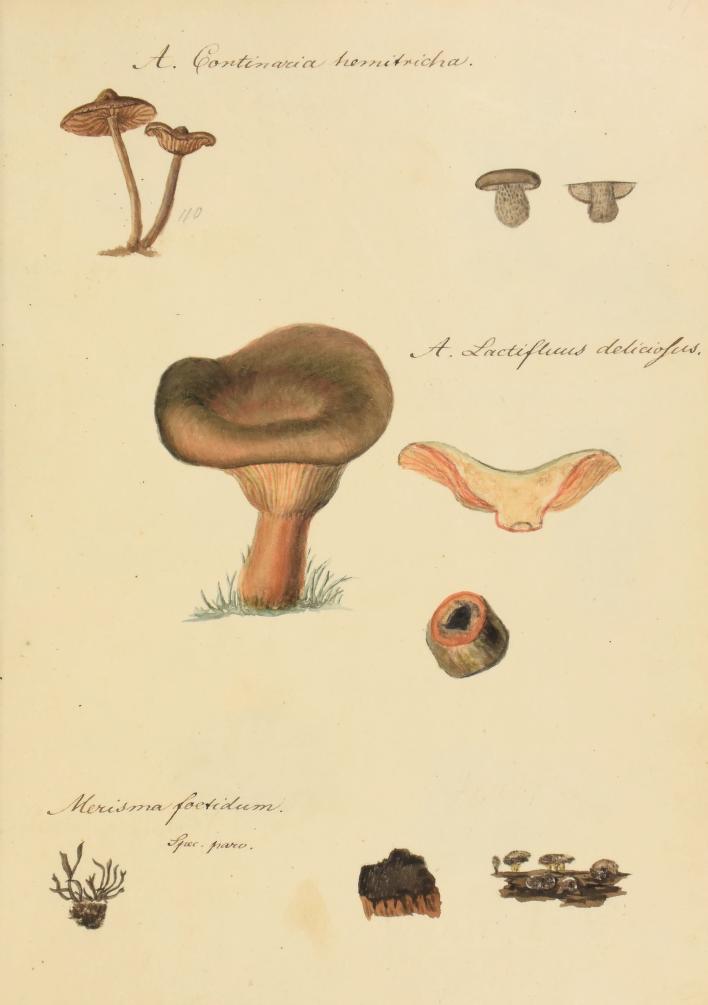
As a sketchbook, the Harvard Icones provides a unique window into the development of Schweinitz’s research on the fungal species presented in the Conspectus. The 249 watercolor figures in the the Harvard Icones depict specimens he collected and painted during his time attending a Moravian seminary in Niesky. Most figures are labeled with a binomial in ink, although edits and annotations to the names throughout the work, as well as notes on the quality of the illustrated specimen, varieties, and colorations, illustrate the working-manuscript nature of the volume.

fungi illustration

Plate 17. Merisma foetidum specimen labeled as “spec. parv.” [meager specimen]. Schweinitz, Lewis David von. Icones fungorum Niskiensium. (ca.) 1798-1802. Contributed in BHL from Botany Libraries, Farlow Reference Library of Cryptogamic Botany, Harvard University.

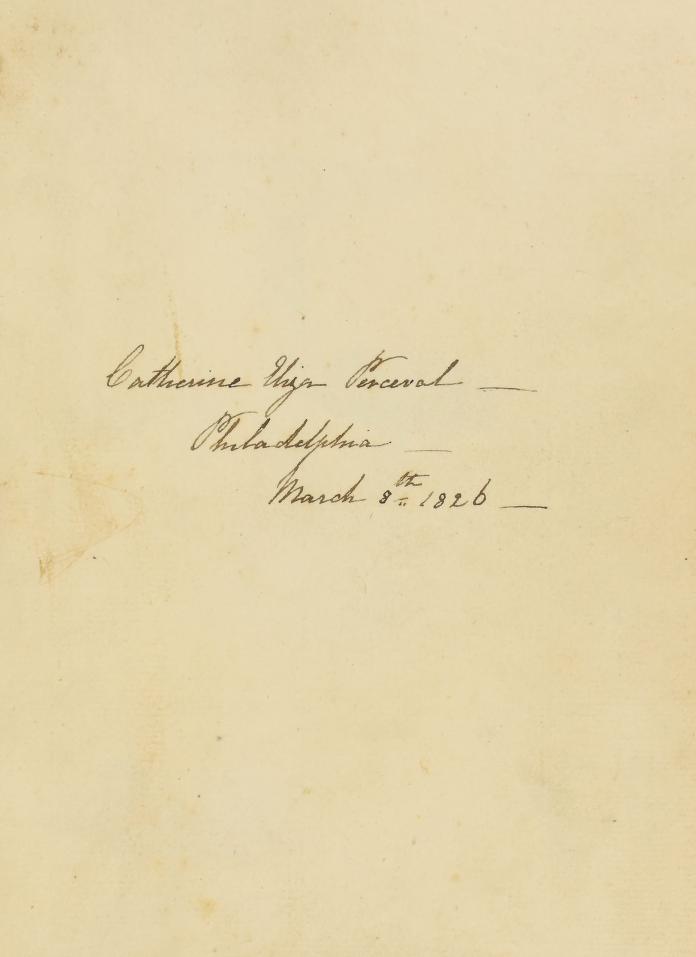
As outlined in the IMA Fungus article, the Harvard Icones has a rather convoluted history. A clue to that history can be found in the single fly-leaf bound within the volume and featuring the hand-written inscription on the recto: “Catherine Eliza Perceval — Philadelphia — March 8th 1826 —”.

fly-leaf

Fly-leaf featuring inscription for “Catherine Eliza Perceval”. Schweinitz, Lewis David von. Icones fungorum Niskiensium. (ca.) 1798-1802. Contributed in BHL from Botany Libraries, Farlow Reference Library of Cryptogamic Botany, Harvard University.

Born in Quebec in 1811, Catherine Perceval was the daughter of Anne Mary Perceval and Michael Henry Perceval. Anne had an interest in botany fueled by her association with other local female botanists, Christian Ramsay, the Countess of Dalhousie, and Harriet Campbell Sheppard. The group actively botanized together, and Anne is listed as a collector in several important botanical works of the era, including Hooker’s Flora boreali-americana ([1829]-1840) and Torrey and Gray’s A Flora of North America (1838-43).

The Harvard Icones passed into the Perceval family’s possession during a meeting in 1826 between Anne and William Darlington, a correspondent of Anne’s, at their mutual friend J. Daniel Steinhauer’s residence in Philadelphia. Schweinitz described Steinhauer as an “excellent friend…[and]…botanist”. As detailed in the IMA Fungus article, Schweinitz and Daniel Steinhauer were likely introduced by Daniel’s brother, Henry Steinhauer, who was also a friend of Schweinitz’s from his time at the Moravian seminary in Germany.

Henry had attempted to have copies made of the figures in Schweinitz’s 5-volume watercolor set, and towards this end, Schweinitz had given Henry his “Icones Fungorum Niesk’m” shortly prior to January 1818. The watercolor volume held in the Michigan Herbarium Library is the result of these endeavors. Karakehian et al. postulate that as part of this exchange the Harvard Icones may have ended up in Henry’s possession and passed to Daniel Steinhauer upon Henry’s death, after which it was passed along to Anne or directly to her daughter, Catherine (whose name is found in the Icones inscription).

fungi illustration

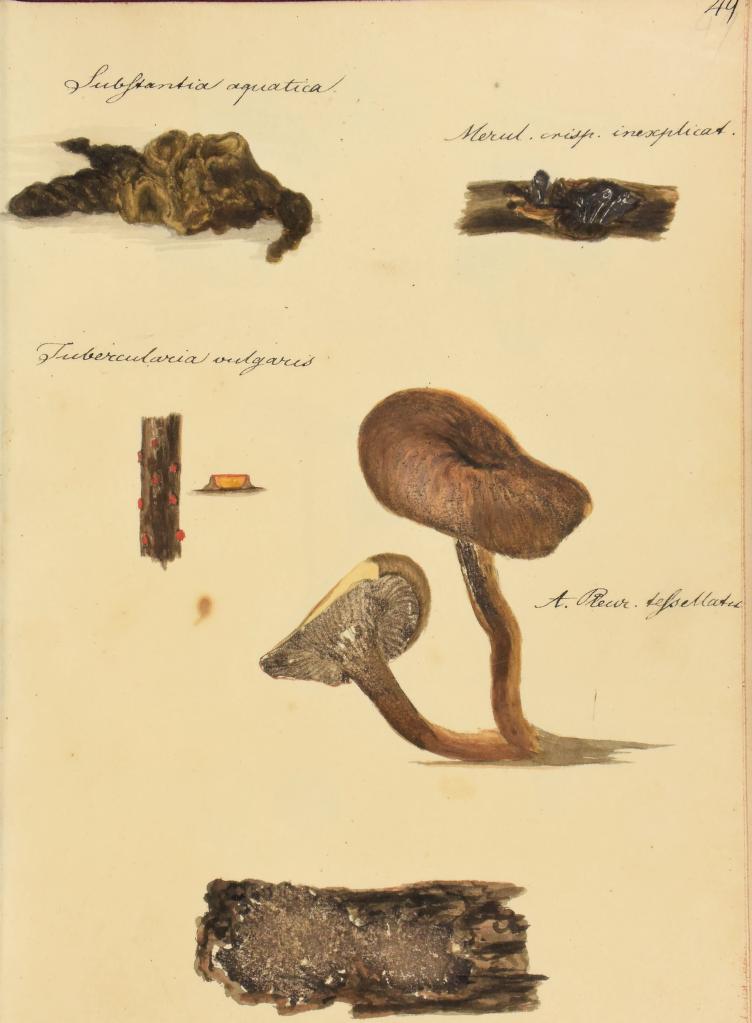
Plate 49. Merulius crispus labeled as “inexplicat[us]”, reflecting doubt as to whether the specimen was a fungus. Similarly, label of “Substantia aquatica” [watery substance]. Schweinitz, Lewis David von. Icones fungorum Niskiensium. (ca.) 1798-1802. Contributed in BHL from Botany Libraries, Farlow Reference Library of Cryptogamic Botany, Harvard University.

The volume later passed from Catherine to her son Francis Denys and eventually ended up in the possession of antiquarian book dealers and scholars William and Marianne Salloch, after whose death it was sold to a Bungay book dealer at a Christie’s auction in 1991, advertised as “Original American Watercolors” by Catherine Eliza Perceval.

Microbiologist and mycophile Elio Schaechter eventually purchased the volume from the book dealer and showed it to Donald Pfister at the Farlow Herbarium, whose research ultimately allowed him to attribute the work to Schweinitz. He also generated a manuscript index to the illustrations, which has also been digitized in BHL along with the Harvard Icones itself.

In the early 2000s, David Hewitt of the Farlow Herbarium was the first to propose that the Harvard Icones served Schweinitz as a sketchbook after comparing it to the four volumes of watercolors held at the Academy of Natural Sciences. Karakehian et al. support this conclusion, presenting further evidence within their IMA Fungus article including the incomplete quality of the sketches, the lack of any systematic arrangement of the specimens on the plates, and the annotations reflecting edits or uncertainty about species identifications, none of which are present in the five-volume set or the Conspectus.

fungi illustrations

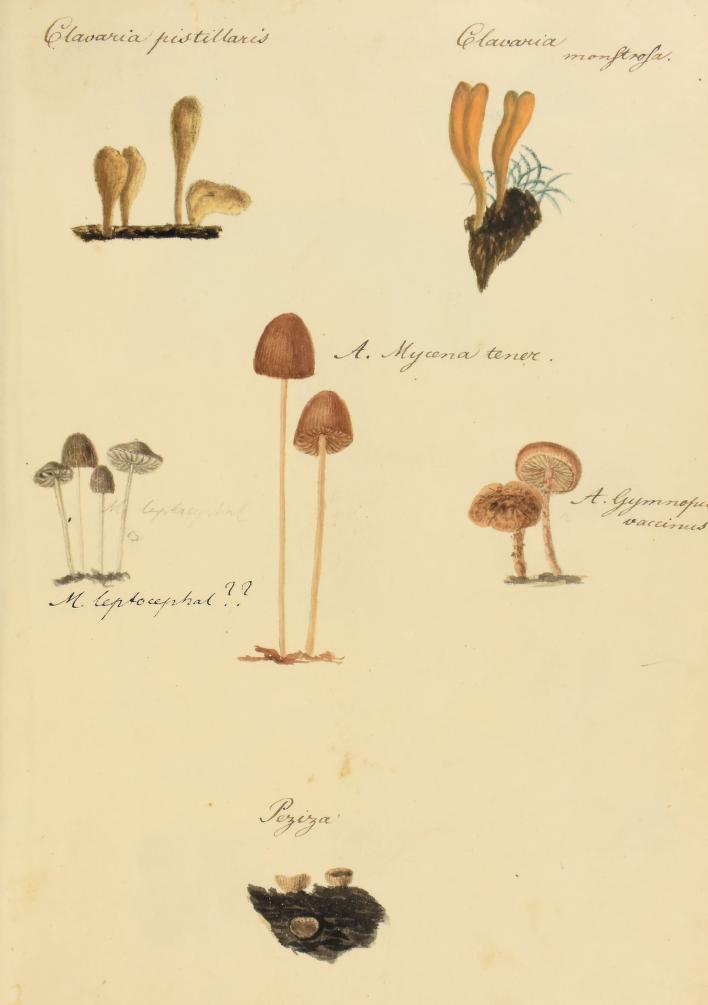
Plate 20. “Clavaria monstrosa” label indicating an anomalous specimen. Question marks indicating uncertainty over “Mycena leptocephalus” identification. Schweinitz, Lewis David von. Icones fungorum Niskiensium. (ca.) 1798-1802. Contributed in BHL from Botany Libraries, Farlow Reference Library of Cryptogamic Botany, Harvard University.

The research presented by Karakehian et al. provides novel insight into the development of a foundational mycological work. As Karakehian explains,

“These watercolor volumes are part of the knowledge-base that Schweinitz employed in his studies of American fungi. Therefore, understanding the history of these volumes is essential not only to a clearer understanding of the American mycobiota, but to an elucidation of the depth of the scientific knowledge-base at the founding of mycology in North America.”

fungi illustration

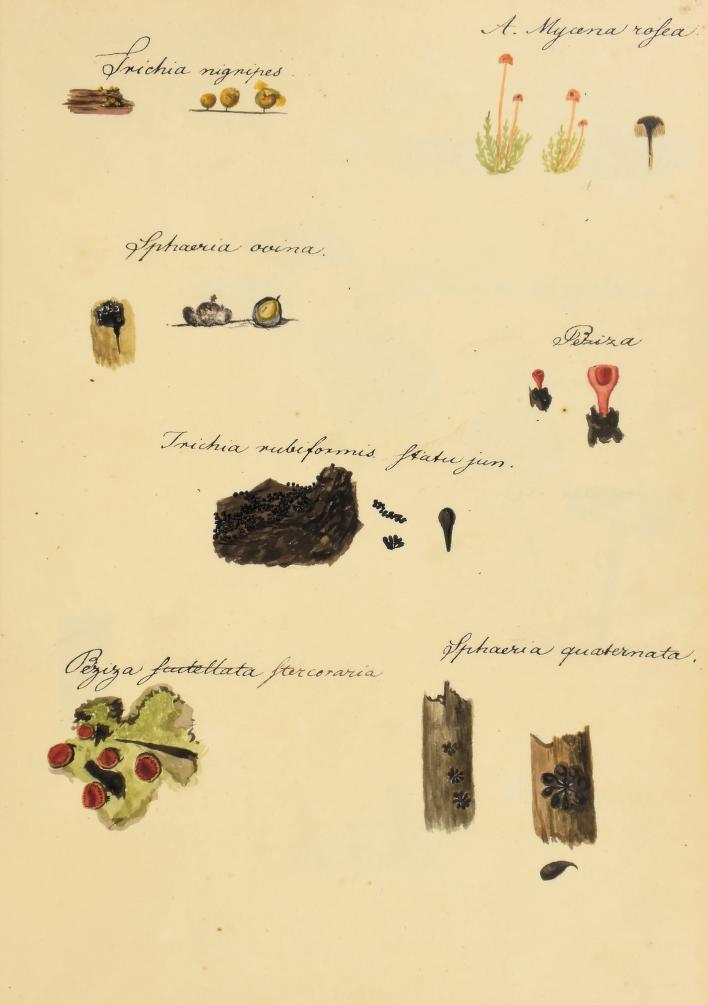
Plate 6. Trichia rubiformis labeled as “statu jun.” [immature state]. Schweinitz, Lewis David von. Icones fungorum Niskiensium. (ca.) 1798-1802. Contributed in BHL from Botany Libraries, Farlow Reference Library of Cryptogamic Botany, Harvard University.

The Harvard Icones and its related works also provide a prime example of how unprecedented research is made possible thanks to digitization initiatives like the Biodiversity Heritage Library, which allow easy reference to and comparison between volumes held in multiple institutions across the United States. As Karakehian et al. acknowledge within their paper,

“It is important to note that much of this work that resulted in this paper was made possible because archives, manuscripts and books are becoming increasingly available through digital efforts being made around the world.”

Given the unique and rare nature of the  Harvard Icones, the book was scanned at Harvard using an Internet Archive TableTop Scanner that is shared with between the Harvard Botany Libraries and the Ernst Mayr Library of the Museum of Comparative Zoology.  This mini version of an Internet Archive scribe allows Harvard librarians to scan rare or fragile materials without the wear and tear of off-site transportation. Once scanned, the Internet Archive processed the images and the final product was made accessible in the Internet Archive and BHL.  We are so grateful to the Botany Libraries, Farlow Reference Library of Cryptogamic Botany, Harvard University for all of their work to digitize the Harvard Icones in BHL and make it freely available to the world.

Similarly, we extend our sincere thanks to the LuEsther T. Mertz Library of The New York Botanical Garden, the Library & Archives of the Academy of Natural Sciences of Drexel University and the Wilson Library of the University of North Carolina at Chapel Hill, for digitizing Schweinitz’s Conspectus and other, complementary archival works, ensuring that they are also now freely available through BHL.

Take a closer look at how BHL facilitated research on these remarkable archives with our BHL User series, where Karakehian provides more insight into BHL’s impact on his work to unravel the mysteries surrounding Schweinitz’s Icones.

Post with contributions from Jason M. Karakehian (Master’s degree candidate at the Harvard Extension School), Judith A. Warnement (Librarian of Harvard University Botany Libraries), and Diane Rielinger (Digital Projects Librarian, Harvard University Herbaria & Libraries).

November 1, 2018by michelle.underhill

Help Support BHL

BHL's existence depends on the financial support of its patrons. Help us keep this free resource alive!

search

About BHL

The Biodiversity Heritage Library (BHL) is the world’s largest open access digital library for biodiversity literature and archives. BHL operates as a worldwide consortium of natural history, botanical, research, and national libraries working together to digitize the natural history literature held in their collections and make it freely available for open access as part of a global “biodiversity community.”

Join Our Mailing List

Sign up to receive the latest news, content highlights, and promotions.

Subscribe Now

Subscribe to Blog via Email

Enter your email address to subscribe to this blog and receive notifications of new posts by email.

Join 319 other subscribers

Subscribe to Blog Via RSS

Subscribe to the blog RSS feed to stay up-to-date on all the latest BHL posts.

Access RSS Feed

Inspiring Discovery through Free Access to Biodiversity Knowledge.

The Biodiversity Heritage Library makes it easier than ever for you to access the information you need to study and explore life on Earth…for free, anytime, anywhere.


64+ Million Pages of
Biodiversity Literature Online.

EXPLORE

Tools and Services
to Transform Research.

EXPLORE

300,000+
Illustrations on Flickr.

EXPLORE

ABOUT | HARMFUL CONTENT | PRIVACY | SITE MAP | TERMS OF USE