Biodiversity Heritage Library - Program news and collection highlights from BHL
  • Home
  • News
  • Featured Books
    • All Featured Books
    • Book of the Month Series
    • BHL at 20
  • User Stories
  • Campaigns
    • Fossil Stories
    • Garden Stories
    • Monsters Are Real
    • Page Frights
    • Her Natural History
    • Earth Optimism 2020
  • Tech Blog
  • Visit BHL
Home
News
Featured Books
    All Featured Books
    Book of the Month Series
    BHL at 20
User Stories
Campaigns
    Fossil Stories
    Garden Stories
    Monsters Are Real
    Page Frights
    Her Natural History
    Earth Optimism 2020
Tech Blog
Visit BHL
  • Home
  • News
  • Featured Books
    • All Featured Books
    • Book of the Month Series
    • BHL at 20
  • User Stories
  • Campaigns
    • Fossil Stories
    • Garden Stories
    • Monsters Are Real
    • Page Frights
    • Her Natural History
    • Earth Optimism 2020
  • Tech Blog
  • Visit BHL
Biodiversity Heritage Library - Program news and collection highlights from BHL
BHL News, Blog Reel

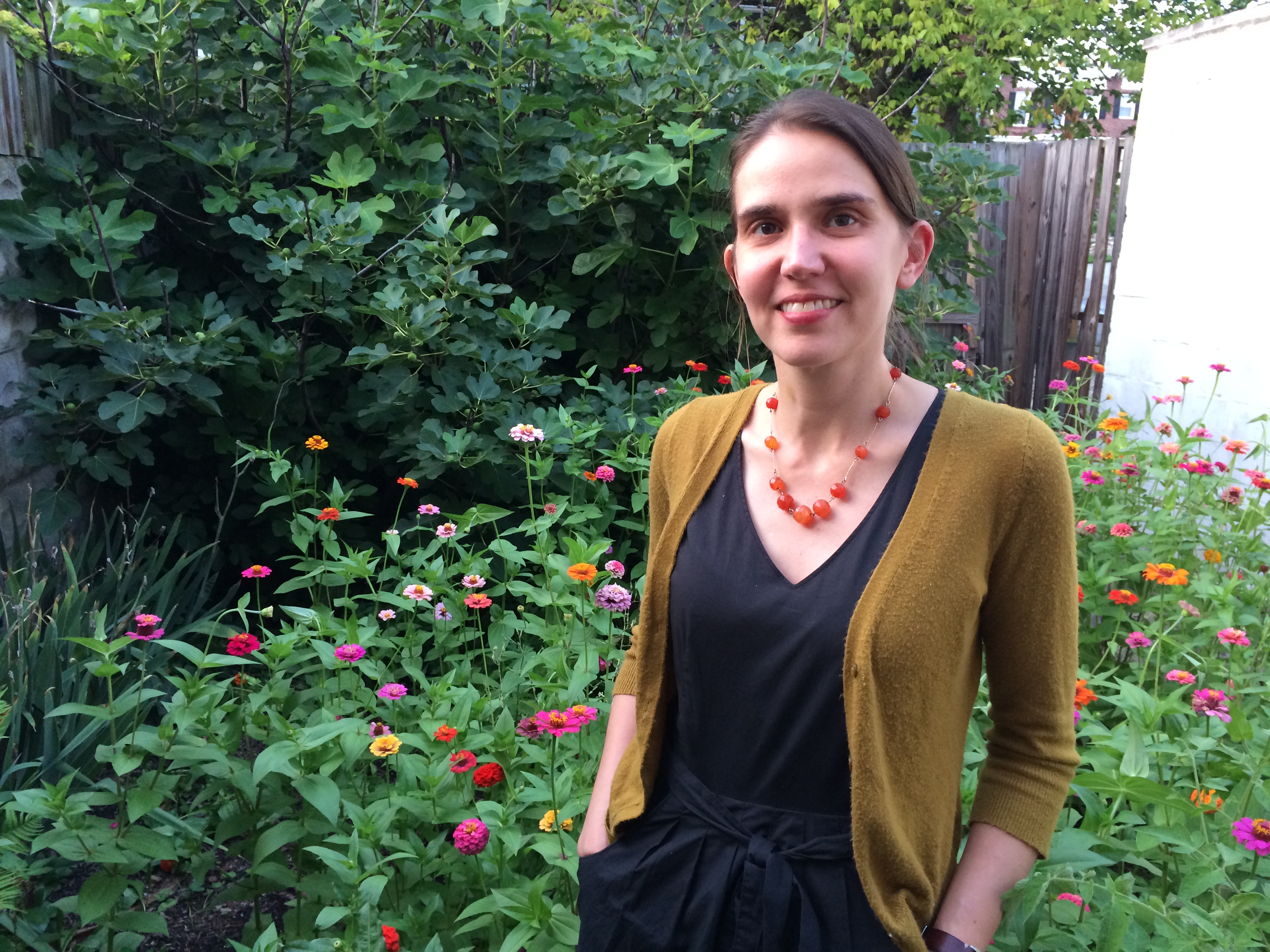
Valentina Ly, Digital Content Intern

Valentina Ly

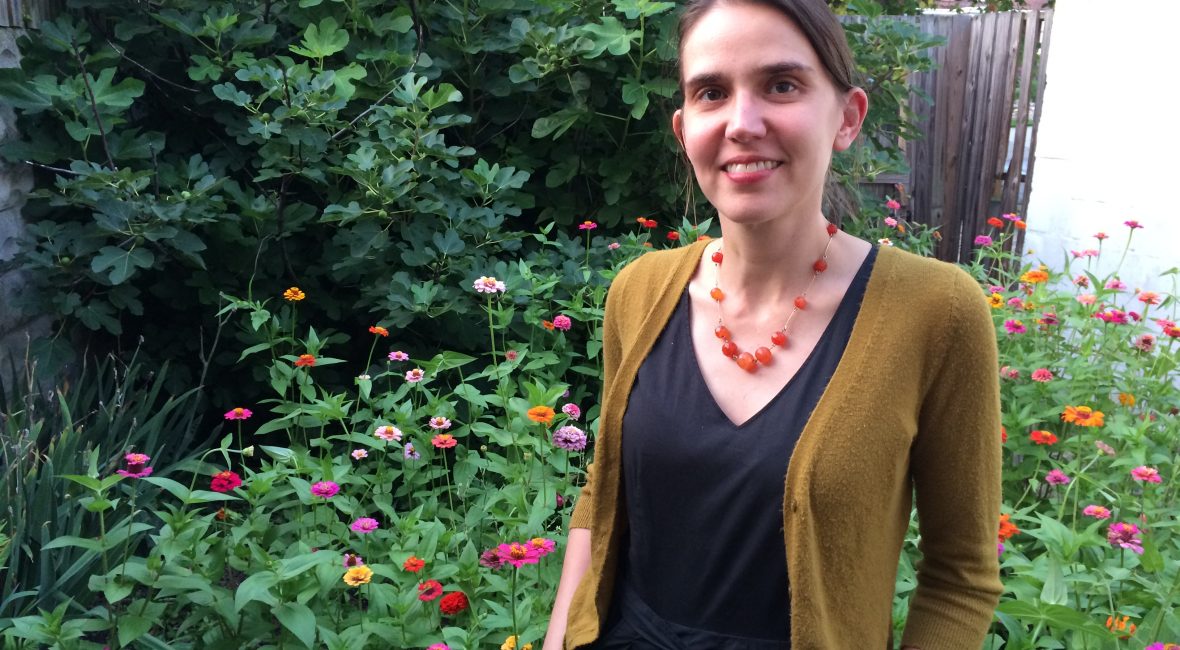
As a new Master of Library and Information Studies graduate, I was looking for opportunities to gain more library experience, especially with regard to cataloguing and metadata. An internet search led me to the many intern opportunities available at Smithsonian Libraries. The Digital Content Intern position at the Biodiversity Heritage Library was a perfect fit for me. It was a virtual position, allowing me the flexibility to stay in Toronto, Canada and maintain a full-time job at a hospital. I completed my entire master’s through an online program from a Canadian university while living in Melbourne, Australia, so I was familiar with working at a distance, independently, and using digital mediums to learn and connect with others.

Valentina Ly

Valentina Ly

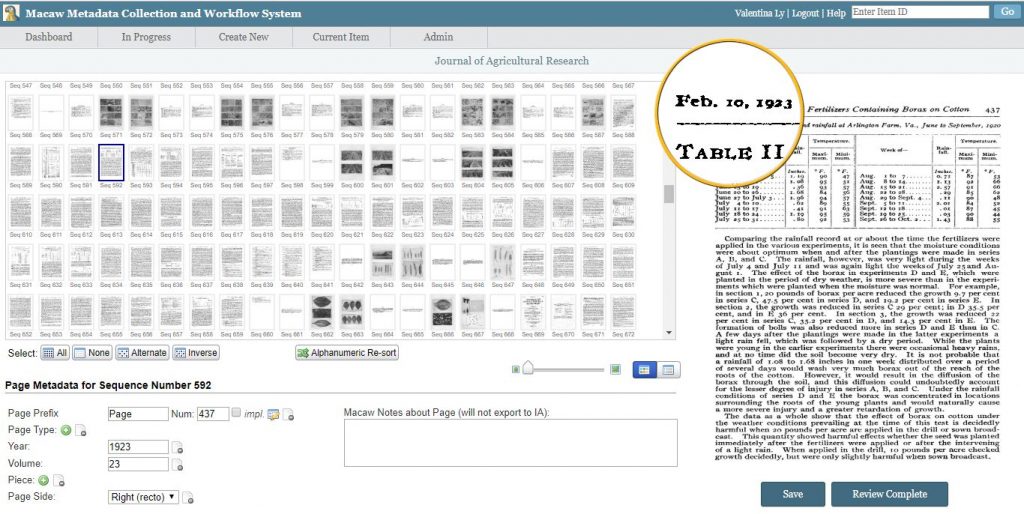
For my internship, I worked with Bianca Crowley, the Digital Collections Manager of the Biodiversity Heritage Library. She taught me about the collaboration and coordination that occurs with the international consortium to get the scanned content, how content gets uploaded, and what metadata elements are added to make sure the content is discoverable for users.  I was tasked with uploading issues for Földtani közlöny, a Hungarian geological society publication, and the Journal of Agricultural Research. The content from these journals go as far back as 1871 and 1913, respectively, and BHL has made it available.

There’s a lot of work that goes into uploading each journal volume and some volumes can be over a thousand pages long, with each page needing metadata added to it.  The 10,870 pages that I uploaded took hours and are just a small drop in the bucket of the total collection, which is still growing! This is a project that deservedly needs a lot of support and manpower.

add-metadata

Screenshot of the Macaw workflow tool used by BHL staff to upload content to and assign metadata for the library.

The process of adding metadata to each page to make it easier for users to find.

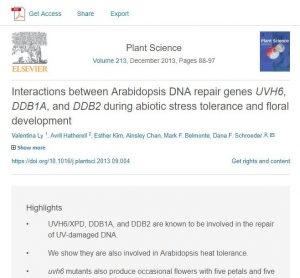
Prior to my library degree, I had a career in plant and medical genetics research, so I had access to many articles through my affiliation with universities. All my published genetics research is not easily accessible unless you happen to have a subscription to those journals. Access to information is important to advance scientific research, but subscriptions and pay walls can be a barrier to new knowledge.

article accessarticle access2
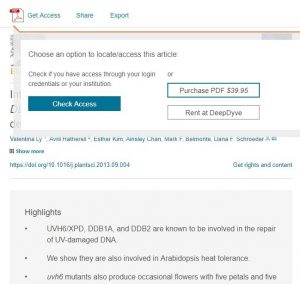
An example of the burden of trying to access an article without a subscription. Even authors don’t necessarily have access or rights to their own paper.

As a librarian, providing access to information is an integral part of the profession. It gets even trickier tracking down seminal and older articles published before computers were common tools. The increasing cost of subscriptions to scholarly content is becoming a growing issue, and it is cost prohibitive for academic institutions.

The Biodiversity Heritage Library provides open access to its content, which is a position I can proudly support. Impressively, there are over 145,000 titles and 56 million pages of biodiversity literature available through the Biodiversity Heritage Library! Anyone with an internet connection can immediately access this information and the new full text search of the optical character recognition feature makes it even easier to search.

As a researcher and librarian, I’m glad to have had the opportunity to intern with the Biodiversity Heritage Library. My biggest takeaway from this experience is learning all about this resource and how it freely provides researchers with a wide range of topics and a wealth of information to study and explore.

February 28, 2019by SheilaC7108
BHL News, Blog Reel

A Fond Farewell to Carolyn Sheffield (BHL Program Manager)

Carolyn Sheffield
Carolyn Sheffield

Carolyn Sheffield (BHL Program Manager 2013-2019)

The Biodiversity Heritage Library’s loss is the gain of the University of Maryland, Baltimore County, Albin O. Kuhn Library & Gallery. Carolyn Sheffield, BHL Program Manager, will be taking on a newly developed position as Associate Director, Library Technology and Digital Strategies effective March 4, 2019.

Carolyn first came to the Smithsonian in July 2010 as the Project Manager on the Field Book Project, a joint initiative of the National Museum of Natural History and the Smithsonian Institution Archives. She subsequently joined Smithsonian Libraries and has been serving as the Program Manager for the Biodiversity Heritage Library since 2013. She has provided financial management for the consortium, administrative support for meeting planning and general communications, and participated on the BHL Tech Team where she provided project management support for some of BHL’s recent technical initiatives. She has also participated in various capacities in several of BHL’s grant-funded initiatives including subsequent grants for adding field notes to BHL, the National Digital Stewardship Residency program, and the LIS Education in Data Science program.

Carolyn has also brought her amazing skills of organization, project planning, and strategic planning on a number of both BHL and Smithsonian Libraries’ projects. BHL benefited greatly from Carolyn’s skill in planning and executing foundation grants. During her tenure at BHL, she was key in receiving grants from the Arcadia Foundation and the Council of Library and Information Resources to support work with field notes.

We will all miss her keen analytical mind and sense of humor. We all wish Carolyn fair winds as she takes on new challenges.

February 26, 2019by
Blog Reel, Featured Books

Galen Clark: The Guardian of Yosemite

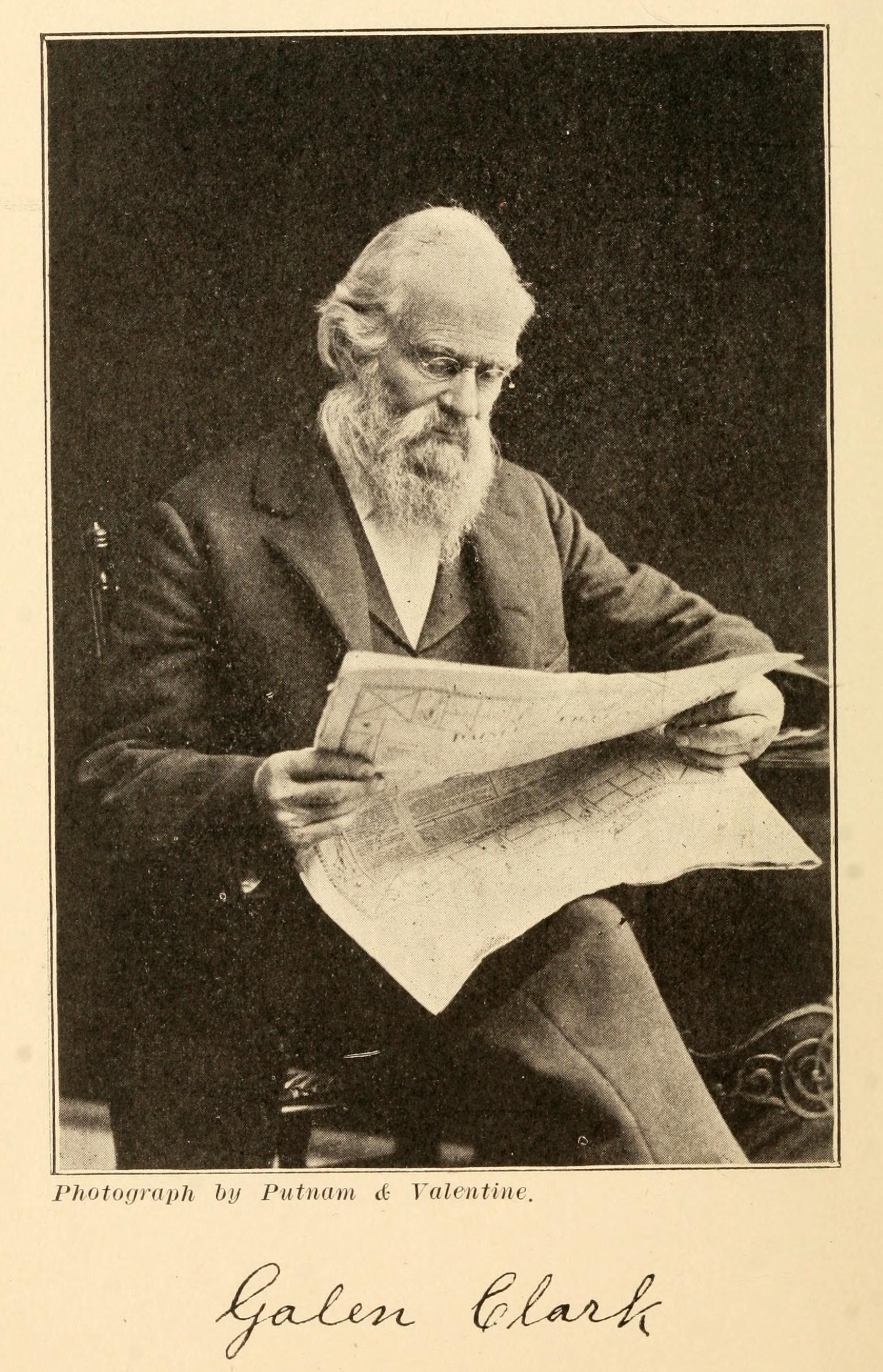
When Galen Clark’s The Big Trees of California, their History and Characteristics, was published, in 1907, he was 93 years old. It had been 50 years since he first came to live in the Mariposa Grove in Yosemite Valley. He had spent most of those years in the midst of the giant sequoias, serving as a guide and educator, and fighting for the protection of these natural wonders.

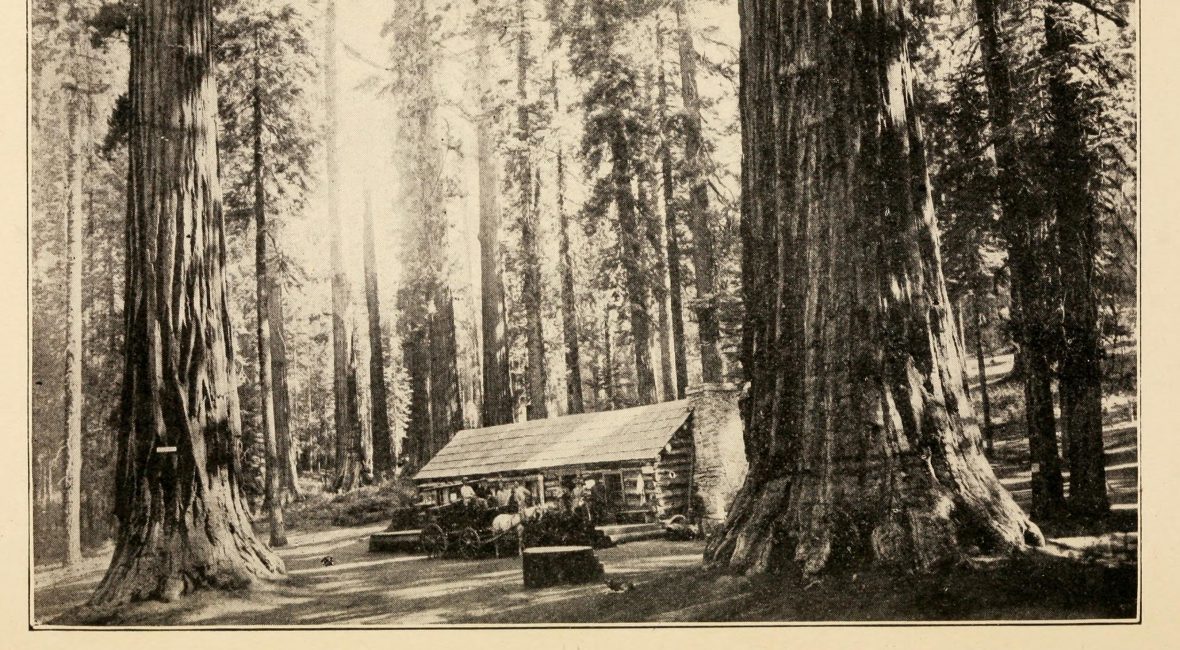
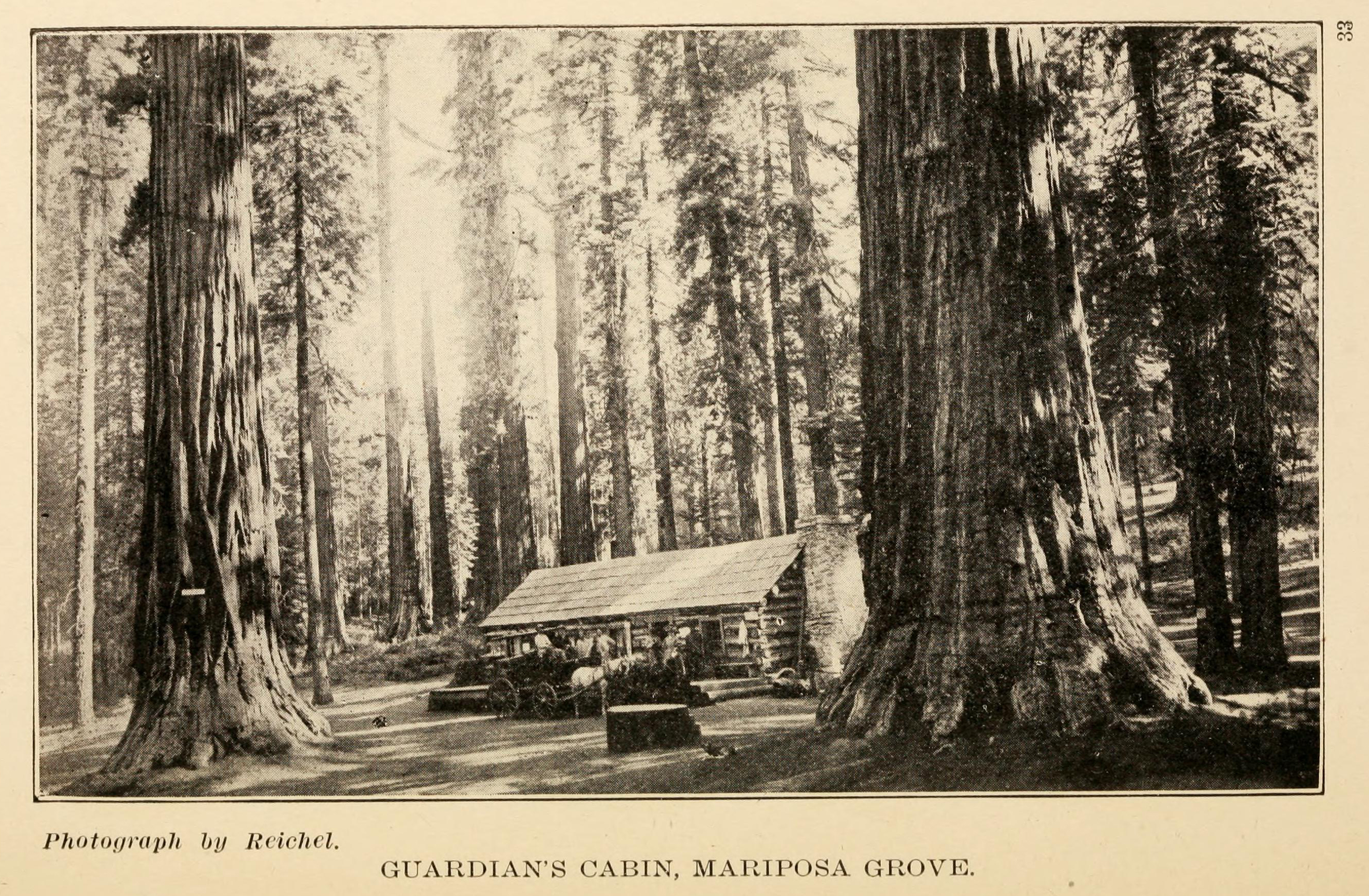
“Guardian’s Cabin. Mariposa Grove.” Clark, Galen. The big trees of California, their history and characteristics. 1907. Contributed in BHL from Library of Congress.

The noted naturalist and conservationist John Muir met Galen Clark on his first visit to Yosemite, and later, in his writing on The Yosemite, called him “the best mountaineer I ever met, and one of the kindest and most amiable of all my mountain friends.” Along with Muir, Clark was instrumental in Yosemite’s preservation and development as a national park.

Born in Canada 1814, Galen Clark migrated westward at an early age. In 1857, suffering from severe lung illness, he moved to Wawona, California for the mountain air. Although he engaged in several modest business enterprises, including running a hotel and serving as a professional guide, Clark was never successful as an entrepreneur. During much of his life he was consistently short of funds, but his accomplishments as an explorer and mountaineer, as well as his influence as a champion of forest and wilderness conservation, were widely recognized.

Galen Clark was an influential contributor to the original movement for the protection of Yosemite as a park. When President Abraham Lincoln signed the Yosemite Grant in 1864, setting aside the Mariposa Grove and Yosemite Valley as protected areas “for public use, resort, and recreation,” Clark was named the first Guardian of Yosemite. He served as Guardian for the next 24 years and lived to see Yosemite National Park established—as the third national park—in 1890. His influence and contributions were acknowledged when an iconic mountain peak was re-named Mt. Galen Clark in his honor.

Photo of Galen Clark. Clark, Galen. The big trees of California, their history and characteristics. 1907. Contributed in BHL from Library of Congress.

The Big Trees of California has a generous number of full-page photographs, including some taken by the Yosemite photographer George Fiske. Many of the bigger named trees are included, and there are also images of the Guardian’s Cabin nestled in the Mariposa Grove, and of the Wawona hotel (now Big Trees Lodge).

Within the free-flowing border of green foliage and cones that decorates each page of text, Clark touches on most aspects of the history, biology, and geography of these fantastic trees. He discusses cones and seeds, and gives tips for testing seed viability.  He also provides an overview of the distribution of big trees in California’s other major sequoia groves—although his main focus is on the Mariposa Grove.

In discussing the sequoia’s origins, Clark shares his awe for this “ancient order of forest trees … contemporaneous with such huge animals as the dinotherium, megatherium mammoth, and monster reptiles long since extinct.” Clark talks about the difficulties of determining the age of any particular sequoia—as even fallen trees, where the rings are easily examined, exhibit many irregularities and variations in ring growth. However,  he does speculate that some of the older trees may have been at least several thousands of years old.

Galen Clark’s love of the giant trees consistently shines through in this book. Despite the inclusion of a number of strictly factual portions—such as a detailed chemical analysis of the gum from a sequoia cone, along with a report supplied by supplied by Professor H. W. Wiley, Chief of the Bureau of Chemistry at the United States Department of Agriculture—this book comes across as an ode to the sequoias. In the section on “Habits and Characteristics,” for example, Clark sets out to provide some strictly factual botanical descriptions of branching and leaf types, but soon segues into a lyrical description:

The bright cinnamon color of their immense fluted trunks, in strong contrast to the green foliage, and dark hues of the surrounding forest makes them all the more conspicuous and impressive. In their sublime presence, a person is apt to be filled with a sense of awe and veneration as if treading on hallowed ground.

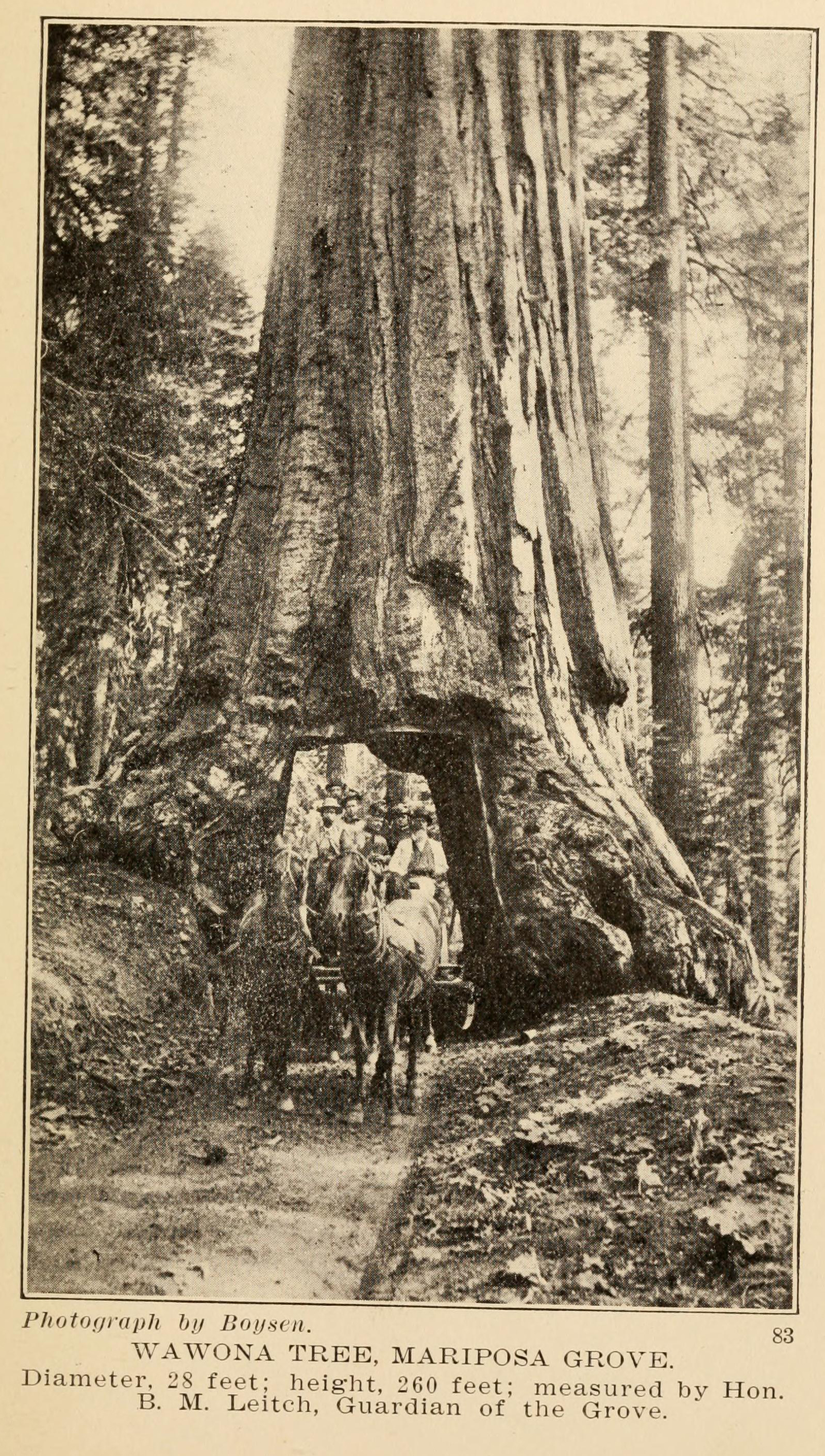
“Wawona Tree, Mariposa Grove.” Clark, Galen. The big trees of California, their history and characteristics. 1907. Contributed in BHL from Library of Congress.

A highlight of the book is the listing and description of some of the biggest of the big trees in California–and it is good to know that, more than 100 years later, many of his “celebrated specimens” are still standing.

The General Sherman Tree: This giant is still standing and has earned the title of World’s Largest Tree (by volume).  It stands 275 feet (83m) tall and is over 36 feet (11m) in diameter at its base. It is now estimated that this tree is somewhere around 2,000 years old.

The Grizzly Giant: Clark names this old sequoia “the Patriarch of the Mariposa Grove.” He speculates that, despite the extensive damage it has sustained, the Grizzly Giant may be “not just the oldest living tree, but also the oldest living thing on earth.”

The General Grant Tree: Named after Ulysses S. Grant, this tree is slightly smaller than the General Sherman.  In 1926, President Coolidge designated the General Grant as the Nation’s Christmas Tree, and annual ceremonies continue to be held at its base.  This tree is also notable for being designated as a National Shrine by President Eisenhower, in 1956.

The Boole Tree: This tree was left standing alone in the Sanger Lumber Company’s logging camp after surrounding trees were cut for lumber, in about 1895.  Clark predicted a swift death for this isolated and unprotected giant tree, but it still survives on what is now U.S. Forest Service land in Sequoia National Forest.

Sadly, another giant, the Mother of the Forest, in Calaveras Grove, was killed in the 1850s, when its bark was stripped and reassembled for display at various exhibitions in the United States and Europe. It was already dead, though not yet entirely destroyed by fire when The Big Trees of California was written.

Tunnel Trees: Clark writes that riding through the tunnel trees “in a six-horse stage, or any conveyance, is a great novelty and should not be missed.”  The famous Wawona Tunnel Tree of Mariposa Grove was a favorite until it fell under a heavy load of snow in February 1969. Another tunnel tree, Pioneer Cabin, which Clark mentions briefly, came down during a winter storm in 2017.

Further Reading

The Boole Tree, from the USDA Forest Service
https://www.fs.usda.gov/recarea/sequoia/recarea/?recid=79961

Forest atlas of the national forests of the United States. Sequoia folio. By United States. Forest Service. Pinchot, Gifford, Smith, George Otis. Washington, D.C.: U.S. Department of Agriculture, Forest Service, 1909. DOI: https://doi.org/10.5962/bhl.title.119298.

Mariposa grove of big trees: a short history of the Mariposa big trees & the Yosemite Valley.  By: Leitch, B. M. Wawona Calif: B.M. Leitch ?, 1910. DOI: https://doi.org/10.5962/bhl.title.30311.

Muir, John. South of Yosemite. Edited and with a foreword by Frederic R. Gunsky. Garden City, NY, Published for the American Museum of Natural History, by the Natural History Press, 1968.

Sequoia Research, Yosemite, from the National Park Service:
https://www.nps.gov/yose/learn/nature/sequoia-research.htm

Vischer’s views of California: the mammoth tree grove, Calaveras County, California, and its avenues. By: Vischer, Edward. San Francisco: Edward Vischer, 1862. DOI: https://doi.org/10.5962/bhl.title.50746.

Yosemite nature notes. United States. National Park Service. Yosemite Natural History Association, Yosemite Naturalist Department. Yosemite National Park Calif, Yosemite Natural History Association, 1922. Volume: 35 no.6. BHL:  item/70374.

February 21, 2019by Joel Richard
Blog Reel, User Stories

Rediscovering Millipedes with the Biodiversity Heritage Library

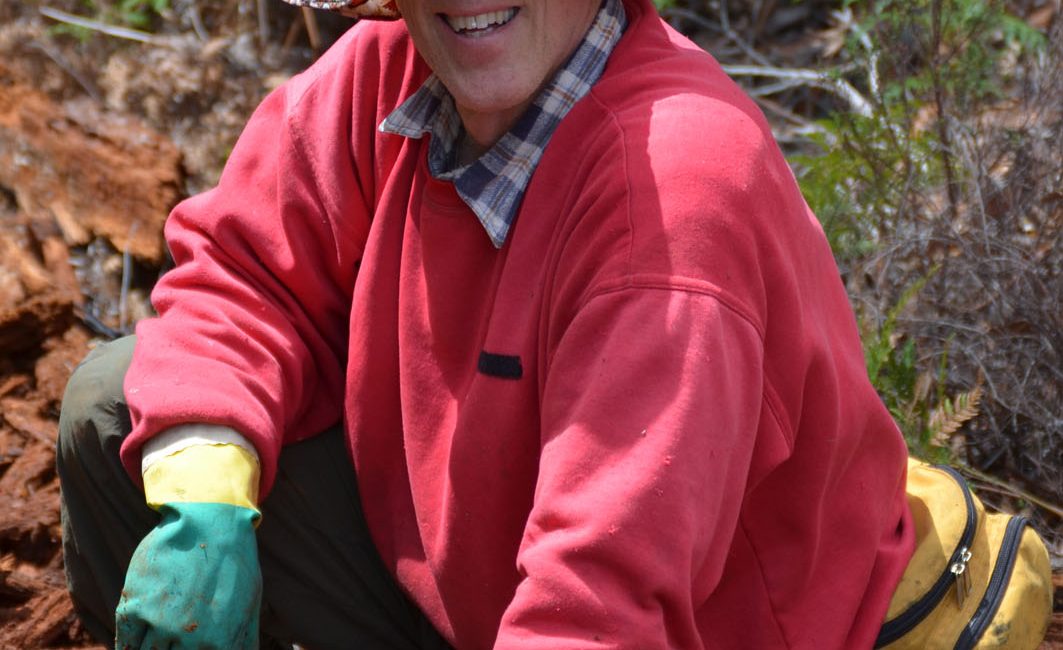
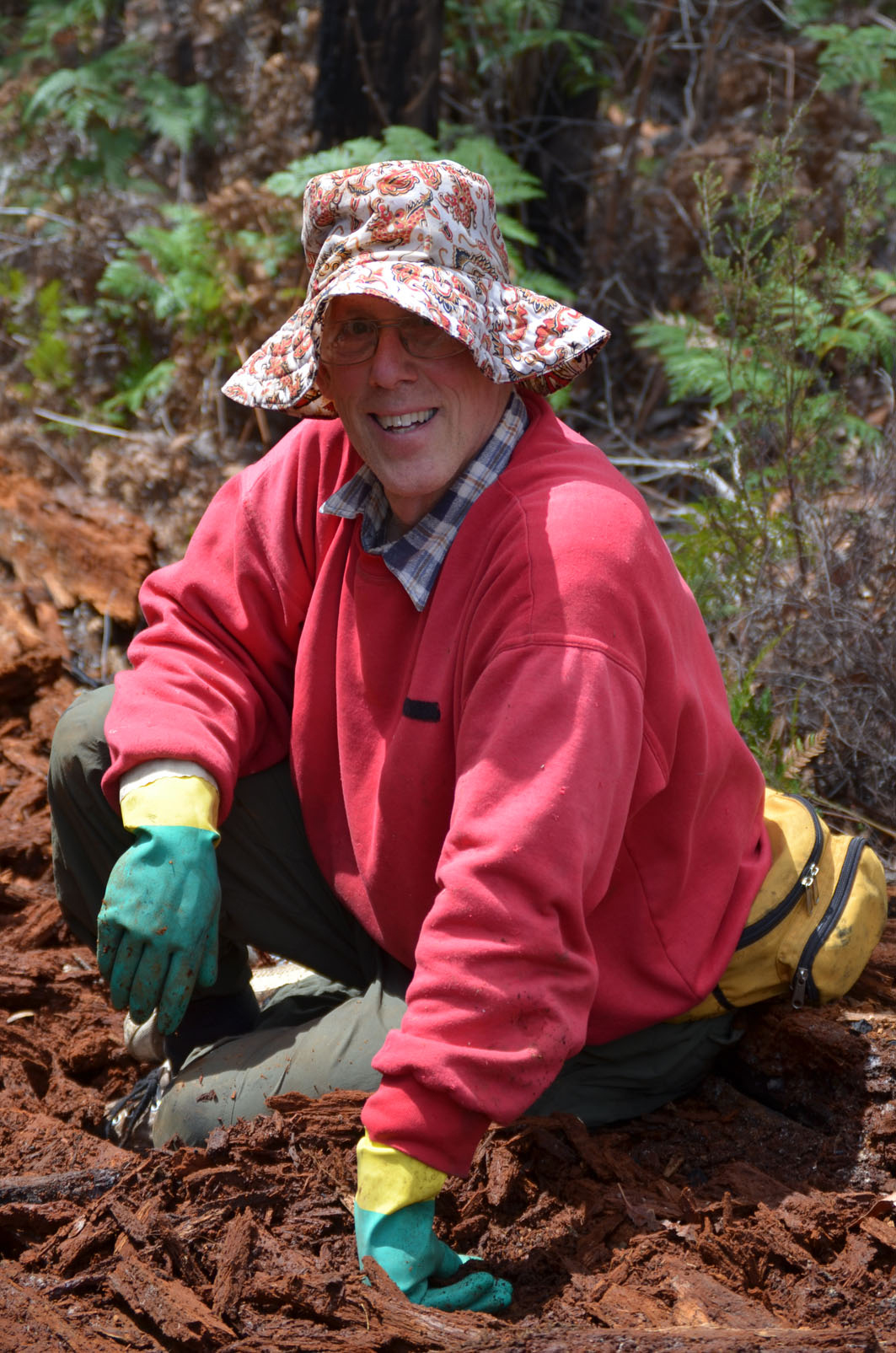
Dr. Robert Mesibov in millipede collecting hat.

Dr. Robert Mesibov in millipede collecting hat.

Like many taxonomists, I like to group things together and sort them: specimens into species, species into genera, references into bibliographies, images into galleries. The Biodiversity Heritage Library has been a powerful enabler for me as a grouper-sorter.

Fifteen or so years ago, a literature search still required at least one long and expensive trip from my home town in regional Tasmania to an academic library in Hobart (Tasmania’s capital city), or in Melbourne or Canberra on the Australian mainland. Reams of paper were used to make photocopies of key references that I could take home with me. Weeks were spent waiting for additional photocopies to arrive through inter-library loans. When I finally had all the relevant older references, I could do my revisionary taxonomic work.

Then BHL appeared.

For the past 10 years, almost all the older literature I need to see has been accessed through BHL — quickly, cheaply and paperlessly.

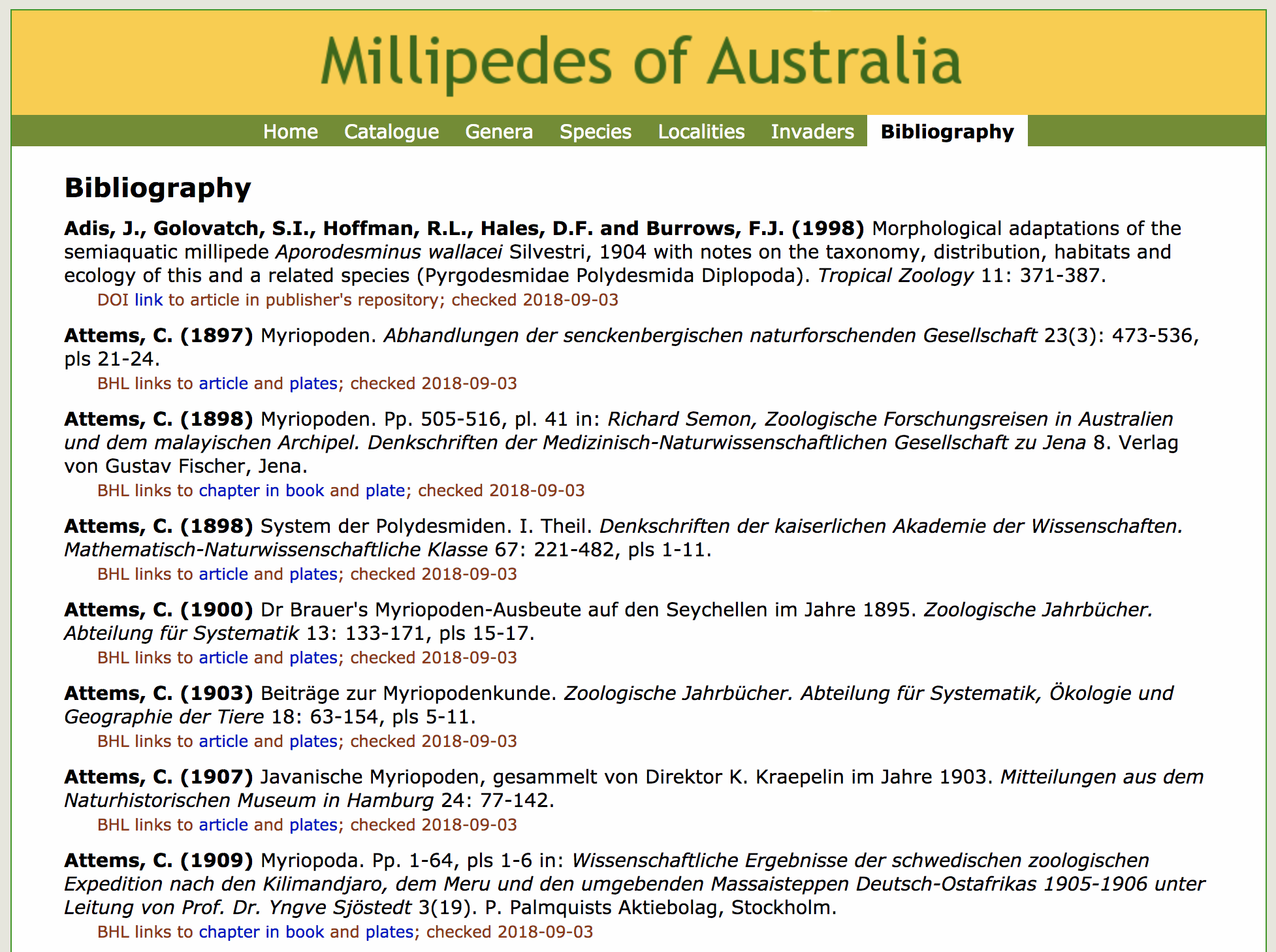
In 2002, I compiled the first Australian millipedes checklist in the old way for the Australian government’s Fauna of Australia publication series. The successor to that checklist is the Millipedes of Australia website (2006 – 2019), an online catalogue I maintain. In 2009 I began adding links to open-access references in the website’s bibliography. That bibliography currently covers the period 1833-2018, and a remarkable 66 of the 72 references from the first 90 years of Australian millipede taxonomy are in BHL. What a savings in time and money for website users!

Screenshot of a section of the bibliography on the Millipedes of Australia website. Links to BHL can be seen for many of the included references.

In preparation for my upcoming retirement this year, I will be depositing the Millipedes of Australia in a public data repository and publishing a data paper to describe the archived website. The Tasmanian locality records have also been given to the Atlas of Living Australia, allowing continued access to this data.

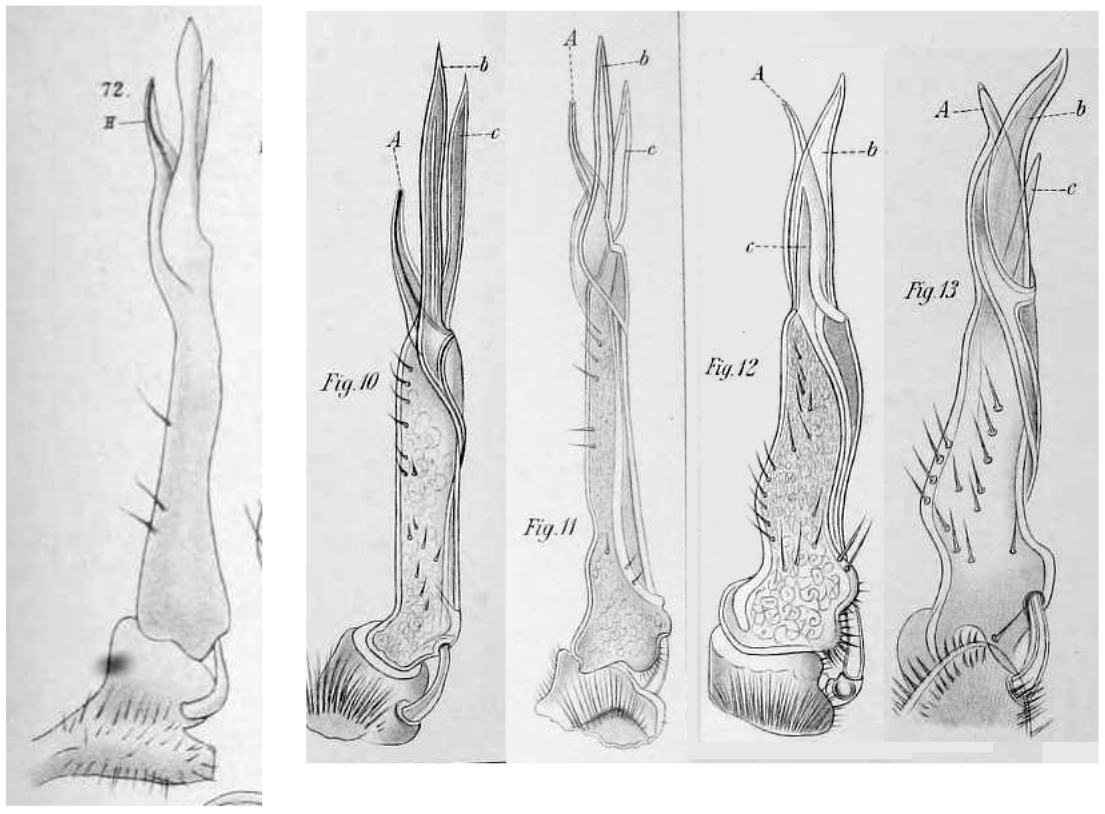
BHL has also made it easy for me to gather up published taxonomic illustrations in digital form, and then to manipulate the images into scaled, side-by-side comparisons of different species. Although I mainly do this for my own use, I produced a “gallery” document (in PDF format) of diagnostic images in 2017 to accompany an annotated catalogue of southern South American millipedes in the family Dalodesmidae (https://doi.org/10.11646/zootaxa.4338.3.6). This document has since been provided to South American and other millipede workers. It’s a big time-saver. Millipede species are mainly distinguished through differences in the male genitalia, and having illustrated genitalia of almost all the 52 dalodesmids in one place makes for instant enlightenment: “Ah ha! So that’s why that species was put in that genus!”

Many of the illustrations are from publications digitally archived in BHL.

Views of the male genitalia of the South American millipede Anaulacodesmus levissimus (Attems, 1898), as illustrated by C. Attems in 1898 (left; Fig. 72) and F. Silvestri in 1905 (right; Figs 10-13).

I’ve also been compiling taxonomic treatments (descriptions) in this way using BHL’s OCR output, edited where necessary. No more flipping through numerous old journals and photocopies, and scanning or typing blocks of text! I can quickly build a document containing multiple descriptions of the same species, or of genus-diagnostic characters across multiple species, all in one place for handy reference, and with BHL page URLs if I need to revisit the sources.

OK, maybe “enabled” isn’t the best word to describe what BHL has done for me as a taxonomist. “Spoiled” would be more accurate!

February 14, 2019by Joel Richard
BHL News, Blog Reel, Campaigns, Her Natural History

Coming This March! Her Natural History: A Celebration of Women in Natural History

Her Natural History
Her Natural History

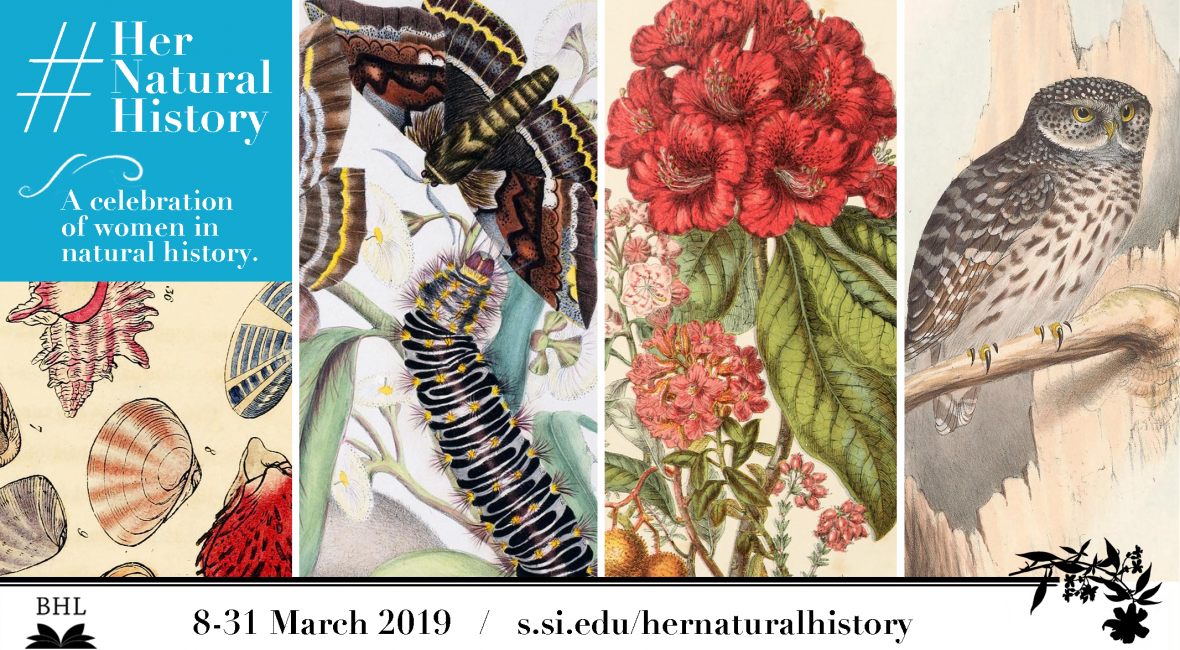
Illustrations in this graphic created by female artists who will be featured during #HerNaturalHistory. L to R: Maud Horman Fisher, Aid to the Identification of Insects, v. 2 (1882-90); Louise-Cécile Descamps-Sabouret, Revue Horticole (1899); Emma Kissling, Poissons provenant des campagnes du yacht Princesse-Alice (1911); Frances Reed, Illustrations of British Mycology, ser. 1 (1847). Illustrations digitized by Smithsonian Libraries, Harvard Botany Libraries, and The New York Botanical Garden.

This Women’s History Month, we invite you to join us in celebrating women in natural history as part of an international social media campaign produced in collaboration with our partners — Her Natural History: A Celebration of Women in Natural History.

Through social media and blog posts, interactive programming and citizen science opportunities, Her Natural History aims to increase awareness of and information about women in the biodiversity sciences.

The campaign will kick-off with an all-day social media blitz on Friday, 8 March 2019 (International Women’s Day) and continue throughout the month with additional posts and programming, including a Wikipedia Editing Workshop on 13 March. #HerNaturalHistory is also the @iglibraries #LibrariesOfInstagram challenge topic for March.

We hope you’ll join us for the social media blitz on 8 March and throughout the month by following #HerNaturalHistory on Twitter, Facebook, and Instagram and using the hashtag to share stories, collections, publications, artworks, archival materials, exhibits, and other resources highlighting women and their contributions to natural history.

Learn more about the campaign on the Her Natural History webpage, and stay tuned for more information in the coming weeks. We look forward to celebrating #HerNaturalHistory with you in March!

Her Natural History: A Celebration of Women in Natural History

When? 8-31 March, 2019
Where? Social Media (Twitter, Facebook, Instagram)
What? Join us in celebrating women in natural history this Women’s History Month! Follow along and join the campaign using #HerNaturalHistory.
More Information: s.si.edu/hernaturalhistory

February 11, 2019by michelle.underhill
Blog Reel, User Stories

Vanity and BHL: Examining Extinction and Rediscovery through Art

The “Anthropocene Defaunation” and the Lost Florida Zestos Skipper

We are experiencing a “biological annihilation.”

That’s how scientists are describing the biodiversity loss in what is being recognized as Earth’s sixth mass extinction event [1]. Not only are extinctions occurring at a rate 100 times higher than would occur naturally, but overall populations are also shrinking at alarming rates [1,2].

A 2014 Science report termed it the “Anthropocene defaunation”, reflecting humanity’s role in this biodiversity loss [3]. Among the casualties in this “Age of Humans” is one of “the few butterflies known to have become extinct in the United States” [4] — The Florida Zestos Skipper Butterfly Epargyreus zestos oberon (Worthington, 1881) [5]. This butterfly’s story draws forth science, taxonomy, history, and art from the Biodiversity Heritage Library (BHL) for a cutting edge representation of biodiversity in challenging times.
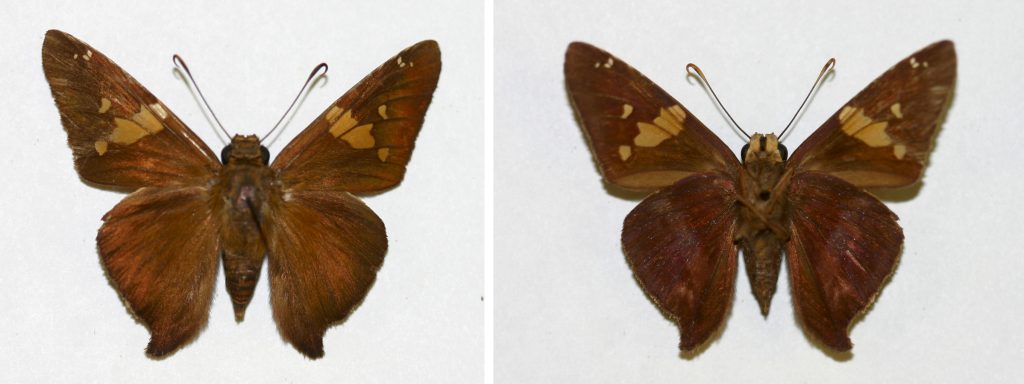
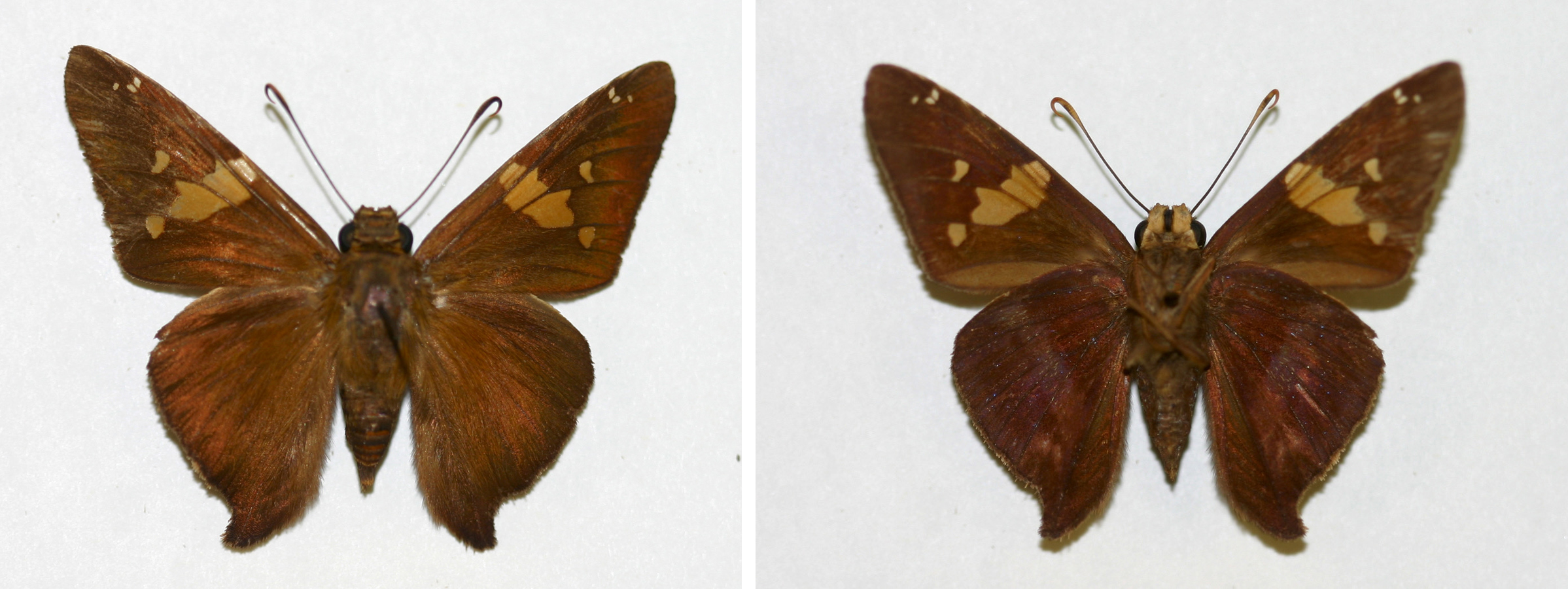
Florida Zestos Skipper Butterflies Epargyreus zestos oberon† (Worthington, 1881) – Male (Left: Upperside; Right: Underside). Collected in Monroe County; Everglades National Park, Bear Lake Trail, Florida in May 1973. The photos were taken in the Florida Department of Agriculture and Consumer Services, Florida State Collection of Arthropods. The specimens are now incorporated into the Florida Museum of Natural History/McGuire Center for Lepidoptera and Biodiversity. Photos copyright and courtesy of Marc C. Minno, PhD.

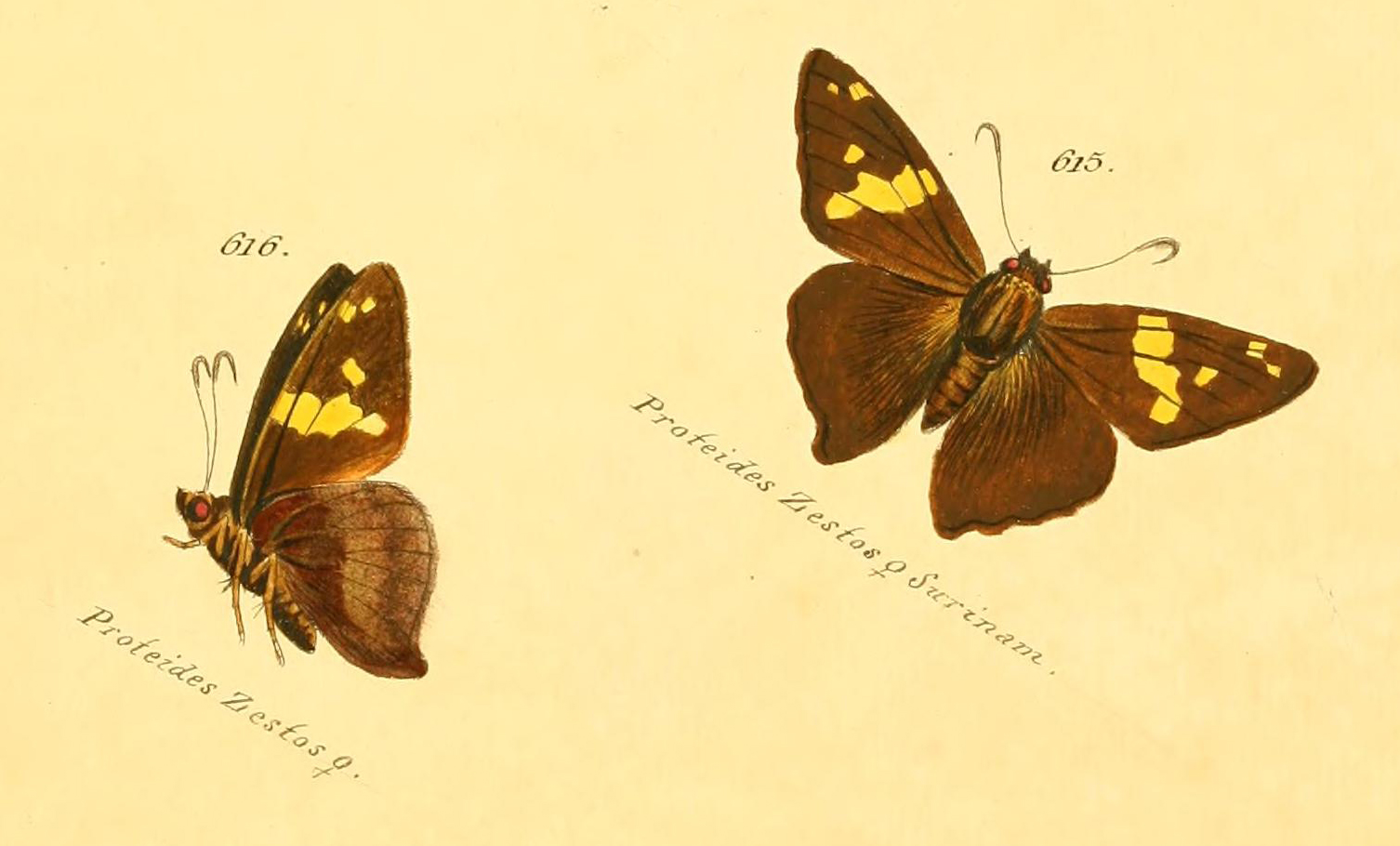
The recorded scientific history of the Zestos Skipper Butterfly extends back to the early nineteenth century. In the 1819 publication Verzeichniss bekannter Schmettlinge [sic], Jacob Hübner first listed the butterfly as Proteides zestos. Hübner later illustrated the P. zestos holotype (type locality “Surinam”, probably in error) via two figures of a female specimen in his Zuträge zur Sammlung exotischer Schmetterlinge (1826). However, as Hübner provided no description to accompany the name and illustration, it was not until 1832, after his death, that his assistant Carl Geyer officially described Proteides zestos as a new species.
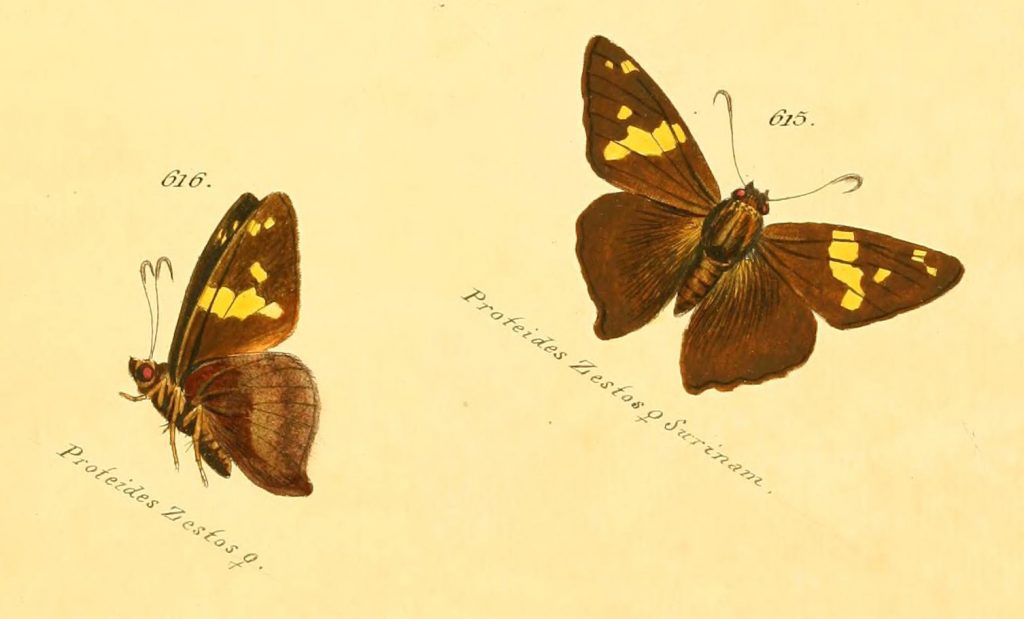
Proteides zestos illustrated by Jacob Hübner in Zuträge zur Sammlung exotischer Schmetterlinge (1826). Contributed in BHL by Smithsonian Libraries.

Over the next 50 years, this rather unassuming reddish-brown Skipper, with a range from the Florida Keys to the Caribbean, was reclassified and redescribed by various authors. In Dublin, William F. Kirby (1871) assigned it to a new genus (Telegonus zestos) and in Chicago, Charles E. Worthington (1881), examining 31 specimens from Marco Island, Florida, described it as a new species (Endamus [sic] oberon), based on its resemblance to Eudamus tityrus. In 1884, Eugene M. Aaron, after evaluating over 160 specimens of tityrus and zestos, concluded that Proteides zestos, Telegonus zestos, and Eudamus oberon were in fact the same species.

Dr. Marc C. Minno (Insect Ecologist with Eco-Cognizant in Gainesville, FL) began searching for the Florida Zestos Skipper Butterfly in 2006. At his request, Skipper butterfly expert Dr. George T. Austin evaluated Zestos Skipper butterfly specimens in the Florida Museum of Natural History collection with type localities from Florida and the Caribbean. Before his death, Austin concluded that the Florida Zestos Skipper Butterfly actually represents a unique subspecies or sibling species [6]. Based on his own observations and Austin’s comments, Minno believes “oberon” to be the valid name of the Florida Zestos Skipper Butterfly population and has, until he can complete Austin’s study, designated it as Epargyreus zestos oberon (Worthington, 1881) [5].

Over the past 50 years, the Florida Zestos Skipper Butterfly population has been in decline. According to Minno, this butterfly, “once locally common in coastal areas of southern Florida”, had “disappeared from the mainland” by the mid-1980s. The last known sightings of Florida Zestos Skippers occurred in January 2004, at the Key West Tropical Forest and Botanical Garden in Stock Island, Florida [6].

In 2012, Minno et al., concluded a six-year survey looking for declining butterfly species in southern Florida [4]. Because the study failed to produce a single sighting of the Florida Zestos Skipper, in any stage of life, it was recommended that it be presumed extinct. Together with the Rockland Meske’s Skipper, these represent the “first [known] butterfly extinctions in Florida” [4].

The Florida Zestos Skipper exists now only in museums and the pages of historic literature, its memory preserved in natural history collections, libraries, and repositories like the Biodiversity Heritage Library.

Vanity: An Artist’s Story of Extinction and Rediscovery in the “Age of Humans”

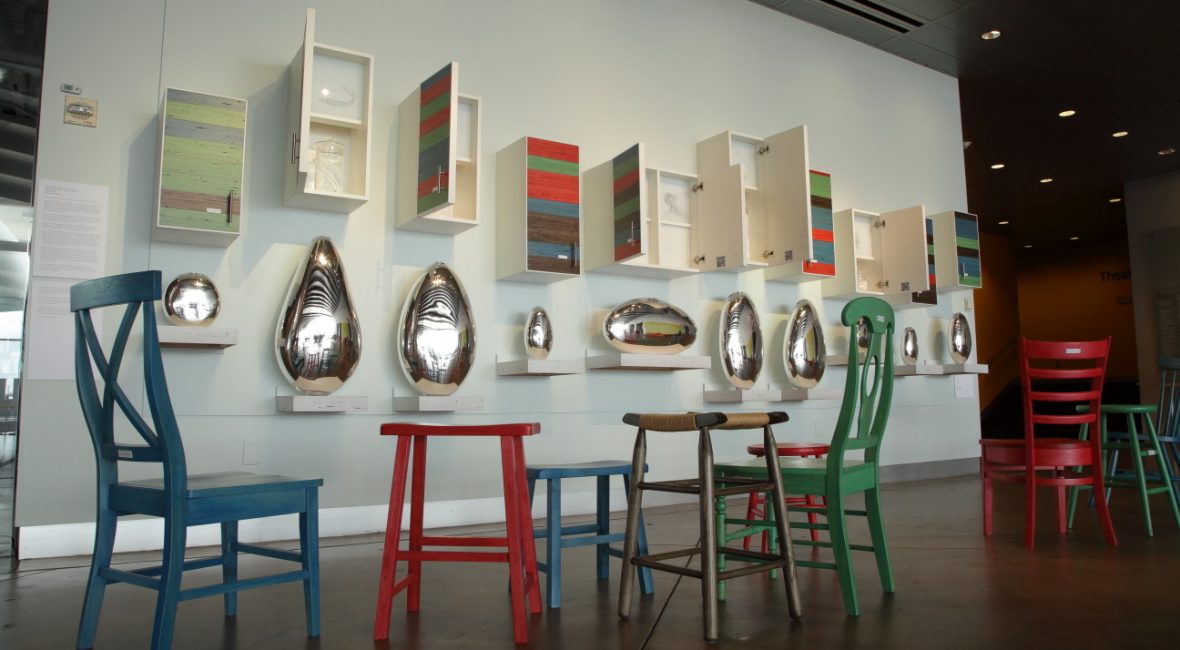
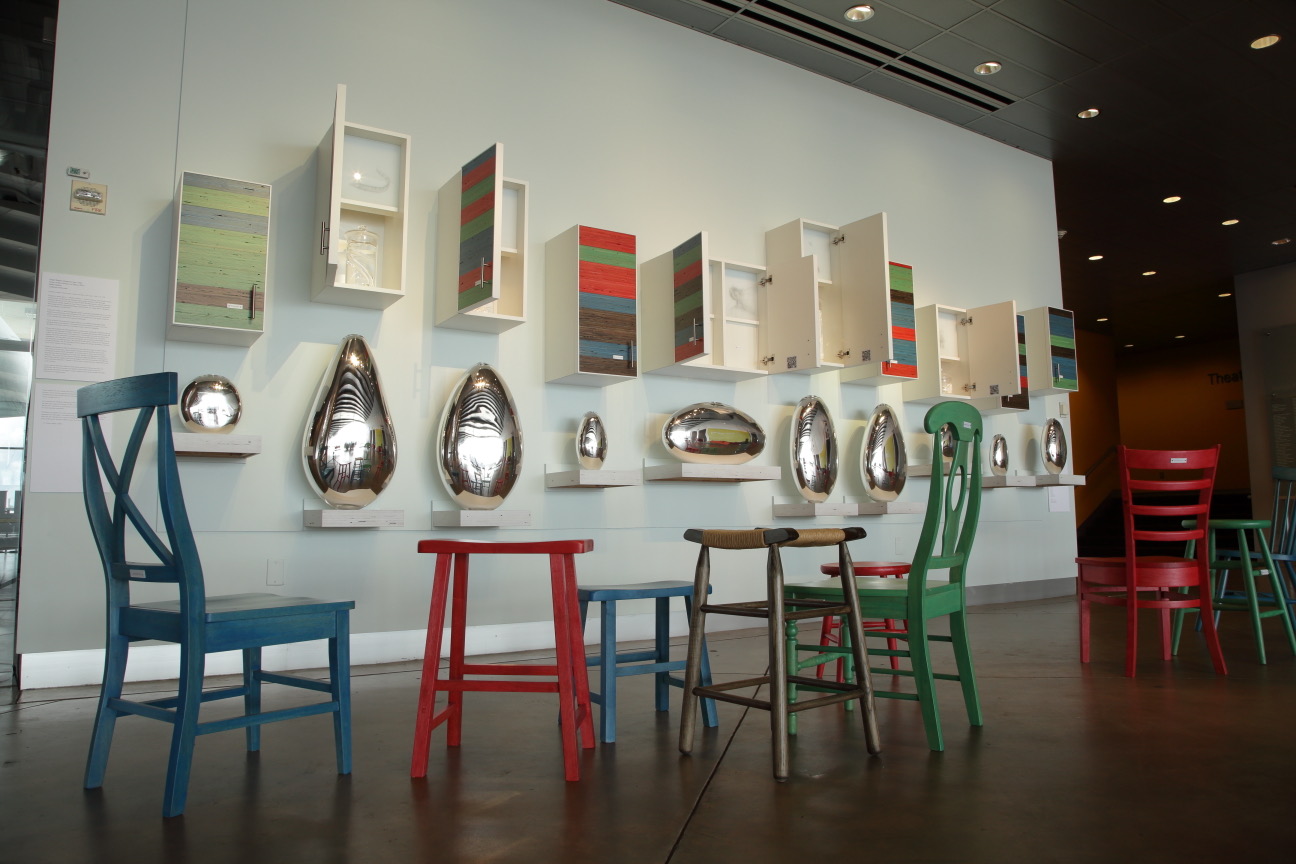
Joseph Gregory Rossano, Vanity (As installed at Museum of Glass, Tacoma, Washington, 2015); photo by C.B. Bell III, copyright and courtesy of Museum of Glass.

The Florida Zestos Skipper Butterfly is just one of the “biological specimens” featured in Vanity, an art installation by Joseph Gregory Rossano. Created for and with the support of the Museum of Glass (MOG) in Tacoma, Washington, Vanity was on display at MOG from March 3 – August 30, 2015. The exhibition tells the story of eleven species and subspecies, presumed extinct, presented through the lens of humanity’s role in their demise.

The installation includes eleven “vanity” cabinets. The cabinet doors, Rossano’s “portrait” of man, are composed of imperfect wood laminate adorned with visual representations of Homo sapiens’ DNA barcode. On the bottom corner of each door, a scientific label hints to the species’ or subspecies’ identity inside the cabinet, beneath these human “fingerprints”. Rossano depicts the species through “faded” pencil portraits and as transparent glass sculptures suspended in clear liquid, inside period specimen jars. The overall effect is of a species vanishing behind the portrait of humanity…just as it has in reality.

Beneath each cabinet are mirrored, almond-shaped glass sculptures and in front of each, a chair with a specimen label: Homo sapiens. These objects accentuate humanity’s role in the loss of each species, for, as Rossano articulates in the exhibition catalogue, “When viewing Vanity from a seated position, we see ourselves reflected in these forms that echo the divine. In our vanity we reflect generations of humans who saw themselves as divine, while the truly divine—our 11 innocent and bygone species, subspecies, and their stories—reflect the truth about us” [7].

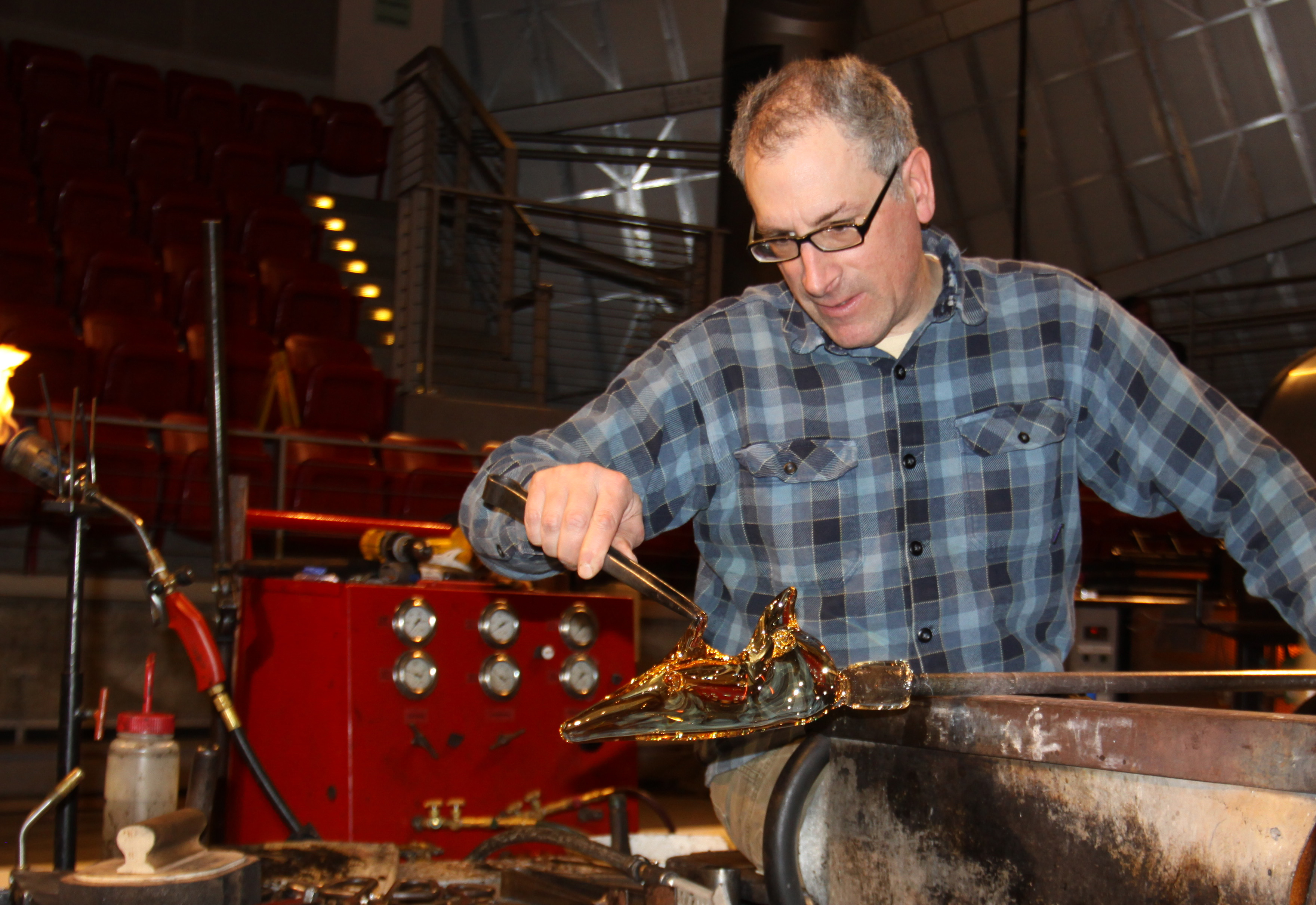
Rossano’s use of glass as a medium is equally deliberate: “like our environment, glass is transparent, fragile, and reflective — transparent in that it hides nothing, fragile in that once damaged it may never be repaired, and reflective of how we have impacted it” [8].

Joseph Gregory Rossano working on Vanity in the Museum of Glass Hot Shop, January 2014. Photo copyright and courtesy of Museum of Glass.

Each cabinet also offers a QR code leading to historical accounts of the enclosed species. These accounts summarize the species’ “discovery” (collection date, type locality, collector, scientific illustrations, etc.), humanity’s role in its extinction, and the year it was declared “Extinct”. To produce these species tales, Rossano collaborated with Sandra I. Berríos-Torres, MD. Berríos-Torres served as author of the 11 historical accounts and as Editorial Director of the exhibition catalogue, on behalf of Joseph Gregory Rossano.

The Biodiversity Heritage Library was a crucial resource for Berríos-Torres. Consulting dozens of publications in BHL while conducting research for Vanity, she ultimately cited 16 of them in the historical accounts that were incorporated into the exhibition and catalogue. The Florida Zestos Skipper Butterfly had the highest number of BHL citations in Vanity. Berríos-Torres used BHL to follow the butterfly’s taxonomic journey from its first listing by Hübner in 1819 to Aaron’s evaluation of the species in 1884.

“BHL resources were invaluable in my research for Vanity, in particular for accessing publications with the first collection, scientific description, and illustrations,” affirms Berríos-Torres. “The publications dated from 1819 to 2002, were published in English, German, Dutch, and French, and were contributed to BHL by 10 institutions, including university libraries, museums, government libraries, scientific research institutions, and botanical garden libraries across the USA, Canada, and England.”

From BOLD to Vanity

Berríos-Torres is an orthopaedic surgeon and a Centers for Disease Control and Prevention trained epidemiologist who has conducted laboratory and field research on infectious diseases and had a lead role in public health responses to national and international infectious disease outbreaks. Berríos-Torres was initially introduced to Rossano in the fall of 2009 at the opening of his BOLD exhibit, which examined species identity through art and incorporated Barcode of Life Data Systems‘ (BOLD) DNA barcodes into the installation’s sculptures.

BOLD was inspired by Rossano’s 2008 visit to the Área de Conservación Guanacaste (ACG) in northwestern Costa Rica at the invitation of Bradley Zlotnick, MD. At ACG, Rossano learned about DNA barcoding and met Zlotnick’s mentors, tropical ecologists Dr. Daniel H. Janzen and Dr. Winnie Hallwachs. Their 2004 landmark study on cryptic butterfly species, in collaboration with researchers at Smithsonian’s National Museum of Natural History (John M. Burns) and the University of Guelph, Canada (Paul D. N. Hebert, Erin H. Penton), “…illustrate(d) the value of DNA barcoding, especially when coupled with traditional taxonomic tools, in disclosing hidden diversity” [9]. Barcodes offered a “rediscovery” of biodiversity. Concurrently with BOLD, Rossano’s Whitewashed exhibition “…aimed at revealing our own species’ whitewashing of Man’s relationship with nature throughout time” [7].

In 2013, the art critic for the Seattle Stranger drew a parallel between Whitewashed and a blog post about eight animal species and three subspecies reported as “Extinct”, including the Eskimo Curlew, Numenius borealis (Forster, 1772), one of the species highlighted in Whitewashed and also featured in the blog. The post inspired Rossano to imagine a new installation on extinction, and Vanity was born.

Vanity and the Biodiversity Heritage Library

Berríos-Torres first discovered BHL in December 2014 while performing literature searches for the species’ historical accounts in Vanity. It quickly became a daily part of her research process.

“Between December 2014 and March 2015, in the three short months allotted to research and compose the historical accounts of the 11 animals depicted in the exhibition, I used BHL on a daily basis,” shares Berríos-Torres. “In the following months, as Editorial Director of the Vanity exhibition catalogue, I used BHL several times a week, in search of illustrations.”
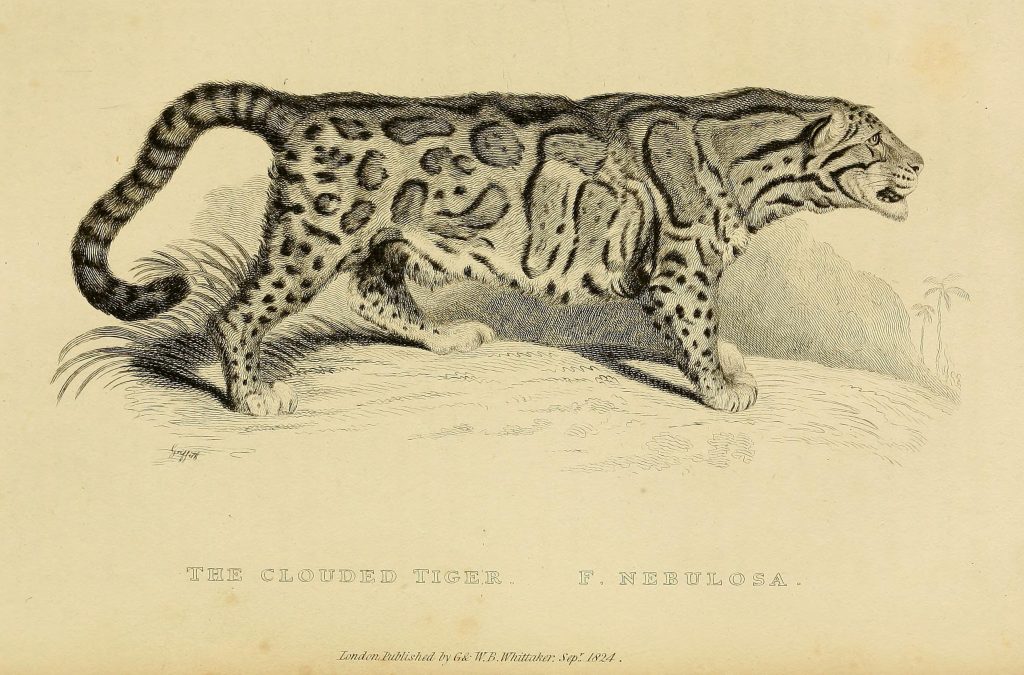
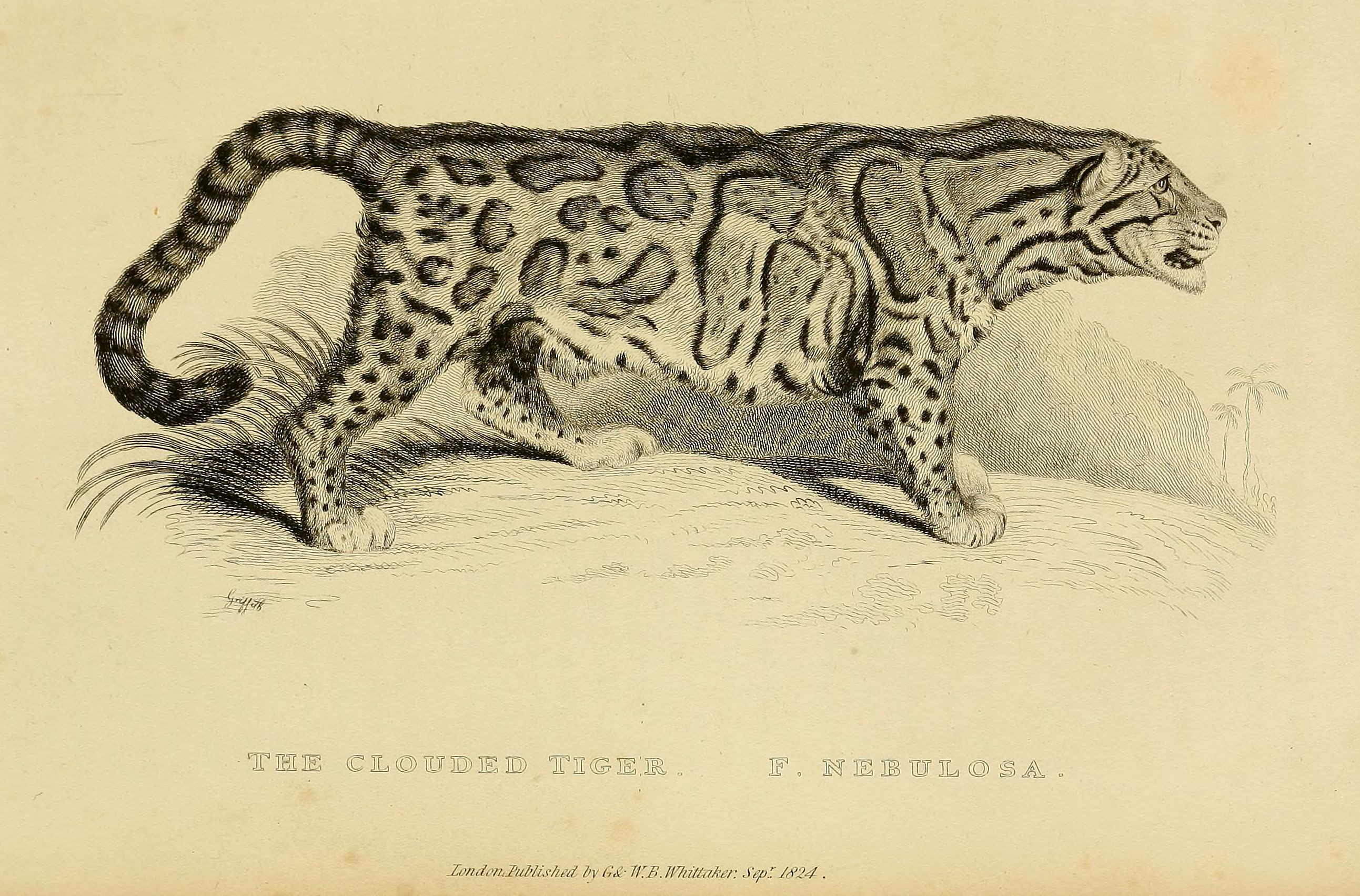
Illustration of the Clouded Leopard Neofelis nebulosa (Griffith, 1821) from Griffith’s The Animal Kingdom, v. 2 [Mammalia] (1827), contributed in BHL from Smithsonian Libraries. Retrieved from BHL and featured in the Vanity exhibition catalogue. In 2006, genetic testing revealed that the Clouded Leopard of Formosa (Taiwan) N. nebulosa brachyura, thought to be one of four subspecies of the mainland Clouded Leopard N. nebulosa (Griffith,1821), is actually genetically identical to the mainland N. nebulosa [10]. BHL houses Griffith’s first description from 1821, of what he called the Chinese or Tortoiseshell Tiger, Felis nebulosa, based solely on an illustration. In 2008, the International Union for Conservation (IUCN) listed N. nebulosa as “Regionally Extinct” in Taiwan [11].

Tracking down relevant publications required quite a bit of sleuthing. For this, BHL’s various advanced search options proved invaluable.

“In general, the most important aspect of the BHL resources lay in the ability to access first descriptions and early illustrations,” explains Berríos-Torres. “At the onset, the only information I had was the species’ or subspecies’ common and scientific names. A Google search on the scientific names yielded two additional pieces of information: the last name of the person who first described it in the scientific literature and the date of that description. Rarely could I readily find the full name of the person who described it or the original citation. The opportunity to employ varied advanced search strategies in BHL proved indispensable, particularly when starting with such limited information on the subject.”
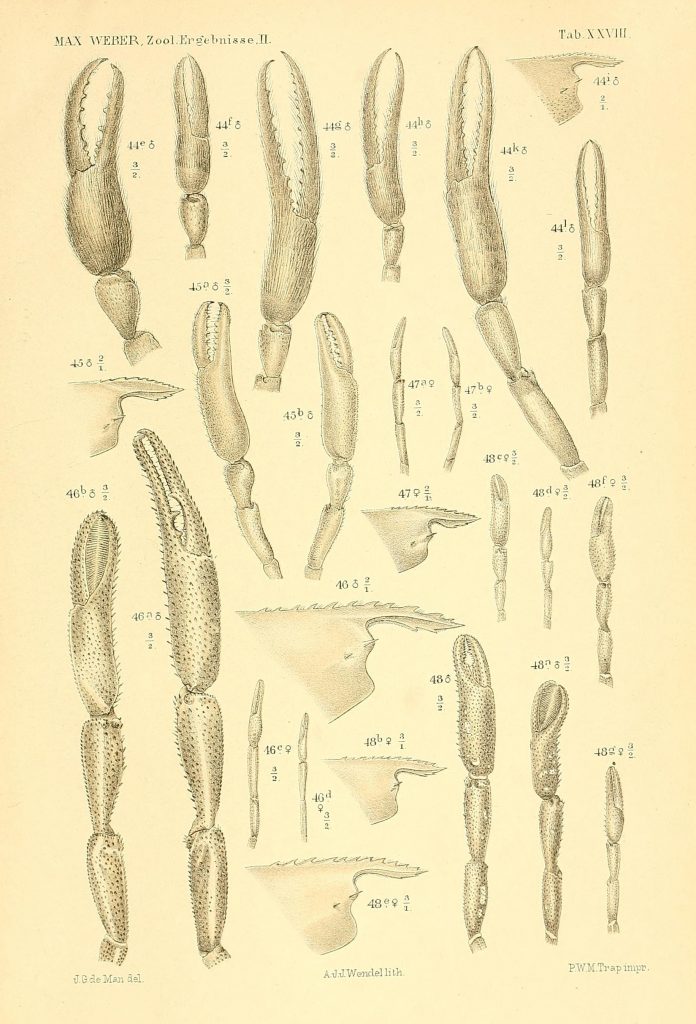
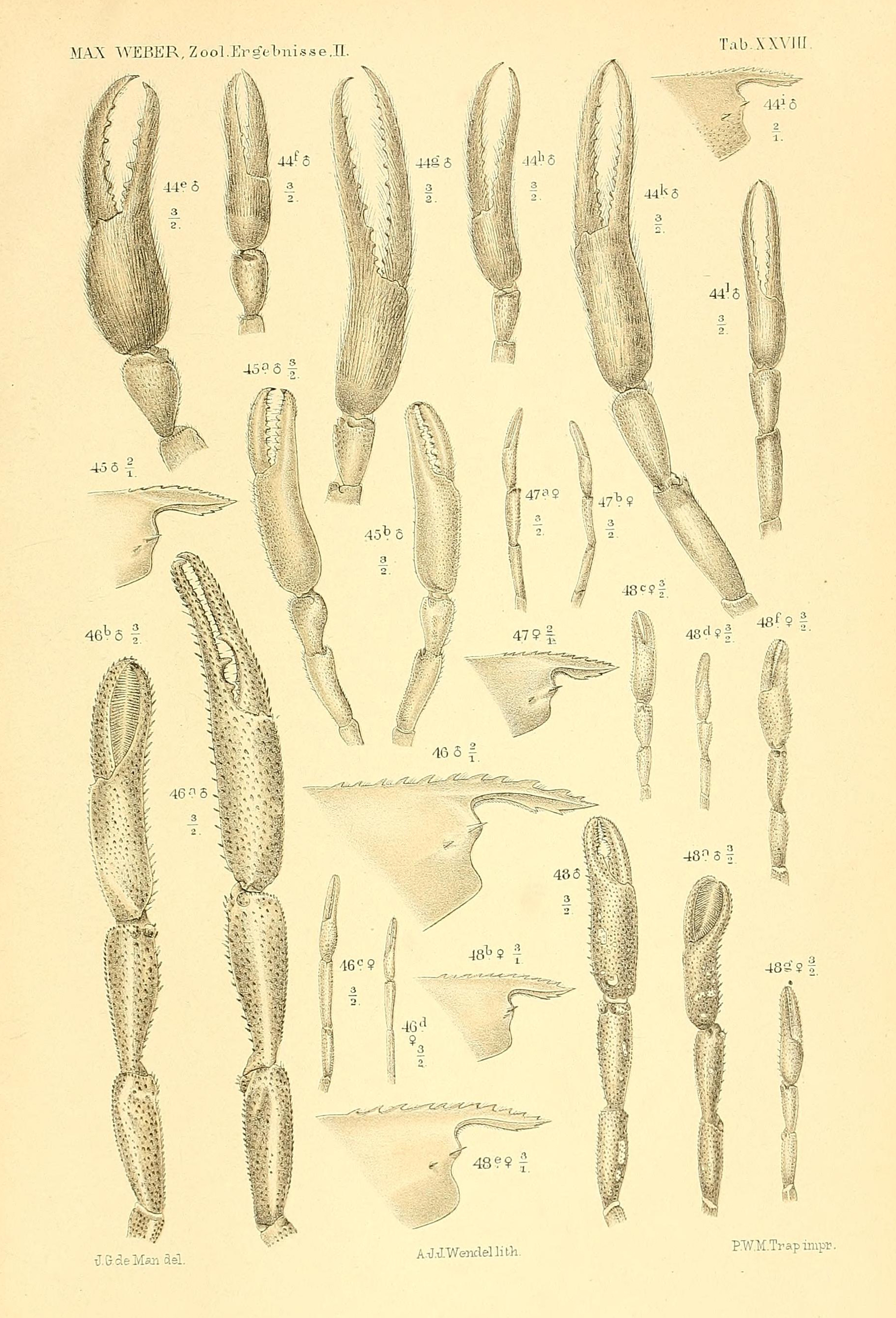
In 2015, de Grave et al., using IUCN Red List Criteria, concluded that the Freshwater Shrimp from Java Macrobrachium leptodactylus (de Man, 1879a) is one of two “Extinct” freshwater shrimp species [12]. This illustration depicts specimens collected in 1888 by Dutch-German zoologist Max Wilhelm Carl Weber — the only M. leptodactylus specimens ever collected [13]. It was published by Johannes Govertus de Man along with his description of Weber’s specimens as a new subspecies, Palaemon pilimanus, var: leptodactylus (1892). BHL also has de Man’s first description of the species as Palaemon pilimanus (1879). The illustration, retrieved from BHL, was contributed by Smithsonian Libraries and published in the Vanity catalogue.

In addition to the Zestos Skipper Butterfly, BHL provided valuable references for several other species featured in Vanity, including a freshwater shrimp from Java Macrobrachium leptodactylus (de Man, 1879a), the Clouded Leopard of Formosa (Taiwan) Neofelis nebulosa (Griffith, 1821), and the Scioto Madtom Catfish Noturus trautmani (Taylor, 1969).
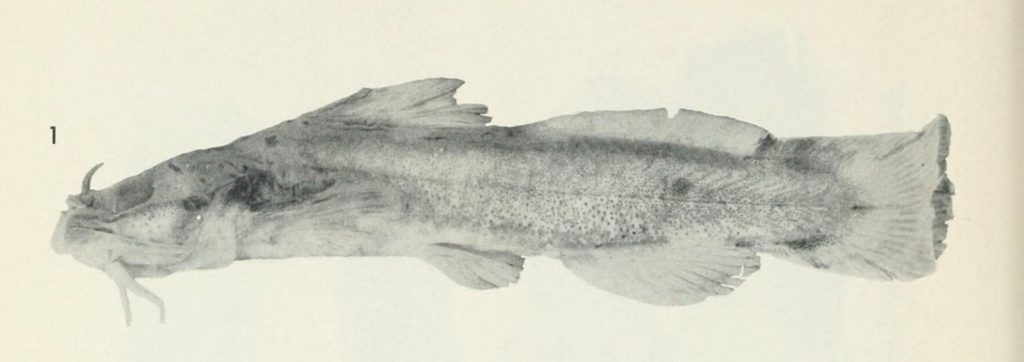
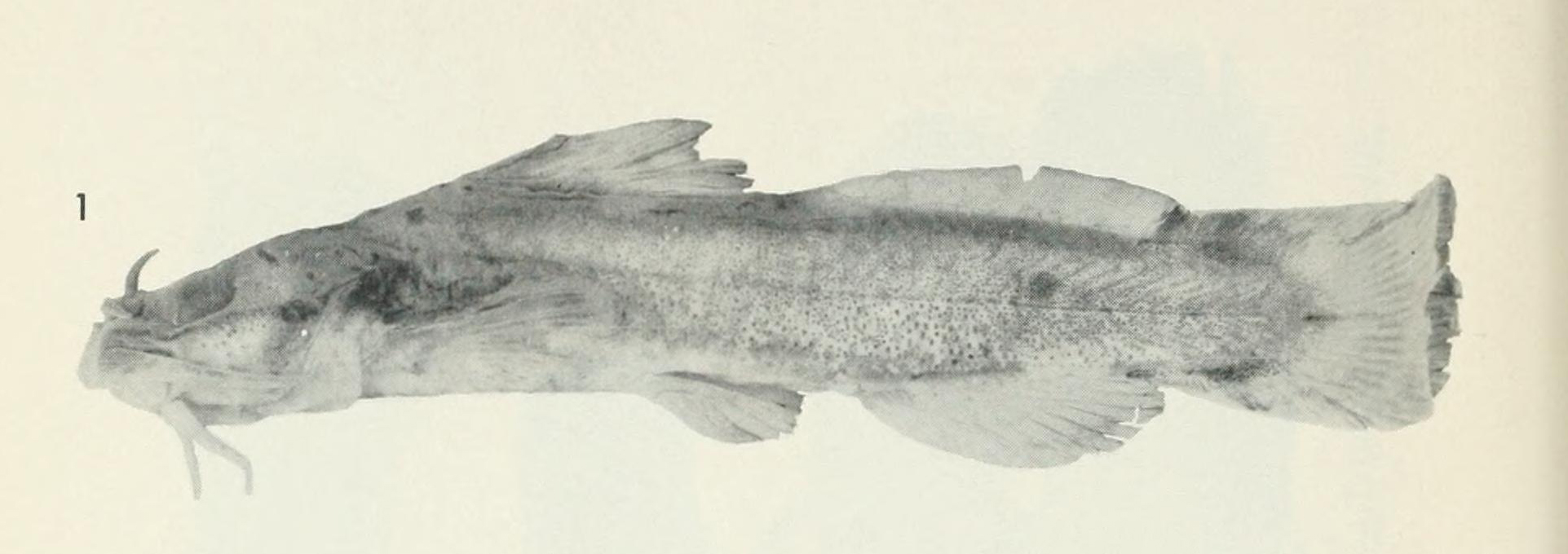
Photograph of the holotype (male) of the Scioto Madtom Catfish Noturus trautmani (Taylor, 1969), in the collections of the Smithsonian National Museum of Natural History. Bulletin – United States National Museum. No. 282 (1969). Contributed in BHL from Smithsonian Libraries.

The Scioto Madtom Catfish was first described by Smithsonian scientist Dr. William R. Taylor, former curator of fishes at the National Museum of Natural History, based on a “funny looking catfish” collected by Dr. Milton B. Trautman in 1943, from Big Darby Creek in Pickaway County, Ohio [14]. Using BHL, Berríos-Torres was able to retrieve Taylor’s original description and a photograph of the holotype, a male specimen housed in the Smithsonian collections. Scioto madtom has not been observed since Trautman’s last collected specimen in 1957 [15]. Habitat loss and competition from the Northern Madtom Noturus stigmosus (Taylor, 1969) may have contributed to Scioto Madtom’s extinction [15,16]. In 2013, the IUCN Red List declared Noturus trautmani “Extinct” [17].

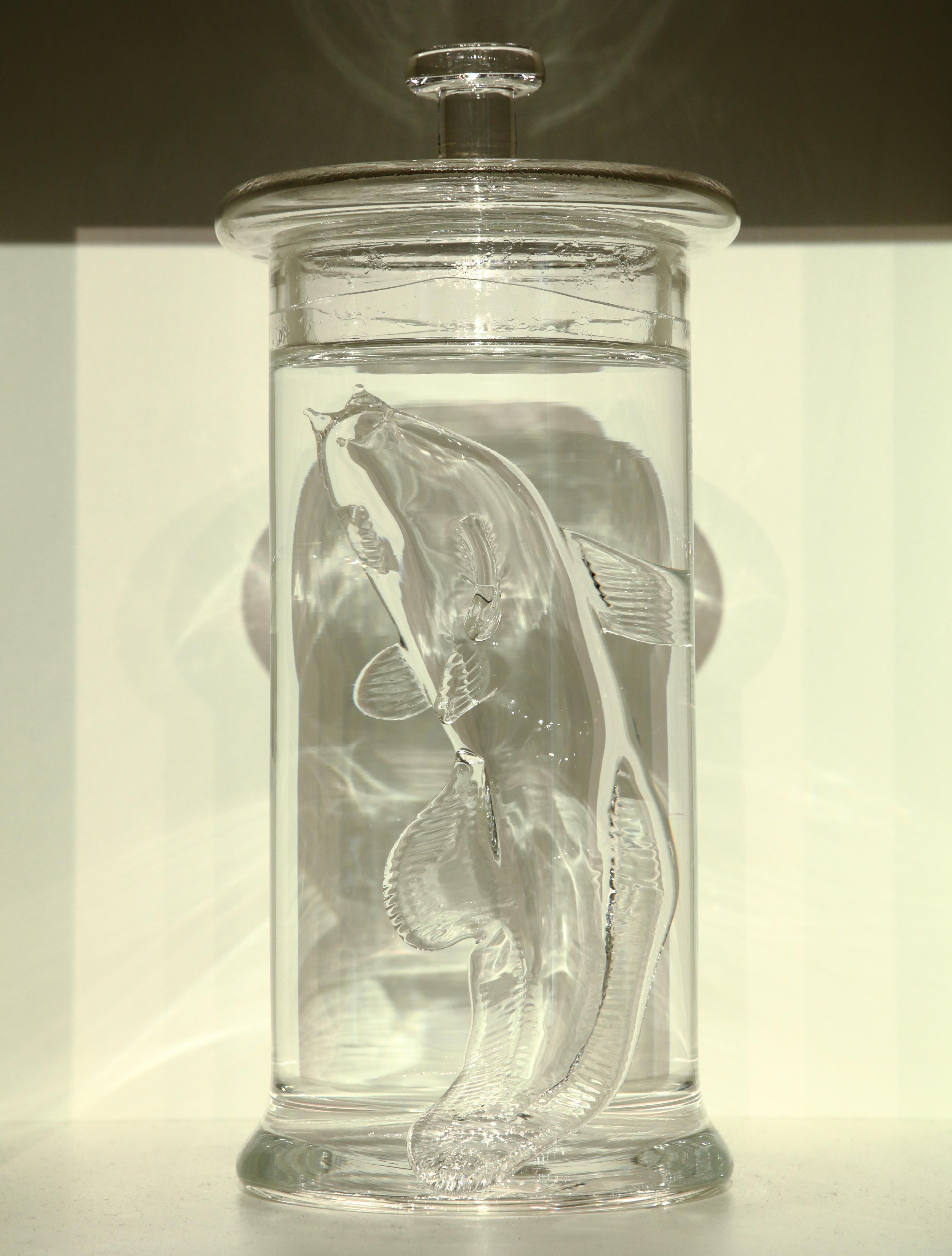
Joseph Gregory Rossano, Vanity (Scioto Madtom Catfish, Noturus trautmani (Taylor, 1969) as installed at Museum of Glass, Tacoma, Washington, 2015); photo by C.B. Bell III, copyright and courtesy of Museum of Glass.

Beyond Vanity

The themes in BOLD and Vanity continue to evolve and converge. In 2017, Dr. Jacob J.D. Egge, scientific collaborator on the Vanity exhibition catalogue, championed bringing Vanity to The University Gallery at Pacific Lutheran University (PLU, Tacoma, Washington). There, Rossano expanded the installation to include select biological specimens from Washington state and housed in PLU’s Burton Ostenson Natural History Museum collection. The specimens were displayed atop multiple antique mirrored vanities across from the original installation and included a taxidermied woodpecker alongside Rossano’s clear glass sculpture of the same. Berríos-Torres compiled a supplement to the Vanity exhibition catalogue composed of natural history summaries of the PLU specimens, written by students in Egge’s Natural History of Vertebrates course. The students’ writings were incorporated into the expanded installation through QR codes on the wall, alongside the corresponding museum specimen. In 2018, Egge and Rossano presented on their Vanity collaboration at the University of Puget Sound’s Art|Sci: Art+Science salon.

The La Jolla Historical Society, inspired by Vanity, invited Rossano to create a work that reflected a part of San Diego’s biodiversity for the 2018 La Jolla Canyons: Place, Diversity, Connections exhibition (Wisteria Cottage, La Jolla, California). The Solitary Vireo cryptic species complex [18,19], revealed by DNA sequencing to be three distinct songbird species, includes Cassin’s vireo Vireo cassinii (Xántus, 1858), the only one of the three that migrates through San Diego County. Rossano displayed three morphologically indistinguishable clear glass vireo sculptures, blown in the likeness of museum collection specimens and identified solely through scientific tags or DNA barcodes (as in BOLD), atop an antique mirrored vanity (as in Vanity at PLU).

BHL: Discovery and Rediscovery for Bioliteracy

Vanity asks the viewer to face their own culpability in the loss of our biodiversity heritage. The question is, will we listen? Will we heed the warnings that the tales of species like the Zestos Skipper convey? Or will our own vanity get in the way? As this heritage continues to disappear, do we face a future where the historic literature and museum collections become the only places where we can explore and appreciate these “lost” species? As Dr. Minno wrote in his personal reflection on the Zestos Skipper Butterfly for the Vanity exhibition catalogue:

“[Vanity] gives us a chance to think about our role in this beautiful and vibrant world. The butterflies are telling us that something is wrong with the environment. We must learn to live modestly and to protect our planet if butterflies, as well as humans, are to survive” [20].

From historic literature and museum specimens, to traditional morphological taxonomy and modern DNA barcoding techniques, Vanity and BOLD convey and reflect more than just humanity’s role in this epoch’s loss of biodiversity. Rossano’s installations highlight the “renaissance of taxonomy” [21], the need for continued scientific exploration, and the opportunities that abound in gaining a better understanding Earth’s biodiversity. Mora et al., have predicted that, “In spite of 250 years of taxonomic classification and over 1.2 million species already catalogued in a central database…some 86% of existing species on Earth and 91% of species in the ocean still await description” [22].

As Berríos-Torres’ reflection on her research for Vanity demonstrates, access to historic literature, images, and other library materials are vital to cataloguing, understanding, and communicating Earth’s biological heritage.

“BHL is unparalleled and vital in providing worldwide access to a free, publicly available, digital biodiversity repository and reference library,” affirms Berríos-Torres. “For scientists and the public alike, BHL complements the DNA barcode taxonomy reference sequences to discover and rediscover biodiversity. Together they are rich wells of collaboration democratizing global bioliteracy.”
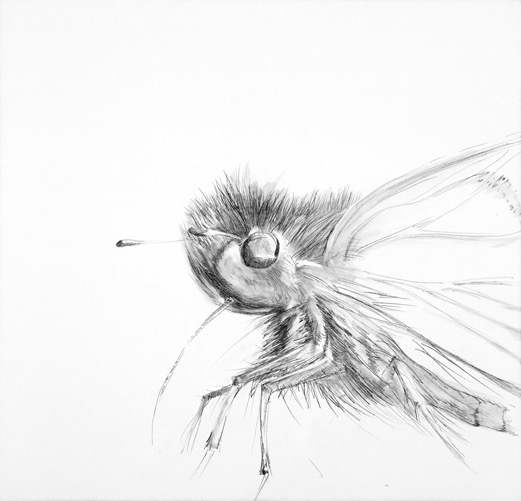
Joseph Gregory Rossano, Zestos Skipper Butterfly, 2014. Pencil on melamine, 18 X 18 inches (actual size before photographic reduction); photo by C.B. Bell III, copyright and courtesy of Joseph Gregory Rossano.


Acknowledgements

Berríos-Torres wishes to acknowledge Joseph Gregory Rossano, Museum of Glass, Bradley Zlotnick, MD, C.B. Bell III, and all Collaborating Scientists:

  • Franco Andreone, PhD, Museo Regionale di Scienze Naturali, Italy (Cape Verde Giant Skink)
  • Neil Burkhead, MS, (Retired) United States Geological Survey (USGS), Southeast Ecological Science Center, USA (Santa Cruz [Monkey Spring] Pupfish)
  • Po-Jen Chiang, PhD Formosan Wild Sound Conservation Science Center Co. Taiwan (Clouded Leopard of Formosa)
  • Neil Cumberlidge, PhD, Chair, IUCN Freshwater Crustacean Specialist Group, USA (Freshwater Shrimp from Java)
  • Jacob J. D. Egge, PhD, Pacific Lutheran University, USA (Scioto Madtom Catfish)
  • Robert E. Gill, Jr. MS, USGS, Alaska Science Center, USA (Eskimo Curlew)
  • Lonnie I. Grassman, PhD Texas A&M University, USA (Clouded Leopard of Formosa)
  • Marc C. Minno, PhD, Eco-Cognizant, Inc. USA (Rockland Meske’s Skipper & Florida Zestos Skipper Butterflies)
  • Rohan Pethiyagoda B.Sc., M.Phil, (Retired) Australian Museum, Australia (Sri Lanka Spiny Eel)
  • Edwin P. (Phil) Pister, MA – Desert Fishes Council, USA
  • Hubert Planton, DVM, Veterinarian and African Wildlife Consultant, France (Western Black Rhino)
  • Claudio Soto-Azat, MV, MSc, PhD, Universidad Andrés Bello, Chile (Northern Darwin Frog)
  • Raquel Vasconcelos, PhD, University of Porto, Portugal (Cape Verde Giant Skink)

References

[1] Ceballos G., Ehrlich P.R., Dirzo R. (2017). Biological Annihilation via the Ongoing Sixth Mass Extinction Signaled by Vertebrate Population Losses and Declines. Proceedings of the National Academy of Sciences Jul, 114 (30) E6089-E6096; DOI: 10.1073/pnas.1704949114.

[2] Ceballos G., Ehrlich P.R., Barnosky A.D., García A., Pringle R.M., and Palmer T.M. (2015). Accelerated Modern Human–Induced Species Losses: Entering the Sixth Mass Extinction. Science Advances 1(5). e1400253DOI: 10.1126/sciadv.1400253.

[3] Dirzo R., Young H.S., Galetti M., Ceballos G., Isaac N.J.B., Collen B. (2014). Defaunation in the Anthropocene. Science 345(6195): pp. 401-406. DOI: 10.1126/science.1251817.

[4] Minno M. C., Daniels J., Jue D. K. (2012). Statement on the Extinction, Decline, and Loss of Butterflies in South Florida. Available at http://www.bio.miami.edu/horvitz/Plant-animal%20interactions%202013/conservation/required%20readings/Statement%20on%20Species%20Loss%20June%202012%20MC%20Minno.pdf. Accessed on 6 December 2018.

[5] Schweitzer D. F., Minno M. C., and Wagner D. L. (2011). Rare, Declining, and P​oorly Known Butterflies and Moths (Lepidoptera) of Forests and Woodlands in the Eastern United States. U.S. Forest Service, Forest Health Technology Enterprise Team, FHTET-2011-01. USDA Forest Service, Morgantown, West Virginia. 517 pp.

[6] Minno M.C. (2010). Butterfly Extinctions in South Florida. American Butterflies 8(3):17. Available at: http://www.naba.org/pubs/ab183/ab183_extinctions.pdf. Accessed on 6 December 2018.

[7] Rossano, J.G. (2015). Preface. In S.I. Berríos-Torres (Ed.), Joseph Gregory Rossano: Vanity (pp.13-16). Tacoma, WA: Museum of Glass.

[8] Lawrimore S. (2015). Swan Song. In S.I. Berríos-Torres (Ed.), Joseph Gregory Rossano: Vanity (pp.21-26). Tacoma, WA: Museum of Glass.

[9] Hebert P.D.N., Penton E.H., Burns J.M., Janzen D.H., and Hallwachs W. (2004). Ten Species in One: DNA Barcoding Reveals Cryptic Species in the Neotropical Skipper Butterfly Astraptes Fulgerator. PNAS 101(41): 14812-14817. www.pnas.org/cgi/doi/10.1073/pnas.0406166101. Accessed on 6 December 2018.

[10] Buckley-Beason V.A. et al. (2006). Molecular Evidence for Species-Level Distinctions in Clouded Leopards. Current Biology 16(23):2371-2376. Available at: http://www.cloudedleopard.org/Documents/Val_CB_2006.pdf. Accessed on 6 December 2018.

[11] Grassman L., Lynam A., Mohamad S., Duckworth J.W., Bora J., Wilcox D., Ghimirey Y., Reza A. & Rahman H. (2016). Neofelis nebulosa. The IUCN Red List of Threatened Species 2016: e.T14519A97215090. http://dx.doi.org/10.2305/IUCN.UK.2016-1.RLTS.T14519A97215090.en. Accessed on 6 December 2018.

[12] De Grave S., Smith K.G., Adeler N.A., Allen D.J., Alvarez F., Anker A., et al. (2015). Dead Shrimp Blues: A Global Assessment of Extinction Risk in Freshwater Shrimps (Crustacea: Decapoda: Caridea). PLoS ONE 10(3): e0120198. doi:10.1371/ journal.pone.0120198. Accessed on 6 December 2018.

[13] Berríos-Torres S.I. (2015). Freshwater Shrimp from Java. Macrobrachium leptodactylus (de Man, 1879a). In S.I. Berríos-Torres (Ed.), Joseph Gregory Rossano: Vanity (pp.52-56). Tacoma, WA: Museum of Glass.

[14] U.S. Fish and Wildlife Service (USFWS). (1976). National Digital Library. Milton B. Trautman Oral History Transcript. Interview with Milton B. Trautman. Interviewer Michael Smith. “Audio Cassette Dub from Reel-to Reel”. July 1976. Available at: http://digitalmedia.fws.gov/cdm/ref/collection/document/id/1031. Accessed on 6 December 2018.

[15] Scioto madtom (Noturus trautmani) 5-Year Review: Summary and Evaluation. U.S. Fish and Wildlife Service, Midwest Region, Ohio Ecological Services Field Office, Columbus, Ohio. Available at: http://www.fws.gov/midwest/endangered/recovery/5yr_rev/pdf/scma5yr2009.pdf. Accessed on 6 December 2018.

[16] King C.C. (1981). Prairies of the Darbie Plains in West-Central Ohio. Stuckie & Reese. Ohio Biological Survey Biology Notes 15:108-127. Available at: http://images.library.wisc.edu/EcoNatRes/EFacs/NAPC/NAPC06/reference/econatres.napc06.cking.pdf. Accessed on 6 December 2018.

[17] NatureServe. Noturus trautmani. The IUCN Red List of Threatened Species 2013: e.T14908A19032932. http://dx.doi.org/10.2305/IUCN.UK.2013-1.RLTS.T14908A19032932.en. Accessed on 6 December 2018.

[18] Murray B. W., McGillivray W. B., Barlow J. C., Beech R. N., and Strobeck C. (1994). The Use of Cytochrome B Sequence Variation in Estimation of Phylogeny in the Vireonidae. The Condor 96:1037-1054. https://sora.unm.edu/sites/default/files/journals/condor/v096n04/p1037-p1054.pdf. Accessed on 17 December 2018.

[19] Johnson N.K. (1995). Speciation in Vireos. I. Macrogeographic Patterns of Allozymic Variation in the Vireo Solitarius Complex in the Contiguous United States. The Condor 97:903-919. https://sora.unm.edu/sites/default/files/journals/condor/v097n04/p0903-p0919.pdf. Accessed on 17 December 2018.

[20] Minno, M.C. (2015). Reflections on the Rockland Meske’s Skipper Butterfly and the Zestos Skipper Butterfly. In S.I. Berríos-Torres (Ed.), Joseph Gregory Rossano: Vanity (pp.52-56). Tacoma, WA: Museum of Glass.

[21] Miller S.E. (2007). DNA Barcoding and the Renaissance of Taxonomy. Proc Natl Acad Sci USA 104(12): pp. 4775-6. Epub 2007 Mar 15. https://www.pnas.org/content/104/12/4775. Accessed on 17 December 2018.

[22] Mora C, Tittensor DP, Adl S, Simpson AGB, Worm B. (2011). How Many Species Are There on Earth and in the Ocean? PLoS Biol 9(8): e1001127. doi:10.1371/journal.pbio.1001127. Accessed on 17 December 2018.

February 7, 2019by Grace Costantino
BHL News, Blog Reel, Campaigns, Her Natural History

Join us for a Women in Natural History Wikipedia Editing Workshop on 13 March!

Wikipedia Editing Workshop

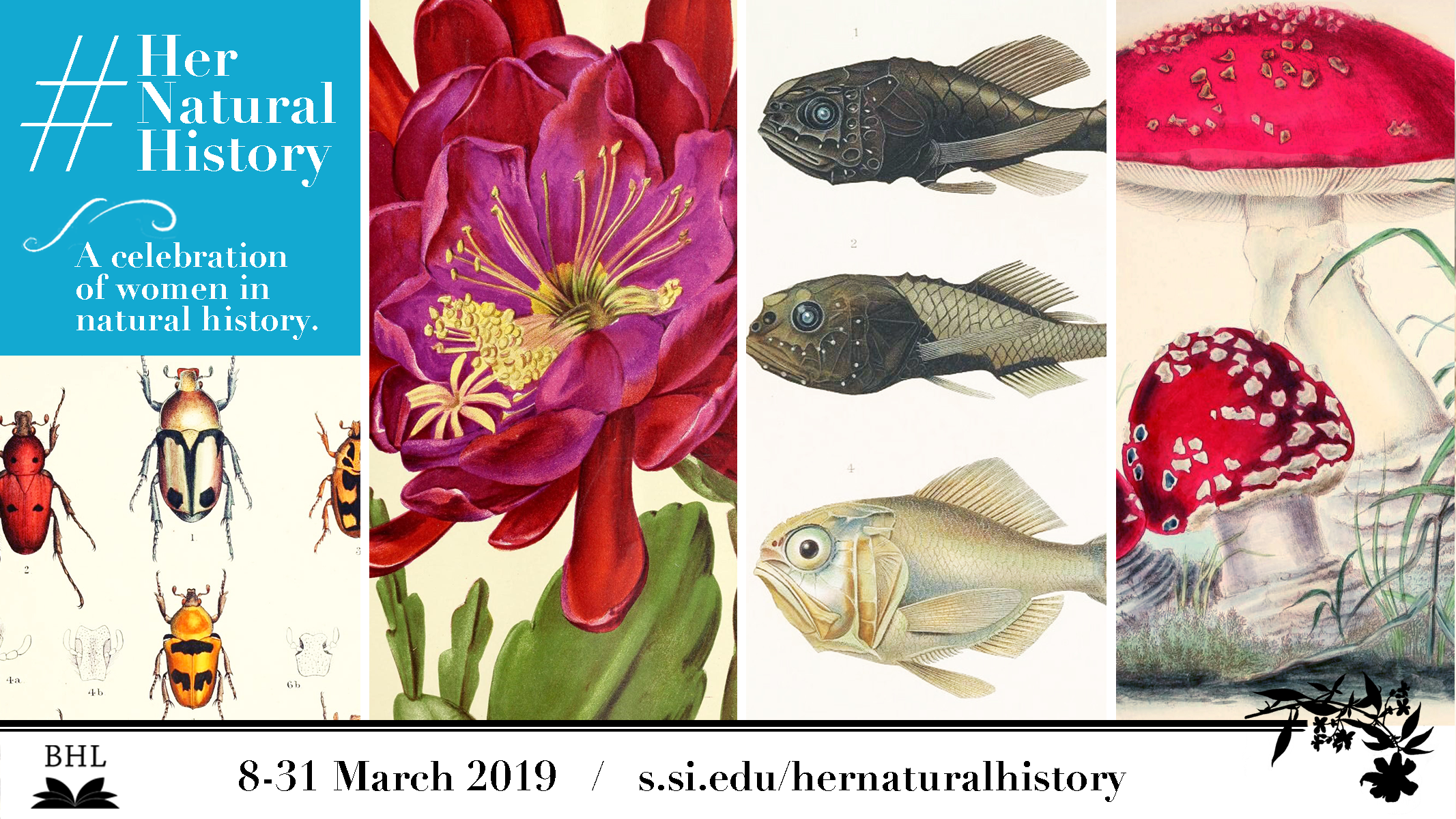
The illustrations featured in this graphic were created by women who will be featured in our Wikipedia Editing Workshop. From left to right: Harriet Scott Morgan, Australian lepidoptera and their transformations, v. 1 (1864); Roberta McIntosh, A monograph of the British marine annelids, v.2, pt.2 (1910); Elizabeth Twining, Illustrations of the natural orders of plants with groups and descriptions, v. 2 (1868); Mary Emily Eaton, Field book of common gilled mushrooms (1928); Elizabeth Gould, The Birds of Europe, v. 1 (1837).

Help us enhance information in Wikipedia about women in natural history during our Wikipedia Editing Workshop on 13 March in celebration of Women’s History Month!

In collaboration with Smithsonian Libraries and with support from Wikimedia DC, we’ll be hosting a Wikipedia Editing Workshop from 10am-2pm ET on 13 March to improve and create Wikipedia articles related to women in natural history. The workshop will be hosted by the Smithsonian Libraries in the National Museum of Natural History Library. There will also be virtual participation options. Registration is required.

See a summary of workshop details and information on how to register below. We hope you’ll join us!

Women in Natural History Wikipedia Editing Workshop

With the help of experienced Wikipedians, attendees will learn to edit Wikipedia and improve or create Wikipedia articles related to women in natural history, drawing on the Biodiversity Heritage Library’s free and extensive online collections as source materials. No editing experience is necessary.

When? 13 March 2019, 10am – 2pm ET
Where? In-person at Smithsonian Libraries (National Museum of Natural History Library, Washington, D.C.) and remotely

Registration Required:

  • Register to attend in-person
  • Register to attend remotely

More Information: Wikipedia Event Page

Attending in person? Laptops are required. Please bring your own. Wikimedia has two laptops to loan. Reserve one by emailing [email protected]. This event is free and open to the public, but space is limited, so register today. Lunch will be provided.

Attending remotely? There will be an option to participate in the editing workshop remotely. For remote participants, the workshop will be live-streamed via YouTube Live here: https://s.si.edu/NHWomenWikiLive. Be sure to register to attend remotely.

This workshop is hosted by the Biodiversity Heritage Library and Smithsonian Libraries with support from Wikimedia DC. It is being produced as part of a larger celebration around women in natural history that BHL and our partners are organizing for Women’s History Month. Stay tuned for more details about additional events and programming coming this March!

February 4, 2019by michelle.underhill

Help Support BHL

BHL's existence depends on the financial support of its patrons. Help us keep this free resource alive!

search

About BHL

The Biodiversity Heritage Library (BHL) is the world’s largest open access digital library for biodiversity literature and archives. BHL operates as a worldwide consortium of natural history, botanical, research, and national libraries working together to digitize the natural history literature held in their collections and make it freely available for open access as part of a global “biodiversity community.”

Join Our Mailing List

Sign up to receive the latest news, content highlights, and promotions.

Subscribe Now

Subscribe to Blog via Email

Enter your email address to subscribe to this blog and receive notifications of new posts by email.

Join 319 other subscribers

Subscribe to Blog Via RSS

Subscribe to the blog RSS feed to stay up-to-date on all the latest BHL posts.

Access RSS Feed

Inspiring Discovery through Free Access to Biodiversity Knowledge.

The Biodiversity Heritage Library makes it easier than ever for you to access the information you need to study and explore life on Earth…for free, anytime, anywhere.


64+ Million Pages of
Biodiversity Literature Online.

EXPLORE

Tools and Services
to Transform Research.

EXPLORE

300,000+
Illustrations on Flickr.

EXPLORE

ABOUT | HARMFUL CONTENT | PRIVACY | SITE MAP | TERMS OF USE