Biodiversity Heritage Library - Program news and collection highlights from BHL
  • Home
  • News
  • Featured Books
    • All Featured Books
    • Book of the Month Series
    • BHL at 20
  • User Stories
  • Campaigns
    • Fossil Stories
    • Garden Stories
    • Monsters Are Real
    • Page Frights
    • Her Natural History
    • Earth Optimism 2020
  • Tech Blog
  • Visit BHL
Home
News
Featured Books
    All Featured Books
    Book of the Month Series
    BHL at 20
User Stories
Campaigns
    Fossil Stories
    Garden Stories
    Monsters Are Real
    Page Frights
    Her Natural History
    Earth Optimism 2020
Tech Blog
Visit BHL
  • Home
  • News
  • Featured Books
    • All Featured Books
    • Book of the Month Series
    • BHL at 20
  • User Stories
  • Campaigns
    • Fossil Stories
    • Garden Stories
    • Monsters Are Real
    • Page Frights
    • Her Natural History
    • Earth Optimism 2020
  • Tech Blog
  • Visit BHL
Biodiversity Heritage Library - Program news and collection highlights from BHL
Blog Reel, Campaigns, Earth Optimism 2020, User Stories

Meadowfoam and Cluster-Lilies: Empowering Research on Rare Plants Through Open Access to Biodiversity Literature

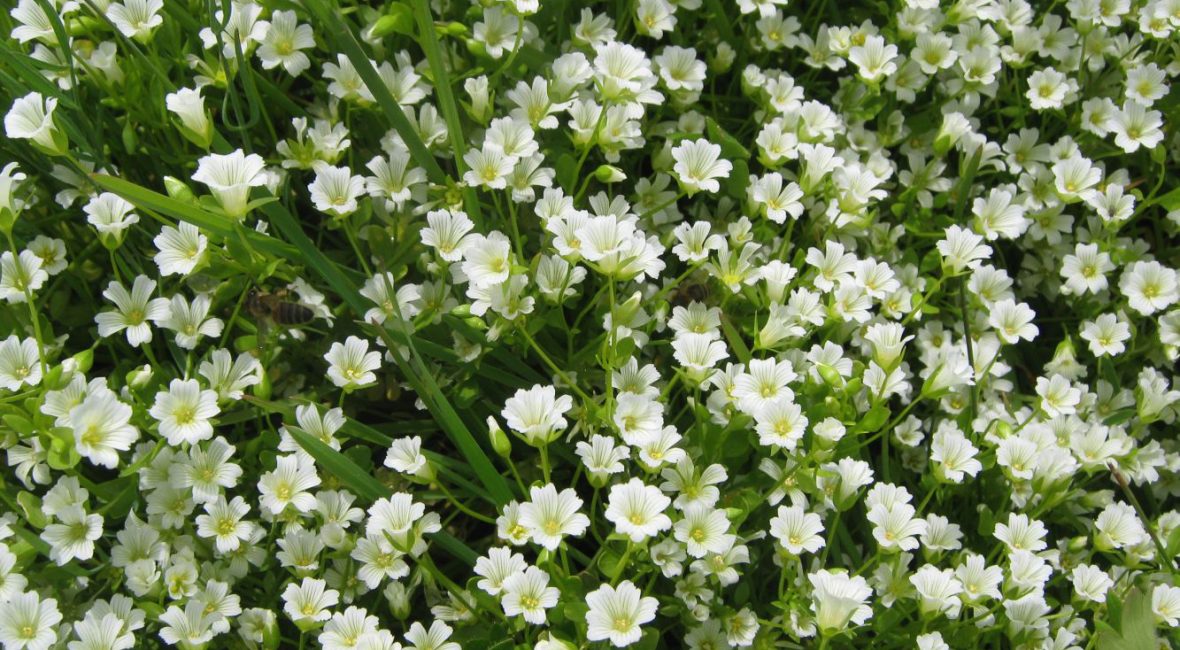
Photo of a field of white flowers

April 2020 marks the 50th anniversary of Earth Day. Organizations around the world have commemorated the occasion by participating in the global Earth Optimism movement — an initiative spearheaded by the Smithsonian to “turn the conservation conversation from doom and gloom to optimism and opportunity”.

Throughout 2020, the Biodiversity Heritage Library (BHL) and our partners are joining the movement by sharing conservation success stories from and made possible by the BHL collection. Follow our blog for conservation stories — past and present — and visit our website for more information and to explore our Earth Optimism book collection.

———————

Photo of a field of white flowers

Baker’s meadowfoam (Limnanthes bakeri), which grows in wet meadow and on the shallow margins of freshwater marsh in Little Lake Valley, Mendocino County, California. Photo credit: Robert Preston.

Little Lake Valley, located in northern California’s Eel River watershed, is home to several thousand acres of wet meadows and riparian woodlands that are habitat for diverse plants and wildlife, including tule elk, many bird species, and gorgeous spring wildflower displays. A landscape formed when sediments from several creeks filled an intermountain valley bounded by faults, the Valley is also home to two rare plants: the North Coast semaphore grass (state-listed as Threatened) and Baker’s meadowfoam (state-listed as Rare).

“The large lowland wetland ecosystem found in the Little Lake Valley, if not unique, is quite rare,” asserts Dr. Robert E. Preston, a Senior Biologist in the Sacramento office of ICF, an international consulting firm. “Most or all of the small interior valleys of California’s North Coast Ranges were long ago converted to agriculture or were hydrologically altered. Moreover, it supports almost half of the known occurrences of Baker’s meadowfoam, including the largest and most extensive population.”

In November 2016, the California Department of Transportation (Caltrans) completed construction of the Willits Bypass Project, a 5.9-mile long bypass of US Highway 101 in Mendocino County. First proposed in 1957, the controversial project, which crosses a corner of Little Lake Valley, raised a variety of environmental concerns due to its impact on endangered species and state and federally regulated resources [1].

Preston served as the lead botanist for the team that prepared the Project’s Mitigation and Monitoring Plan, which was developed and is being implemented by Caltrans to offset the bypass’ impacts on wetlands and rare plants.
“For the past several years, I have spent six to eight weeks each spring collecting data on Baker’s meadowfoam and sampling the vegetation to document progress towards meeting the Project’s habitat restoration and enhancement goals,” explains Preston. “It has been one of my most satisfying projects, because impacts of the Willits Bypass led to the preservation, restoration, and management of large parts of the Little Lake Valley ecosystem.”

man in blue shirt, grey pants and khaki hat in a forest

Rob Preston collecting Brodiaeas growing in serpentine habitat in Northern California. Photo credit: Laurie Preston.

Preston has been an avid student of California flora for nearly 40 years. It has been the focus of his floristic and taxonomic research and career as a consulting botanist. As suggested by his work on the Willits Bypass Project, much of his research focuses on the conservation of rare plants in the state.

“My position as Senior Biologist with ICF provides me with opportunities to travel throughout California to help clients comply with laws and regulations that help conserve rare plants and wetlands,” shares Preston. “This work includes field-oriented studies such as floristic inventories, rare plant surveys, wetlands delineations, and mitigation monitoring. An important aspect of my work is to convey the results of these studies to clients, resource agencies, and the public through many types of environmental documents, including survey reports, Habitat Conservation Plans, Environmental Impact Reports, and other planning documents.”

Preston’s work involves a great deal of taxonomic research, which has led to the discovery and description of several new rare species. For example, he has worked extensively with the genus Brodiaea, commonly known as cluster-lilies, which consists of about 19 species growing mostly in California.

“About half of the species are rare, and several species are state or federally listed as threatened or endangered,” states Preston. “One species I described, Brodiaea matsonii (named for its discoverer, Gary Matson), is known only from two small populations near Redding, California, and is currently being reviewed for state listing as endangered.”

white and purple flower with yellow center

Sulphur Creek brodiaea (Brodiaea matsonii), known from only two small occurrences growing along Sulphur Creek, in Redding, California. Photo credit: Robert Preston.

As Preston explains, taxonomy and conservation go hand-in-hand.

“To preserve biological diversity, species must be identified and named,” asserts Preston. “Since publication of the first edition of The Jepson Manual, the ultimate catalog of the California flora, over six new species per year have been added to the flora, and the rate of new species discovery does not appear to be slowing. Not surprisingly, many of these new species are rare and face various types of threat.”

Taxonomic research, in turn, is dependent on access to historic literature. In order to name, describe, and classify organisms, scientists must understand the scope of biodiversity that has already been described. This is documented within the published record of scientific literature.

Not long ago, however, it was often difficult for scientists to access the literature required for such taxonomic research. Many of the necessary publications were available in only a few libraries globally, requiring expensive and time-consuming trips to holding libraries or weeks to sometimes months of delay waiting on interlibrary loans—if the publication could be shared at all. This was a major impediment to the efficiency of scientific research, greatly hampering progress at a time when the biodiversity and climate crises demand greater speed and efficiency in scientific outputs to inform conservation.

Fortunately, the Biodiversity Heritage Library (BHL) has tackled this challenge head-on and transformed scientific research globally by providing free and open access to this essential literature. Preston has experienced the benefits of BHL’s collections first-hand with his own taxonomic research.

“When I’m conducting a status review for a rare plant, I often find it useful to check the original species description,” shares Preston. “I use BHL primarily to find historic documents with these descriptions.”

Preston first discovered BHL in 2010, while investigating a disagreement over the name of a species that required consultation of the original species description.

“I had been able to find some documents using other sources (Botanicus, Google), but BHL provided a much broader availability of historical resources,” affirms Preston.

Since discovering the Library, Preston has used BHL regularly to support his taxonomic research, including his work on the Brodiaea. For example, in order to determine the correct name for Brodiaea minor, which is endemic to California, Preston needed to confirm the collection location of the type specimen, which had been collected by Theodor Hartweg in 1846. Through BHL, Preston was able to access Hartweg’s account of his collecting trip, published in the Journal of the Horticultural Society of London as “Journal of a Mission to California in Search of Plants.”

“Hartweg recorded the wildflowers, trees, and shrubs associated with his collection, from which I was able to deduce the plant community and pinpoint the collection location to within a few miles,” shares Preston.

While researching the names of other Brodiaea species, Preston discovered that there was confusion over several names arising from a rivalry between two early 19th century English botanists. Materials accessed through BHL helped him unravel this taxonomic mystery.

“In researching the history of this rivalry for my article on ‘How the Brodiaeas Got Their Name,’ published in the journal Fremontia, I found a number of historic sources of information through BHL,” recalls Preston. “Among these was the ‘Monthly Botanical Report,’ a regular feature in the The Monthly Magazine, which chronicled newly described species and horticultural introductions by the botanical community along with snippets of gossip about the botanists themselves.”

Free and open access to biodiversity literature has transformed taxonomic research, which, as Preston’s testimonial demonstrates, is essential to the conservation process.

“‘Species’ and ‘ecosystems’ are constructs that we use to describe and organize the world around us, and taxonomy is how we name and organize those constructs,” asserts Preston. “Names are important, and in fact, a species must be named before it can be legally protected as threatened or endangered.”

scanned page of text from a book

First scientific description of Baker’s meadowfoam (Limnanthes bakeri). J.T. Howell. Leaflets of Western Botany (1943), v. 3(9), pg. 206. Contributed in BHL from the New York Botanical Garden with permission from the California Academy of Sciences.

The identity conveyed in a species name extends well beyond a simple binomial. It also articulates an organisms’ context within its wider ecosystem and its relationship to other species. Understanding this context is vital to the creation of any holistic conservation strategy.

“A species name is also an hypothesis, and our concept of a species can change depending on the data we use to interpret it,” explains Preston. “Because many plant species were described and named in the 18th and 19th centuries, it can be difficult to discern the original author’s concept of the species. We can’t call or email them to find out what they were thinking or how they came to a particular conclusion. The historic literature is the only way we can communicate with our colleagues of the past.”

BHL ensures that anyone, anywhere—from the curator in a major natural history museum to the scientist in a developing country without access to a robust research library or the botanist working from home—has easy access to the information they need to study and conserve life on Earth.

At BHL, we’re Earth Optimists because we know that open access to biodiversity literature empowers scientific research and conservation—and that is a reason to be optimistic.

References

[1] Oakes, Harry and Maureen Doyle. “Willits Bypass Project (US Highway 101) – The Long and Winding Road of Planning, Permitting & Mitigation Implementation and Monitoring.” International Conference on Ecology & Transportation. September 22-26, 2019. Accessed on December 12, 2019. https://icoet.net/program/presentations/60.

August 27, 2020by michelle.underhill
Blog Reel, Campaigns, Earth Optimism 2020

George Perkins Marsh: Man and Nature: Or, Physical Geography as Modified by Human Action

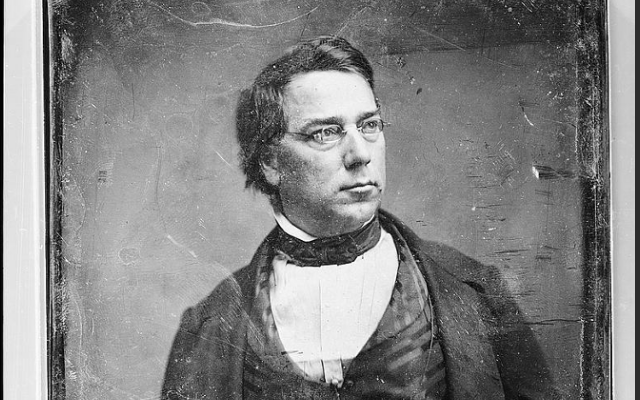
George Perkins Marsh, half-length portrait, head three-quarters to right, with spectacles

April 2020 marks the 50th anniversary of Earth Day. Organizations around the world have commemorated the occasion by participating in the global Earth Optimism movement — an initiative spearheaded by the Smithsonian to “turn the conservation conversation from doom and gloom to optimism and opportunity”.

Throughout 2020, the Biodiversity Heritage Library (BHL) and our partners are joining the movement by sharing conservation success stories from and made possible by the BHL collection. Follow our blog for conservation stories — past and present — and visit our website for more information and to explore our Earth Optimism book collection.

———————

George Perkins Marsh, half-length portrait, head three-quarters to right, with spectacles https://lccn.loc.gov/2004664024

George Perkins Marsh, half-length portrait. ca. 1850. Mathew B. Brady, photographer. Library of Congress, Prints & Photographs Division. https://www.loc.gov/item/2004664024/.

George Perkins Marsh (1801-1882) was a talented linguist, scholar, and diplomat. He served as a member of the U.S. House of Representatives from Vermont’s 3rd district from 1843-1849, and, in 1850, went on to become United States Minister to the Ottoman Empire. In 1861 he was appointed by President Lincoln as the first Ambassador to the Kingdom of Italy, where he served until his death at Vallombrosa in 1882. A Vermonter raised close to the forests of the Adirondack Mountains, Marsh is remembered today chiefly for his role as an early and influential pioneer of the conservation movement in the United States. His book Man and Nature:Or, Physical Geography as Modified by Human Action, published in 1864, is recognized for his early recognition of the interdependency of the natural world, the effects that human actions can have upon it, and the responsibilities that humans bear for those actions.

“The importance of the restoration of disturbed harmonies…” (Preface)

The publication of Marsh’s book followed a celebrated lecture which he gave before the Agricultural Society of Rutland County, Vermont in 1847. This lecture is often pointed to as a remarkably early warning about humankind’s ability to affect the climate of the Earth. What stands out in Marsh’s book is his argument that human activities can have far-reaching effects far beyond what is immediately observable. Felling a forest, far beyond just cutting trees, can disturb an entire ecosystem. In his Preface, Marsh advocates for the “restoration of disturbed harmonies” through a combination of wilderness preservation and enlightened practices for forest management.

“But man is everywhere a disturbing agent. Wherever he plants his foot, the harmonies of nature are turned to discords…” (pg. 36)

Man and Nature looks at various ways man has transformed the environment, affecting both major and minor components of the earth’s overall systems in comprehensive and unforeseen ways. Forests, rivers and waterways, sand dunes and soil are all interconnected in a greater ecological system that supports life on the Earth. Marsh paints a picture of overall interconnection between living things: trees, scrub, sea cows, worms, wild trout and “minute organisms.”

Still, it should be noted that Marsh was not categorically opposed to human actions that produce change. Rather, he was a pioneering advocate for sustainable development and of well-considered improvements based on observation and scientific knowledge. His chapter on Geographical Changes expresses mixed admiration for some engineering feats such as the Suez Canal, but in general his assessments of the long-term effects of human improvements to nature carried out in Europe, and even in the Ancient World, are mixed.

“I have spoken of the needs of agriculture as a principal cause of the destruction of the forest…” (pg. 325)

Marsh also discusses agricultural cattle and the ways in which “the extent of cleared ground required for agriculture use depends very much on the number and kinds of cattle bred.” When heritage cattle, traditionally foragers able to survive in rugged environments, are replaced with less robust hybrids that must be sheltered and fed with cultivated cereal grasses, there is a heavy toll on the environment. In addition, large-scale agricultural operations were already in place in Marsh’s time, with cotton, tobacco and feed grains for cattle taking up large swathes of cleared and tilled land. This monocropping trend continued into the 20th century; by 1950, the number of farms was the smallest ever enumerated by the Census, while the acreage was the largest on record.

View of the pogue, looking west and illustrating the relation of this mountain pond to the surrounding forest slopes of the Mt. Tom Forest. Marsh-Billings-Rockefeller National Historical Park, boyhood home of George Perkins Marsh. Historic American Landscape Survey, Library of Congress Prints & Photographs Division. image link: https://cdn.loc.gov/service/pnp/habshaer/vt/vt0100/vt0131/color/218497cv.jpg Record link: https://www.loc.gov/item/vt0131/

View of the pogue, looking west and illustrating the relation of this mountain pond to the surrounding forest slopes of the Mt. Tom Forest. Marsh-Billings-Rockefeller National Historical Park, boyhood home of George Perkins Marsh. Historic American Landscape Survey, Library of Congress Prints & Photographs Division. Image link: https://cdn.loc.gov/service/pnp/habshaer/vt/vt0100/vt0131/color/218497cv.jpg. Record link: https://www.loc.gov/item/vt0131/.

“With the disappearance of the forest, all is changed” (pg. 214)

Marsh also looks to the influence of the forest on water systems and the many ways in which forests regulate natural springs and waterways. Cleared land, he writes, especially arable land, is prone to flooding and erosion – events that would naturally be controlled by forest management. Forests control flooding naturally: “the surface of a forest in its natural condition can never pour forth such deluges of water as flow from cultivated soil.” Flooding, soil compaction, aridity, runoff, erosion: all are deleterious effects of deforestation and interference with natural processes.

He also discusses the influence of the forest on temperature; cleared land is warmer than forest and “we must conclude that the forests in Northern America exert a refrigerating influence”. Forests are made up not only of trees, but of mosses and fungi, among other organisms, as well as animals, soil and water, and these all play a role in regulating moisture and temperature.

“It is time for some abatement in the restless love of change which characterizes us, and makes us almost a nomadic rather than a sedentary people. We have now felled forest enough everywhere, in many districts far too much. Let us restore this one element of material life to its normal proportions, and devise means for maintaining the permanence of its relations to the fields, the meadows, and the pastures, to the rain and the dews of heaven, to the springs and rivulets with which it waters the earth.” (pg. 328)

This impassioned plea, central to the chapter titled Instability of American Life, and to the entire book itself, follows a lengthy, sometimes rambling but painstakingly detailed, investigation of the interconnectedness of life on Earth. Marsh’s chief message is his repeated call for humans to accept their responsibilities as stewards of the Earth, and especially as stewards of the forests. He calls for humans to re-examine their relationship with nature and their too-often destructive actions.

Marsh’s advocacy for a new understanding of forestry systems and implementation of human responsibility in forest management practices resulted in Marsh’s work contributing greatly to the conservation movement and the creation of one of the earliest forest preserves in America, Adirondack Park. His book ends with the statement that there is nothing small in nature:

“…in the vocabulary of nature little and great are terms of comparison only; she knows no trifles, and her laws are as inflexible in dealing with an atom as with a continent or planet.” (pg. 548)

George P. Marsh, three-quarter length portrait, standing, facing left, holding hat Brady, Mathew B., approximately 1823-1896, photographer. [George P. Marsh, three-quarter length portrait, standing, facing left, holding hat] [graphic] / Brady, N.Y. [between 1855 and 1865, printed later] https://lccn.loc.gov/96509698

Hon. George Perkins Marsh of Vermont. Between 1855 and 1865. Library of Congress Prints & Photographs Division. https://www.loc.gov/item/2017895581/.

George Perkins Marsh family. Marsh seated beside a table with tablecloth, on the left, his head turned to the right, wearing spectacles, his wife seated on the right, her hand on his, her head slightly to the left, both holding papers; Caroline's sister, Lucy Crane, standing behind and between them, her hands on her brother-in-law's shoulder, her head three-quarters to the right] https://lccn.loc.gov/2004664023

George Perkins Marsh family. Marsh seated on the left, his wife, Caroline (Crane) Marsh, seated on the right; Caroline’s sister, Lucy Crane, standing behind and between them. Between 1844 and 1849. Mathew B. Brady, photographer. Library of Congress Prints & Photographs Division. https://www.loc.gov/item/2004664023/.

More information

George Perkins Marsh correspondence, 1851. LCCN: https://lccn.loc.gov/mm79005905.

William Slade correspondence, 1845-1848, LCCN: https://lccn.loc.gov/mm79001310.

Report made under authority of the legislature of Vermont, on the artificial propagation of fish, by George P. Marsh. LCCN: https://lccn.loc.gov/06012522. BHL: https://www.biodiversitylibrary.org/bibliography/34497.

August 20, 2020by michelle.underhill
BHL News, Blog Reel

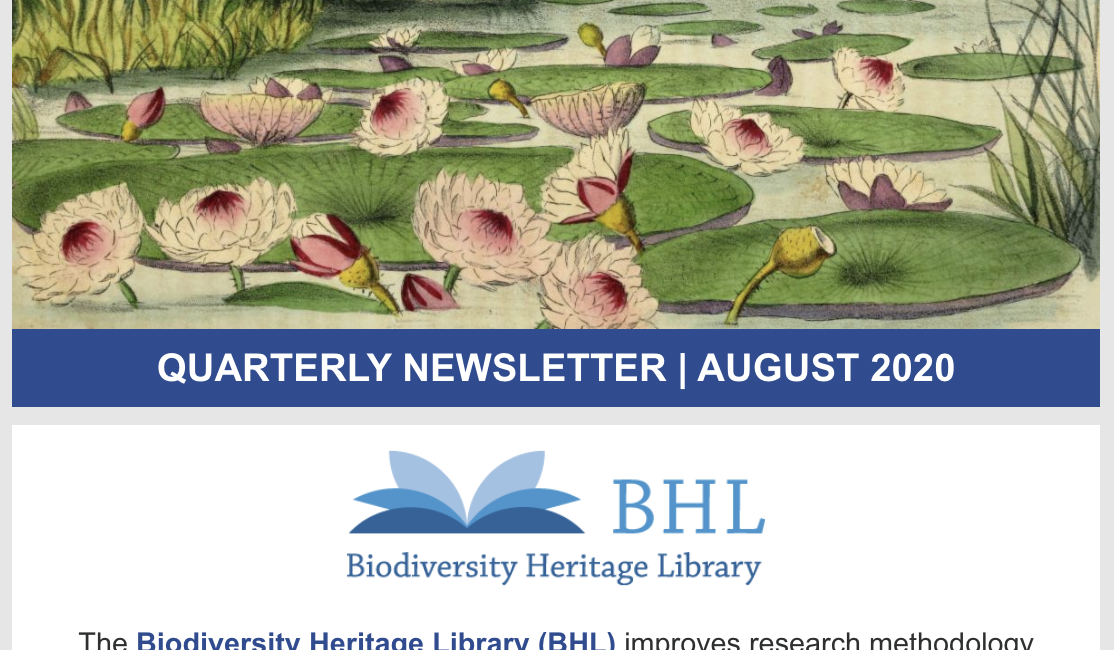
BHL Quarterly Newsletter (August 2020) Now Available!

Screenshot of the August 2020 BHL quarterly newsletter

Screenshot of the August 2020 BHL quarterly newsletter

The world has changed dramatically over the past few months. These changes have profoundly impacted our personal and professional lives and altered the way we do our jobs, access information, share ideas, interact with friends and colleagues, and think about the future. As we face these unprecedented challenges together, we at BHL are committed to ensuring continued, free access to information and resources that empower research, education, creativity and discovery for everyone—no matter where you are.

In our latest newsletter, we share some of the ways we have been working to improve the Library over the past few months, such as deploying a new taxonomic name finding tool and making our records available in WorldCat. Additionally, with many of our partners now operating in a telework environment, we have focused on projects to improve our digital collections remotely, such as uploading born digital content, improving collection metadata, and building our image collections on Flickr.

Check out our latest quarterly newsletter to learn more.

Be sure to subscribe to our mailing list to keep up to date with all the latest BHL news.

August 17, 2020by michelle.underhill
Blog Reel, User Stories

Decoding Palms: Deciphering Plant Mysteries One Publication at a Time

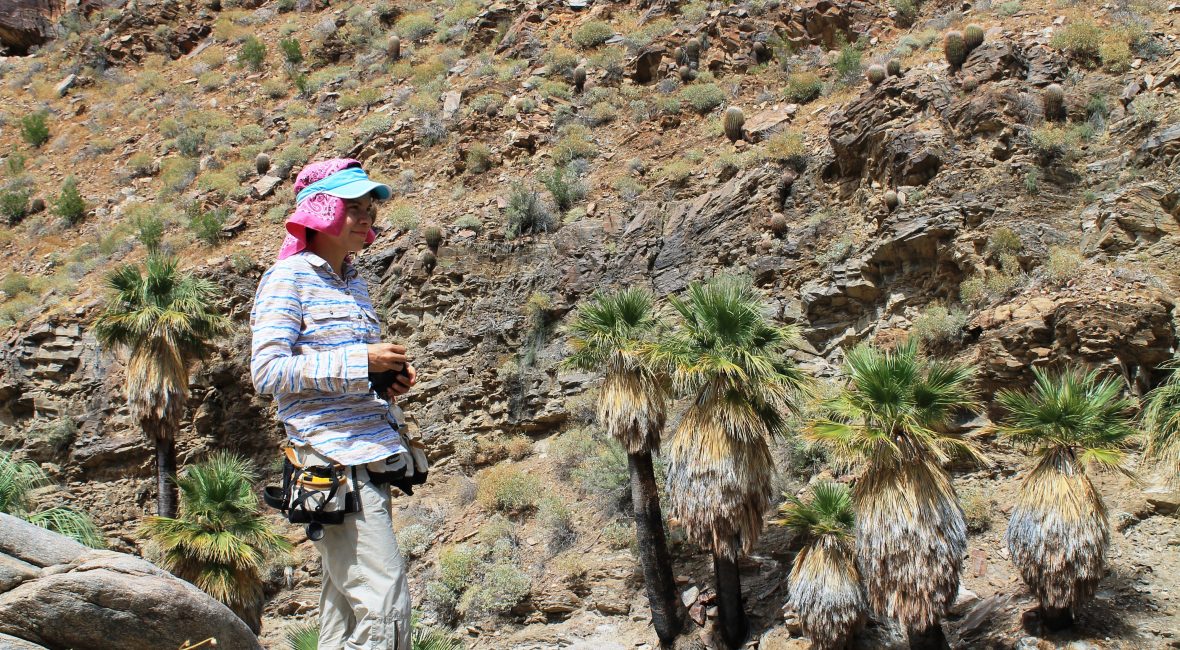
woman in a hat standing in the desert looking at palm trees

When you think of Los Angeles, there are some iconic things that come to mind: the Hollywood Sign, the Santa Monica pier, the Hollywood Walk of Fame — and palm trees. Call up a photo of Los Angeles’ cityscape, and chances are you’ll see palm trees. They are ubiquitous throughout the city, growing along major boulevards and picturesque residential streets, populating parks and framing beachside boardwalks.

While today it’s hard to conjure up imagery of Los Angeles without these towering plants, that was not always in the case. Before the end of the 19th century, Los Angeles was a scrubland desert, no palms in sight. As developers moved into the area in the late 1800s, they wanted to find a way to make the desert more appealing. Palm trees, with their tropical and exotic associations, were just the ticket, especially since they are relatively easy to transport (they have a small, dense root ball rather than elaborate root systems) and thrive so long as they have sun and water.

Developers planted them everywhere, and they became a staple of Southern California [1].

black and white photo of palm trees

California fan palm (Washingtonia filifera) transplanted from Palm Canyon (outside Palm Springs, California) to San Marino (Los Angeles County, California). Hertrich, William. “Washingtonia filifera”. Lasca Leaves, 1:1 (1950). Contributed in BHL from the Missouri Botanical Garden, Peter H. Raven Library with permission from The Arboretum Library at the Los Angeles County Arboretum and Botanic Garden. CC-BY-NC-SA.

Given their strong association with the area, you might be surprised to learn that there is only one species of palm native to the entire state of California — the California fan palm (Washingtonia filifera), native to the southwestern United States and northwest Mexico. It is one of two recognized species in the genus Washingtonia, the other being the Mexican fan palm (Washingtonia robusta), native to western Sonora and Baja California Sur in northwestern Mexico. Both are among the palm tree species found in L.A., with the Mexican fan palm in particular reaching exceptional heights throughout the city.

black and white photo of palm trees

A grove of Mexican fan palms (Washingtonia robusta) “adjoining the historical section at the Los Angeles State and County Arboretum.” Deardorff, David. “Washingtonia Robusta: the Mexican fan palm.” Lasca Leaves, 26:2 (1976). Contributed in BHL from the Missouri Botanical Garden, Peter H. Raven Library with permission from The Arboretum Library at the Los Angeles County Arboretum and Botanic Garden. CC-BY-NC-SA.

Dr. Lorena Villanueva-Almanza, outreach coordinator at the California Botanical Society, specializes in the Washingtonia genus. As a plant taxonomist, her work focuses on understanding plant relationships and the many ways and names under which plants have been described across time — something she is currently engaged in for the Washingtonia. BHL is an invaluable resource for this work.

“Sometimes, the same plant will have multiple names, something we know as a synonym. In order to clear the confusion, I must look for the original publications — the protologues — in which they were first described,” explains Villanueva-Almanza. “The protologue gives me information about when a taxon was first published, traits that can help me determine the plants that I am working on, and if any type specimens were designated. BHL is a great resource for finding these protologues and, ideally, a solution to taxonomic and nomenclatural problems.”

woman with brown hair and purple shirt in a lab

Dr. Lorena Villanueva-Almanza after arriving at her lab from a trip to the Baja Peninsula. Photo Credit: Javier Sabines.

Villanueva-Almanza has been studying plant taxonomy and systematics for twelve years. She first discovered BHL in 2011, while working as a research assistant for the Flora of the Tehuacán Valley Flora project in Mexico City. Since then, she has used the Library for all of her nomenclatural research. She refers to it daily in her work to identify Washingtonia synonyms and trace type specimens, downloading relevant pages as well as images of possible types in cases where these might be illustrations rather than herbarium specimens.

woman cutting down leaves from a palm tree

Villanueva-Almanza cutting a leaf from a Brahea armata palm at Cañón Berrendo, Northern Baja Peninsula. Photo Credit. Javier Sabines.

Being a plant taxonomist is rather like being a detective, explains Villanueva-Almanza. Working out the often convoluted taxonomic history of a species or genus means digging into historic texts and protologues and piecing together information across multiple centuries and languages. BHL makes it easy for her to locate relevant information with its full text “search inside” functionality and author searches that often lead to new publication sources.

“BHL provides invaluable material that sparks my detective skills,” attests Villanueva-Almanza. “It does a great job cross-linking data. I have found more information than I was originally looking for, allowing me to piece together the botanical history of Washingtonia palms with newly discovered information.”

One such example of the kind of unexpected discovery made possible thanks to BHL relates to the original collecting location for the Mexican fan palm (Washingtonia robusta). While taxonomists knew that W. robusta was described from a cultivated palm, it has long been accepted that it was first collected in Baja California Sur. However, after studying a passage published in Möllers deutsche gärtner-zeitung(1888) in which Hermann Wendland — the author of W. robusta’s original species description — discussed the specimen that was sent to him by Louis van Houtte in the spring of 1883 for identification, and upon which his description was based, Villanueva-Almanza realized that this assumption was baseless.

“I remember the awe I felt when I read, translated, and finally realized the importance of Wendland’s notes on W. robusta,” recalls Villanueva-Almanza. “Wendland admits that he does not know where the specimen was collected, which means we do not know its original location. I knew that what I had found would change the way we had interpreted the genus Washingtonia.”

black and white illustration of a palm

Illustration of Washingtonia robusta published along with Hermann Wendland’s 1888 passage discussing the original specimen sent to him for determination, and upon which the original species description was based. Wendland, Hermann. “Washingtonia robusta H. Wendl.” Möllers Deutsche Gärtner-Zeitung, v. 3 (1888). Contributed in BHL from University Library, University of Illinois Urbana Champaign.

While unraveling taxonomic mysteries may sometimes simply lead to more mysteries, Villanueva-Almanza is up to the challenge. By providing easy access to historic texts through a single, convenient online portal, BHL allows her to make discoveries that eluded researchers of the past who may not have had access to such a breadth of material.

“Sometimes, finding a solution becomes a bigger challenge than I anticipated. However, I am particularly drawn to old mysteries,” affirms Villanueva-Almanza. “BHL has been a crucial part of my research — first, by acknowledging the value of historical publications and second, by making them accessible.”

woman in a hat standing in the desert looking at palm trees

View of Palm Canyon, where Villanueva-Almanza conducted her fieldwork for her dissertation on Washingtonia palms. Photo Credit. Marta Ruiz.

We’re proud to know that BHL is living up to its vision of “Inspiring discovery through free access to biodiversity knowledge.” And while the original collecting location for Washingtonia robusta may still be a mystery, there’s no mystery about where you’re sure to see a Mexican fan palm today — towering over the streets of Los Angeles.

References

[1] Nosowitz, Dan. 2018. “Why Are There Palm Trees in Los Angeles?” Atlas Obscura, July 6. Accessed on 8 July 2020. https://www.atlasobscura.com/articles/why-are-there-palm-trees-in-los-angeles

August 13, 2020by michelle.underhill
Blog Reel, Campaigns, Earth Optimism 2020

A Forest of Knowledge: Richard Evans Schultes and the Rise of Ethnobotany

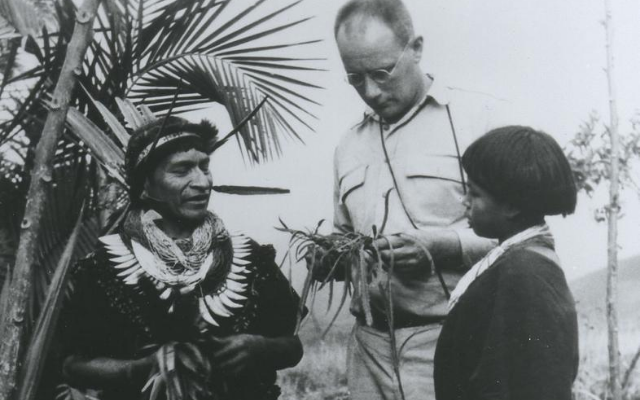
black and white photo of three people standing in a jungle looking at plant specimens

April 2020 marks the 50th anniversary of Earth Day. Organizations around the world have commemorated the occasion by participating in the global Earth Optimism movement — an initiative spearheaded by the Smithsonian to “turn the conservation conversation from doom and gloom to optimism and opportunity”.

Throughout 2020, the Biodiversity Heritage Library (BHL) and our partners are joining the movement by sharing conservation success stories from and made possible by the BHL collection. Follow our blog for conservation stories — past and present — and visit our website for more information and to explore our Earth Optimism book collection.

———————

black and white photo of three people standing in a forest looking at plant specimens

Richard Evans Schultes (center) with Salvador Chindoy (left), a renowned Kamëntsá healer from Sibundoy Valley of Colombia. The identity of the individual on the right is not recorded. The year of the photo is unknown, but is likely in the 1940s based on Schultes’ age. Photo courtesy of the Archives of the Economic Botany Library of Oakes Ames, Harvard University.

The conservation movement today encompasses more than the physical management of habitat to preserve plants and animals. Richard Evans Schultes (1915-2001) epitomized the modern conservationist by coupling his taxonomic work on plants with research on the botanical knowledge and culture of local people. Known as the “father of ethnobotany”, Schultes spent almost fourteen years deep within the rainforests of the Amazon learning from multiple Indigenous tribes about their languages, medicines, and relationships to plants.

“Richard Evans Schultes was an extraordinary ethnobotanist who devoted a large part of his professional life to studying the flora of the Amazon as well as of Asia and Europe,” says Felipe Cárdenas-Arroyo, a Colombian archaeologist researching Schultes. “For him, forests are like great libraries where knowledge is stored and available for those willing to read it. He admired and respected the Amazonian Natives because they know how to read in this library and have been its keepers for centuries. Burning down the Amazon rainforest to make room for cattle is like burning down a library to make room for a parking lot, and Schultes feared that with today’s rate of destruction ‘climax forests will turn into scrub vegetation,’ never to regain their original state” [1].

Schultes was inspired as a youth to pursue botanical research in remote areas by the book Notes of a Botanist on the Amazon & Andes by the botanist Richard Spruce.

title page of "notes of a botanist on the amazon & andes"

Title Page. Spruce, Richard. Notes of a botanist on the Amazon & Andes. v. 1 (1908). Contributed in BHL from Smithsonian Libraries.

Schultes’s early research focused on peyote in the American Southwest and intoxicating mushrooms in southern Mexico. He collected specimens, identified species, and recorded local knowledge of medicinal uses and experiences.

page from a handwritten notebook

Page 10. Schultes, Richard Evans. Field notebook : Mexico, 1938. Contributed in BHL from Harvard University Botany Libraries.

After receiving his doctorate from Harvard University in 1941, Schultes began research on curare in the Amazon with the help of a 10-month travel grant from the National Research Council. He took the opportunity to collect specimens of many plants and discuss local uses with Indigenous communities.

He was in the field when the United States entered World War II and immediately joined the war effort. He was told to remain in the Amazon to try to find sources of much-needed rubber for the Allied Forces. He continued to work for the United States Department of Agriculture for the next twelve years, collecting approximately 3,500 specimens of the Hevea rubber tree. During his career in the Amazon, Schultes would collect over 24,000 botanical specimens.

page from a handwritten notebook

Pages 2-3. Schultes, Richard Evans. Hevea yield notebook : Colombia, 1944. Contributed in BHL from Harvard University Botany Libraries.

Schultes returned to New England in 1953 and became the curator of the Oakes Ames Orchid Herbarium at Harvard University. He continued to travel extensively to the Amazon while holding a number of positions at the Harvard University Botanical Museum and was a Harvard faculty member until his retirement as Professor Emeritus in 1985.

Schultes himself defined ethnobotany as “the complete registration of the uses of and concepts about plant life in primitive societies… comprising aspects of botany, anthropology, archeology, plant chemistry, pharmacology, history, geography, and sundry other tangential fields of the sciences and arts” (Kahn, 1992). His notebooks demonstrate his commitment to documenting knowledge beyond biology. Indigenous languages are captured on the pages, including place names and common words.

page from a handwritten notebook

List of rivers and plants in several local languages. Schultes, Richard Evans. Field notebook : Colombia, 1952. Contributed in BHL from Harvard University Botany Libraries.

page from a handwritten notebook

Common phrases. Schultes, Richard Evans. Field notebook : Colombia, 1952 February-March. Contributed in BHL from Harvard University Botany Libraries.

Schultes’s maps, lists, and recipes are a trove of information about difficult to access areas.

page from a handwritten notebook

Detailed river map. Schultes, Richard Evans. Field notebook : Colombia, 1952 February-March. Contributed in BHL from Harvard University Botany Libraries.

page from a handwritten notebook

Plant list. Schultes, Richard Evans. Field notebook : Rio Negro and Rio Vaupés, Amazonas, Brazil, 1947 September-November. Contributed in BHL from Harvard University Botany Libraries.

page from a handwritten notebook

Making coca with an aromatic resin for flavouring. Schultes, Richard Evans. Field notebook : Colombia, 1952 February-March. Contributed in BHL from Harvard University Botany Libraries.

Throughout his travels, Schultes documented the local medicinal uses of hundreds of plants.

page from a handwritten notebook

Medicinal uses of plants by the Inga and Kamëntsá people of Colombia. Schultes, Richard Evans. Field notebook : Colombia, 1942 February-April. Contributed in BHL from Harvard University Botany Libraries.

Schultes was well known for being respectful of Indigenous communities. He immersed himself in the cultures, eating what was offered and participating in rituals.

“I have tried several of the Indian hallucinogens, in part because the Indians consider them sacred plants and it would have been an unpardonable rudeness to refuse them when the Indians were kind enough to offer them to me during a ceremony” (Schultes, 1994).

Schultes advocated for the conservation of habitat, species, and Indigenous knowledge but he also understood the practical and economic aspects. He encouraged research into the chemistry and uses of plants as pharmaceuticals, recognizing that the vast habitat destruction and cultural loss occurring in the Amazon could delay the development of important medicines. (An overview of the many medicinal uses of plants is central to Schultes’s 1986 paper “The Reason for Ethnobotanical Conservation”.)

page of printed text

Page 2. Schultes, Richard Evans. “De Plantis Toxicariis E Mundo Novo Tropicale Commentationes XXVI: Ethnopharmacological Notes On The Flora Of Northwestern South America.” Botanical Museum Leaflets, Harvard University. v. 28 (1980), pgs. 1-45. Contributed in BHL from Missouri Botanical Garden with permission from Harvard University Herbaria. CC-BY-NC-SA.

In a 1994 article, he writes:

“…in many regions of the Amazon Basin, native plant and animal species are being destroyed faster than can be recorded, classified and studied…Why not regard the Indians in the Amazon Basin as a kind of phytochemical rapid-assessment team already on the ground, which could help locate the most promising plants for chemical and pharmacological evaluation?…The Indians’ botanical knowledge is disappearing even faster than the plants themselves” (Schultes 1994).

Schultes is regarded as one of the founding fathers of the international conservation movement, having advocated for conservation in developing areas since the 1940s. He mentored many graduate students, infusing them with the same respect and concern for the preservation of natural environments and local knowledge.

Schultes contributed to over 350 publications and served on editorial boards for several scientific periodicals. He also wrote and spoke to lay audiences on many occasions, always emphasizing the need to study and preserve Indigenous botanical knowledge, concluding:

“It is therefore our responsibility – nay, our duty – to put ourselves in the forefront of ethnobotanical conservation. We cannot allow such precious funds of knowledge to become extinct” (Schultes 1988b).

“Unless strong conservation measures are strictly enforced, many species and even some genera may become extinct. It is vitally important to preserve as many sources of germplasm as possible for the benefit of future generations” (Schultes 1990).

page of printed text

Schultes, Richard Evans. “Gifts of the Amazon Flora to the World.” Arnoldia, v. 50(2), pgs. 21-33. Contributed in BHL from Harvard University Botany Libraries with permission from The Arnold Arboretum of Harvard University. CC-BY-NC-SA.

Schultes was the recipient of the Tyler Prize for Environmental Achievement and the World Wildlife Fund Gold Medal in 1984, and the Harvard Medal and the Linnean Medal in 1992. Three genera and over 120 species bear his name. In 1986, the government of Colombia designated a 2.2 million acre protected area as “Sector Schultes” in his honor.

“Richard Evans Schultes, the great 20th century ethnobotanist, was deeply concerned with the fate of the tropical forests of the Earth,” states Felipe Cárdenas-Arroyo. “His work in search of medicinal plants was an important contribution to humanity. But in order for this work to continue, he knew that forests and the Natives who inhabit them need to be protected. Well aware that conserving both would guarantee a healthy planet for all of us, he voiced his concern for the future of the tropical forests and its people” [1].

Additional Information

The Richard Evans Schultes papers, containing Schultes’s field notes, photographs and botanical records, are held by the Botany Libraries in the Harvard University Herbaria.

Contained within the digitized materials in BHL are published articles and papers, field notebooks, lists of collected and identified plants, maps, and photographic materials. The Harvard University Herbaria contains many of the specimens collected by Schultes from North and South America.

For an interactive geospatial exhibit of Schultes’s work in Mexico and the Amazon, see The Amazonian Travels of Richard Evans Schultes.

References

Amazon Conservation Team. The Amazonian Travels of Richard Evans Schultes. https://www.banrepcultural.org/schultes/

Kahn, E. J. “Jungle Botanist [Richard Evans Schultes]”. The New Yorker. v. 68: pp. 35-58. 1992.

Sequeira, Luis. “Richard Evans Schultes : January 12, 1915-April 10, 2001”. National Academy of Sciences (U.S.). Biographical Memoirs ; v. 88. Washington, D.C.: National Academy Press, 2006.

Schultes, Richard. “Burning the Library of Amazonia.” Sciences 34, no. 2, pp. 24. 1994.

Schultes, Richard Evans. “Ethnopharmacological Conservation: A Key to Progress in Medicine.” Acta Amazonica, vol. 18, no. suppl. 1-2, pp. 393–406. 1988a.

Schultes, Richard Evans. “Gifts of the Amazon Flora to the World”. Arnoldia, vol. 50, no. 2, pp. 21-33. 1990.

Schultes, Richard Evans. “Primitive Plant Lore & Modern Conservation”. Orion Nature Quarterly ; v. 7, No. 3, Summer 1988. New York, NY: Myrin Institute, 1988b.

Schultes, Richard Evans. The Reason for Ethnobotanical Conservation. Bulletin of the Botanical Survey of India, v. 28, no.1-4, 1986, pp. 203-224. Calcutta, India: Director, Botanical Survey of India, 1986.

Tyler Prize for Environmental Achievement. https://tylerprize.org/laureates/past-laureates/1987-tyler-laureates/

[1] Cárdenas-Arroyo, Felipe. January and February 2020. Email exchange with Diane Rielinger.

August 11, 2020by michelle.underhill
Blog Reel, Campaigns, Earth Optimism 2020, Her Natural History

The Conservationism of a Nature Educator: Anna Botsford Comstock

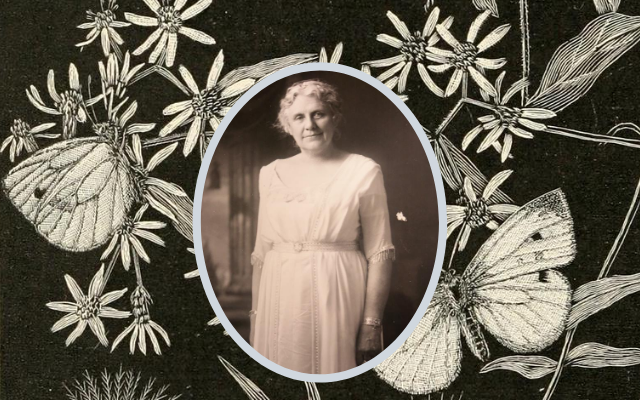
black and white portrait of a woman in a white dress atop a black and white illustration of flowers and butterflies

April 2020 marks the 50th anniversary of Earth Day. Organizations around the world have commemorated the occasion by participating in the global Earth Optimism movement — an initiative spearheaded by the Smithsonian to “turn the conservation conversation from doom and gloom to optimism and opportunity”.

Throughout 2020, the Biodiversity Heritage Library (BHL) and our partners are joining the movement by sharing conservation success stories from and made possible by the BHL collection. Follow our blog for conservation stories — past and present — and visit our website for more information and to explore our Earth Optimism book collection.

———————

Anna Botsford Comstock c1914 StClair RMC.jpg

Anna Botsford Comstock, a naturalist educator who championed childhood curiosity in nature. The conservationism of Comstock fueled the impetus of her work for children to understand nature and take ownership of their environment. Her’s was to celebrate one’s kinship with the earth by being a positive ecological participant of nature, and not just a spectator. Photo taken by Karen Penders St. Clair at Division of Rare and Manuscript Collections at Cornell University Library.

Anna Botsford Comstock (1854-1930) held a significant role as a proponent of nature education at Cornell University in Ithaca, New York, at the turn of the 20th century. Comstock was born in New York State, the only child to Quaker parents at the edge of the pioneer era. The doctrine of her parents, Marvin and Phoebe Botsford, was one of appreciating a higher creation in all things natural. It is in this philosophy in which a young Comstock was raised, and it was her mother who particularly influenced her child’s curiosity, and knowledge, of the surrounding natural wonders of the world.

Comstock was a voracious reader and was deeply influenced by the romanticism writings popular in her youth. Her own nature writing mirrors the technical and collective philosophical influences of Ralph Waldo Emerson (1803-1882), James Russel Lowell (1819-1891), and William Wordsworth (1770-1850) (she always carried Wordsworth’s Prelude (1850) in her travels). However, it was Comstock’s admiration of the writing of Henry David Thoreau (1817-1862), with his detailed notes, language, and observations, which guided Comstock’s hand in the nature lessons she wrote and the nature literature courses she lectured.

The conservationism of Anna Botsford Comstock lies not in one particular focus of activism to preserve a particular aspect of our natural world.  She shared in inspiring the collective belief of her time that it was crucial our imprint as humans on our wild and natural landscapes be understood. Instilling this love and appreciation of the natural world around us, and to know that we also play a crucial part as participants, is the capstone achievement of Comstock’s work.

Comstock’s “Nature is full of surprises” approach appealed to children directly, as it did with her contemporaries. She believed that “future citizens” should be set on inheriting our Earth by learning of its environments, and of the interactions of the living systems therein. She shared with her peers that earthly care was a moral responsibility to be built upon with each successive generation. Comstock emphasized that children should discover their environment through the use of their five senses and careful observation. Through their own individual investigations, the child could thereby cultivate a sense of connection and responsibility for our Earth. Comstock expressed, “It is a great asset to the conservation of our natural resources to have the children of our land be interested in the wild life in such a chummy and intimate manner.”

Early in her career, Comstock captured the range of plant life with dozens of Cornell Rural School curricula leaflets (in active publication from 1896 to 1956) through The New York State College of Agriculture at Cornell University. The topics in her botanical leaflets included seeds, wildflower study, cultivated and flowerless plants, and trees. Additionally, through her artistic association with the entomological research and writings of her husband, John Henry Comstock (1849-1931), founder of the department of entomology at Cornell University, Comstock broadened her educational base to include insects.

Penning her detailed nature articles and lesson plans, Comstock was systematically inclusive of earthborne, waterborne, and airborne species, emphasizing humanity’s connection to microbes, insects, plants, animals, earth, and sky. Comstock’s work kept to principles of observation and trusting one’s senses. Comstock’s pedagogy encouraged the development of a child’s curiosity by “opening one’s eyes to our natural surroundings.” Her appeal to the parents and teachers of these progeniture was in helping these adults foster their childrens’ awareness of, and interactions with, nature. This was a shared advocacy of many conservationists of Comstock’s time including, but not exclusive to, John Muir (1838-1914), John Burroughs (1839-1921), and Ernest Thompson Seton (1860-1948).

title page for handbook of nature study

Title page. Comstock, Anna Botsford. Handbook of Nature-Study for Teachers and Parents, Based on the Cornell Nature-Study Leaflets, With Much Additional Material and Many New Illustration. 1911. Contributed in BHL from MBLWHOI Library.

To encourage children to become explorers, Comstock worked closely with other nature educators at Cornell University for several years and ultimately compiled her collective work and publications into her inspiring The Handbook of Nature Study (1911). Still in print today and in its 24th edition, this notable book is used throughout the world and has preserved the work of these early nature study initiatives. In this tome of natural life, Comstock wrote about diverse topics of the earth with her modules “Stone and Minerals”, “Soil”, and “Water” (in all its forms). Practical instruction of the sky includes the seasons, weather, and astronomy. Lessons geared towards small mammals, birds and their habitats, invertebrates, and fish are also included within the gigantic book. Her lessons are timeless and poignant still today as The Handbook of Nature Study continues to inspire new generations of nature lovers.

Anna Botsford Comstock Furry c1903 BoysGirls 1903 publication.jpg

“He holds the bowl of the spoon with both front paws while he drinks the milk.” Editor’s proof of an original pen & ink image of Furry, the red-squirrel, first drawn by Anna Botsford Comstock for publication in Boys & Girls (January, 1903), and later used in her Handbook of Nature Study (1911). Photo taken by Karen Penders St. Clair at Division of Rare and Manuscript Collections at Cornell University Library.

text and illustration for nature lesson on tadpoles

Lesson XLIII: The Tadpole Aquarium. Comstock, Anna Botsford. Handbook of Nature-Study for Teachers and Parents, Based on the Cornell Nature-Study Leaflets, With Much Additional Material and Many New Illustration. 1911. Contributed in BHL from MBLWHOI Library.

The Biodiversity Heritage Library (BHL) has access to several of the earliest issues of The Handbook of Nature Study and other notable works by both Comstock and her husband, John Henry Comstock, whose entomological writings she helped to illustrate. Included in the BHL collections are most of Comstock’s scientific writing, and of particular interest for budding naturalists is her Syllabus of Lecture Series: Nature Study (1900).

Pre-dating her magnum opus, the Lecture Series lessons helped pave the way for Comstock to communicate directly with the educators of her time and listen to what they demanded for their students. This small book lends itself as a great portable field-book for those wanting to take their classes, or their family, out-of-doors. Supplementing the Lecture Series notebook with the larger Handbook of Nature Study as a reference tool combines two wonderful pieces of nature literature that are as timeless and relevant to conservation appreciation today as they were over one hundred years ago.

text for "what nature study does for the child"

“What nature-study does for the child.” Comstock, Anna Botsford. Syllabus of Lectures. Nature Study. 1900. Contributed in BHL from University of California Libraries via Internet Archive.

Comstock carries the voices of nature study educators, along with her own, to inspire all generations to learn about and appreciate their immediate natural surroundings. These are the voices that remind us to be mindful of our own conservational impact on the environment, and like Comstock, to think beyond our own sphere of home, fields, or woods towards a collective fellowship and world community. Her’s is a voice that transcends time with her appreciation for our Nature resources and lends towards our conservationist efforts into the 21st century.

To learn more about Anna Botsford Comstock, a woman who was an artist, philosopher, educator, naturalist and conservationist, explore The Handbook of Nature Study  (1911), Syllabus of Lecture Series: Nature Study (1900), and her other notable works, within the auspices of the Biodiversity Heritage Library.

Author’s Note: Dedicated to Dr. Betty Jean McKnight (1928-2020, Cornell ’65) who was a pioneer in her own right. Betty was an educator, naturalist, and conservationist in the best sense of each. Above all, Betty was my friend and mentor who never failed to sparkle with my stories of Mrs. Comstock during my doctoral research. You will be missed.

August 6, 2020by Joel Richard

Help Support BHL

BHL's existence depends on the financial support of its patrons. Help us keep this free resource alive!

search

About BHL

The Biodiversity Heritage Library (BHL) is the world’s largest open access digital library for biodiversity literature and archives. BHL operates as a worldwide consortium of natural history, botanical, research, and national libraries working together to digitize the natural history literature held in their collections and make it freely available for open access as part of a global “biodiversity community.”

Join Our Mailing List

Sign up to receive the latest news, content highlights, and promotions.

Subscribe Now

Subscribe to Blog via Email

Enter your email address to subscribe to this blog and receive notifications of new posts by email.

Join 319 other subscribers

Subscribe to Blog Via RSS

Subscribe to the blog RSS feed to stay up-to-date on all the latest BHL posts.

Access RSS Feed

Inspiring Discovery through Free Access to Biodiversity Knowledge.

The Biodiversity Heritage Library makes it easier than ever for you to access the information you need to study and explore life on Earth…for free, anytime, anywhere.


64+ Million Pages of
Biodiversity Literature Online.

EXPLORE

Tools and Services
to Transform Research.

EXPLORE

300,000+
Illustrations on Flickr.

EXPLORE

ABOUT | HARMFUL CONTENT | PRIVACY | SITE MAP | TERMS OF USE