Digitization projects often shed light on stories hidden in plain sight. This is the story of a husband-and-wife team that served as field collectors for the American Museum of Natural History from 1912–1945¹. They were American immigrants who came from humble beginnings, dreamt of a new life, and found one.
• • •
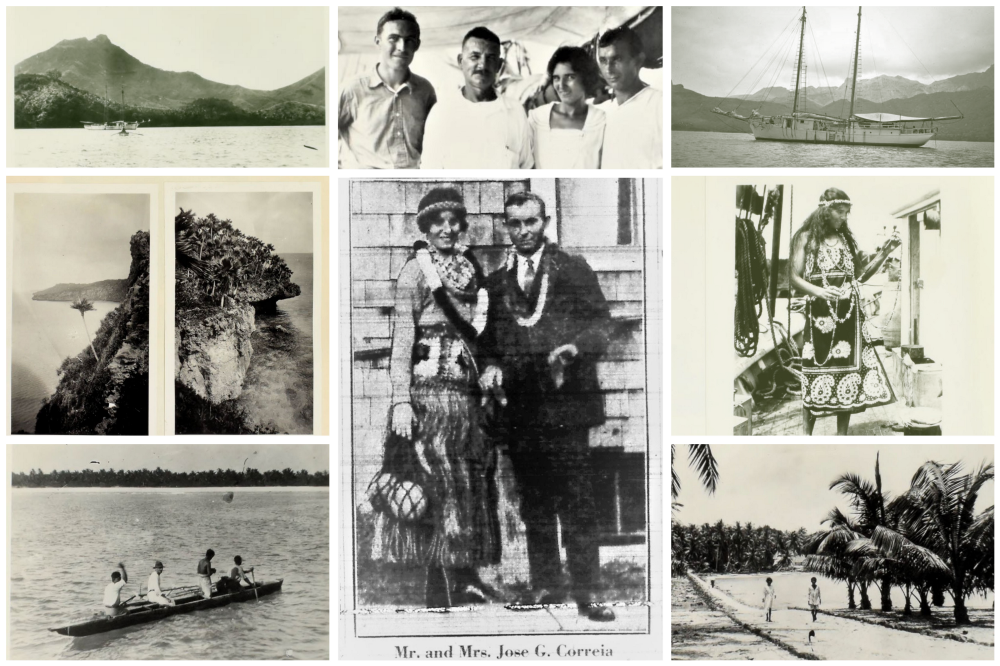
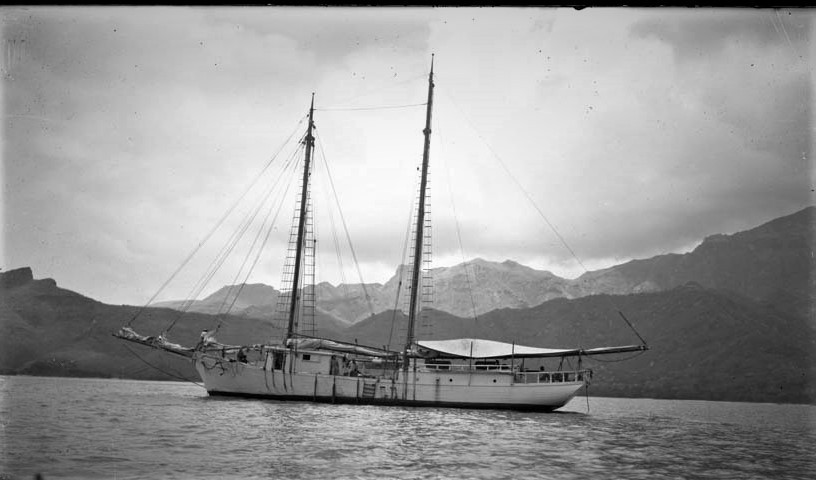
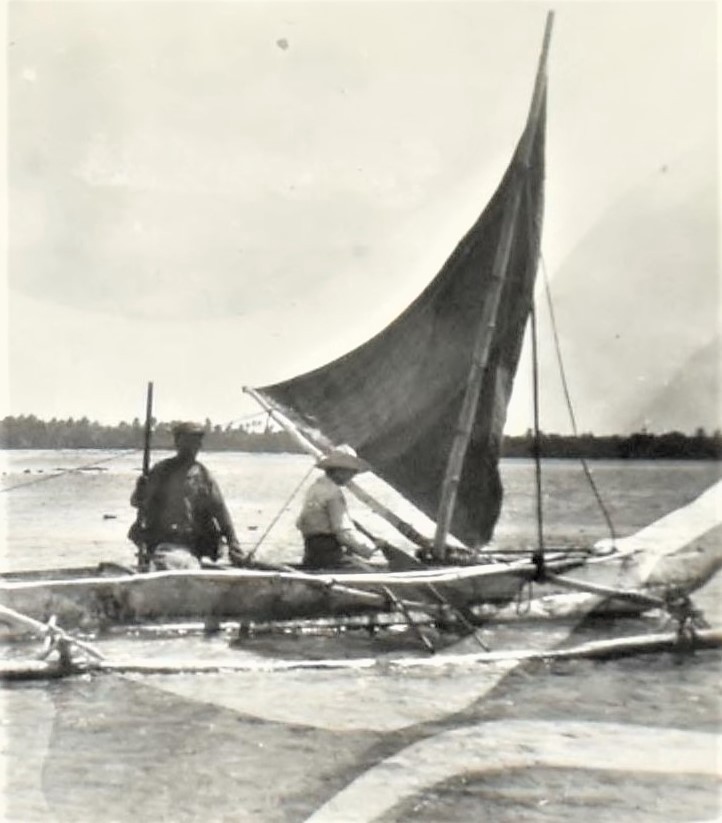
Photo collage of the Correia’s and their travels. Bryan, E. H. (1924) (photographer). Journal of Edwin H. Bryan, Jr. while with the Whitney Expedition of the American Museum of Natural History on the schooner France. Contributed in BHL by the American Museum of Natural History Library. Digitization sponsored by the Council on Library and Information Resources as part of the BHL Field Notes Project.
José and Virginia Correia are one of history’s most prolific bird collecting teams. For over three decades, they participated in many scientific exploring expeditions for the American Museum of Natural History, including the Whitney South Sea Expedition from 1922 to 1926.²
Although the published literature is scant regarding their scientific contributions, their story is certainly worth telling. Described by The Standard-Times (New Bedford) as a “life reading like fiction”,³ their work has emerged from obscurity with the digitization of José’s field notes from the Whitney South Sea Expedition (1920–1941) as part of the BHL Field Notes Project funded by the Council on Library and Information Resources (CLIR). Now audiences far and wide can enjoy this quintessential American story of two immigrants propelled by fate, hard work, and a sincere desire to improve one’s lot in life.
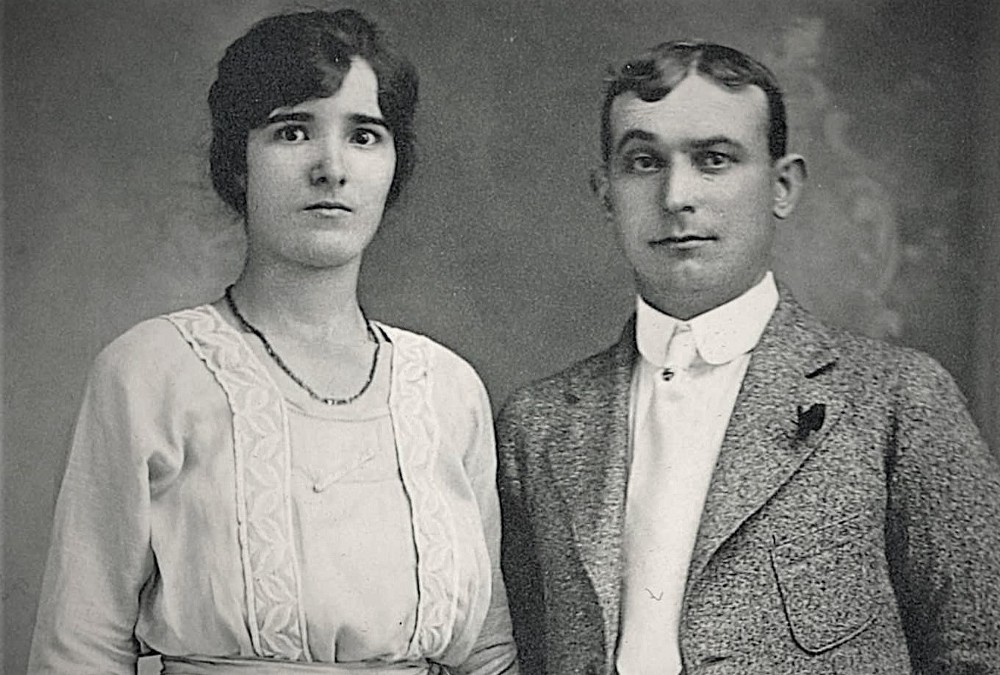
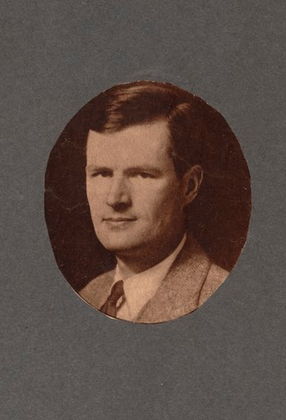
“Virginia and José Gonsalves Correia,” Unknown (photographer). Department of Ornithology Archives, AMNH, accessed September 3, 2020.
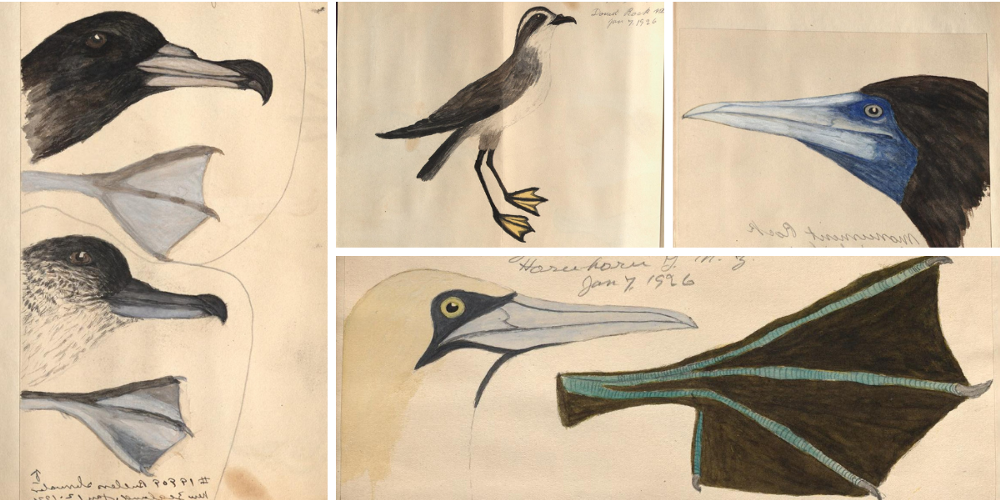
From José’s journal entries, we learn what daily life for a field collector was really like. Traveling to exotic locales, encountering Indigenous cultures, and sampling undiscovered flora and fauna might sound alluring, but José’s private notes reveal the harsh realities of turn-of-the-century collecting expeditions.
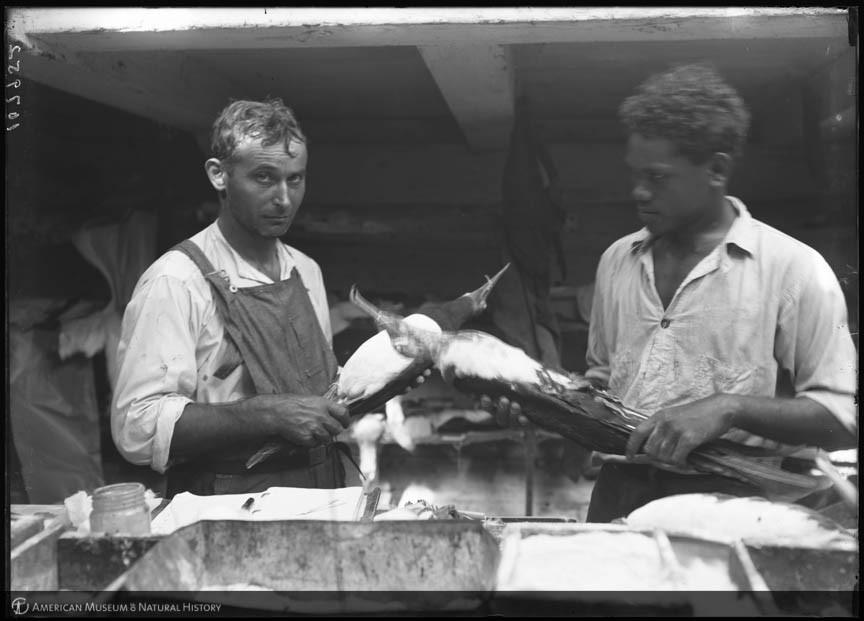
The work was hard and the days were long aboard the schooner France. Work typically commenced at dawn in the field and ended at dusk preparing specimens.⁴ Only exceptionally rugged individuals who were able to endure constant and extended deprivations — mind and body — could make such journeys.
As if these daily irritations weren’t enough, extreme weather in the form of cyclones, gale force winds, and rogue waves provided plenty of near-death experiences.
“…we ran into the center of a strong cyclone on June 2nd. Everybody in the ship thought that they were never going to see land again, but God did not forget us in the middle of the furious ocean.” June 19, 1926, J. Correia.⁴
Four years and 12,000 miles later, the Correia’s had the misfortune of contracting malaria, effectively ending their service aboard the France in 1926.⁶ But the Whitney South Sea Expedition wasn’t their first field collecting trip, nor would it be their last. They would go on to explore some of the most remote places on Earth.
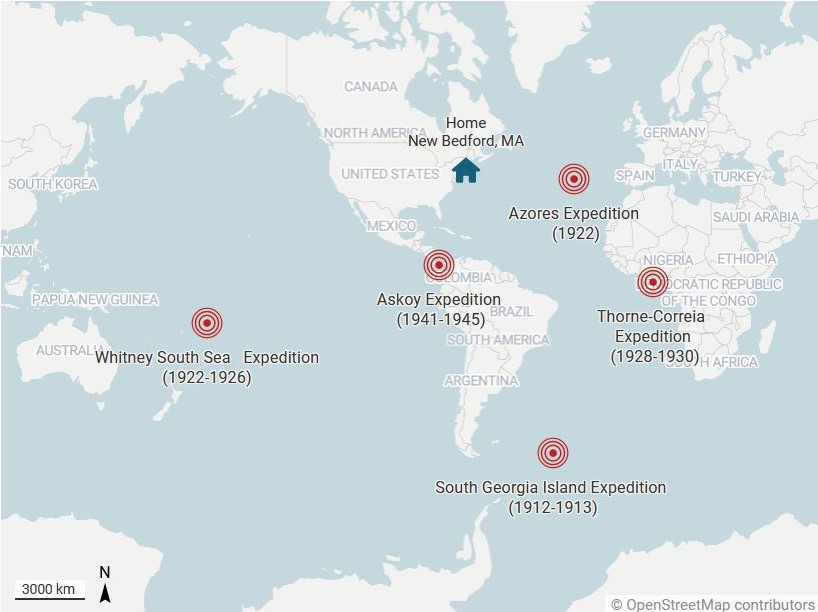
The American Museum of Natural History collecting expeditions took the Correias all over the globe.⁷ Ford, Jacqueline. (2020) Datawrapper: Create Charts and Maps [Software]. Available from https://www.datawrapper.de/.
It’s clear why the Correias continued to endure the hardships of collecting life. Not only did they believe birds held important keys to understanding the natural world, they had become a part of the scientific community who knew that time was running out. Their efforts were likely to be humanity’s only shot at cataloging, describing, and studying unknown bird species.
José’s fateful friend, Robert Cushman Murphy, Curator of the American Museum of Natural History’s Ornithology Department,
describes the moral imperative driving the Whitney South Sea Expedition:
“That it is high time for such an expedition to obtain examples of the Polynesian life is evidenced by the decrease in the population of birds and other animals at nearly all of the inhabited isles. For many years extinction has been approaching, and it is well known that certain kinds of birds secured by 18th century naturalists, have long since been wiped out of existence.”⁸
In one of Murphy’s more personal memoirs, A Logbook for Grace, he tells of his first collecting expedition in 1911, working as a field collector on a brig named the Daisy. It’s here that we get a first glimpse of a young José who enlisted as the Antarctic voyage’s cooper — the liquid-tight barrels made under his charge were crucial to the operation, transporting whale spermaceti back to America.
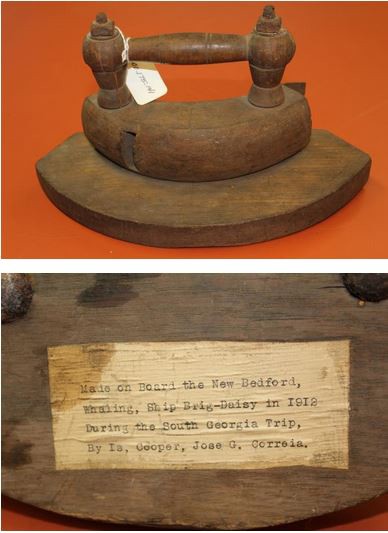
A small Cooper’s Howell plane with a Stanley #3 plane blade. Note on bottom: “Made on board the New Bedford Whaling Ship, brig DAISY in 1912 during the South Georgia Trip by IS (sk), Cooper José G. Correia.” Correia, J. G. (1912). Cooper’s Howell plane [Photograph]. New Bedford Whaling Museum | Grimshaw-Gudewicz Reading Room and Archives.
Aboard the
Daisy, the two men would become fast friends discussing everything from
Arabian Nights to the Papacy. Murphy describes José as “profound” and a “voracious reader”⁹ and came to rely on the cooper’s help after realizing his natural drawing aptitude and skill for specimen preparation:
“One day when Dr. Murphy was preparing bird specimens Mr. Correia offered to help. His first attempt was so good that Dr. Murphy placed it in his collection and sought help again and again from the ship’s cooper.”¹⁰
In 1913, Correia was sought out by the American Museum of Natural History to work as a collector and preparateur on their next expedition after his friend, Mr. Murphy, showed officials at the American Museum Correia’s fine work.³
From Humble Beginnings
Before embarking on scientific expeditions, José worked as a whaling cooper (where he met Murphy) and a textile worker. In fact, between stints with the American Museum of Natural History, he would unassumingly return to work as an operative at Kerr Mills of the American Thread Company in Fall River, Massachusetts. When asked by fellow workers where he had gone, he would smile and simply reply “just away.”¹⁰
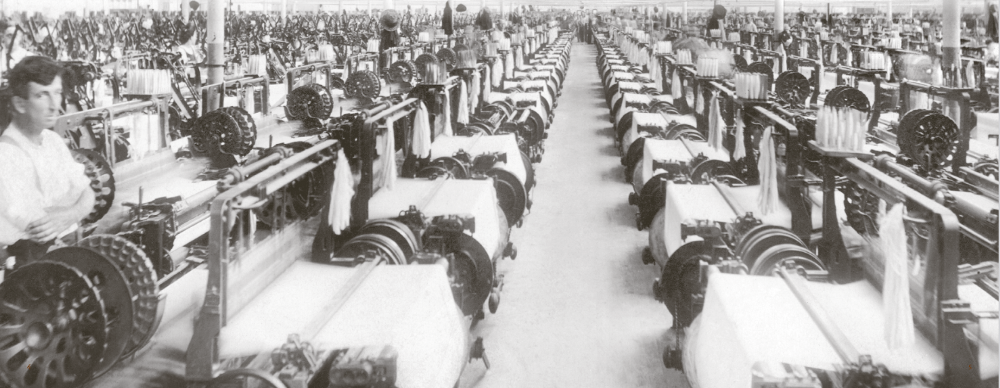
“Textile mill weave room. New Bedford, 1920”. Thomas, J., Sualniers, A., White, N., McCabe, N., & Avila, J. (Eds.). (2016). A Picture History of New Bedford (Vol. 2). Spinner Publications, Inc.
Correia’s humility came from memories of a very impoverished childhood. In his writings, he remarks that shoes were a luxury, reserved to be worn only “on feast days.” He was born in 1881, in Flamengos, a rural agrarian town on Faial, one of the nine islands in the Azorean archipelago. Like many Azorean youth, he had heard stories of America’s greatness from the Baleeiros (Azorean whalers), and he dreamed of the fabled land of opportunity.¹¹
At the age of 19, he left Faial and found warm welcome in New Bedford, Massachusetts, a burgeoning port city with a booming textile industry. The only thing José brought with him to America was a new suit, a sack of clothing, and his knowledge.¹¹ From his father, he had learnt the precise art of barrel-making and was taught the value of respect, dignity, and hard-work. These characteristics would serve him well throughout his life and helped him deal with both opportunity and tragedy. When he married Virginia in 1920, he was already a widower, having lost his first wife Rosa Silva in 1906 with whom he had one daughter, Mary.¹
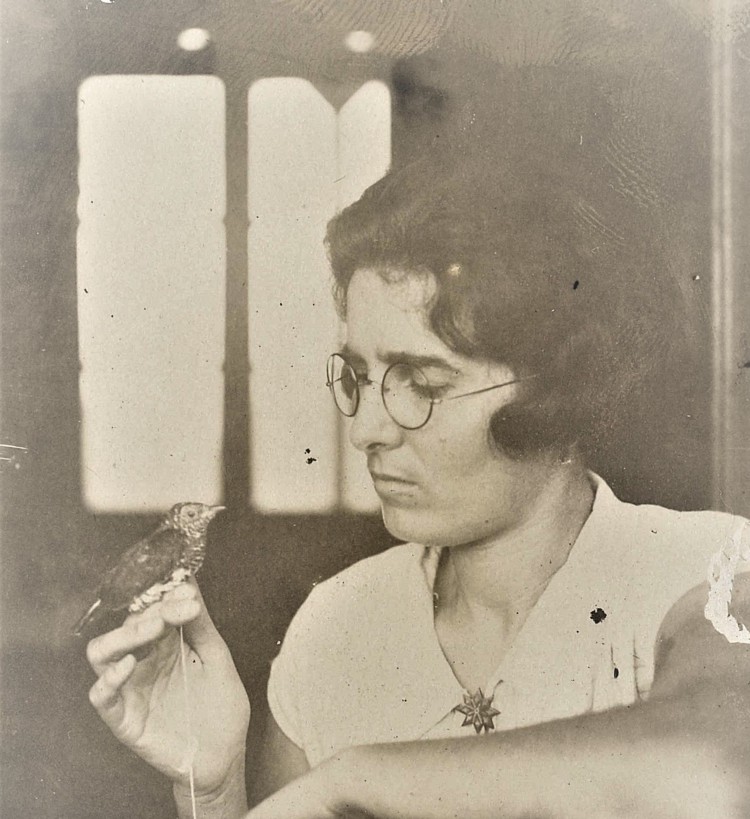
“Virginia Correia”, Unknown (photographer). Department of Ornithology Archives, AMNH, accessed September 3, 2020.
Of Virginia Correia (née Aguiar), considerably less is known. Born in 1900 in Lajes, Terceira, Azores, she also immigrated to New Bedford at a young age.¹² Certainly she was a dedicated wife, joining her husband on difficult field expeditions and suffering all the aforementioned discomforts these journeys entailed.
Acting as her husband’s field assistant, she trained and became quite adept at the delicate art of preserving specimens. Character details can be gleaned from José’s journals, where he cites her as source of consistent strength and support. For example, during the Whitney South Sea Expedition, José and expedition lead, Rollo Beck, had seething enmity towards one another. José felt greatly disrespected by Beck and thought that the entire crew had turned against him under his influence. With a touch of sadness, he privately wrote, “The only person whom I can count on to help me is my wife. As for the others, I cannot rely on them.”
Nine years after his last expedition to South America20, a 73-year old Correia attended a party in New Bedford’s South End that would be his last. He was stricken by a heart attack and died on 26 April 1954.¹¹ Virginia would live out the rest of her life in their shared New Bedford home at 23 Harrison Street, passing in 1987.¹²
One million North Americans make up the Azorean diaspora — four times the current population of the islands.¹³ José and Virginia are representative of a distinctly intrepid sea-faring culture. In spite of ever-present danger, their adventurous spirit would take them to the farthest reaches of the globe. In that vein, the Correias would go on to build a dichotomous double-life: immigrant factory workers with intermittent scientific travels around the world in search of undocumented bird life.
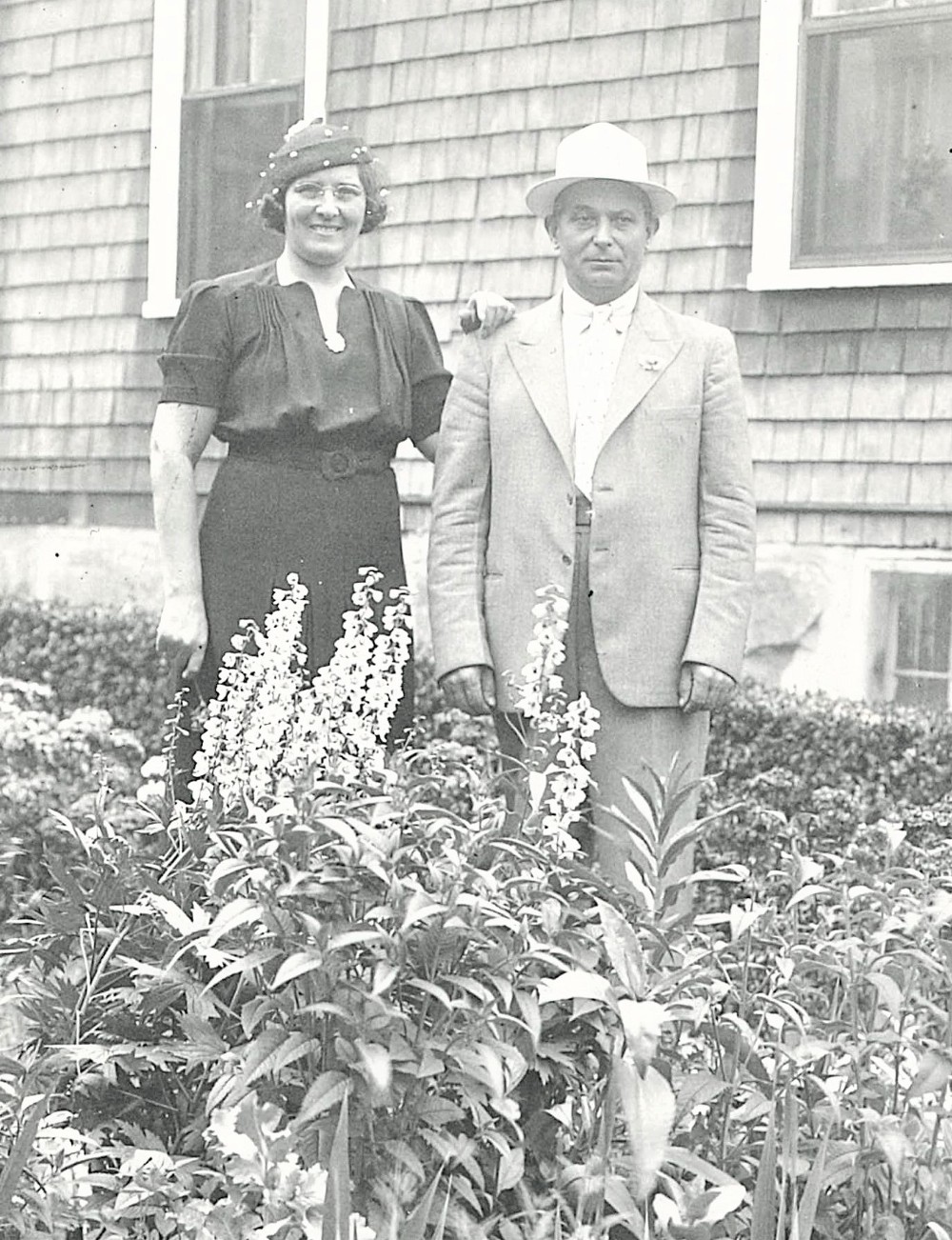
“Virginia and José posing outside their home at 23 Harrison street, New Bedford, Massachusetts”. Unknown (photographer). Department of Ornithology Archives, AMNH, accessed September 3, 2020.
Despite strong ties to their homeland, they always came back to America — the place that had given them a life that “read like a fiction.”
Preserving the Correia Legacy
Over the course of their career, the Correias collected more than 10,000 bird specimens.¹⁴ Their efforts, alongside other historic field collectors, would help the American Museum of Natural History build one of the largest ornithology collections in the world.¹⁵ While the collection of wildlife specimens is controversial today, no longer done at this scale, these historic collecting efforts have provided the scientific foundation and necessary physical records for effective description and study of a species’ biology.¹⁶
The Whitney South Sea Expedition was the most extensive bird collecting expedition ever conceived at its time.⁷,¹⁷ The expedition spanned two decades, covered roughly one-third of the planet, and brought back over 40,000 specimens to the American Museum of Natural History.¹⁸ The scientific bounty has greatly enriched our understanding of the natural biota from the Pacific region.
Notably, Ernst Mayr’s seminal argument for geography’s role in the origin of new species draws on the study of bird specimens gathered by the expedition.⁷ More than six decades later, Jared Diamond and Ernst Mayr’s book Birds of Melanesia would use the specimens gathered by the expedition to provide the most comprehensive study to-date on how speciation occurs (the process by which new and distinct species evolve).
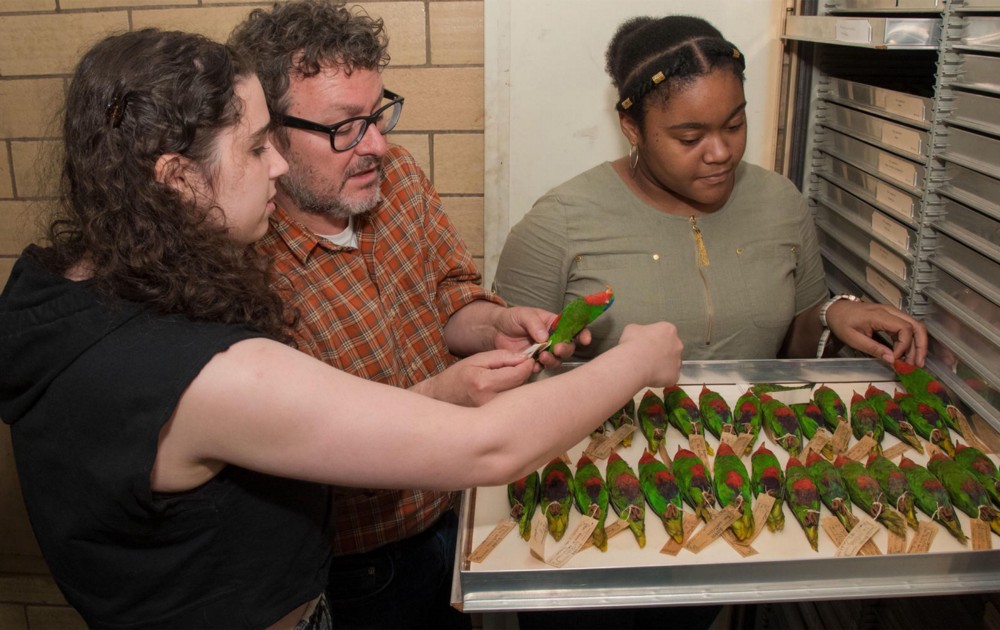
Paul Sweet, American Museum of Natural History’s Ornithology Collection Manager, believes the number of specimens contributed by the couple could be far greater than is currently recorded due to poor labeling. Curation efforts are ongoing to improve data accuracy. One such effort is mentoring high school students to transcribe location data from crew field notes. Through these efforts, the France’s journey through the Pacific is being precisely charted, providing an interactive journey of species sightings. Explore the project here.
Museum specimen collections are, in essence, great libraries of Life — still rich in discoveries waiting to be made and perhaps even holding the keys to understanding our current public health crisis.
“Museum collections contribute unique and invaluable insights to the study of pathogens, vectors of disease, and environmental contaminants. Moreover, these collections have played a crucial role in fields at the forefront of the biological sciences, including the study of biodiversity and its loss, biological invasions, and global climate change. We argue that the storage and maintenance of museum collections is inexpensive compared with the potential costs of their absence.”¹⁹
To honor the great personal sacrifices made by historic field collectors like José and Virginia Correia, the call is being made to support the ongoing maintenance and digitization of museum collections. Their enduring utility should not be forgotten in these uncertain times. Museums across the country are facing difficult decisions and budget shortfalls due to the COVID-19 pandemic, and the ongoing preservation and maintenance of these hard-won collections hangs in the balance.
• • •
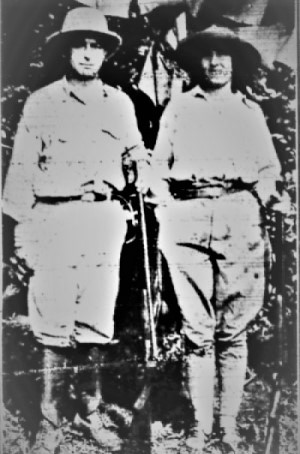
The Correias about to enter the heart of the African jungle. “New Bedford Man, Off On 4-year Expedition for Museum, Has Life Reading Like Fiction.” (1936, September 16). Standard-Times (New Bedford), p. 3.
If you would like to honor Virginia and José Correia’s life’s work, consider making a gift to BHL to ensure that the historic data contained in field notes and scientific publications are freely available to support ongoing research around the world. You can also support the ongoing maintenance of museum collections by donating to natural history institutions like the American Museum of Natural History.
Acknowledgements
This story was made possible by a CLIR Digitizing Hidden Special Collections and Archives Grant, which provided funding to the American Museum of Natural History (AMNH) and the Biodiversity Heritage Library to digitize the Whitney South Sea Expedition (1920–1941) field notes. A personal thanks to Grace Costantino, BHL’s Outreach and Communication Manager, and Erin Willigan for the opportunity to showcase this untold story. Thanks also to Paul Sweet, Thomas Trombone, and Mai Reitmeyer at AMNH for providing primary source materials, data, and most importantly, their time. To the librarians at the Peabody Essex Museum, the New Bedford Whaling Museum, and the New Bedford Free Public Library, who helped tracked down difficult to find newspaper articles and books, thank you.
References
[1] Shatzman, C. (2016, November 7). Correia, José G., 1881–1954. Retrieved October 10, 2020, from
https://data.library.amnh.org/archives-authorities/id/amnhp_1000443.
[2] Correia, J. (1930–1941).
Whitney South Sea Expedition of the American Museum of Natural History. The Biodiversity Heritage Library.
https://www.biodiversitylibrary.org/bibliography/121444.
[3] New Bedford Man, Off On 4-year Expedition for Museum, Has Life Reading Like Fiction. (1936, September 16).
Standard-Times (New Bedford), p. 3.
[4] Correia, J. (1930–1941).
Whitney South Sea Expedition of the American Museum of Natural History. v. 2. The Biodiversity Heritage Library.
https://www.biodiversitylibrary.org/item/214343.
[5] Mayr, E. (n.d.).
Joining the Whitney expedition. Web of Stories. Retrieved October 30, 2020, from
https://www.webofstories.com/play/ernst.mayr/13.
[6] Murphy, R. (1936).
Oceanic birds of South America : a study of species of the related coasts and seas, including the American quadrant of Antarctica, based upon the Brewster-Sanford collection in the American Museum of Natural History. The Biodiversity Heritage Library. p. 6.
https://www.biodiversitylibrary.org/page/12471284.
[7] American Museum of Natural History. (2019).
American Museum of Natural History | Research Library | Authorities | Expeditions [Dataset].
https://data.library.amnh.org/archives-authorities/results/?q=recordId:*amnhc_2*.
[8] Beck, R. H. (1930–1941).
Whitney South Sea Expedition of the American Museum of Natural History. The Biodiversity Heritage Library.
https://www.biodiversitylibrary.org/page/52734313.
[9] Murphy, R. C. (1965).
Logbook for Grace. Time, Inc.
[10] Local Mill Operative Also Is Bird Expert for Scientific Expeditions. (1941 July 6).
Standard-Times (New Bedford),p. 7.
[11] Agostinho, J. (1952). Um Emigrante Acoriano Jose Goncalves Correia.
Boletim Do Instituto Historico,
no.10, 204–238.
http://ihit.pt/codeigniter/assets/upload/pdf/e3a418659d67d6609e2e58e7210779cb.pdf.
[12] Shatzman, C. (2016, November 7). Correia, José G., Mrs, 1900–1987. Retrieved October 10, 2020, from
https://data.library.amnh.org/archives-authorities/id/amnhp_1002477.
[13] Minder, R. (2015, June 4). Azorean Diaspora Can’t Resist the Powerful Pull of Home.
The New York Times.
https://www.nytimes.com/2015/06/05/world/europe/azores-diaspora-holy-christ-of-miracles.html.
[14]
Search: Collector “Correia”. (2006). Retrieved October 10, 2020, from
https://sci-web-001.amnh.org/db/emuwebamnh.
[15]
Research: Ornithology | AMNH. (2020). American Museum of Natural History.
https://www.amnh.org/research/vertebrate-zoology/ornithology.
[16] Newton, B. E. (2017, January 9). Is specimen collecting justified?
Lateral Magazine.
http://www.lateralmag.com/articles/issue-18/is-specimen-collecting-justified.
[17] American Museum of Natural History. (1923).
Annual report of the American Museum of Natural History for the year. Biodiversity Heritage Library.
https://www.biodiversitylibrary.org/item/137096.
[18] Giraldo, S. (2016, October 20).
Mapping the historical biodiversity of the Solomon Islands with the American Museum of Natural History. CARTO Blog.
https://carto.com/blog/mapping-solomon-islands/.
[19] Suarez and Tstutsi. (2004). The Value of Museum Collections for Research and Society.
BioScience, 54(1), 66.
https://doi.org/10.1641/0006-3568(2004)054[0066:TVOMCF]2.0.CO;2.
[20] Newell, G. (2020, January 8). Askoy Expedition (1941-1945). Retrieved 24 November, 2020, from
https://data.library.amnh.org/archives-authorities/id/amnhc_2000430.


!["My graduate-level museum studies class was taken online when New York University shut down. Since the shut-down, the biggest issue for my students has been in conducting research [...] BHL has emerged as one of the most popular databases for primary source work!" Dr. Elaine Ayers, Faculty Fellow at New York University](https://blog.biodiversitylibrary.org/wp-content/uploads/sites/61/2020/12/Screen-Shot-2020-11-03-at-3.24.49-PM.png)