Biodiversity Heritage Library - Program news and collection highlights from BHL
  • Home
  • News
  • Featured Books
    • All Featured Books
    • Book of the Month Series
    • BHL at 20
  • User Stories
  • Campaigns
    • Fossil Stories
    • Garden Stories
    • Monsters Are Real
    • Page Frights
    • Her Natural History
    • Earth Optimism 2020
  • Tech Blog
  • Visit BHL
Home
News
Featured Books
    All Featured Books
    Book of the Month Series
    BHL at 20
User Stories
Campaigns
    Fossil Stories
    Garden Stories
    Monsters Are Real
    Page Frights
    Her Natural History
    Earth Optimism 2020
Tech Blog
Visit BHL
  • Home
  • News
  • Featured Books
    • All Featured Books
    • Book of the Month Series
    • BHL at 20
  • User Stories
  • Campaigns
    • Fossil Stories
    • Garden Stories
    • Monsters Are Real
    • Page Frights
    • Her Natural History
    • Earth Optimism 2020
  • Tech Blog
  • Visit BHL
Biodiversity Heritage Library - Program news and collection highlights from BHL
BHL News, Blog Reel, Tech Updates

Biodiversity Heritage Library Datasets Now Openly Accessible on the Amazon Web Services Cloud

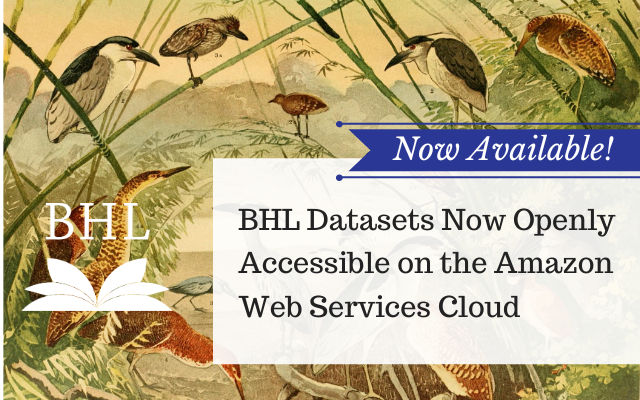
Now Available. BHL Datasets Now Openly Accessible on the Amazon Web Services Cloud. Background image of a variety of herons perching on branches

Sixty-two million pages of scientific text, images, and metadata, representing 500 years of biodiversity data will be openly accessible via the Registry of Open Data on AWS

Washington, DC, November 27, 2024 — The BHL Technical Team is thrilled to announce that Biodiversity Heritage Library (BHL) datasets will be openly accessible on the Amazon Web Services (AWS) cloud, thanks to the AWS Open Data Sponsorship Program. Moving BHL data to the cloud allows researchers globally to explore and analyze over 500 years of biodiversity data, enhancing their ability to derive scientific insights from our shared past to inform future global environmental policy.

BHL data is now hosted on AWS, and comprises over 62 million pages of scientific text from the 15th to the 21st centuries. BHL’s vast collection represents an unparalleled biodiversity resource with enormous potential to be used for longitudinal studies and conservation efforts.

Key Use Cases for BHL’s Data:

  • Historical Baseline Data: Spanning centuries, BHL provides a unique record of biodiversity literature, allowing researchers to establish long-term species baselines and track changes in species distributions and abundances over time.
  • Longitudinal Studies: The dataset supports analysis of biodiversity trends and ecosystem responses to environmental changes, offering valuable insights into historical and contemporary biodiversity dynamics.
  • Rare and Endangered Species: BHL’s historical records include species that may no longer exist or have become rare, aiding in the understanding of past biodiversity and informing current conservation efforts.
  • Taxonomic Stability: The collection includes taxonomic descriptions and classifications from various time periods, essential for understanding species relationships.
  • Cultural and Scientific Heritage: Beyond scientific data, BHL preserves historical texts, scientific illustrations, and annotations, enriching our understanding of past scientific practices and societal attitudes toward nature.

Transitioning to AWS services represents a transformative opportunity for BHL. As BHL currently operates outside a cloud environment, this move will optimize scalability, accessibility, performance, and cost-efficiency. AWS’s advanced computing capabilities will enable faster data processing and analysis, while AWS’s cost management tools will in the long-term help reduce infrastructure costs associated with on-premise storage and upgrades.

As a vital component of the global biodata infrastructure, the demand for BHL’s content and services continues to rise. By leveraging AWS services, we can address several critical needs, including:

  • Complimentary storage and access to a comprehensive suite of AWS cloud computing tools.
  • Ensured page persistence and unique page identifiers essential for biodiversity informatics applications.
  • Enhanced page-serving speeds in low-bandwidth regions where biodiversity research is critical.

BHL’s Data Manager, JJ Dearborn remarked, “Collaborating with AWS unlocks the full potential of BHL data. Cloud hosting not only provides an additional data safe harbor but also makes it accessible to researchers worldwide. We’re excited to democratize access to BHL data and see it used to spark innovative cross-disciplinary research in biodiversity informatics.”

The AWS Open Data Sponsorship Program is committed to making high-value datasets freely available to encourage innovation and collaboration. By supporting the free access to a diverse array of big datasets, AWS helps advance research and development in numerous fields.

To explore the BHL dataset and learn more about its content, visit the AWS Data Exchange.


About the Biodiversity Heritage Library

The Biodiversity Heritage Library (BHL) is the world’s largest open access digital library for biodiversity literature and archives. Headquartered at the Smithsonian Libraries and Archives in Washington, D.C., BHL is a global consortium that digitizes and freely shares natural history literature and archives. By providing open access to critical biodiversity knowledge, BHL addresses major research challenges and supports the global scientific community in understanding and conserving Earth’s species amid climate change and extinction crises. BHL also collaborates with rights holders, volunteers, and international experts to enhance content accessibility and interoperability. Since its inception in 2006, BHL has been working towards a shared future where biodiversity knowledge is globally accessible and supports universal bioliteracy.

Download Press Release

November 27, 2024by mdimeo
BHL News, Blog Reel

Advancing BHL’s Data for a Sustainable Future: Meet Tiago, Our New Wikimedian-in-Residence

BHL - Welcome to Tiago Lubiana, Wikimedian-in-residence
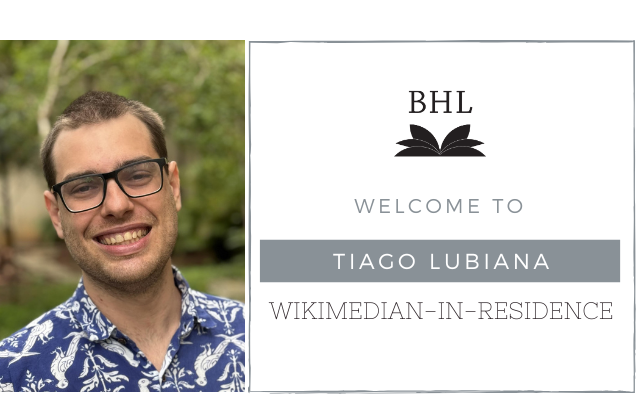
A person with short brown hair, black glasses, and a blue and white shirt smiles at the camera

Tiago Lubiana, BHL Wikimedian-in-Residence. Photo credit: Maria Eugenia Tita / Personal Archive / CC0 Dedication

We are thrilled to announce the appointment of Tiago Lubiana as the new Wikimedian-in-Residence (WiR) at the Biodiversity Heritage Library (BHL)! This crucial role, shaped by community-driven recommendations from the Unifying Biodiversity Knowledge to Support Life on a Sustainable Planet white paper, is aimed at advancing BHL’s goal of making biodiversity data more accessible, actionable, and impactful for a sustainable future.

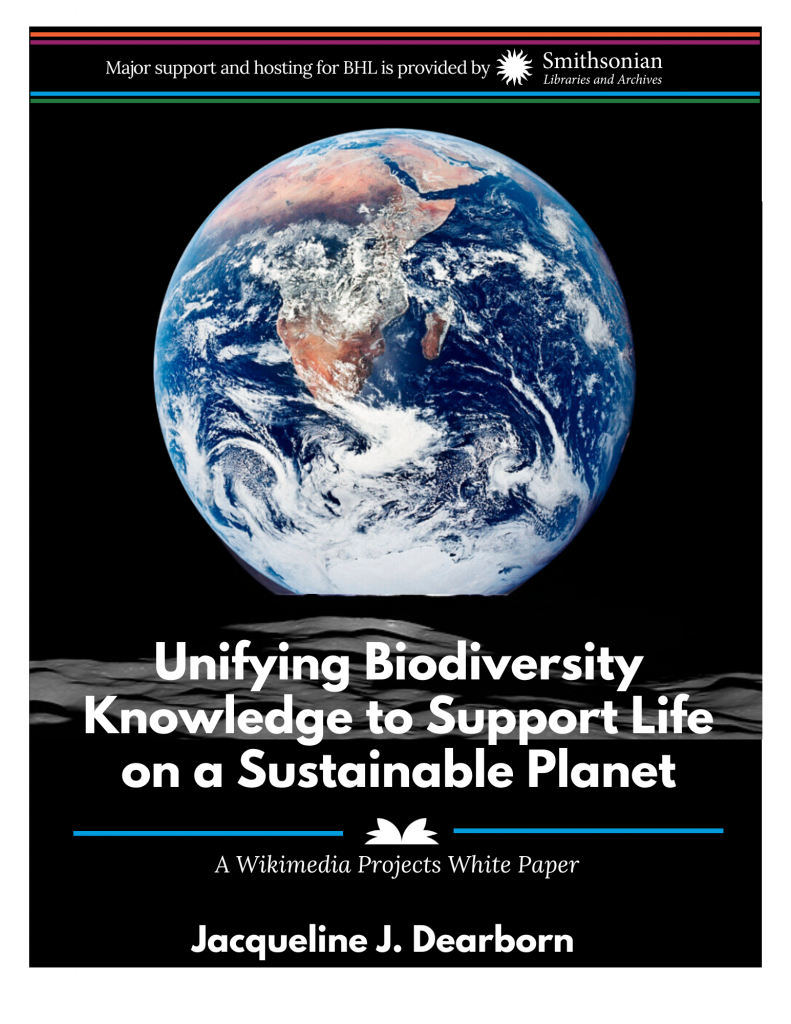
Cover of white paper with image of earth from space

Dearborn, J. (2023). Unifying Biodiversity Knowledge to Support Life on a Sustainable Planet. Biodiversity Heritage Library. https://doi.org/10.21428/bcf8962c.699434fb

As BHL’s new Wikimedian-in-Residence, Tiago will expand BHL’s data presence within Wikimedia platforms, convert legacy data to structured data on Structured Data on Commons for BHL’s vast image collection, and provide training to the broader biodiversity wiki community. His expertise in open science, data modeling, and the semantic web will help connect BHL’s data to the growing biodiversity knowledge graph, fostering collaboration and ensuring our information is accessible, interoperable, and integrated into the emerging semantic web ecosystem.

BHL Flickr Image Collection

Tiago will be enhancing BHL’s Image Collection via the Structured Data on Commons Project. Photo credit: BHL / Screenshot/ CC0 Dedication

About Tiago

Tiago is a bioinformatician and independent Wikimedian based in São Paulo, Brazil, with a strong focus on open science, open knowledge, and life sciences. He holds a PhD in Bioinformatics from the University of São Paulo, where his research explored Wikidata as an open biocuration platform for disseminating knowledge about human cells. Tiago is also an active member of the International Society for Biocuration, the Wiki Movimento Brasil User Group, and has contributed significantly to various WikiProjects on Wikidata, including WikiProject COVID-19 and WikiProject Biodiversity.

A passionate advocate for biodiversity and open knowledge, Tiago is also the developer behind the inat2wiki tool, which bridges data between iNaturalist and Wikimedia Commons. Outside of his work in bioinformatics and open data, Tiago’s early passion for biology was sparked by his experience attending the International Biology Olympiad in Singapore in 2012, where he won a bronze medal.

Tiago holds a Bachelor’s Degree in Biomedical Sciences (University of São Paulo, 2014–2017), a Master’s Degree in Bioinformatics (University of São Paulo, 2018–2020), and a PhD in Bioinformatics (University of São Paulo, 2020–2024). For more information, visit his website.

The BHL-Wiki Working Group: A Global Collaborative Effort

In addition to Tiago’s role, we are also excited to officially announce the BHL-Wiki Working Group newly formed in 2024, which will help guide and support BHL’s wiki initiative. The group is made up of 30 members from 20 GLAM organizations worldwide, working to strengthen the biodiversity data infrastructure through greater interoperability and accessibility in the Wikimedia ecosystem and beyond. With diverse expertise spanning biodiversity research, open data, user engagement and technology, the group is committed to integrating semantic web technologies and adhering to open data principles, including FAIR (Findable, Accessible, Interoperable, Reusable) and CARE (Collective Benefit, Authority to Control, Responsibility, and Ethics).

Leadership of the BHL-Wiki Working Group includes:

  • Siobhan Leachman (User:Ambrosia10), BHL-Wiki Chair, a Wikimedian laureate and long-time advocate for the Biodiversity Heritage Library and Wikimedia projects.
  • Jake Orlowitz, BHL-Wiki Vice Chair, Wikiblueprint, Independent Wikimedian and Wikimedia Consultant
  • Giovanna Fontanelle, WMF Institutional Representative, Program Officer, Culture and Heritage, Wikimedia Foundation
  • JJ Dearborn, Smithsonian Institutional Representative, BHL Data Manager / Secretariat

Together, the BHL-Wiki Working Group is working towards the following key objectives:

  1. Maximizing Accessibility & Interoperability through Semantic Web Integration
    Ensuring biodiversity data is discoverable, accessible, and interoperable across global research networks by leveraging semantic web technologies and open data standards, supporting global biodiversity research and climate action.
  2. Advancing Data Modeling for Global Challenges
    Developing data models that enable better insights into climate change and biodiversity loss, while harmonizing with international initiatives to address pressing sustainability challenges.
  3. Strengthening User Engagement & Global Partnerships
    Enhancing community engagement, integrating traditional ecological knowledge (TEK), and fostering collaborations with marginalized voices to ensure BHL’s data is scientifically rich and culturally inclusive.

The working group is excited to have a new Wikimedian-in-Residence on board and see Tiago’s appointment as a critical need to push forward on the group’s collective goals. Chair of BHL-Wiki, Siobhan Leachman commented that:

“Having a Wikimedian-in-Residence at BHL is extremely important as this will help both the Wiki community to continue to actively and appropriately interweave content sourced from BHL into the Wikiverse and will also encourage and support members of the BHL community to contribute to the Wiki movement. In doing so the Wikimedian-in-Residence will be assisting BHL with its aim of helping to document and understand the world’s biodiversity.”

Presentation - What can a Wikipedian in Residence Do for You?

Presentation by Jake Orlowitz – “What can a Wikipedian in Residence Do for You?” Credit: Wikiblueprint.

If you are a BHL partner and you are interested in hosting your own Wikimedian-in-Residence, please check out the presentation from Wikiblueprint explaining the myriad benefits that hosting a Wikimedian at your home institution can bring.

Building a Global Ecosystem for Biodiversity Knowledge

The work led by the BHL-Wiki Working Group will lay the foundation for a more connected, sustainable biodiversity knowledge ecosystem. The BHL-Wiki initiative will amplify the impact of biodiversity data, support urgent climate action, and foster a more sustainable and inclusive future.

We are excited for the journey ahead and look forward to the innovations and collaborations that will emerge from this partnership!

November 20, 2024by mdimeo

Help Support BHL

BHL's existence depends on the financial support of its patrons. Help us keep this free resource alive!

search

About BHL

The Biodiversity Heritage Library (BHL) is the world’s largest open access digital library for biodiversity literature and archives. BHL operates as a worldwide consortium of natural history, botanical, research, and national libraries working together to digitize the natural history literature held in their collections and make it freely available for open access as part of a global “biodiversity community.”

Join Our Mailing List

Sign up to receive the latest news, content highlights, and promotions.

Subscribe Now

Subscribe to Blog via Email

Enter your email address to subscribe to this blog and receive notifications of new posts by email.

Join 319 other subscribers

Subscribe to Blog Via RSS

Subscribe to the blog RSS feed to stay up-to-date on all the latest BHL posts.

Access RSS Feed

Inspiring Discovery through Free Access to Biodiversity Knowledge.

The Biodiversity Heritage Library makes it easier than ever for you to access the information you need to study and explore life on Earth…for free, anytime, anywhere.


64+ Million Pages of
Biodiversity Literature Online.

EXPLORE

Tools and Services
to Transform Research.

EXPLORE

300,000+
Illustrations on Flickr.

EXPLORE

ABOUT | HARMFUL CONTENT | PRIVACY | SITE MAP | TERMS OF USE