Biodiversity Heritage Library - Program news and collection highlights from BHL
  • Home
  • News
  • Featured Books
    • All Featured Books
    • Book of the Month Series
    • BHL at 20
  • User Stories
  • Campaigns
    • Fossil Stories
    • Garden Stories
    • Monsters Are Real
    • Page Frights
    • Her Natural History
    • Earth Optimism 2020
  • Tech Blog
  • Visit BHL
Home
News
Featured Books
    All Featured Books
    Book of the Month Series
    BHL at 20
User Stories
Campaigns
    Fossil Stories
    Garden Stories
    Monsters Are Real
    Page Frights
    Her Natural History
    Earth Optimism 2020
Tech Blog
Visit BHL
  • Home
  • News
  • Featured Books
    • All Featured Books
    • Book of the Month Series
    • BHL at 20
  • User Stories
  • Campaigns
    • Fossil Stories
    • Garden Stories
    • Monsters Are Real
    • Page Frights
    • Her Natural History
    • Earth Optimism 2020
  • Tech Blog
  • Visit BHL
Biodiversity Heritage Library - Program news and collection highlights from BHL
Blog Reel

In case you’re wondering…

As you may know, BHL recently acquired tens of thousands additional titles by ingesting open access texts supplied by the Internet Archive. Read the original announcement here.

One title in particular stands out as one of those works that really highlights the passage of time, the evolution of scientific thought, and associative leaps we take for granted is Robert Lee Bates’ 1923 investigation “The effects of cigar and cigarette smoking on certain psychological and physiological functions“.

The author quantifies the effects smoking on the performance of daily tasks that require a variety of cognitive and physiological coordinations. I found the methods of the dart throwing sequence and the description of the darts used particularly interesting (made of wood, six inches long including the feathers). A smoker’s word choice is also considered in free association studies. Do we repeat ourselves more after smoking? Does a non-smoker use more colorful language, favoring ornate description?

While we take for granted that smoking is toxic, we don’t generally think of its effects on cognitive ability in the same way we would a shot of tequila. Should we? What makes a drug a drug? and if smoking interferes with hitting a bull’s eye, what about sugar? For me, the BHL never ceases to provide an opportunity to consider and (re)evaluate our notions of scientific truth.

I won’t give away all the fun and seemingly antiquated bits of scientific inquiry. But, suffice it to say, at the end of the day back in 1923, more study was needed.

🙂 Enjoy.

February 17, 2010by [email protected]
Blog Reel

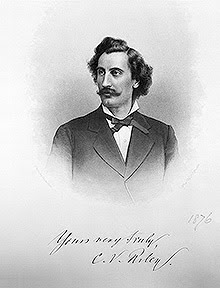
Biographical Minute: Charles Valentine Riley

Portrait version of the Biodiversity Heritage Library logo.

View Full Size ImageIn advance of the upcoming Book of the Week by American entomologist Charles Valentine Riley (our 6th degree as generously provided by Robin Everly, Botany-Horticultural librarian at Smithsonian Libraries), here’s a brief primer on his contributions to biodiversity. His resume is long and includes improvements to the French wine industry as well as the citrus crops of the US. Chief among his pursuits was biological pest control. Just before industrial pesticides created their own large scale sets of woes, he was one of the first to successfully practice the introduction of natural predators to pests compromising crops near the end of the 19th century. In 1889, California citrus groves were resuscitated when Charles V. Riley took advantage of Rodolia Cardinalis’ appetite for Icerya Purchasi. The vedalia beetle ate the cottony cushion scale who was eating the crops. Riley also figures prominently in the development of the USDA’S Entomological Commission and was the first curator of insects at the Smithsonian Institution. And tragically, his death at an early age was a result of a bicyle accident resulting in a fractured skull.

Click here for some info on organic farming without the use of pesticides! and here for bicycle safety tips!

December 14, 2009by [email protected]
Blog Reel, Featured Books

BHL Book of the Week: Six degrees of BHL

Portrait version of the Biodiversity Heritage Library logo.

With well over 35,000 titles to choose from, the BHL book of the week selection can sometimes be a daunting task. (Each title more thrilling than the last!) So this week, I decided to play a game with you to arrive at the next selection. We’ll dig deep into the repository and maybe find a path to something unexpected. According to our most recent poll, Invertebrate Zoology beats out Botany by a nose as the most popular area of biodiversity research. So, because we need a 1st degree and a 6th degree, and it’s cheating to have the one making the connections do the picking, I humbly ask for your participation to test my librarian’s mettle. Please suggest (in the comments) an IZ scientist–or even a title–for me to connect with a Botanist’s work or otherwise significant figure. Will it work? Will it be neat? I don’t know. But even if I find the connections too obscure (no way!) to piece together, we’ll all, at the very least, have the excitement of the journey to enjoy.

December 3, 2009by [email protected]
Blog Reel, Featured Books

Book of the Week: Aesthetics Edition

Portrait version of the Biodiversity Heritage Library logo.

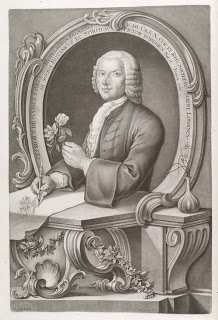
View Full Size ImageThis week, we highlight the botanical illustrations of Georg Dionysius Ehret.

Active during the 18th century, his illustrations became the must-have accompaniment for scientists interested in precise rendering of the species at hand. Born into a modest family of gardeners, his achievements (as they so often do) result from a combination of talent and circumstance.

Carl Linneaus was one of his first collaborative partners, who almost certainly helped shape Ehret’s attention to botanical detail. “For instance, the botanist criticized the artist for failing to include items like the stamen, pistil and other small details, which Ehret argued, would spoil the illustration. In the end Ehret gave in. In fact he became so fond of detailing that this viewpoint became a trademark of his illustrations from then on.”

Plate from Missouri Botanical Garden’s Plantae selectae quarum imagines ad exemplaria naturalia Londini 1750.

July 13, 2009by [email protected]
Blog Reel

BHL Book of the Week

Portrait version of the Biodiversity Heritage Library logo.

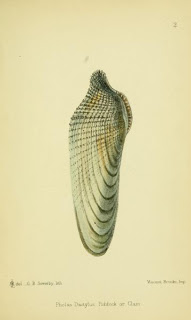
View Full Size ImageThe Edible Mollusca of Great Britain and Ireland with Recipes for Cooking Them is a delightful fusion of taxonomy, geography, and cooking! The author’s preface emphasizes the “hitherto almost entirely overlooked” edible mollusca that are abundantly and economically available on the coasts, a qualifying characteristic that retains its relevance in the 100 years plus since publication. Hungry? Have some Cockle Soup!

From pg. 35 “Scald, drain, beard, and wash carefully four dozen of cockles, reserving their liquor in a pan, put 4 ounces of butter into a stewpan to barely dissolve over the fire; mix in 4 ounces of flour; moisten with a pint and a half of good white stock or milk; season with nutmeg, a pinch of cayenne, and a teaspoonful of anchovy; add half a pint of cream; stir over the fire for a quarter of an hour’s gentle boiling, and then, having cut the cockles in halves, pour the hot soup over them in the tureen.”
Enjoy!

The Edible Mollusca of Great Britain and Ireland with Recipes for Cooking Them, 1884, M.S. Lovell, Contributed by the Harvard Museum of Comparative Zoology’s Ernst Mayr Library

June 29, 2009by [email protected]
BHL News, Blog Reel

Return of the Dodo?! BHL joins the larger scientific community in expressing shock, excitement!

Portrait version of the Biodiversity Heritage Library logo.

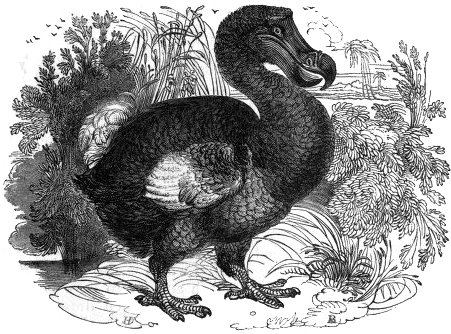
View Full Size ImageWhat appears to be a male Dodo bird (Raphus cucullatus) approximately 2 and a half feet tall has been discovered today, April 1, nesting among the bushes in the butterfly garden of the Smithsonian’s National Museum of Natural History. How the creature, that hasn’t been seen since the 17th century, has come to reside Washington, DC remains a mystery. Smithsonian Security was alerted to the presence of the bird by an alert tourist who heard the loud syncopated calls of the once thought extinct bird. Nicknamed “Lazarus,” the Dodo exhibits a friendly curiosity about humans, clearly enjoying the excitement and attention its presence is generating.

Orthinologists and evolutionary biologists from around the world are currently pouring into Washington to investigate.


The Biodiversity Heritage Library contains a number of references to the Dodo’s current taxonomic name (Raphus cucullatus), as well as over two hundred references to the earlier scientific synonym (Didus ineptus). You can also find references to the taxonomic family (Raphidae) and 400 plus references to Didus, the synonym for the genus.

The description, by Linnaeus, can be found in the 1766 edition of Systeme naturae.

A few of illustrations of the Dodo from the BHL can be found here:

  • 1829. Illustration from John V. Thompson’s article (above)
  • 1889. Facsimile of Piso’s figure of the Dodo
  • 1900. Fig. 66.— Dodo, Didus ineptus. (After Savery’s Vienna picture.)

Of particular interest is this short article by John V. Thompson. “Art. IV. Contributions towards the Natural History of the Dodo (Didus ineptus Lin.), (Fig. 107.) a Bird which appears to have become extinct towards the End of the Seventeenth or Beginning of the Eighteenth Century” in Magazine of natural history and journal of zoology, botany, mineralogy, geology and meteorology (volume 2, 1829), pp.442-48. At the time the article was written, there was still debate on the topic of extinction and if species known to contemporary humans could cease to exist. Thompson’s article also includes an overview summary of the then known history of the Dodo.

Learn more about life at the Biodiversity Heritage Library!

Reported by Erin Thomas, Smithsonian Institution Libraries

April 1, 2009by [email protected]

Help Support BHL

BHL's existence depends on the financial support of its patrons. Help us keep this free resource alive!

search

About BHL

The Biodiversity Heritage Library (BHL) is the world’s largest open access digital library for biodiversity literature and archives. BHL operates as a worldwide consortium of natural history, botanical, research, and national libraries working together to digitize the natural history literature held in their collections and make it freely available for open access as part of a global “biodiversity community.”

Join Our Mailing List

Sign up to receive the latest news, content highlights, and promotions.

Subscribe Now

Subscribe to Blog via Email

Enter your email address to subscribe to this blog and receive notifications of new posts by email.

Join 319 other subscribers

Subscribe to Blog Via RSS

Subscribe to the blog RSS feed to stay up-to-date on all the latest BHL posts.

Access RSS Feed

Inspiring Discovery through Free Access to Biodiversity Knowledge.

The Biodiversity Heritage Library makes it easier than ever for you to access the information you need to study and explore life on Earth…for free, anytime, anywhere.


64+ Million Pages of
Biodiversity Literature Online.

EXPLORE

Tools and Services
to Transform Research.

EXPLORE

300,000+
Illustrations on Flickr.

EXPLORE

ABOUT | HARMFUL CONTENT | PRIVACY | SITE MAP | TERMS OF USE