Biodiversity Heritage Library - Program news and collection highlights from BHL
  • Home
  • News
  • Featured Books
    • All Featured Books
    • Book of the Month Series
    • BHL at 20
  • User Stories
  • Campaigns
    • Fossil Stories
    • Garden Stories
    • Monsters Are Real
    • Page Frights
    • Her Natural History
    • Earth Optimism 2020
  • Tech Blog
  • Visit BHL
Home
News
Featured Books
    All Featured Books
    Book of the Month Series
    BHL at 20
User Stories
Campaigns
    Fossil Stories
    Garden Stories
    Monsters Are Real
    Page Frights
    Her Natural History
    Earth Optimism 2020
Tech Blog
Visit BHL
  • Home
  • News
  • Featured Books
    • All Featured Books
    • Book of the Month Series
    • BHL at 20
  • User Stories
  • Campaigns
    • Fossil Stories
    • Garden Stories
    • Monsters Are Real
    • Page Frights
    • Her Natural History
    • Earth Optimism 2020
  • Tech Blog
  • Visit BHL
Biodiversity Heritage Library - Program news and collection highlights from BHL
BHL News, Blog Reel

CBHL 2017: Expanding Access visits the Twin Cities

Portrait version of the Biodiversity Heritage Library logo.

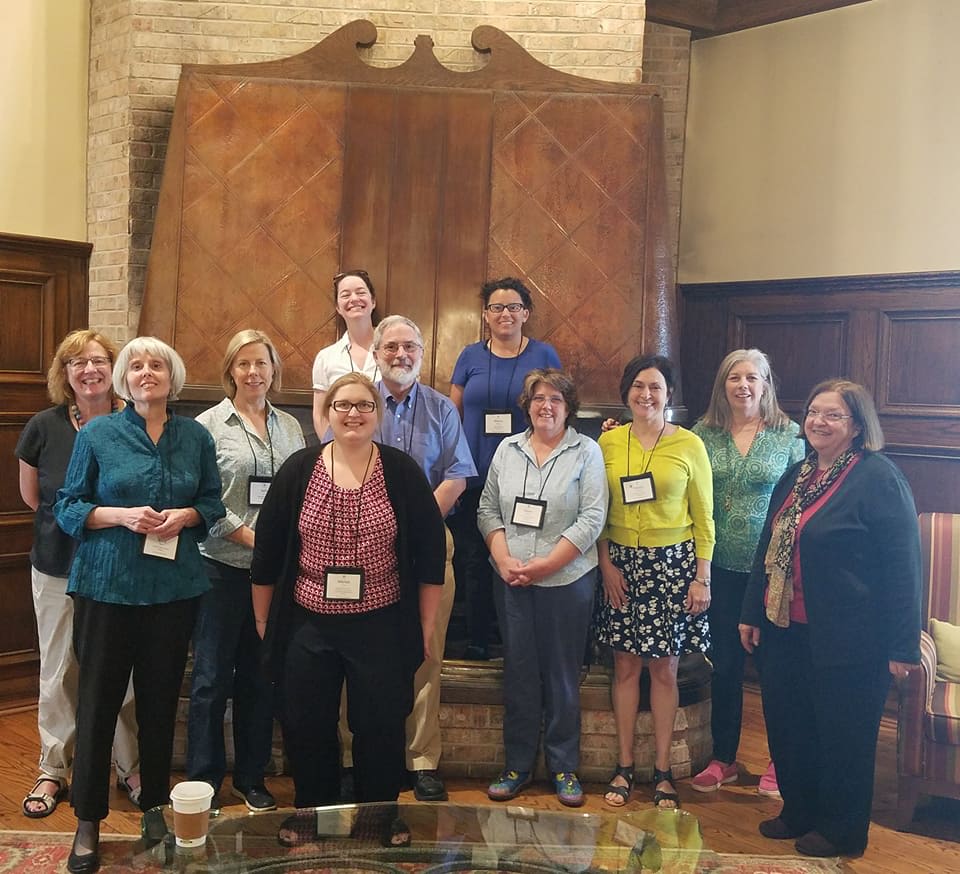
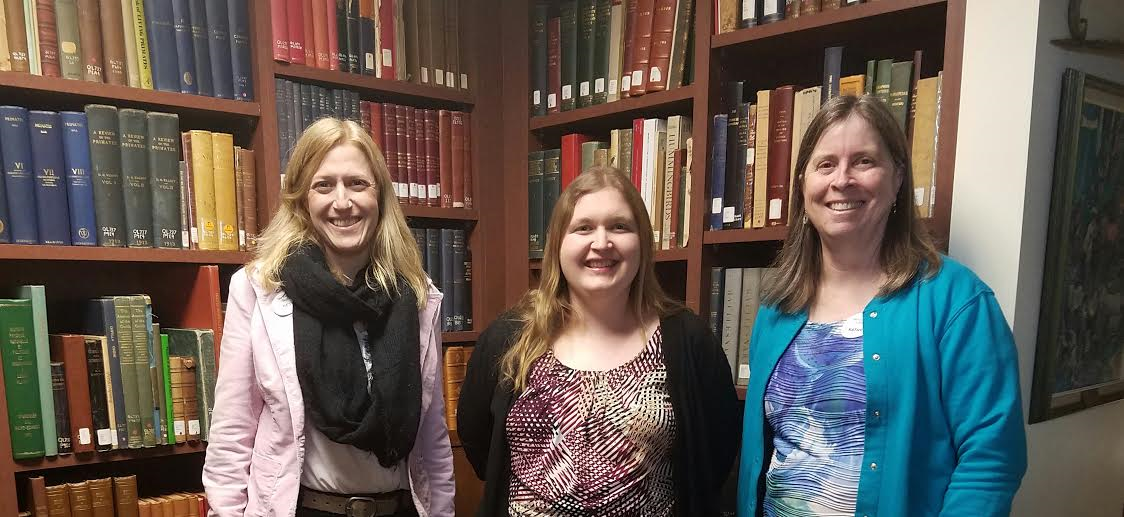
The Council on Botanical and Horticultural Libraries met for its annual conference in Chaska, Minnesota this year.  The conference, which took place June 5th through June 9th, was attended by three Expanding Access to Biodiversity Literature team members: Susan Fraser, Susan Lynch, and Mariah Lewis.

Tuesday the team hosted a pre-conference workshop titled “Contributing to a National Digital Infrastructure, with Help Every Step of the Way.”  The workshop was attended by both members of CBHL and those outside CBHL who were interested in the Expanding Access project.  The training covered a variety of topics including collection development, the Digital Public Library of America, metadata, imaging standards, BHL related tools and defining articles within BHL. The three-hour session was well attended and some attendees are expected to contribute to BHL in the upcoming months while others have already added content through Expanding Access.  Check out the Lloyd Library and Museum’s contributions here!
View Full Size Image

Tuesday evening, after a day of committee meetings, the opening reception kicked off the annual CBHL meeting.  A wonderful evening of hors d’oeuvres allowed members to reconnect and meet the ten first time attendees.

The next day was spent at the University of Minnesota Landscape Arboretum, a quick drive past Prince’s Paisley Park.  Kathy Allen, this year’s host and the Librarian at the Andersen Horticultural Library, welcomed CBHL members and introduced the Arboretum Director, Peter C. Moe, who gave a thorough, informative and interesting introduction to the Arboretum.  This was followed by a presentation about the Arboretum’s education programs by the Director of the Education Department, Tim Kenny.

The next presentation of the day followed David Bedford’s experiences with apple breeding at the University of Minnesota.  A Senior Research Fellow at the Horticultural Research Center, Bedford took the audience through a history of apple migration and how exactly we get those delicious apple varieties we see in the grocery store.  Notably, the University of Minnesota has developed such apple varieties as Honeycrisp, Regent, and SweeTango.

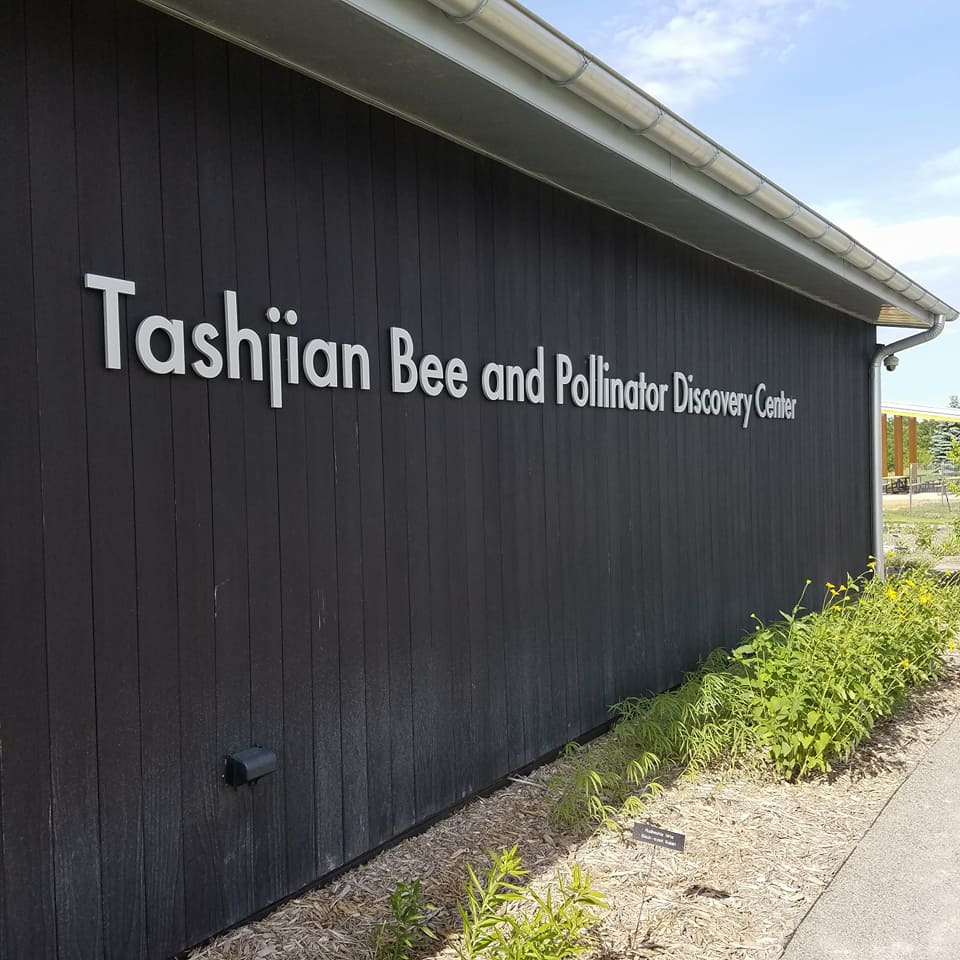
Wednesday afternoon was spent touring the garden and the Andersen Horticultural Library. Following this was a tram ride around 3-Mile Drive and a stop in at the newly constructed Tashjian Bee and Pollinator Discovery Center, which has been open less than a year.  The Center was created to be both an educational and outreach project in association with the University of Minnesota’s world-renowned bee research.
View Full Size Image

Thursday the attendees ventured to the University of Minnesota in the Twin Cities.  The morning kicked off in the Wangensteen Library of Biology & Medicine, where tours of the stacks and a rare book showing were given.  Later, members were able to tour the Weisman Art Museum and spend time in the Dear Darwin exhibit.  The crew then walked across the Mississippi on their way to the Elmer L. Andersen Library.

The early afternoon was spent between two activities.  The first was a presentation on the University of Minnesota’s Children’s Literature Research Collection which included a viewing of original artwork by Anne Ophelia Dowden, Betsy Bowen, and Phyllis Root.  The second activity was a tour through the Minnesota Library Access Center- the cavernous storage facility that can hold up to 1.4 million volumes.  With shelves standing 17 feet tall, items are shelved by size and retrieved by forklift.  Later that afternoon there was a panel discussion of Collection Stewardship.

After the group’s time at the University of Minnesota, they traveled to the Minneapolis Institute of Art, taking advantage of the range of art and artifacts in the wonderfully-curated exhibits.  Also nearby was “Eat Street.”  Covering seventeen blocks, Eat Street incorporates a number of different culinary styles, flavors and atmospheres.
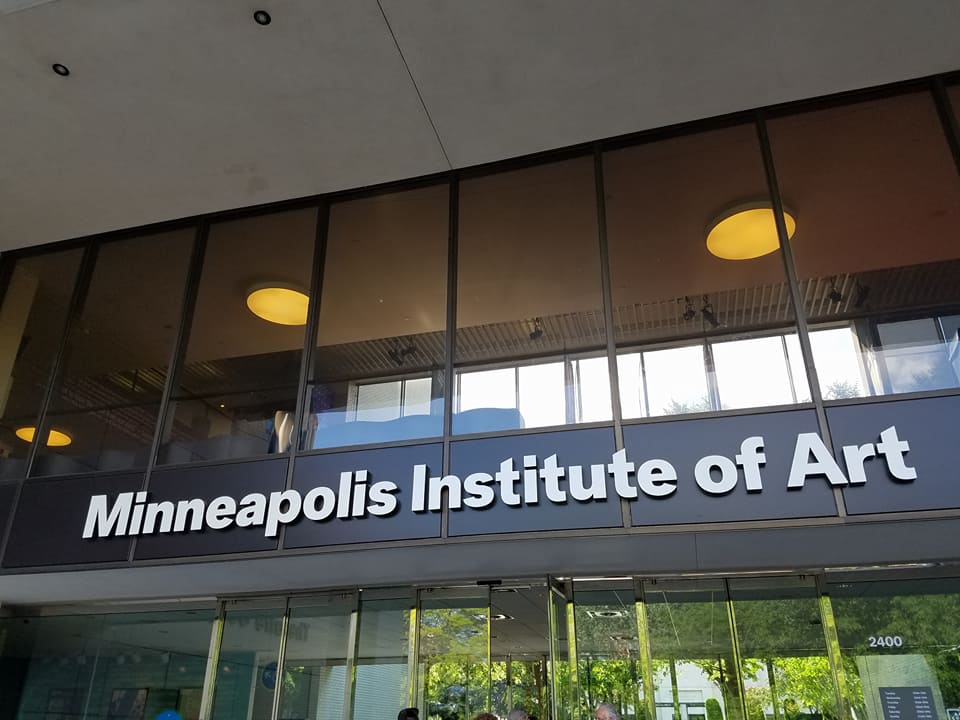
View Full Size Image

On Friday, the annual meeting returned to the Andersen Arboretum.  After a morning of business meetings, a joint CBHL/Friends of the Andersen Horticultural Library Luncheon was held.  CBHL members were able to enjoy the company of the Friends of the Library, who had graciously helped secure the luncheon speaker, and furniture designer legacy Mira Nakashima.  Reflecting on the life and career of her father, master furniture designer George Nakashima, and the current pieces the company is now working to create, Mira Nakashima’s presentation allowed the audience to travel with her into her memories.  After lunch Mira Nakashima led small group tours of the Andersen Library’s Nakashima furniture collection.

That afternoon, there was an Arboretum Behind-the-Scene bus tour where participants were able to see more than just the main area.  This included seeing the apple orchards referenced in an earlier presentation and the home of the osprey family that stars in the University of Minnesota Osprey Cam.
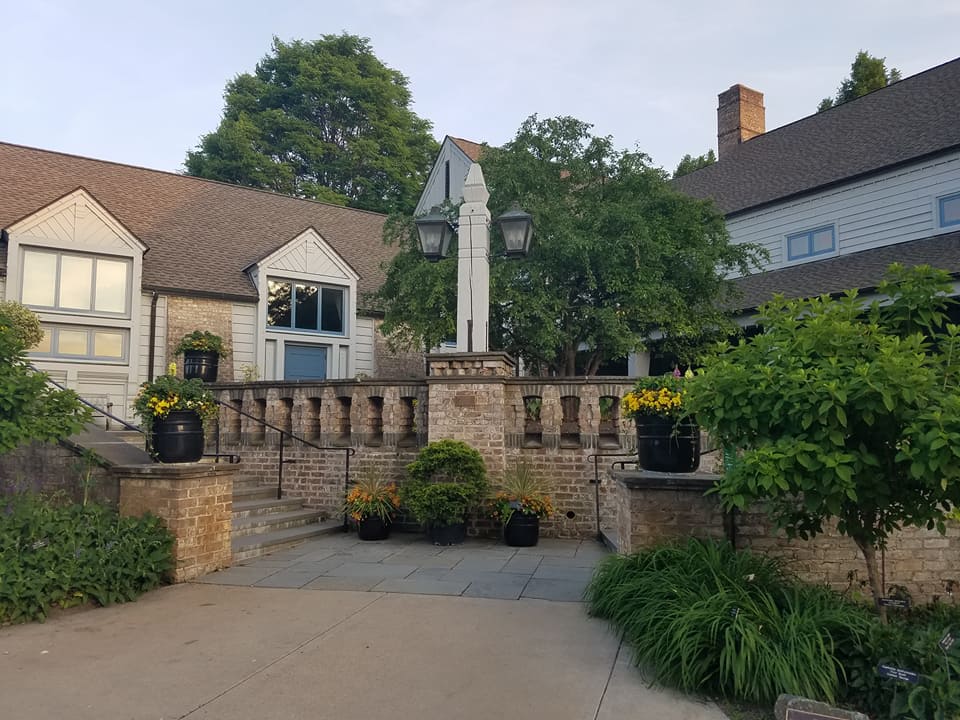
View Full Size Image

The conference concluded after the Annual Literature Award Ceremony and Banquet.  Each year, after the presentation of the awards and during the banquet, the members enjoy a final speaker and the book raffle.

This year’s banquet speaker was Dr. David Zlesak.  An Associate Professor of Horticulture at the University of Wisconsin, the presentation focused on the plant introduction pipeline.  This follows the life of new varieties from planning and breeding to marketing and selling.

Eight member presentations were given throughout the week.  A chance to share institutional projects with other members, the topics included plant information, children’s literature diversity, film crews in archives, Wikipedia edit-a-thons, bookplates, book reviews, lost gardens, and a new collection management system at the Morton Arboretum.

To read more about the Council on Botanical and Horticultural Libraries Annual Conference, check out the September issue of the CBHL Newsletter.

July 20, 2017by ntay
BHL News, Blog Reel

Expanding Access goes to Hollywood!

Portrait version of the Biodiversity Heritage Library logo.

This is Mariah Lewis, Metadata Specialist for the Expanding Access to Biodiversity Literature Grant Project, reporting in! Well, we didn’t get that biodiversity literature television show we had been hoping for, but the Expanding Access grant team was on the move again in February conducting training sessions. This time it was a cross-country adventure to California. Happy to escape the New York winter, I began my adventure in San Diego.

Balboa Park is the home to the renowned San Diego Zoo, child of San Diego Zoo Global. However, northeast of the more traditional zoo, nestled among bright green mountains in the San Pasqual Valley is the San Diego Zoo Safari Park. The expansive wildlife sanctuary covers 1,800 acres and is occupied by over 3,000 animal residents. Over the weekend I was able to visit this oasis, go on a safari on the Africa tram, and even catch a cheetah cub feeding.

View Full Size Image

As the weekend ended it was time to get to work! Also found at the Safari Park is the Institute for Conservation Research, the Harter Veterinary Medical Center, and the San Diego Zoo Global Library. The Library is committed to providing materials, research, and project assistance to the San Diego Zoo Global crew and houses most of the zoo’s collection of over 12,000 books and journals.

The Expanding Access training was hosted and attended by the Library staff. The two-day training cast a broad net including an overview of BHL, instruction on BHL systems and workflows, and hands on training of those BHL systems. We look forward to working with the team at the San Diego Zoo Global Library to include Bulletins of the Zoological Society of San Diego and other titles in the Biodiversity Heritage Library!

View Full Size Image
Photograph by: Jeanne Nelson
Pictured: Beth Autin, Mariah Lewis, and Kathy Elliott at the San Diego Zoo

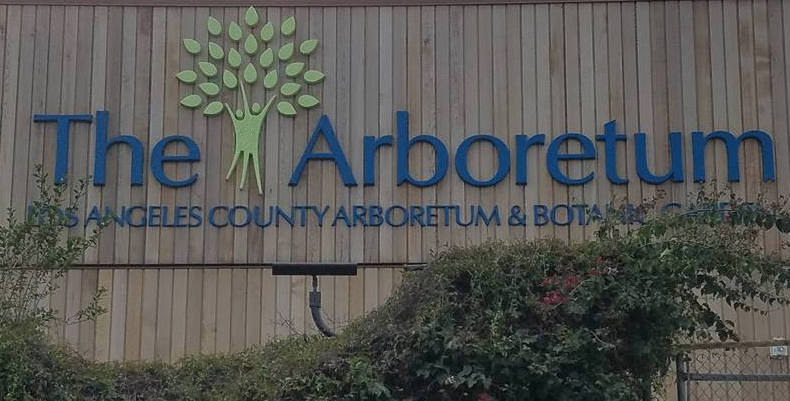
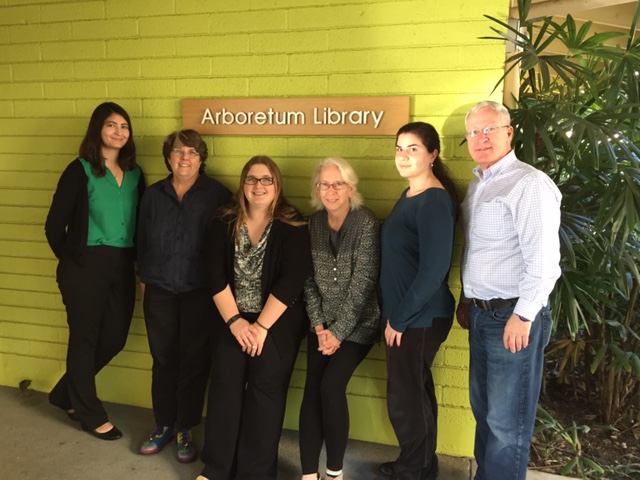
The next stop on my California adventure was Lost Angeles after getting a (non-literal) crash course in California rush hour. The second training session was hosted at the Los Angeles County Arboretum & Botanic Garden and included staff from the LA Arboretum Library and the Natural History Museum of Los Angeles County, both now Affiliates of BHL.

The history of the Los Angeles County Arboretum is rich and well documented on the Arboretum’s website. A year after its founding in 1947, Dr. Frans Verdoorn- the first director- obtained the Library’s first 1,000 books. With such a storied history it is no surprise that the Arboretum goes beyond being a botanical garden and also represents a historical site. The Library is a great example of how the LA Arboretum respects and exceed its mission to, “cultivate our natural, horticultural and historic resources for learning, enjoyment and inspiration.” The current structure that houses the Library was originally built in 1959 with the addition of an annex built in 1986. The library is open to the public and its materials can be used on site. The Library holds a truly extensive collection of seed catalogs from companies across California- from Los Angeles to San Francisco. These seed catalogs will be added to BHL as part of the Expanding Access project.

View Full Size Image

The Natural History Museum of Los Angeles County is one of three in a family of natural history museums. The other two are the La Brea Tar Pits and Museum and the William S. Hart Park and Museum. Located southwest of downtown Lost Angeles, the Museum has a collection of over 35 million objects placing it among the top collectors of natural and cultural history collections in terms of both the vastness and value of the items. It holds the title of being the largest of its kind within its collection since its inception in 1913. The Library has over 200,000 items and over 30 Special Collections in a number of fields related to natural history. The Library is accessible to Natural History Museum staff and researchers who make appointments. They have a strong focus on Southern California with content dating back to the 16th century. As one of their first additions to the Expanding Access project, they will be contributing a very rare and significant book about the birds of Ceylon.

This training was more focused on the hands-on aspects of BHL- getting images and information into BHL and making sure it is in the best possible condition for our users. The day was beautiful and we were able to enjoy lunch with the Arboretum’s many peacock residents. The namesake for their face, there is also an event in March celebrating the friendly fowl whose lineage dates back to the late 1800s. The interactions between these two institutions and their staff was a wonderful reminder of the collaborative nature of the Biodiversity Heritage Library and its ability to help institutions transcend silos.

View Full Size Image
Photograph by: Bill Vogt
Pictured: Marissa Kings, Susan Eubank, Mariah Lewis, Patty Johnson, Lauren Noonan, Richard Hulser
While the weather for the trainings was perfect- in true California fashion- I was also able to experience the rain storm that made headlines. Hailed as a “once-in-a-decade” storm, I was truly able to get a well-rounded and amazing experience in Southern California. A special thanks goes out to my fabulous hosts in San Diego and Los Angeles for being part of the Expanding Access project and taking time out of their week to learn more about BHL!

References:

Donahue, Katharine E.S. “Natural History Museum of Los Angeles County Research Library.” Science & Technology Libraries 6, no. 1–2 (October 4, 1985): 83–89. doi:10.1300/J122v06n01_09.
“Natural History Museum of Los Angeles County – Los Angeles County.” Accessed March 2, 2017. http://www.lacounty.gov/things-to-do/libraries-museums/museum-of-natural-history.
“Libraries & Museums – Los Angeles County.” Accessed March 9, 2017. http://www.lacounty.gov/things-to-do/libraries-museums/.
“Our History | The Arboretum.” Accessed March 2, 2017. http://www.arboretum.org/explore/our-history/.
“Research Library.” Natural History Museum of Los Angeles County, May 24, 2010. http://www.nhm.org/site/research-collections/research-library.
“SDZG Library.” Accessed March 13, 2017. http://library.sandiegozoo.org/about.htm.

“About San Diego Zoo Global.” San Diego Zoo Safari Park, December 16, 2014. http://sdzsafaripark.org/visitor-info/about-san-diego-zoo-global.

Photographs: All photographs, unless otherwise noted, were taken by Mariah Lewis.

March 16, 2017by ntay
BHL News, Blog Reel

On the Case: An Internship in Detective Work, Library Style

View Full Size Image
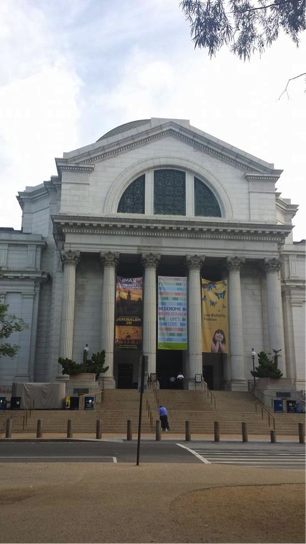
Facade, Smithsonian’s National Museum of Natural History

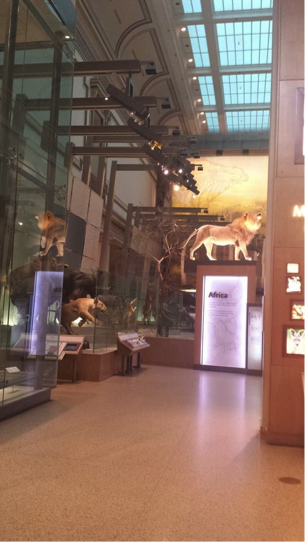
My earliest memory of the Natural History Museum is climbing the steps to see the “stuffed animal zoo.” It was a very rainy day and our plans of visiting the National Zoo were put on hold. However, my mom had an idea so that I- only about four or five at the time- could still see animals. I had no idea at the time what exactly she meant by “stuffed animal,” but I had a blast and returned frequently during our yearly trips up from Florida. The stairs seemed so much taller back then. Now they’re just a quick jaunt up to something much more than a place to escape the rain. As the years and visits went by, I found that I did not get bored by the many visits. Instead, I started looking at different aspects of the museum- beyond the educational tags and videos. I started seeing the museum as an entity and watching how much it meant to the different people visiting.

View Full Size Image
Mammal Hall, Smithsonian’s National Museum of Natural History

I completed my undergraduate degree at Florida State University, majoring in Interdisciplinary Social Sciences with a focus on Anthropology and History. I also completed a minor and certificate program in Museum Studies. I am currently working on completing my graduate degree at Catholic University of America in Library Information Science with a focus on Cultural Heritage Information Management.

Being able to work with the Smithsonian Libraries was an amazing experience. I was able to spend the last six weeks working with the Biodiversity Heritage Library as part of the Professional Development Internship Program. Those weeks flew by as I worked on a number of different projects. One of the main projects I worked on had to do with BHL’s issue tracking system, called Gemini. With digital libraries comes an even bigger audience which can lead to even more input. BHL users are able to note problems, questions, or requests that they have with items in the library which are then sent through to the issue tracking system. I was able to help unravel some of the difficult bibliographic questions which were anchored in the age old “what were the publishers thinking?” Bibliographic leg work made me feel as though my librarian skills were taking me down the path of a detective. Except instead of a dark alley I was making my way through the cyber-shelves of OCLC, wandering through different countries’ books to add to my collective knowledge about a title.

View Full Size Image
Mariah Lewis, BHL Professional Development Intern

While working on different issues in the issue tracking system I was able to make edits to the records in the BHL. After doing cataloging and metadata work in previous internships I found it very interesting to see how that data was stored and edited in a digital library setting. The collaborative effort that went into editing BHL records and answering questions in the Gemini system was incredible. With participating institutions all over the world, communication and team work was indispensable.

Working with BHL was a big change from my previous library work. It was my first time in a library setting not working with books. The transition from working with books and documents in a digitization setting to never seeing a book was not as difficult as I was expecting. I was given first-hand experience working with digital surrogates or- as some would say- totally new digital objects. Beyond this, it was really interesting to see how you can work with people all over the country and world with technology. While that seems obvious, BHL takes this to a different level and really works at having clear communication lines. The collaborative effort was probably the most inspiring part of the internship. I saw how BHL’s work can be used in other aspects of librarianship which complements my library and information science education and gives me hope and ideas for the future of librarianship.

Mariah Lewis
BHL Professional Development Intern

August 28, 2014by ntay

Help Support BHL

BHL's existence depends on the financial support of its patrons. Help us keep this free resource alive!

search

About BHL

The Biodiversity Heritage Library (BHL) is the world’s largest open access digital library for biodiversity literature and archives. BHL operates as a worldwide consortium of natural history, botanical, research, and national libraries working together to digitize the natural history literature held in their collections and make it freely available for open access as part of a global “biodiversity community.”

Join Our Mailing List

Sign up to receive the latest news, content highlights, and promotions.

Subscribe Now

Subscribe to Blog via Email

Enter your email address to subscribe to this blog and receive notifications of new posts by email.

Join 319 other subscribers

Subscribe to Blog Via RSS

Subscribe to the blog RSS feed to stay up-to-date on all the latest BHL posts.

Access RSS Feed

Inspiring Discovery through Free Access to Biodiversity Knowledge.

The Biodiversity Heritage Library makes it easier than ever for you to access the information you need to study and explore life on Earth…for free, anytime, anywhere.


64+ Million Pages of
Biodiversity Literature Online.

EXPLORE

Tools and Services
to Transform Research.

EXPLORE

300,000+
Illustrations on Flickr.

EXPLORE

ABOUT | HARMFUL CONTENT | PRIVACY | SITE MAP | TERMS OF USE