Biodiversity Heritage Library - Program news and collection highlights from BHL
  • Home
  • News
  • Featured Books
    • All Featured Books
    • Book of the Month Series
    • BHL at 20
  • User Stories
  • Campaigns
    • Fossil Stories
    • Garden Stories
    • Monsters Are Real
    • Page Frights
    • Her Natural History
    • Earth Optimism 2020
  • Tech Blog
  • Visit BHL
Home
News
Featured Books
    All Featured Books
    Book of the Month Series
    BHL at 20
User Stories
Campaigns
    Fossil Stories
    Garden Stories
    Monsters Are Real
    Page Frights
    Her Natural History
    Earth Optimism 2020
Tech Blog
Visit BHL
  • Home
  • News
  • Featured Books
    • All Featured Books
    • Book of the Month Series
    • BHL at 20
  • User Stories
  • Campaigns
    • Fossil Stories
    • Garden Stories
    • Monsters Are Real
    • Page Frights
    • Her Natural History
    • Earth Optimism 2020
  • Tech Blog
  • Visit BHL
Biodiversity Heritage Library - Program news and collection highlights from BHL
BHL News, Blog Reel

Now Hiring! Program Manager for the Biodiversity Heritage Library at Smithsonian Libraries

now hiring bhl program manager

Biodiversity Heritage Library and Smithsonian Libraries logos

Do you want to help empower global biodiversity research and serve as part of a vibrant, international community dedicated to providing free, worldwide access to biodiversity information? The Biodiversity Heritage Library seeks a Program Manager committed to elevating current successes and challenging our Program into the future by ensuring organizational excellence, fostering strategic partnerships, and embracing advances in digital technologies, information science, big data, and bioinformatics to serve the evolving needs of 21st century researchers.

Headquartered at the Smithsonian Institution, the Biodiversity Heritage Library (BHL) is the world’s largest open access digital library for biodiversity literature and archives. Through the collaborative efforts of a global consortium of over 80 natural history, botanical, research, and national libraries, BHL provides free access to over 57 million pages from hundreds of thousands of volumes, representing over 500 years of scientific exploration, discovery, and data. Working closely with the international community of biodiversity data providers and natural history collection service organizations, including GBIF, CoL, CETAF, TDWG, EOL and iDigBio, BHL is part of the core infrastructure for biodiversity research and data. As an important contributor to this global network, BHL helps equip researchers with the information they need to tackle today’s biodiversity, environmental, and climate crises.

As the Program Manager, you will help BHL build its partnerships and maintain and grow its infrastructure and services, ensuring that the Library fulfills the research needs of a global, diverse audience. You will be responsible for managing BHL’s administrative and financial functions and providing project management support across BHL’s global consortium. Additional responsibilities include partner stewardship; fundraising and grant-writing support; participation in national and international organizations to develop strategic partnerships; and facilitation of stakeholder input to inform BHL’s growth and development.

The Program Manager is an essential member of the BHL Secretariat located at the Smithsonian Libraries in Washington, D.C. with offices in the National Museum of Natural History. This is a GS-12 federal position (salary range USD $83,398 – $108,422) open only to U.S. citizens. It includes a comprehensive benefits package offering vacation and sick leave, life/health insurance, and retirement program options.

Visit USAJOBS.gov to apply. Applications are due by 18 November 2019.

USAJOBS announcement number 20R-SA-305207-DEU-SIL.

November 6, 2019by michelle.underhill
BHL News, Blog Reel, Featured Books

The John Torrey Papers: Increasing Accessibility with Full Text Transcriptions in BHL

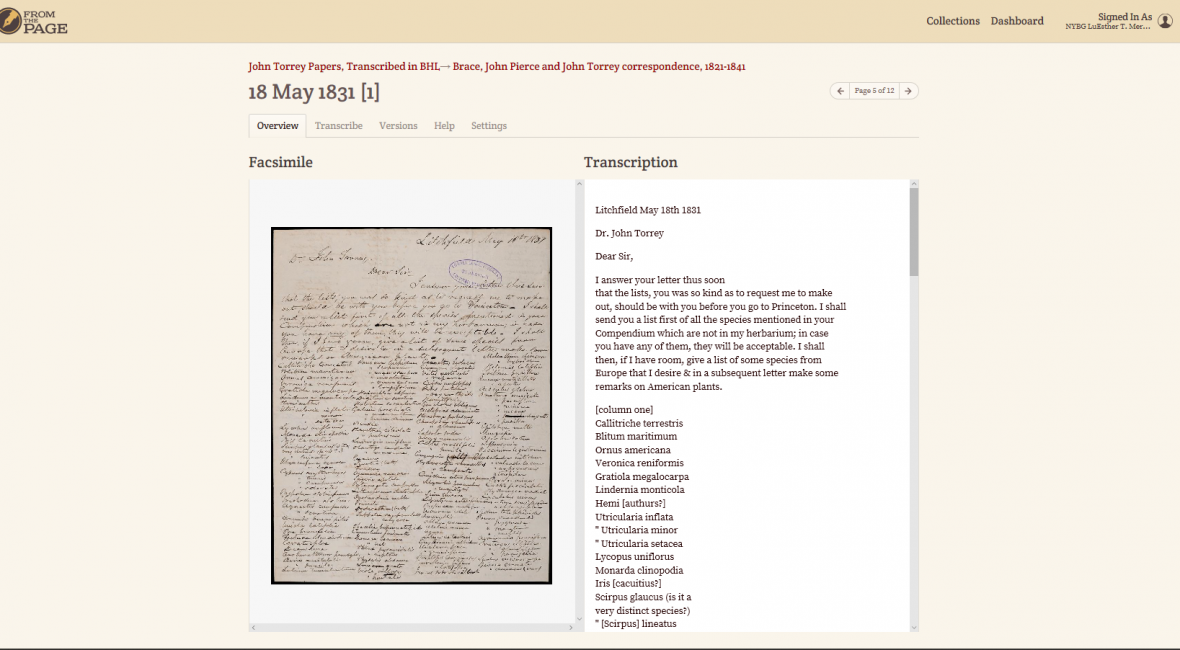
screenshot of a transcription in the from the page platform
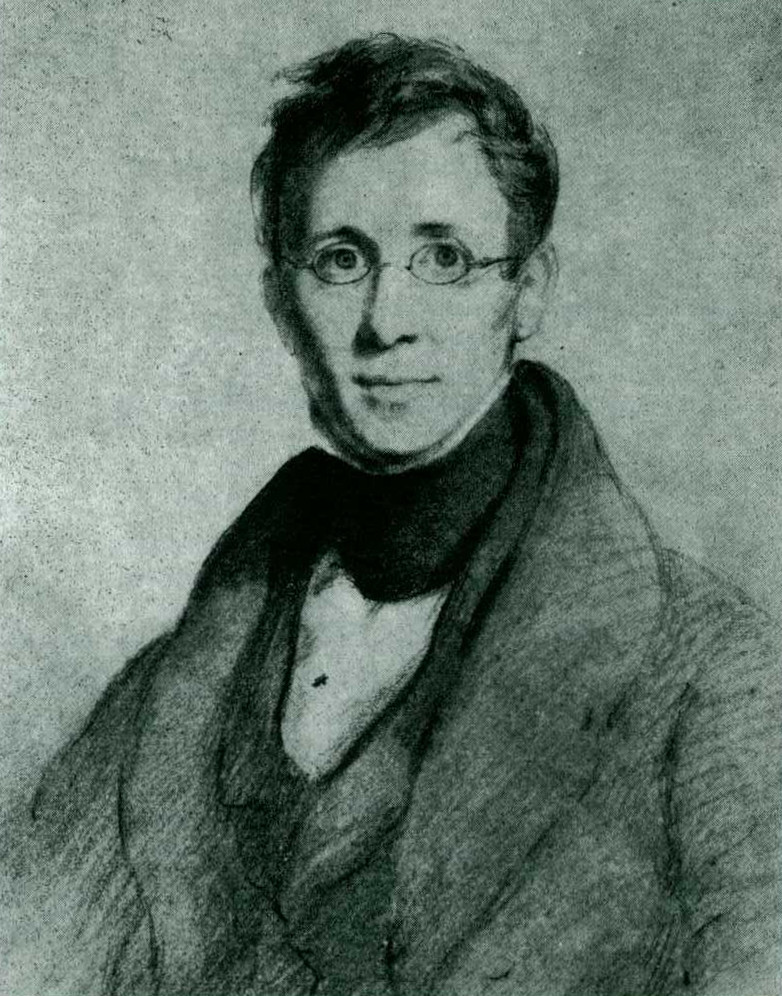
black and white portrait of a young man, john torrey

Drawing of John Torrey by Sir Daniel MacNee. From the collection of Sir William Hooker, The Royal Botanic Gardens at Kew, England.

Since July 2016, the papers of taxonomic botanist John Torrey (1796-1873) have been the focus of a digitization and crowdsourced transcription project at the New York Botanical Garden (NYBG). Digitizing and Transcribing the John Torrey Papers, organized in coordination with the Biodiversity Heritage Library (BHL) and funded by the National Endowment for the Humanities and the Carnegie Corporation of New York, was created in an effort to digitize and make virtually accessible the correspondence of John Torrey and his colleagues, specifically letters received by Dr. Torrey.

Access to the correspondence of Dr. Torrey is particularly useful to natural scientists and natural historians alike as these letters provide a glimpse into the thought process and workflow for many of the 19th century’s greatest botanical minds. These letters are filled with a variety of different content, including commentary on plant taxonomy, personal biographical details, and anecdotal information on the daily lives of these natural scientists. The content within these letters aid in our understanding of the realities faced by these pioneering botanists, including the shift from the Linnaean system to the natural system and the systemic challenges faced by individuals in an emerging profession..

The John Torrey Papers collection contains over 9,500 pages from more than 350 correspondents, including Asa Gray, Amos Eaton, and Joseph Henry. The collection is organized alphabetically by correspondent then chronologically by the date each letter was written. Each page of each letter is scanned as a .tif file and uploaded to Macaw, BHL’s metadata management system, which aggregates the .tif file with a New York Botanical Garden MARC XML record. Once appropriate metadata has been applied in Macaw, the correspondence are uploaded to the Biodiversity Heritage Library Collection in the Internet Archive. The correspondence’s placement in the BHL Collection then allows for BHL to harvest new material from the Internet Archive on a weekly basis.

Digital content management is a crucial aspect of the project, but the heart of the process lies in the crowdsourced transcriptions done by volunteers from the New York Botanical Garden. These volunteers, recruited through citizen science outreach events, workshops, and tabling opportunities at various locations, work on the transcription platform From the Page, which is one of three transcription platforms whose exports are currently accepted by the Biodiversity Heritage Library, allowing the automatically-generated OCR for these items to be replaced with crowdsourced transcriptions, enabling full text search.

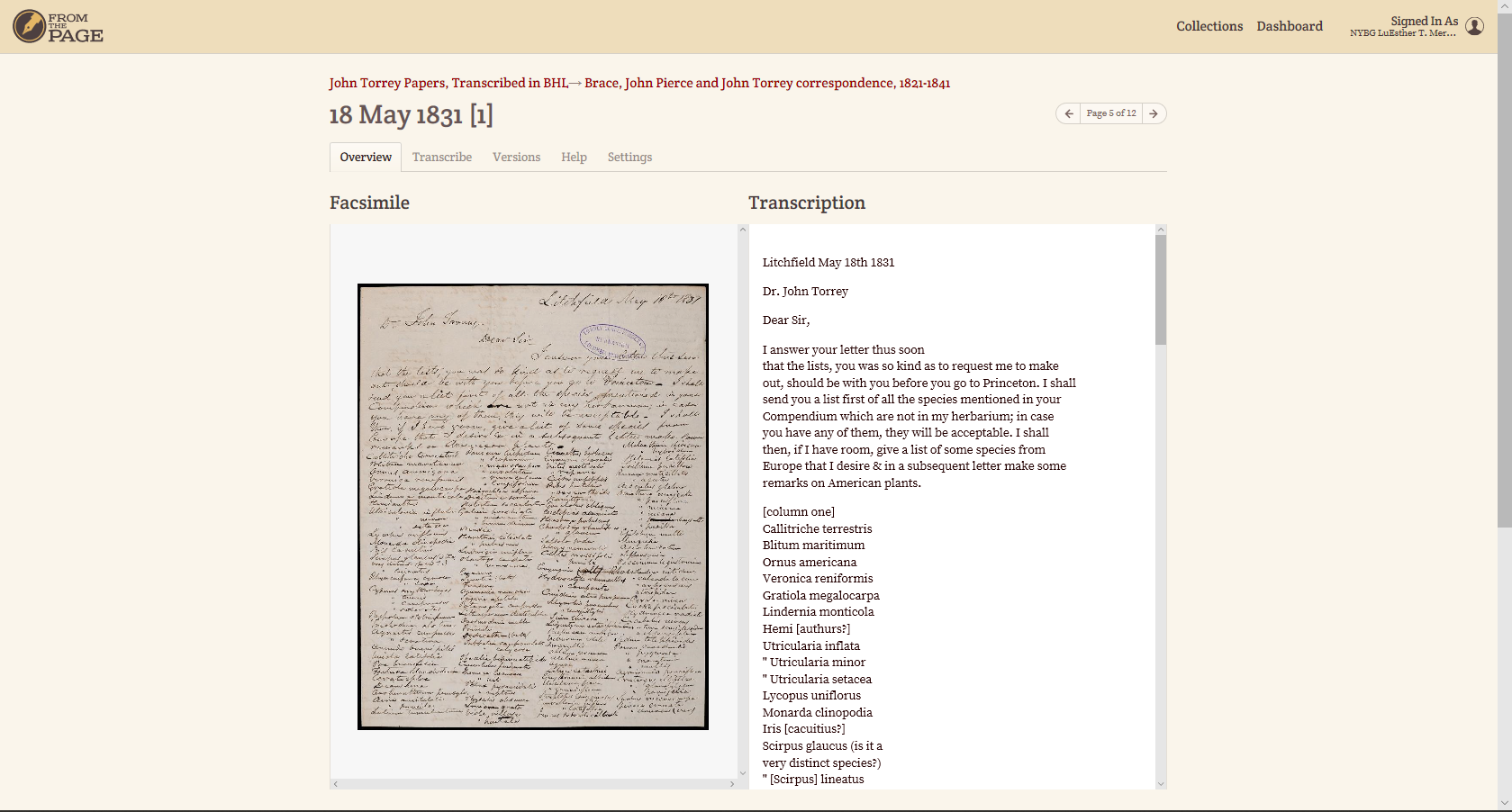
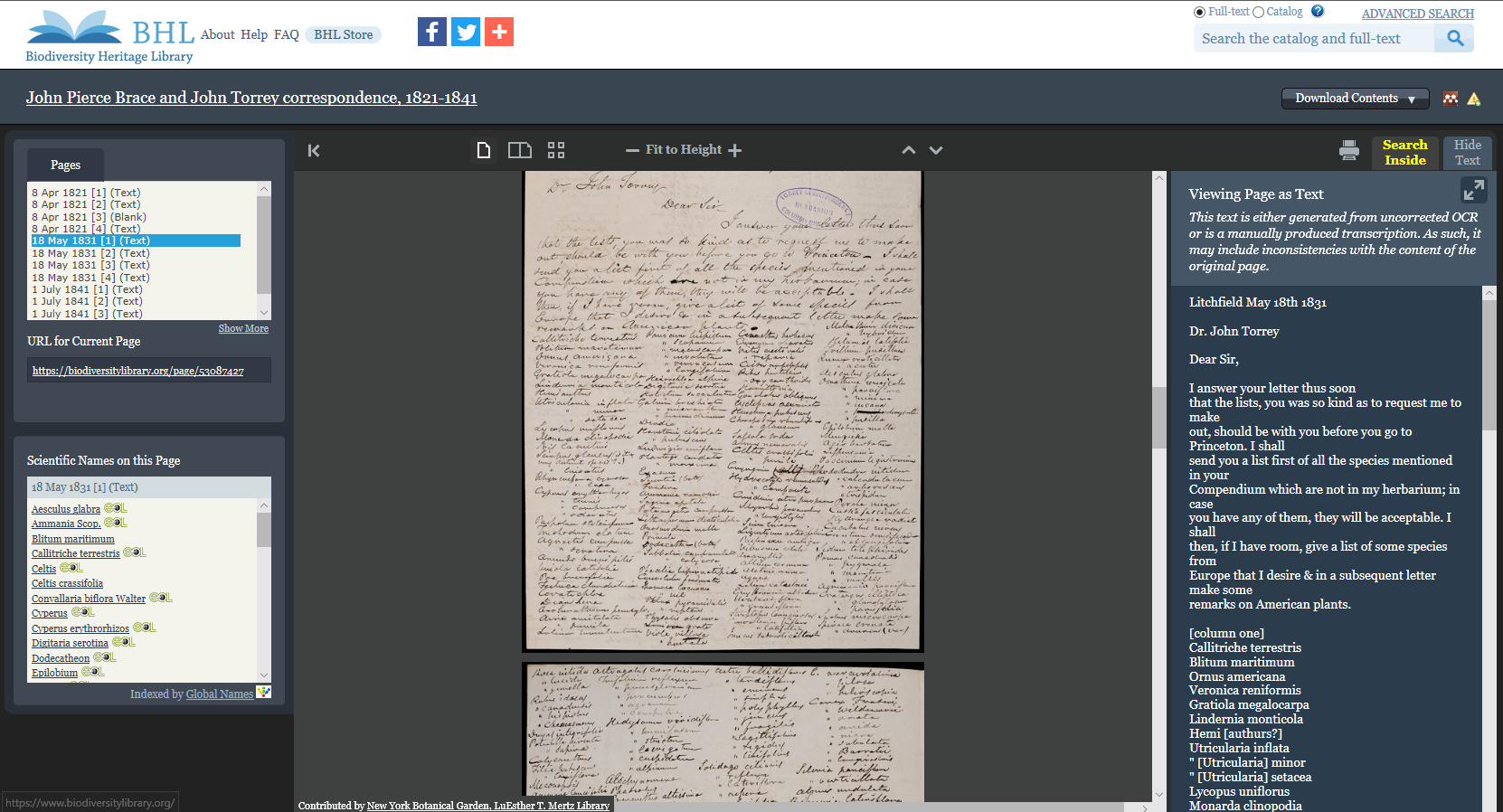
FTP Example Screenshot.PNG

A screenshot of a completed transcription from John Pierce Brace to John Torrey (May 1831) in From the Page.

The work done by these volunteers is a contribution to the project for two reasons. First, the handwriting, colloquialisms, and personal shorthand of many of Dr. Torrey’s correspondents are exceptionally difficult to read or interpret. With the correspondence of many correspondents containing several hundred pages, it takes a considerable amount of time for our volunteers to develop a proficiency capable of not only accurately deciphering poor handwriting but also of uncovering the intention or context of particular writings.

Second, the transcriptions produced by the Garden’s volunteers coupled with BHL’s new support for transcriptions facilitates full text searching of materials that would otherwise be unavailable. The introduction of full text searching to the world of transcriptions is extremely impactful as it allows researchers to execute a more thorough examination of resources available to them at a faster pace and with higher levels of productivity. A prime example of this is the Biodiversity Heritage Library’s page index of scientific names, as seen in the lower left hand corner of the figure below.

In effect, the Digitizing and Transcribing the John Torrey Paper’s volunteers are the bridge between the content we are looking for and how we look for it.

BHL Blog Screenshot.PNG

Screenshot of the completed John Pierce Brace page once the transcription and image files have been matched in BHL.

To date, more than 7,000 pages have been transcribed and more than 6,000 transcribed pages are available for view in BHL, but the goals of the Digitizing and Transcribing the John Torrey Papers project still have not been met.

With less than 1,500 pages remaining, the New York Botanical Garden is in search of new volunteers to help reach our goal and transcribe some of our most interesting correspondents remaining to be done such as William Jackson Hooker, the former Director of the Royal Botanic Gardens, Kew, and New England natural scientist Dewey Chester. While many of our volunteers are drawn to the project due to their interest in botany, many more are captivated by narratives not typically associated with botany, such as Carl Bogenhard’s struggles as an immigrant in the United States or Jacob Whitman Bailey’s experimentation with photography.

If you would like to become a volunteer transcriber for the Digitizing and Transcribing the John Torrey papers project, you can sign up online here or email [email protected] for more information or assistance with the sign up process.

If you would like to learn more about the life of John Torrey, works he published, or plants named after him, please visit out digital exhibit “John Torrey: American Botanist.”

September 24, 2019by Joel Richard
BHL News, Blog Reel

Live Digitisation for BHL at the Long Night of Museums in Berlin

At the Long Night of the Museums on 31 August 2019, the library of the Museum für Naturkunde presented its digitisation activities around a current project to index its Drory Library. In addition to particularly impressive books from the collection, which are already accessible in the Biodiversity Heritage Library, two books were digitised which were not yet available in BHL.

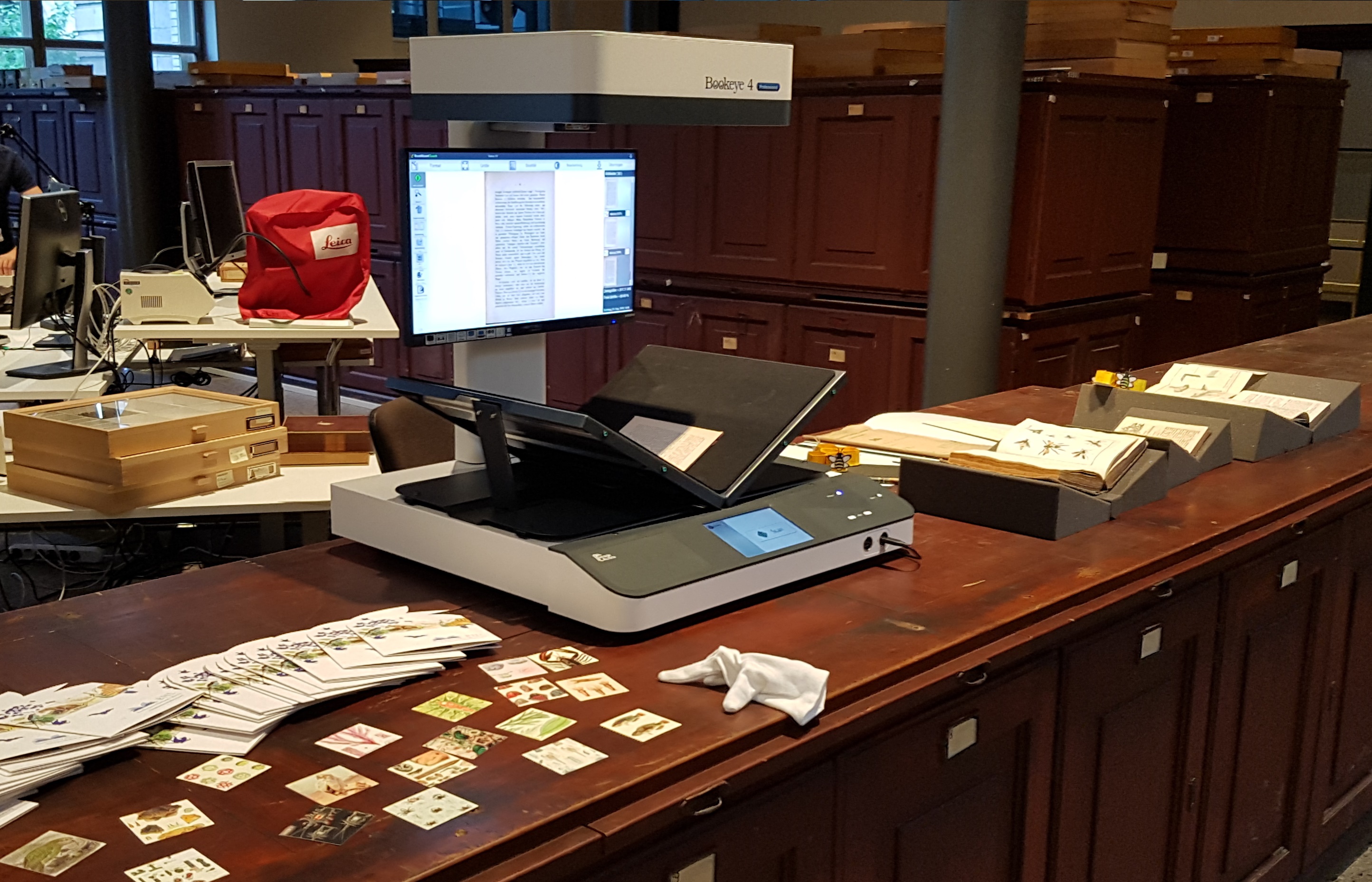
LNDM_01.jpg

Fig. 1. Display during the Long Night of the Museum 2019. Photo by: Elisa Herrmann | MfN.

Long Night of the Museums

The Long Night of the Museums is a popular series of events and a highlight in Berlin’s cultural calendar. This year, 40,000 visitors accepted the invitation of 75 Berlin museums, which opened their collections and offered deeper insight into their research. For the second time in a row, the Museum für Naturkunde was the most popular destination with 10,500 visitors. Current scientific research and internal developments were presented to the public at 20 events. The latter included in particular the digitisation of the museum’s collections. In addition to insect boxes and archival material, the focus was also on the library collection. The Museum für Naturkunde has been a Member of BHL since 2018 and will primarily digitize for BHL.

The Drory Library

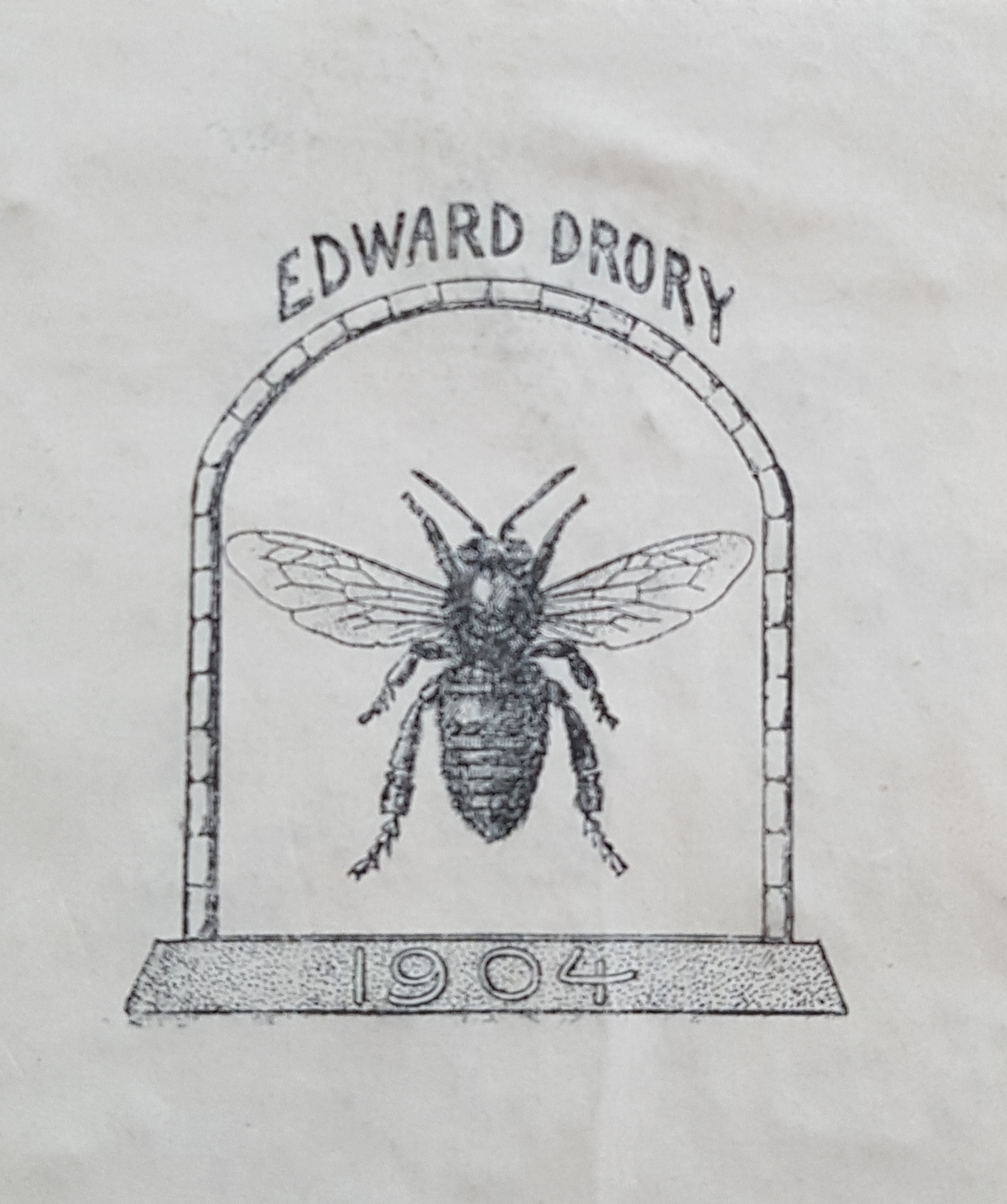
The Drory Library is a sub-collection of the Historic library collection and of special importance. It is the library of Edward Drory (1844-1904), an enthusiastic beekeeper but also an important Berlin personality. Edward Drory was a successful entrepreneur and owner of the English Gas Institute in Berlin. In his time, he owned the “largest apist library” with publications beginning in 1470, although most of the collection dates from the 18th and 19th centuries. In 1904, Edward Drory donated his beekeeping library to the Royal Zoological Museum in Berlin with the agreement that all volumes would receive an ex-libris (fig. 3) and be displayed in the library of the Hymenoptera collection.

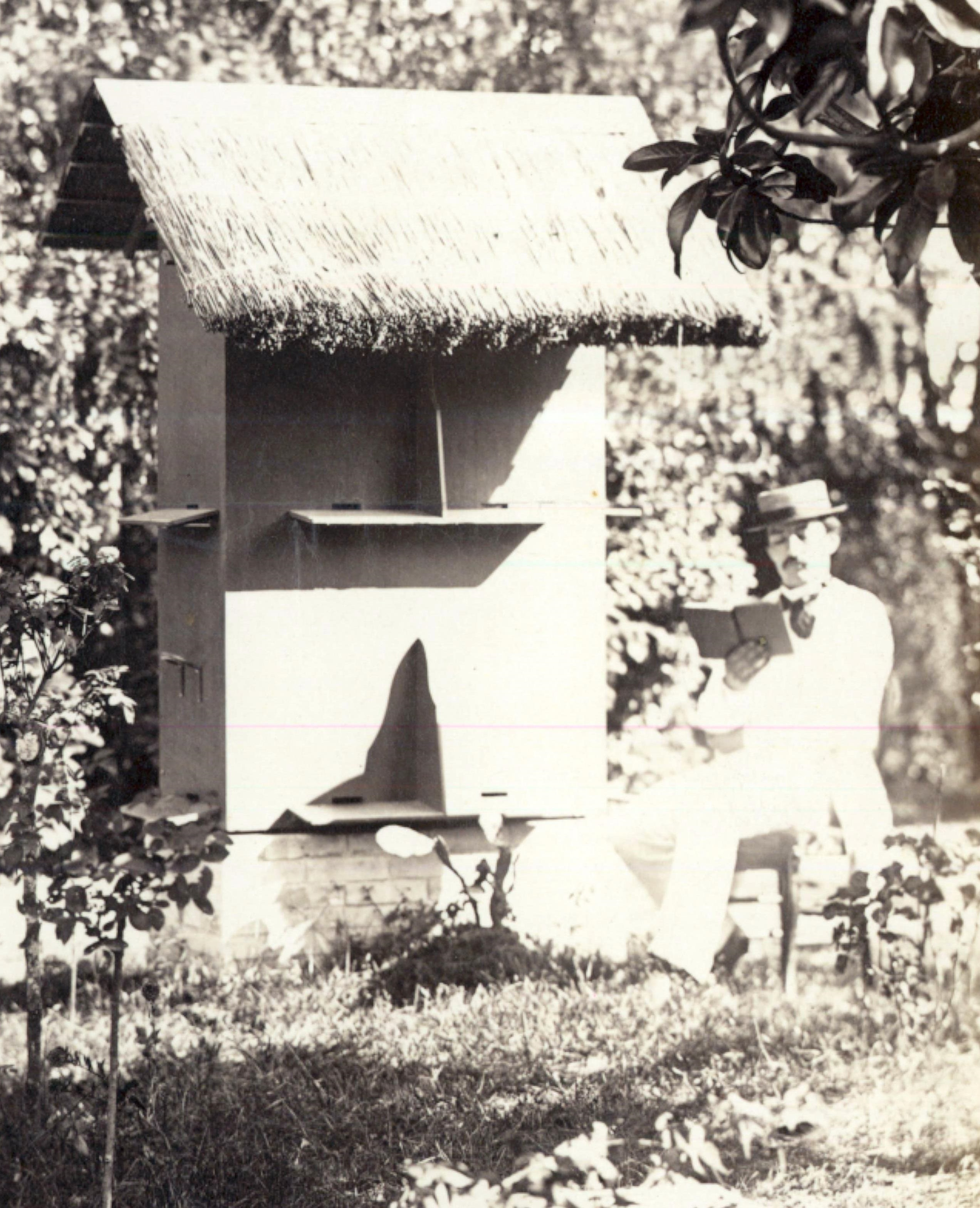
026 Eduard Drory Bienenhaus 1874_smal.jpg

Fig. 2. Edward Drory in front of his apiary, 1874. Photo Courtesy: Viola Richter | MfN.

LNDM_05.jpg

Fig. 3. Ex-Libris of the Dory library. Photo courtesy: Elisa Herrmann | MfN.

The collection comprises approximately 2,400 volumes — of which about 800 are journals and about 1,600 are monographic volumes (around 480,000 pages) — and contains literature in various languages — German, French, English, Latin, Italian, Dutch, Spanish, Finnish, and Polish.

The long-term goal is to digitize the Drory library and the corresponding card catalogue completely or at least partially and to make it available as a research basis or scientific-historical contribution for a number of disciplines — history of science, biology (species diversity of bees, taxonomic findings, endangerment of honeybees by humans), medicine (allergies to bee venoms), pharmacy & naturopathy (bee venom, propolis as a means of treatment) and agricultural sciences (economic significance of bees). To reach this goal, the library started an indexing project with a grant from the von Pawel-Rammingen Stiftung that will answer the most important questions before starting the digitization, such as the exact scope, conservatory condition and availability on the Internet.

LNDM_02.jpg

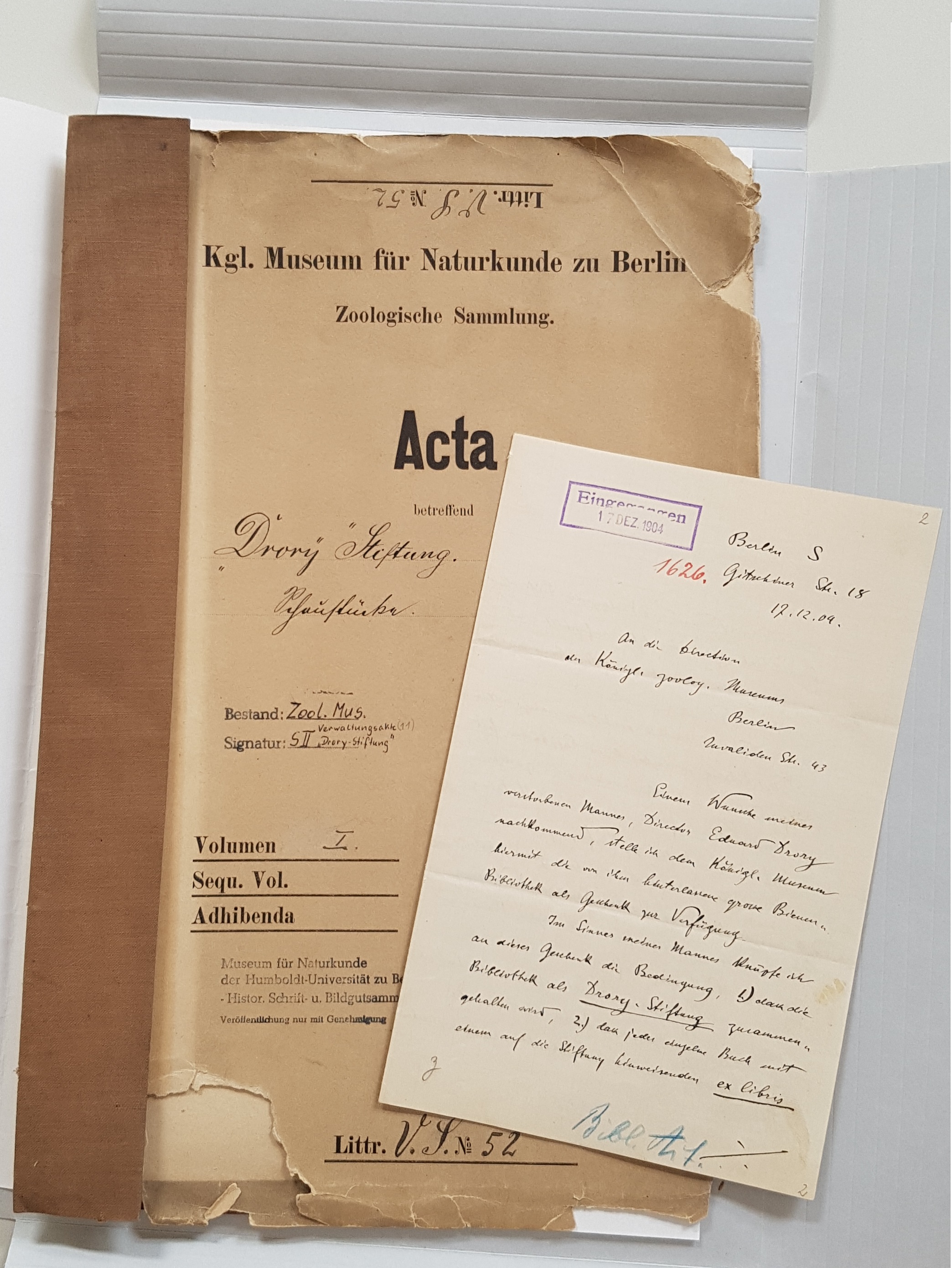
Fig. 4. File from the Historical archive of the Museum für Naturkunde Berlin, documenting the handover of the Drory library to the museums. Photo by: Elisa Herrmann | MfN.

LNDM_04.jpg

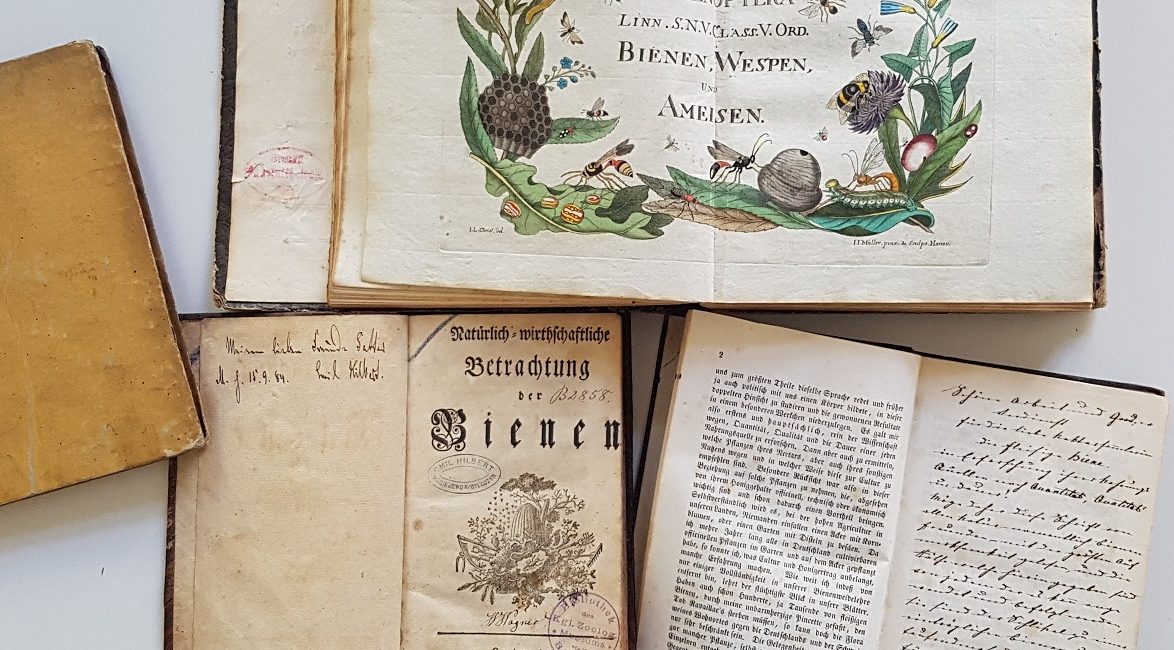
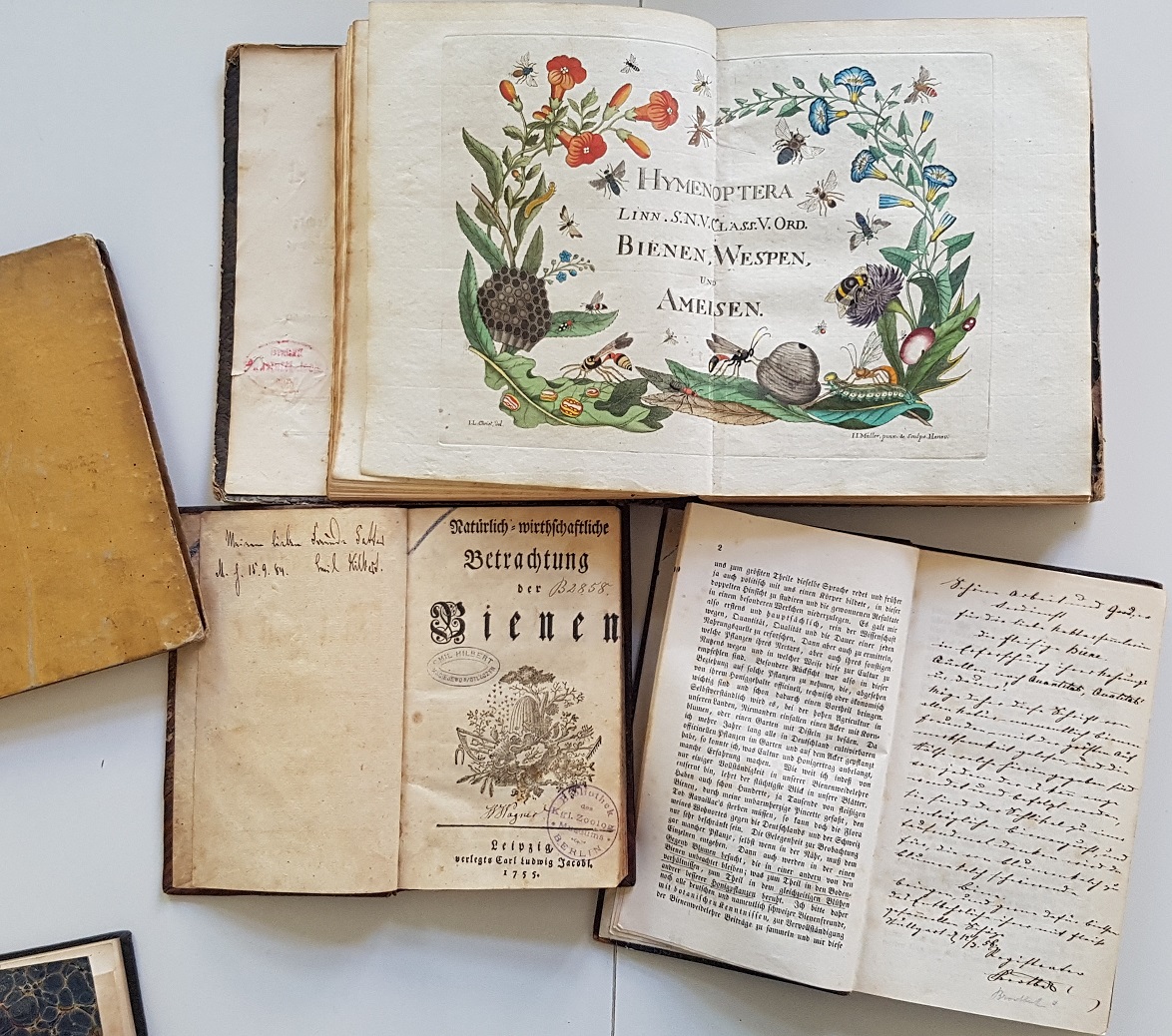
Fig. 5. Books from the Drory library that went on display during the Long Night of the Museum 2019. Photo by: Elisa Herrmann | MfN.

During the Long Night, selected works were presented to the visitors, including a copy of Naturgeschichte, Klassification und Nomenclatur der Insekten vom Bienen, Wespen und Ameisengeschlecht […] by J. L. Christ from 1791, as well as books on beekeeping, bee-friendly plants and philosophical-literary essays on bees, in order to illustrate the range of the Drory Library. One highlight on display was the archive file with the documents for the handover of the library to the museum from 1905 (fig. 4).

Many books from the collection are not yet in BHL; two of them were scanned in front of the visitors that night. They are currently undergoing final quality control and will soon be uploaded to BHL as the first digital collections of the Museum für Naturkunde.

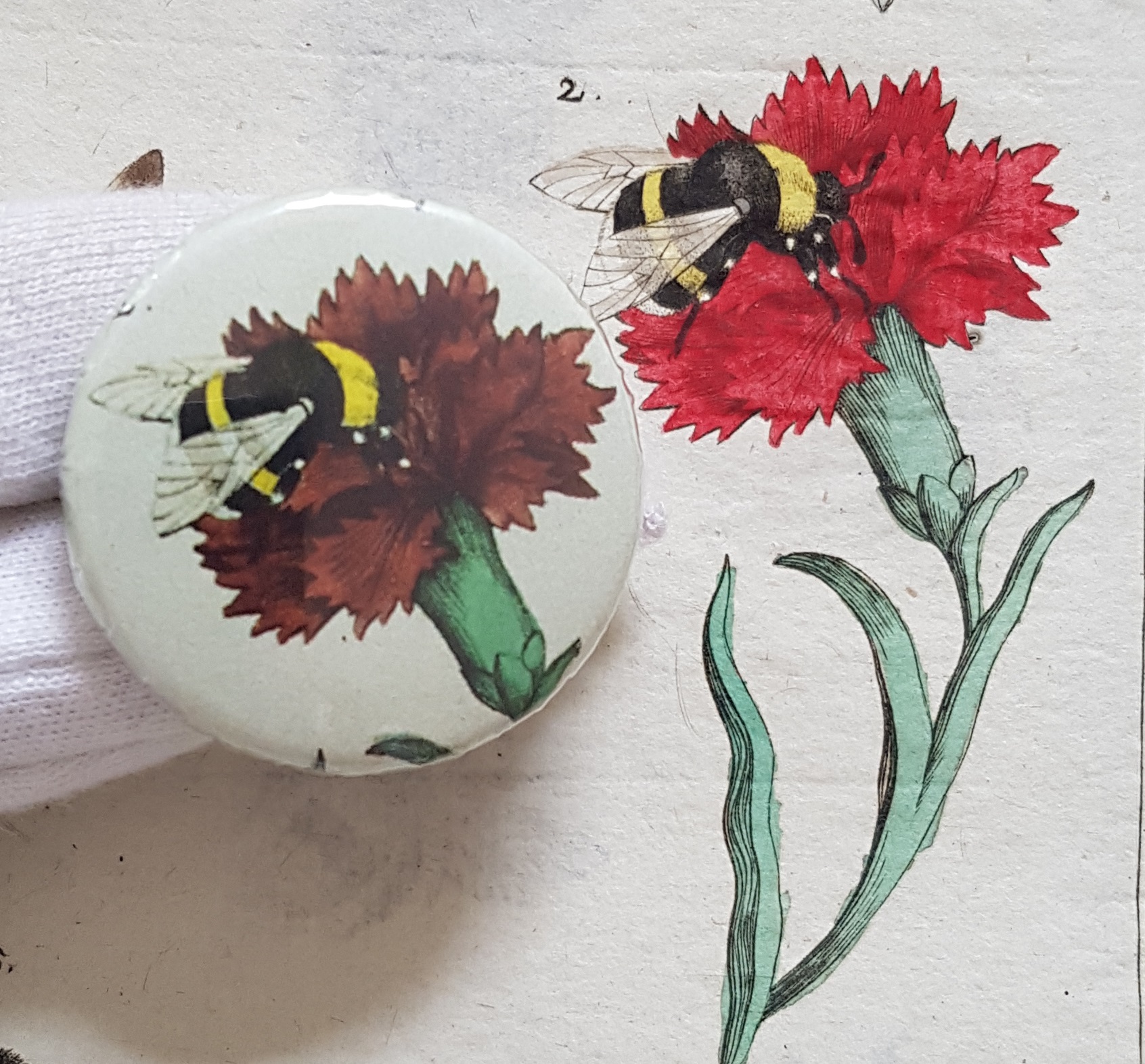
However, at the event visitors were already able to select motifs from digitised material that they took home with them as buttons (fig. 6) and BHL’s motif cards also enjoyed great popularity.

LNDM_03.jpg

Fig. 6. Buttons with motifs chosen from digitised BHL material next to a copy of the original. Photo by: Elisa Herrmann | MfN.

The library team answered many interesting questions about the materials and technology used and was thus able to present not only the library collection but also the digitisation infrastructure and the rich treasure of BHL. Many visitors did not yet know about BHL and were enthusiastic about the prospect of over 54 million freely accessible pages — whether for scientific work, homework or to marvel at the beautiful illustrations.

Digitisation at the Museum für Naturkunde

The Museum für Naturkunde sees itself facing great opportunities to digitally open up its collection through an investment of several million euros by the federal and state governments. The library thus has the opportunity to scan a large number of holdings for BHL and its own digital collections to make them accessible to the scientific community and the general public. The highest priority is given to unique material, such as handwritten entry books, followed by holdings that are not yet available in BHL.

September 19, 2019by Joel Richard
BHL News, Blog Reel, Tech Updates

Additions to Text Exports Coming Soon

The BHL website was recently updated for new fields to download content. The TSV Data Exports are being updated on 1 September 2019 to mirror this change.

History

Recently, we added new URLs to the site to facilitate getting the text, Images or PDFs of the items at BHL. When viewing an item (for example, Darwin’s Origin of Species), the Download Contents > Download Book option presents four choices for downloading the contents of an item. Three of these have new, normalized URLs to download the content of an item.

  • PDF: https://www.biodiversitylibrary.org/itempdf/124544
  • All: (unchanged)
  • JPEG 2000: https://www.biodiversitylibrary.org/itemimages/124544
  • Text: https://www.biodiversitylibrary.org/itemtext/124544

We added these links because we discovered that there were some inconsistencies in connecting our content to the Internet Archive. Additionally with the new ability of BHL Partners to upload transcribed text, we needed a method of downloading the updated text rather than the original OCR.

What has changed?

In summary, these three new URLs have been added to the tab-delimited Item (volumes) TSV download files. The presence of these fields will impact any downstream processes that rely on the order of the fields. Please review your code if you rely on the field order instead of the field names of the TSV file.

In the past, the fields were:

ItemID, TitleID, ThumbnailPageID, BarCode, MARCItemID, CallNumber, VolumeInfo, ItemURL, LocalID, Year, InstitutionName, ZQuery, CreationDate

On 1 September 2019, the fields will change to the following:

ItemID, TitleID, ThumbnailPageID, BarCode, MARCItemID, CallNumber, VolumeInfo, ItemURL, ItemTextURL, ItemPDFURL, ItemImagesURL, LocalID, Year, InstitutionName, ZQuery, CreationDate

These fields mirror those of the new links mentioned above and will save you from needing to create the URLs to download content.

Please update your code or processes if necessary!

August 27, 2019by Sheila Rabun
BHL News, Blog Reel

Smithsonian Scientists Name New Fossil Fly Species For the Biodiversity Heritage Library and Smithsonian Libraries

Photographs of fossil fly species

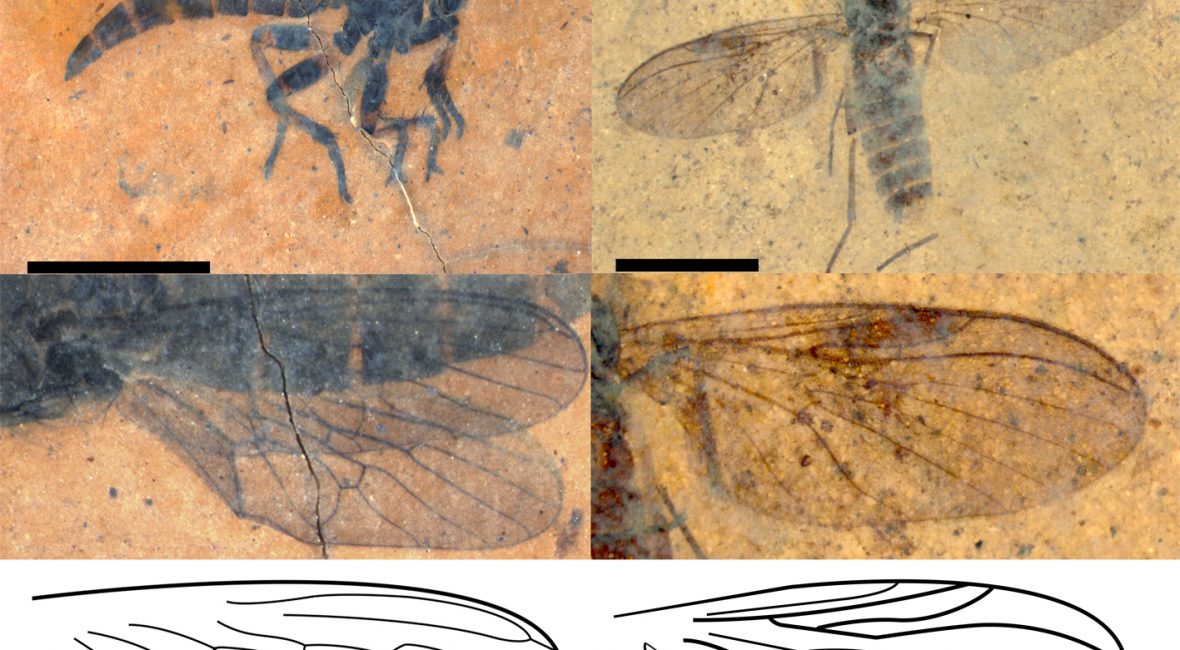
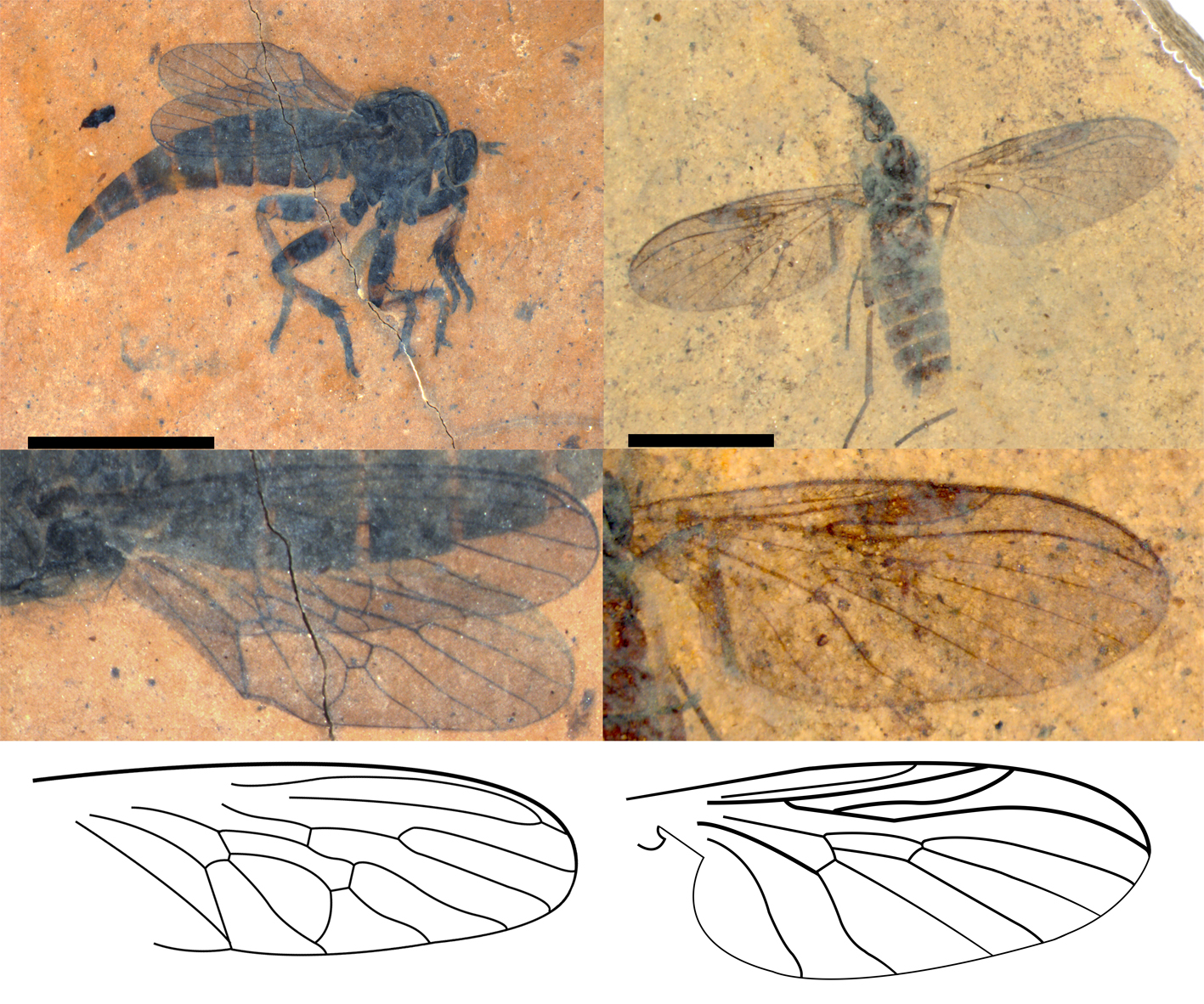
(LEFT) Kishenehnoasilus bhl gen. sp. nov. Dikow 2019 (Diptera: Asilidae) & (RIGHT) Sylvicola silibrarius sp. nov. Greenwalt 2019 (Diptera: Anisopodidae). These two extinct species of flies were collected from the Kishenehn Formation in Northwestern Montana as part of the National Museum of Natural History’s research in paleobiology and the evolution of insect diversity. The fossils were exposed by erosion of oil shale, derived from sediments of a 46-million-year-old lake, by the Middle Fork of the Flathead River along the southwestern boundary of Glacier National Park. The robber fly (Kishenehnoasilus bhl; USNM 624491) was collected at the Dakin site in 2014; the wood gnat (Sylvicola silibrarius; USNM 626077) was collected from the Deep Ford site in 2015. The scale bars = 5 mm. The specimens are named in honor of the staff of the Biodiversity Heritage Library and the library staff of the National Museum of Natural History, respectively. Photo by: Dale Greenwalt.

Two new fossil fly species have been named in honor of the Smithsonian Libraries and the Biodiversity Heritage Library. Sylvicola silibrarius Greenwalt, 2019 and Kishenehnoasilus bhl Dikow, 2019 have been described from specimens collected from the 46-million-year-old Kishenehn Formation of northwestern Montana. The species were published last week in the open access journal Palaeontologia Electronica.

The species are two of 15 new species identified in a new study led by scientists at the Smithsonian’s National Museum of Natural History and colleagues on the diversity of fossil flies (order Diptera) in the Coal Creek Member of the Kishenehn Formation, a 34-56 million year old fossil site. The study also records 15 new families, dramatically expanding scientists’ knowledge of fly diversity during the Eocene in North America. With this publication, a total of 21 different families of flies have now been described from the region. The study provides researchers with a snapshot of flies during their evolution and helps establish the Kishenehn Formation as one of the most important fossil sites in North America for understanding the evolution of one of the most successful groups of life on Earth.

Sylvicola silibrarius Greenwalt, 2019 is a wood gnat in the widely-distributed Anisopodidae family containing nearly 200 species and boasting a rich fossil record. The specific epithet is a combination of the abbreviation SI (for the Smithsonian Institution) and the Latin term librarius (pertaining to books). Dale Greenwalt, lead study author and a resident research associate at the National Museum of Natural History, named the species in appreciation for the essential services that the Smithsonian Libraries perform.

“My research here at the National Museum of Natural History would be impossible without the Libraries,” said Greenwalt. “In my ten years here at the museum, I have never had an interaction with our world class library staff that was not positive, friendly and helpful.”

Kishenehnoasilus bhl Dikow, 2019, a robber fly in the family Asilidae, represents the type species for this new genus. The specific epithet is an abbreviation referring to the Biodiversity Heritage Library (BHL). Torsten Dikow, study co-author and curator of Diptera at the National Museum of Natural History, drew a comparison between the fly and the Library when naming the species.

“Taxonomic research involves not only the study of specimens, but also the review of often old literature,” said Dikow. “Having digital access to publications enhanced with tools such as scientific name recognition makes my research so much more efficient. The Biodiversity Heritage Library provides a lens into the literature published a long time ago. The same is true for this new species of robber fly, as it helps us to understand and document the past of biodiversity.”

The type specimens for both Sylvicola silibrarius and Kishenehnoasilus bhl have been deposited within the paleobiology collections of the Smithsonian’s National Museum of Natural History, where they will be available to researchers to help inform future studies on dipteran evolution and diversification.

“For centuries, libraries have been essential centers of knowledge with collections serving as windows into the universe of human scholarship, history and creativity,” said Martin R. Kalfatovic, associate director of the Smithsonian Libraries and program director for the Biodiversity Heritage Library. “As libraries have evolved to embrace the digital world — from online access for collections to data mining those same collections for new discoveries — they have empowered new research efficiencies and connections and facilitated the democratization of knowledge through open access principles like those embraced by the Smithsonian and Biodiversity Heritage Library. That these researchers have honored our libraries through these species is a testament to the essential services that libraries provide today. We are privileged to be recognized in such a meaningful way for our impact on the global research community.”

Citation: Greenwalt, D.E., and Bickel, D.J., Kerr, P.H., Curler, G.R., Brown, B.V., de Jong, H., Scott J. Fitzgerald, S.J., Dikow, T., Tkoč, M. and Kehlmaier, C. 2019. Diptera of the Kishenehn Formation. I. Documentation of diversity at the family level. Palaeontologia Electronica. 22(2):1-57. https://doi.org/10.26879/891.

August 26, 2019by michelle.underhill
BHL News, Blog Reel

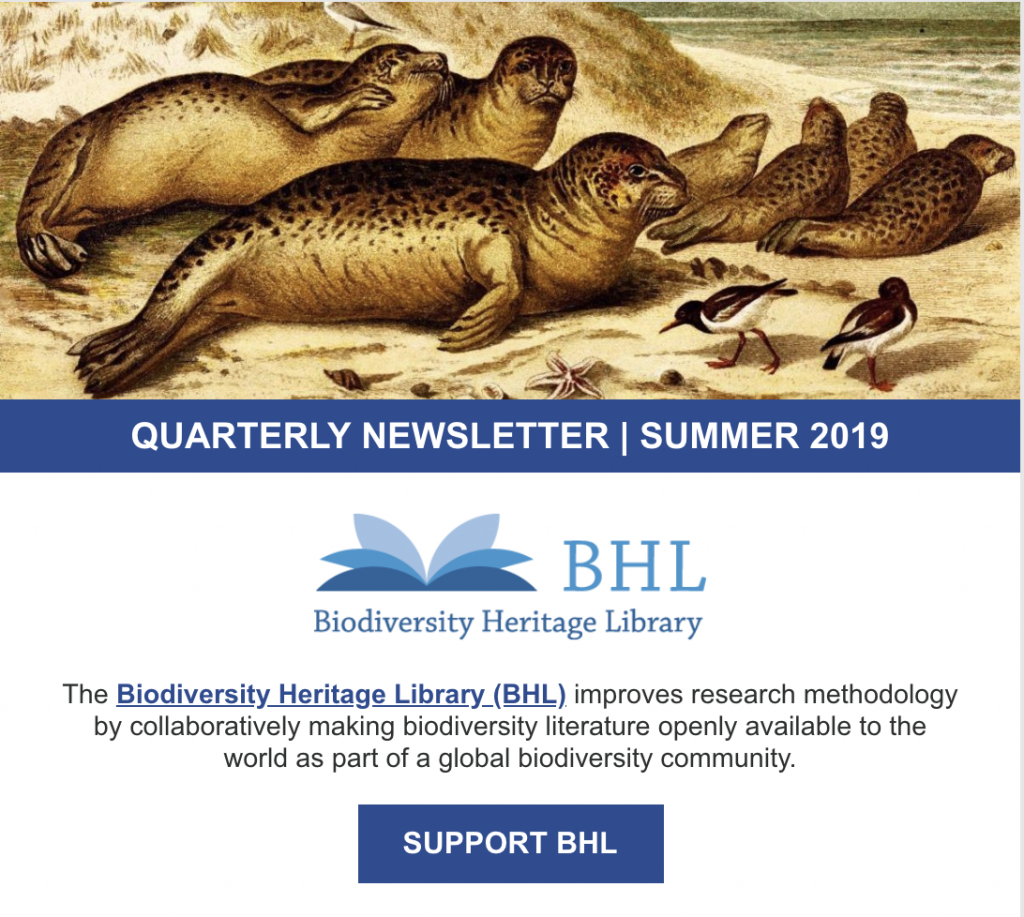
2019 Summer BHL Newsletter Now Available!

screenshot of the summer 2019 newsletter

screenshot of the summer 2019 newsletter

Enjoying your summer? We are, because we’ve been busy these past few months and have a lot to share! From crowdsourced transcriptions in BHL to new article download functionality and a new paleobiology collection curated by Smithsonian Libraries, check out all of the latest program news in the 2019 Summer Newsletter.

Be sure to subscribe to our mailing list to keep up to date with all the latest BHL news.

August 20, 2019by michelle.underhill
BHL News, Blog Reel, Tech Updates

BHL Journal Articles Are Now Discoverable via Unpaywall

Earlier this week, Rod Page and I received an email from Richard Orr, the Lead Developer at Unpaywall, telling us that he had created a work-around that would finally enable the Unpaywall extension to discover content in BHL. And I (Nicole) literally spent the rest of the day jumping for joy. 

Let us explain: 

Firstly, what’s a DOI?

DOIs (Digital Object Identifiers) are used throughout the scholarly research community to uniquely identify academic articles. They help readers locate the definitive version of a published article, and they make linking together the academic literature much easier – look at any recent paper and you’ll see that most of the references cited have DOIs.

DOIs do two things: 1) they uniquely identify an article, and 2) they point to the online location of the definitive version of that article (typically hosted by the article’s publisher). 

Many articles are not free to read: a significant proportion of both recently-published and historic articles are locked behind paywalls. However, with the rise of open access, it’s increasingly the case that there may be a free version of an article available somewhere online. BHL, for example, has scanned and made available tens of thousands of articles that also exist on commercial publishers’ websites. DOIs always direct users to the definitive version of an article. But if the definitive version is behind a paywall (as they so often are), how do we tell users that BHL has a free version available? Enter Unpaywall.

What’s Unpaywall?

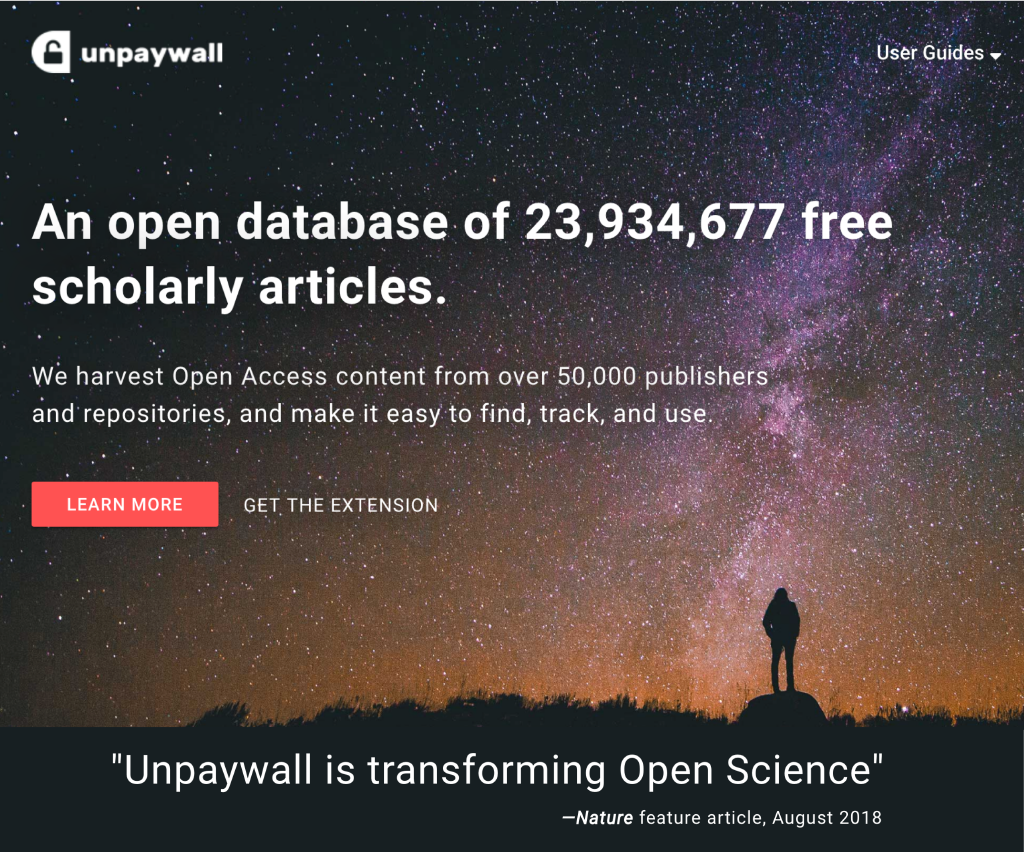
Unpaywall finds (legally) open access versions of paywalled literature. Since its launch in 2016, Unpaywall has become an indispensable tool for scientists  (see “How Unpaywall is transforming open science”). Unpaywall’s free browser extension (downloadable via their website) displays a discrete padlock symbol on the side of your browser whenever you are on a paywalled paper. If Unpaywall is able to locate a freely-accessible copy of the article elsewhere, the padlock symbol appears green and clicking on it will take you directly to the open access version. To discover whether an article is free, Unpaywall scans a database of millions of articles compiled from over 50,000 sources. Until this week, BHL wasn’t one of them. 
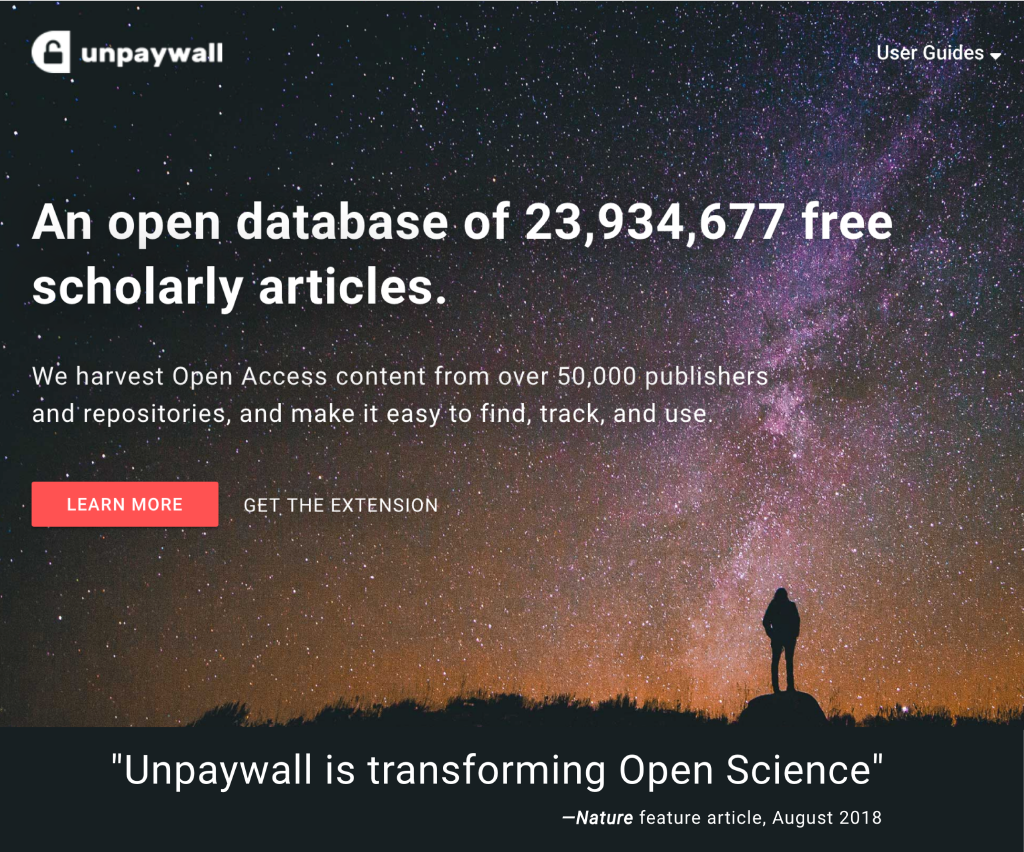
Screenshot of Unpaywall homepage

Why couldn’t Unpaywall link to BHL?

BHL contains hundreds of thousands of journal articles. More than a quarter of a million of these articles have been indexed (the vast majority by Rod Page via Biostor), which means that they now have article-level landing pages containing their article-level metadata. Tens of thousands of these article landing pages now have DOIs. This should have made them discoverable, but Unpaywall still couldn’t find them. 

In June, we contacted Unpaywall to find out why. It turns out that the reason BHL content has never been picked up by Unpaywall is because of the way BHL uploads and presents its journal content. Most providers of online journals present each article neatly packaged as an individual PDF. BHL, however, is first and foremost a virtual library. We upload complete volumes of journals made up of individual page images. Our article landing pages don’t link to PDFs; they link to the page in the volume upon which the article starts. Unpaywall looks for a PDF link to confirm that the document is actually available. Thus, the 57 million pages of open access content on BHL was excluded from Unpaywall’s database.  

After we explained to Unpaywall how significant BHL’s content was, Richard Orr, Unpaywall’s Lead Developer, very kindly agreed to create a work-around, specifically for BHL, that would enable Unpaywall to link to BHL article landing pages. The result of this work-around is that (as of this week) 43,000 journal articles on the BHL website are now discoverable via Unpaywall. 

To demonstrate how useful this is, here are two examples:

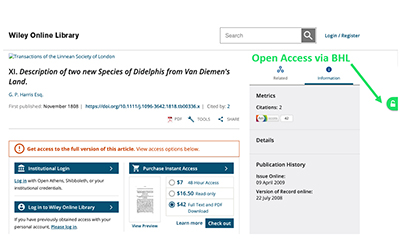
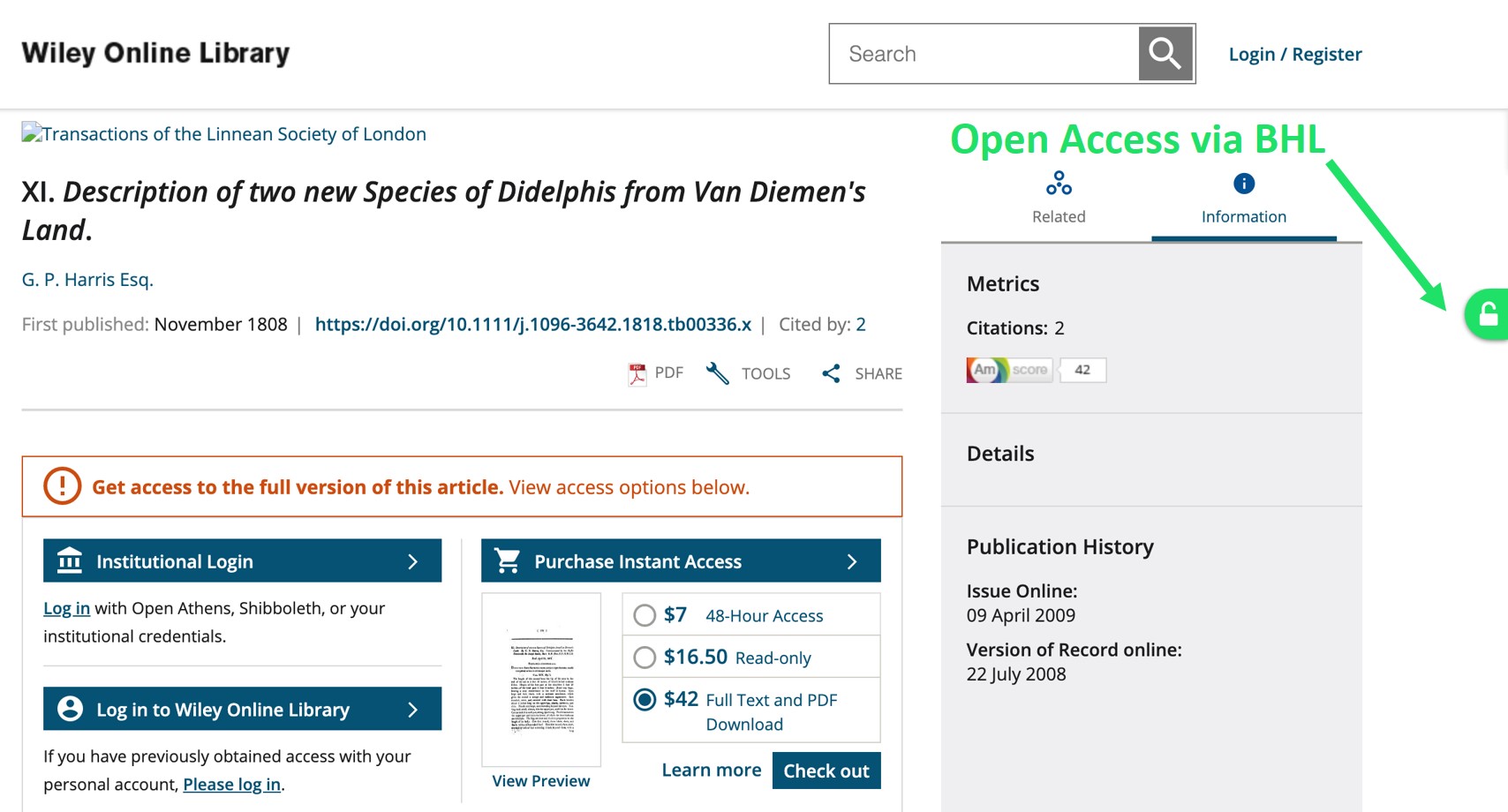
The first description of the iconic (sadly now-extinct) Thylacine (or Tasmanian Tiger) was published in the Transactions of the Linnean Society of London in 1808. This article is well and truly out of copyright and yet the definitive version of this article is behind a paywall on the Wiley Online website: https://doi.org/10.1111/j.1096-3642.1818.tb00336.x. Downloading the PDF of this out-of-copyright article from the Wiley website will cost you $42 USD.
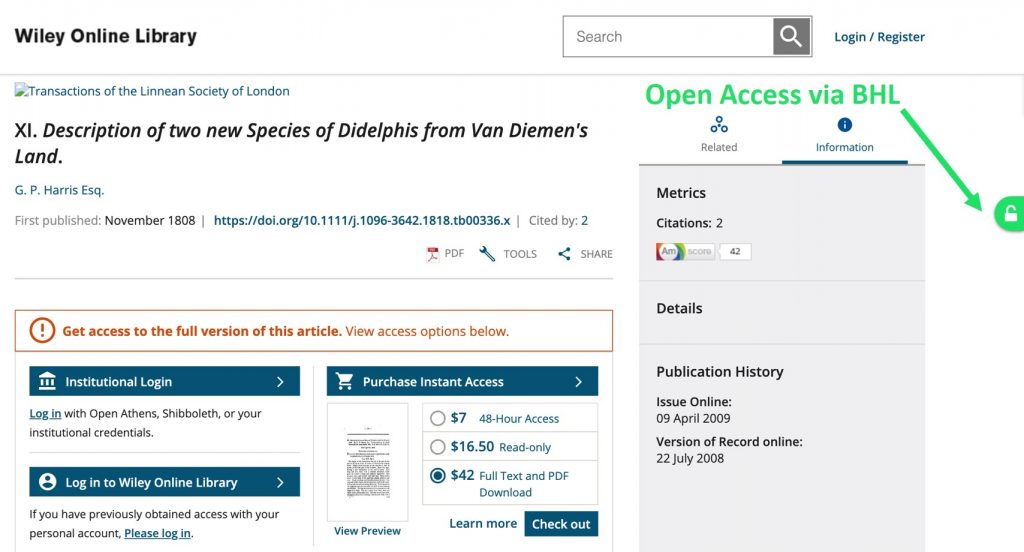
Screenshot of an article landing page on Wiley Online

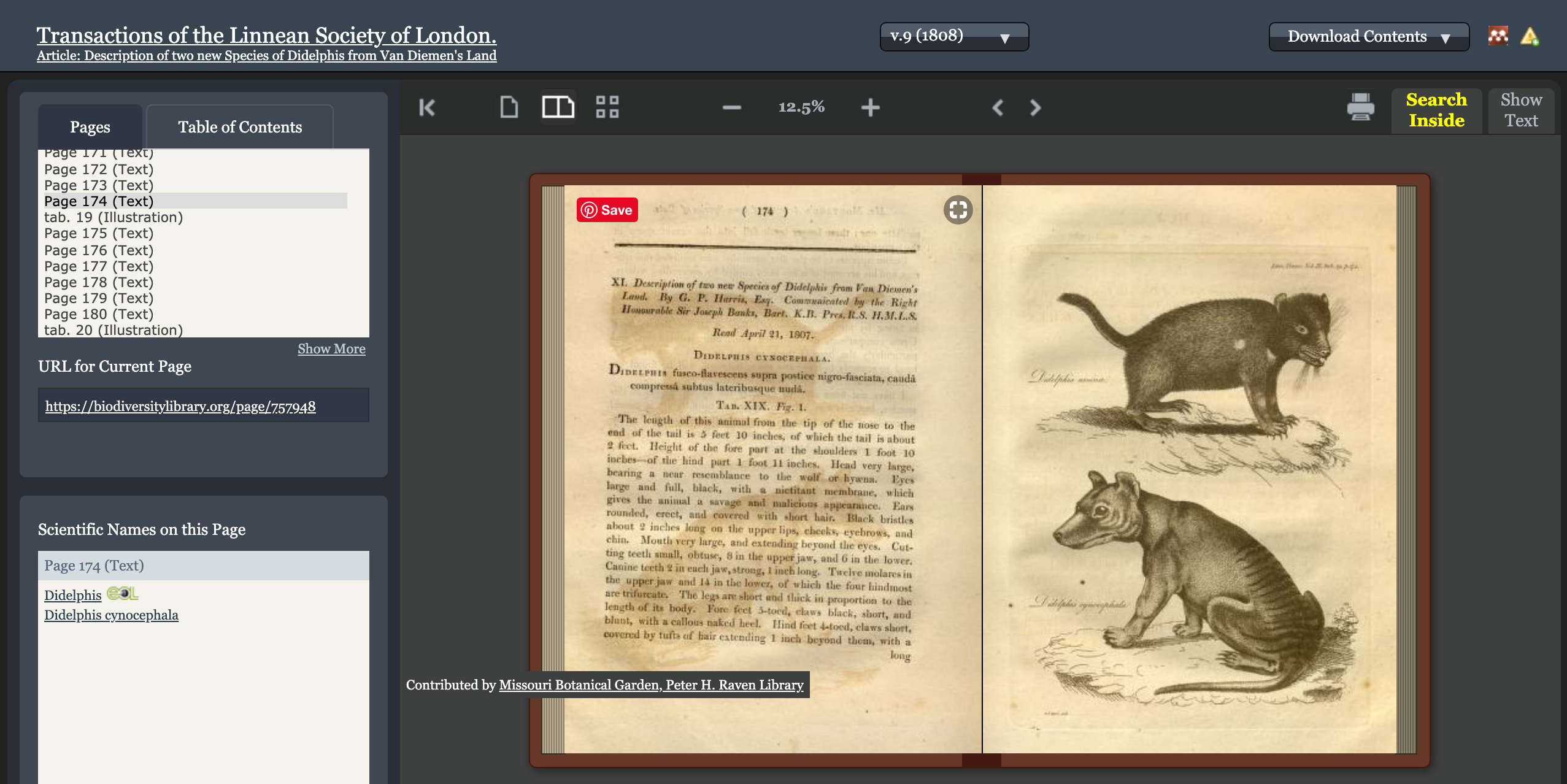
The definitive DOI version of this article is behind a paywall on the Wiley Online website, but it is freely available on the BHL website. With the Unpaywall extension, you can now easily navigate to the free version on BHL.

Now that BHL’s content is discoverable via Unpaywall, anyone directed to the Wiley version via the article’s DOI can discover the free version on BHL (via the Unpaywall extension).

Screenshot of an article in BHL

Article freely available via the Biodiversity Heritage Library.

It’s important to note that making BHL discoverable via Unpaywall doesn’t just enhance access to legacy literature such as the Thylacine paper; it also applies to much more recent research. For example, “The generic relationships of the new endemic Australian ant spider genus Notasteron (Araneae, Zodariidae)” was published in The Journal of Arachnology in 2005. This article has the DOI (https://doi.org/10.1636/04-56.1) and is behind a paywall on BioOne. With Unpaywall’s extension in your browser you can now discover the free version hosted by BHL.

How to make even more BHL content discoverable via Unpaywall

43,000 may seem like a large number, but it’s actually only a tiny fraction of the articles freely available on BHL. For the Unpaywall extension to be able to locate all the journal content on BHL, we need to unlock the rest of the journal articles on BHL by 1) adding more article-level metadata, and 2) ensuring that, for every article on BHL that has an existing DOI, we include that DOI in the article-level metadata. That’s our next task…

We would like to thank Unpaywall for providing access to an ever-increasing number of open access scholarly articles (23,943,966 at 14/8/19) and to particularly thank their Lead Developer, Richard Orr, for making it possible for BHL (a square peg) to fit into their open database (a round hole).  

August 16, 2019by Joel Richard
Page 13 of 78« First...10«12131415»203040...Last »

Help Support BHL

BHL's existence depends on the financial support of its patrons. Help us keep this free resource alive!

search

About BHL

The Biodiversity Heritage Library (BHL) is the world’s largest open access digital library for biodiversity literature and archives. BHL operates as a worldwide consortium of natural history, botanical, research, and national libraries working together to digitize the natural history literature held in their collections and make it freely available for open access as part of a global “biodiversity community.”

Join Our Mailing List

Sign up to receive the latest news, content highlights, and promotions.

Subscribe Now

Subscribe to Blog via Email

Enter your email address to subscribe to this blog and receive notifications of new posts by email.

Join 319 other subscribers

Subscribe to Blog Via RSS

Subscribe to the blog RSS feed to stay up-to-date on all the latest BHL posts.

Access RSS Feed

Inspiring Discovery through Free Access to Biodiversity Knowledge.

The Biodiversity Heritage Library makes it easier than ever for you to access the information you need to study and explore life on Earth…for free, anytime, anywhere.


64+ Million Pages of
Biodiversity Literature Online.

EXPLORE

Tools and Services
to Transform Research.

EXPLORE

300,000+
Illustrations on Flickr.

EXPLORE

ABOUT | HARMFUL CONTENT | PRIVACY | SITE MAP | TERMS OF USE