Biodiversity Heritage Library - Program news and collection highlights from BHL
  • Home
  • News
  • Featured Books
    • All Featured Books
    • Book of the Month Series
    • BHL at 20
  • User Stories
  • Campaigns
    • Fossil Stories
    • Garden Stories
    • Monsters Are Real
    • Page Frights
    • Her Natural History
    • Earth Optimism 2020
  • Tech Blog
  • Visit BHL
Home
News
Featured Books
    All Featured Books
    Book of the Month Series
    BHL at 20
User Stories
Campaigns
    Fossil Stories
    Garden Stories
    Monsters Are Real
    Page Frights
    Her Natural History
    Earth Optimism 2020
Tech Blog
Visit BHL
  • Home
  • News
  • Featured Books
    • All Featured Books
    • Book of the Month Series
    • BHL at 20
  • User Stories
  • Campaigns
    • Fossil Stories
    • Garden Stories
    • Monsters Are Real
    • Page Frights
    • Her Natural History
    • Earth Optimism 2020
  • Tech Blog
  • Visit BHL
Biodiversity Heritage Library - Program news and collection highlights from BHL
Blog Reel, Campaigns, Earth Optimism 2020

A Forest of Knowledge: Richard Evans Schultes and the Rise of Ethnobotany

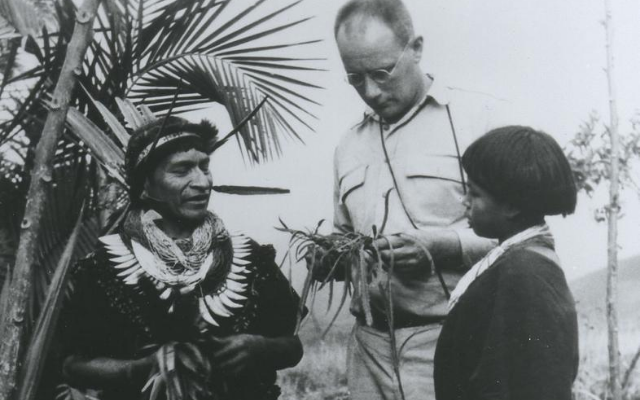
black and white photo of three people standing in a jungle looking at plant specimens

April 2020 marks the 50th anniversary of Earth Day. Organizations around the world have commemorated the occasion by participating in the global Earth Optimism movement — an initiative spearheaded by the Smithsonian to “turn the conservation conversation from doom and gloom to optimism and opportunity”.

Throughout 2020, the Biodiversity Heritage Library (BHL) and our partners are joining the movement by sharing conservation success stories from and made possible by the BHL collection. Follow our blog for conservation stories — past and present — and visit our website for more information and to explore our Earth Optimism book collection.

———————
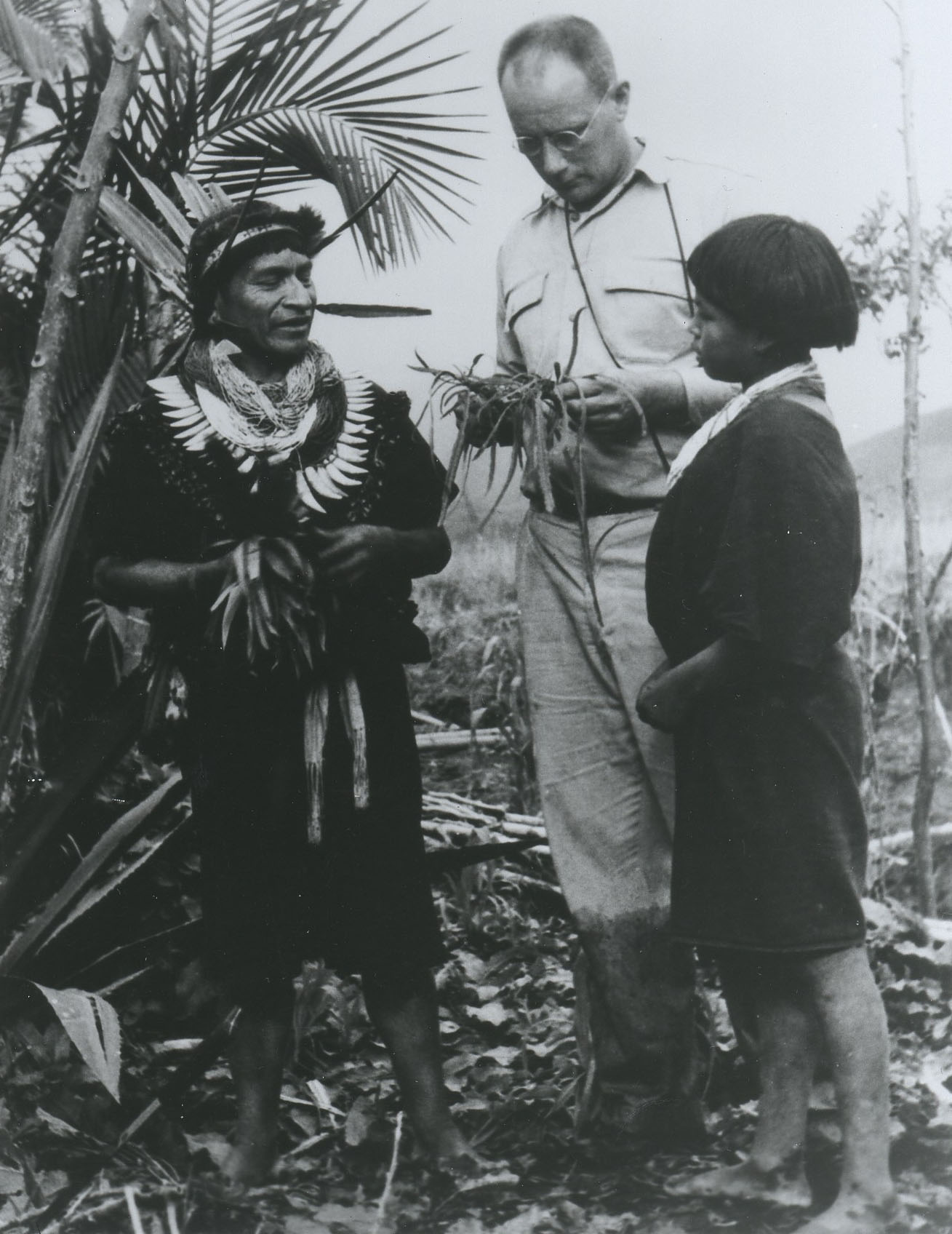
black and white photo of three people standing in a forest looking at plant specimens

Richard Evans Schultes (center) with Salvador Chindoy (left), a renowned Kamëntsá healer from Sibundoy Valley of Colombia. The identity of the individual on the right is not recorded. The year of the photo is unknown, but is likely in the 1940s based on Schultes’ age. Photo courtesy of the Archives of the Economic Botany Library of Oakes Ames, Harvard University.

The conservation movement today encompasses more than the physical management of habitat to preserve plants and animals. Richard Evans Schultes (1915-2001) epitomized the modern conservationist by coupling his taxonomic work on plants with research on the botanical knowledge and culture of local people. Known as the “father of ethnobotany”, Schultes spent almost fourteen years deep within the rainforests of the Amazon learning from multiple Indigenous tribes about their languages, medicines, and relationships to plants.

“Richard Evans Schultes was an extraordinary ethnobotanist who devoted a large part of his professional life to studying the flora of the Amazon as well as of Asia and Europe,” says Felipe Cárdenas-Arroyo, a Colombian archaeologist researching Schultes. “For him, forests are like great libraries where knowledge is stored and available for those willing to read it. He admired and respected the Amazonian Natives because they know how to read in this library and have been its keepers for centuries. Burning down the Amazon rainforest to make room for cattle is like burning down a library to make room for a parking lot, and Schultes feared that with today’s rate of destruction ‘climax forests will turn into scrub vegetation,’ never to regain their original state” [1].

Schultes was inspired as a youth to pursue botanical research in remote areas by the book Notes of a Botanist on the Amazon & Andes by the botanist Richard Spruce.
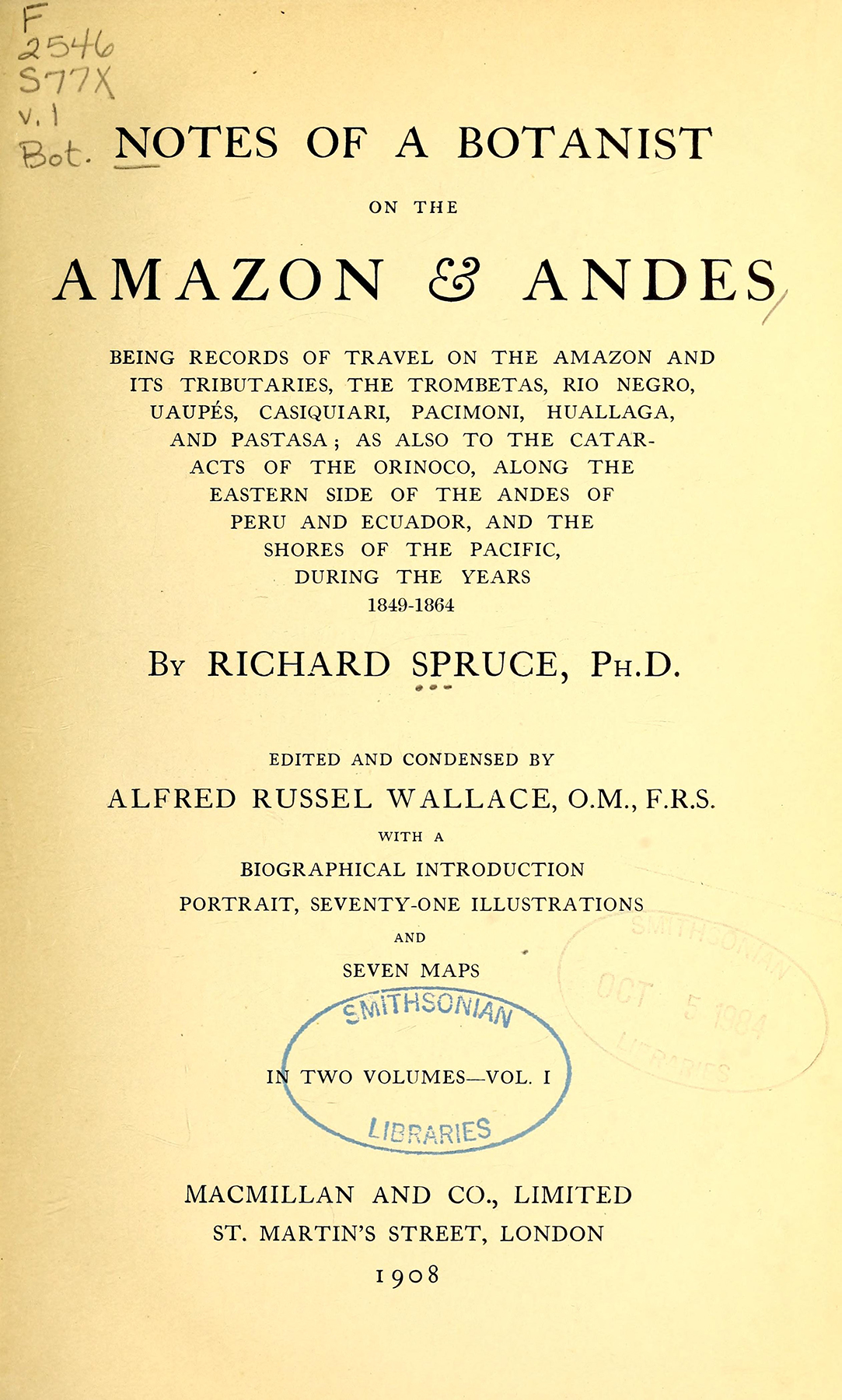
title page of "notes of a botanist on the amazon & andes"

Title Page. Spruce, Richard. Notes of a botanist on the Amazon & Andes. v. 1 (1908). Contributed in BHL from Smithsonian Libraries.

Schultes’s early research focused on peyote in the American Southwest and intoxicating mushrooms in southern Mexico. He collected specimens, identified species, and recorded local knowledge of medicinal uses and experiences.
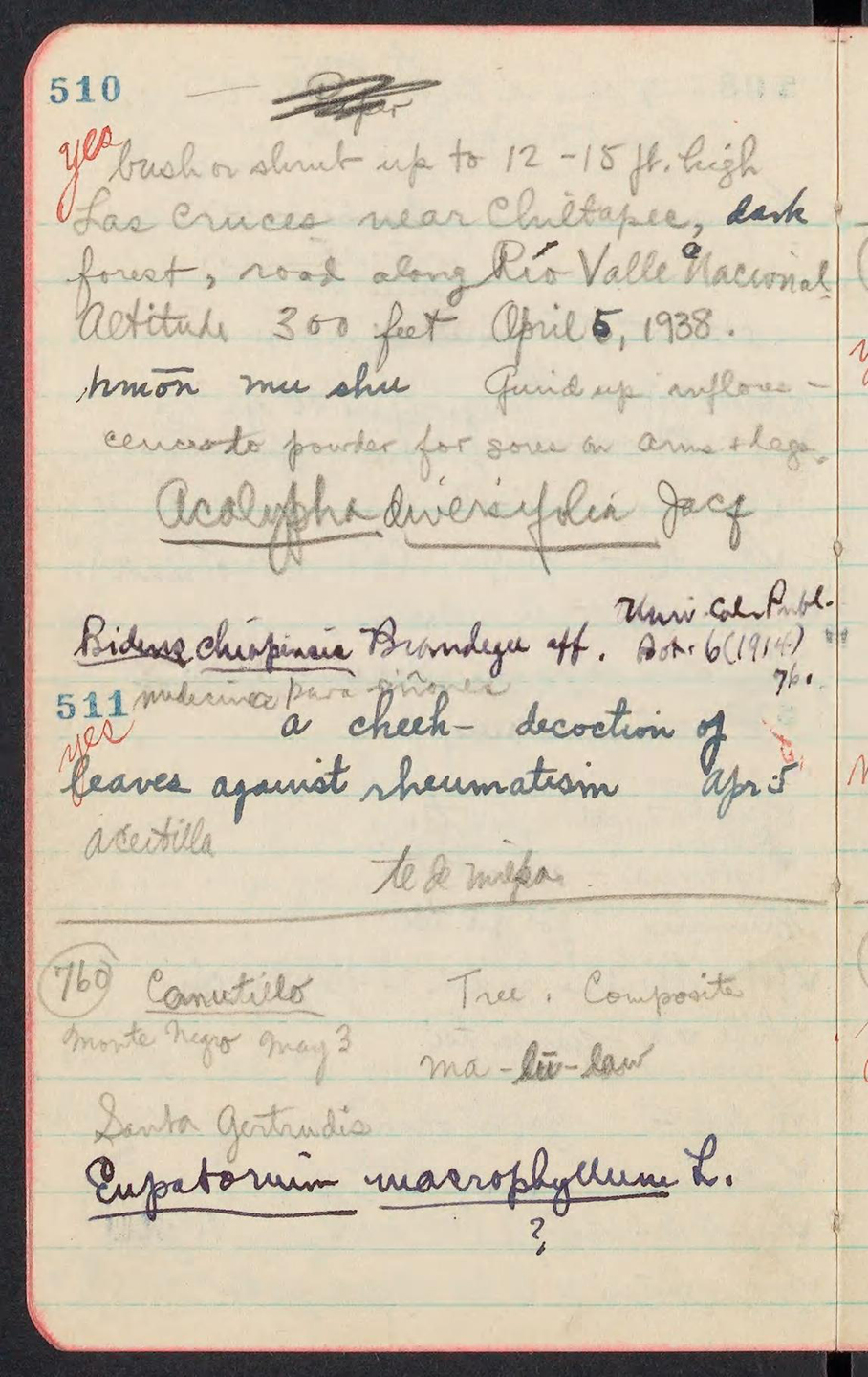
page from a handwritten notebook

Page 10. Schultes, Richard Evans. Field notebook : Mexico, 1938. Contributed in BHL from Harvard University Botany Libraries.

After receiving his doctorate from Harvard University in 1941, Schultes began research on curare in the Amazon with the help of a 10-month travel grant from the National Research Council. He took the opportunity to collect specimens of many plants and discuss local uses with Indigenous communities.

He was in the field when the United States entered World War II and immediately joined the war effort. He was told to remain in the Amazon to try to find sources of much-needed rubber for the Allied Forces. He continued to work for the United States Department of Agriculture for the next twelve years, collecting approximately 3,500 specimens of the Hevea rubber tree. During his career in the Amazon, Schultes would collect over 24,000 botanical specimens.
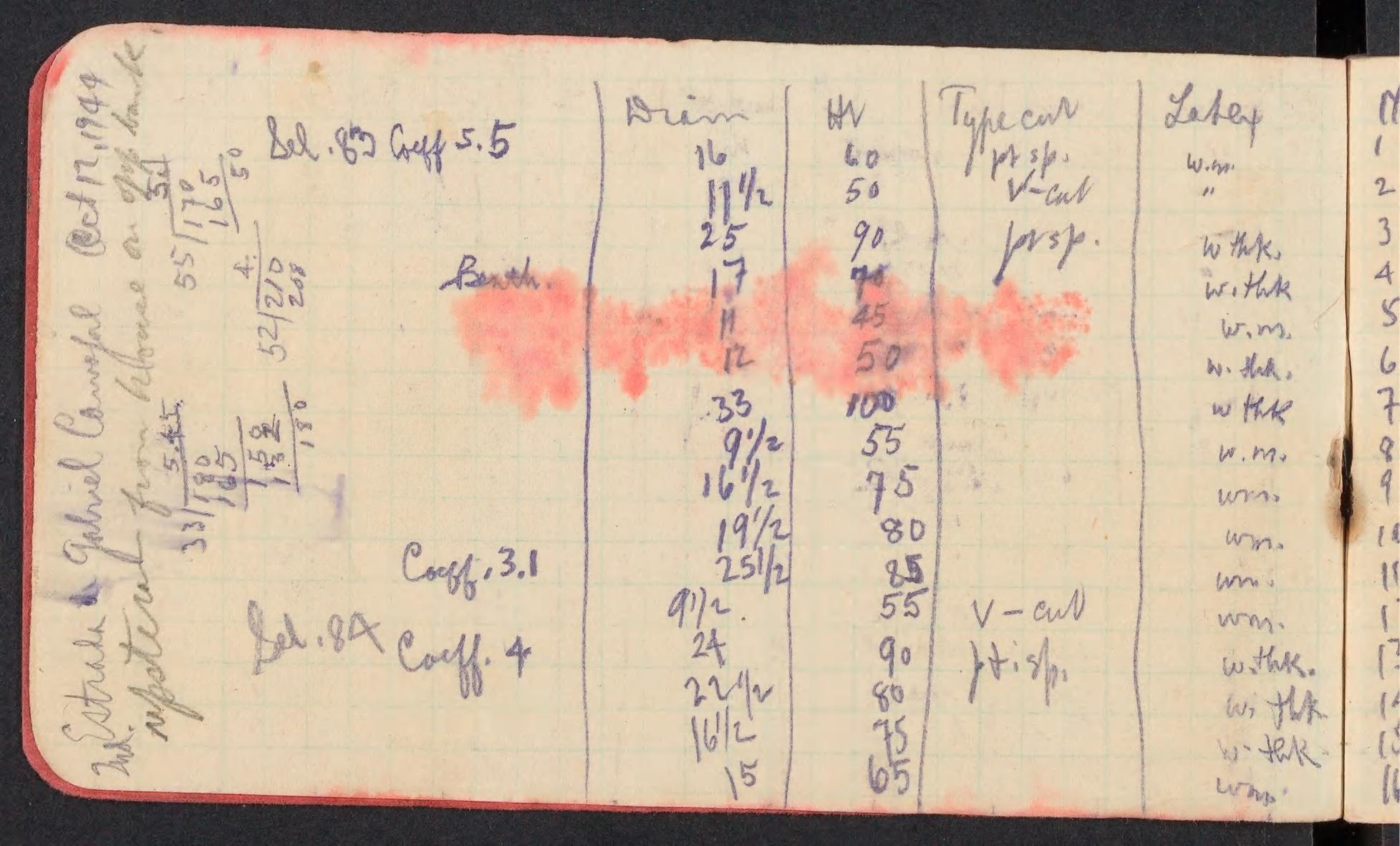
page from a handwritten notebook

Pages 2-3. Schultes, Richard Evans. Hevea yield notebook : Colombia, 1944. Contributed in BHL from Harvard University Botany Libraries.

Schultes returned to New England in 1953 and became the curator of the Oakes Ames Orchid Herbarium at Harvard University. He continued to travel extensively to the Amazon while holding a number of positions at the Harvard University Botanical Museum and was a Harvard faculty member until his retirement as Professor Emeritus in 1985.

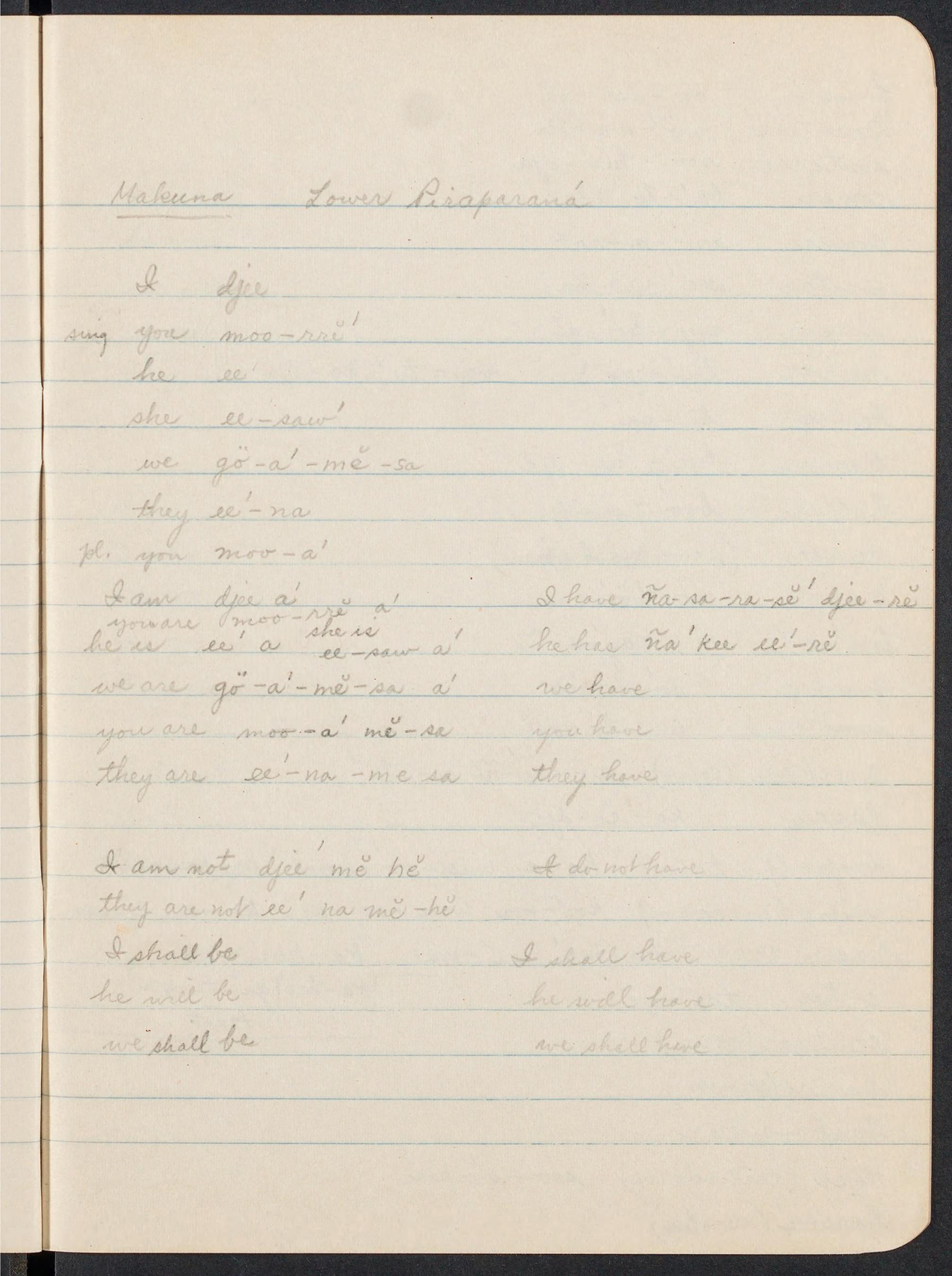
Schultes himself defined ethnobotany as “the complete registration of the uses of and concepts about plant life in primitive societies… comprising aspects of botany, anthropology, archeology, plant chemistry, pharmacology, history, geography, and sundry other tangential fields of the sciences and arts” (Kahn, 1992). His notebooks demonstrate his commitment to documenting knowledge beyond biology. Indigenous languages are captured on the pages, including place names and common words.
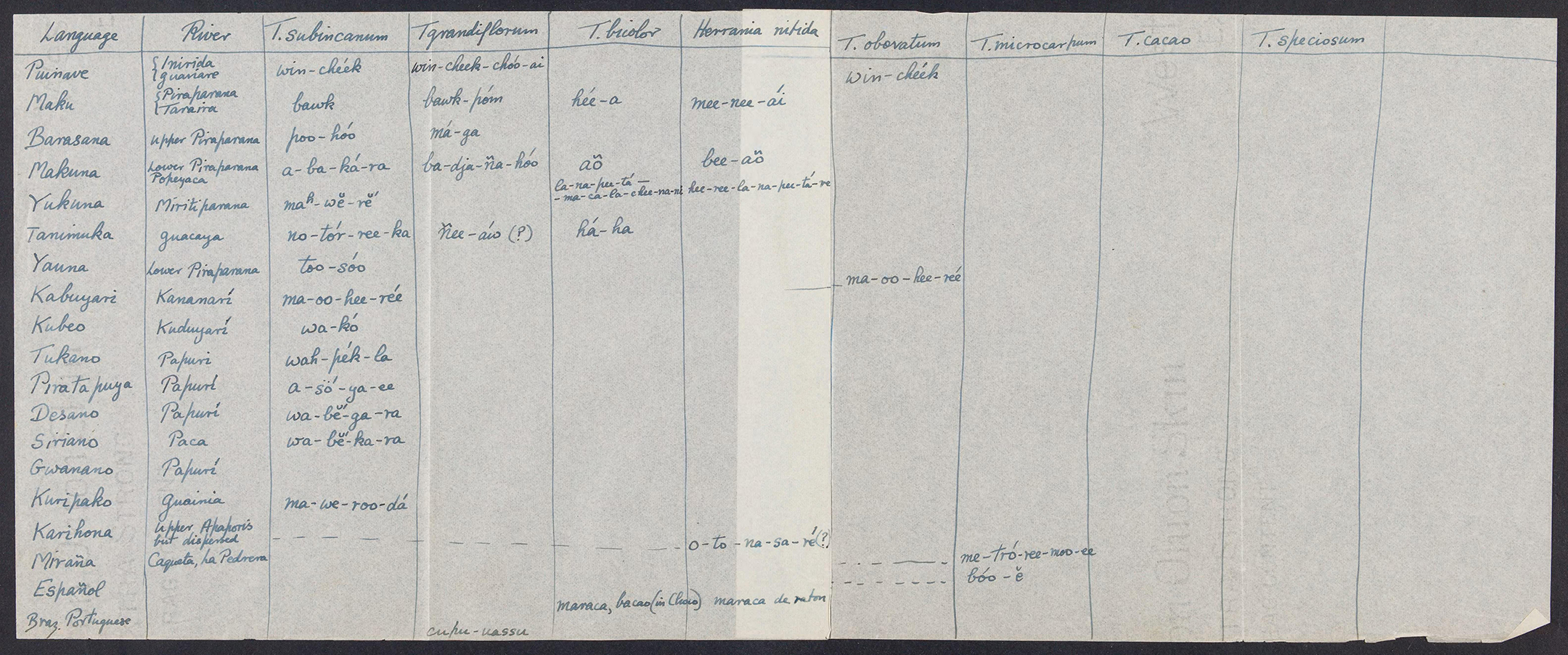
page from a handwritten notebook

List of rivers and plants in several local languages. Schultes, Richard Evans. Field notebook : Colombia, 1952. Contributed in BHL from Harvard University Botany Libraries.
page from a handwritten notebook

Common phrases. Schultes, Richard Evans. Field notebook : Colombia, 1952 February-March. Contributed in BHL from Harvard University Botany Libraries.

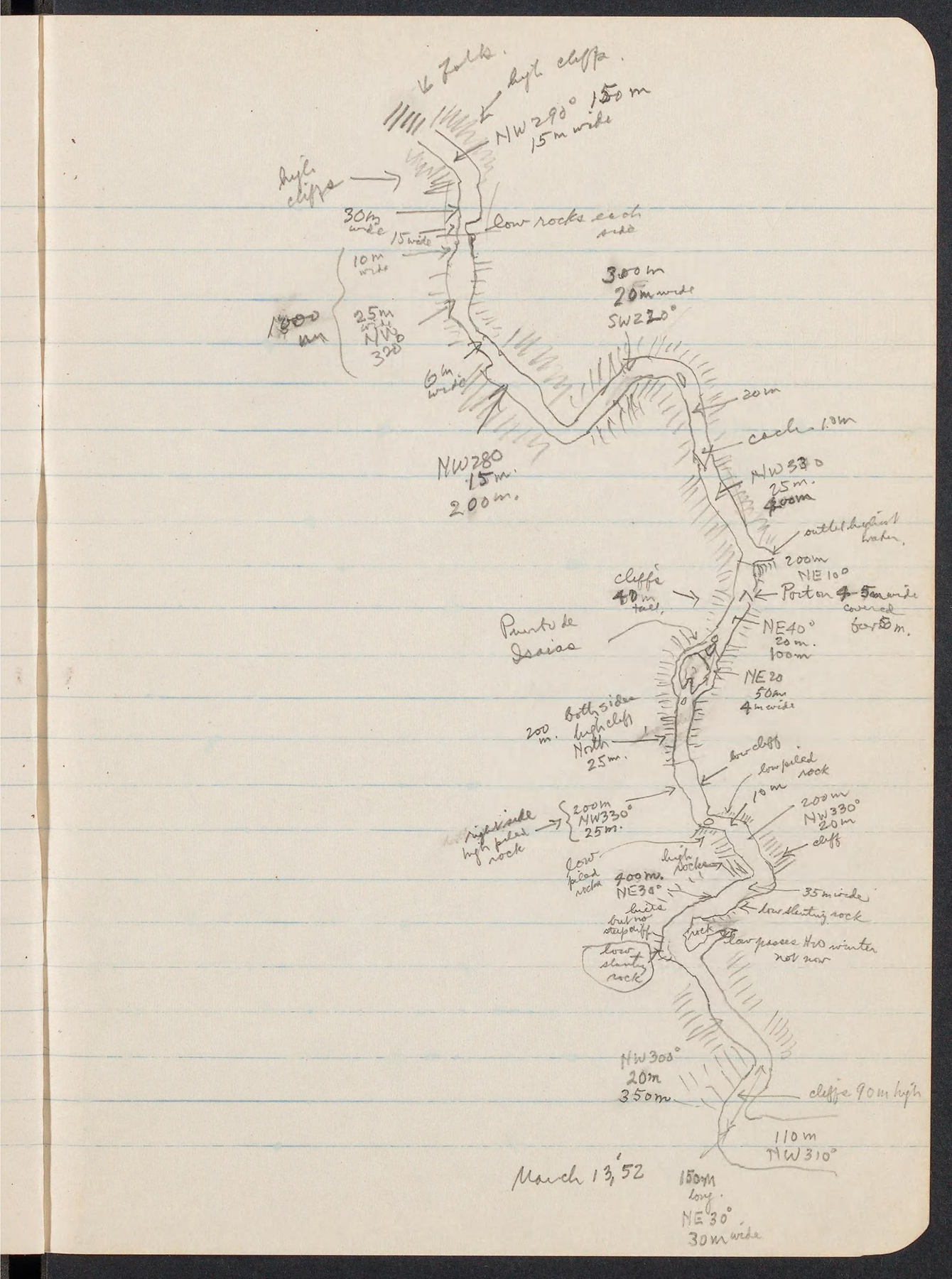
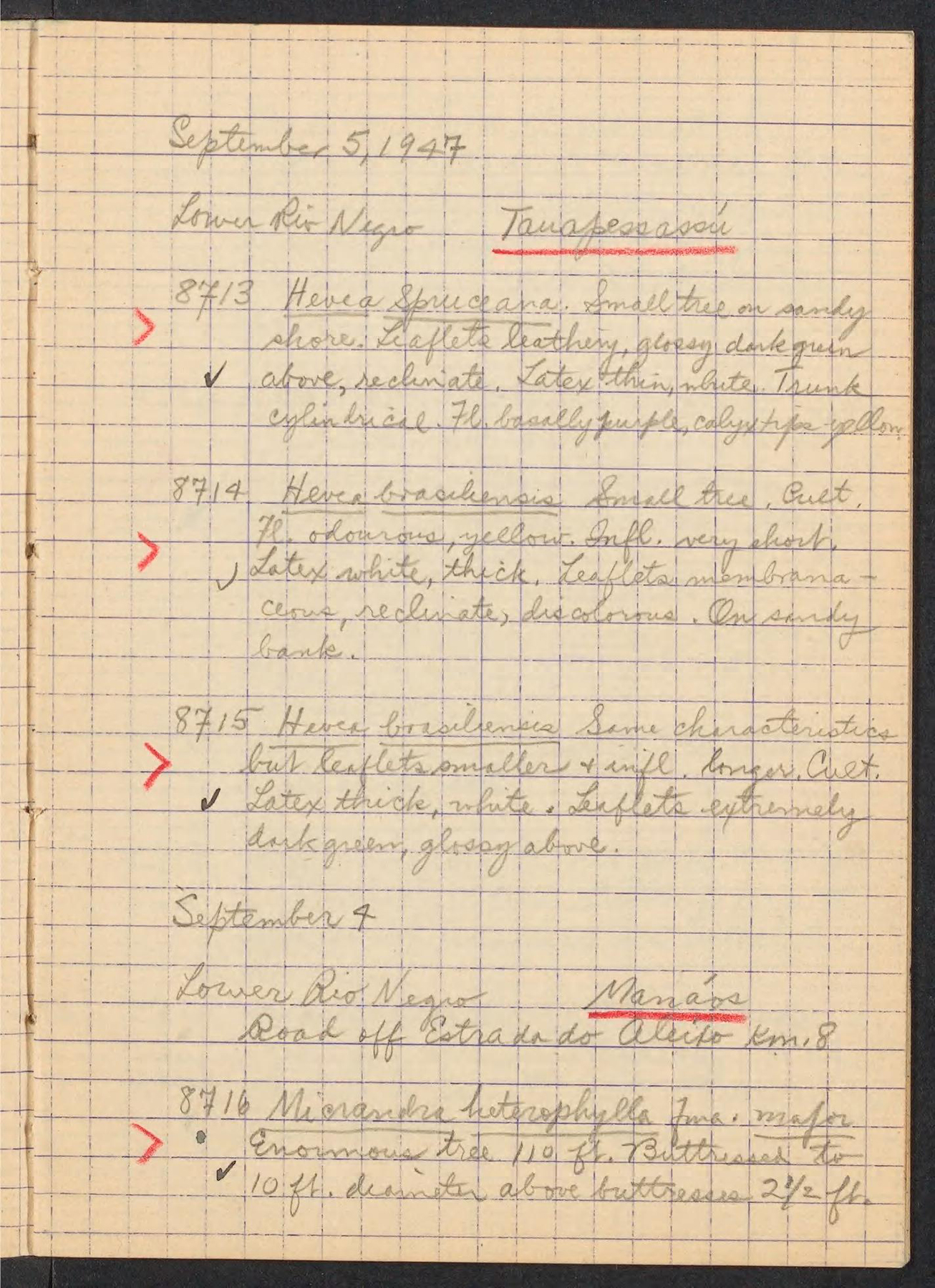
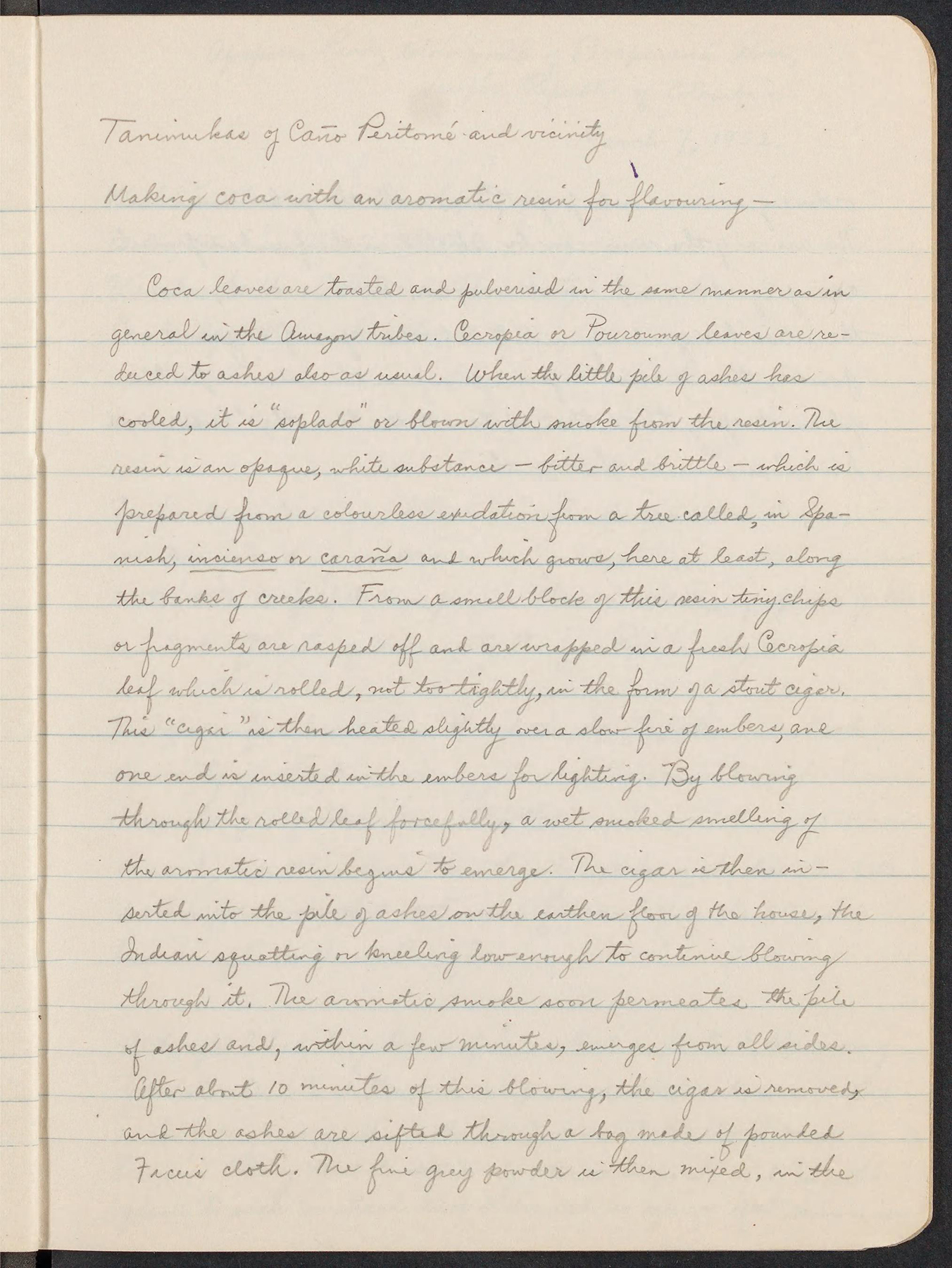
Schultes’s maps, lists, and recipes are a trove of information about difficult to access areas.
page from a handwritten notebook

Detailed river map. Schultes, Richard Evans. Field notebook : Colombia, 1952 February-March. Contributed in BHL from Harvard University Botany Libraries.
page from a handwritten notebook

Plant list. Schultes, Richard Evans. Field notebook : Rio Negro and Rio Vaupés, Amazonas, Brazil, 1947 September-November. Contributed in BHL from Harvard University Botany Libraries.
page from a handwritten notebook

Making coca with an aromatic resin for flavouring. Schultes, Richard Evans. Field notebook : Colombia, 1952 February-March. Contributed in BHL from Harvard University Botany Libraries.

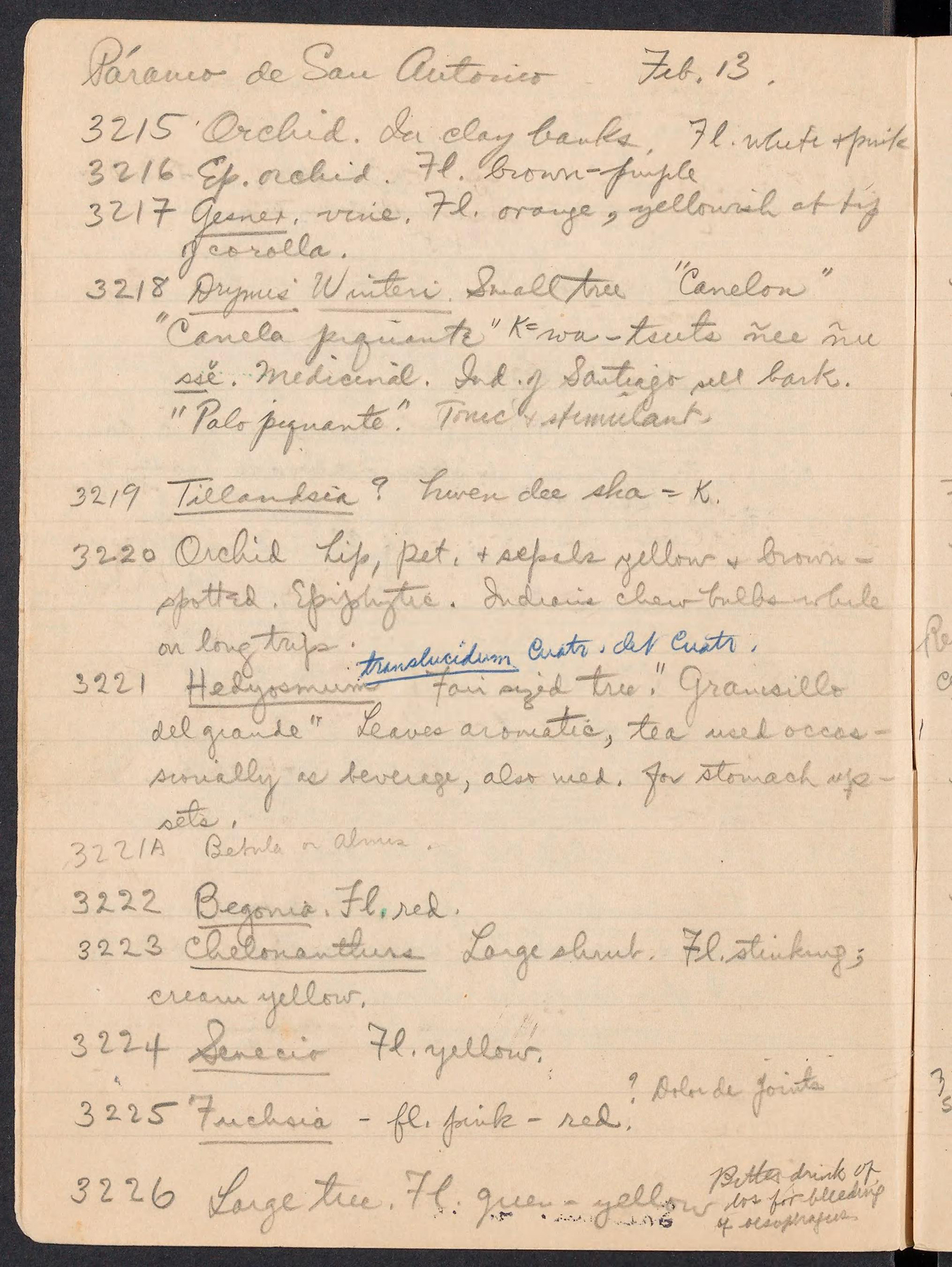
Throughout his travels, Schultes documented the local medicinal uses of hundreds of plants.
page from a handwritten notebook

Medicinal uses of plants by the Inga and Kamëntsá people of Colombia. Schultes, Richard Evans. Field notebook : Colombia, 1942 February-April. Contributed in BHL from Harvard University Botany Libraries.

Schultes was well known for being respectful of Indigenous communities. He immersed himself in the cultures, eating what was offered and participating in rituals.

“I have tried several of the Indian hallucinogens, in part because the Indians consider them sacred plants and it would have been an unpardonable rudeness to refuse them when the Indians were kind enough to offer them to me during a ceremony” (Schultes, 1994).

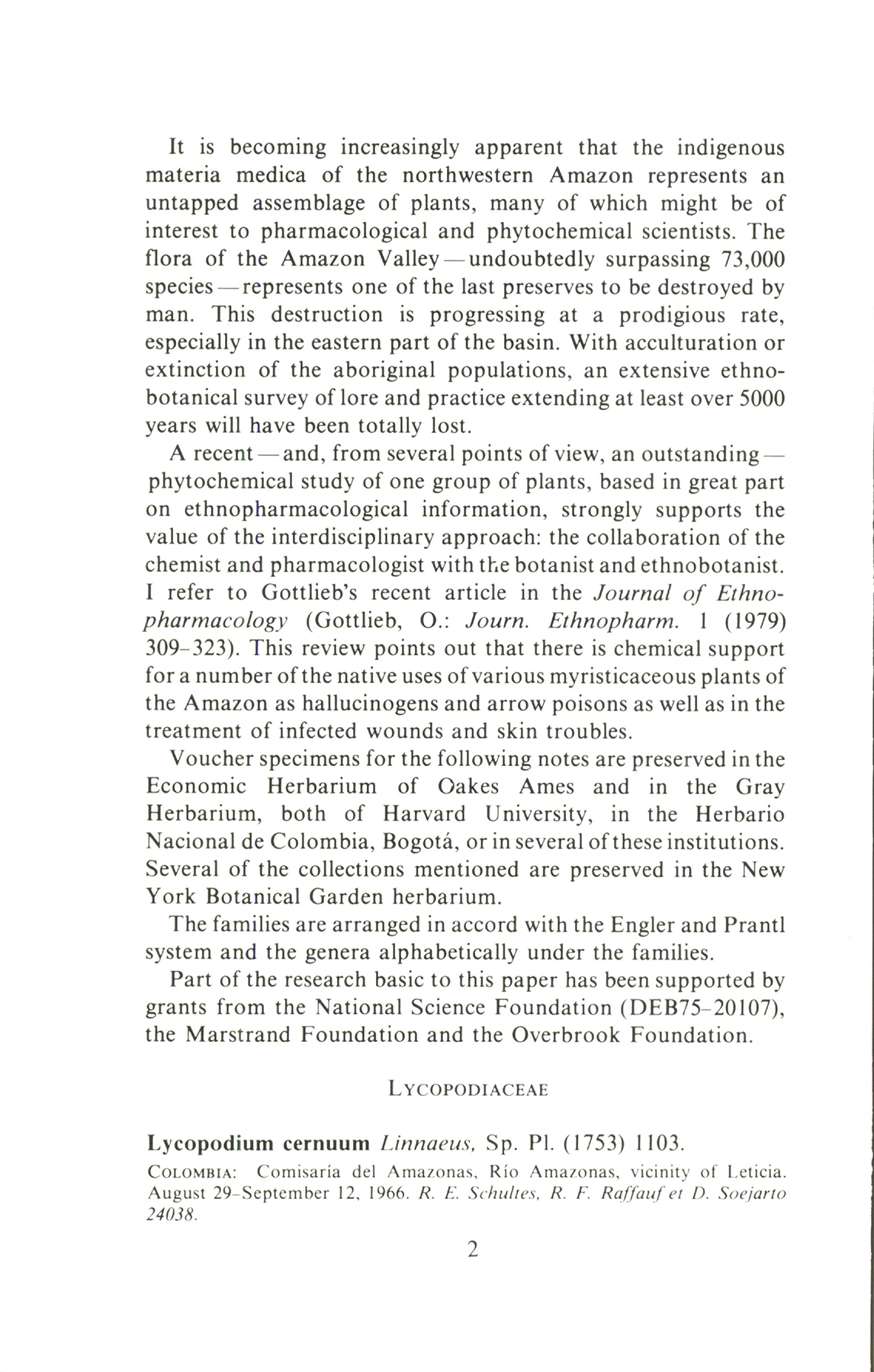
Schultes advocated for the conservation of habitat, species, and Indigenous knowledge but he also understood the practical and economic aspects. He encouraged research into the chemistry and uses of plants as pharmaceuticals, recognizing that the vast habitat destruction and cultural loss occurring in the Amazon could delay the development of important medicines. (An overview of the many medicinal uses of plants is central to Schultes’s 1986 paper “The Reason for Ethnobotanical Conservation”.)
page of printed text

Page 2. Schultes, Richard Evans. “De Plantis Toxicariis E Mundo Novo Tropicale Commentationes XXVI: Ethnopharmacological Notes On The Flora Of Northwestern South America.” Botanical Museum Leaflets, Harvard University. v. 28 (1980), pgs. 1-45. Contributed in BHL from Missouri Botanical Garden with permission from Harvard University Herbaria. CC-BY-NC-SA.

In a 1994 article, he writes:

“…in many regions of the Amazon Basin, native plant and animal species are being destroyed faster than can be recorded, classified and studied…Why not regard the Indians in the Amazon Basin as a kind of phytochemical rapid-assessment team already on the ground, which could help locate the most promising plants for chemical and pharmacological evaluation?…The Indians’ botanical knowledge is disappearing even faster than the plants themselves” (Schultes 1994).

Schultes is regarded as one of the founding fathers of the international conservation movement, having advocated for conservation in developing areas since the 1940s. He mentored many graduate students, infusing them with the same respect and concern for the preservation of natural environments and local knowledge.

Schultes contributed to over 350 publications and served on editorial boards for several scientific periodicals. He also wrote and spoke to lay audiences on many occasions, always emphasizing the need to study and preserve Indigenous botanical knowledge, concluding:

“It is therefore our responsibility – nay, our duty – to put ourselves in the forefront of ethnobotanical conservation. We cannot allow such precious funds of knowledge to become extinct” (Schultes 1988b).

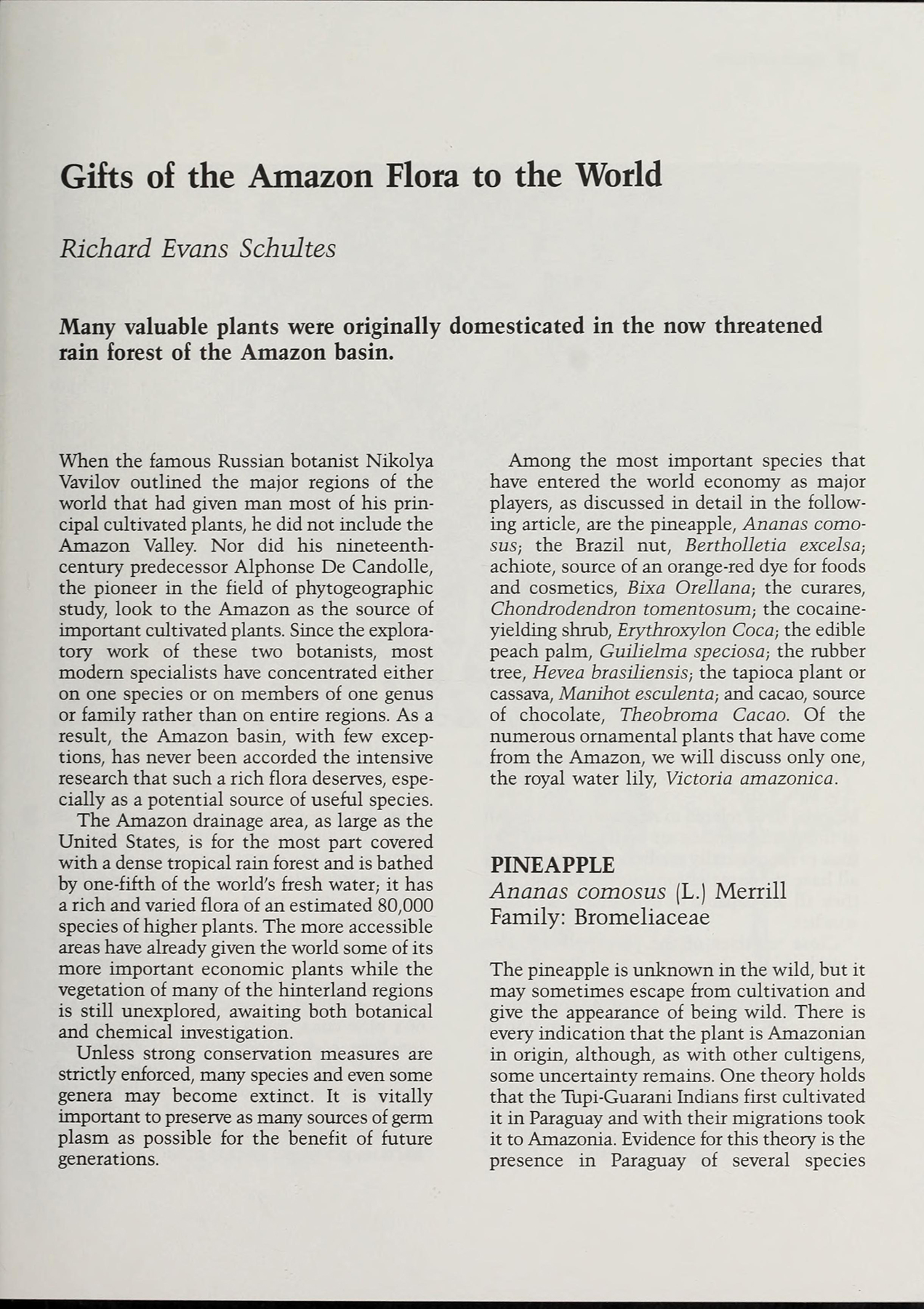
“Unless strong conservation measures are strictly enforced, many species and even some genera may become extinct. It is vitally important to preserve as many sources of germplasm as possible for the benefit of future generations” (Schultes 1990).
page of printed text

Schultes, Richard Evans. “Gifts of the Amazon Flora to the World.” Arnoldia, v. 50(2), pgs. 21-33. Contributed in BHL from Harvard University Botany Libraries with permission from The Arnold Arboretum of Harvard University. CC-BY-NC-SA.

Schultes was the recipient of the Tyler Prize for Environmental Achievement and the World Wildlife Fund Gold Medal in 1984, and the Harvard Medal and the Linnean Medal in 1992. Three genera and over 120 species bear his name. In 1986, the government of Colombia designated a 2.2 million acre protected area as “Sector Schultes” in his honor.

“Richard Evans Schultes, the great 20th century ethnobotanist, was deeply concerned with the fate of the tropical forests of the Earth,” states Felipe Cárdenas-Arroyo. “His work in search of medicinal plants was an important contribution to humanity. But in order for this work to continue, he knew that forests and the Natives who inhabit them need to be protected. Well aware that conserving both would guarantee a healthy planet for all of us, he voiced his concern for the future of the tropical forests and its people” [1].

Additional Information

The Richard Evans Schultes papers, containing Schultes’s field notes, photographs and botanical records, are held by the Botany Libraries in the Harvard University Herbaria.

Contained within the digitized materials in BHL are published articles and papers, field notebooks, lists of collected and identified plants, maps, and photographic materials. The Harvard University Herbaria contains many of the specimens collected by Schultes from North and South America.

For an interactive geospatial exhibit of Schultes’s work in Mexico and the Amazon, see The Amazonian Travels of Richard Evans Schultes.

References

Amazon Conservation Team. The Amazonian Travels of Richard Evans Schultes. https://www.banrepcultural.org/schultes/

Kahn, E. J. “Jungle Botanist [Richard Evans Schultes]”. The New Yorker. v. 68: pp. 35-58. 1992.

Sequeira, Luis. “Richard Evans Schultes : January 12, 1915-April 10, 2001”. National Academy of Sciences (U.S.). Biographical Memoirs ; v. 88. Washington, D.C.: National Academy Press, 2006.

Schultes, Richard. “Burning the Library of Amazonia.” Sciences 34, no. 2, pp. 24. 1994.

Schultes, Richard Evans. “Ethnopharmacological Conservation: A Key to Progress in Medicine.” Acta Amazonica, vol. 18, no. suppl. 1-2, pp. 393–406. 1988a.

Schultes, Richard Evans. “Gifts of the Amazon Flora to the World”. Arnoldia, vol. 50, no. 2, pp. 21-33. 1990.

Schultes, Richard Evans. “Primitive Plant Lore & Modern Conservation”. Orion Nature Quarterly ; v. 7, No. 3, Summer 1988. New York, NY: Myrin Institute, 1988b.

Schultes, Richard Evans. The Reason for Ethnobotanical Conservation. Bulletin of the Botanical Survey of India, v. 28, no.1-4, 1986, pp. 203-224. Calcutta, India: Director, Botanical Survey of India, 1986.

Tyler Prize for Environmental Achievement. https://tylerprize.org/laureates/past-laureates/1987-tyler-laureates/

[1] Cárdenas-Arroyo, Felipe. January and February 2020. Email exchange with Diane Rielinger.
August 11, 2020by michelle.underhill
Blog Reel, Featured Books

BHL and The Field Museum rapid inventory team: joining forces for conservation action

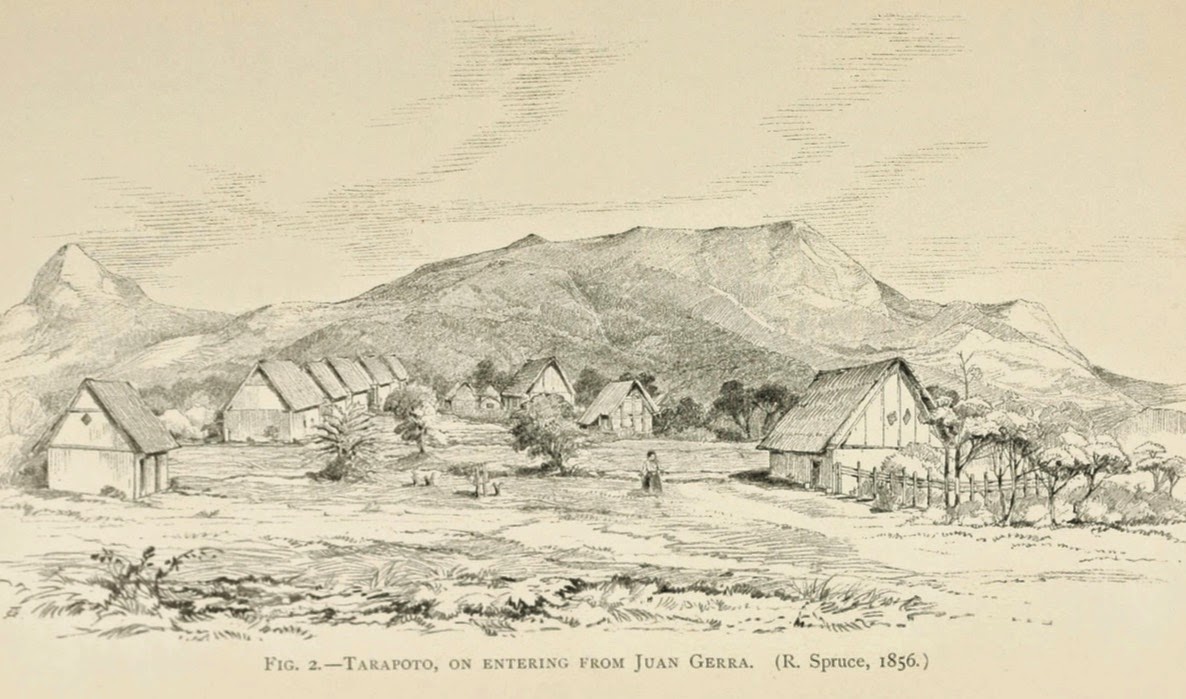
In 1855, after an exhausting trip across the Amazon, botanist Richard Spruce reached the Escalera Mountains of northern Peru. “I am among magnificent scenery and an interesting vegetation,” he wrote.

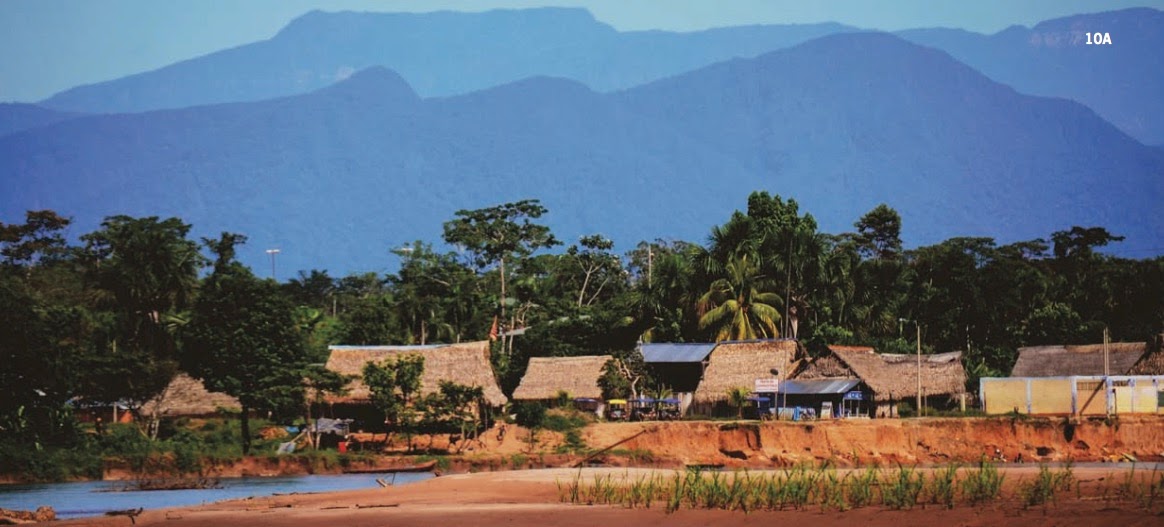
In 2013, botanist Corine Vriesendorp went back to those same mountains—still remote, still magnificent, and essentially unexplored since Spruce. “Stunningly beautiful,” she wrote. “…breath-taking vistas of mountains, cliffs, waterfalls, and the Amazon lowlands.”

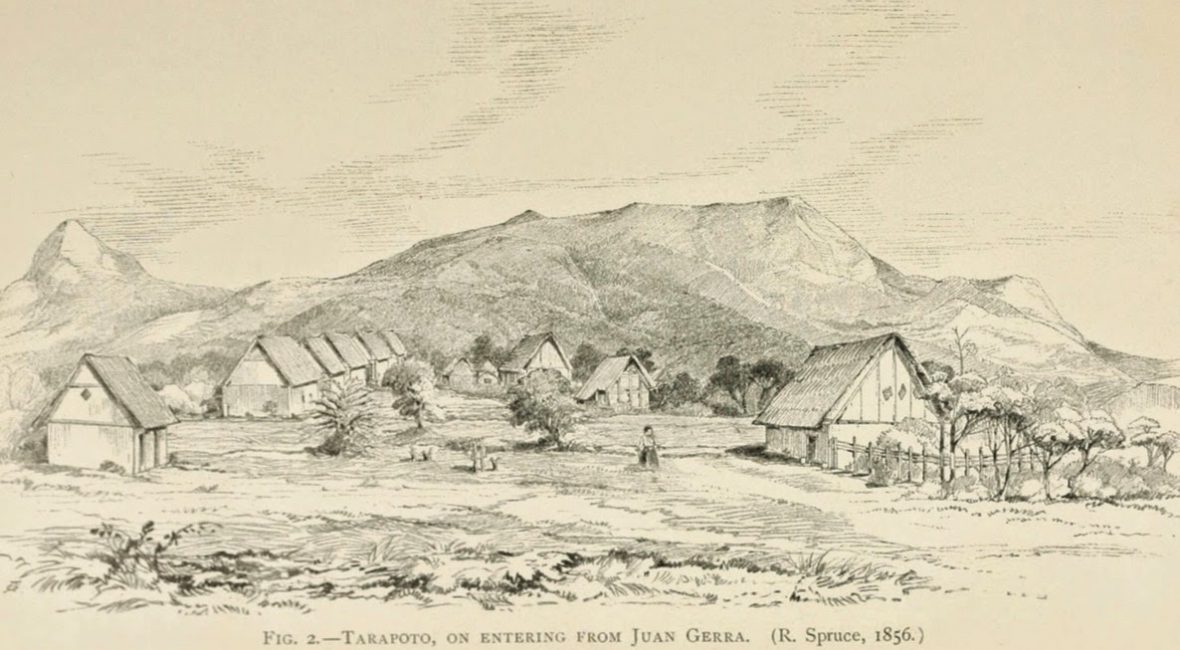
Spruce worked out of a place that looked like this:

View Full Size Image

Vriesendorp and her colleagues worked out of a place that looked like this:

View Full Size Image

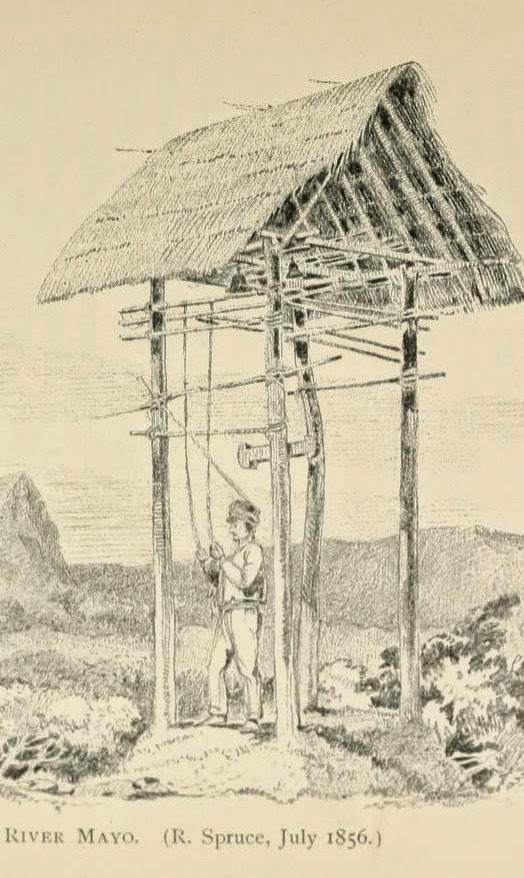
In the field Spruce spent the night in tambos like this:

View Full Size Image

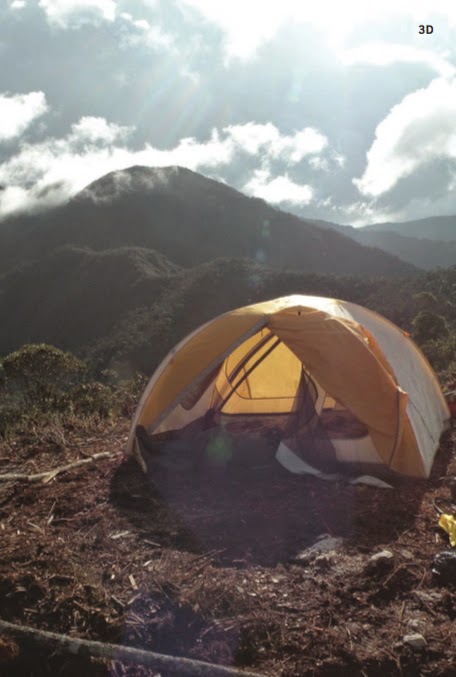
Vriesendorp sheltered in places like this:

View Full Size Image

Fascinated by the dwarf vegetation on the Escalera hilltops, Spruce wrote:

“On the top of the narrow ridge of crumbling sandstone covered with a dwarf herbaceous and shrubby vegetation, it is hardly possible to walk on account of its violence.”

Exploring those same hilltops, Vriesendorp observed:

“The landscape is hummocky and irregular, and covered in a thick swaying rootmat…. Walking through the landscape was difficult, with deep holes between some of the larger roots. An elfin forest… grows here, with very dense, moss-covered stems.”

Why highlight these two expeditions, separated by 158 years? Because both surveys—all their text, figures, photographs, and species lists—are now available in the Biodiversity Heritage Library:

View Full Size Image
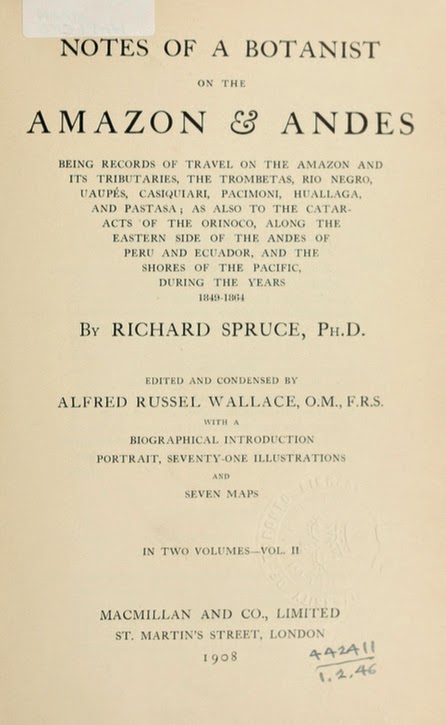
Spruce, Richard. Notes of a botanist on the Amazon and Andes. 1908. http://www.biodiversitylibrary.org/bibliography/17908#/summary.
View Full Size Image
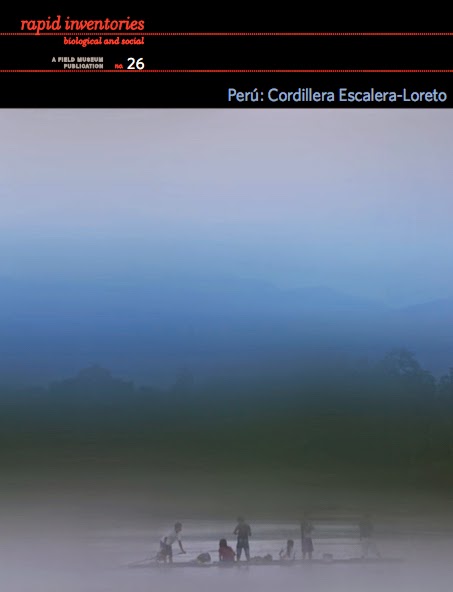
Pitman, Nigel, et al. (eds.). Perú: Cordillera Escalera-Loreto. 2014. http://www.biodiversitylibrary.org/bibliography/100199#/summary.

Given BHL’s rich historical holdings, no one will be surprised to hear that Spruce’s book has long been a mainstay of the collection. What fewer people appreciate is that BHL is also a major supporter of modern-day efforts to explore, document, and protect biodiversity.

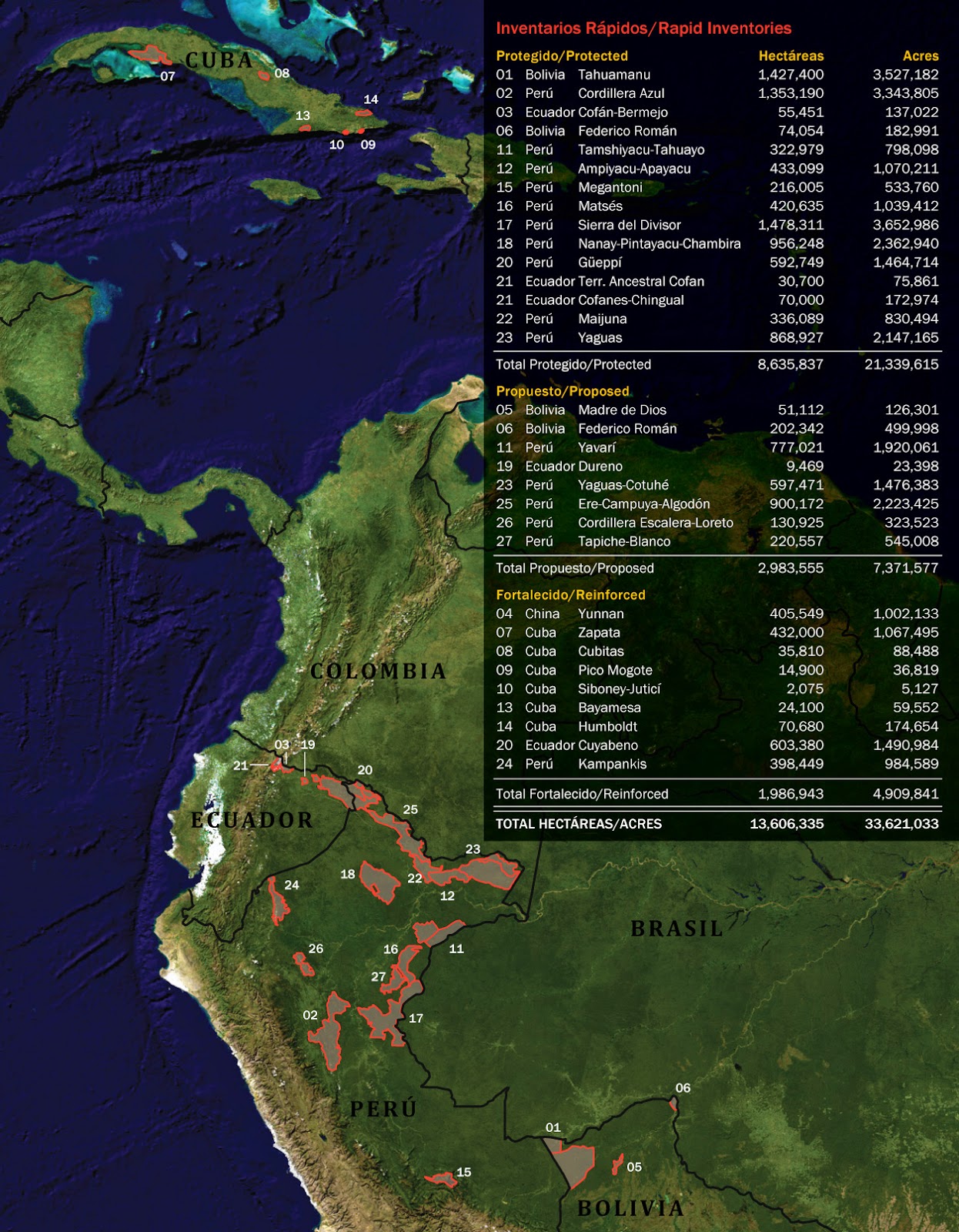
The 2013 expedition to the Escalera range is a great example. Since 1999, the rapid inventory program Vriesendorp runs out of the Field Museum has assembled teams of biologists and social scientists to survey 27 poorly known biological hotspots in Peru, Ecuador, Bolivia, Cuba, and China. These inventories drum up the biological data, social data, consensus, and momentum needed to protect threatened landscapes. Over the program’s 16 years, The Field Museum has helped governments protect more than 21 million acres of the world’s richest forests.

View Full Size Image
Locations of the 27 rapid inventories carried out by The Field Museum since 1999, with summary statistics showing the more than 21 million acres protected to date. Map by Jon Markel, The Field Museum.

All 26 of the rapid inventory reports—totaling more than 5,000 pages and 2,000 photographs—are now freely available for downloading and searching on BHL (Series 1: Rapid Biological Inventories; Series 2: Rapid Inventories: Biological and Social). The tens of thousands of species the team has recorded over the years have been indexed, too. That means that when someone searches for the tree Vochysia ferruginea on Encyclopedia of Life, they get a link to our 2013 Cordillera Escalera survey—as well as a link to Spruce’s 1855 survey.

Getting all of The Field Museum rapid inventory reports into the Biodiversity Heritage Library is a big step forward. We couldn’t help noticing, though, that a lot of our peers in conservation haven’t taken the same step yet. It’s time to change that. Conservation International, Smithsonian Conservation Biology Institute, Chicago Wilderness, Morton Arboretum, and all our other friends:

Let’s see your stuff on BHL!

View Full Size Image
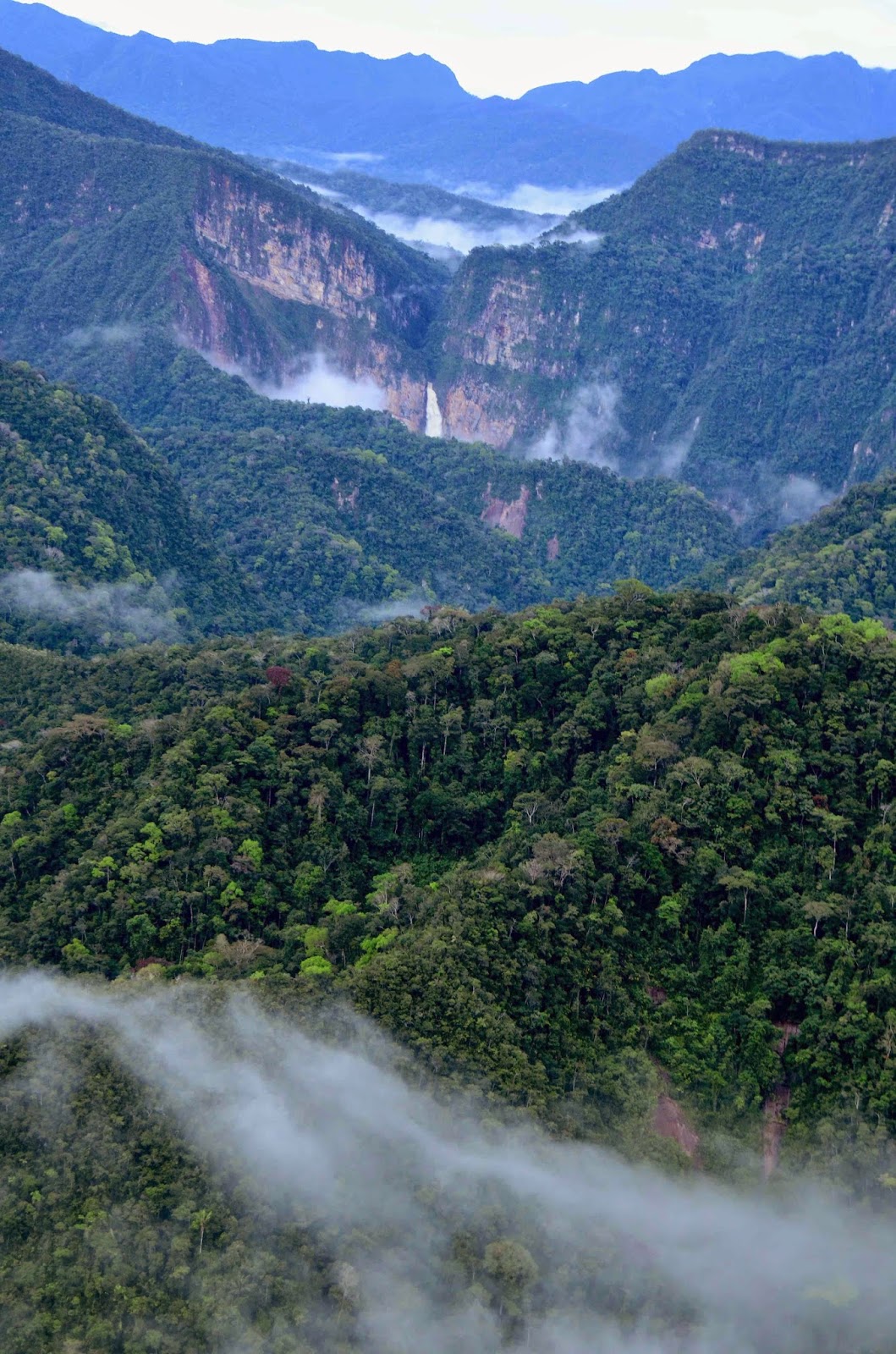
The Escalera Mountains of Loreto, Peru. Photo by Álvaro del Campo, The Field Museum.
  • View Rapid Biological Inventories and Rapid Inventories: Biological and Social from The Field Museum on BHL.
  • View all of the books contributed by The Field Museum on BHL, as well as images from select contributions in Flickr.
April 23, 2015by ulib-libraryjobs
Blog Reel, Featured Books

Book of the Week: Wallace’s Second Place Finish

History never looks too kindly on second place. Neil Armstrong rolls off the tongue as the first man to walk on the moon, but most people hesitate at Buzz Aldrin. Mack Robinson came from a famously athletic family–older brother to Jackie Robinson–and broke the 200-meter world record in the 1936 Olympics. Of course his name is merely the answer to an obscure trivia question as he didn’t win the gold, second only to Jesse Owens. Charles Darwin is so closely associated with evolution and natural selection that his name literally serves as a synonym for the theory. And yet, if only for a slight flap of a butterfly’s wing, we might refer to the transmutation of species as Wallacinian and Alfred Russel Wallace would have gone down in history as the founder of evolution.

View Full Size Image
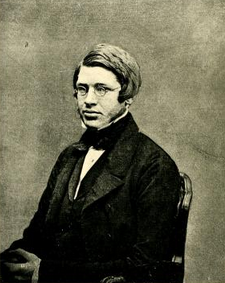
Alfred Russel Wallace,
doesn’t think Wallacinian
sounds that bad

Instead, Wallace is remembered today–if remembered at all–as the man second place to Darwin. But here at the BHL, we recognize Wallace as the naturalist, explorer, geographer, anthropologist, biologist, environmentalist and human rights advocate that he was. The man who, independently of Darwin, arrived to the same conclusion on the origin of species. To honor this somewhat neglected legacy on the 100th anniversary of his death, the BHL has dedicated this week, and this week’s book of the week post, to highlighting our collection of Wallace writings, discoveries and contributions to our understanding of the natural world. To give Wallace the defining word on his role in history, we turn to the description of his life penned by Wallace himself, My life: a record of events and opinions.

In this autobiographical work, Wallace traces his heritage, details his troubled childhood, recounts his early adventures and subsequent publications, and chronicles his transition to advocate and spiritualist–all through correspondence and recollections in his own words. Born to a large family of limited means in Hertfordshire, England, Wallace did not receive much formal education as his family couldn’t afford the demands of tuition. Instead, he was sent to live with his brother and apprentice as a railway surveyor, which–during the railroad boom of the 1830s–was a decent career.

However, young Wallace was not satisfied merely earning a living. He became fascinated by natural history, and through his self-education crossed paths with Henry Walter Bates. Bates was at 19 a published beetle expert and interested in adventure. The two resourceful young men decided to organize an expedition to the Amazon, selling specimens to make ends meet.

The trip did not go well for Wallace. Almost immediately Wallace and Bates separated, and Wallace headed east on the Rio Negro. Wallace relied entirely on native populations for guides, but locals were scarce and escorts rare, “this combined to render my numerous journeys in this almost totally unknown region comparatively unproductive in birds and insects.”

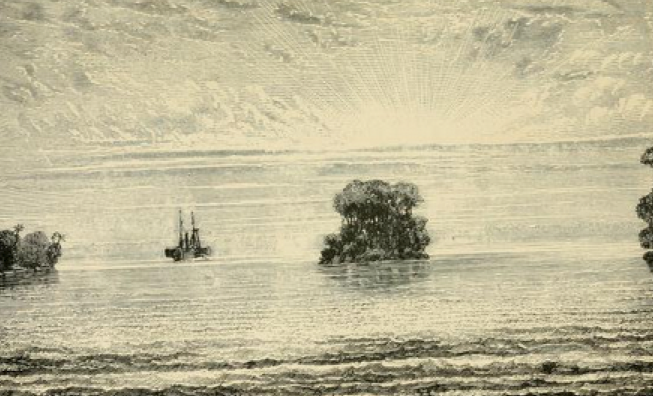
View Full Size Image
An illustration of the Rio Negro from Wallace’s
“A narrative of travels on the Amazon and Rio Negro”

Wallace spent four years in the Amazon, and while his luck in finding “miscellaneous collections” increased, luck in other areas did not. Wallace’s health suffered by a “succession of fevers and dysentery.” His younger brother, Herbert, joined him to help, and within five months, Herbert contracted yellow fever, dying within a few days. Wallace decided to return to England and recounted what happened on the voyage home:

On Friday…about nine in the morning, just after breakfast, Captain Turner, who was half-owner of the vessel, came into the cabin, and said, ‘I’m afraid the ship’s on fire. Come and see what you think of it.’…All hands were at once ordered into the boats…We lay near the ship all afternoon, watching the progress of the flames…[The boat] now presented a magnificent and awful sight as it rolled over, looking like a huge caldron of fire, the whole cargo of rubber, etc., forming a liquid burning mass at the bottom…we bade adieu to the Helen, now burnt down to the water’s edge…My collections, however, were in the hold, and were irretrievably lost. And now I began to think that almost all the reward of my four years of privation and danger was lost.

Wallace and the crew spent 10 days at sea before being rescued by a boat that itself barely made it back to shore.

Even without his collection of specimens that took four years to collect, Wallace published an account of his Amazon travels 18 months later, to little fanfare and much criticism. Undefeated, Wallace once again ventured into the field, this time to Southeast Asia for eight years. The result was an 1855 paper titled, “On the Law Which Has Regulated the Introduction of New Species,” outlining an introductory description of the theory of evolution. Much like his previous work, the article was a flop.

Three years later, Wallace found himself on an island in the Moluccas. Once again, he was destitute and attempting to make ends meet by selling his specimens. During his travels he contracted malaria, and in a feverish state, made a connection that lead to a manuscript detailing the principle of natural selection. Wallace had previously sent all his works directly to publishers. This time, he wanted a peer to review it first and sent it to someone he considered a mentor after beginning a correspondence following his last publication. That is, he sent it to Charles Darwin.

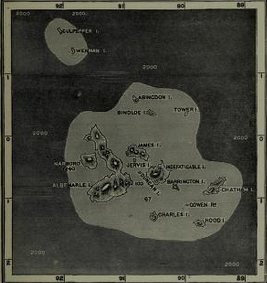
View Full Size Image
Wallace’s map of the Galapagos Islands
from his work, “Island Life”

Now imagine for a moment you are Darwin. Having worked on a theory for the last 20 years, Darwin had yet to publish anything. He receives this 20-page manuscript from a young acquaintance detailing his life’s work. “All my originality,” he wrote to his friend, geologist Charles Lyell, “will be smashed.” He considered publishing a summary of his own writing but continued, “I would far rather burn my whole book than that [Wallace] or any man should think that I had behaved in a paltry spirit.”

Instead, Darwin, Lyell and the botanist Joseph Hooker hastily arranged a reading of both Darwin and Wallace’s works before the Linnean Society on July 1, 1858. A year later, On the Origin of Species was published and the rest is history.

View Full Size Image
Illustration from
“The Malay Archipelago”
View Full Size Image
Another illustration from
“The Malay Archipelago”
View Full Size Image
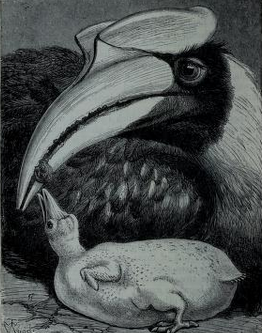
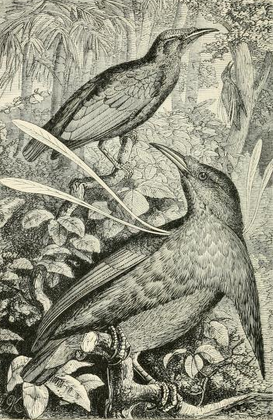
Wallace’s Bird of Paradise
from “The Malaysia and
Pacific Archipelagoes”

For Wallace’s part, he was never bitter about the lack of recognition. He embraced Darwin’s success almost as his own, writing, “Some…declare that I am more Darwinian than Darwin himself…and they are not far wrong.” Wallace became a part of the scientific elite and took pride in that fact:

I think, therefore, that I may have the satisfaction of knowing that by writing my article and sending it to Darwin, I was the unconscious means of leading him to concentrate himself on the task of drawing up what he termed ‘an abstract’ of the great work he had in preparation, but which was really a large and carefully written volume–the celebrated ‘Origin of Species.’

Darwin dedicated the rest of his life expounding and building upon “Origin.” Wallace went on to publish some 22 full-length books and almost 800 articles, only some focusing on his scientific achievements. He branched out to write on subjects varying from his embrace of spiritualism to land nationalization to dangerous working conditions for the urban poor. He advocated for the education of women “so that they are rendered independent of marriage as a means of gaining a home and a living,” and is considered one of the first scientists to raise concerns over the impact humans have on the environment.

Wallace is not the prominent figure that Darwin is, and his name is not representative of the theory that he described and advanced. But he was satisfied with the contributions he made to the field and didn’t define his life by the recognition that he could have received had he published first. And who says there’s no room in history for second place?

If you’re interested in Wallace’s compelling life story, learn more about his works as the BHL celebrates Wallace all this week. Check out some of his writings in our Wallace iTunes U collection or our previous book of the week post on Wallace’s The Malay Archipelago.

Want to learn more about the life and work of Alfred Russel Wallace? See this fantastic website containing biographical information, FAQ’s, links to his letters and the Wallace100 campaign sponsored by our partners The Natural History Museum, London.

References:

  • Conniff, R. (2008, June). On the Origin of a Theory. The Smithsonian Magazine. Retrieved from http://www.smithsonianmag.com/science-nature/presence-darwin.html
  • Garrity, L. (2009, Jan 22). Out of Darwin’s Shadow. Smithsonian.com. Retrieved from http://www.smithsonianmag.com/science-nature/Out-of-Darwins-Shadow.html
November 7, 2013by LANL_RL

Help Support BHL

BHL's existence depends on the financial support of its patrons. Help us keep this free resource alive!

search

About BHL

The Biodiversity Heritage Library (BHL) is the world’s largest open access digital library for biodiversity literature and archives. BHL operates as a worldwide consortium of natural history, botanical, research, and national libraries working together to digitize the natural history literature held in their collections and make it freely available for open access as part of a global “biodiversity community.”

Join Our Mailing List

Sign up to receive the latest news, content highlights, and promotions.

Subscribe Now

Subscribe to Blog via Email

Enter your email address to subscribe to this blog and receive notifications of new posts by email.

Join 319 other subscribers

Subscribe to Blog Via RSS

Subscribe to the blog RSS feed to stay up-to-date on all the latest BHL posts.

Access RSS Feed

Inspiring Discovery through Free Access to Biodiversity Knowledge.

The Biodiversity Heritage Library makes it easier than ever for you to access the information you need to study and explore life on Earth…for free, anytime, anywhere.


64+ Million Pages of
Biodiversity Literature Online.

EXPLORE

Tools and Services
to Transform Research.

EXPLORE

300,000+
Illustrations on Flickr.

EXPLORE

ABOUT | HARMFUL CONTENT | PRIVACY | SITE MAP | TERMS OF USE