

Biodiversity Heritage Library - Program news and collection highlights from BHL
  • Home
  • News
  • Featured Books
    • All Featured Books
    • Book of the Month Series
    • BHL at 20
  • User Stories
  • Campaigns
    • Fossil Stories
    • Garden Stories
    • Monsters Are Real
    • Page Frights
    • Her Natural History
    • Earth Optimism 2020
  • Tech Blog
  • Visit BHL
Home
News
Featured Books
    All Featured Books
    Book of the Month Series
    BHL at 20
User Stories
Campaigns
    Fossil Stories
    Garden Stories
    Monsters Are Real
    Page Frights
    Her Natural History
    Earth Optimism 2020
Tech Blog
Visit BHL
  • Home
  • News
  • Featured Books
    • All Featured Books
    • Book of the Month Series
    • BHL at 20
  • User Stories
  • Campaigns
    • Fossil Stories
    • Garden Stories
    • Monsters Are Real
    • Page Frights
    • Her Natural History
    • Earth Optimism 2020
  • Tech Blog
  • Visit BHL
Biodiversity Heritage Library - Program news and collection highlights from BHL
Blog Reel, Featured Books

Book of the Week: The Threat to the Arctic Fox

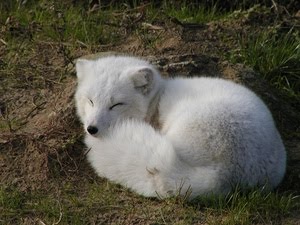
Arctic fox lies down in a earthy hollow with it's tail curled around it.

View Full Size ImageAs the planet warms, habitats for a myriad of species worldwide are changing, and perhaps those most affected are the species living in the arctic regions of the globe. These areas are seeing significant increases in average temperatures, changing the dynamics for the life found there. A poignant example of this is the Arctic Fox (Vulpes lagopus), a species whose habitat is being encroached upon by the Red Fox (Vulpes vulpes) as increasing temperatures make the arctic more habitable for the latter (see EOL’s “Threats” tab on the Arctic Fox page).

In recognition of this threat, we decided to feature the Arctic Fox in our book of the week post this week. In searching BHL for an item highlighting this species, we can across some interesting information regarding the food supply of the species in winter in Dogs, Jackals, Wolves and Foxes: A Monograph of the Canidae (1890), by St. George Mivart. This book, which contains abundant information on the species itself, also showcases the Arctic Fox’s unique food storage habits, which allow it to survive through the arctic’s prey-deficient winter months.
 
Scientists were long puzzled by the fox’s ability to survive through the long winter months without migrating, when a majority of its food sources had done so. As our book of the week relates, Professor Alfred Newton, in the 1863 expedition to Spitzbergen, wrote,
 
“What the Foxes do to get a living in winter when the birds have left the country, is one of the most curious questions that has presented itself to my mind for some time. The greater number of them are said to remain on the land, and to be as active during the long polar night as they are in summer; yet there are no berries by which they might eke out their existence, and there can be no open water, on the margin of which they might find food, within miles of their haunts. The most natural explanation which occurs to one is that they lay up a stock of provisions; but nobody, that I am aware of, has ever found such a store-closet.”
 
However, the supposition of “store-closets” was subsequently confirmed by H.W. Feilden during the Arctic Expedition of 1875 under Captain G.S. Nares. Feilden wrote, in reference to their discovery of Arctic Foxes during their expedition,
 
“…to our surprise, we discovered numerous deposits of dead Lemmings. In one out-of-the-way corner, under a rock, we pulled out a heap of over fifty dead Lemmings. We disturbed numerous ‘caches’ of twenty and thirty, and the ground was honeycombed with holes which each contained several bodies of these little animals, a small quantity of earth being placed over them. In one hole we found the major part of a hare carefully hidden away.”
 
The ingenuity of our Arctic Fox was thus established, revealing that, thanks to the thrifty habits of our little friend, the species is able to survive the cruel wrath of the arctic winter without having to migrate to warmer climates to follow their food sources. The competition for this food is now significantly increased, however, thanks to warming climates that allow the Arctic Fox’s competitor, the Red Fox, to encroach more and more upon their feeding grounds. We hope that through the increased availability of literature on both species through projects like BHL, and subsequently a better understanding of these animals and their natural habitats, scientists can help turn the tide for the Arctic Fox, saving this glamorous canine for future generations.
 
This week’s book of the week, Dogs, Jackals, Wolves and Foxes: A Monograph of the Canidae (1890), by St. George Mivart, was contributed by the University of California.
 
See the first description of the Arctic Fox in v. 1, pg. 40 of Systema Naturae per Regna Tria Naturae: Secundum Classes, Ordines, Genera, Species, Cum Characteribus, Differentiis, Synonymis, Locis (1758) by Carl von Linné.

April 14, 2011by ulib-libraryjobs
Blog Reel, Featured Books

Book of the Week: The Threat to the Arctic Fox

As the planet warms, habitats for a myriad of species worldwide are changing, and perhaps those most affected are the species living in the arctic regions of the globe. These areas are seeing significant increases in average temperatures, changing the dynamics for the life found there. A poignant example of this is the Arctic Fox (Vulpes lagopus), a species whose habitat is being encroached upon by the Red Fox (Vulpes vulpes) as increasing temperatures make the arctic more habitable for the latter (see EOL’s “Threats” tab on the Arctic Fox page).

In recognition of this threat, we decided to feature the Arctic Fox in our book of the week post this week. In searching BHL for an item highlighting this species, we can across some interesting information regarding the food supply of the species in winter in Dogs, Jackals, Wolves and Foxes: A Monograph of the Canidae (1890), by St. George Mivart. This book, which contains abundant information on the species itself, also showcases the Arctic Fox’s unique food storage habits, which allow it to survive through the arctic’s prey-deficient winter months.
Scientists were long puzzled by the fox’s ability to survive through the long winter months without migrating, when a majority of its food sources had done so. As our book of the week relates, Professor Alfred Newton, in the 1863 expedition to Spitzbergen, wrote,
“What the Foxes do to get a living in winter when the birds have left the country, is one of the most curious questions that has presented itself to my mind for some time. The greater number of them are said to remain on the land, and to be as active during the long polar night as they are in summer; yet there are no berries by which they might eke out their existence, and there can be no open water, on the margin of which they might find food, within miles of their haunts. The most natural explanation which occurs to one is that they lay up a stock of provisions; but nobody, that I am aware of, has ever found such a store-closet.”
However, the supposition of “store-closets” was subsequently confirmed by H.W. Feilden during the Arctic Expedition of 1875 under Captain G.S. Nares. Feilden wrote, in reference to their discovery of Arctic Foxes during their expedition,
“…to our surprise, we discovered numerous deposits of dead Lemmings. In one out-of-the-way corner, under a rock, we pulled out a heap of over fifty dead Lemmings. We disturbed numerous ‘caches’ of twenty and thirty, and the ground was honeycombed with holes which each contained several bodies of these little animals, a small quantity of earth being placed over them. In one hole we found the major part of a hare carefully hidden away.”
The ingenuity of our Arctic Fox was thus established, revealing that, thanks to the thrifty habits of our little friend, the species is able to survive the cruel wrath of the arctic winter without having to migrate to warmer climates to follow their food sources. The competition for this food is now significantly increased, however, thanks to warming climates that allow the Arctic Fox’s competitor, the Red Fox, to encroach more and more upon their feeding grounds. We hope that through the increased availability of literature on both species through projects like BHL, and subsequently a better understanding of these animals and their natural habitats, scientists can help turn the tide for the Arctic Fox, saving this glamorous canine for future generations.
This week’s book of the week, Dogs, Jackals, Wolves and Foxes: A Monograph of the Canidae (1890), by St. George Mivart, was contributed by the University of California.
See the first description of the Arctic Fox in v. 1, pg. 40 of Systema Naturae per Regna Tria Naturae: Secundum Classes, Ordines, Genera, Species, Cum Characteribus, Differentiis, Synonymis, Locis (1758) by Carl von Linné.
April 14, 2011by ulib-libraryjobs

Help Support BHL

BHL's existence depends on the financial support of its patrons. Help us keep this free resource alive!

search

About BHL

The Biodiversity Heritage Library (BHL) is the world’s largest open access digital library for biodiversity literature and archives. BHL operates as a worldwide consortium of natural history, botanical, research, and national libraries working together to digitize the natural history literature held in their collections and make it freely available for open access as part of a global “biodiversity community.”

Join Our Mailing List

Sign up to receive the latest news, content highlights, and promotions.

Subscribe Now

Subscribe to Blog via Email

Enter your email address to subscribe to this blog and receive notifications of new posts by email.

Join 319 other subscribers

Subscribe to Blog Via RSS

Subscribe to the blog RSS feed to stay up-to-date on all the latest BHL posts.

Access RSS Feed

Inspiring Discovery through Free Access to Biodiversity Knowledge.

The Biodiversity Heritage Library makes it easier than ever for you to access the information you need to study and explore life on Earth…for free, anytime, anywhere.


ABOUT | HARMFUL CONTENT | PRIVACY | SITE MAP | TERMS OF USE