Biodiversity Heritage Library - Program news and collection highlights from BHL
  • Home
  • News
  • Featured Books
    • All Featured Books
    • Book of the Month Series
    • BHL at 20
  • User Stories
  • Campaigns
    • Fossil Stories
    • Garden Stories
    • Monsters Are Real
    • Page Frights
    • Her Natural History
    • Earth Optimism 2020
  • Tech Blog
  • Visit BHL
Home
News
Featured Books
    All Featured Books
    Book of the Month Series
    BHL at 20
User Stories
Campaigns
    Fossil Stories
    Garden Stories
    Monsters Are Real
    Page Frights
    Her Natural History
    Earth Optimism 2020
Tech Blog
Visit BHL
  • Home
  • News
  • Featured Books
    • All Featured Books
    • Book of the Month Series
    • BHL at 20
  • User Stories
  • Campaigns
    • Fossil Stories
    • Garden Stories
    • Monsters Are Real
    • Page Frights
    • Her Natural History
    • Earth Optimism 2020
  • Tech Blog
  • Visit BHL
Biodiversity Heritage Library - Program news and collection highlights from BHL
Blog Reel, Featured Books

Athanasius Kircher’s Cabinet of Wonder: The Man Who Believed in Everything and His Museum of the Miraculous, Universal, and Absurd

Kircher-Museum_im_Collegium_Romanum giorgio de sepibus public domain large image.jpg

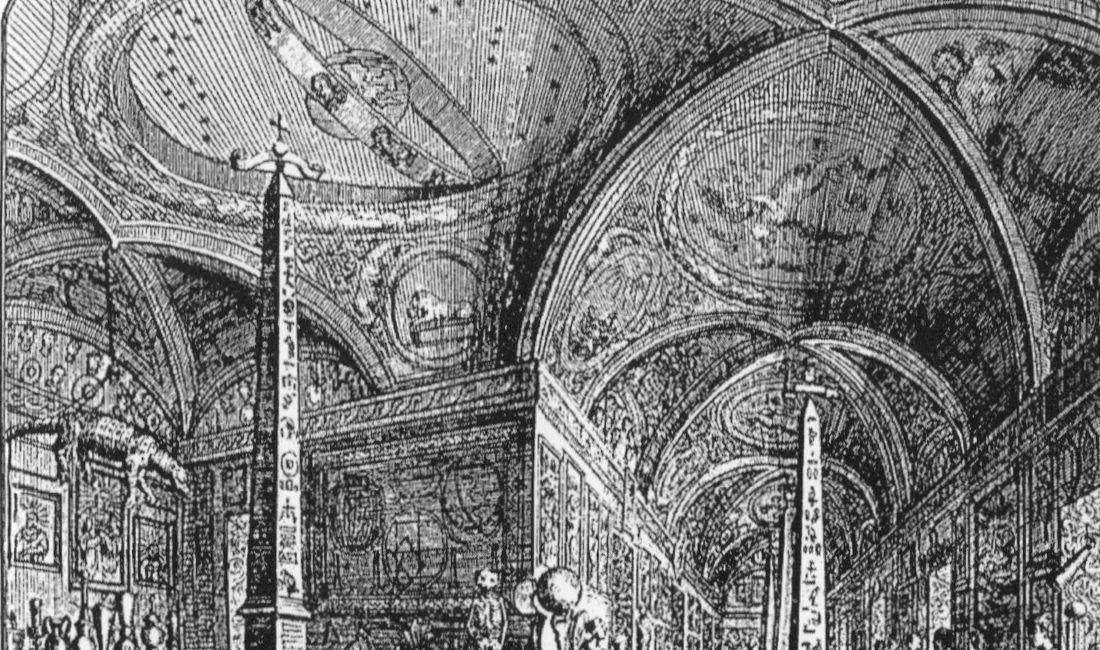
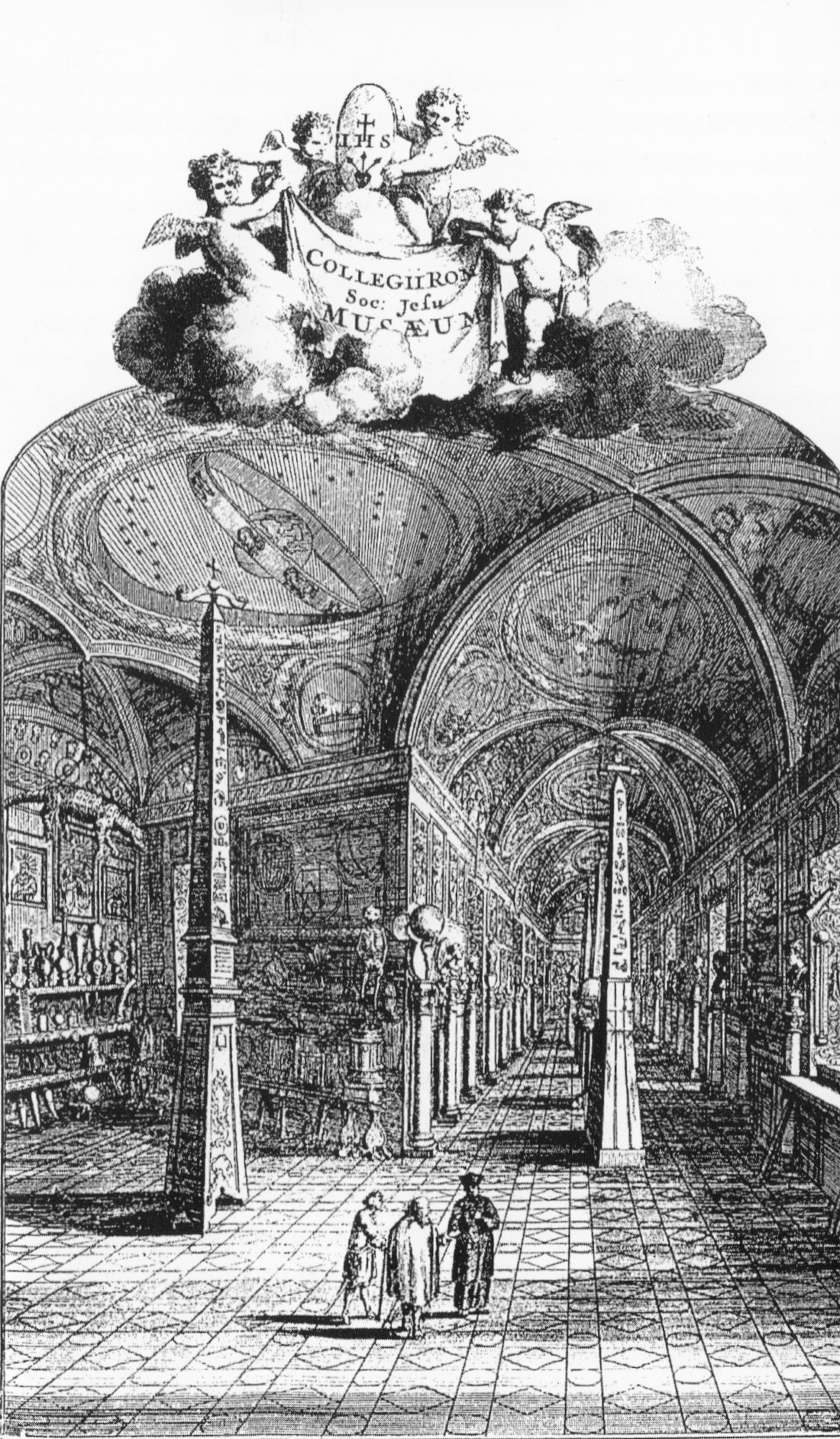
Sepibus, Giorgio de. Romani Collegii Societatus Jesu Musaeum celeberrimum […]. 1678. Image of Athanasius Kircher’s museum, or “cabinet of wonder”. Public domain.

Athanasius Kircher, a 17th century German Jesuit scholar whose name translates to “immortal” (from the Greek “Athanasius”) and “church” (from the German-derived “kircher”), was born on 2 May 1602 in Geisa, part the principality of Fulda in the Holy Roman Empire in Europe. The youngest of nine children, Kircher’s family was devoutly Catholic — a complicated religious affiliation at a time when Protestantism was more popular and war broke out between Catholics and the Protestant Lutherans and Calvinists in the form of the Thirty Years War (1618-1648). Not only did Kircher live during a period of war, but also of witch burnings and plague.

When Kircher was a young man, he was admitted to the Jesuit College at Paderborn, where he studied Greek and Hebrew and, in less than two months, mastered the natural philosophy curriculum and completed his novitiate in 1620 — an impressive achievement in such a short time. Indeed, in his autobiography, published posthumously in 1684, Kircher was hardly modest about his own life achievements…not all of which were scholarly in nature. He included stories about childhood and teenage miracles where he survived impossible situations by divine intervention, including escaping a stampede of horses and entrapment in a water wheel where he almost drowned, healing without treatment from a potentially deadly hernia, and successfully evading a mentally unstable bishop’s army.
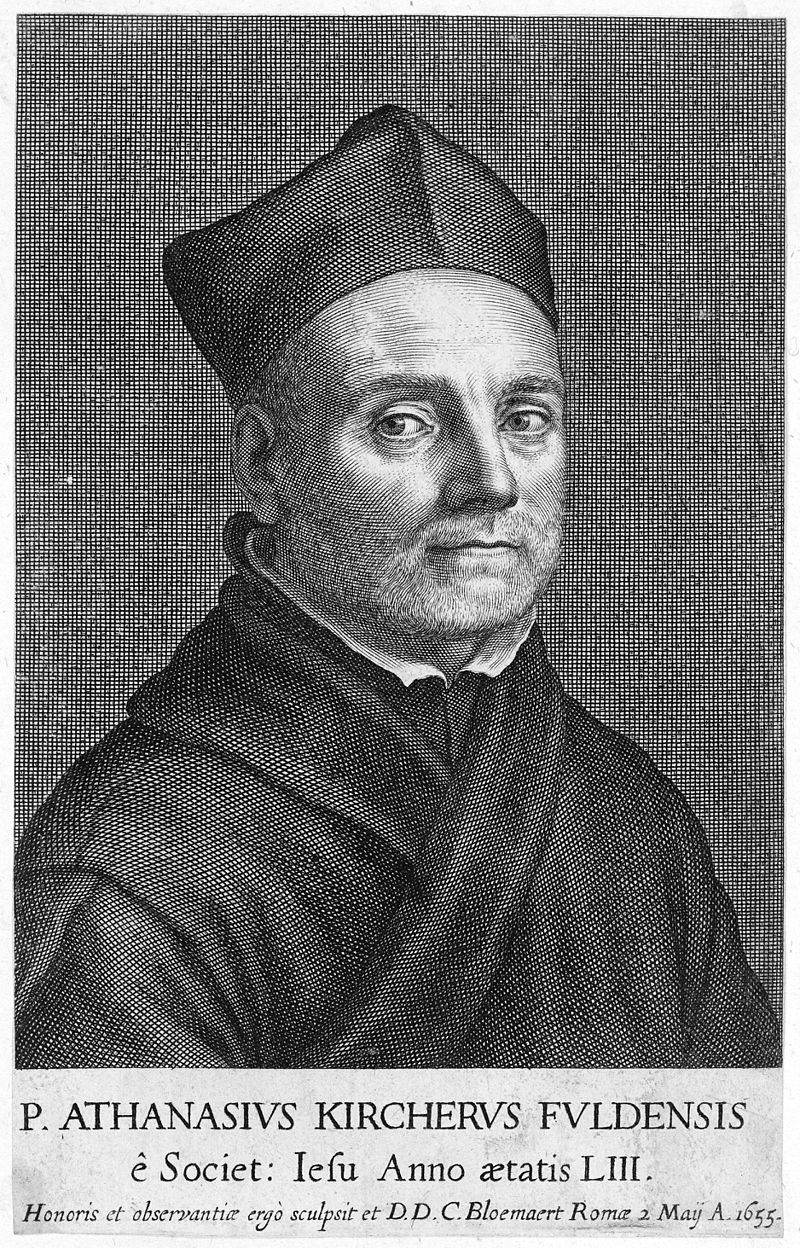
Athanasius_Kircher.jpg

Kircher, Athanasius. Mundus subterraneus, quo universae denique naturae divitiae. 1655 printing. Portrait of Athanasius Kircher. Public domain.

As these accounts illustrate, Kircher had a predilection for the mystical: a trait which bled into his written philosophical and scholarly works. Kircher’s works on topics such as magnetism and miraculous plants, stones, and machines captured imaginations but also infuriated scholars who found Kircher’s work to be factually flawed and too reliant on an idea that every form of knowledge could be connected by universal philosophies involving hidden, mystical elements of the natural world.
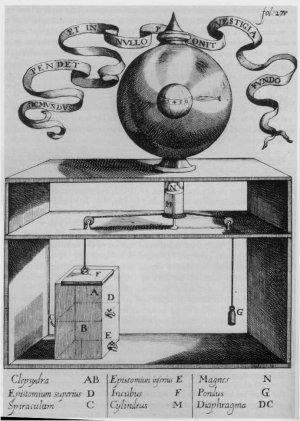
kirchers magnetic clock from magnes public domain.jpg

Kircher, Athanasius. Magnes sive de arte magnetica. 1641. Image of Kircher’s magnetic clock. Public domain.

Kircher’s growing visibility in the scholarly community attracted wealthy patrons who consisted of noblemen, rulers, and other members of the academic community. He claimed to possess objects that drew on nature’s mystical properties. One of the most famous of these was his “miraculous” sunflower clock that was said to run on the mysterious power of a sunflower seed adhered to a cork floating in water that would move with the sun’s motions.
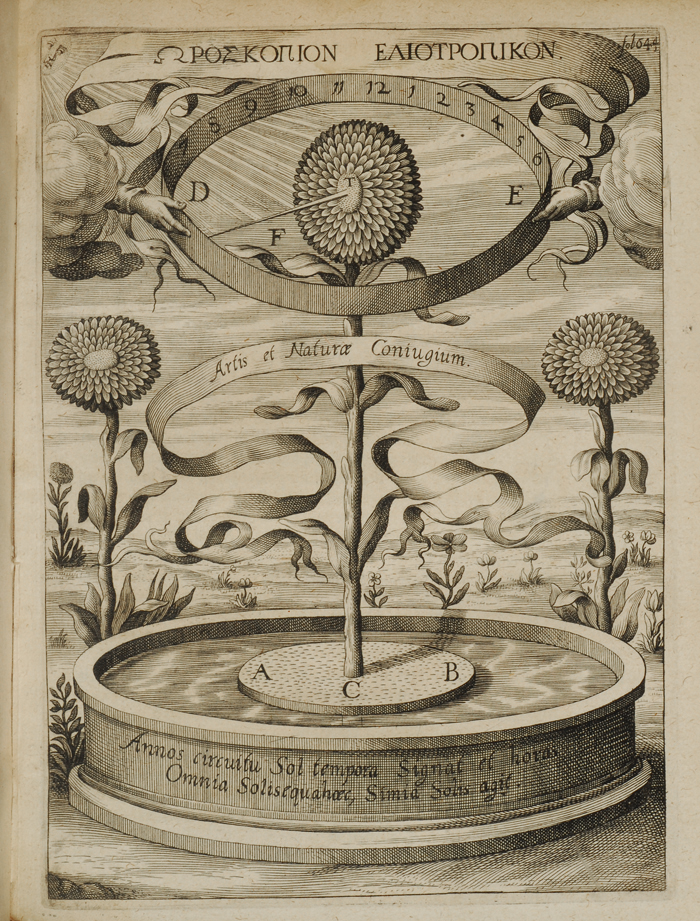
magnes sive de arte magnetica opus tripartum book sunflower clock.jpg

Kircher, Athanasius. Magnes sive de arte magnetica. 1641. Image of Kircher’s supposedly magical sunflower clock. Public domain.

Kircher also claimed to possess a manuscript that deciphered the ancient languages of the world, supposedly written by Babylonian rabbi Barachias Nephi. French lawyer, scholar and antiquarian Nicolas-Claude Fabri de Peiresc (1580-1637), who had been captivated by Kircher’s sunflower clock, hoped that the manuscript could be used to translate Egyptian hieroglyphs. Peiresc and other academics and noblemen had begun to believe Kircher capable of unlocking mysteries in nature.

This confidence was short-lived, however. By late 1633, Peiresc began to doubt the existence of the Barachias Nephi manuscript, as Kircher never produced it to Peiresc (or anyone). Peiresc also came to believe that the sunflower clock was also an illusion, guessing that the clock was really a magnet. He was correct.

Nevertheless, hoping to secure Kircher’s help with the publication of Pietro della Valle’s (1586-1652) Coptic grammar and dictionary in Rome, Peiresc used his contact with the naturalist, collector and antiquarian Cassiano dal Pozzo (1588-1657) to get Kircher transferred to Rome. In mid-November of 1633, Kircher arrived in Rome to teach mathematics at the Collegio Romano, a Jesuit scholarly institution.

It was at the Collegio Romano that Kircher finally had a place to create a museum, a veritable cabinet of wonder. The museum was created when, in 1651, Roman patrician Alfonso Donnino’s collection containing antiquities and paintings was donated to the Collegio Romano. The institution wanted to create a physical space worthy to house the items given by such a respected man. Kircher curated the museum, adding his own created machines and curious artifacts, including objects from nature, that he had received from his Jesuit contacts over the years.

With the advertisement across Europe that Kircher’s own curiosities and inventions were also contained in the museum, it became a destination for scholars, rulers, and others taking a Grand Tour of Europe. Contemporaries knew Kircher as a famous collector and author, and by surrounding himself in the museum with antiquities, natural objects, and mysterious machines which he invented, Kircher was immersed in a physical representation of his universal philosophy about the underlying, divine properties connecting all knowledge and joining together disparate items and ideas.
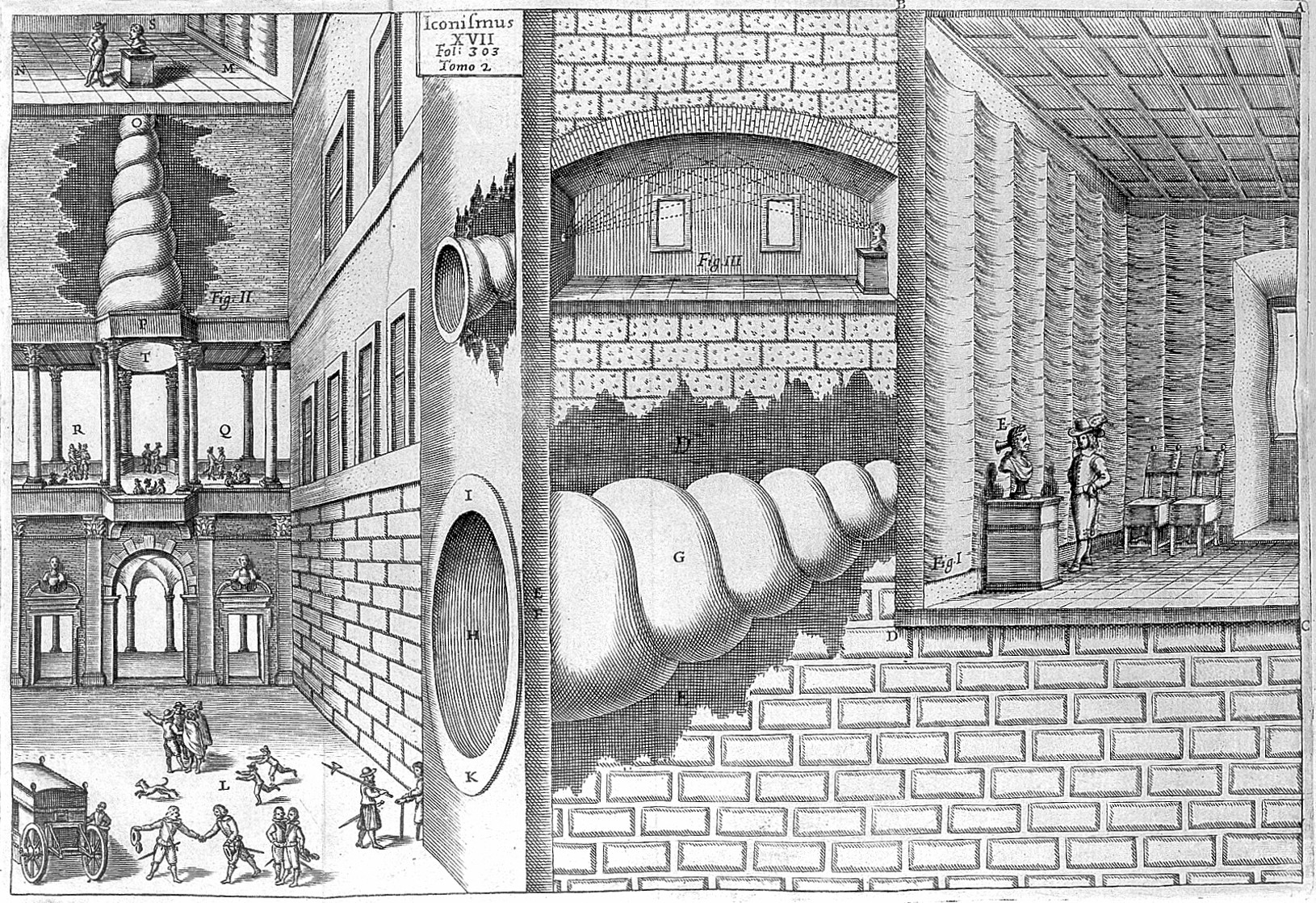
kirchers delphic oracle from his museum public domain.jpg

Kircher, Athanasius. Musurgia universalis, sive ars magna consoni et dissoni. 1650. Athanasius Kircher’s speaking trumpet. Public domain.

Kircher invited visitors to the museum to interact with the machines, read the many books, and ponder the natural items. This invitation to engage with the collections was a unique quality of Kircher’s, demonstrating a desire to connect people to both existence and the natural world through the process of creation of knowledge — yet more of his universalism in practice.

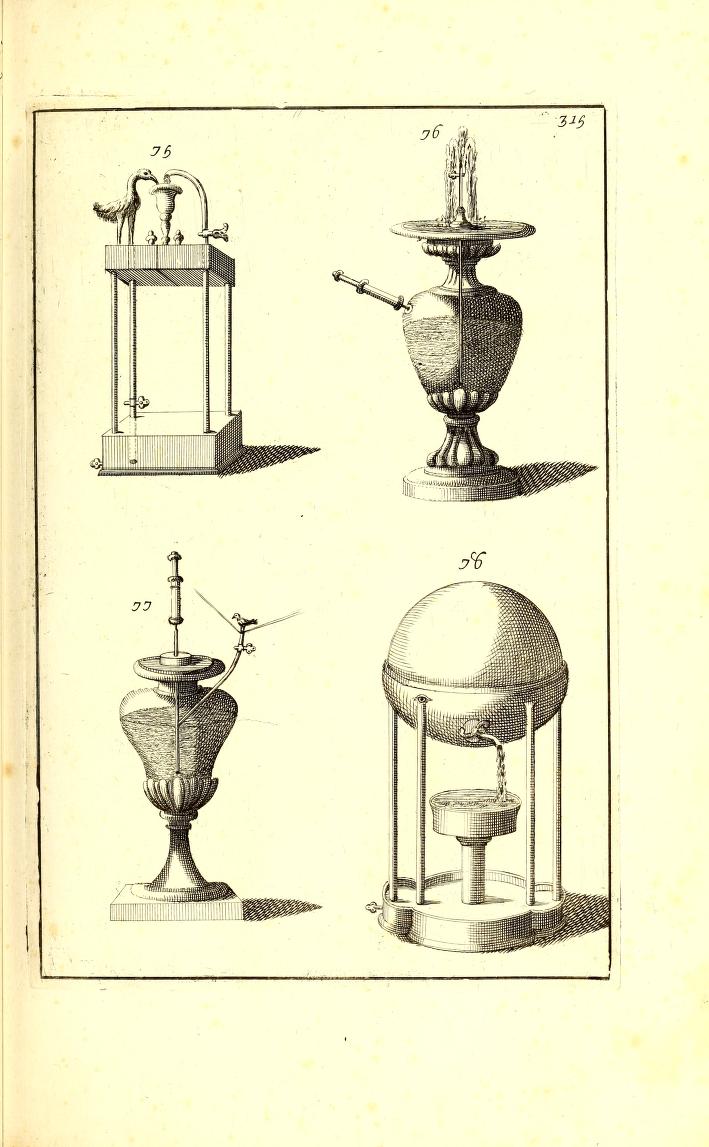
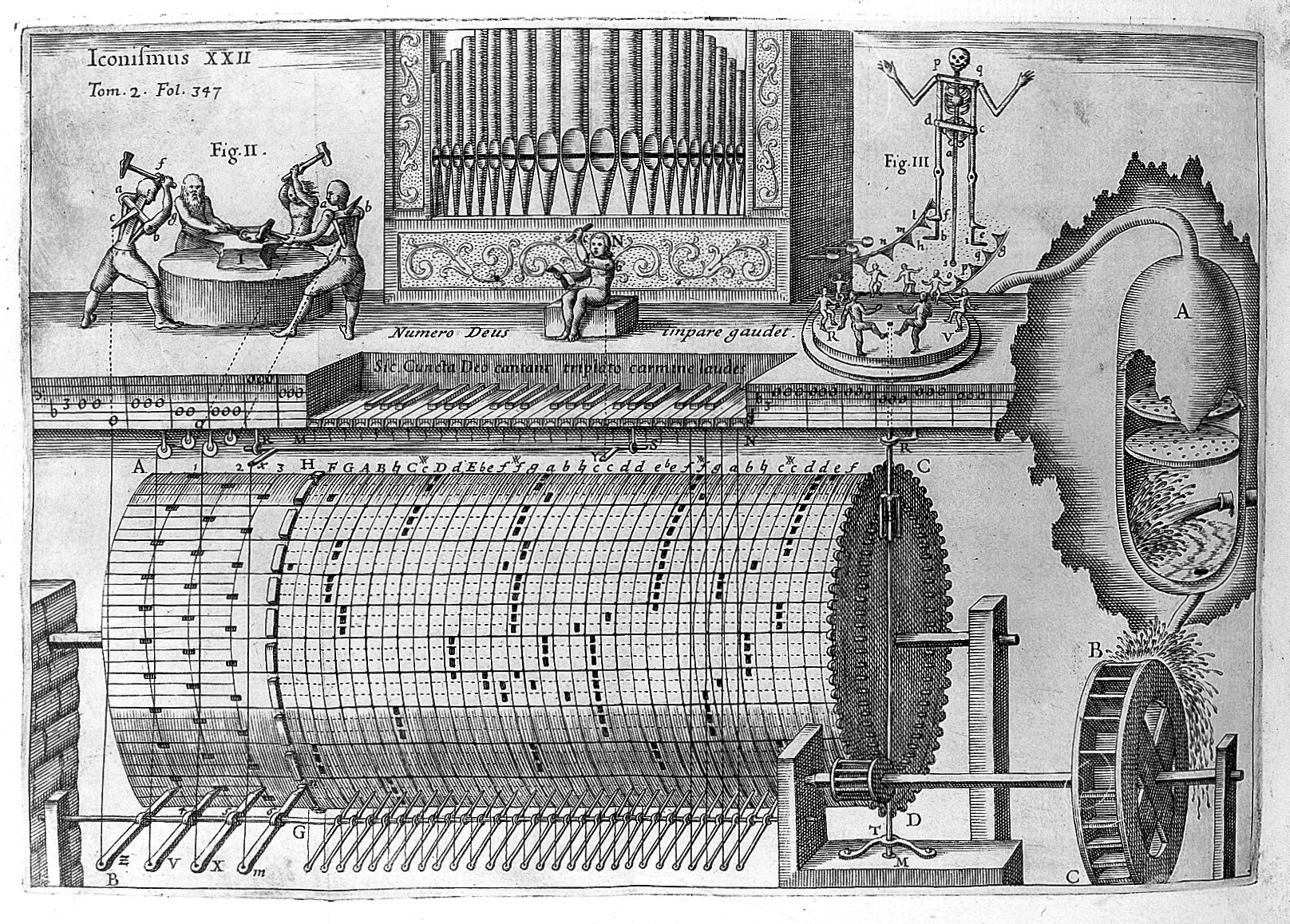
Some of the items contained in Kircher’s museum included: “vomiting statues”, one an eagle, one a lobster, each of which vomited from a cup into another vessel, and were both funny and also showed the principles of hydraulics (the movement of water); “snakestones” from India which were supposed to draw out the venom of a snake when pressed to the bite (there was no proof that these worked); bones from an ancient race of giants (which were actually mastodon bones, unknown at the time); an organ driven by a drum that played every kind of birdsong; a very large concavo-convex mirror together with a series of other mirrors which appeared to show ghosts in the air; and many more inventions, machines, statues, and other curiosities (Giorgio de Sepi created a catalog of the items in 1678).
musaeum kircherianum page 315 image.jpg

“Mathematical instruments” using water. Buonanni, Filippo. Musaeum Kircherianum sive musaeum a p. Athanasio Kirchero in Collegio Romano Societatis Jesu […]. 1709. Contributed in BHL from Smithsonian Libraries.
Kircher,_A.,__Musurgia_universalis_,_hydraulic_organ_public domain.jpg

Kircher, Athanasius. Musurgia universalis, sive ars magna consoni et dissoni. 1650. Hydraulic organ. Public domain.

After Kircher died on 27 November 1680, Filippo Buonanni (1638-1723), a Jesuit scholar who had studied under Kircher, became curator of Kircher’s museum. In 1709, Buonanni published Musaeum Kircherianum sive musaeum a p. Athanasio Kirchero in Collegio Romano Societatis Jesu […], a lavishly illustrated catalog of the museum’s collections. When there were no longer any Kircherian disciples to attend to the museum and its contents, Kircher’s inventions housed in the museum eventually stopped working. Various museums in Rome acquired pieces from Kircher’s museum after his death.

Today, the Collegio Romano has the Wunder Musaeum, dedicated to highlighting Kircher’s own collection and continuing the tradition of the wunderkammer — or “cabinet of wonders” — that Kircher had created in his museum by amassing objects of wonder from around the world (in addition to Kircher’s own fascinating machines, some of which are currently being rebuilt by those studying him).

Kircher has had a resurgence in the academic community, which now sees his universal philosophies about existence and the secrets of history and nature as an important form of thinking that differed and competed with other philosophies of his time: Aristotelian, Platonic, Galilean, Cartesian, and Newtonian, to name a few.

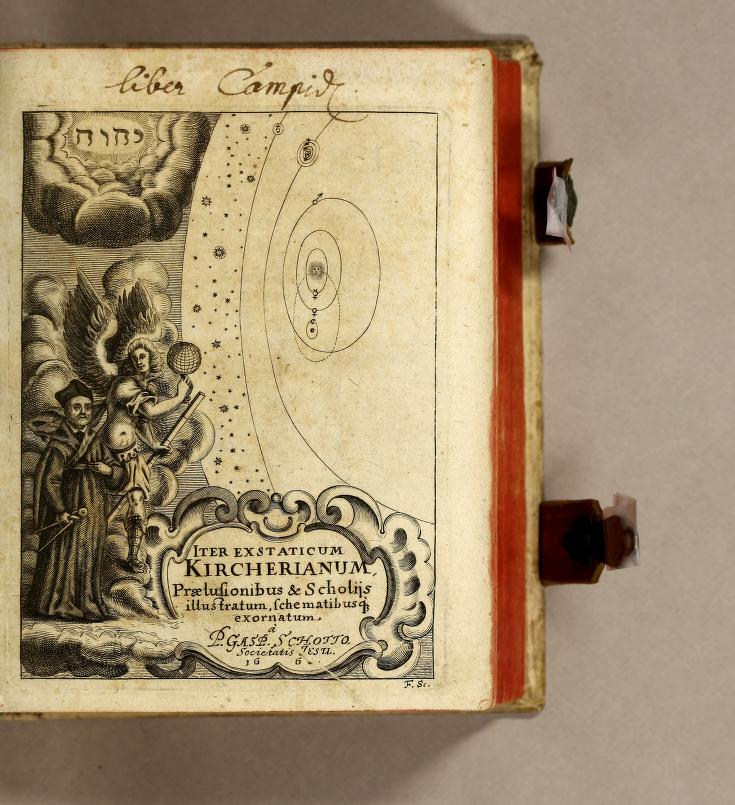
In 1660, Kircher published Itinerarium exstaticum coeleste (‘Ecstatic Celestial Journey’), which was based on a dream he had in which he traveled from the earth to outer space (space was a fluid, rather than a solid). This work dispelled almost all of the Aristotelian ideas about cosmology. In it, the angel Cosmiel reveals all the secrets of heaven and earth to Kircher, as the character “Theodidactus” (“taught by God”). To write such a book would have been against the Jesuit mandate to teach Aristotelian cosmology. Cosmiel described an immeasurable universe, in contradiction to what other philosophers such as Johannes Kepler (1571-1630) and Galileo Galilei (1564-1642) would dare to posit.

In a time when scholars sought to create hard and fast scientific rules and philosophies about how the world worked, Athanasius Kircher believed the world still contained divine mysteries and magical properties — inspiring wonder in contemporaneous and modern readers of his works.
iter exstaticum image near cover.jpg

Image of Kircher as Theodidactus with Cosmiel. Kircher, Athanisus. R.P. Athanasii Kircheri e Societate Jesu Iter extaticum coeleste […]. 1660. Contributed in BHL by John Carter Brown Library.

Works Referenced

Buonanni, R., & Kircher, A. (1709). Musaeum Kircherianum sive musaeum a p. Athanasio Kirchero in Collegio Romano Societatis Jesu jam pridem incoeptum nuper restitutum, auctum, descriptum, & iconibus illustratum [. . .]. Romae: Typis Georgii Plachi Caelaturam [. . .]. DOI: https://doi.org/10.5962/bhl.title.98588

Findlen, P. (Ed.). (2004). Athanasius Kircher: The last man who knew everything. New York: Routledge.

Glassie, J. (2012). A man of misconceptions: The life of an eccentric in an age of change. New York: Riverhead Books.

Godwin, J. (2009). Athanasius Kircher’s theatre of the world: His life, work, and the search for universal knowledge. Rochester, VT: Inner Traditions.

Kircher, A. (1678). Athanasii Kircheri e Soc. Jesu Mundus subterraneus, in XII libros digestus; quo divinum subterrestris mundi opificium, mira ergasteriorum naturae in eo distributio, verbo [Pantamorphon] protei regnum, uniuersae denique naturae majestas & divitiae summa rerum varietate exponuntur, abditorum effectuum causae acri indagine inquisitae demonstrantur, cognitae per artis & naturae conjugium ad humanae vitae necessarium usum vario experimentorum apparatu, necnon novo modo & ratione applicantur. Amstelodami: Apud Joannem Janssonium à Waesberge & filios. DOI: https://doi.org/10.5962/bhl.title.109544

Kircher, A., & Schott, G. (1660). R.P. Athanasii Kircheri e Societate Jesu Iter extaticum cœleste, quo mundi opificium, id est, cœlestis expansi, siderumq[ue] tam errantium, quàm fixorum natura, vires, proprietates, singulorumq[ue] compositio & structura, ab infimo telluris globo, usq[ue] ad ultima mundi confinia, per ficti raptus integumentum explorata, novâ hypothesi exponitur ad veritatem, interlocutoribus Cosmiele et Theodidacto. Herbipoli: sumptibus Joh. Andr. & Wolffg. Jun. Endterorum hæredibus. DOI: https://doi.org/10.5962/bhl.title.98328

Rech, C. (n.d.). Wunder Musaeum: The new construction project of the Museum of Art and Science of the Liceo EQ Visconti. Retrieved from: http://www.wundermusaeum.com/introduzione.html

Schott, G. (1662). P. Gasparis Schotti, regis curtani [. . .] Physica curiosa, sive, Mirabilia naturæ et artis libris XII. comprehensa : quibus pleraq[ue], quæ de angelis, dæmonibus, hominibus, spectris, energumenis, monstris, portentis, animalibus, meteoris, &c. rara, arcana, curiosaq[ue] circumferuntur, ad veritatis trutinam expenduntur : variis ex historia ac philosophia petitis disquisitionibus excutiuntur, & innumeris exemplis illustrantur [. . .]. Herbipoli: Sumptibus Johannis Andreæ Endteri & Wolfgangi Jun. hæredum, excudebat Jobus Hertz Typographus Herbipol. DOI: https://doi.org/10.5962/bhl.title.63881
June 6, 2019by jjones
Blog Reel, Featured Books

Monsters, the Scientific Revolution, and Physica Curiosa

Schott, Gaspar. Physica Curiosa (1662).

From Superstition to Scientific Reasoning

The seventeenth century was a time of great advancement for science, but it also presented a curious juxtaposition between superstition and science. A part of Europe’s Early Modern period and the birth of the Baroque cultural movement, the 1600s also encompassed the early years of the Scientific Revolution, when superstition and religion gave way to scientific reasoning. Furthermore, the Enlightenment, which attempted to replace ideas based on faith or tradition with scientific method, began to take hold later in the century.

View Full Size Image
Monsters! Physica Curiosa.

By the end of the 17th century, electricity, the telescope and microscope, calculus, universal gravitation, Newton’s Laws of Motion, air pressure and calculating machines had entered the scene. And yet, as with all great shifts in cultural thinking, the transition from superstition to science was not instantaneous. Many of the era’s great thinkers attempted to reconcile previous beliefs with new discoveries. Case in point: Monsters.

Monsters and the 16th and 17th Centuries

View Full Size ImageMany of the publications of the 17th century, while beginning to embrace scientific method and conclusions based on experiments, still also accepted fantastical explanations for marvelous occurrences. Books depicting monsters were extremely popular, and many recycled the same illustrations repeatedly, introducing them to new generations (case in point: Gessner hydra, 1560; Aldrovandi hydra, 1640; Joannes Jonstonus hydra, 1657). Furthermore, global exploration had begun on an unprecedented scale, and those that traveled published accounts of biodiversity from regions they visited. However, they recorded not only the creatures they saw with their own eyes, but also those described by locals – many of which were beings of myth and folklore. While fantastic to us today, for most during this time, there was no division between magic and reality – they simply coincided. Thus, these fabulous beasts could be a reality. Many were based on briefly-glimpsed real creatures given religious or superstitious twists. What’s more, many “monsters” heralded during the time were actually humans or animals with deformities.

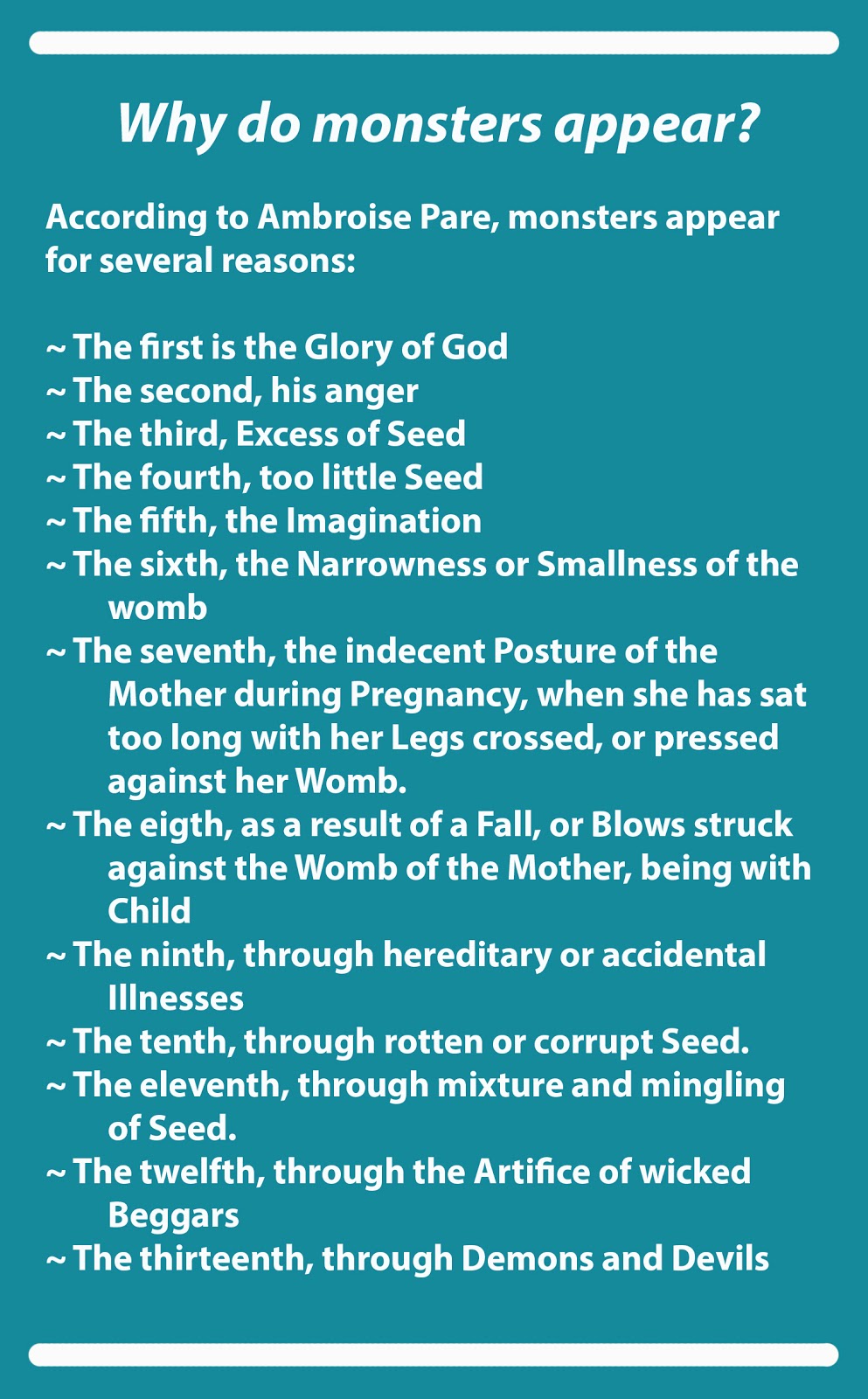
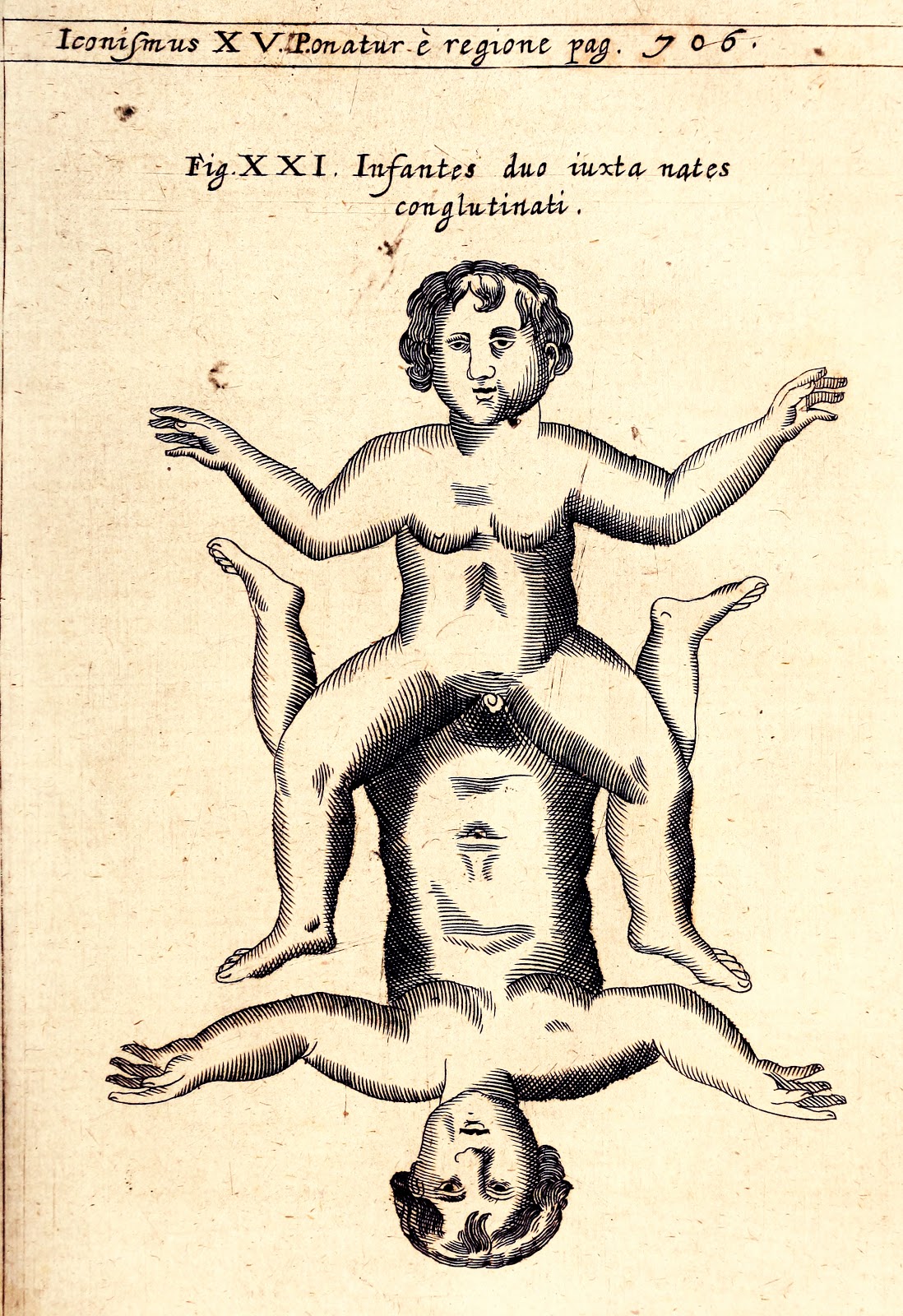
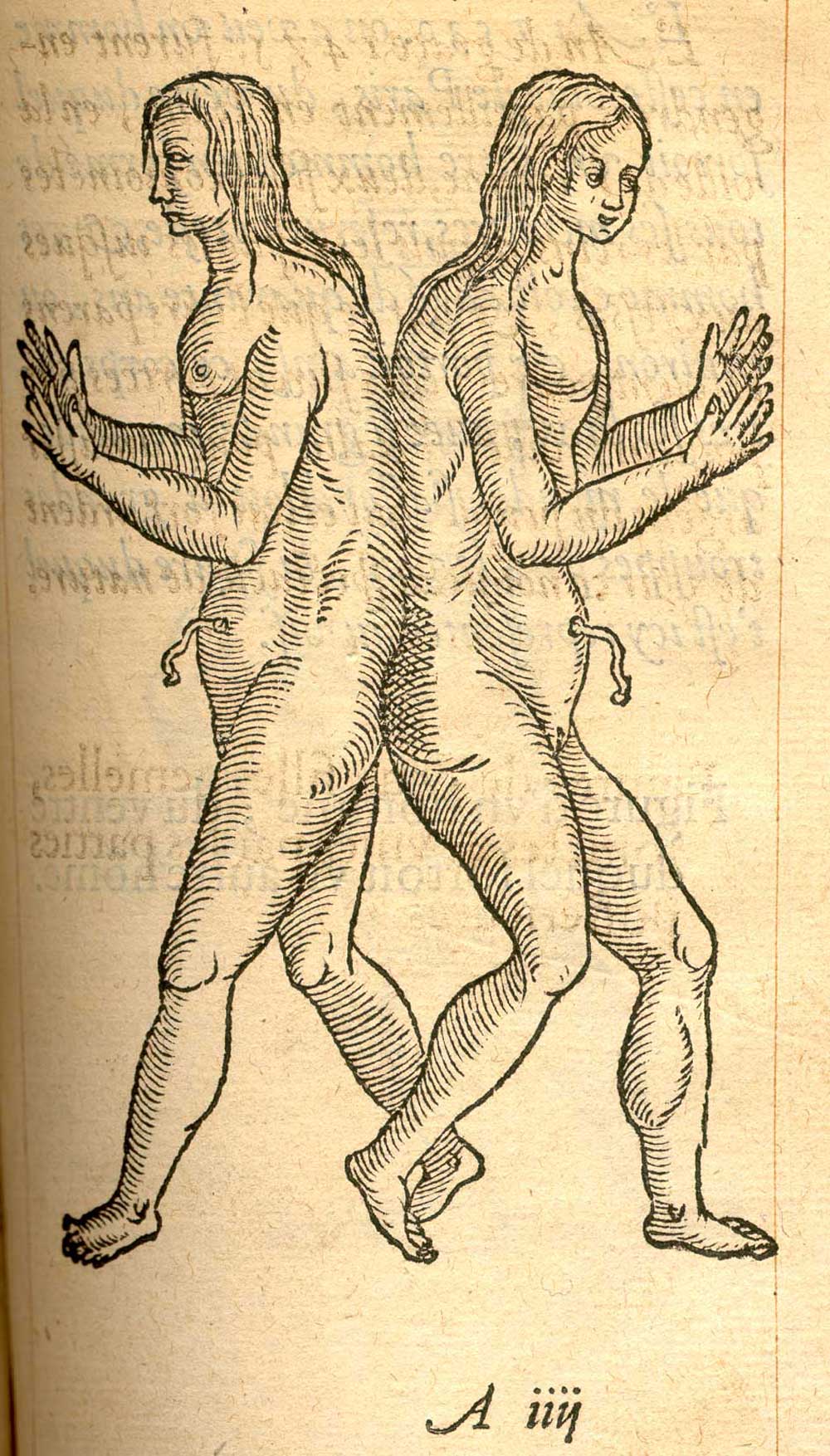
For example, Ambroise Paré, a surgeon of the 1500s, authored “the” monster book of the Renaissance: Des Monstres et Prodiges (1573). Translating to “Monsters and Marvels,” the work depicted malformed humans and animal-human hybrids. Conjoined twins were a popular example of human “monsters.” For instance, Paré illustrates a pair of 15th century female pygopagus conjoined twins that were exhibited in Italian cities for curious spectators.

View Full Size Image
Conjoined Twins. Physica Curiosa.

Gaspar Schott: Jesuit, Mathematician, Natural Historian, Monster Authority

An exceptional example of the “monsters” proliferated during the 17th century can be found in Gaspar Schott’s Physica Curiosa. Schott (1608-1666), a German scientist and Jesuit, specialized in the fields of physics, mathematics, and natural philosophy. He wrote extensively on the mechanical developments of his time, and produced the first published account on Otto von Guericke’s experiments on vacuums. His most famous works include Magia Universalis, Technica Curiosa, and Physica Curiosa – essentially encyclopedias magical, mechanical, and natural history knowledge. Schott was a great compiler, and relied on an extensive library for his own research. Most of Schott’s publications are aggregations of the writings and research existing on various topics.

Physica Curiosa

View Full Size Image
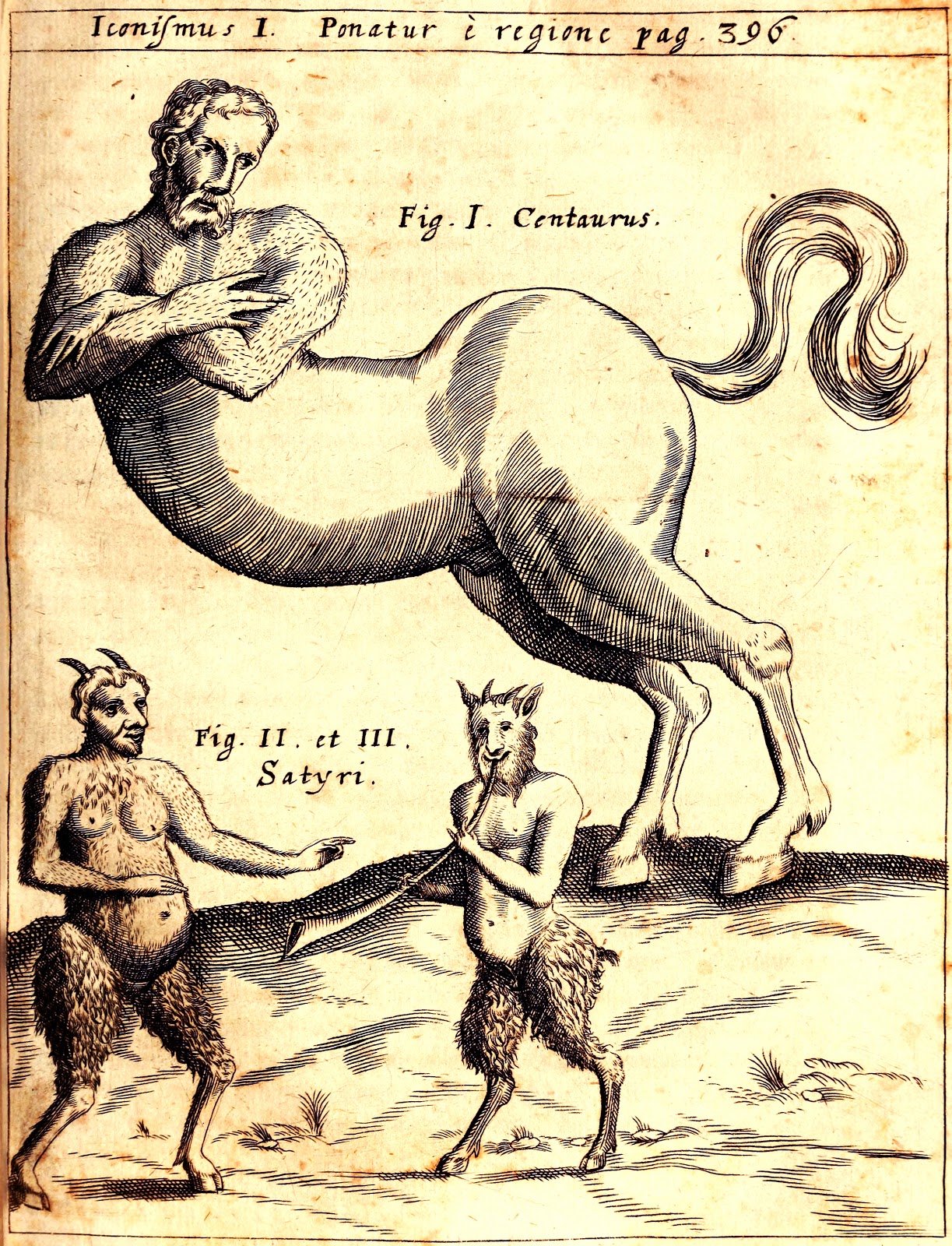
Centaur and Satyrs, Physica Curiosa.

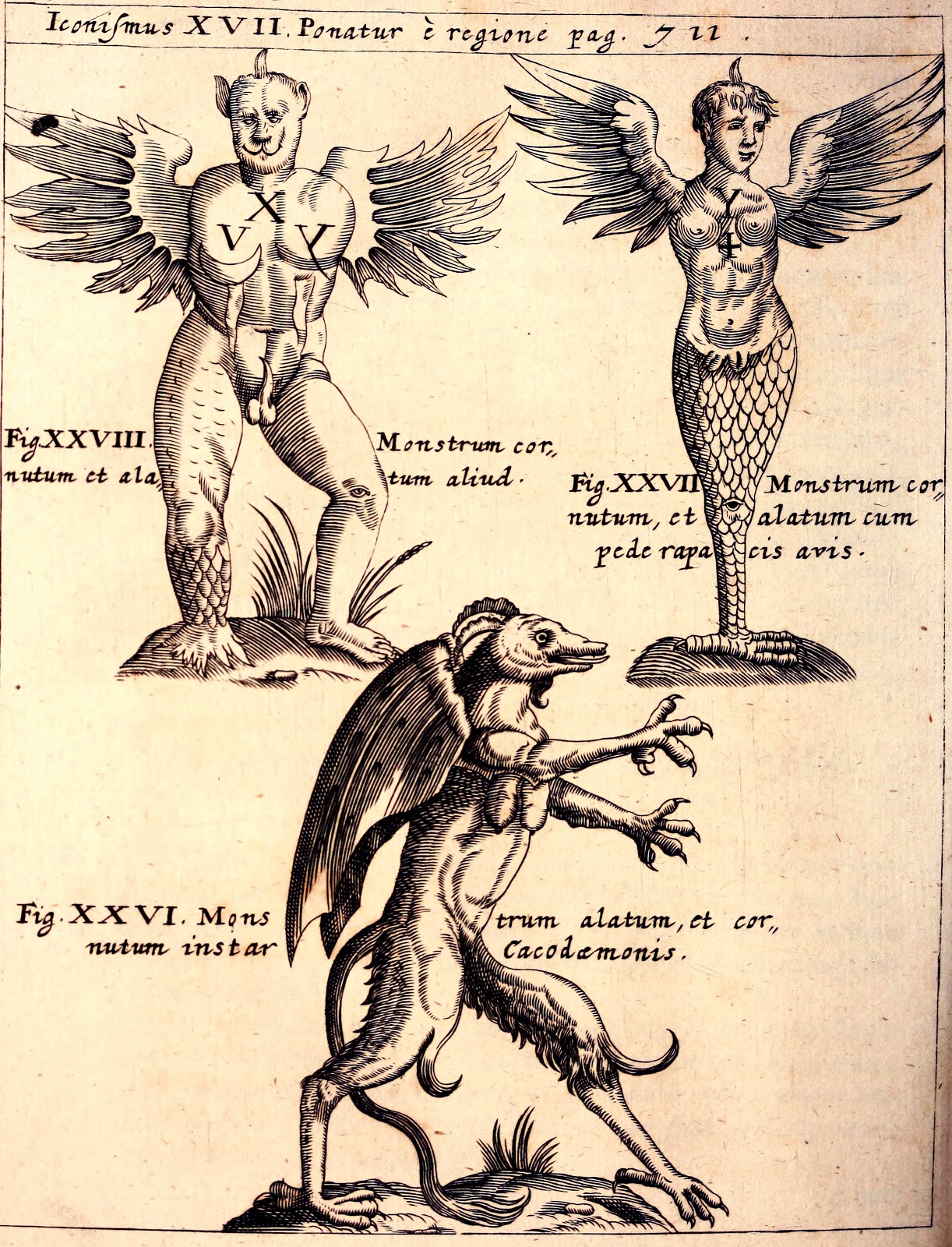
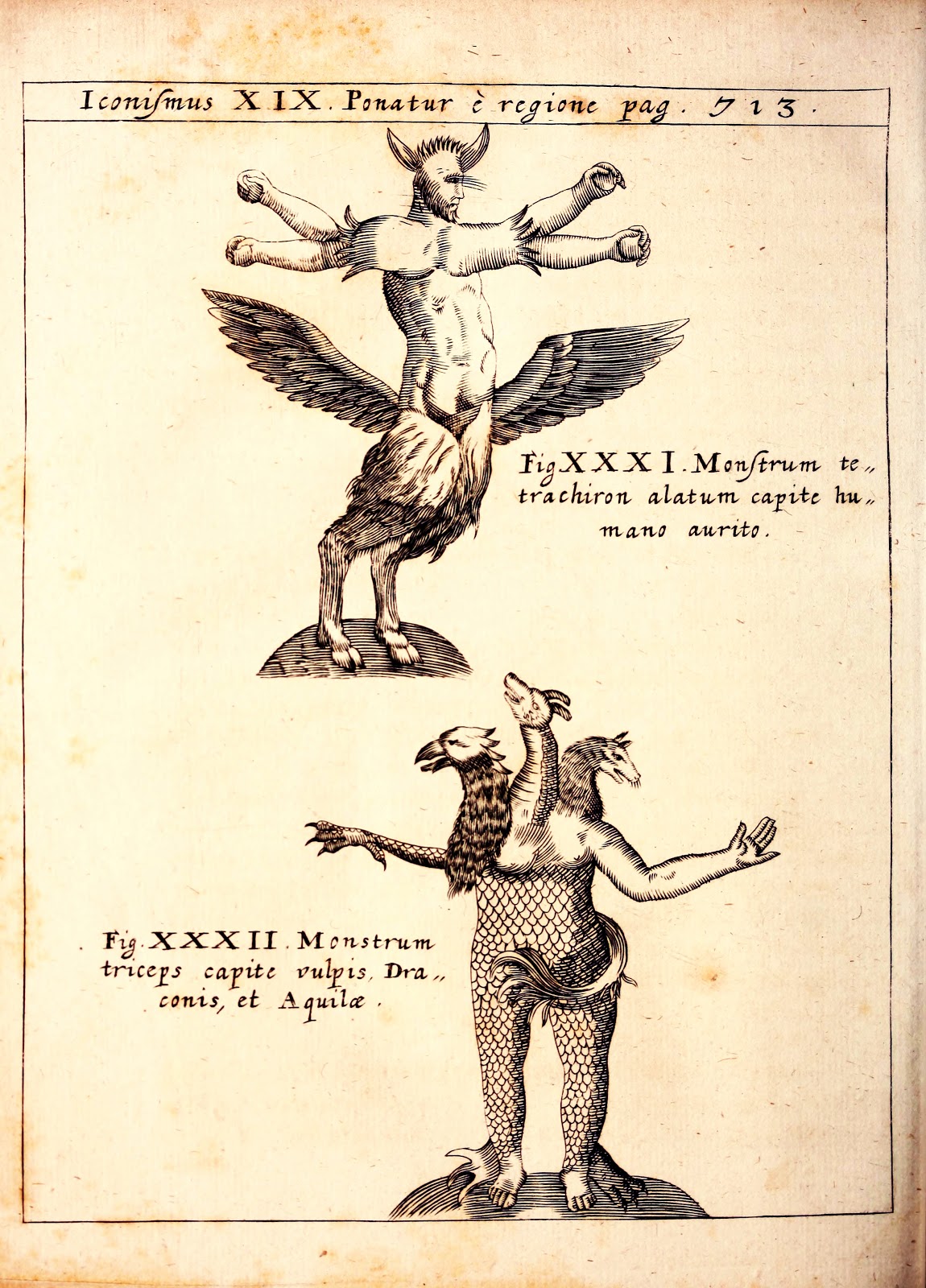
Physica Curiosa is an encyclopedia of the natural sciences of the age. In keeping with Schott’s character, it compiles many of the illustrations and literature previously published. As with many natural history publications of the era, it depicted fantastical creatures alongside real ones. Divided into twelve books, the first six books (digitized by the Smithsonian Libraries) are devoted to “miraculous” subjects, including Demons and Angels, spectres, demonic possessions, human and beastly monsters, and portents. The last six books deal with the “marvels” of nature – real creatures from exotic locales, such as elephants and rhinos.

Physica Curiosa‘s target audience was other scholars, educators, and the rich nobility of the time, as this was the demographic that could afford the publication. Though books were beginning to be more prolifically published in relation to the previous century, they were still made by hand and very expensive. The illustrations in this work are copper engravings, which were very practical for scientific illustration as they allowed for much more detail than wood blocks. A single printing of 500-1,000 copies concluded the run of this publication.

Monsters

View Full Size Image
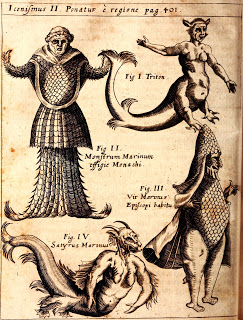
Monk Fish (Upper Left), Bishop Fish (Lower Right), Sea Devils (Upper Left, Lower Right).

Physica Curiosa begins with a discussion of diabolical magic – that of demons. In his publication Magia Universalis, Schott wrote that magic was once an honorific practice, but that legitimate magic was corrupted after the flood. The remaining natural magic was likely the result of a pact with a demon and was prohibited. He also asserts that demons are the cause of many of the world’s “monsters.”

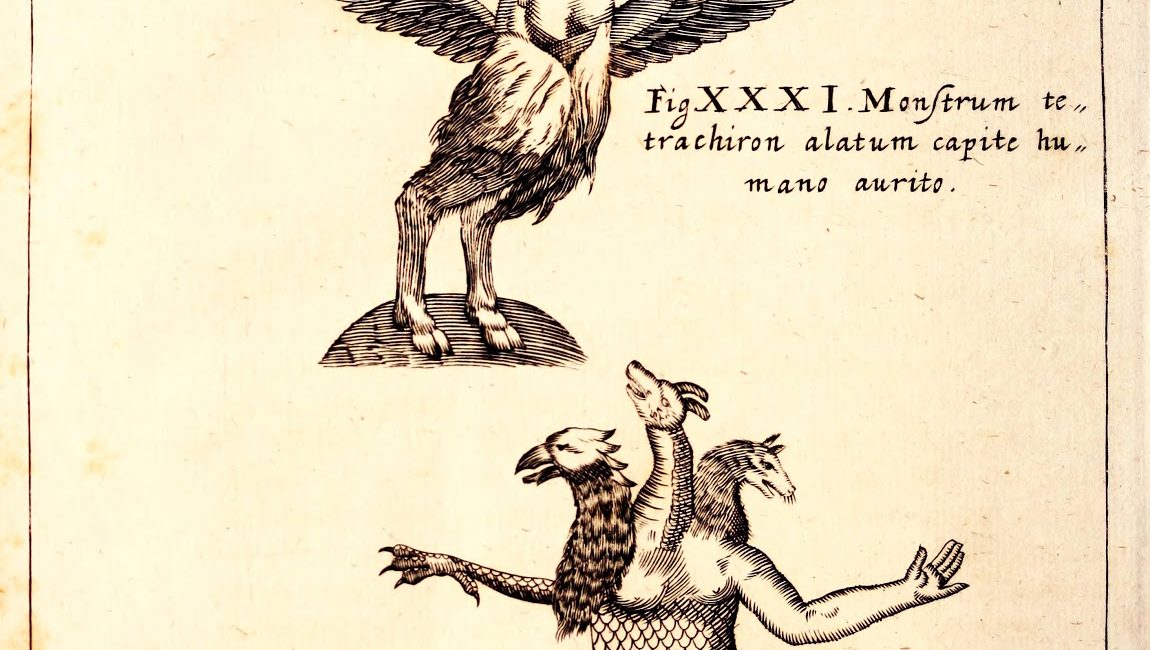
Physica Curiosa not only depicts deformed humans as monsters, but also Centaurs, Satyrs, Monk and Bishop Fish, and Sea Devils, to name a few. Human deformities as monsters has been discussed at length, but many other creatures presented by Schott exemplify the practice of misrepresenting real creatures, or imposing religious elements on natural entities. For example, the monk and bishop fish, which were popular beings illustrated throughout the 16th-17th centuries, demonstrate how religious tensions resulted in the association of clerical figures with monsters. Nevertheless, many authors still purported these creatures to be real. In the late 1600s, Johann Zahn wrote that the bishop fish he illustrated in Specula Physico-Mathematico-Historica was fished out of the Baltic Sea in 1531.

The Sea Devil was also a popular monster, which Conrad Gessner, in the 16th century, recorded as having been captured in both Norway and Rome. Historians today postulate that this creature was actually based on the monk seal. Seals were extremely disliked by both fisherman and farmers as nuisances. Aristotle recorded accounts of seals raiding orchards, which Gessner and Ulisse Aldrovandi maintained.

Reality…Kind of

While Schott clearly saw a distinction himself between fantastical creatures and those found in the natural world (as evidenced by the division within his book), he still asserts some incredible beliefs associated with real animals. For instance, he claims that “both fish and bird are made from water,” barnacle geese are born from rotting wood, and that angels may have carried men and animals to the New World and distant islands. This demonstrates the tie between magic and science that still permeated Baroque Europe.

Impact on Science

View Full Size Image
Mermaids, Demons and Monsters, oh my!

It may seem, with extensive conversations about diabolical magic, demons, and monk fish, that Physica Curiosa is little more than a perpetuation of the superstition that characterized the Dark Ages. But believe it or not, Physica Curiosa played an important part in the development of scientific reasoning. For instance, while it still purports some “mystical” explanations for certain miraculous events, Schott also condemns a great deal of the accepted superstitions of the time. For instance, he discredits the use of divining rods to locate treasure, rejects the notion that a corpse bleeds in the presence of its murderer, and condemns drinking the blood of one’s beloved in order to cure infatuation. Indeed, within Physica Curiosa, Schott writes regarding many accepted beliefs, “I do not approve of all, because I know that some are doubtful, if not false; others superstitious; others perhaps even manifestly false.” Schott also acknowledges that many unexplained phenomena may indeed be scientifically true when he “implores the reader not to be so inhuman as to refuse to believe anything unless he sees it with his own eyes, [as] many things which antiquity thought fabulous are now proved true by frequent experiment.”

Thus, Physica Curiosa represented a critical step along the journey of accepting science over superstition. Furthermore, this work and the others of its time, by aggregating the fanciful beliefs of the era in a single publication, presented an excellent body of work against which those of the Enlightenment could react. By comprehensively recording what was accepted as truth during the time, the authors made it easier for future scholars to pinpoint and address widespread, unscientific doctrine.

In conclusion, the sixteenth and seventeenth centuries were a fascinating time in history, as we watch science battle superstition, and see scholars like Schott struggle to make sense of their cultures and their reasoning. Monsters were a inherent part in this discovery process. Deciphering truth from myth, and exploring medical and natural explanations for the unexplained, is what science is all about.

Physica Curiosa Illustrations

You can see more books about the Curious and the Bizarre in BHL. See a collection of fascinating “monster” illustrations in Flickr. See illustrations from the first six parts of Physica Curiosa in Flickr.

Special thanks to Lilla Vekerdy, Head of Special Collections, Smithsonian Libraries, for her consultation on this post. The Smithsonian Libraries’ collection contains 16 books by Schott. The version of Physica Curiosa digitized for BHL is from the Smithsonian Libraries’ collection.

References

  • Gillispie, CC. “Schott, Gaspar.” Dictionary of Scientific Biography. New York: Charles Scribner’s Sons, 1980.
  • Thorndike, L. A History of Magic and Experimental Science. New York and London: Columbia University Press, 1923. 596-608.
  • Michon, Scott. “Sea Monsters.” Strange Science, 16 May 2013. 17 May 2013. http://www.strangescience.net
May 24, 2013by michelle.underhill

Help Support BHL

BHL's existence depends on the financial support of its patrons. Help us keep this free resource alive!

search

About BHL

The Biodiversity Heritage Library (BHL) is the world’s largest open access digital library for biodiversity literature and archives. BHL operates as a worldwide consortium of natural history, botanical, research, and national libraries working together to digitize the natural history literature held in their collections and make it freely available for open access as part of a global “biodiversity community.”

Join Our Mailing List

Sign up to receive the latest news, content highlights, and promotions.

Subscribe Now

Subscribe to Blog via Email

Enter your email address to subscribe to this blog and receive notifications of new posts by email.

Join 319 other subscribers

Subscribe to Blog Via RSS

Subscribe to the blog RSS feed to stay up-to-date on all the latest BHL posts.

Access RSS Feed

Inspiring Discovery through Free Access to Biodiversity Knowledge.

The Biodiversity Heritage Library makes it easier than ever for you to access the information you need to study and explore life on Earth…for free, anytime, anywhere.


64+ Million Pages of
Biodiversity Literature Online.

EXPLORE

Tools and Services
to Transform Research.

EXPLORE

300,000+
Illustrations on Flickr.

EXPLORE

ABOUT | HARMFUL CONTENT | PRIVACY | SITE MAP | TERMS OF USE