Biodiversity Heritage Library - Program news and collection highlights from BHL
  • Home
  • News
  • Featured Books
    • All Featured Books
    • Book of the Month Series
    • BHL at 20
  • User Stories
  • Campaigns
    • Fossil Stories
    • Garden Stories
    • Monsters Are Real
    • Page Frights
    • Her Natural History
    • Earth Optimism 2020
  • Tech Blog
  • Visit BHL
Home
News
Featured Books
    All Featured Books
    Book of the Month Series
    BHL at 20
User Stories
Campaigns
    Fossil Stories
    Garden Stories
    Monsters Are Real
    Page Frights
    Her Natural History
    Earth Optimism 2020
Tech Blog
Visit BHL
  • Home
  • News
  • Featured Books
    • All Featured Books
    • Book of the Month Series
    • BHL at 20
  • User Stories
  • Campaigns
    • Fossil Stories
    • Garden Stories
    • Monsters Are Real
    • Page Frights
    • Her Natural History
    • Earth Optimism 2020
  • Tech Blog
  • Visit BHL
Biodiversity Heritage Library - Program news and collection highlights from BHL
BHL News, Blog Reel

BHL Australia – Now a Truly National Project

BHL Australia started 2017 with a dream – to digitize biodiversity literature from EVERY state and territory in Australia (for those readers not in Australia, we have six states and two territories).

The Australian branch of the Biodiversity Heritage Library is led by Museums Victoria, in collaboration with Australia’s national biodiversity data aggregator, the Atlas of Living Australia. The Australian project started in 2011 with just one library contributing.
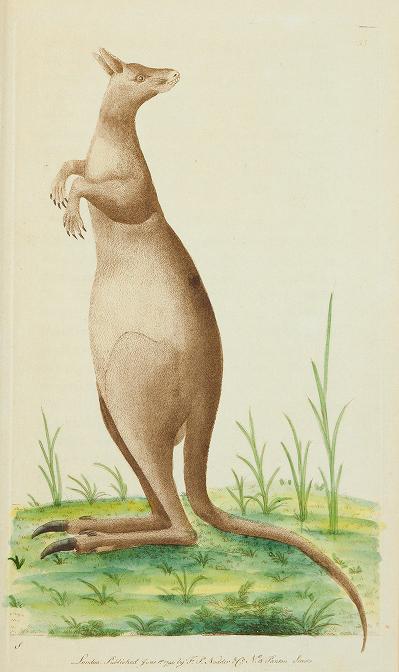
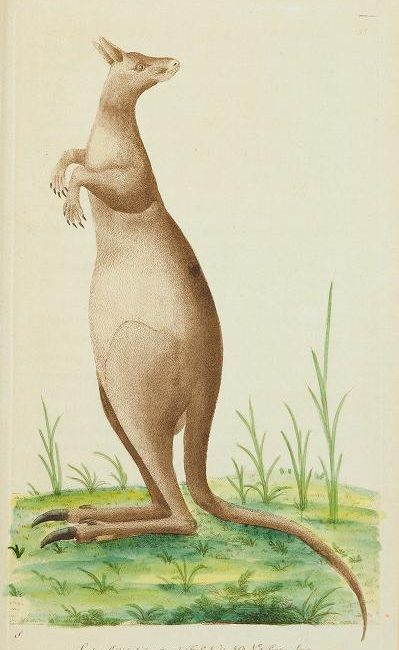
The first scientific description of a kangaroo, from George Shaw’s The Naturalist’s Miscellany, or Coloured figures of natural objects, volume 1, 1790, contributed to BHL by Museums Victoria. http://s.si.edu/2mMRKFG.

In May 2016, BHL Australia signed on as a full BHL member. By this time, we had grown to five contributing organizations from four states: Museums Victoria and the Royal Botanic Gardens Victoria (in Victoria), the Queensland Museum (in Queensland), the South Australian Museum (in South Australia) and the Australian Museum (in New South Wales).

By the end of 2016, the number of Australian contributors had doubled. We had welcomed five new BHL contributors, including the Western Australian Museum and the Royal Society of Western Australia (from Australia’s largest state of Western Australia) and Geoscience Australia (from the Australian Capital Territory).
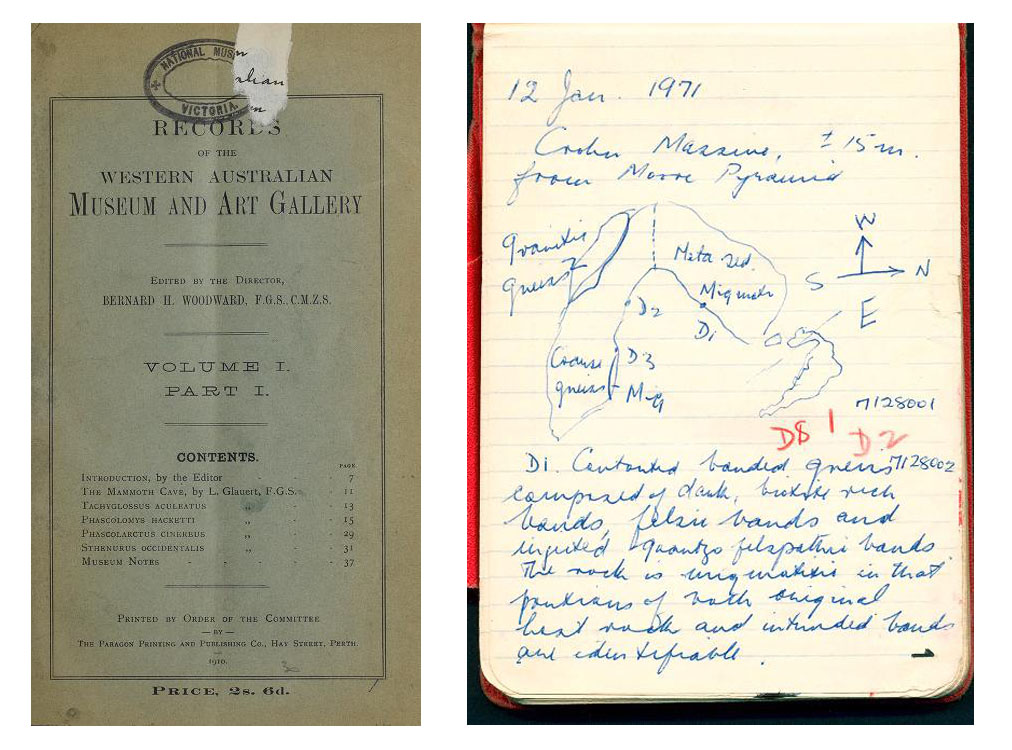
Left: Records of the Western Australian Museum and Art Gallery, volume 1 number 1, 1910, contributed to BHL by the Western Australian Museum. http://s.si.edu/2EL3oYw. Right: Page from Richard Gurth Dodson’s 1971 Antarctic geological field notebook contributed to BHL by Geoscience Australia. http://s.si.edu/2B8EPCo.

In 2017 we purchased a new scanner and uploaded a record number of pages onto BHL: 48,863 (compared to 27,647 in 2016). We continued to attract new contributors and, by the middle of the year, there were 15 Australian organizations contributing to BHL. However, the Northern Territory and Tasmania were still not represented.

In October 2017, BHL Australia’s Manger Ely Wallis and Coordinator Nicole Kearney spoke about BHL at the combined annual meeting of the Council of Heads of Australian Faunal Collections (CHAFC) and the Council of Heads of Australasian Herbaria (CHAH).

We are thrilled to announce that, as a direct result of this meeting, we have three new Australian contributors: the Museum and Art Gallery of the Northern Territory, the Northern Territory Field Naturalists’ Club and Tasmania’s Queen Victoria Museum and Art Gallery.
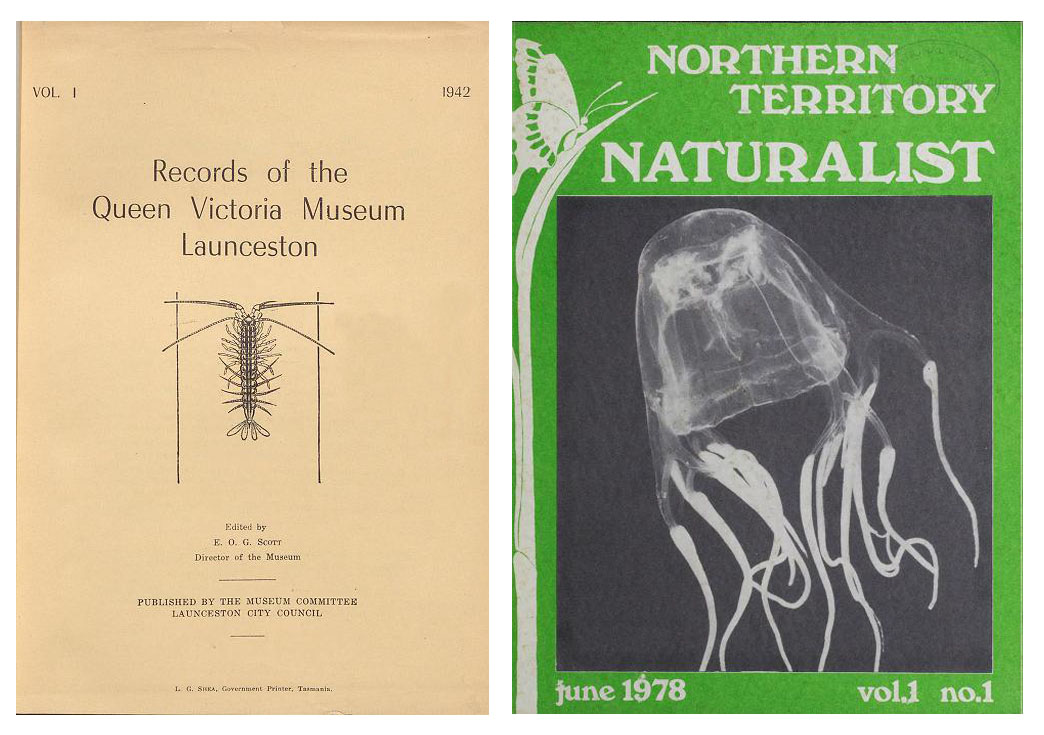
Left: Records of the Queen Victoria Museum Launceston, volume 1, 1942, contributed to BHL by the Queen Victoria Museum and Art Gallery. http://s.si.edu/2DG0Fjs. Right: Northern Territory Naturalist, volume 1 number 1, 1978, contributed to BHL by the Northern Territory Field Naturalists’ Club. http://s.si.edu/2mFQKCm.

As we’d dreamed, BHL Australia will be spending 2018 digitizing the biodiversity heritage of every state and territory in Australia – from the library collections of 20 Australian organizations (thus far).
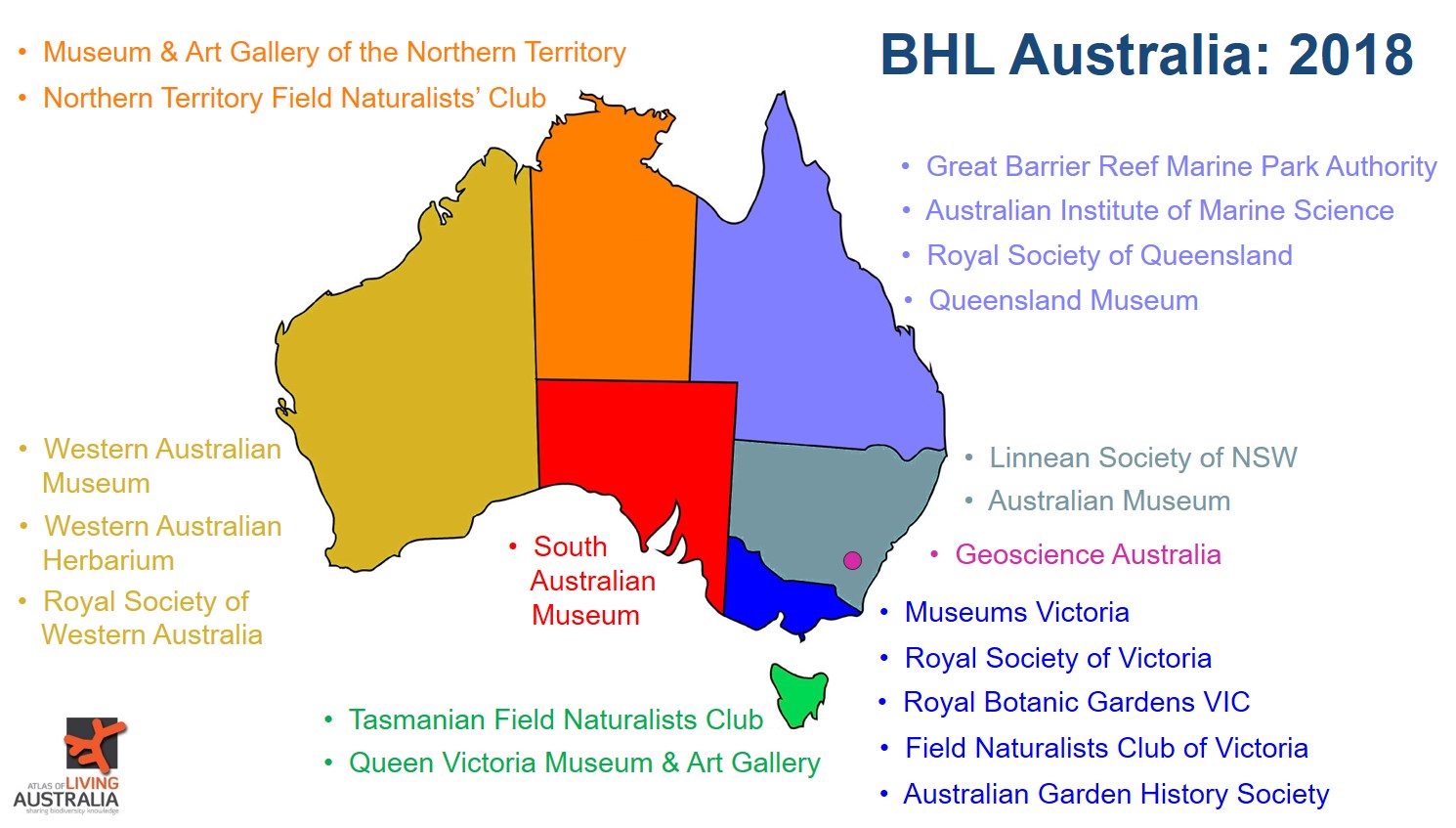
To keep up with BHL Australia’s contributions and activities, follow us on twitter at @bhl_au.

The BHL Australia operation would not be possible without the work of our wonderful volunteers: Bob Griffith, Chris Healey, Grace Blake, Heidi Griffith, John Hurley, Sue Halliwell, Tiziana Tizian and Virak Seng. In November 2017, we welcomed seven new volunteers to our BHL Au family: David Tink, Ian Farnsworth, Liz Murray, Ruth Dickinson, Sharon Lewin, Susan Roderick and Wenping Zhang. In December 2017 we uploaded 7,745 pages onto BHL: this was our highest upload month ever. 7,745 cheers for our volunteers!

January 23, 2018by ulib-libraryjobs
BHL News, Blog Reel

A New Scanner for Digitizing Australia’s Biodiversity Heritage

Portrait version of the Biodiversity Heritage Library logo.
View Full Size Image
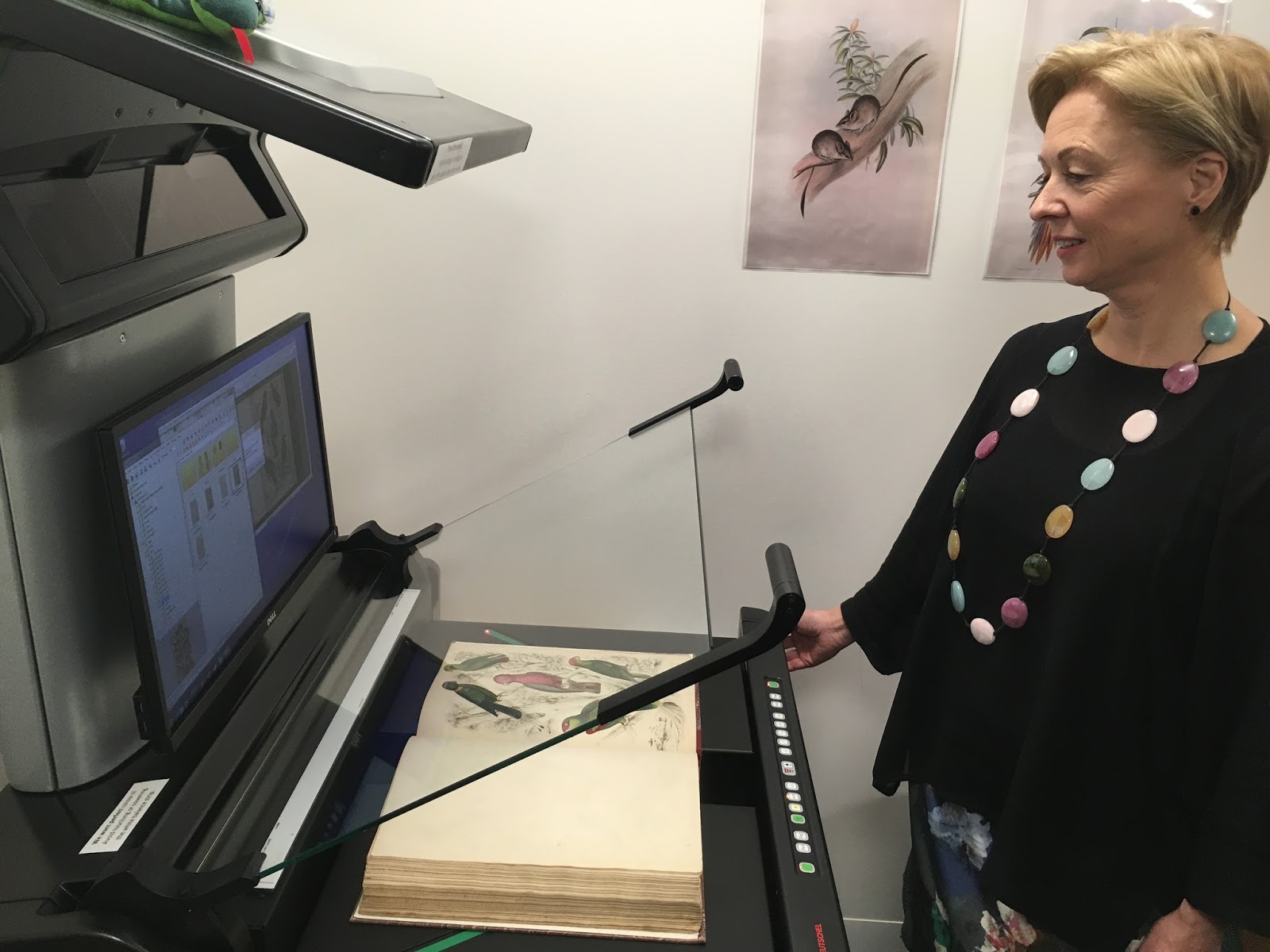
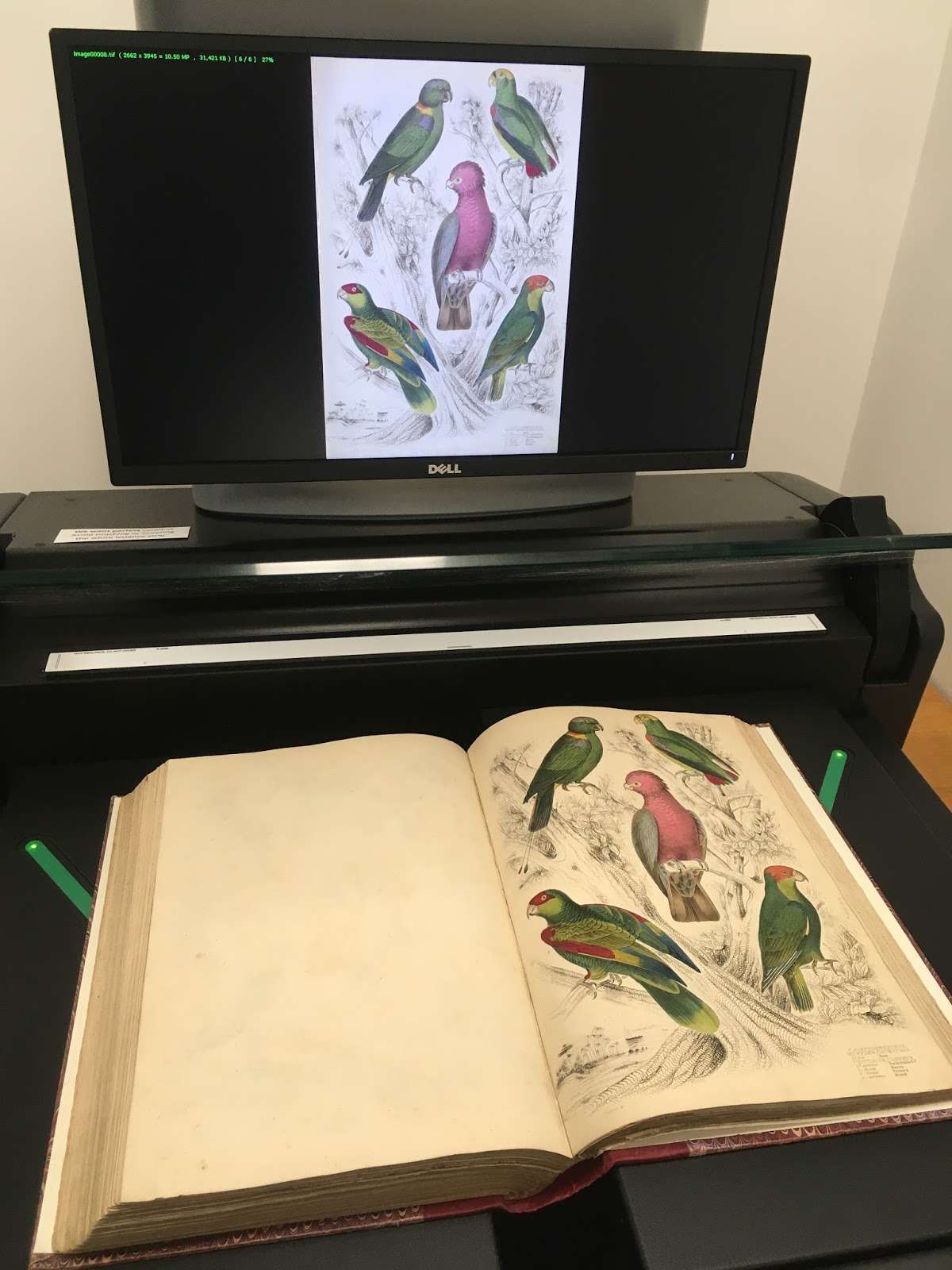
New Zeutschel OS 16000 scanner purchased by BHL Australia. Book being digitized is: The animal kingdom of the Baron Cuvier, enlarged and adapted to the present state of zoological science. 1839. By Baron Georges Cuvier. Photo Credit: Nicole Kearney.

In 2011, Australia joined the Biodiversity Heritage Library and, led by Museums Victoria, began to digitize the rare books, historic journals and archival material related to Australia’s biodiversity, and to make them openly available online.

There are now 15 Australian organizations contributing to BHL and over 300 worldwide. These include museums, herbaria, royal societies, field naturalists clubs and government organizations.

Just this week the number of volumes digitized for BHL by Australian organizations surpassed 1,000, amounting to over 200,000 pages. The great majority of this digitization work was done by the BHL Australia team at Melbourne Museum. We have a fabulous team of volunteers who scan the pages and prepare the digitized books for upload online.

View Full Size Image
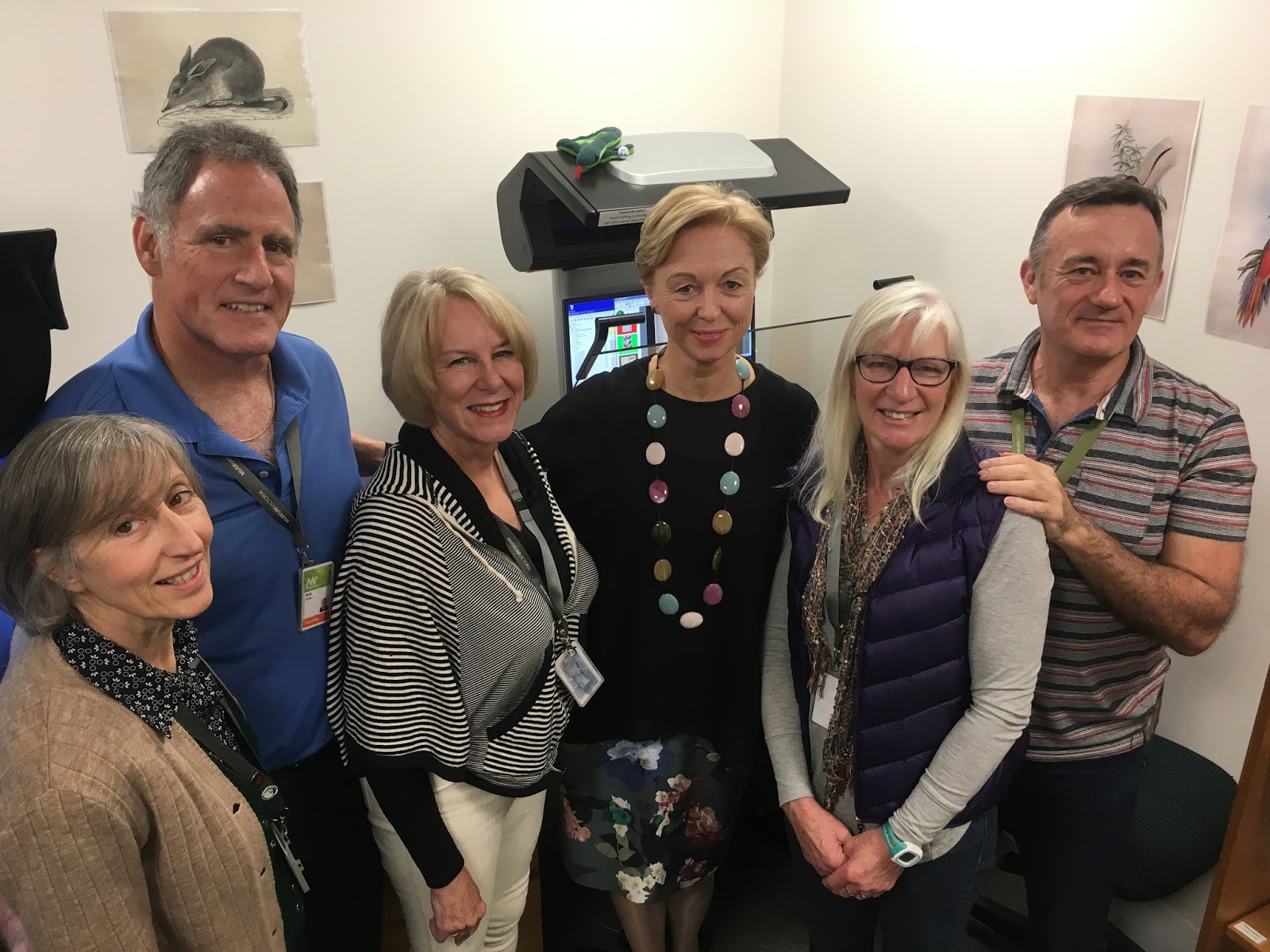
BHL Australia volunteers with Museums Victoria CEO Lynley Marshall (center) in front of the new BHL Australia scanner. Photo Credit: Nicole Kearney.

In the 6 years we have been doing this work, there have been dramatic advances in digitization technology, both in hardware and in software. We are therefore very excited to announce that BHL Australia has just purchased a new scanner.

View Full Size Image
Museums Victoria CEO Lynley Marshall scanning the first page for BHL Australia on the new scanner. Photo Credit: Nicole Kearney.

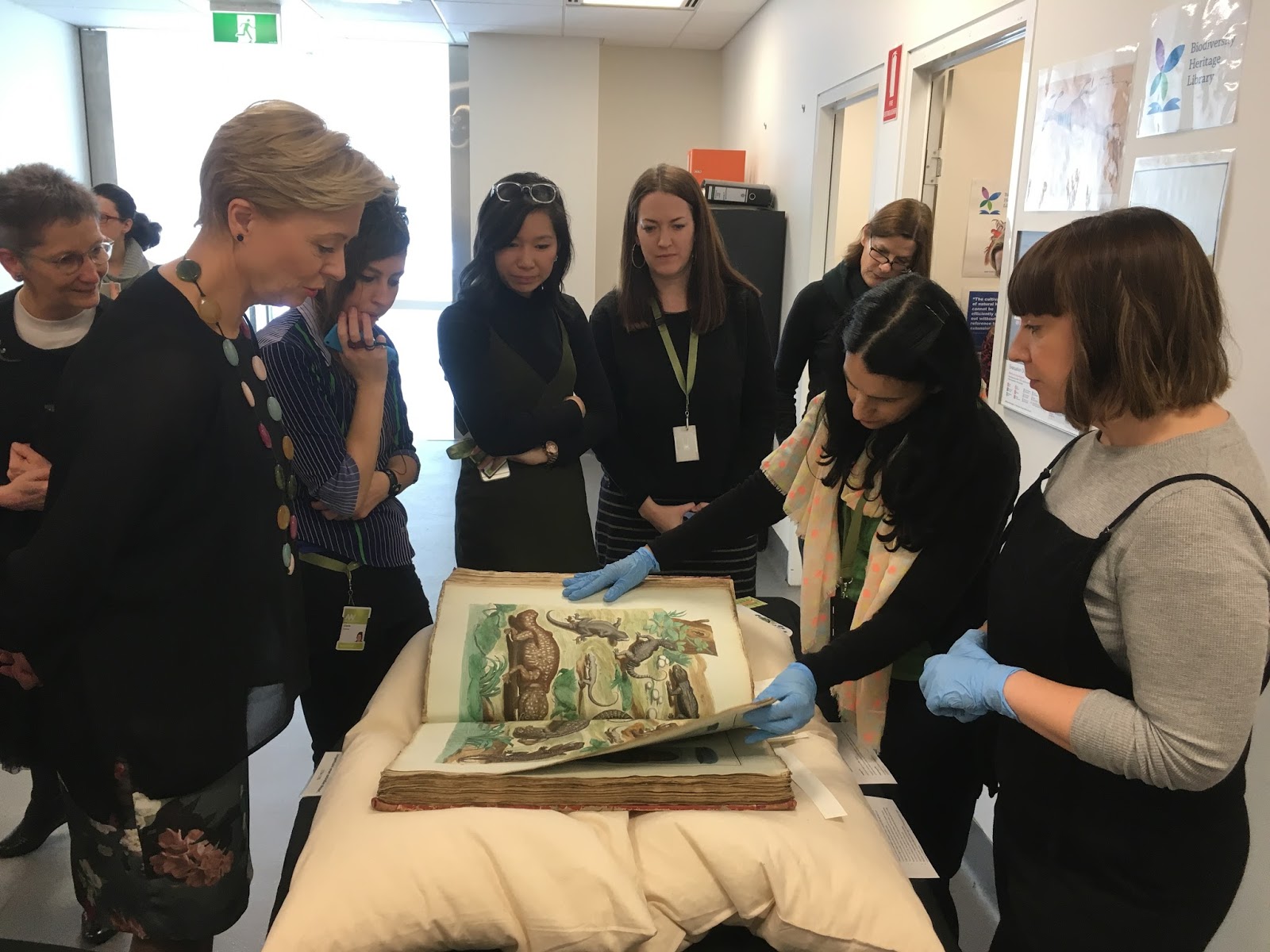
To celebrate the arrival of the new scanner, the Museums Victoria (MV) library hosted an Open House on 24 May, inviting MV staff to learn more about BHL, see a display of rare books from the MV collection, and see the new scanner.

View Full Size Image
Visitors exploring rare books from the MV collection during the Open House. Book on display is: Thesaurus rerum naturalium. 1734-1765. By Albertus Seba. Photo Credit: Nicole Kearney.

The scanner, a Zeutschel OS 16000, will increase both the quality and quantity of our scanning work, and will automate much of our post processing. This will allow us to further expand our project and to make even more of Australia’s biodiversity heritage literature available online, so stay tuned for the next 200,000 pages!

Peruse the BHL Australia collection.

BHL Australia is funded by the Atlas of Living Australia.

May 30, 2017by ulib-libraryjobs

Help Support BHL

BHL's existence depends on the financial support of its patrons. Help us keep this free resource alive!

search

About BHL

The Biodiversity Heritage Library (BHL) is the world’s largest open access digital library for biodiversity literature and archives. BHL operates as a worldwide consortium of natural history, botanical, research, and national libraries working together to digitize the natural history literature held in their collections and make it freely available for open access as part of a global “biodiversity community.”

Join Our Mailing List

Sign up to receive the latest news, content highlights, and promotions.

Subscribe Now

Subscribe to Blog via Email

Enter your email address to subscribe to this blog and receive notifications of new posts by email.

Join 319 other subscribers

Subscribe to Blog Via RSS

Subscribe to the blog RSS feed to stay up-to-date on all the latest BHL posts.

Access RSS Feed

Inspiring Discovery through Free Access to Biodiversity Knowledge.

The Biodiversity Heritage Library makes it easier than ever for you to access the information you need to study and explore life on Earth…for free, anytime, anywhere.


64+ Million Pages of
Biodiversity Literature Online.

EXPLORE

Tools and Services
to Transform Research.

EXPLORE

300,000+
Illustrations on Flickr.

EXPLORE

ABOUT | HARMFUL CONTENT | PRIVACY | SITE MAP | TERMS OF USE