Biodiversity Heritage Library - Program news and collection highlights from BHL
  • Home
  • News
  • Featured Books
    • All Featured Books
    • Book of the Month Series
    • BHL at 20
  • User Stories
  • Campaigns
    • Fossil Stories
    • Garden Stories
    • Monsters Are Real
    • Page Frights
    • Her Natural History
    • Earth Optimism 2020
  • Tech Blog
  • Visit BHL
Home
News
Featured Books
    All Featured Books
    Book of the Month Series
    BHL at 20
User Stories
Campaigns
    Fossil Stories
    Garden Stories
    Monsters Are Real
    Page Frights
    Her Natural History
    Earth Optimism 2020
Tech Blog
Visit BHL
  • Home
  • News
  • Featured Books
    • All Featured Books
    • Book of the Month Series
    • BHL at 20
  • User Stories
  • Campaigns
    • Fossil Stories
    • Garden Stories
    • Monsters Are Real
    • Page Frights
    • Her Natural History
    • Earth Optimism 2020
  • Tech Blog
  • Visit BHL
Biodiversity Heritage Library - Program news and collection highlights from BHL
Blog Reel, Featured Books

Origins of Australian Ornithology : The Evolution of Australia’s Bird Reference Books

Welcome to Bird Week!

It is bird week from the 21st -27th of October. During this week, we would like to share with you some of the wonderful rare reference books on Australian birds and the stories behind them. These books have been digitised by the Biodiversity Heritage Library and are freely available in open access. The scientific reference works showcased this week include books from 1781 through to 1931. Ornithologists used these books to describe new species found within Australia and added to the growing number of previously undescribed birds during this time.
mathews_Final.jpg

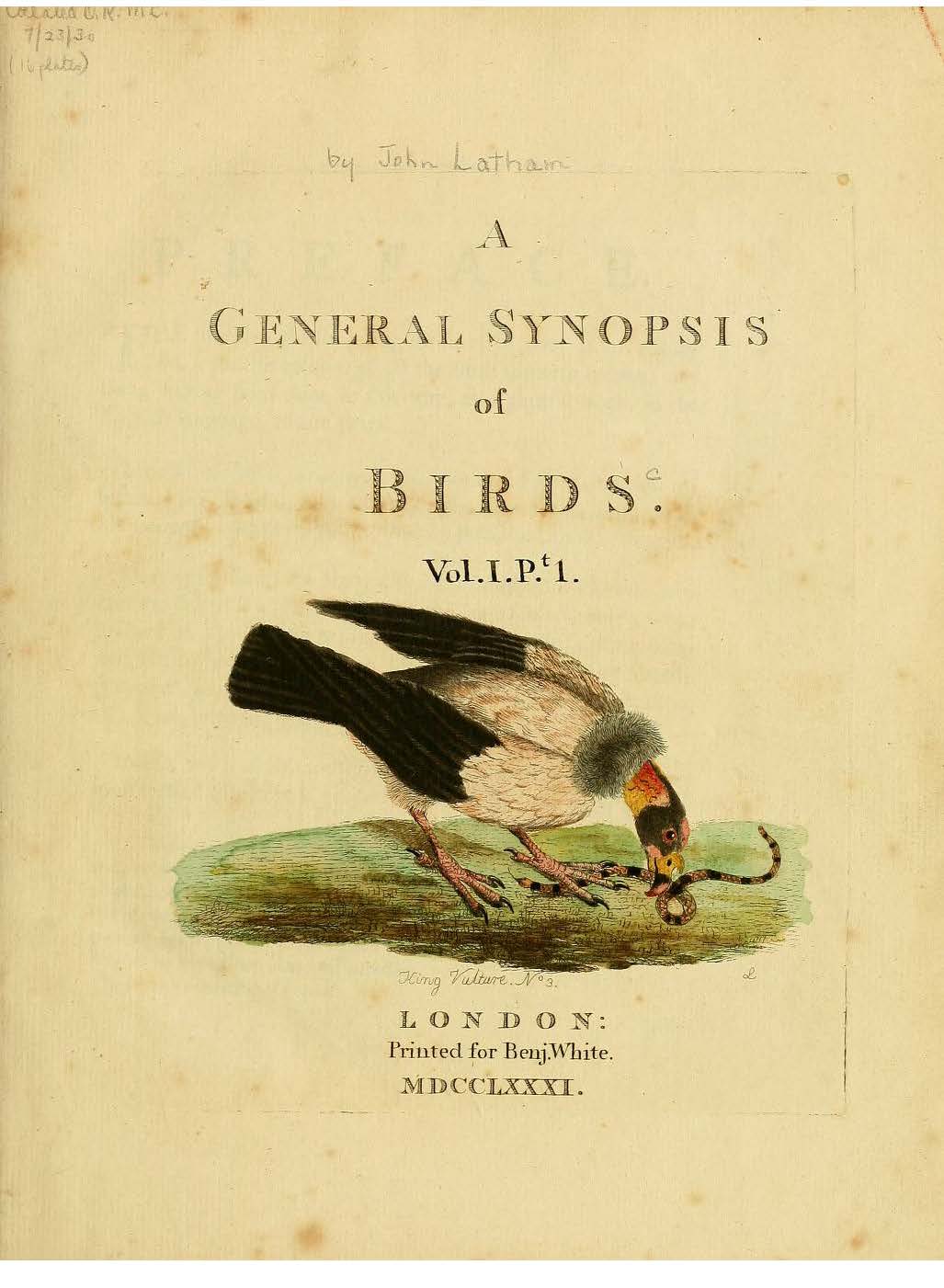
Title page. Latham, John. A General Synopsis of Birds. (1781-1785). Digitised in BHL by Smithsonian Libraries.

A General Synopsis of Birds consists of three volumes each with two parts, published from 1781 to 1785, with supplements in 1787 and 1801. Latham worked from descriptions by explorer William Dampier and Sir Joseph Banks, who sailed on the first voyage to Australia as the naturalist aboard Captain James Cook’s Endeavour from 1768 -1771. All volumes have been digitised by Smithsonian Libraries and can be viewed in BHL.
Eggs.jpg

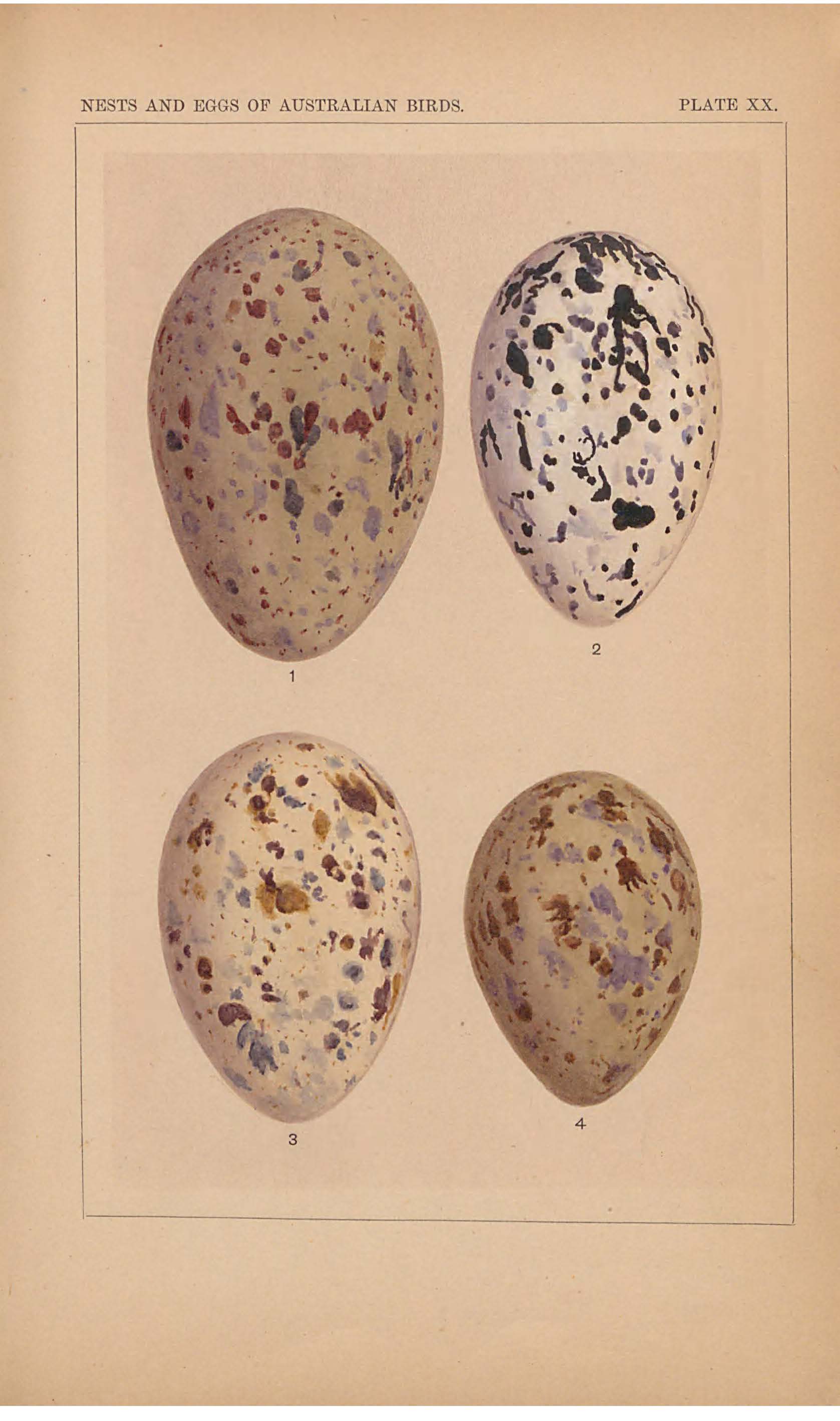
Plate XX. North, Alfred John. Descriptive Catalogue of the Nests and Eggs of Birds found in Australia and Tasmania. (1889). Digitised in BHL by Museums Victoria.

A Descriptive Catalogue of the Nests and Eggs of Birds found in Australia and Tasmania (1889) was published by Alfred John North, who described a number of birds for the first time. This publication contains a detailed description of the eggs of each species that were accessible to North, supplemented with descriptions of such other distinct varieties as occasionally occur. The history of the details of the eggs is often described as unknown, with a few exceptions taken from Gould’s Handbook to the Birds of Australia. The full book is available on BHL thanks to Museums Victoria.
blog BHL Lewin.jpg

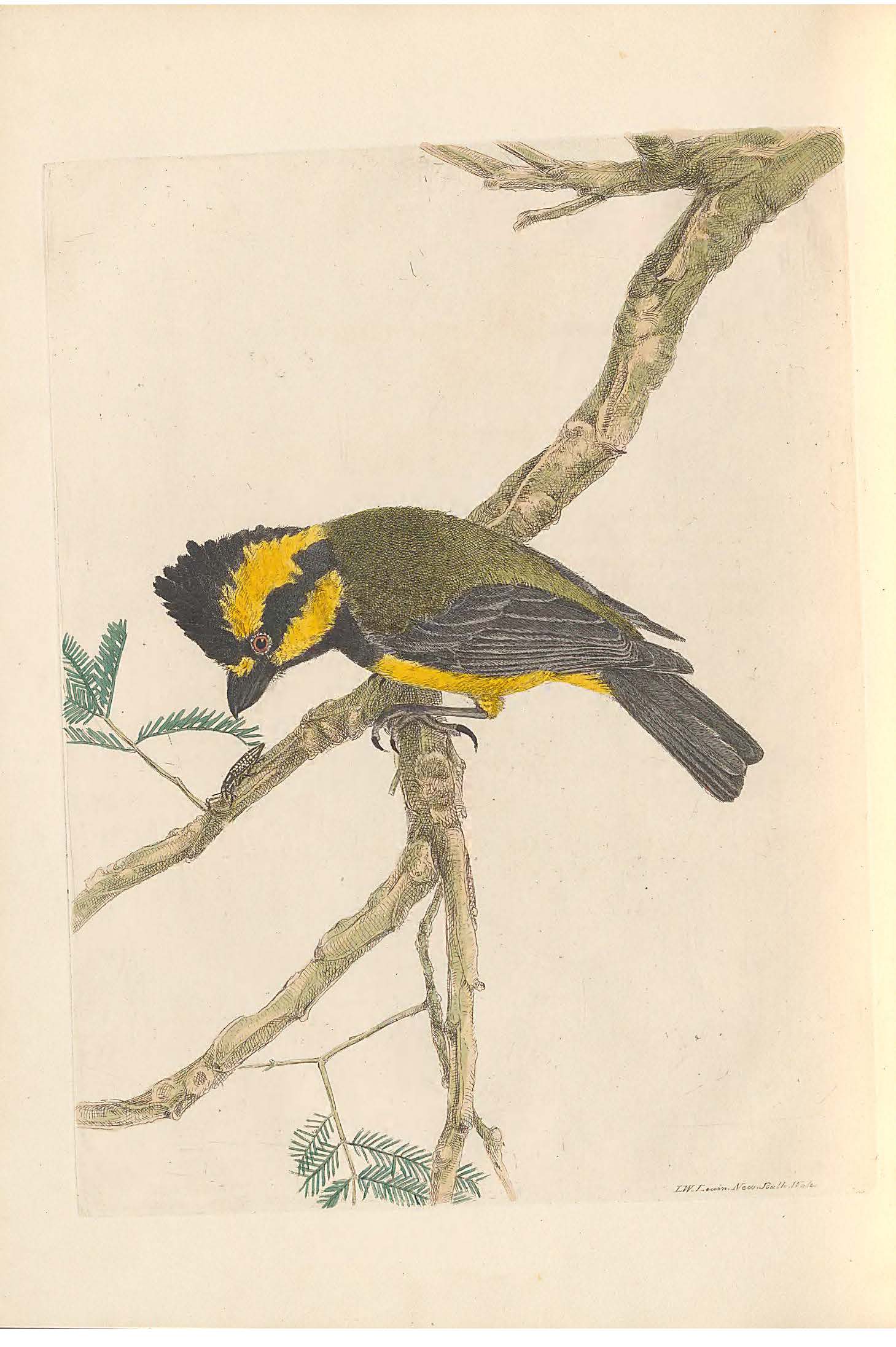
Plate XXIII. Lewin, John. A Natural History of the Birds of New South Wales. 3rd edition (1822). Digitised in the BHL by Museums Victoria.

John Lewin relocated to Australia from England in 1800, keen to visit the colony of New South Wales. His first book on birds, Birds of New Holland, was published in London in 1808. Unfortunately, as the books were shipped back to Australia from London for distribution, they were lost, possibly at sea. Only six copies are known to exist. Lewin decided to begin a second edition. However, his copper illustration plates were still in England, hence he needed to start again from scratch. The second edition was renamed The Birds of New South Wales with their Natural History and was published in 1813. It is recognised as the first illustrated book published in Australia. The third and fourth editions, published under the title A Natural History of the Birds of New South Wales, were published in 1822 and 1838 respectively and have been digitized in BHL by Museums Victoria.
bird heads

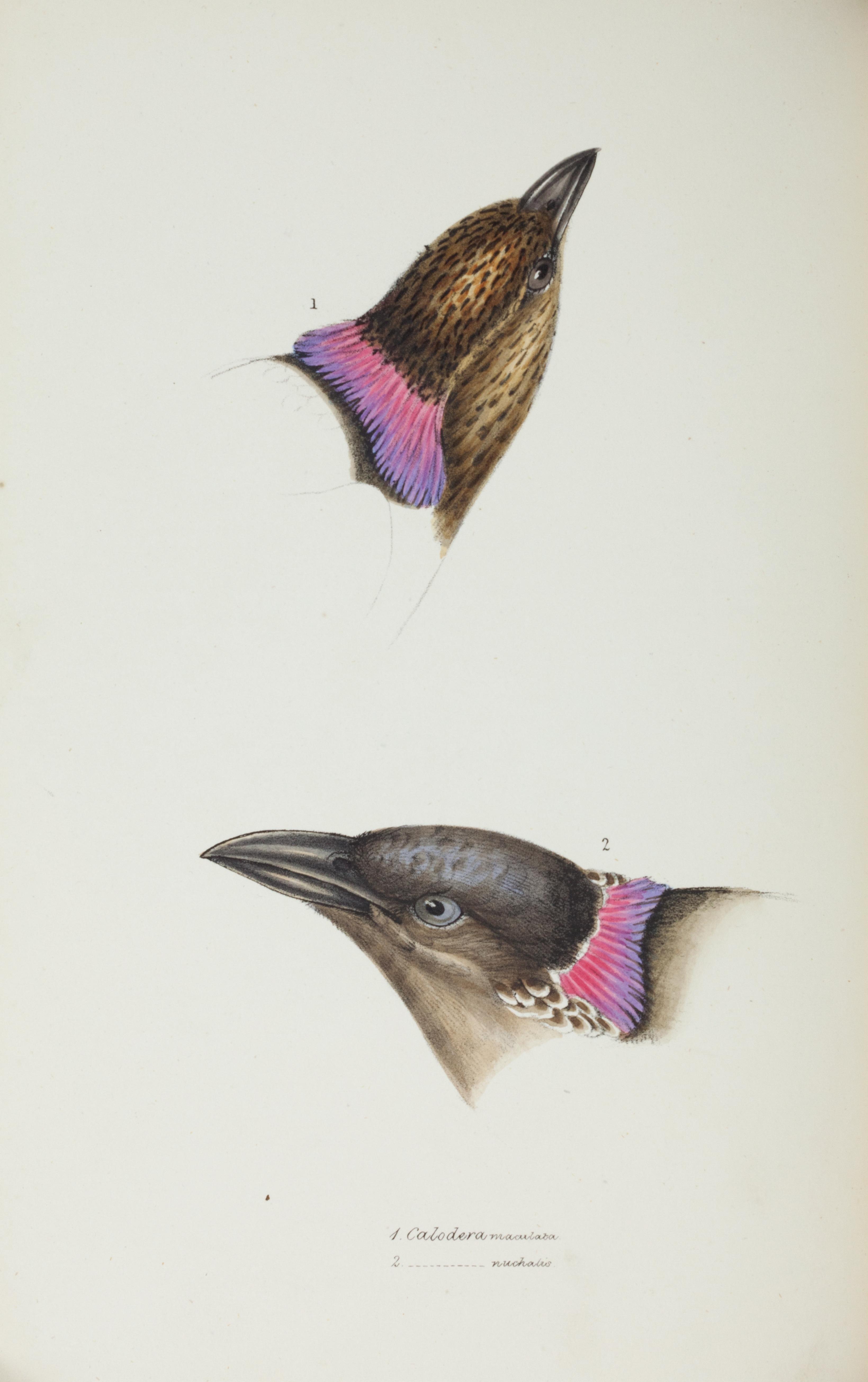
[Plate VI]. Gould, John. A Synopsis of the Birds of Australia, and the Adjacent Islands. (1837-38). Art by Elizabeth Gould. Digitised in the BHL by Museums Victoria.
Acclaimed ornithologist Gould received bird specimens in London from his brothers-in-law in Australia, which he used to publish his Synopsis of the Birds of Australia (1837-38). The illustrations are predominantly of bird heads, all hand-painted by Gould’s wife, Elizabeth. Only basic descriptions of Australian birds were used, as Gould intended to publish this work in order to get to Australia to research and illustrate birds in the wild with his wife. Gould noted that on his return from Australia, these pages would be removed and further knowledge of Australian species and their habitats would be recorded.

Gould_book.jpg

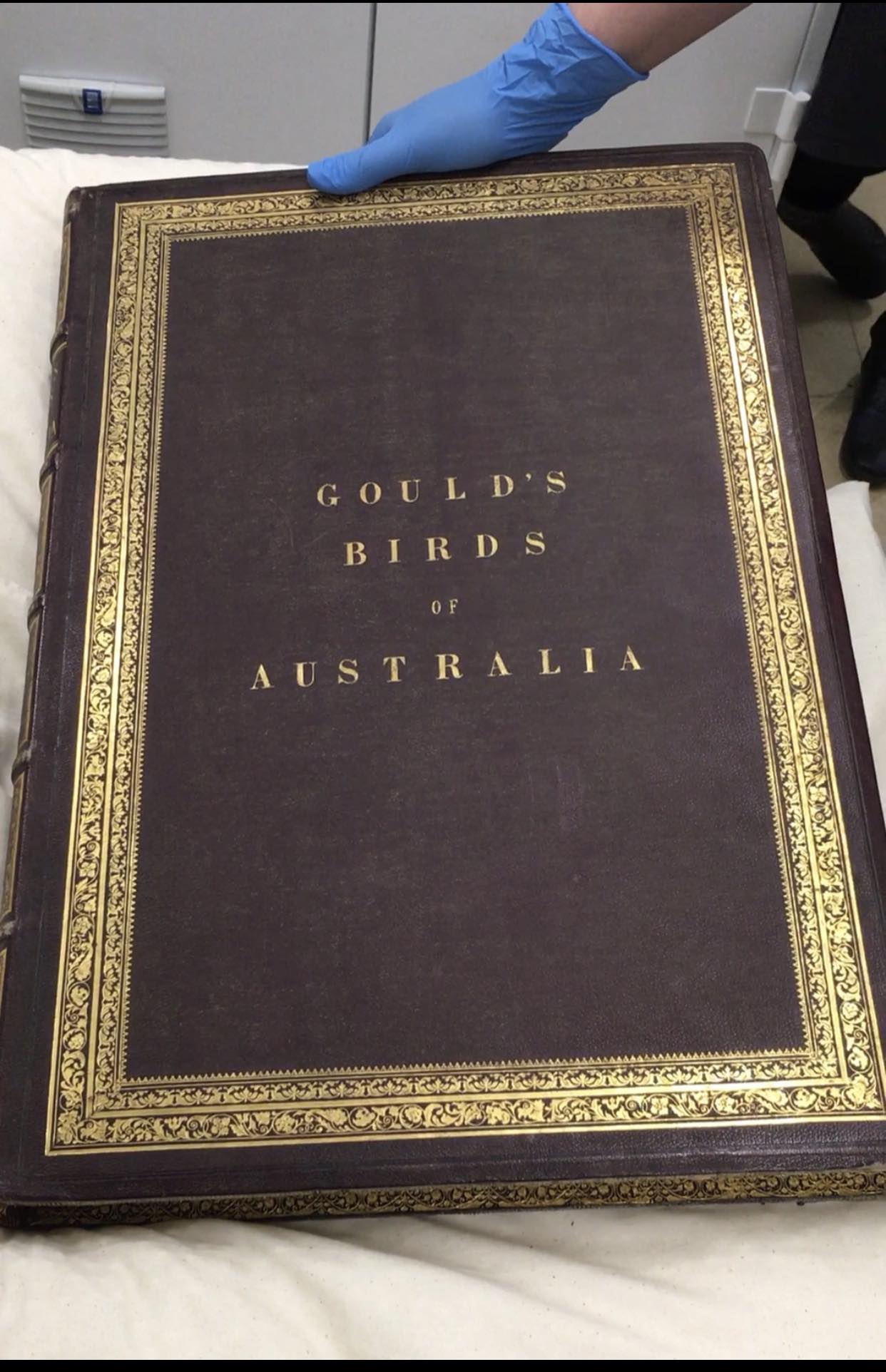
Photograph of the cover of one of the volumes of Gould’s Birds of Australia, from the library collections of the Melbourne Museum of Museums Victoria. The Birds of Australia (1840-1848) has also been digitised in BHL by Smithsonian Libraries

In a letter dated 15th February 1839, while in Australia, Elizabeth Gould wrote “[John] has already done more in obtaining nests and eggs, making skeletons of the various forms of birds, etc., and in getting information of their habits, than has been hitherto done, and will, I hope, be enabled to produce an interesting work on our return.”

On arrival back to England, John Gould published The Birds of Australia between 1840 and 1848. The book encompasses 600 species of birds, of which 200 were first described by Gould. Elizabeth produced 84 of the illustration plates for The Birds of Australia, but sadly, she died in 1841, before the book was completed and only one year after the Goulds’ return from Australia. The remainder of the plates were primarily created by painter Henry Constantine Richter, which were made after sketches by Elizabeth. While in Australia, Elizabeth also created many botanical illustrations and wrote that these helped to “render the work on ‘Birds of Australia’ more interesting…I trust we shall be enabled to make our contemplated work of sufficient interest to ensure it a good sale.”

A good sale it was. The Birds of Australia was bound in seven volumes, costing subscribers £115 — the equivalent to around 18K AUD or 12K USD in today’s money. But the significant contribution this book made to the science of ornithology far exceeds its monetary value.
What_bird.jpg

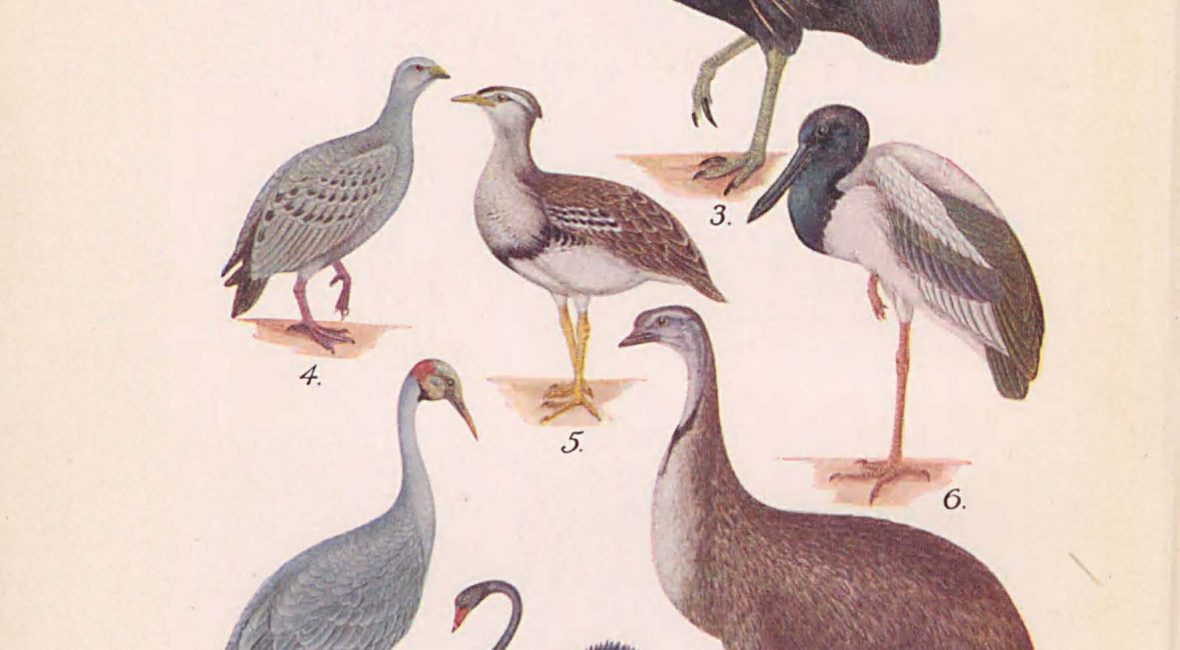
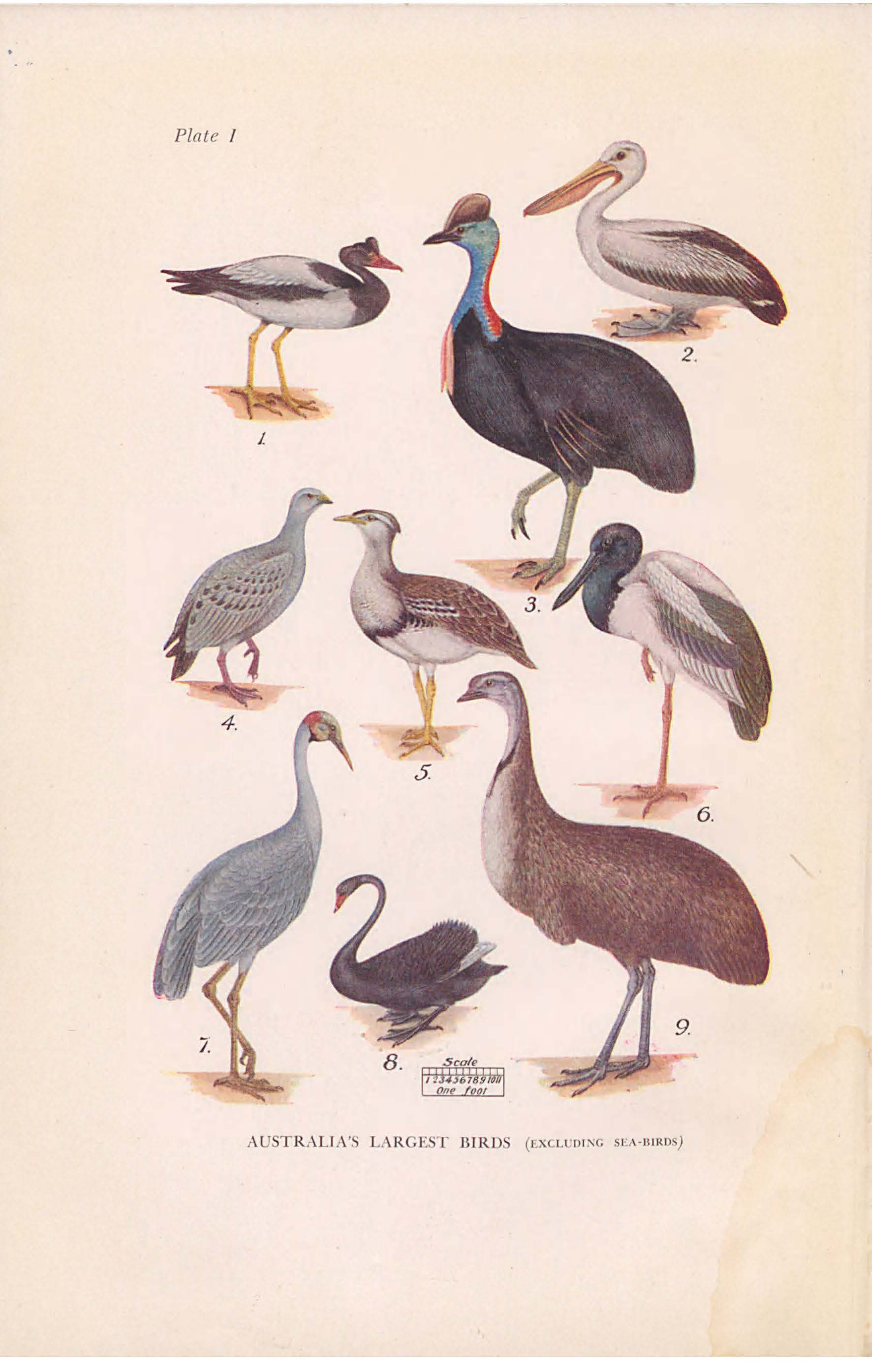
Plate I. Cayley, W, Neville. What Bird is that? (1931). Digitised in BHL by Museums Victoria.

What Bird is that? A Guide to the Birds of Australia (1931) was the first comprehensive field guide that was intended as a bird identification book in Australia. During the early 20th century, there was a growing interest in amateur ornithology, and Cayley had hoped that his book would encourage nature lovers to extend their knowledge and appreciation of Australian birdlife. In addition to being an ornithologist, Cayley was also a prolific artist and produced the 36 plates contained in the book. Subsequent editions were published up until the 1990s and it became a classic ornithological work in Australia.
October 21, 2019by Joel Richard
Blog Reel, Featured Books

A Day for Worms on BHL

The Biodiversity Heritage Library (BHL) is replete with publications which have had a seminal influence on their field. A highly-credentialed member of this category is John H. Day’s A Monograph on the Polychaeta of Southern Africa, published in 1967 in two volumes by the (then) British Museum (Natural History) in London. It is timely to celebrate this book now: on 25 August 2019 the author John Day would have had his 110th birthday. And, as of this month, the author’s own copy of the book has been digitised for the BHL.

Years ago, this copy was loaned to me by John Day’s son, Professor Rob Day (also a marine biologist) from the The University of Melbourne — just down the road from my office and from the Australian node of BHL, both at Museums Victoria in Melbourne.  When my librarian colleagues discovered I had the copy, annotated in pencil by the author with a 2nd edition in mind, they were keen to digitise it, even though BHL had previously digitised another copy. (A new version of Day’s monograph was later prepared but never published, perhaps due to lack of funding.)

Polychaetes are important to marine biologists due to their weight of numbers: in nearly all seafloor environments anywhere in the world, polychaetes are just about the most numerous and the most species-rich invertebrate. Therefore, many marine ecologists spend a lot of time identifying polychaetes — usually a difficult task. Which is why John Day’s monograph was so influential. For decades before, and for decades after, there was nothing like it, and so the two volume work, known to most researchers simply as Day, was indispensable.

Day was a comprehensive synthesis of descriptions, diagnoses and drawings of this rich and diverse component of the marine fauna (currently there are about 12,000 described species of polychaetes). And because most polychaete families and genera occur worldwide, and because there was no other equivalent publication anywhere, Day was a vital reference for anybody anywhere who needed to identify their local marine fauna.

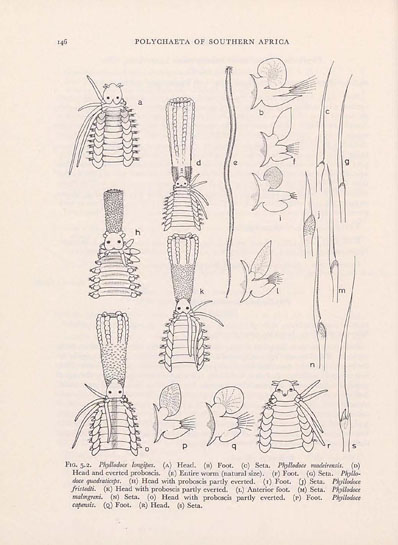
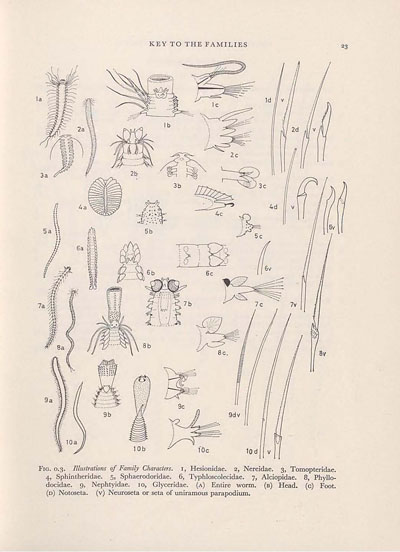
Day is still a model for anyone who sets out to write such a monograph, because of the simplicity and clarity of both text and illustrations. In particular, the introductory pages provide a visual overview and key to the numerous families.

day_1967_p23_400px.jpg

Page 23. Day, John H. A Monograph on the Polychaeta of Southern Africa. Volume 1, 1967. Author-annotated copy. Digitized in BHL by Museums Victoria.

These handful of pages encapsulate what would otherwise be an overwhelming variety; even beginners can begin to think that they may one day be able to interpret the myriad forms and structures of polychaetes. Thus, although the documentation of polychaete diversity has marched on, well-thumbed 50 year old copies of Day are still in regular use in marine laboratories world-wide.

It seems to me that John Day must have honed and improved his diagrams over many years of teaching (he was Professor of Zoology at The University of Cape Town) and that he must have given a lot of thought to the layout and presentation. Day had begun annotation of his own copy with species to be added, but he didn’t touch these introductory pages, suggesting that he too was satisfied with the published version. Even today, for me and many of my colleagues, there is nothing quite like it for introducing novices to the mysterious world of polychaetes — there have been numerous revisions and name changes in intervening decades, but the worms themselves still look the same.

JHDay_students_Durban_Bay_1951_400px.jpg

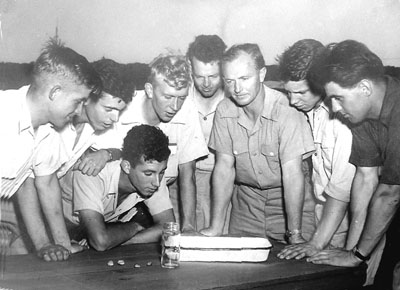
John H. Day (third from right) showing students a tray of specimens collected from an estuary mudflat.  Durban Bay, South Africa, 1951.  Photograph supplied by Rob Day, 2019.

John Day was ahead of his time in other respects too. Our understanding of evolutionary relationships of polychaetes, and how they should be classified within the phylum Annelida, has long seemed an intractable task. Many alternative classifications having been offered up in publications both before and since the publication of Day. The author himself took a purely pragmatic approach and followed earlier workers, arranging the families in two major groups, one per volume: Errantia (mostly mobile worms with similar segments and often with jaws) and Sedentaria (mostly tube dwellers often with a crown of feeding tentacules and modified body regions).

Even though Day only ever claimed this as an arbitrary arrangement, he would have surely been pleased to know that this practical solution has a lot in common with the most recent phylogenetic analyses based on DNA sequence data, which recognise many elements of the old Errantia / Sedentaria scheme and even retain the names! Nor, I think, would he have been dismayed by another discovery confirmed by DNA data: there is no such thing as “Polychaeta”, which is now known to comprise a variety of forms which do not all belong on a single branch of the annelid phylogeny. Furthermore, several other kinds of worms previously known as separate Phyla are now known to belong within the Annelida — a possibility also canvassed by John Day in the introduction to his monograph.  (I’ll nevertheless keep using polychaetes as an informal term.)

I never met John Day, but his no-nonsense attitude was evident in other ways. He had lost a leg when hit by flak on a bombing raid while flying as a navigator for the RAF during the Second World War (he was still able to provide a course before passing out and the tail gunner saved his life by limiting loss of blood until they returned to base). There are unconfirmed stories that after the war, on trips between Cape Town and London, he would bring preserved polychaete specimens for study through customs in his prosthetic leg.

Taxonomists nowadays are wont to criticise Day, and other publications of the era, for accepting as valid many “cosmopolitan species”.

day_1967_p146_400px.jpg

Page 146. Phyllodoce malmgreni and related taxa in the family Phyllodocidae. Page 146 from Day, John H. A Monograph on the Polychaeta of Southern Africa. Volume 1, 1967. Author-annotated copy. Digitized in BHL by Museums Victoria.

Phyllodoce_cf_malmgreni_F135127_dorsal_pharynx_400px.jpg

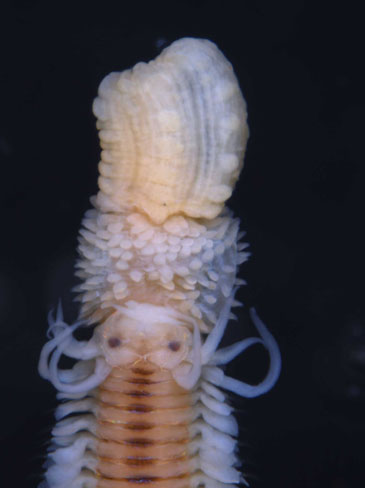
Phyllodoce malmgreni was described from the Red Sea, but has been much more widely recorded throughout the Indo-Pacific. This museum specimen of Phyllodoce cf. malmgreni is from Australia. Photograph Robin Wilson.

Typically, these were originally described from European localities but subsequently recorded (or rather very similar forms were found) from more widespread regions. If they could not be distinguished, specimens from widespread localities were assigned to a single species.

In recent decades, taxonomists have split many “cosmopolitan species” into a number of new species, each from a different ocean or region.  At first, this seemed an almost routine tidy up task. The advent of molecular systematics has shown that the situation is far more complex and interesting. DNA sequence data has repeatedly demonstrated that even within a region (for example northern Europe), what was thought to represent a single species is often discovered to comprise many species. Usually, these newly recognised species can barely, or not at all, be distinguished morphologically, yet they show very deep genetic divergences.  Understanding of how these taxa have evolved and dispersed (for example, is each instance a single global, monophyletic radiation?) is arguably among the most interesting questions in marine diversity studies today.

Whatever the answers turn out to be, it seems clear that many of these cryptic species will only be distinguishable through genetic analysis. Until such time as rapid genetic diagnoses become routine, ecologists and other non-taxonomists are likely to have to resort to some kind of species-complex definition to cope with messy nature. It seems that such species-complexes might look a lot like the often-maligned “cosmopolitan species” accepted by the pragmatic (and prescient?) John Day.

September 26, 2019by Joel Richard

Help Support BHL

BHL's existence depends on the financial support of its patrons. Help us keep this free resource alive!

search

About BHL

The Biodiversity Heritage Library (BHL) is the world’s largest open access digital library for biodiversity literature and archives. BHL operates as a worldwide consortium of natural history, botanical, research, and national libraries working together to digitize the natural history literature held in their collections and make it freely available for open access as part of a global “biodiversity community.”

Join Our Mailing List

Sign up to receive the latest news, content highlights, and promotions.

Subscribe Now

Subscribe to Blog via Email

Enter your email address to subscribe to this blog and receive notifications of new posts by email.

Join 319 other subscribers

Subscribe to Blog Via RSS

Subscribe to the blog RSS feed to stay up-to-date on all the latest BHL posts.

Access RSS Feed

Inspiring Discovery through Free Access to Biodiversity Knowledge.

The Biodiversity Heritage Library makes it easier than ever for you to access the information you need to study and explore life on Earth…for free, anytime, anywhere.


64+ Million Pages of
Biodiversity Literature Online.

EXPLORE

Tools and Services
to Transform Research.

EXPLORE

300,000+
Illustrations on Flickr.

EXPLORE

ABOUT | HARMFUL CONTENT | PRIVACY | SITE MAP | TERMS OF USE