
Biodiversity Heritage Library - Program news and collection highlights from BHL
  • Home
  • News
  • Featured Books
    • All Featured Books
    • Book of the Month Series
    • BHL at 20
  • User Stories
  • Campaigns
    • Fossil Stories
    • Garden Stories
    • Monsters Are Real
    • Page Frights
    • Her Natural History
    • Earth Optimism 2020
  • Tech Blog
  • Visit BHL
Home
News
Featured Books
    All Featured Books
    Book of the Month Series
    BHL at 20
User Stories
Campaigns
    Fossil Stories
    Garden Stories
    Monsters Are Real
    Page Frights
    Her Natural History
    Earth Optimism 2020
Tech Blog
Visit BHL
  • Home
  • News
  • Featured Books
    • All Featured Books
    • Book of the Month Series
    • BHL at 20
  • User Stories
  • Campaigns
    • Fossil Stories
    • Garden Stories
    • Monsters Are Real
    • Page Frights
    • Her Natural History
    • Earth Optimism 2020
  • Tech Blog
  • Visit BHL
Biodiversity Heritage Library - Program news and collection highlights from BHL
Blog Reel, Featured Books

Book of the Week: Biologia Centrali-Americana : Reptilia and Batrachia

View Full Size Image
The total number of known amphibian
 species is approximately 7,000, 
of which nearly 90% are frogs. 
Image: Venture Galleries

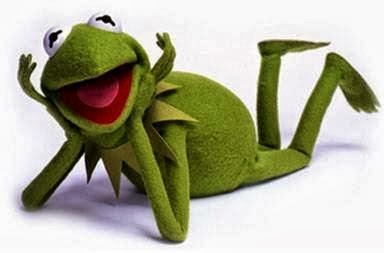
My first encounter with an amphibian was the all but loveable Kermit the frog from Sesame Street. While reptiles and amphibians are not warm and cuddly like Kermit, these ectothermic vertebrates (cold-blooded) are incredibly interesting. Some of them breathe through their damp skin. They are incredible predators.  Most species have super sensitive hearing that can detect airborne or ground vibrations, and their tongues are super muscular.

Pop culture has embraced reptiles and amphibians portraying them in humorous roles and as villains including the vocal frogs from the commercial for Budweiser beer, Nagini from Harry Potter, Kaa from the Jungle Book, Jafar from Aladdin, Tic Tock from Peter Pan, and the Teenage Mutant Ninja Turtles.
View Full Size Image
The first reptiles are believed to have evolved 
around 320 million years ago.
Amphibians and reptiles are incredibly important to global biodiversity. Dramatic declines have been measured across the globe since the late 1980s and indicate critical threats. There are groups trying to do something about this including the Amphibian Specialist Group of the World Conservation Union, Amphibian Ark, Partners in Amphibian and Reptile Conservation PARC, and the Panama Amphibian Rescue and Conservation Project among others.

Pioneers in the documentation of these creatures were Frederick Godman and Osbert Salvin  the authors of Biologia Centrali-Americana : Reptilia and Batrachia, one volume in a 63 volume set called Biologia Centrali-Americana. Godman and Osbert set out to create the most comprehensive account of the flora and fauna of Mexico and Central America by hiring many local experts to collect specimens for study. They published the set over the course of 36 years.

View Full Size Image
Certain frogs can jump up to 20 times 
 their own body length in a single leap.

The entire set includes over 900 illustrations. Published between 1879-1915, Biologia Centrali-Americana : Reptilia and Batrachia, focuses on retiles and amphibians and is key to early discoveries in print of a variety of  species.

One critically endangered species, Godman and Osbert wrote about is the Costa Rican Variable Harlequin Toad (Atelopus varius), also known as the clown frog, is a neo-tropical true toad. They feed on small arthropods and their colorful appearance serves as a warning to potential predators of their toxicity of their skin, which contains a neurotoxin.

Micrurus nigrocinctus is also known as the Central American coral snake. This venomous snake lives between southern Mexico to northwestern Colombia. They can be recognized by their color pattern, which varies from two-colored to three-colored with black, yellow and red banding. They are non-aggressive Caecilians that feed on other snakes, small lizards, amphibians, and invertebrates. Their venom contains a strong neurotoxin, causing neuromuscular dysfunction.
View Full Size Image
Nearly all reptiles lay shelled eggs.


Browse through more of the illustrations from the book of the week in the BHL Flickr here.

Learn more about other reptiles and amphibians by reading the book. This set has been covered before in the BHL blog. Read more about it here.

References:
Amphibians of Panama. (n.d.). Atelopus varius. Encyclopedia of Life. Retrieved from  http://eol.org/pages/330754/overview
Amphibians of Panama. (n.d.). Atelopus varius Lichtenstein and von Martens 1856. Smithsonian Tropical Research Institute. Retrieved from http://biogeodb.stri.si.edu/amphibians/en/species/12/
Andrew, Elise. (14 September 2013). Untitled. I [Freaking] Love Science. Retrieved from https://www.facebook.com/IFeakingLoveScience

Unknown. (n.d.). Micrurus nigrocinctus black-banded Coral Snake. Encyclopedia of Life. Retrieved from http://eol.org/pages/1055826/details

Unknown. (n.d.). Fun Reptile Facts for Kids. Science Kids. Retrieved from http://www.sciencekids.co.nz/sciencefacts/animals/reptile.html 

October 24, 2013by gworthey

Help Support BHL

BHL's existence depends on the financial support of its patrons. Help us keep this free resource alive!

search

About BHL

The Biodiversity Heritage Library (BHL) is the world’s largest open access digital library for biodiversity literature and archives. BHL operates as a worldwide consortium of natural history, botanical, research, and national libraries working together to digitize the natural history literature held in their collections and make it freely available for open access as part of a global “biodiversity community.”

Join Our Mailing List

Sign up to receive the latest news, content highlights, and promotions.

Subscribe Now

Subscribe to Blog via Email

Enter your email address to subscribe to this blog and receive notifications of new posts by email.

Join 319 other subscribers

Subscribe to Blog Via RSS

Subscribe to the blog RSS feed to stay up-to-date on all the latest BHL posts.

Access RSS Feed

Inspiring Discovery through Free Access to Biodiversity Knowledge.

The Biodiversity Heritage Library makes it easier than ever for you to access the information you need to study and explore life on Earth…for free, anytime, anywhere.


ABOUT | HARMFUL CONTENT | PRIVACY | SITE MAP | TERMS OF USE