Biodiversity Heritage Library - Program news and collection highlights from BHL
  • Home
  • News
  • Featured Books
    • All Featured Books
    • Book of the Month Series
    • BHL at 20
  • User Stories
  • Campaigns
    • Fossil Stories
    • Garden Stories
    • Monsters Are Real
    • Page Frights
    • Her Natural History
    • Earth Optimism 2020
  • Tech Blog
  • Visit BHL
Home
News
Featured Books
    All Featured Books
    Book of the Month Series
    BHL at 20
User Stories
Campaigns
    Fossil Stories
    Garden Stories
    Monsters Are Real
    Page Frights
    Her Natural History
    Earth Optimism 2020
Tech Blog
Visit BHL
  • Home
  • News
  • Featured Books
    • All Featured Books
    • Book of the Month Series
    • BHL at 20
  • User Stories
  • Campaigns
    • Fossil Stories
    • Garden Stories
    • Monsters Are Real
    • Page Frights
    • Her Natural History
    • Earth Optimism 2020
  • Tech Blog
  • Visit BHL
Biodiversity Heritage Library - Program news and collection highlights from BHL
Blog Reel, Featured Books

Documenting Scientific Knowledge One Handwritten Note at a Time

Connecting Content: The Wonderful World of Field Books

The California Academy of Sciences and our partners (all of whom are also BHL member institutions) are in the midst of a 3 year IMLS National Leadership Grant titled “Connecting Content: A Collaboration to Link Field Notes to Specimens and Published Literature.” This project aims to digitize published scientific findings, their related field books and specimens, and metadata for these items, link all of these resources, and make them available for harvesting, reuse, and repurposing without cost. At this point, the bulk of the field books selected for this project have been digitized and made available through the Biodiversity Heritage Library. (*You can see the sixty-one titles digitized for this project by searching for “Connecting Content” in the BHL search box.) You can download a selection of these field book for free via the latest BHL iTunes U Collection: Connecting Content through Archival Field Notes.

Field books (or field notes) are the original documents which chronicle specimen collection and the events and observations that led to scientific discovery.  Field books are unique unto the creator and vary greatly from book to book. Here are a selection of highlights from the collection which demonstrate the wealth of information and styles found throughout the selection of field books:

William Whitman Bailey and the USGS Exploration of the 40th Parallel

View Full Size Image
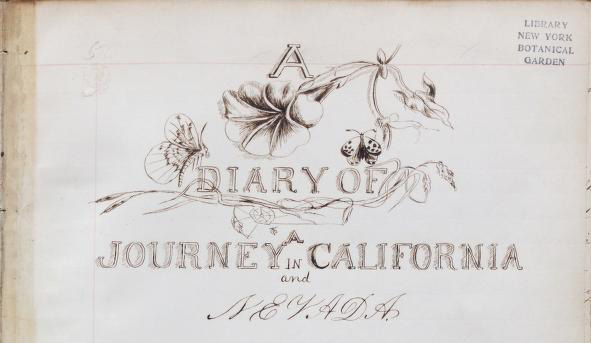
Page One. A diary of a journey in California and Nevada. William Whitman Bailey.


View Full Size Image
Portuguese Man of War. Bailey.
View Full Size Image
Riccinus communis. Bailey.

William Whitman Bailey’s life story reads like a blockbuster movie plot. When young William was just nine years old, he and his family took an ill fated boat trip aboard the 198 foot side-wheeler, the Henry Clay. On this fateful day, the Henry Clay was involved in a minor collision with another vessel, but pressed onwards as it seemed that the ship has sustained little damage. However, about an hour outside of its final New York destination, the ship beached itself on shore near Yonkers as a result of a fire that had been burning unnoticed since the collision. The lucky passengers on the bow of the ship were either thrown or able to jump onto land, but the Baileys were not so fortunate. Separated from land by 140 feet of water and a wall of fire, the Baileys had no choice but to jump into the water as the fire approached. William’s mother and sister succumbed to the depths and his father barely survived. William managed to grab hold of a floating wicker chair and was eventually picked up by a passing ship, but the experience would leave him with permanent health problems.

However, this tragic setback did not lessen Bailey’s enthusiasm for adventure and curiosity about the natural world. Bailey would eventually study under Dr. Asa Gray at Harvard University and at 24 years old, he became the botanist for the United States Geological Exploration of the 40th Parallel. The field book for this expedition chronicles Bailey’s journey through California and Nevada in a flowing prosaic style with beautiful illustrations and photographs of Bailey’s observations. The very first page of Bailey’s journal opens with a beautiful demonstration of his illustrative pen and ink style. Bailey’s rich descriptions are paired with exquisite drawings that seem to jump off the page whether he is waxing poetic about the Portuguese Man of War or closely observing the leaf of the Riccinus communis. Bailey’s flowing narrative style and gorgeous illustrations make this field book a charming and informative look at the exploration of the 40th parallel that will surely captivate readers.

Washington H. Ochsner and the Galapagos Islands


View Full Size Image
Charles Island. Ochsner.

In 1905, the California Academy of Sciences sent 11 men off for a year and a day on an eighty-five foot schooner destined for the Galapagos Islands. While the expedition was underway, the California Academy of Sciences would fall into ruin during the great San Francisco earthquake of 1906. The specimens gathered during the Galapagos expedition would come to form the crux of the new California Academy of Sciences’ collections. Of the young men on that voyage, 26 year-old Washington Henry Ochsner travelled as the expedition’s geologist. His journals are more technical than Bailey’s in what they intended to capture and often included geological survey information, as well as inferences about how the geological features were formed. Ochsner also drew detailed surveys of the island terrains like this map of Charles Island. Ochsner’s field books have a scientifically focused structure and tend to be not-so-much a diary but a close and careful record of his scientific observations.

The Diaries of William Brewster, 1865- 1919

View Full Size Image
Eggs and Nests. Brewster.

Renowned ornithologist William Brewster mused over his daily observations in a personal and often humorous way. William Brewster’s love of ornithology blossomed early, and he kept careful records of the birds he observed throughout his life. These journals begin when Brewster was 14 years old, and it is interesting to see how his hand, knowledge, and confidence all develop over time.  In his later journals, Brewster takes care to write in a colloquial manner, and these notes provide unique insight into the daily life of a researcher over a 54 year span. This collection of journals also provide an enticing perspective on the detrimental changes to the environment and bird populations as a result of industrialization and the growth of urban centers.

All of the field books digitized for the Connecting Content project offer inimitable insight into how scientific data is gathered, synthesized, and extrapolated. It is the hope that by sharing these unique resources, researchers can better understand scientific findings and that the insights gained from this will promote further inquiry and the spirit of discovery.

Want more Field Book Content?

View 61 field books digitized by the Connecting Content grant in BHL

Download a selection of these books for free on iTunes U

Find out more about the link between expeditions, field books, and publications in our previous blog posts with Smithsonian’s Field Book Project: Post One | Post Two | Post Three

May 9, 2013by Kathryn Stine
BHL News, Blog Reel

Connecting Content on BHL!

View Full Size Image
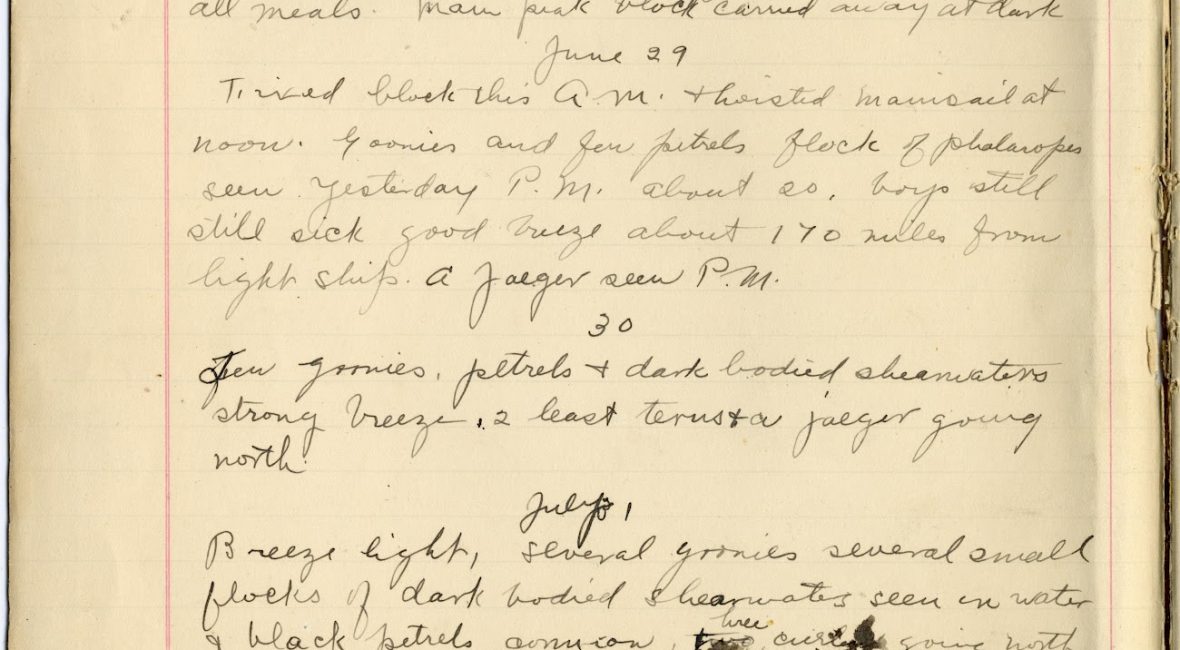
Excerpt from the Rollo Beck Galapagos expedition journal.

The California Academy of Sciences Library (CASL) is pleased to announce that The Rollo Beck Galapagos Expedition Journal is now accessible online via the Biodiversity Heritage Library.  The Beck field notes are the first test submission to the Connecting Content field note scanning project. Their successful inclusion into BHL marks many months of planning, effort, and collaboration between the Academy staff and the amazing Connecting Content partner institutions.

The Connecting Content project, made possible by an IMLS National Leadership Grant, involves digitizing field notebooks and natural history specimen collections, making the results available free for open access, and testing methods to create links between the items. This is the first step in an effort to create linked digital item-level access to archival resources, published literature, and biological data. This project has come together through the combined efforts of multiple institutions and with rigorous planning about how best to create and disseminate content that is discoverable, enduring, and openly accessible.

Rollo H. Beck was the leader of the 1905-06 expedition, and his style of field note taking provided a broader overview and unique perspective of the expedition, which differed from the very specific specimen-collecting notes of the other members of the team. The field notes are quite fragile and much care was needed to scan each page on the CASL flatbed photo scanner. A highlight for those doing the scanning was finding the page that describes the first news of the 1906 earthquake that destroyed much of San Francisco and nearly all of the Academy of Science’s collections. The specimens that the expedition brought back from the Galapagos formed the core of the new Academy.

After digitization, Connecting Content staff had to package the materials for submission to the Internet Archive and ingest into BHL by creating a MARC (MAchine- Readable Cataloguing) record for each item. (Staff would like to recognize and send a HUGE thank-you to the amazing and incredibly bright catalogers who have toiled over this effort! Michelle Abeln at Missouri Botanical Gardens, Lisa Studier at New York Botanical Gardens, Chris Robson at Harvard University Herbaria, and Stella Tang at the California Academy of Sciences.) These records are then combined with a spreadsheet containing page-level metadata, and the corresponding digital files of the scanned pages are submitted to the Internet Archive, and ultimately into BHL.

Project staff are now in the process of preparing several other field notebooks and digitized specimens for the pilot scanning project and have invited partner institutions to begin the process of uploading their field notes in preparation for ingest into BHL. After the materials are scanned, input into the project database, cataloged, exported, and delivered via BHL, staff will use the extrapolated metadata to experiment with mash-ups and make connections between names, dates, localities, and other contextual information, published materials, and specimen data.

The above post republished from the Connecting Content Blog, with permission from project staff.


May 3, 2012by ulib-libraryjobs
Blog Reel

BHL and Our Users: Rebecca Morin, BHL Librarian

View Full Size Image

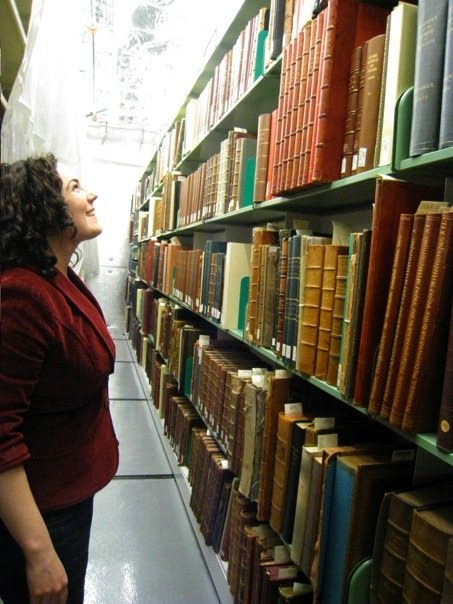
For our regular series “BHL and our Users,” we usually feature scientists who use BHL to conduct their research. However, there are many different kinds of BHL users, not the least of which are librarians that use BHL to help them execute their own work supporting the research needs of their library patrons. For many librarians, BHL means that they can save time answering reference questions, as all content is online; save wear and tear on their physical books by directing people to online versions of the content; and save time and money by avoiding ILL (Inter-Library Loan – sending copies of books held in one library to another that does not own a copy) costs, as again patrons can simply be directed to the item in BHL. Not surprisingly, these benefits extend to BHL staff who that also wear the hat of reference librarian at their respective institutions. This week we feature just such a librarian – Rebecca Morin, the User Services Librarian at the California Academy of Sciences (CAS). She not only serves CAS patrons in her librarian role but is also the driving force behind the digitization of CAS materials for BHL.
 
What is your title and institutional affiliation?
I am the User Services Librarian at the California Academy of Sciences in San Francisco. My main responsibilities are reference, instruction and outreach, acquisitions, and collection development for all areas of the Academy Research Division. I also oversee library systems, interlibrary loans, and the rare book collection.
 
How long have you been working in a library environment?
Almost 14 years. My first library job was working as an undergraduate in the Interlibrary Loan Department at the Margaret Clapp Library at Wellesley College. After graduating with an incredibly useful degree in music, I worked in libraries at UC Berkeley, here at the California Academy of Sciences, and in the Science & Engineering Division of the University of British Columbia Library in Vancouver. I received my MLIS and MAS (Master of Archival Studies) from the UBC School of Library and Information Studies in 2007.
 
When did you first discover BHL?
I have a hard time remembering not using BHL in my current position! It must have been shortly after launch. I used the Missouri Botanical Garden’s Botanicus portal quite a bit, so I think my adoption of BHL just flowed naturally from there. The California Academy of Sciences is not a founding member of BHL, but by the time we joined the consortium in May 2009 I was using BHL regularly as part of my reference and interlibrary loan duties.
 
What is your current level of involvement in BHL?
I spend approximately one day/week working on BHL. I am on the Staff Committee, the Collections Committee, and I was part of the Communications Committee for the Life & Literature Conference in November 2011. I’ve spoken about BHL quite a bit over the last several years, giving presentations at the 2010 meeting of the Society for the Preservation of Natural History Collections, the 2011 IMLS WebWise Conference, and the 2011 Museum Computer Network Conference. I’ve also taught BHL instructional sessions at the Academy and at the National Museum of Natural History. I’m finishing up a scanning project, and I serve as a Principal Investigator on an IMLS National Leadership Grant called Connecting Content: A Collaboration to Link Field Notes to Specimens and Published Literature, which will result in some field note materials being served via the BHL portal (among other outcomes). BHL is a big part of my professional life!
 
What is your opinion of BHL and what impact has it had on your duties as a librarian?
I am extremely proud of this project and so happy that I have the chance to be involved with it! The Library at CAS is separated from the rest of the Research Division by several floors, our graduate students attend schools that are anywhere from five to eighteen miles away, and I work with a large number of off-site research associates and affiliated scholars. It makes a HUGE difference that I can direct researchers to the material they need, instantly, free of charge, from anywhere with an internet connection. BHL is a game-changer.
 
How often do you use BHL?
Without exaggeration, every day. Since reference is my primary responsibility, I find myself using it to verify citations and species descriptions. I send links to articles and bibliographies generated via TaxonFinder to off-site researchers. I download papers that would otherwise require interlibrary loan. I use the BHL Flickr account to help fill the requests I get for beautiful scientific illustrations. BHL is my most-visited external website, ranking just behind Google (according to my browser history).
 
What has been the reaction of your patrons to BHL?
Some research staff were skeptical at first. Several years ago it was not uncommon for me to pull up an item in BHL only to have the patron insist on seeing a paper copy from my collection as well. But now that researchers have grown accustomed to acquiring the latest literature online via ejournal subscriptions, I find they have an increased comfort level in accessing BHL for legacy literature. Students and researchers who don’t live in the Bay Area or visit the Academy often are very enthusiastic about BHL, and patrons are increasingly viewing BHL as a trusted resource and a reliable source of information.
 
What services/features do you like most about BHL and which do you most like to point out to your patrons? Which services/features are your patrons most excited about/use the most often?
My absolutely favorite feature of BHL is that it is free and open. Scientific literature is so expensive, and access to older foundational literature can be so restrictive. I know a lot of visiting scholars and students are just thrilled with what BHL offers, and many are excited to share it with friends and colleagues who may not have easy access to rich library collections. Many of my patrons are big PDF-makers; they use the PDF creator to build their own literature libraries, kind of like an electronic reprint collection.
 
If you could change one thing about BHL, what would it be, or what developmental aspect would you like the BHL team to focus on next?
Full-text searching within items is something that my users really want to see. For students new to research in systematic biology, it can be hard to find one’s way around the text online. Tools for image retrieval would be incredibly helpful as well.
 
Is there a specific item on BHL that is most often requested by your patrons/that you use more than any other to fulfill ILL requests?
The publications of the Academy, such as the Proceedings of the California Academy of Sciences, are always popular. Our reference copies are difficult to photocopy, and Academy staff from the Research Division and beyond regularly consult the Proceedings. The Academy was founded just three years after California became a state, and the Academy is inextricably wrapped up in the history of California. Academy staff, students, collection managers, historians, genealogists, and scholars of all stripes constantly seek information from the Proceedings, and I usually refer them to BHL.
________________________________________________________
 
Thanks, Becky, for sharing your valuable insights, garnered from not only a reference librarian perspective, but a BHL staff member perspective as well. To date, the California Academy of Sciences library has contributed thousands of pages of taxonomic literature to BHL, and we look forward to the continued provision of material from this important academic and historical institution. These contributions are the direct result of work done by Becky and other library staff at CAS, and we are grateful for their commitment to the BHL project!
February 28, 2012by ulib-libraryjobs

Help Support BHL

BHL's existence depends on the financial support of its patrons. Help us keep this free resource alive!

search

About BHL

The Biodiversity Heritage Library (BHL) is the world’s largest open access digital library for biodiversity literature and archives. BHL operates as a worldwide consortium of natural history, botanical, research, and national libraries working together to digitize the natural history literature held in their collections and make it freely available for open access as part of a global “biodiversity community.”

Join Our Mailing List

Sign up to receive the latest news, content highlights, and promotions.

Subscribe Now

Subscribe to Blog via Email

Enter your email address to subscribe to this blog and receive notifications of new posts by email.

Join 319 other subscribers

Subscribe to Blog Via RSS

Subscribe to the blog RSS feed to stay up-to-date on all the latest BHL posts.

Access RSS Feed

Inspiring Discovery through Free Access to Biodiversity Knowledge.

The Biodiversity Heritage Library makes it easier than ever for you to access the information you need to study and explore life on Earth…for free, anytime, anywhere.


64+ Million Pages of
Biodiversity Literature Online.

EXPLORE

Tools and Services
to Transform Research.

EXPLORE

300,000+
Illustrations on Flickr.

EXPLORE

ABOUT | HARMFUL CONTENT | PRIVACY | SITE MAP | TERMS OF USE