

This blog post is part of a series from Smithsonian Libraries highlighting Unearthed, a new collection of paleobiology literature in the Biodiversity Heritage Library curated by Smithsonian Libraries in celebration of the opening of the National Museum of Natural History’s David H. Koch Hall of Fossils – Deep Time exhibit. Follow the series throughout 2019 as Smithsonian scientists and librarians discuss the collection, identify their favorite books within it, and explain the importance of paleobiology literature in research today.
My name is Michelle Pinsdorf, and I am a paleontologist and preparator of fossil vertebrates in the Smithsonian National Natural History Museum’s Department of Paleobiology. Preparators’ work can cover a wide variety of duties, from fieldwork to discovering new fossil specimens, freeing those specimens from their surrounding host rock in our laboratories, safely housing specimens for research collections, and helping to build exhibits for specimens going out on display. We call it “grave to cradle” work.
Most of the time you’ll find a fossil preparator leaning over a lab bench with a fine tool in hand, peering through a microscope and exposing the details of a fossil that helps researchers identify and publish about it. But for the past five years, my lab colleagues and I have been working on the renovation of the Natural History Museum’s fossil exhibits. This has involved the dismantling of many previously exhibited fossil mounts to allow for the conservation of the fossils and remounting them in new poses and settings. With the significant scientific value of these fossils, a lot of research and planning happens before each individual specimen is worked on.
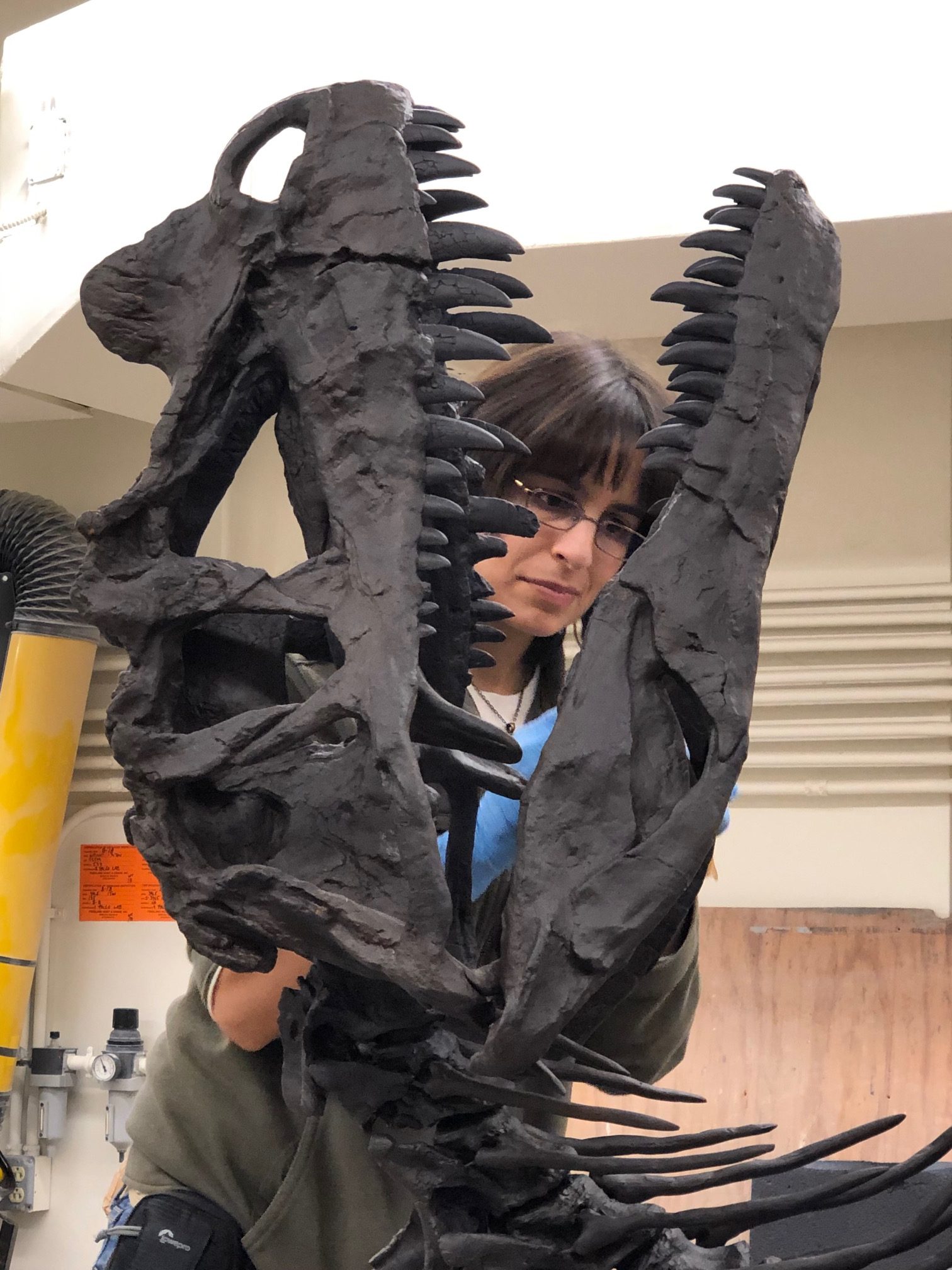
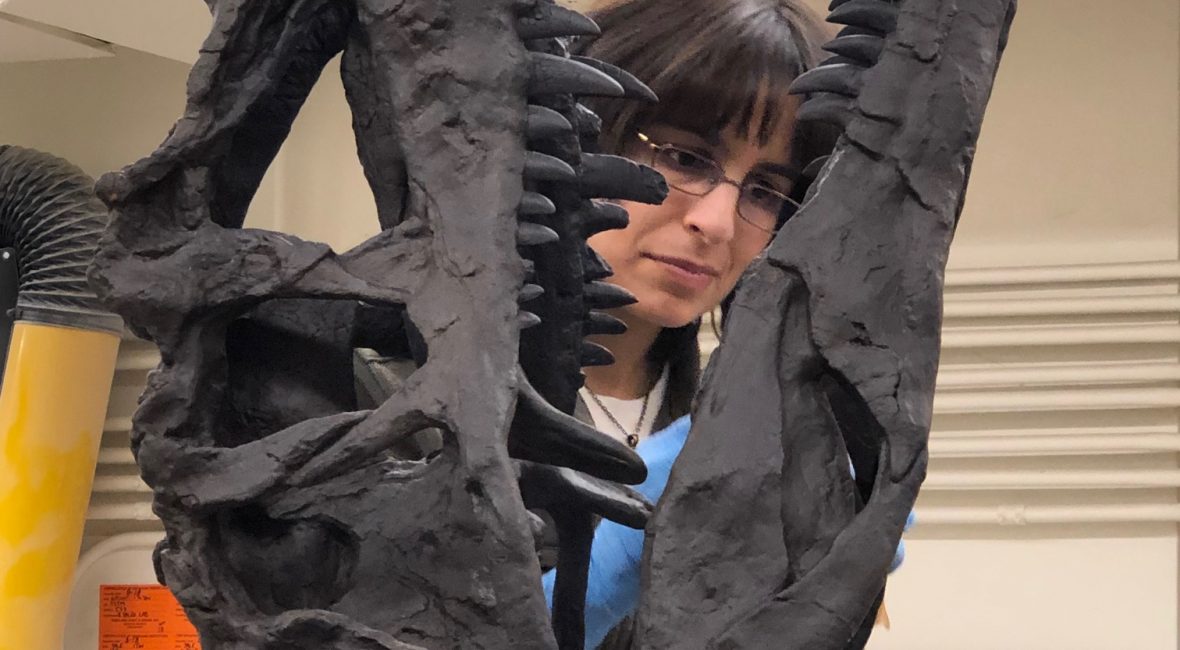
Michelle Pinsdorf working on the cast model of the Ceratosaurus before it was installed in the David H. Koch Hall of Fossils – Deep Time.
When research is needed in a museum, a research library is essential! A publication of great help to my work is fortunately quickly accessible to me through the Smithsonian Libraries system and the Biodiversity Heritage Library. One of the crown jewels of the Museum’s collections is the nearly complete skeleton of the carnivorous dinosaur Ceratosaurus nasicornis. It is the most complete skeleton of this species found to date, originally named by Othniel Charles Marsh.
When the specimen was mounted for exhibit at the Smithsonian in 1911, it was fully described by curator Charles Whitney Gilmore, and included in the publication Osteology of the carnivorous Dinosauria in the United States National Museum: with special reference to the genera Antrodemus (Allosaurus) and Ceratosaurus, in Bulletin of the United States National Museum, volume 110. Gilmore provided detailed descriptions and illustrations of this unique specimen, figured prior to it being partially embedded in a display plaque for exhibit. Those figures and measurements proved essential to my work to re-prepare the specimen out of the plaster plaque, exposing a side of the fossils no one since Gilmore’s time had been able to see.
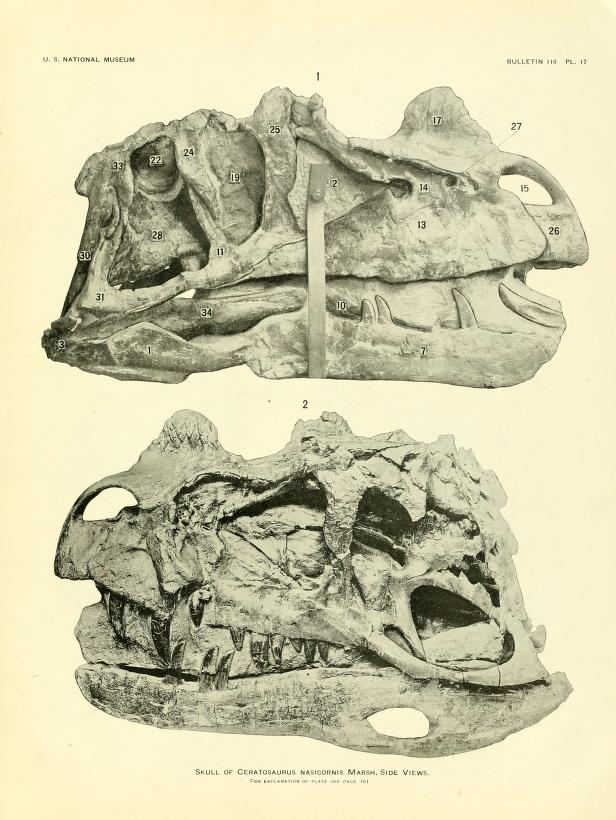
Plate depicting the skull of Ceratosaurus nasicornis from Osteology of the carnivorous Dinosauria in the United States National museum: with special reference to the genera Antrodemus (Allosaurus) and Ceratosaurus, in Bulletin of the United States National Museum, volume 110 (1920). Contributed in BHL from Smithsonian Libraries.
This fascinating specimen now gets to serve science in multiple ways. With each bone removed and cleaned, the fossils have been once again made available to paleontologists for study. Each bone was molded and cast, so that the casts could be reassembled in a dynamic new pose for public display in the new Deep Time fossil exhibit halls. The digitization of Gilmore’s publication allowed for me to quickly reference it from my workstation, my home computer, even on my phone. And the physical copy is also close at hand in the Natural History Museum itself, for when I need the kind of inspiration that comes with smelling old paper and seeing neat rows of bindings.
I look forward to seeing what new research will come from my work with Ceratosaurus, and the reactions of museum visitors when they get to see the new mount for the first time.
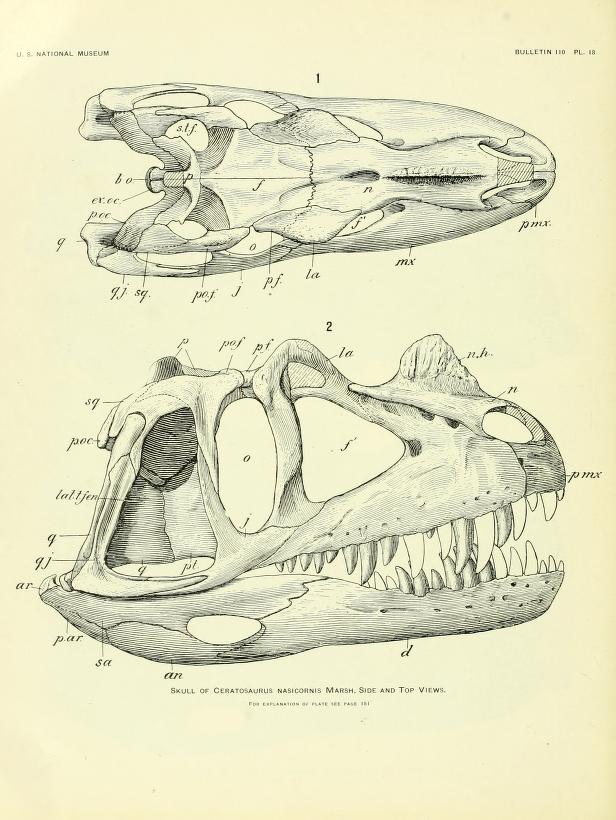
Plate depicting the skull of Ceratosaurus nasicornis from Osteology of the carnivorous Dinosauria in the United States National museum: with special reference to the genera Antrodemus (Allosaurus) and Ceratosaurus, in Bulletin of the United States National Museum, volume 110 (1920). Contributed in BHL from Smithsonian Libraries.
