

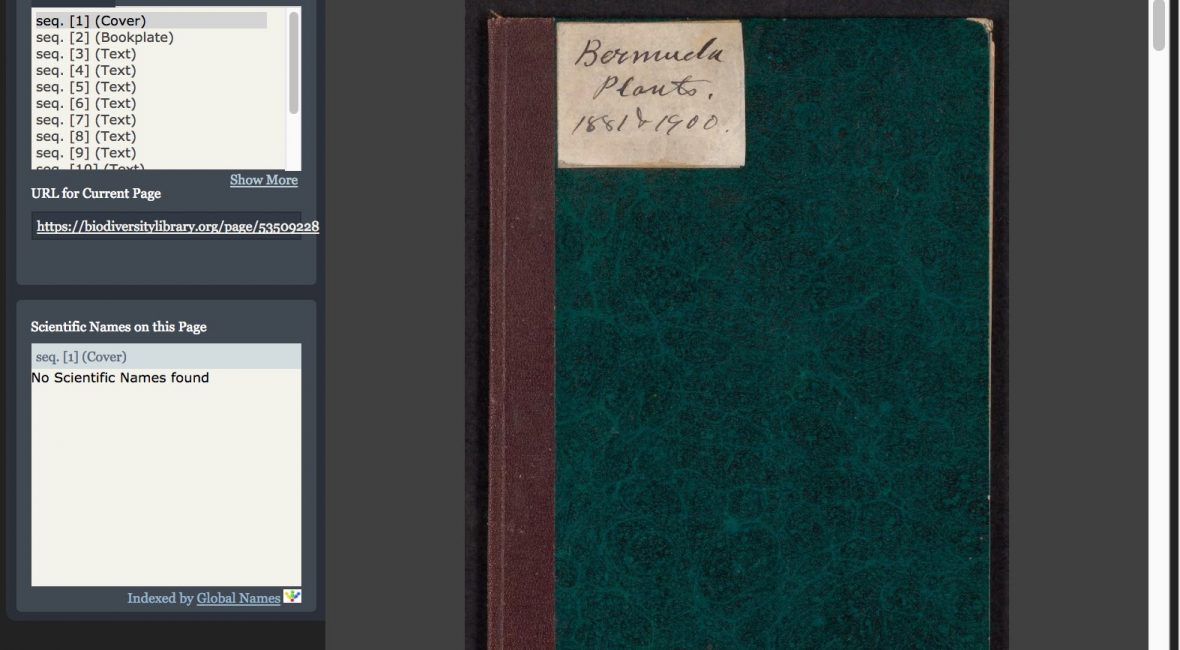
The Harvard Botany Libraries have been fortunate to benefit from several field notes digitization projects in recent years. Materials have been selected based on condition, demand, and/or the theme of the funded project. The current CLIR-funded BHL Field Notes Project has enabled us to nearly complete the capture of field notes and plant lists associated with the herbaria collections. The most interesting and immediate benefit of the project is our ability to point users to the files that are available both in the Biodiversity Heritage Library and HOLLIS, Harvard’s online catalog.
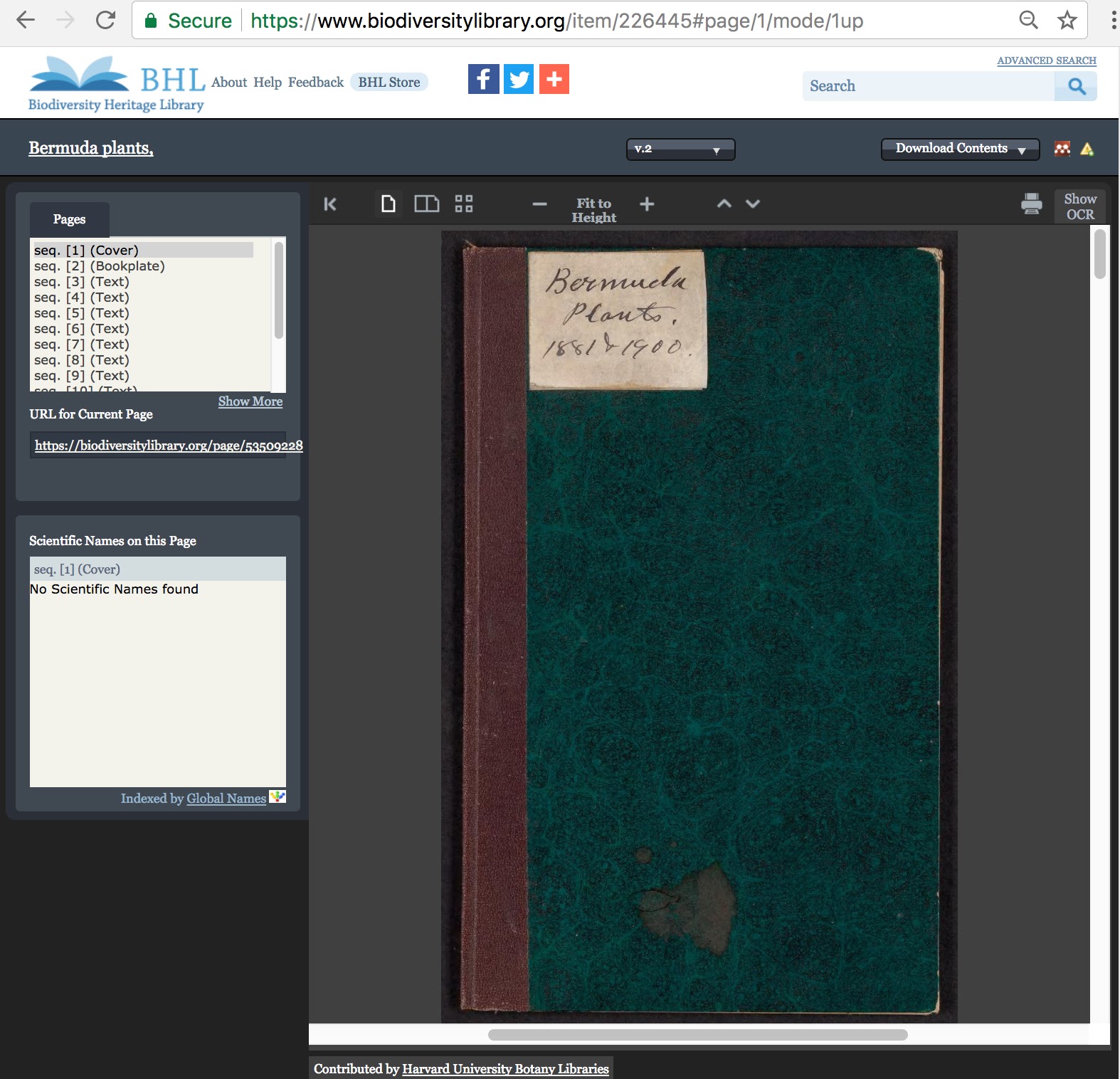
Recent reference questions that have arrived in my inbox that would have once required searching finding aids or files, and having researchers come to review materials, can now be answered by sending links. A former curatorial staff member wrote in the fall to say that he was on his way to Bermuda to collect specimens. He asked if I could send him copies of the field notes compiled by Harvard mycologist William G. Farlow during his trips there in 1881 and 1900. The notes were already available in the BHL Field Notes collection so I dashed off an email with those links and received a big “thank you” only minutes later!
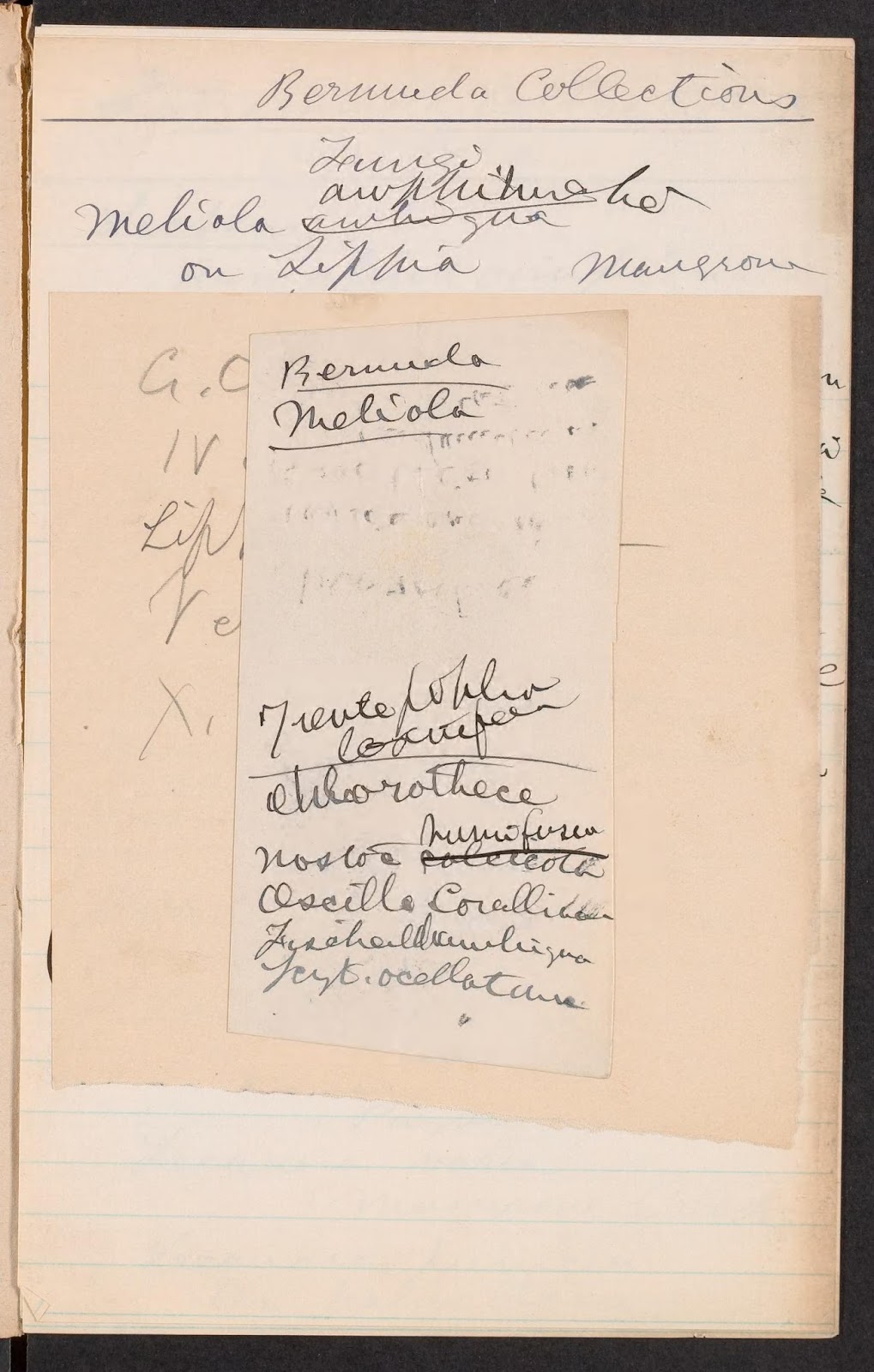 |
| Bermuda plants, approximately 1881-1900. v.2 (1881) https://biodiversitylibrary.org/page/53509230. Digitized by Harvard University Botany Libraries. |
Another recent request came from a botanist stationed at the Horticulture Center, South China Botanical Garden, in Guangzhou, China. He was interested in anything in the archives related to Chun WoonYoung [Chen Huanyong] who collaborated with Arnold Arboretum botanists in the 1920s. While most of those materials reside in the archives at the Arnold Arboretum, I was fairly sure that we had his collecting records. Digital Projects Librarian Diane Rielinger supplied the BHL link so I forwarded it to the botanist in Guangzhou.
The most recent and surprising use of the field notes came as a referral from a colleague at the Botanical Research Institute in Fort Worth Texas. He is working with curators at the Amon Carter Art Museum of American Art on an exhibit planned for 2020. The museum has commissioned an artist to retrace the routes of 19th century naturalists throughout the Dallas/Fort Worth area and reimagine their experiences. They are particularly interested in Charles Wright so we sent links to his correspondence and field notes and the curators visited the Botany Libraries in December to see the material and to view collecting tools and artifacts in the archives. They plan to return with the artist next year to continue their research. Visits from artists are not unusual, but applying field notes to an art project is a first for us. The Wright field notes, digitized as part of a previous project, will also be deposited in BHL in the near future.
Keiko Nishimoto, the Botany Libraries’ former Collection Services Archivist, prepared a small exhibit on the CLIR field notes project to promote the project to herbaria staff and visitors. The first case explained the importance of field notes, showed examples of the records in the archives, and explained why they were being digitized. The second case featured the works of women botanists Mary Strong Clemens (1873-1968), who collected in New Guinea, northern Borneo, and Sulawesi, and Rae Baldwin Kennedy (1879-1952) who worked in Bermuda.
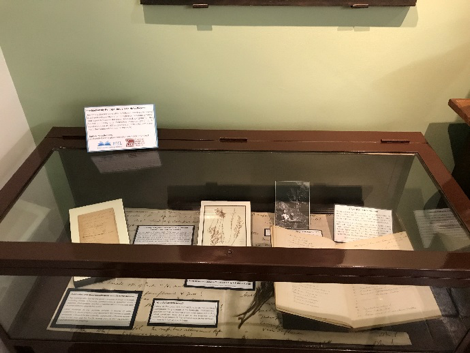
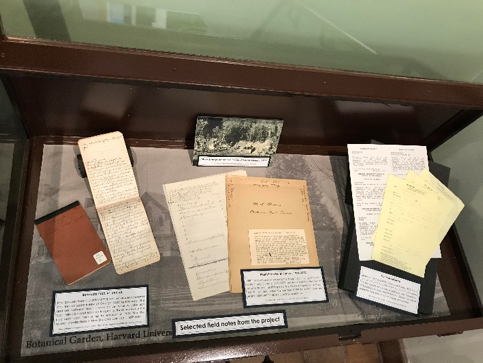
Earlier grants allowed us to target particular collectors and expeditions, but the CLIR funds gave us the opportunity to open the document boxes and scan the bulk of the collection. Cataloging and access have been enhanced as has our knowledge of the entire collection. We look forward to sharing these resources virtually and to hosting users with both traditional and reimagined ways of using them.
The BHL Field Notes Project is funded by the Council on Library and Information Resources (CLIR).
