Biodiversity Heritage Library - Program news and collection highlights from BHL
  • Home
  • News
  • Featured Books
    • All Featured Books
    • Book of the Month Series
    • BHL at 20
  • User Stories
  • Campaigns
    • Fossil Stories
    • Garden Stories
    • Monsters Are Real
    • Page Frights
    • Her Natural History
    • Earth Optimism 2020
  • Tech Blog
  • Visit BHL
Home
News
Featured Books
    All Featured Books
    Book of the Month Series
    BHL at 20
User Stories
Campaigns
    Fossil Stories
    Garden Stories
    Monsters Are Real
    Page Frights
    Her Natural History
    Earth Optimism 2020
Tech Blog
Visit BHL
  • Home
  • News
  • Featured Books
    • All Featured Books
    • Book of the Month Series
    • BHL at 20
  • User Stories
  • Campaigns
    • Fossil Stories
    • Garden Stories
    • Monsters Are Real
    • Page Frights
    • Her Natural History
    • Earth Optimism 2020
  • Tech Blog
  • Visit BHL
Biodiversity Heritage Library - Program news and collection highlights from BHL
BHL News, Blog Reel

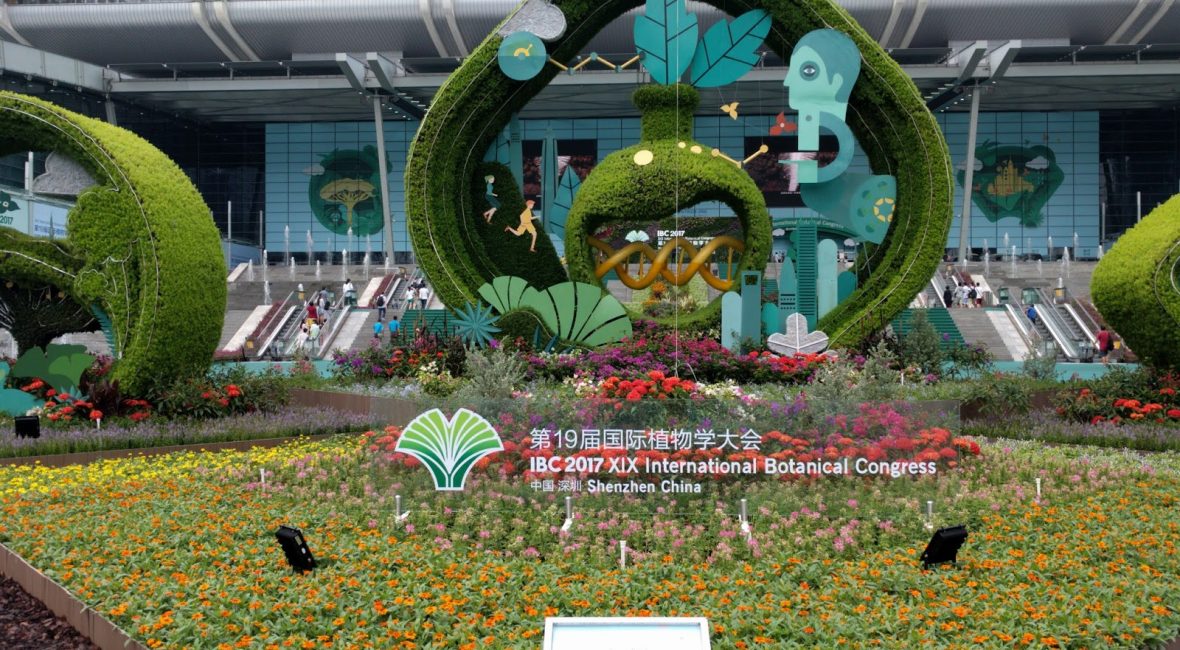
Report on the XIX International Botanical Congress, Shenzhen, China, July 2017

View Full Size Image
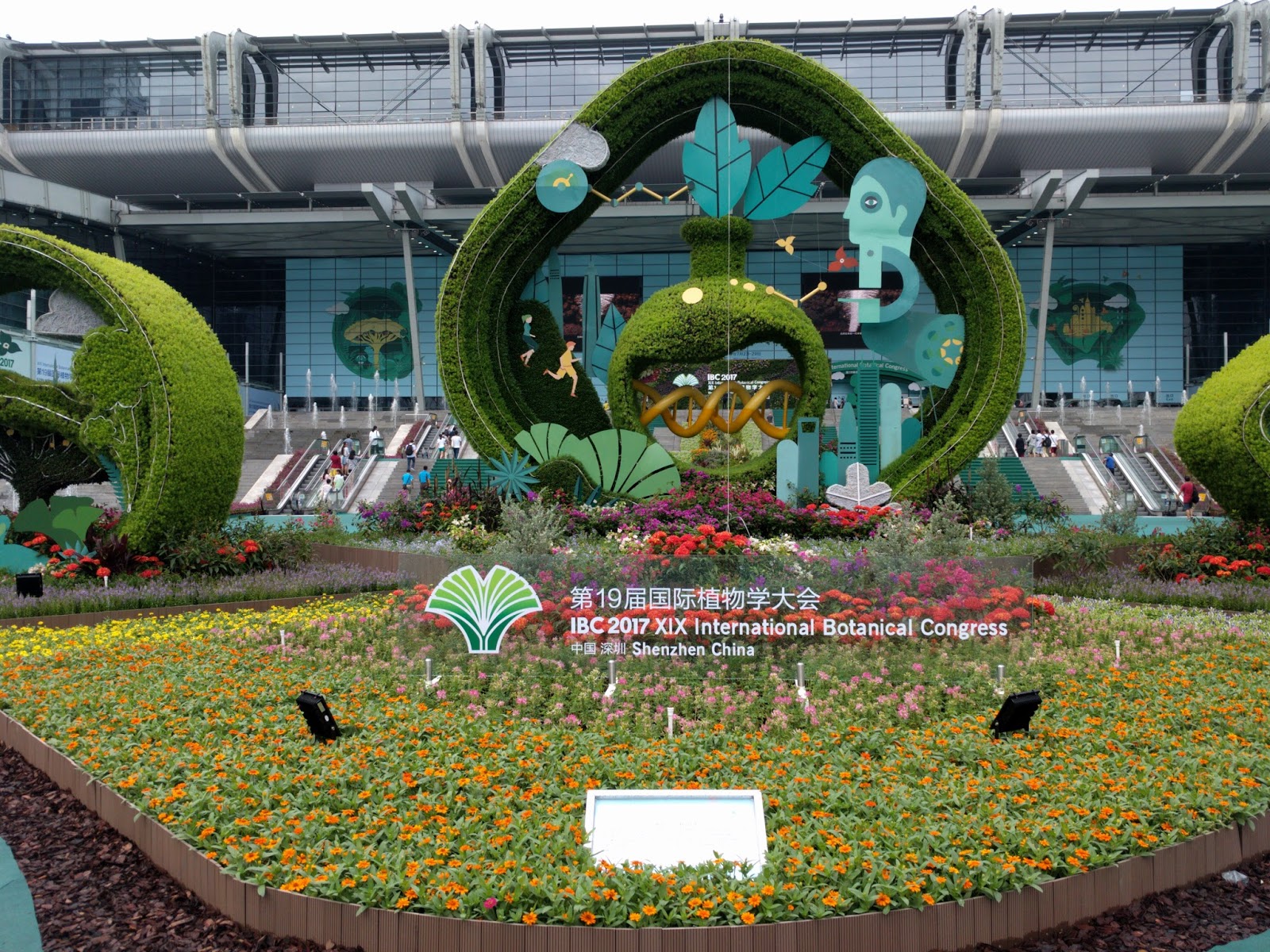
XIX IBC 2017

Along with BHL Program Manager Carolyn Sheffield, I represented BHL as a delegate to the XIX International Botanical Congress in Shenzhen, China. Held during the week of 24-28 July 2017, the Congress (which is held every five years) drew over 6,000 botanists from around the world.

The Congress provided an excellent opportunity to catch up with colleagues from around the world and learn about some of the latest botanical research.

SHENZHEN DECLARATION AND PUBLIC TALKS 
View Full Size Image
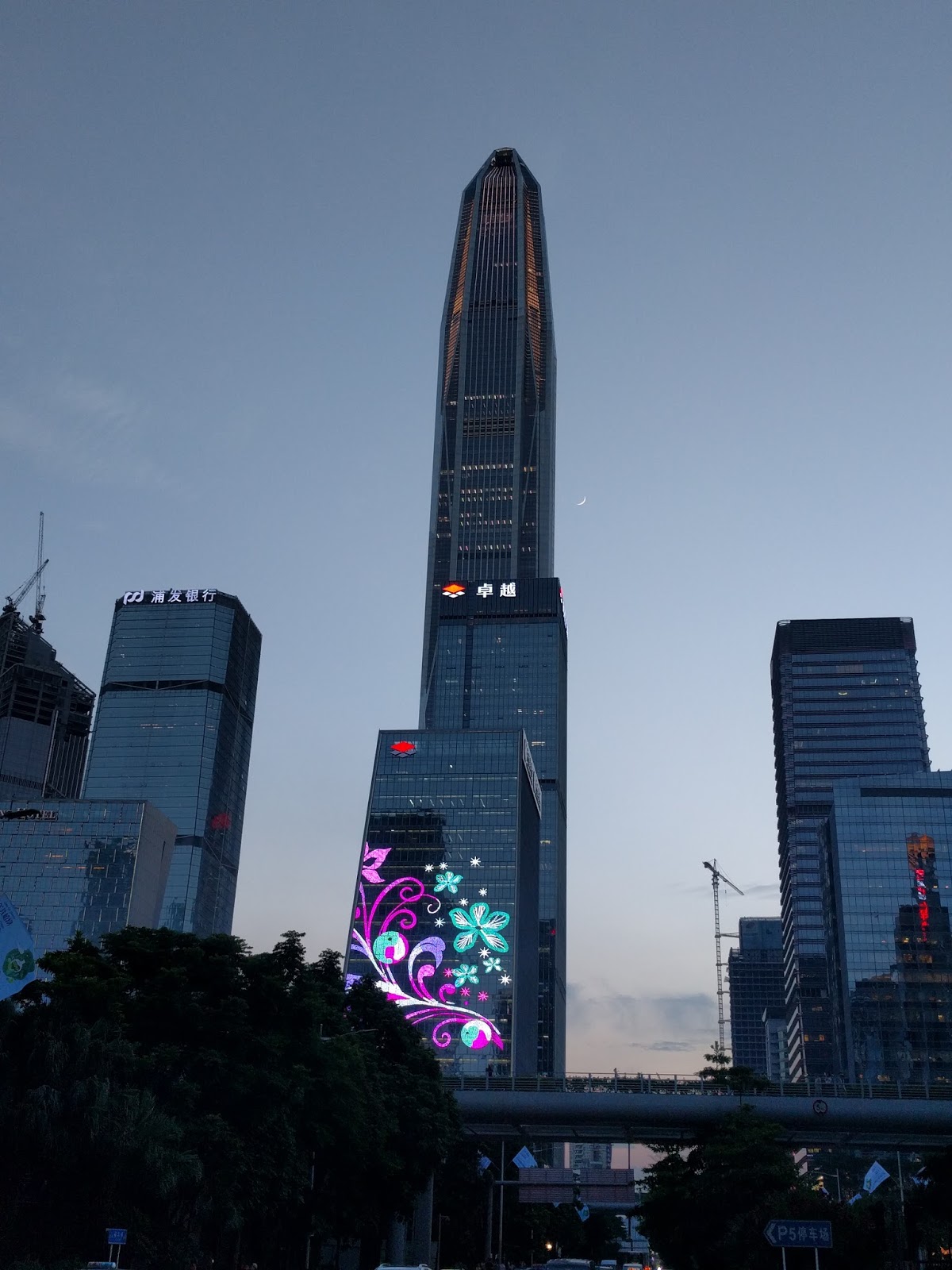
IBC logos on Shenzhen skyline

The program was divided into plenary talks, keynote talks, general symposia, and public lectures (see abstracts for all here). The Congress opened with a public lecture by Peter H. Raven, President Emeritus of the Missouri Botanical Garden. Raven’s talk, “Saving Plants to Save Ourselves: The Shenzhen Declaration” was on the public announcement of the Shenzhen Declaration on Plant Sciences. Authored by fourteen illustrious botanists that formed the Shenzhen Declaration Drafting Committee, the declaration is an important statement on the role of plant science in a changing world. The declaration opens with:

“Actions and priorities to connect the global community of plant scientists with the world’s changing societies are today more imperative than ever. Environmental degradation, unsustainable resource use, and biodiversity loss all require integrated, collaborative solutions.”

Noting the changing world we inhabit, the change evidenced by increased species extinction, global climate change, rapid changes in the practice of plant science, and refactoring of the world’s economy, the declaration outlines seven priorities for strategic action in the plant sciences. These priorities will “allow society, with the help of science, to mitigate impacts of human activities on plant species, habitats, and distributions, and to approach formation of a sustainable world for ourselves and those who follow us.”

These seven priorities are:

  • To become responsible scientists and research communities who pursue plant sciences in the context of a changing world.
  • To enhance support for the plant sciences to achieve global sustainability.
  • To cooperate and integrate across nations and regions and to work together across disciplines and cultures to address common goals.
  • To build and use new technologies and big data platforms to increase exploration and understanding of nature.
  • To accelerate the inventory of life on Earth for the wise use of nature and the benefit of humankind.
  • To value, document, and protect indigenous, traditional, and local knowledge about plants and nature.
  • To engage the power of the public with the power of plants through greater participation and outreach, innovative education, and citizen science.

Raven’s inspiring talk on the Declaration was a brilliant opening to the Congress (and was touched upon by nearly all speakers for the remainder of the Congress) and concluded with a rousing call to action: “Let us make this Congress a time of commitment to do better and resolutely seek a sound and sustainable future for all people.”
View Full Size Image
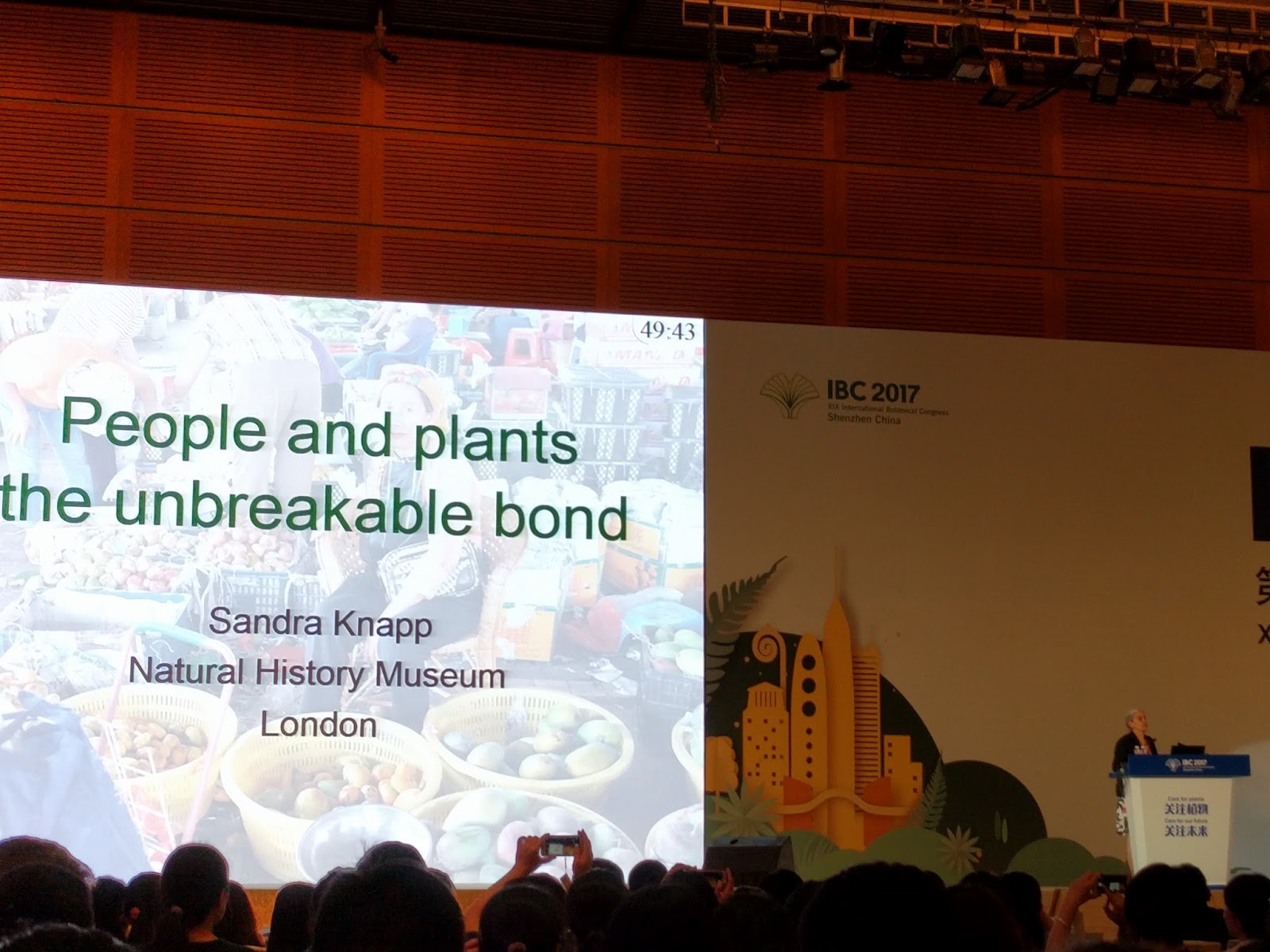
Sandra Knapp

Another public lecture of note was by Sandra Knapp (Natural History Museum, London): “People and Plants — the Unbreakable Bond”. Knapp noted “Plants form the scaffold for Earth’s green ecosystems, but they are also essential for human survival. Plants provide most of the food we eat (directly or indirectly), our medicines, clothes, buildings, and even the air we breathe; they also beautify our daily lives.” Knapp further detailed the importance of plants to humans and then pivoted to ask, “So we need plants, but do they need us?” Knapp’s answer was yes:

“In this time of increasing human impact on plants, animals and natural habitats, our actions can make a big difference in whether plants are a part of an ecological civilization for the future. Plants do in fact need us – they need us to study and use them responsibly, both as scientists and as members of human societies.”

KEYNOTE AND PLENARY TALKS

The Congress presented a number of excellent keynote and plenary talks. Of special note were the following:

“Tropical Plant-Animal Interactions: Coevolution in the Anthropocene” by W. John Kress (Smithsonian Institution, National Museum of Natural History). Kress illustrated his talk with research on the interaction of beetles, humming birds, and Zingiberales (including bananas, birds-of-paradise, heliconias, gingers, and prayer plants). Kress concluded with, “The geographic mosaic of these relationships across tropical islands, fragmented landscapes, and elevational gradients suggests that human-caused habitat alterations, biological invasions, and climate change may significantly modify and disrupt through time and space the historical patterns of ecological interactions. The future of today’s biological complexity in the Age of Humans, in the Anthropocene, remains to be determined.”
View Full Size Image
W. John Kress

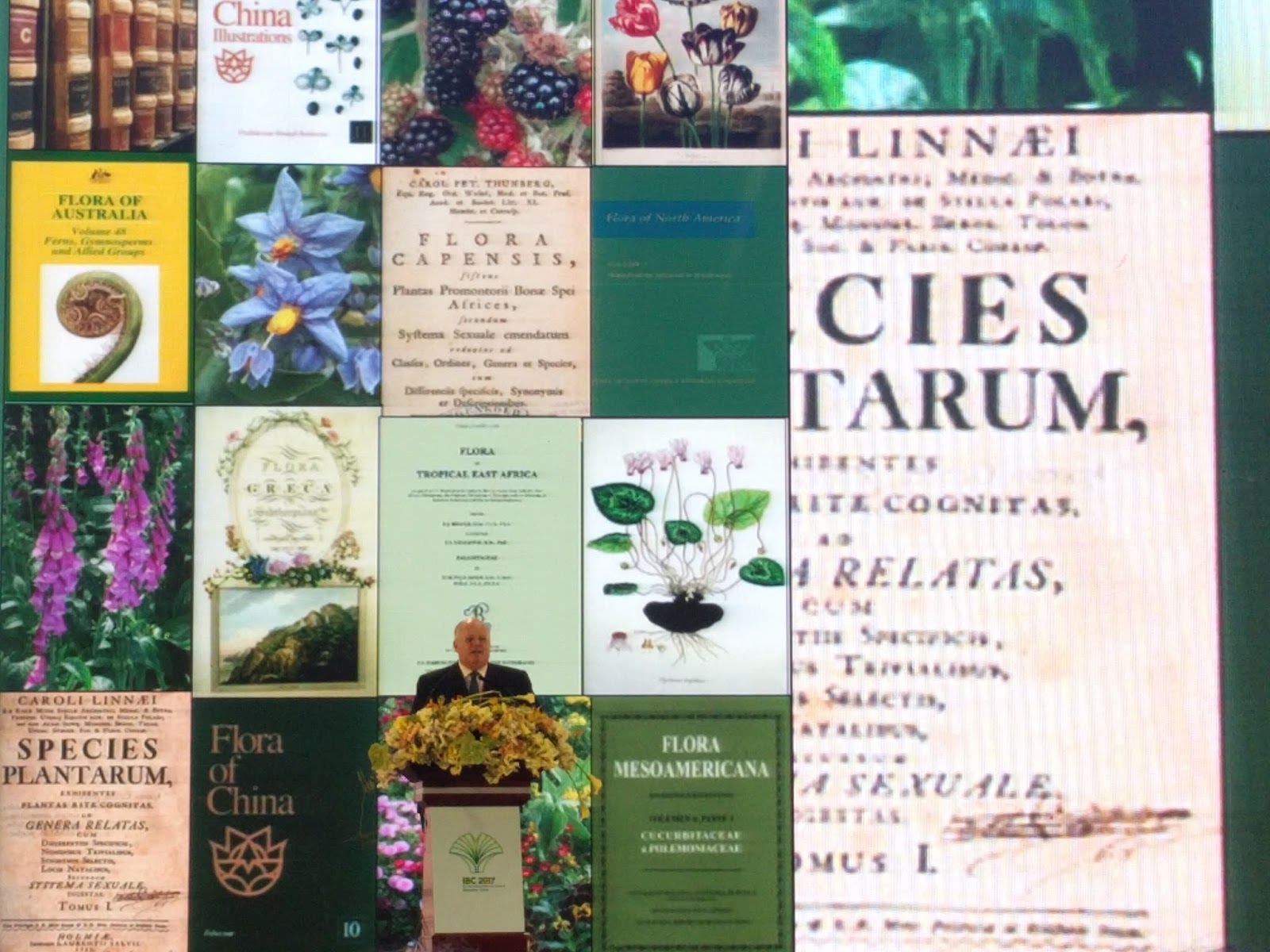
“International developments and responsibilities for the botanical community in plant conservation” by Peter Wyse Jackson (Missouri Botanical Garden). Wyse Jackson provided a high level overview of the importance of the Global Strategy for Plant Conservation (GSPC), part of the United Nations Convention on Biological Diversity, and showed how individual institutions can help achieve the 2020 targets of the GSPC. He specifically noted how the Missouri Botanical Garden is working in the areas of conservation biology, ecological restoration, community conservation and education programs, horticulture and ex situ conservation towards this end. The World Flora Online project, based at the Missouri Botanical Garden and with partners worldwide, was previewed at the Congress and is a first target of the GSPC.
View Full Size Image
Peter Wyse Jackson

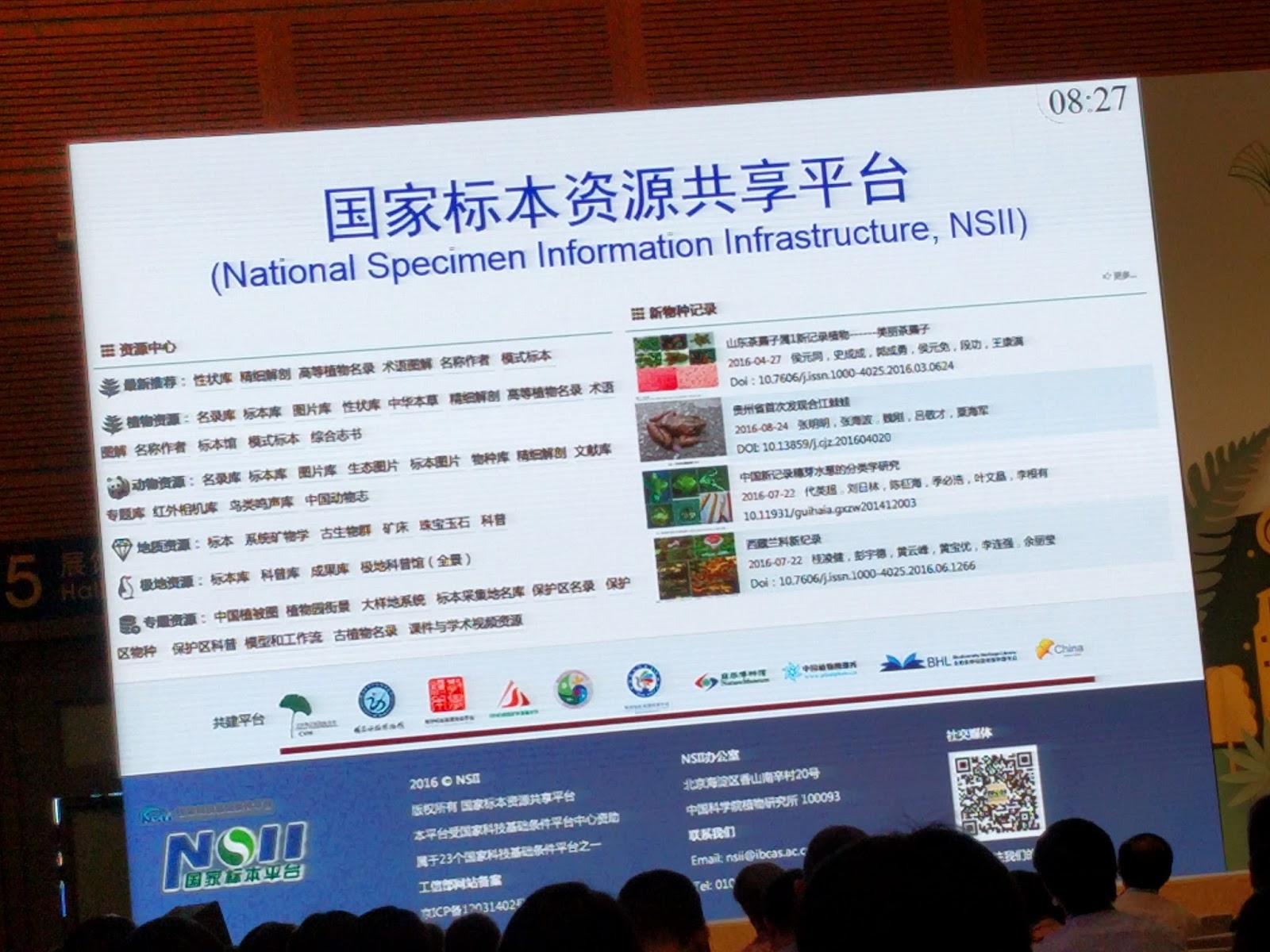
“Mapping Asia Plants” by Keping Ma (Institute of Botany, Chinese Academy of Sciences). Ma provided an excellent overview of a number of resources that are helping to document plant life in Asia. Ma commented, “Because of the huge population and rapid growth of economy, biodiversity including plants are being seriously threatened in Asia.” He also detailed the work of the Asia Biodiversity Conservation and Databases Network (ABCDNet) project, entitled Mapping Asia Plants for cataloguing species of plants and collecting distribution data. The importance of the Biodiversity Heritage Library China (BHL China) in providing access to literature was noted.
View Full Size Image
Keping Ma

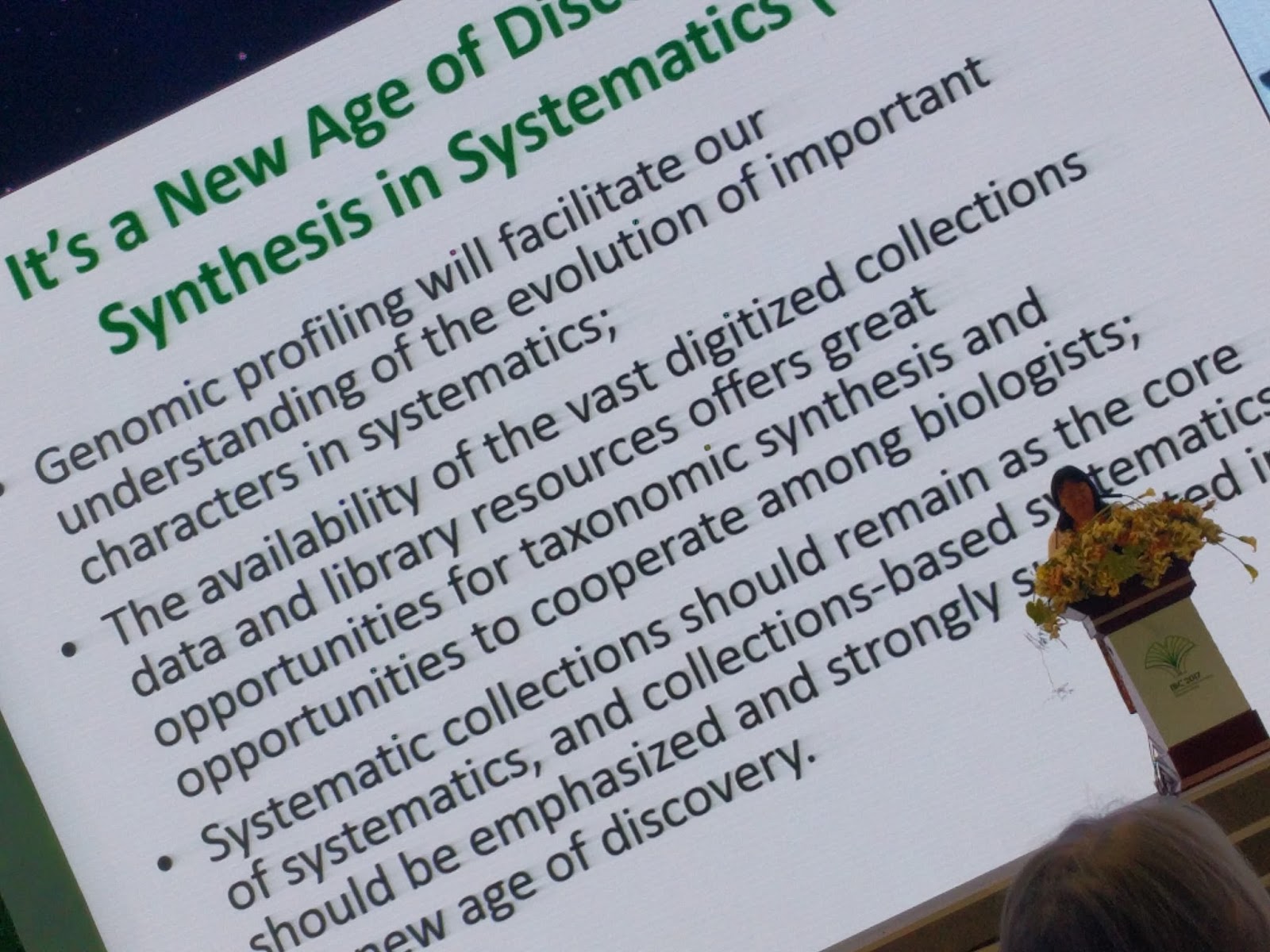
“Developing integrative systematics in the informatics and genomic era” by Jun Wen (Smithsonian Institution, National Museum of Natural History). “Systematics is the science of discovering, organizing and interpreting the diversity of all living organisms on Earth. Recent developments in genomics and biodiversity informatics are transforming systematics and have opened up many new opportunities.” With that statement, Wen outlined the opportunities of big data, digitization, and genomics in developing the tree of life. The wider importance of this work was driven home as Wen noted “integrative systematics must proactively educate the public and policy makers on the importance of systematics and collections in the biodiversity crisis of the Anthropocene.”
View Full Size Image
Jun Wen

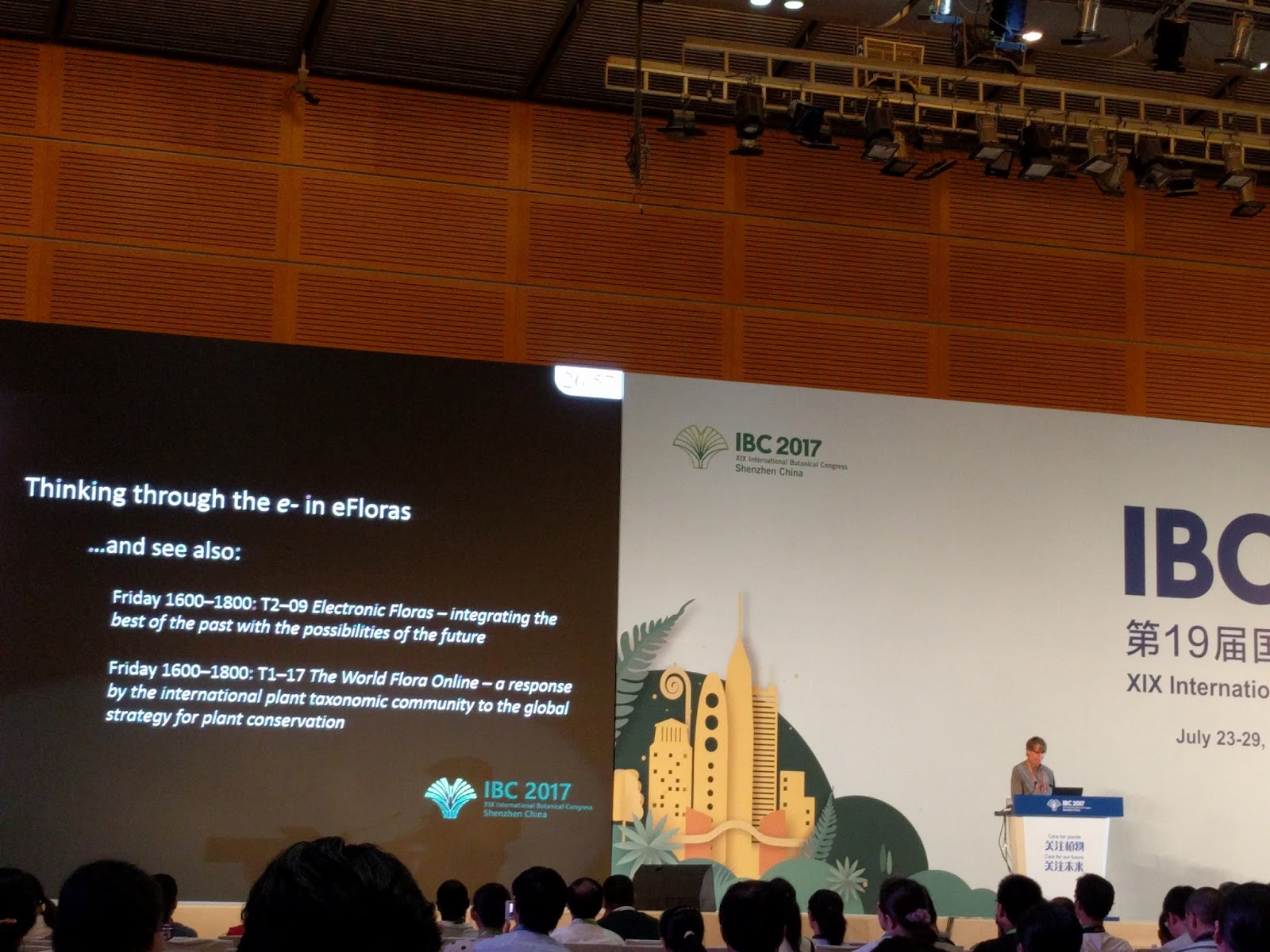
“Thinking through the e- in e-Floras; or, Floras old, new, and not-yet” by Kevin Thiele (Western Australian Herbarium). Thiele delivered an provocative talk that touched upon the very core of how plant scientists do their work and to what level much of the scientific output is wedded to 19th century methods of dissemination while we are living well into the 21st century. He illustrated this with how many “e-floras” simply reproduce print methodologies. He challenged the audience to consider, “If modern taxonomy and systematics were invented, or re-invented, now (in the age of the internet, social media, citizen science and the block chain), rather than in the 18th Century, would we do it all differently?”
View Full Size Image
Kevin Thiele

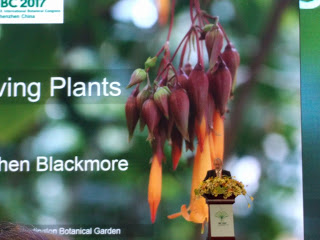
In perhaps the most inspirational talk of the Congress, Stephen Blackmore (Royal Botanic Garden Edinburgh) spoke on the seemingly simple topic, “Saving Plants”. Blackmore drew on his personal experience in Pearl River Delta area to tie together the different sectors and stakeholders that are needed to create a world where plants, and by extension, humans, can both survive and thrive. Blackmore focused on the contributions of botanic gardens, arboreta, seed banks and other collections of living and preserved plants to achieve the goal of saving plants. Blackmore ended on the note that “we will need to work closely together if we are to succeed in passing on the Earth’s rich, green inheritance to future generations.”
View Full Size Image
Stephen Blackmore

BIODIVERSITY HERITAGE LIBRARY SYMPOSIUM 
View Full Size Image
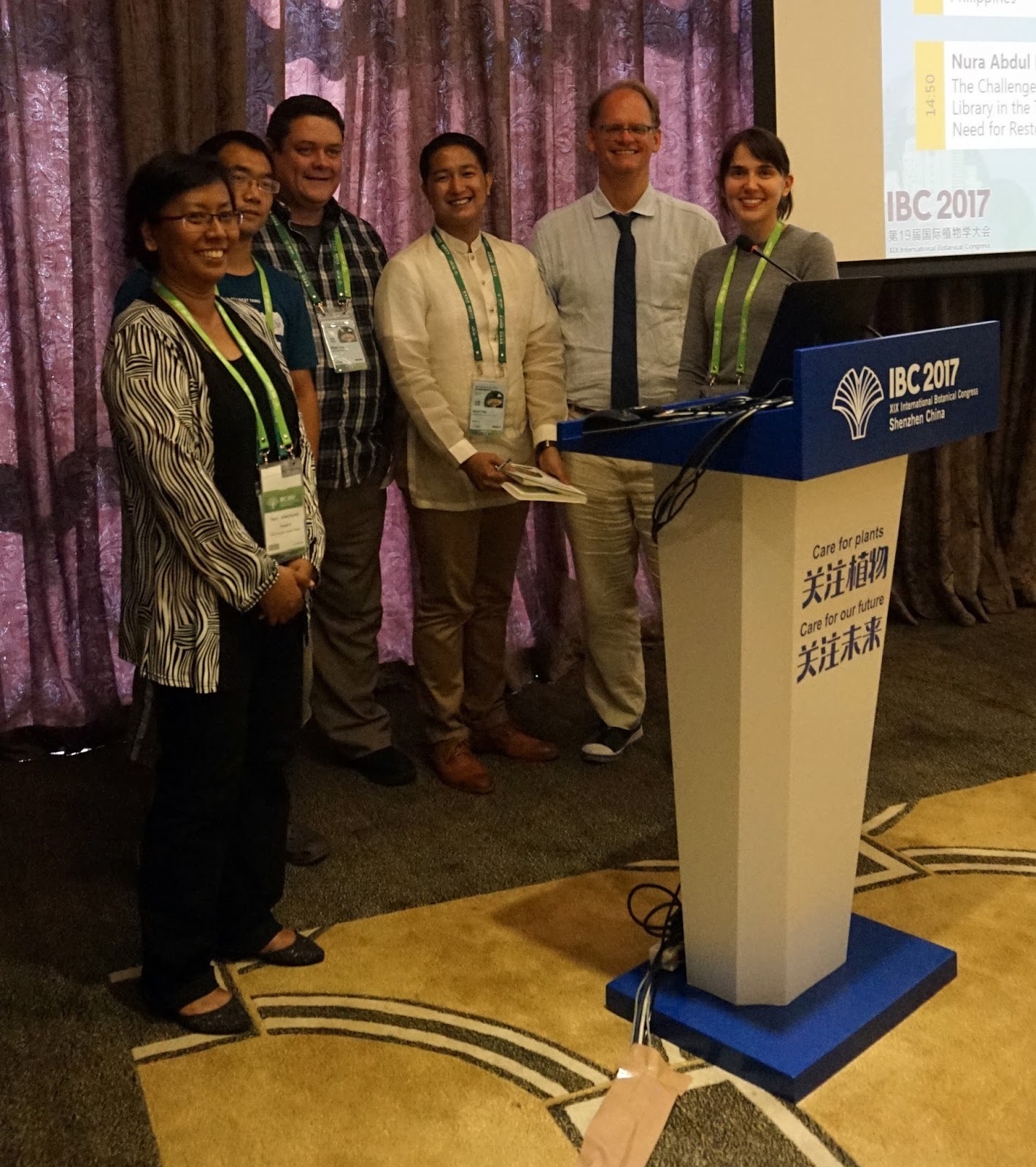
Speakers at the BHL Symposium

For the Congress, I, along with Carolyn Sheffield, organized a general symposium, “The Biodiversity Heritage Library: Empowering Discovery through Free Access to Biodiversity Knowledge” with colleagues from the Biodiversity Heritage Library‘s global partners. Presenters at the symposium were:

  • The Biodiversity Heritage Library: Empowering Discovery through Free Access to Biodiversity Knowledge | Martin R. Kalfatovic (Biodiversity Heritage Library / Smithsonian Libraries)
  • Real use cases for Semantic Information in BHL | William Ulate (Center for Biodiversity Informatics, IT Department, Missouri Botanical Garden)
  • A Checklist of the Orders and Families of Medicinal Plants in the Philippines | Harold Carag (The Graduate School, University of the Philippines, Los Banos)
  • The Development and Progress of BHL China | Zheping Xu (Institute of Botany, Chinese Academy of Sciences)
  • The Challenges of a Botanical Library in the Tropics and the Need for Restoration and Digitisation of Materials | Nura Abdul Karim (Singapore Botanic Gardens, National Parks Board)
  • Building Botanical Literature Collections for Global Use: Highlights from the Biodiversity Heritage Library | Carolyn Sheffield (Biodiversity Heritage Library / Smithsonian Libraries)

OTHER SYMPOSIA 

Many familiar colleagues participated in the General Symposium, “Green digitization: online botanical collections data answering real-world questions”, organized by Shelley A James (Florida Museum of Natural History, USA) and Gil Nelson (Florida State University, USA).

Talks at the symposium included:

  • Rebranding botanical collections: Global societal and biodiversity data needs for novel research | Shelley James
  • Invasive or Not? A collection-based investigation of a historically unseen, persistent green algal bloom on Pacific coral reefs | Tom Schils [unable to present]
  • Current status and the applications of online botanical collection data in China | Zheping Xu
  • Virtual Herbaria tracking usage and benefits for biological collections: An example from Australasia | David Cantrill
  • Developing standards for scoring phenology from herbarium specimens | Jenn Yost
  • From field collections to digital data: A workflow and digitization pipeline for reconstruction of a fossil flora | Dori Contreras [delivered in abstentia]

OTHER ACTIVITIES 
View Full Size Image
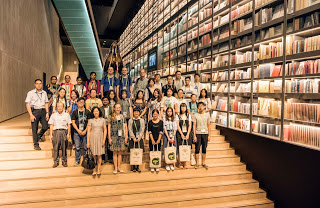
Artron (photo by Ivan Lee @ Artron)

A number of excursions were organized for delegates. I participated in one excursion that highlighted the hi-tech industry that has led to Shenzhen growing from a small fishing village to a world-class city with a population of 15 million in less than 40 years. The first stop was at UBTECH, a robotics start-up company that markets a robot that can interact with digital assistants (such as the Amazon Alexa). The next stop was Nirvana for this former art librarian: Artron, a world-class printer that produces art books and catalogs for the museums and galleries of the world. We visited their library and exhibition spaces. The focal point of the facility was the “Wall of Art Books.” Over 150,000 art books are on display in a four story space (that has to be experience to be believed). All books are available to view by members of the Artron private library. We visited the private library, consisting of 20 themed rooms (e.g. “Japanese Vintage Books” and “The Business of Art”) as well as the main reading room with a touch pad catalog where readers can page books (after pre-viewing full-text digitized versions). After leaving the Artron facility, I couldn’t help but imagine this is how the brick and mortar library of the future will look.
View Full Size Image

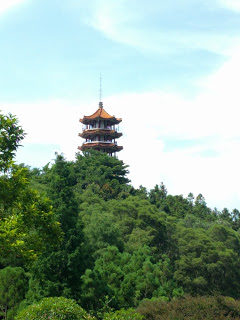
My second excursion was more on a botanical point. The Fairy Lake Botanical Garden is a 546 ha botanical garden which compares favorably with the great gardens of the world. First stop was the shade garden and butterfly pavilion, followed by the Fairy Lake and the palm area. We also had the opportunity to visit the National Cycad Conservation Center, which includes a fabulous collection of cycads from around the world and also a fossil collection. The Fairy Lake Botanical Garden also has a spectacular petrified forest area, with huge amounts of petrified wood that have been “planted” to look like a forest. We also stopped in at the Shenzhen Paleontological Museum (some dinosaurs and nice trilobites, my favorite extinct invertebrate!).
View Full Size Image
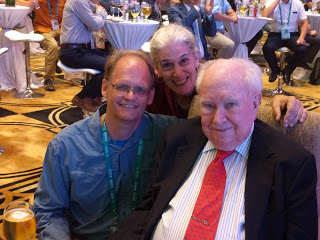
With Sandra Knapp and Peter Raven

The Congress featured a mid-week Gala that provided an opportunity to recognize the work of organizers and the program committee. The Gala also showcased a wide variety of Chinese entertainment that ranged from classical instrumentalists, to dancers and acrobats, to a Chinese doo-wop group. The accompanying buffet featured a number of tasty offerings.

IN SUMMARY 

The XIX International Botanical Congress was a unique opportunity for the Biodiversity Heritage Library to meet with colleagues from around the world (and from down the hall) to discuss important issues related to plant science and how we, as librarians, can work with plant scientists to accelerate their work and to achieve the aspirational goals as outlined in the Shenzhen Declaration.
View Full Size Image
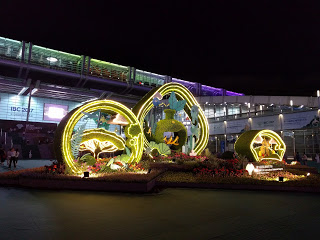
XIX IBC 2017 at Night
August 9, 2017by
BHL News, Blog Reel

BHL Welcomes Three New Affiliates

BHL is pleased to welcome three long-time Partners as the consortium’s newest Affiliates: BHL Egypt, BHL China, and BHL SciELO.

The BHL consortium now consists of 18 Members and 18 Affiliates. Members and Affiliates contribute content, provide technical services, and participate in BHL committees, task forces, and working groups. Additionally, Members, who contribute 10,000 USD in annual dues, have governance privileges and vote on strategic directives.

BHL Egypt 

View Full Size Image


BHL Egypt, led by the Bibliotheca Alexandrina (BA), joined the Biodiversity Heritage Library in 2009. A major library and cultural center located in Alexandria, Egypt, Bibliotecha Alexandrina has long brought considerable technical expertise to the BHL consortium. The BA provides access to a subset of the BHL collection through its own Digital Assets Repository, which features an Arabic-aware (right to left) book reader. As an Affiliate, BHL Egypt will continue to provide technical support and services to facilitate BHL’s ongoing development.

BHL China 

View Full Size Image


BHL China, founded by the Institute of Botany at the Chinese Academy of Sciences, is the Biodiversity Heritage Library’s first Affiliate in China. Established in 1928, the Institute of Botany is one of the oldest comprehensive research institutions in China. Host to the largest herbarium in Asia, two botanical gardens, and several laboratories, the Institute is a national leader in the development of the country’s plant science research. Since first joining BHL as a partner in 2010, the Institute of Botany has contributed over 325,000 pages to BHL through the BHL China program.

BHL SciELO 

View Full Size Image


The BHL SciELO Network is the Biodiversity Heritage Library’s first Affiliate in South America. BHL SciELO is implemented by the Scientific Electronic Library (SciELO) Program, which encompass a network of national collections of open access journals in 15 countries. SciELO Brazil coordinates the BHL SciELO Network involving the main biodiversity libraries of Brazil with political and financial support from the São Paulo Research Foundation (FAPESP) and the Secretary of Biodiversity of the Ministry of Environment. SciELO joined BHL as a partner in 2010, and since then it has contributed over 107,000 pages to BHL’s collection.

July 3, 2017by Grace Costantino
Blog Reel, Featured Books

Michał Piotr Boym’s Flora sinensis, fructus floresque humillime [Flora of China, fruits and flowers].

View Full Size Image
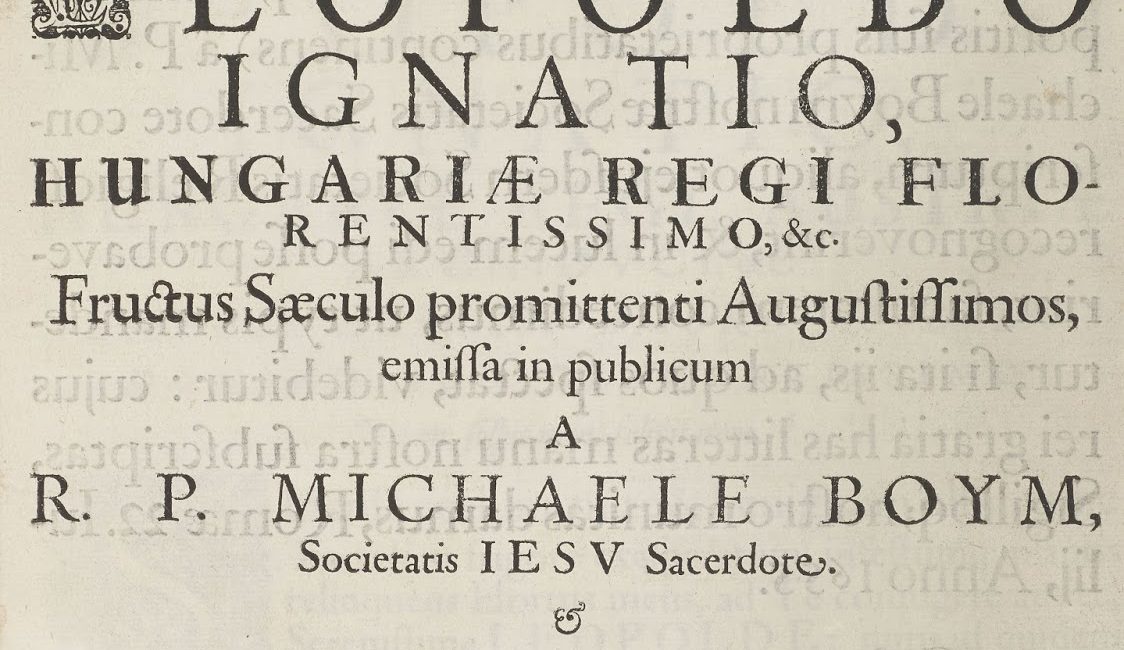
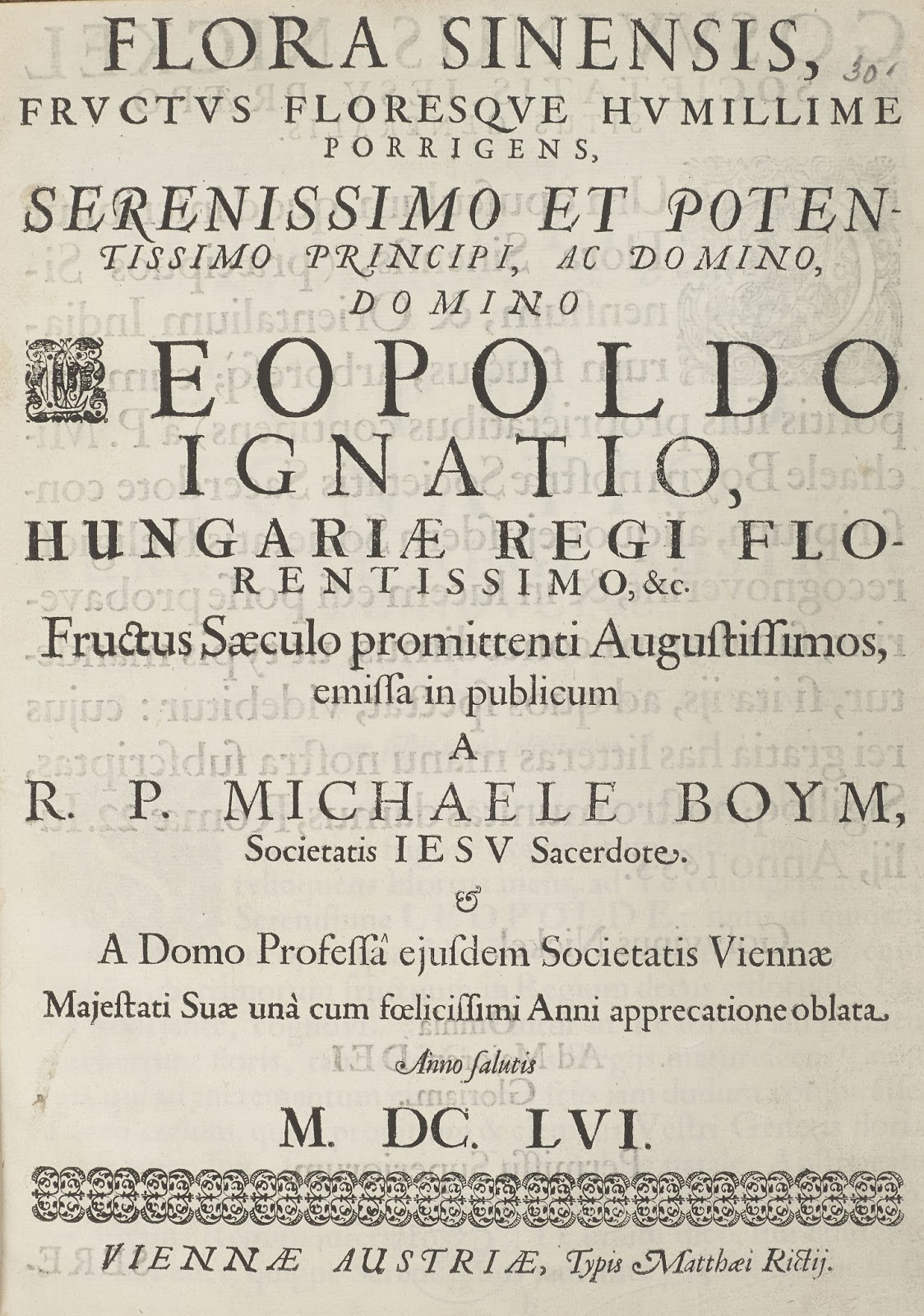
Fig. 1. Title Page. Boym, Michał Piotr. Flora sinensis. 1656. Digitized by Royal Botanic Gardens Kew, Library, Art & Archives. http://www.biodiversitylibrary.org/page/52239363.

Flora sinensis is one of the first natural history books on China by a European. Authored by Michał Piotr Boym, it was published in 1656 by Matthæi Rictii in Vienna. Boym dedicated it to Leopold I (1640-1705), Holy Roman Emperor, King of Hungary and Croatia, King of Bohemia and King of Serbia, and included a poem incorporating chronograms alluding to his coronation date, 1655.

View Full Size Image
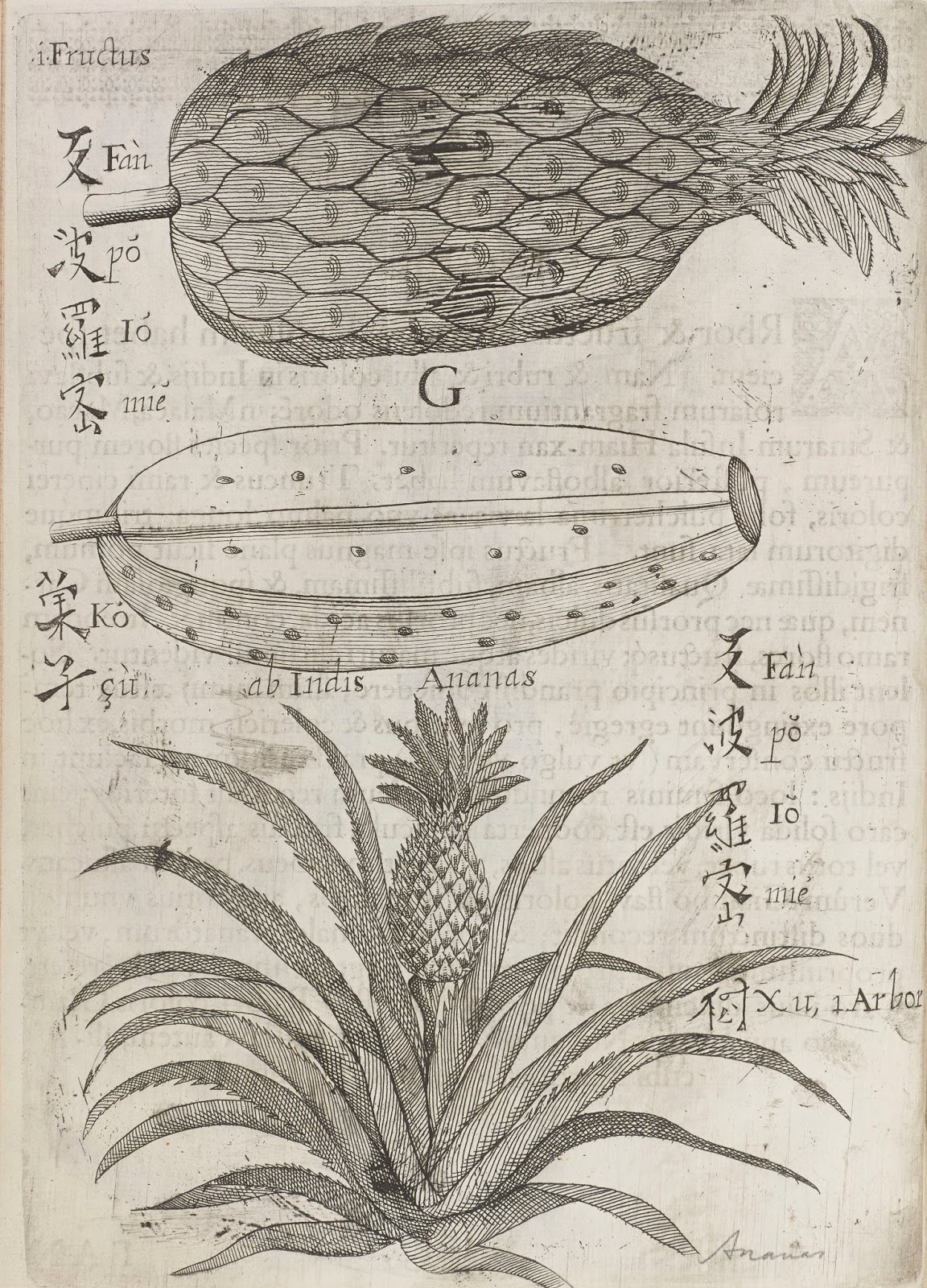
Fig. 2 Ananas (pineapple). Boym, Michał Piotr. Flora sinensis. 1656. Digitized by Royal Botanic Gardens Kew, Library, Art & Archives. http://www.biodiversitylibrary.org/page/52239334.

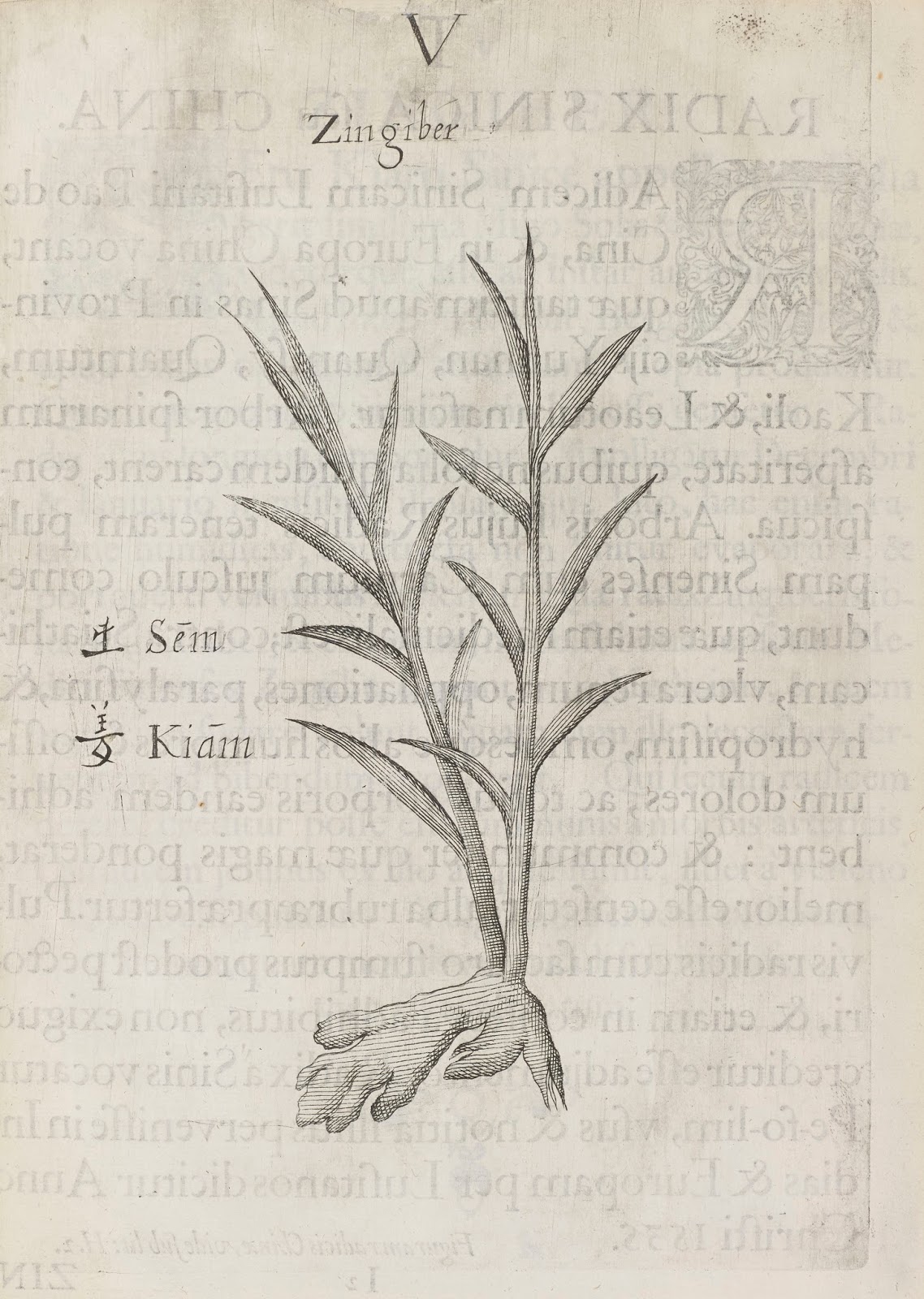
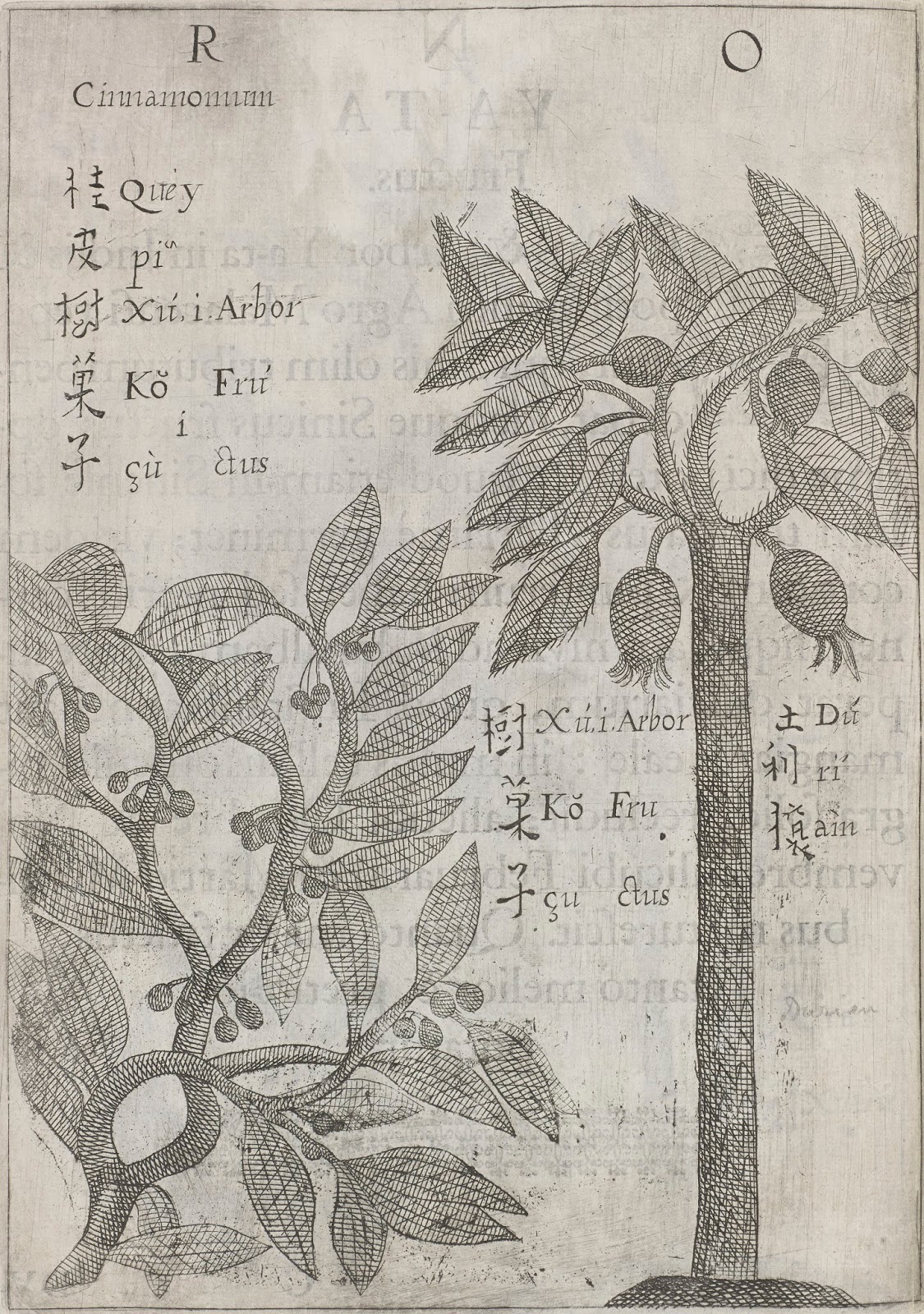
Augustin Pyramus, a Swiss Botanist, identified Boym as the first person to use ‘flora’ to define the plants of a particular region, habitat or geological period. Despite the title, it contains some animals, as well as a selection of choice plants, some of which are non-Chinese natives introduced from the Americas in the previous century, including guava (Psidium), papaya (Carica) and pineapple (Ananas) (fig. 2). Others, including cinnamon (Cinnamomum) (fig. 9), ginger (Zingiber) (fig. 3) and pepper (Piper), were important commodities of the spice trade.

View Full Size Image
Fig. 3. Zingiber (ginger). Boym, Michał Piotr. Flora sinensis. 1656. Digitized by Royal Botanic Gardens Kew, Library, Art & Archives. http://www.biodiversitylibrary.org/page/52239318.

Flora sinensis contains 48 pages of text and 23 black and white woodcut illustrations, 17 of plants, five of animals and one of a Nestorian Stele. Boym describes each species, its physical characteristics, common names, geographical distribution and medicinal virtues. The plates have titles in Chinese, transliterated into Latin, and in the Kew Gardens copy most of the Latin plant names have also been added to genus level.

Whilst the book was originally published uncoloured, some rare hand-coloured copies exist, notably at the Natural History Museum in London, Université de Namur, and SLUB Dresden.

View Full Size Image
Fig. 4. Flora sinensis 1696, French edition title page. Digitized by Boston Public Library. http://www.biodiversitylibrary.org/page/25193368.

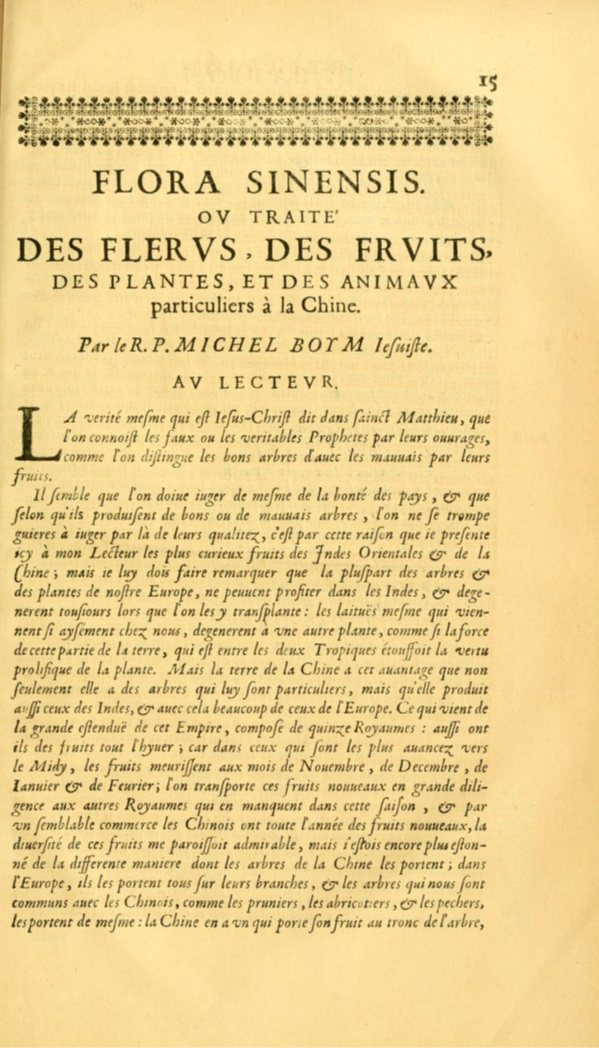
In 1664, Melchisédech Thévenot published a 15 page French translation, Flora Sinensis, ou traité des fleurs, des fruits, des plantes et des animaux particuliers à la Chine In: Relations de divers voyages curieux : qui n’ont point esté publiées, est qu’on a traduit or tiré des originaux des voyageurs françois, espagnols, allemands, portugais, anglois, hollandois, persans, arabes & autres orientaux, the 1696 edition of which is available on BHL.

View Full Size Image
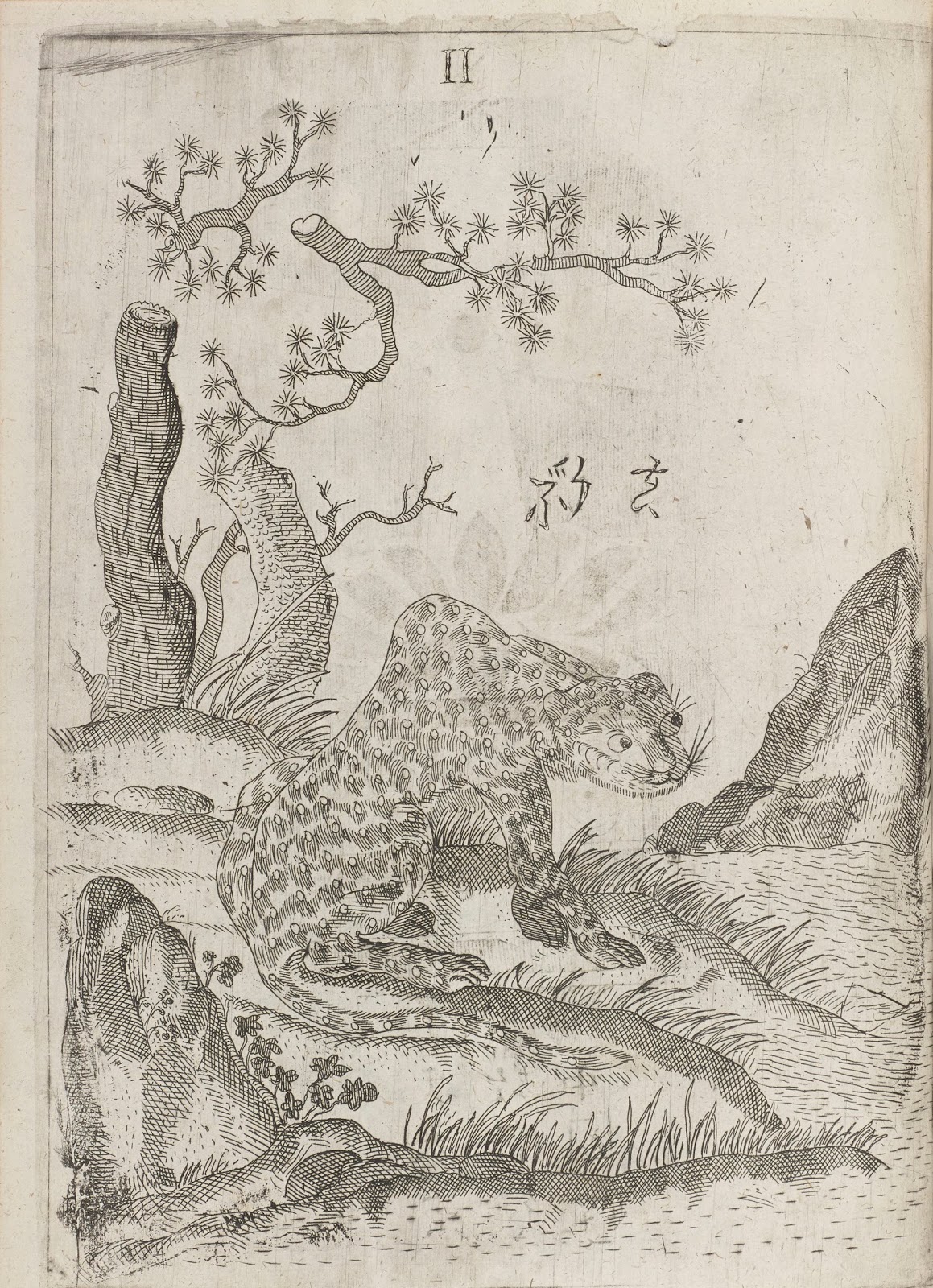
Fig. 5. Chinese leopard missing from the 1664 French edition. Boym, Michał Piotr. Flora sinensis. 1656. Digitized by Royal Botanic Gardens Kew, Library, Art & Archives. http://www.biodiversitylibrary.org/page/52239371.

Unfortunately the illustrations in this edition appear to be composites derived from the originals and some, notably the Chinese leopard (fig. 5), are not included. Flora sinensis was also the source for much of the natural history content of Athanasius Kircher’s China illustrata (1667).

View Full Size Image
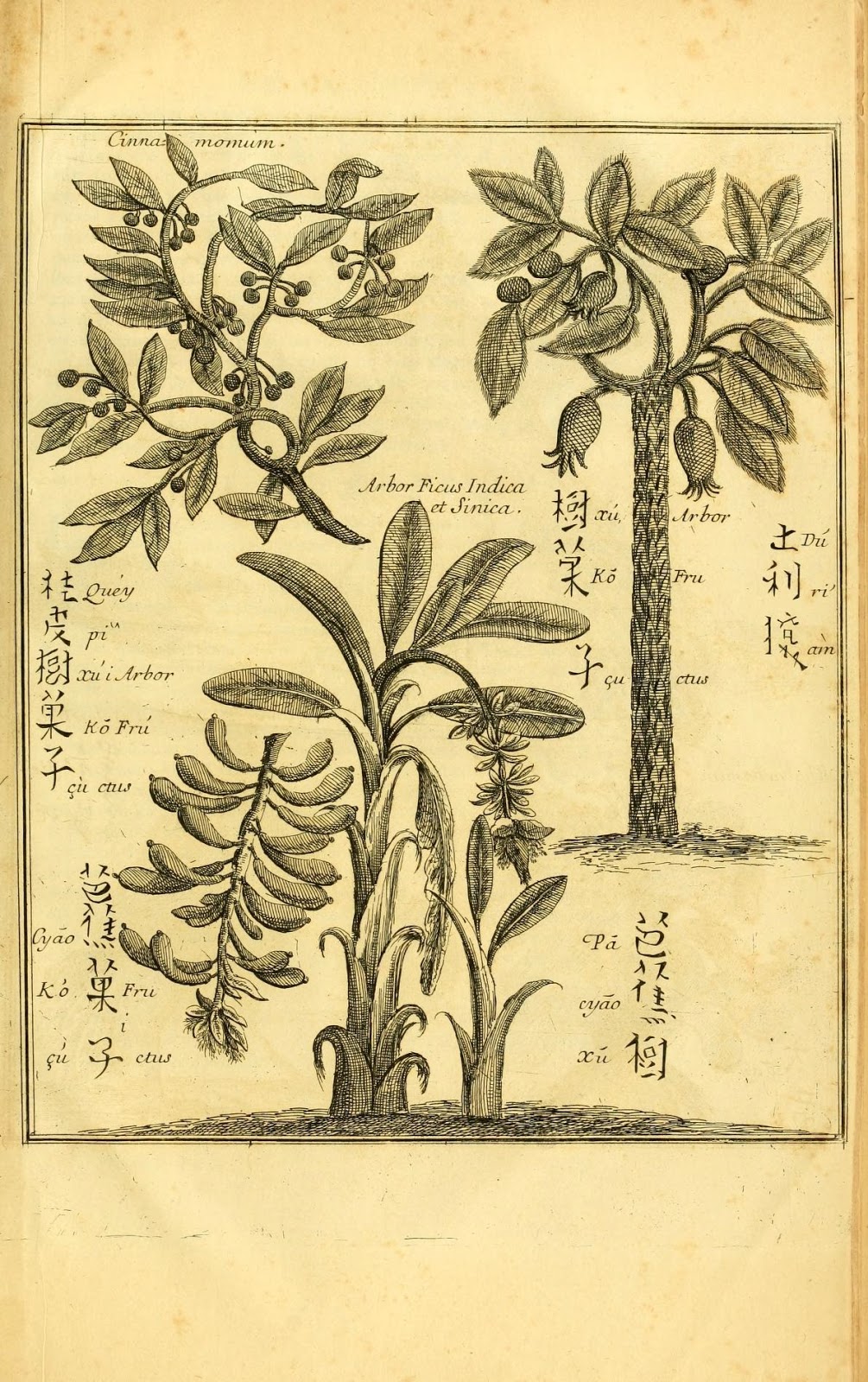
Fig. 6. Composite plate of Cinnamomum, Musa (bananas) and an un-named plant. Flora sinensis, 1696 French edition. Digitized by Boston Public Library. http://www.biodiversitylibrary.org/page/25193501.

Michał Piotr Boym was born the son of a wealthy merchant in Lwów, Poland in 1612. He joined the Jesuits in 1629 and was ordained in 1641. He sailed from Lisbon in 1643, reaching Macao, via Madeira, the Cape Verde Islands, Mozambique, the Bay of Bengal, Siam, and Goa, in 1647.

View Full Size Image
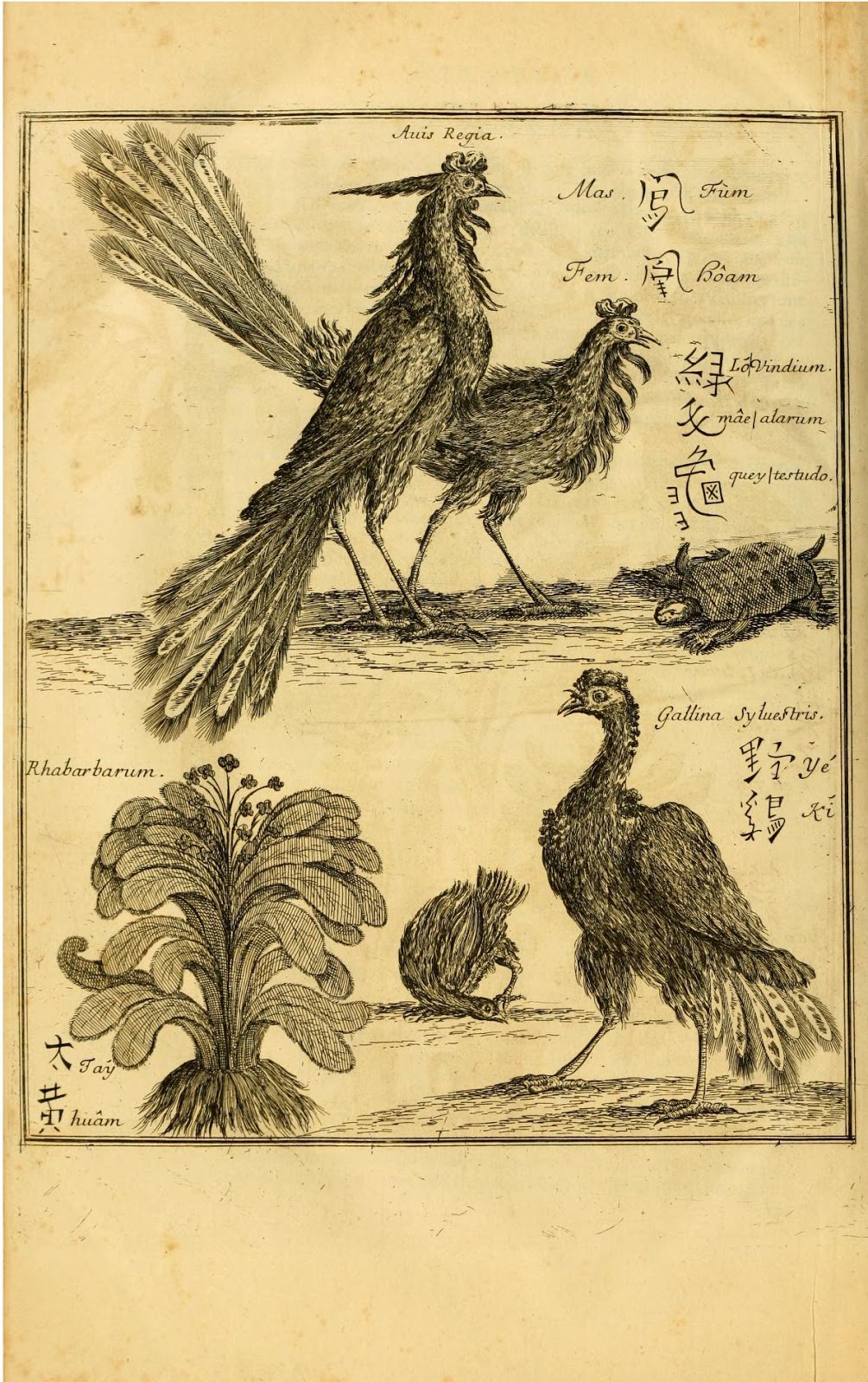
Fig. 7. Avis regia, Rhabarbarum (possibly rhubarb) and Gallina sylvestris. Flora sinensis, 1696 French edition. Digitized by Boston Public Library. http://www.biodiversitylibrary.org/page/25193697.

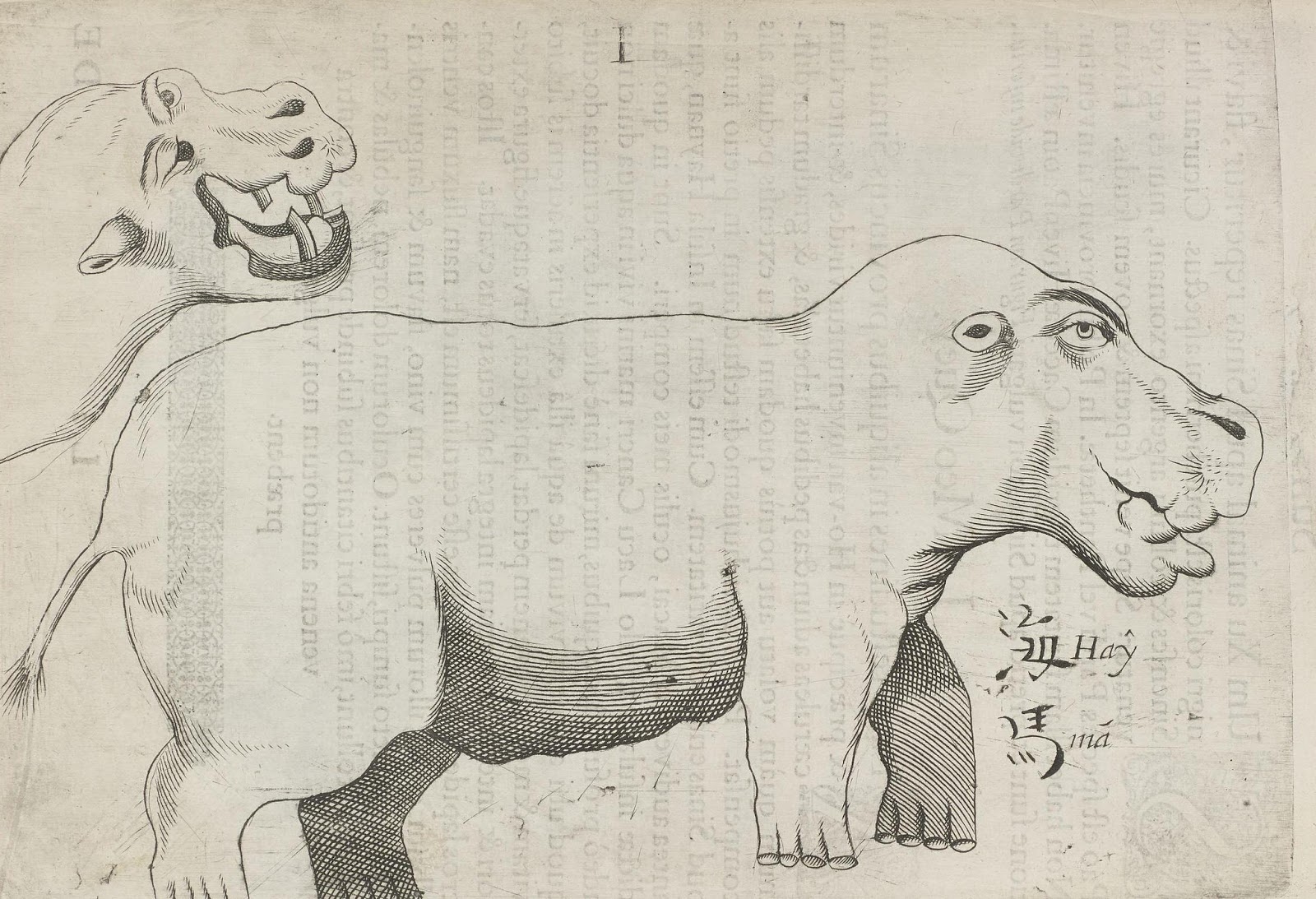
It was probably in Mozambique that he observed the hippopotamus, illustrated in Flora Sinensis (fig. 8), and wrote an account of the natural history of Mozambique, one of the oldest works on Africa in Polish (Cafraria: a P.M. Boym Polono Missa Mozambique 1644 Januario 11).

View Full Size Image
Fig. 8. Hippopotamus from the original 1656 edition. Boym, Michał Piotr. Flora sinensis. 1656. Digitized by Royal Botanic Gardens Kew, Library, Art & Archives. http://biodiversitylibrary.org/page/52239327.

Boym taught and studied Chinese in Macao and started to write on medicine, natural history and Chinese society after he moved to Hainan. It was there that he founded a mission, but had to flee to Tonkin when the Manchus invaded the island. He was then sent on a diplomatic mission to the court of the last Ming dynasty ruler, the Emperor Yongli, in Guangxi.

In 1650, Boym left Zhaoqing carrying letters from the court to Pope Innocent X, requesting support against the Manchus. He arrived in Venice in 1652, where he began work on various publications, including Flora sinensis and Fondo Borgia Cinese 531. (The latter unpublished collection of 18 maps is still in the Vatican Library, and includes the first European map to include Korea as a peninsula, not an island. It also features Chinese topography and Chinese and transliterated place names). He finally reached Rome in 1653, but it was not until 1655 that he was granted an audience with Pope Alexander VII.

In 1656, Boym set out again from Lisbon to China, but only four of the eight priests accompanying him survived as far as Goa and the news from the Chinese court was ominous. He persevered, arriving in Siam in 1658, but died on 22 June 1659 somewhere in the province of Guangxi before reaching the emperor’s court. He has no known grave.

View Full Size Image
Fig. 9. Cinnamomum (cinnamon) on left. Boym, Michał Piotr. Flora sinensis. 1656. Digitized by Royal Botanic Gardens Kew, Library, Art & Archives. http://www.biodiversitylibrary.org/page/52239309.

One of the plants described by Boym is a favourite Christmas spice. The rich spicy flavour of cinnamon (fig. 9) is a Christmas ingredient in recipes such as cakes, puddings, mince pies, Zimtsterne (Christmas stars), lebkuchen, mulled wine and glühwein. It was also used in medicine and as an ingredient of oils and perfumes.

Early trade in cinnamon to the Roman and Greek empires was controlled by Arab traders, who kept the source secret. It was thought, by both Herodotus and Theophrastus (4th and 5th century BC) to have come from Arabia, and locating the source was an ambition of 15th and 16th century European explorers.

In the 13th and 14th centuries, Venetian traders controlled the cinnamon trade in Europe until the Portuguese broke their monopoly when they arrived in Sri Lanka (then Ceylon) in the early 1500s, when cinnamon was one of the most highly prized and valuable spices in Europe. The Dutch expelled the Portuguese from the island in the mid 17th century, monopolising the trade and maintaining cinnamon’s rarity by refusing to allow commercial farming until the 1770s. The East India Company obtained control in 1796, when the Dutch were ousted, and retained it until 1833, when the cinnamon trade was opened to all.

Cinnamon is the prepared bark of Cinnamomum verum (synonym C. zeylanicum Bl., Laurus cinnamomum) in the family Lauraceae. It is indigenous to Sri Lanka and south India and widely cultivated in Sri Lanka (approximately 80% of total output), Indonesia, Java, Seychelles, Madagascar, South West Indies, Brazil, Martinique, and Jamaica.

Other items written by Boym include:

  • The first Chinese-Latin and Chinese-French dictionaries (1667).
  • Clavis medica ad Chinarum doctrinam de pulsibus. Nuremberg: Wolfgang Moritz Endter, 1686.
  • Specimen Medicinæ Sinicæ sive Opuscula Medica ad Mentem Sinensium Continens. A. Cleyer, ed. Francofvrti: Sumptibus Joannis Petri Zubrodt, 1682.

Bibliography:

  • Lehner, M. & Lehner, G. (2016) M.Boym: Flora Sinesis [online]. Bibliotheca Sinica 2.0. [Accessed 12 December 2016].
  • Davidson, A. (2006). The Oxford companion to food. 2nd ed. Oxford: Oxford University Press, p.186-187.
  • Hart, A. (2015). Michał Piotr Boym: Flora Sinensis In: J. Magee, ed., Rare treasures from the Library of the Natural History Museum. 1st ed. London: NHM, p. 38-45.
  • Jeong, S. (2016). The Silk Road Encyclopedia. Irvine, California: Seoul Selection. [Accessed 12 December 2016].
  • Rema, J. &. (2008). Cinnamon and cassia. In: V. P. Parthasarathy ed., Spice crops, Volume 2, tree spices. New Delhi: Today & Tomorrow’s, p. 29-75.
  • Van Wyk, B. E. (2013). Culinary herbs and spices of the world. Kew: Royal Botanic Gardens, Kew, p. 104.
December 22, 2016by ulib-libraryjobs
BHL News, Blog Reel

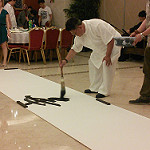
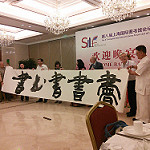
BHL paper delivered at 8th Shanghai International Library Forum in Shanghai

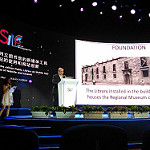
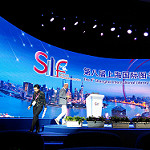
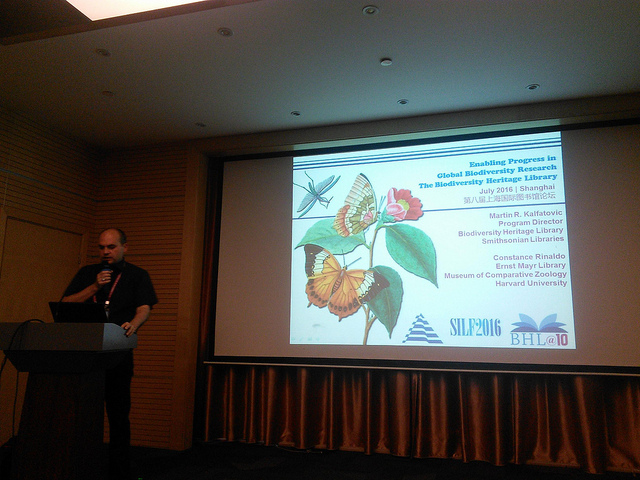
I had the honor of delivering an invited paper to the 8th Shanghai International Library Forum in Shanghai, China, 8 July 2016. The paper, Enabling Progress in Global Biodiversity Research: The Biodiversity Heritage Library, co-authored with Constance Rinaldo (Mayr Library, Harvard Museum of Comparative Zoology, Harvard University and BHL Vice-Chair) covered BHL’s growth from a project to a cornerstone of biodiversity infrastructure, where sustainability, appropriate expansion, and collaboration with national and pan-national digital libraries (Europeana, the Digital Public Library of America) became more important. With significant contributions relevant throughout the world, the BHL is integral to key databases and data aggregators (e.g. Tropicos, Global Biodiversity Information Facility, the Encyclopedia of Life), and has engaged the research community in tool development and content reuse. The paper was published in Libraries: Enabling Progress, The Proceedings of the Eighth Shanghai International Library Forum. Shanghai Scientific and Technological Literature Press, Shanghai, 2016, pp. 406-418.

View Full Size Image View Full Size Image View Full Size Image

About the Forum:

It is organized by the Shanghai Library (Institute of Scientific and Technical Information of Shanghai) and co-organized by the Shanghai Society for Library Science and the Shanghai Society for Scientific & Technical Information. At this year’s event, approximately 300 delegates from 27 countries attended.

View Full Size Image View Full Size Image View Full Size Image

The theme of the forum is “Libraries: Enabling Progress”. The conference focused on hot issues and topics, the latest research achievements, innovative ideas, advanced technology and the latest developments related to the theme. It included in-depth and extensive academic discussions. Well-known experts and scholars were invited to present keynote speeches and thematic reports. To ensure the academic quality of this forum and attract more submissions, scholars of library and information science, managers of libraries and information agencies, and professionals from all fields at home and abroad were invited to submit papers and attend the conference.

View Full Size Image View Full Size Image View Full Size Image

After opening congratulatory speeches by national and local politicians, the program began with a series of plenary sessions:

  • Libraries: A Call to Action. Donna SCHEEDER, IFLA President
  • Change and Innovation: Reflection on the Future Development of Librarianship in China. HAN Yongjin, Director, National Library of China
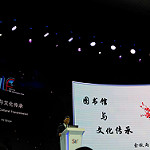
  • The Library and Cultural Transmission by YU Qiuyu, Chairman, Shanghai Library Council, China
Yu’s talk was a highlight. A famous Chinese cultural scholar, theorist, cultural historian and writer, he discussed the key role of the library concept in the transmission and preservation of culture.


View Full Size Image
Qiuyu Yu

A second plenary session was chaired by Ai Cheng TAY, Deputy Chief Executive, National Library Board, Singapore and include the following talks:

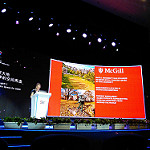
  • Fiat Lux (Let there be Light!): a Vision for Re-imagining McGill Library Space for 2050. C. Colleen COOK, Trenholme Dean of Libraries, School of Information Science at McGill University in Montreal, Canada
  • New Digital Tools of the Jalisco Public Library as Mobile App, Renewal of Website and Intranet. Juan Manuel DURÁN JUÁREZ, Director, Public Library of Jalisco State, Mexico


View Full Size Image View Full Size Image View Full Size Image

The BHL presentation followed on the second full day of the Forum and was well received by the audience.

View Full Size Image

Marc GILBERT, Lyon Municipal Library, France, introducing the session (above)

July 26, 2016by joelrichard

Help Support BHL

BHL's existence depends on the financial support of its patrons. Help us keep this free resource alive!

search

About BHL

The Biodiversity Heritage Library (BHL) is the world’s largest open access digital library for biodiversity literature and archives. BHL operates as a worldwide consortium of natural history, botanical, research, and national libraries working together to digitize the natural history literature held in their collections and make it freely available for open access as part of a global “biodiversity community.”

Join Our Mailing List

Sign up to receive the latest news, content highlights, and promotions.

Subscribe Now

Subscribe to Blog via Email

Enter your email address to subscribe to this blog and receive notifications of new posts by email.

Join 319 other subscribers

Subscribe to Blog Via RSS

Subscribe to the blog RSS feed to stay up-to-date on all the latest BHL posts.

Access RSS Feed

Inspiring Discovery through Free Access to Biodiversity Knowledge.

The Biodiversity Heritage Library makes it easier than ever for you to access the information you need to study and explore life on Earth…for free, anytime, anywhere.


64+ Million Pages of
Biodiversity Literature Online.

EXPLORE

Tools and Services
to Transform Research.

EXPLORE

300,000+
Illustrations on Flickr.

EXPLORE

ABOUT | HARMFUL CONTENT | PRIVACY | SITE MAP | TERMS OF USE