Biodiversity Heritage Library - Program news and collection highlights from BHL
  • Home
  • News
  • Featured Books
    • All Featured Books
    • Book of the Month Series
    • BHL at 20
  • User Stories
  • Campaigns
    • Fossil Stories
    • Garden Stories
    • Monsters Are Real
    • Page Frights
    • Her Natural History
    • Earth Optimism 2020
  • Tech Blog
  • Visit BHL
Home
News
Featured Books
    All Featured Books
    Book of the Month Series
    BHL at 20
User Stories
Campaigns
    Fossil Stories
    Garden Stories
    Monsters Are Real
    Page Frights
    Her Natural History
    Earth Optimism 2020
Tech Blog
Visit BHL
  • Home
  • News
  • Featured Books
    • All Featured Books
    • Book of the Month Series
    • BHL at 20
  • User Stories
  • Campaigns
    • Fossil Stories
    • Garden Stories
    • Monsters Are Real
    • Page Frights
    • Her Natural History
    • Earth Optimism 2020
  • Tech Blog
  • Visit BHL
Biodiversity Heritage Library - Program news and collection highlights from BHL
Blog Reel, Featured Books

12 Species of Christmas

You’re probably familiar with the famous holiday song The 12 Days of Christmas, first published in England in 1780 as a rhyme. The song most people know today is based on a 1909 arrangement of a traditional folk melody by Frederic Austin.

We decided to do our own take on the song, presenting instead “12 Species of Christmas” as portrayed within BHL books. This list of species is by no means comprehensive, but it presents some of the more well-known plants and animals associated with the holiday, as well as a few surprises!

Merry Christmas from BHL!

1. Christmas Trees!

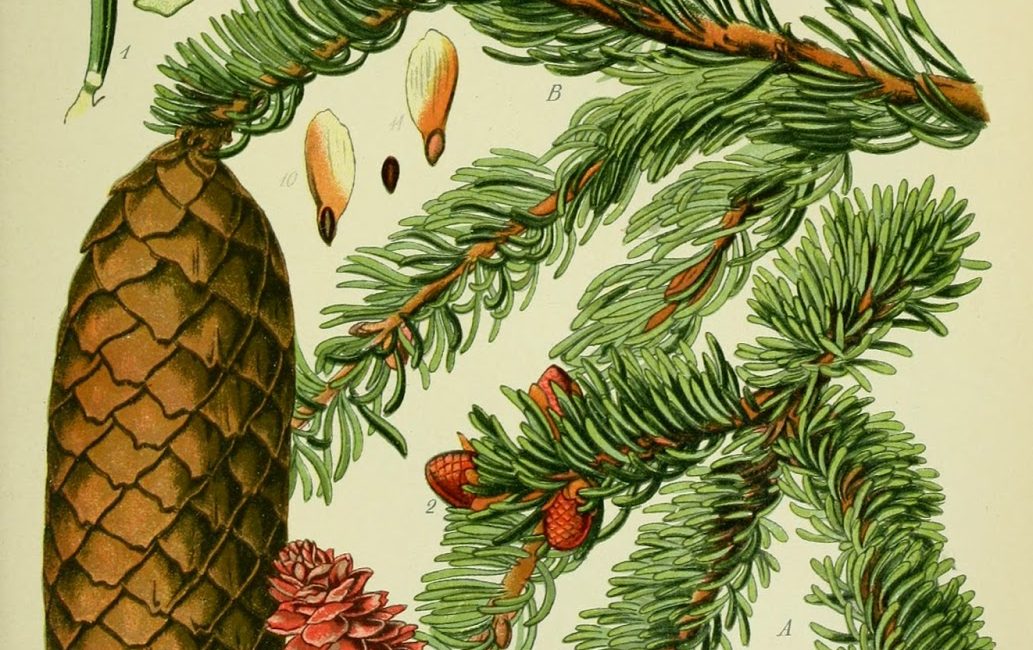
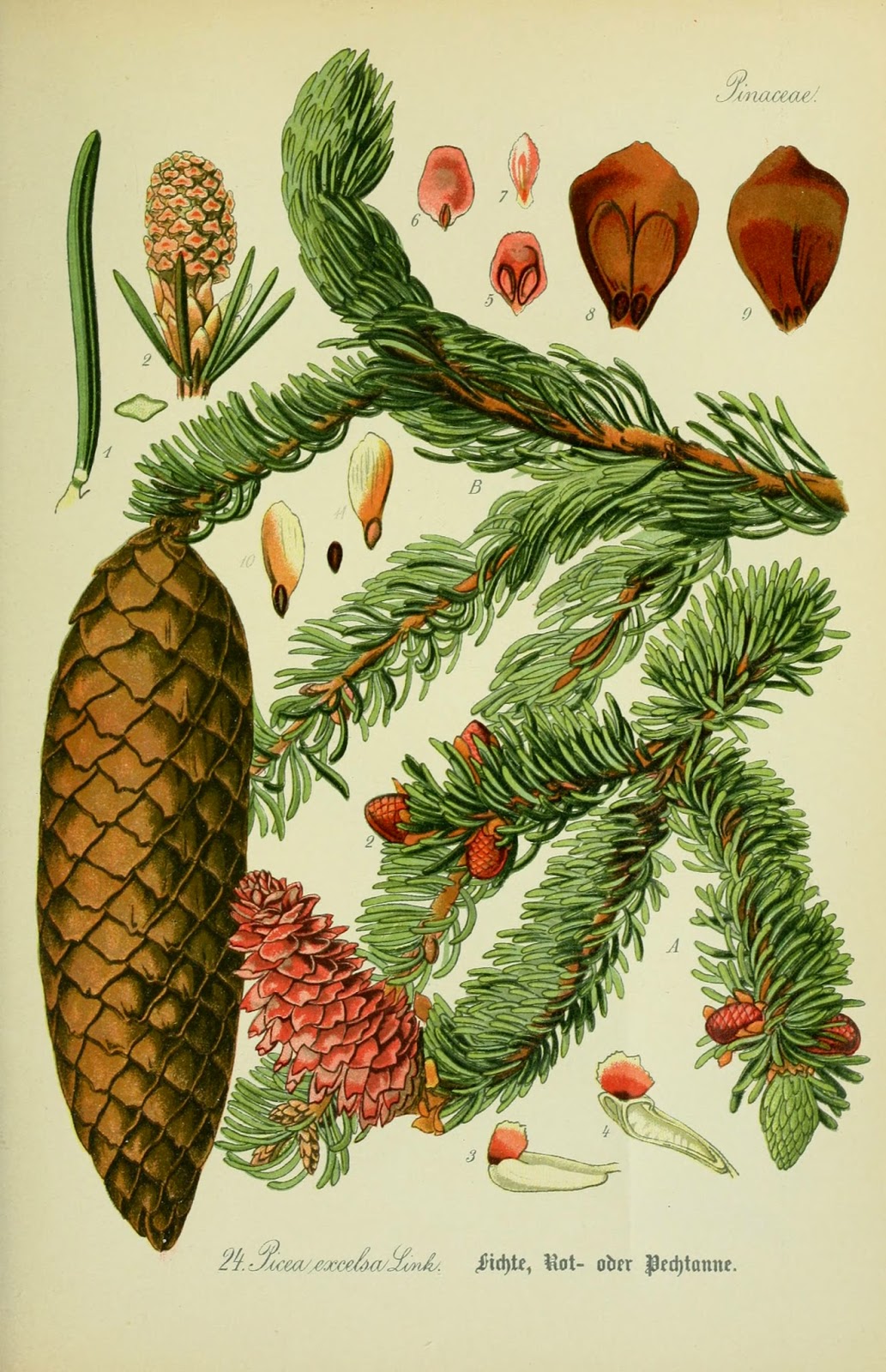
We tend to think of Christmas trees as a single species, but there are in fact many different species used as Christmas trees around the world, including Fir Trees, Pine Trees, Spruce Trees, Cypress Trees, and Cedar Trees. Explore the species and enjoy this image of one of the varieties, the Norway Spruce, in BHL.
View Full Size Image
Norway Spruce (Picea abies). Thomé, Otto W. Flora von Deutschland, Österreich und der Schweiz. Bd. 1 (1903). http://biodiversitylibrary.org/page/12306482.


2. Reindeer

Santa can’t bring the presents to the children without his reindeer! Quick, take this quiz and see if you can name all 8 of Santa’s reindeer in under a minute.

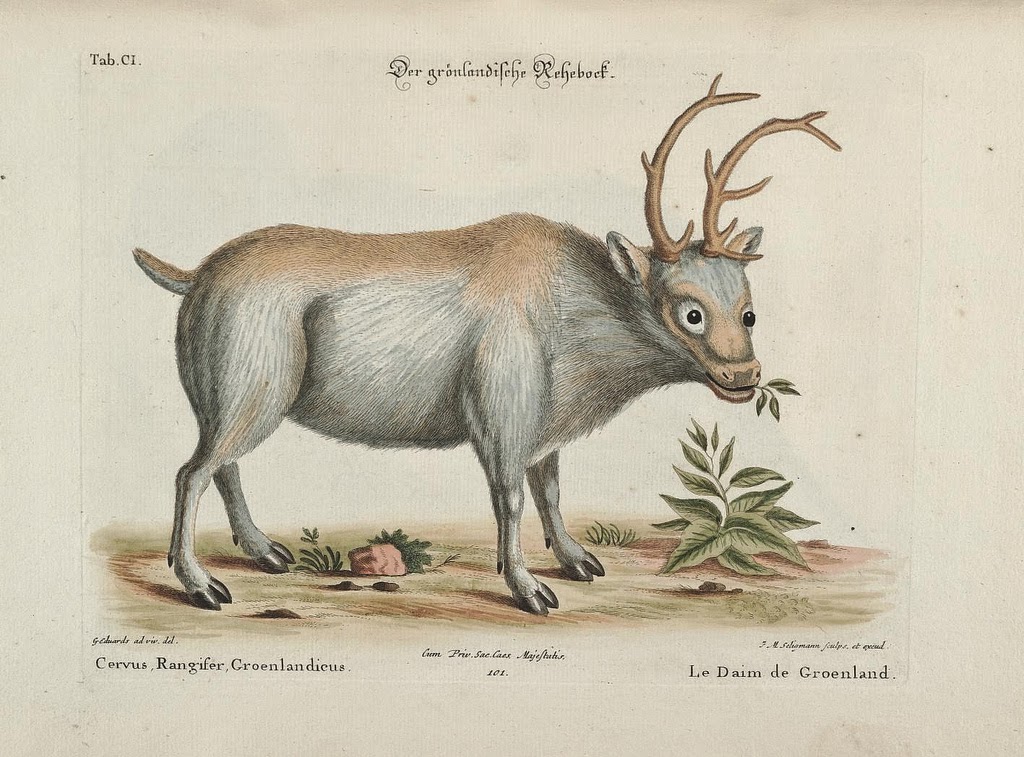
Interestingly, Santa likely has female reindeer! Females retain their antlers through winter, while males lose theirs in the autumn.
View Full Size Image
Reindeer (Rangifer tarandus). Edwards, George. Verzameling van uitlandsche en zeldzaame vogelen. v. 1 (1772). http://biodiversitylibrary.org/page/11267501.

3. Angelfish

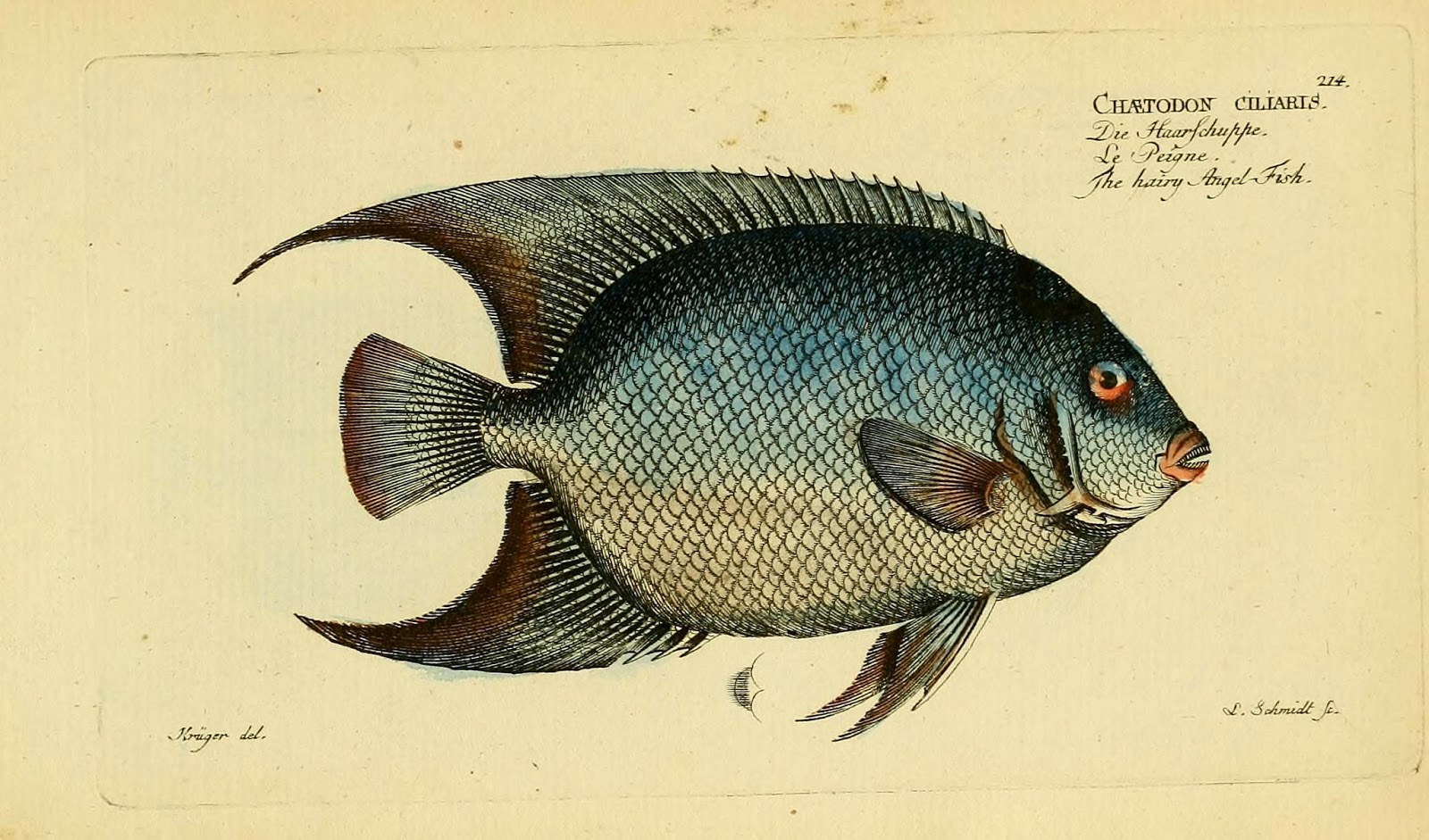
We have our own kind of “angel” for Christmas: The Angelfish! Angelfish can refer to many difference species, including freshwater angelfish of the genus Pterophyllum and Marine angelfish of the family Pomacanthidae.

Pictured here is the Queen Angelfish (Holacanthus ciliaris), found near reefs in the warm waters of the western Atlantic Ocean. The illustration comes from Bloch’s Ichthyologie; ou, Histoire naturelle des poissons, an illustrated, scholarly compendium of all known fishes at the time of its original German (1785-95) and later French (1796) publication.
View Full Size Image
Queen Angelfish (Holacanthus ciliaris). Bloch, Marcus Elieser. Ichthyologie; ou, Histoire naturelle des poissons. v. 1 (1796). http://biodiversitylibrary.org/page/4786998.


4. Mistletoe

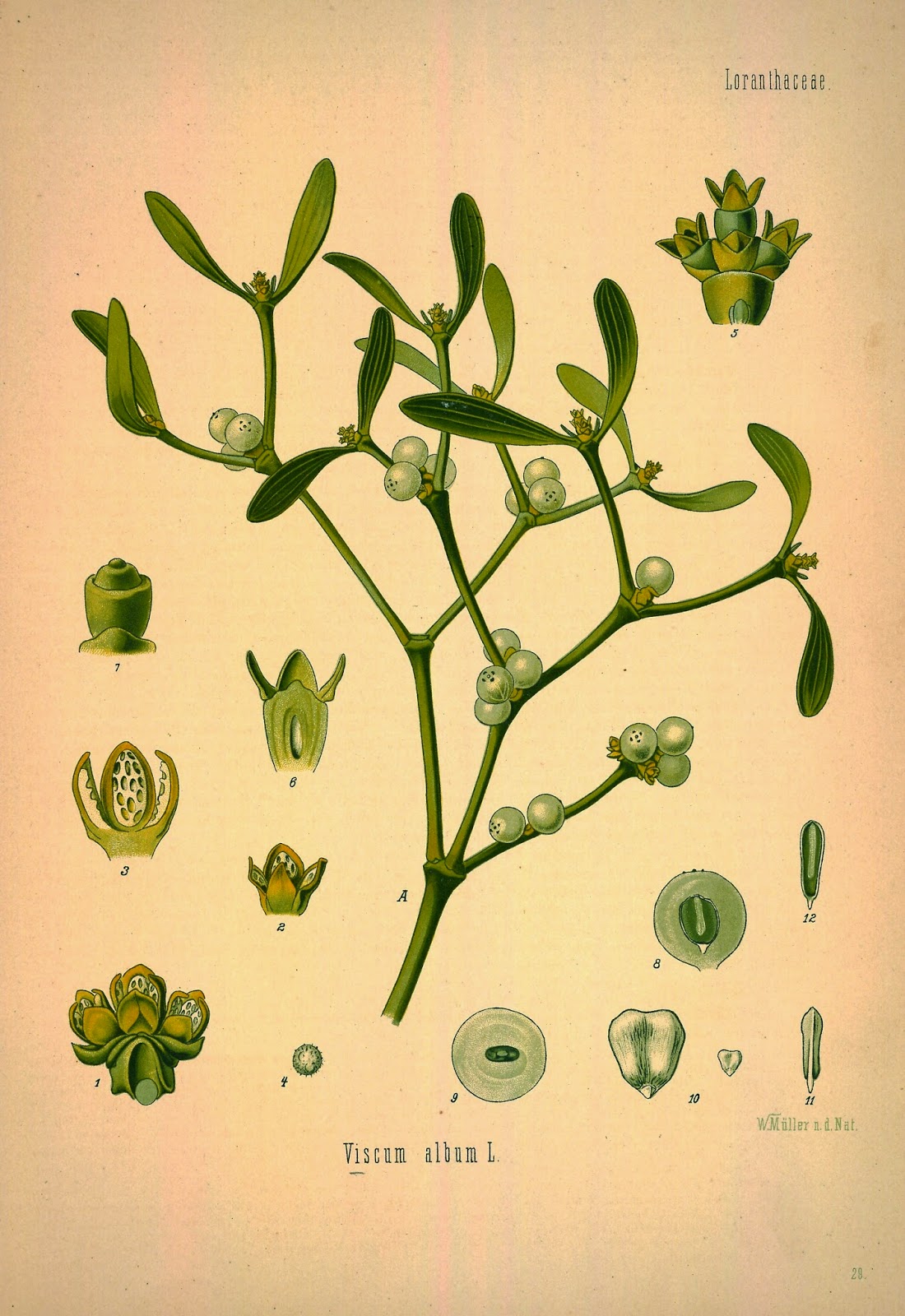
Mistletoe in the Christmas tradition most commonly refers to the species Viscum album. Based possibly on Scandinavian origins, tradition holds that if a couple meets under the mistletoe at Christmas, they must kiss. Ironically, mistletoe is a hemiparasitic shrub…what does that say about its association with kissing and romance at Christmas?
View Full Size Image
Mistletoe (Viscum album). Köhler, F.E.  Medizinal-Pflanzen. v. 1 (1883-1914). http://biodiversitylibrary.org/page/303620.


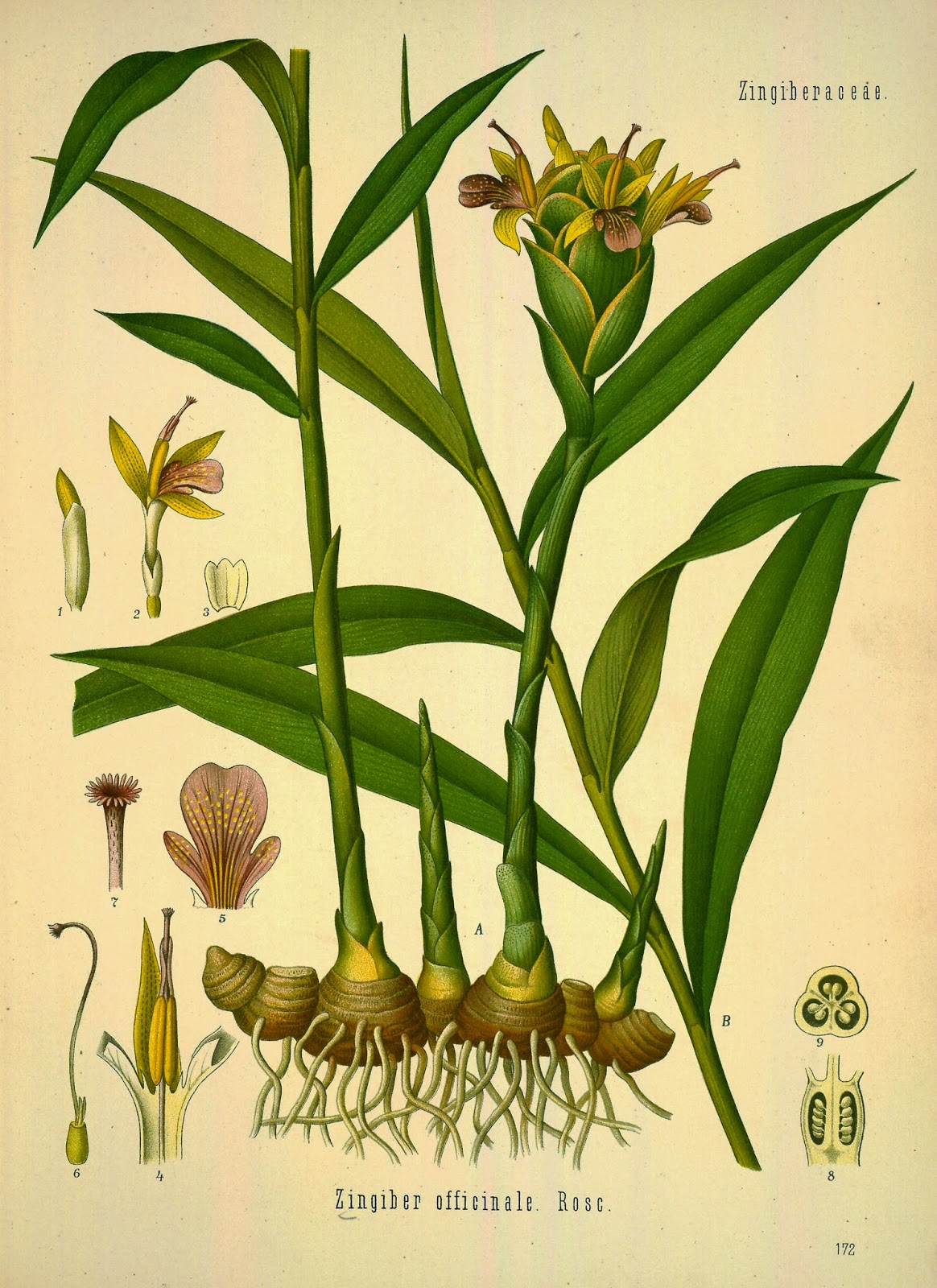
5. Ginger

Love making gingerbread houses at Christmas? Well, powdered, dry ginger root is used as the flavoring for gingerbread, hence the name. The associated taxonomy? Ginger or ginger root is the rhizome of the plant Zingiber officinale.
View Full Size Image
Ginger (Zingiber officinale). Köhler, F.E.  Medizinal-Pflanzen. v. 2 (1883-1914). http://biodiversitylibrary.org/page/303284.


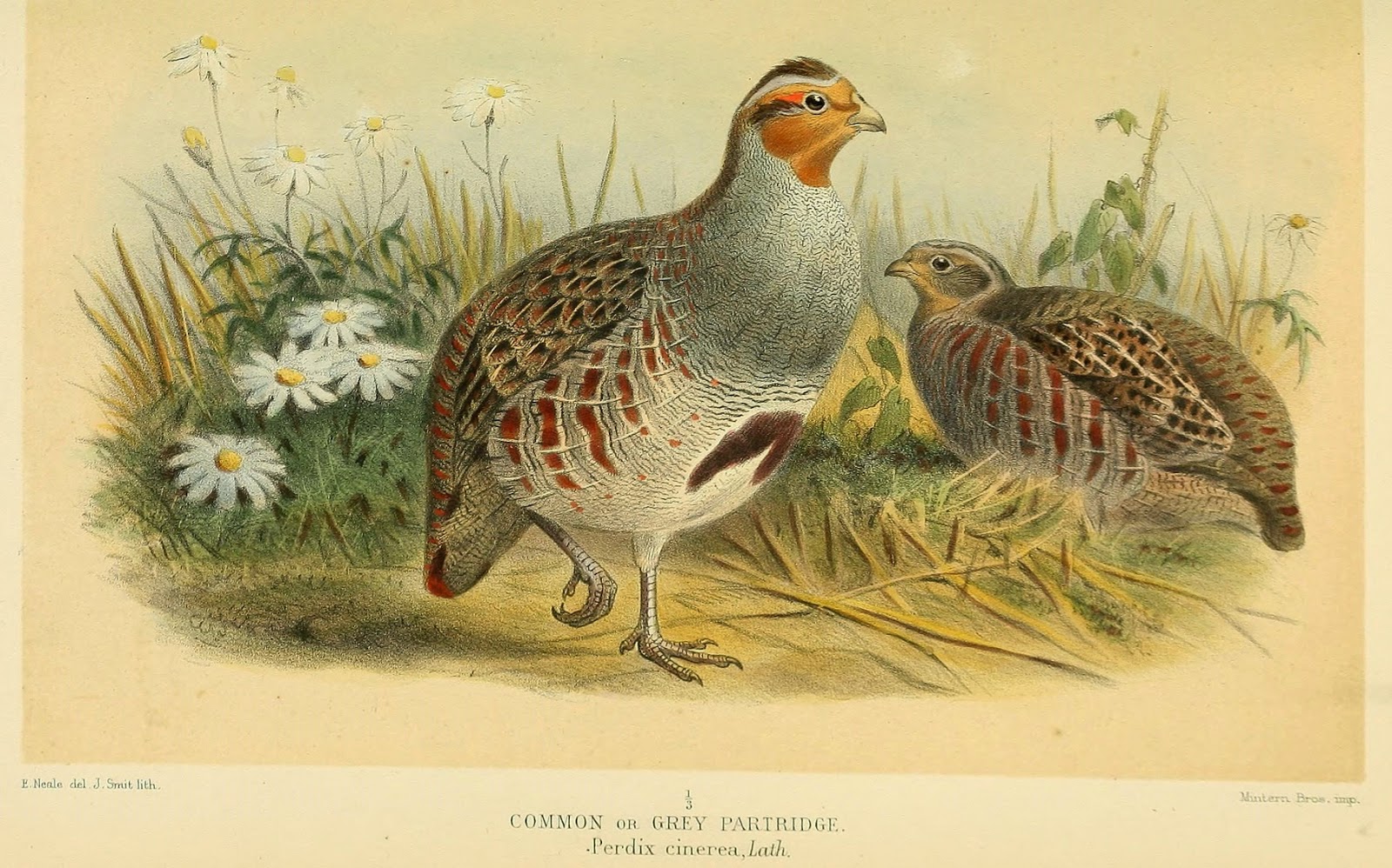
6. Partridge

Since our blog is based on The 12 Days of Christmas, we can’t neglect the species actually mentioned in the song. While we won’t present all of them here, we had to at least include the species from the first day of Christmas: A Partridge in a Pear Tree. Partridges are members of the pheasant family, and, interestingly, a ground nesters. So much for “in a pear tree”…
View Full Size Image
Grey Partridge (Perdix perdix). Lilford, Thomas Littleton Powys. Coloured figures of the birds of the British Islands. v. 4 (1885-97). http://biodiversitylibrary.org/page/34517606.


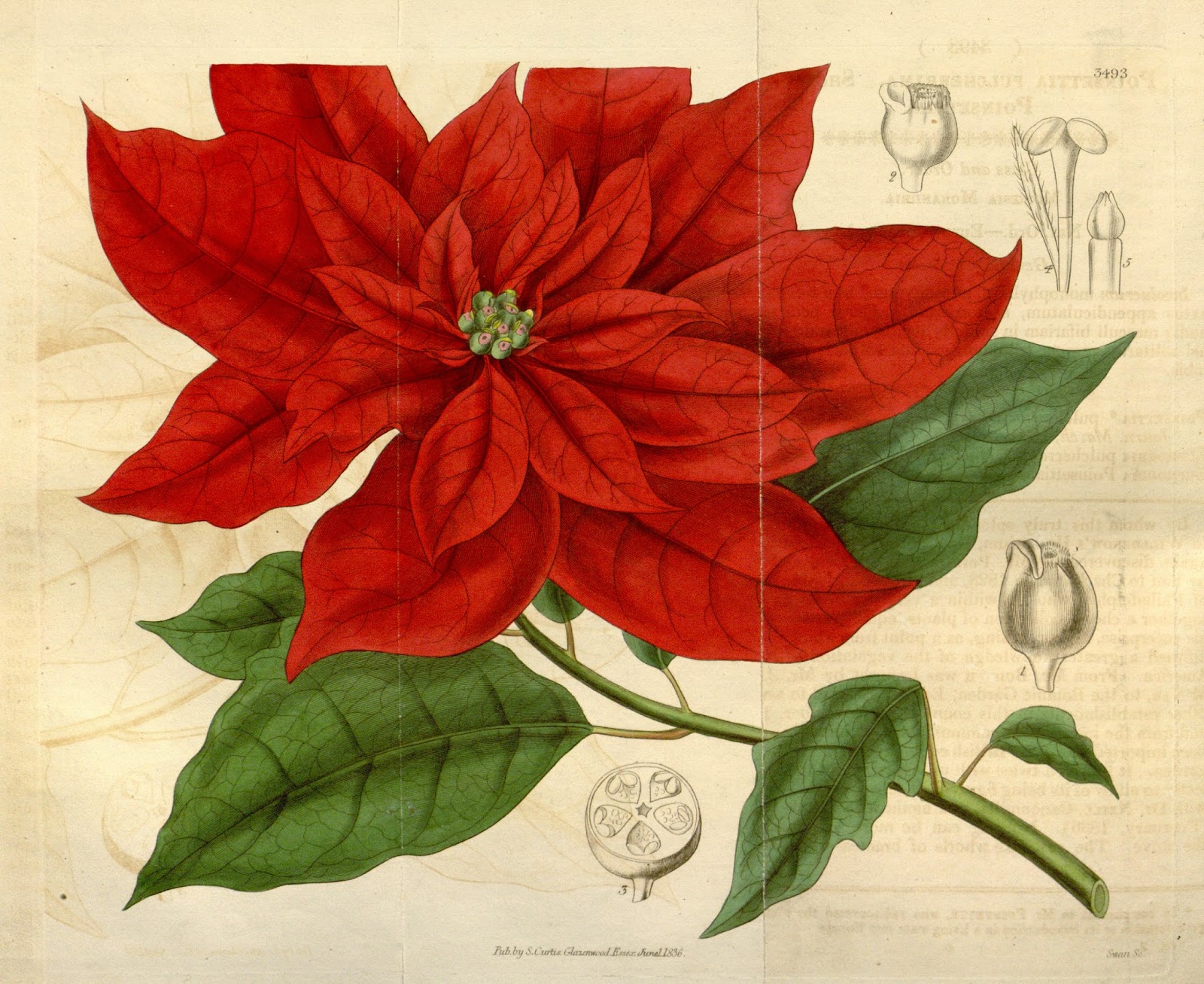
7. Poinsettias

Indigenous to Mexico and Central America, poinsettias (Euphorbia pulcherrima) are commonly used for Christmas floral displays. The common name is derived from Joel Roberts Poinsett, the first United States Minister to Mexico (where the plant had been used as part of Christmas decorations by Franciscan friars since the seventeenth century), who introduced the plant into the United States in 1825.

Did you know you can make a pH indicator from poinsettia leaves? Find out how!
View Full Size Image
Poinsettia (Euphorbia pulcherrima). Curtis, William. Curtis’s botanical magazine. v. 63 (1836). http://biodiversitylibrary.org/page/466234.


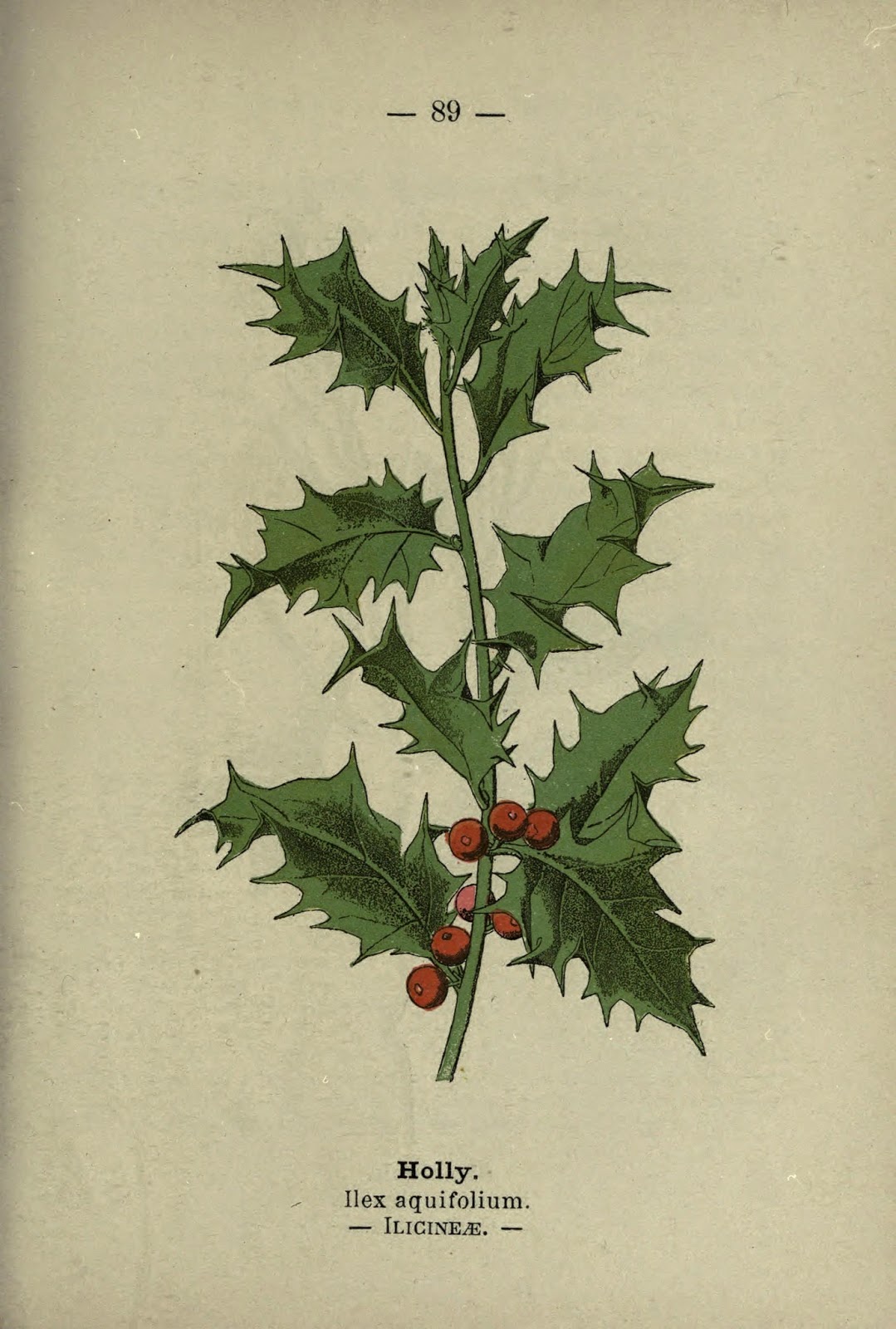
8. Holly

The Holly species (Ilex aquifolium) is commonly used at Christmas time for decorations, often being incorporated into wreaths and adorning Christmas cards. But beware the bright red berries! Ingestion of more than 20 berries may be fatal to children.
View Full Size Image
European Holly (Ilex aquifolium). Step, Edward. Wayside and woodland blossoms : a pocket guide to British wild-flowers for the country rambler. (1895). http://biodiversitylibrary.org/page/21000230.


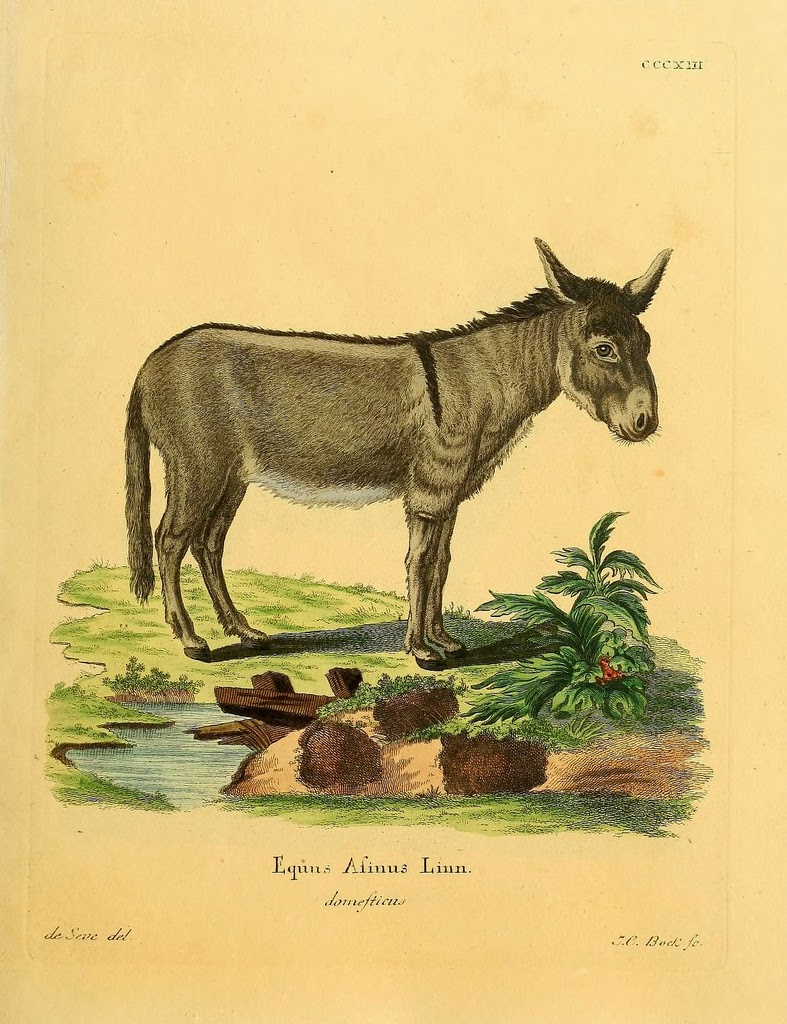
9. Donkey

The song Dominic the Donkey was recorded by Lou Monte in 1960. It tells the story of a donkey who helps Santa bring presents to children in Italy, since the reindeer cannot climb Italy’s steep hills.
View Full Size Image
Donkey (Equus africanus asinus). Schreber, Johann Christian Daniel. Die Säugthiere in Abbildungen nach der Natur. (1774-1846). http://biodiversitylibrary.org/page/31078278.


10. Turtle Doves

On the second day of Christmas, in the aforementioned song, a gift of “2 Turtle Doves” is given. Members of the Columbidae family, Turtle Doves form strong pair bonds, and as such have become symbols of devoted love.

View Full Size Image
Turtle Doves (Streptopelia turtur). Lilford, Thomas Littleton Powys. Coloured figures of the birds of the British Islands. v. 4 (1885-97). http://biodiversitylibrary.org/page/34517561.


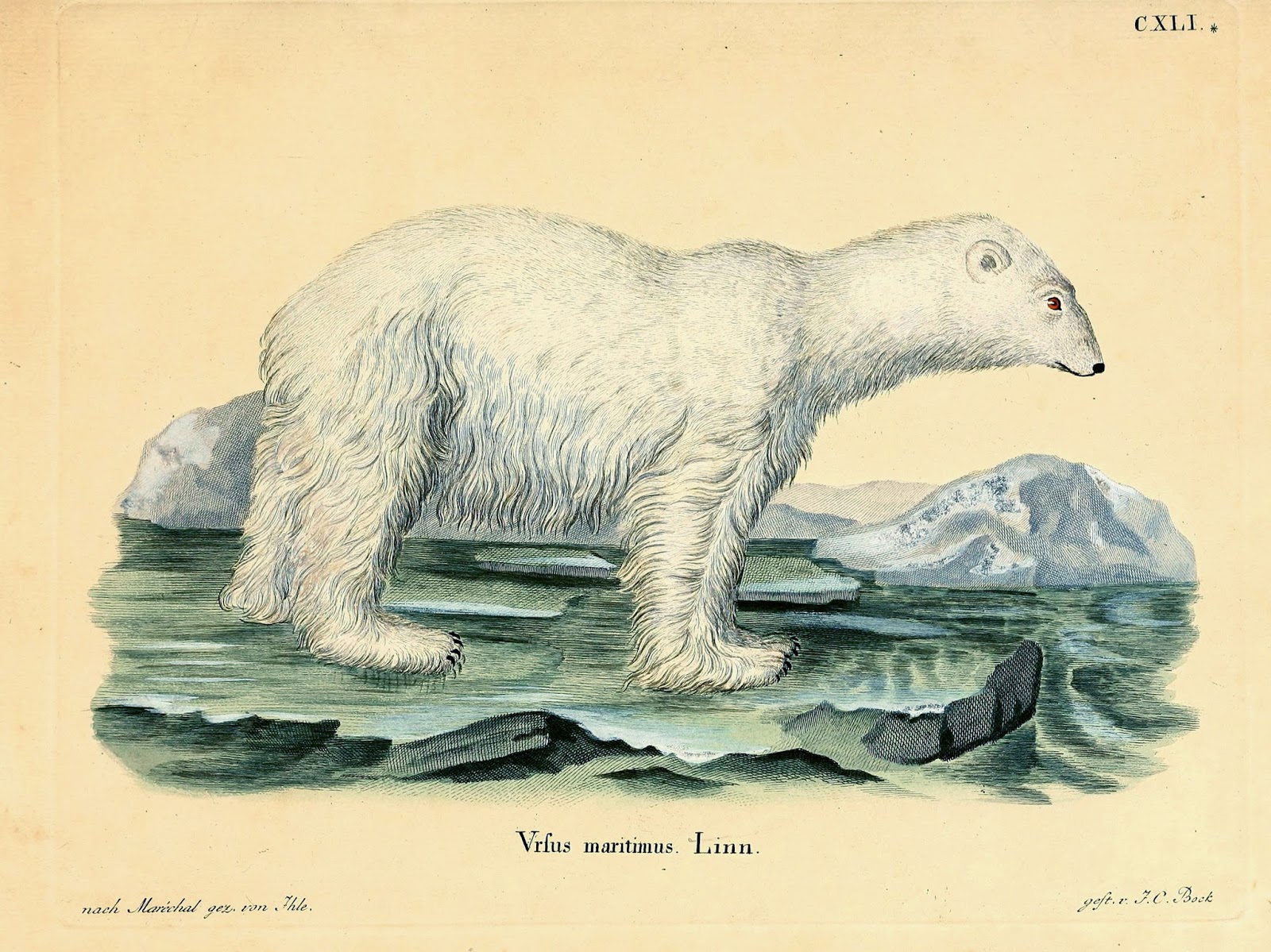
11. Polar Bears

Perhaps simply because they’re an arctic species, and Santa Clause resides at the North Pole, contemporary Christmas advertisements, toys, and decorations often include festive polar bears. Penguins are another oft-associated Christmas species, commonly seen alongside polar bears in holiday advertisements. However, penguins are found in the Antarctic, nowhere near the North Pole.
View Full Size Image
First published illustration of a Polar Bear (Ursus maritimus). Schreber, Johann Christian Daniel. Die Säugthiere in Abbildungen nach der Natur. (1774-1846). http://biodiversitylibrary.org/page/31064766.


12. Fireflies

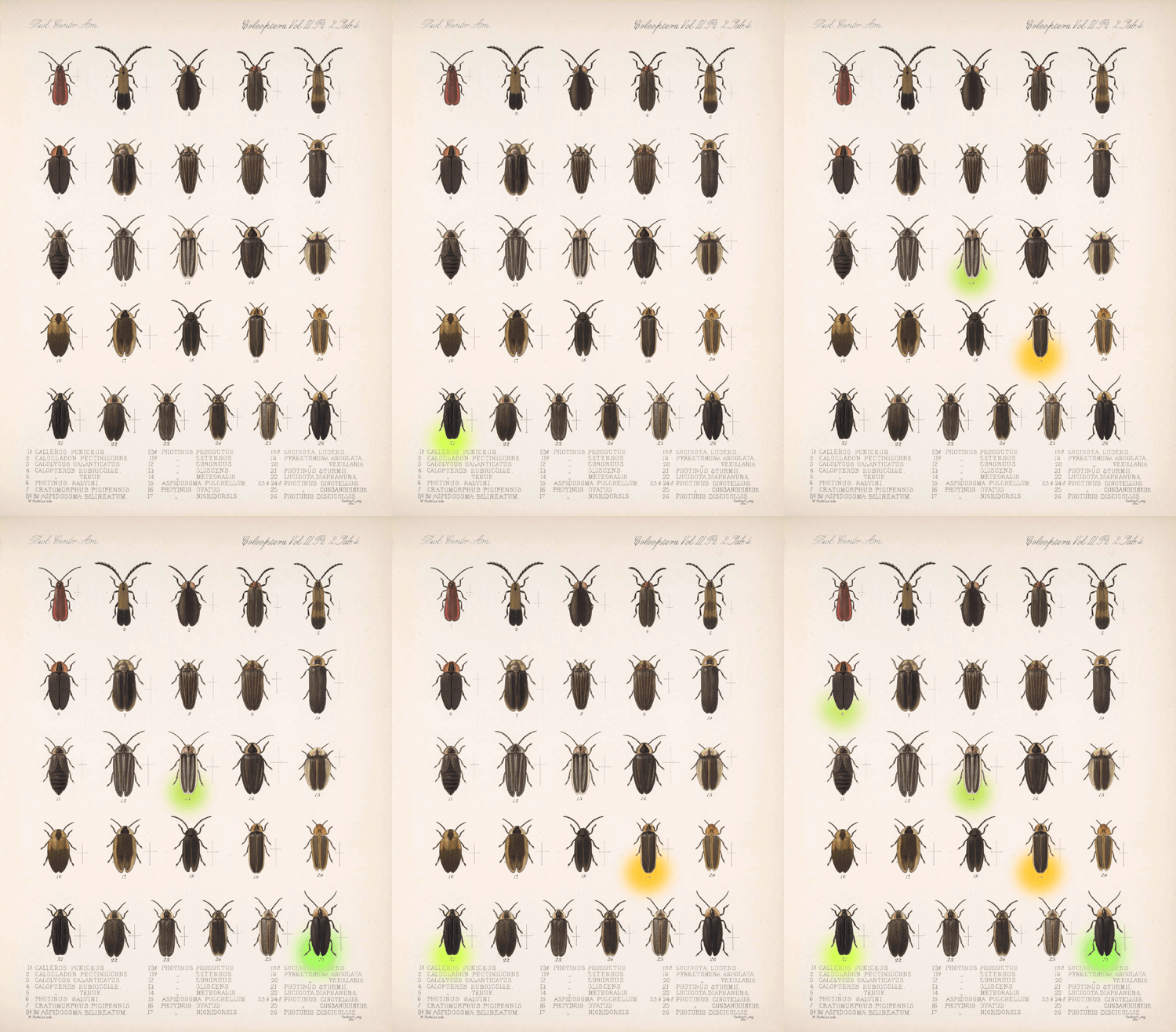
Nature has its own Christmas tree lights: Fireflies!

Beetles in the family Lampyridae are commonly called fireflies for their bioluminescence. The larvae also emit light and, in Eurasia, are known as glow worms. Thanks to some GIF magic from Smithsonian Libraries, these fireflies from Biologia Centrali-Americana in BHL comes to life!
View Full Size Image
Fireflies. Biologia Centrali-Americana. Insecta, v. 3, pt. 2 (1880-86). http://biodiversitylibrary.org/page/580274.


Have yourself a Happy Holiday, from the staff of the Biodiversity Heritage Library!
December 25, 2014by ulib-libraryjobs
BHL News, Blog Reel

Spreading Holiday Cheer

How does BHL celebrate the holidays?

As a project, we work to raise awareness about the plight facing the Earth’s biodiversity today and provide ways to help preserve scientific knowledge, support research, and conserve species. As a consortium, our BHL member institutions spread some fantastic holiday cheer by featuring some exciting seasonal exhibits.

We decided to celebrate the holidays this year by taking you through a virtual tour of the seasonal exhibitions at some of our member institutions and, as an added bonus, showcase this year’s BHL “superstars” for each member. What’s a BHL “superstar,” you ask? Well, today, it’s each member’s most popular book in BHL this year. Some of them just might surprise you!


American Museum of Natural History

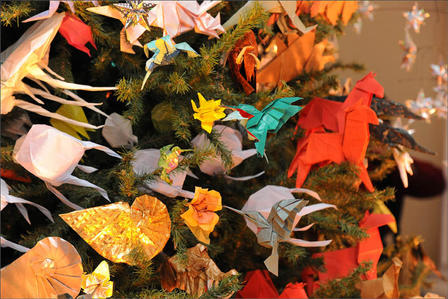
Did you know that a group of jellyfish is called a smack? Or that a group of kangaroos is called a mob? A group of wise owls? It’s called a parliament.

View Full Size Image
“Smack” of jellyfish (far left). Origami Art on the AMNH Holiday Tree. © AMNH/R. Mickens


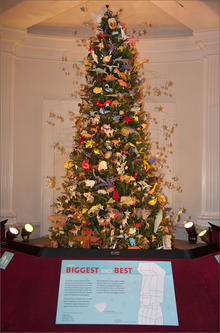
View Full Size Image
© AMNH

The American Museum of Natural History has decorated its annual 13-foot tall holiday tree with origami “groups” of animals, inspired by the museum’s collections. These “groups” highlight the fact that even solitary animals spend at least some time with others of their species. The 500 delightful origami ornaments took volunteers from OrigamiUSA approximately 5 months to construct, and include groups of zebras, giraffes, and even bacteria!

The origami tree has been a hallmark of the museum’s holiday celebrations for more than 30 years and will be on display through January 6. Don’t miss your chance to experience biodiversity through paper art! How about using the over 50,000 images in the BHL Flickr to inspire your own origami art?!


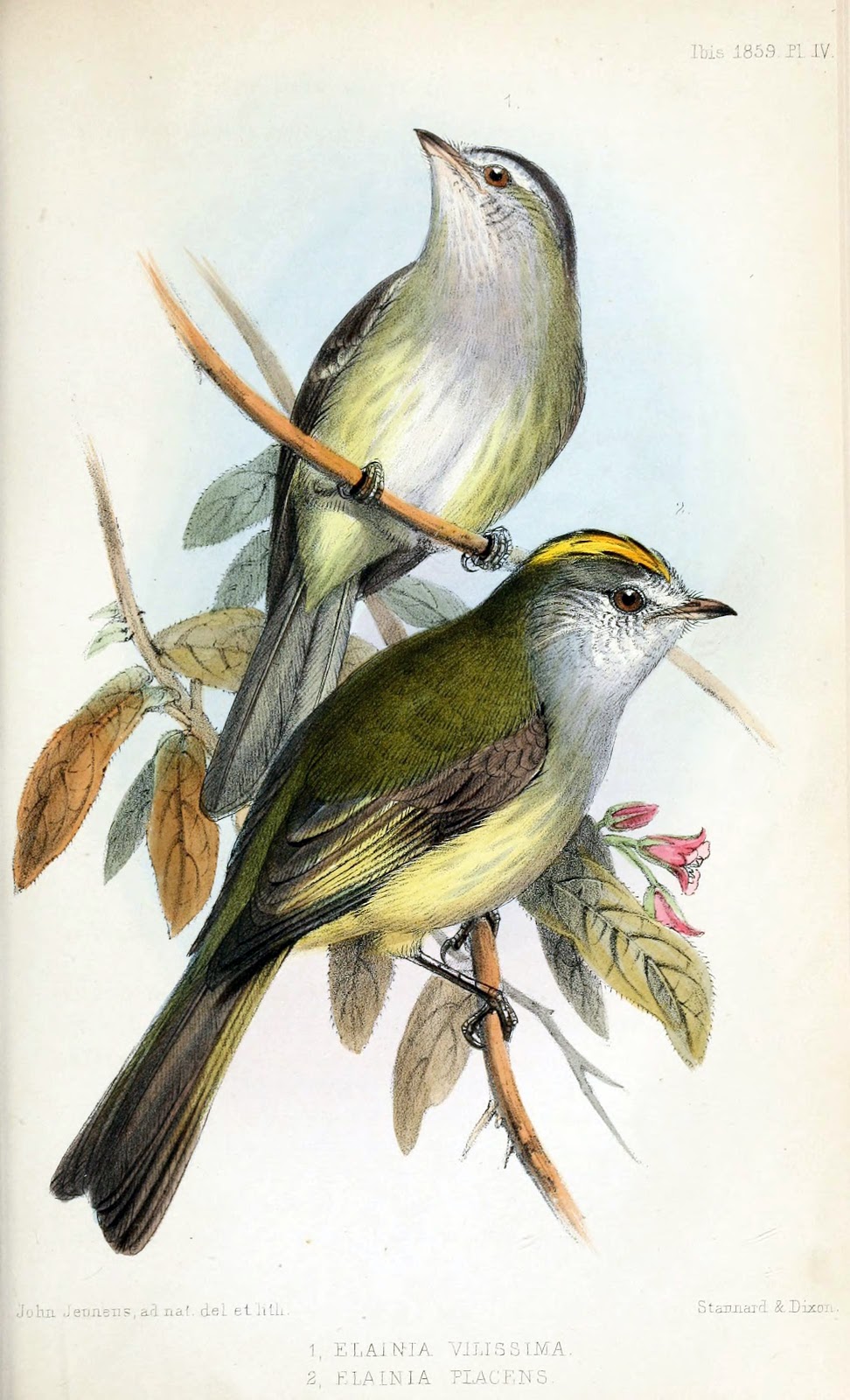
The winner of the AMNH 2012 Most Popular Book? Ibis (1859), v. 1. 

View Full Size Image
Two Tyrannulets, from the Zimmerius genus. Plate 4 from v. 1, Ibis (1859)

The American Museum of Natural History has an extremely strong ornithology collection. Therefore, it’s no surprise that the most popular book contributed by this library would be one of the cornerstones of ornithological literature. Frederick Godman and Osbert Salvin, the authors of Biologia Centrali Americana – arguably the most authoritative work on Mexican and Central American biodiversity – were two of twenty ornithology enthusiasts to establish this journal, which is still published today, in 1859. Explore the illustrations of the Ibis in our past blog post.


California Academy of Sciences

View Full Size Image
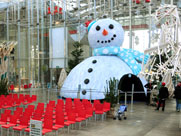
Snowman Dome at CAS. © CAS

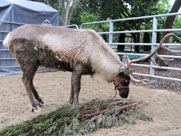
Think you won’t find much snow this Holiday Season in California? Think again! The ‘Tis the Season for Science event at the California Academy of Sciences features live reindeer, research specimens illustrating how various species cope with cold temperatures, a snowman-shaped digital dome featuring programming about the science of the seasons, and, yes, snow in the piazza every 30 minutes!

View Full Size Image
Live reindeer at CAS! © CAS

Some interesting tidbits from CAS: Did you know that the reindeer is the only deer species in which both males and females exhibit antlers? Did you know that species deal with harsh winters, generally, by adopting 1 of 2 strategies: heading south or hibernating? Perplexed by the bi-hourly snow falling at CAS? It’s temperature-resistant and biodegradable!

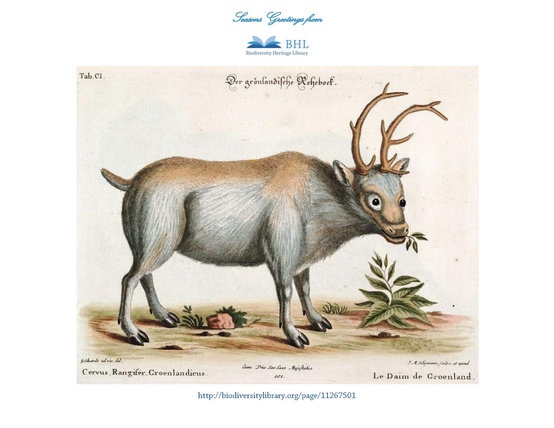
The CAS Holiday Exhibit ‘Tis the Season for Science will be open through January 6. Don’t miss your chance to experience polar bears, geese, reindeer, and snow in California! In honor of the CAS caribou attraction, enjoy this Reindeer Holiday Greeting Card from BHL!

View Full Size Image
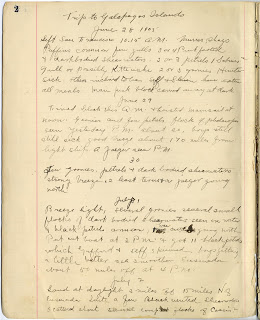
Excerpt from the Rollo Beck Galapagos expedition journal.

The most popular book from the California Academy of Sciences this year? The Rollo Beck Galapagos Expedition Journal!

The Rollo Beck Journal was the first field notebook to be ingested into BHL. As part of the IMLS Connecting Content project, CAS is digitizing field notebooks (essentially the scientific journals kept by researchers while on expeditions and/or performing field work) in its collection. This journal gives a broad overview of the 1905-06 expedition to the Galapagos, led by Rollo H. Beck. An interesting highlight from this journal? It includes a passage relating the first news Beck received of the 1906 fire that destroyed nearly all of CAS’s collections. Learn more about the journal and the Connecting Content grant in this past blog post.


Missouri Botanical Garden


View Full Size Image
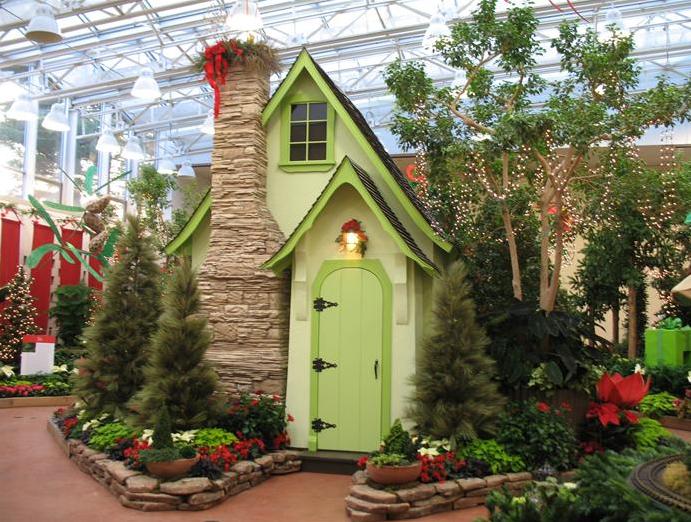
Fairy Tale Cottage at MOBOT’s Gardenland Express. © MOBOT

It’s a holiday wonderland in St. Louis this year with the Gardenland Express! Staff and volunteers have transformed the Garden’s Orthwein Floral Display Hall into a whimsical fantasy complete with a fairy tale cottage, 900 feet of miniature train tracks, and a stunning array of traditional holiday plants. The exhibit, celebrating “Merry Botanical Traditions,” took years to plan and even features silk poinsettia, holly, and Christmas Cactus constructed by artisans from the Garden’s previous Lantern Festival.

Find out what it takes to transform a barren room into a holiday treat in the video below. If you’re in St. Louis anytime before January 1, don’t miss your chance to experience the wonder for yourself! Maybe you can use our botanical illustrations to identify some of the plants featured in the exhibit!

This year, the MOBOT “Superstar” award goes to…..Systema Naturae (1758), v. 1, 10th Ed., by Carl Linnaeus.

View Full Size Image
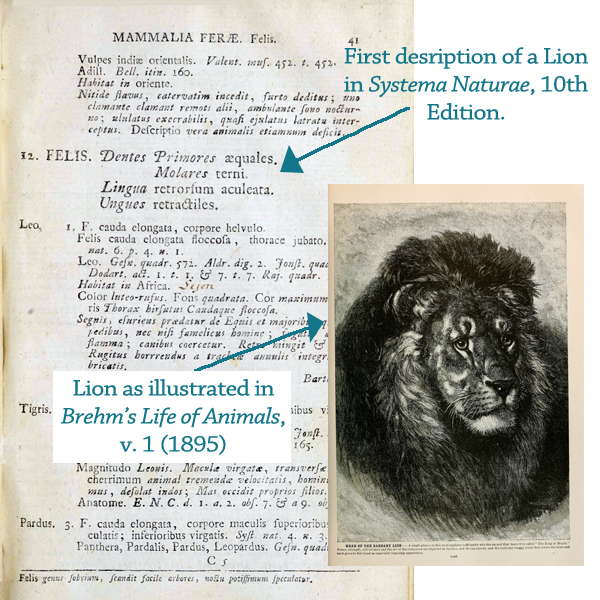
The first description of a lion in the 10th Ed. of Systema Naturae, with an illustration of a lion in Brehm’s Life of Animals.

It’s probably not very surprising that the publication that marked the beginning of zoological nomenclature is the 2012 most popular book contributed by the Missouri Botanical Garden. But did you know that, though Linnaeus’ first edition of Species Plantarum and this tenth edition of Systema Naturae are heralded as the starting points of binomial nomenclature for botany and zoology, respectively, the concept for the system was partially developed by Gaspard and Johann Bauhin in the late 1500s? Learn more about Linnaeus, Species Plantarum and Systema Naturae in our previous blog post.

New York Botanical Garden

It’s all about the trains this year for BHL’s botanical partners! Celebrating the season with the Holiday Train Show, the New York Botanical Garden has laid a quarter of a mile of miniature train tracks throughout a lush botanical backdrop populated by reconstructions of 140 of New York’s famous landmarks. The best part? These reconstructions, the products of Applied Imagination, are crafted using natural materials like bark, twigs, fruit, seeds, and stems!

What delightful icons will visitors to the seasonally-converted Enid A. Haupt Conservatory at NYBG encounter? To name just a few: Yankee Stadium, New York Public Library, the Brooklyn Bridge, and, new this year, the Macy’s location made famous by “A Miracle on 34th Street.” The Artists’ Studio, part of the exhibit, gives visitors a behind-the-scenes view of how these marvelous buildings are constructed, as well as a chance to experience some international icons, including the Sphinx and Parthenon.

Have kids? Then NYBG’s Gingerbread Adventures, which gives children a chance to play inside a life-size gingerbread house and decorate gingersnaps, is right up your alley!

The Holiday Train Show runs through January 13. Don’t miss your chance to experience New York with botanical eyes!

The most popular book this year contributed by NYBG? Again in the spirit of BHL botanical institutions, it’s v.1, pt.1 of the 11th edition of Systema Naturae (1760). The next twelfth edition, the last published under Linnaeus’ authorship, was comprised of 2,400 pages, expanded from the original eleven pages of the first edition (published in 1735).

Smithsonian’s National Zoo


View Full Size Image
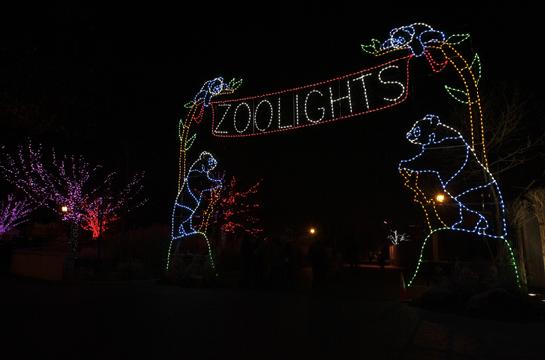
ZooLights Entrance. See more ZooLights Images. © SI.

Every year, the Smithsonian’s National Zoo lights up the dark winter nights with thousands of Christmas lights strung together to form animal silhouettes. This year is no exception, with more than 500,000 environmentally-friendly LED lights depicting dozens of dazzling species. Free to the public, the ZooLights event runs until January 1 on select days. Don’t miss this opportunity to see a mamma and baby panda, brown kiwi, elephants, a python, a lion, and even a cow like you’ve never seen them before!

And not to spoil the train theme, the National Zoo is also featuring a farm-themed miniature train at the Visitor Center.

View Full Size Image
Farm-Themed Train at National Zoo Visitor Center. © SI.

The most popular book contributed to BHL by the Smithsonian Libraries also happens to be the most popular item in BHL. What is it? Taxonomic Literature (1976), v. 1.

View Full Size Image
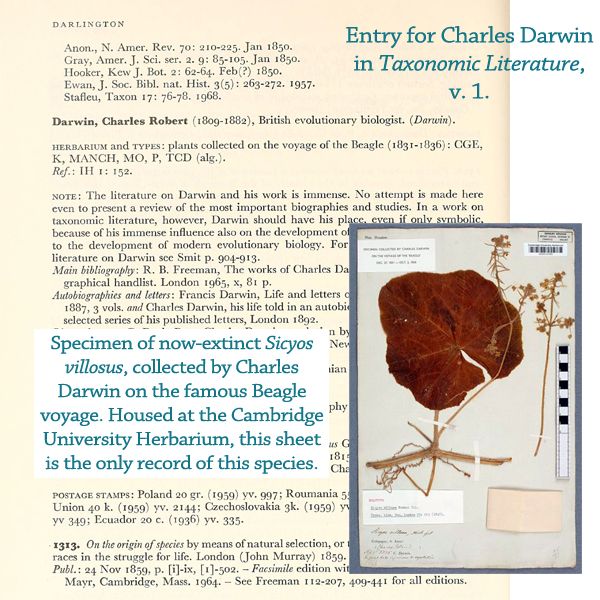
Charles Darwin in TL2. Specimen from Cambridge University Herbarium collected by Darwin on Beagle Voyage.

More commonly known as TL2, Taxonomic Literature: a selective guide to botanical publications and collections with dates, commentaries and types “provides the most comprehensive biographical and bibliographical analysis for systematic botany literature published between 1753 and 1940.” In all, TL2 is comprised of 15 volumes, organized by author name. The volumes represent an extensive list of botanists who have published botanical literature between 1753 and 1940. Each entry provides a short biography of the author, the location of any specimens they may have collected, a list of publications that author has published, and, based on analysis of more than 100 library collections, information about which libraries may hold a copy of each publication.

The Smithsonian Libraries’ online TL2 project indexes corrected OCR for the TL2 volumes scanned for BHL to provide additional search and analysis functionality, including author, author name abbreviation, and title abbreviation search support.

______________________________

We hope you get a chance to visit one of the exceptional Holiday Exhibits at our BHL member institutions.  From all of us here at BHL, we wish you very Happy Holidays!

View Full Size Image
Happy Holidays from BHL! Find this and other Holiday Greeting Cards on Pinterest.


December 14, 2012by ulib-libraryjobs

Help Support BHL

BHL's existence depends on the financial support of its patrons. Help us keep this free resource alive!

search

About BHL

The Biodiversity Heritage Library (BHL) is the world’s largest open access digital library for biodiversity literature and archives. BHL operates as a worldwide consortium of natural history, botanical, research, and national libraries working together to digitize the natural history literature held in their collections and make it freely available for open access as part of a global “biodiversity community.”

Join Our Mailing List

Sign up to receive the latest news, content highlights, and promotions.

Subscribe Now

Subscribe to Blog via Email

Enter your email address to subscribe to this blog and receive notifications of new posts by email.

Join 319 other subscribers

Subscribe to Blog Via RSS

Subscribe to the blog RSS feed to stay up-to-date on all the latest BHL posts.

Access RSS Feed

Inspiring Discovery through Free Access to Biodiversity Knowledge.

The Biodiversity Heritage Library makes it easier than ever for you to access the information you need to study and explore life on Earth…for free, anytime, anywhere.


64+ Million Pages of
Biodiversity Literature Online.

EXPLORE

Tools and Services
to Transform Research.

EXPLORE

300,000+
Illustrations on Flickr.

EXPLORE

ABOUT | HARMFUL CONTENT | PRIVACY | SITE MAP | TERMS OF USE