Biodiversity Heritage Library - Program news and collection highlights from BHL
  • Home
  • News
  • Featured Books
    • All Featured Books
    • Book of the Month Series
    • BHL at 20
  • User Stories
  • Campaigns
    • Fossil Stories
    • Garden Stories
    • Monsters Are Real
    • Page Frights
    • Her Natural History
    • Earth Optimism 2020
  • Tech Blog
  • Visit BHL
Home
News
Featured Books
    All Featured Books
    Book of the Month Series
    BHL at 20
User Stories
Campaigns
    Fossil Stories
    Garden Stories
    Monsters Are Real
    Page Frights
    Her Natural History
    Earth Optimism 2020
Tech Blog
Visit BHL
  • Home
  • News
  • Featured Books
    • All Featured Books
    • Book of the Month Series
    • BHL at 20
  • User Stories
  • Campaigns
    • Fossil Stories
    • Garden Stories
    • Monsters Are Real
    • Page Frights
    • Her Natural History
    • Earth Optimism 2020
  • Tech Blog
  • Visit BHL
Biodiversity Heritage Library - Program news and collection highlights from BHL
Blog Reel, Featured Books

Documenting the Flora of the Nation’s First Urban Park System

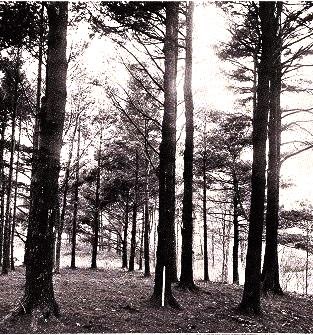
Did you know that the city of Boston is blessed with one of the largest and the oldest urban forest reservations in America?

View Full Size Image
Photo: Charles Eliot, 1897

At the turn of the 20th century, Boston saw a rapid increase in human settlement and industrialization which quickly transformed the once pristine Commonwealth into a highly developed, unsightly, and unhealthy metropolis. The movement to preserve what was left of Greater Boston’s natural wonders was inspired by the writings by transcendental thinkers like Ralph Waldo Emerson and Henry David Thoreau, who were advocates of the idea to “keep the New World new.” Local activists for the cause included Wilson Flagg, Elizur Wright, Sylvester Baxter, and Charles Eliot. They envisioned a place where the citizens of Boston could escape the “noisy ugliness” of the overcrowded city and revitalize their spirits in the requiem of nature’s untamed beauty.

A Dream Comes to Pass 

Boston’s budding conservation movement had the foresight to identify large tracts of Massachusetts wilderness for preservation in perpetuity. A four decade campaign ensued and resulted in the passage of the Acts of 1893, Chapter 407 which established the Metropolitan Park Commission. This legal entity was charged with restoring, preserving, and increasing the beauty of the undeveloped woodlands surrounding Boston and this landmark legislation would serve as a model for other American cities. The Metropolitan Park Commission’s first order of business was to hire the noted landscape architecture firm, Olmsted, Olmsted and Eliot, to survey the vegetation in the recently acquired woodland reservations, the Middlesex Fells, Beaver Brook, Stony Brook, and the Blue Hills.
View Full Size Image
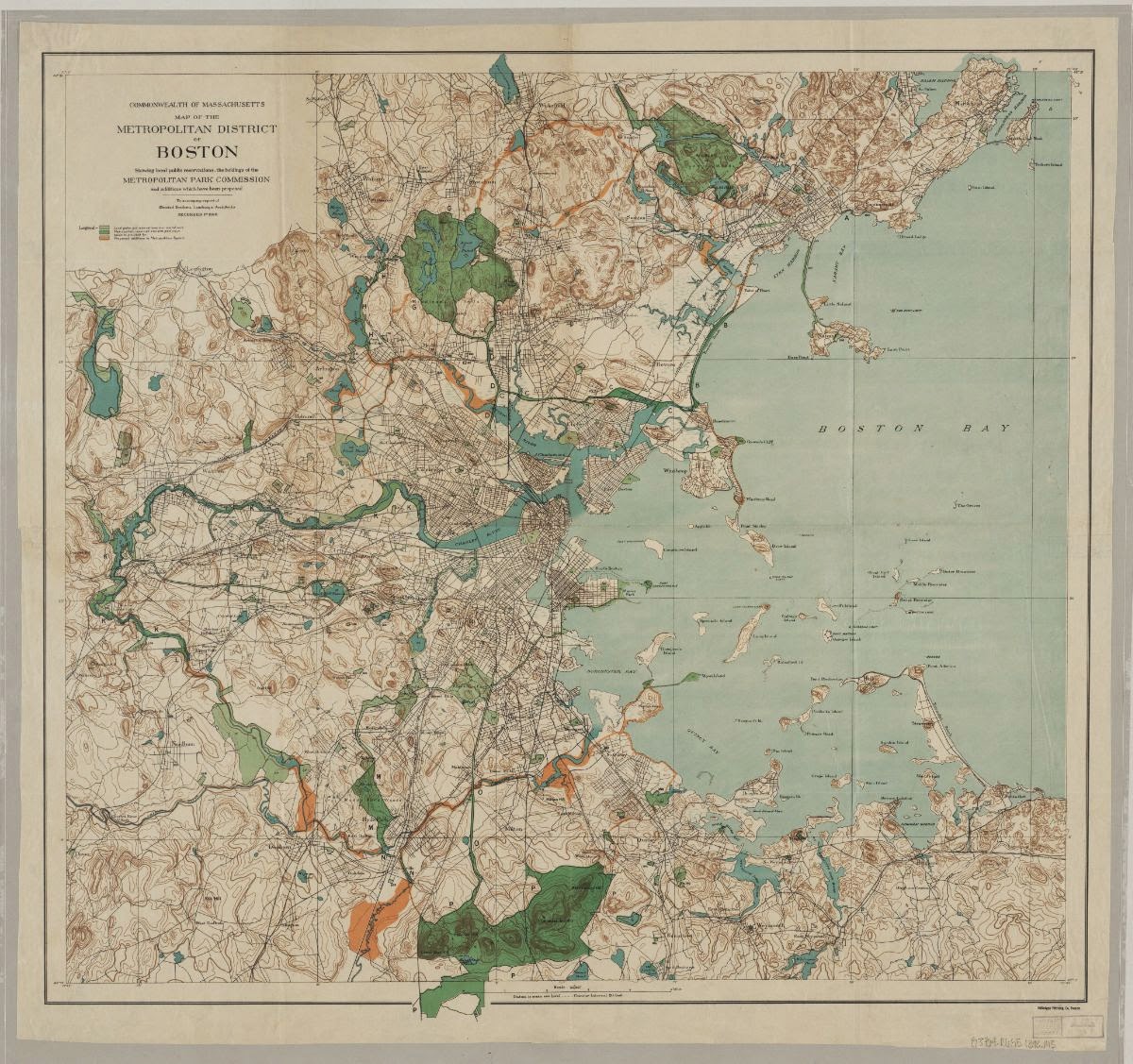
Map of the original Metropolitan Park Reservations
Click here for an interactive version.

The firm appointed landscape designer Warren H. Manning who led a team of twenty volunteers to complete the fieldwork. Local botanist Walter Deane was hired to compile and edit the survey’s findings and in 1896, he published the results in this month’s book of the month, Flora of the Blue Hills, Middlesex Fells, Stony Brook and Beaver Brook Reservations, of the Metropolitan Park Commission, Massachusetts. While Deane is credited with the organization of the specimens and botanical observations for publication, the project would not have been possible without collaboration among many amateur and professional botanists. This collaboration was so successful that it led to the formation of the New England Botanical Club (NEBC), which still meets regularly and has amassed a collection of 250,000 specimens housed in the Harvard University Herbaria (HUH).

Announcing a New BHL Collection

This example of an early successful citizen-science project is highlighted in the launch of a new collection in the BHL: The Archives from the Boston Metropolitan Park. This collection is composed of approximately 8,000 pages of manuscript material documenting the progress of the survey. Readers can peruse Walter Deane’s field notes, diaries, datebooks, and correspondence. His diaries reveal fascinating insights into his work on compiling the Flora and the details of its publication, as well as how the formation of the NEBC resulted from the Metropolitan Flora survey. His diaries also give rich pictures of the botanists of his time and are highly useful to anyone writing about the history of the NEBC and its members. The collection is now freely available and opens up this fascinating slice of history to the public for the first time. As part of the Connecting Content project, the digitization of the archives and original specimens from the Metropolitan Park Reservation was made possible by an Institute of Museum and Library Services (IMLS) National Leadership Grant.

Collection Highlights

One of the most compelling aspects of the correspondence related to the Metropolitan Flora survey is learning about people and information not evident from Deane’s Flora or from the botanical specimens. One example is a letter from the tree expert Loren Dame to Manning in which he encloses a list of trees compiled by a “non-botanist”, George Perry. Perry states that “I have made it a point to crawl through the densest tangle of greenbrier and thicket… to become familiar with every rod of the section.” As a result of his efforts, his list of trees is very thorough. He also found some very rare plants not seen by other surveyors, including maidenhair fern. Unfortunately, because he wasn’t considered a reliable source, his data wasn’t included. In another letter to Manning, Dame reported three rare tree species found only in an area adjacent to the Fells, which was added to the reservation after Flora was published. All of these omissions are significant, and the knowledge revealed in these letters is highly valuable for understanding the full extent of the past flora of the area.

Surveying the Flora of Middlesex Fells: Yesterday and Today

Between 2003 and 2011 a new survey  very much like the original survey of the Fells flora was undertaken by a team of NEBC and HUH botanists. Using Deane’s Flora as a basis for comparison, the team found that most of the native species from the original survey persist, despite substantial increases in the number and frequency of non-native plants. These native species face several threats, including habitat disturbance, and loss due to construction and recreational use of the Fells, herbivory from increases in deer and insect populations, as well as environmental changes effected by climate change and afforestation. Sustaining populations of native species, some of which are rare and endangered, will require a more active management of the Fells.[1]

Urban forests purify the air that we breathe, provide a habitat for local flora and fauna, help reduce energy demands, provide recreational opportunities, reduce stress and crime rates—the list goes on. Since eighty percent of us live in urban areas most of us owe quite a bit of thanks to the astute conservationists who fought to keep the untamed wilderness close by. Now it’s our turn to preserve their legacy.
View Full Size Image

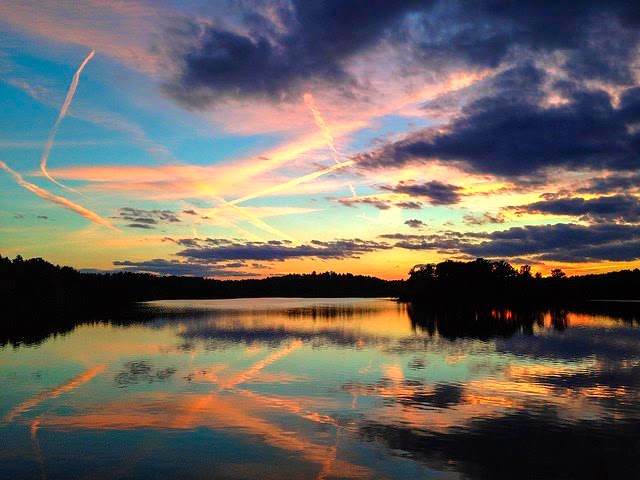
Spot Pond named by Governor John Winthrop in 1631.

Photo by Mike Ryan, Friends of the Fells

“Something like five miles northerly from Boston lies a great tract of country, all stony hills and table-lands, almost uninhabited, and of wonderful picturesqueness, and wild rugged beauty… and at its heart is that most beautiful of Boston’s suburban lakes, Spot Pond, which lies high up among the hills.” Sylvester Baxter, 1886.

Notes

[1] 2012. Hamlin, Bryan T., W. T. Kittredge, D. P. Lubin & E. B. Wright. Changes in the vascular flora of the Middlesex Fells Reservation, Middlesex County, Massachesetts, from 1895 to 2011. Rhodora 114(959): 229-308.

Learn More!

IMLS Grant Project Page
Walter Deane (1848-1930) Papers
NPS: Metropolitan Parks Commision
Friends of the Fells
Found in the Fells
The Middlesex Fells, a Flourishing Urban Forest by W. Kittredge
BHL Collection: Archives and Specimens from the Boston Metropolitan Park Flora 
February 26, 2015by [email protected]
Blog Reel, Featured Books

Documenting Scientific Knowledge One Handwritten Note at a Time

Connecting Content: The Wonderful World of Field Books

The California Academy of Sciences and our partners (all of whom are also BHL member institutions) are in the midst of a 3 year IMLS National Leadership Grant titled “Connecting Content: A Collaboration to Link Field Notes to Specimens and Published Literature.” This project aims to digitize published scientific findings, their related field books and specimens, and metadata for these items, link all of these resources, and make them available for harvesting, reuse, and repurposing without cost. At this point, the bulk of the field books selected for this project have been digitized and made available through the Biodiversity Heritage Library. (*You can see the sixty-one titles digitized for this project by searching for “Connecting Content” in the BHL search box.) You can download a selection of these field book for free via the latest BHL iTunes U Collection: Connecting Content through Archival Field Notes.

Field books (or field notes) are the original documents which chronicle specimen collection and the events and observations that led to scientific discovery.  Field books are unique unto the creator and vary greatly from book to book. Here are a selection of highlights from the collection which demonstrate the wealth of information and styles found throughout the selection of field books:

William Whitman Bailey and the USGS Exploration of the 40th Parallel

View Full Size Image
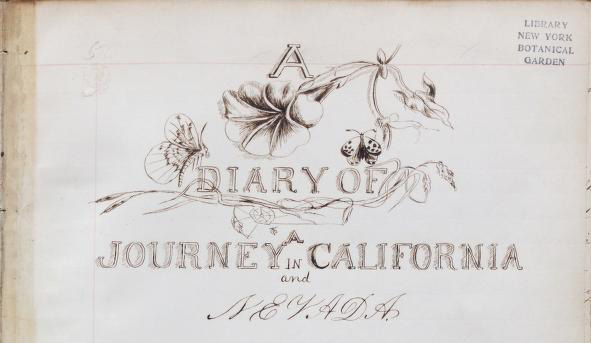
Page One. A diary of a journey in California and Nevada. William Whitman Bailey.


View Full Size Image
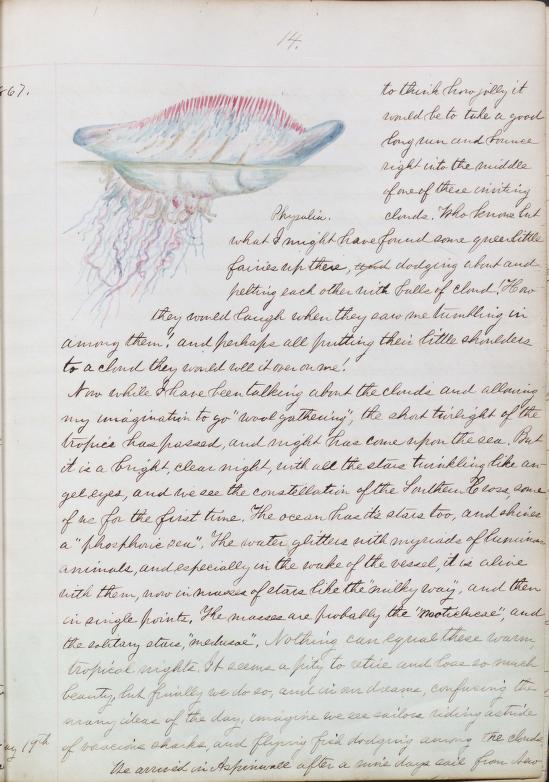
Portuguese Man of War. Bailey.
View Full Size Image
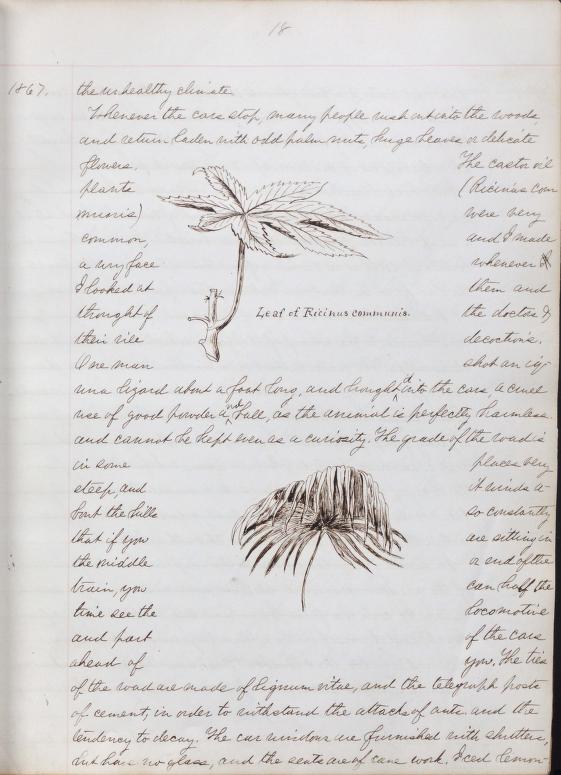
Riccinus communis. Bailey.

William Whitman Bailey’s life story reads like a blockbuster movie plot. When young William was just nine years old, he and his family took an ill fated boat trip aboard the 198 foot side-wheeler, the Henry Clay. On this fateful day, the Henry Clay was involved in a minor collision with another vessel, but pressed onwards as it seemed that the ship has sustained little damage. However, about an hour outside of its final New York destination, the ship beached itself on shore near Yonkers as a result of a fire that had been burning unnoticed since the collision. The lucky passengers on the bow of the ship were either thrown or able to jump onto land, but the Baileys were not so fortunate. Separated from land by 140 feet of water and a wall of fire, the Baileys had no choice but to jump into the water as the fire approached. William’s mother and sister succumbed to the depths and his father barely survived. William managed to grab hold of a floating wicker chair and was eventually picked up by a passing ship, but the experience would leave him with permanent health problems.

However, this tragic setback did not lessen Bailey’s enthusiasm for adventure and curiosity about the natural world. Bailey would eventually study under Dr. Asa Gray at Harvard University and at 24 years old, he became the botanist for the United States Geological Exploration of the 40th Parallel. The field book for this expedition chronicles Bailey’s journey through California and Nevada in a flowing prosaic style with beautiful illustrations and photographs of Bailey’s observations. The very first page of Bailey’s journal opens with a beautiful demonstration of his illustrative pen and ink style. Bailey’s rich descriptions are paired with exquisite drawings that seem to jump off the page whether he is waxing poetic about the Portuguese Man of War or closely observing the leaf of the Riccinus communis. Bailey’s flowing narrative style and gorgeous illustrations make this field book a charming and informative look at the exploration of the 40th parallel that will surely captivate readers.

Washington H. Ochsner and the Galapagos Islands


View Full Size Image
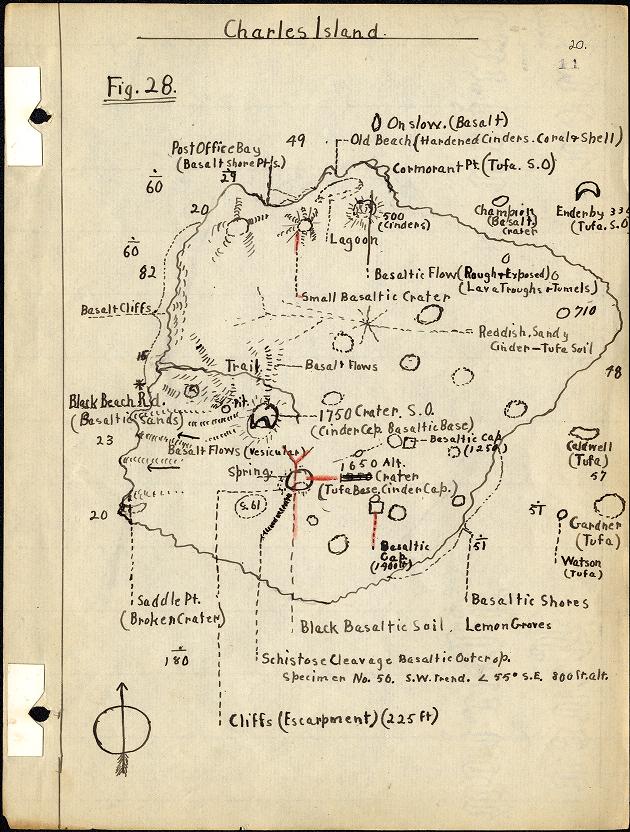
Charles Island. Ochsner.

In 1905, the California Academy of Sciences sent 11 men off for a year and a day on an eighty-five foot schooner destined for the Galapagos Islands. While the expedition was underway, the California Academy of Sciences would fall into ruin during the great San Francisco earthquake of 1906. The specimens gathered during the Galapagos expedition would come to form the crux of the new California Academy of Sciences’ collections. Of the young men on that voyage, 26 year-old Washington Henry Ochsner travelled as the expedition’s geologist. His journals are more technical than Bailey’s in what they intended to capture and often included geological survey information, as well as inferences about how the geological features were formed. Ochsner also drew detailed surveys of the island terrains like this map of Charles Island. Ochsner’s field books have a scientifically focused structure and tend to be not-so-much a diary but a close and careful record of his scientific observations.

The Diaries of William Brewster, 1865- 1919

View Full Size Image
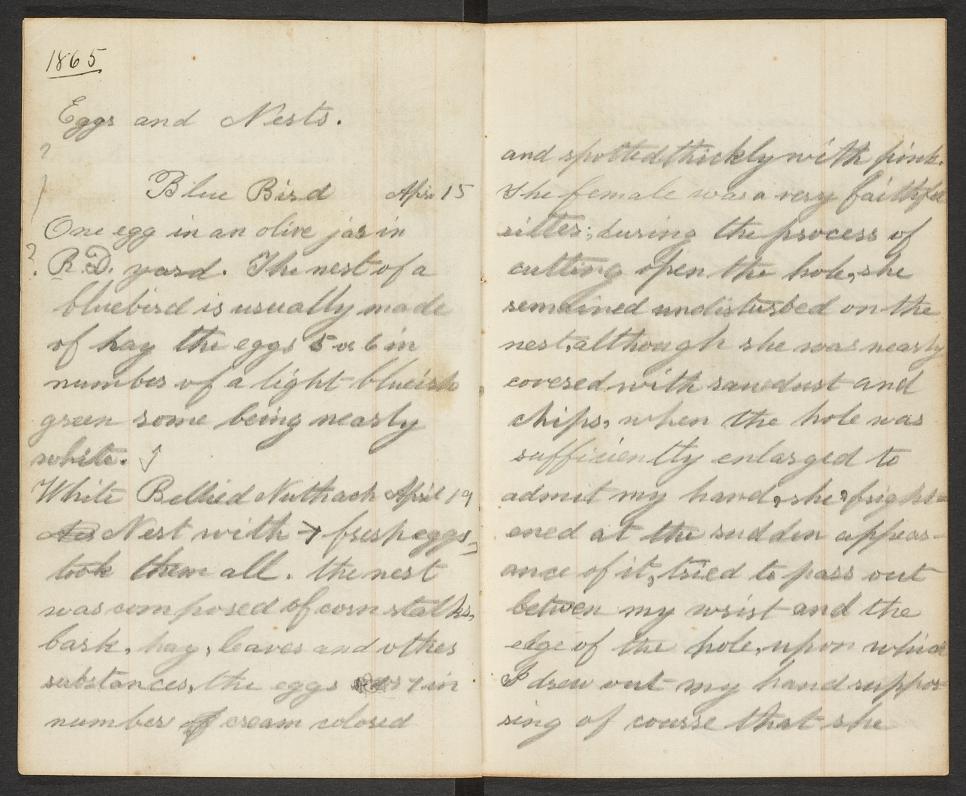
Eggs and Nests. Brewster.

Renowned ornithologist William Brewster mused over his daily observations in a personal and often humorous way. William Brewster’s love of ornithology blossomed early, and he kept careful records of the birds he observed throughout his life. These journals begin when Brewster was 14 years old, and it is interesting to see how his hand, knowledge, and confidence all develop over time.  In his later journals, Brewster takes care to write in a colloquial manner, and these notes provide unique insight into the daily life of a researcher over a 54 year span. This collection of journals also provide an enticing perspective on the detrimental changes to the environment and bird populations as a result of industrialization and the growth of urban centers.

All of the field books digitized for the Connecting Content project offer inimitable insight into how scientific data is gathered, synthesized, and extrapolated. It is the hope that by sharing these unique resources, researchers can better understand scientific findings and that the insights gained from this will promote further inquiry and the spirit of discovery.

Want more Field Book Content?

View 61 field books digitized by the Connecting Content grant in BHL

Download a selection of these books for free on iTunes U

Find out more about the link between expeditions, field books, and publications in our previous blog posts with Smithsonian’s Field Book Project: Post One | Post Two | Post Three

May 9, 2013by Kathryn Stine
BHL News, Blog Reel

Connecting Content on BHL!

View Full Size Image
Excerpt from the Rollo Beck Galapagos expedition journal.

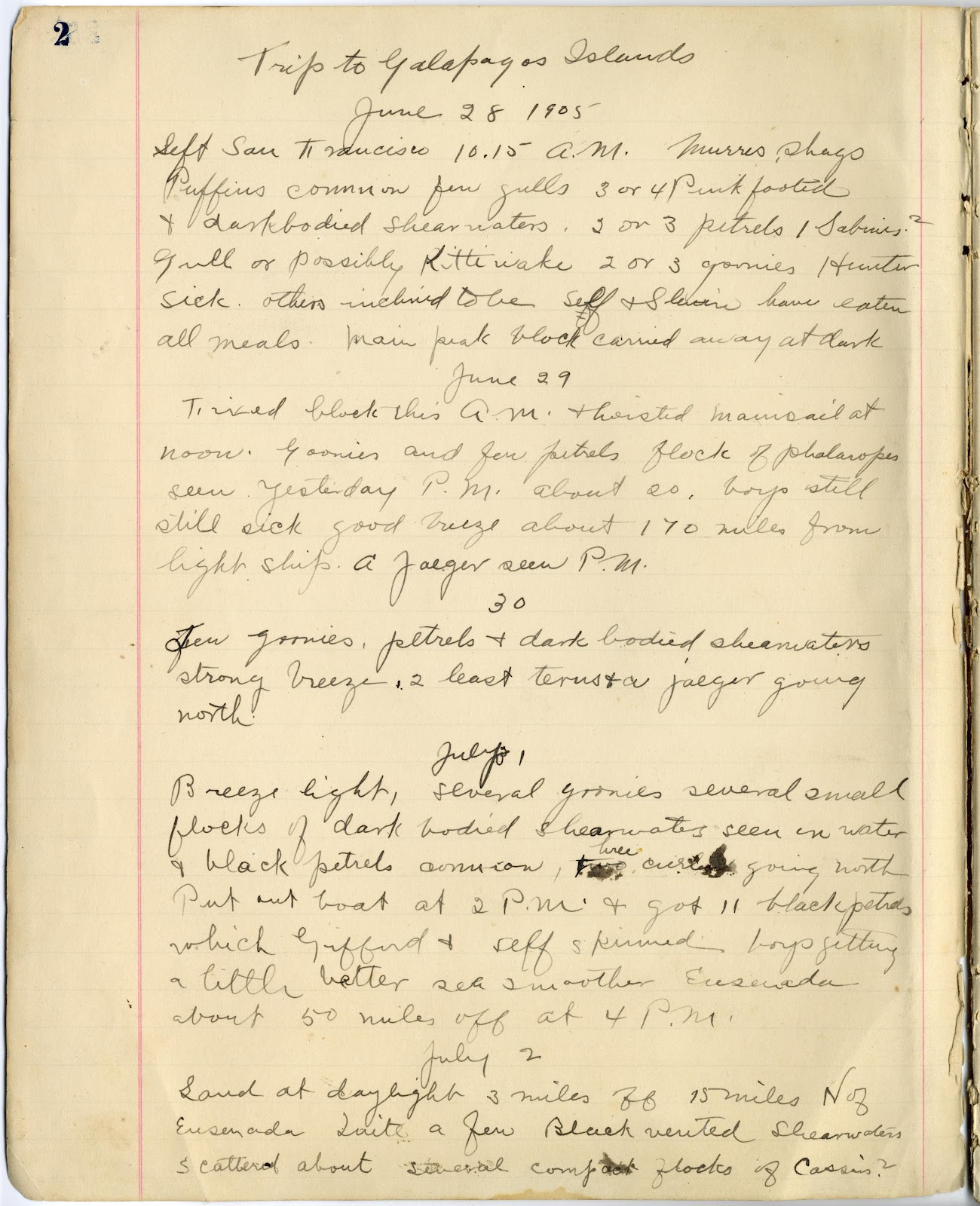
The California Academy of Sciences Library (CASL) is pleased to announce that The Rollo Beck Galapagos Expedition Journal is now accessible online via the Biodiversity Heritage Library.  The Beck field notes are the first test submission to the Connecting Content field note scanning project. Their successful inclusion into BHL marks many months of planning, effort, and collaboration between the Academy staff and the amazing Connecting Content partner institutions.

The Connecting Content project, made possible by an IMLS National Leadership Grant, involves digitizing field notebooks and natural history specimen collections, making the results available free for open access, and testing methods to create links between the items. This is the first step in an effort to create linked digital item-level access to archival resources, published literature, and biological data. This project has come together through the combined efforts of multiple institutions and with rigorous planning about how best to create and disseminate content that is discoverable, enduring, and openly accessible.

Rollo H. Beck was the leader of the 1905-06 expedition, and his style of field note taking provided a broader overview and unique perspective of the expedition, which differed from the very specific specimen-collecting notes of the other members of the team. The field notes are quite fragile and much care was needed to scan each page on the CASL flatbed photo scanner. A highlight for those doing the scanning was finding the page that describes the first news of the 1906 earthquake that destroyed much of San Francisco and nearly all of the Academy of Science’s collections. The specimens that the expedition brought back from the Galapagos formed the core of the new Academy.

After digitization, Connecting Content staff had to package the materials for submission to the Internet Archive and ingest into BHL by creating a MARC (MAchine- Readable Cataloguing) record for each item. (Staff would like to recognize and send a HUGE thank-you to the amazing and incredibly bright catalogers who have toiled over this effort! Michelle Abeln at Missouri Botanical Gardens, Lisa Studier at New York Botanical Gardens, Chris Robson at Harvard University Herbaria, and Stella Tang at the California Academy of Sciences.) These records are then combined with a spreadsheet containing page-level metadata, and the corresponding digital files of the scanned pages are submitted to the Internet Archive, and ultimately into BHL.

Project staff are now in the process of preparing several other field notebooks and digitized specimens for the pilot scanning project and have invited partner institutions to begin the process of uploading their field notes in preparation for ingest into BHL. After the materials are scanned, input into the project database, cataloged, exported, and delivered via BHL, staff will use the extrapolated metadata to experiment with mash-ups and make connections between names, dates, localities, and other contextual information, published materials, and specimen data.

The above post republished from the Connecting Content Blog, with permission from project staff.


May 3, 2012by ulib-libraryjobs

Help Support BHL

BHL's existence depends on the financial support of its patrons. Help us keep this free resource alive!

search

About BHL

The Biodiversity Heritage Library (BHL) is the world’s largest open access digital library for biodiversity literature and archives. BHL operates as a worldwide consortium of natural history, botanical, research, and national libraries working together to digitize the natural history literature held in their collections and make it freely available for open access as part of a global “biodiversity community.”

Join Our Mailing List

Sign up to receive the latest news, content highlights, and promotions.

Subscribe Now

Subscribe to Blog via Email

Enter your email address to subscribe to this blog and receive notifications of new posts by email.

Join 319 other subscribers

Subscribe to Blog Via RSS

Subscribe to the blog RSS feed to stay up-to-date on all the latest BHL posts.

Access RSS Feed

Inspiring Discovery through Free Access to Biodiversity Knowledge.

The Biodiversity Heritage Library makes it easier than ever for you to access the information you need to study and explore life on Earth…for free, anytime, anywhere.


64+ Million Pages of
Biodiversity Literature Online.

EXPLORE

Tools and Services
to Transform Research.

EXPLORE

300,000+
Illustrations on Flickr.

EXPLORE

ABOUT | HARMFUL CONTENT | PRIVACY | SITE MAP | TERMS OF USE