Biodiversity Heritage Library - Program news and collection highlights from BHL
  • Home
  • News
  • Featured Books
    • All Featured Books
    • Book of the Month Series
    • BHL at 20
  • User Stories
  • Campaigns
    • Fossil Stories
    • Garden Stories
    • Monsters Are Real
    • Page Frights
    • Her Natural History
    • Earth Optimism 2020
  • Tech Blog
  • Visit BHL
Home
News
Featured Books
    All Featured Books
    Book of the Month Series
    BHL at 20
User Stories
Campaigns
    Fossil Stories
    Garden Stories
    Monsters Are Real
    Page Frights
    Her Natural History
    Earth Optimism 2020
Tech Blog
Visit BHL
  • Home
  • News
  • Featured Books
    • All Featured Books
    • Book of the Month Series
    • BHL at 20
  • User Stories
  • Campaigns
    • Fossil Stories
    • Garden Stories
    • Monsters Are Real
    • Page Frights
    • Her Natural History
    • Earth Optimism 2020
  • Tech Blog
  • Visit BHL
Biodiversity Heritage Library - Program news and collection highlights from BHL
Blog Reel, Featured Books

Magnificent Crustacea: Leach and Sowerby’s Malacostraca Podophthalmata Brittanniae

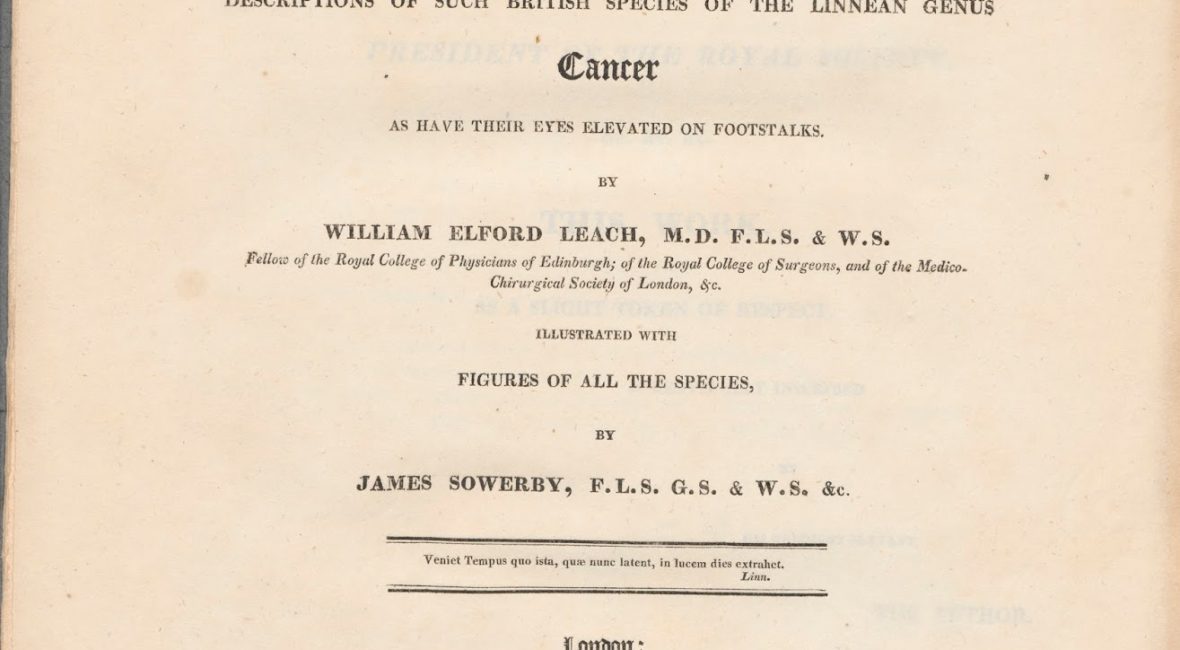
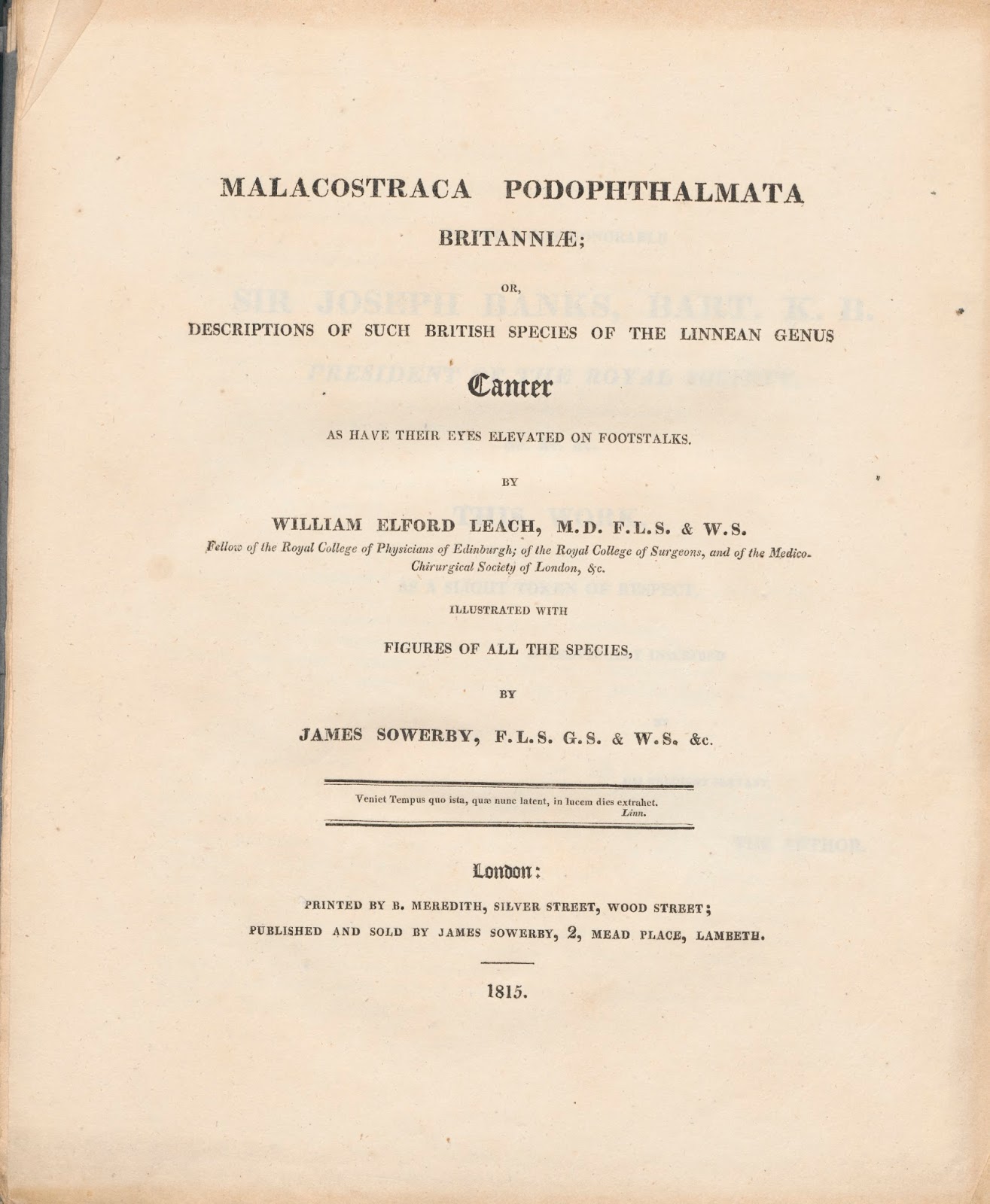
William Elford Leach. Malacostraca Podophthalmata Brittanniae. Title page. Naturalis, RBR Holt 00626. http://s.si.edu/2iVddtH.

Without a doubt, Malacostraca Podophthalmata Brittanniae (1815-1875) is one of the most beautiful publications dedicated to Crustacea. This work, a very special proofprint copy of which has recently been digitized and made available on BHL by the Naturalis Library, was the work of two well-known names in British natural history: the young zoologist William Elford Leach (1791-1836) and the experienced naturalist and engraver James Sowerby (1757-1822). The background and personal history of both gentlemen had a great influence on the coming about of the publication.
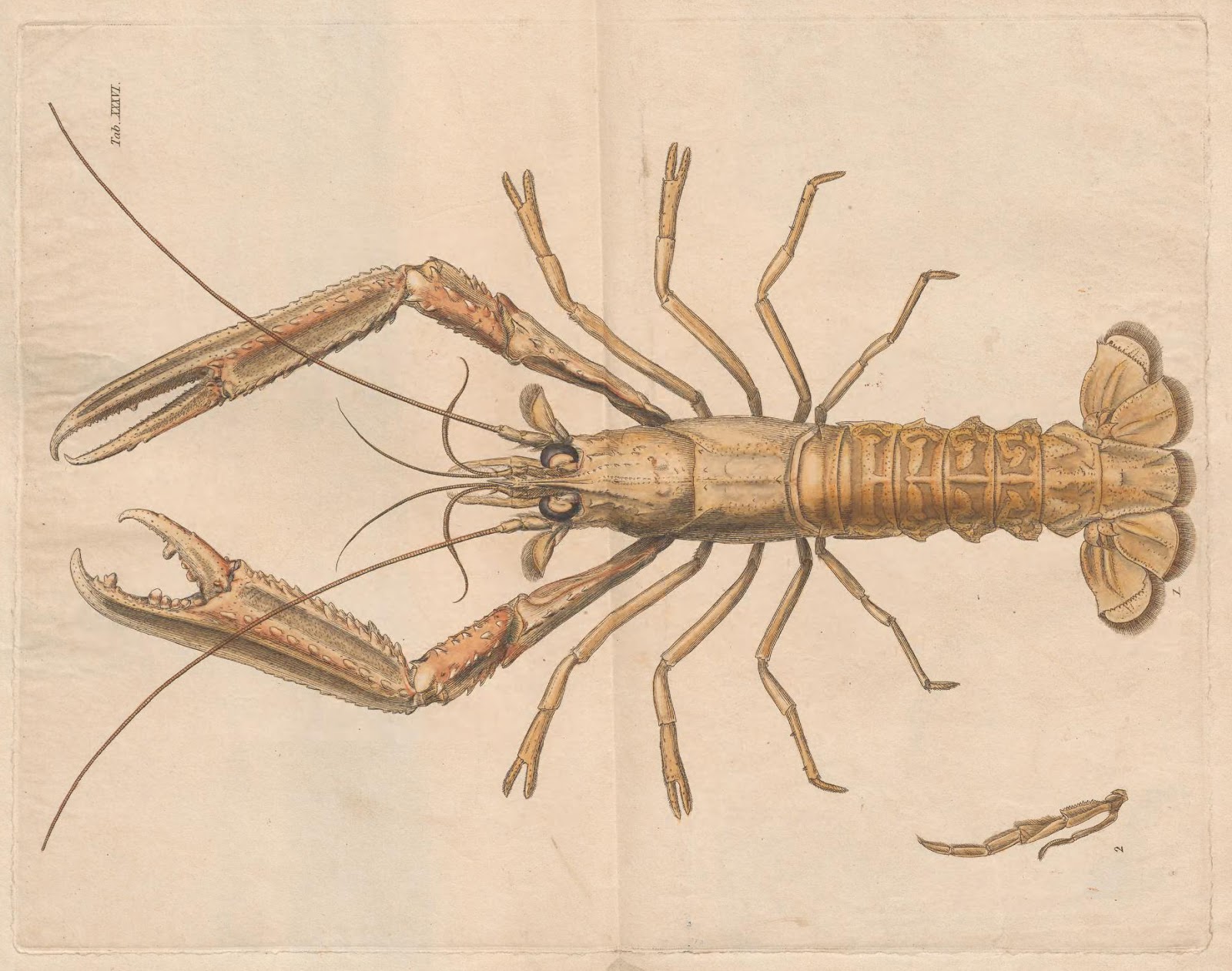
Illustration by James Sowerby for Malacostraca Podophthalmata Brittaniae, by William Elford Leach. Tab. XXXVI. Naturalis, RBR Holt 00732. http://s.si.edu/2Bmxmnu.


William Elford Leach

William Elford Leach was one of the great British zoologists of the beginning of the nineteenth century. He started his career as assistant librarian at the British Museum and was responsible for the zoological collections. He was given the task of reorganizing the collections of Hans Sloane, which formed the basis of the museum.

Of the old carcinological collection, not much was left by the nineteenth century. Because of its deplorable condition, Leach’s predecessors were forced to destroy much of the collection materials, and as a result, of the hundreds of crustaceans left by Sloane in the eighteenth century, only one specimen has survived to this day. The core of the current carcinological collections of the British Museum is formed by specimens collected under Leach’s supervision. Not only did material from all over the world come in through his scientific contacts, he also donated his personal collection to the museum.

Leach’s merits go beyond collection building alone. He was a gifted taxonomist with a large scientific network who was therefore aware of the developments in systematics on the European continent. He shared this knowledge with his colleagues in Great Britain, organized the collections on a more scientific basis, and wrote a series of articles about it.

The scientific names that Leach introduced were sometimes unusual and not appreciated by all. He named for instance countless genera after a certain Caroline. Leach used her (latenized) name playfully as an anagram to create genus names like Ricenela and Cirolana. Nevertheless, his work ethic was highly praised and his scientific productivity was second to none.

Sadly, Leach’s career lasted only a decade. In 1821, he suffered a nervous breakdown from which he would never recover. A year later he departed from the museum. As a thank you for the enormous collections he had left behind, he received a pension from the British Museum. He did not fare much better after that. He traveled to France and Italy and died of cholera in 1836.

James Sowerby

Leach was a scientific innovator and brought the zoology in Great Britain to a higher level. Part of his success lay in his collaboration with a gifted artist. For the illustrations in Malacostraca Podophthalmata Brittanniae, he relied on the detailed and colorful imagination of James Sowerby.
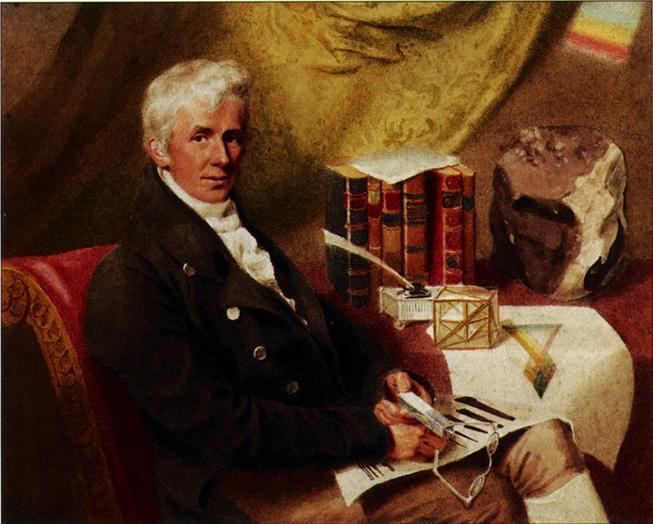
Portrait of James Sowerby, by Thomas Heaphy. 1816. Wikimedia Commons. https://commons.wikimedia.org/wiki/James_Sowerby#/media/File:James_Sowerby_by_Heaphy_(1816).jpg.

Sowerby was well known because of his extensive contributions to botanical masterpieces such as A Specimen of the Botany of New Holland.

Unlike most of his contemporaries, he was an artist who actively engaged in scientific work. He maintained correspondence with naturalists and urged them to send material that he could use for detailed studies. The colors that Sowerby used in his work are vivid and meant to appeal to a large audience. In 1809, he published a theory in which he stated that the basic colors red, yellow and blue offer all possibilities for botanical, zoological and geological imagination because these colors were given by nature.

Gold-plated Crabs and The Special Collection of Bibliotheca Carcinologica

The Bibliotheca Carcinologica, a unique collection in the Naturalis Library of approximately 8,000 publications and a large reprint collection, holds two special copies of Malacostraca Podophthalmata Brittanniae. This collection was amassed by a former curator, Lipke Bijdeley Holthuis (1921-2008), who for more than half a century was the leading expert in his field of crustacean taxonomy. He was particularly interested in collecting books that had been handed down by his famous predecessors.

L.B. Holthuis presented with his book (co-authored by Pietsch) about Lamotius. Photo: T.W. Pietsch, 2007, retouched by B. Kroonenberg.

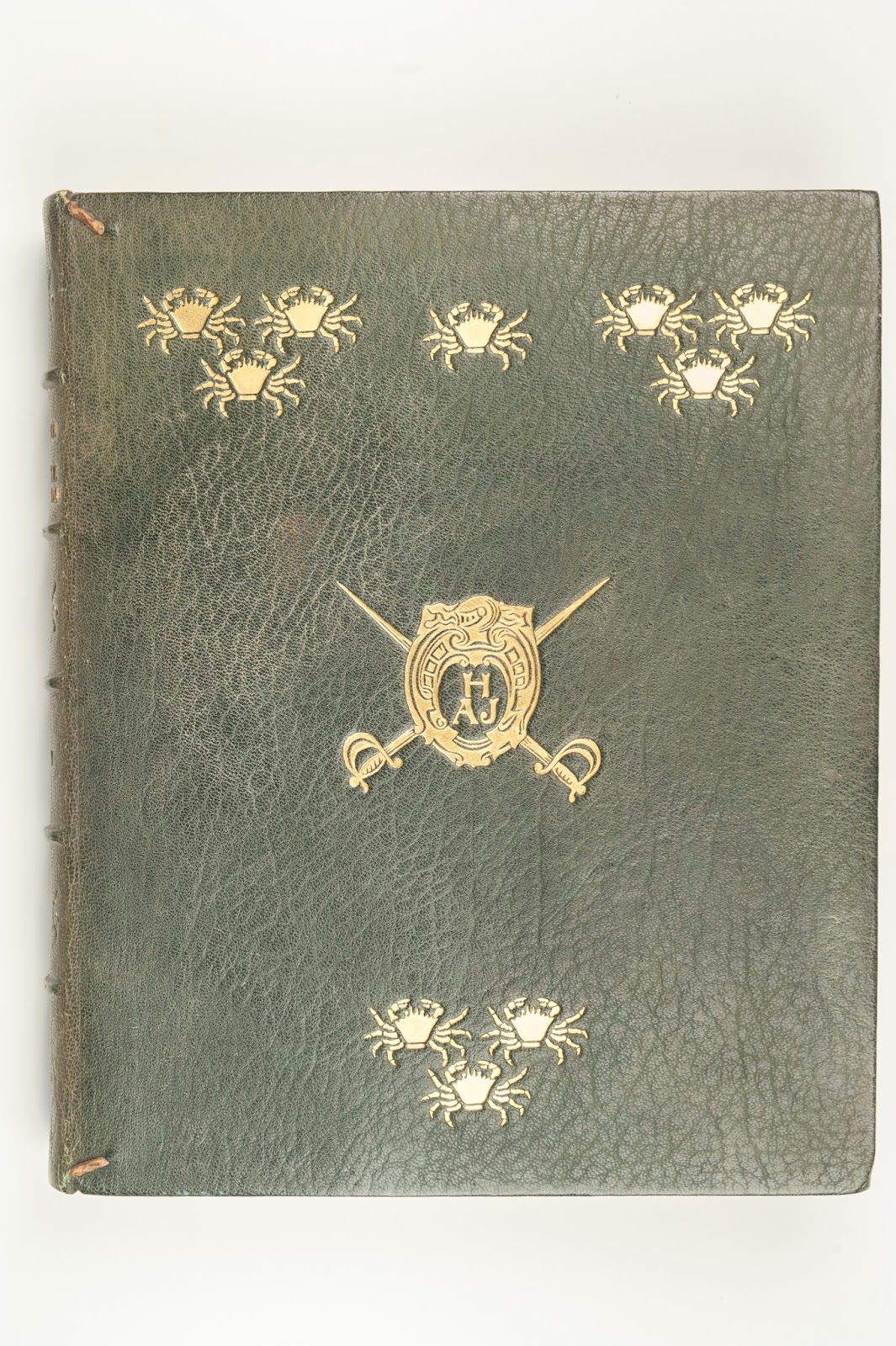
The Bibliotheca Carcinologica’s first copy of Malacostraca Podophthalmata Brittanniae was specially bound for the British collector Henry Arthus Johnstone. It features a band of green morocco decorated with gilded crabs and Johnstone’s coat of arms.
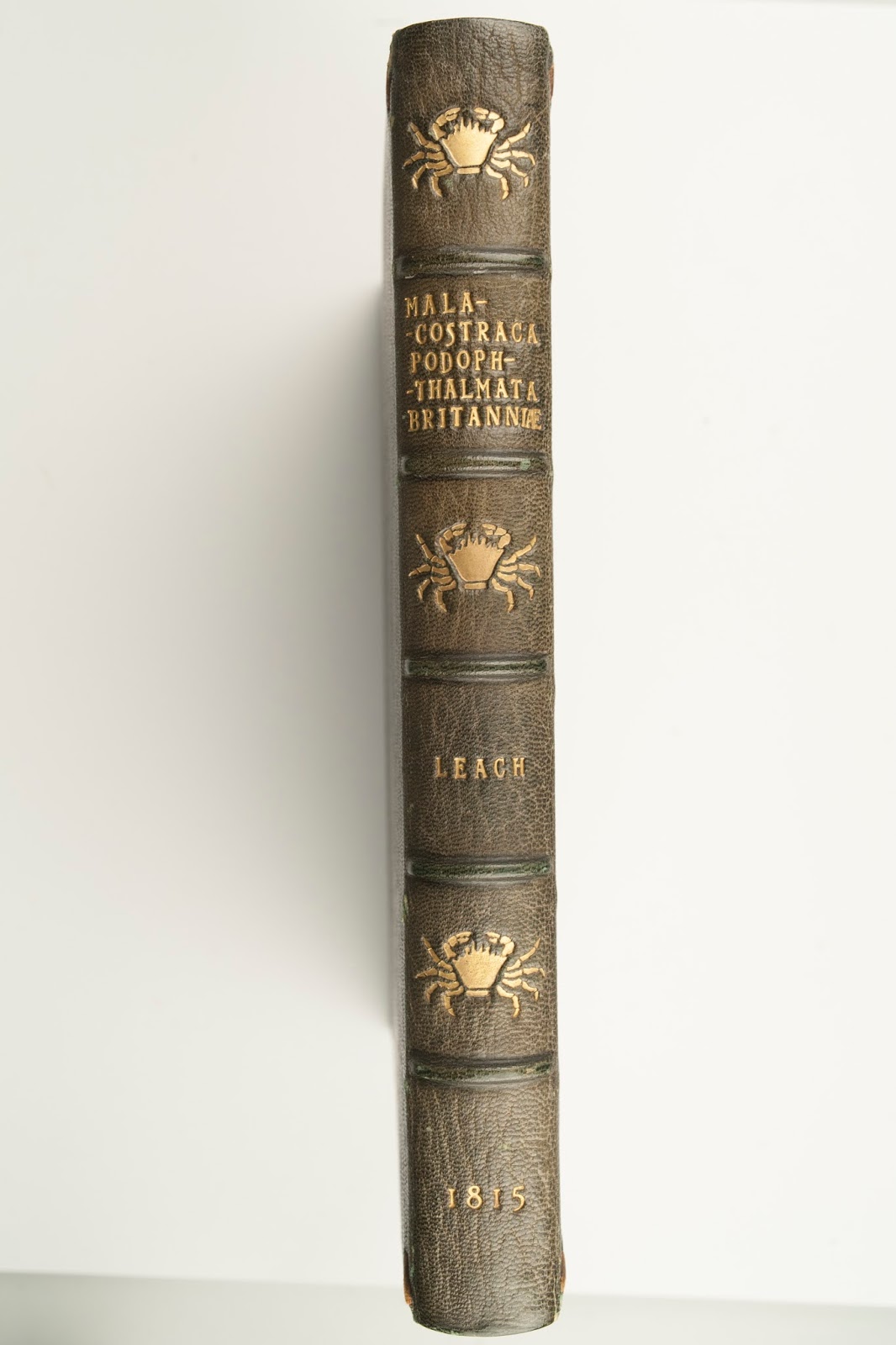
Private binding from the library of Henry Arthur Johnstone for William Elford Leach’s Malacostraca Podophthalmata Brittanniae. Naturalis, RBR Holt 00626.


Private binding from the library of Henry Arthur Johnstone for William Elford Leach’s Malacostraca Podophthalmata Brittanniae. Naturalis, RBR Holt 00626.

Johnstone’s library contained much natural history and was sold in its entirety to a London bookseller in 1921. Subsequently, the books have spread all over the world.

A beautiful binding and a good provenance are of course desirable, but for Holthuis it was of greater importance that a copy was complete, and that in addition all information that provides insight into the publication’s history was preserved. At the back of Johnstone’s copy of Malacostraca Podophthalmata Brittanniae are the covers of the original seventeen plus the two later issues, revealing exact publication dates and an alternate original title, as well as providing insight into the intention of William Elford Leach with regards to the publication.

On the cover of the first issue, Leach wrote that he wanted to publish twelve or fourteen episodes. He asked British naturalists to help make the publication as complete as possible and encouraged them to accurately analyze all the ‘rubbish’ that dredgers collected from the seabed. Apparently, his call was successful, because on the cover of the thirteenth issue, Leach indicates that the discovery of new species made it impossible to complete the work in fourteen episodes. The new goal was to complete it within eighteen or nineteen episodes.
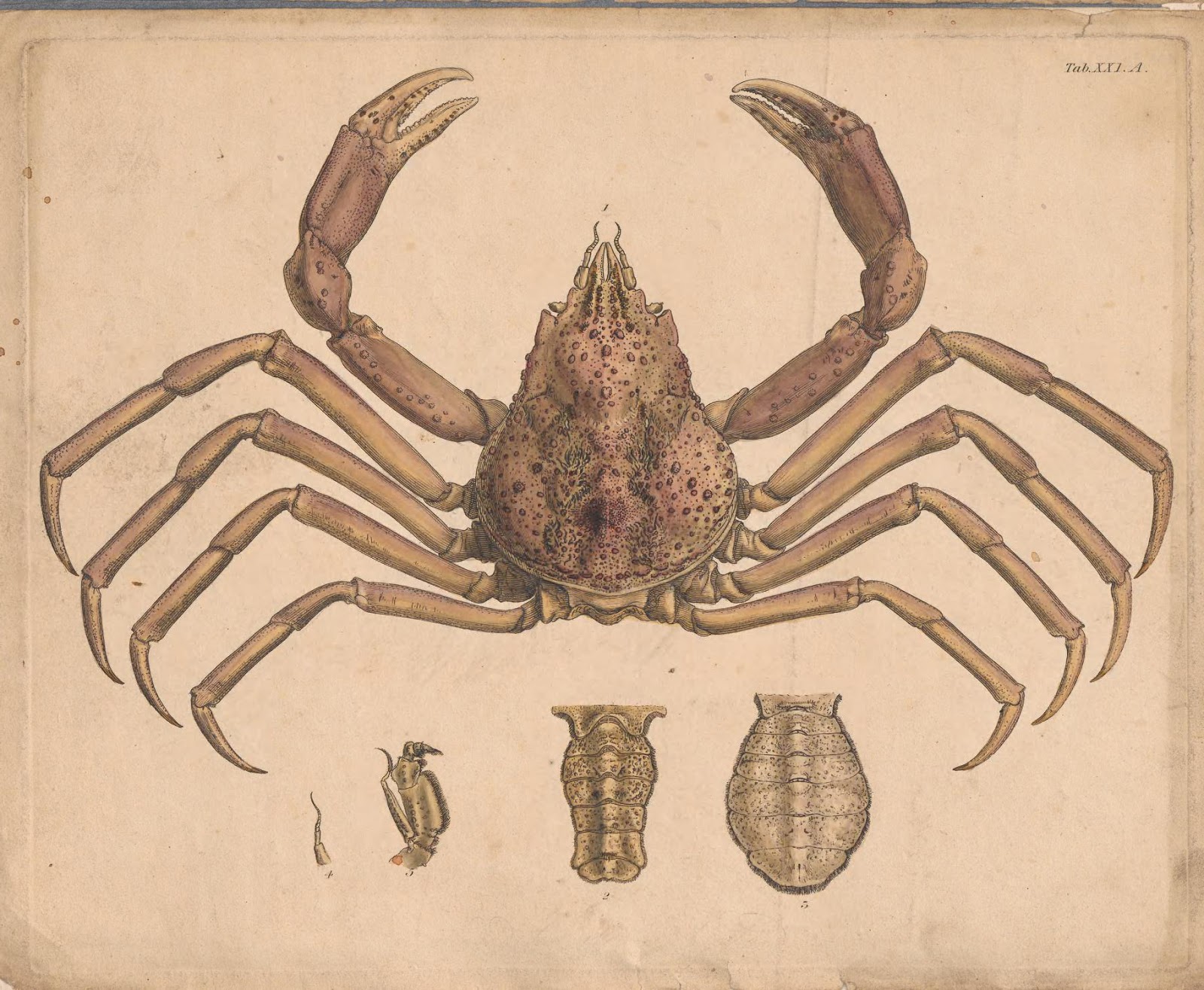
Illustration by James Sowerby for Malacostraca Podophthalmata Brittaniae, by William Elford Leach. Tab. XXIA. Naturalis, RBR Holt 00732.http://s.si.edu/2ysE5H4.

After the seventeenth episode that appeared on March 1, 1820, the publication ceased. Leach was unable to continue his work after his breakdown. Malacostraca Podophthalmata Brittanniae was finally completed by George Brettinham Sowerby (1812-1884) over half a century later after the publisher Bernard Quaritch had bought up the stock remnants. Quaritch was sensitive to the wish of James Sowerby’s descendant to finish the publication according to the original plan. In one additional episode published in 1875 as nos. XVIII and XIX, six more plates plus a beautiful plate of a European lobster (Homarus gammarus), which had previously been unfinished, were published.
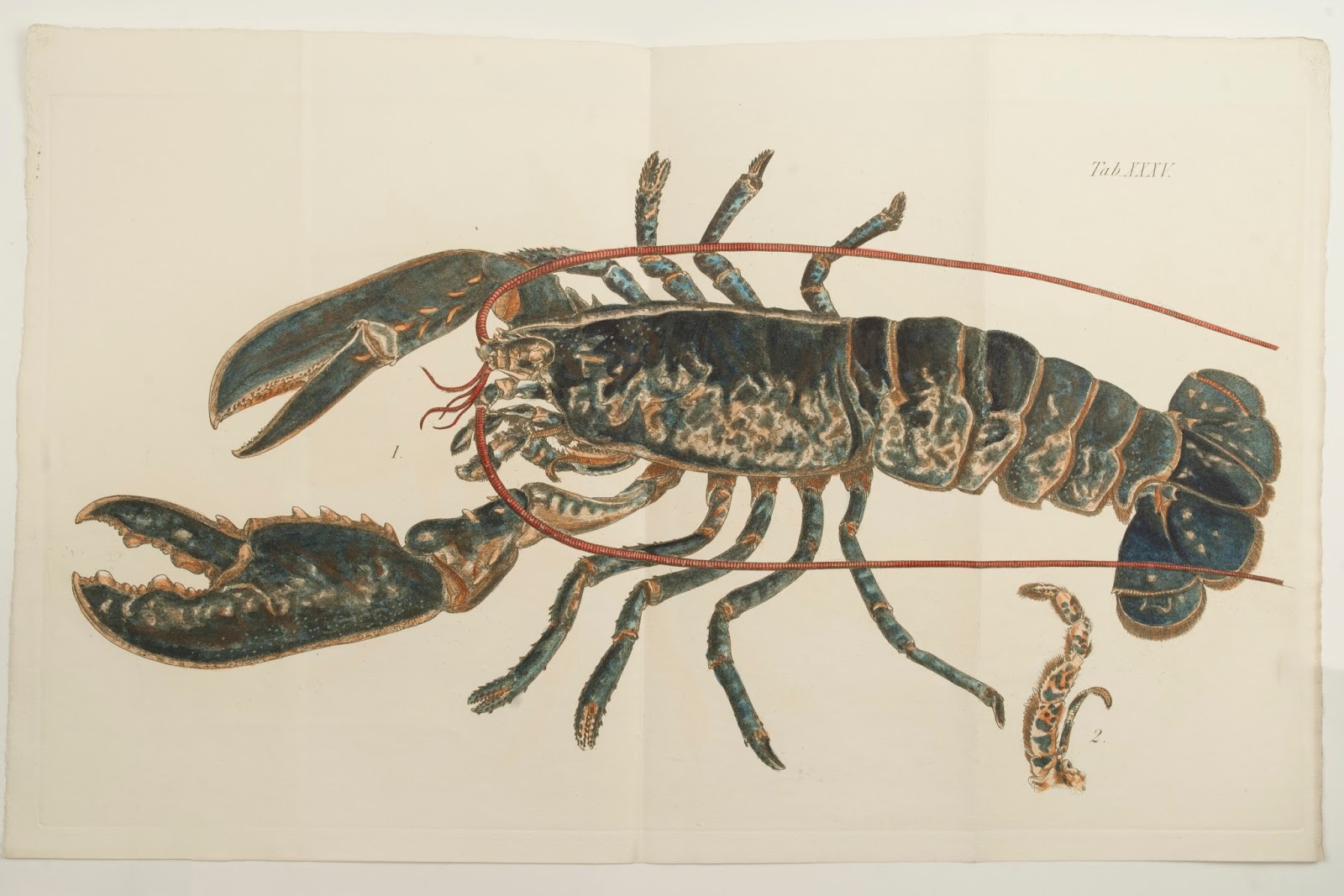
European lobster (Homarus gammarus). G.B. Sowerby, Malacostraca Podophthalmata Brittaniae. Tab. XXXV. Naturalis, RBR Holt 00732. http://s.si.edu/2nRuVnp.

Printing Proofs

More than thirty years after Holthuis had acquired the fine copy from the library of Henry Arthur Johnstone, he bought a very expensive complete set of nineteen separate episodes of Malacostraca Podophthalmata Brittanniae. On the surface, it is not immediately clear why he would do this: after all, the copy he already had in his possession was complete, with all of the plates and the original covers of the episodes. Further analysis shows that this second copy purchased by Holthuis represents the proofs that William Elford Leach used to provide direction for the publication. On plate XXXIX, for example, he writes: ‘Can the rostrum be the added to this plate?’
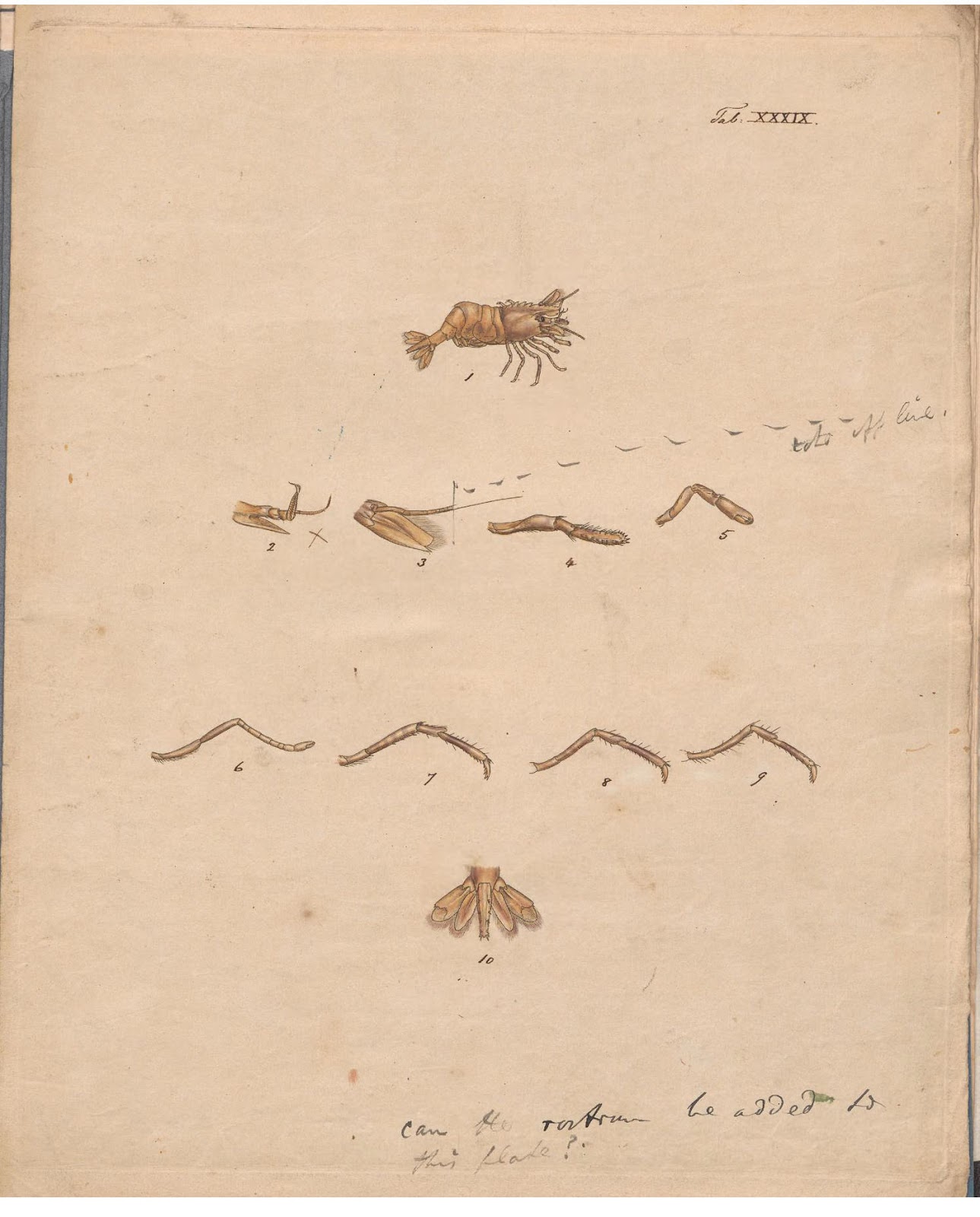
Proof print. Illustration by James Sowerby for Malacostraca Podophthalmata Brittaniae, by William Elford Leach. Tab. XXXIX. Naturalis, RBR Holt 00732. http://s.si.edu/2AvYOQ0.

The rostrum is a pointed, forward-looking deformity of the armor of a crustacean, which sometimes provides usable distinctive indication for taxonomic classification. No wonder Leach asked Sowerby if he could show that in detail. On the plate in Johnstone’s copy of the title, the rostrum of Spirontocaris spinus is indeed added.
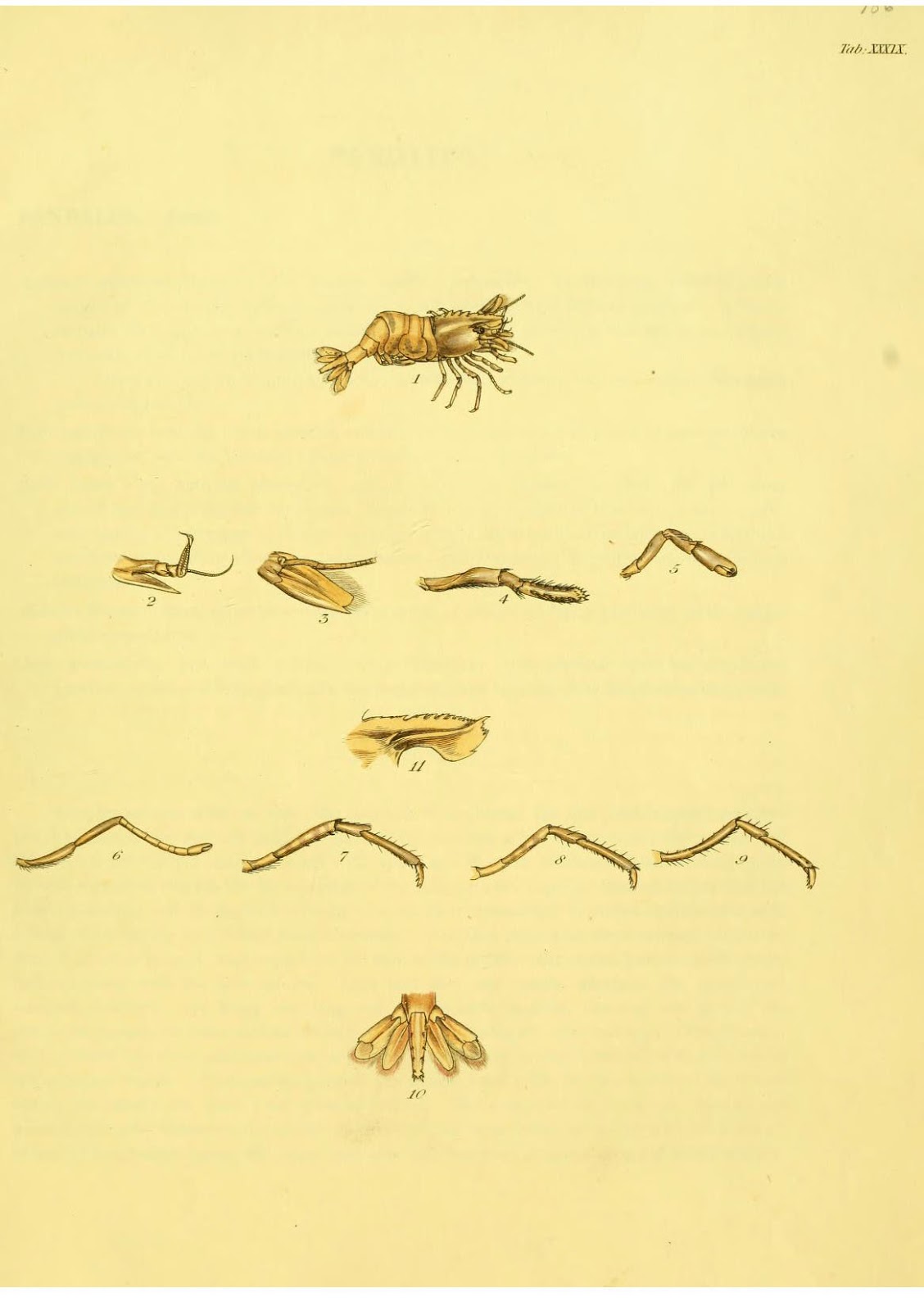
William Elford Leach, Malacostraca Podophthalmata Brittaniae. Tab. XXXIX. Ernst Mayr Library, Museum of Comparative Zoology, Harvard University. http://s.si.edu/2kpJ46u.

Other instructions from Leach have also been neatly followed up. The proofs have no direct meaning for the nomenclature; after all, these are unpublished trials with no published names. However, they do provide a good insight into the way Leach and Sowerby worked together and which colors they had in mind.

This unique proofprint copy has recently been digitized for BHL by the Naturalis Library. You can explore it in BHL for free.
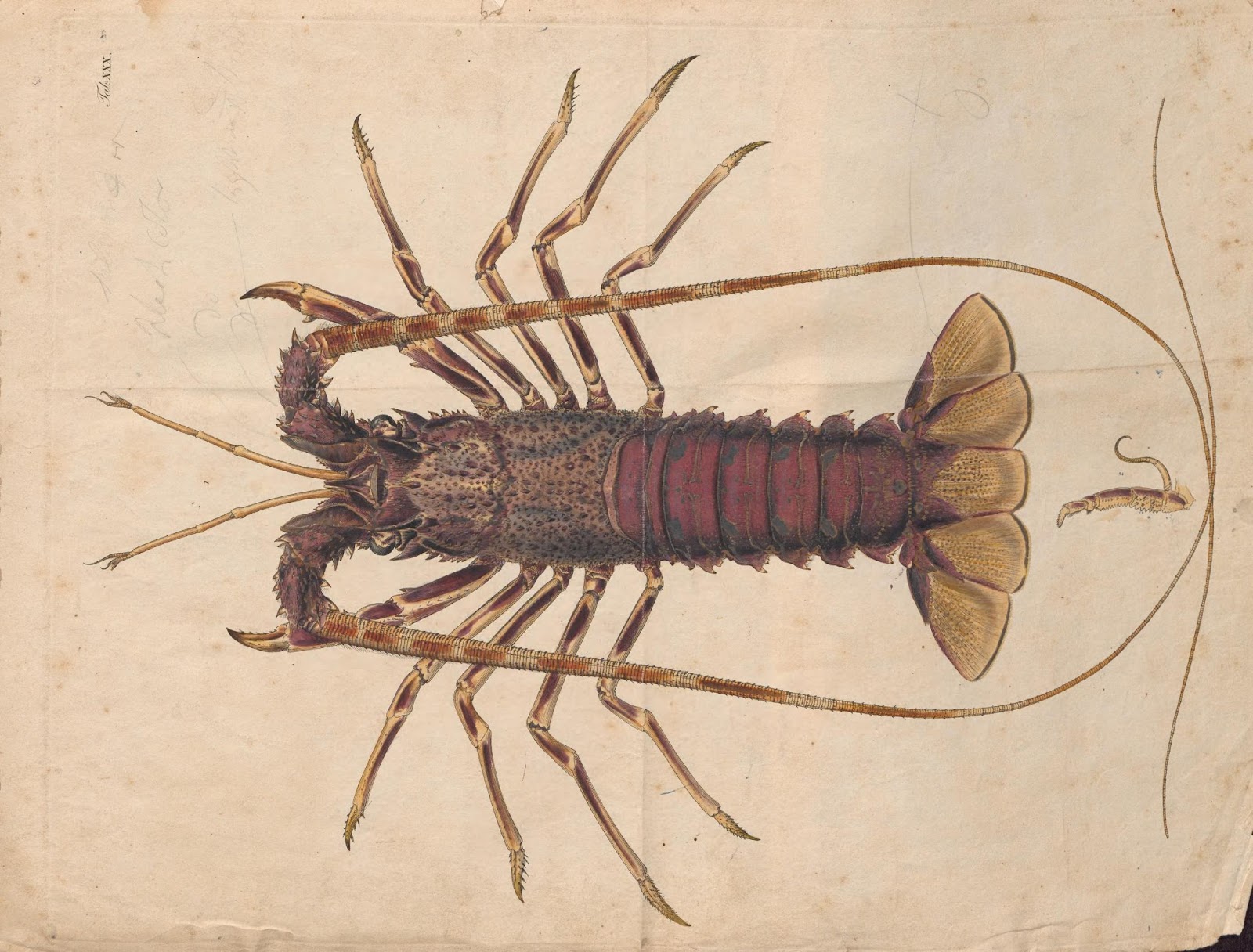
Illustration by James Sowerby for Malacostraca Podophthalmata Brittaniae, by William Elford Leach. Tab. XXX. Naturalis, RBR Holt 00732. http://s.si.edu/2kti99F.


Naturalis Library

The library holds a large collections of scientific, taxonomic literature on zoology, geology, botany and palaeontology. It caters to everyone interested in researching biodiversity, geodiversity and evolution. The library is almost 200 years old and contains around 200,000 books, journals, drawings, prints, icones and many other archived materials.

This blog is largely based on the chapter: Alex Alsemgeest, ‘Malacostraca Podophthalmata Brittanniae: de drukproeven van het mooiste kreeftenboek. In: A. Alsemgeest en C. Fransen (eds.), In krabbengang door kreeftenboeken: de Bibliotheca Carcinologica L.B. Holthuis (Leiden: Naturalis Biodiversity Center, 2016), p. 123-127.
December 14, 2017by ulib-libraryjobs
Blog Reel, Featured Books

Darwin’s Early Love

Charles Darwin, the famous naturalist known around the world for his publication On the Origin of Species and contributions to evolutionary theory, was born on February 12, 1809. As such, February 12 is known as International Darwin Day – a celebration with a vision to:

“Inspire people throughout the globe to reflect and act on the principles of intellectual bravery, perpetual curiosity, scientific thinking, and hunger for truth as embodied in Charles Darwin. It will be a day of celebration, activism, and international cooperation for the advancement of science, education, and human well-being.”

February 12 also happens to be just days before Valentine’s Day, a holiday now associated with love and the presentation of valentines as expressions of affection. How might these two, seemingly disparate holidays, be brought together? Why not by thinking about who Darwin himself might give a valentine to in the natural world?

Many people, when thinking of Darwin, might associate him with finches, mockingbirds, rheas, or Galápagos tortoises. But when Darwin began to investigate natural history while studying medicine in Edinburgh in the 1820s, it was marine invertebrates that first sparked his interest. While still a teenager, Darwin became a member of the Plinian Society, which was dedicated to the study of natural history amongst Edinburgh students. The zoologist Robert Edmond Grant nurtured Darwin’s interest in natural history, especially marine invertebrates, and taught him how to collect and rear specimens. Darwin’s first scientific paper, which was presented to the Plinian Society in March of 1827, was about bryozoan larvae and the black spots sometimes seen on oyster shells, which he demonstrated were the eggs of marine leeches. Sadly, Darwin’s mentor Grant had presented these same findings just days before Darwin at another venue, leading Darwin to feel betrayed and prompting his exodus from Edinburgh (Stiassny, 83).

View Full Size Image
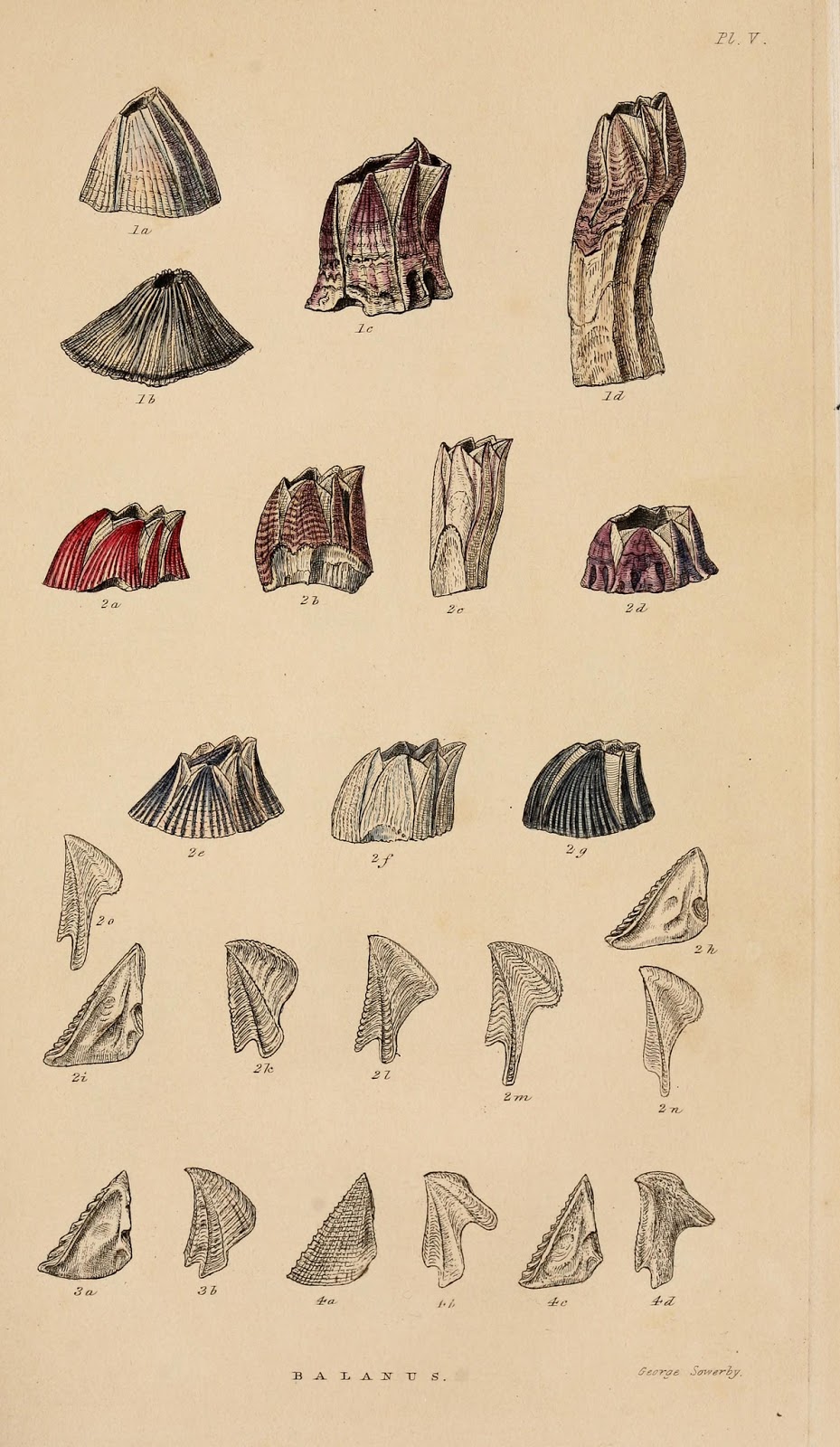
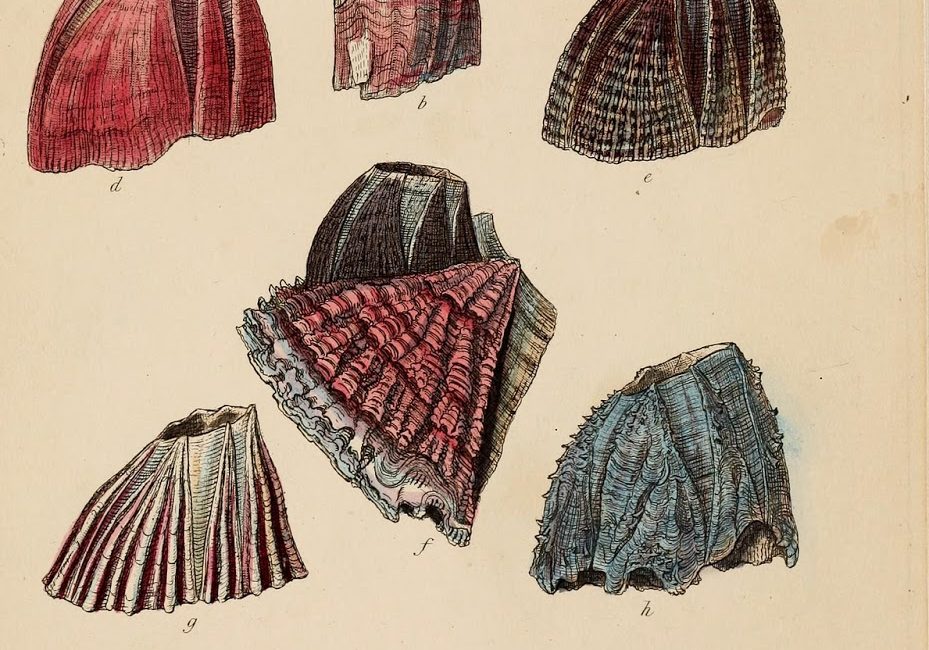
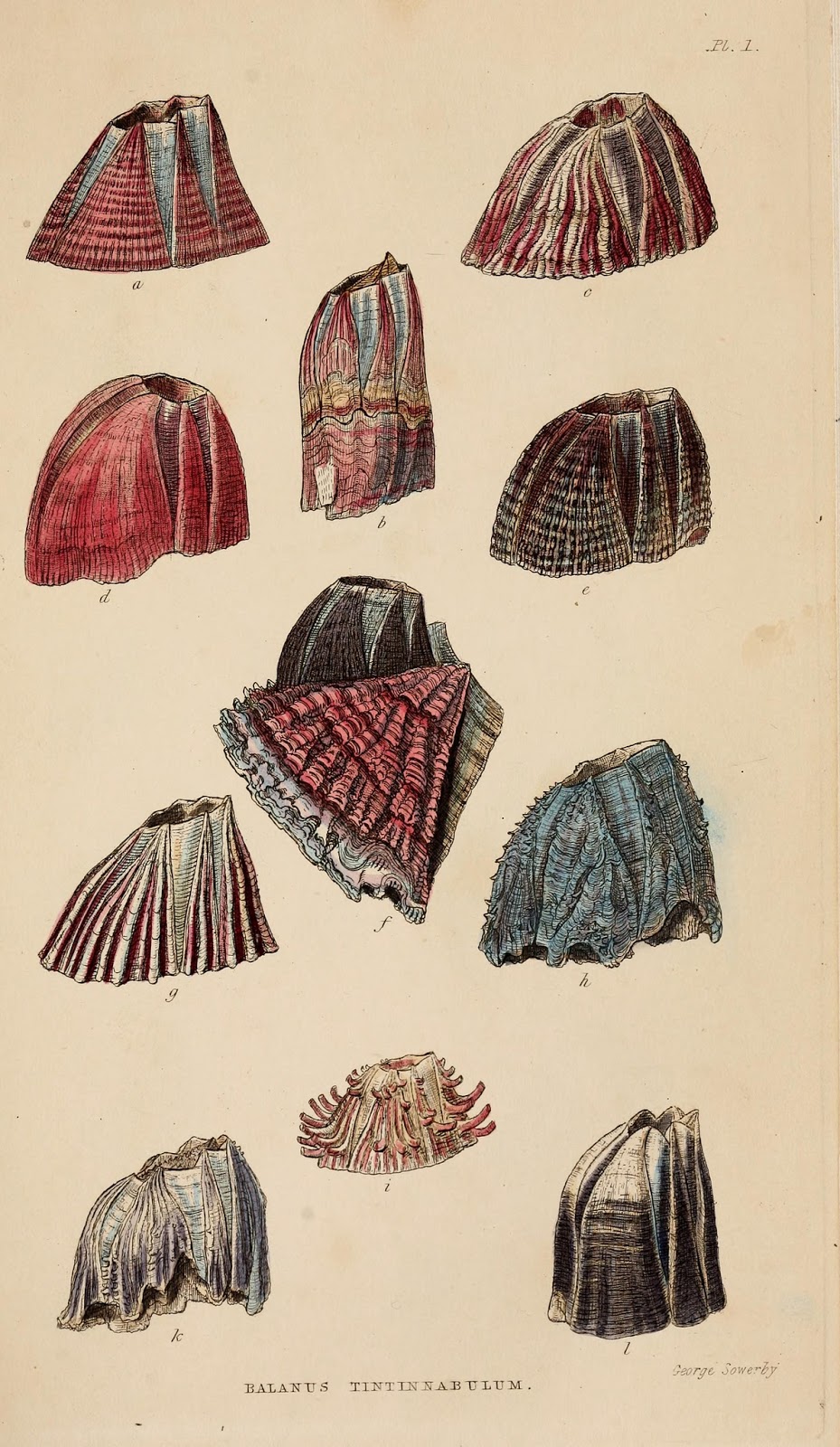
Darwin, Charles. A monograph on the sub-class Cirripedia, with figures of all the species. (1851-54). http://biodiversitylibrary.org/page/2007053. Digitized for BHL by the MBLWHOI Library.

Time passed, Darwin spent some time at Cambridge, and eventually he joined the voyage of the HMS Beagle thanks to a recommendation from his new mentor, botanist and geologist John Stevens Henslow. Darwin’s observations and research during the voyage would fuel his later revolutionary theories. But, as Dr. Melanie L.J. Stiassny, a curator at the American Museum of Natural History, points out in her article on Darwin within the book Natural Histories: Opulent Oceans, Darwin felt somewhat hesitant about his ideas during the early stages of their development. After all, they represented an entirely new way of looking at the natural world and thinking about its origins. So, while he fleshed out his theories on natural selection, Darwin also turned his attention back to, as Stiassny calls it, “his early love” – marine invertebrates. It was his work on barnacles that arguably helped pave the way for the acceptance of his later theories. As Stiassny states on page 84 of Opulent Oceans:

“It was the study of one group, the barnacles (Cirripedia), that would solidify his credentials as a taxonomic expert and provide him with empirical evidence for many of his evolutionary ideas…such as the loss of unnecessary structures (barnacles have no trace of the abdominal segments and swimming appendages of other crustaceans), and evidence that features inherited from a common ancestor can transform in anatomy and function (the typical walking limbs of crustaceans are modified into specialized feeding cirri in barnacles).”


View Full Size Image
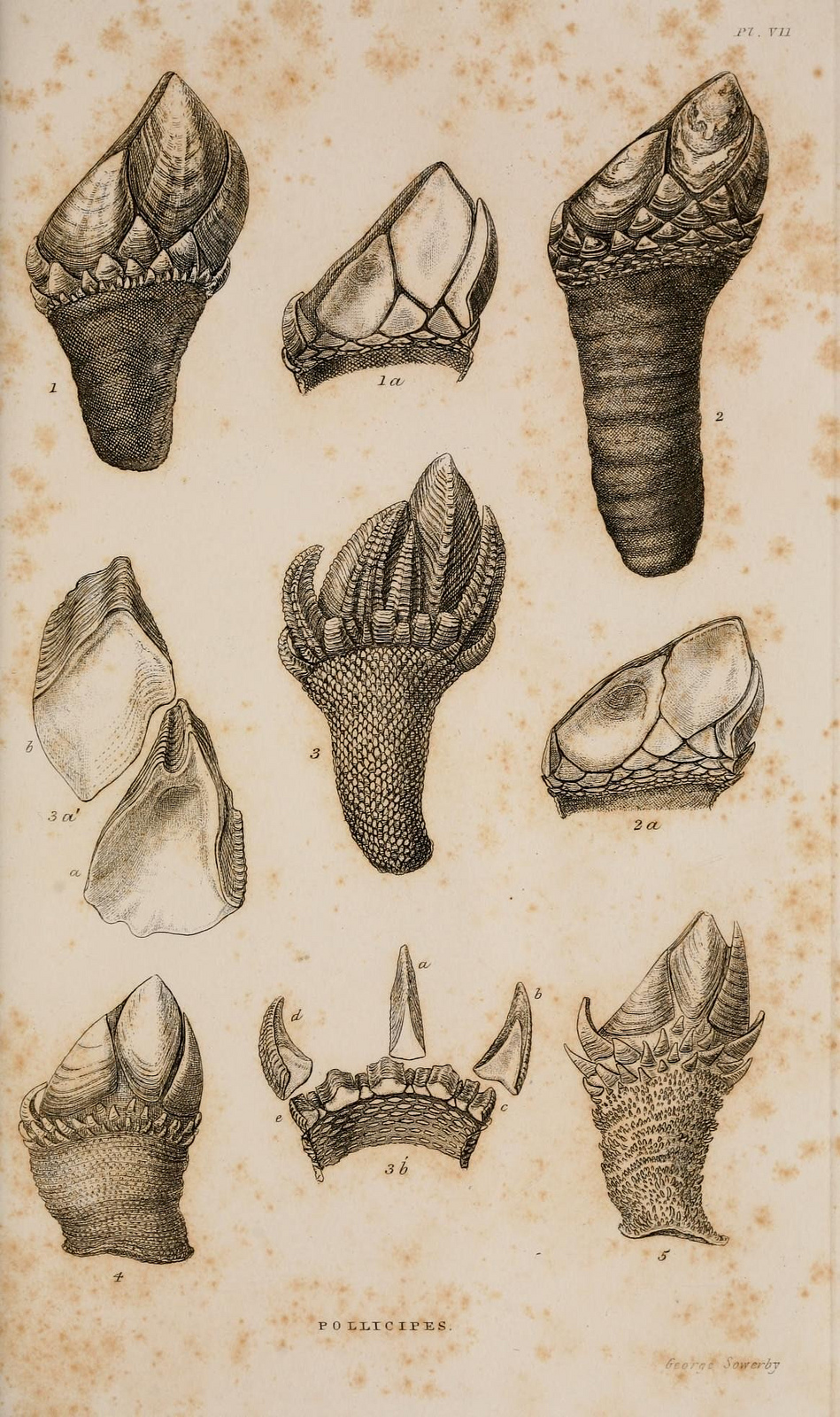
Darwin, Charles. A monograph on the sub-class Cirripedia, with figures of all the species. (1851-54). http://biodiversitylibrary.org/page/2007061. Digitized for BHL by the MBLWHOI Library.

Darwin spent eight years working on his barnacle studies, and from 1851-54 finally published his work in a four-part series: A monograph on the sub-class Cirripedia, with figures of all the species. Within the work, Darwin provides a classification for the crustacean Subclass Cirripedia, making it “the first based on the evolutionary principle of common descent” (Stiassny, 85). His On the Origin of Species, published in 1859, five years after his Cirripedia work, references cirripedes twenty-six times, demonstrating the impact this research had on Darwin’s evolutionary ideas.

View Full Size Image
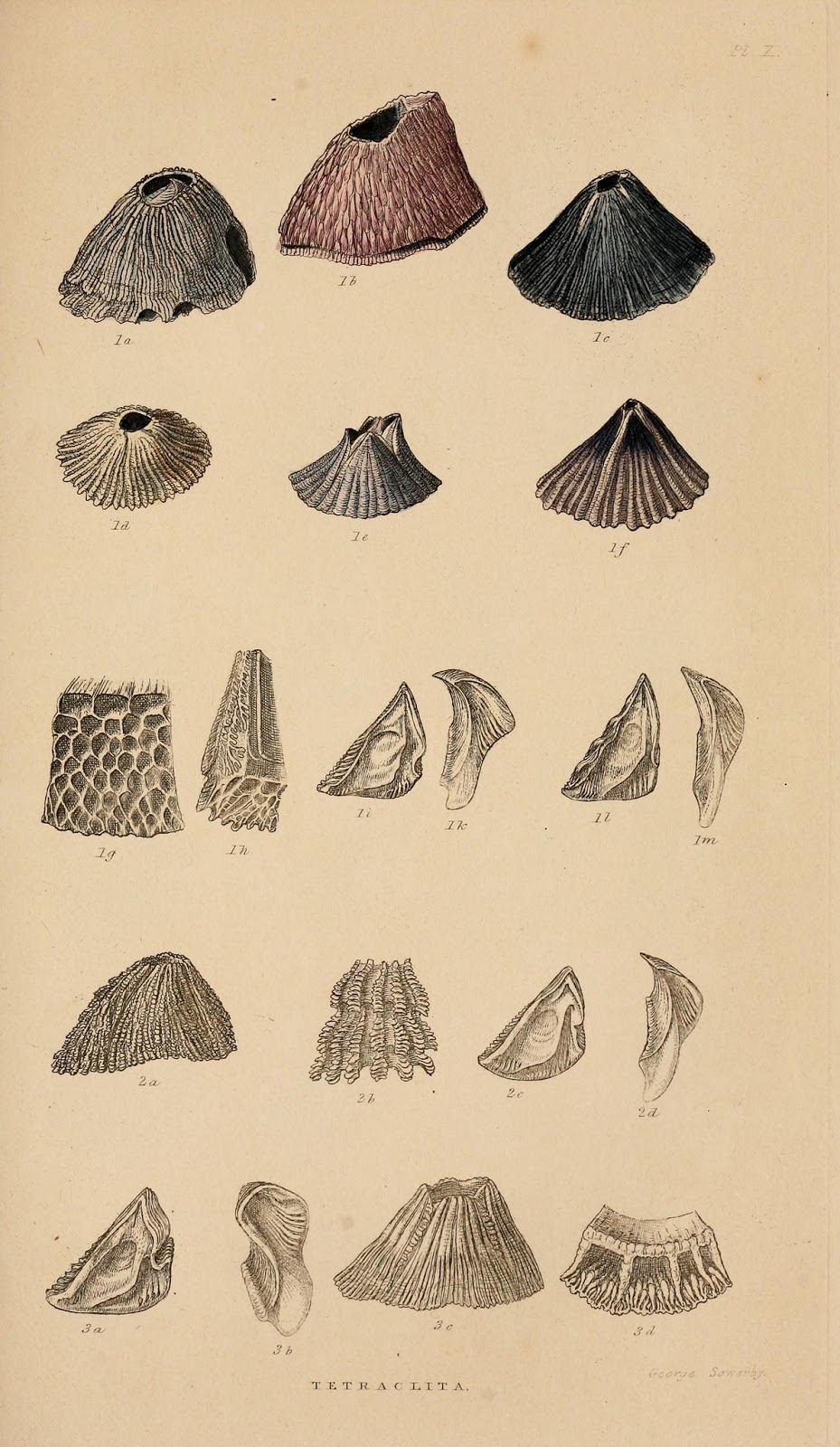
Darwin, Charles. A monograph on the sub-class Cirripedia, with figures of all the species. (1851-54). http://biodiversitylibrary.org/page/2011425. Digitized for BHL by the MBLWHOI Library.

Darwin’s name is arguably the most well-known from the world of natural history. Knowing Darwin’s history with the Cirripedia, one might wonder if he would have realized the heights of his scientific achievements without his barnacles.

So, we think, if Darwin were to give a Valentine to someone in the non-human animal kingdom, there’s a good chance it would go to a barnacle.

View Full Size Image
Darwin, Charles. A monograph on the sub-class Cirripedia, with figures of all the species. (1851-54). http://biodiversitylibrary.org/page/2007081. Digitized for BHL by the MBLWHOI Library.


  • See books and articles written by Charles Darwin in BHL.
  • Explore digitized versions of the books in his personal library in Charles Darwin’s Library in BHL.
  • Explore images from books in Charles Darwin’s Library in Flickr.

Reference:
Stiassny, Melanie L.J. (2014). Darwin’s “Beloved Barnacles.” Natural Histories Opulent Oceans: Extraordinary Rare Book Selections from the American Museum of Natural History Library (pp. 82-85). New York: Sterling Publishing.

February 12, 2016by ulib-libraryjobs
Blog Reel, Featured Books

Happy Birthday Waldo Schmitt!

Do you know what carcinology is?

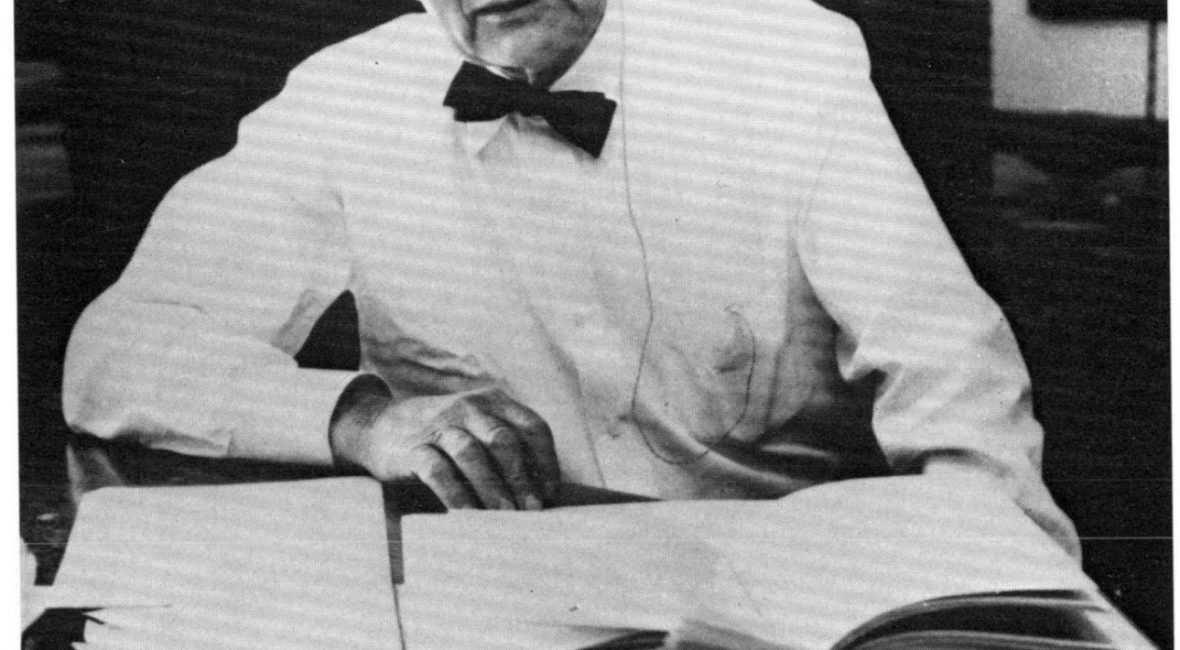
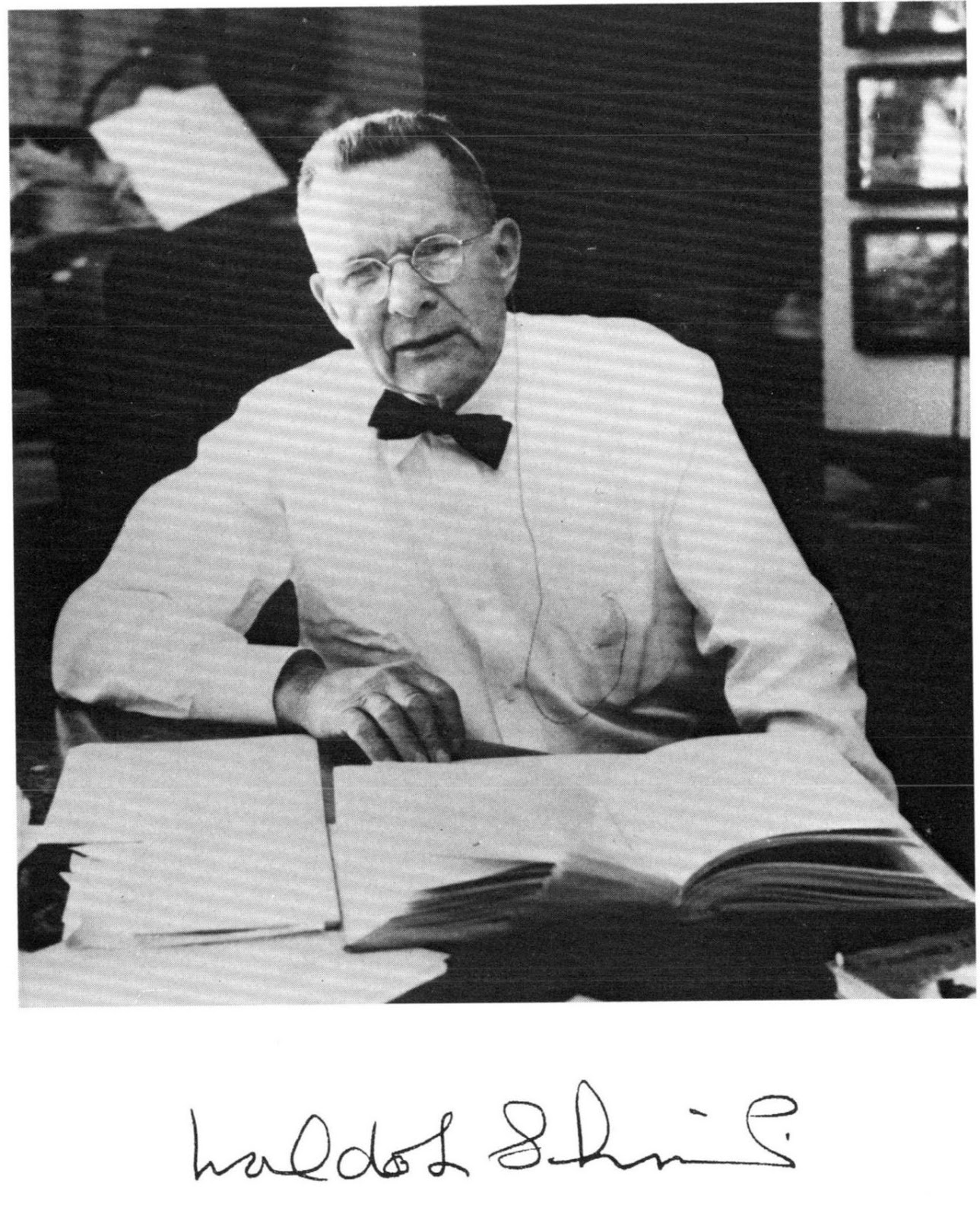
It is the study of crustaceans, a group of arthropods that includes lobsters, crayfish, shrimp, krill, barnacles and crabs. One of the pre-eminent carcinologists (a scientist who studies crustaceans) of the first half of the twentieth century was Waldo LaSalle Schmitt. Born on this day (June 25) in 1887 in Washington, D.C., Schmitt held various positions within the United States Department of Agriculture, the Smithsonian, and the United States Bureau of Fisheries throughout his career. He authored more than 70 titles over his lifetime and was a member of numerous professional organizations, including president of the Society of Systematic Zoology and the Washington Academy of Sciences and a trustee of the Bear’s Bluff Laboratories, the International Oceanographic Foundation, and the Serological Museum of Rutgers University.

View Full Size Image
Waldo Schmitt. Obituary. Crustaceana (34) 1, 1978. http://decapoda.nhm.org/pdfs/14597/14597.pdf.

While his primary field of investigation was carcinology, Schmitt actually began his career in 1907 as an Aid in Economic Botany for the United States Department of Agriculture, and his early work with natural history involved the study of both the flora and fauna of D.C. and Maryland. It was in 1910 that his true love affair with marine invertebrates began when he was appointed Aid in the Division of Marine Invertebrates at the Smithsonian’s National Museum of Natural History (NMNH). During the appointment, he met Mary Jane Rathbun, a fellow Smithsonian zoologist who specialized in crustaceans and described more than a thousand new species and subspecies and many higher taxa over her career. Her influence helped set Schmitt on his carcinology track, and an opportunity with the United States Bureau of Fisheries from 1911-14 helped solidify that decision.

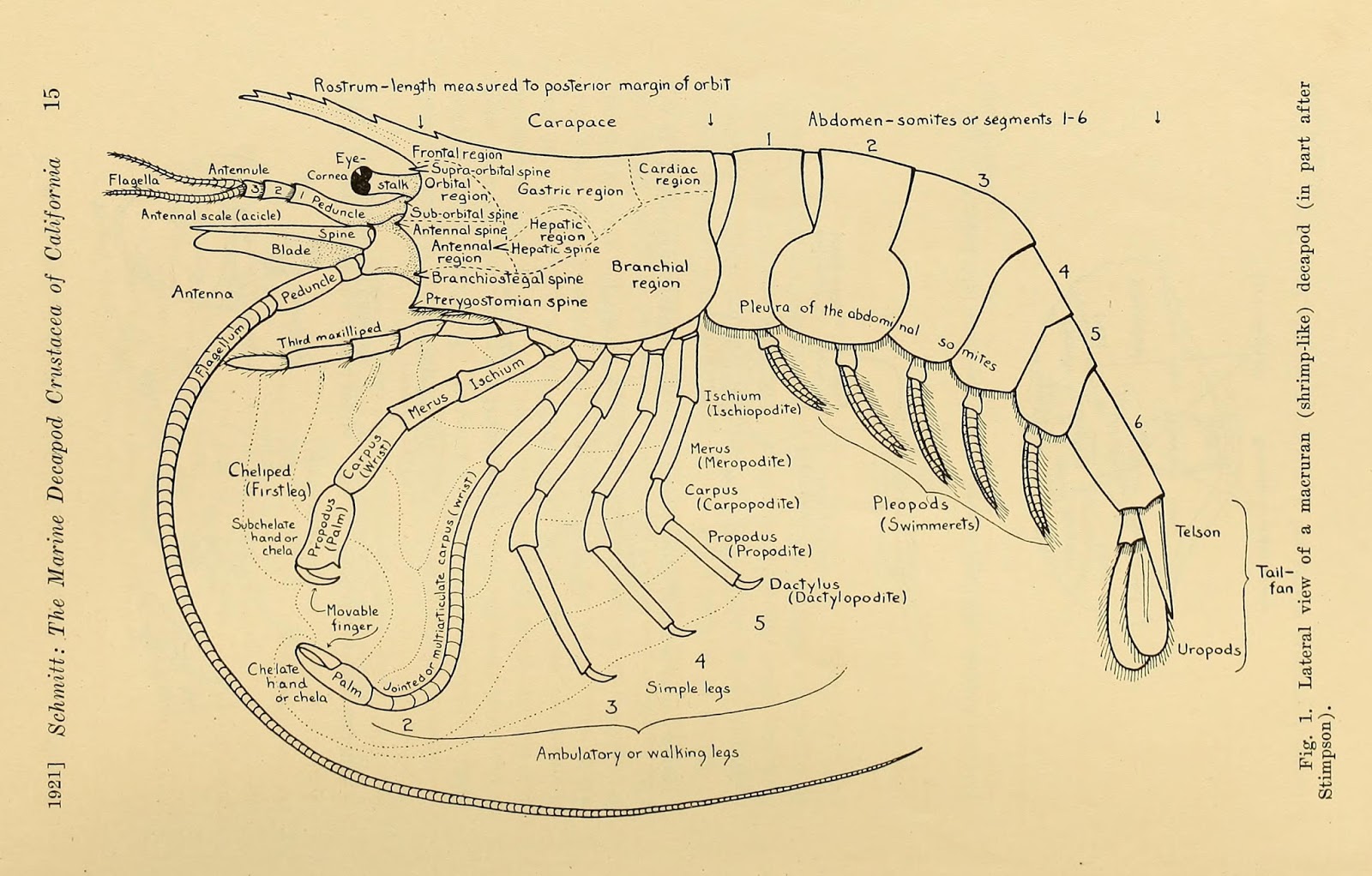
From 1911-14, the USS Albatross, an iron-hulled, twin-screw steamer in the United States Navy that was reputedly the first research vessel ever built especially for marine research, conducted a scientific investigation of the west coast of America and Alaska. The expedition examined existing and searched for new fishing grounds around Alaska, surveyed existing fishing grounds off Washington and Oregon, and performed a biological survey of the San Francisco Bay. Schmitt served as Scientific Assistant and Naturalist aboard the Albatross during this expedition, and used the crustaceans gathered during the survey as the material for his M.A. thesis for the University of California, entitled The Marine Decapod Crustacea of California.

View Full Size Image
Diagram of a macruran decapod. Schmitt, Waldo. The Marine Decapod Crustacea of California. 1921. http://biodiversitylibrary.org/page/37061600.

Following the survey, Schmitt returned to NMNH, where he held various positions in the Division of Marine Invertebrates (serving as Assistant Curator from 1915-20 and Curator from 1920-43), the Department of Biology (serving as Head Curator from 1943-47), and the Department of Zoology (Head Curator from 1947-57). After his retirement in 1957, Schmitt continued to serve as an Honorary Research Associate with the Smithsonian until his death in 1977.

Over his career, Schmitt took part in many more biological expeditions and field trips, studying crustaceans and other biodiversity in California, Florida, South America, the Galapagos Islands, and the West Indies. His last expedition took him to Antarctica.

View Full Size Image
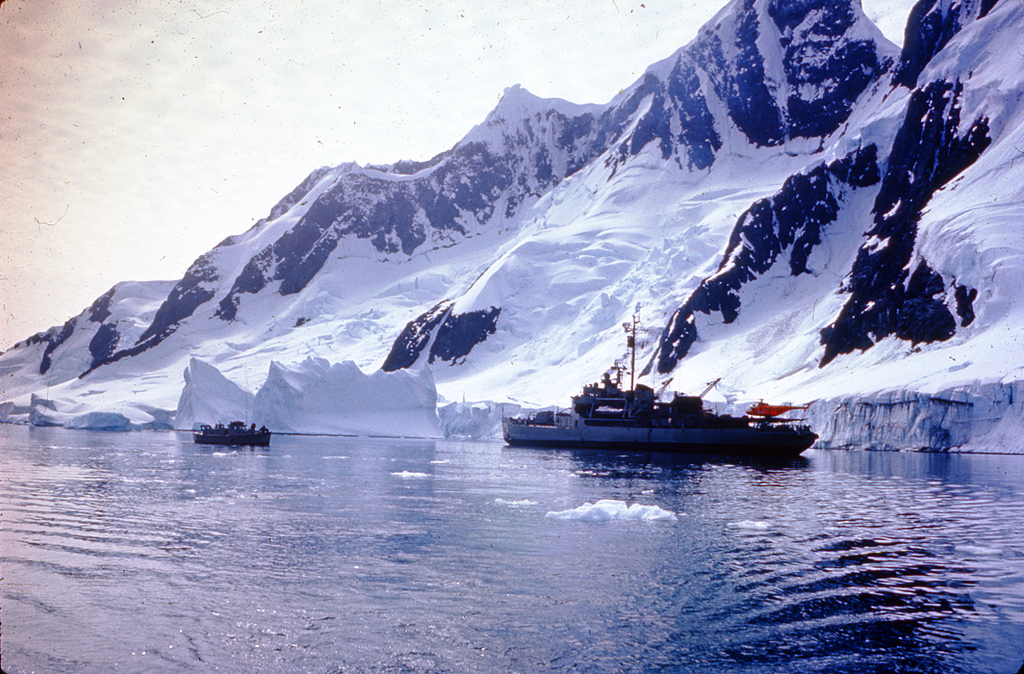
View of vessel during specimen collecting near Peterman Island, Antarctica, 1962-63.  SIA RU007231, Box 140, Folder. Taken during Waldo Schmitt’s collecting during the Palmer Peninsula Survey 1962-63. Smithsonian Institution Archives. https://www.flickr.com/photos/smithsonian/6350334901/in/album-72157628142203202/.

The Palmer Peninsula Survey of the United States Antarctic Research Program studied marine invertebrates and vertebrates, geography, botany, and entomology in and around multiple Antarctic sites from 1962-63. Schmitt collected over 29,000 specimens for the NMNH during the survey, and in recognition of his work, a thirty-mile ice-covered series of outcrops at the base of the Antarctic Peninsula was named after him – Schmitt Mesa.

Schmitt kept a series of field books detailing his work on the Palmer Peninsula Survey, and two of them, covering the period from November 24, 1962-March 10, 1963, have been digitized by The Field Book Project and made available within the Biodiversity Heritage Library. They have also both been fully transcribed within the Smithsonian Transcription Center, making it even easier for you to browse Schmitt’s incredible notes (Diary 1 and Diary 2).

View Full Size Image
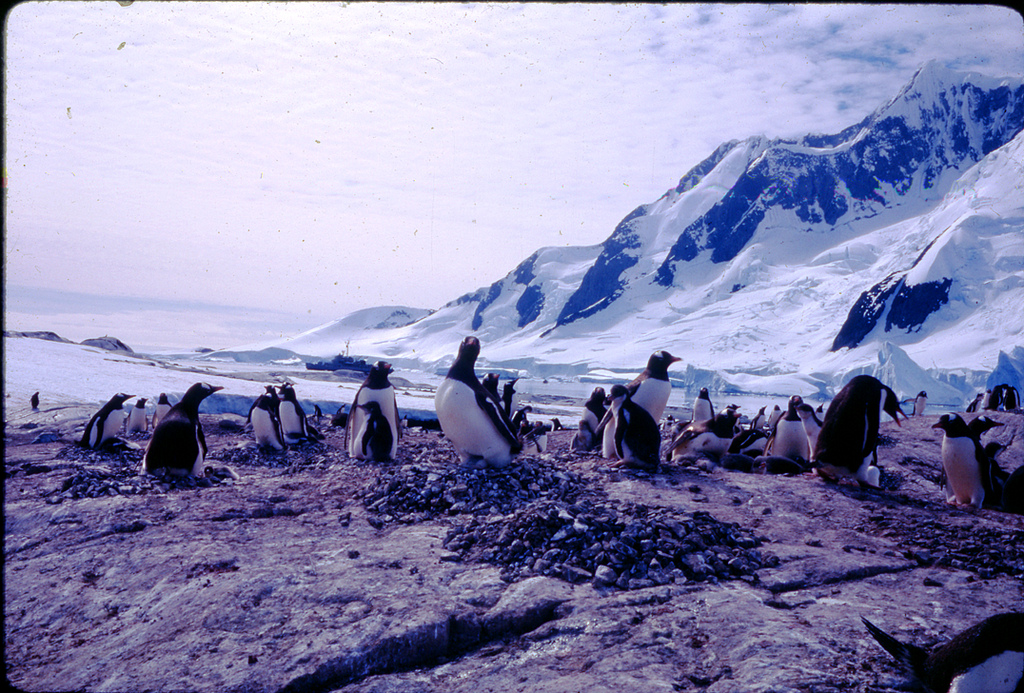
Penguins on the Palmer Peninsula, 10-11am, January 28, 1963. SIA RU007231, Box 140, Folder. Taken during Waldo Schmitt’s collecting during the Palmer Peninsula Survey 1962-63. Smithsonian Institution Archives. https://www.flickr.com/photos/smithsonian/6351079304/in/album-72157628142203202/.

An interesting excerpt from one of Schmitt’s digitized field books reveals his frustrations with the “college textbook oceanographers” serving on the Palmer Peninsula Survey. As Schmitt writes,

“College ‘students’ Ph.D.’s afloat. Two men are supposed to be on duty each operation or separate phase of work. Often (or at least at times) only one is around; and that one goes down to wake his relief; then without waiting to see that the awakened man gets up and onto the job goes off to bed. [It’s inconceivable].

Expensive gear is being towed behind, needs competent watch and attention, yet when ship stops or changes course, gear (or magnetometer) is endangered & then lost, and guy in charge of it blames the bridge for not notifying him of change – “they did not tell me.” Seems as though an alert man would realize change of course, absence of engine vibrations would sense at least some change requiring instrument care or retrieval. Much the same happens when wind direction dial in lab fails to register; student is aghast, I don’t know what’s wrong, I can’t get wind direction or force – a practical or experienced man could look outside or even through port & form an estimate as any old sea dog knows. Now I know why Coast guards & others are trained in sailing ships – to get practical experience – and to be able to form personal creditable and accurate determinations of wind, weather & sea conditions.

It would seem that any college textbook-oceanographer should serve an internship at Coast guard Acad (however limited) before being entrusted with valuable expensive and hard to replace gear & instruments. Nobody would let doctors fresh out of college operate on you, unless had interns experience, yet these Ph.D’s are turned loose without any first hand real practical [knowledge] of sea, & when balled out by one who knows the sea they resent it because man has had no college training… [they think] they know better because of textbook knowledge & the degree they have, a Ph.D. never made a man out of what wasn’t.”

Be sure to check out Schmitt’s field books to get more fascinating insight into the day-to-day life of a scientist at work in Antarctica.

Schmitt’s career was truly a remarkable one, contributing extensively to our knowledge of biodiversity and particularly crustaceans. In addition to the Schmitt Mesa named in his honor, the clam genus Waldo also bears his namesake. Check out other works by Waldo Schmitt in BHL and browse photos taken by him during his many expeditions, including the Palmer Peninsula Survey, from The Field Book Project in Flickr.

June 25, 2015by ulib-libraryjobs
Blog Reel, Featured Books

Book of the Week: Illustrations in Zoology

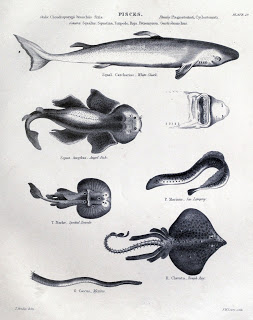
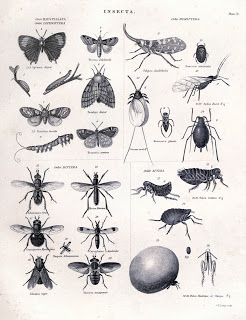
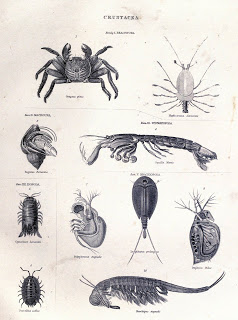
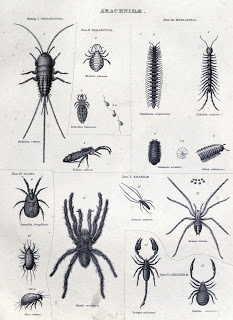
Ever wanted to get a systematic view of the animal kingdom in picture-book style? Well, this week you’re in luck, because we’re featuring Illustrations of Zoology (1851), with engravings by F.W. Lowry and Thomas Landseer, after the original drawings by Sowerby, Varley, Holmes, Bone, Pyne, Lowry and Charles Landseer. It contains no less than 87 illustrations of animals from all walks of life!

The book is arranged first according to vertebrates and invertebrates, and within each of those divisions, it is further divided into the various classes, i.e. Mammals, Birds, Reptiles, and Fish for vertebrates and Mollusks, Insects, Crustaceans, Arachnids, Myriapods, Echinoderms, Entozoa, Acalepha, Infusoria, and Polyps for invertebrates. The further you delve into the classes, the more the categories are broken down into orders and families. While 156 pages of our book of the week give some fairly detailed text descriptions of the classes, orders and families contained within, the really juicy stuff comes after that, when the dozens of breath-taking engravings begin. For our post, we’ve chosen a few of our favorite engravings, and, for each featured, we’ve chosen our favorite animal on the page and included an interesting fact about it. Enjoy!

View Full Size Image

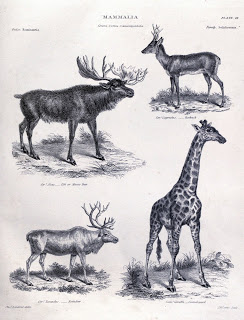
Mammals: Featured animal, the Giraffe. Interesting fact: Giraffes can grow up to 18 feet tall, but they have the same number of vertebrae in their necks as humans do: 7!

View Full Size Image

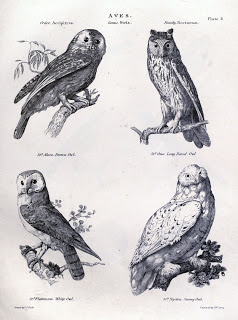
Birds: Featured Animal, the Snowy Owl. Interesting fact: The Snowy Owl’s diet consists mostly of lemmings, and they can eat up to 1,600 a year each!

View Full Size Image

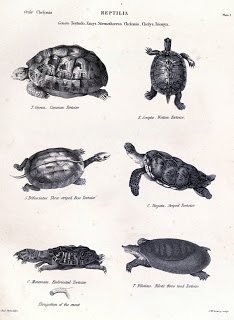
Reptiles: Featured Animal, the Matamata. Interesting fact: The Matamata has been renamed 14 different times in 2 centuries.

View Full Size Image

Fish: Featured Animal, the Whale Shark. Interesting fact: The Whale Shark is the largest fish in the sea, reaching lengths of 40 feet!

View Full Size Image

Insects: Featured Animal, Lanternfly (shown as Fulgora candellaria). Interesting fact: Though named Lanternflies due to the assertion that the large “snout” of this insect becomes illuminated at night (an assertion that even Linnaeus accepted without question), centuries of observations have failed to support this claim.

View Full Size Image

Crustaceans: Featured Animal, the Mantis Shrimp (shown as Squilla mantis). Interesting fact: This shrimp is of the “spearer” type, having long spiny appendages topped with barbed tips that are used to stab and snag prey.

View Full Size Image

Arachnids: Featured Animal, Argiope lobata (shown as Aranea lobata). Interesting fact: Argiope lobata decorate their webs with intricate crisscross patterns, of which the purpose is still in hot debate. Some believe the patterns serve as camouflage, others that they make the spider appear larger and more threatening, and still others that they make the web more visible and thus less likely to incur accidental damage from large bodies like humans. Still others believe that the patterns more distinctly reflect ultraviolet light, which many insects are attracted to, thus increasing the number of prey that the spider traps.

We hope you’ve enjoyed our brief excursion into the world of zoology, but remember, we’ve only highlighted a few of the many gorgeous plates in this book. Be sure to check out all of the images from Illustrations of Zoology (1851) in our Flickr account!

August 18, 2011by michelle.underhill

Help Support BHL

BHL's existence depends on the financial support of its patrons. Help us keep this free resource alive!

search

About BHL

The Biodiversity Heritage Library (BHL) is the world’s largest open access digital library for biodiversity literature and archives. BHL operates as a worldwide consortium of natural history, botanical, research, and national libraries working together to digitize the natural history literature held in their collections and make it freely available for open access as part of a global “biodiversity community.”

Join Our Mailing List

Sign up to receive the latest news, content highlights, and promotions.

Subscribe Now

Subscribe to Blog via Email

Enter your email address to subscribe to this blog and receive notifications of new posts by email.

Join 319 other subscribers

Subscribe to Blog Via RSS

Subscribe to the blog RSS feed to stay up-to-date on all the latest BHL posts.

Access RSS Feed

Inspiring Discovery through Free Access to Biodiversity Knowledge.

The Biodiversity Heritage Library makes it easier than ever for you to access the information you need to study and explore life on Earth…for free, anytime, anywhere.


64+ Million Pages of
Biodiversity Literature Online.

EXPLORE

Tools and Services
to Transform Research.

EXPLORE

300,000+
Illustrations on Flickr.

EXPLORE

ABOUT | HARMFUL CONTENT | PRIVACY | SITE MAP | TERMS OF USE