Biodiversity Heritage Library - Program news and collection highlights from BHL
  • Home
  • News
  • Featured Books
    • All Featured Books
    • Book of the Month Series
    • BHL at 20
  • User Stories
  • Campaigns
    • Fossil Stories
    • Garden Stories
    • Monsters Are Real
    • Page Frights
    • Her Natural History
    • Earth Optimism 2020
  • Tech Blog
  • Visit BHL
Home
News
Featured Books
    All Featured Books
    Book of the Month Series
    BHL at 20
User Stories
Campaigns
    Fossil Stories
    Garden Stories
    Monsters Are Real
    Page Frights
    Her Natural History
    Earth Optimism 2020
Tech Blog
Visit BHL
  • Home
  • News
  • Featured Books
    • All Featured Books
    • Book of the Month Series
    • BHL at 20
  • User Stories
  • Campaigns
    • Fossil Stories
    • Garden Stories
    • Monsters Are Real
    • Page Frights
    • Her Natural History
    • Earth Optimism 2020
  • Tech Blog
  • Visit BHL
Biodiversity Heritage Library - Program news and collection highlights from BHL
BHL News, Blog Reel

BHL Booth at the Earth Optimism Summit

​This Earth Day weekend, the Earth Optimism Summit in Washington, D.C. celebrated conservation successes and fueled discussions about how to expand conservation impact. Organized by the Smithsonian, the three-day event (21-23 April) brought together representatives from a wide array of fields for a series of presentations relaying over 100 conservation success stories. The Summit also included a public Innovation Commons event featuring exhibits showcasing the ways that a variety of organizations and projects support conservation and help protect biodiversity.

View Full Size Image
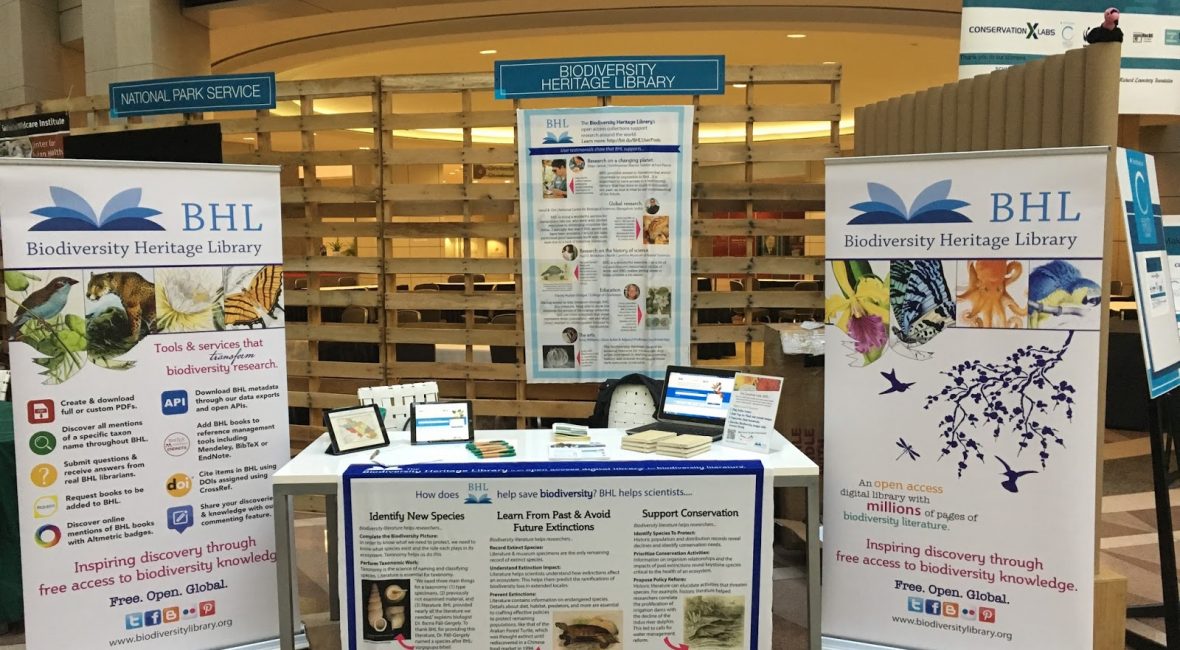
BHL booth at the Earth Optimism Summit in Washington, DC, 21-23 April 2017. Image credit: Grace Costantino.

The Biodiversity Heritage Library participated in the Innovation Commons with a booth highlighting the many ways that BHL helps save biodiversity by supporting research around the world. Over the three days of the Summit, staff from BHL, Smithsonian Libraries, and the Library of Congress (both BHL Member libraries) shared BHL resources and impact stories with over 250 visitors. As the Innovation Commons event was open to the public, booth staff interacted not only with Summit attendees, but also members of the public, including participants of the March for Science on 22 April.

View Full Size Image
Amy Zhang (left; BHL intern at Library of Congress) and Carolyn Sheffield (right; BHL Program Manager) at the BHL booth on 22 April 2017. Image Credit: Martin Kalfatovic.

Using posters showcasing BHL’s impact on conservation and user stories from around the world, as well as through hands-on demos using the laptop and ipads at the booth, staff introduced many new people to BHL’s collections, tools and services. Many visitors expressed awe and appreciation for the wealth of biodiversity resources available to them through BHL, with more than one person expressing disbelief that they had previously been unaware of BHL’s existence.

View Full Size Image
Tomoko Steen (left; Senior Research Specialist, Science, Technology, and Business Division, Library of Congress) and Martin Kalfatovic (right; BHL Program Director) at the BHL booth on 22 April. Image credit: Martin Kalfatovic.

BHL also partnered with Scientific Collections International for booth content. SciColl is a global consortium devoted to promoting the use and impact of object-based scientific collections across disciplines. Last September, BHL participated in SciColl’s Food Security Workshop at the National Agricultural Library, which brought together stakeholders to talk about the ways that scientific collections (including literature) can support food security. Booth staff distributed brochures summarizing the results of this workshop.

View Full Size Image
Bonnie White (left; Library Technician, Smithsonian Libraries), Carolyn Sheffield (center; BHL Program Manager) and Grace Costantino (right; BHL Outreach and Communication Manager) at the BHL booth on 21 April. Image credit: Barbara Ferry.

We would like to extend a special thanks to each volunteer who helped share BHL’s free and open collections with Earth Optimism visitors. Smithsonian Libraries staff at the booth included Kristen Bullard (Librarian), Barbara Ferry (Head, Natural and Physical Sciences Department, SIL), Gil Taylor (Supervisory Librarian), Bonnie White (Library Technician), and Sue Zwicker (Librarian). Library of Congress staff at the booth included Tomoko Steen (Senior Research Specialist, Science, Technology and Business Division) and Amy Zhang (BHL intern at LoC). BHL staff at the booth included Grace Costantino (BHL Outreach and Communication Manager), Martin Kalfatovic (BHL Program Director and Associate Director, Digital Programs and Initiatives, SIL), and Carolyn Sheffield (BHL Program Manager).

View Full Size Image
Grace Costantino at the BHL booth on 23 April. Image credit: Sue Zwicker.

We were thrilled to have the opportunity to participate in the Earth Optimism Summit and demonstrate the ways that BHL’s free resources can help support conservation efforts around the world!

View Full Size Image
Martin Kalfatovic (left) and Carolyn Sheffield (right) at the BHL booth on 22 April. Photo credit: Martin Kalfatovic.
April 25, 2017by michelle.underhill
BHL News, Blog Reel

BHL Booth at Earth Optimism Summit, 21-23 April 2017

View Full Size Image

This Earth Day weekend, the Earth Optimism Summit in Washington, D.C. will shift the environmental conversation from one of doom and gloom to one of optimism and solutions. The Summit will celebrate conservation success stories and fuel discussions about how to expand conservation impact.

Organized by the Smithsonian Institution, the three-day event (21-23 April) will bring together representatives from a wide array of fields (including science, journalism, the arts, public policy, and more!) for a series of presentations relaying over 100 conservation success stories.

The Summit will also include a public Innovation Commons event featuring exhibits showcasing the ways that a variety of organizations and projects support conservation and help protect biodiversity.

The Biodiversity Heritage Library is participating in the Innovation Commons with a booth highlighting the many ways that BHL helps save biodiversity by supporting research around the world. 

Click here to learn more about how BHL supports science and conservation.

The Innovation Commons is open to the public. If you’re in the Washington, D.C. area, we invite you to stop by our booth to learn more about BHL and join us in celebrating conservation success stories!

WHERE?
Atrium of The Ronald Reagan Building and International Trade Center.
1300 Pennsylvania Ave NW, Washington, DC 20004.
WHEN?
Friday, April 21st: 7:30 AM – 5:00 PM
Saturday, April 22nd: 7:30 AM – 5:00 PM
Sunday, April 23rd: 7:30 AM – 2:00 PM

Learn more on the Earth Optimism website.

April 12, 2017by Grace Costantino
BHL News, Blog Reel

Earth Day 2016!

Happy Earth Day!  This special day for recognizing and fighting the serious and negative effects of climate change began on April 22nd, 1970.  On that first Earth Day, 20 million Americans peacefully demonstrated to shine light on the devastating effects of modern life and production on wildlife and the climate.  Soon after this the Clean Air Act, Clean Water Act, Endangered Species Act, and other laws meant to protect the environment were passed by the government.  By the 1990s Earth Day expanded and came to be celebrated by over 200 million people in 141 countries–and now more than 1 billion people all around the world participate on Earth Day in order to help the environment.
Climate change refers to changes happening to the world climate, which are linked to rising sea levels, melting glaciers, and shifting flower and plant blooming times.  Contributions to human-induced climate change include the burning of fossil fuels, which releases heat-trapping gases into the air.  Climate change affects biodiversity of all kinds and in all areas of the world, often by depriving animals of their habitats and food sources, or changing their living conditions dramatically and dangerously.
Deforestation, another driving cause of climate change, is the cutting down of trees on a very large scale, and it happens most often due to agricultural reasons, financial reasons, or human expansion into new areas to live.  Millions of species lose their habitats as a result of deforestation.  In addition, without the trees to provide a forest canopy to block the sun during the day and capture heat at night, extreme temperature swings result and can negatively impact plants and animals in the area.  
View Full Size Image
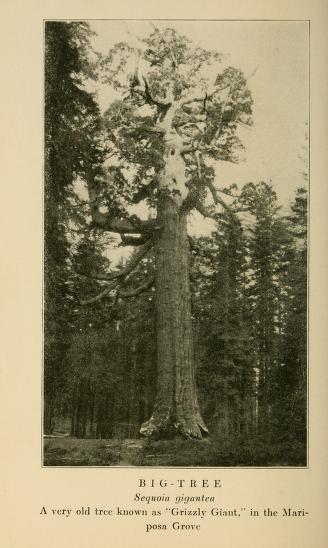
Let’s preserve our beautiful forests–and plant new ones! Image at BHL here.
There are lots of things that you can do this Earth Day to help fight climate change.  One of the most important things people and organizations do is plant trees.  This short read, Trees Are the Answer. . .to America’s Growing Environmental Concerns, is just as relevant today as when it was published.  Trees fight climate change by absorbing excess CO2 from the atmosphere.  CO2 is harmful to the climate and is created by such things as car emissions.  In one year, an acre of mature trees can absorb enough CO2 to make up for a car that drove 26,000 miles (source).  In addition to absorbing CO2, trees absorb other climate pollutants such as nitrogen oxide and ammonia, and act as a filter to capture harmful particulates in their leaves and bark.  In addition to planting trees, you can take part in cleaning local parks and streams, start composting to turn food waste into soil, eat less meat to reduce greenhouse gas emissions that are a byproduct of the meat industry, stop using disposable plastic which can kill wildlife and destroy ecosystems, buy local produce to reduce the carbon emissions needed to drive in non-local produce, drive less to reduce your carbon footprint (try biking for some healthy fun!), sign up to stop receiving junk mail which wastes paper, and recycle electronic devices which are normally thrown into landfills that pollute the environment.
View Full Size Image
Planting trees will help combat climate change. Image at BHL here.
If you are a budding naturalist, you can help the climate and biodiversity by becoming a Citizen Naturalist–anyone can do this, including kids!  Citizen Naturalists monitor their local ecosystems and threats to wildlife and submit their observations to citizen science programs.  There are many groups dedicated to wildlife observation to help protect wildlife and fight climate change, and some of the fun animals you can help observe include frogs, birds, fireflies, and Monarch Butterflies.  If you want to work alongside a professional scientist, you can become a Citizen Science volunteer, where you assist scientists in their research to help analyze and combat the effects of climate change.  Check out the National Wildlife Federation’s page about Citizen Naturalists and Scientists for more information about groups to join and project ideas: NWF Citizen Science Resources.  You can also get involved with Citizen Science through BHL: Click Here for BHL Citizen Science Information!
View Full Size Image
Citizen Naturalists and Citizen Scientists can take note of the wildlife in their backyards and local parks. Image at BHL here.
How do you plan to get involved this Earth Day?  Tell us below!
www.earthday.org
https://www.epa.gov/earthday
https://www.nwf.org/Wildlife/Wildlife-Conservation/Citizen-Science.aspx
http://environment.nationalgeographic.com/environment/global-warming/deforestation-overview/
http://climate.nasa.gov/
April 22, 2016by micahv

Help Support BHL

BHL's existence depends on the financial support of its patrons. Help us keep this free resource alive!

search

About BHL

The Biodiversity Heritage Library (BHL) is the world’s largest open access digital library for biodiversity literature and archives. BHL operates as a worldwide consortium of natural history, botanical, research, and national libraries working together to digitize the natural history literature held in their collections and make it freely available for open access as part of a global “biodiversity community.”

Follow BHL

  • Bluesky logo
  • Instagram logo
  • Facebook logo
  • Flickr logo
  • Twitter logo

Join Our Mailing List

Sign up to receive the latest news, content highlights, and promotions.

Subscribe Now

Subscribe to Blog via Email

Enter your email address to subscribe to this blog and receive notifications of new posts by email.

Join 319 other subscribers

Subscribe to Blog Via RSS

Subscribe to the blog RSS feed to stay up-to-date on all the latest BHL posts.

Access RSS Feed


64+ Million Pages of
Biodiversity Literature Online.

EXPLORE

Tools and Services
to Transform Research.

EXPLORE

300,000+
Illustrations on Flickr.

EXPLORE

ABOUT | HARMFUL CONTENT | PRIVACY | SITE MAP | TERMS OF USE