Biodiversity Heritage Library - Program news and collection highlights from BHL
  • Home
  • News
  • Featured Books
    • All Featured Books
    • Book of the Month Series
    • BHL at 20
  • User Stories
  • Campaigns
    • Fossil Stories
    • Garden Stories
    • Monsters Are Real
    • Page Frights
    • Her Natural History
    • Earth Optimism 2020
  • Tech Blog
  • Visit BHL
Home
News
Featured Books
    All Featured Books
    Book of the Month Series
    BHL at 20
User Stories
Campaigns
    Fossil Stories
    Garden Stories
    Monsters Are Real
    Page Frights
    Her Natural History
    Earth Optimism 2020
Tech Blog
Visit BHL
  • Home
  • News
  • Featured Books
    • All Featured Books
    • Book of the Month Series
    • BHL at 20
  • User Stories
  • Campaigns
    • Fossil Stories
    • Garden Stories
    • Monsters Are Real
    • Page Frights
    • Her Natural History
    • Earth Optimism 2020
  • Tech Blog
  • Visit BHL
Biodiversity Heritage Library - Program news and collection highlights from BHL
Blog Reel, User Stories

Women in Enlightenment Science

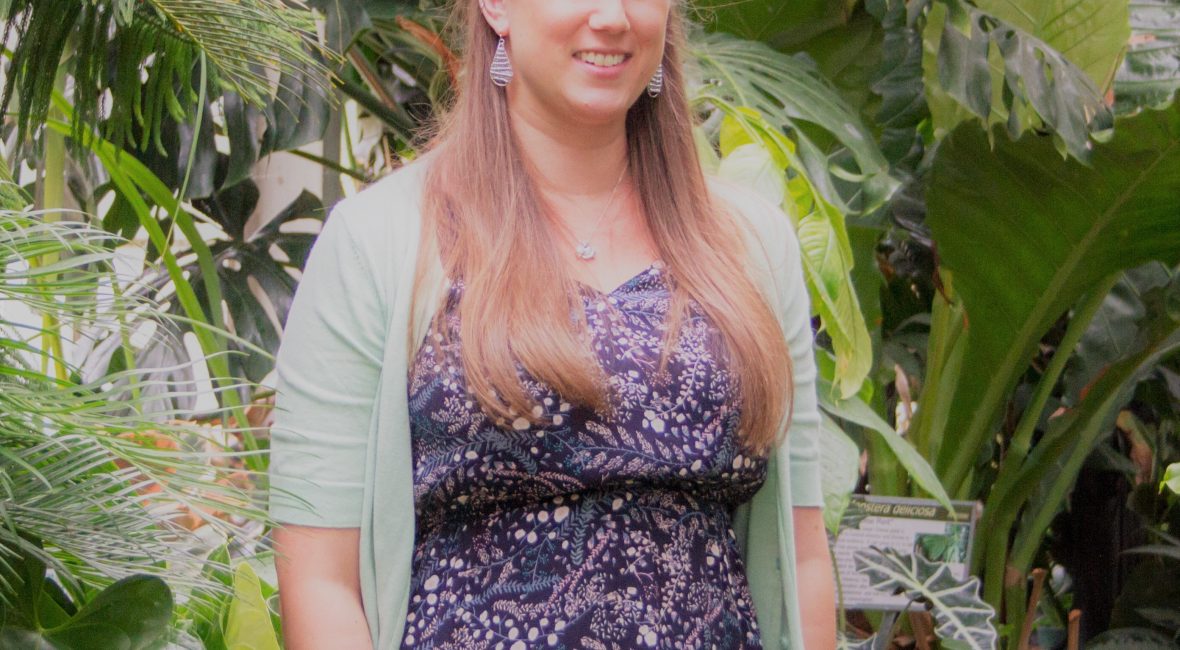
Photo of a woman standing in front of foliage.
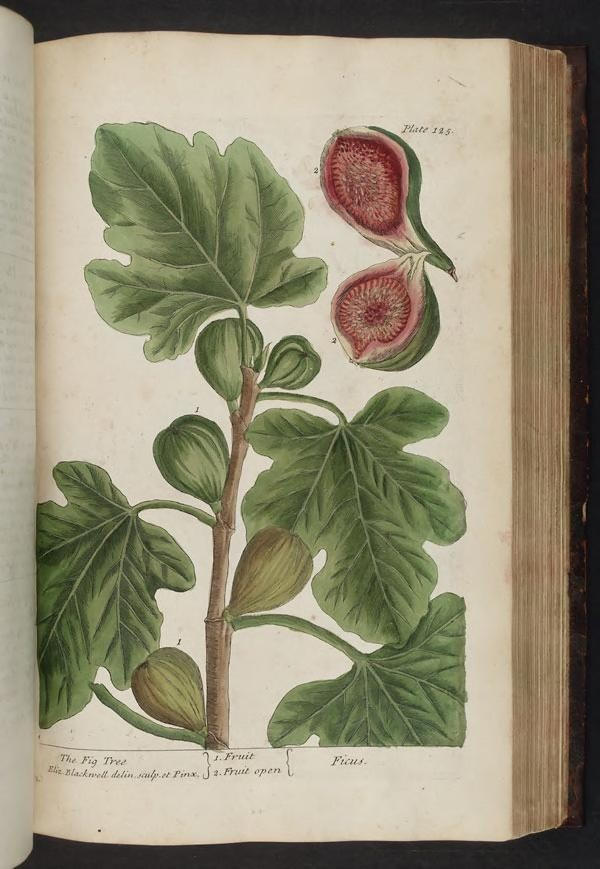
Illustration of fig tree

“The Fig Tree”. Blackwell, Elizabeth. A Curious Herbal. v. 1 (1737). Contributed in BHL from the Peter H. Raven Library of the Missouri Botanical Garden.

In 1737, Elizabeth Blackwell published the first weekly installment of a very ambitious project. The final work, entitled A Curious Herbal (1737-39), ultimately consisted of 500 plates of plants alongside 111 pages of text providing descriptions of their medicinal uses. Endorsed by the Royal College of Physicians, the publication helped satisfy the need for an up-to-date reference work for apothecaries.

The motivation to produce this remarkable herbal arose from equally remarkable circumstances.

The daughter of a successful merchant, Elizabeth married Alexander Blackwell at the age of 28. Her husband had a long history of operating outside of the law, and his shady business dealings resulted in huge debts that ultimately landed him in debtor’s prison.

With her husband in prison and a child to support, Elizabeth decided to use her artistic skills to produce a new herbal to support herself and pay her husband’s debts. Using specimens from the Chelsea Physic Garden as models for her illustrations, Elizabeth drew, engraved, and colored all 500 plates herself and used Joseph Miller’s Botanicum Officinale (1722) as a point of reference for the text, while her husband provided the translated names of the plants.

The Herbal’s income secured Alexander’s release from prison. Sadly, he soon accumulated more debts, which required Elizabeth to sell some of the rights to her publication in order to raise additional funds. Ultimately, her husband left his family for Sweden, where he served as a court physician to the Swedish king until his involvement in a political conspiracy resulted in his execution. [1]

Little else is known of Elizabeth’s life, but her herbal is a lasting testament to her artistic skill and entrepreneurial prowess.

A Curious Herbal is the subject of a chapter in Dr. Anna K. Sagal’s first monograph project, Botanical Entanglements: Women, Plants, Literature, and Artwork in the Eighteenth Century, which will be published by the University of Virginia Press in fall 2021.

The book, which has been generously supported by the Newberry Library’s Monticello College Foundation & Audrey Lumsden-Kouvel Fellowship, explores how women — who were always considered amateur naturalists — participated in discourses which were often culturally barred to them. By engaging in literary and artistic projects that intersected with scientific discourse, these women made space for themselves in what was otherwise an overwhelmingly male-dominated conversation. The monograph features several women writers and artists, including Eliza Haywood, Charlotte Lennox, Mary Delany, Maria Edgeworth, Maria Jacson, Priscilla Wakefield, and Henrietta Maria Moriarty, along with Blackwell herself.

By providing free, online access to relevant literature, such as Blackwell’s Herbal, the Biodiversity Heritage Library has been an important resource for Sagal’s research on the project.

“Thanks to BHL, which provides access to texts by little-known women-naturalists and the male-authored texts that influenced them, I can conduct research around the globe without leaving my office,” shares Sagal. “Although I do have access to some research libraries and archives, many botanical texts are held by overseas libraries, which I do not have the funds to travel to.”
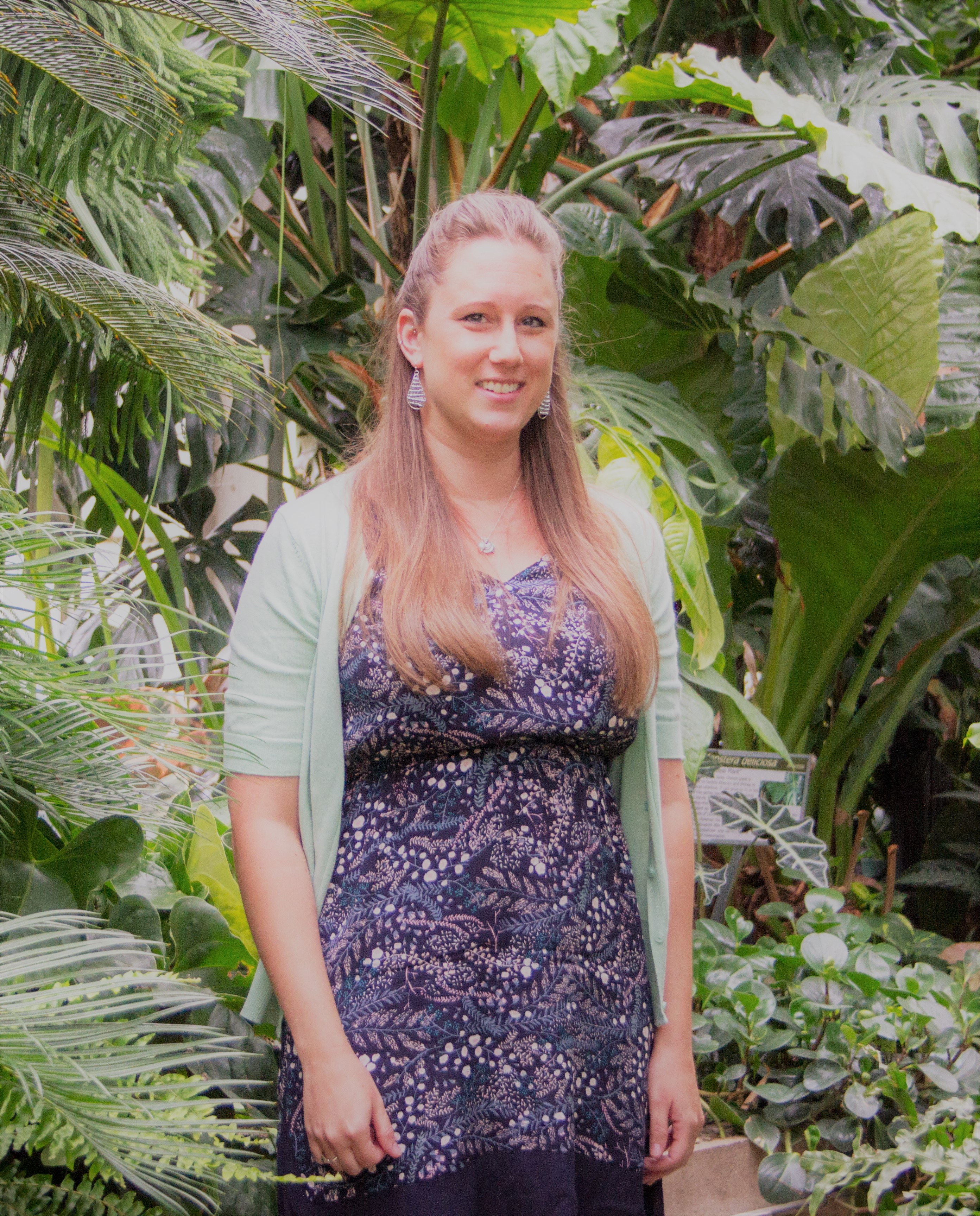
Photo of a woman standing in front of foliage.

Dr. Anna K. Sagal. Image credit: McMaster University

Sagal, a Teaching Fellow at Cornell College, has been studying eighteenth century British literature for eleven years. She first discovered BHL about a year ago, while searching the Internet for botanical texts. Now, when actively working on her monograph project, she uses BHL daily, most often reading titles online, but sometimes downloading select pages for later offline reference.

“I really appreciate the breadth and depth of resources pertaining to eighteenth-century botany,” affirms Sagal. “Much of the content from the Peter H. Raven Library at the Missouri Botanical Garden is very useful to me, and a lot of it is available via the BHL. I also really like that you can download files and images to look at later.”

Many works accessed through BHL beyond Blackwell’s Herbal have informed sections of Sagal’s monograph. According to Sagal, perhaps the most influential title, used in multiple contexts within several chapters of her book, is The Botanical Magazine, or Flower-Garden Displayed, published from 1787-1800. First published by William Curtis, a botanist at Kew Gardens, the name of the publication was changed in his honour to Curtis’s Botanical Magazine following his death in 1799. Still published today by Kew Gardens, it is the world’s longest running botanical magazine illustrated in color, representing two centuries of botanical history and discovery. [3]
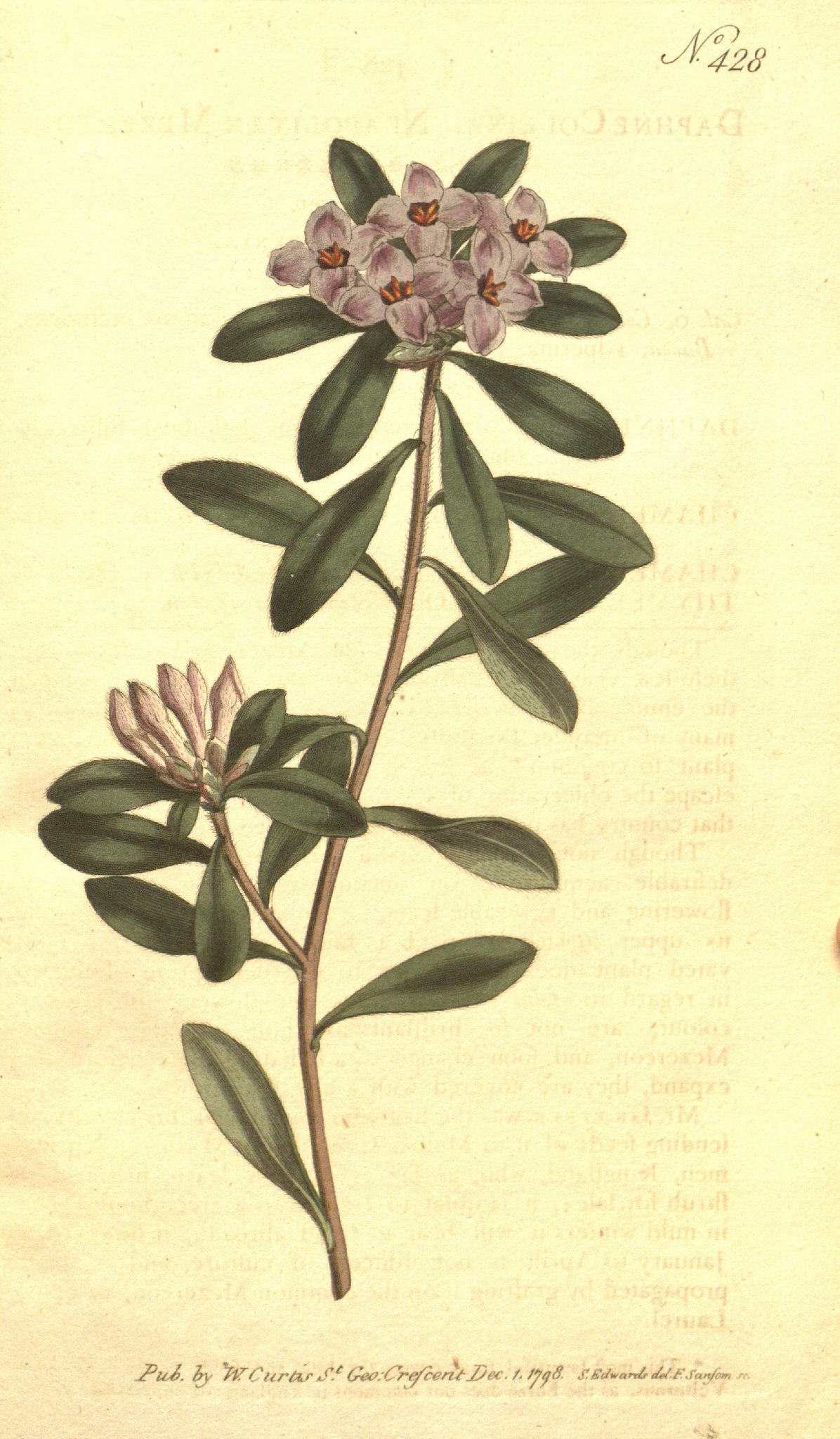
Illustration of flowers

“Daphne collina”. The Botanical Magazine, or, Flower-Garden Displayed. v. 11-12 (1797-98). Contributed in BHL from the Peter H. Raven Library of the Missouri Botanical Garden.

The Magazine was also an incredibly important resource to women naturalists of the eighteenth and nineteenth centuries. An affordable work with frequent rates of publication, it was often an excellent way to keep up-to-date with botanical developments, and to learn about the global world of plants from the comfort of home. Especially for women without access to prestigious physic gardens or botanical research centers like Kew, The Botanical Magazine could be a vital conduit to the enchanting world of botany.
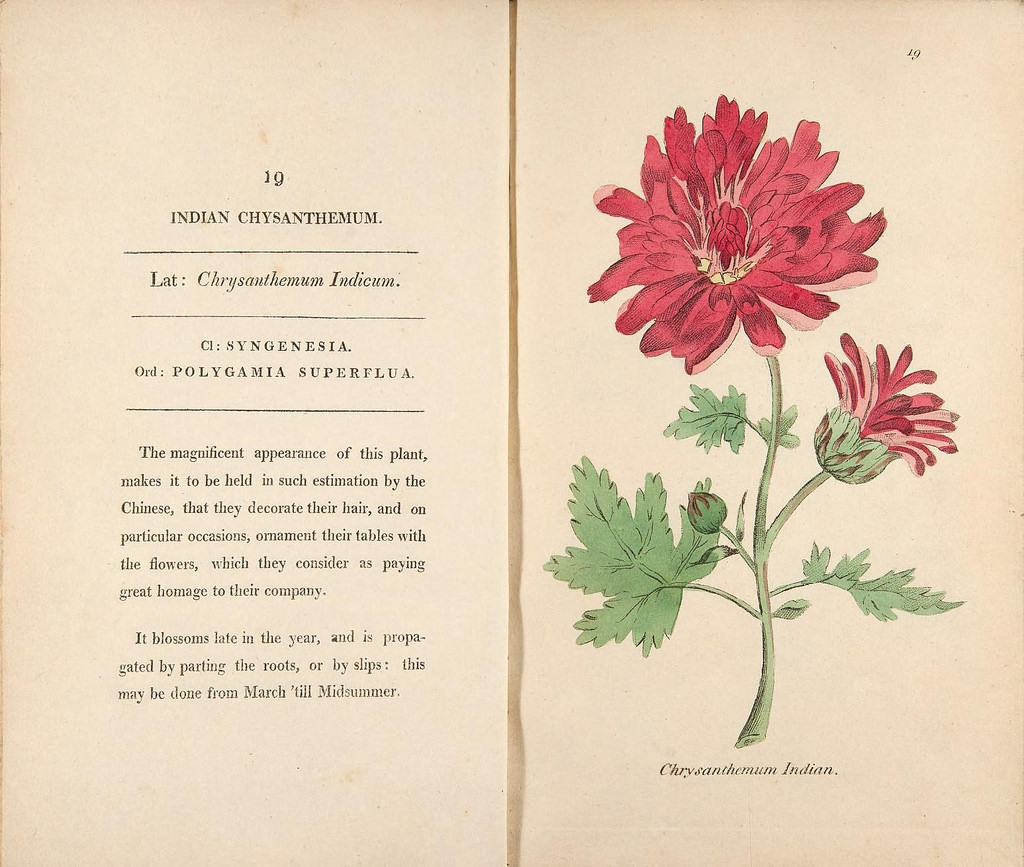
Illustration of a flower

“Indian Chrysanthemum”. Moriarty, Henrietta Maria. Fifty Plates of Green-House Plants, Drawn and Coloured from Nature. 1807. Contributed in BHL from the Lenhardt Library of the Chicago Botanic Garden.

The Botanical Magazine was also a crucial resource for Sagal’s research on another subject for her monograph project, Henrietta Maria Moriarty and her Fifty Plates of Green-House Plants, Drawn and Coloured from Nature.

Moriarty’s work was “intended for those who take delight in plants, but have not the advantage of a gardener who understands them”. Along with her fifty illustrations of plants selected for “their beauty, their odour, or some peculiarity in their economy”, Moriarty also included each plant’s Linnaean binomial and brief cultivation information. [2]  

Fifty Plates of Green-House Plants is central to Sagal’s research because of Moriarty’s unique artistic vision and her somewhat complicated legacy. Often accused of copying images from Curtis’s Botanical Magazine, Moriarty has long been dismissed from the history of botanical illustration. However, with the help of the BHL, Sagal has been able to compare plates of Moriarty’s work with the contemporary runs of Curtis’s publication to find several plates which she clearly drew from nature or another source, rather than mimicking the composition of a plate from the Botanical Magazine. This allows modern audiences to revisit the question of Moriarty’s artistic originality and to appreciate her work as a hybrid of both unique and sourced images.

As Sagal completes her research on Botanical Entanglements: Women, Plants, Literature, and Artwork in the Eighteenth Century, we are thrilled to know that BHL has been such an important asset for the project. We look forward to learning more about the role of women in Enlightenment science thanks to Sagal’s work.

[1] The British Library. 2018. “A Curious Herbal.” Collection Items. Accessed on September 27, 2018. https://www.bl.uk/collection-items/a-curious-herbal-dandelion.

[2] Oak Spring Garden Foundation. 2018. “Women Botanical Artists, Part 2.” Google Arts and Culture. Accessed on September 27, 2018. https://artsandculture.google.com/exhibit/oQIi52WKeTK5KA.

[3] Royal Botanic  Gardens, Kew. 2018. “Curtis’s Botanical Magazine.” Accessed on September 27, 2018. https://www.kew.org/science/who-we-are-and-what-we-do/publications/curtiss-botanical-magazine.
October 11, 2018by michelle.underhill
Blog Reel, Featured Books

Monsters, the Scientific Revolution, and Physica Curiosa

Schott, Gaspar. Physica Curiosa (1662).

From Superstition to Scientific Reasoning

The seventeenth century was a time of great advancement for science, but it also presented a curious juxtaposition between superstition and science. A part of Europe’s Early Modern period and the birth of the Baroque cultural movement, the 1600s also encompassed the early years of the Scientific Revolution, when superstition and religion gave way to scientific reasoning. Furthermore, the Enlightenment, which attempted to replace ideas based on faith or tradition with scientific method, began to take hold later in the century.

View Full Size Image
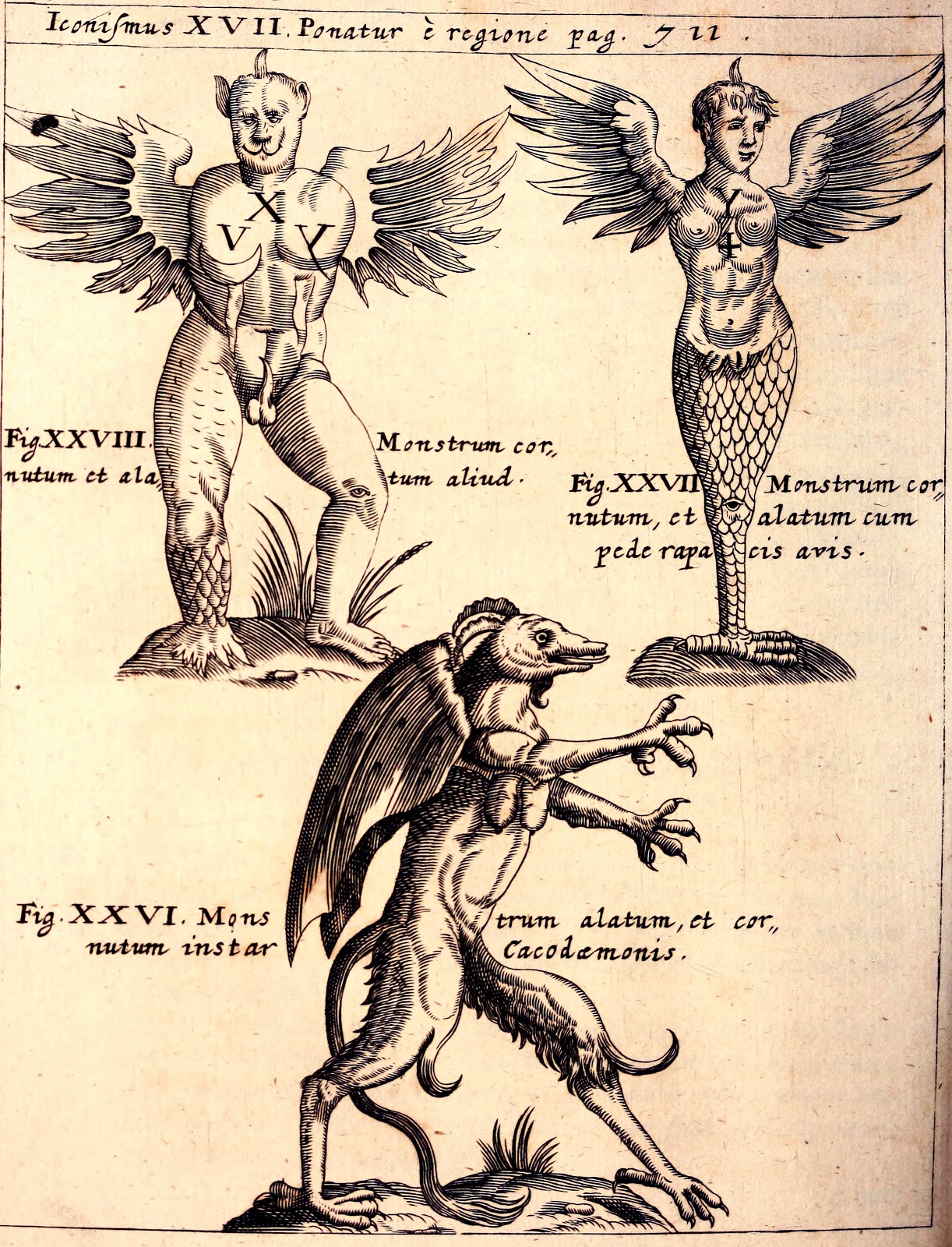
Monsters! Physica Curiosa.

By the end of the 17th century, electricity, the telescope and microscope, calculus, universal gravitation, Newton’s Laws of Motion, air pressure and calculating machines had entered the scene. And yet, as with all great shifts in cultural thinking, the transition from superstition to science was not instantaneous. Many of the era’s great thinkers attempted to reconcile previous beliefs with new discoveries. Case in point: Monsters.

Monsters and the 16th and 17th Centuries

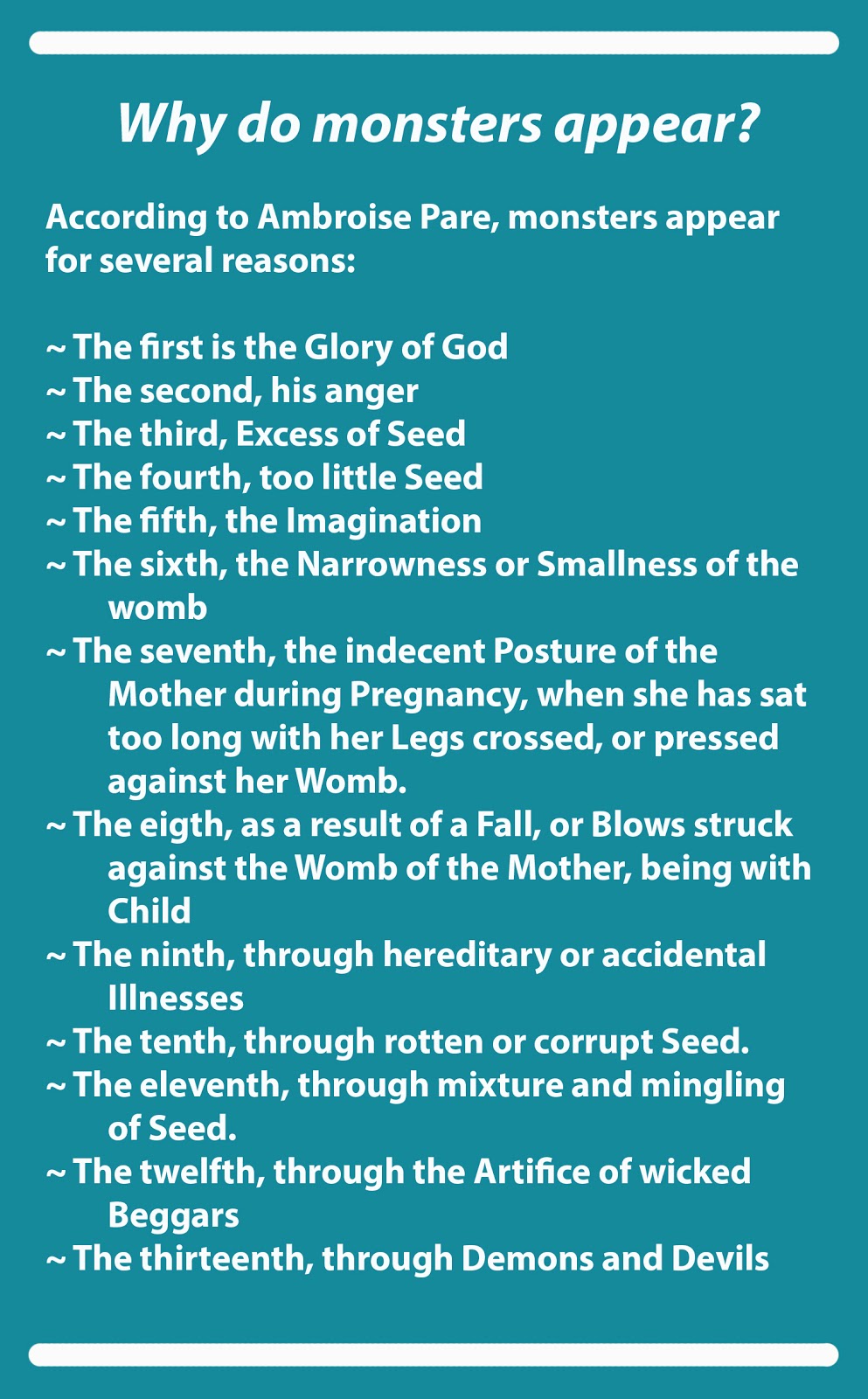
View Full Size ImageMany of the publications of the 17th century, while beginning to embrace scientific method and conclusions based on experiments, still also accepted fantastical explanations for marvelous occurrences. Books depicting monsters were extremely popular, and many recycled the same illustrations repeatedly, introducing them to new generations (case in point: Gessner hydra, 1560; Aldrovandi hydra, 1640; Joannes Jonstonus hydra, 1657). Furthermore, global exploration had begun on an unprecedented scale, and those that traveled published accounts of biodiversity from regions they visited. However, they recorded not only the creatures they saw with their own eyes, but also those described by locals – many of which were beings of myth and folklore. While fantastic to us today, for most during this time, there was no division between magic and reality – they simply coincided. Thus, these fabulous beasts could be a reality. Many were based on briefly-glimpsed real creatures given religious or superstitious twists. What’s more, many “monsters” heralded during the time were actually humans or animals with deformities.

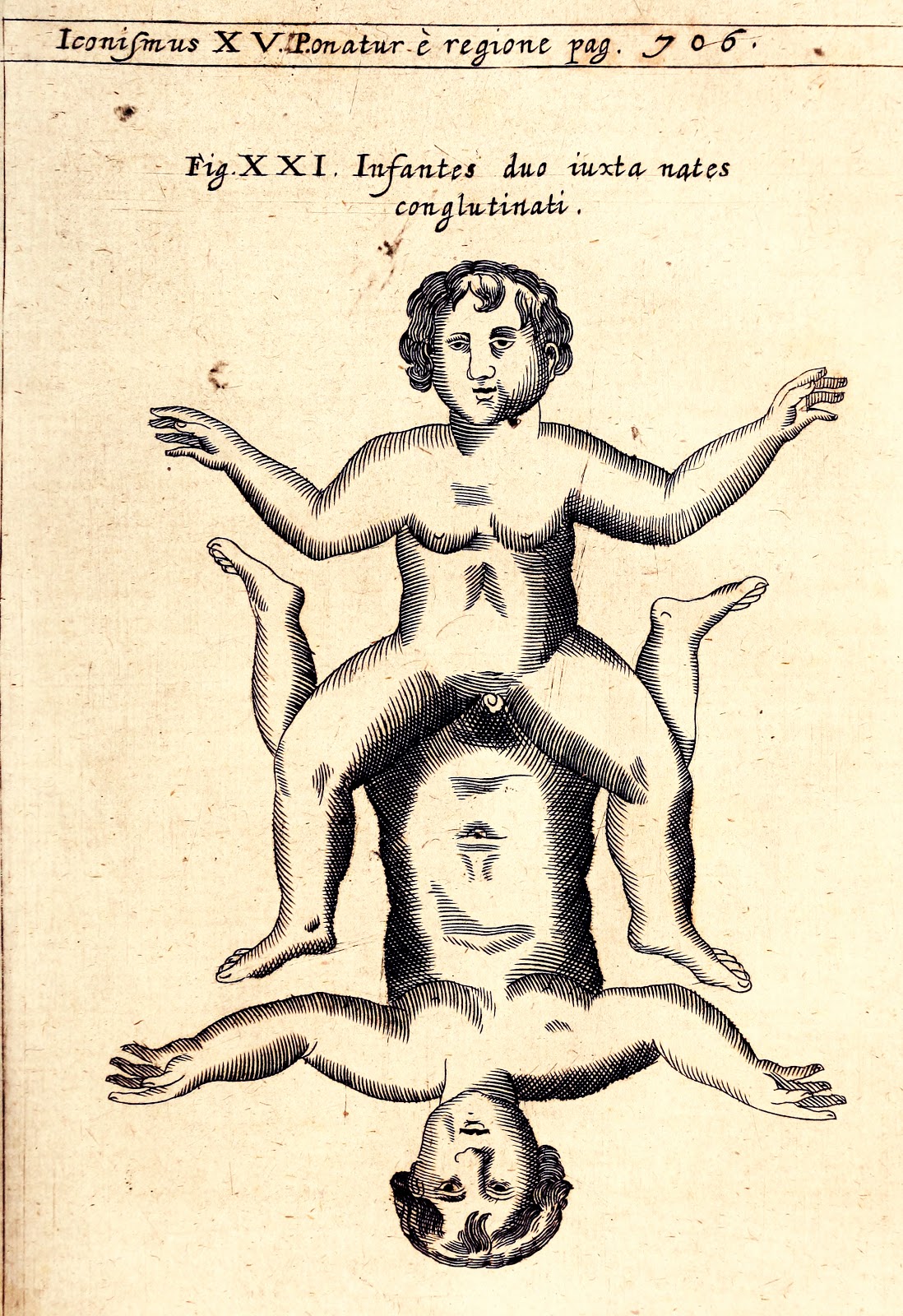
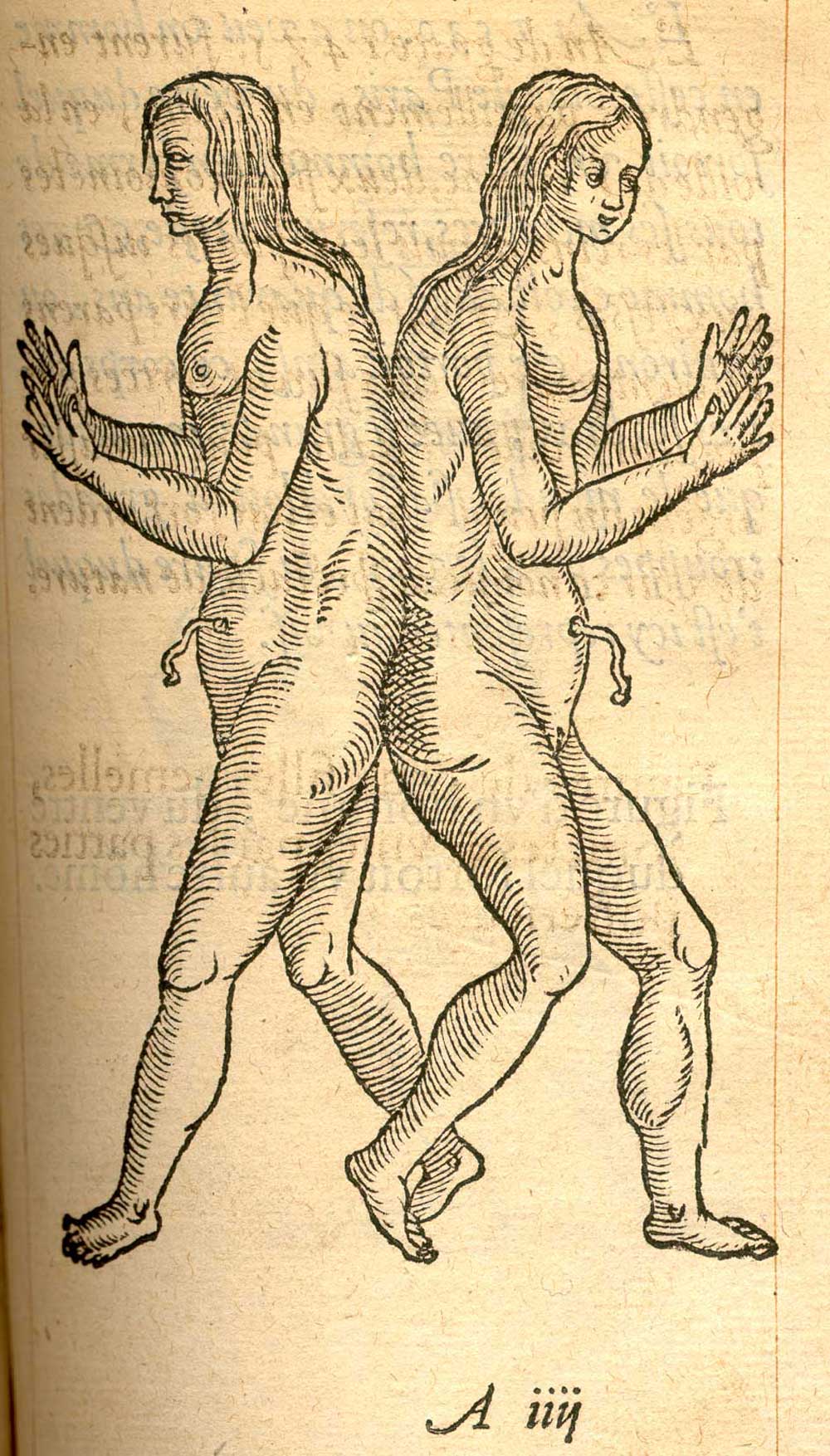
For example, Ambroise Paré, a surgeon of the 1500s, authored “the” monster book of the Renaissance: Des Monstres et Prodiges (1573). Translating to “Monsters and Marvels,” the work depicted malformed humans and animal-human hybrids. Conjoined twins were a popular example of human “monsters.” For instance, Paré illustrates a pair of 15th century female pygopagus conjoined twins that were exhibited in Italian cities for curious spectators.

View Full Size Image
Conjoined Twins. Physica Curiosa.

Gaspar Schott: Jesuit, Mathematician, Natural Historian, Monster Authority

An exceptional example of the “monsters” proliferated during the 17th century can be found in Gaspar Schott’s Physica Curiosa. Schott (1608-1666), a German scientist and Jesuit, specialized in the fields of physics, mathematics, and natural philosophy. He wrote extensively on the mechanical developments of his time, and produced the first published account on Otto von Guericke’s experiments on vacuums. His most famous works include Magia Universalis, Technica Curiosa, and Physica Curiosa – essentially encyclopedias magical, mechanical, and natural history knowledge. Schott was a great compiler, and relied on an extensive library for his own research. Most of Schott’s publications are aggregations of the writings and research existing on various topics.

Physica Curiosa

View Full Size Image
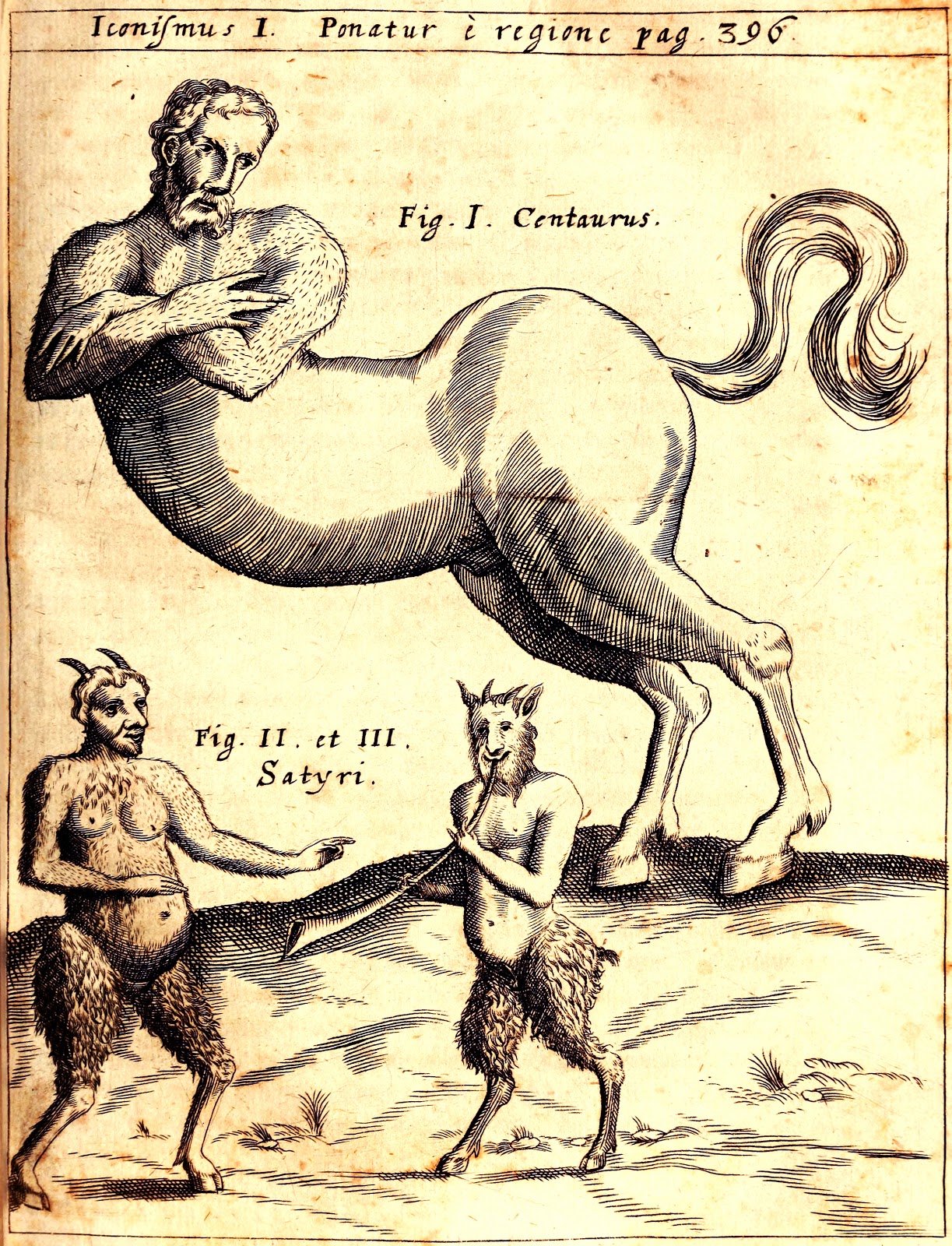
Centaur and Satyrs, Physica Curiosa.

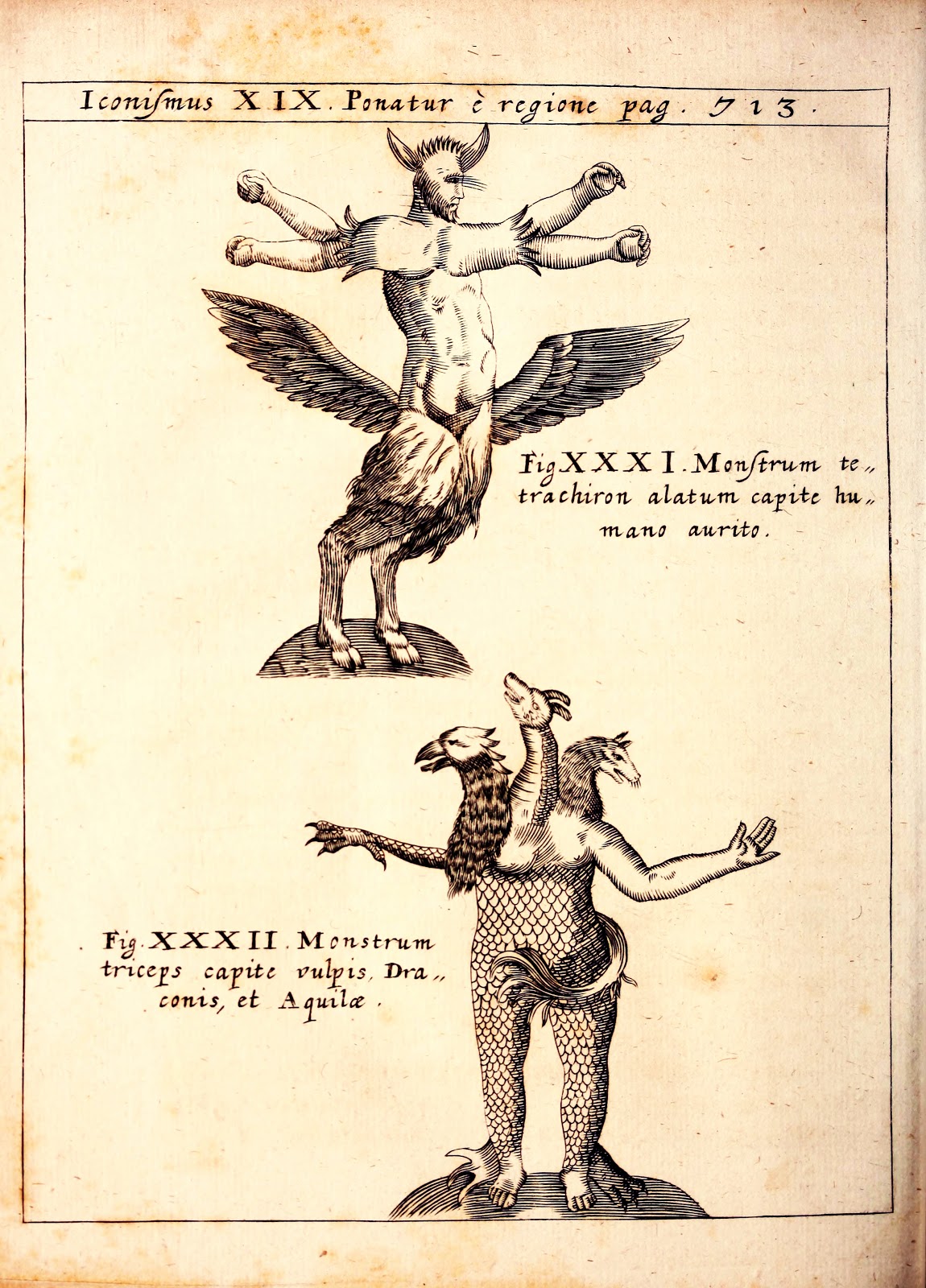
Physica Curiosa is an encyclopedia of the natural sciences of the age. In keeping with Schott’s character, it compiles many of the illustrations and literature previously published. As with many natural history publications of the era, it depicted fantastical creatures alongside real ones. Divided into twelve books, the first six books (digitized by the Smithsonian Libraries) are devoted to “miraculous” subjects, including Demons and Angels, spectres, demonic possessions, human and beastly monsters, and portents. The last six books deal with the “marvels” of nature – real creatures from exotic locales, such as elephants and rhinos.

Physica Curiosa‘s target audience was other scholars, educators, and the rich nobility of the time, as this was the demographic that could afford the publication. Though books were beginning to be more prolifically published in relation to the previous century, they were still made by hand and very expensive. The illustrations in this work are copper engravings, which were very practical for scientific illustration as they allowed for much more detail than wood blocks. A single printing of 500-1,000 copies concluded the run of this publication.

Monsters

View Full Size Image
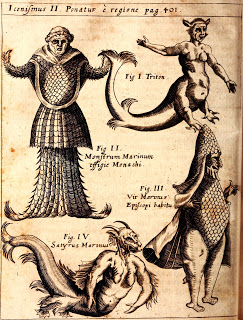
Monk Fish (Upper Left), Bishop Fish (Lower Right), Sea Devils (Upper Left, Lower Right).

Physica Curiosa begins with a discussion of diabolical magic – that of demons. In his publication Magia Universalis, Schott wrote that magic was once an honorific practice, but that legitimate magic was corrupted after the flood. The remaining natural magic was likely the result of a pact with a demon and was prohibited. He also asserts that demons are the cause of many of the world’s “monsters.”

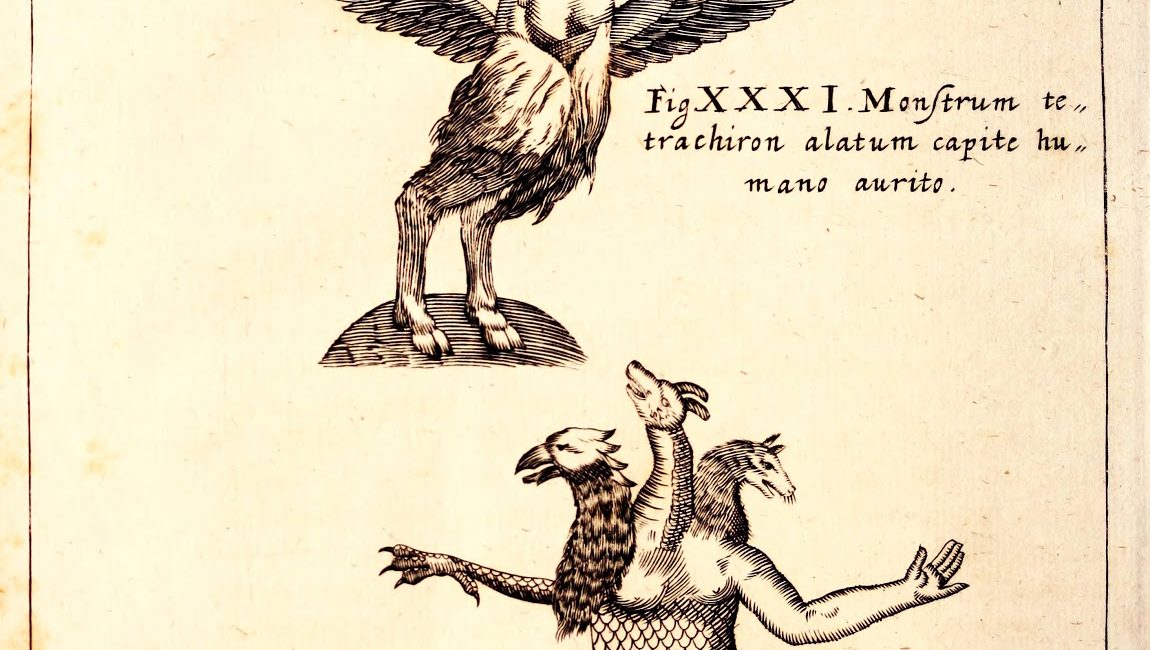
Physica Curiosa not only depicts deformed humans as monsters, but also Centaurs, Satyrs, Monk and Bishop Fish, and Sea Devils, to name a few. Human deformities as monsters has been discussed at length, but many other creatures presented by Schott exemplify the practice of misrepresenting real creatures, or imposing religious elements on natural entities. For example, the monk and bishop fish, which were popular beings illustrated throughout the 16th-17th centuries, demonstrate how religious tensions resulted in the association of clerical figures with monsters. Nevertheless, many authors still purported these creatures to be real. In the late 1600s, Johann Zahn wrote that the bishop fish he illustrated in Specula Physico-Mathematico-Historica was fished out of the Baltic Sea in 1531.

The Sea Devil was also a popular monster, which Conrad Gessner, in the 16th century, recorded as having been captured in both Norway and Rome. Historians today postulate that this creature was actually based on the monk seal. Seals were extremely disliked by both fisherman and farmers as nuisances. Aristotle recorded accounts of seals raiding orchards, which Gessner and Ulisse Aldrovandi maintained.

Reality…Kind of

While Schott clearly saw a distinction himself between fantastical creatures and those found in the natural world (as evidenced by the division within his book), he still asserts some incredible beliefs associated with real animals. For instance, he claims that “both fish and bird are made from water,” barnacle geese are born from rotting wood, and that angels may have carried men and animals to the New World and distant islands. This demonstrates the tie between magic and science that still permeated Baroque Europe.

Impact on Science

View Full Size Image
Mermaids, Demons and Monsters, oh my!

It may seem, with extensive conversations about diabolical magic, demons, and monk fish, that Physica Curiosa is little more than a perpetuation of the superstition that characterized the Dark Ages. But believe it or not, Physica Curiosa played an important part in the development of scientific reasoning. For instance, while it still purports some “mystical” explanations for certain miraculous events, Schott also condemns a great deal of the accepted superstitions of the time. For instance, he discredits the use of divining rods to locate treasure, rejects the notion that a corpse bleeds in the presence of its murderer, and condemns drinking the blood of one’s beloved in order to cure infatuation. Indeed, within Physica Curiosa, Schott writes regarding many accepted beliefs, “I do not approve of all, because I know that some are doubtful, if not false; others superstitious; others perhaps even manifestly false.” Schott also acknowledges that many unexplained phenomena may indeed be scientifically true when he “implores the reader not to be so inhuman as to refuse to believe anything unless he sees it with his own eyes, [as] many things which antiquity thought fabulous are now proved true by frequent experiment.”

Thus, Physica Curiosa represented a critical step along the journey of accepting science over superstition. Furthermore, this work and the others of its time, by aggregating the fanciful beliefs of the era in a single publication, presented an excellent body of work against which those of the Enlightenment could react. By comprehensively recording what was accepted as truth during the time, the authors made it easier for future scholars to pinpoint and address widespread, unscientific doctrine.

In conclusion, the sixteenth and seventeenth centuries were a fascinating time in history, as we watch science battle superstition, and see scholars like Schott struggle to make sense of their cultures and their reasoning. Monsters were a inherent part in this discovery process. Deciphering truth from myth, and exploring medical and natural explanations for the unexplained, is what science is all about.

Physica Curiosa Illustrations

You can see more books about the Curious and the Bizarre in BHL. See a collection of fascinating “monster” illustrations in Flickr. See illustrations from the first six parts of Physica Curiosa in Flickr.

Special thanks to Lilla Vekerdy, Head of Special Collections, Smithsonian Libraries, for her consultation on this post. The Smithsonian Libraries’ collection contains 16 books by Schott. The version of Physica Curiosa digitized for BHL is from the Smithsonian Libraries’ collection.

References

  • Gillispie, CC. “Schott, Gaspar.” Dictionary of Scientific Biography. New York: Charles Scribner’s Sons, 1980.
  • Thorndike, L. A History of Magic and Experimental Science. New York and London: Columbia University Press, 1923. 596-608.
  • Michon, Scott. “Sea Monsters.” Strange Science, 16 May 2013. 17 May 2013. http://www.strangescience.net
May 24, 2013by michelle.underhill

Help Support BHL

BHL's existence depends on the financial support of its patrons. Help us keep this free resource alive!

search

About BHL

The Biodiversity Heritage Library (BHL) is the world’s largest open access digital library for biodiversity literature and archives. BHL operates as a worldwide consortium of natural history, botanical, research, and national libraries working together to digitize the natural history literature held in their collections and make it freely available for open access as part of a global “biodiversity community.”

Join Our Mailing List

Sign up to receive the latest news, content highlights, and promotions.

Subscribe Now

Subscribe to Blog via Email

Enter your email address to subscribe to this blog and receive notifications of new posts by email.

Join 319 other subscribers

Subscribe to Blog Via RSS

Subscribe to the blog RSS feed to stay up-to-date on all the latest BHL posts.

Access RSS Feed

Inspiring Discovery through Free Access to Biodiversity Knowledge.

The Biodiversity Heritage Library makes it easier than ever for you to access the information you need to study and explore life on Earth…for free, anytime, anywhere.


64+ Million Pages of
Biodiversity Literature Online.

EXPLORE

Tools and Services
to Transform Research.

EXPLORE

300,000+
Illustrations on Flickr.

EXPLORE

ABOUT | HARMFUL CONTENT | PRIVACY | SITE MAP | TERMS OF USE