Biodiversity Heritage Library - Program news and collection highlights from BHL
  • Home
  • News
  • Featured Books
    • All Featured Books
    • Book of the Month Series
    • BHL at 20
  • User Stories
  • Campaigns
    • Fossil Stories
    • Garden Stories
    • Monsters Are Real
    • Page Frights
    • Her Natural History
    • Earth Optimism 2020
  • Tech Blog
  • Visit BHL
Home
News
Featured Books
    All Featured Books
    Book of the Month Series
    BHL at 20
User Stories
Campaigns
    Fossil Stories
    Garden Stories
    Monsters Are Real
    Page Frights
    Her Natural History
    Earth Optimism 2020
Tech Blog
Visit BHL
  • Home
  • News
  • Featured Books
    • All Featured Books
    • Book of the Month Series
    • BHL at 20
  • User Stories
  • Campaigns
    • Fossil Stories
    • Garden Stories
    • Monsters Are Real
    • Page Frights
    • Her Natural History
    • Earth Optimism 2020
  • Tech Blog
  • Visit BHL
Biodiversity Heritage Library - Program news and collection highlights from BHL
Blog Reel, User Stories

Examining the History of Paleoanthropology Using BHL

In the middle of the nineteenth century, the scientific community was engrossed in discussions about evolution and the origin of species. The publication of Darwin’s On the Origin of Species in 1859 fueled extensive scientific debate and prompted further questions regarding human evolution. A key figure in these debates was Thomas Henry Huxley, an English biologist and comparative anatomist.

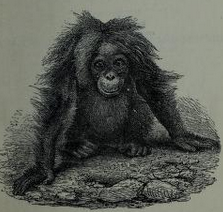
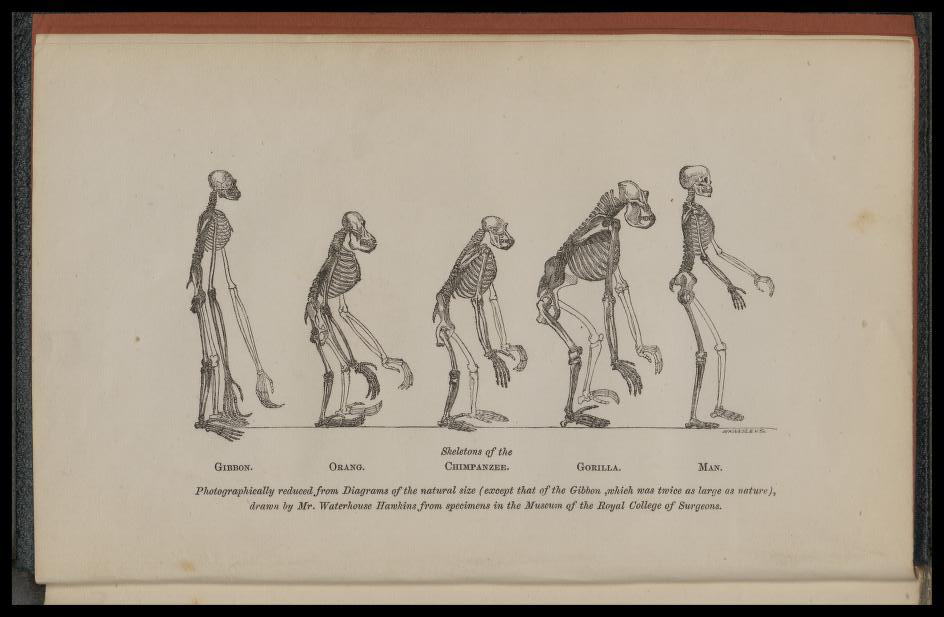
Frontispiece. Huxley, Thomas Henry. Evidence as to Man’s Place in Nature. 1863. Digitized by Cambridge University Library as part of Charles Darwin’s Library. http://s.si.edu/2inaol1.

A close friend of Charles Darwin and a staunch public supporter of the theory of natural selection, Huxley used his expertise in embryology, paleontology and comparative anatomy to demonstrate an evolutionary relationship between humans and apes. In a series of public lectures between 1860-62, he presented research on anatomical similarities between humans and apes and discussed hominin fossil discoveries, including a skullcap from the first recognized Neanderthal Man which was unearthed in Germany in 1856.

These oral discourses were collected into a single volume and published in 1863 as Evidence as to Man’s Place in Nature.
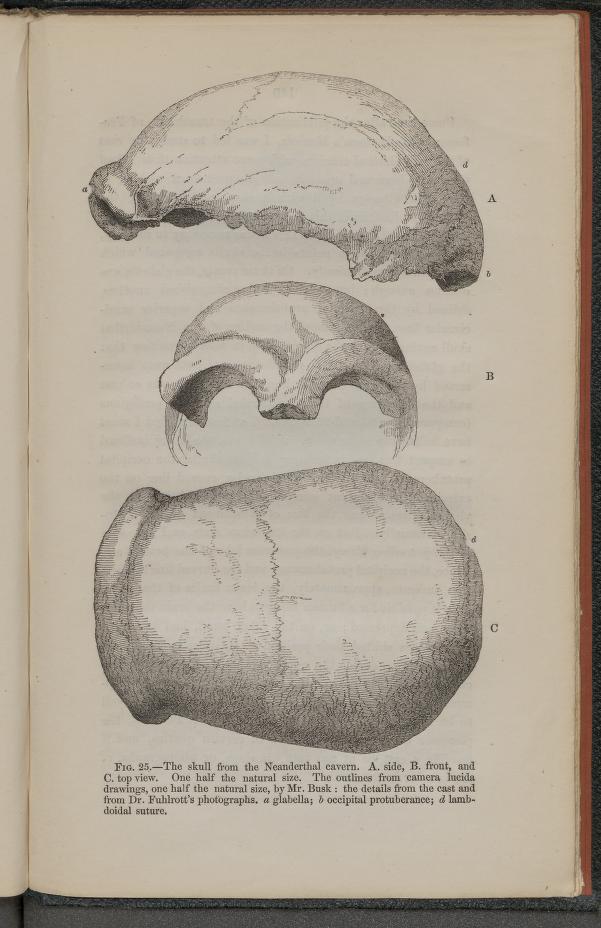
Huxley, Thomas Henry. Evidence as to Man’s Place in Nature. 1863. Digitized by Cambridge University Library as part of Charles Darwin’s Library. Page 139. http://s.si.edu/2B12Tvx.


Paige Madison, a PhD candidate studying the history of paleoanthropology at Arizona State University, identifies this publication as a vital reference for her doctoral research.

Paige Madison, PhD candidate at Arizona State University. Photo Credit: Alex Reynes.

“This was one of the pioneering works in the history of paleoanthropology,” explains Madison. “Huxley’s argumentative strategy is wonderful. At a time when it was hard to get away from preconceived notions about human evolution, Huxley asks his readers to take a step back and imagine they were visitors from Saturn, ‘happily free from all personal interest.’ He lays out the facts concerning humans’ similarities to other apes and then asks the impartial scientific Saturnians, ‘Is Man so different from any of these Apes?'”

For her dissertation, Madison is examining a series of case studies on the history of paleoanthropology spanning well over a century. This research requires examination of numerous historic publications, such as Huxley’s Man’s Place in Nature. Thanks to the Biodiversity Heritage Library, she has easy access to the necessary references.

“BHL has been central to my research,” asserts Madison. “It allows me to quickly access a wealth of material online, so I can spend my time researching rather than running back and forth to the University library.”

After first being introduced to BHL by fellow graduate students five years ago, Madison now uses the library almost weekly to access the research of key scientists in her field. By downloading entire PDFs of relevant publications or selecting specific pages using BHL’s custom PDF generator, she is able to guarantee easy offline access to important references. She also uses the library to gather images, which she finds useful both for her research and when creating presentations.

“The images I can download from BHL are high quality,” says Madison. “I know exactly where they came from and how they were used to illuminate a particular aspect of a scientist’s overall argument.”

While she finds BHL’s collections invaluable, Madison notes that the consolidation of duplicate author names would greatly improve the user experience. As a request voiced by many users, name authority control is indeed high on BHL’s list of development priorities.

For Madison, exploring the history of hominin fossils and our understanding of their place in the evolution of Homo sapiens is a passion that is greatly facilitated by the Biodiversity Heritage Library. We are proud to know that BHL’s open access collection is helping to illuminate the history of science to accelerate research today and empower future discoveries.

You can follow Paige Madison’s research on Twitter at @FossilHistory.

Reference

Hauserman, Samantha. 2013. “Thomas Henry Huxley (1825-1895).” The Embryo Project Encyclopedia, November 26. Accessed December 5, 2017. https://embryo.asu.edu/pages/thomas-henry-huxley-1825-1895.

______________________________________

This post may contain the personal opinions of BHL users or affiliated staff and does not necessarily represent the official Biodiversity Heritage Library (BHL) position on these matters.

January 11, 2018by michelle.underhill
Blog Reel, User Stories

BHL Facilitates Research on Alfred Russel Wallace’s Legacy

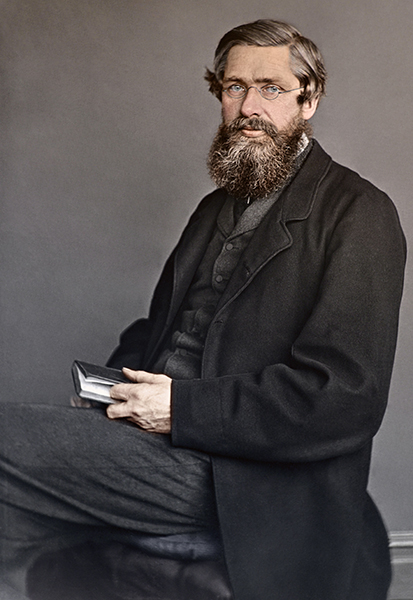
Alfred Russel Wallace in 1869. Copyright George Beccaloni.

In 1854, Alfred Russel Wallace began an eight year collecting trip to Southeast Asia, through the region he called the Malay Archipelago (now Malaysia, Singapore, Indonesia, and East Timor). It was during this expedition, in the midst of a fever in 1858, that Wallace conceived (independently of Darwin) of the theory of natural selection. Wallace expanded his idea into a detailed article which he sent to Charles Darwin for comment, unaware that Darwin himself had come to the same conclusion, though he had yet to publish the theory.

At the suggestion of Darwin’s friends Charles Lyell and Joseph Hooker, Wallace’s article, together with unpublished writings by Darwin on the subject of natural selection and evolution, were presented to the Linnean Society in 1858 and subsequently published in the Society’s journal as “On the Tendency of Species to Form Varieties; and On the Perpetuation of Varieties and Species by Natural Means of Selection,” with Darwin and Wallace as co-authors.

While important for its link to the theory of evolution by means of natural selection, Wallace’s Malay Archipelago expedition was also scientifically significant from a collecting standpoint.

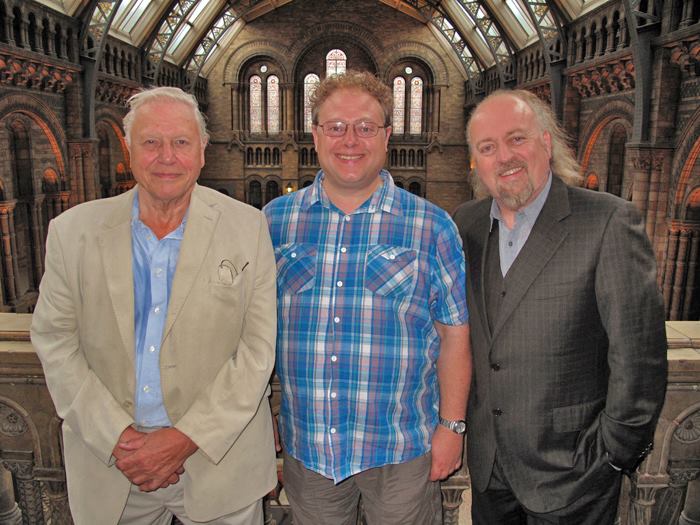
Beccaloni (center) with the Patrons of his Wallace projects. Sir David Attenborough (left), Patron of the Wallace Correspondence Project, and Bill Bailey (right), Patron of the Wallace Memorial Fund. Photographed at London’s Natural History Museum in 2012. Copyright Jan Beccaloni.

Dr. George Beccaloni, Director of the Alfred Russel Wallace Correspondence Project (an open access archive of Wallace’s manuscripts), is working to catalog the animal species collected by him during his expedition. Not surprisingly, given the sheer number of specimens and the passage of time, this is a challenging endeavor.

“We know Wallace collected nearly 126,000 specimens: about 110,000 insects, 7,500 shells, 8,050 bird skins, and 410 mammals and reptiles, which ranged from Orangutans to Birds of Paradise, from land snails to cockroaches, from Birdwing butterflies to tiny parasitic wasps,” shares Beccaloni. “I have estimated that about 5,000 of them were new to science, but apart from the 295 species he described himself, there is no list of all the others – or the many species he collected which already had scientific names.”

Scientific literature is a valuable source of information on Wallace’s specimens, but locating the relevant publications is itself a challenge.

“I am collaborating with colleagues in Southeast Asia and at London’s Natural History Museum to produce a detailed list of the species Wallace collected,” explains Beccaloni. “It is a difficult task because the information about them is scattered through the scientific literature of the last 163 years, in an estimated 400 or more publications. To find these requires considerable detective work.”

Fortunately, the Biodiversity Heritage Library is making it considerably easier for Beccaloni to access the publications he needs for this research.

“BHL is an absolutely fantastic resource which is very important to my work,” affirms Beccaloni. “Locating mentions of Wallace specimens is tricky, but at least most of the articles are now available in the BHL. If they weren’t, it would mean going to a specialist library and searching through the physical publications, which would take a lot more effort and be logistically difficult.”

Once a catalog of Wallace’s specimens is completed, it can be used to help track down the physical specimens in London’s Natural History Museum and other museum collections, leading to increased global access to Wallace’s specimens through digitization.

“The specimens can be digitized and the images and data made freely available on the Internet,” says Beccaloni. “Colleagues in Southeast Asia view this as ‘digital repatriation’ of the material Wallace collected in their countries.”

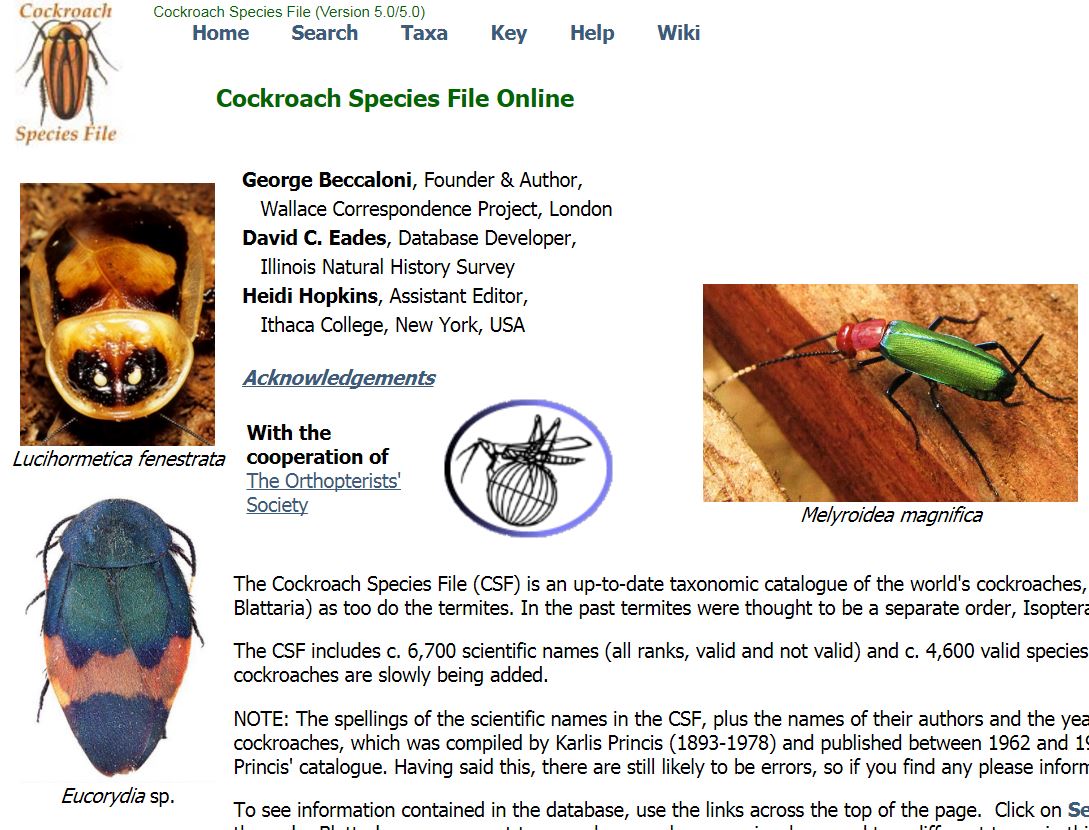
In addition to his work related to Alfred Russel Wallace (including the Alfred Russel Wallace Correspondence Project, Wallace Letters Online and The Wallace Website), Beccaloni is also a specialist in the taxonomy and ecology of butterflies and orthopteroid insects (especially cockroaches). He is the founder and author of the Cockroach Species File, a world catalog of cockroaches. Again, BHL provides access to key resources.

“For my work on the Cockroach Species File, I often need copies of old and often obscure taxonomic papers, which fortunately I am usually able to find in the BHL,” says Beccaloni.

Homepage of the Cockroach Species File.

Beccaloni’s favorite BHL feature is the ability to generate custom PDFs of relevant pages, eliminating the need to download an entire journal volume. To further improve the efficiency of his research, Beccaloni notes that the ability to search the full text of BHL’s collections for specific search terms (e.g. “Wallace”) would be of considerable value.

Full text search is a feature that BHL’s users have long-requested, and we are happy to confirm that its development is currently underway! Through increased research efficiency, full text search will enhance BHL’s ability to inspire discovery through free access to biodiversity knowledge. Stay tuned for more information on this new service.

Alfred Russel Wallace was truly a pioneer who left behind a considerable scientific legacy. Thanks to the work of Dr. Beccaloni and others on the Wallace projects, this legacy is being documented and made more accessible to a worldwide audience. We are proud to know that BHL’s collections are playing an important part in this valuable work.

Explore the Alfred Russel Wallace projects below:

  • Alfred Russel Wallace Correspondence Project
  • Wallace Letters Online
  • The Wallace Website

______________________________________

This post may contain the personal opinions of BHL users or affiliated staff and does not necessarily represent the official Biodiversity Heritage Library (BHL) position on these matters.
November 9, 2017by michelle.underhill
Blog Reel, Featured Books

Darwin’s Early Love

Charles Darwin, the famous naturalist known around the world for his publication On the Origin of Species and contributions to evolutionary theory, was born on February 12, 1809. As such, February 12 is known as International Darwin Day – a celebration with a vision to:

“Inspire people throughout the globe to reflect and act on the principles of intellectual bravery, perpetual curiosity, scientific thinking, and hunger for truth as embodied in Charles Darwin. It will be a day of celebration, activism, and international cooperation for the advancement of science, education, and human well-being.”

February 12 also happens to be just days before Valentine’s Day, a holiday now associated with love and the presentation of valentines as expressions of affection. How might these two, seemingly disparate holidays, be brought together? Why not by thinking about who Darwin himself might give a valentine to in the natural world?

Many people, when thinking of Darwin, might associate him with finches, mockingbirds, rheas, or Galápagos tortoises. But when Darwin began to investigate natural history while studying medicine in Edinburgh in the 1820s, it was marine invertebrates that first sparked his interest. While still a teenager, Darwin became a member of the Plinian Society, which was dedicated to the study of natural history amongst Edinburgh students. The zoologist Robert Edmond Grant nurtured Darwin’s interest in natural history, especially marine invertebrates, and taught him how to collect and rear specimens. Darwin’s first scientific paper, which was presented to the Plinian Society in March of 1827, was about bryozoan larvae and the black spots sometimes seen on oyster shells, which he demonstrated were the eggs of marine leeches. Sadly, Darwin’s mentor Grant had presented these same findings just days before Darwin at another venue, leading Darwin to feel betrayed and prompting his exodus from Edinburgh (Stiassny, 83).

View Full Size Image
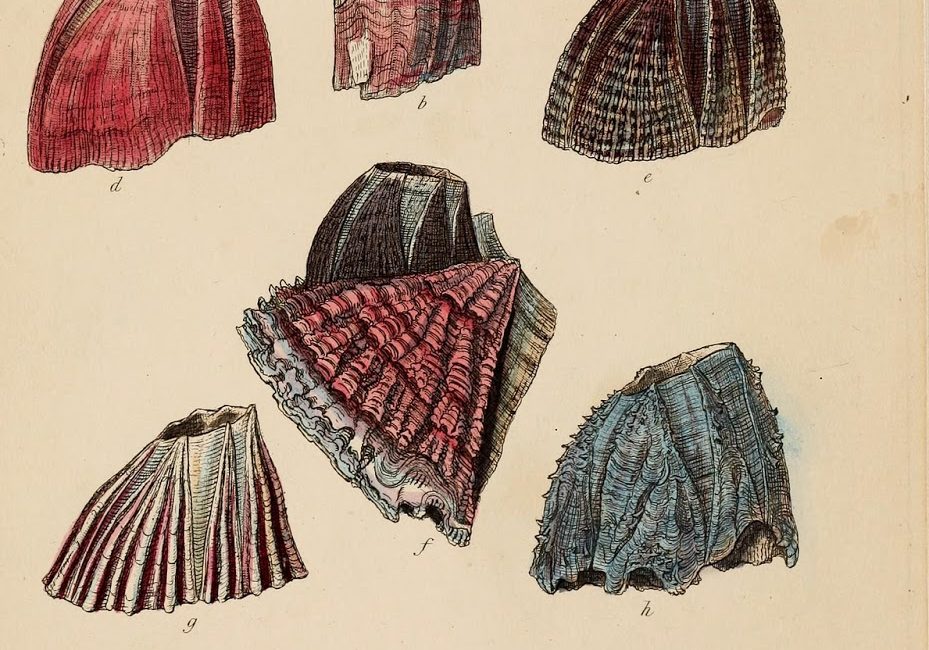
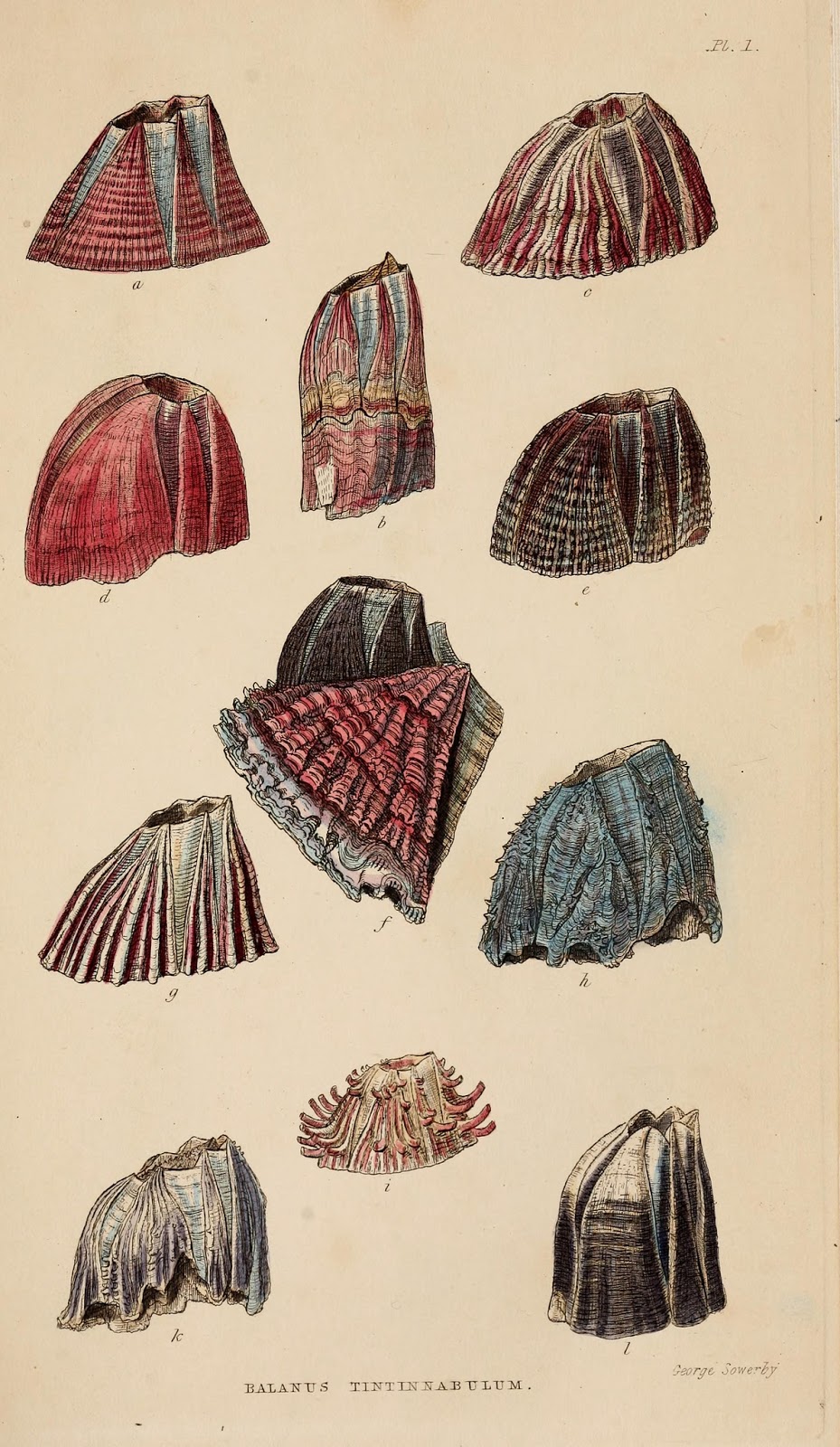
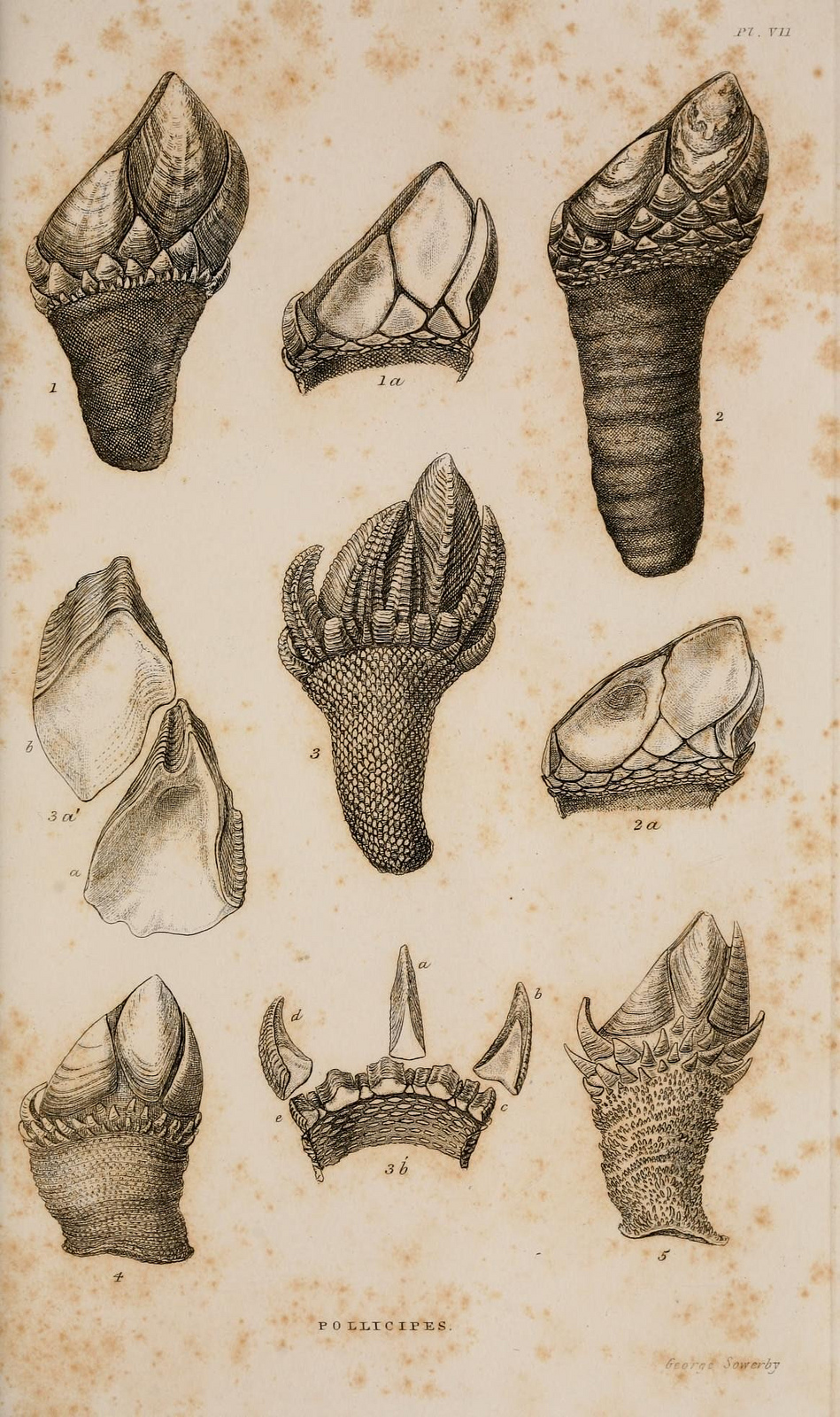
Darwin, Charles. A monograph on the sub-class Cirripedia, with figures of all the species. (1851-54). http://biodiversitylibrary.org/page/2007053. Digitized for BHL by the MBLWHOI Library.

Time passed, Darwin spent some time at Cambridge, and eventually he joined the voyage of the HMS Beagle thanks to a recommendation from his new mentor, botanist and geologist John Stevens Henslow. Darwin’s observations and research during the voyage would fuel his later revolutionary theories. But, as Dr. Melanie L.J. Stiassny, a curator at the American Museum of Natural History, points out in her article on Darwin within the book Natural Histories: Opulent Oceans, Darwin felt somewhat hesitant about his ideas during the early stages of their development. After all, they represented an entirely new way of looking at the natural world and thinking about its origins. So, while he fleshed out his theories on natural selection, Darwin also turned his attention back to, as Stiassny calls it, “his early love” – marine invertebrates. It was his work on barnacles that arguably helped pave the way for the acceptance of his later theories. As Stiassny states on page 84 of Opulent Oceans:

“It was the study of one group, the barnacles (Cirripedia), that would solidify his credentials as a taxonomic expert and provide him with empirical evidence for many of his evolutionary ideas…such as the loss of unnecessary structures (barnacles have no trace of the abdominal segments and swimming appendages of other crustaceans), and evidence that features inherited from a common ancestor can transform in anatomy and function (the typical walking limbs of crustaceans are modified into specialized feeding cirri in barnacles).”


View Full Size Image
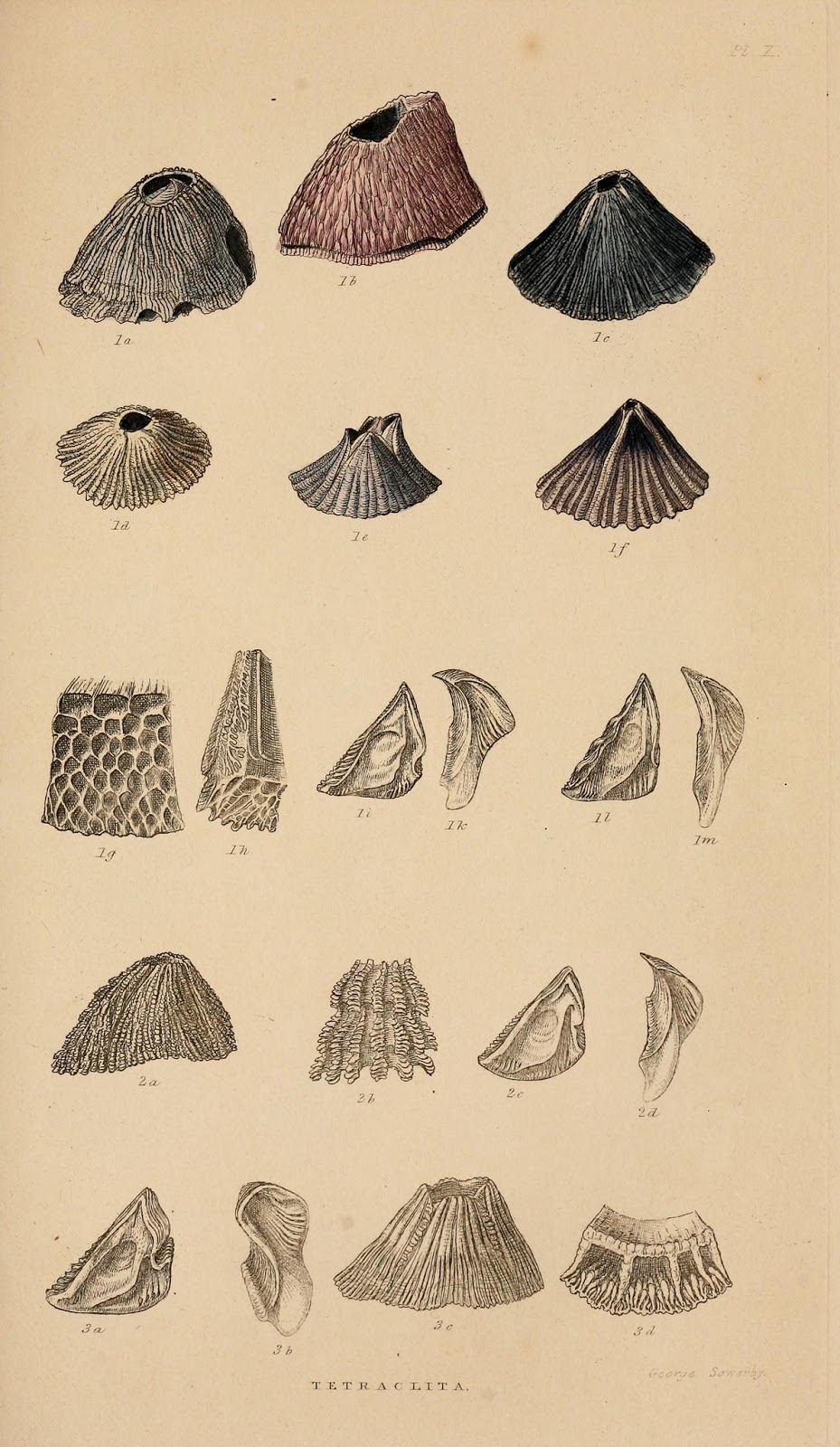
Darwin, Charles. A monograph on the sub-class Cirripedia, with figures of all the species. (1851-54). http://biodiversitylibrary.org/page/2007061. Digitized for BHL by the MBLWHOI Library.

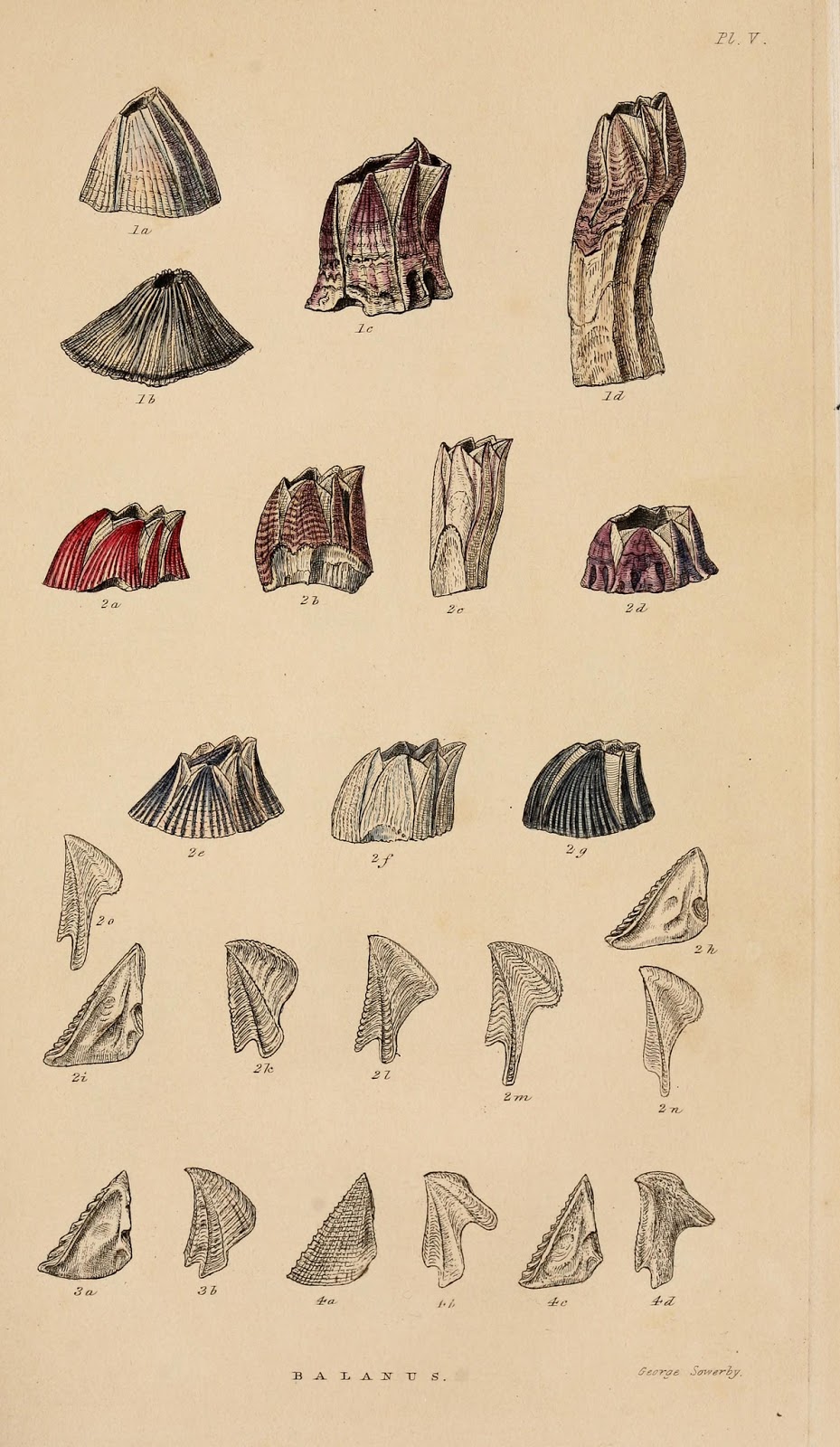
Darwin spent eight years working on his barnacle studies, and from 1851-54 finally published his work in a four-part series: A monograph on the sub-class Cirripedia, with figures of all the species. Within the work, Darwin provides a classification for the crustacean Subclass Cirripedia, making it “the first based on the evolutionary principle of common descent” (Stiassny, 85). His On the Origin of Species, published in 1859, five years after his Cirripedia work, references cirripedes twenty-six times, demonstrating the impact this research had on Darwin’s evolutionary ideas.

View Full Size Image
Darwin, Charles. A monograph on the sub-class Cirripedia, with figures of all the species. (1851-54). http://biodiversitylibrary.org/page/2011425. Digitized for BHL by the MBLWHOI Library.

Darwin’s name is arguably the most well-known from the world of natural history. Knowing Darwin’s history with the Cirripedia, one might wonder if he would have realized the heights of his scientific achievements without his barnacles.

So, we think, if Darwin were to give a Valentine to someone in the non-human animal kingdom, there’s a good chance it would go to a barnacle.

View Full Size Image
Darwin, Charles. A monograph on the sub-class Cirripedia, with figures of all the species. (1851-54). http://biodiversitylibrary.org/page/2007081. Digitized for BHL by the MBLWHOI Library.


  • See books and articles written by Charles Darwin in BHL.
  • Explore digitized versions of the books in his personal library in Charles Darwin’s Library in BHL.
  • Explore images from books in Charles Darwin’s Library in Flickr.

Reference:
Stiassny, Melanie L.J. (2014). Darwin’s “Beloved Barnacles.” Natural Histories Opulent Oceans: Extraordinary Rare Book Selections from the American Museum of Natural History Library (pp. 82-85). New York: Sterling Publishing.

February 12, 2016by ulib-libraryjobs
Blog Reel, User Stories

No Flippant Matter: The Re-Invention of the Flipper and Why Ceatacean Flippers Are Unique

Cetaceans are not closely related to other aquatic vertebrates and represent a unique lineage derived from hoofed land mammals that returned to an aquatic lifestyle about 50 million years ago (Thewissen, 1998). The transition from land to water, i.e. the development from weight-bearing forelimb with five hoofed toes to tissue-encased flipper not capable to support locomotion on land, is well documented by fossils (Thewissen et al., 2001, 2009) and very different from other aquatic vertebrates. Consequently many morphological characteristics that cannot be detected in fossils have remained little documented or speculative. Freed from the constraints of gravity and the developmental links to the hind legs, there is also a persistent anatomical plasticity in the flipper of modern cetaceans, showing substantial skeletal disparities sometimes even within the same population or pod (Cooper et al., 2007). Although there are a small number of morphological studies investigating the flipper in extant cetaceans, the understanding of functional morphology in this group has so far remained largely unresolved.

There are less than two dozend studies that include odontocete (toothed whales and dophins) forelimb myology (soft tissue studies). About half are classical works (Howell, 1927, 1930; Murie, 1870, 1873; Schulte and Smith, 1918; Stannius, 1849; Struthers, 1873), most of them available at BHL, and a few are more modern (Benke, 1993; Klima et al., 1980; Pilleri, 1976; Pilleri et al., 1976; Smith et al., 1976; Sokalov and Rodionov, 1974; Strickler, 1978).

View Full Size Image
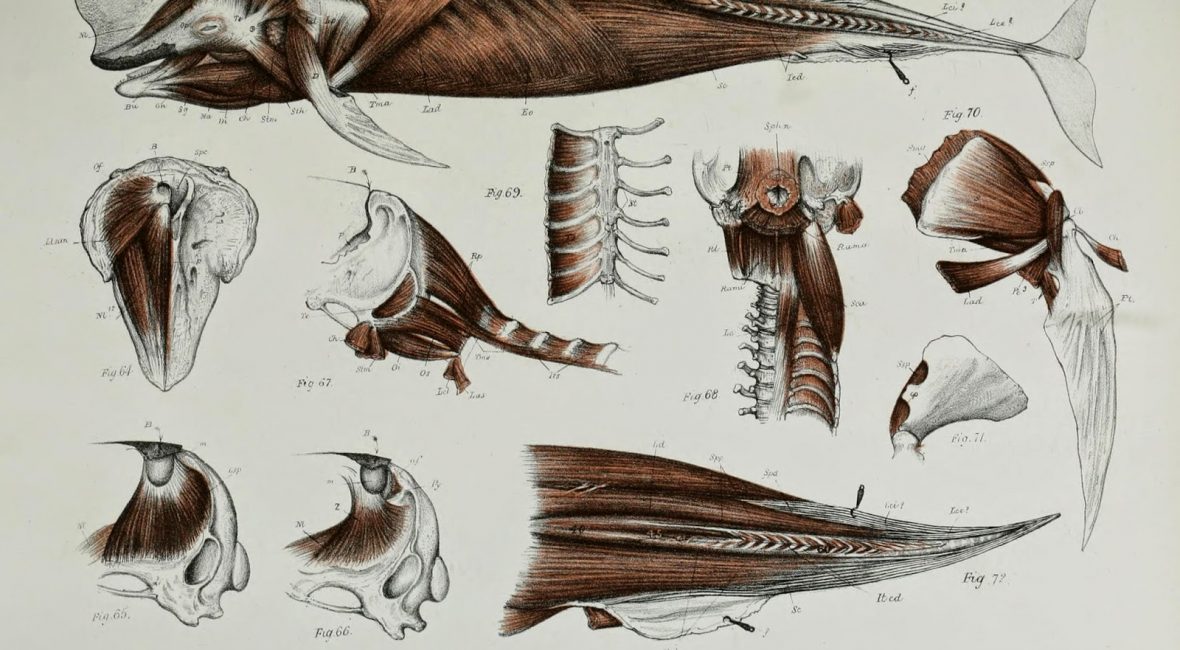
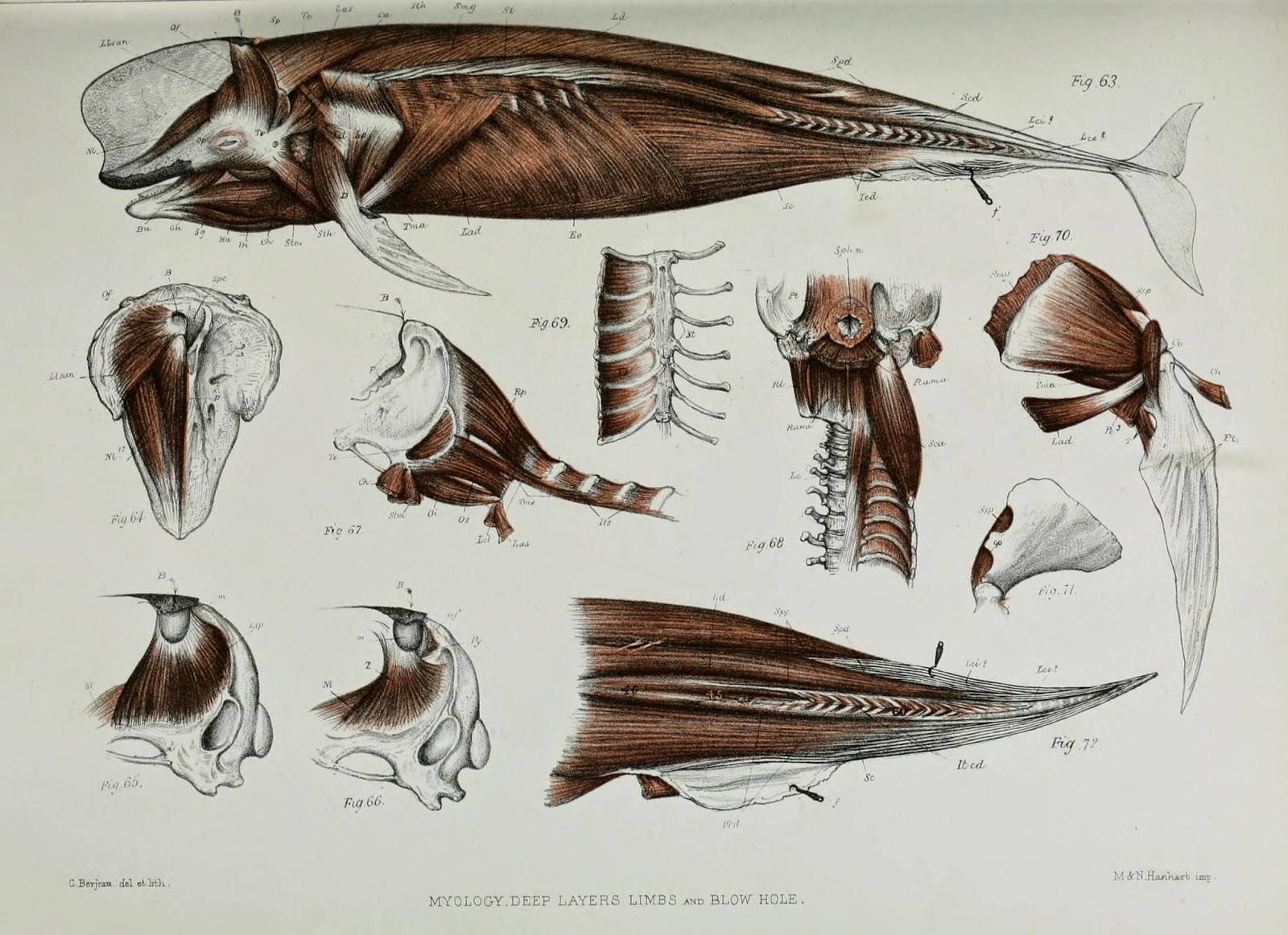
Myology, deep layers, of limbs and blow hole in the long-finned pilot whale (Globicephala melas). Murie, James. “On the Organization of the Caaing Whale, Globiocephalus melas.” Transactions of the Zoological Society of London. v. 8 (1872). http://biodiversitylibrary.org/page/28778656.

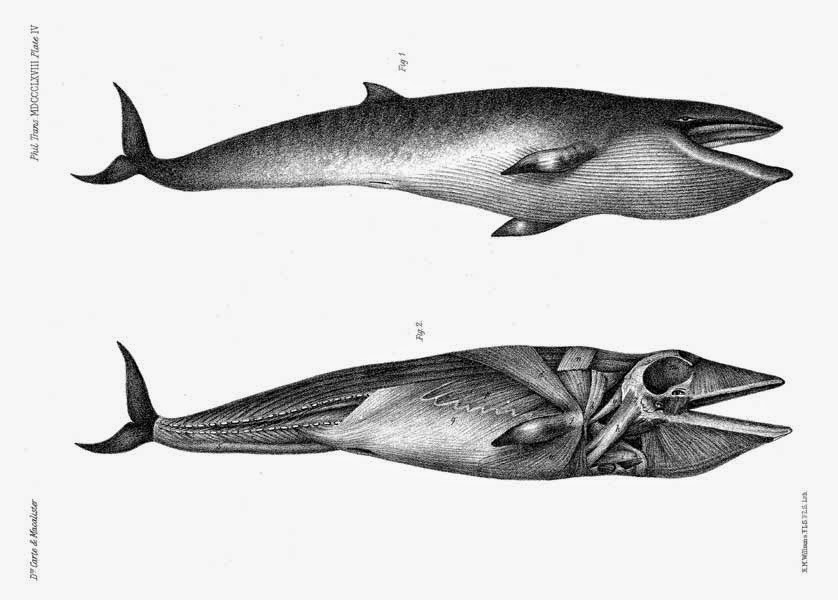
Among mysticetes (balaeen whales) the lack of data is particularly apparent. The few accounts that include soft tissue are limited to rorquals (Benke, 1993; Carte and Macalister, 1868; Kükenthal, 1921; Perrin, 1870; Schulte, 1916; Struthers, 1888, 1889) and right whales (Kükenthal, 1922; Struthers, 1878) – except Benke all are nearly or over a century old.

View Full Size Image
Drawing of and lateral view of myology of Balaenoptera rostrata. Alexander Carte and Alexander Macalister. On the Anatomy of Balaenoptera rostrata. Phil. Trans. R. Soc. Lond. January 1, 1868(158). 201-261. http://rstl.royalsocietypublishing.org/content/158/201.full.pdf+html.

The question of how cetaceans transitioned from a weight-bearing leg to a flipper is one of considerable interest to Moyna K. Müller, a PhD student at the Geology Department, University of Otago, New Zealand.

Müller has been studying cetaceans for the past four years, with particular interest not only in the transition of the weight bearing leg to flipper (evo-devo), but also comparative muscoskeletal arrangement of the shoulder and forelimb and functional analysis of the flipper. Her research requires access to historic literature that forms the basis of her comparative analysis and provides access to data from morphological studies done in the past. Gaining access to this literature used to present a challenge for Müller, until she discovered the Biodiversity Heritage Library.

View Full Size Image
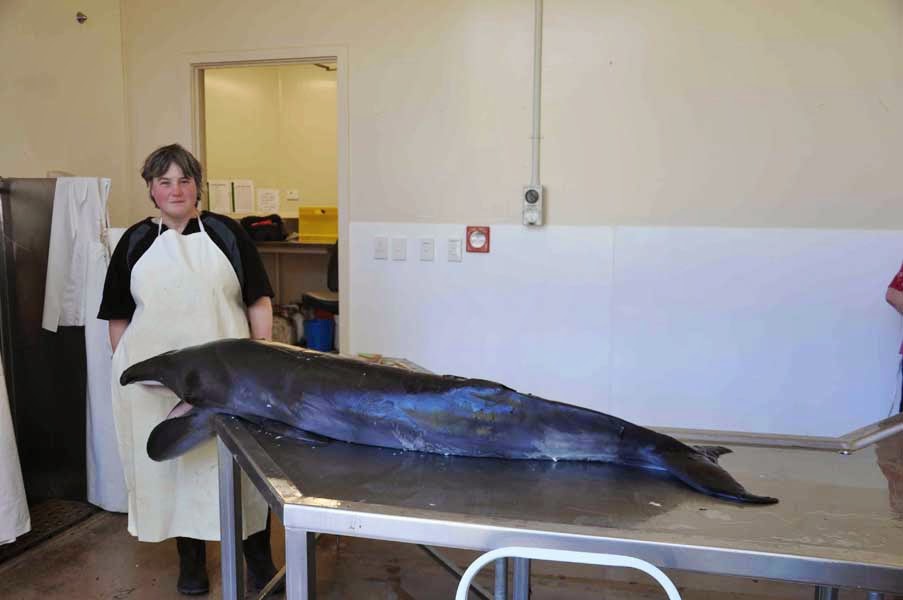
Moyna K. Müller, a PhD student at the Geology Department, Otago University, New Zealand at the Ag research centre Invermay, Mosgiel, with a neonate pygmy right whale. Photo by Cheng-Hsiu Tsai.

“[I discovered BHL] at the beginning of my studies when I couldn’t get an article and in desperation told a fellow student in our group, who then put me onto your website. Since then I felt like a kid in a lolly shop,” praises Müller. “[There are] way too many things to look at distracting me from my studies.”

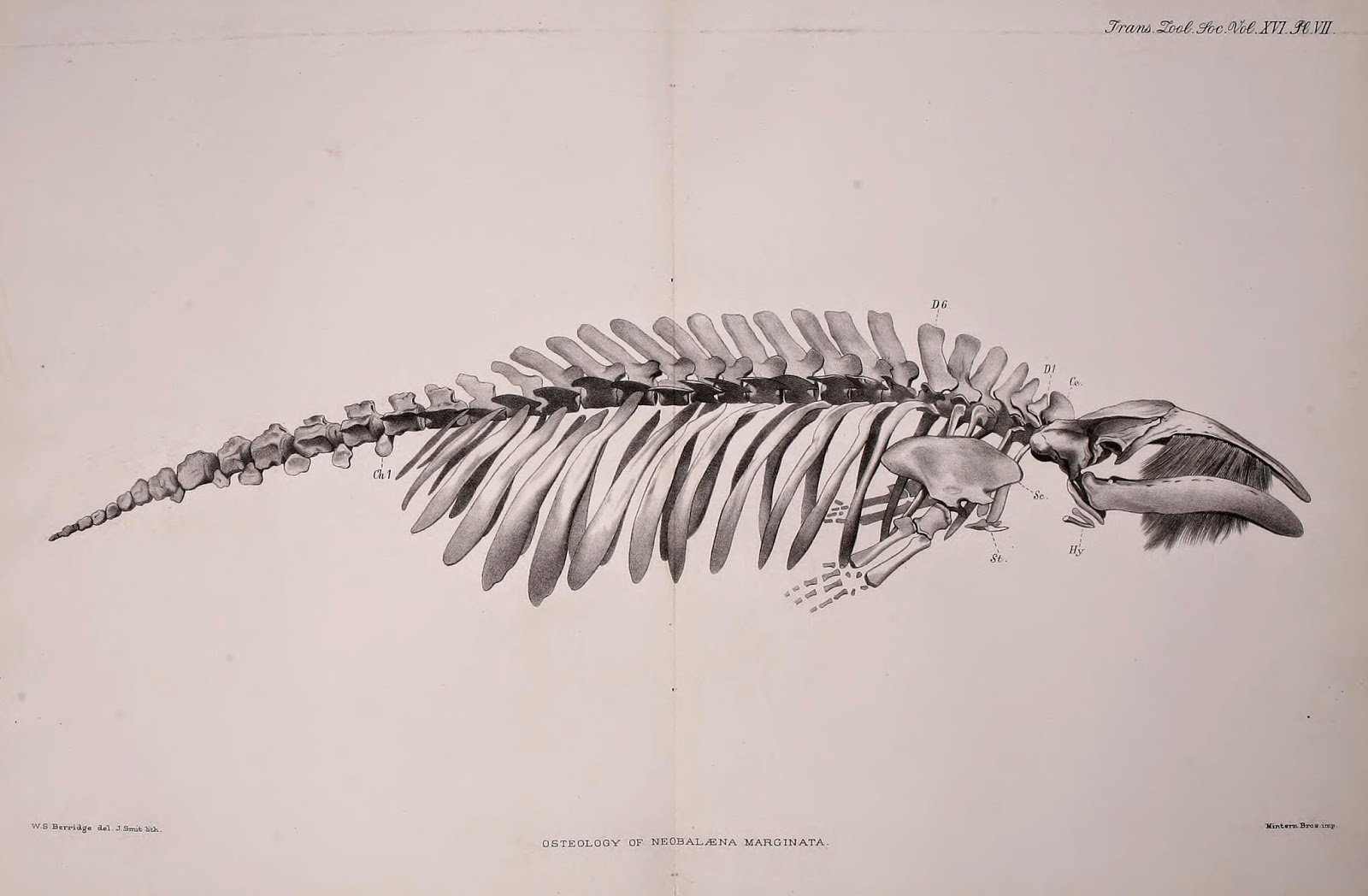
Recently those studies have included work on the pygmy right whale, Caperea marginata, the least known and most elusive of all baleen whales. This species is only known from isolated remains, infrequent solitary strandings, and few sightings, thus sharply contrast with all other baleen whales that are known from a multitude of live observations, captures and strandings (Baker, 1985). The earliest descriptions of this cryptic whale were based on beach-cast fragments associated with a convoluted taxonomy and nomenclature only applied correctly as Caperea marginata from 1930s onwards (Beddard, 1901; Gray, 1873; Rice, 1998). The divergent external appearance and skeletal disparity of the pygmy right whale warrant hereby separation from the true right whales (Balanidae) into a discrete family (Neobalaenidae Gray 1873), separating C. marginata from all other living mysticete families (Balaenidae, Eschrichtiidae and Balaenopteridae). However, only recently has C. marginata also been associated with an otherwise extinct fossil family (Cetotheriidae) (Fordyce and Marx, 2013). It is with this family that the pygmy right whale also shares some of the most striking fatures of the postcranial skeleton, namely the shoulde blade and the ribs (Bouetel and de Muizon, 2006; Gol’din et al., 2013).

View Full Size Image
Osteology of the Pygmy Right Whale Caperea marginata. Beddard, FE. “Contribution towards a knowledge of the osteology of the pigmy whale (Neobalaena marginata).” Transactions of the Zoological Society of London. v. 16 (1901). http://biodiversitylibrary.org/page/32663067.

Müller confides that, to support her work, she uses BHL “too often to count,” downloading PDFs of papers, whole articles, and high resolution images from our collection. The material is invaluable to her research.

“A lot of older literature I cannot get anywhere else, and without it I would sometimes have no basis for comparative analysis or I would not be able to confirm the validity of citations by other authors,” explains Müller. “This was particularly the case when working on the pygmy right whale (Caperea marginata). Apart from the pygmy right whale’s convoluted taxonomy, there are only three detailed descriptions of the shoulder musculature of any baleen whale – two of them (also the most detailed ones) are about a hundred years old (Carte and Macalister 1868 and Schulte 1916).”

When asked to describe her favorite BHL feature, Müller could not narrow it down to a single service (something we love to hear!). She not only finds it easy to locate the journals she needs but also, once she has found a title of interest, quickly determines what volumes are available. She also likes the visually-attractive images displayed throughout the website (even the “stunning fish” displayed on our “item not found” page), as well as the ‘news’, ‘today’s picks’ and ‘featured collections’ components. Finally, she was particularly complimentary of our feedback service (shout-out to Jackie Chapman, our BHL Collections Librarian who triages all of our feedback), describing it as “fast, friendly and very competent.”

View Full Size Image
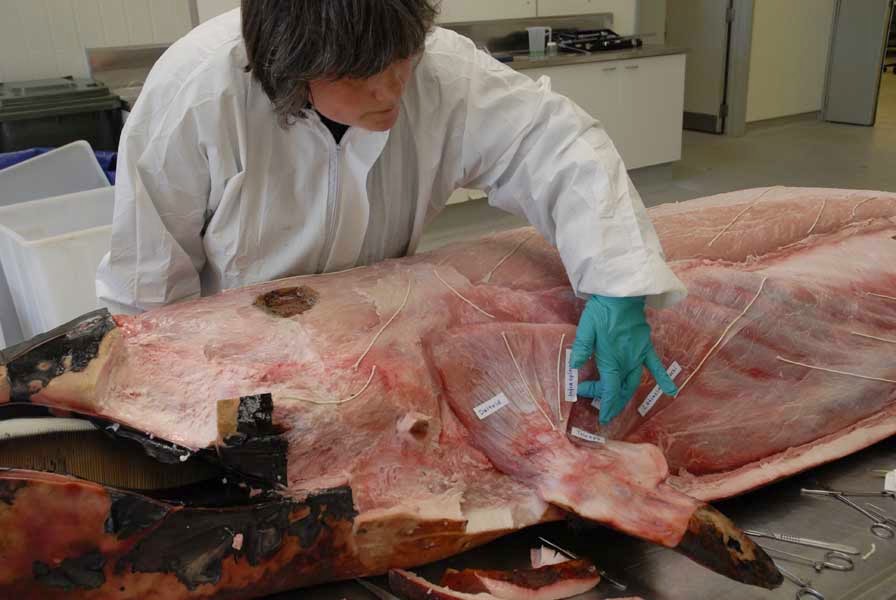
Moyna K. Müller labelling shoulder muscles of a juvenile pygmy right whale at the Museum of New Zealand (Te Papa). Photo by R. Ewan Fordyce.

Likewise, Müller could not name a single-favorite item in BHL. As she describes:

“The problem in my field is that there is no complete work I could use as the fundament for my own work, but rather a host of different articles that cover some aspects, e.g. osteology (van Beneden, 1880, Ostéographie des Cétacés vivant et fossils), or myology (Carte, A. and A. Macalister, 1868, On the anatomy of Balaenoptera acutorostrata or Schulte, H. v. W., 1916, Anatomy of a foetus of Balaenoptera borealis), and equally important the description of little described whales and dolphins (many articles by e.g. W. H. Flower, F. J. Knox, J. Hector, J. E. Gray in various volumes of Transactions and Proceedings of the New Zealand Institute or The Annals and Magazine of Natural History).”

Thus, the ability to retrieve all of these works and more is critical to Müller’s research success. BHL makes that possible.

Finally, Müller did offer a wonderful suggestion for a way to improve BHL, particularly in relation to the many foreign works available.

“You have quite a bit of foreign literature. [It’s] no problem for me to translate e.g. German or French, but it might be worth considering creating an option to upload translations, or a summary created by researchers in that field who do speak that particular language and are familiar with the terminology in their field, since a crude translation or summary is still better than none for somebody who doesn’t speak that language at all.”

As we continue to explore more and more crowdsourcing opportunities within our BHL community, and investigate ways to allow our users to help us improve our collections and services, the ability to add translations, transcriptions, and annotations are just some of the features we’re considering for our next interation of BHL. You can stay up to date with all of our website and service changes and improvements by following us on this blog, Twitter, and Facebook or subscribing to our newsletter. If you have suggestions for ways to improve our website or collections, please send us feedback!

Thank you, Moyna, for taking the time to explain how BHL is useful to you in your daily work! Do you use BHL to support your work? Want to tell us about it? Send us a message at [email protected].

Click here to see cetacean sources cited, used, or otherwise useful, outlined by Moyna K. Müller. 

With Contributions From:
Grace Costantino
Outreach and Communication Manager, Biodiversity Heritage Library

April 9, 2015by ulib-libraryjobs
Blog Reel, Featured Books

Happy Darwin Day!

View Full Size Image
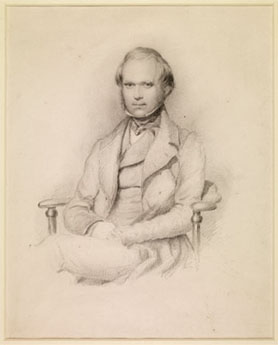
Charles Darwin by George Richmond. Cambridge University Library.

Today in 1809, Charles Darwin, remembered for his theory of Evolution by means of Natural Selection (which was so eloquently outlined in the 1859 publication On the Origin of Species by Means of Natural Selection) was born. We celebrate this day as Darwin Day.

In 2011, BHL released Charles Darwin’s Library, a collection of books found in Charles Darwin’s personal library, with his hand-written annotations marked-up and indexed. We made a selection of these books available for free download in iTunes U. This year, we’ve selected images from these books and created a Darwin collection in Flickr. As with all BHL content, these images are free for download and reuse.

As we continue our celebrations of this great man of science, we highlight another project (headquartered at the American Museum of Natural History) which is dedicated to providing free access to Charles Darwin’s scientific manuscripts – the Darwin Manuscripts Project.

In this two-part post, Darwin Manuscripts Project Director, David Kohn, examines four of Darwin’s manuscripts that show the development of his evolution theory. Let’s begin with excerpts from “Ornithology Notes” and Darwin’s “Transmutation Notebook.”

Celebrating Darwin Day. By David Kohn. Director, Darwin Manuscripts Project

The Darwin Manuscripts Project has the admittedly ambitious goal of publishing all of Darwin’s scientific manuscripts. When digitized this will come to well over 100,000 high-resolution images, which we aim to faithfully transcribe and edit to the exacting standards of contemporary textual and historical scholarship. Among all these manuscripts my first love has always been those items that reveal—or at least allow us to glimpse at—the development of Darwin’s commitment to transmutation (his term for evolution) and the insights that led him to natural selection and eventually to the Origin of Species. Beyond their intellectual content, what appeals to me is how passionate are these manuscript glimpses of Darwin deeply in the midst of theory creation. So I’ve selected three items that capture chronological high points in what must be the most crucial intellectual journey in the history of natural history. And then I’ve selected two manuscript pages from the end point of the journey—the Origin itself. The entirety of this  journey can easily be followed on the DMP site by going to Edited Manuscripts (in the left-hand navigation) and then selecting ‘Creation of the Origin’, where the reader will find all the many surviving documents that are relevant to this process from 1835 to 1859.

Ornithology Notes, Summer 1836

(Cambridge University Library, DAR 29.2: 73-74)

View Full Size Image
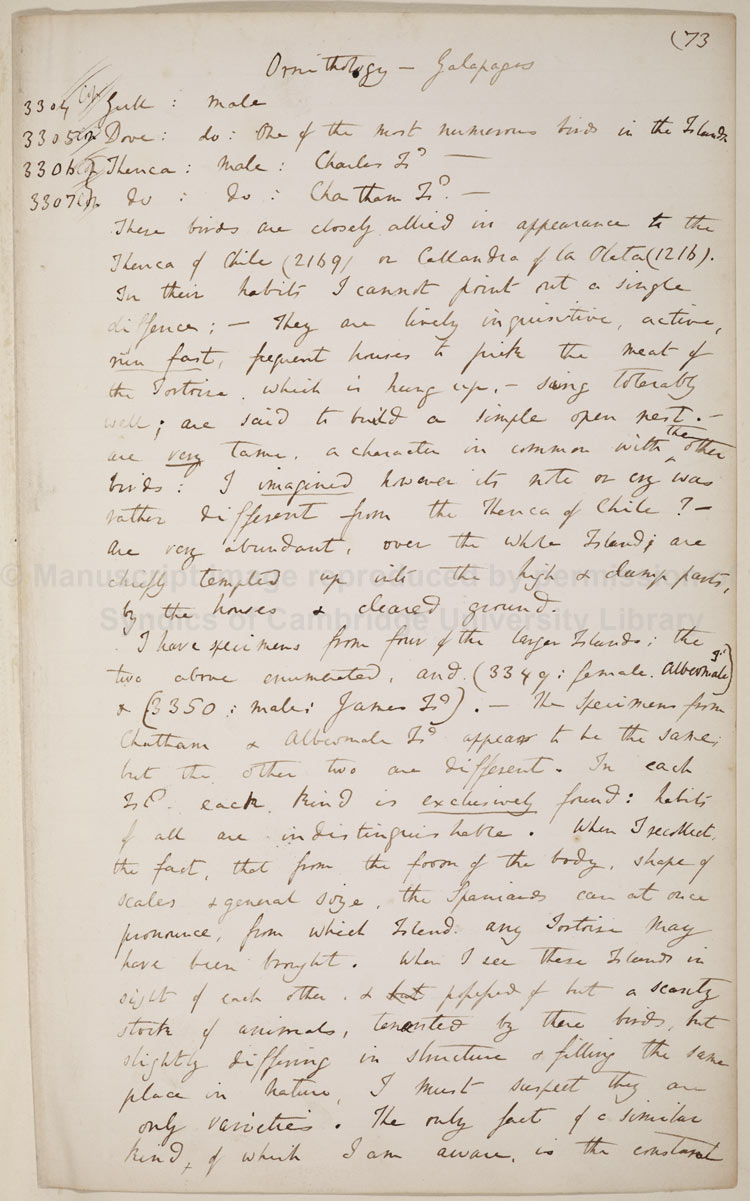
Ornithology Notes. Pg. 73. Cambridge University Library.
View Full Size Image
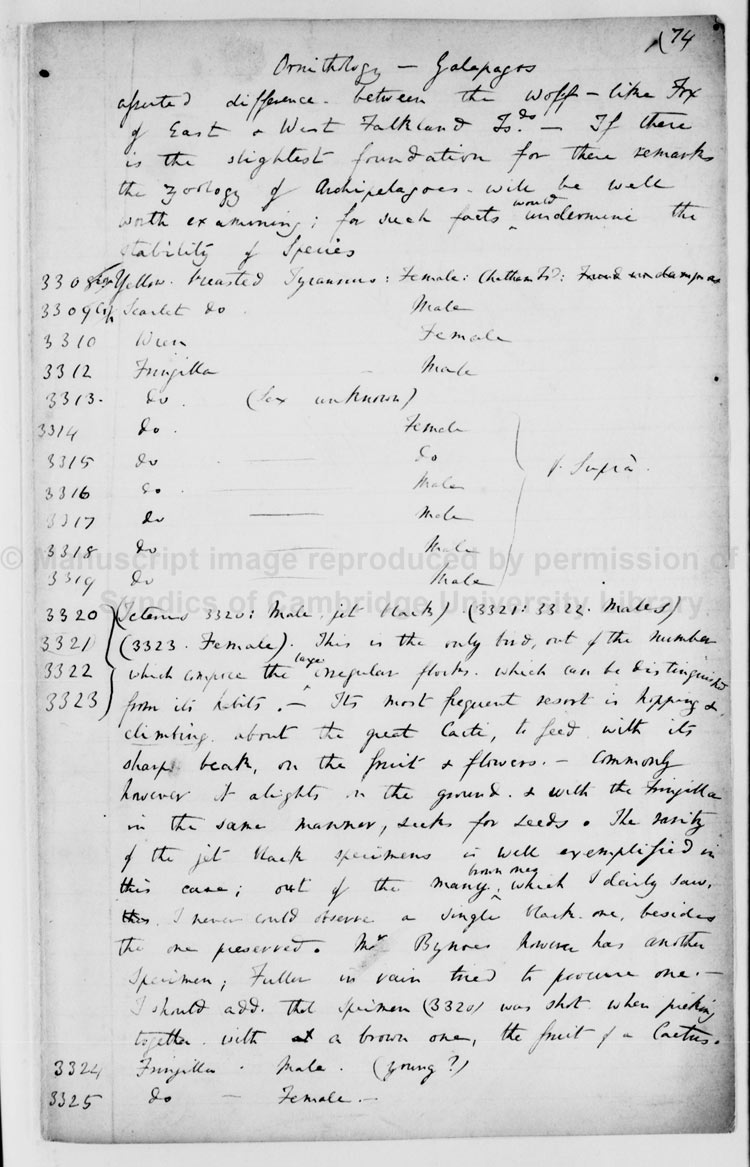
Ornithology Notes. Pg. 74. Cambridge University Library.

I want to focus on the following passage about the slightly different forms of mocking birds Darwin found as he travelled from island to island. This was written in the summer of 1836 and is a significantly revised version of notes written in 1835, shortly after the Beagle left the Galapagos.

“When I see these Islands…tenanted by these [mocking] birds…I must suspect they are only varieties. … If there is the slightest foundation for these remarks the Zoology of Archipelagoes, will be well worth examining; for such facts «would» undermine the stability of Species.”

What a tantalizing passage. What does he mean by the concluding remark: ‘undermine the stability of Species’?

Undoubtedly, this remains one of the most controversial passages in the Darwin manuscript corpus. And I am offering a part of my humble, yet accurate, interpretation. By ‘stability’ Darwin means immutability. For stability of species is the exact term that Charles Lyell used when he discussed Lamarck’s evolutionary theory at length in the Principles of Geology. By 1836, Darwin had almost four years to read Lyell. And we know definitively he had read and indeed thought about Lyell’s anti-evolutionary views by February 1835. While there are several ways that Darwin was exposed to evolution before the voyage, Lyell’s deep exposition of Lamarck was, I believe, the most important exposure. For reading Lyell gave Darwin a major and thorough injection of evolution theory at the very time when Darwin was actively collecting specimens. But this belief has to be a matter of guess work because Darwin did not begin annotating his books until after the Beagle voyage. (If you really want to have some fun browse through the heavy marginalia on Darwin’s immediately post-Beagle copy of the 1837 edition of Lyell’s Principles in the Charles Darwin’s Library collection at BHL: http://biodiversitylibrary.org/item/105893 and http://biodiversitylibrary.org/item/105574.)

So to me ‘undermine the Stability of species’ translates as to ‘negate immutability’. Logically, to negate immutability equates to assert evolution. But in this passage Darwin did not assert evolution—not yet. We learn that the logic of discovery can proceed more gradually than mere logic.  However, this passage is an extremely important index of Darwin’s intellectual development. For while it shows that Darwin was not yet an evolutionist, it also shows that he was thinking about evolution and indeed thinking that evidence he had collected could destroy the received view that species are perpetually immutable.

Some more context is necessary.  When he wrote this passage, Darwin was in the midst of an important transition. South America and the years of specimen collecting were long behind him. So as a scientific expedition, the voyage itself was behind him. Yet with the ship homeward bound in the Atlantic, the voyage had not yet ended. But Darwin is already looking to the near future, when he would make a powerful entrance into London’s scientific scene by delivering his Beagle specimens to specialists to identify, describe, and evaluate. For these are the people who will determine whether or not his evidence on the ‘Zoology of Archipelagoes, will be well worth examining’. But now, while still sailing, Darwin was prepared to speculate, and indeed to set the grounds for his future evolutionary theorizing.


Transmutation Notebook D 134e-D135e, 28 September 1838

(Cambridge University Library, DAR 208: 73-74, http://darwin.amnh.org/viewer.php?eid=75168 and http://darwin.amnh.org/viewer.php?eid=75169.  For the whole Notebook D see http://darwin.amnh.org/viewer.php?mid=7.)


View Full Size Image
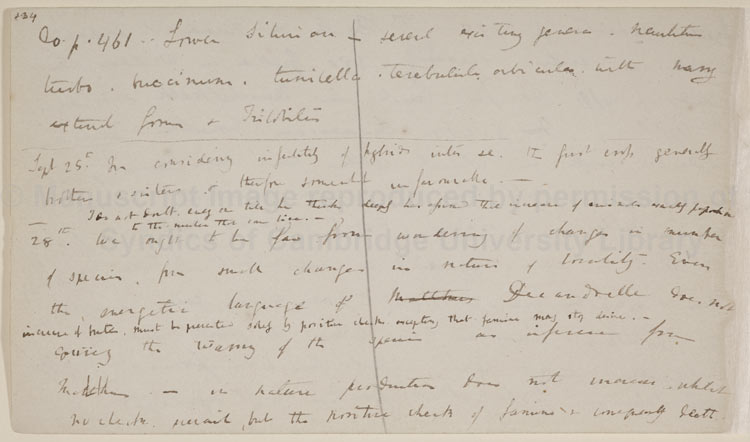
Transmutation Notebook D. Pg. 134e. Cambridge University Library.
View Full Size Image
Transmutation Notebook D. Pg. 135e. Cambridge University Library.


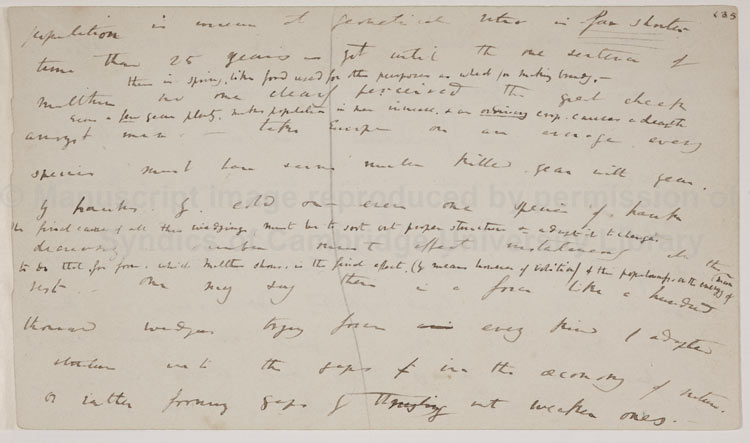
28th. «I do not doubt, every one till he thinks deeply has assumed that increase of animals exactly proportiona[l] to the number that can live.—» We ought to be far from wondering of changes in number of species, from small changes in nature of locality. Even the energetic language of ‹Malthus› «Decandoelle» does not convey the warring of the species as inference from Malthus.— … population in increase at geometrical ratio in FAR SHORTER time than 25 years— yet until the one sentence of Malthus no one clearly perceived the great check amongst men.— … One may say there is a force like a hundred thousand wedges trying force ‹into› every kind of adapted structure into the gaps ‹of› in the œconomy of Nature, or rather forming gaps by thrusting out weaker ones. «The final cause of all this wedgings, must be to sort out proper structure & adapt it to change.—»

These two pages from the third of Darwin’s ‘Notebooks on the Transmutation of Species’ give us a window into another crucial moment, for here we see Darwin’s profound excitement as he responds to reading Malthus’ Essay On Population. Visually, I have always been struck by Darwin’s uncharacteristically small, yet very well formed, handwriting here. And notice how there seems to be at least two layers of writing. Indeed the pages are so densely packed that in some places scholars have difficulty cleanly separating the layers.

But, what is Darwin saying?  Well, you need to know that by September 1838, Darwin was deeply engaged in what became the two branches of his life’s work. One branch was the constant weighing of the evidence for and against evolution, though by March 1837—so about six months after the Ornithology Notes, he was convinced that the mutability of species was the way nature is organized—evolution is a correct theory. The other branch was Darwin’s search to define mechanisms that explain two things: how species acquire adaptations and how new species are formed.  In these two pages Darwin is, for the very first time,  beginning to formulate the essence of the mechanism for adaptive evolution, namely: by natural selection. No wonder he writes with so much energy, and yet with so much precision. What he does here is grasp the power of Malthus’ population pressure—‘the energetic language of Malthus,’ which he then harnesses as a natural agent that through the differential survival of the fittest—‘forming gaps by thrusting out weaker ones’ can thereby ‘sort out proper structure & adapt it to change’. This is the essence of natural selection. Not the  grown tree in full bloom. But it is more than just a seed, for if theories are like trees, at this stage Darwin’s was a healthy sapling.

(To Be Continued…View part 2 of this blog post.)

Images in this post reproduced with the permission of the Syndics of Cambridge University Library.

___________________________

Explore Darwin on BHL and the Darwin Manuscripts Project:

Charles Darwin’s Library
Charles Darwin’s Library on iTunes U
Charles Darwin’s Library on Flickr
Darwin Manuscripts Project
Official Darwin Day Website


February 12, 2015by ulib-libraryjobs
Blog Reel, Featured Books

Voilà! Evolution by Means of Natural Selection

Portrait version of the Biodiversity Heritage Library logo.

Exploring Darwin’s Journey Towards the Theory of Evolution,

Part 2 (View Part 1)

In our previous post, David Kohn, Director of the Darwin Manuscripts Project, discussed two Darwin manuscripts illustrating the development of his theory of evolution: excerpts from “Ornithology Notes” and his “Transmutation Notebook D.”

In this installment, we explore two additional manuscript excerpts: “Principles of Divergence” and Darwin’s “Origin Manuscripts.”

Celebrating Darwin Day. By David Kohn. Director, Darwin Manuscripts Project, Part 2

Principle of Divergence. Natural Selection Portfolios II

(Cambridge University Library, DAR 205.5: 148 http://darwin.amnh.org/viewer.php?history=&eid;=21139. For the whole of DAR 205, Darwin’s divergence portfolio, see http://darwin.amnh.org/viewer.php?mid=143)

View Full Size Image
Principles of Divergence Portfolio. Pg. 148. Cambridge University Library.

Darwin finished his last notebook in 1839 and waited until 1842 to write a first short essay and until 1844 to write a much longer essay. Then it isn’t until 1854 that he returned in earnest to work on what became the Origin, published in 1859. There are many reasons for all these obvious intervals and gaps. But let’s focus on one big reason, namely: as a comprehensive explication of evolution, the theory even in 1844 was incomplete. For all that Darwin had fully worked out natural selection—which explains the origin of adaption—between 1838 and 1842, yet we can see in retrospect that natural selection wasn’t sufficient to explain how new species are formed. Nor did natural selection explain the principle behind the irregularly branched tree of life that Darwin first drew back in 1837.  According to his autobiography, this big intellectual gap did not dawn on Darwin until the 1850s.

I overlooked one problem of great importance; and it is astonishing to me, except on the principle of Columbus and his egg, how I could have overlooked it and its solution. This problem is the tendency in organic beings descended from the same stock to diverge in character as they become modified. That they have diverged greatly is obvious from the manner in which species of all kinds can be classed under genera, genera under families, families under sub-orders, and so forth; and I can remember the very spot in the road, whilst in my carriage, when to my joy the solution occurred to me; and this was long after I had come to Down. The solution, as I believe, is that the modified offspring of all dominant and increasing forms tend to become adapted to many and highly diversified places in the economy of nature.  (Autobiography 120-121)

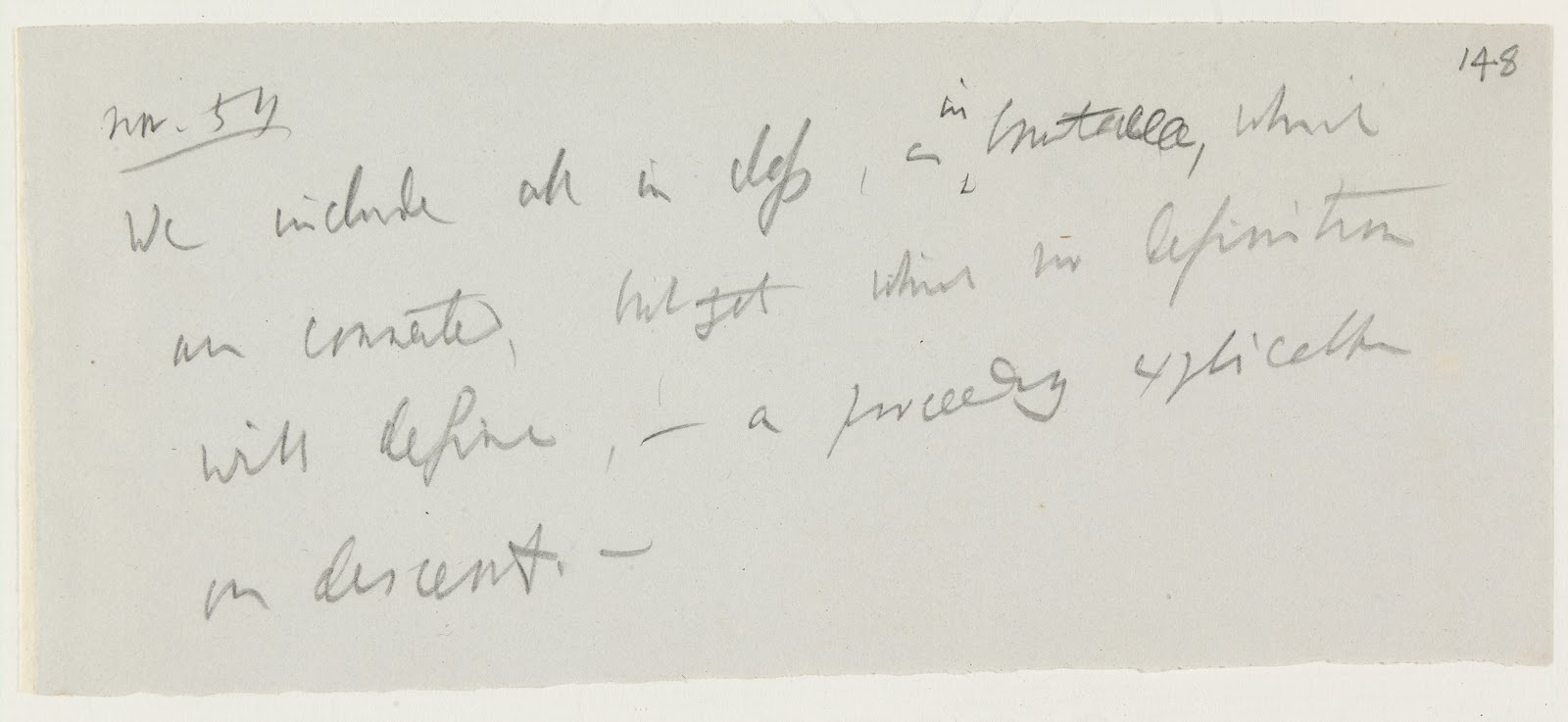
What intrigues me about this explanation of how the principle of divergence originated is Darwin’s memory of ‘the very spot in the road, whilst in my carriage, when to my joy the solution occurred to me’.  Did this really happen? Did he have a eureka moment riding in his carriage? For good reason, historians don’t like to trust autobiographical accounts. Darwin’s memory has been proven inaccurate more than once. And yet, let me rush in where wiser scholars may fail/fear to rush. In Darwin’s Natural Selection Portfolios II, there is a series of 15 loose notes, all related to divergence, all dated October to November 1854, and all written on identical grey paper. But one of these notes is written in pencil rather than ink. Unlike any of the other notes in the 1854 series, Darwin’s hand writing here is exceedingly ‘jumpy’.  Could this be the manuscript record of the carriage ride? The text reads:

We include all in class, as «in» Crustacea, which are connected, but yet no definition will define, — a proceeding explicable on descent.—

I suggest that this passage parallels the bolded sentences above from the Autobiography.  What I’m proposing as the carriage-ride note is a succinct statement of the problem or challenge of divergence—how to make the apparent “connectedness” of “all in class” more than just “heraldic”, but actually “explicable” on descent. The succeeding flood of grey-paper notes contain elements of Darwin’s solution—that is, the principle of divergence, which probably began to come into focus for him after he stepped down from his carriage. I think in this scrap of paper, we’ve again caught Darwin in the act of being Darwin.

Surviving draft manuscript sheets of the Origin of Species

(American Philosophical Society Library, BD 25.57 and Cambridge University Library, DAR 185: 109a (6v). For the entire known collection of Origin sheets see http://darwin.amnh.org/viewer.php?mid=2.)

View Full Size Image
Origin Manuscript. Pg. 224. American Philosophical Society Library.

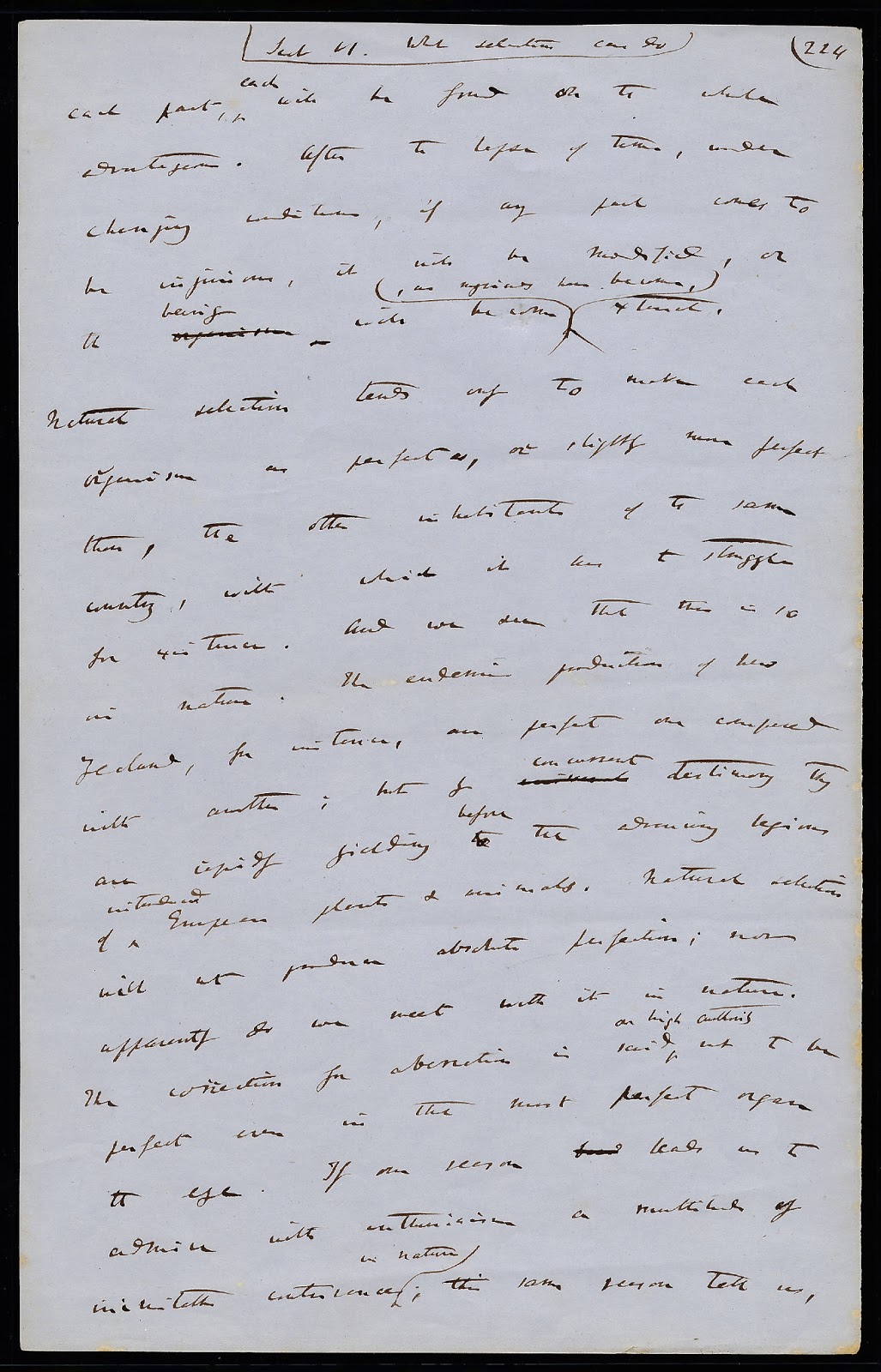
The first edition of the Origin is a book of 490 pages. So Darwin’s hand-written draft must have been a respectable pile of paper. Yet for all the voluminous size of the Darwin archive, only some 30 sheets of the Origin survive. Happily, my favorite passage in the book is one of the five sheets owned by the American Philosophical Society Library in Philadelphia. Here is the passage:

Natural selection tends only to make each organism as perfect «as», or slightly more perfect than, the other inhabitants of the same country, with which it has to struggle for existence. And we see that this is so in nature.

This comes from Chapter VI, entitled ‘Difficulties on Theory,’ which perhaps could be more aptly called ‘Difficulties Conquered.’ The difficulty Darwin sought to overcome here was the appearance of perfection in nature, a concept invoked in the natural theology that Darwin encountered as a student in the work of William Paley. I am drawn to this passage because here Darwin pursues a metaphysical implication of his theory. He argues, rather slyly, that natural selection undoes the prevailing view that adaptations are perfect. He does this by introducing a contradiction in terms. How can anything be ‘slightly more perfect’. Perfect should be perfect. But Darwin shows that the concept of natural selection makes perfection relative. To be adapted organisms need only be ‘slightly more perfect than, the other inhabitants of the same country.’ But that renders perfection in nature a baseless and useless idea.

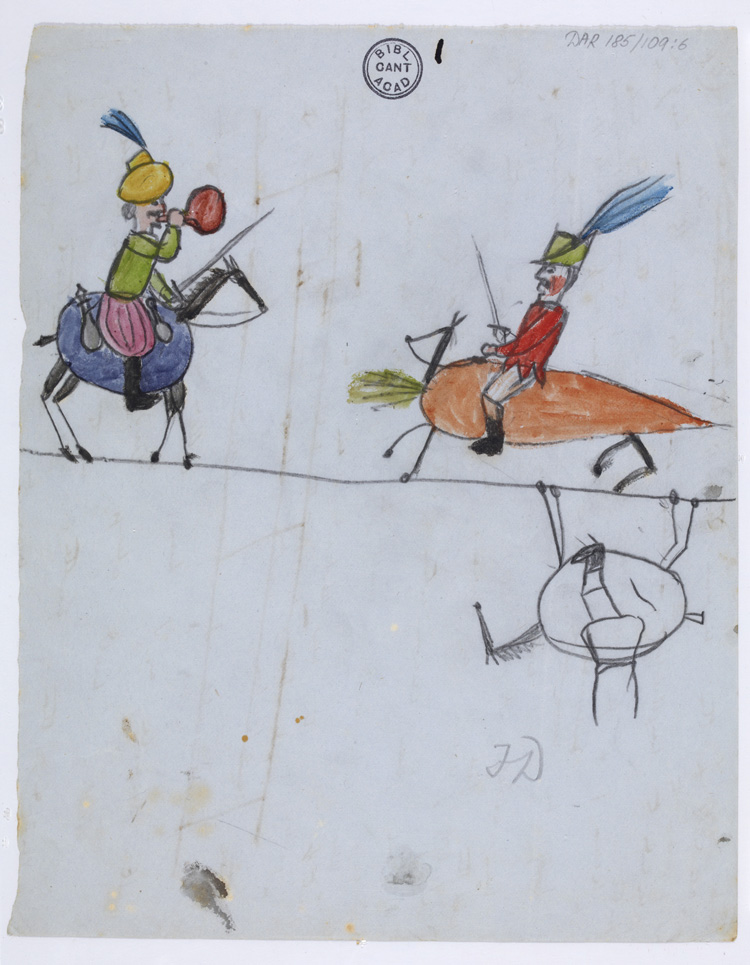
Finally, let’s consider one of the reasons that so few Origin sheets have survived. This picture on the back of an Origin sheet in Cambridge University Library is one of several with drawings like this one showing a battle between soldiers, who we may call knights of the aubergine and the carrot. The artist was Darwin’s son Francis, who evidently was given access to pages from the manuscript version of the great book. Indeed the manuscript only survives because Francis used it for drawing paper. His father didn’t seem to care!

View Full Size Image 
Aubergine and Carrot Cavalry. By Francis Darwin. Cambridge University Library.

Images in this post reproduced with the permission of the Syndics of Cambridge University Library and the American Philosophical Society Library.
____________

We hope you’ve enjoyed our exploration into the insights that Darwin recorded in his manuscripts, all of which ultimately led to the publication of his theory of Evolution by means of Natural Selection. We extend a special thanks to David Kohn, Director of the Darwin Manuscripts Project, for contributing these posts, and to Cambridge University Library and the American Philosophical Society Library for the use of the manuscript images included within these posts.

Read Part 1 of this Blog Post, discussing “Ornithology Notes” and “Transmutation Notebook D.”

Explore Darwin on BHL and the Darwin Manuscripts Project:

Charles Darwin’s Library
Charles Darwin’s Library on iTunes U
Charles Darwin’s Library on Flickr
Darwin Manuscripts Project
Official Darwin Day Website

February 12, 2015by Grace Costantino
Blog Reel, Featured Books

Book of the Week: Wallace’s Second Place Finish

History never looks too kindly on second place. Neil Armstrong rolls off the tongue as the first man to walk on the moon, but most people hesitate at Buzz Aldrin. Mack Robinson came from a famously athletic family–older brother to Jackie Robinson–and broke the 200-meter world record in the 1936 Olympics. Of course his name is merely the answer to an obscure trivia question as he didn’t win the gold, second only to Jesse Owens. Charles Darwin is so closely associated with evolution and natural selection that his name literally serves as a synonym for the theory. And yet, if only for a slight flap of a butterfly’s wing, we might refer to the transmutation of species as Wallacinian and Alfred Russel Wallace would have gone down in history as the founder of evolution.

View Full Size Image
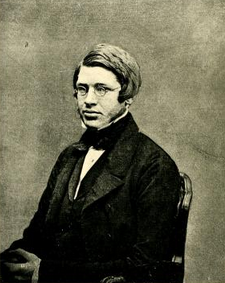
Alfred Russel Wallace,
doesn’t think Wallacinian
sounds that bad

Instead, Wallace is remembered today–if remembered at all–as the man second place to Darwin. But here at the BHL, we recognize Wallace as the naturalist, explorer, geographer, anthropologist, biologist, environmentalist and human rights advocate that he was. The man who, independently of Darwin, arrived to the same conclusion on the origin of species. To honor this somewhat neglected legacy on the 100th anniversary of his death, the BHL has dedicated this week, and this week’s book of the week post, to highlighting our collection of Wallace writings, discoveries and contributions to our understanding of the natural world. To give Wallace the defining word on his role in history, we turn to the description of his life penned by Wallace himself, My life: a record of events and opinions.

In this autobiographical work, Wallace traces his heritage, details his troubled childhood, recounts his early adventures and subsequent publications, and chronicles his transition to advocate and spiritualist–all through correspondence and recollections in his own words. Born to a large family of limited means in Hertfordshire, England, Wallace did not receive much formal education as his family couldn’t afford the demands of tuition. Instead, he was sent to live with his brother and apprentice as a railway surveyor, which–during the railroad boom of the 1830s–was a decent career.

However, young Wallace was not satisfied merely earning a living. He became fascinated by natural history, and through his self-education crossed paths with Henry Walter Bates. Bates was at 19 a published beetle expert and interested in adventure. The two resourceful young men decided to organize an expedition to the Amazon, selling specimens to make ends meet.

The trip did not go well for Wallace. Almost immediately Wallace and Bates separated, and Wallace headed east on the Rio Negro. Wallace relied entirely on native populations for guides, but locals were scarce and escorts rare, “this combined to render my numerous journeys in this almost totally unknown region comparatively unproductive in birds and insects.”

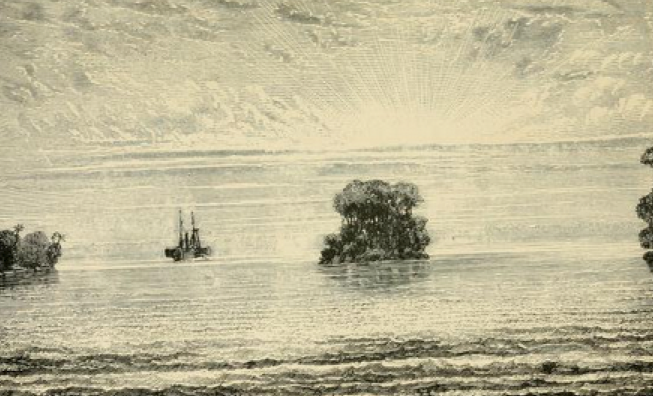
View Full Size Image
An illustration of the Rio Negro from Wallace’s
“A narrative of travels on the Amazon and Rio Negro”

Wallace spent four years in the Amazon, and while his luck in finding “miscellaneous collections” increased, luck in other areas did not. Wallace’s health suffered by a “succession of fevers and dysentery.” His younger brother, Herbert, joined him to help, and within five months, Herbert contracted yellow fever, dying within a few days. Wallace decided to return to England and recounted what happened on the voyage home:

On Friday…about nine in the morning, just after breakfast, Captain Turner, who was half-owner of the vessel, came into the cabin, and said, ‘I’m afraid the ship’s on fire. Come and see what you think of it.’…All hands were at once ordered into the boats…We lay near the ship all afternoon, watching the progress of the flames…[The boat] now presented a magnificent and awful sight as it rolled over, looking like a huge caldron of fire, the whole cargo of rubber, etc., forming a liquid burning mass at the bottom…we bade adieu to the Helen, now burnt down to the water’s edge…My collections, however, were in the hold, and were irretrievably lost. And now I began to think that almost all the reward of my four years of privation and danger was lost.

Wallace and the crew spent 10 days at sea before being rescued by a boat that itself barely made it back to shore.

Even without his collection of specimens that took four years to collect, Wallace published an account of his Amazon travels 18 months later, to little fanfare and much criticism. Undefeated, Wallace once again ventured into the field, this time to Southeast Asia for eight years. The result was an 1855 paper titled, “On the Law Which Has Regulated the Introduction of New Species,” outlining an introductory description of the theory of evolution. Much like his previous work, the article was a flop.

Three years later, Wallace found himself on an island in the Moluccas. Once again, he was destitute and attempting to make ends meet by selling his specimens. During his travels he contracted malaria, and in a feverish state, made a connection that lead to a manuscript detailing the principle of natural selection. Wallace had previously sent all his works directly to publishers. This time, he wanted a peer to review it first and sent it to someone he considered a mentor after beginning a correspondence following his last publication. That is, he sent it to Charles Darwin.

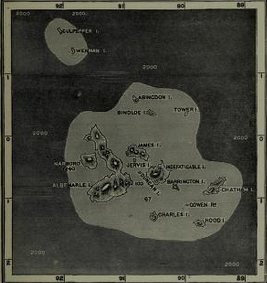
View Full Size Image
Wallace’s map of the Galapagos Islands
from his work, “Island Life”

Now imagine for a moment you are Darwin. Having worked on a theory for the last 20 years, Darwin had yet to publish anything. He receives this 20-page manuscript from a young acquaintance detailing his life’s work. “All my originality,” he wrote to his friend, geologist Charles Lyell, “will be smashed.” He considered publishing a summary of his own writing but continued, “I would far rather burn my whole book than that [Wallace] or any man should think that I had behaved in a paltry spirit.”

Instead, Darwin, Lyell and the botanist Joseph Hooker hastily arranged a reading of both Darwin and Wallace’s works before the Linnean Society on July 1, 1858. A year later, On the Origin of Species was published and the rest is history.

View Full Size Image
Illustration from
“The Malay Archipelago”
View Full Size Image
Another illustration from
“The Malay Archipelago”
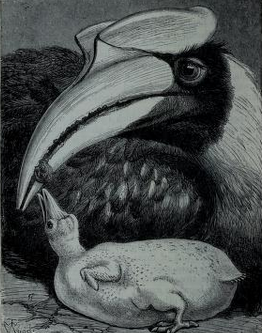
View Full Size Image
Wallace’s Bird of Paradise
from “The Malaysia and
Pacific Archipelagoes”

For Wallace’s part, he was never bitter about the lack of recognition. He embraced Darwin’s success almost as his own, writing, “Some…declare that I am more Darwinian than Darwin himself…and they are not far wrong.” Wallace became a part of the scientific elite and took pride in that fact:

I think, therefore, that I may have the satisfaction of knowing that by writing my article and sending it to Darwin, I was the unconscious means of leading him to concentrate himself on the task of drawing up what he termed ‘an abstract’ of the great work he had in preparation, but which was really a large and carefully written volume–the celebrated ‘Origin of Species.’

Darwin dedicated the rest of his life expounding and building upon “Origin.” Wallace went on to publish some 22 full-length books and almost 800 articles, only some focusing on his scientific achievements. He branched out to write on subjects varying from his embrace of spiritualism to land nationalization to dangerous working conditions for the urban poor. He advocated for the education of women “so that they are rendered independent of marriage as a means of gaining a home and a living,” and is considered one of the first scientists to raise concerns over the impact humans have on the environment.

Wallace is not the prominent figure that Darwin is, and his name is not representative of the theory that he described and advanced. But he was satisfied with the contributions he made to the field and didn’t define his life by the recognition that he could have received had he published first. And who says there’s no room in history for second place?

If you’re interested in Wallace’s compelling life story, learn more about his works as the BHL celebrates Wallace all this week. Check out some of his writings in our Wallace iTunes U collection or our previous book of the week post on Wallace’s The Malay Archipelago.

Want to learn more about the life and work of Alfred Russel Wallace? See this fantastic website containing biographical information, FAQ’s, links to his letters and the Wallace100 campaign sponsored by our partners The Natural History Museum, London.

References:

  • Conniff, R. (2008, June). On the Origin of a Theory. The Smithsonian Magazine. Retrieved from http://www.smithsonianmag.com/science-nature/presence-darwin.html
  • Garrity, L. (2009, Jan 22). Out of Darwin’s Shadow. Smithsonian.com. Retrieved from http://www.smithsonianmag.com/science-nature/Out-of-Darwins-Shadow.html
November 7, 2013by LANL_RL
Page 1 of 212»

Help Support BHL

BHL's existence depends on the financial support of its patrons. Help us keep this free resource alive!

search

About BHL

The Biodiversity Heritage Library (BHL) is the world’s largest open access digital library for biodiversity literature and archives. BHL operates as a worldwide consortium of natural history, botanical, research, and national libraries working together to digitize the natural history literature held in their collections and make it freely available for open access as part of a global “biodiversity community.”

Join Our Mailing List

Sign up to receive the latest news, content highlights, and promotions.

Subscribe Now

Subscribe to Blog via Email

Enter your email address to subscribe to this blog and receive notifications of new posts by email.

Join 319 other subscribers

Subscribe to Blog Via RSS

Subscribe to the blog RSS feed to stay up-to-date on all the latest BHL posts.

Access RSS Feed

Inspiring Discovery through Free Access to Biodiversity Knowledge.

The Biodiversity Heritage Library makes it easier than ever for you to access the information you need to study and explore life on Earth…for free, anytime, anywhere.


64+ Million Pages of
Biodiversity Literature Online.

EXPLORE

Tools and Services
to Transform Research.

EXPLORE

300,000+
Illustrations on Flickr.

EXPLORE

ABOUT | HARMFUL CONTENT | PRIVACY | SITE MAP | TERMS OF USE