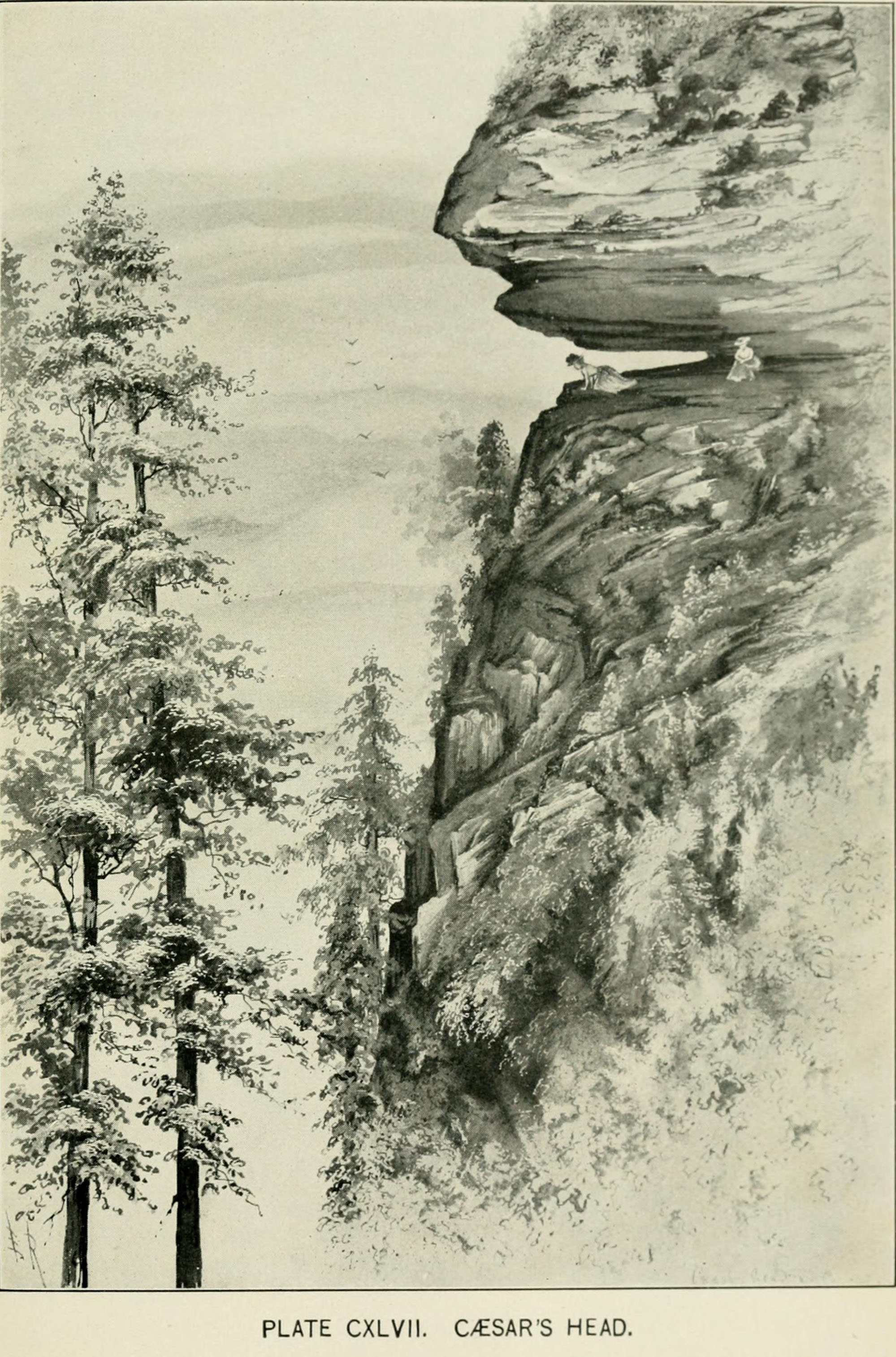
“Caesar’s Head.” Lounsberry and Rowan. Southern wild flowers and trees. 1900. Contributed in BHL by NCSU Libraries /Archive.org.
When the flower seekers reached a great crevice in the rock called Caesar’s Head, their eyes no longer sought the ground, but rested and wandered over the panorama of far-stretching mountains and the fertile valley of the depth below. Could they have trodden over that broad surface, what discoveries might they have made; what secrets have gathered from Nature’s heart? (Lounsberry and Rowan, Southern wild flowers and trees.)
Artist Marian Ellis Rowan depicts herself with botanist Alice Lounsberry peering over a cliff face on Caesar’s Head, South Carolina, as they travel together to research their botanical guidebooks. (Look closely for the two figures on the ledge!) The pair’s collaboration produced A guide to the wild flowers (1899) and A guide to the trees (1900), both popular guides to North American flora; this image comes from their guide Southern wild flowers and trees, together with shrubs, vines and various forms of growth found through the mountains, the middle district and the low country of the South (1901).
Their three guides are illustrated with pen and ink illustrations as well as full color paintings. Intended to make botanical study accessible for a popular audience, they take an ecological approach by organizing species according to where they habitually grow, from aquatic environments to dry sandy soils. In the introduction to Guide to the wild flowers, American botanist and taxonist Nathaniel Lord Britton notes that botanical guides organized by ecosystem reflect a new and significant shift:
[This book will] aid in the appreciation of that new development of botanical study, the science of Plant Ecology. It will teach the novice how altitude, latitude, soil and environment affect the vegetation of certain areas; how certain plants are found growing together because of the nature of the soil and of their surroundings. If it also leads to the understanding of their gradual adaptation to changed conditions it will give a broader and more comprehensive view of plant morphology and lead away from the mistaken idea that plants must and should conform to our artificial definitions, and make clearer the laws of evolution. (Guide to the wild flowers, p. xv)
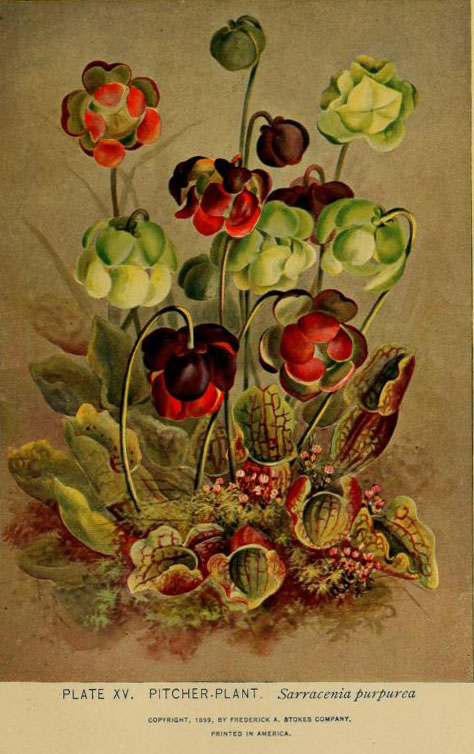
“Pitcher Plant, Sarracenia purpurea.” Lounsberry and Rowan. A guide to the wild flowers. 1899. Contributed in BHL by New York Botanical Garden, LuEsther T. Mertz Library.
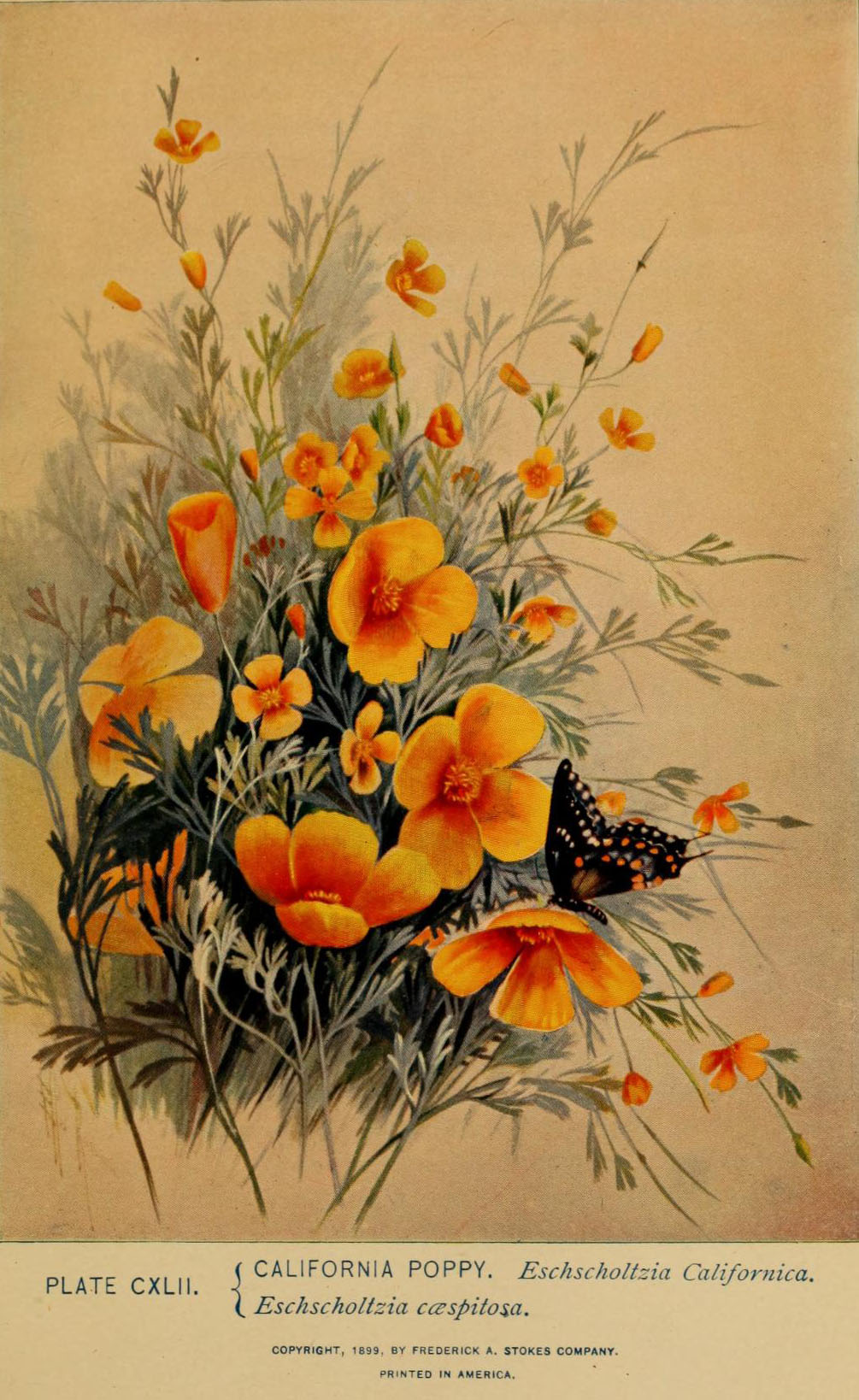
“California poppy, Eschscholtzia Californica and caespitosa.” Lounsberry and Rowan. A guide to the wild flowers. 1899. Contributed in BHL by New York Botanical Garden, LuEsther T. Mertz Library.
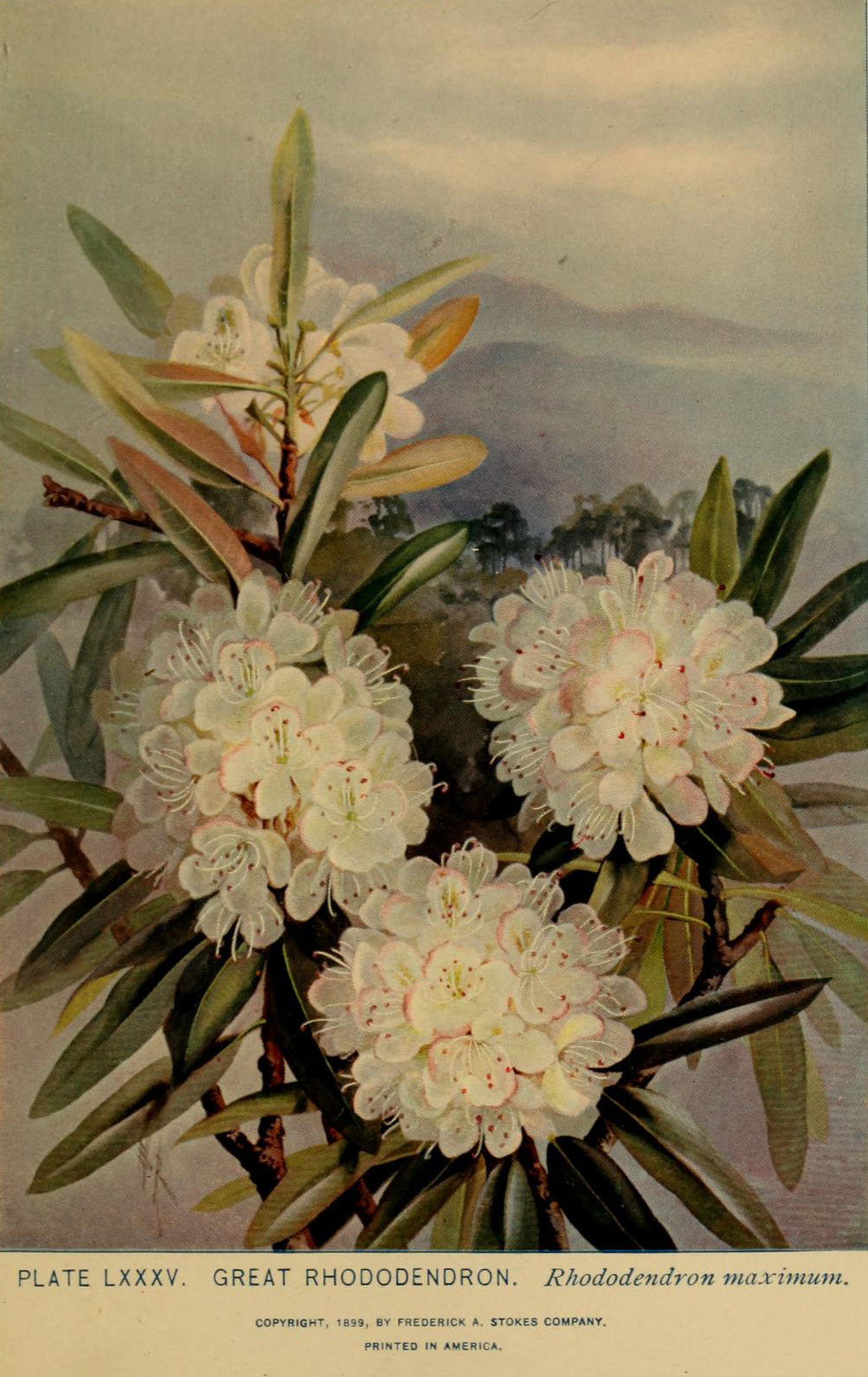
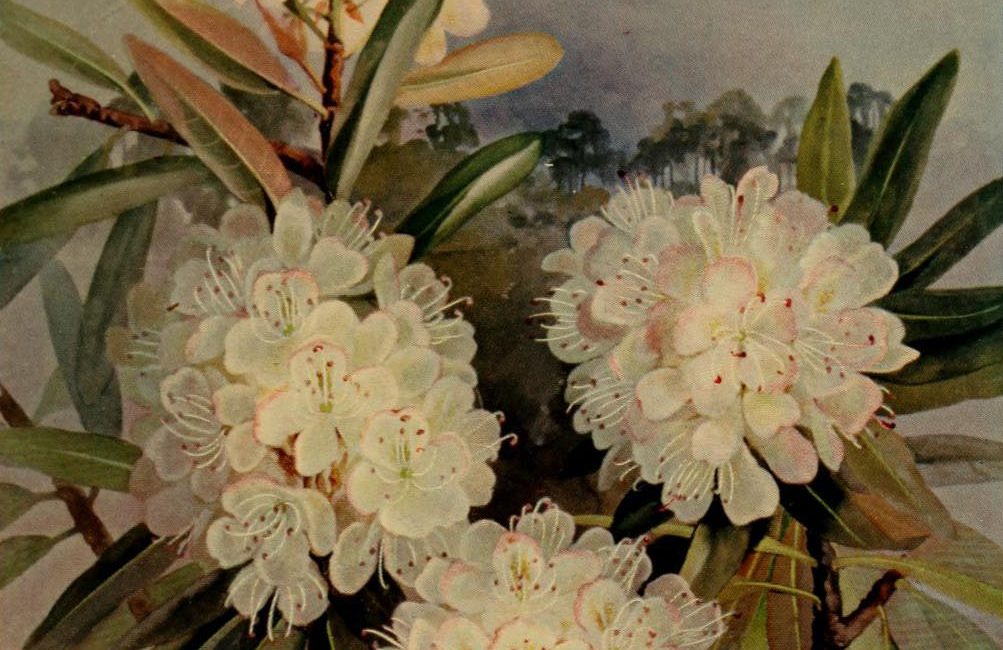
“Great Rhododendron, Rhododendron maximum.” Lounsberry and Rowan. A guide to the wild flowers. 1899. Contributed in BHL by New York Botanical Garden, LuEsther T. Mertz Library.
Marian ‘Ellis’ Rowan (1848-1922), born in Melbourne, Australia, was a well-known popular artist in her time. Raised by a botanist father, she had access to his internationally famous garden at their home Derriweit Heights while she developed her skills in observational painting. Ferdinand von Mueller, the Victorian Government Botanist and a friend of Rowan’s father, also encouraged her interest in botanical painting and commissioned her illustrations in his publications.
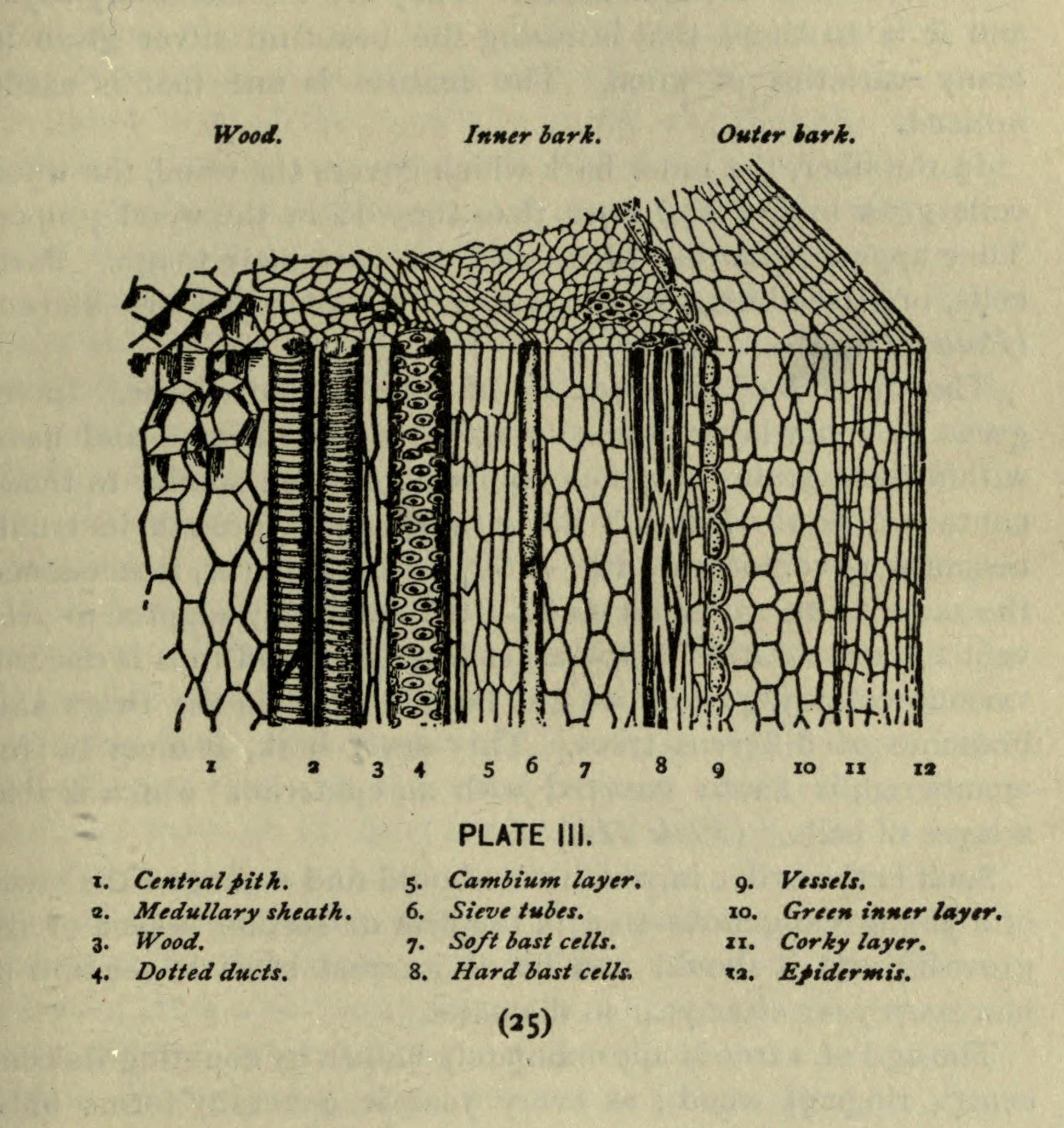
Diagram of wood and bark cell layers. Lounsberry and Rowan. A guide to the trees. 1900. Contributed in BHL by University of Toronto Earth Science Library (Noranda).
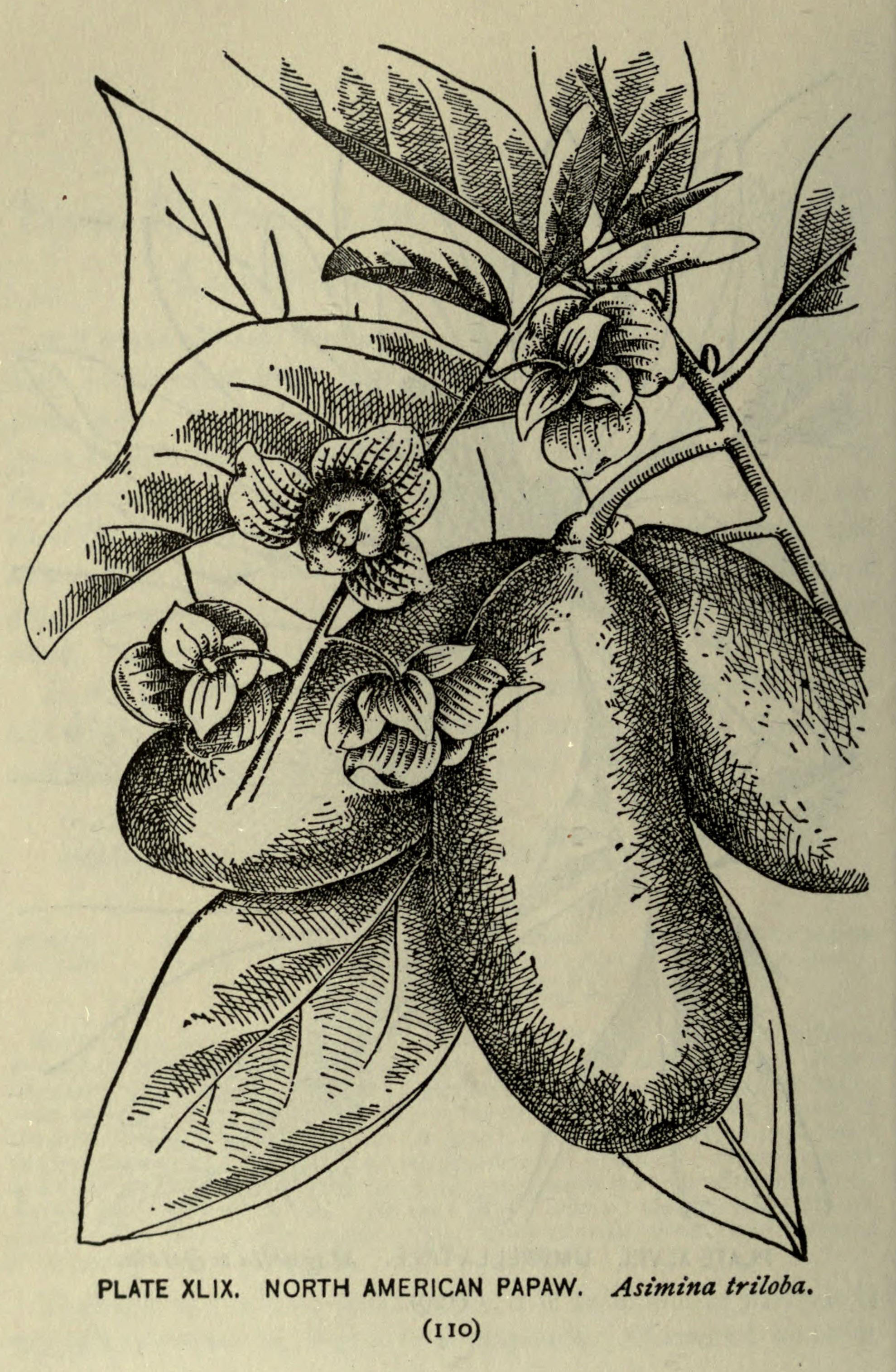
“North American Papaw, Asimina triloba.” Lounsberry and Rowan. A guide to the trees. 1900. Contributed in BHL by University of Toronto Earth Science Library (Noranda).
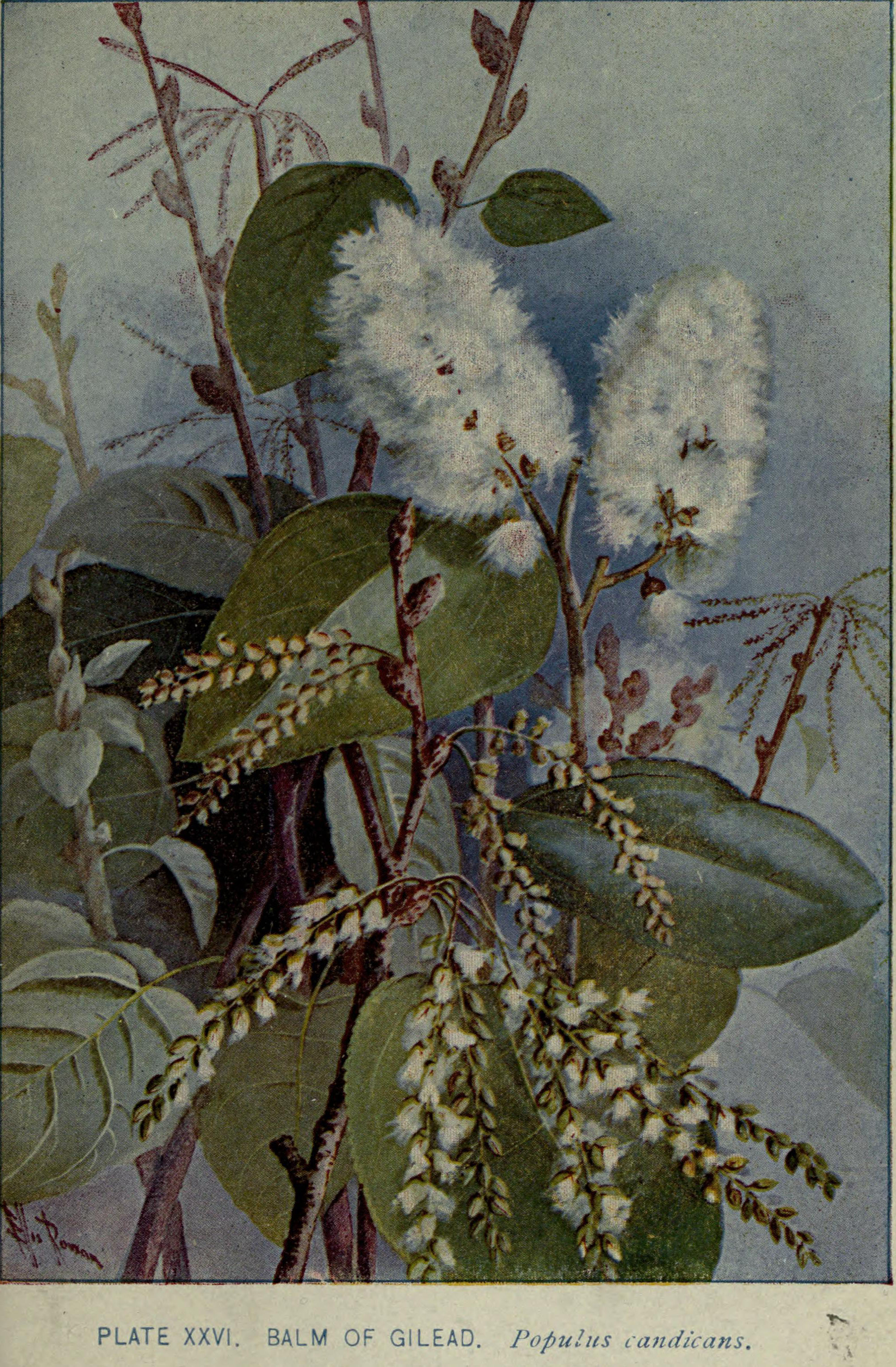
“Balm of Gilead. Populus candicans.” Lounsberry and Rowan. A guide to the trees. 1900. Contributed in BHL by University of Toronto Earth Science Library (Noranda).
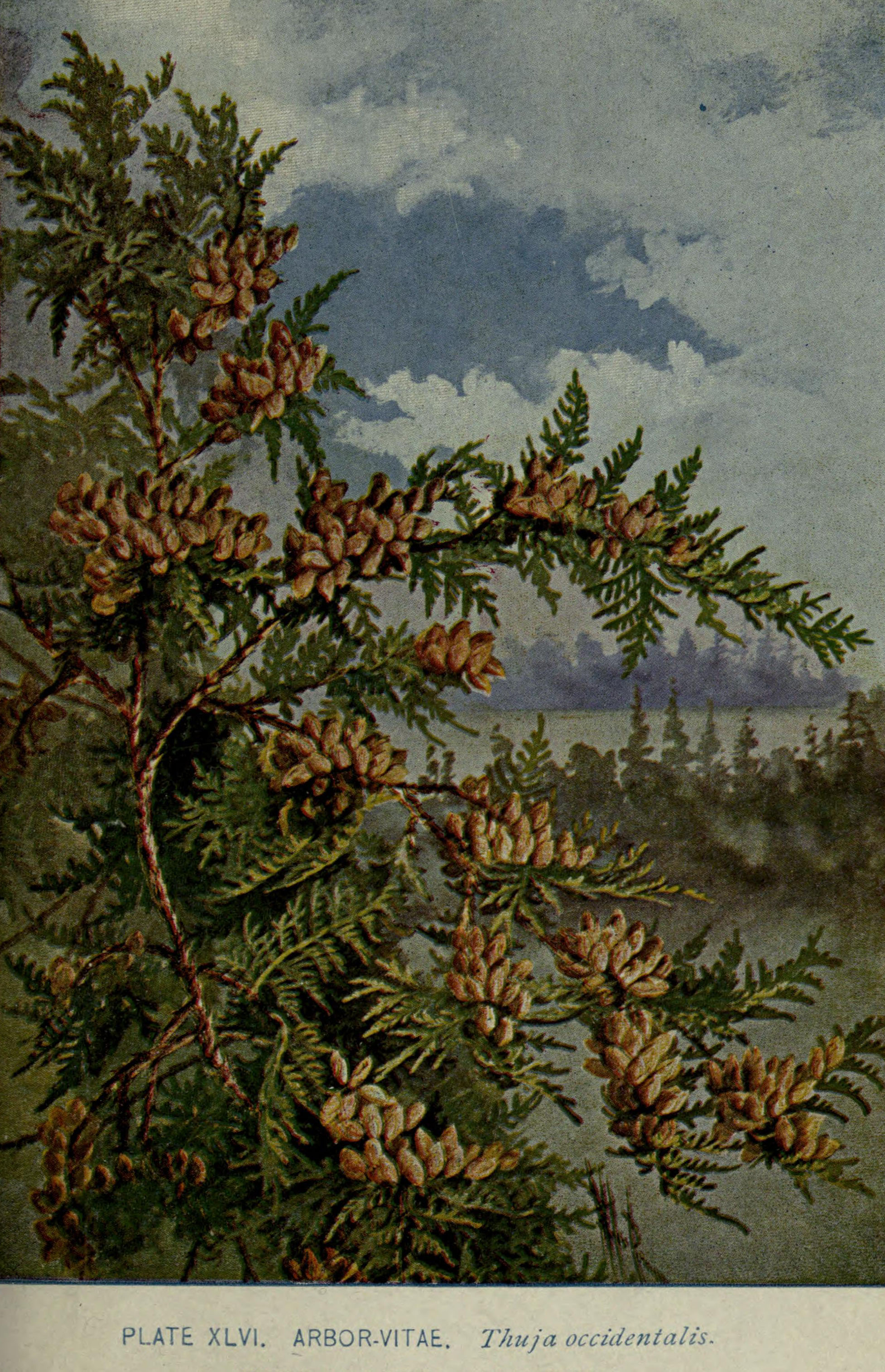
“Arbor-vitae. Thuja occidentalis.” Lounsberry and Rowan. A guide to the trees. 1900. Contributed in BHL by University of Toronto Earth Science Library (Noranda).
Rowan had many opportunities to travel throughout her life, and used them to paint diverse plants in the field. She moved to New Zealand at Pukearuhe on the North Island after her marriage in 1873. During her pregnancy, she moved back to her family home and dove into botanical painting in earnest. In the 1880s she travelled throughout Australia on her husband’s business trips, and also to India and England with her sister. During this time, she painted species for scientific classification, won prestigious exhibition awards, and established herself as a commercially successful artist (despite some controversy stirred by disgruntled male artists). She writes about her travels in her book, A flower-hunter in Queensland and New Zealand (1898). (Interested readers should expect that her descriptions of people of color reflect a white imperialist perspective.)
In 1895 Rowan left Australia for a trip to England and America, where she met Alice Lounsberry in New York in 1896 and extended her stay to take on their collaborative projects. Later in life she would travel to New Guinea, where despite her declining health, she produced over 300 paintings of Birds of Paradise, butterflies, flora, and fungi.
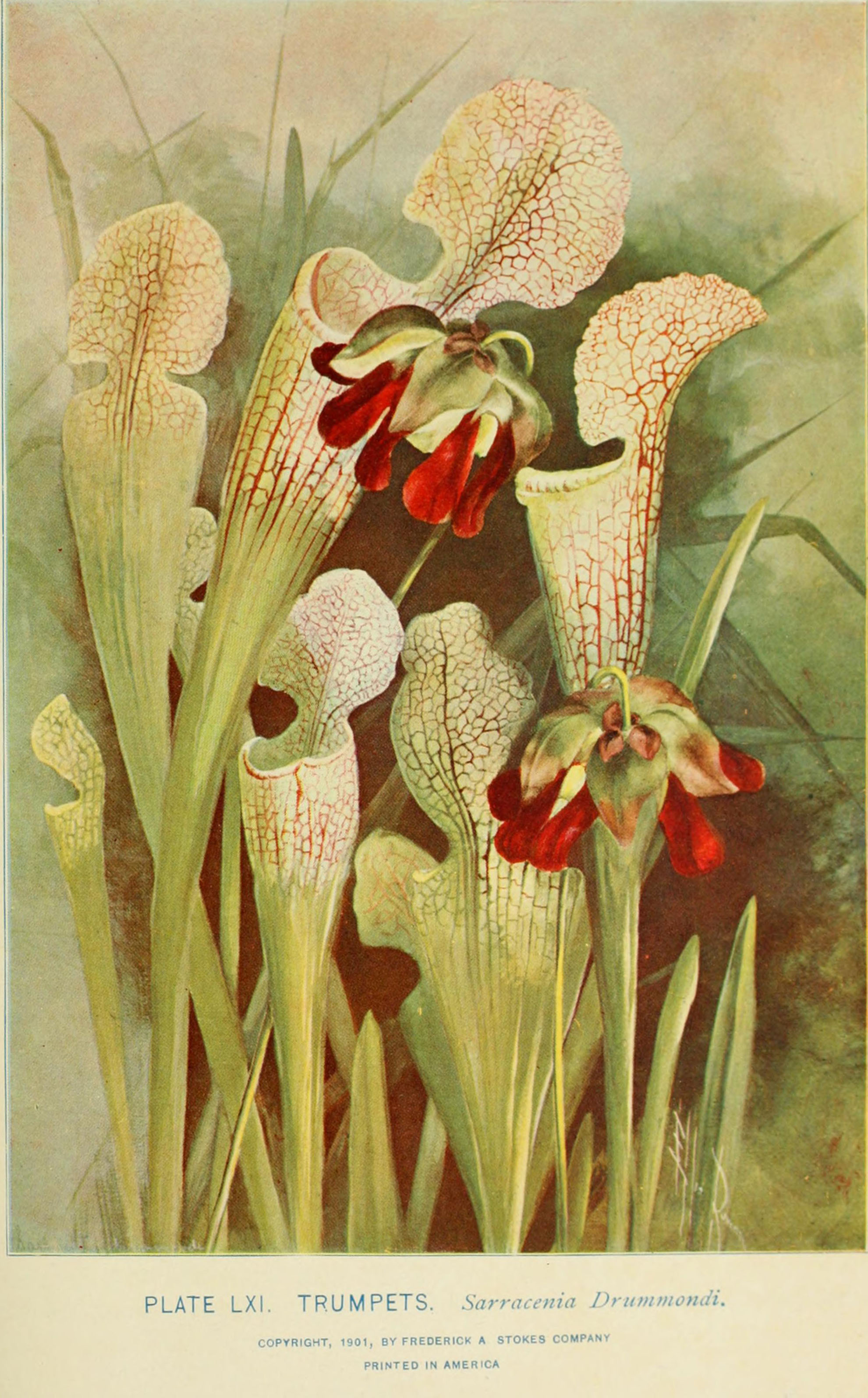
“Trumpets. Sarracenia Drummondi.” Lounsberry and Rowan. Southern wild flowers and trees. 1901. Contributed in BHL by NCSU Libraries.
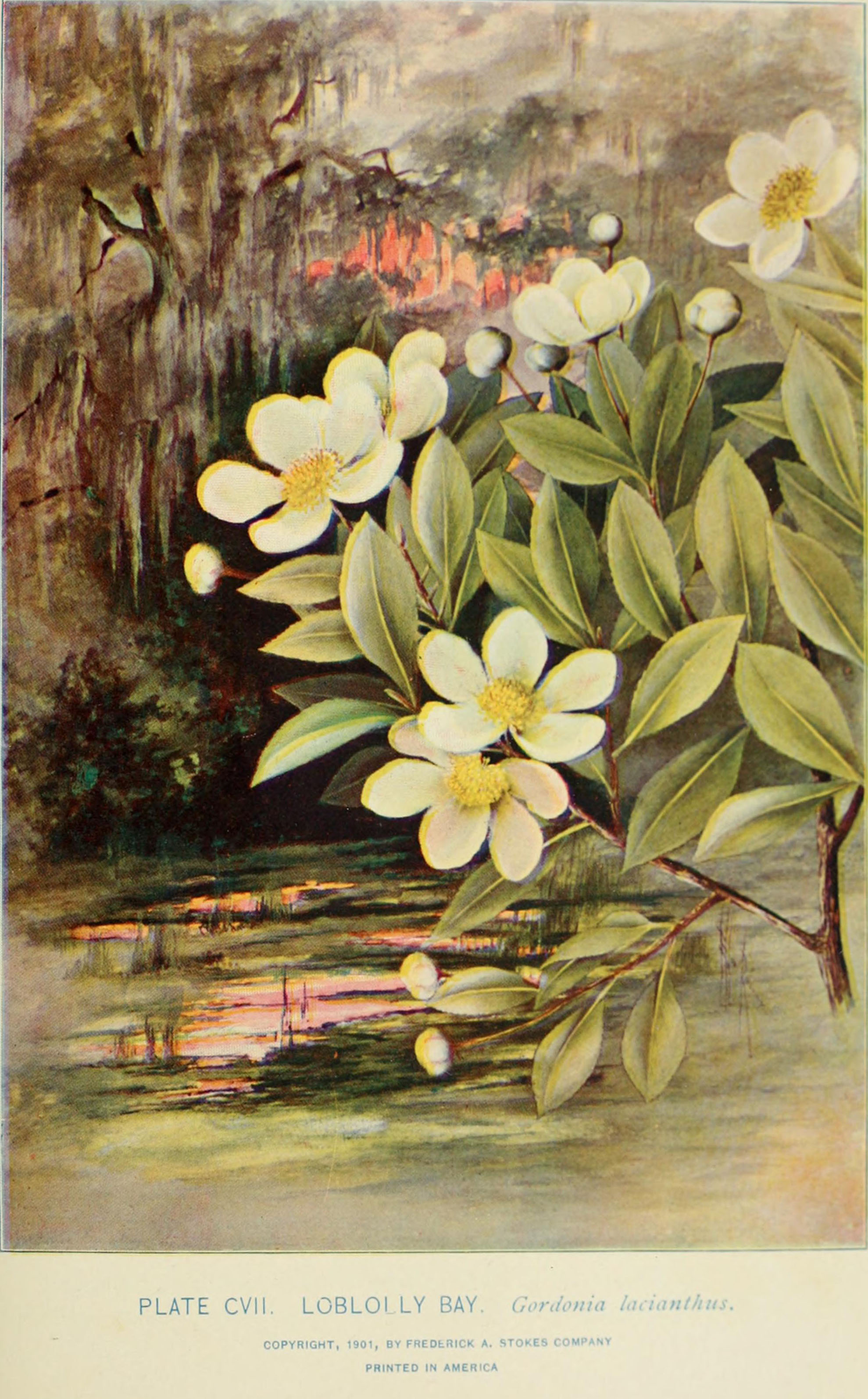
“Loblolly Bay. Gordonia lacianthus.” Lounsberry and Rowan. Southern wild flowers and trees. 1901. Contributed in BHL by NCSU Libraries.
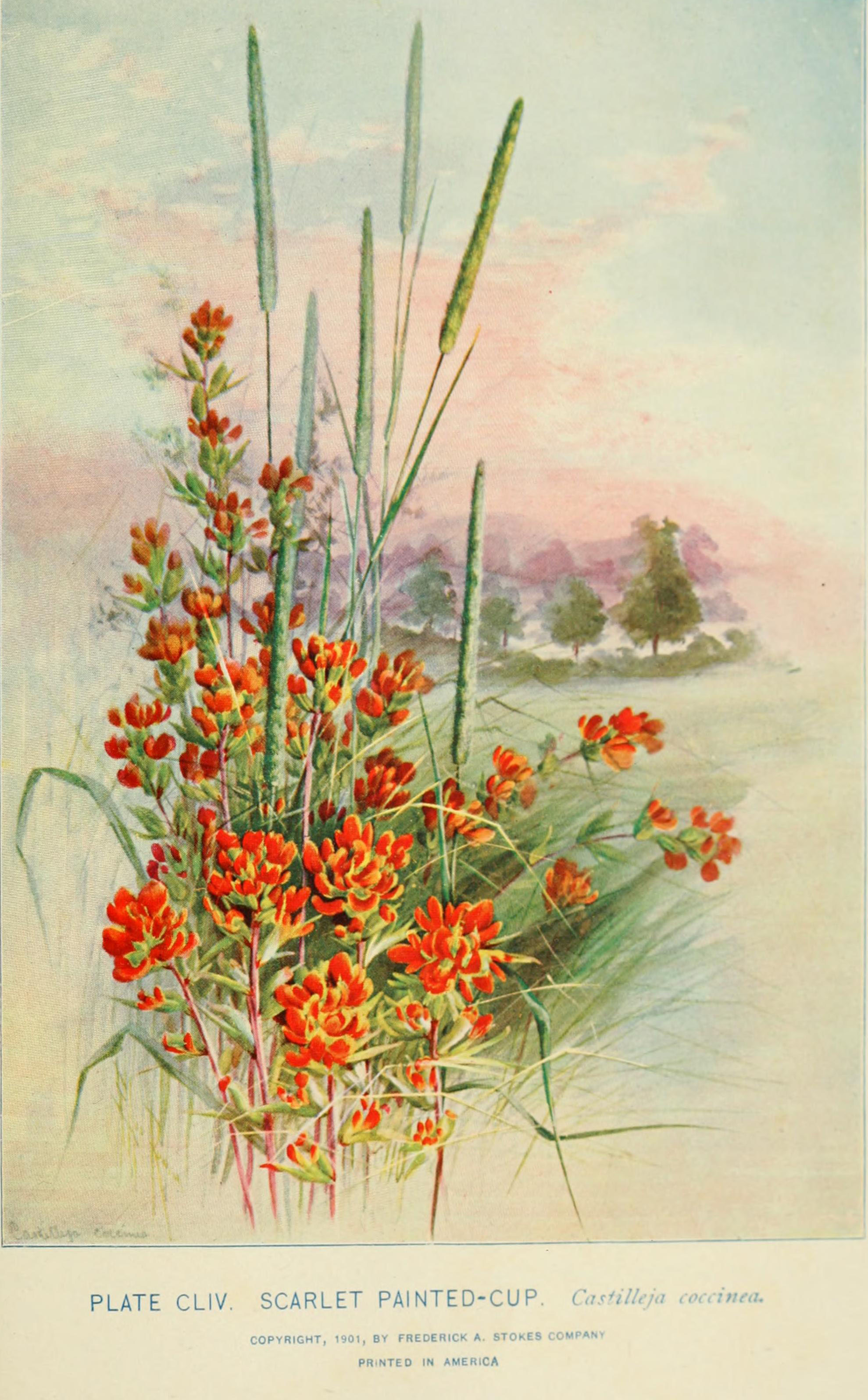
“Scarlet painted-cup. Castilleja coccinea.” Lounsberry and Rowan. Southern wild flowers and trees. 1901. Contributed in BHL by NCSU Libraries.
Biographical details on Alice Lounsberry (1873-1929) are more sparse. She was a New Yorker, and would have been about twenty-three when she proposed her vision of a collaborative project with Rowan, who by then was an internationally acclaimed painter. They spent at least two years traveling together in the U.S. to research their botanical guides.
Lounsberry shares some of that process in the preface to Southern Wildflowers and Trees,
To learn something of the history, the folk-lore and the uses of southern plants and to see rare ones growing in their natural surroundings, Mrs. Rowan and I travelled in many parts of the south, exercising always our best blandishments to get the people of the section to talk with us. Through the mountainous region we drove from cabin to cabin, and nowhere could we have met with greater kindness and hospitality. At the present time, however, there seems to be little country-lore concerning numbers of southern plants. In years to come, when they are better known, more tales of wonder will, no doubt, be woven about them. But for variety and beautiful, luxuriant growth the southern field is perhaps unrivalled. (Lounsberry and Rowan, Southern wild flowers and trees, pp. ix-x).
Lounsberry credits the Biltmore Herbarium in North Carolina as an essential resource.
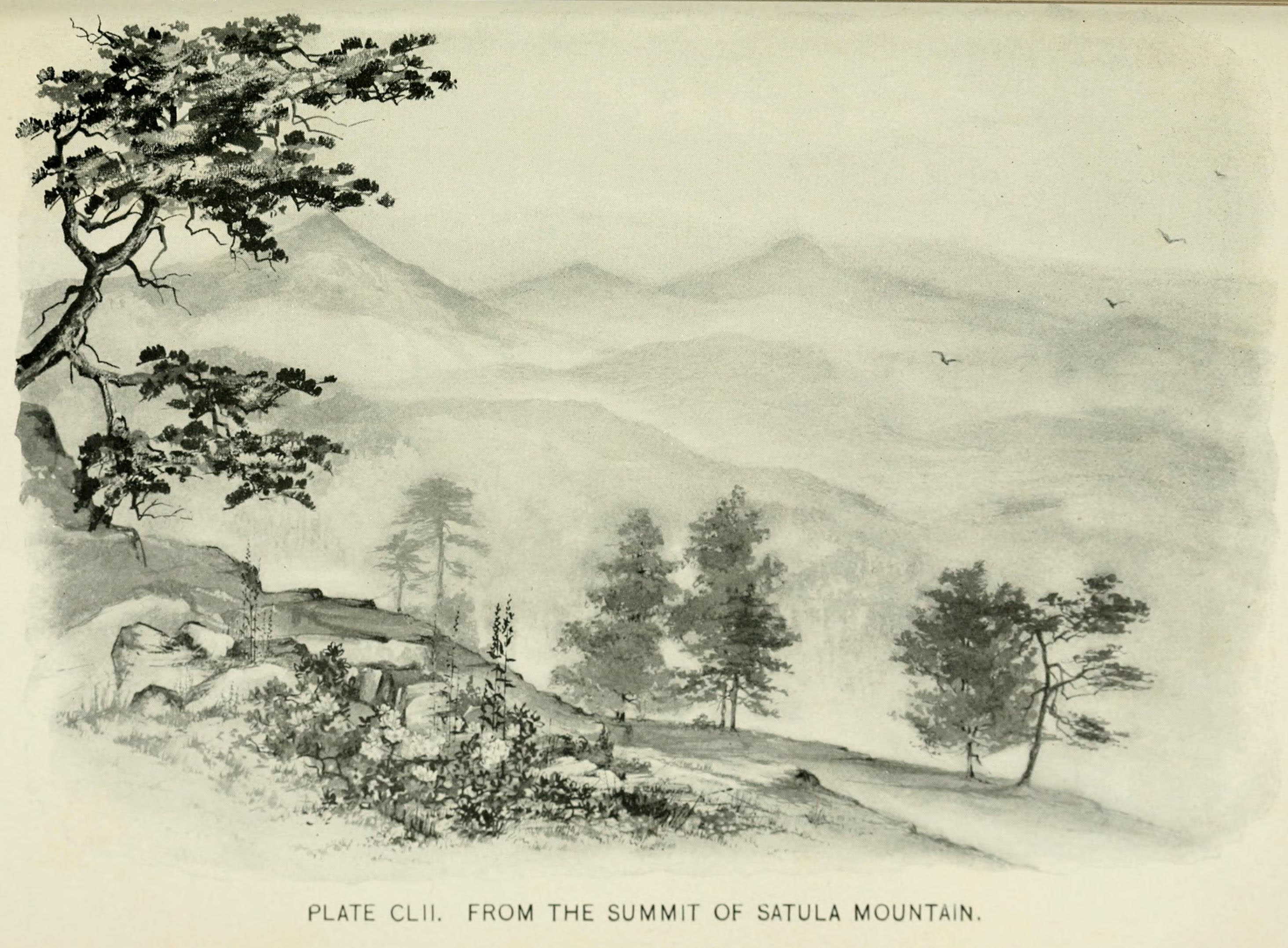
“From the summit of Satula Mountain.” Lounsberry and Rowan. Southern wild flowers and trees. 1901. Contributed in BHL by NCSU Libraries.
Southern wild flowers and trees shares snapshots of the pair’s travels with a scattering of landscape paintings and descriptive vignettes. The above image (“From the summit of Satula Mountain”) pairs with the caption:
At the approach of twilight we stood on the top-most rock of Satula Mountain about which, as a great unbroken ring, row after row, arise the mountains; for so is this peak encircled by the great Appalachian system. To our view the most distant ones appeared as though blending with the sky, while those nearer became more clear until was reached the green verdure at our feet. Nor were these mountains simply an undulatory line. Ruggedly and individually formed, each peak had withal a look humane and friendly. Between the rocks were fresh flowers, and higher than all else a pine, stunted and forlorn, raised its ungainly branches. (Lounsberry and Rowan, Southern wild flowers and trees.)
On her own, Lounsberry wrote and published other books including:
The wild flower book for young people, 1906. New York, F. A. Stokes company. Digitized in BHL by Cornell University Library.
The garden book for young people, 1908. New York, F. A. Stokes company. Digitized in BHL by Smithsonian Libraries.
Gardens near the sea; the making and care of gardens on or near the coast with reference also to lawns and grounds and to trees and shrubbery, 1910. New York, Frederick A. Stokes company. Digitized in BHL by Cornell University Library.
References
“Alice Lounsberry.” Accessed: https://upclosed.com/people/alice-lounsberry/
“Ellis Rowan: Plant Hunter.” Wilson, Sally. Accessed: https://theplanthunter.com.au/culture/ellis-rowan-plant-hunter/
“The Flower Hunter Ellis Rowan.” National Library of Australia. Accessed: http://pandora.nla.gov.au/pan/44384/20040920-0000/www.nla.gov.au/exhibitions/ellisrowan/home.html