Biodiversity Heritage Library - Program news and collection highlights from BHL
  • Home
  • News
  • Featured Books
    • All Featured Books
    • Book of the Month Series
    • BHL at 20
  • User Stories
  • Campaigns
    • Fossil Stories
    • Garden Stories
    • Monsters Are Real
    • Page Frights
    • Her Natural History
    • Earth Optimism 2020
  • Tech Blog
  • Visit BHL
Home
News
Featured Books
    All Featured Books
    Book of the Month Series
    BHL at 20
User Stories
Campaigns
    Fossil Stories
    Garden Stories
    Monsters Are Real
    Page Frights
    Her Natural History
    Earth Optimism 2020
Tech Blog
Visit BHL
  • Home
  • News
  • Featured Books
    • All Featured Books
    • Book of the Month Series
    • BHL at 20
  • User Stories
  • Campaigns
    • Fossil Stories
    • Garden Stories
    • Monsters Are Real
    • Page Frights
    • Her Natural History
    • Earth Optimism 2020
  • Tech Blog
  • Visit BHL
Biodiversity Heritage Library - Program news and collection highlights from BHL
Blog Reel, User Stories

Heterostyly Before Darwin: Tracing Early Observations of Primula Floral Morphs

View Full Size Image
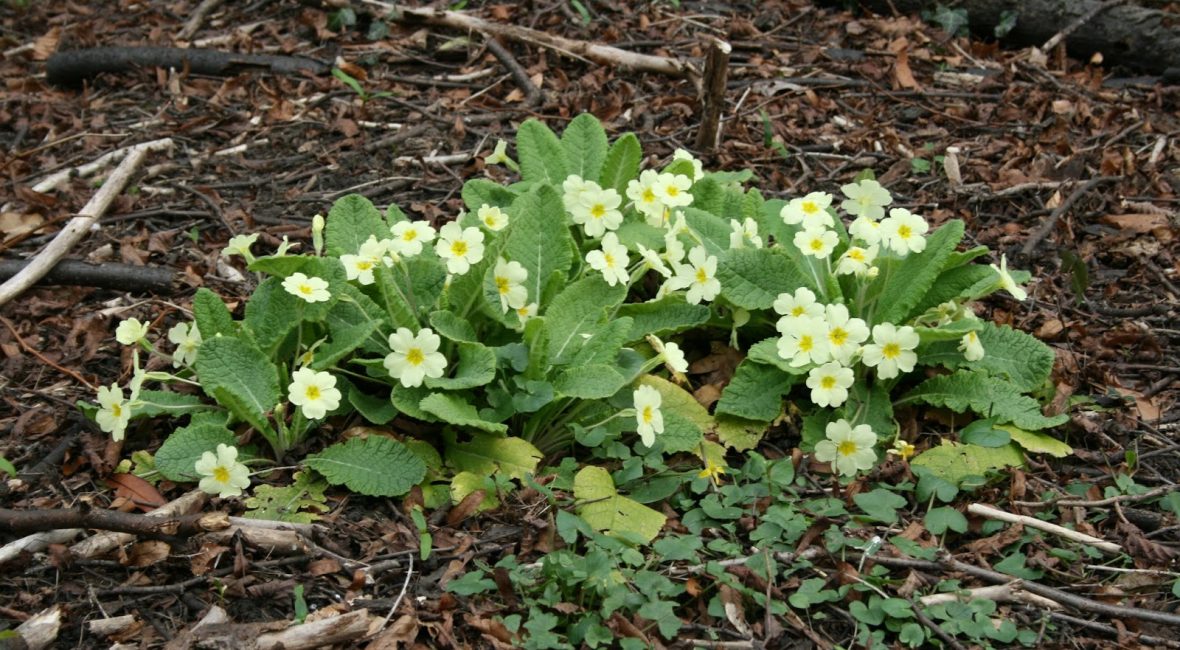
Primula vulgaris plants growing in woodland habitat. Photo by P.M. Gilmartin.

In 1860, Charles Darwin had an epiphany.

This was not an epiphany on the origin of species, as his monumental publication on the subject had been published one year earlier in 1859. This epiphany, which Darwin shared in a letter to his friend Joseph Dalton Hooker, was that flowers in the genus Primula display two distinct forms which differ in the length of the pistil’s styles and the height of the stamen’s anthers.

The condition of having multiple, distinct floral forms within a species is called heterostyly. Darwin coined the term distyly to describe the presence of two forms, or morphs. These morphs are called pin and thrum flowers, with pin flowers possessing long styles and low anthers and thrum flowers possessing short styles and high anthers. Each individual plant contains only flowers of the same morph, and the presence of heterostyly promotes insect-mediated out-crossing. In addition, a self incompatibility system is associated with heterostyly, which inhibits self-pollination. This ensures higher genetic diversity in future generations.

Darwin articulated his ideas on heterostyly within the paper ‘On the two forms, or dimorphic condition, in species of Primula, and on their remarkable sexual relations,’ which he read at the Linnean Society on 21 November 1861 and published a year later in the Journal of the Proceedings of the Linnean Society, Botany.

View Full Size Image
Wood block print of Primula veris from Charles Darwin’s Different forms of Flower on Plants of the Same Species (1877) showing the detail of long styled (pin) and short styled (thrum) flowers. Digitized by University Library, University of Illinois Urbana-Champaign. http://www.biodiversitylibrary.org/page/32622458.

Darwin published further research on heterostyly fifteen years later within the monograph Different Forms of Flowers on Plants of the Same Species (1877). Within this work, he cites earlier observations of the condition in Primula species. It was not until Darwin, however, that the reproductive significance of these morphs was understood.

Dr. Philip M. Gilmartin has been interested in Primula floral morphs for decades.

A Professor of Plant Molecular Genetics at the University of East Anglia, Gilmartin has been studying gene expression and plant development for thirty years. For the past twenty years, his lab has been focused on understanding the molecular basis of heterostyly in Primula.

View Full Size Image
Dr. Philip Gilmartin, Professor of Plant Molecular Genetics, University of East Anglia. Photo credit: UEA.

Gilmartin’s interest in Primula heterostyly isn’t restricted to genetics. While examining a print of Primula vulgaris from William Curtis’ Flora Londinensis (1777-98), Gilmartin realized that the copper-plate engraving clearly depicted both pin and thrum flower morphs. This realization sparked an exploration into historical observations of heterostyly.

“I sought to track down original references to identify the earliest observations on heterostyly. The Biodiversity Heritage Library resources were invaluable in this study,” affirms Gilmartin.

View Full Size Image
Copper plate engraving of Primula vulgaris from William Curtis’ Flora Londinensis (1791) showing pin and thrum flowers. Digitized by Smithsonian Libraries. http://www.biodiversitylibrary.org/page/41070264.

To conduct his historical review, Gilmartin referred to the cited sources in Darwin’s Different Forms of Flowers, as well as botanical images in early herbals, floral books, and florilegia. He accessed BHL several times each week while tracking down these references, using the scientific name finding tool and thumbnail view in the book reader to identify and navigate to relevant pages. He also downloaded whole PDFs and select pages of relevant material for future reference.

BHL also proved instrumental in helping Gilmartin resolve a perplexing citation error.

“For one reference cited in Darwin’s Different Forms of Flowers on Plants of the Same Species, the author (Kerner) and journal (Osterreichische Botanische Zeitshcrift) did not match the cited date (1835),” recalls Gilmartin. “I was eventually able to uncover the correct journal article from 1875 to find Darwin’s intended reference. Online access to the scanned journals was invaluable.”

View Full Size Image
Primula veris. Hand-colored copper-plate engraving by Pierre Turpin. Chaumeton, François-Pierre. Flore médicale. v. 5 (1818). Digitized by Biblioteca Digital del Real Jardin Botanico de Madrid. http://www.biodiversitylibrary.org/bibliography/76669.

As a result of this research, Gilmartin uncovered other 19th century illustrated representations of heterostyly in Flore Medicale (1818) and Hand-Atlas sämmtlicher medizinisch-pharmaceutischer Gewächse (1848), in addition to the 18th century Curtis image. Additionally, the earliest printed usage of the terms “pin-eyed” and “thrum-eyed” that Gilmartin was able to identify during his research appeared in Curtis’ Flora Londinensis.

The earliest published description of heterostyly, however, occurred much earlier, within Carolus Clusius’ Rariorum Aliquot Stirpium (1583). Gilmartin discovered this reference after consulting a 1943 French paper by van Dijk on historical observations of floral heteromorphy.

“Although Clusius was describing the two forms of flowers in different Primula varieties rather than within the same variety, this is the earliest description to my knowledge of the two forms of pin and thrum flowers which Darwin later studied,” explains Gilmartin.

View Full Size Image
Primula veris. Clusius, Carolus. Rariorum Aliquot Stirpium. 1583. Digitized by the Missouri Botanical Garden. http://www.biodiversitylibrary.org/page/6719232.

Gilmartin presented the results of his historical review within the article “On the Origins of Observations of Heterostyly in Primula“, publishing in New Phytologist in 2015. Thanks to the Biodiversity Heritage Library, which is acknowledged in the paper, Gilmartin not only traced the published record of heterostyly but also gained historical context for his genetic research.

As for Darwin’s epiphany, while he was not the first to observe heterostyly, he was the first to study and articulate the reproductive significance of Primula floral morphs. It was an achievement that Darwin took great personal pride in. As he revealed in his autobiography:

“No little discovery of mine ever gave me so much pleasure as making out the meaning of heterostyled flowers.”

______________________________________

This post may contain the personal opinions of BHL users or affiliated staff and does not necessarily represent the official Biodiversity Heritage Library (BHL) position on these matters.

September 14, 2017by ulib-libraryjobs
Blog Reel, Featured Books

Madame Vincent’s Studies of Flowers and Fruits

Études de fleurs et de fruits: peints d’après nature by Henriette Vincent is a book of beautiful botanical illustrations.  With 48 color plates of stipple engravings of flowers and fruits, this work was first published in Paris, France in 1820. This is a scarce volume with only a few copies known to exist in libraries.

View Full Size Image
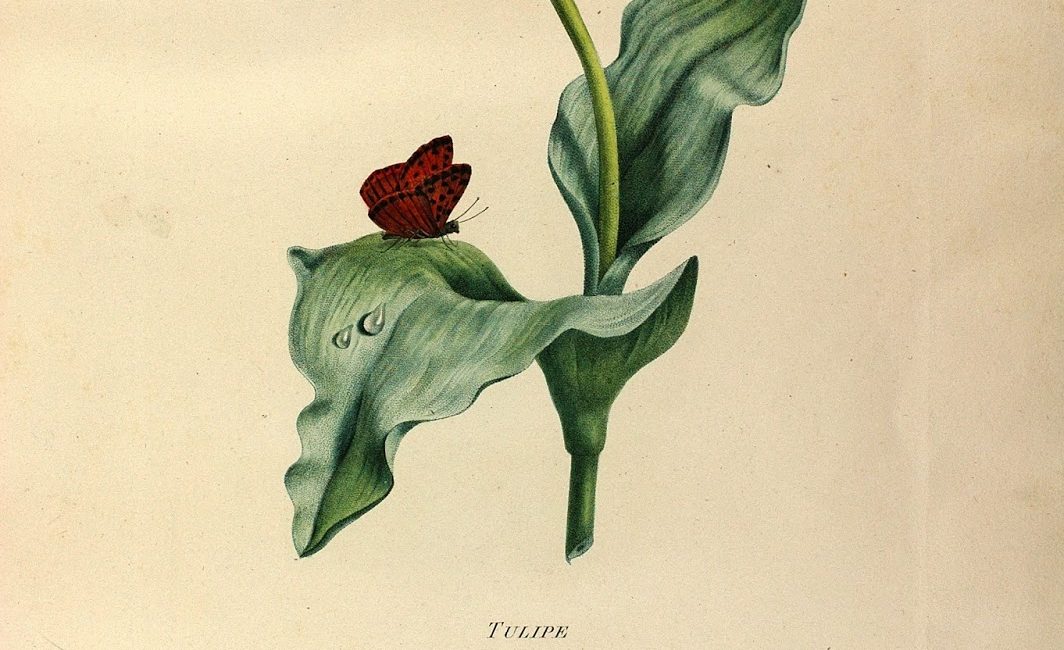
Tulip = Tulipe. Vincent, Henriette. Études de fleurs et de fruits: peints d’après nature. 1820. Digitized by the Chicago Botanic Garden, Lenhardt Library. http://biodiversitylibrary.org/page/48344872.

In his Flower and fruit prints of the 18th and early 19th centuries, Gordon Dunthorne calls this book “…among the most exquisite of all flower prints in their beauty and delicacy of execution.”

Among the fruit depicted are plums, currants, cherries, apricots, grapes, apples, pears, peaches, raspberries, and strawberries. The flower assortment includes tulip, daffodil, jasmine, pansy, lilac, hyacinth, iris, nasturtium, and roses in white, red, and pink varieties.

View Full Size Image
Lily = Lis du Japon. Vincent, Henriette. Études de fleurs et de fruits: peints d’après nature. 1820. Digitized by the Chicago Botanic Garden, Lenhardt Library. http://biodiversitylibrary.org/page/48344832.

Within these vibrant colored plates, Madame Vincent incorporates imperfections on the fruit, leaves and stems and adds moths, ladybug, and dew drops. True to size, shape, and color, when I look at her work, I feel as though I’m seeing her plant sample in its true form.

View Full Size Image
Plum = Prune de Monsieur. Vincent, Henriette. Études de fleurs et de fruits: peints d’après nature. 1820. Digitized by the Chicago Botanic Garden, Lenhardt Library. http://biodiversitylibrary.org/page/48344874.

As was proper etiquette for women at this time, what you don’t see are roots, seeds, and reproductive plant parts, which would be included in scientific works of this era.

View Full Size Image
Henriette Antoinette Vincent (1786-1830). Image used with permission from her descendent.

Madame Vincent was a student of renowned botanical artists Pierre-Joseph Redouté and Gerard van Spaendonck and truly learned her craft from the masters. She had the opportunity to exhibit her work in the Paris Salon about the time this volume was published.

The plates are signed “Peint par Mme. Vincent, gravé par Lambert aîné,” which translates to “Painted by Mrs. Vincent, engraved by Lambert elder.”

Explore this magnificent work in BHL, digitized from the collections of the Chicago Botanic Garden Lenhardt Library, and explore all of the illustrations in Flickr.

View Full Size Image
Currant = Groseilles. Vincent, Henriette. Études de fleurs et de fruits: peints d’après nature. 1820. Digitized by the Chicago Botanic Garden, Lenhardt Library. http://biodiversitylibrary.org/page/48344870.
April 28, 2016by ulib-libraryjobs

Help Support BHL

BHL's existence depends on the financial support of its patrons. Help us keep this free resource alive!

search

About BHL

The Biodiversity Heritage Library (BHL) is the world’s largest open access digital library for biodiversity literature and archives. BHL operates as a worldwide consortium of natural history, botanical, research, and national libraries working together to digitize the natural history literature held in their collections and make it freely available for open access as part of a global “biodiversity community.”

Follow BHL

  • Bluesky logo
  • Instagram logo
  • Facebook logo
  • Flickr logo
  • Twitter logo

Join Our Mailing List

Sign up to receive the latest news, content highlights, and promotions.

Subscribe Now

Subscribe to Blog via Email

Enter your email address to subscribe to this blog and receive notifications of new posts by email.

Join 319 other subscribers

Subscribe to Blog Via RSS

Subscribe to the blog RSS feed to stay up-to-date on all the latest BHL posts.

Access RSS Feed


64+ Million Pages of
Biodiversity Literature Online.

EXPLORE

Tools and Services
to Transform Research.

EXPLORE

300,000+
Illustrations on Flickr.

EXPLORE

ABOUT | HARMFUL CONTENT | PRIVACY | SITE MAP | TERMS OF USE