Biodiversity Heritage Library - Program news and collection highlights from BHL
  • Home
  • News
  • Featured Books
    • All Featured Books
    • Book of the Month Series
    • BHL at 20
  • User Stories
  • Campaigns
    • Fossil Stories
    • Garden Stories
    • Monsters Are Real
    • Page Frights
    • Her Natural History
    • Earth Optimism 2020
  • Tech Blog
  • Visit BHL
Home
News
Featured Books
    All Featured Books
    Book of the Month Series
    BHL at 20
User Stories
Campaigns
    Fossil Stories
    Garden Stories
    Monsters Are Real
    Page Frights
    Her Natural History
    Earth Optimism 2020
Tech Blog
Visit BHL
  • Home
  • News
  • Featured Books
    • All Featured Books
    • Book of the Month Series
    • BHL at 20
  • User Stories
  • Campaigns
    • Fossil Stories
    • Garden Stories
    • Monsters Are Real
    • Page Frights
    • Her Natural History
    • Earth Optimism 2020
  • Tech Blog
  • Visit BHL
Biodiversity Heritage Library - Program news and collection highlights from BHL
Blog Reel, Featured Books

Jesús Sánchez’s Mexican Medical Zoology

Sánchez, Jesús. Datos para la zoología médica mexicana: arácnidos é insectos. México: Oficina Tipográfica de la Secretaría de Fomento, 1893. viii, 189, iv pages, 9 leaves of plates : illustrations ; 23 cm.

View Full Size Image
Parra, Alfonso. Atlas histórico de la Escuela Nacional Preparatoria: desde su fundación hasta los momentos de celebrarse el centenario de la proclamación de la Independencia, septiembre 15 de 1910 / México : [Escuela Nacional Preparatoria], 1910. 1 vol.

With the single purpose of serving the country and with the belief that scientific study should be used with practical ends, Doctor Jesús Sánchez elaborated his essay on Mexican Medical Zoology (Datos para la zoología médica mexicana), where he acknowledges “the value of studying the animal kingdom, within which exists a vast variety that can offer both benefits and diseases”.

Equally, he states that it “is not only important to study the organisms living inside our own bodies, it is also necessary to know those whose venoms, when inoculated in the human body, can cause, from very light inconveniences, to very serious symptoms and even death”. That is why the author developed an essay about this topic, identifying, describing and studying arachnids and insects from several parts of Mexico that cause damage to the human health.

Doctor Jesús Sánchez was a physician by profession, a member of the Academy of Medicine, and responsible of the professorships in Zoology and Biology at the National High School and the National School of Agriculture, where he has dedicated several years to the compilation of insects; these where included in his work of Mexican Medical Zoology, published in 1893. A second edition or reprint of this work has never been published.
View Full Size Image
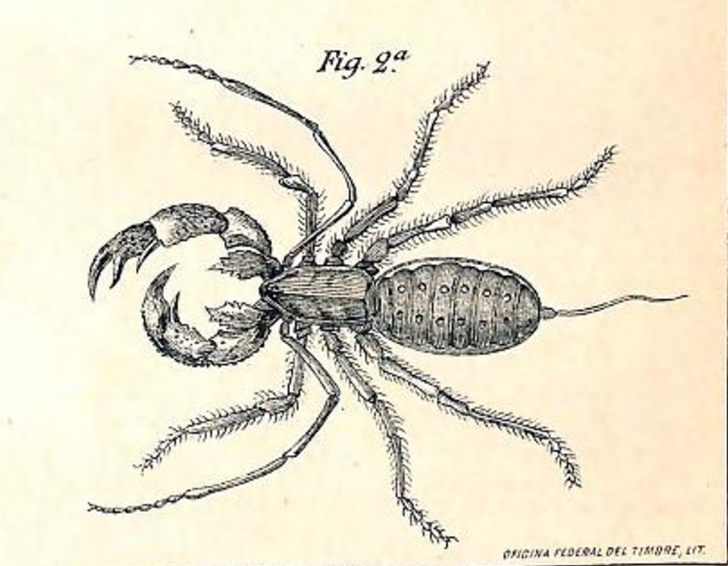
Thelyphonus giganteus. Vinagrillo. (Seg. Lucas). http://biodiversitylibrary.org/page/51139808.

During the development of this work, Doctor Sánchez exchanged knowledge, talks and experiences with the doctors and brothers Alfredo and Eugenio Dugés. Alfredo Dugés was a great illustrator who made a perfect descriptive work of the Aquatic Spider, or hydroarachnid, native of Guanajuato. Dugés directed Sánchez and recommended the research of other zoology scholars, like Fernando Altamirano, Lauro Jimenez, Antonio Peñafiel, Alfonso Herrera and Gumersindo Mendoza, among others, as well as other prominent publications from the naturalists Francisco J. Clavijero and Jose Alzate Ramirez.

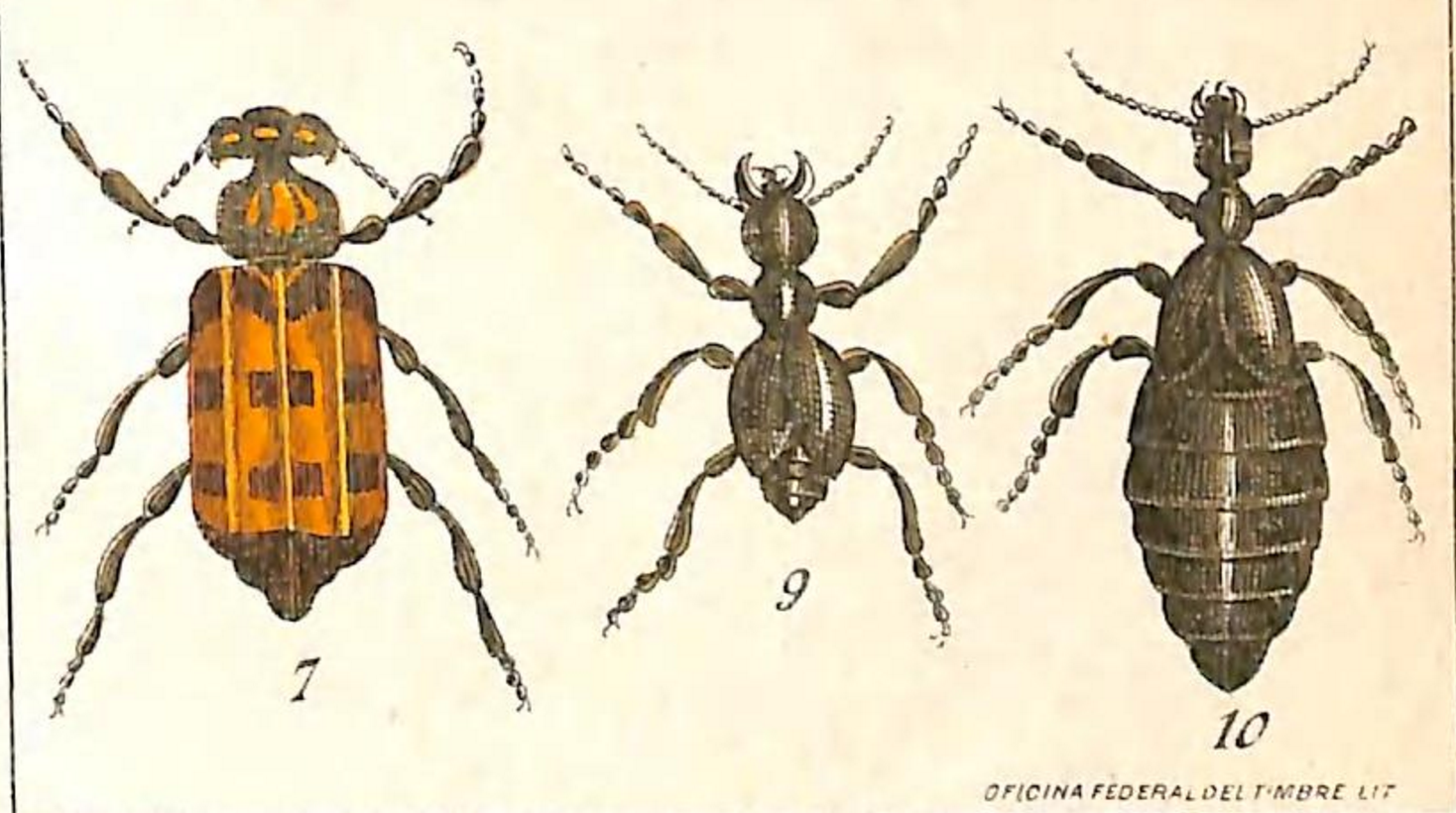
Datos para la zoología médica mexicana describes, in a detailed manner, nine orders of arachnids and scorpions, as well as five orders of insects, ants and bees, using a mixture of a colloquial and technical language, explaining symptoms, cures and medicines that can be used to fight against symptoms caused by the bites or contact with insects. Within his work we can find a remarkably detailed index of every order and term, as well as illustrations for context.
View Full Size Image
7. Horia maculata. 9. Treiodous barranci (macho). 10. Treiodous barranci (hembra). http://biodiversitylibrary.org/page/51139812.

One can appreciate nine pages that contain the illustrations of arachnids, scorpions, several insects, ants and bees, elaborated by hand with colours identical to those of the studied animals.

Being a professor of the National High School, Sánchez’s published works supported the students with knowledge and practical applications; he offered his expertise during his lectures and turned new students towards the development of science and knowledge.
View Full Size Image
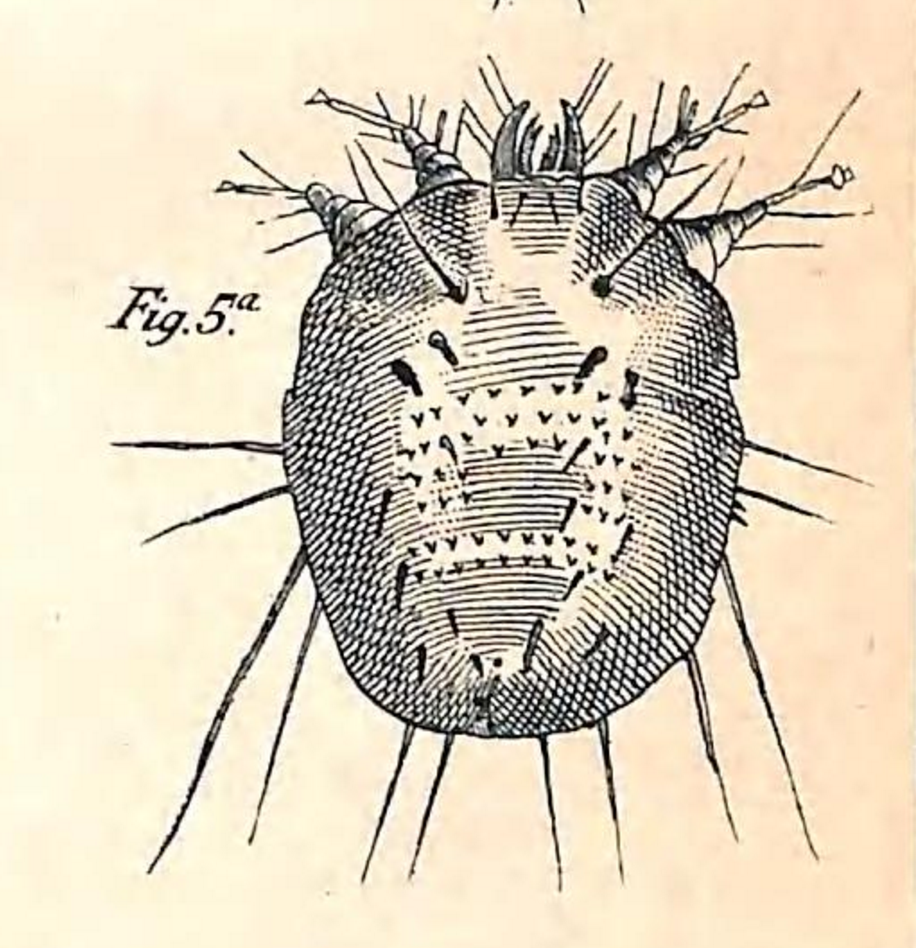
Sarcoptes scabiei (hembra). Visto por el dorso. (seg. Gudden). http://biodiversitylibrary.org/page/51139802.

Doctor Jesús Sánchez is also the author of other works related to the Mexican Medical Zoology of arachnids and insects, such as: Elementos de historia natural en forma de lecciones de cosas: Obra escrita expresamente para uso de las escuelas primarias de la nación, published in the year 1895 and available in BHL thanks to the Joint Library of Earth Sciences (Biblioteca Conjunta de Ciencias de la Tierra, Instituto de Ciencias del Mar y Limnología, UNAM), and the introduction of the work: Breve noticia de los establecimientos de instrucción dependientes de la Secretaría de Estado y del Despacho de Justicia e Instrucción Pública, edited in the year 1900.
View Full Size Image
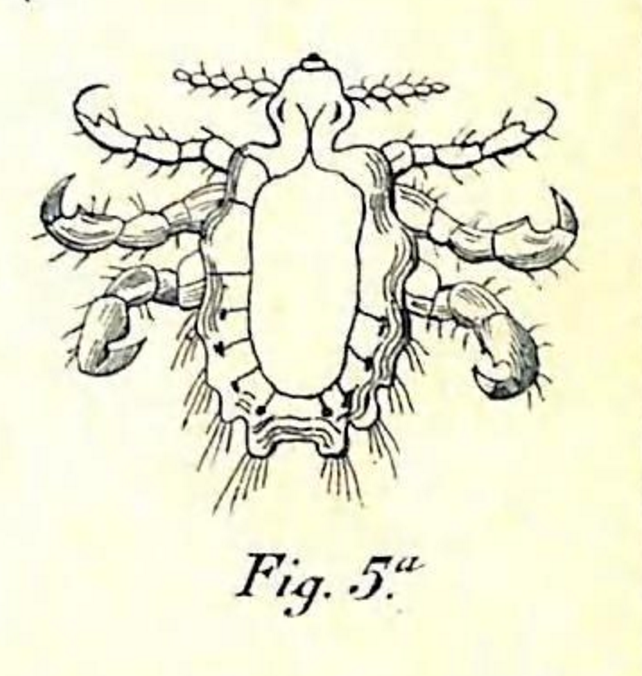
Ladilla o piojo del pubis. http://biodiversitylibrary.org/page/51139818.


September 22, 2016by ulib-libraryjobs
Blog Reel, Featured Books

Biologia Centrali-Americana & Hispanic Heritage Month

Book of the Week: Biologia Centrali Americana

View Full Size Image
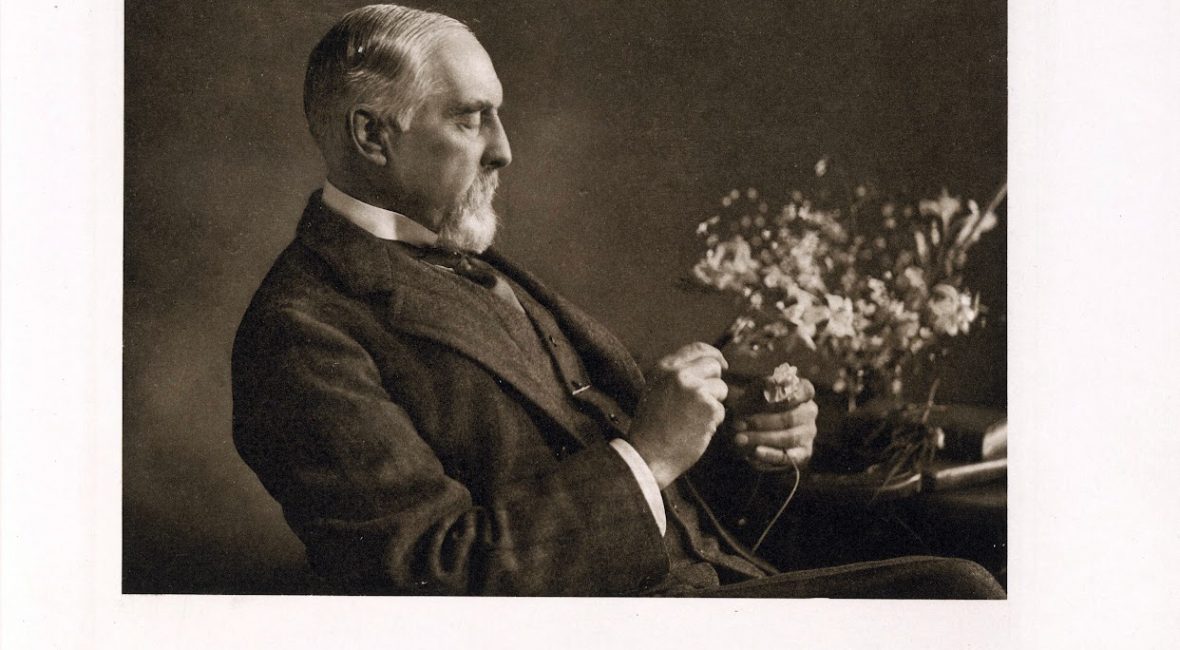
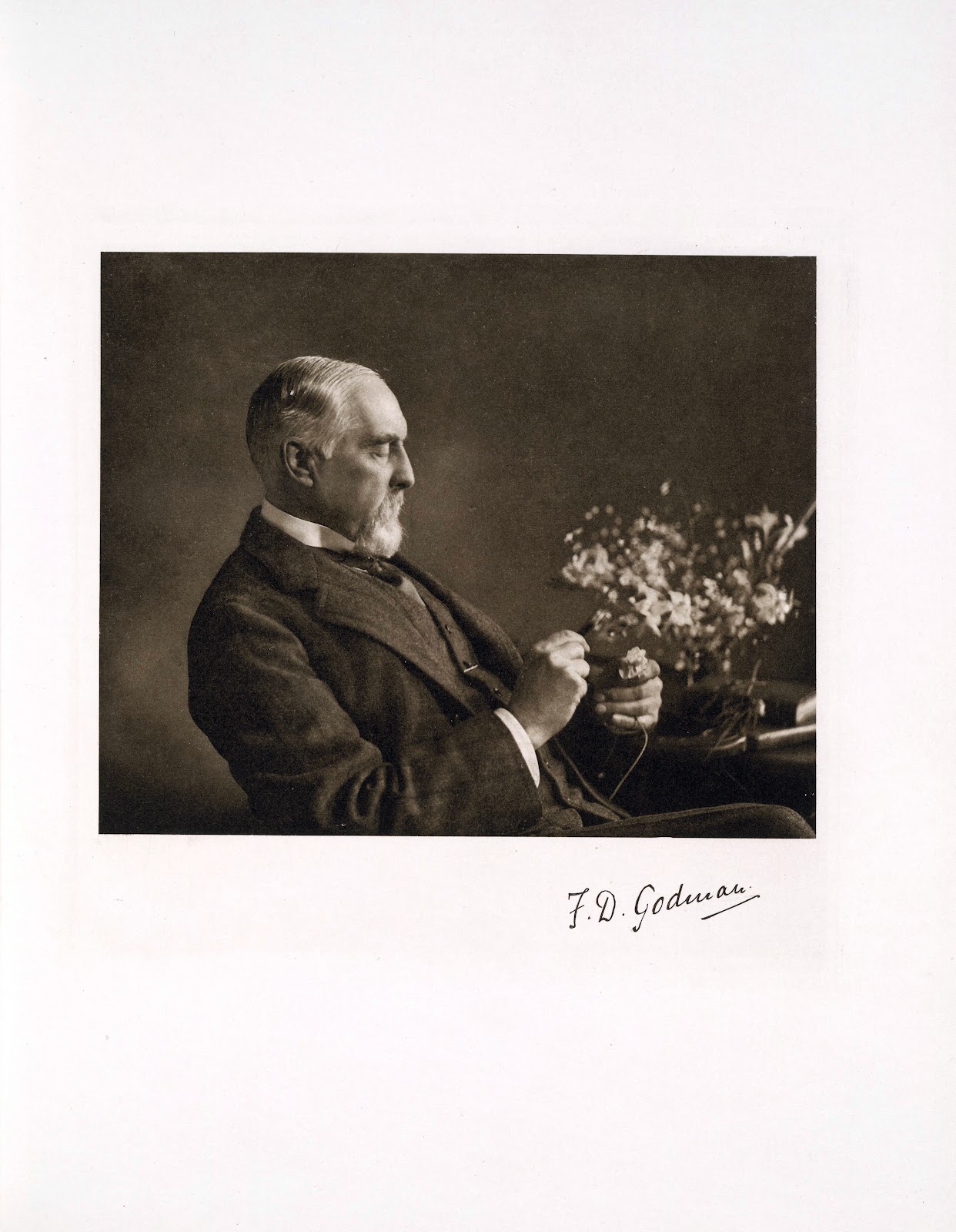
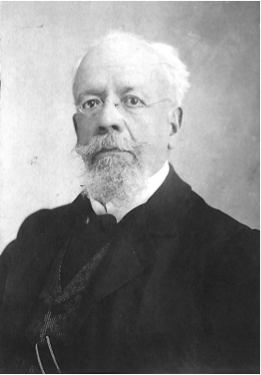
Biologia author Frederick Godman

In 1876, two men by the names of Frederick Godman and Osbert Salvin began work on perhaps the most comprehensive account of the flora and fauna of Mexico and Central America ever undertaken. Entitled Biologia Centrali Americana, this 63 volume work, published over the course of 36 years, relates nearly all information known at the time on the mammals, birds, fish, mollusks, insects, arachnids, and botany in the region. Accompanied by over 1,600 lithographic plates, 900 of which are colored, Biologia Centrali Americana is arguably the single most authoritative work on Mexico and Central America’s turn-of-the-century biodiversity and constitutes a perfect candidate to help us celebrate Hispanic Heritage Month!

Great Things have Small Beginnings

View Full Size Image
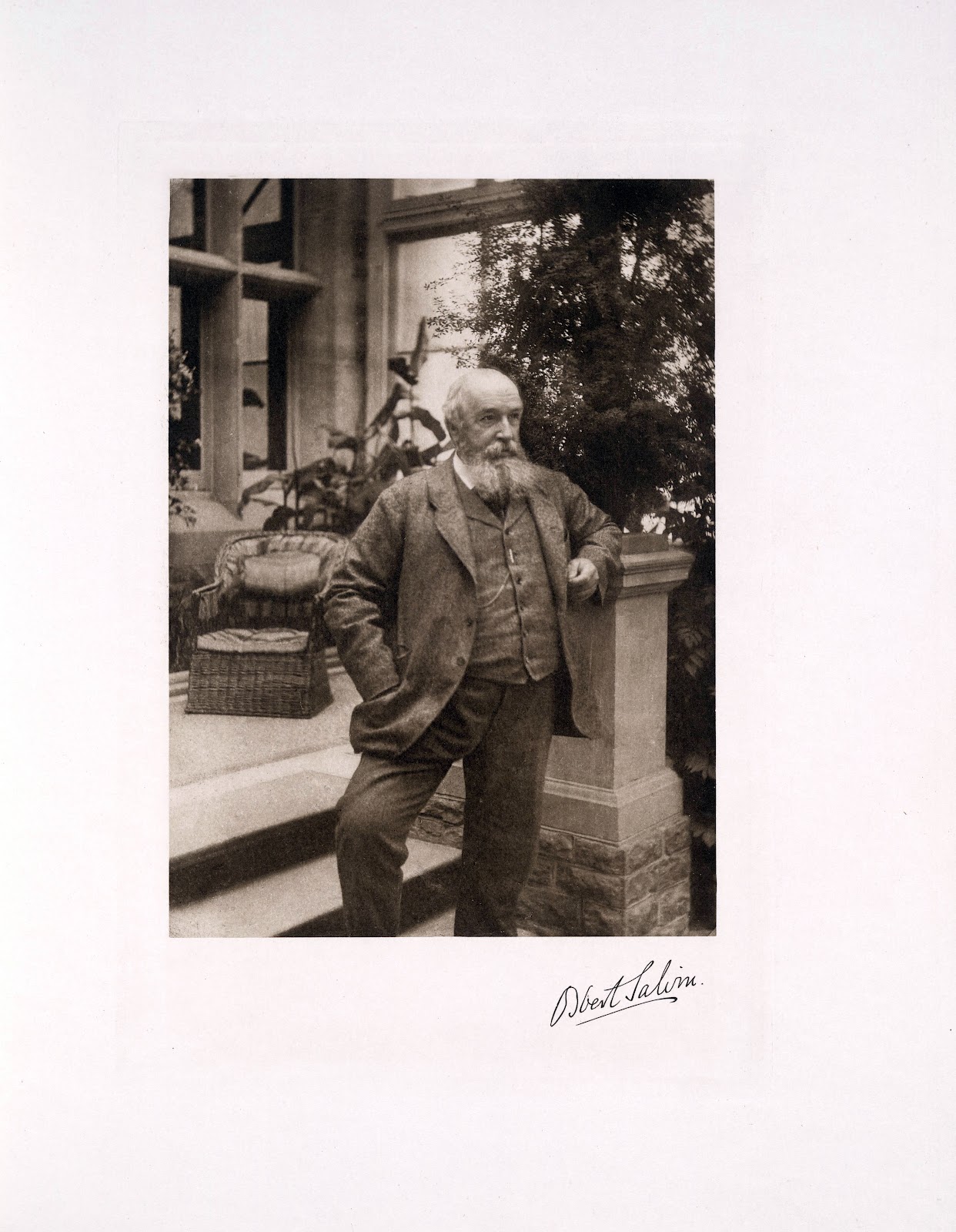
Biologia author Osbert Salvin

Godman and Salvin became fast friends while attending Cambridge, where their mutual enthusiasm for natural history solidified their lifelong friendship. Early interest in ornithology prompted them, along with 18 other friends and young ornithologists, to establish a new, and ultimately extremely influential, journal dedicated to ornithology, the Ibis (learn more about the Ibis in our previous book of the week post).

Welcome to the New World

In Fall, 1857, the pair’s first interaction with Central America transpired, when Salvin visited the area to study palm nuts and their potential application in candle making. Finding the inquiry disappointing, Salvin spent the remainder of his time studying the birds and insects of the region, which ultimately led to a publication detailing the 381 known bird species of Central America in the first volume of the new Ibis journal.

Though Salvin returned to England in 1858, he was forever mesmerized by the biodiversity he encountered in Central America. He quickly returned to the area in 1859 and continued collecting bird and insect specimens, which he initially detailed in an article written for the Ibis.

View Full Size Image
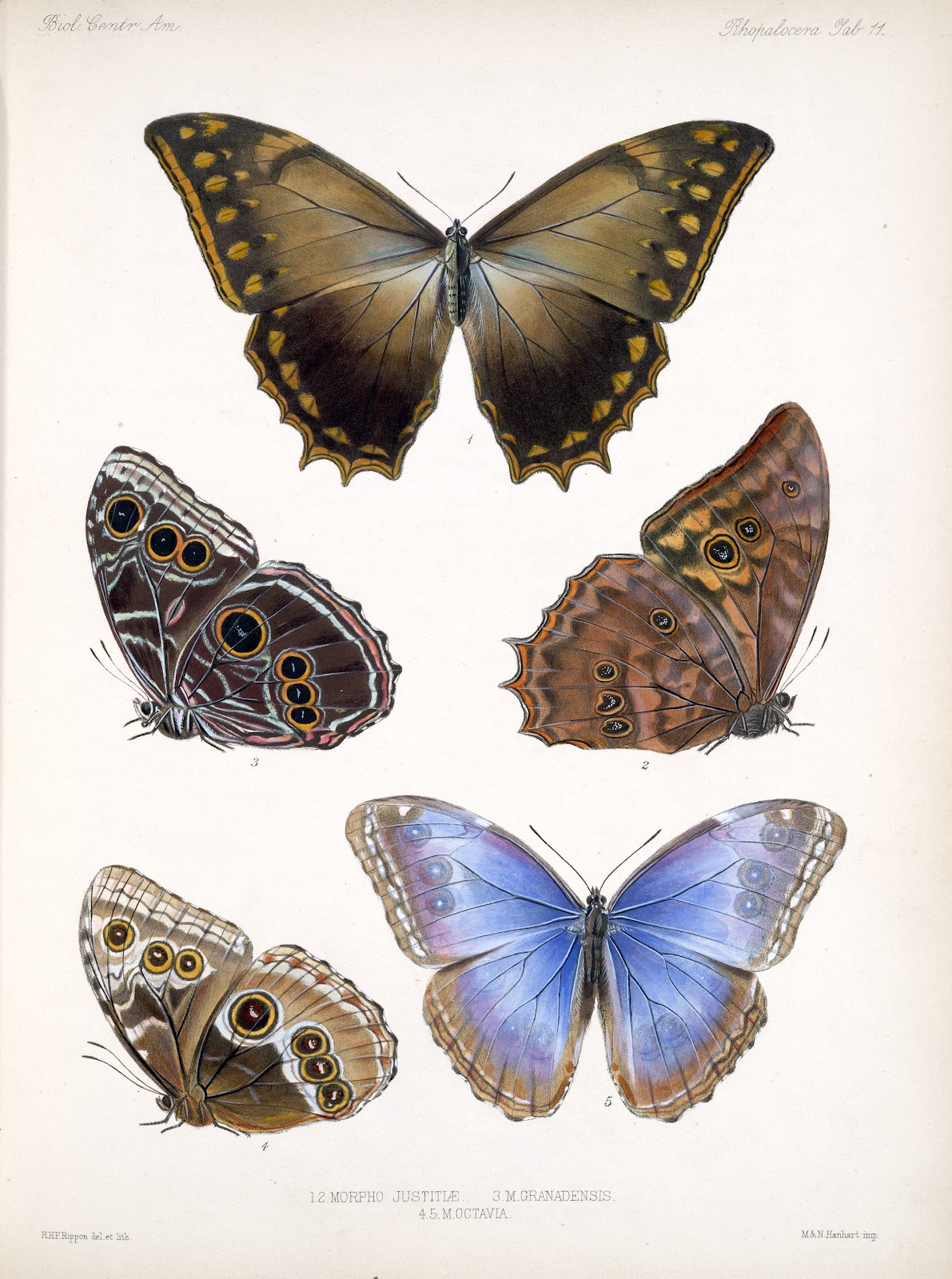
Members of the Morpho genus in Biologia

In August, 1861, Godman joined Salvin on his third expedition to Central America. It was in Yzabal, where the expedition originated, that Godman had his first magical encounter with the region’s biodiversity:

This place will, however, always be associated in my mind with my first sight of a living example of one of the most striking and gorgeous of all butterflies, Morpho peleides. I was sitting on the trunk of a fallen tree in the forest, when it came floating past me, but I was so overcome with astonishment and delight at this wonderful vision that, although I had a butterfly net in my hand, I was utterly unable to rise in pursuit until it was too late to capture it.

Godman and Salvin spent nearly two years trekking through Central America, exploring, to name a few, Quirigua, Zacapa, Guatemala City, Duenas, Escuintla, San Germonimo, Coban, Cubilguitz, and Choctum, and collecting a wide range of specimens, including birds, butterflies, and fish. Salvin describes the pragmatic method by which he obtained fish specimens in the Rio Grande:

…I employed Indians to poison some nine miles of the water in order to make a collection of fish…The method adopted for this purpose was to beat the plant (Tephrosia toxicaria) on the rocks until a froth not unlike soap-suds was formed, this when mixed with the water caused the fish to sicken and some to the surface…Vast numbers were obtained, and from them I made a selection and preserved a good many specimens in spirit (aguardiente), but was somewhat disappointed to find there were but few species represented.


View Full Size Image
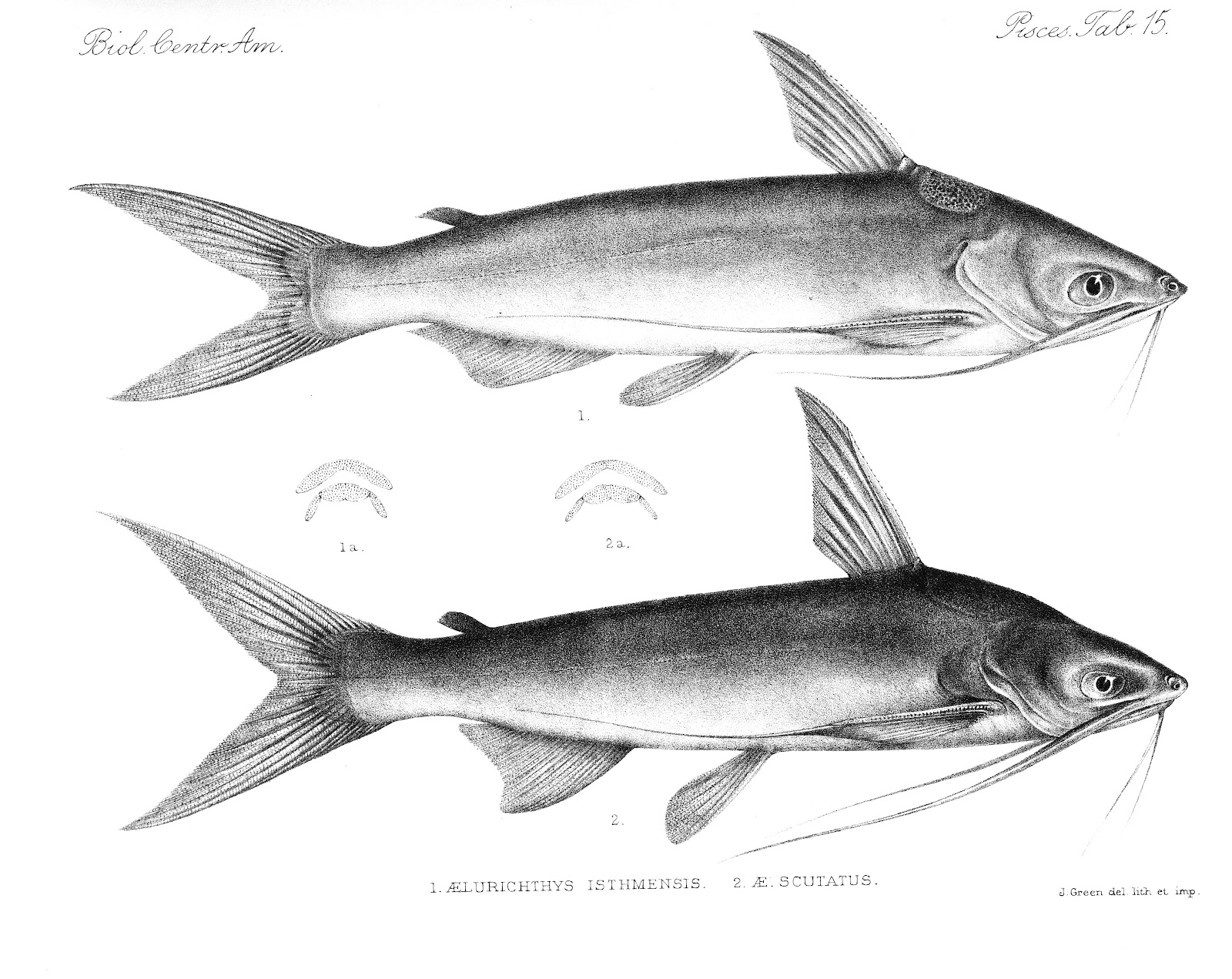
Fish of the genus Ailurichthys in Biologia

Though this first joint expedition ended in 1863, Godman and Salvin traveled back to the New World many times to study and accumulate more specimens (including trips to Mexico in the late 1880s), often bringing along additional subject specialist. Salvin’s wife, Caroline Maitland, accompanied Salvin on his final voyage to Central America, during which time she painted the illustrations of the flora found in the botanical volumes of Biologia.  The pair also employed various collection experts to gather specimens in specific region for their growing body of preserved Central American wildlife.

A Monumental Undertaking

View Full Size Image
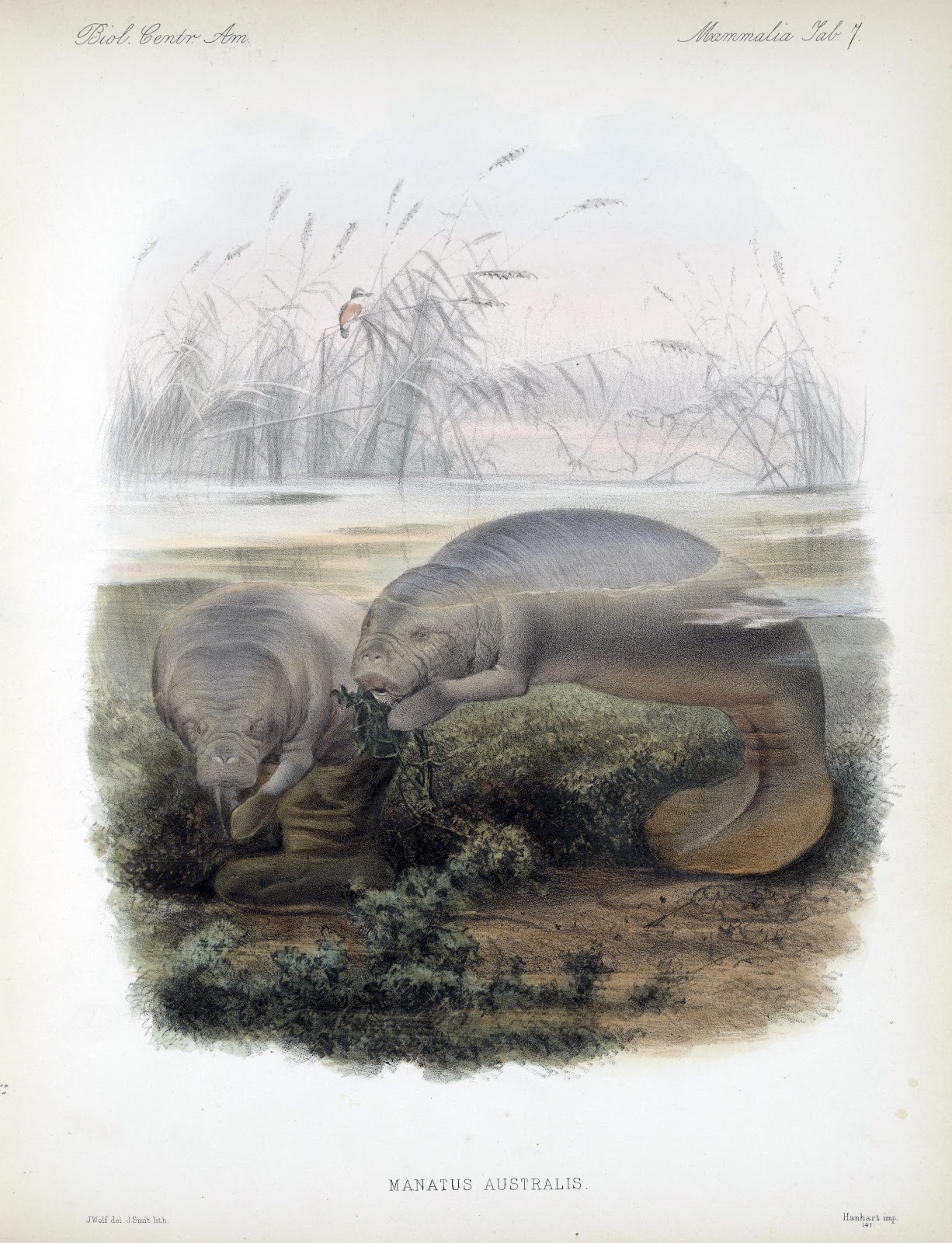
The Manatee in Biologia

In 1876, the suggestion to publish a comprehensive work describing the biodiversity collected in Central America sparked the origins of Biologia. Originally intended to be published in six quarto parts a year, each supplemented with six colored plates, resulting in a total of 60 parts over 10 years, the continuous supply of fresh specimens, and abundance of material to be published, necessitated a total of 215 parts in zoology, 5 volumes in botany, and 17 parts in archaeology, spanning 36 years of publication.

Godman and Salvin worked diligently on the title until June 1, 1898, when Salvin unexpectedly died. At the point of his death, only 141 of the 215 parts of Zoology and 8 of the 17 parts of Archaeology had been completed (all botany volumes were completed at the time of Salvin’s death). With help from additional authors, Godman persevered “with a heavy heart,” and in 1915, the final part was issued, bringing this monumental undertaking to a close.

New World Feathers

As Godman and Salvin were both avid ornithologists, and as their publishing enterprises together began with an ornithological journal, we thought it fitting to feature the Aves Atlas from Biologia Centrali Americana in our post. The Atlas contains 79 plates illustrating the species found in the three previous bird volumes.

Godman relayed particular frustrations, and ultimate triumphs, with describing the birds of Mexico. As he outlines:

In working out the Mexican Birds we found ourselves hampered for want of an authentically named collection of North American species for comparison, which did not exist in Europe at that time. In order to remedy this, I acquired the Henshaw collection, numbering 13,326 specimens, and this was rendered still more valuable through the courtesy of the authorities at the United States National Museum, who allowed Mr. Ridgway, the highest authority in America, to go through and verify all the names on the labels attached.

As the Smithsonian (National Museum of Natural History) paid a key role in deciphering the ornithological specimens contained in this work, it is no wonder that they, in collaboration with many of our other BHL partners, would build a virtual exhibition dedicated to Biologia.

We’ve presented a few of our favorite illustrations from the Aves Atlas below. Be sure to check out all of the images on Flickr and the entire set of Atlases in BHL. Delve even further into these illustrations with our Book of the Week Pinterest board.

Finally, check back on our blog, Twitter, Facebook and Flickr for more posts celebrating Hispanic Heritage Month!

We hope you enjoyed this post. Interested in guest-blogging for BHL? We’d love that! Natural history, biodiversity and conservation topics are especially welcomed. Email us your ideas at [email protected]. 

September 20, 2012by ulib-libraryjobs

Help Support BHL

BHL's existence depends on the financial support of its patrons. Help us keep this free resource alive!

search

About BHL

The Biodiversity Heritage Library (BHL) is the world’s largest open access digital library for biodiversity literature and archives. BHL operates as a worldwide consortium of natural history, botanical, research, and national libraries working together to digitize the natural history literature held in their collections and make it freely available for open access as part of a global “biodiversity community.”

Join Our Mailing List

Sign up to receive the latest news, content highlights, and promotions.

Subscribe Now

Subscribe to Blog via Email

Enter your email address to subscribe to this blog and receive notifications of new posts by email.

Join 319 other subscribers

Subscribe to Blog Via RSS

Subscribe to the blog RSS feed to stay up-to-date on all the latest BHL posts.

Access RSS Feed

Inspiring Discovery through Free Access to Biodiversity Knowledge.

The Biodiversity Heritage Library makes it easier than ever for you to access the information you need to study and explore life on Earth…for free, anytime, anywhere.


64+ Million Pages of
Biodiversity Literature Online.

EXPLORE

Tools and Services
to Transform Research.

EXPLORE

300,000+
Illustrations on Flickr.

EXPLORE

ABOUT | HARMFUL CONTENT | PRIVACY | SITE MAP | TERMS OF USE