

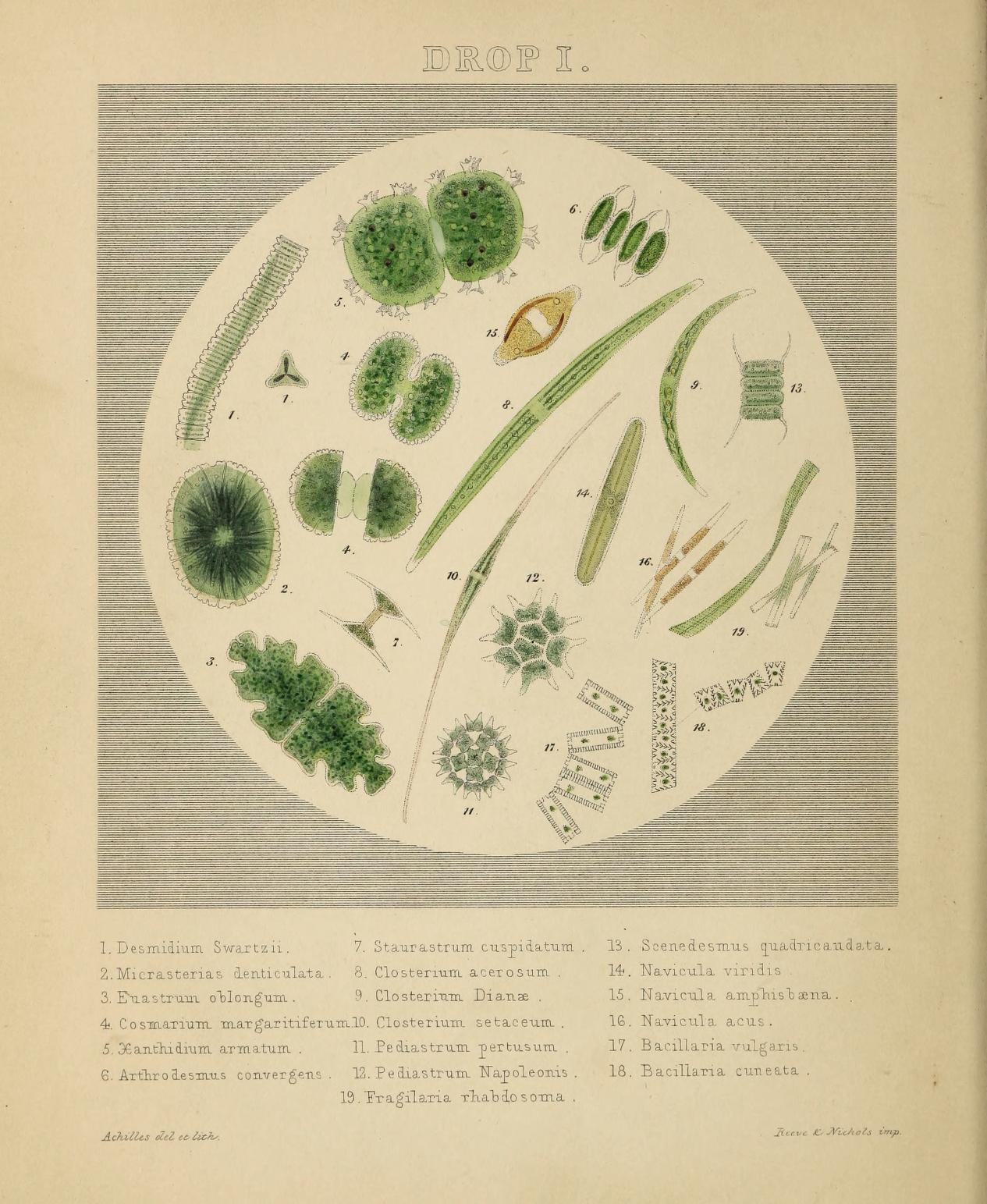
Catlow, Agnes. Drops of Water; their Marvellous and Beautiful Inhabitants Displayed by the Microscope. 1851. Contributed in BHL by University of Toronto – Thomas Fisher Rare Book Library.
In the mid-nineteenth century, microscopy became immensely popular with European and American naturalists. As microscopes became more affordable, microscopy societies were established, and numerous microscopy journals were launched and widely distributed. Many microscopy publications were richly illustrated, trying to recreate the “world of wonder and beauty” seen through the microscope (Gosse, 1860, p. v). In his widely read Evenings at the Microscope (1859), the English naturalist Philip Henry Gosse showed his readers “the path to the myriad wonders of creation” displayed by the microscope (p. 3). Moreover, microscopy journals, inviting their readers to contribute inquiries and observations, often made it possible for geographically dispersed microscopists to work together.
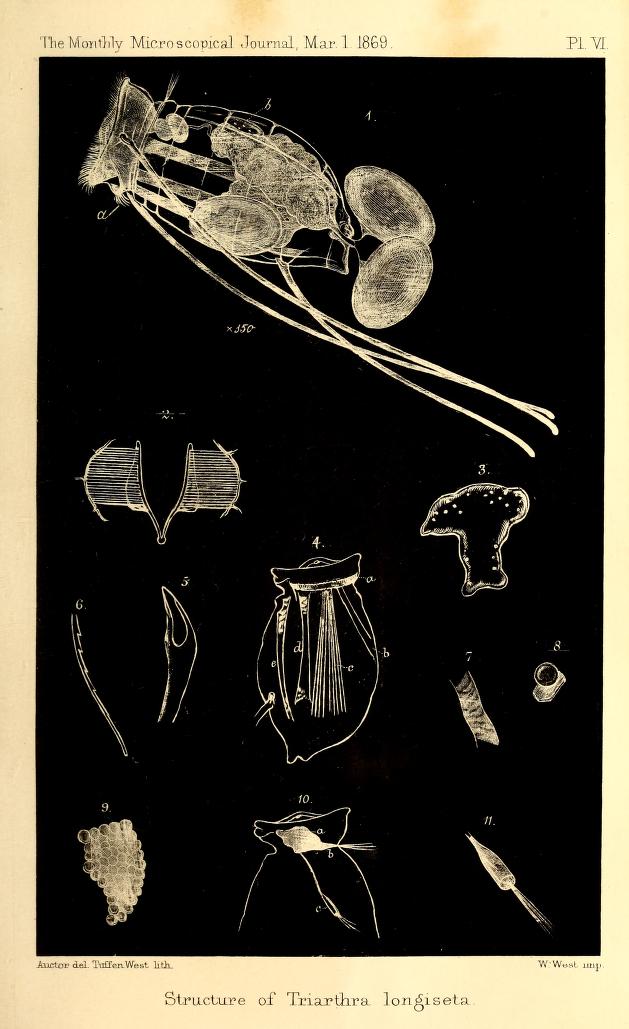
Hudson, Charles Thomas. “On Triarthra longiseta” in The Monthly Microscopical Journal. Vol. 1. 1869. Contributed in BHL by Smithsonian Libraries.
Since international copyright laws were only enforced after the signing of the Berne Convention in 1886 and the passing of the American Chace Act in 1891, mid-nineteenth-century publications frequently reused material published elsewhere. Illustrations and texts would be copied and reprinted, thus targeting several readerships at different places at the same time. Edward Pennock, editor of the Philadelphian Microscopical Bulletin and Science News, claimed that he could “write much better articles with the scissors than with the pen” (Pennock, 1890, p. 7). Pennock not only copied but also recombined articles to better accommodate the interests of his readers.
Citizen Scientists Invited to Explore the History of Microscopy
To this day, so many nineteenth-century publications on microscopy remain that they can hardly be analyzed by just a handful of historians. Therefore, the MUSTS research group at Maastricht University launched Worlds of Wonder, an online crowdsourcing project, on the Zooniverse citizen science platform. Worlds of Wonder is part of a PhD project funded by the Netherlands Organisation for Scientific Research, and it was inspired by Science Gossip, another crowdsourcing initiative asking citizen scientists to classify illustrations. The MUSTS researchers behind Worlds of Wonder, Lea Beiermann, Cyrus Mody and Raf De Bont, ask citizen scientists to help them classify nineteenth-century microscopy illustrations, assign keywords to the illustrations to make them searchable, and identify the people who made them.
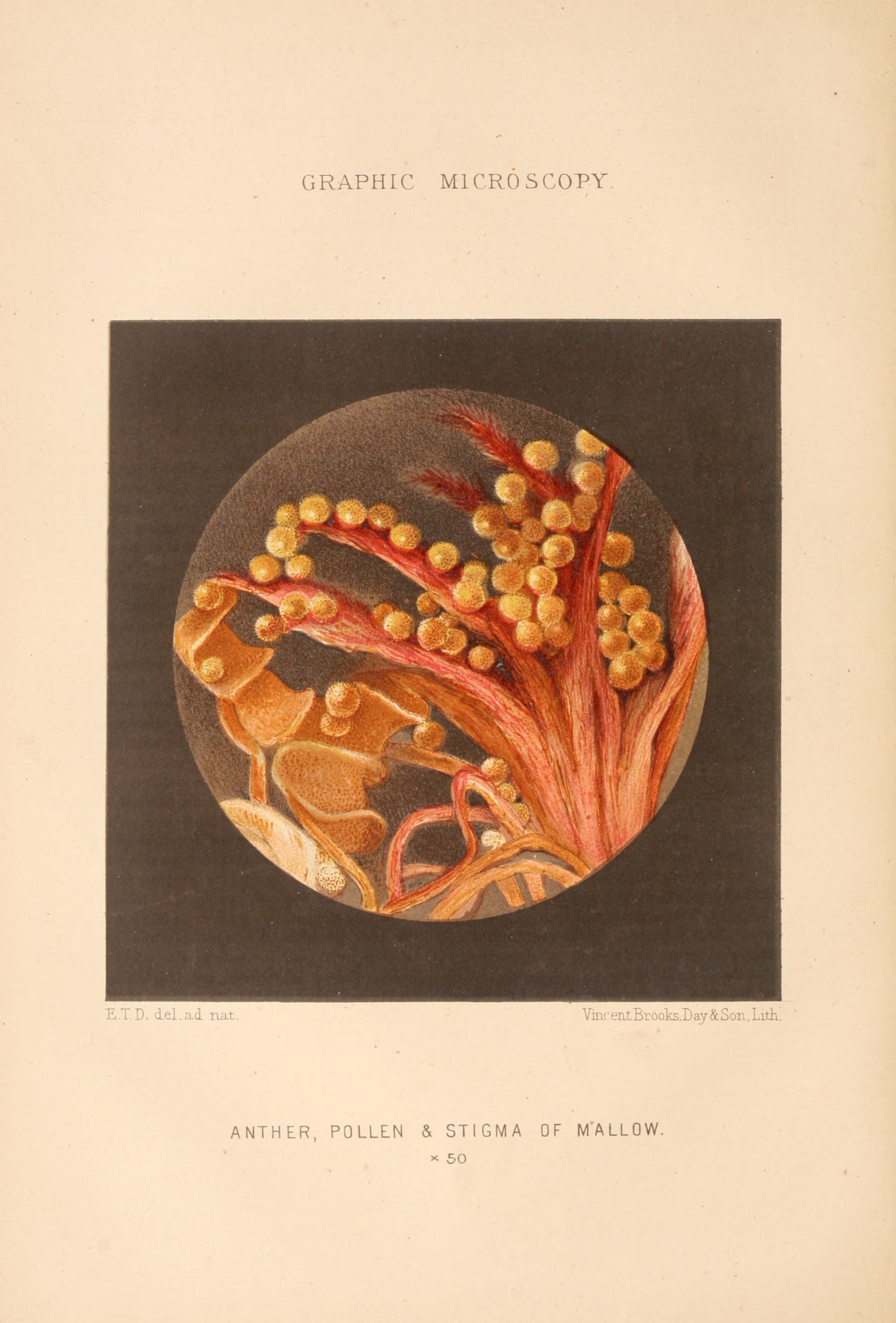
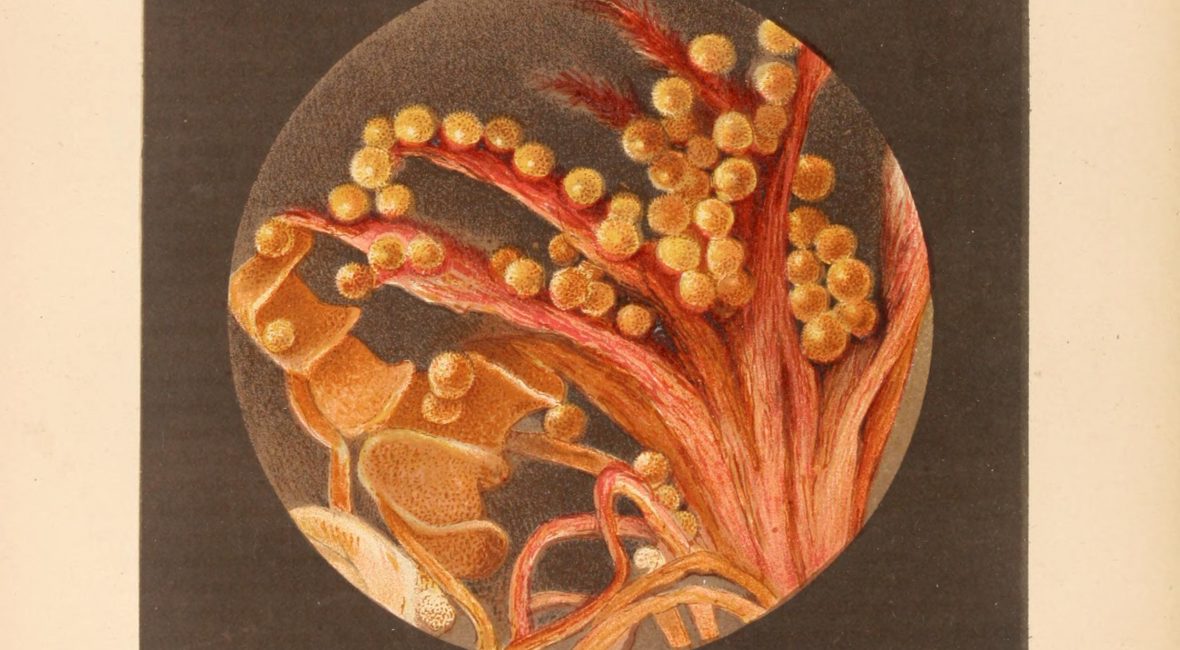
E. T. D. “Graphic Microscopy” in Hardwicke’s Science Gossip. Vol. 20. 1884. Contributed in BHL by MBLWHOI Library.
Worlds of Wonder aims to better understand the formation of a community of European and American microscopists by investigating the publications that connected them. How did microscopists and illustrators collaborate to produce illustrations? Who could contribute illustrations to microscopy publications? Where did microscopy illustrations travel and how did they change along the way? It seems that the circulation and reproduction of illustrations was a crucial factor in connecting nineteenth-century microscopists, who formed a strikingly diverse scientific community including physicians, biologists, engineers, natural historians, school teachers and zoologists with a shared interest in microscopy. Adapting and recombining published texts and illustrations may have made it easier for editors to tailor their publications to different groups of microscopists. In order to trace reproductions of microscopy illustrations, Worlds of Wonder draws on a wealth of digitized microscopy publications hosted by the BHL.
Although copyright laws were not strictly enforced in the mid-nineteenth century, issues of ownership and the authenticity of reproduced materials were strongly debated. Considering that today many online platforms continue to recombine and distribute texts and illustrations published elsewhere, Worlds of Wonder may also help us get a better idea of the effects of using these platforms in science communication.
You can join the crowdsourcing project on Zooniverse or learn more about the history of microscopy on the Worlds of Wonder blog.
References
Gosse, Philip Henry. 1860. Evenings at the Microscope; or Researches Among the Minuter Organs and Forms of Animal Life. New York: D. Appleton.
Pennock, Edward. 1890. Minutiae. The Microscopical Bulletin and Science Ne, 7(1), 7.
